Covid rules are to be axed in England, but is pandemic’s end really in sight?
Analysis: Plans to end isolation rules have been gleefully announced, but questions about infection control remain
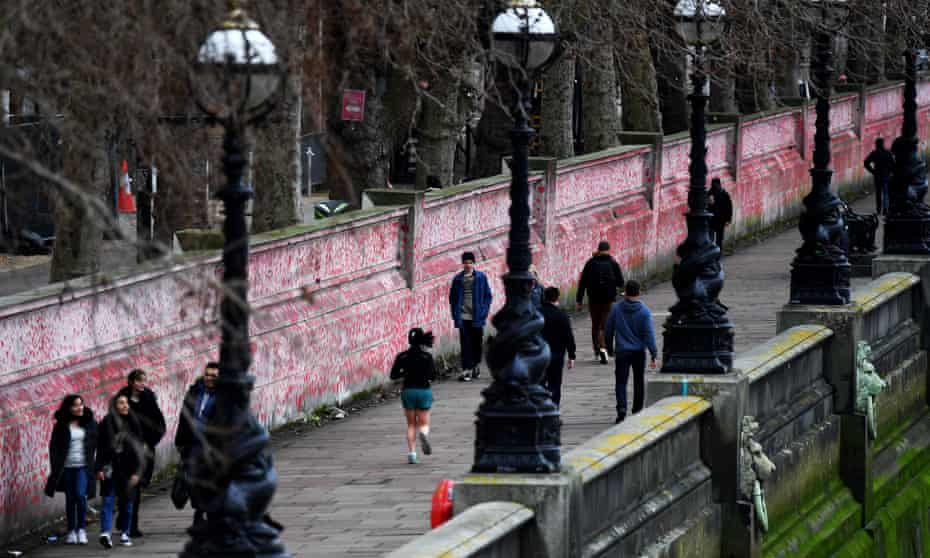
People walk past the National Covid Memorial Wall in London on Wednesday. Photograph: Andy Rain/EPA
As the threat of the Omicron wave has receded in England, the government has been quick to move the conversation on to “living with Covid”.
It was inevitable that this would mean the eventual lifting of legal restrictions, including the need to self-isolate. But even given the optimistic tone in recent weeks, Boris Johnson’s announcement on Wednesday came sooner than many expected.
While he signalled the scrapping of restrictions in England by 24 February – a month earlier than had originally been planned – he provided no detail.
It is unclear whether any specific scientific advice was provided on the impact of the move – none has been published – and some of the latest evidence published by the government’s Sage advisers gives an idea of potential risks.
An assessment in mid-January concluded that lifting of plan B measures could result in a return to epidemic growth, “particularly if precautionary behaviour, including testing, decreases as a result of reduced perception of risk”. Since then, case numbers have remained high and on Wednesday figures from the Office for National Statistics (ONS) showed that in England infection levels rose to one in 19 people in the first week of February.
But those figures are not as frightening as they once were.
Vaccines and immunity from infection mean that a large surge of cases no longer translates to tens of thousands of deaths. Nevertheless, the Sage analysis points out that another increase could result in “a sustained period of high levels of hospitalisations [that] would have detrimental consequences for the NHS”, at a time when waiting lists are at a record high.
As we move out of the crisis phase of the pandemic, it is perhaps also time to recalibrate what we expect from public health policy, beyond simply avoiding large numbers of deaths in the immediate term. Restrictions have to be balanced against the real downsides of self-isolating, but policies should also be evidence-based, coherent and consider the impact on those in vulnerable groups.
The latest announcement has left a sense of confusion about how the public will be expected to live out the changes to rules in two weeks’ time.
Following the jubilant tone of the announcement regarding people no longer needing to self-isolate, Downing Street later clarified that “in the same way that someone with flu, we wouldn’t recommend they go to work, we would never recommend anyone goes to work when they have an infectious disease”.
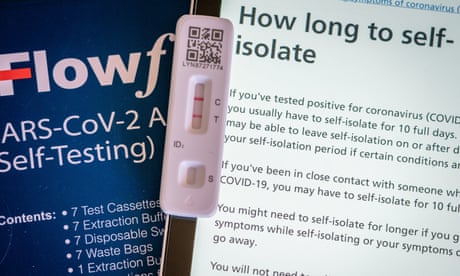
A substantial proportion of Covid infections are asymptomatic, or mild, though. So as England moves to a new phase, so new questions will have to be faced. Most employers would not expect – or tolerate – people staying off work when suffering from mild cold symptoms. Will they feel the same way about Covid?
Will people just need to stay at home as long as they are ill – as with flu? Or will there be a suggested isolation period? And how will the rules apply to NHS staff, who until last week faced being sacked unless they were fully vaccinated? The details are, so far, unclear.
There is also continued concern about how the latest policy will affect those in the clinically vulnerable group, for whom Covid remains a more serious threat because their immune systems do not respond as effectively to vaccines.
Campaign groups and charities representing those with blood cancer, kidney disease and other immunocompromised people say that while the government has celebrated being able to return people’s freedoms, it has failed to set out plans for how vulnerable groups will be able to return to a normal life, or to ensure that all of these people are able to access fourth vaccine doses and antiviral drugs.
The emergence of future variants also remains a possibility, and Sage scientists have repeatedly stressed the need for vigilance. While requirements for individuals to test and isolate may be relaxed, it will be crucial for national surveillance to continue to ensure that there is time to react in the case of new variants.
=====================================================
COVID surge in Afghanistan puts more pressure on devastated health care system

Afghanistan
A new COVID-19 surge is devastating an already faltering health care system in Afghanistan. Only five hospitals are still offering treatment for the coronavirus, with 33 others being forced to shut down over a lack of doctors, medicine and heating due to a shortage of fuel. The Ministry of Public Health had published detailed daily charts of COVID-19 cases, hospitalizations and deaths prior to the Taliban takeover in August. But now, without sufficient funding, it’s struggling to keep proper records. The country’s economy has been suffering after nearly $10 billion in assets were frozen and most international aid was withheld from the Taliban government.
================================================#
Fauci: US exiting ‘full-blown’ pandemic phase
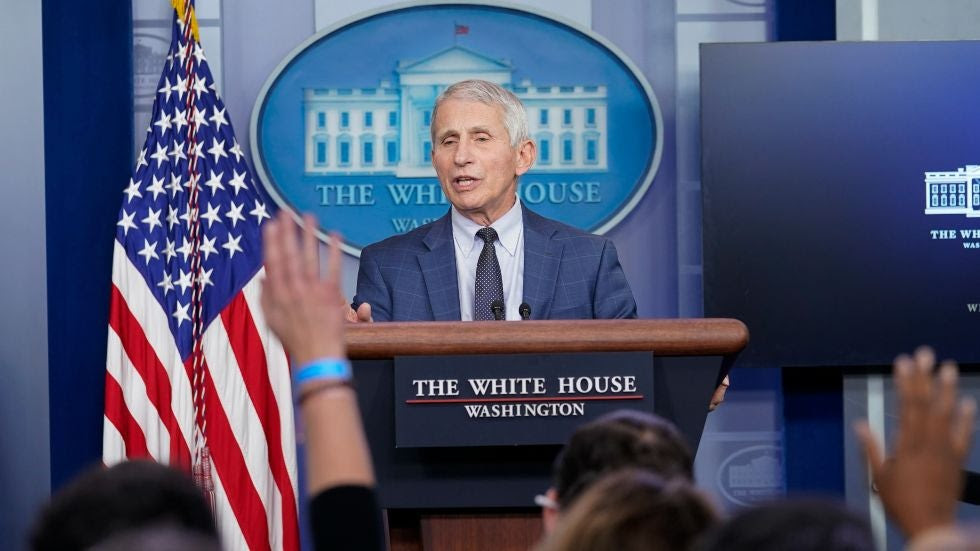
© Associated Press/Susan Walsh
The U.S. is exiting the “full-blown” pandemic phase of the years-long COVID-19 crisis that began in 2020, the Biden administration’s chief medical adviser Anthony Fauci told the Financial Times on Tuesday.
Fauci, who is the director of the National Institute of Allergy and Infectious Diseases, said that new developments that limit COVID-19, including vaccinations, medical treatments and prior infection, will alter the pandemic situation significantly in the coming months.
“As we get out of the full-blown pandemic phase of COVID-19,” Fauci said to the Times. “Which we are certainly heading out of, these decisions will increasingly be made on a local level rather than centrally decided or mandated. There will also be more people making their own decisions on how they want to deal with the virus.”
Fauci said that he hopes all COVID-19 restrictions will be halted in the coming months as well, citing mandatory mask-wearing as one of the restrictions he expects to end. He agreed that restrictions might end in 2022.
Nonetheless, Fauci warned that local health departments might bring back certain restrictions if regional outbreaks occur.
“There is no way we are going to eradicate this virus,” said Fauci, according to the Times. “But I hope we are looking at a time when we have enough people vaccinated and enough people with protection from previous infection that the COVID restrictions will soon be a thing of the past.”
Officials face new pressure to lift mask rules

|
|
|
|

© New York Times/Pool
The head of the Centers for Disease Control and Prevention (CDC) said the agency is still not ready to make recommendations on relaxing mask requirements, even as more governors announce their intentions to do so.
“We are working on that guidance,” Rochelle Walensky told reporters during a White House briefing, but “our hospitalizations are still high, our death rates are still high. So as we work towards that and as we are encouraged by the current trends, we are not there yet.”
Her comments come as a growing number of states, like California, Delaware and New York announced this week their intentions to drop indoor mask mandates in the coming days. Some others, like Connecticut, Massachusetts and New Jersey, are eliminating mask mandates in schools.
Walensky noted that decisions on masks should be made at the local level based on local metrics, like hospital capacity, transmission rate and vaccinations. While numbers are trending downward, she said there’s still too much viral transmission.
“At this time, we continue to recommend masking in areas of high-end substantial transmission. That’s much of the country right now in public indoor settings,” Walensky said.
According to the CDC, 99 percent of U.S. counties still have high levels of coronavirus transmission.
The post Experts Warn Against England Ending Covid Rules, Virus Devastating Afghanistan, US-Worst Over?, Mask Mandates appeared first on The St Kitts Nevis Observer.