New Zealand prime minister Jacinda Ardern says she expects the Covid Omicron wave to peak at the end of March. Photograph: Getty Images
WELLINGTON, New Zealand — For much of the past two years, Covid-19 was a phantom presence in New Zealand, a plague experienced mostly through news reports from faraway lands.
Now, suddenly, it has become a highly personal threat.
New Zealand is being walloped by a major outbreak of the Omicron variant, with the virus spreading at what may be the fastest rate in the world. On Thursday, the country reported 23,194 new cases, a once unthinkable number in a small island nation of about five million people where the record daily case count before the current wave was in the low hundreds.
The explosion in cases has come as the government, under political pressure, loosened its strict regulations meant to prevent the spread of the virus, and as the highly transmissible Omicron reduced the effectiveness of the controls that remained.
That has filled many New Zealanders with anxiety as they learn to live with the pandemic-related risk that the rest of the world has grappled with since early 2020
“For the vast majority of the pandemic, most New Zealanders didn’t know anyone who had Covid-19. That’s changing massively now,” said Siouxsie Wiles, a microbiologist at the University of Auckland. “This is the first time most New Zealanders are dealing with Covid-19 in their own homes.
The police checking vaccination passes at a checkpoint in Auckland in December. During most of the pandemic, the country has kept infections and deaths very low through controls and lockdowns.Credit…Fiona Goodall/Getty Images
While the ever-growing case numbers may be unsettling, New Zealand was perhaps as well positioned as it could have been for its deferred reckoning with the virus.
Earlier in the pandemic, before the population was widely vaccinated, the country kept infections and deaths very low through a stringent quarantine system for incoming travelers, lockdowns during outbreaks and significant isolation periods for those who tested positive or were close contacts.
Caseloads often stood at zero, and life for long periods resembled a time before the pandemic. Even after New Zealand began to shift away from a “Covid zero” strategy following the emergence of the Delta variant, case numbers remained relatively small.
By the time of the arrival of the Omicron variant — which is more contagious but often produces milder symptoms — the country was well protected. Ninety-five percent of New Zealanders over age 12 have been vaccinated, and 57 percent have had a booster shot.
With this combination of strict measures and widespread inoculation, the country has reported just 56 virus deaths throughout the pandemic — by far the lowest rate of any major democracy.
Ninety-five percent of New Zealanders over age 12 have been vaccinated.Credit…Dean Purcell/New Zealand Herald, via Associated Press
But New Zealand’s initial caution toward the virus became politically untenable this year as citizens living overseas protested limits on their return and business advocates called for fewer restrictions.
In response, the government weakened its pandemic controls. Last week, it removed many self-isolation requirements, and on Monday it announced that vaccinated New Zealanders could freely enter the country without isolating or quarantining. New Zealand remains closed to international tourists.
With the virus now spreading rapidly, the country has been forced to undergo a “big psychological shift,” said Michael Baker, an epidemiologist at the University of Otago in Dunedin.
While the approach to managing the virus was once one of “collective protection,” Dr. Baker said, it is now one of “much more individual and family responsibility.”
The government has tried to prepare the public for this shift by warning that New Zealanders’ experience of the virus would change. Prime Minister Jacinda Ardern noted last week that “very soon we will all know people who have Covid-19 or we will potentially get it ourselves.”
Modelers estimate that each Omicron-positive New Zealander is infecting an average of 4.64 other people — the highest rate among 180 countries analyzed. Experts believe that half the country could be infected within three months.
“We’re finally experiencing the difficult side of exponential growth,” said Dr. Wiles, the University of Auckland microbiologist. “I feel quite nervous about the rest of the year.”
“Very soon we will all know people who have Covid-19 or we will potentially get it ourselves,” said Prime Minister Jacinda Ardern.Credit…Pool photo by Ross Giblin
Jin Russell, a community and developmental pediatrician at the University of Auckland, said that some vaccinated New Zealanders just wanted to get on with their lives.
But for families with members who are at heightened risk from the virus, it’s an unnerving time. “And then there are other people who continue to mourn the elimination strategy and are living quite restricted lives as they try to avoid or delay catching the virus,” Dr. Russell said.
Approximately 40 percent of New Zealanders are now working from home, according to Brad Olsen, a senior economist at Infometrics, a consultancy in Wellington. On Tuesday, lawmakers participated remotely in parliamentary debates for the first time.
Major outbreaks have also occurred in other countries, like Australia, that loosened strict pandemic measures. Australia’s spike, however, occurred during the Southern Hemisphere summer, which Dr. Baker said significantly slowed the virus’s spread.
New Zealand’s outbreak, by contrast, has come as workplaces settled into the business year and students headed back to school and college. Ashley Bloomfield, New Zealand’s director-general of health, has called it a “nationwide superspreader event.”
At the University of Otago, for example, students hosted a series of large parties at which hundreds of people were exposed to an Omicron-positive person. The police intervened to prevent another party at which Covid-positive students intended to invite dozens of friends who were also infected.
“Police advised them that this is a stupid idea,” Anthony Bond, a senior police sergeant, said at the time.
While these were a minority of students, over the weeks since, the virus has spread rapidly in large apartments with multiple people, according to the president of the local students association, Melissa Lama.
By Tuesday, there were over 3,200 active cases of Covid-19 in Dunedin, with many hundreds more people self-isolating as household contacts. Students are anxious about the virus’s spread and frustrated with the individual pressure they feel about managing it, Ms. Lama said.
Elsewhere in the country, anger over the government’s Covid-19 response produced a different kind of superspreader event. In Wellington, the capital, hundreds of demonstrators opposed to vaccine mandates occupied the grounds surrounding Parliament in an occasionally violent protest that lasted for over three weeks.
After serious clashes between the police and demonstrators, multiple officers began reporting Covid-19 infections. Partly because of the health risk, officers battled protesters to clear the occupation on Wednesday.
I’m a Covid researcher, but I’ve never tested positive. Studying variations in immune systems could lead to better vaccines
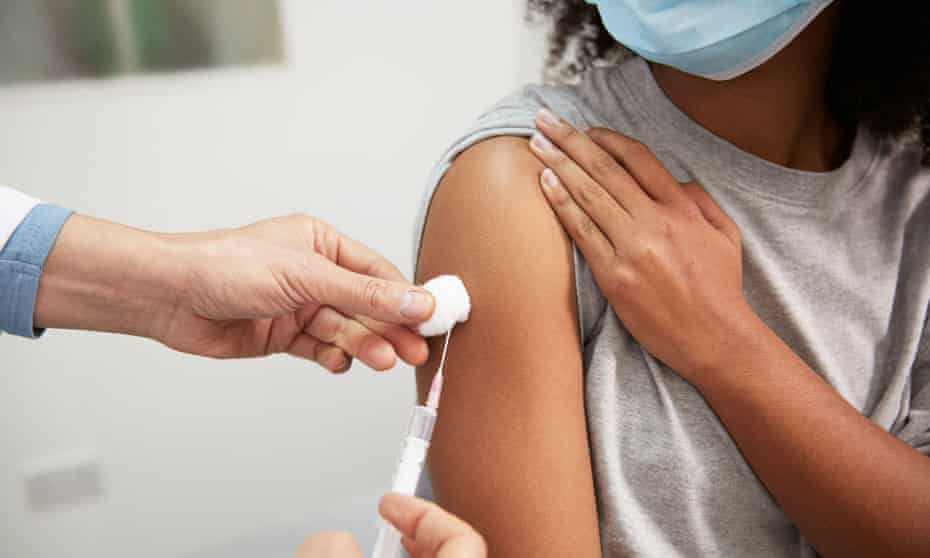
‘There is also a possibility that different immune systems respond differently to the virus.’ A doctor injecting a patient with the Covid-19 vaccine. Photograph:
I’m one of the fortunate people who is yet to test positive for Covid. This is despite the fact that I work with live replicating Sars-CoV-2 (the virus that causes Covid) for my research, teach face-to-face at university, and have school-age children.
My fully vaccinated healthy friends of the same age were not so lucky, and some have suffered from more than one case of Covid in the past couple of years. What does this reveal about my immune system.
First, we have to consider a number of scenarios. There is a very small chance that I have never come into contact with the virus. But given the duration of the pandemic, and the number of highly transmissible variants, this is unlikely. Then there is the chance that I have come into contact with Sars-CoV-2, but it was cleared from my body quickly before it developed into the disease Covid (abortive infection). At the start of the pandemic, and before I was vaccinated, I could have caught the virus but I could have been one of the small number of people who did not display symptoms and therefore did not test for it.
Some people may clear the virus quickly because they have pre-existing antibodies and memory immune cells that recognise the virus. These could be cross-reactive memory T-cells generated previously to fight similar coronaviruses that cause the common cold. There is evidence of higher prevalence of endemic (non-Covid) coronavirus infections in the young and reduced cross-reactive T-cell presence in older people.
When vaccines became available, I received my first and second doses, along with a booster shot. Vaccines work by introducing our immune system to the virus spike protein, and setting off an early arsenal of specific antibodies and T-cells. These leave memory cells behind, which can persist for years and spring into action to prevent reinfection.
Although Covid vaccines still protect from severe disease, each time there is a new variant we scientists frantically search for any evidence of vaccine escape in real-life data. We can’t predict vaccine escape because we are not observing stepwise virus evolution, where emerging strains add new mutations to their predecessors; the now-prevalent Omicron variant has few similarities with Delta, which was spread widely last year. Natural infection does not offer long-term protection, and the more potent vaccine-induced immunity needs a booster to protect against variants.
As a result, if I had previously caught but coped well with one variant, I am not convinced that I would be immune to the next one. Indeed, people report different symptoms after different rounds of infection, some doing better, some worse in later infections.
There is also a possibility that different immune systems respond differently to the virus. For Sars-CoV-2 to infect, the spike protein on the surface of the virus needs to stick to specific proteins on the target cells, like the ACE2 protein. Is it possible that those resistant to infection have different levels of ACE2 than others? Age-related ACE2 expression in the lungs of children compared with adults may partly explain why children often show milder infection.
It is also possible that some of us may have rare types of ACE2 that the coronavirus spike cannot stick to. Differences in protein expression between people are known as polymorphisms, and they are valuable to discover. People that have a rare genetic polymorphism for CCR5 protein have been immune to HIV infection. To support this theory, recent genetic analyses have revealed that rare types of ACE2 may influence susceptibility to Covid.
Additionally, studies in healthcare workers who consistently remained negative for Covid showed the presence of pre-existing T-cells that recognise peptides – the chain of molecules that make up a protein – from less variable parts of the virus than the spike protein (which, under pressure from our immune response, mutates frequently to evade our antibodies). This work suggests that it would be wise to not rely on spike-targeting vaccines if we want to induce immunity to new variants, and we should think about incorporating more parts of the virus that don’t change over time (“evolutionarily conserved proteins”) into our vaccine design.
While we are still learning about what may be causing Covid resistance, we can’t be sure why someone like me hasn’t yet tested positive. But what I do know is that because of the likelihood of emerging variants, there is no guarantee that I won’t develop Covid still. Even if you’ve been lucky so far, don’t take your chances.
Dr Zania Stamataki is a senior lecturer and researcher in viral immunology at the University of Birmingham