There are still multiple pathways for the Labor party to form a majority government, after the Coalition's crushing election defeat and the rise of the teal independents.
A total of 67 per cent of Australians' votes have now been counted and Labor holds 71 of the 76 seats needed for a majority government.
At the time of writing there are sixteen seats still to be called, according to 9News' live tracker, with 77 Labor seats a real possibility.
READ MORE: 'Very difficult': Morrison emotional during church address
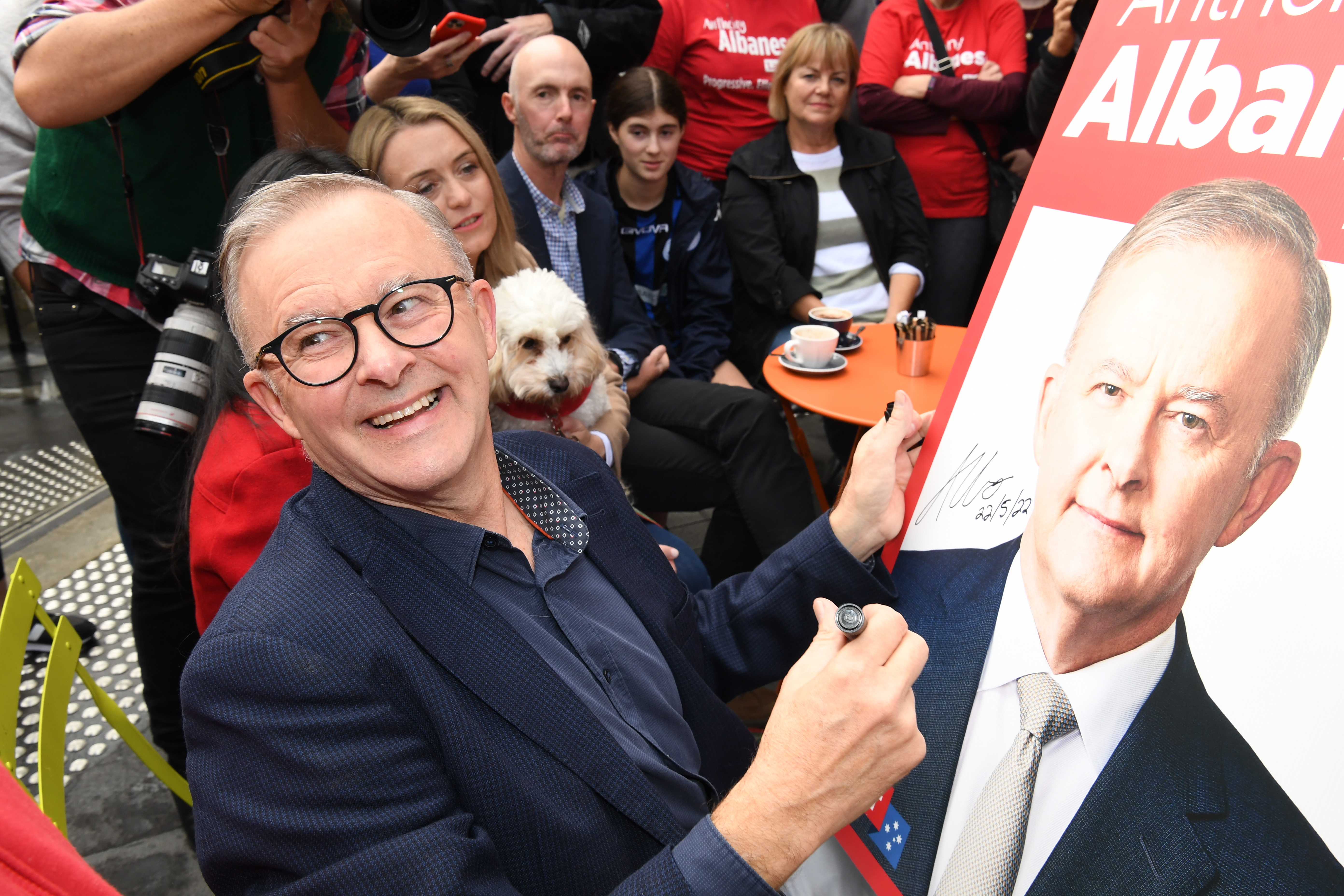
The battle lines are close in this handful of electorates and they will decide whether Prime Minister-elect Anthony Albanese forms a minority or majority government.
The seats in play are:
- Bass, Tasmania
- Bennelong, NSW
- Bradfield, NSW
- Brisbane, Queensland
- Casey, Victoria
- Deakin, Victoria
- Dickson, Queensland
- Flynn, Queensland
- Gilmore, NSW
- Lingiari, Northern Territory
- Lyons, Tasmania
- Macnamara, Victoria
- Menzies, Victoria
- Moore, Western Australia
- Richmond, NSW
- Sturt, South Australia
While it's still early days, things are looking hopeful for Labor.
The party is showing narrow leads in eight of the seats mentioned above.
READ MORE: The two men tipped to lead Liberal Party after election rout
The biggest leads are in Brisbane, Macnamara, Richmond, Lingiari and Deakin.
Should Labor win these seats it will give them the 76 needed for a majority.
LIVE COVERAGE: Liberal MP's page vanishes from internet
The seat of Sturt in WA is neck-and-neck, with Liberal candidate James Stevens and the ALP's Sonja Baram both on 50 per cent on a two-party preferred basis.
There, 68.79 per cent of votes have been counted.
The Coalition is leading in Bass, Casey, Dickson, Flynn, Menzies, Bradfield and Moore.