The Federal Communications Commission has signed off on broadcast station owner Nexstar’s $6.2 billion deal to acquire rival company Tegna, a merger that would create the largest operator of local television stations in the country
All posts by FreeNews
Trump compares Iran attack to Pearl Harbor in front of Japan’s PM
Donald Trump has defended his surprise attack on Iran by comparing it to Pearl Harbor while he sat next to Japan's prime minister.
At an Oval Office press event, Trump was asked by a Japanese reporter why he didn't inform his allies about his war with Iran ahead of time.
"Who knows better about surprise than Japan?" Trump said.
READ MORE: Trump berates allies as he finds himself alone on Iran war
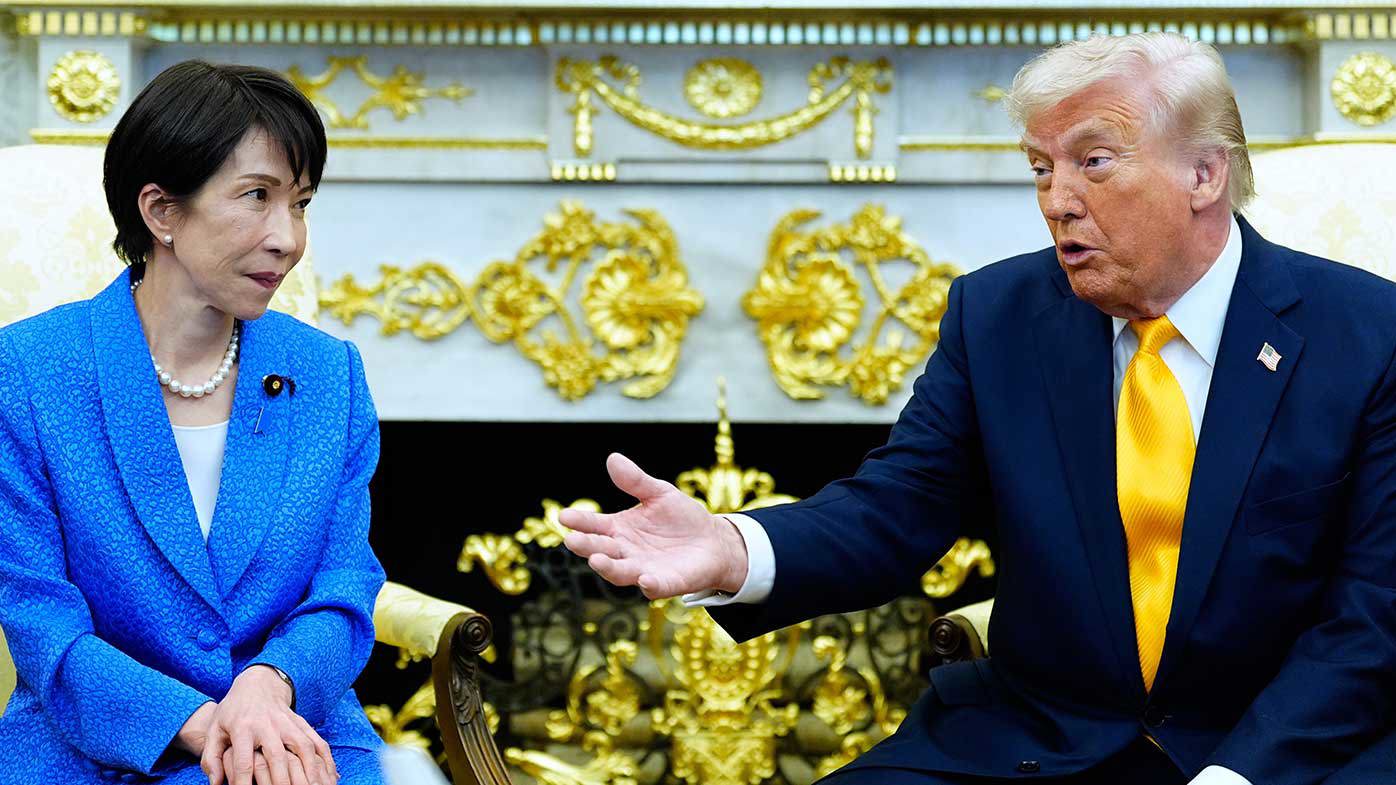
"Why didn't you tell me about Pearl Harbor?
"No, you believe in surprise, I think much more so than us, and we had to surprise them and we did."
Sitting next to him, Prime Minister Sanae Takaichi shifted in her seat and appeared to wince.
Neither Trump nor Takaichi were alive at the time of the Pearl Harbor attack.
Trump's son Eric posted video of the exchange on X with two laughing emojis.
"One of the great responses to a reporter in history!" Eric Trump wrote.
Trump's reference to Pearl Harbor has been widely reported in Japanese media this morning.
He made the comment as he pressed Japan to "step up" in support for the US's war in Iran.
READ MORE: 'Dead by June': Trump announces congressman's private diagnosis
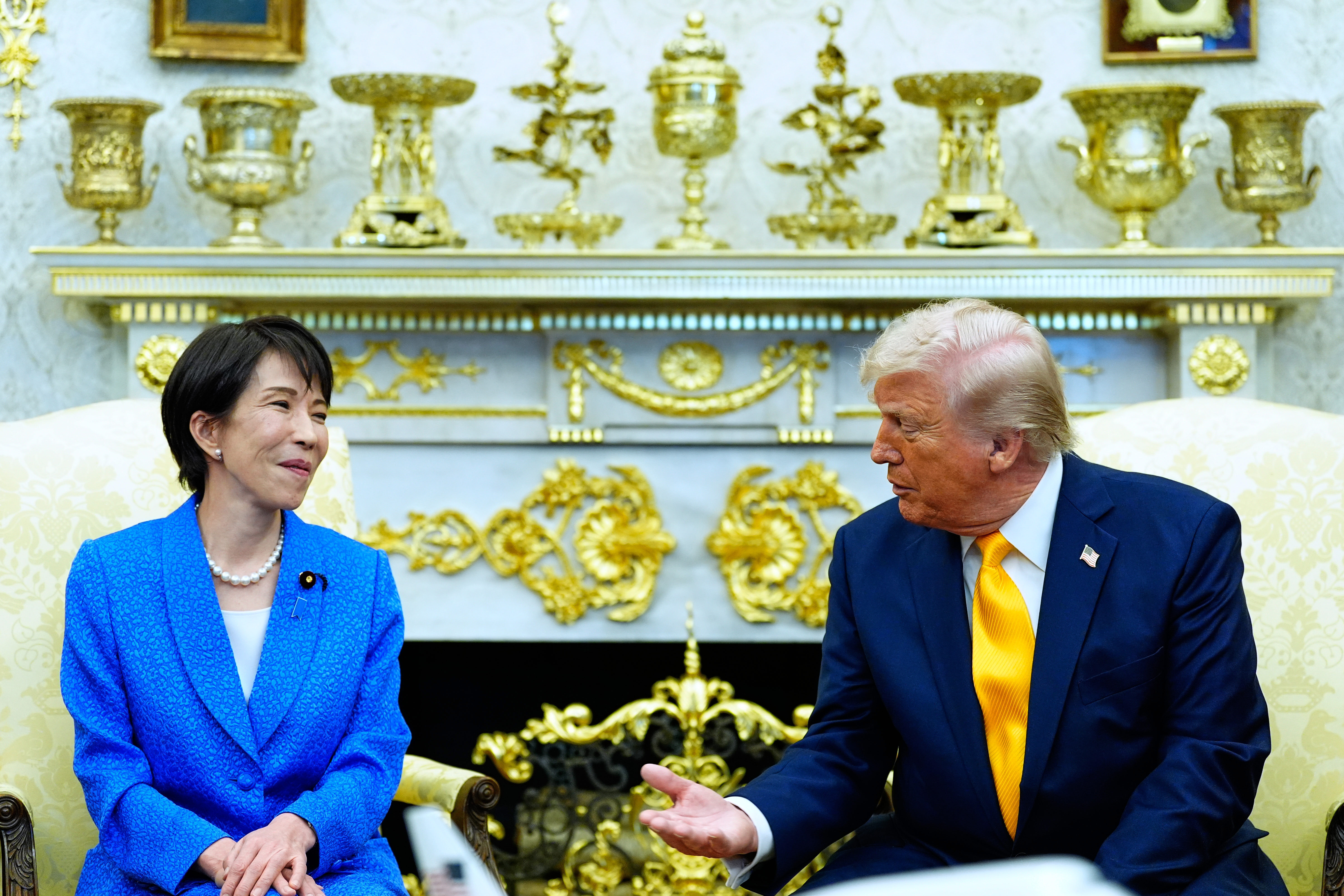
"We have 45,000 soldiers in Japan," Trump said.
"We have, we spend a lot of money on Japan so, and we've had that kind of relationship, so I expect, I'm not surprised, that they would step up."
Takaichi offered vague words of support but stopped short of any concrete commitments.
"Only you … can achieve peace across the world," she said to Trump."
"I am ready to reach out to many of the partners in the international community to reach our objectives together."
So far none of America's major allies have committed military support for the US operations in Iran.
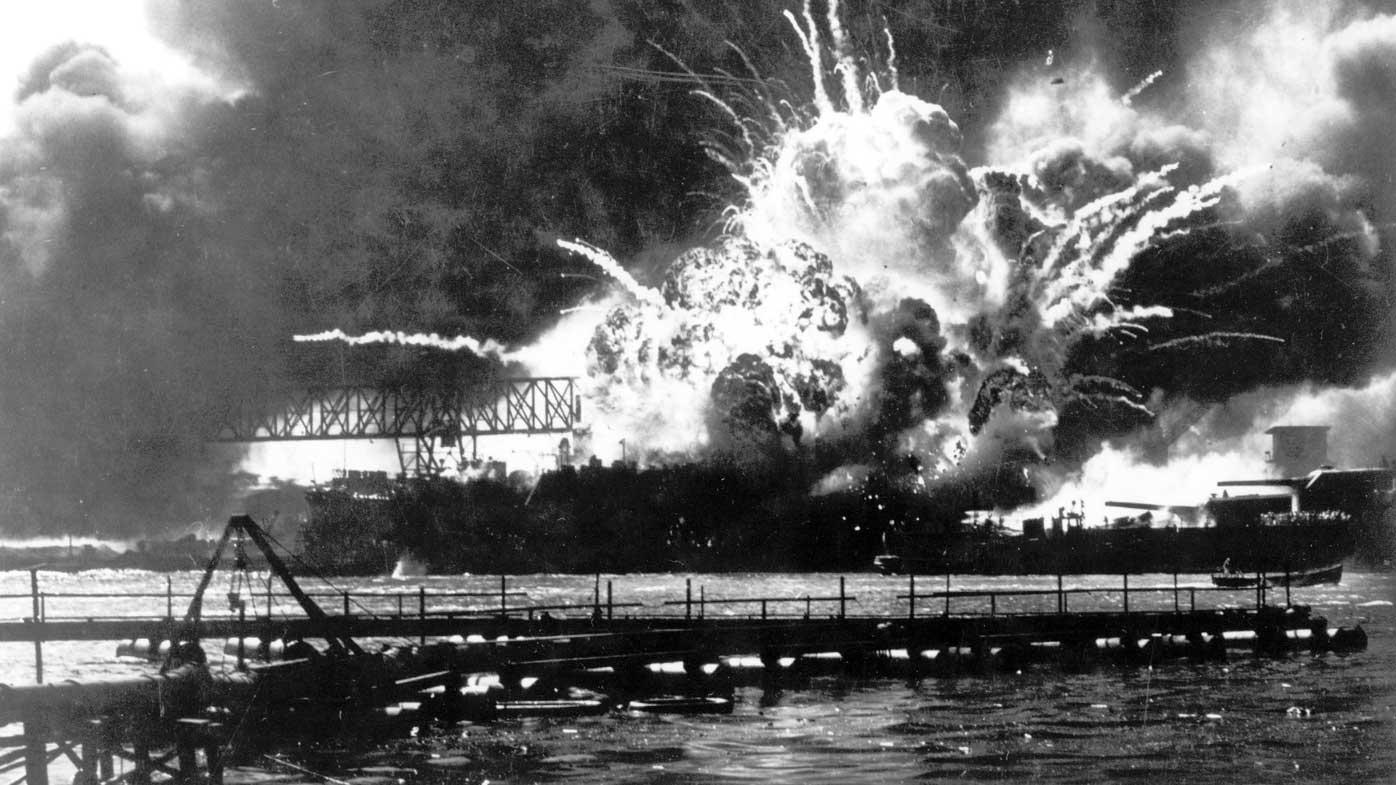
Japan's surprise attack on Pearl Harbor, a military base in Hawaii, marked America's entry into World War II.
The attack would prove to be a sore point between the two countries long after the war ended.
READ MORE: Missing a train saved Tetsuko's life. 140,000 others weren't so lucky
NEVER MISS A STORY: Get your breaking news and exclusive stories first by following us across all platforms.
- Download the 9NEWS App here via Apple and Google Play
- Make 9News your preferred source on Google by ticking this box here
- Sign up to our breaking newsletter here
Missile lands metres from reporter crossing live on Russian TV from Lebanon
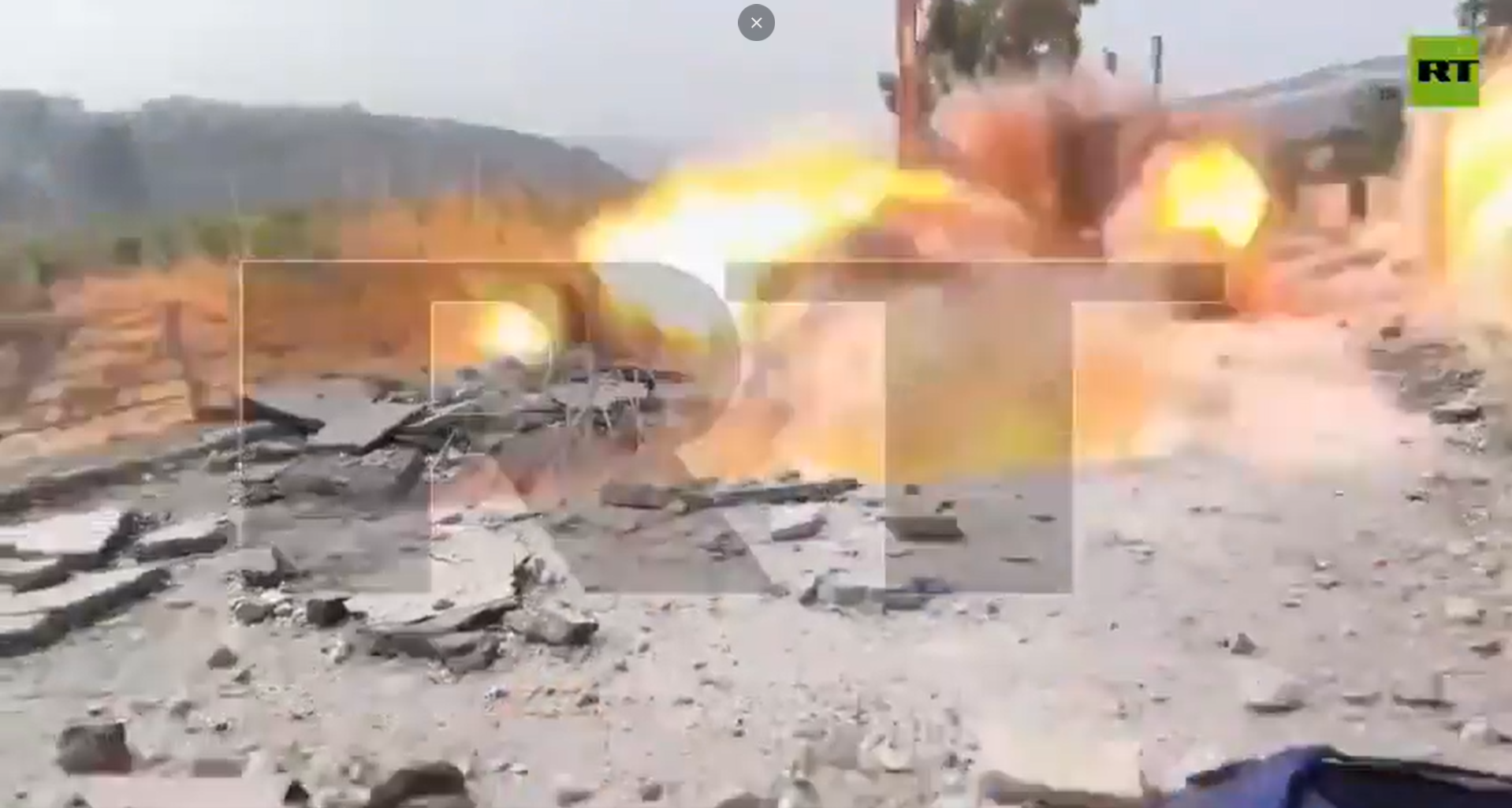
A missile has landed metres from a reporter crossing live for a Russian network on the war in Lebanon.
RT correspondent Steve Sweeney can be seen beginning to duck for cover as the noise of the incoming missile is heard in the background of his broadcast on Thursday.
Within a second, the projectile hits the ground close behind him, causing an explosion that sends dirt, dust and shrapnel into the air and apparently knocks over both the reporter and cameraman Ali Rida.
READ MORE: Trump threatens to 'blow up' world's largest gas field
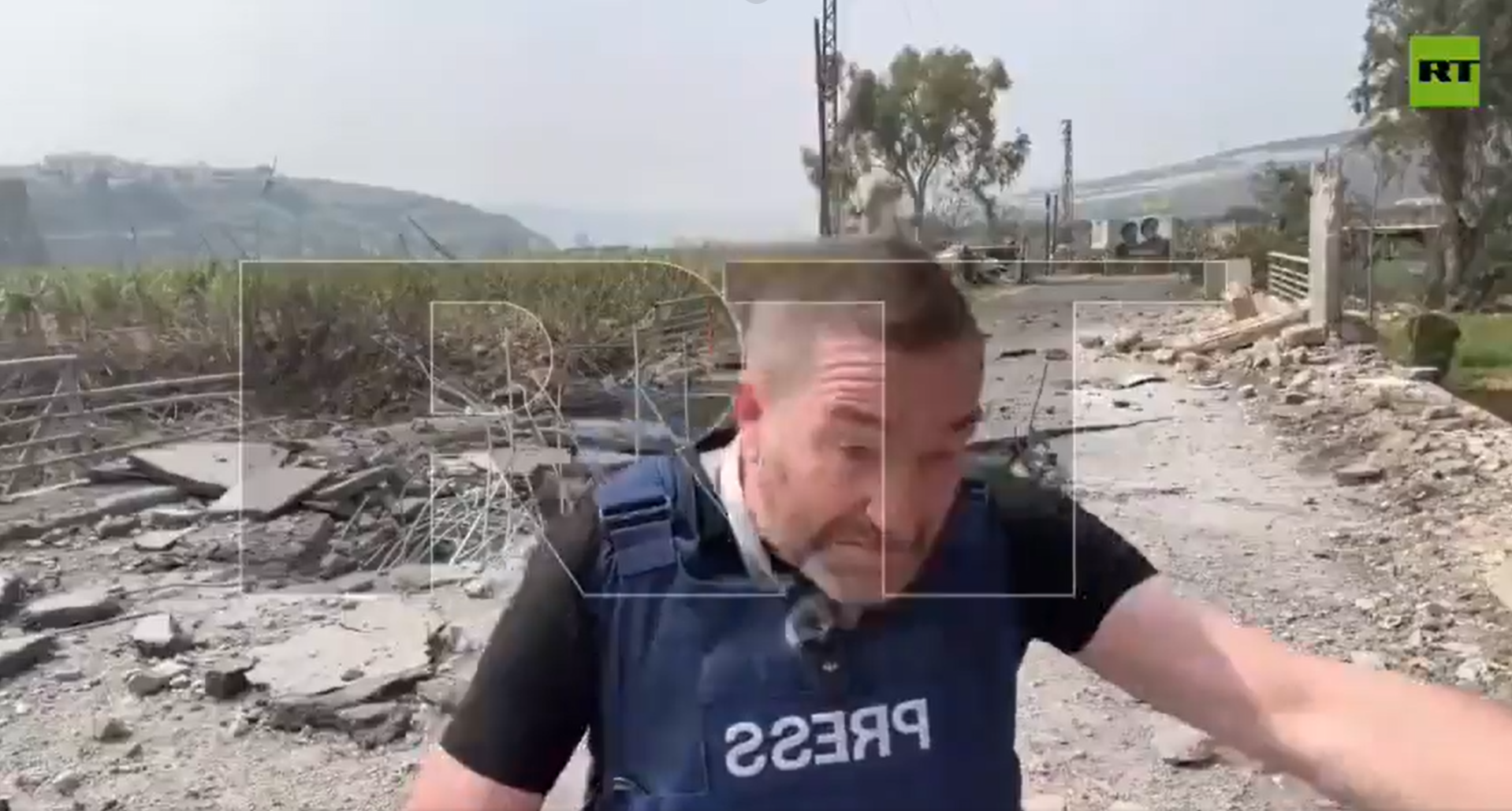
They'd been reporting on the destruction of a bridge in southern Lebanon, which Israel has been bombing in its war with the Iranian-backed Hezbollah militant group.
In a later video for RT, Sweeney claimed the missile was "an Israeli precision strike from a fighter jet".
"We've been treated in hospital for our injuries," the Briton said.
"I had a shrapnel wound in my arm, deeply embedded in the bustle here that's been taken out, and here it is in this pot here."
RT, formerly known as Russia Today, was banned in the European Union in 2022 for systematically broadcasting disinformation about Russia's invasion of Ukraine.
The strikes in Lebanon have displaced more than 1 million people — roughly 20 per cent of the population — according to the Lebanese government.
LIVE UPDATES: Trump drops Pearl Harbour reference in meeting with Japanese PM
It says more than 1000 people have been killed and Israel says it has killed more than 500 Hezbollah militants.
In Israel, 15 people have been killed by Iranian missile fire.
Four people were also killed in the occupied West Bank overnight by an Iranian missile strike, according to officials.
Iran intensified its attacks on oil and natural gas facilities around the Gulf on Thursday, raising the stakes in a war that is sending shock waves through the global economy.
READ MORE: Tears after sex with student she should have been teaching
https://x.com/RichardEngel/status/2034606247182311694
The strikes, in retaliation for an Israeli attack on a key Iranian gas field, sent fuel prices soaring and risked drawing Iran's Arab neighbours directly into the conflict.
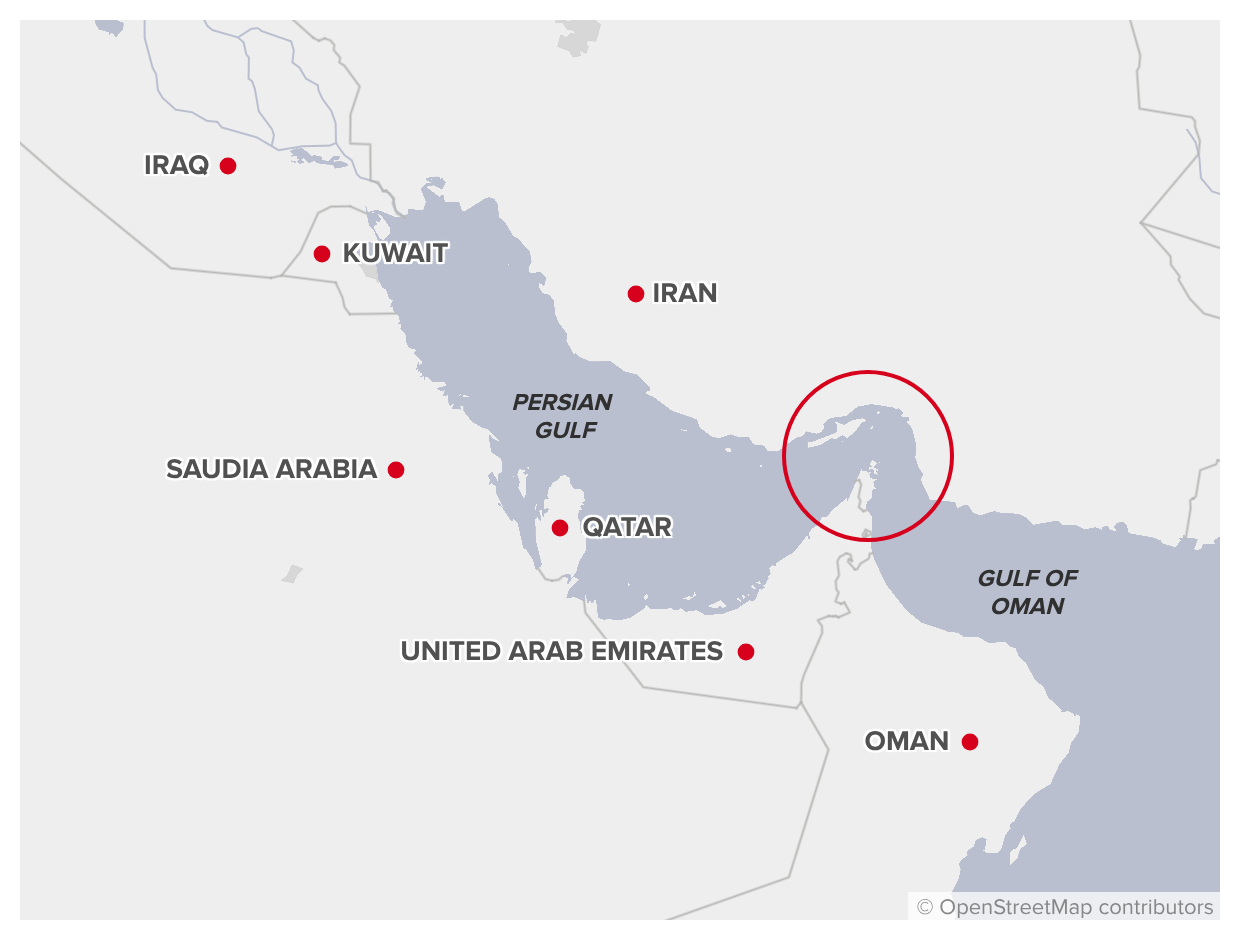
Tehran's targeting of energy production further stressed global supplies already under pressure because of Iran's stranglehold on the Strait of Hormuz, a strategic waterway through which a fifth of the world's oil is transported.
Since the US and Israel launched the war on February 28, Iran's top leaders have been killed in airstrikes and the country's military capabilities have been severely degraded.
Still, Iran — now led by the son of the supreme leader killed in the war's opening salvo — remains capable of missile and drone attacks rattling its Gulf Arab neighbours and a global economy dependent on the energy they produce.
– Reported with Associated Press
NEVER MISS A STORY: Get your breaking news and exclusive stories first by following us across all platforms.
- Download the 9NEWS App here via Apple and Google Play
- Make 9News your preferred source on Google by ticking this box here
- Sign up to our breaking newsletter here
Bipartisan talks to end Homeland Security standoff get serious as shutdown drags on
Top Republicans and Democrats trying to end the monthlong Department of Homeland Security shutdown huddled with White House border czar Tom Homan in the Capitol on Thursday.
St. Kitts and Nevis to Host ACTIF2026 Trade Forum in July
BASSETERRE, St. Kitts (March 18, 2026) — The Government of St. Kitts and Nevis, in partnership with the African Export-Import Bank (Afreximbank), has announced that the Federation will host the Fifth AfriCaribbean Trade and Investment Forum (ACTIF2026) from July 29 to 31, 2026, at the St. Kitts Marriott Resort. Held under the theme “Shared Roots. […]
Fort Thomas Project to Feature Statue Honouring National Hero Bradshaw
Basseterre, Saint Kitts, March 18, 2026 — The Government of St. Kitts and Nevis is advancing plans to honour National Hero Sir Robert Llewellyn Bradshaw with the installation of a prominent statue at the entrance of the Fort Thomas development, positioning his legacy as a central feature of the site’s cultural and historical experience. Prime […]
Experts warn of 50 per cent food price spike as fuel crisis deepens
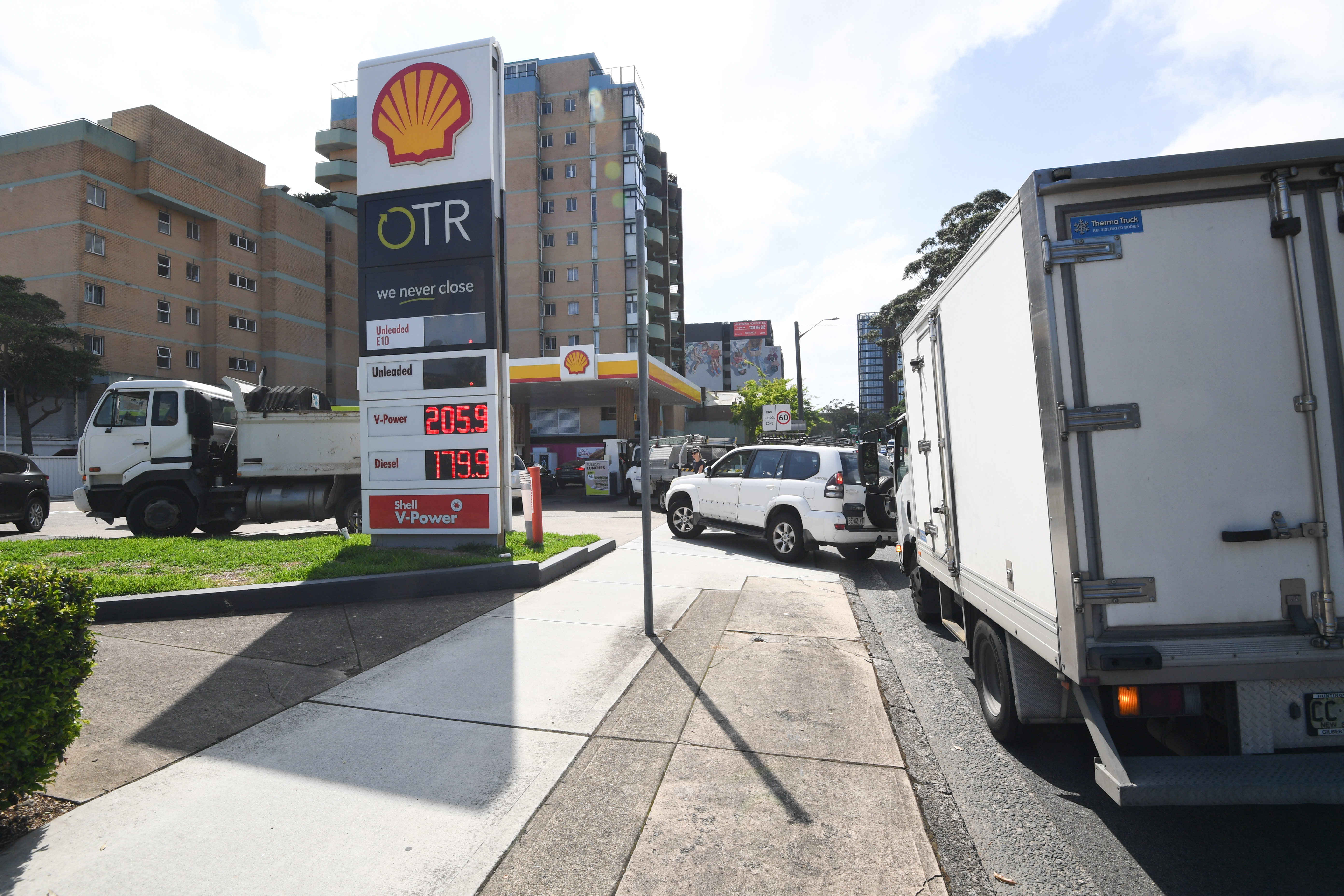
Australians are being warned to brace for a massive surge in food prices as the escalating conflict in the Middle East chokes global oil supplies and threatens to dismantle the nation's "just-in-time" logistics networks.
The grim forecast, driven primarily by an elastic shock to the supply and cost of diesel used by food trucks, depends on how long the conflict lasts.
As the blockade of the Strait of Hormuz enters a critical phase, leading academics say that the knock-on effect of soaring diesel costs is no longer just a headache at the petrol pump – it is becoming a threat to national food security.
READ MORE: PM's blunt message for Aussies making petrol prices worse

While the sight of $3-a-litre petrol has rattled commuters, the real danger lies in the fuel that powers the nation's heavy machinery.
Associate Professor Devika Kannan, from the University of Adelaide, warns that surging diesel prices could soon lead to some very painful supermarket bills.
"High fuel costs may compromise both food security and the resilience of domestic logistics infrastructure," Professor Kannan told the Science Media Centre.
"Surging diesel prices threaten a 50 per cent spike in food costs and the potential collapse of just-in-time logistics networks."
Associate Professor David Ubilava of the University of Sydney echoed this concern, noting that energy costs are baked into every stage of the food chain.
"Energy costs that are directly or indirectly linked to crude oil prices are a substantial component of the price we pay for a loaf of bread or a box of cereal," he said.
READ MORE: Is Australia headed for a recession? The latest job data paints a grim picture
Panic buying a "self-fulfilling prophecy"
Professor Ben Fahimnia of the University of Sydney said disruptions or sudden changes in demand tended to become amplified as they move through supply chains, a phenomenon known as the "bullwhip effect"
"A small movement at the handle can create a much larger crack at the tip," Professor Fahimnia told the Science Media Centre.
Fahimnia is among the experts who are pleading with the public to stop "panic buying," which can worsen the situation.
Economist Dr Scott French, from UNSW, described panic buying as a "self-fulfilling prophecy."
While it may seem prudent for an individual to fill up today, the collective action "overwhelms the system and creates the shortage that was feared."
READ MORE: What are the best ways to save fuel? Five tips to help Aussies save money on petrol
Is Rationing Next?
Australia's fuel resilience is under the microscope, with the country currently holding only 29 to 36 days of stock – well below the International Energy Agency's 90-day mandate.
Professor Kannan noted that if the Hormuz blockade exceeds 30 days, the Liquid Fuel Emergency Act 1984 could be triggered, ushering in formal transaction limits and fuel rationing. Already, nearly 20 percent of reserves have been released to support independent retailers in regional areas.
However, Dr Lurion De Mello of Macquarie Business School says the immediate focus should be on diesel, rather than petrol.
"Our diesel supply depends heavily on refineries in South Korea, Japan, and Singapore," De Mello said. "In the short term, limiting the filling of jerry cans at petrol stations could help stabilise demand."
If there is a silver lining, experts suggest this crisis may be the final push Australia needs to break its oil dependence.
"Every major geopolitical shock in an oil-producing region quickly becomes an energy and transport crisis," Professor Hussein Dia of Swinburne University said.
"Moving away from oil is as much about stability and security as it is about climate action."
NEVER MISS A STORY: Get your breaking news and exclusive stories first by following us across all platforms.
- Download the 9NEWS App here via Apple and Google Play
- Make 9News your preferred source on Google by ticking this box here
- Sign up to our breaking newsletter here
St. Kitts and Nevis to Deliver Humanitarian Aid to Cuba Within Weeks
Basseterre, Saint Kitts, March 18, 2026 — Prime Minister Dr. Terrance Drew has reaffirmed the Government of St. Kitts and Nevis’ commitment to regional solidarity, announcing plans for a significant humanitarian contribution to Cuba as part of a coordinated Caribbean Community (CARICOM) initiative. Speaking on Freedom FM’s Issues programme on March 17, Dr. Drew emphasized […]
Aussies warned not to panic as medicine shortages, price hikes loom
Australians are already struggling to fill up their cars as petrol prices surge due to the war in Iran, and there are fears the cost of filling a prescription could spike next.
Logistical issues and supply shortages could see the price of medicines rise as the conflict in the Middle East continues.
Even a small hike or brief shortage could hurt Aussies' hip pockets and their health.
LIVE UPDATES: Trump drops Pearl Harbour reference in meeting with Japanese PM
But Royal Australian College of General Practitioners (RACGP) president Dr Michael Wright urged Aussies not to panic yet.
"If we do have a shortage, people shouldn't panic because in most situations there will be an alternative," he told nine.com.au.
"And for most people, given that most medications are on the PBS [Pharmaceutical Benefits Scheme], it shouldn't make a difference to the price."
The price of medications that are not on the PBS may increase due to supply issues, but Wright couldn't say by how much.
"It'll depend on how long the supply chain is disrupted for."
Right now, pharmaceutical companies are urgently rerouting critical medical supplies due to Iran's ongoing blockade on the Strait of Hormuz.
Cut off from the critical trade route, some have been forced to redirect medical supplies from sea to air freight to ensure they make it to Australia.
READ MORE: Cheese pulled from shelves at Coles, IGA over undeclared allergen
They've also had to use alternative flight routes to avoid Middle Eastern airspace, which can slam shut with a moment's notice.
Critical petroleum-based ingredients used to make common drugs like paracetamol, ibuprofen and antibiotics, and raw materials from the Middle East used in many medicines, could also be in short supply soon.
All of these disruptions could cause manufacturing delays, medicine shortages and price hikes here in Australia.
Medicines Australia told nine.com.au in a statement that current delays linked to disruptions in shipping routes have generally been limited to a matter of days.
It is monitoring the situation closely and said pharmaceutical companies have contingency plans in place.
"We would also encourage patients not to panic buy or stockpile medicines, as this can place unnecessary pressure on supply and impact access for others," it said.
READ MORE: Warning Cyclone Narelle 'may be biggest weather system in living memory'
Australia has been dealing with medicine shortages since the COVID-19 pandemic.
There are currently almost 400 medicine shortages in Australia, 37 of which are considered critical, and more than 90 anticipated shortages.
"And the war in the Middle East has the potential to further disrupt those supply chains, meaning that it's harder for medications to get here," Wright said.
The Therapeutic Goods Administration (TGA) monitors medicine shortages and has, in the past, fast-tracked alternative medicines during critical shortages.
But when Australia imports 90 per cent of its medications and most of the raw ingredients used to make medicine, the thought of extended supply issues is confronting.
"Our patients are very concerned about the impact of medicines supply," RACGP Expert Committee quality care chair Professor Mark Morgan said in a statement.
"There are few things more concerning than potentially losing access to a medicine you have been advised to take for your health."
READ MORE: Australia and dozens of others condemn Iran over attacks on neighbours, critical shipping closure
The impacts of the war in the Middle East on Australia's pharmaceutical supply chain has shown how vulnerable it is to global supply shocks.
"One thing we probably could do more of is we could produce more medications locally, and that would be a way to get around some of our dependencies," Wright said.
Morgan agreed that a thriving local pharmaceutical manufacturing industry would mitigate some of the supply risks Australia currently faces.
In the UK, which also relies heavily on importing medicine, Independent Pharmacies Association chief executive Dr Leyla Hannbeck has called on the government to take action to prevent major shortages in the face of supply issues.
She has called for shorter prescription durations to prevent people from stockpiling medication, and the implementation of legislation banning the export of 150 drugs.
Wright said Australia isn't at that stage yet.
"We certainly don't have to panic or take sort of drastic action at this point."
NEVER MISS A STORY: Get your breaking news and exclusive stories first by following us across all platforms.
- Download the 9NEWS App here via Apple and Google Play
- Make 9News your preferred source on Google by ticking this box here
- Sign up to our breaking newsletter here
Japan contributes funds to IOM to assist repatriated Haitians
PORT AU PRINCE, Haiti, Mar. 19, CMC – The Government of Japan has provided a financial contribution of US$667,000 to the International Organization for Migration (IOM). This is as part of the project Providing Comprehensive Assistance to Forcibly Returned Haitian Migrants. This programme aims to address the urgent needs of forcibly returned Haitian migrants in a context of […]