A Dunedin man responsible for a botched murder-suicide has more work to do in prison before he can be safely released, the Parole Board says.Blair Wiremu Tamihana, 45, pleaded guilty to attempted murder and was jailed for three…
All posts by FreeNews
Earthquake swarm: Magnitude 6.1 quake hits off coast of North Island, largest since Friday's 7.1
A magnitude 6.1 earthquake has struck off the coast of the North Island, the biggest since Friday morning’s magnitude 7.1 earthquake that struck at 2.27am.Today’s 6.1 earthquake struck at 1.16pm 140km east of Te Araroa at a depth…
Christchurch woman kicked out of rental property for 'significant' rubbish, removing smoke alarms
A Christchurch woman has had her tenancy terminated after she refused to let the landlord carry out an inspection, gathered so much debris it obstructed doorways, and removed smoke alarms. Anna Gabrielle Scholefield was served…
Irish schoolgirl's letter from New Zealand Prime Minister Jacinda Ardern
A 12-year-old Irish schoolgirl is buzzing after she received a personal letter from New Zealand Prime Minister Jacinda Ardern.The young schoolgirl was given a school project during Ireland’s first lockdown in 2020 which asked her…
NZ earthquakes and tsunami warning: How Ōpōtiki mayor helped evacuate district in less than an hour
When a tsunami warning threat comes through on your phone telling you to evacuate, most people would be concerned about their own personal evacuation plan.Ōpōtiki mayor Lyn Riesterer had a little more on her plate – how…
Stranded couple plan to sail home to Australia
An Australian couple stranded in Central America due to the pandemic are planning to sail home.
Jake Shepherd and Tamara Ilic are stuck in Panama after months of cancelled flights and thousands of dollars wasted.
"Apart from the flights we've contacted DFAT, we've contacted the Embassy in different countries, and the only thing we've received back is one automated email which wasn't helpful so that's why we started looking into alternative ways to get home," Ms Ilic told Today.


They have decided to try and get back to Brisbane by boat, embarking on a four-month voyage across the Pacific Ocean.
The couple came across some online groups where people can contact captains who need crew and work in exchange for the travel.
They have never sailed before, but are confident the captain has extensive experience and will teach them everything they need to know.
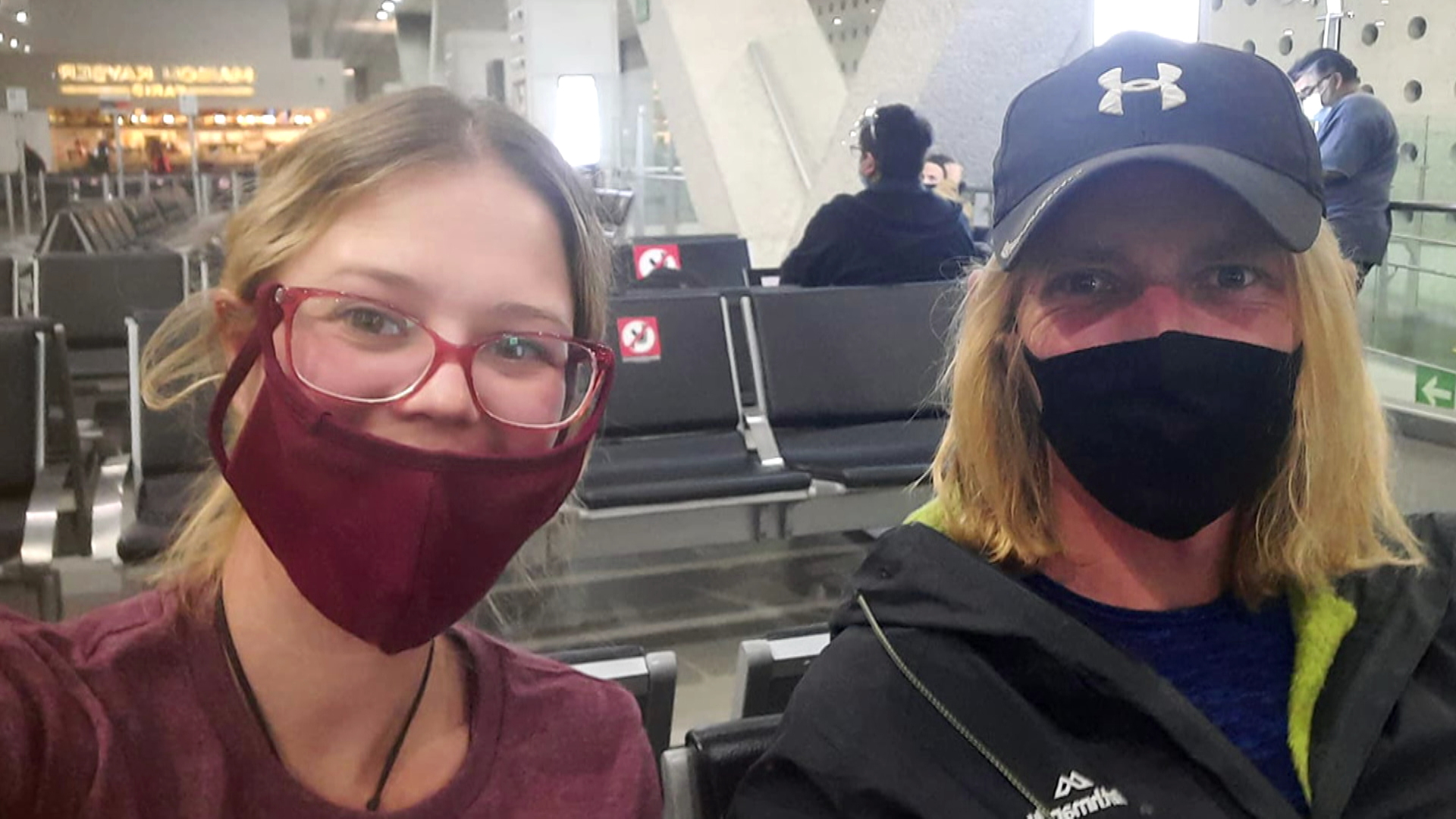

"Jake's a little scared of sharks," Ms Ilic said.
"I've got a healthy fear of sharks, I'd like to say – they're dangerous," Mr Shepherd shot back.
Ms Ilic said they are excited to get home and have an adventure on the way, while Mr Shepherd said at least they're safe from one other danger – the coronavirus.
The pair plan to embark on the long journey on board a 42-foot boat soon.
13 million women in Latin America, the Caribbean, saw their jobs disappear due to COVID-19
LIMA, Peru — The recovery plans for the world of work after the COVID-19 pandemic in Latin America and the Caribbean must include special measures to promote the return to work for women, who were especially hit by a crisis that caused significant exits from the workforce, unemployment and large demands for unpaid care, the International Labour Organization (ILO) highlighted.
“This unprecedented crisis has exacerbated gender gaps in the region’s labour markets, pulling millions of women out of the workforce, and negated previous advances,” said Vinicius Pinheiro, ILO Regional Director for Latin America and the Caribbean. “We have gone back 10 years in 10 months and now we need to recover those jobs and step on the accelerator of gender equality.”
Before the pandemic, gender equality was a pending issue that challenged labour policy makers to confront its structural roots, even though significant progress had been made over decades. With the current crisis, “new dimensions have appeared that widen the gaps.”
“Recovery from the crisis at work must remove the amplification of inequalities caused by COVID-19, if we want to achieve sustainable economic growth with productive and quality jobs. On this International Women’s Day it is crucial to reaffirm the commitment to recover the ground lost during the economic and social debacle in our countries,” added Pinheiro.
The latest available data indicates that in 2020 the labour participation rate of women experienced a historical decline of 5.4 percentage points (a decline of 10.3 percent), reaching a level of 46.4 percent. Lagging behind percentage rates, this means that nearly 12 million women left the regional workforce due to the
destruction of jobs.
The decline in women’s labour force participation came after decades during which there had been a steady increase in their incorporation into paid employment.
According to data from the latest ILO Labour Overview of Latin America and the Caribbean, it has been more than 15 years since there was such a low rate of participation by women.
On the other hand, the regional unemployment rate for women in 2020 increased from 10.3 to 12.1 percent, above the general unemployment average, which rose to 10.6 percent, as highlighted in the Labour Overview. This means that approximately 1.1 million women became unemployed.
The 13.1 million women who have seen their jobs disappear due to the abrupt drop in labour participation and the increase in unemployment this past year added to about 12 million who were already affected by unemployment before the pandemic. In total, around 25 million women are currently unemployed or out of the workforce.
Women have also been affected in the labour market due to their greater presence in economic sectors strongly affected by this crisis, such as services, where about 50 percent of the female labour force works, and commerce, at 26 percent.
According to the regional ILO Labour Overview, the contraction in employment in 2020 was particularly important in service sectors such as hotels (-17.6 percent) and commerce (-12.0 percent). Added to this is the higher incidence of informal occupations that were particularly hit by the crisis in women’s employment.
Another factor that has affected and, even more, may impede women’s job recovery prospects are the growing difficulties of reconciling paid work with family responsibilities. They face a context where educational and care services have been deeply affected and altered hand in hand with health measures for distancing and reducing the mobility of people.
“The pandemic, on the one hand, highlighted the vital importance of these tasks,” explained ILO Regional Employment Specialist, Roxana Maurizio. On the other hand, it further exacerbated tensions regarding the reconciliation between labour market work and family responsibilities. To all this must be added the increase in teleworking and work at home in a context of closure or suspension of care spaces associated with confinement and physical distancing measures.”
According to the ILO, the consequences can extend beyond the health crisis if due support is not generated from the public care systems (for the sick, the elderly and children) and the face-to-face school system, which facilitate the return of women to the labour market.
In turn, the significant increase in the under-utilization of the labour force during 2020 may also generate greater difficulties for their reintegration into work in the future. Thus, the regional economic crisis may even have impacts that are more permanent if suitable socio-labour policy responses are not implemented.
“Policies that include women are not only required, but policies for the recovery of employment and labour markets that, from their design and implementation, have a gender perspective so as not to reproduce the difficulties they face in inserting themselves and staying in the labour market,” commented Maurizio.
Vocational training institutes and systems can play an important role in promoting the participation of women in occupations that are not traditional for them, but with greater future and productivity. It is also important to create a training route for women with low educational levels who have suffered much more from the impact of the crisis and to close the digital gaps between men and women to ensure their participation.
Maurizio added that the challenge goes beyond recovering the heavy labour losses that occurred as a result of the pandemic. “It is necessary to underpin, even more strongly than before, a process that ensures women greater opportunities for quality employment, training and access to new technologies, reduction of gaps and full compliance with labour rights.”
The post 13 million women in Latin America, the Caribbean, saw their jobs disappear due to COVID-19 appeared first on The St Kitts Nevis Observer.
Spartans Fig Tree stop Masters in St. Kitts National Domino Association tournament
BASSETERRE, St. Kitts — Masters of the Domino Art Form Domino Club suffered a loss on Thursday night March 4 during the fifth segment of play in the second round of the St. Kitts National Domino Association tournament that saw them slip down one slot on the points standing table, but are ahead of the team that inflicted the loss.
Knowing that they were at a disadvantaged position, Spartans Fig Tree Domino Club did not waste any of the chances that came their way as they forcefully engaged Masters of the Domino Art Form in their encounter at the New Town Community Centre. Their confidence and shrewdness paid handsomely as they emerged with a comfortable 26-16 win.
For Spartans, Tristan Ward and Cameron Prentice won five games and lost four, Rameece Belboda and Kerrell ‘Franks’ Dasent won four games and lost one, and Everton Boone and George ‘Naddy’ Welsh won four games and lost one. For Masters, Alston Clarke and Selmoth ‘Selly’ Rawlins won four games and lost one.

Lodge Domino Club who had a shaky start at the opening of the tournament have started showing their true form, which would have at one time earned them the highly competitive Constituency Number Seven Domino League championship. When they met bottom of the points standing King Balang Domino Club, Lodge managed a 26-20 win.
For lodge, McAllister Thomas and Samuel Wilson won eight games and lost one, while O’Niel Thomas and ‘Panky’ Williams won five games and lost six. For King Balang Gregory Noah Mills and Charles Morton won four games and lost three, while Yazid Francis and Vernon Elliot won three games and lost six.
In other games, Terminal Boyz Domino Club continued with their winning form by beating Newcomers II Domino Club 26-24 in a hotly contested game; Los Fuertes del Domino overrun Eagle Claws Domino Cub 26-10; Newcomers I Domino Club beat Latecomers Domino Club 26-20; and Poor Man Pocket Domino Club beat Til Ah Marnin Domino Club 26-18.
Points standing after five segments of play in the second round: Terminal Boyz, 68 points; Poor Man Pocket, 63 points; Los Fuertes, 56 points; Masters, 55 points; Til Ah Marnin, 42 points; Newcomers I, 42 points; Spartans, 38 points; Lodge, 35 points; Latecomers, 35 points; Eagle Claws, 30 points; Newcomers II, 21 points; and King Balang, 10 points.
The competition, which is sponsored by the Development Bank of St. Kitts and Nevis – Platinum Sponsor, First Federal Credit Union, Best For Less Trading Ltd, The Craft House, and NAGICO Insurances, continues on Sunday March 7 at the New Town Community Centre starting at 5:00 pm with the teams meeting for the sixth segment of play in the second round of the competition.
Order of play: Terminal Boyz vs. Til Ah Marnin; Eagles Claws vs. Newcomers I; Spartans Fig Tree vs. Los Fuertes del Domino; Latecomers vs. Poor Man Pocket; Lodge vs. Masters of the Domino Art Form; and Newcomers II vs. King Balang.
The post Spartans Fig Tree stop Masters in St. Kitts National Domino Association tournament appeared first on The St Kitts Nevis Observer.
Nevis Animal Speak begins construction on a multi-million dollar veterinary medical clinic

CHARLESTOWN, Nevis — Nevis Animal Speak has started construction on a multi-million dollar veterinary clinic in Clifton’s Estate, Nevis to expand the small animal care services it provides.
Continue reading Nevis Animal Speak begins construction on a multi-million dollar veterinary medical clinic
Once 'essential,' grocery workers now feel 'expendable'
“We have to feed ourselves and pay rent. So we don’t get tested, and we pretend everything is OK,” one grocery worker said.