A Dunedin teenager is butting heads with his high school over his hairstyle.Lewis O’Malley-Scott is like any other 16-year-old school kid. He attends regularly, does his best in class, and like most teens, he’s no saint but he’s…
All posts by FreeNews
Covid 19 coronavirus: Wait times at community testing centres ease as staff conduct thousands of swabs
Thousands of people have been tested since Auckland went into lockdown and the rest of the country moved to alert level 2 – including more than 8600 community swabs carried out in Auckland alone yesterday. A spokeswoman for the…
Local Focus: Tarawera Ultramarathon put elite long distance runners to the test
Three-thousand determined competitors took part in the 13th year of the Tarawera Ultramarathon. It’s four races that push competitors’ bodies to the limits, testing mental strength, endurance, and stamina.”There is the 21km, 50km,…
Covid 19 coronavirus: Why more contagious variants are emerging now, more than a year into pandemic
ANALYSIS: New variants of SARS-CoV-2 have now evaded New Zealand’s border protections twice to spread into the community. In the most recent outbreak, which placed Auckland into an alert level 3 lockdown, there are three…
Illegal fishing net in Auckland marine reserve caught pied shag, sharks and eagle rays – DoC investigating
An illegal 120-metre long fishing net has been discovered in an Auckland marine reserve full of dead sea life including rays, sharks and seabirds. A Department of Conservation ranger discovered the net in Motu Manawa-Pollen Island…
Local Focus: Covid 19 alert level 2 impacts Rotorua fashion event
The move to Covid-19 alert level 2 means the potential postponement of the Chinese Fashion Show Rotorua this weekend, which would have marked the Chinese New Year.”We’ve been planning this event for a long time now,” fashion designer…
Naked mangrove fugitive claimed he got lost on way to Tones and I gig
A Darwin fugitive busted by a pair of fishermen stark naked in croc-infested mangroves last month has told a court he's still suffering scars on his body weeks after his ill-fated bid for freedom.
Luke Voskerensky made headlines around the world after spending four days hiding in mangroves from police, surviving off snails and being eaten by mosquitoes before being rescued by two fishermen, Cam Faust and Kevin Joiner.
The 40-year-old offender convinced the fishermen he had simply become lost on the way to Tones and I's New Year's Eve concert at the Waterfront but in reality, he was a wanted man after assaulting a former girlfriend and removing his electronic monitoring device.
READ MORE: Naked fugitive found in croc-infested mangroves by fishermen near Darwin
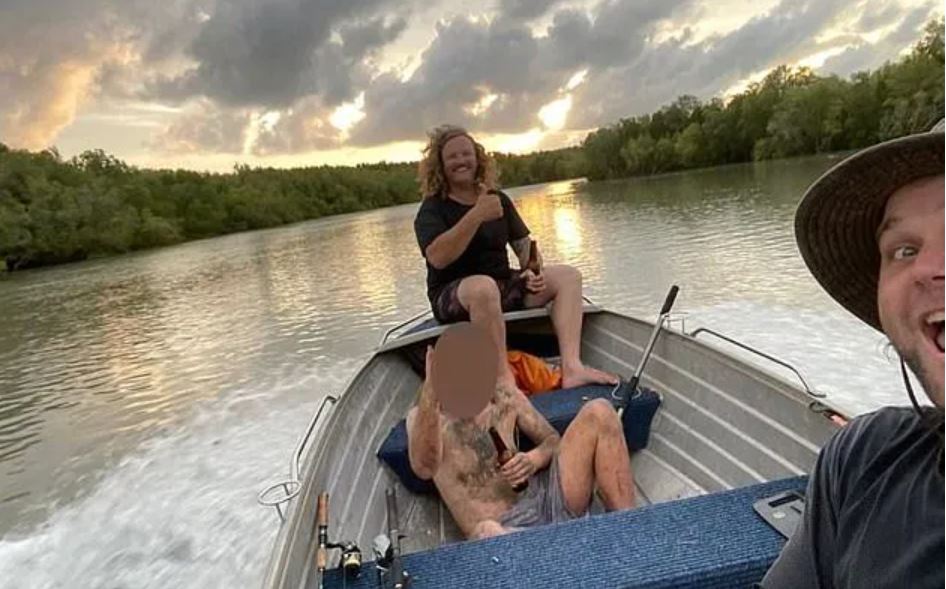
Voskerensky pleaded guilty to pulling her hair and breaching his bail after booking a flight from Darwin to Cairns under a false name.
It was a flight he never made after the mangroves got the better of him and he needed to be admitted to hospital in a malnourished state.
"I was going to go visit him in hospital and my partner's a paramedic saying he's in hospital with handcuffs on – two cops babysitting him. So we were like, oh maybe we'll leave it," Mr Faust said following the rescue.
Mr Joiner joked: "I don't think we'll ever catch nothing like that again".
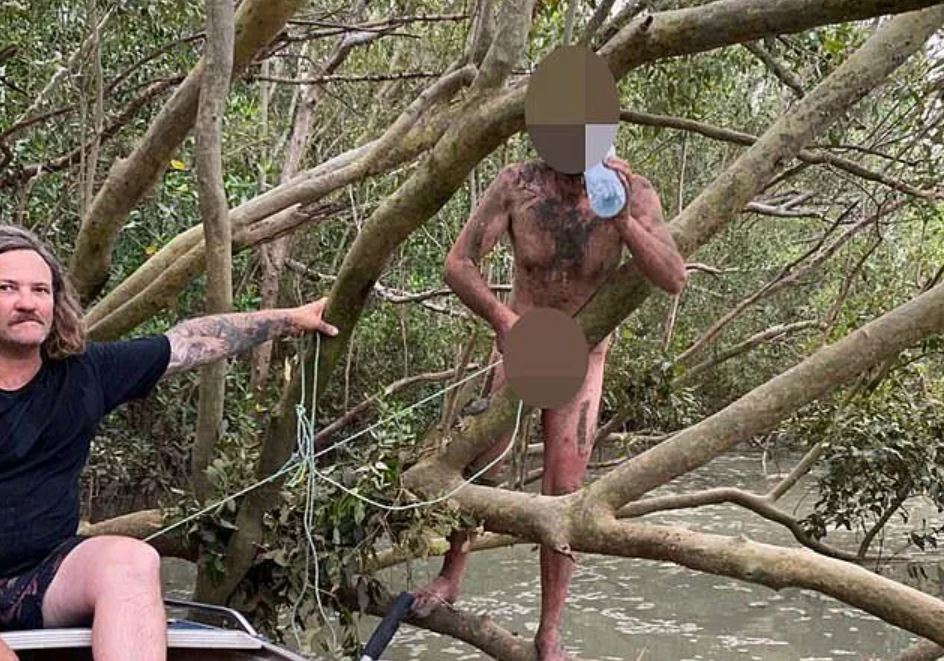
In arguing for a suspended sentence, his defence lawyer John Adams said his client had suffered extra punishment for his offences as a result of his "uncomfortable" stay in the mangroves.
But Judge Greg Macdonald questioned whether self-inflicted stupidity could be taken into account.
Mr Voskerensky told the court via video link from custody the four-day snail-eating expedition helped him realise "he's got to do what he's told".
He will be sentenced on Friday.
Winter storm hits Texas, leaving millions of homes without electricity
A frigid blast of winter weather across the US plunged Texas into an unusually icy emergency.
Strange life forms found under Antarctic ice
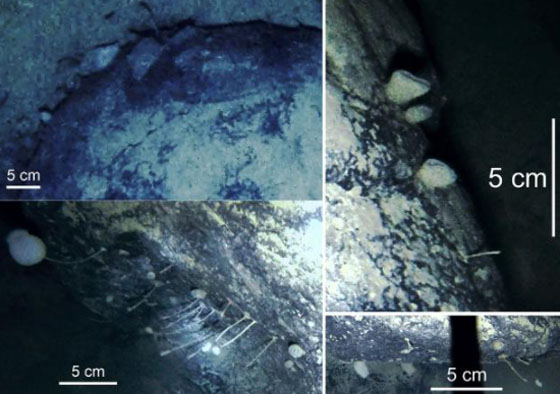
The accidental discovery of strange life forms on a boulder beneath the ice shelves of the Antarctic has confounded scientists.
Researchers were drilling through 900m of ice in the Filchner-Ronne Ice Shelf, situated on the southeastern Weddell Sea, when they stumbled upon unexpected creatures "firmly attached to a rock," living in the darkness and subzero temperatures.
A collection of stationary animals — sponges and potentially several previously unknown species — were among the discoveries.
READ MORE: Crumbling Antarctic glaciers threaten sea levels
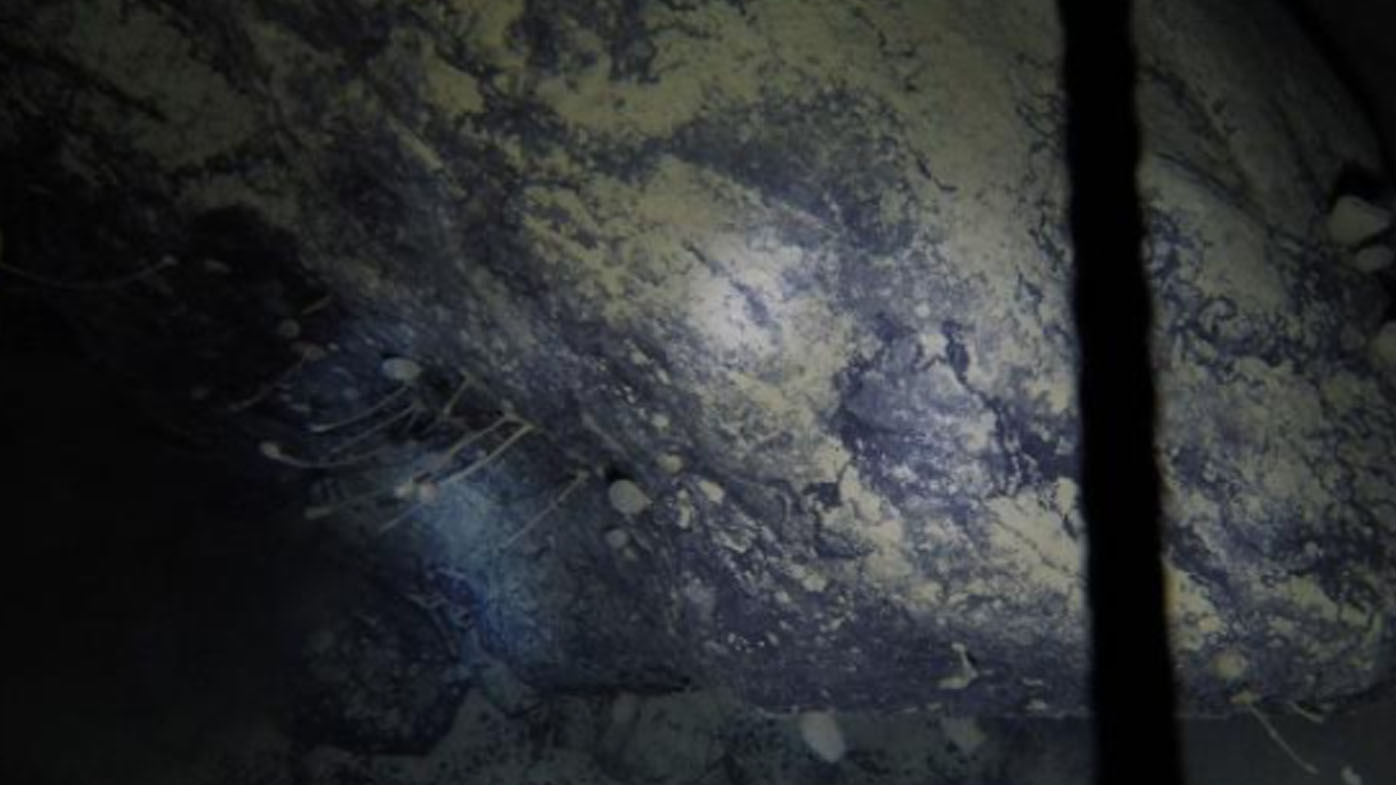
Animals like these aren't expected to live in these extreme locations, because they are so far from sunlight and any obvious source of food.
It was "a genuine surprise to see these animals there," said marine biologist Huw Griffiths, lead author of a new study documenting the discovery. "It's about 160 kilometres further under the ice shelf than we had ever seen a sponge before."
The accidental discovery was made by a team of geologists, who were drilling through the ice to collect mud samples but came across the rock harbouring these strange creatures.
The area beneath giant floating ice shelves is one of the least known habitats on Earth.
READ MORE: Mummified penguins unearthed in Antarctica
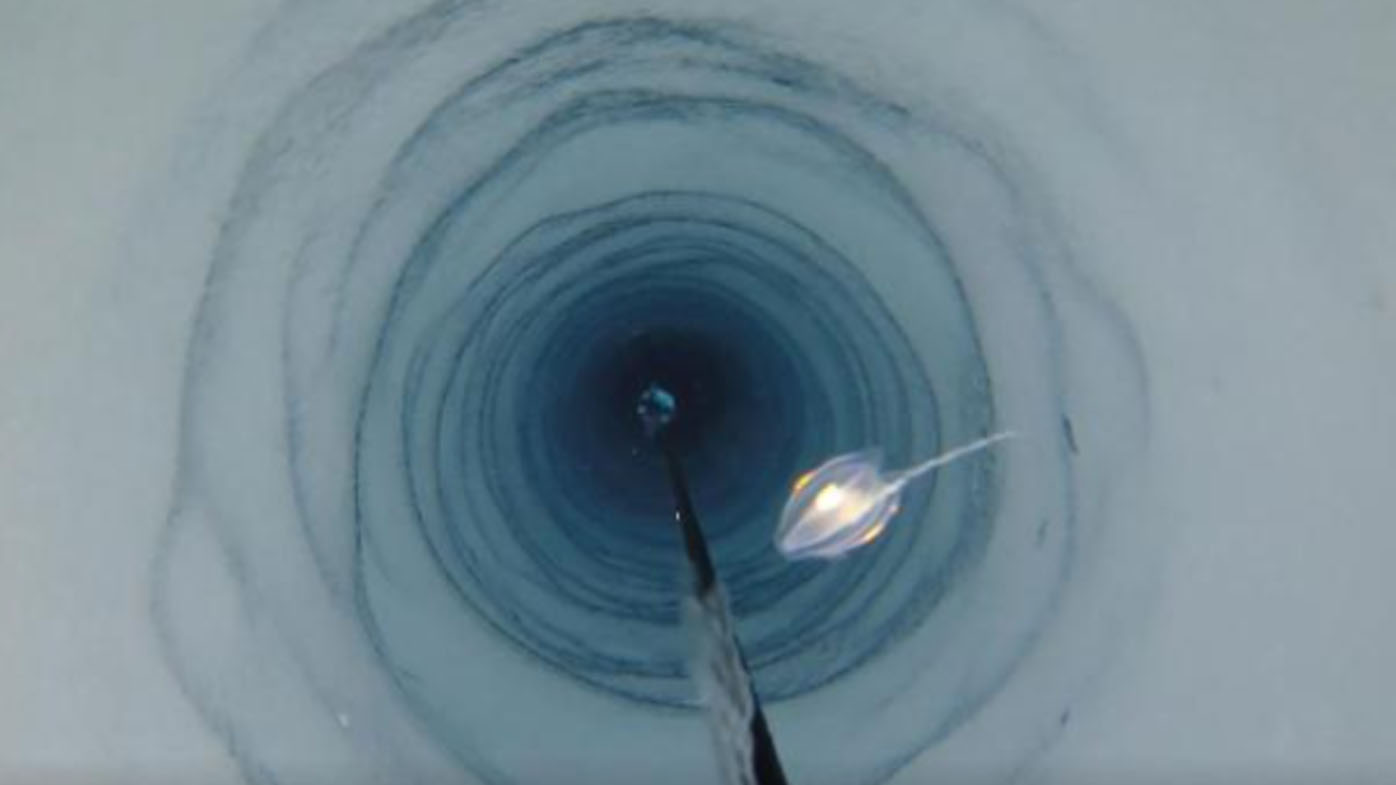
To get a glance at what is happening below a huge mass of ice, boreholes are drilled through it and cameras lowered down. The total area that humans have seen below the ice shelves adds up to about the size of a tennis court, according to Dr Griffiths, who has worked with the British Antarctic Survey for more than 20 years.
Finding the sponges in this remote location, Dr Griffiths said, was what made this discovery particularly perplexing.
If there was lots of sunlight and an abundance of food, filter-feeding animals like these would usually dominate, Dr Griffiths said. In deep seas with a limited food supply, you're more likely to find crabs and mobile animals that scavenge for food, he added.
https://twitter.com/BAS_News/status/1361198123213852673?ref_src=twsrc%5Etfw
"Somehow, some really specialised members of the filter-feeding community can survive," he said. "They could be brand-new species or they could just be incredibly hardy version of what normally lives in Antarctica — we just don't know. My guess would be that they are potentially a new species."
Dr Griffiths said: "If they are living somewhere as tough as this, they are probably specially adapted to being there. There is a good chance they might go weeks, months and years without food — you have to be pretty hardy to cope with that."
This could be an opportunity to learn from these "hardy" organisms and how they survive in extreme conditions — be it for medical, engineering or other scientific purposes, he said.
Smarter technology and ideas are needed to get closer to these animals, he said, and more research is required to really get a better and bigger picture of what's going on beneath the ice.
"It's this idea that there is a whole world that we know nothing about. The idea that there are lots more of these rocks down there. … That would constitute a huge habitat that we didn't know existed," Dr Griffiths said.
"There are so many questions. There is life on Earth that isn't playing by the rules that biologists understand."
AstraZeneca vaccine approved for use in Australia
Australia's Therapeutic Goods Administration (TGA) has granted provisional approval to AstraZeneca for its COVID-19 vaccine, making it the second vaccine to receive regulatory approval in Australia.
Initial supply of this vaccine will be imported into Australia from overseas, however it is anticipated that ongoing supply will be manufactured in Australia.
Prior to the supply of vaccines manufactured onshore, AstraZeneca will submit further information and data to the TGA to confirm that onshore manufacturing will meet strict quality standards.
READ MORE: Pfizer vaccine likely to 'retain effectiveness' against some variants
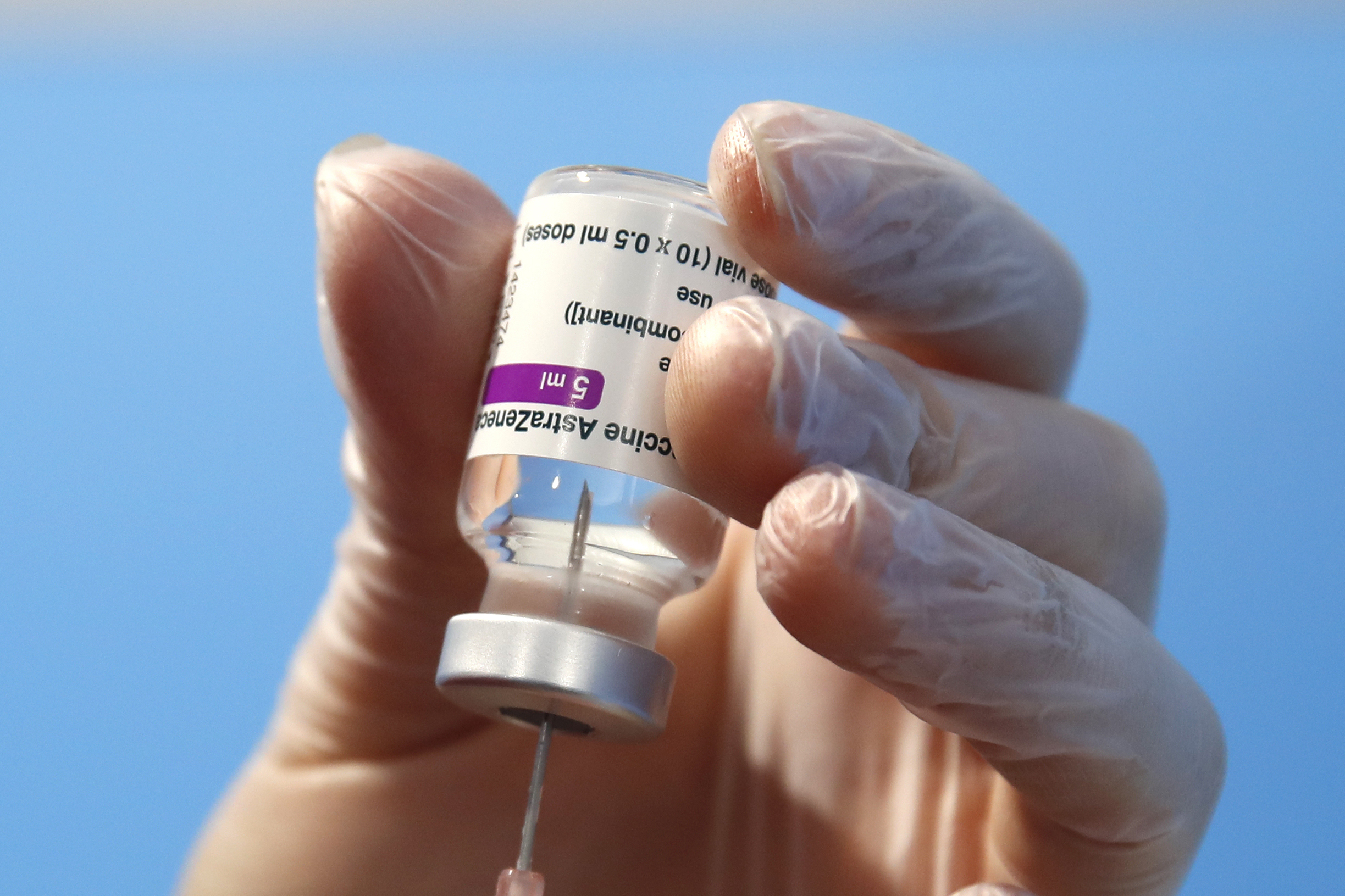
The approval is valid for two years and the vaccine can now be legally supplied in the country, the TGA said.
The second dose of the vaccine is to be administered from four to 12 weeks after the first.
The approval is given for Australians aged 18 years and older. There were no safety concerns from elderly patients during the vaccine trials.
"Elderly patients over 65 years of age demonstrated a strong immune response (high seroconversion rates) to the vaccine in clinical trials, however there were an insufficient number of participants infected by COVID-19 to conclusively determine the efficacy in this subgroup," the TGA noted in its approval.
READ MORE: WHO approves AstraZeneca's COVID-19 vaccine for emergency use

"In this sub-population, efficacy has been inferred from immunogenicity data and efficacy demonstrated in the general population.
"Reassuringly, there were no safety concerns in this age group in the clinical studies, nor in the large numbers of elderly people who have been vaccinated to date in overseas rollouts."
Rollout an 'enormous exercise': PM
Australia's vaccination strategy is an "enormous exercise", Prime Minister Scott Morrison has said.
"The vaccines that we have, they address the critical issue of serious disease and indeed, the risk of fatality that can arise from COVID-19," he said.
"Increasingly we're seeing positive signs about its impact on transmissibility as well."
READ MORE: Australia's coronavirus vaccination program begins crucial week
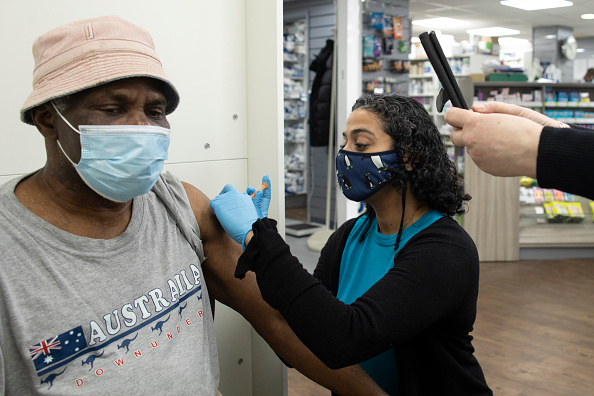
Health Minister Greg Hunt has touted the positive results seen from the AstraZeneca vaccine published in top medical journal The Lancet.
The journal stated the AstraZeneca vaccine offers a 100 percent "protection against severe disease, hospitalisation, and death".
"What that means is that the vaccine rollout is on track," he said.
"All of the team at the TGA that have worked extraordinary hours to tick every box, to assess everything, to make sure that safety, safety, safety, is the number one priority."
READ MORE: UK hits target: Gives at least 1 vaccine shot to 15 million
'No indication' vaccine is unsafe for pregnant women
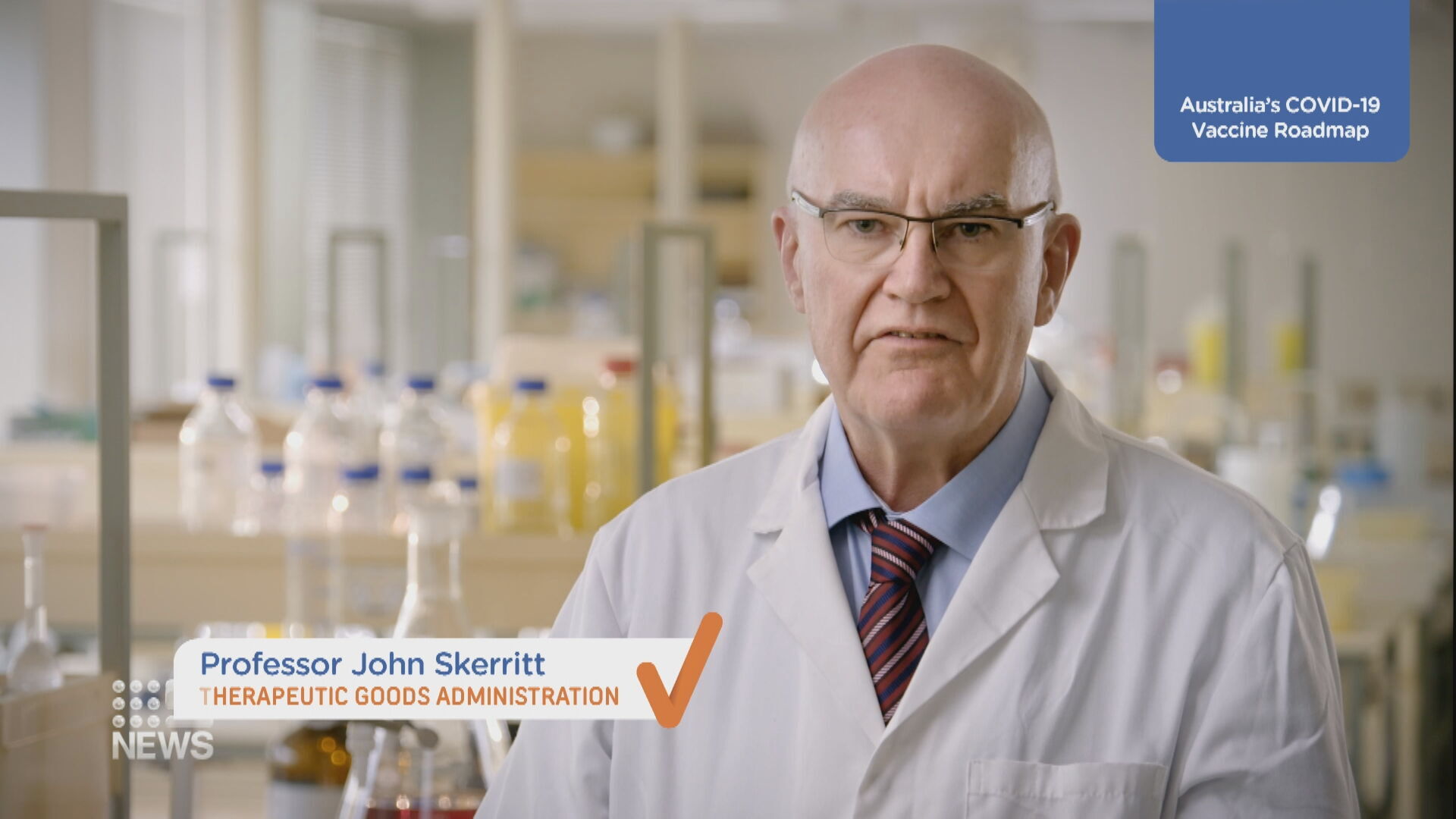
TGA boss John Skerritt also said there was no indication the vaccine was unsafe for pregnant women.
"If you're known to be pregnant, you can't volunteer for a clinical trial. It's just a safety measure, a precautionary measure," Prof Skerritt said.
"However, there were a number of people who didn't know they were pregnant or became pregnant during the trials, and there haven't been reports of adverse outcomes."
READ MORE: Oxford University testing COVID-19 vaccine in children
Of the pregnant women overseas who have since received the vaccine, there has been no indication of a problem.
"Those babies are yet to be born and so forth, again, there's no evidence of anything untoward such as miscarriage or illness during pregnancy," Prof Skerritt said.
"As the weeks and months go on, we'll know a lot more about pregnancy with these vaccines."
You can get up-to-date information from the Federal Government's Coronavirus Australia app, available on the App Store, Google Play and the Government's WhatsApp channel.
Beyond Blue's Coronavirus Mental Wellbeing Support Service is a 24/7 service free of charge to all Australians. Visit the site here or call 1800512348
For coronavirus breaking news alerts and livestreams straight to your smartphone sign up to the 9News app and set notifications to on at the App Store or Google Play.