Test your brains with the Herald’s morning quiz. Be sure to check back on nzherald.co.nz at 3pm for the afternoon quiz. To challenge yourself with more quizzes, CLICK HERE.
All posts by FreeNews
Covid 19 coronavirus: Police say Northland iwi Covid checkpoints not needed
Police respect the intentions of a Northland group which wants to resurrect Covid-19 checkpoints on the region’s key roads — but say checkpoints aren’t needed as long as the country is in alert level 1. Yesterday the iwi group behind…
Battle Royal Shaping Up for Trump Senate Trial
The post Battle Royal Shaping Up for Trump Senate Trial appeared first on The St Kitts Nevis Observer.
Nevis Water Department announces one-day closure
CHARLESTOWN, Nevis — The following is a notice from the Nevis Water Department in the Nevis Island Administration.
The Nevis Water Department will be closed on Tuesday, February 2. However, normal operating hours will resume on Wednesday, February 3.
We apologise for any inconvenience this may cause to the general public.
Thanks for your understanding.
The post Nevis Water Department announces one-day closure appeared first on The St Kitts Nevis Observer.
Mexico: Massacre of Migrant Guatemalans?
GUATEMALA CITY (AP) — Relatives of migrants from Guatemala said Monday they believe that 13 of the 19 charred corpses found in a northern Mexico border state could be their loved ones and the country’s Foreign Ministry said it was collecting DNA samples from a dozen relatives to see if there was a match with any of the bodies.
If true, the killings would revive memories of the 2010 massacre of 72 migrants in the same gang-ridden state of Tamaulipas.
Ramiro Coronado told The Associated Press by telephone that he had a relative among a group of 13 migrants who left the province of San Marcos and were travelling together before family members lost contact with them on Thursday.
Mexican authorities said they are not sure the bodies are those of migrants. The Guatemalan Foreign Ministry wrote in a press statement that “Mexican authorities are in the phase of conducting tests for identification, and for that reason they are not able to confirm their identities at this time.”
Camargo, the area where the bodies were found, has long been the scene of turf battles between rival drug gangs, and authorities said three rifles were found in the pickup truck where the bodies were piled.
The National Immigration Institute said it was working with foreign consulates in Mexico, but the bodies were so badly burned they cannot immediately be identified. Melted remains of what appear to be cellphones were also found.
Coronado said his nephew, Adán Coronado, 31, had left for the United States along with other migrants in the San Marcos group about two weeks ago.
“They were a group that travelled together,” Coronado said, and they kept in contact with family members back home. But they were apparently in or near Tamaulipas at the time, and since Thursday there had been no word from them.
“It was the first time he had gone (to the U.S.). He said he wanted a better life situation for himself and his family,” Coronado said.
Mario Gálvez, a congressman who represents San Marcos, wrote in his social media accounts that the missing migrants included 10 men and three women.
“We have contacted the relatives, they say that the bodies found are those of their relatives, they have information that it was that group,” Gálvez wrote. “We have asked the Foreign Ministry to help the families with the repatriation of the bodies.”
“They cannot find development opportunities in their hometowns, which have historically been totally abandoned by the government,” Gálvez wrote. “The dream of our children and youths has become to reach the United States.
The Tamaulipas state prosecutor’s office said the bodies were discovered along a dirt road outside Camargo late Friday after residents reported a burning vehicle. Four bodies were found in the cab and near the vehicles, and the other 15 were piled in the bed of the truck.
All had been shot, but shell casings were not found at the site, leading investigators to believe they were killed somewhere else.
A repeat of the 2010 massacre has long been one of the Mexican government’s worst nightmares. In 2019, President Andrés Manuel López Obrador said, “We do not want a repeat of horrendous, regrettable acts like San Fernando.”
In August 2010, Zetas cartel members stopped two tractor-trailers carrying dozens of mostly Central American migrants and took them to a ranch in Tamaulipas town of San Fernando. After the migrants refused to work for the cartel, they were blindfolded, tied up on the floor and shot dead.
Camargo is a major smuggling transit point for drugs and migrants. Organized crime groups covet control of stretches of the border because they make money off everything that crosses the border.
Camargo is near the edge of territory historically controlled by factions of the Gulf cartel and in recent years a remnant of the Zetas known as the Northeast cartel has tried to take over.
In January 2020, 21 bodies, most burned, were found in various vehicles near the neighboring town of Ciudad Mier. Days later the Mexican army killed 11 alleged gunmen in the area.
The post Mexico: Massacre of Migrant Guatemalans? appeared first on The St Kitts Nevis Observer.
Vatican clears retired US bishop of multiple sex abuse claims
The Vatican has cleared a retired US bishop of multiple allegations he sexually abused minors and teenagers, rejecting lay experts' determination that a half-dozen claims were credible and instead slapping him on the wrist for what it called "flagrant" imprudent behaviour.
The Vatican's Congregation for the Doctrine of the Faith (CDF) exonerated retired Cheyenne, Wyoming Bishop Joseph Hart of seven accusations abuse and determined that five others couldn't be proven "with moral certitude."
Two other cases involving boys, who were 16 and 17, couldn't be prosecuted given the Catholic Church didn't consider them minors at the time of the alleged abuse, the diocese reported on Monday. A 13th allegation wasn't addressed in the decree.
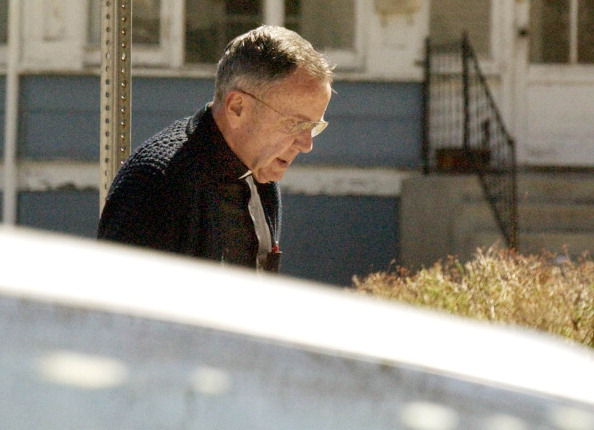
Hart, 89, had long maintained his innocence and denied all allegations of misconduct.
RELATED: Pope updates Vatican financial authority following scandals
The Vatican decision clearly disappointed Hart's successor, Bishop Steven Biegler, who stressed that the Vatican's findings didn't mean Hart was innocent, just that the Holy See determined that the high burden of proof hadn't been met.
"Today, I want the survivors to know that I support and believe you" Mr Biegler said in a statement.
"I understand that this announcement will not bring closure to the survivors, their family members, Bishop Hart and all those affected."
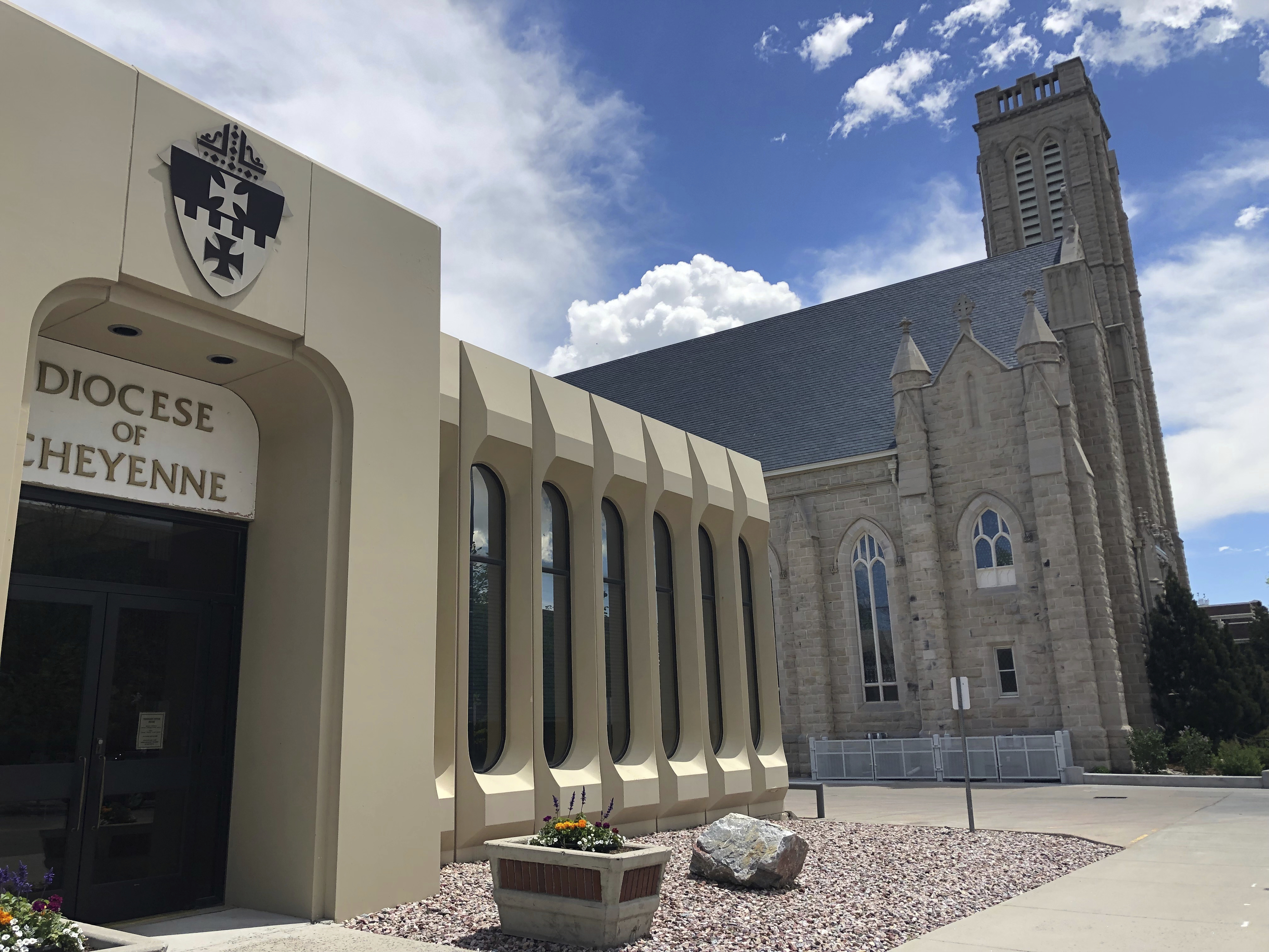
Mr Biegler has previously stood by the findings of his review board, which determined a half-dozen claims were credible. And a diocesan statement noted the qualifications of its members: "law enforcement; school administration; a doctor of psychology; a paediatrician; a psychotherapist, who treats sexually abused children; and a judge, who was a criminal prosecutor for 13 years involving crimes against children, primarily child sexual abuse."
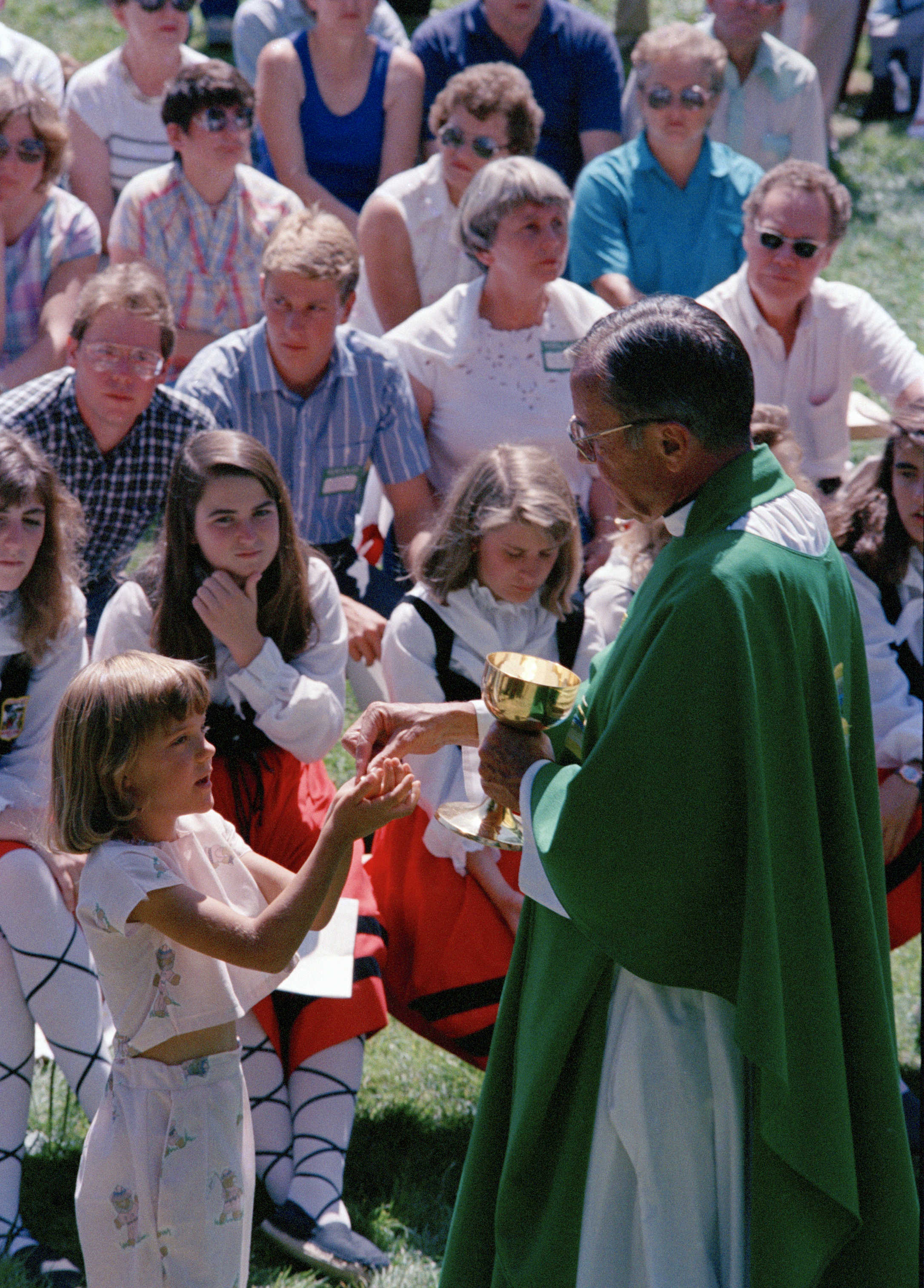
On the other hand, the Vatican's CDF relies on the judgement of priests and bishop canon lawyers, and ultimately the pope.
The Vatican for decades has been blasted by victims' groups for giving bishops a pass when they have been accused of sexual abuse themselves or of covering it up.
A few exceptions have been made in recent years, most famously in the case of ex-Cardinal Theodore McCarrick, who was defrocked after the CDF determined he had abused minors as well as adults, including during confession — essentially the same allegations against Hart.
As a result, the sentence showed the arbitrary nature of Vatican's canonical sex abuse deliberations and judgements, which aren't public.
Hart's previous diocese of Kansas City-St. Joseph reached court settlements years ago with at least 10 victims.
But Wyoming criminal prosecutors also decided last year not to proceed with charging Hart.
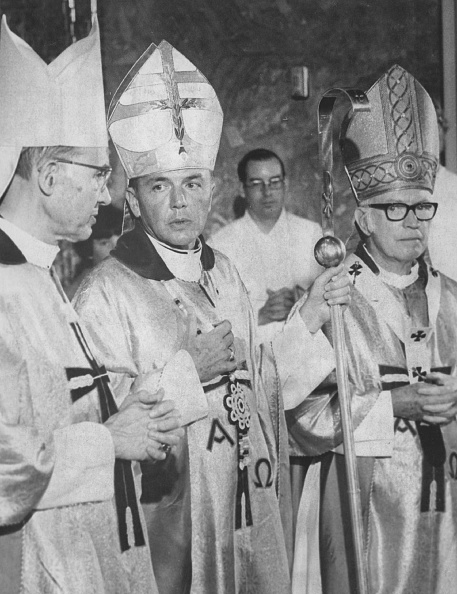
Anne Barrett Doyle, of the online resource BishopAccountability.org, said the Vatican ruling was "heartbreaking and disgraceful" and showed that church law is biased in favour of priests and bishops.
"Defenders of canon law might point to the punishment of ex-cardinal McCarrick as evidence that the system works," Ms Doyle said.
"But for every McCarrick, there are five Harts: bishops who retain their titles and pensions in the face of multiple allegations."
Ms Doyle added that the ruling calls into question Pope Francis' vow to hold bishops accountable.
In its decree, the CDF rebuked Hart "for his flagrant lack of prudence as a priest and bishop for being alone with minors in his private residence and on various trips which could have been potential occasions endangering the 'obligation to observe continence' and that would 'give rise to scandal among the faithful,'" the diocese said.
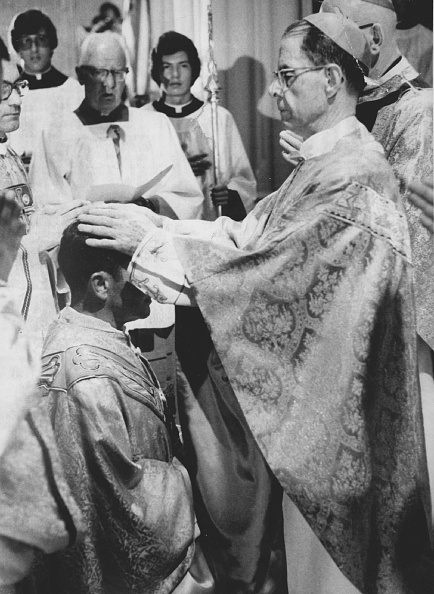
Hart was also rebuked for failing to observe previous Vatican restrictions prohibiting him from having contact with minors and seminarians and from participating in public engagements, the diocese said, adding that those restrictions remain in place.
Hart was a priest in Kansas City, Missouri, for 21 years before moving to Wyoming, where he served as auxiliary and then full bishop from 1976 until his retirement in 2001.
The first known allegations against Hart dated to the early 1960s and were made in the late 1980s.
At least six men came forward in the past few years to say Hart abused them in Wyoming.
Angry farmers storm India's Red Fort in huge tractor rally
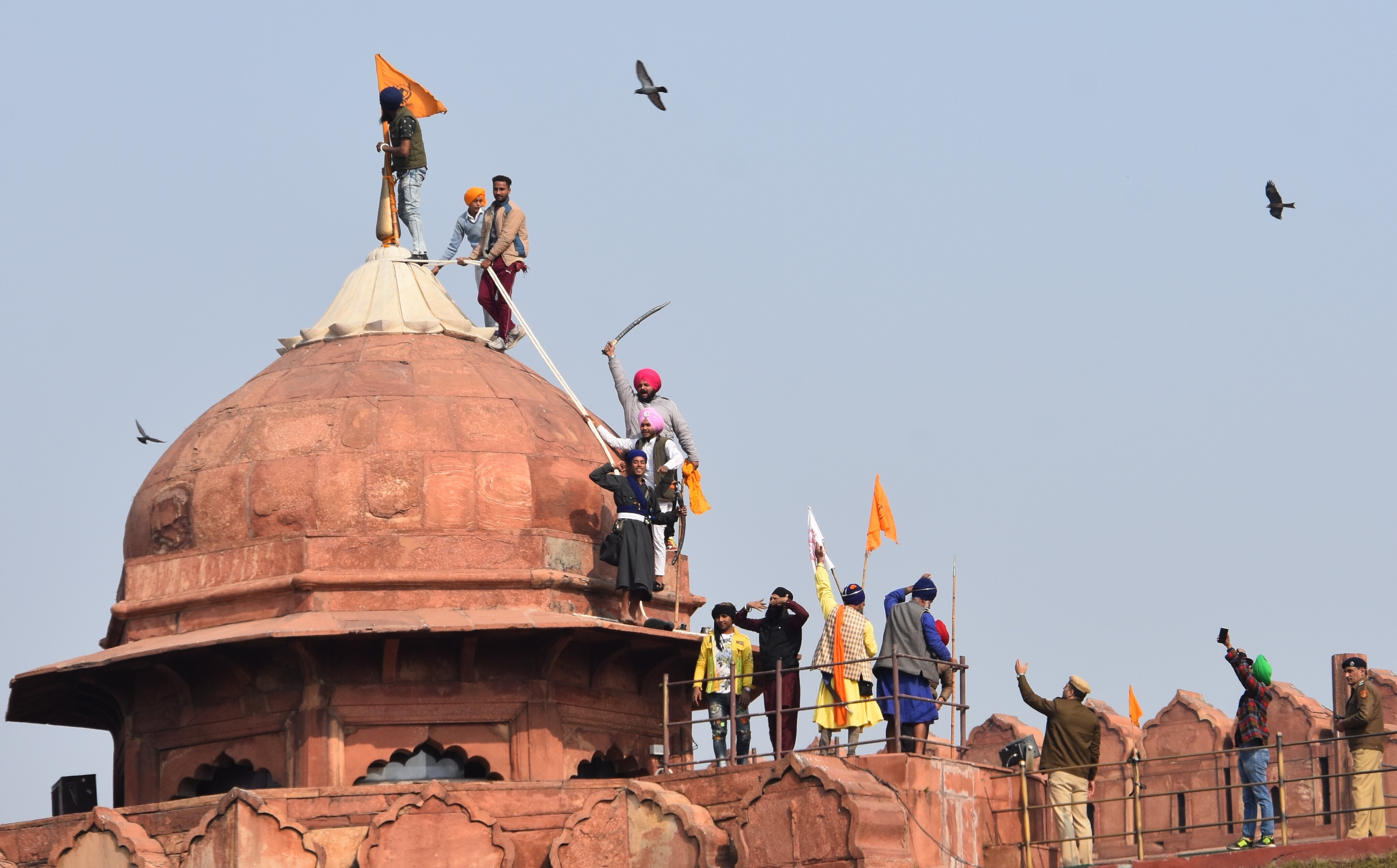
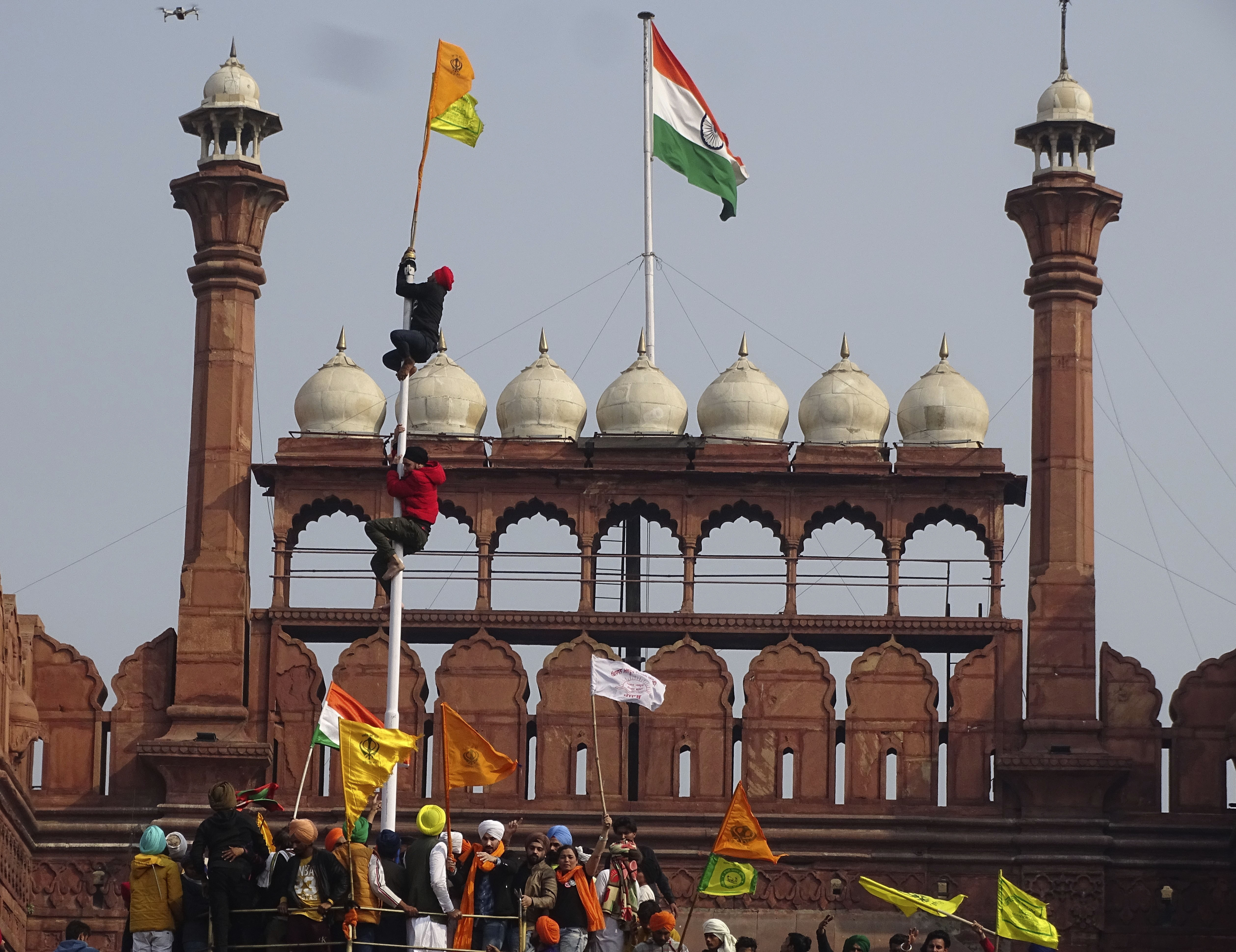
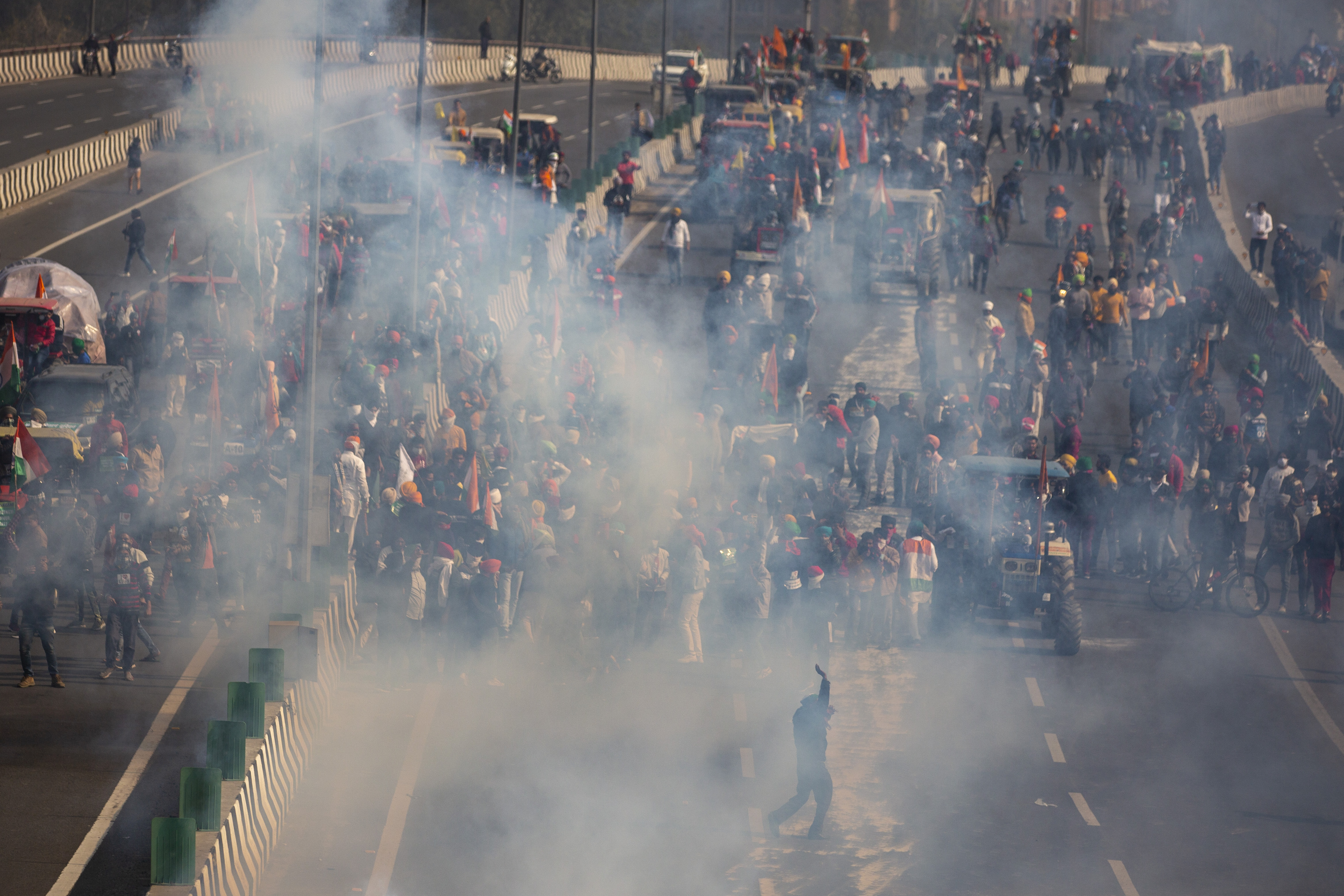
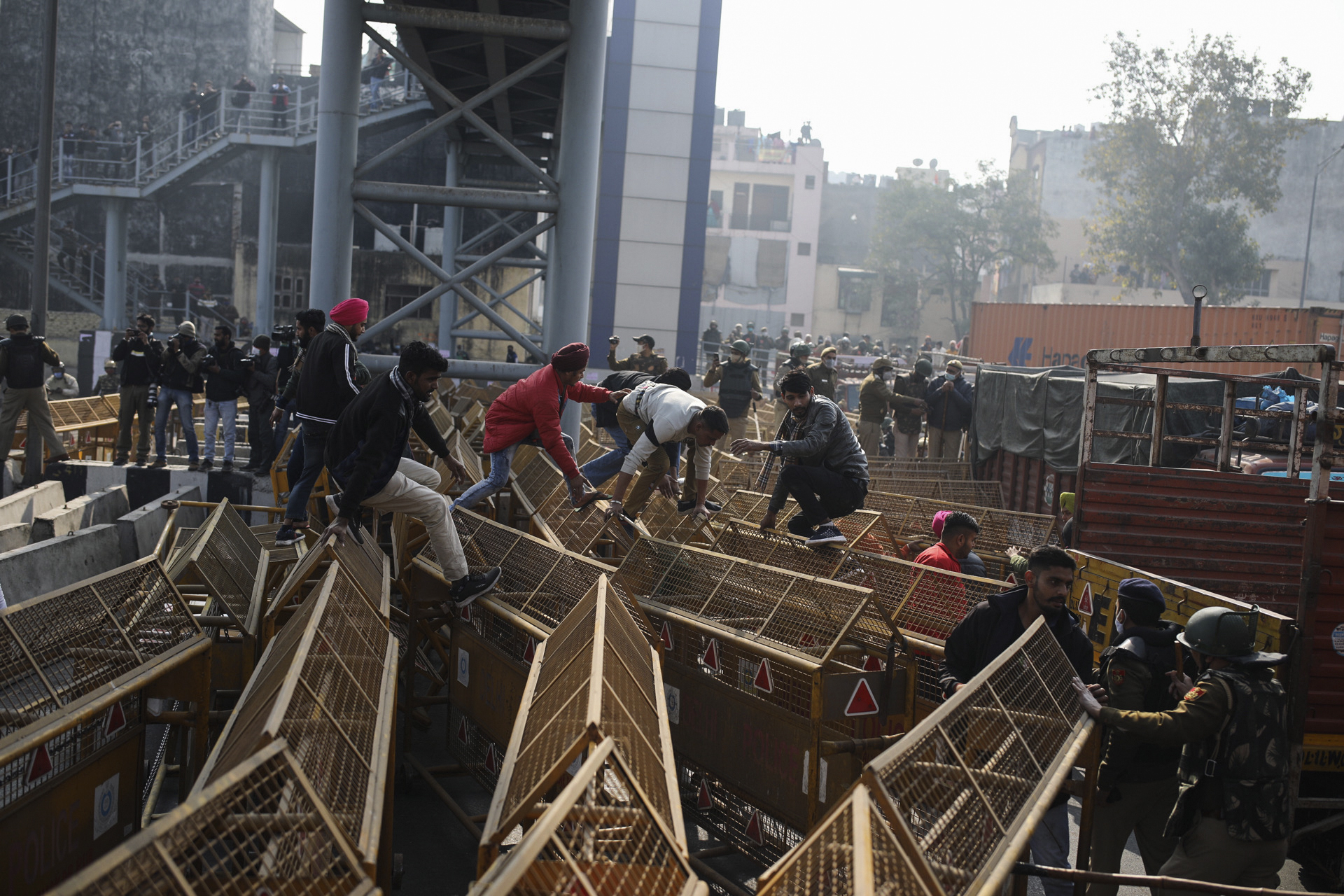
Tens of thousands of protesting farmers drove long lines of tractors into India's capital on Tuesday, breaking through police barricades, defying tear gas and storming the historic Red Fort as the nation celebrated Republic Day.
They waved farm union and religious flags from the ramparts of the fort, where prime ministers annually hoist the national flag to mark the country's independence.
Thousands more farmers marched on foot or rode on horseback while shouting slogans against Prime Minister Narendra Modi.
At some places, they were showered with flower petals by residents who recorded the unprecedented rally on their phones.
Police said one protester died after his tractor overturned, but farmers said he was shot.
Protesters laid his body on the road after draping it in an Indian flag and sat around it.
Television channels showed several bloodied protesters.
Leaders of the farmers said more than 10,000 tractors joined the protest.
For nearly two months, farmers, many of them Sikhs from Punjab and Haryana states, have camped at the edge of the capital, blockading highways connecting it with the country's north in a rebellion that has rattled the government.
They are demanding the withdrawal of new laws which they say will commercialise agriculture and devastate farmers' earnings.
"We want to show Modi our strength," Satpal Singh, a farmer who drove into the capital on a tractor along with his family of five, said.
"We will not surrender."
Riot police fired tear gas and water cannons at numerous places to push back the rows upon rows of tractors, which shoved aside concrete and steel barricades.
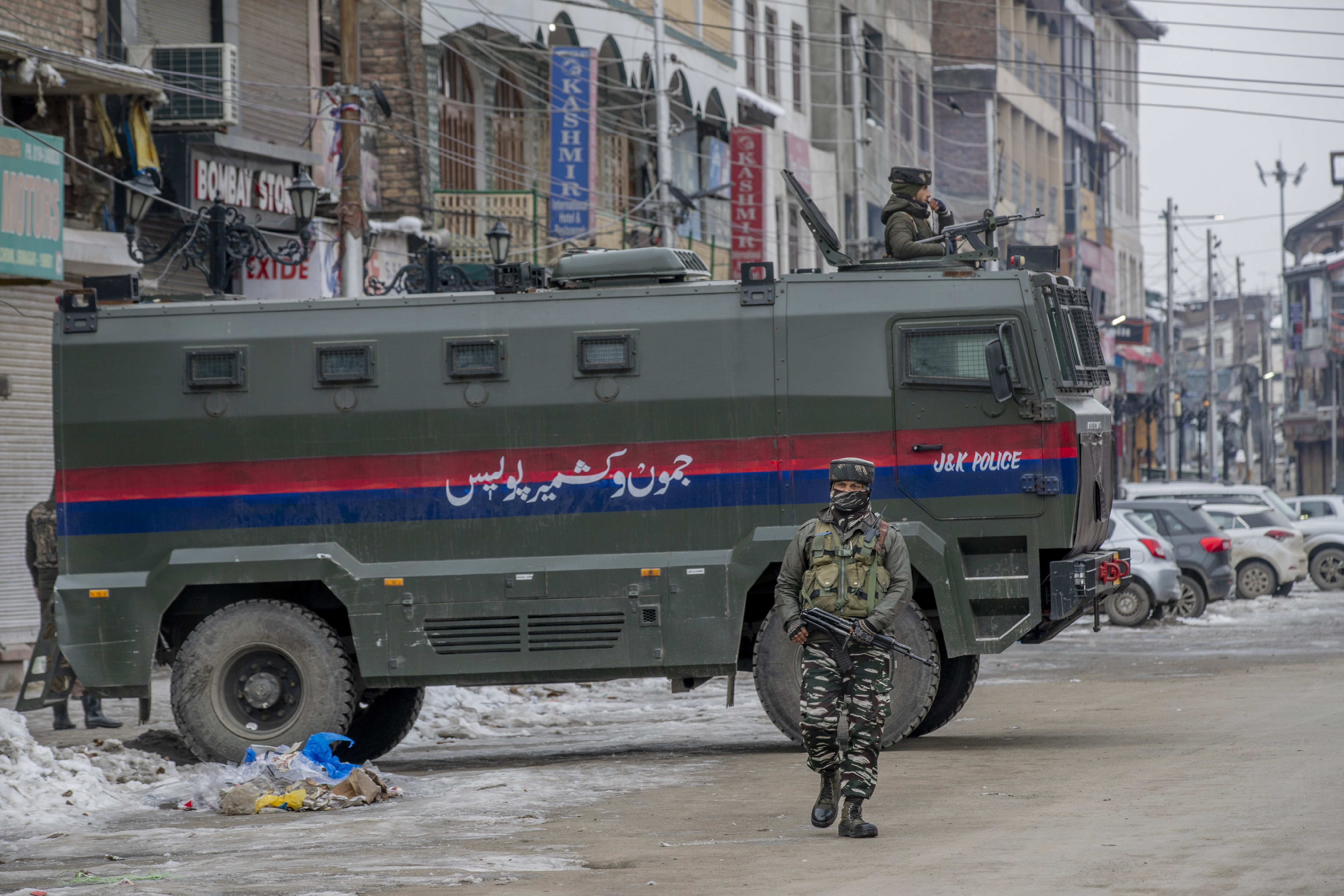
Authorities blocked roads with large trucks and buses in an attempt to stop the farmers from reaching the centre of the capital.
Thousands, however, managed to reach some important landmarks.
"We will do as we want to. You cannot force your laws on the poor," Manjeet Singh, a protesting farmer, said.
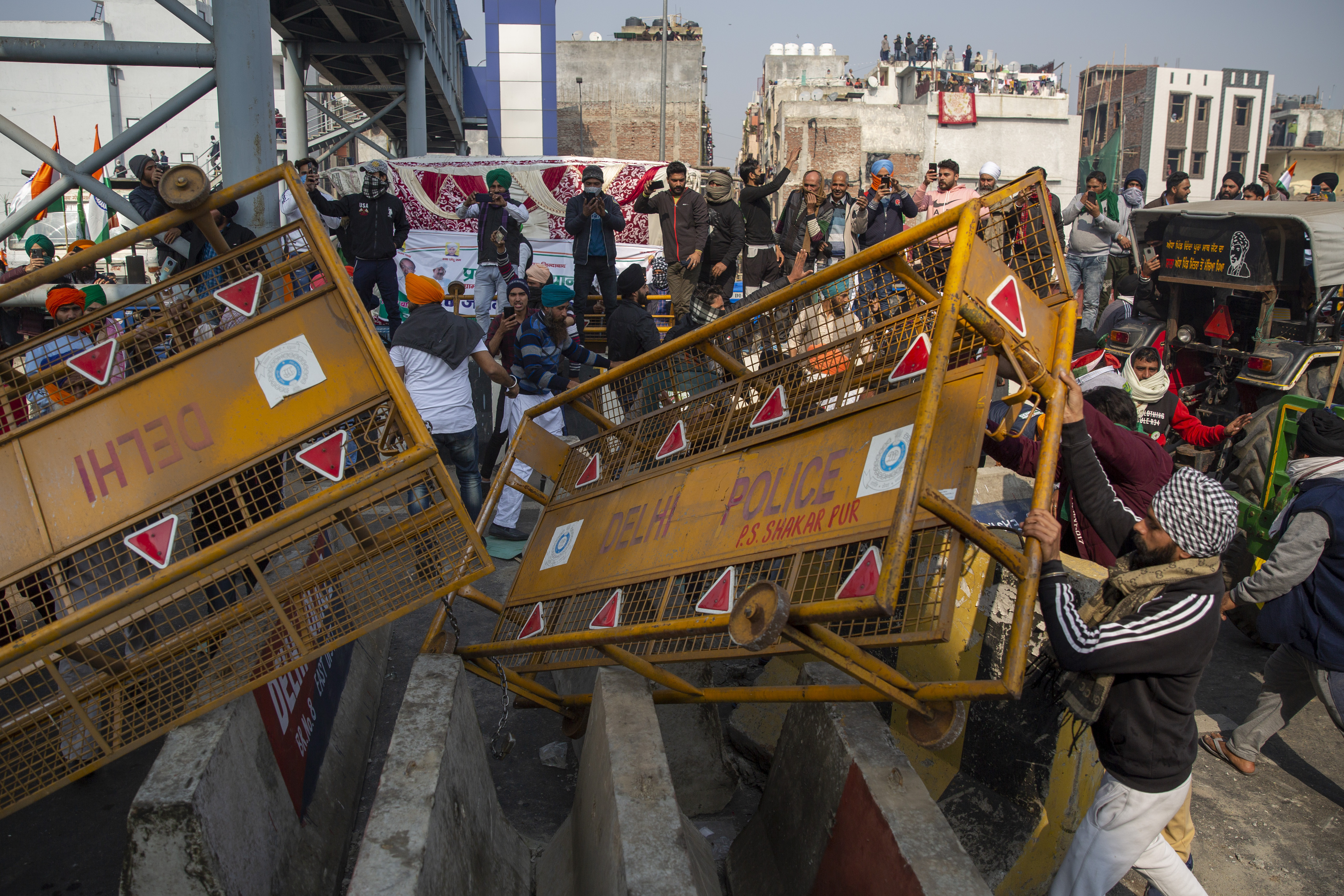
Authorities shut some metro train stations, and mobile internet service was suspended in some parts of the capital, a frequent tactic of the government to thwart protests.
The government insists that the agriculture reform laws passed by Parliament in September will benefit farmers and boost production through private investment.
Farmers tried to march into New Delhi in November but were stopped by police.
Since then, unfazed by the winter cold, they have hunkered down at the edge of the city and threatened to besiege it if the farm laws are not repealed.
The government has offered to amend the laws and suspend their implementation for 18 months.
But farmers insist they will settle for nothing less than a complete repeal.
They plan to march on foot to Parliament on February 1, when the country's new budget will be presented.
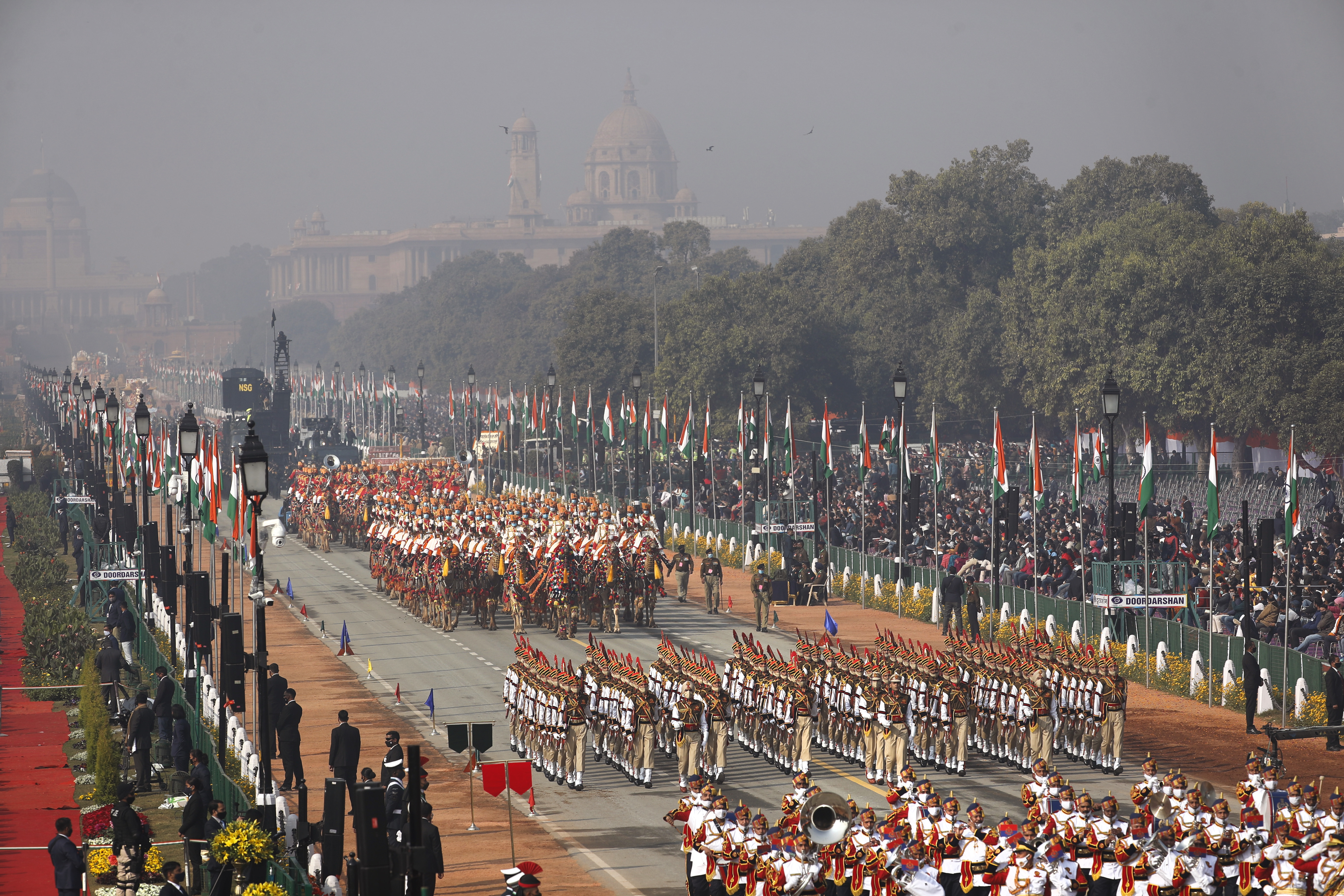
The protests overshadowed Republic Day celebrations, in which President Modi oversaw a traditional lavish parade along ceremonial Rajpath boulevard displaying the country's military power and cultural diversity.
The parade was scaled back because of the coronavirus pandemic.
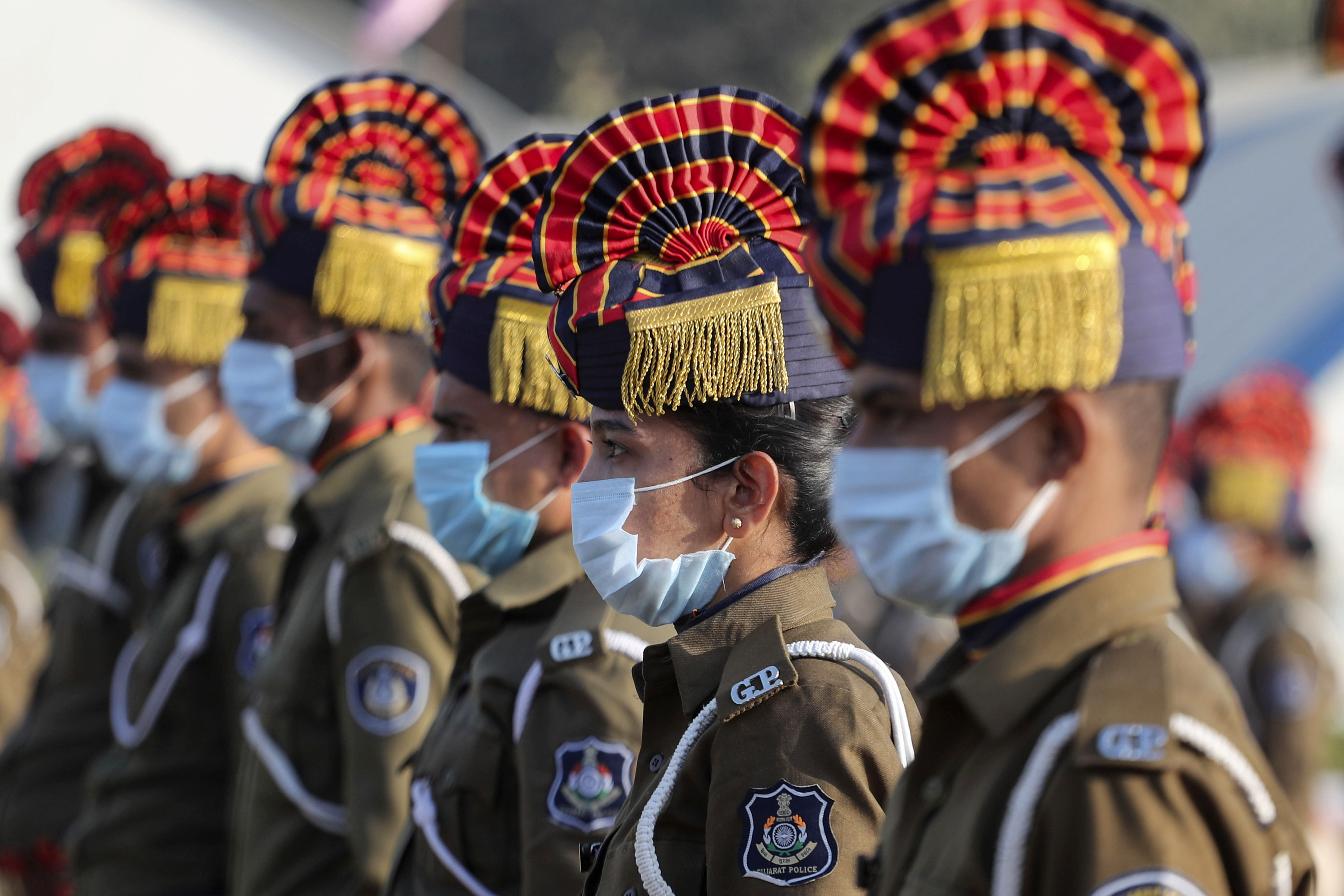
People wore masks and adhered to social distancing as police and military battalions marched along the route displaying their latest equipment.
Republic Day marks the anniversary of the adoption of the country's constitution on January 26, 1950.
Farmers are the latest group to upset Modi's image of imperturbable dominance in Indian politics.
Since returning to power for a second term, Modi's government has been rocked by several convulsions.
The economy has tanked, social strife has widened, protests have erupted against discriminatory laws and his government has been questioned over its response to the pandemic.
Agriculture supports more than half of the country's 1.4 billion people.
But the economic clout of farmers has diminished over the last three decades.
Once producing a third of India's gross domestic product, farmers now account for only 15 per cent of the country's US$2.9 trillion ($3.7 trillion) economy.
More than half of farmers are in debt, with 20,638 killing themselves in 2018 and 2019, according to official records.
The contentious legislation has exacerbated existing resentment from farmers, who have long been seen as the heart and soul of India but often complain of being ignored by the government.
Modi has tried to allay farmers' fears by mostly dismissing their concerns and has repeatedly accused opposition parties of agitating them by spreading rumours.
Some leaders of his party have called the farmers "anti-national," a label often given to those who criticise Modi or his policies.
Devinder Sharma, an agriculture expert who has spent the last two decades campaigning for income equality for Indian farmers, said they are not only protesting the reforms but also "challenging the entire economic design of the country."
"The anger that you see is compounded anger," Mr Sharma said.
"Inequality is growing in India and farmers are becoming poorer.
"Policy planners have failed to realise this and have sucked the income from the bottom to the top.
"The farmers are only demanding what is their right."
Angry E.U. looks to restrict vaccine exports amid supply shortage
“Vaccine developers have societal and contractual responsibilities they need to uphold,” the bloc’s health commissioner said.
Negative COVID-19 test required for travel to the US beginning today
WASHINGTON, DC — A spokesperson for the U.S. Department of State and U.S. Centres for Disease Control and Prevention (CDC) remind all travellers that beginning today, January 26, all air passengers two-years-of-age or older arriving to the United States must provide proof of a negative COVID-19 test or proof of recovery from COVID-19 before boarding. This order applies to both foreign nationals and U.S. citizens.
For more information about the testing requirement, visit: Requirement for Proof of Negative COVID-19 Test or Recovery from COVID-19 for All Air Passengers Arriving in the United States | CDC.
U.S. citizens should reconsider non-essential travel abroad. Those that must travel abroad following the implementation of this order should carefully consider the following:
• You could have difficulty accessing a test. Testing availability and turnaround times vary widely around the world. Check the U.S. Embassy website for your planned destination(s) for information about testing options. What plan do you have to ensure you can get a test that meets the requirement in order to come home on time?
• You could test positive and have to stay abroad. Many individuals infected with the virus that causes COVID-19 are asymptomatic and unaware they carry the virus. If you test positive, you will not be able to return home as planned. What plan do you have in case you cannot come home for several weeks? Where will you stay? How will you finance your stay?
• You could have difficulty accessing or financing medical care. Travelers should be aware that the availability and quality of healthcare varies around the world, and that private health insurance may not cover expenses incurred abroad. Will your health insurance cover your hospitalization or other medical expenses abroad? Do you have travel insurance that covers medical evacuation to the United States, and does it include COVID-19 as a covered item?
1. The Department and the CDC continue to strongly recommend U.S. citizens to reconsider travel abroad, and postpone all non-essential travel. If you must travel overseas, you should review the entire State Department Travel Advisory for your destination(s) on travel.state.gov and enrol in the Smart Traveller Enrolment Program (http://STEP.state.gov) to receive important updates from the nearest U.S. Embassy or Consulate.
You should obtain travel insurance that will cover medical evacuation, including for COVID-19, to the United States, in the event you become seriously ill. We also urge those contemplating travel abroad to review CDC’s country-specific travel recommendations and their overall guidance during the COVID-19 pandemic, available at https://www.cdc.gov/coronavirus/2019-ncov/travelers/index.html. U.S. citizens abroad should also closely monitor guidance from local public health and immigration authorities at their location.
The post Negative COVID-19 test required for travel to the US beginning today appeared first on The St Kitts Nevis Observer.
Leon Black, billionaire co-founder and CEO of Apollo hedge fund, steps down after review of ties to Epstein
Black said that although the review confirmed he did not engage in any wrongdoing, he “deeply” regretted his involvement with Epstein.