An elderly woman picked up and thrown by a gust of Wellington wind has praised the quick actions of members of the public who rushed to her aid.Geraldine Sims, 88, from Upper Hutt, was walking from the train station with her son…
Category Archives: headline
Red Fox Tavern murder: Mark Hoggart denied bail while awaiting appeal
A former gang president who was sentenced to life imprisonment last year, more than three decades after the violent death of Red Fox Tavern publican Christopher Bush, will not be released from prison on electronically monitored bail…
Covid 19 Omicron outbreak: 8728 new cases, 26 Covid-related deaths today, Ministry of Health reports
There are 8728 new community cases of Covid-19 in New Zealand today.The Ministry of Health is reporting a further 26 Covid-related deaths.There are 759 people in hospital with the virus, including 13 in intensive care. The…
Local Focus: Dealing to Palmerston North's river rubbish
Palmerston North has a lot of rubbish in its waterways, says Plastic Pollution Challenge project manager Nelson Harper.”Over the last year, we have pulled out over 120 bags of litter plus some big items like tyres, washing machines,…
ATO reveals the biggest tax-dodging industries in Australia
The Australian Taxation Office (ATO) has revealed which industries it has its eye on, saying the "shadow economy" is alive and well during the pandemic.
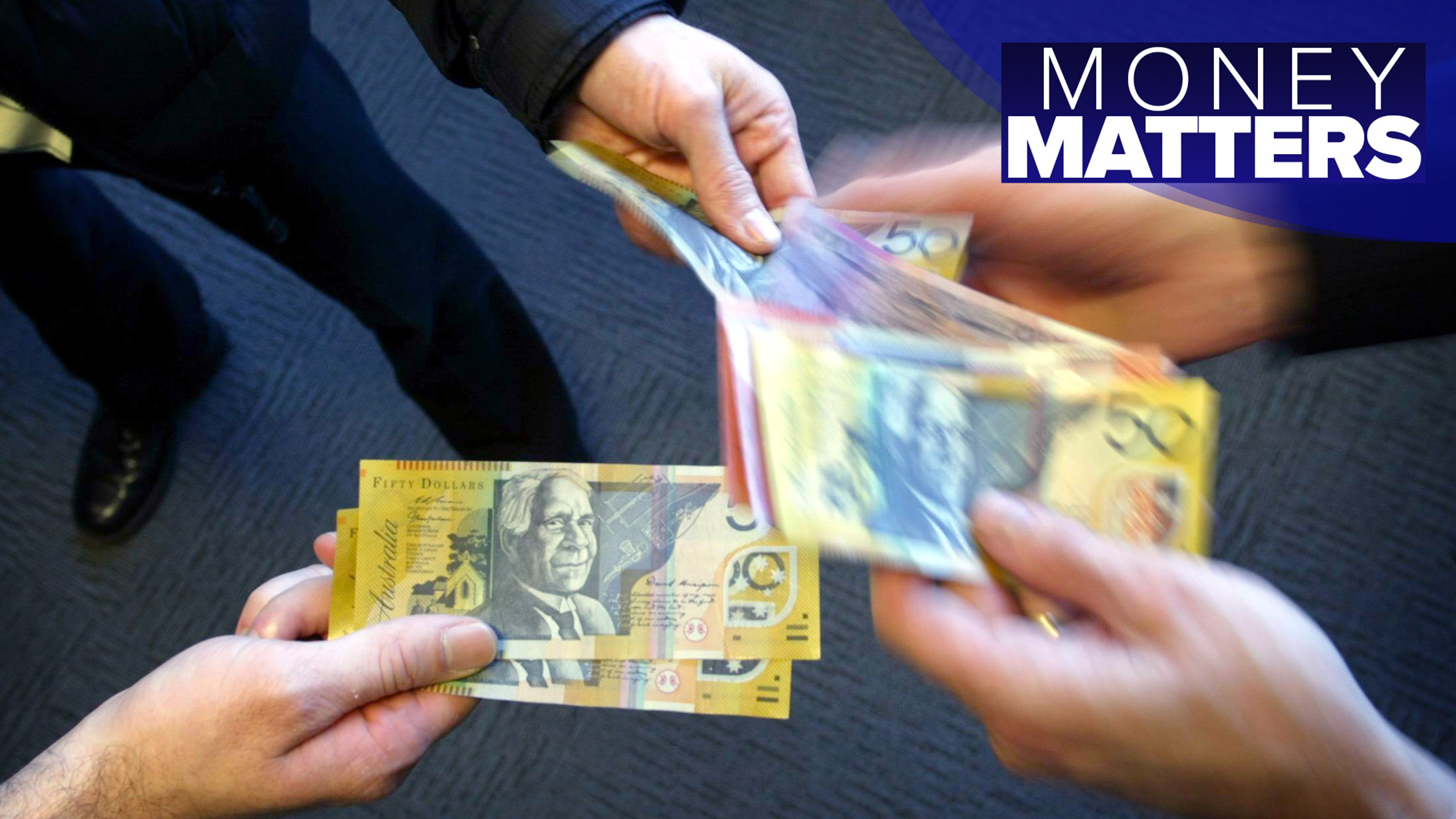
The shadow economy (previously referred to as the black economy) refers to activities that take place outside of the tax and other regulatory systems – often involving demanding cash payments, paying workers cash in hand, or not declaring all sales.
The ATO estimates that the community misses out on around $11 billion in taxes each year as a result of the shadow economy.
READ MORE: Calls to reintroduce two restrictions as COVID-19 numbers surge

Topping the list of industries the ATO was tipped off about in the past year were building and construction, hairdressing and beauty services, cafés and restaurants, road freight transport, and management advice and related consulting services.
Tip-offs from New South Wales were most frequent with more than 13,400, followed by Victoria (more than 11,500) and Queensland (more than 9200).
ATO Assistant Commissioner Peter Holt explained that tip-offs helped the ATO shine a light on tax avoidance and protect honest businesses.
"The last couple of years have been tough for some businesses. But this doesn't make it okay to gain an unfair advantage over honest businesses playing by the rules," ATO assistant commissioner Peter Holt said.
READ MORE: Joyce hit with 85K bill after decade long parent visa wait
"As businesses recover from the impacts of COVID and natural disasters it is more important than ever to protect the vast majority of businesses who are honest and try to do the right thing."
And it's not just businesses the ATO is watching.
"We know that many customers also demand to pay in cash and ask for discounts to avoid paying tax, and we also know that many workers are demanding cash especially where there is a shortage of labour," Holt said.
"We get tip-offs from other businesses, customers, members of the public, even employees. The surge in tip-offs tells us the community is not willing to let this behaviour slide anymore.
READ MORE: Spymaster's 'unusual' remark on Putin's health
Sydney furnished the biggest amount of tip-offs, with more than 6500.
But 7000 came from outside the capital cities as well.
The top five regional locations that the ATO received tip-offs from in 2021-22 were the Sunshine Coast Hinterland, Cairns, Wellington in NSW, Wodonga in Victoria, and the Mornington Peninsula.
The ATO said there were some "tell-tale signs" a business may be operating in the shadow economy, such as "cash only" signs, offering a discount for cash, not accepting card payments, failing to provide payslips to workers, not ringing up sales, or even running illegal software that deletes or modifies sales transactions.
Tip-offs can be made online here, via the ATO app, or by phoning 1800 060 062. All tip-offs are private and you can remain anonymous.
'Almost at 100 deaths a day: Grim COVID-19 warning
One of Australia's leading virus experts has issued a "call to action", saying we need to re-introduce restrictions like face masks as COVID-19 cases and hospitalisations surge around the country.
Infectious diseases expert Professor Robert Booy said everyone should be "concerned" about the mounting number of admissions and deaths.
The country is inching closer to the number of hospitalisations and deaths seen during the January Omicron wave.
READ MORE: US President Joe Biden tests positive for COVID-19
https://twitter.com/NSWHealth/status/1550254370809229312https://twitter.com/VicGovDH/status/1550254340434284544
Overnight NSW recorded more than 18,000 new cases of the virus, the highest daily reported figure since April 8.
Victoria recorded more than 12,000 cases and 25 additional deaths overnight.
"We should be concerned," Booy told 9News this morning.
"We should be alert, but not necessarily alarmed.
"We need to do things we were doing six months ago, better. Things like wearing masks, social distancing, handwashing, and working from home where possible.
"The numbers are likely to rise to January levels…we're almost at 100 deaths a day."
READ MORE: Is monkeypox a global emergency? WHO meets again
The Australian Bureau of Statistics says that by January 31 it had registered 2,639 deaths where people died with, or from, COVID-19.
Booy explained current transmission is being fueled by a new, more infectious sub-variant of the Omicron strain, Centaurus.
"The problem of this new variant, is despite having Omicron before, a month, two months, or three months ago, you can get this one again," he said, adding the strain has been found in 15 countries.
"The CHO and ATAGI say it could be as early as month after a previous infection. Most people will be catching it two, three, four months after.
"It's raising its ugly head rather quickly."
READ MORE: What is 'Centaurus', the Omicron sub-variant of concern?
The infectious disease expert added if the nation managed to reduce the current transmission rate by 10 to 20 per cent the pressure would be taken off hospitals.
"Wherever possible minimise your contact to your fellow human beings, to where necessary," he said.
"Working from home does help."
Police make horrific find on New York beach
US Authorities have warned swimmers about entering the ocean after a dead shark washed up on a popular beach in New York.
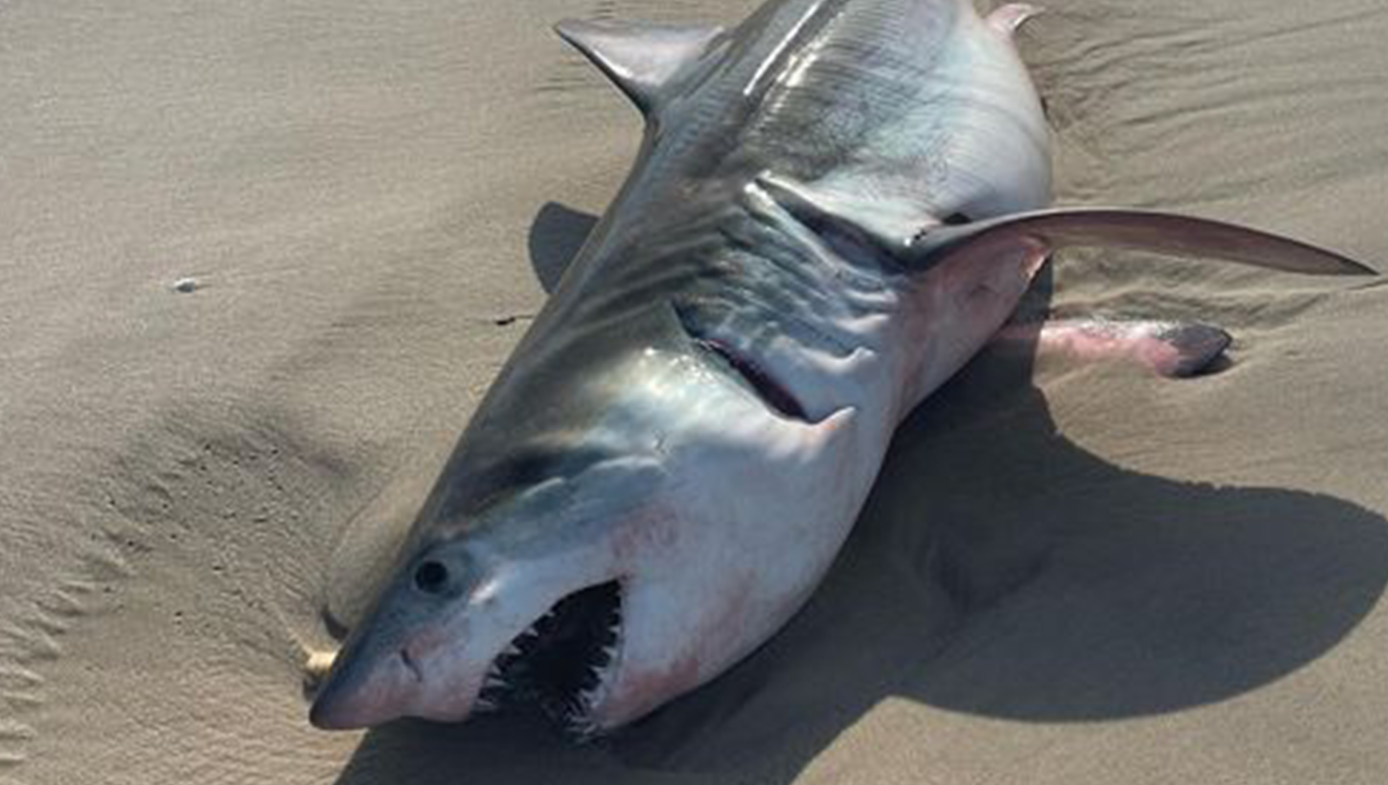
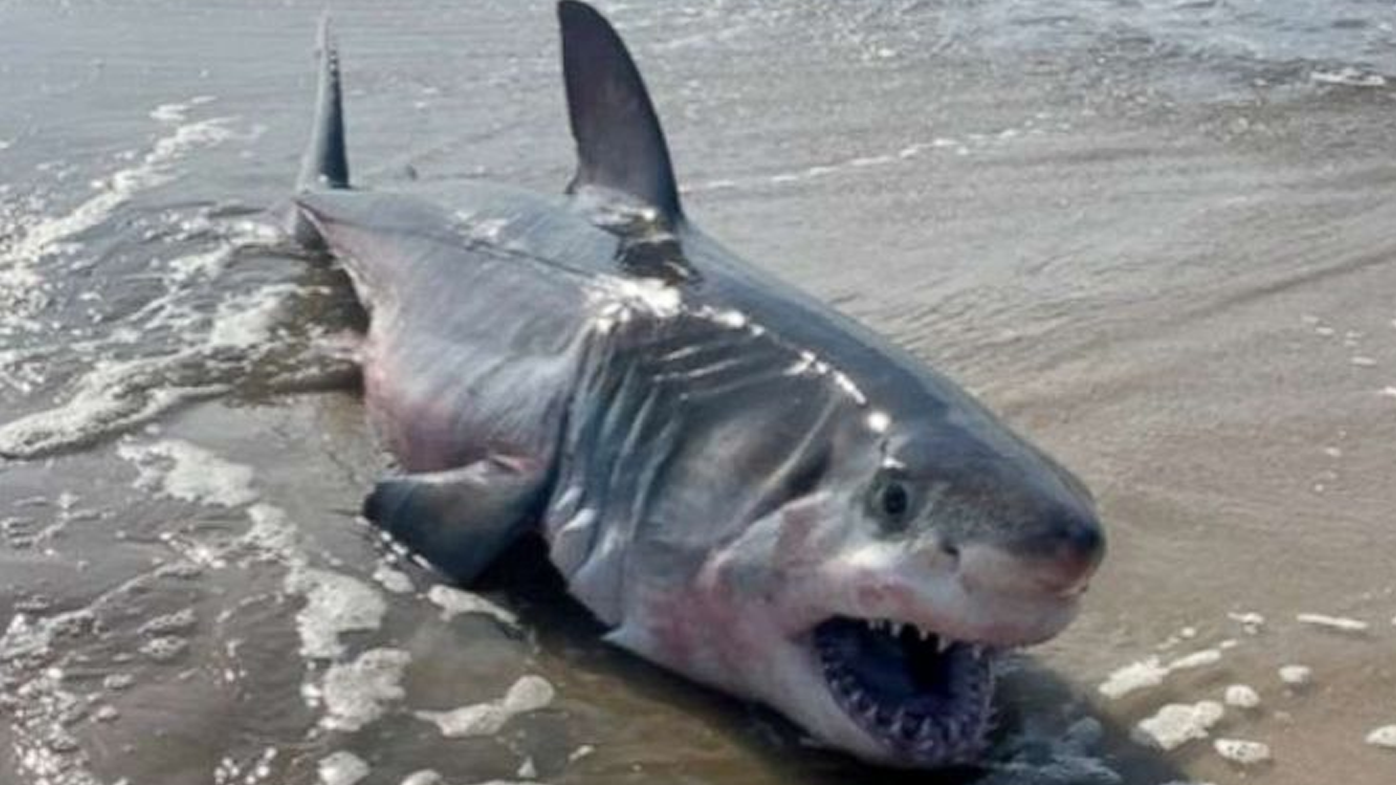
The carcass, believed to be a juvenile great white, measured approximately 7-8 feet (2.4 metres) and washed up on the Ocean Beaches, Quogue Village Police Department said.
However, before they could secure the body, it "washed back out to sea", prompting the department to issue a warning.
READ MORE: 'Almost at 100 deaths a day: Grim COVID-19 warning
"At this time we are cautioning swimmers and boaters in the area to be aware of this ongoing situation, and to keep distance to allow the Law Enforcement to monitor this event," it wrote in a statement yesterday,
"If the shark is spotted please contact the Quogue Village Police Department."
READ MORE: CIA chief says Putin is 'entirely too healthy'
Later that evening a teen was attacked by a shark on Kismet Beach on Fire Island, about an hour and a half from the Ocean Beaches.
Suffolk County Police Marine Bureau say a 16-year-old surfer was bitten just before 6 pm, and sustained a 10-centimetre laceration on his foot.
He was able to walk out of the ocean by himself and was taken to Good Samaritan Hospital Medical Center in West Islip for treatment.
"When he came in, he was doing the international sign for shark in the water. His friend thought he was teasing because of all the activity," the boy's father, Mike Haynes, told CBS2.
"I wanted to see how the bleed was, and thank God it wasn't an arterial bleed. It was something we could control.
"His feet were dangling in the water, and it came up from beneath.
"I think the shark came up, took a bite and realised it wasn't food and moved on."
The shark responsible for the attack has not been located.
Five people have been attacked by sharks near Long Island beaches, in a two week period from June 30 – July 13, state officials say.
READ MORE: US President Joe Biden tests positive for COVID-19, has 'mild symptoms'
– WITH CNN
Family whacked with $85k bill after a decade waiting for visa
When Sydney woman Joyce Lim Chin applied for her mum and dad's aged parent visas a decade ago, she never imagined she would be left with an $85,000 hospital bill and so much heartache.
"All of the family is here in Australia, including my sisters," Lim Chin said.
"We just wanted my parents to be able to stay here too, so if something happened we could take care of them."
READ MORE: The 'forgotten people' waiting half a century to get their Australian visa
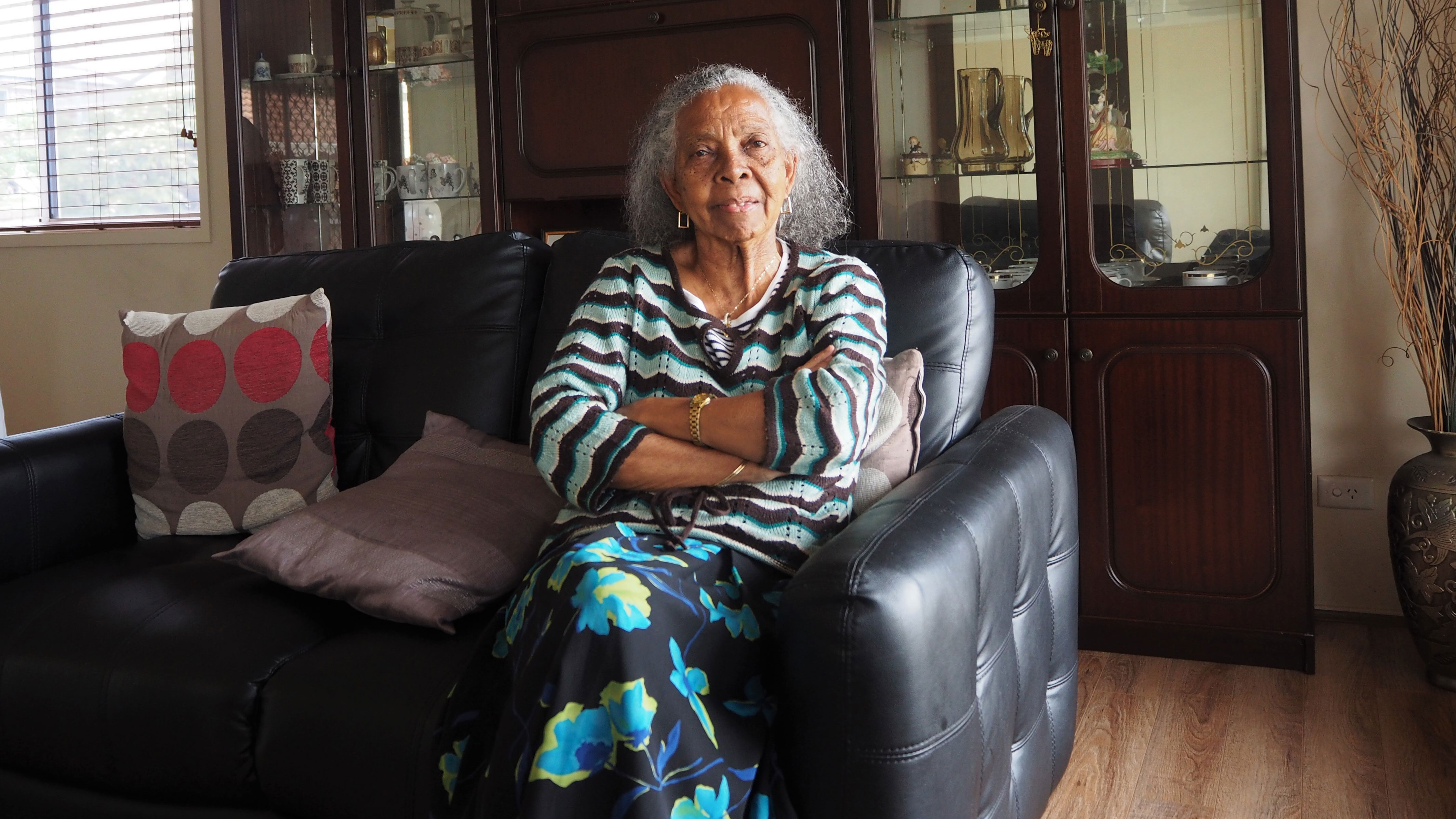
In 2012, Lim Chin and her family paid $6000 for her parents' visa applications and hoped to hear back soon, having no idea how long the process would take.
Two years later, in 2014, her parents passed their medical checks and were told they had been put in the visa queue.
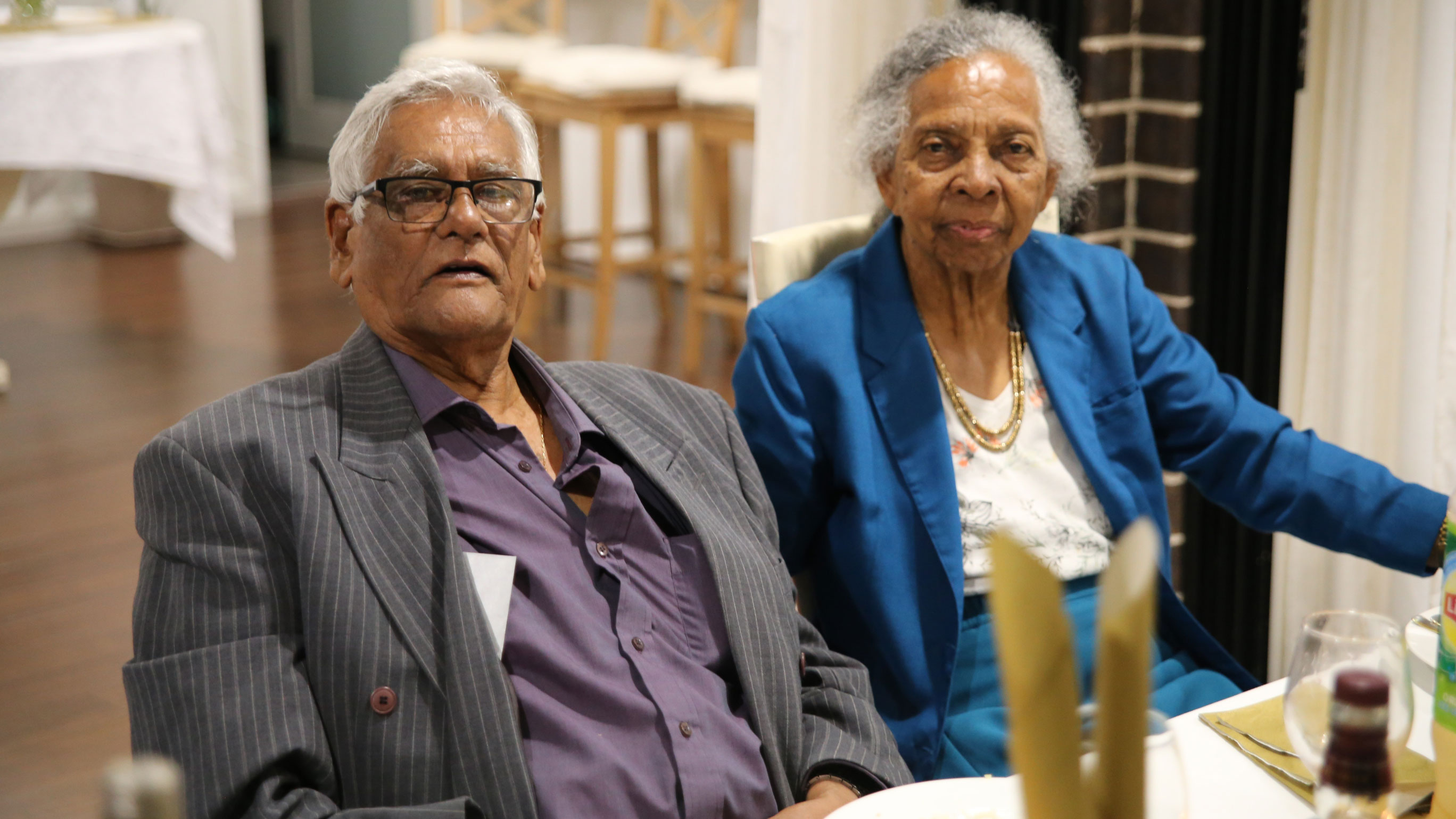
The elderly couple, who are from Mauritius, spent the next eight years living in Australia on temporary visas while they sat in the queue.
Earlier this month, Lim Chin's mum, Safoorah, died, aged 92.
Her visa was never processed.
Lim Chin's 85-year-old father, Sachooda, is still waiting for his visa to be granted.
Waiting for decades
More than 120,000 people are currently waiting for parent visas to be processed, according to figures released to 9news.com.au by the Department of Home Affairs.
The department estimates the processing time for parent and aged parent visas is now about 30 years.
The waiting time is second only to the remaining relative visa, which has an approximate processing period of 50 years.
READ MORE: Paige waited so long for an Australian visa that she grew up
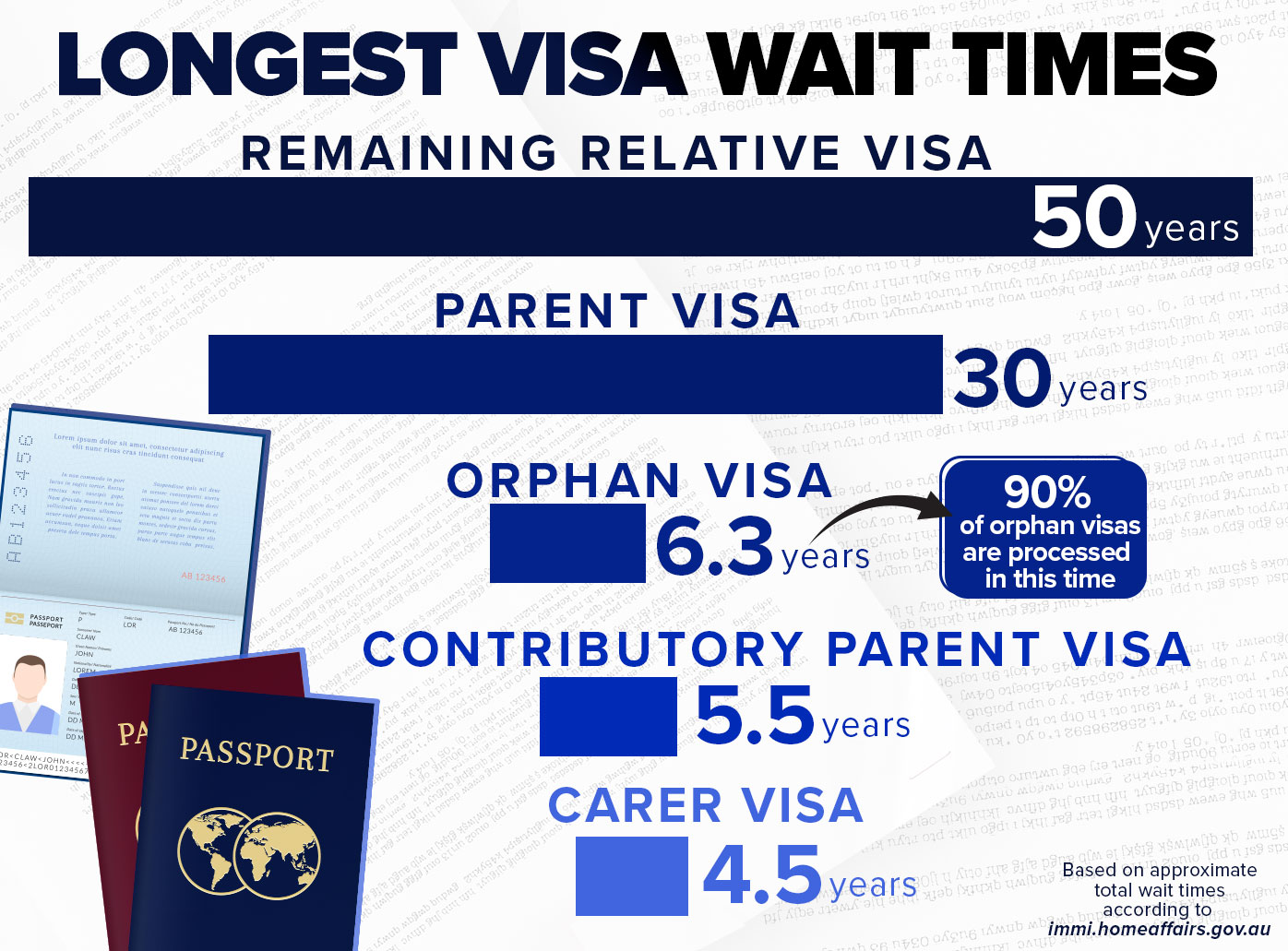
Australia offers another visa option for parents with a shorter waiting time – the contributory parent visa – but it comes with a $50,000 fee per applicant.
Processing times for the contributory parent visa have also ballooned in recent times, and now stand at more than five and a half years.
Lim Chin said the contributory visa was not an option for her parents as it was too expensive.
"Even though there are three of us (siblings), we all have financial commitments, we couldn't afford it," she said.
Lim Chin said her parents had been living independently until a few months ago, when her mother's dementia worsened and she began receiving palliative care.
Around the same time, her father fell and broke his hip, requiring surgery and a month-long hospital stay.
As temporary visa holders, Lim Chin's parents have never been entitled to Medicare.
Lim Chin's family are now left with hospital bills totalling more than $85,000 for the medical care her parents have received over the past few months.
"We have just received dad's hospital bill – it was $71,000 for the hospital bed alone, then the surgery will be on top of that," Lim Chin said.
"Mum's bill is more than $15,000.
"It's been a very sad and stressful time for us."
Lim Chin, who is an accountant, moved to Australia on a skilled visa 27 years ago and is now an Australian citizen, as are her two sisters.
Lim Chin said she understood her elderly parents had not made a direct economic contribution to Australia, as she and her siblings had.
"We have paid for everything for our parents and we have been happy to do so, they don't get a pension.
"However, I feel like with the medical situation my parents found themselves in over the last three months, at least some assistance should have been given.
"There was no compassion shown."
Lim Chin said it was also deceptive of the Department of Home Affairs to offer a visa which came with a decades-long wait.
"It is ridiculous, they should just tell people not to apply, not take people's money," she said.
The lack of transparency of where exactly her parents sat in the queue was also frustrating, she added.
The Department of Home Affairs says on its website it has now processed aged parent visa applications which entered the queue before October 2010.
However, it is not clear when the next intake will be.
Department figures provided to 9news.com.au show there are now more than 73,100 outstanding applications for contributory parent visas and contributory aged parent visas.
At the same time, there are 48,000 applications for non-contributory parent and non-contributory aged parent visas waiting to be processed.
Under Australia's 2021-2022 Migration Program, 4500 parent visas – both contributory and non-contributory – were allocated.
Escalating wait times for family and partner visas were the subject of a Senate inquiry last year.
The inquiry's final report, released in April this year, recommended that the Department of Home Affairs develop a "long-term strategy to update its system for the processing of visas" as a "matter of urgency".
Immigration Minister Andrew Giles said the new Labor government was looking at how it could address the lengthy visa processing times but warned "it can't happen overnight".
"We're considering all options to allocate resources to dealing with the visa backlog," he said.
"People reallocated to dealing with the visa applications on hand need to be trained and skilled before they can go about this important work."
'A moral obligation'
Mateja Rautner is a former lecturer in migration law at the Australian National University and the director and principal migration agent at Migration Plus.
Rautner said the decades-long wait for non-contributory parent visas meant the declining health of applicants often became a big issue.
"We've seen cases of parents who are 80-90 years old who have gotten cancer, so then they get a refusal," she said.
"Then we have to appeal the decision and go to the minister asking for mercy.
"Most of them get the visa at the end of the day, they wouldn't be put on a plane and deported.
"But the human costs for the applicants and also the cost on the system dealing with these cases is enormous. It's just a waste of resources.
"If we provided this pathway, then we really have a moral obligation to allow people to settle properly here."
Contact reporter Emily McPherson at em********@******om.au.
Spymaster's 'unusual' remark on Putin's health
CIA director Bill Burns gave an unusually candid assessment this week, when he told attendees at the Aspen Institute's annual security conference that Russian President Vladimir Putin is "entirely too healthy".
Burns was careful to qualify apparently tongue-in-cheek remarks, saying they didn't constitute "a formal intelligence judgment."
But asked directly if Putin was unhealthy or unstable, he said: "There are lots of rumours about President Putin's health and as far as we can tell, he's entirely too healthy".
READ MORE: US President Joe Biden tests positive for COVID-19, has 'mild symptoms'
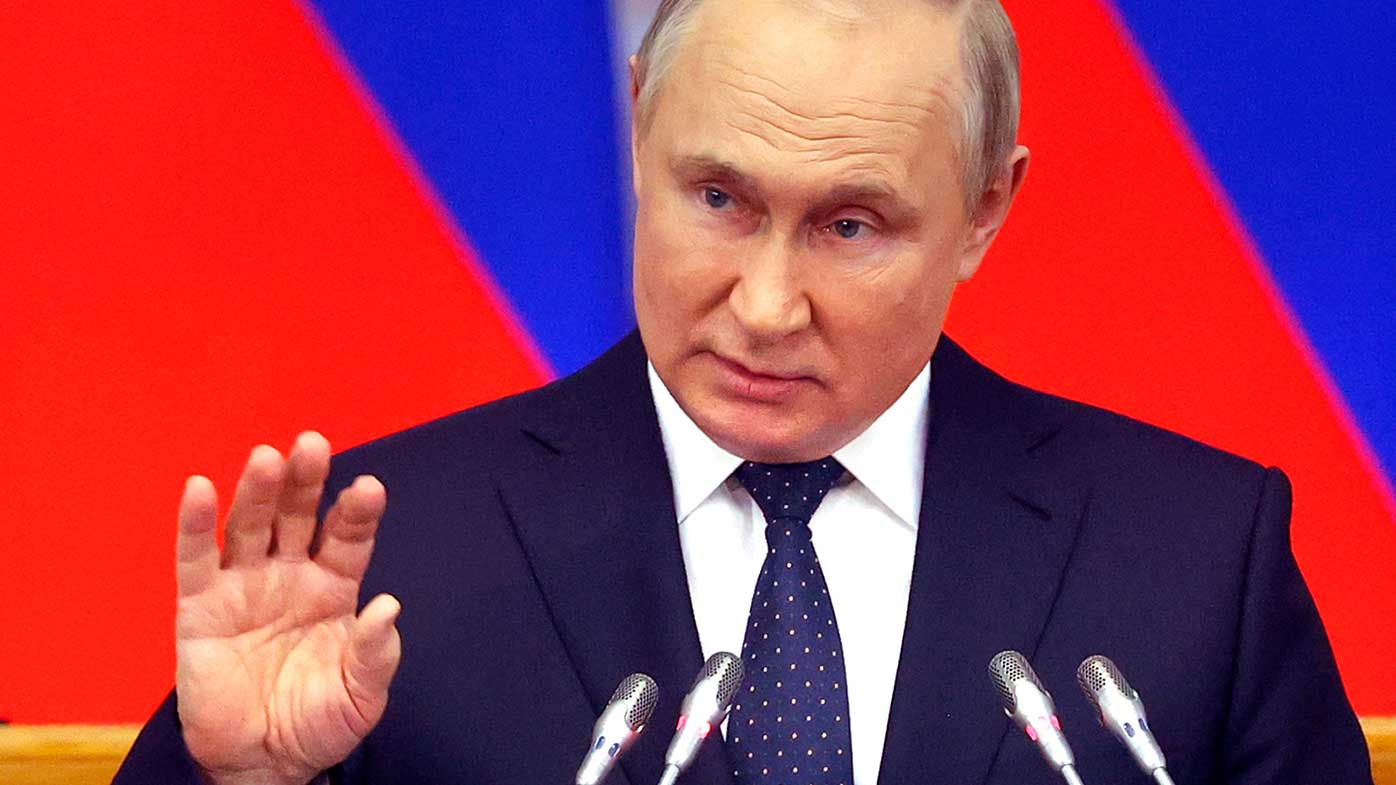
So what are we to make of speculation about Putin's health? These rumours are nothing new.
His body language, speech and gait have all been relentlessly scrutinised. And every time Putin disappears from public view for a few days — or even makes a slight misstep, such as he did recently after touching down in Tehran — it can set off a round of intense, tabloid-style speculation about his physical wellbeing.
That's the nature of Putinism, a sort of post-modern dictatorship built around one man. The Kremlin has worked hard to create an aura around Putin as the country's sole problem-solver: He hosts an annual call-in show where he literally takes on the role of pothole-fixer-in-chief.
And over the course of two decades, he has consolidated power, building a system that is driven by the whims and fixations of one person (obvious case in point: the invasion of Ukraine).
The Kremlin routinely ridicules any speculation about Putin's health; on Thursday, spokesman Dmitry Peskov said Putin felt "fine" and in "good health" before describing speculation to the contrary as "nothing but hoaxes."
READ MORE: Russia expands war aims beyond eastern Donbas region

But Burns' statement, even if made in jest, perhaps tells us a lot more about Western policymakers than it does about Putin's fitness.
For starters, it reflects a strong element of wishful thinking when it comes to the Kremlin leader. It suggests that the most worrying international crises might simply evaporate if one person — Putin — disappears from the world scene.
And that's a potential misreading of Russia. To be sure, the decision to invade Ukraine came down to one person: The Russian president, who seems to be driven by his own warped reading of history and a dose of imperial ambition.
And Russia's confrontation with the West has been driven for years by the personal grievances of a person who famously lamented the collapse of the Soviet Union.
But it's naive to hope that Putinism might not live on without Putin.
Nearly half a year after the invasion, Putin's heavy battlefield losses have not sparked, say, widespread draft resistance.

The Russian population — with the exception of thousands who have been arrested in anti-war protests — has more or less passively accepted the economic pain of new sanctions imposed on their country.
Putin's ratings, if the findings of state-run pollster WCIOM are to be believed, have actually gone up since the February 24 invasion.
The CIA director's remarks, in context, reflect how challenging it is to understand Putin, someone whose decision-making processes are opaque to the outside world.
NYC Mayor Wants US Federal Resources to Aid Caribbean Asylum Seekers
BySantana Salmon New York City Mayor, Eric Adams, is calling for United States federal resources to assist with arriving asylum seekers in New York City after New York experienced a sharp increase in asylum seekers from Latin America, the Caribbean, and other regions. Adams said New York City is working with the federal government to […]
The post NYC Mayor Wants US Federal Resources to Aid Caribbean Asylum Seekers appeared first on The St Kitts Nevis Observer.