Category Archives: headline

Airlines slash payments to Aussie travel agents

Travel agents are crying foul over the loss of multi-million-dollar commissions, soon to be slashed by Qantas and other major commercial airlines.

Qantas was the first airline to announce it was cutting agent commissions from five percent to one percent, Australia's peak body for travel agents said, with a string of leading airlines including Emirates, Air New Zealand, Hawaiian Airlines, Singapore Airlines, Cathay Pacific and American Airlines soon following suit.

Australian Federation of Travel Agents (AFTA) boss Dean Long told 9news.com.au the move would pile huge pressure on smaller travel agents already buffeted by the worst downturn in travel since commercial passenger jet travel began.

READ MORE: Federal Budget 2022: Winners and Losers
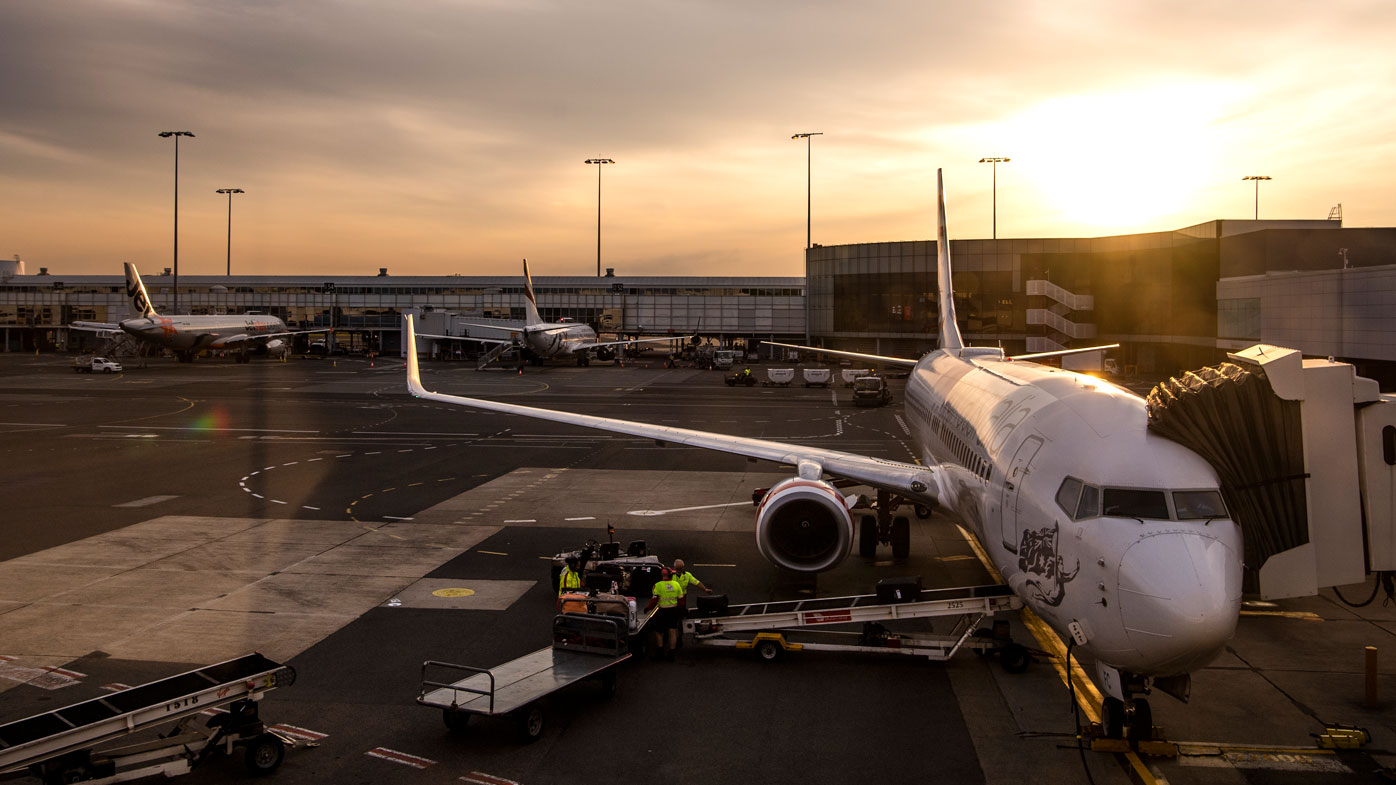
Australian and NZ travel agents will lose commission 'in the millions' after a group of airlines changed the way they deal with booking agents.

READ MORE: The secretive oil-rich state where Russian oligarchs are fleeing to

The change would ultimately lead to a "lower level of competition" in the marketplace, Mr Long claimed, with the move pushing passengers towards buying their tickets online direct from the airlines.

"It is unfair," he said.

"This is purely a cost shift by the majority of the airlines."

Mr Long said Australian travellers are now more reliant than ever on agents to guide them through complex and fast-moving coronavirus restrictions.

Because of the cloud of uncertainty which hangs over international air travel, agents are now investing more and more time in ticket bookings, he said.

Once tickets are booked, agents are going back into the booking system multiple times to "touch" a ticket multiple times to make itinerary changes or checks, he said, so cutting commissions in the current environment was a bitter pill to swallow.

Mr Long said the decision was "very disappointing" and that lost commissions would cost Australian travel agents "in the millions".

READ MORE: Where in the world are Roman Abramovich's private jets?

In a recent survey of its membership, AFTA found 58 percent of travel agents only expected a return to profit in the 2023-24 financial year.

Around 3.5 percent said they would "definitely" go out of business in 2022, while a further 10 percent had grave doubts they would be alive by the end of the year.

A recent survey by Finder found there had been a surge in the number of Australians booking flights through a travel agent because the level of administration required to travel during the pandemic is so high and overwhelming.

The fear of a trip being cancelled and uncertainty around travel requirements were big reasons Australians were now more likely to book through an agent, the survey found.

READ MORE: The rise and fall of Sydney's most expensive suburbs over last 30 years
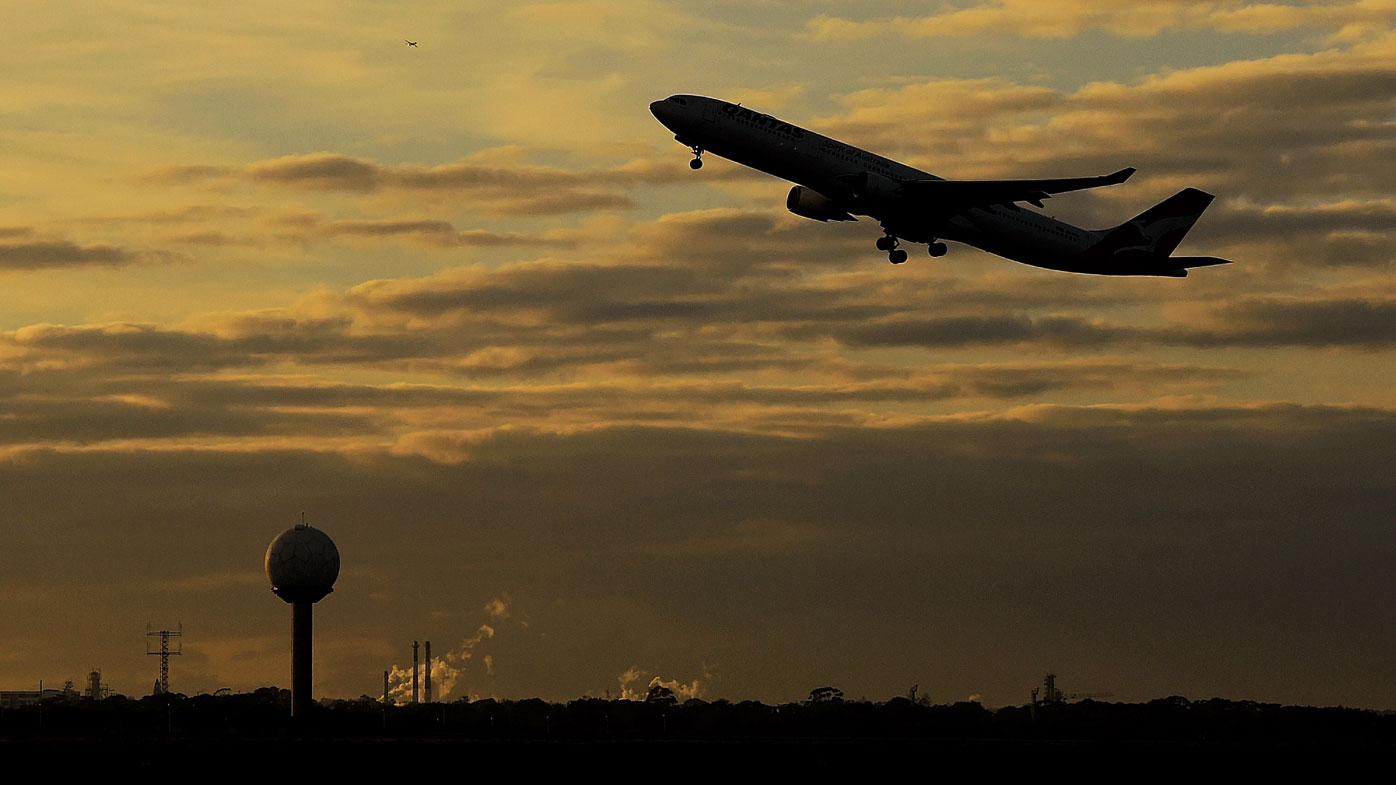
AFTA told 9news.com.au passengers were reliant on travel agents now more than ever, because of confusing coronavirus travel restrictions.

READ MORE: Tens of thousands kiss goodbye to NSW and Victoria during pandemic

In announcing the change last year, Qantas executive Igor Kwiatkowski blamed it on brutal conditions facing the aviation sector.

"Like all airlines, Qantas is working to recover from the biggest crisis our industry has ever faced," he said.

"Maintaining the status quo around our commission structure is no longer viable."

The change to commissions would help Qantas try and reduce various operation costs by $1 billion each year," he said.

"Given the billions of dollars of extra debt and lost revenue due to COVID, these cost reductions are central to our recovery plan."

Mr Long of AFTA said it was "incorrect" for airlines to try and paint a picture that commissions had to be reduced now.

"Let's be honest, airline commissions haven't cost the airline industry a cent for the last two years, because you only get paid a commission on what you sell.

READ MORE: NSW town ranked worst air in Australia, while Tasmanians breathe easy

"So the idea that these decisions have to be made at the worst economic trading conditions the travel industry has faced in 100 years is just not correct."

From April 1, Cathay Pacific will be the first airline to hack back commissions, with others initiating their own cutbacks over the course of the year.

Qantas will reduce its commissions from July 1.
Regional rents soar during COVID-19

The price of renting in Australia's regional centres has grown by almost 20 per cent in just two years, prompting experts to warn of a national housing emergency.

A new report from the Australian Council of Social Service (ACOSS) and UNSW Sydney shows that regional rents are now 18 per cent higher than they were prior to the COVID-19 pandemic, while wages in the same period have only grown by 6 per cent.

The Australian findings mirror those found in other markets such as the UK and the US, where rent inflation in 2021 reached levels not seen since the Global Financial Crisis in 2008.

READ MORE: Chinese airliner crashes with 132 aboard in country's south

ACOSS CEO Dr Cassandra Goldie said low-income regional residents are copping the brunt of the increases, which cannot be covered by CPI-linked benefits increases that are indexed to capital city rents.

"With private rentals already in short supply before the recent devastating floods, soaring rents, and a severe shortage of social housing options, we're in the middle of a renting crisis in many parts of regional Australia," Dr Goldie said.

"In flood-affected areas, it's clear the rental market cannot house the families on low and middle incomes who have been made homeless temporarily – the real concern is that this then becomes permanent."

READ MORE: China Eastern flight 5735 displayed 'unusual' flight patterns before crash

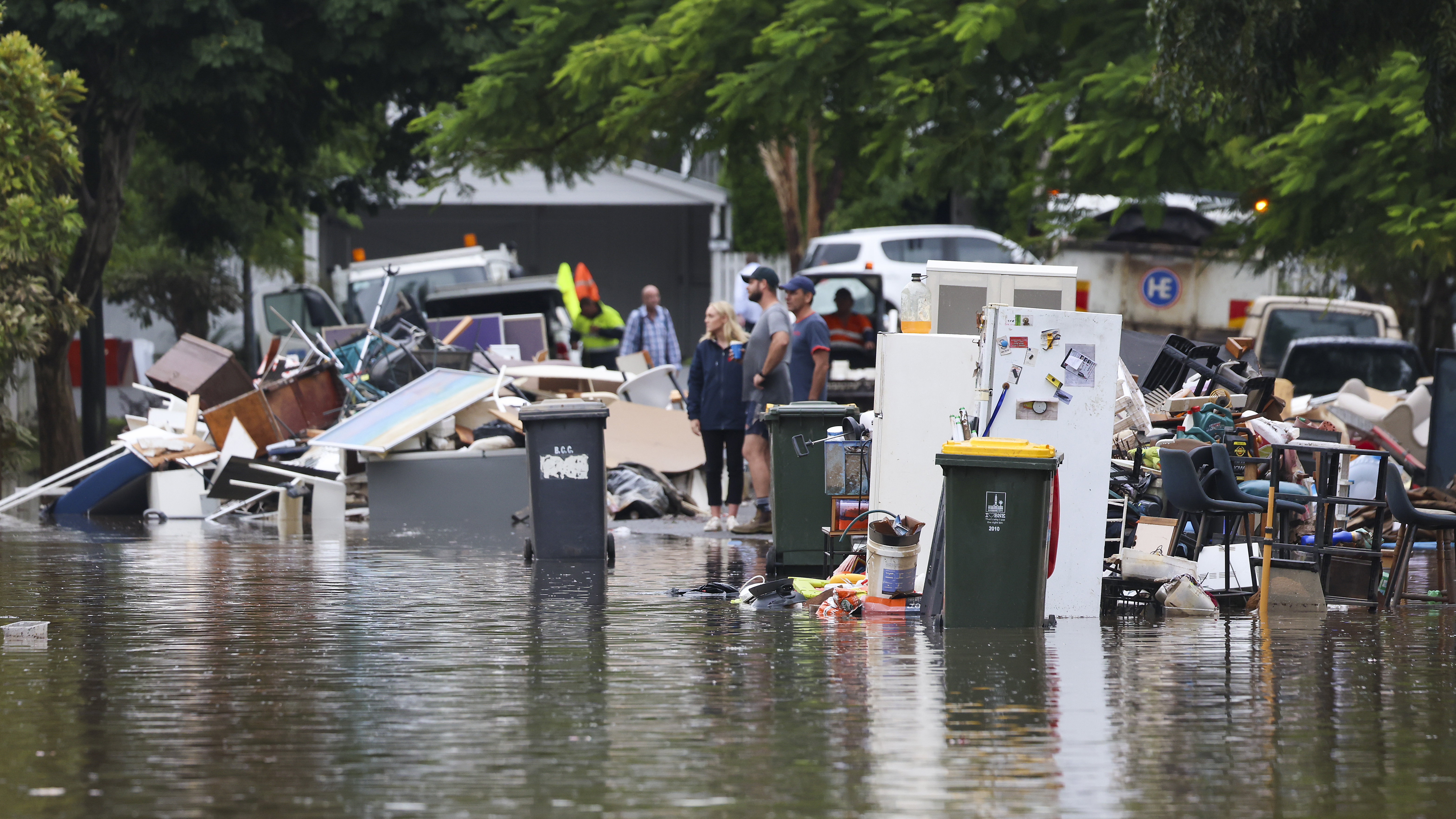
A flooded Vincent Street, Auchenflower in Brisbane, Australia.

Dr Goldie said a greater supply of social housing in regional centres, particularly those hit worst by natural disasters such as floods, is desperately needed to bring asking rents down.

"We need immediate Federal Government action to help house people made homeless in flood-affected communities," Dr Goldie.

"But COVID and the floods are only aggravating a national rental problem that has been building for years. After a decade of Commonwealth neglect on social housing we badly need a major national building program that starts to remedy this, with a sizeable part of the investment going to the regional centres facing the greatest stress."

The report, COVID 19: Housing market impacts and housing policy responses – an international review compared the experiences of Australia and seven other case study countries – Canada, Germany, Ireland, New Zealand, Spain, the UK and the US.

It found that while many countries took far-reaching measures to maintain incomes and safeguard housing during the pandemic, almost all saw asking rents explode once government intervention ended.

READ MORE: Woman's Aussie roadtrip takes horror turn

Lead author Professor Hal Pawson said social and economic policies during the pandemic offered a temporary view of how Australia could be.

"Just as in most other countries in our study, Australia's emergency income protection and also housing policy measures triggered by the pandemic went well beyond what anyone would have previously imagined," Professor Pawson said.

"Just for a brief moment we had a tantalising glimpse of cities with street homelessness greatly reduced and a rental housing market where evictions were drastically cut.

"But since the experience has prompted virtually no permanent reforms of social security or rental housing regulation, governments appear to have resisted learning lessons from the episode."

READ MORE: Russian attack on Kyiv shopping centre leaves at least eight dead

Emma Greenhalgh, CEO of low-income housing organisation National Shelter, said we are now in a housing emergency that has been brewing for years.

"This report demonstrates the missed opportunities of the past two years to capitalise on the initial positive responses by governments to address housing and homelessness issues during COVID, and create a housing legacy from the pandemic by investing in social and affordable housing," Ms Greenhalgh said.

"We are in a national housing emergency that has been a long time in the making, compounded by COVID and climate disasters. There is a lack of urgency by the Federal Government to this crisis.

"The development of a national housing strategy to respond to this crisis is critical."

Ancient pool may have been way to navigate the stars

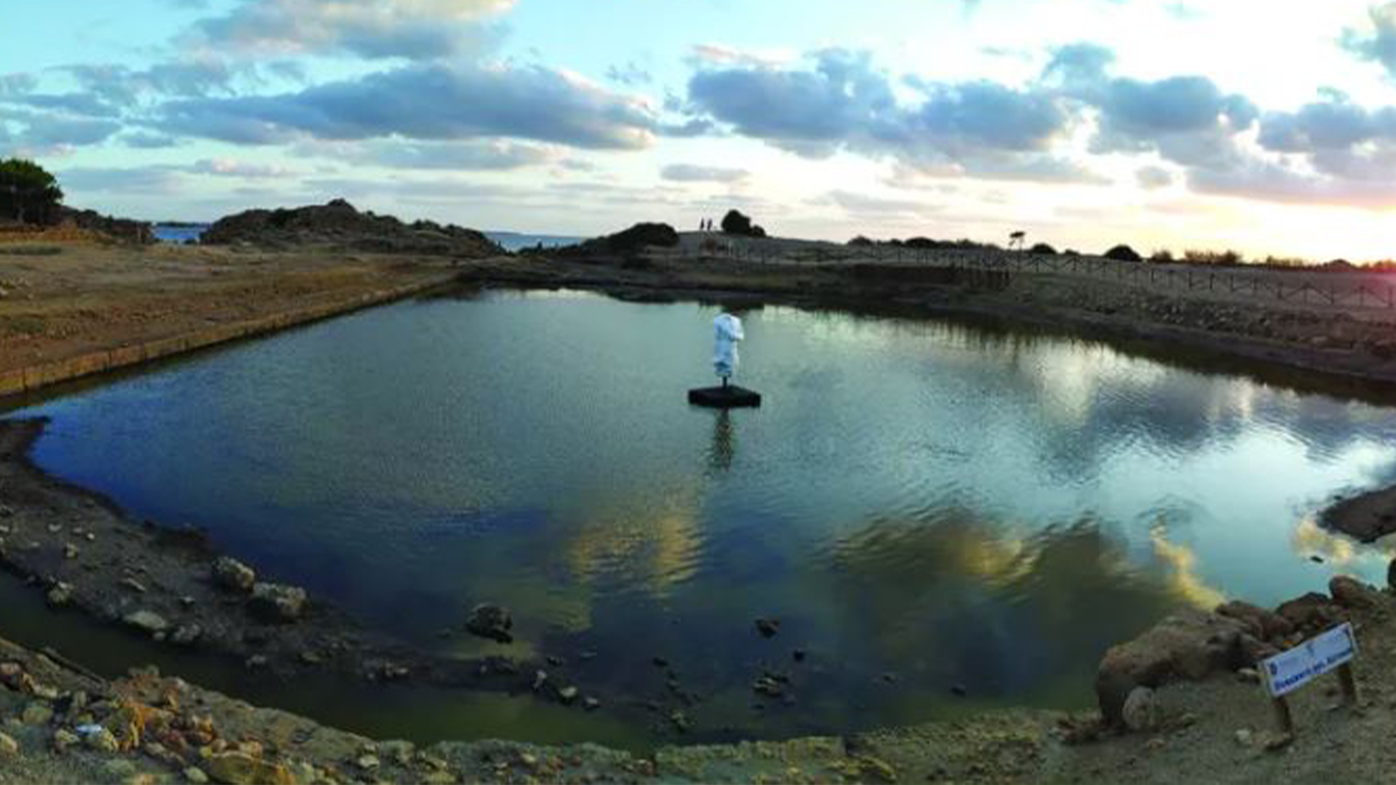
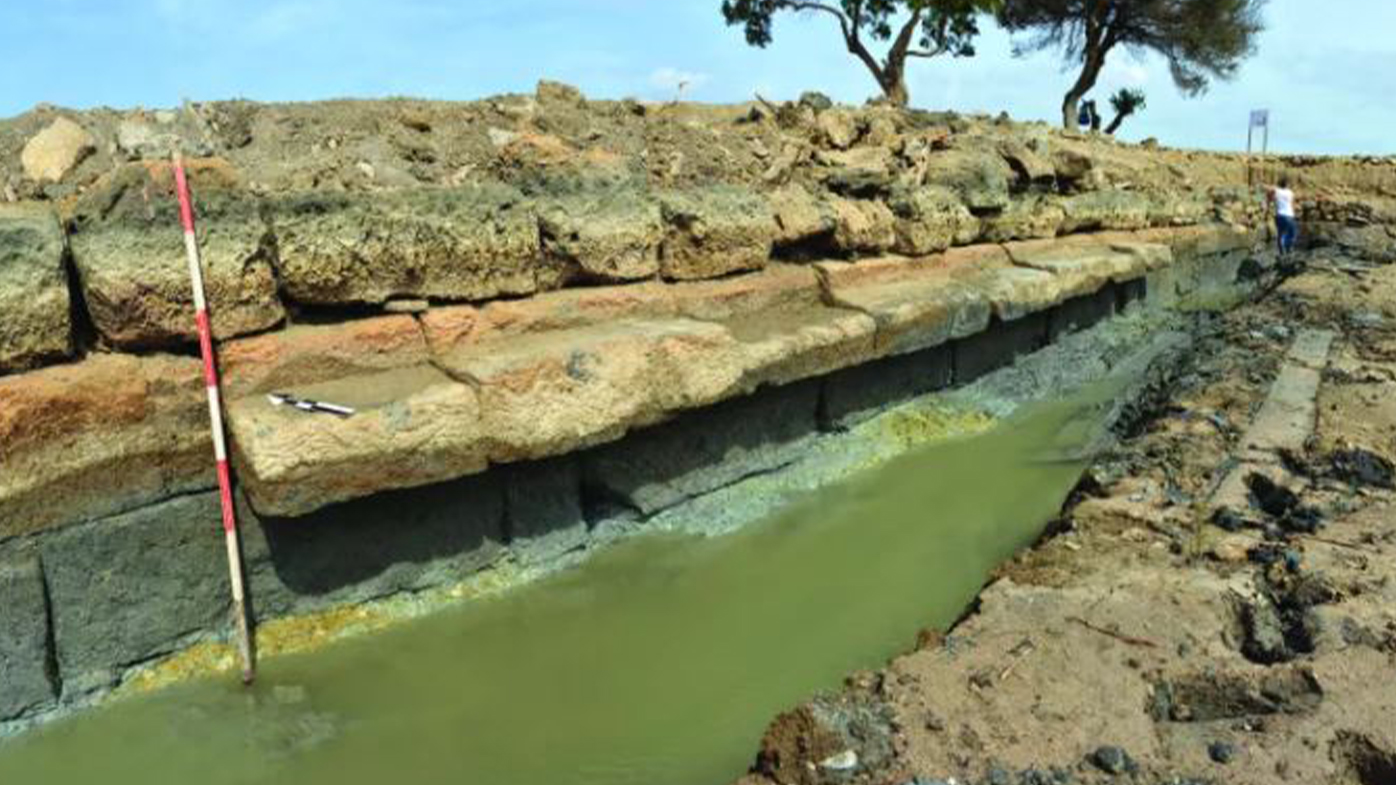
An ancient relic once thought to be the remains of an inner harbour on a Sicilian island may have actually been a way to navigate the stars.

Archaeologists have spent close to 60 years investigating artifacts on the island-city of Motya – off Sicily's west coast. They originally thought the "kothon" a large rectangular basin 52×37 metres in size, was an artificial harbour.

But a recent investigation has led scientists to believe this was in fact an ancient freshwater pool which was once surrounded by three large temples and a large statue of Ba'al, a fertility god.

READ MORE: Chinese airliner crashes with 132 aboard in country's south

READ MORE: China Eastern flight 5735 displayed 'unusual' flight patterns before crash

It is estimated to be 2500 years old and a paper published on the discovery also revealed a surface for observing and mapping the movement of stars.

This was emphasised by the alignment of structures and features positioned around the sacred enclosure.

READ MORE: Woman's Aussie roadtrip takes horror turn

READ MORE: Russian attack on Kyiv shopping centre leaves at least eight dead

There is a section in what scientists call the "sanctuary" that marks the position of Capella (Alpha Aurigae), the sixth-brightest star in the night sky, when it rises to the north during the autumn equinox, expedition head Lorenzo Nigro wrote.

Another section in the enclosure's south marks Sirius (Alpha Canis Major), the brightest star in the night sky, when it rises to the south during the autumn equinox, the paper also found.

What is the Deltacron variant of COVID-19 and how dangerous is it?

A new strain of COVID-19 has been confirmed in assorted locations around the world.

While it has not yet been detected in Australia, the Deltacron variant has been found in countries including France, the US, the UK, Denmark and the Netherlands.

The new variant combines aspects of both its Delta and Omicron predecessors.

But is there much reason to worry?

READ MORE: Chinese airliner crashes with 132 aboard in country's south

This electron microscope image shows SARS-CoV-2 virus particles which cause COVID-19.

What is Deltacron?

Deltacron is a "recombinant" virus, mixing aspects of two separate variants.

Omicron is currently the globally dominant COVID-19 variant, while Delta, which swept the world last year, was renowned as the most severe variant to date.

It has been speculated that Deltacron may be the result of the out-of-vogue Delta virus trying to mimic Omicron's success in transmission.

READ MORE: Woman's Aussie roadtrip takes horror turn

The recombinant was first detected by the Institut Pasteur in Paris, France, according to international science not-for-profit GISAID.

It has been speculated that there could be further Deltacron sub-variants, with the Institut Pasteur finding differences in cases in the UK and US compared to mainland Europe.

How dangerous is it?

A combination of Delta's severity and Omicron's transmissibility might sound like a nightmare scenario.

But scientists are playing down concerns.

Dr Etienne Simon-Loriere, a virologist from the Institut Pasteur, told the New York Times that the "spike" of Deltacron – the part of its structure used to infect other organisms – was composed of Omicron.

READ MORE: Russian attack on Kyiv shopping centre leaves at least eight dead

It is this "spike" which is targeted by vaccines and antibodies, meaning that defences people have already acquired against Omicron should be effective at fending off Deltacron.

The virus so far appears to be very rare, and unable to replicate itself successfully.

Writing in The Conversation, biochemistry professor Luke O'Neill from Trinity College in Dublin, Ireland, said Omicron remained the variant of greatest concern to the world.

"As the coronavirus is continuing to spread widely and infect large numbers of people, it's likely that more variants will emerge – including through recombination," he said.

Staggering Russian death toll from Ukraine invasion accidentally revealed

Russia may have inadvertently revealed the real death toll from its invasion of Ukraine, a figure more than 20 times its previous count.

Newspaper Komsomolskaya Pravda said 9861 Russian soldiers have died in the invasion of Ukraine.

If accurate, it means four times as many Russians have died in Ukraine in three weeks as US military personnel in Afghanistan in 20 years.

LIVE UPDATES: Russia claiming to use hypersonic missiles in Ukraine

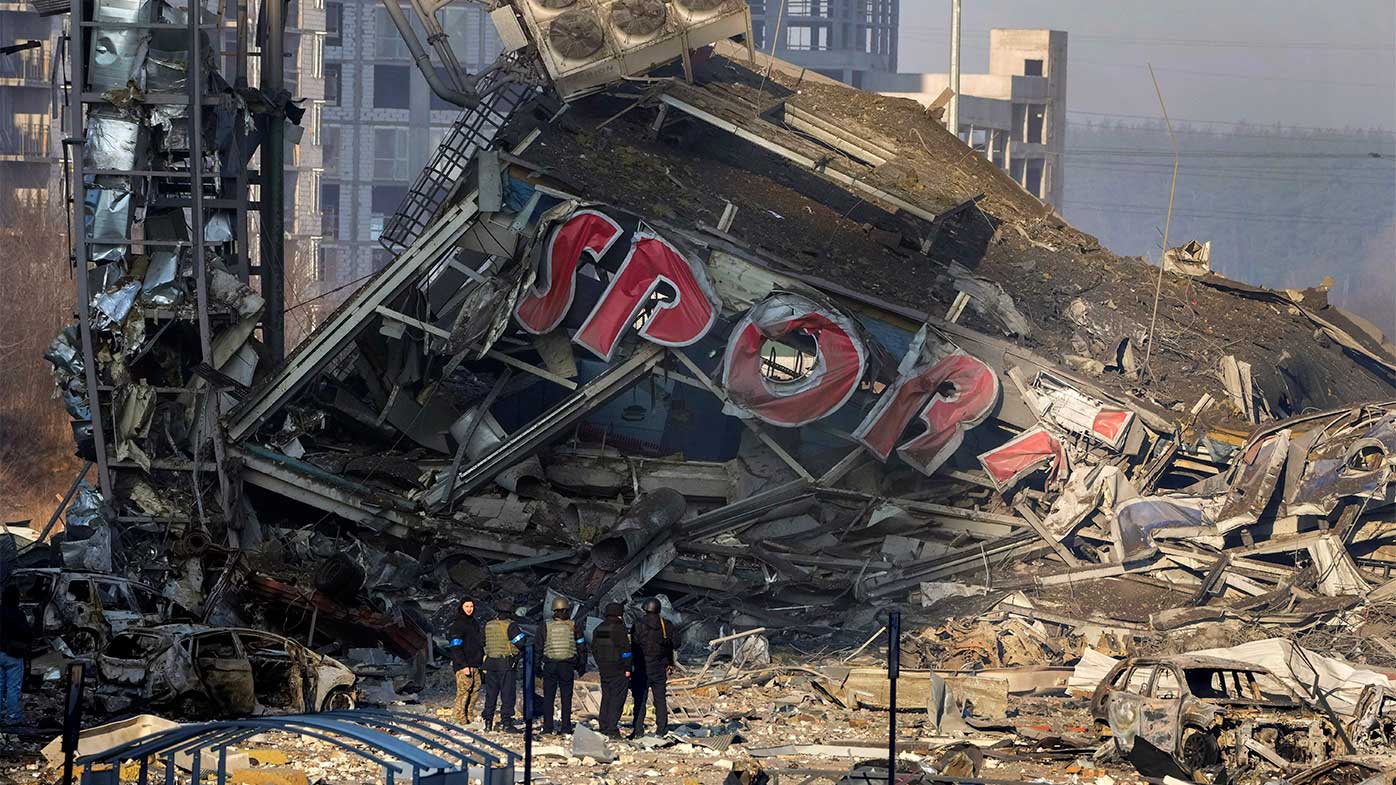
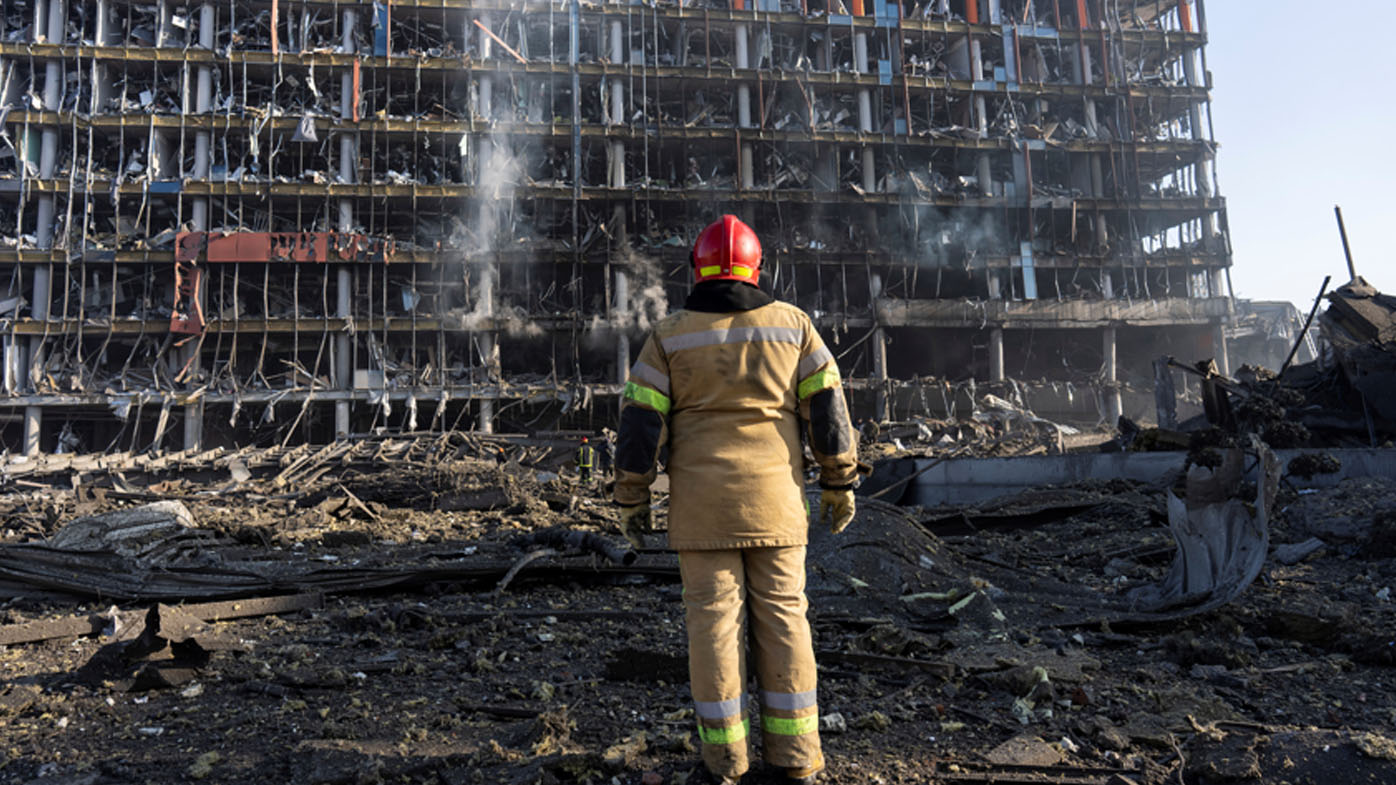
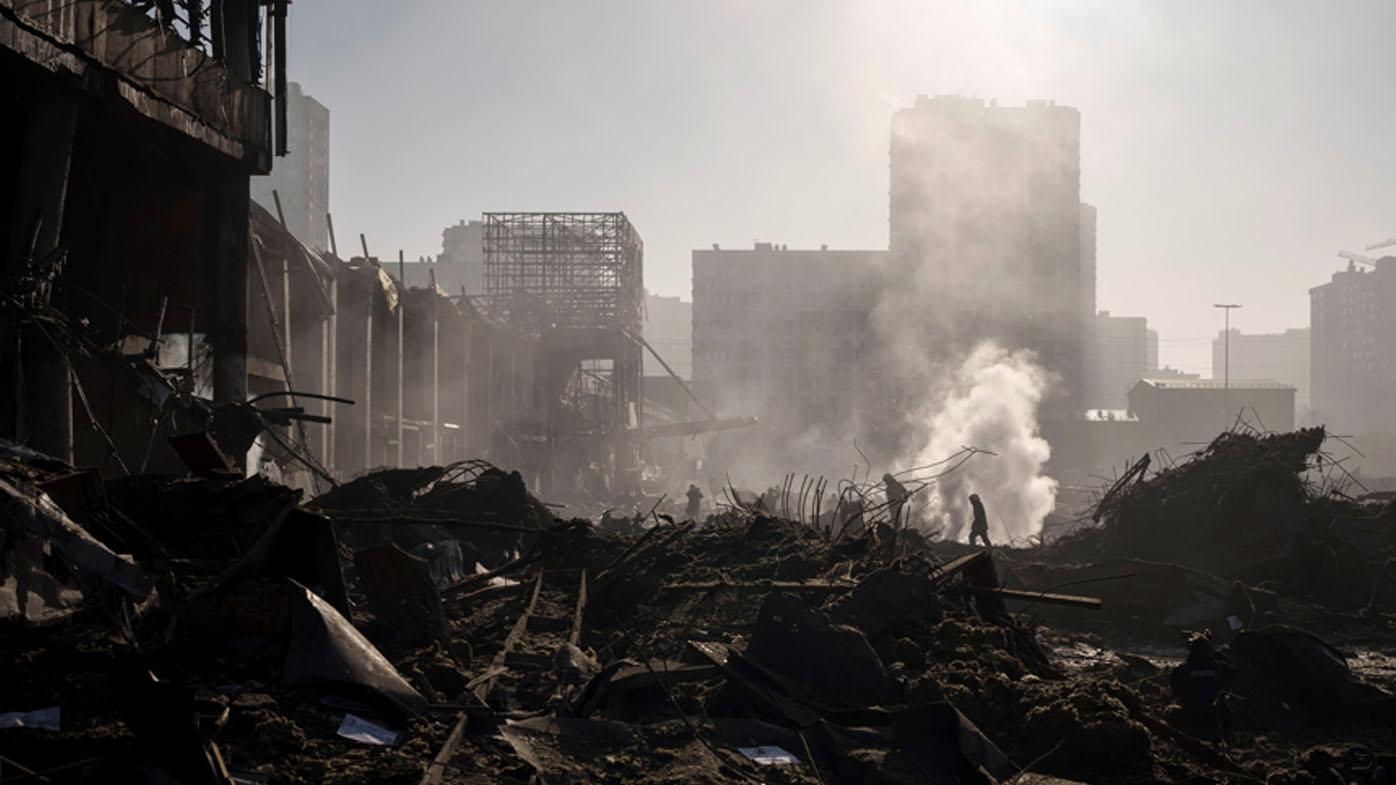
Russian shelling caused immense damage to a shopping centre in Kyiv.

Another 16,153 were injured in the fighting.

The Kremlin-linked newspaper has since deleted the figure without explanation.

The official death toll from the Russian Ministry of Defence is 498 troops, though it has been 20 days since that figure was updated.

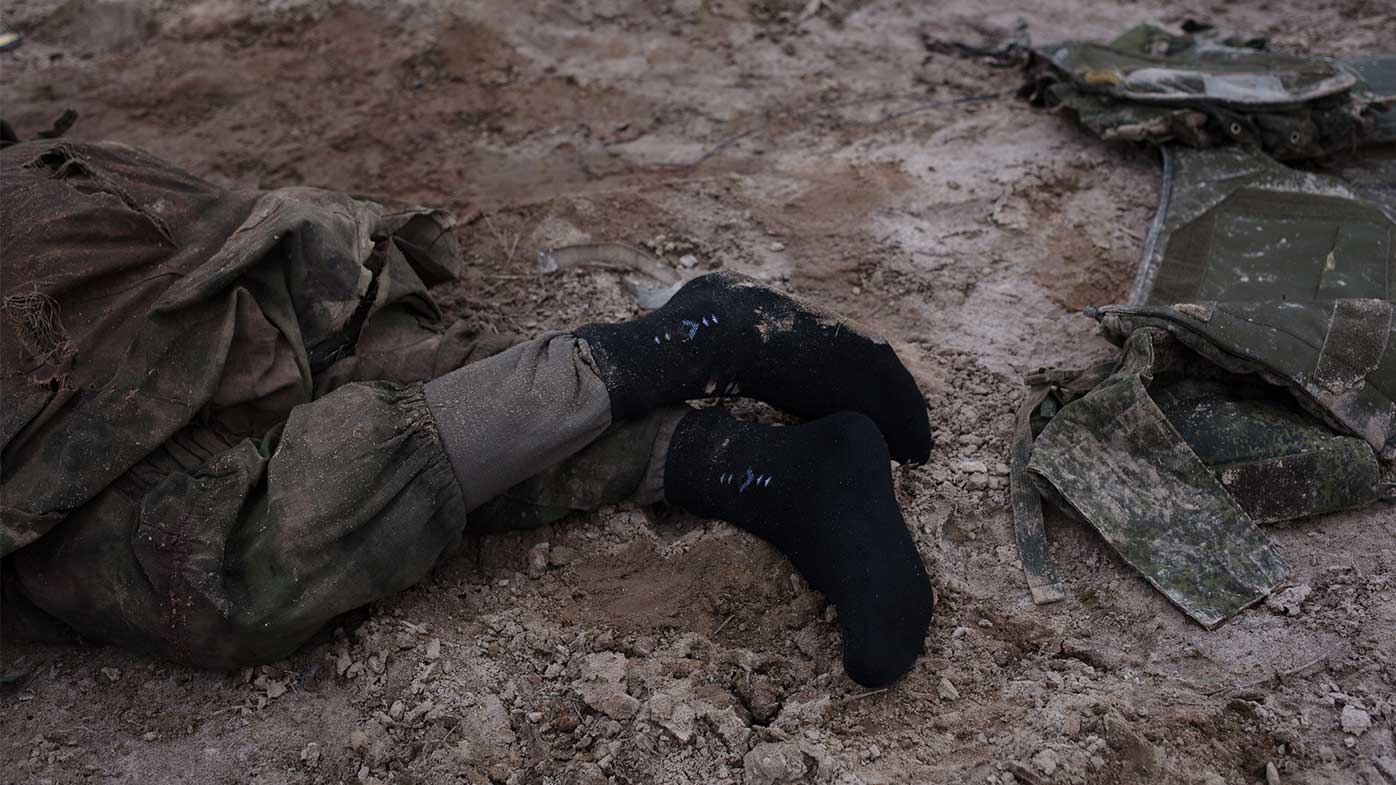
The feet of a Russian soldier killed in the early days of the invasion of Ukraine.

That figure would make the invasion of Ukraine far bloodier than the ill-fated Soviet invasion of Afghanistan in 1979. In that years-long conflict, about 15,000 Soviets died.

Meanwhile, Ukraine said on March 13 that 1300 of its soldiers have been killed. The Russians claimed it was more than double that figure.

While it is difficult to determine accurate reports on the front line in Ukraine, it does appear Russia has made little progress in the past week.

READ MORE: Russian attack on Kyiv shopping centre leaves at least eight dead

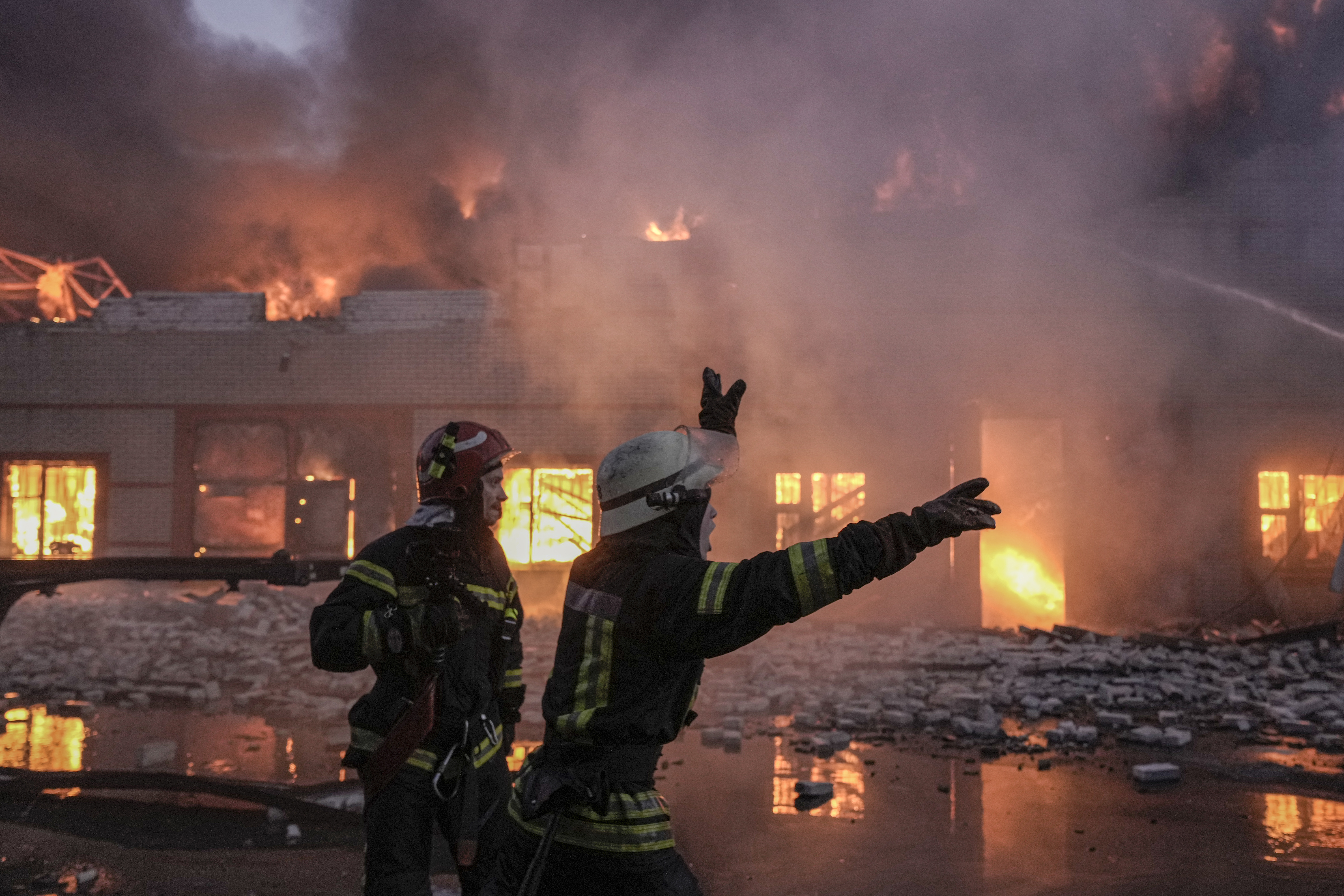
Eight people were reported dead when Russians shelled a shopping centre in Kyiv.

Tenacious resistance and supply line issues have caused the Russian advance to stall.

And there have been reports of widespread desertions among the largely-conscript Russian forces.

Out of fuel and out of food, many Russian soldiers have left their tanks and trucks behind and walked away.

Ukraine claims five Russian generals have died in the conflict thus far.

READ MORE: Chinese airliner crashes with 132 aboard in country's south

While there is plenty of bad news for the Russian military, it does not mean good news for the Ukrainian people.

Cities like Kyiv and Mariupol remain under relentless bombing and shelling, with many buildings destroyed and thousands of civilians killed.

The damage wrought by bombing has created a nightmare defensive zone for the Russians to walk into.

Top US general David Petraeus said last week it takes a five-to-one ratio for an invading army to take a city.

If the Russian army makes it into Kyiv, the number of soldiers killed will likely skyrocket.

READ MORE: Invasion reveals a host of weaknesses in Russia's military: Petraeus

Battered tourism operators put hope in new $60m global campaign

The Federal Government will splash $60 million on a new campaign to try and woo big-spending international visitors back to Aussie tourist hotspots.

Images of Tropical North Queensland, the Gold Coast, the NSW north coast, the Sunshine Coast, Great Ocean Road, the Whitsundays and the Hunter will be the hook the global campaign hangs on.

The government will also specifically set aside $15 million for Tourism Tropical North Queensland to promote the Great Barrier Reef.

READ MORE: No tourists from China leaves $12b black hole in crippled tourism sector

Tourists snorkel over Flynn Reef off the coast of Cairns.

READ MORE: Sydney international airport still eerily quiet

Queensland's far north was hit particularly hard during the pandemic, with an estimated 9000 workers in the region losing their jobs during the downturn.

While Australia slammed its borders shut, the tourism sector hemorrhaged an estimated $4 billion every month.

Prime Minister Scott Morrison will make the tourism announcement in Cairns today, following his trip into Brisbane yesterday.

However, 9News reporter Mia Glover said not everyone was impressed with the new campaign.

"I think it is an election ploy to be quite honest," a resident from Burleigh on the Gold Coast said.

An airport worker told Glover she didn't know if $60 million was enough.

How to get a ticket to Shane Warne's state memorial service

Free tickets to Australian cricket great Shane Warne's state funeral at the Melbourne Cricket Ground will be made available from 3pm today.

The funeral is scheduled for 7pm on Wednesday, March 30. You will also be able to watch it live on 9news.com.au.

Tickets will be available by booking at this website from 3pm today.

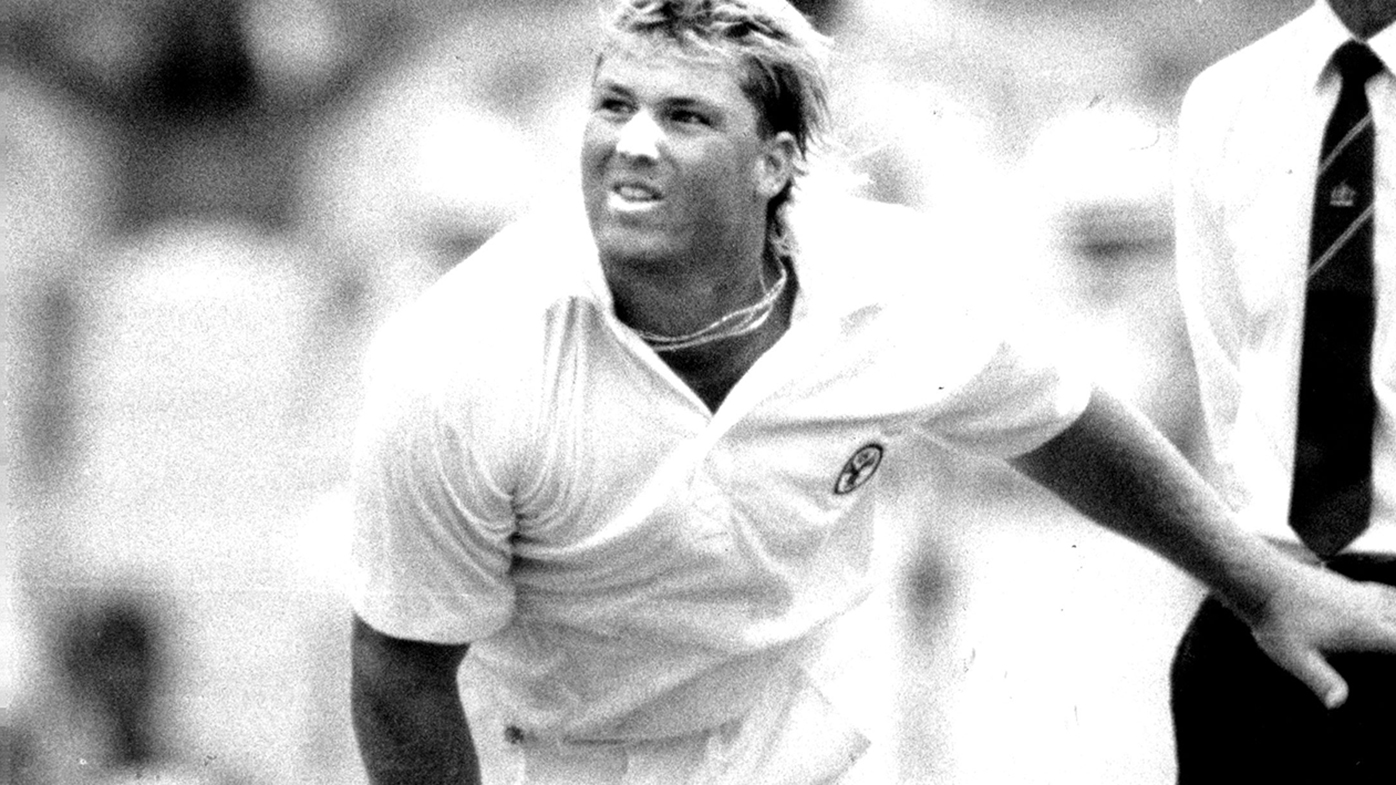
Shane Warne bowling during his Test debut in 1992.

READ MORE: Family and friends farewell Shane Warne in private funeral

Victorian Premier Daniel Andrews announced the news this morning on Twitter, declaring: "We've got some details locked in for Warnie's memorial at the MCG."

Fans from Sydney will be able to attend a similar memorial at the Sydney Cricket Ground, where Warne's funeral will be beamed in live.

Family and friends farewelled Warne in a private funeral on Saturday.

The private service ended with Warne's final lap around Moorabbin Oval – the homeground of his beloved AFL team 'The Saints' – in a hearse.

The hearse was followed by a small group of people, including Warne's three children Brooke, Jackson and Summer and his parents Keith and Brigitte.

Warne State Memorial Service

  • Gates open at 5.30pm.
  • The service will commence at 7pm.
  • All guests are requested to be seated by 6.45pm.
  • The service is expected to run for approximately two hours.

At the request of Mr Warne's family, memorial tributes can be made in the form of contributions to The Florey Institute of Neuroscience and Mental Health. Visit their website for more details.

Russian attack on Kyiv shopping centre leaves at least eight dead

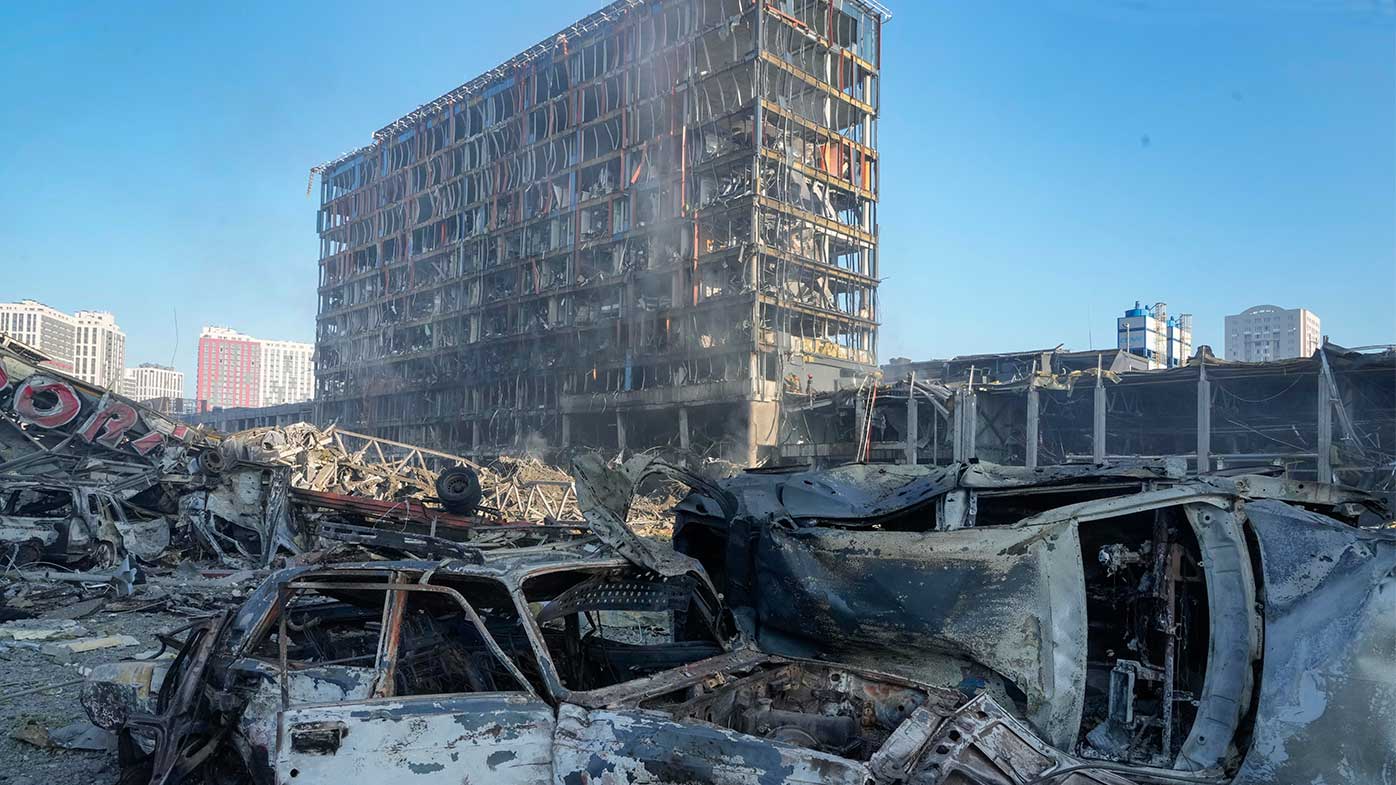
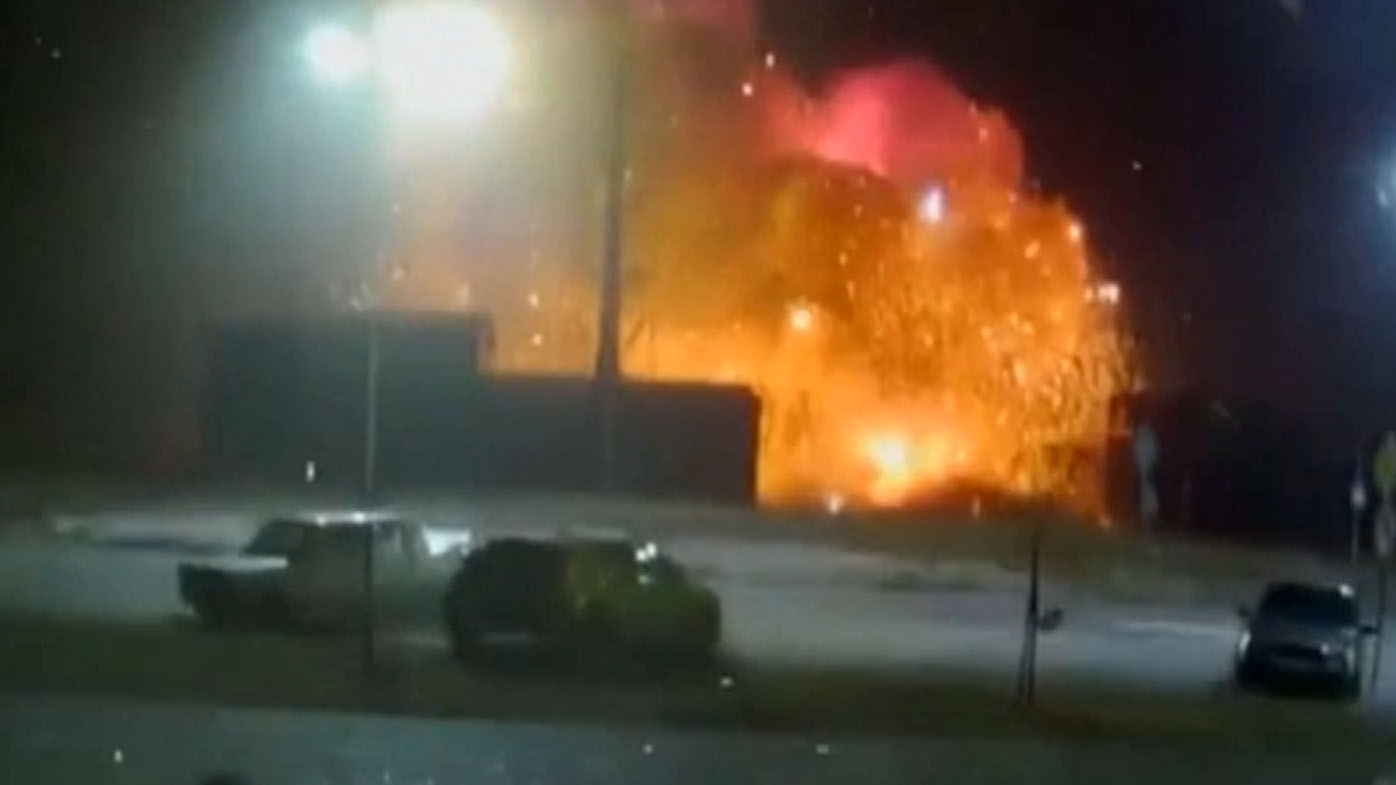
At least eight people have been killed in a Russian attack on a shopping centre in the Ukrainian capital of Kyiv, according to local authorities.

"As a consequence of the enemy missile strike and the resulting fire, a shopping mall was destroyed, windows in the nearby residential buildings and the vehicles parked in the vicinity were damaged," the Prosecutor General said in a post in its Telegram channel.

The Prosecutor General suggested the number of fatalities could rise, adding that the number of the dead was based on preliminary information.

READ MORE: Chinese airliner crashes with 132 aboard in country's south

The attack also ruined nearby buildings and left burnt debris strewn across several hundred metres.

Russian Defence Ministry spokesman Major-General Igor Konashenkov said had been targeted because it was used to store rockets, claims that couldn't be independently verified.

Russian troops are now trying to surround the Ukrainian capital, which had nearly three million people before the war.

Russian troops are fighting Ukrainian forces north of Kyiv but the latest UK Ministry of Defence intelligence said that most of the Russian force remain 25 kilometres from the city centre.

In the Ukrainian city of Kherson Russian troops used live bullets and stun grenades to break up a peaceful protest by local residents.

Footage from scene shows hundreds of protesters approaching a city square before being forced to flee after gunfire breaks out.

The demonstrators were in Kherson's Freedom square at the time of the incident, Reuters reports.

"Russian security forces ran up, started throwing stun grenades into the crowd and shooting," the Ukrainian armed forces' press service said in a statement.

Russia has not commented on the incident.

There are reports several people were injured.

READ MORE: Young woman attacked and left to die on WA road-trip

EU slams 'war crimes' in Ukraine

European Union countries have accused the Russian armed forces of committing war crimes in Ukraine.

But they appeared unlikely to impose new sanctions on Moscow despite a clamour across Europe for those responsible for attacks on civilians to be held to account.

With civilian deaths mounting in the besieged port city of Mariupol, German Foreign Minister Annalena Baerbock highlighted the increase in Russian attacks on civilian infrastructure, including hospitals and theatres.

READ MORE: Ukraine rejects Russian demand for surrender of Mariupol

"(The) courts will have to decide, but for me these are clearly war crimes," Ms Baerbock said.

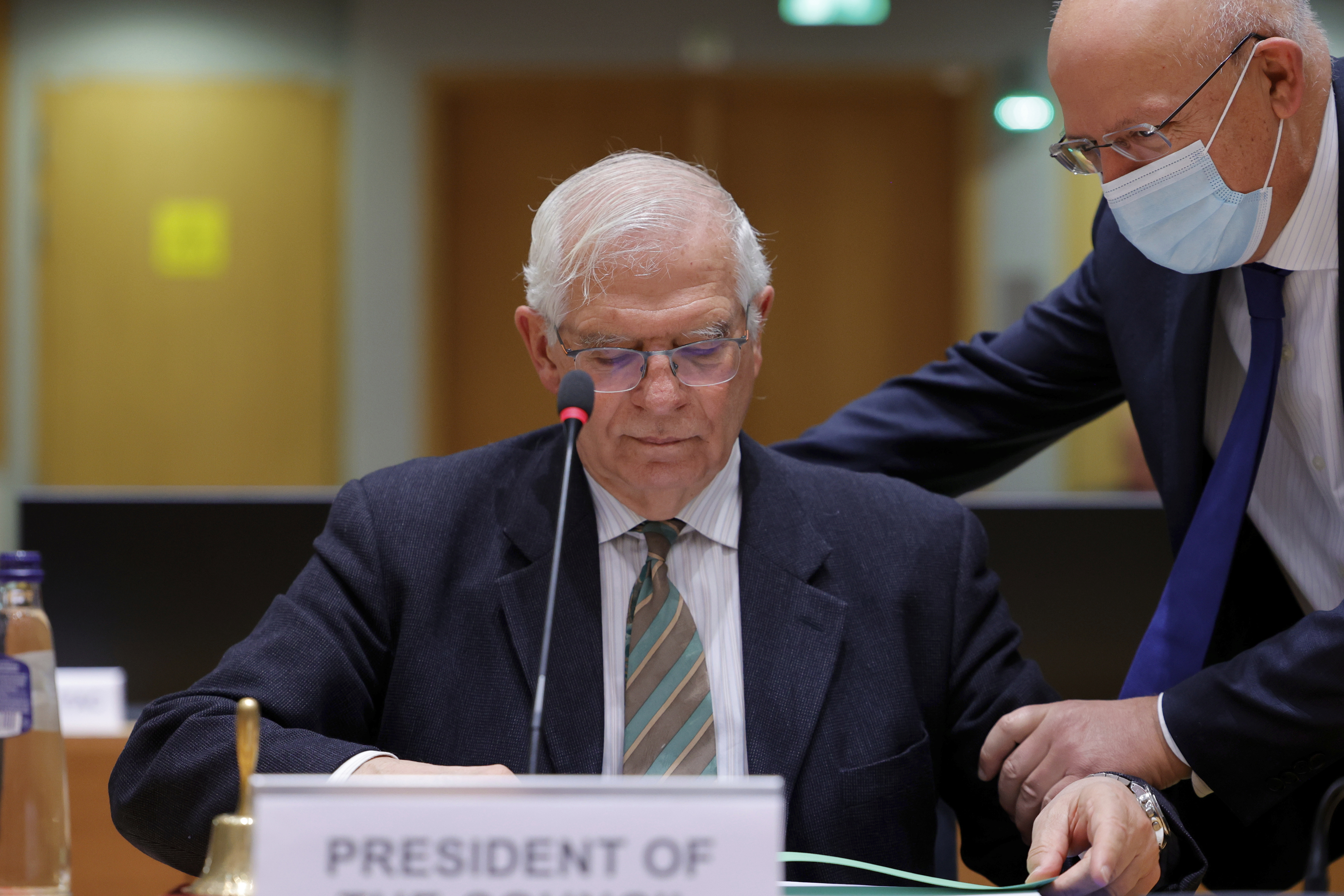
Speaking before he chaired a meeting of the 27-nation bloc's foreign ministers in Brussels, EU foreign policy chief Josep Borrell said "what's happening in Mariupol is a massive war crime."

"Destroying everything, bombarding and killing everybody in an indiscriminate manner," he said.

"This is something awful."

READ MORE: Ukraine President compares Russia's invasion to Nazi 'final solution'

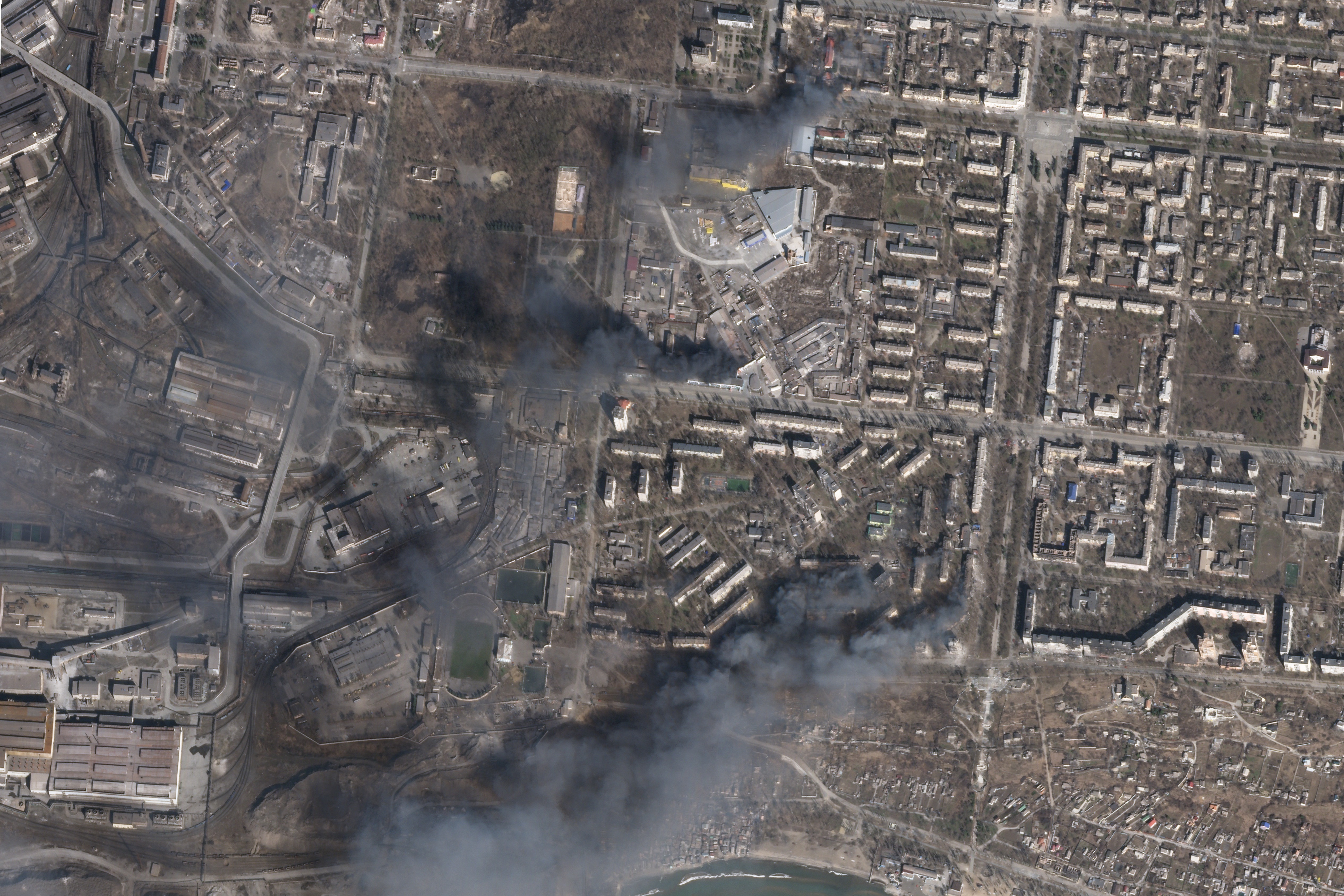
The encircled southern city on the Sea of Azov has seen some of the worst horrors of the war. Multiple attempts to evacuate residents from Mariupol have failed or only partly succeeded.

City officials said at least 2300 people have died in the siege, with some buried in mass graves.

Mr Borrell underlined that "war also has law".

The International Criminal Court in the Netherlands is gathering evidence about any possible war crimes in Ukraine but Russia, like the United States, doesn't recognise the tribunal's jurisdiction.

Irish Foreign Minister Simon Coveney said his country is "certainly open to other mechanisms for accountability in terms of the atrocities that are taking place in Ukraine right now."

READ MORE: Young woman attacked and left to die on Western Australian road-trip

Mr Coveney said Russia's invasion of Ukraine is probably the first "war being played out on social media, where people see images happening live, and they're outraged by it."

"This is driving a fury across the European Union within the public as to why can't we stop this," he told reporters.

"They want people held to account for the decisions taken and the brutality that we have seen."

The imposition of a new round of sanctions — asset freezes and travel bans — appears unlikely for now.

Notorious for their often slow handling of fast-moving international events, EU nations have rallied in just over three weeks since the invasion began on February 24 to slap sanctions on 877 people.

They include Russian President Vladimir Putin, senior ministers and pro-Kremlin oligarchs. A further 62 "entities" — companies, banks, airlines and ship builders — have also been hit in near record time.

But the issue of imposing restrictive measures on energy remains extremely sensitive, given the dependence of many EU countries on supplies of Russian natural gas.

A group of countries led by Germany wants a pause on new measures for now, amid concern about high energy prices and fears that Russia might halt gas exports to Europe. Some also want to save sanction ammunition for any new and major war atrocity, like the use of chemical weapons.

"We are doing everything to close loopholes in the sanctions" that have already been agreed, Ms Baerbock said.

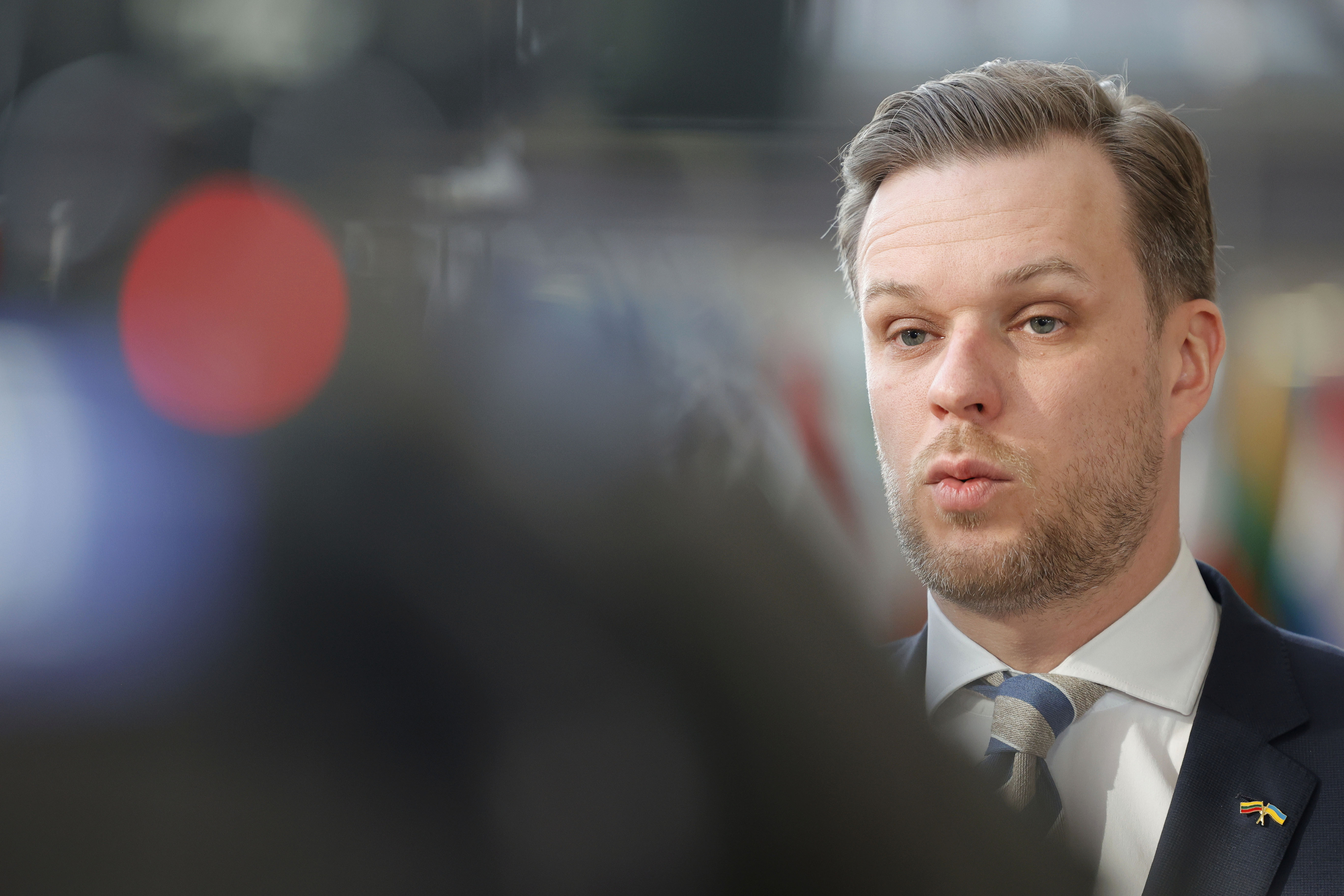
But Lithuanian Foreign Minister Gabrielius Landsbergis, whose country borders Russia and Belarus, warned against "sanctions fatigue".

"We cannot get tired, imposing sanctions. We cannot get tired, offering assistance and help to Ukraine," he said.

He said the EU must start thinking about what kind of attack by Russia would constitute a "red line" for tougher measures.

The shelling of cities and civilians, he said, doesn't appear to be enough to persuade some member countries "but somewhere there, there has to be one".

Mr Landsbergis also said Lithuania, Latvia and Estonia need their defences bolstered by partner countries.

"I think we need to see more equipment, and first of all the actual defence plans (for) the Baltic countries that would reflect the changed strategic reality of the region," he told reporters.