Category Archives: headline

Jamaican Man Arrested in Florida for Running Lottery Scam Operation

Sheri-Kae McLeod

CNW- Another Jamaican has been arrested in Florida for running a lottery scam operation that defrauded elderly victims from New York, Arizona and Texas out of over US$500,000.

Linton Roberts, 50, was arrested in Lauderhill on Monday. He faces 21 charges, including money laundering, grand theft, larceny, exploitation of the elderly and fraud. His bond has been set at US$1.1 million, but he remains at the Joseph V Conte Facility in Pompano Beach.

According to the Sun-Sentinel, the scams that took place from April 2018 through as recently as last week, were largely carried out the same way. Elderly victims in New York, Massachusetts, California and elsewhere received calls from someone using different names and told them they were lottery winners.

In order to claim their winnings, the victims were told they needed to mail cashier’s checks to a Lauderhill address, later determined to be Roberts’. Roberts scammed victims out of hundreds of thousands of dollars over the course of four years.

Upon realizing they were scammed, his victims — which ranged between 75 to 83 years old — contacted the Lauderhill Police Department.

According to an affidavit, Roberts also received over $12,930 after fraudulently applying for a Paycheck Protection Program loan, despite never owning a business.

Roberts is just one of several Jamaicans to be arrested for lottery scamming and fraud in Florida since the start of the year.

Earlier this week, a South Florida grand jury indicted a Jamaican veteran police officer for importing cocaine into the United States with the intent to distribute it. The 42-year-old Shelian Cherine Allen was caught with several packages of cocaine in various parts of her body at the Fort Lauderdale Airport. If convicted, she faces up to 40 years in prison on each count.

A week before her arrest, another Jamaican, Richard Morgan was arrested by the Bay County Police in Florida for allegedly scamming a 92-year-old woman out of US$54,000 (approximately J$8.5 million).


The post Jamaican Man Arrested in Florida for Running Lottery Scam Operation appeared first on The St Kitts Nevis Observer.

WORLD VIEW: Russia Advances in Ukraine, CDC Lowers Mask Rules, Hong Kong Covid Surge, Taiwan Feels Heat from Ukraine, More

Alternate text

February 25, 202

Today’s Headlines

I'm an image

KYIV, Ukraine (AP) — Russia pressed its invasion of Ukraine to the outskirts of the capital Friday after unleashing airstrikes on cities and military bases and sending in…Read More

I'm an image

WASHINGTON (AP) — The Biden administration will significantly loosen federal mask-wearing guidelines…Read More

I'm an image

TAIPEI, Taiwan (AP) — The Russian attack on Ukraine has put a spotlight on another place that could…Read More

For more of today’s news, go to APNews.com >>

Editor Selections

I'm an image

TOKYO (AP) — Twenty million dollars in U.N. humanitarian funds for Ukraine. A raft of new, stronger…Read More

WASHINGTON (AP) — U.S. and European officials are holding one key financial sanction against Russia…Read More

I'm an image

HONG KONG (AP) — Hong Kong on Friday reported another sharp jump in new COVID-19 cases to more than…Read More

Cross Section

I'm an image

WARSAW, Poland (AP) — It has been a long time since the threat of using nuclear weapons has been…Read More

I'm an image

LONDON (AP) — Russia was stripped of hosting the Champions League final by UEFA on Friday with St….Read More

I'm an image

LOS ANGELES (AP) — Sally Kellerman, the Oscar and Emmy nominated actor who played Margaret “Hot…Read More

The post WORLD VIEW: Russia Advances in Ukraine, CDC Lowers Mask Rules, Hong Kong Covid Surge, Taiwan Feels Heat from Ukraine, More appeared first on The St Kitts Nevis Observer.

The world will pay a high price for Russian aggression

By Sir Ronald Sanders  

(The writer is Antigua and Barbuda’s Ambassador to the United States of America and the Organisation of American States.   He is also a Senior Fellow at the Institute of Commonwealth Studies, University of London and Massey College in the University of Toronto)  

The invasion by the Russian Federation  of the sovereign state of Ukraine has been roundly condemned by most countries of the world.

However, Venezuelan President, Nicolas Maduro, announced his support of it.  Had President Maduro stopped short at his statement that: “We repudiate and reject all plans to surround Russia militarily and strategically.  Russia has to be respected as all the peoples of the world have to be respected”, that would have been, at least, understood to be ideological and strategic support in his Government’s interest.  But, by swiftly and unequivocally supporting the Russian invasion  of Ukraine, which is a clear violation of the basic tenets of the UN Charter and international law, President Maduro raises questions.

It is to be hoped that the Venezuelan government does not regard the Russian aggression against Ukraine – in violation of Article 2, paragraph 4 of the United Nations Charter – as encouragement for similar action against its neighbours.

In this connection, the Caribbean Community (CARICOM) countries were right to issue a statement in the immediate aftermath of the Russian invasion  of Ukraine that the “hostilities against Ukraine go counter to the principles of respect for sovereignty, territorial integrity, and the prohibition on the threat or use of force, and the peaceful resolution of disputes, which are the bedrock of this Community”.   All countries should understand that CARICOM countries are small states that depend on the rule of international law, including the illegality of aggression and the prohibition of the threat or use of force in disputes.

At the time of writing, both the United Nations and the Organization of American States (OAS) are working on issuing strong resolutions, condemning not only the Russian invasion of Ukraine, but also the earlier recognition, on February 21,  by the Russian government of two provinces of Ukraine – Donetsk and Luhansk – regions of Ukraine as a violation of the territorial integrity and sovereignty of Ukraine and inconsistent with the principles of the Charter of the United Nations.

When this crisis began to loom, there was, in some Caribbean circles, the view that countries of the region should stay-out of “the white boys war”.   However, as I have argued in previous commentaries, any march by the Russian government into Ukraine and any attempt to annex parts of it by recognition of break-away regions within it, would have grave repercussions for the world, including the Caribbean.

First, it would embolden governments with contentions with their neighbours, territorial and otherwise, to act in a similar fashion.  The consequence would be to create hostilities and instability in almost every region of the world.   Second, Ukraine is the bread-basket of Europe.  Disruption of its food production and supply would cause not only food shortages but also an increase in the cost of food globally as Europe seeks other sources of supply.   Third, oil and gas prices would increase as action is taken against Russia by stopping its sales of oil to Europe.  Europe, too, would have to buy oil in the same markets as Caribbean countries, forcing up prices at a time when the region is barely beginning to recover from the adverse effects of the COVID-19 Pandemic.  No sector would be spared and especially affected would be tourism, the supply of energy and water, and food production.

The US has tried and failed to convince large oil producers, such as Saudi Arabia, to pump more oil to cater for Europe’s needs.   But long before the hostilities in Ukraine, Russia had already tied up a deal with member states of the Organization of the Petroleum Exporting Countries (OPEC) not to increase oil production in order to keep prices at a high level.

What was happening in Ukraine was, therefore, always a peril to the world community.  The person who knew this best was UN Secretary-General, António Guterres.   He told the UN special general assembly meeting on 23 February that “Our world is facing a moment of peril”, and even as the Russian government had already indicated its intention to launch a military offensive against Ukraine, he said: “If the conflict in Ukraine expands, the world could see a scale and severity of need unseen for many years”.

These circumstances now face the world.   It is unlikely that the Russian Federation President, Vladimir Putin, will heed the urgings to stop the hostilities and withdraw troops from Ukraine immediately.   It is also unlikely that even though it is a violation of international law and the UN Charter, that he will drop his recognition of Donetsk and Luhansk which are part of the Ukraine.   He will regard these as bargaining chips with the member countries of the North Atlantic Treaty Organisation (NATO) and the European Union (EU).

This situation will therefore continue for some time while bargaining takes place both behind the scenes and in public.  NATO and EU countries are not without leverage of their own.   Apart from what British Prime Minister, Boris Johnson, called a “barrage” of sanctions, coming from the US, the EU and the UK, there are other ways in which Russia could be isolated.  The sanctions on Russian oil companies and banks are already in place, putting pressure on Russia’s economy about which its own people will eventually complain.

In the meantime, the global community will pay a high price for Russia’s violation of the principles of international law that have, largely, underpinned peace and protected small states.

That’s why, CARICOM was right to speak out as it did.  CARICOM leaders were safeguarding the interest of Caribbean people.

Responses and previous commentaries: www.sirronaldsanders.com  

The post The world will pay a high price for Russian aggression appeared first on The St Kitts Nevis Observer.

St Kitts and Nevis To Ban Single-Use Plastics

The announcement shouldn’t come as a surprise to residents of St. Kitts and Nevis; the islands’ Ministry of Tourism and Sustainable Destination Council, which had been created in 2013, began advocating for the ban of single-use plastics in 2018, beginning a campaign called “Plastics Be Gone,” which aims to reduce St. Kitts and Nevis’ single-use plastics by 30 percent over five years.

It also started an annual initiative called Plastic Free July, advocating residents and businesses not to use single-use plastics during the month while educating them on the ways plastics can threaten the health of the world.

In April 2021, the two-island nation’s Department of Environment began consultations with stakeholders in a series of sessions entitled, “Are you Ready to be Plastic Free?” Representatives from government departments, the Small Business Development Centre, Solid Waste Management Corporation and Ital Creations attended the sessions.

This year, the private sector will be included in the conversation surrounding the plan of action to ban single-use plastics entirely.

“The Ministry of Environment is consulting with relevant stakeholders to implement a ban on single-use plastics, following in the footsteps of several Caribbean countries that have already done so,” said Sharon Rattan, St Kitts and Nevis’ Permanent Secretary in the Ministry of Environment and Cooperatives.

“One of the things that the ministry is endeavoring to do is to make sure we have meaningful collaboration so that we can make informed decisions because we are quite aware that such a ban cannot be done overnight,” added Permanent Secretary Rattan.

The islands are also using some of the funds from its Citizen by Investment Program to fund its sustainability initiatives, including its ban on single-use plastics. The program allows sustainably-minded individuals with capital to earn citizenship in the islands by investing in their development, including in their sustainability.

According to UNEP, the world produces about 300 million tons of plastic each year, though Statista has found that just 8.7 percent of the volume of plastic waste generated each year in the United States alone was recycled, indicating that the majority of plastics created get thrown out into landfills, where they can take thousands of years to degrade and risk critical ecosystems.

St. Kitts and Nevis has a special problem with single-use plastics because of its geography. The two islands only have so much land, and many single-use plastics are not recyclable, taking thousands of years to degrade. Large landfills filled with mainly plastics are not sustainable over the long run, and neither are the threats of these plastics to the islands’ natural wildlife.

The post St Kitts and Nevis To Ban Single-Use Plastics appeared first on The St Kitts Nevis Observer.

Nine News reporters honoured at Walkley Awards

Nine News has been recognised for its outstanding journalism after landing a host of top honours at the prestigious Walkley Awards.

Christine Ahern was honoured for her reporting for A Current Affair and the Today show on the COVID-19 crisis at the Epping Gardens Aged Care home with the Walkley for Television/Video Current Affairs Short.

And, in the category for Television/Video News Reporting, Peter Fegan and Rebeka Powell's report into 'The Investigation of Andrew Laming' for Nine News was also recognised. All three finalists in this category were Nine News reporters, with Amelia Adams recognised for her coverage of the Capitol attacks and Tim Arvier nominated for his reporting of ambulance delays in Queensland.

https://twitter.com/walkleys/status/1497163456491159555

Nick McKenzie and Joel Tozer won two awards, Television Current Affairs Long and Investigative Journalism, for their coverage of 'Nazis Next Door', which featured on 60 Minutes, as well as in The Age and The Sydney Morning Herald.

Nine newspapers also picked up top honours. Kate McClymont took the Print/Text News Report for her Sydney Morning Herald Investigation into the disappearance of Melissa Caddick and the AFR took the Audio award for their podcast The Sure Thing, by Angus Grigg and Lap Phan. And The Sydney Morning Herald's Brook Mitchell was recognised for his coverage of the Sydney anti-lockdown protests with the award for News Photography.

Samantha Maiden of news.com.au won the top award of the night, The Gold Walkley, for Open Secret: The Brittany Higgins story.

The Award for Outstanding Contribution to Journalism went to George Negus, a founding presenter of Nine's 60 Minutes and ABC's Foreign Correspondent.

Mr Negus, who has been living in a Sydney nursing home since late last year after being diagnosed with dementia, was lauded for both his skill as a television reporter and writer.

"I had admired George Negus as an insightful, determined, clever and witty journalist before it was my privilege to become his book publisher in 2001," said Shona Martyn, a former publishing director of HarperCollins Australia. 

"As a journalist and writer, George Negus has been able to distill the most complicated issues into the equivalent of a fireside chat. The sales of his books, which became bestsellers, prompted the adoration of the crowds who came to see him at writers' festivals and in bookshops. What a legend. And what a contribution to Australian journalism," Ms Martyn added.

FULL LIST OF WINNERS

PRINT/TEXT NEWS REPORT

  • Kate McClymont, The Sydney Morning Herald, "The Lady Vanishes: Melissa Caddick and the missing millions"

PUBLIC SERVICE JOURNALISM

INNOVATION

  • Kylie Boltin, Ella Rubeli, Ravi Vasavan and Emma Anderson, SBS, "Ravi and Emma"

HEADLINE, CAPTION OR HOOK

  • Duska Sulicich, The Age, "Michael rolled, the vote assured, Hallelujah!", "It's all a bit cray-cray" and "The Art of the Steal"

FEATURE WRITING LONG (OVER 4000 WORDS)

FEATURE WRITING SHORT (UNDER 4000 WORDS)

COVERAGE OF INDIGENOUS AFFAIRS

COVERAGE OF COMMUNITY OR REGIONAL AFFAIRS

CARTOON

  • David Pope, The Canberra Times, "Rollout de Vax"

SPORTS JOURNALISM

SPORT PHOTOGRAPHY

  • Alex Coppel, Herald Sun, The Daily Telegraph, The Courier-Mail and The Advertiser, "The Games that Had to Happen"

RADIO/AUDIO NEWS AND CURRENT AFFAIRS

RADIO/AUDIO FEATURE

  • Angus Grigg and Lap Phan, The Australian Financial Review, "The Sure Thing"

PRODUCTION

SCOOP OF THE YEAR

  • Ellen Whinnett, The Daily Telegraph, Herald Sun, The Advertiser and The Courier-Mail, "The AN0M Files"

COVERAGE OF A MAJOR NEWS EVENT OR ISSUE

NEWS PHOTOGRAPHY

  • Brook Mitchell, The Sydney Morning Herald, "Sydney Anti-Lockdown Protest"

BUSINESS JOURNALISM

FEATURE/PHOTOGRAPHIC ESSAY

  • Dean Sewell, The Sun-Herald, "Of Mice and Men"

TELEVISION/VIDEO: CAMERAWORK

TELEVISION/VIDEO NEWS REPORTING

  • Peter Fegan and Rebeka Powell, Nine News 6pm, Nine, "The Investigation of Andrew Laming"

TELEVISION/VIDEO CURRENT AFFAIRS SHORT (LESS THAN 20 MINUTES)

TELEVISION/VIDEO CURRENT AFFAIRS LONG (MORE THAN 20 MINUTES)

INVESTIGATIVE JOURNALISM

COMMENTARY, ANALYSIS, OPINION AND CRITIQUE

WALKLEY DOCUMENTARY AWARD

WALKLEY BOOK AWARD

  • Kate Holden, The Winter Road, Black Inc.

NIKON-WALKLEY PRESS PHOTOGRAPHER OF THE YEAR

  • Alex Coppel, Herald Sun, The Daily Telegraph and The Courier-Mail

OUTSTANDING CONTRIBUTION TO JOURNALISM

  • George Negus

GOLD WALKLEY

  • Samantha Maidennews.com.au, "Open secret: The Brittany Higgins story"

Latin American, Caribbean Leaders Divided on Russia’s Ukraine Invasion

Ukrainian citizens hold posters during a protest in support of Ukraine in front of the Russian Embassy in Santiago, Chile, on Thursday, Feb. 24, 2022. (MARTIN BERNETTI/AFP)

As President Joe Biden works to build an international coalition to isolate Russian President Vladimir Putin, the issue will likely generate more friction with some of the Latin American governments that so far have issued a half-hearted response to the invasion.

Here are some of the reactions from regional leaders to Russia’s military aggression.

Mexico

Populist President Andres Manuel Lopez Obrador is already facing domestic criticism, including from former Mexican diplomats, for what they say is a lukewarm response to Russia’s military attack on Ukraine.

In his daily morning press conference, Lopez Obrador said his government “will continue promoting dialogue, that force is not used, that there is no invasion. We are not in favor of any war.” But he stopped short of explicitly condemning Russia’s incursion into Ukraine.

“Mexico has always supported peace and peaceful solutions,” he said.

Peru

In a similar tone as Mexico, the Peruvian Foreign Ministry rejected the use of force but avoided mentioning Russia in a tweet expressing its “profound concern about the evolving events in Ukraine.” The statement called for ceasing hostilities.

Argentina

Earlier this month, left-leaning Argentine President Alberto Fernández offered his country as Russia’s “gateway to Latin America” during a meeting with Putin. Facing intense criticism, his government quickly issued a statement on Thursday morning lamenting the situation in Ukraine, rejecting the use of force and calling on Russia “to cease its military actions in Ukraine.” But in the afternoon, Fernandez said he was calling “on all parties not to use military force,” triggering again criticism for what some saw as a reluctance to denounce Russia as the aggressor.

Brazil

President Jair Bolsonaro’s trip to Moscow last week, as tensions over Ukraine were escalating, already created discord with the U.S. government. Brazil’s statement Thursday probably did little to improve the state of relations, which have gone colder since former president Donald Trump left the White House.

In the statement, the Brazilian government said it is “deeply concerned about the military operations launched by Russia against Ukraine territory” and called for the cessation of hostilities. But it did not condemn Russia’s actions.

Chile

“Chile condemns Russia’s aggression against Ukraine,” the country’s foreign affairs ministry said in a statement. Clearing doubts about his position, left-leaning president-elect Gabriel Boric said Russia “opted for war.”

“From Chile, we condemn the invasion of Ukraine, the violation of its sovereignty and the illegitimate use of force,” he said on Twitter. “Our solidarity will be with the victims and our humble efforts with peace.”

Colombia

Colombia, a “major non-NATO ally” of the United States, issued a forceful condemnation of Russian actions.

“Colombia categorically rejects the attacks against Ukraine by Russia,” President Ivan Duque said on Twitter early Thursday. “These events threaten the sovereignty of Ukraine and put the lives of thousands of people at risk, in an unquestionable situation contrary to International Law and the UN Charter.”

Caricom

The Caribbean Community organization known as CARICOM, made up of 20 nations, said it “strongly condemns the military attacks and invasion of Ukraine by The Russian Federation and calls for the immediate and complete withdrawal of the military presence and cessation of any further actions that may intensify the current perilous situation in that country.”

In the statement, CARICOM also criticized the recognition by Russia of the Ukrainian regions of Donetsk and Luhansk as independent, calling it a “violation of the territorial integrity and sovereignty of Ukraine.”

Cuba, Nicaragua and Venezuela

The authoritarian leaders of the three closest allies of Russia in the Americas had no comment on the Russian attacks Thursday. But they have previously expressed their support for Russia’s actions in Ukraine, which the three have justified saying Russia has the right to defend against American and NATO expansion in Eastern Europe.

As Putin was preparing to launch the attack on Ukraine, Cuban leader Miguel Díaz-Canel was meeting with the chairman of the lower house of Russia’s Federal Assembly, Viacheslav Volodin, late Wednesday.

According to Cuban state media, the Cuban leader expressed his “solidarity with the Russian Federation in the face of the imposition of sanctions and the expansion of NATO towards its borders.”

But unlike Nicaragua’s Daniel Ortega and Venezuela’s Nicolás Maduro, the Cuban leader has avoided referring to Russia’s military incursion in Ukraine and has not publicly endorsed it.

The post Latin American, Caribbean Leaders Divided on Russia’s Ukraine Invasion appeared first on The St Kitts Nevis Observer.

CARICOM Strongly Condemns Russia’s Military Attacks Against Ukraine

The Caribbean Community (CARICOM) has issued a strong statement condemning Russia’s military attacks in Ukraine, and calls for “intensified diplomatic dialogue” bring about a ceasing of the hostilities.

The following is the full text of the statement issued by CARICOM, today…

The Caribbean Community (CARICOM) strongly condemns the military attacks and invasion of Ukraine by The Russian Federation and calls for the immediate and complete withdrawal of the military presence and cessation of any further actions that may intensify the current perilous situation in that country. The recognition by The Russian Federation of the regions of Donetsk and Luhansk represents a violation of the territorial integrity and sovereignty of Ukraine.

The hostilities against Ukraine go counter to the principles of respect for sovereignty, territorial integrity, non-interference in the internal affairs of another sovereign state and the prohibition on the threat or use of force, and the peaceful resolution of disputes, which are the bedrock of this Community.

CARICOM maintains that the principles of universal respect and adherence to these norms and principles of international law are fundamental to the maintenance of the international system and global peace and security.

CARICOM calls on all parties involved to urgently embark on intensified diplomatic dialogue to immediately de-escalate hostilities and work towards a sustainable peace.

The post CARICOM Strongly Condemns Russia’s Military Attacks Against Ukraine appeared first on The St Kitts Nevis Observer.

Far from Russian Invasion, Ukrainian Brazilians Pray for Peace

By

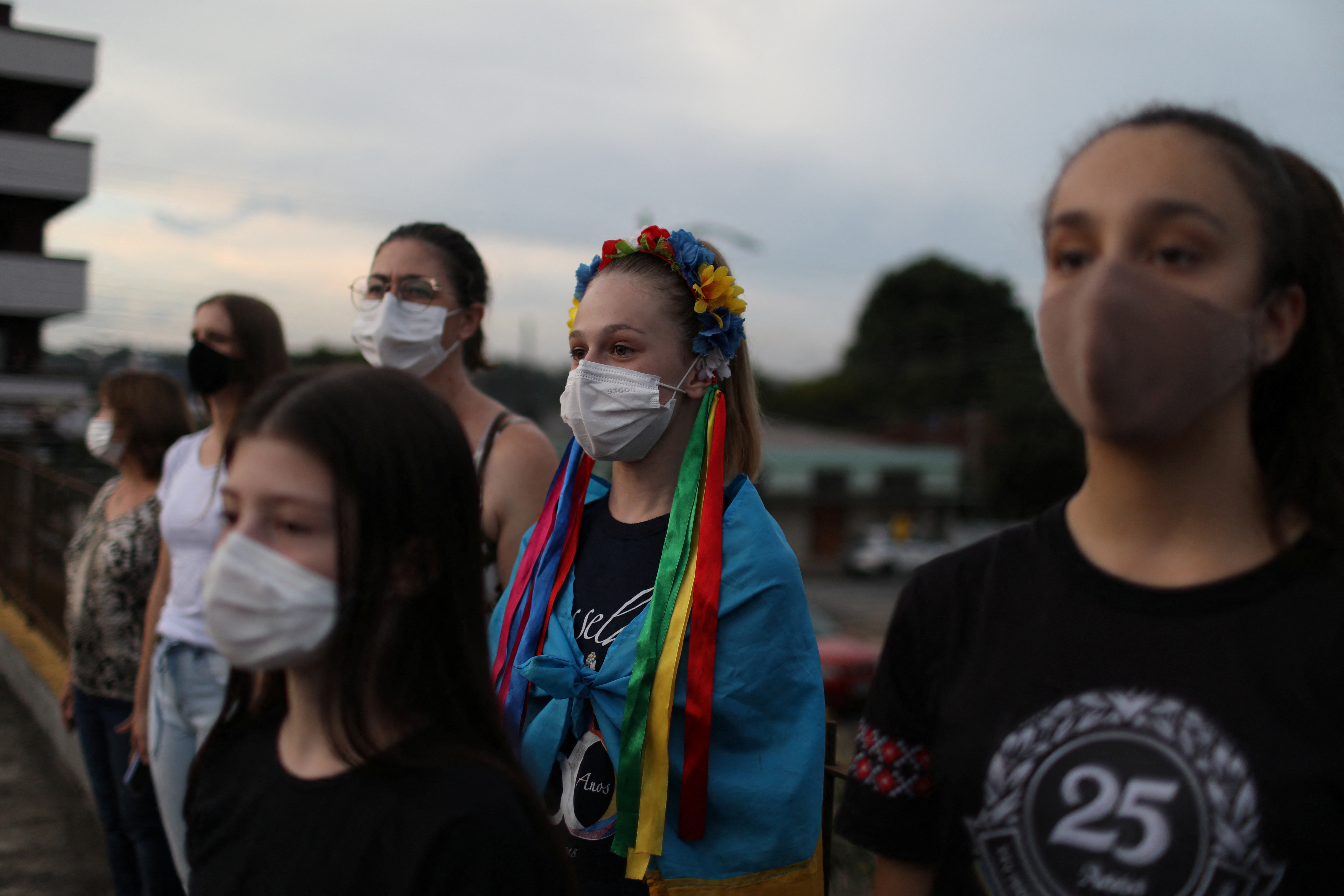
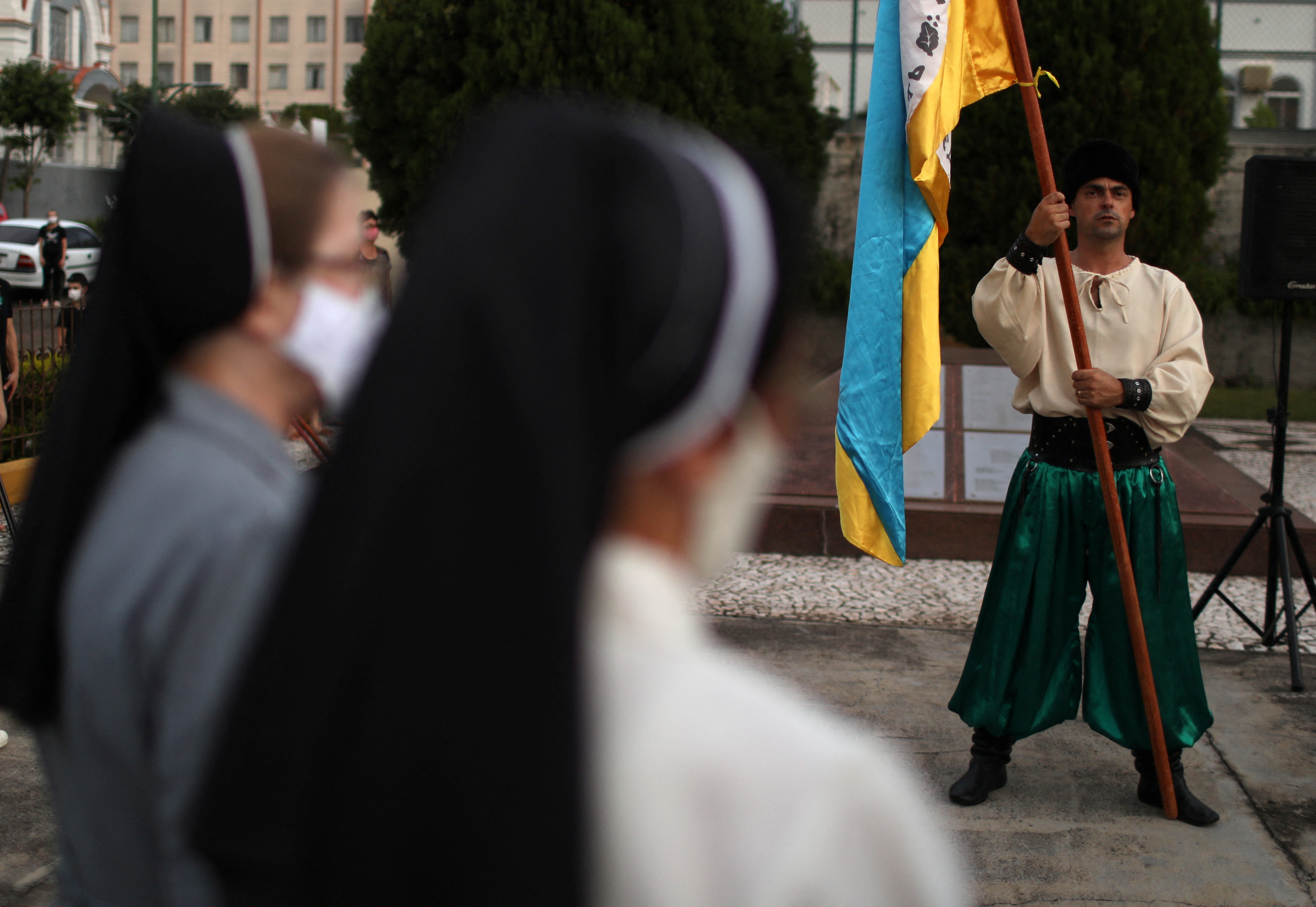
PRUDENTOPOLIS, Brazil, Feb 24 (Reuters) – More than 12,000 kilometers (7,450 miles) away from the violence of the Russian invasion, some 200 Brazilians of Ukrainian descent gathered on Thursday to pray for peace in a country they still consider their homeland.

They sang and said Catholic mass in Ukrainian, holding flags of a country their ancestors left decades ago.

“God will hear us and Russia will retreat,” said Filomena Procek, a 67-year-old art teacher.

Her grandparents were born in southern Brazil near this town known as “Little Ukraine” because three-quarters of the population is of Ukrainian descent.

Ukrainians who settled in Brazil, some as far back as the late 19th century, mostly emigrated from western Ukraine and brought their culture and religion that they hang onto today.

“The invasion of Ukraine has moved people here very much. They are living in their hearts the suffering of Ukrainians today,” said Bishop Don Meron Mazur, a Ukrainian Brazilian.

“We are praying for peace in Ukraine, that Ukraine can be a sovereign nation free of invasions and above all free of bloodshed,” he told Reuters.

An image of Our Lady of Pochaev, a Byzantine icon of the Virgin Mary v

The post Far from Russian Invasion, Ukrainian Brazilians Pray for Peace appeared first on The St Kitts Nevis Observer.

Colombia Says It Killed 23 Members of Armed Groups, Including One Leader

BOGOTA, Feb 24 (Reuters) – A bombardment carried out by Colombia’s armed forces killed 23 FARC dissidents on Thursday as part of a military offensive to seize control of an area in the northeast of the country which sits on the border with Venezuela, the government said.

Dissident members of the demobilised Revolutionary Armed Forces of Colombia (FARC) reject a 2016 peace deal with the government. The dissidents have become a security threat, according to the government, which accuses them of murdering community leaders and civilians.

Military planes and helicopters took part in the bombardment in the municipality of Puerto Rondon, in Colombia’s Arauca province, according to Defence Minister Diego Molano. He said Jorge Eliecer Jimenez, known as Arturo, the FARC dissident commander in Arauca, was among the dead.

“Colombia and Arauca have been liberated from a criminal, from a FARC-dissident leader of the FARC dissidents to bring more security, more peace, and better protect the people of Arauca,” Molano said in a news conference at the site of the operation.

Arauca, which plays an important role in Colombia’s oil and cattle ranching industries, has seen growing violence in which more than 60 people have died so far this year, according to Colombia’s human rights ombudsman.

FARC dissidents allied with the leftist-guerrilla National Liberation Army (ELN) are fighting for control of drug-trafficking in the region against a rival FARC dissident group led by Arturo.

The government in Bogota accuses Venezuela’s President Nicolas Maduro of harbouring FARC dissidents and members of the ELN who cross the border to launch attacks in Colombia, something Maduro has repeatedly denied.

Reporting by Luis Jaime Acosta; Writing by Oliver Griffin; Editing by Kenneth Maxwell

The post Colombia Says It Killed 23 Members of Armed Groups, Including One Leader appeared first on The St Kitts Nevis Observer.

Political Trial: Nicaragua Court Convicts Government Critics of ‘Conspiracy’

A court in Nicaragua has found seven critics of the government of President Daniel Ortega guilty of conspiracy in what human rights groups have denounced as a “political trial”.

Among those convicted are three opposition leaders who had planned to run in the 2021 election.

Dozens of government critics were detained in the run-up to the poll, in which Mr Ortega won a fifth term.

The prosecution has asked for sentences ranging between eight and 13 years.

Those convicted are:

  • Juan Sebastián Chamorro, presidential hopeful
  • Arturo Cruz, former ambassador to the US and presidential hopeful
  • Félix Maradiaga, presidential hopeful
  • José Pallais, former deputy foreign minister
  • José Adán Aguerri, business leader
  • Tamara Dávila, activist with opposition group Unamos
  • Violeta Granera, sociologist and opposition activist

In a trial held at El Chipote prison behind closed doors, the judges found the seven guilty of “conspiracy to undermine [Nicaragua’s] national integrity”.

The rights group Nicaraguan Center for Human Rights said the seven were innocent: “The regime convicted them of crimes they have not committed.”

They are not the first to be convicted in a wave of trials against opponents of the Ortega government.

Earlier this month, two of the most outspoken critics of the president – Dora Téllez and Lesther Alemán – were also found guilty of conspiracy in trials dismissed by rights groups as a “sham”.

Less than two weeks ago, another jailed opposition leader, Hugo Torres, died while awaiting trial.

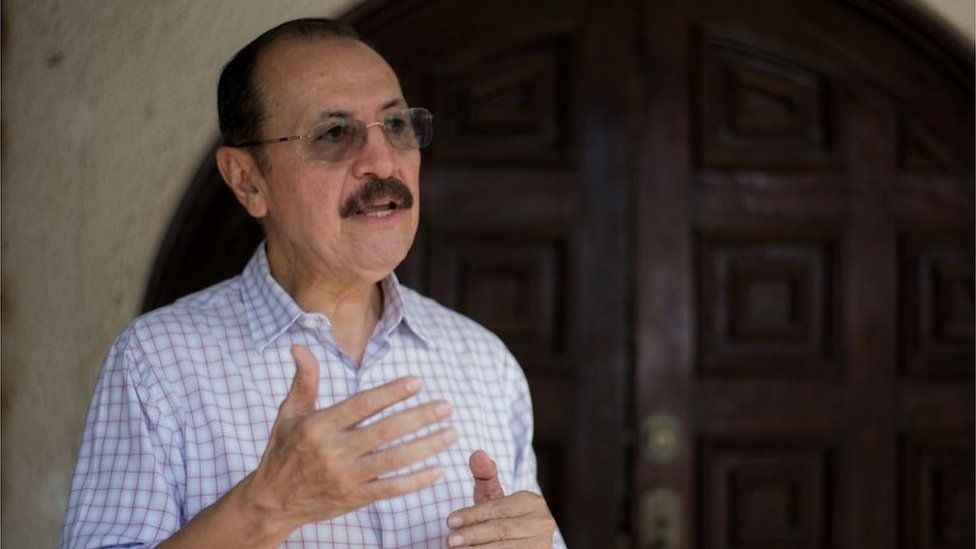
A handout photo made available by Oscar Navarrete shows former guerrilla fighter and retired Brigadier General Hugo Torres, during an interview in Managua, Nicaragua, 06 October 2017 (Issued 13 February 2022).
Hugo Torres died on 12 February while in detentioOLOLO
 

Following his death, the regional body Organization of American States (OAS) said it “categorically condemns the persecution and arbitrary detention” of Nicaraguans and urged the immediate release of “all political prisoners”.

The government’s crackdown on the opposition accelerated in the months before November’s election and has not let up since.

At first, those targeted were longstanding political rivals of the president.

However, it did not take long for police to also arrested those who had once been comrades in arms of Mr Ortega but had turned critical of what they said were his “authoritarian tendencies”.

They were detained under a controversial treason law which the government argues protects Nicaragua from “coup-mongers” financed by “imperial powers” aiming to overthrow President Ortega.

The post Political Trial: Nicaragua Court Convicts Government Critics of ‘Conspiracy’ appeared first on The St Kitts Nevis Observer.