Category Archives: headline

Fighting Reaches Kyiv Outskirts as Russia Continues Ukraine Invasion

Public urged to report Russian troop movements and prepare molotov cocktails, with heavy gunfire heard in residential district
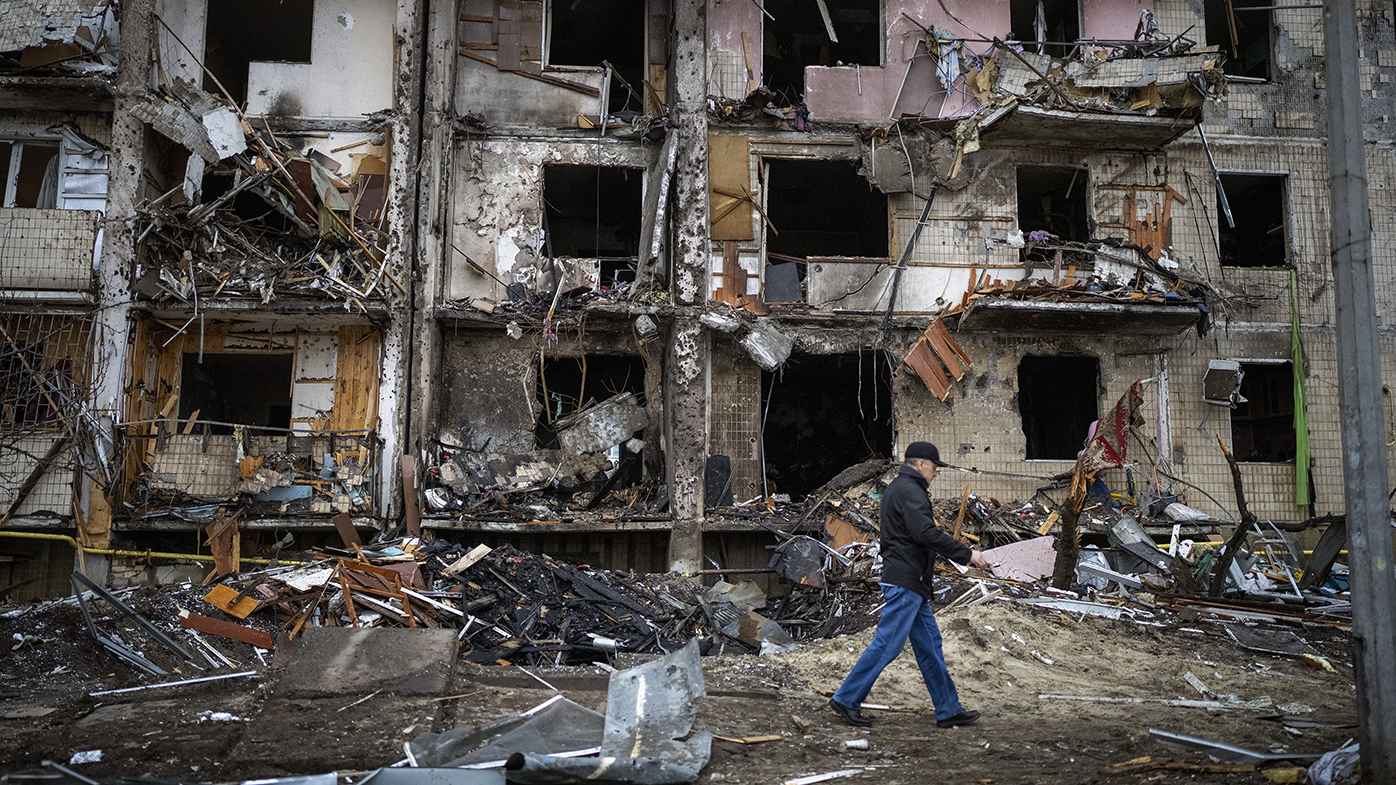
The wreckage of a residential building in Kyiv, after Russia launched a massive military operation against Ukraine.
Explosions seen inside Kyiv as Ukrainians flee the capital – video

Fighting has reached the outskirts of Kyiv, following a night of missile attacks on Ukraine’s capital to prepare for a major Russian assault on the city.

Heavy gunfire and explosions could be heard in a residential district of the capital on Friday morning and Ukrainian officials have warned that Russian military vehicles are approaching the city from the north-west.

The Ukrainian defence ministry said Russian forces had entered the Obolon district of Kyiv, about six miles from the centre of the city. In a statement posted online, it advised residents to report the movements of Russian troops and to “prepare molotov cocktails in order to neutralise the enemy”.

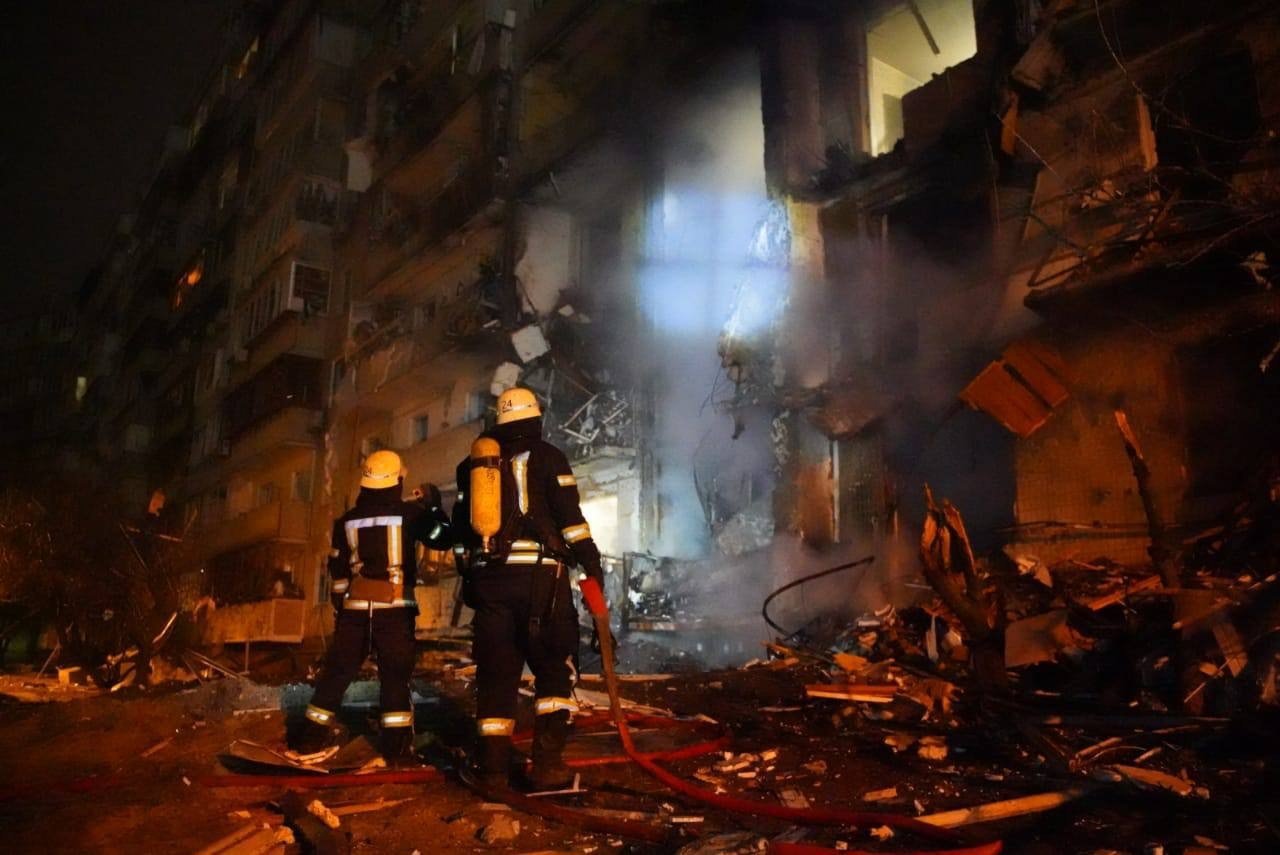
Two Kyiv apartment buildings were engulfed in flames on Thursday night after they were hit by falling debris from an aircraft that was shot down. Ukraine’s emergencies ministry has also released photographs showing buildings destroyed by shelling in Starobilsk in eastern Ukraine.

The Ukrainian president, Volodymyr Zelenskiy, accused Vladimir Putin of targeting civilian as well as military sites.

“They say that civilian objects are not a target for them. It is a lie; they do not distinguish in which areas to operate,” he said.

Zelenskiy made the claim in a televised address early on Friday, in which he vowed to continue to defend his country. “Russia will have to talk to us sooner or later about how to end hostilities and stop this invasion. The sooner the conversation begins, the smaller Russia’s losses will be.”

The president, who also criticised world leaders for “watching from afar”, spoke after large explosions were heard in the capital, and after a warning from US secretary of state, Antony Blinken, that “all evidence suggests that Russia intends to encircle and threaten” the city. Zelenskiy has vowed to stay in the capital.

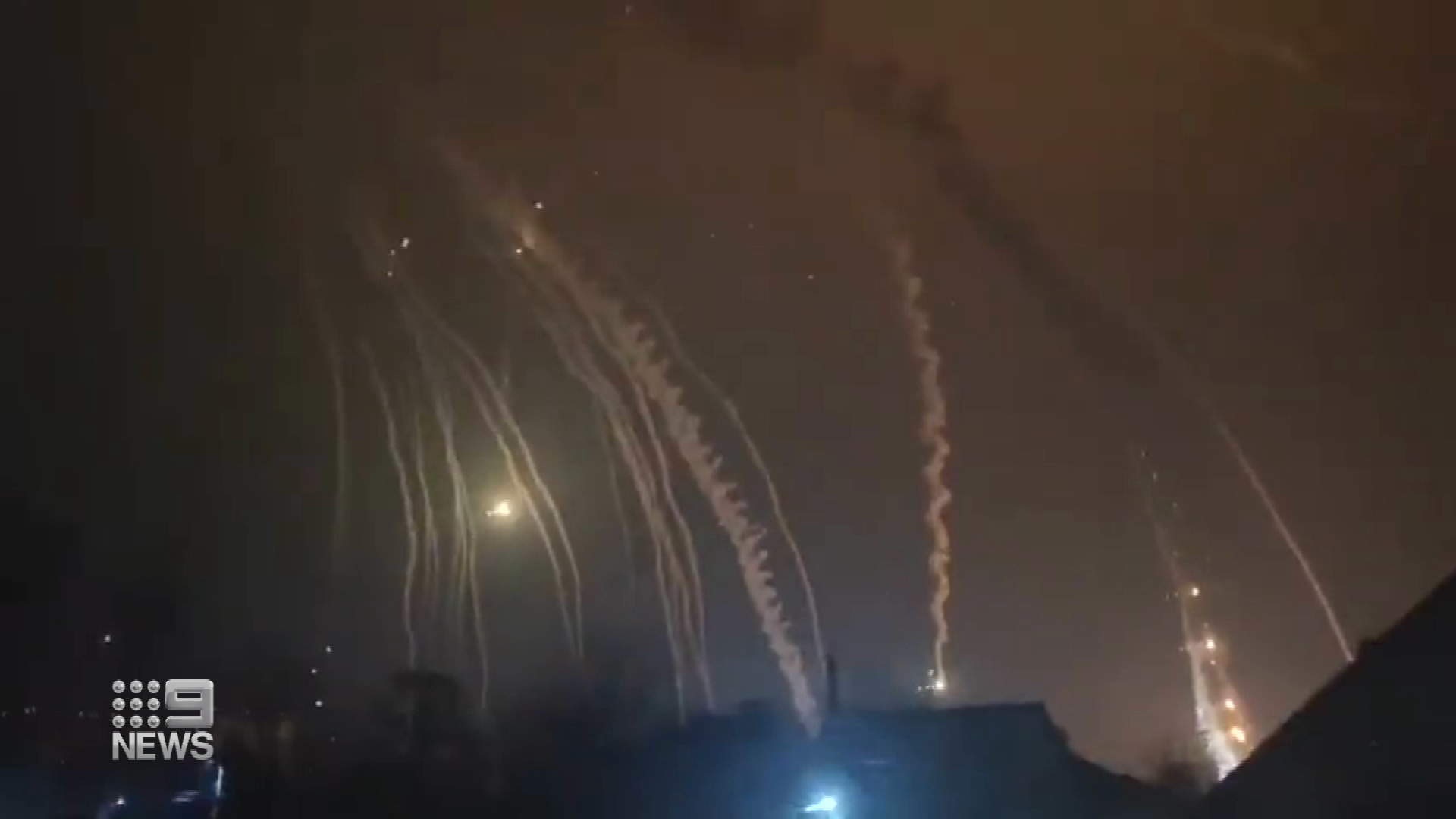
Zelenskiy said missile strikes resumed at 4am and images soon emerged of damaged and burning tower blocks amid footage containing the sound of air raid sirens. Early on Friday, Ukraine’s military said it had shot down a Russia aircraft over the capital.

The UK defence secretary, Ben Wallace, has said it is the view of British intelligence that Russia intends to invade the whole of Ukraine, but its army failed to deliver on the first day of its invasion.

The international criminal court (ICC) said on Friday it might investigate possible war crimes, though did not provide any further details.

Ukrainian troops are battling Russian forces advancing toward Kyiv as part of the biggest invasion of a European state since the second world war. “We believe Moscow has developed plans to inflict widespread human rights abuses – and potentially worse – on the Ukrainian people,” Blinken told a meeting of the Organization for Security and Cooperation in Europe (OSCE) on Thursday.
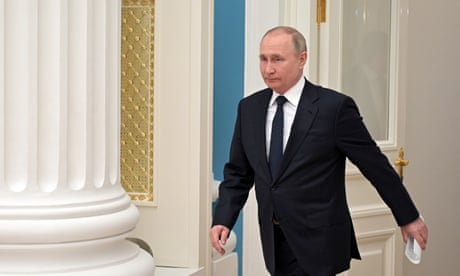
Putin at the Kremlin on Thursday. The Czech president Miloš Zeman denounced Putin a ‘madman’ after the invasion.
Decision to invade Ukraine raises questions over Putin’s ‘sense of reality’

In an earlier overnight video address, Zelenskiy said 137 people had died since Putin launched an invasion by land, air and sea on Thursday, with hundreds of others injured, and claimed that Russia had named him “target number one”.

He warned: “My family is the number two target. They want to destroy Ukraine politically by destroying the head of state. I will stay in the capital. My family is also in Ukraine.”

The Ukrainian president also voiced frustration after speaking to the heads of Nato member states. “We have been left alone to defend our state,” Zelenskiy said. “Who is ready to fight alongside us? I don’t see anyone. Who is ready to give Ukraine a guarantee of Nato membership? Everyone is afraid.”

Asked if he was worried about Zelenskiy’s safety, Blinken told CBS: “To the best of my knowledge, President Zelenskiy remains in Ukraine at his post, and of course we’re concerned for the safety of all of our friends in Ukraine – government officials and others.”

Ukraine announced it had lost control of the Chernobyl nuclear site near the country’s northern border with Belarus hours after Russian troops began an invasion of its neighbour on Thursday, and the White House said it was “outraged” by credible reports that Russian forces were holding facility staff there hostage.

“This unlawful and dangerous hostage-taking, which could upend the routine civil service efforts required to maintain and protect the nuclear waste facilities, is obviously incredibly alarming and gravely concerning,” the US press secretary Jen Psaki said.

The International Atomic Energy Agency said it was following the situation “with grave concern” and appealed for maximum restraint to avoid any action that might put Ukraine’s nuclear facilities at risk.

The west scrambled to respond to Putin’s aggression with a range of new sanctions against Moscow, with the US also announcing it would send 7,000 more troops to Germany to shore up Nato’s eastern borders. But even after the invasion there were divisions on the strength of the response, as Russian forces advanced undeterred by the threats.

The EU faced furious remonstrations from Kyiv after Europe’s leaders looked set to hold back from imposing the potentially most damaging sanction on Russia: blocking Russia from an international payments system through which it receives foreign currency. Ukraine’s foreign minister, Dmytro Kuleba, said European and US politicians would have “blood on their hands” if they failed to impose the heaviest toll on Moscow by cutting Russia from the Swift payments system.

The president of the European Commission, Ursula von der Leyen, said the EU was united after discussions of the five-pillar sanctions package targeting the financial, energy, transport and export industries and visa controls.

She said: “Today’s events are a watershed moment for Europe. Bombs are falling on innocent women, men and children. They fear for their lives and many are dying. All of this happens in 2022 – in the very heart of Europe. President Putin chose to bring back war to Europe.

“Let me stress that these events, indeed, mark the beginning of a new era. We must be very clear in our analysis: Putin is trying to subjugate a friendly European country. And he is trying to redraw the maps of Europe by force. He must, and he will, fail.”

Leaders of the 30 Nato allied nations will meet on Friday, the US president, Joe Biden, confirmed, as they come under pressure to go further than the two rounds of sanctions already announced, after what the British prime minister, Boris Johnson, described as a “dark day in the history of our continent”.

The United Nations security council will also vote on Friday on a draft resolution condemning Russia’s invasion and requiring Moscow’s immediate withdrawal. However, Moscow can veto the measure, and it was unclear how China, which has rejected calling Russia’s move an invasion, would vote.

The post Fighting Reaches Kyiv Outskirts as Russia Continues Ukraine Invasion appeared first on The St Kitts Nevis Observer.

Other Covid Vaccines Can Be Effective, Brits Fears as Restrictions End, World Covid Stats


A health worker in Mexico City prepares a Sputnik V dose during a mass vaccination effort against COVID-19. A new study in Mexico shows that non-mRNA vaccines like the Russian version can be as effective as mRNA vaccines like Pfizer if the patient has previously been infected with SARS-CoV-2. Luis Barron/Eyepix Group/Barcroft Media via Getty Images


NPR-  More than 20 COVID vaccines are in use globally, each one based on the ancestral coronavirus SARS-CoV-2 that surfaced in Wuhan, China, over two years ago. Among them, mRNA vaccines are believed to offer the best protection against severe disease.

“It’s been clear for quite a while that none of them is as good as the mRNA vaccines that dominate the U.S. landscape,” says Nathaniel Landau, a virologist at NYU Langone Health in New York, referring to the Pfizer and Moderna shots.

But a new preprint study shows that other vaccines can be as effective as mRNA shots when given to people who’ve had a prior SARs-CoV-2 infection.

For these individuals “it doesn’t matter which vaccine they get,” says Theodora Hatziiouannou, a virologist at The Rockefeller University in New York who helped lead the study. “They will likely be protected against [reinfection from] all the current variants.”

During the study, scientists collected blood samples from 197 fully-immunized people in Mexico, where five types of COVID vaccines have been deployed so far. Roughly half these individuals were infected prior to vaccination, and the researchers had records of which type of shot they were each given.

Then the team measured how well immune cells and the molecules they produce in those blood samples could recognize and bind to portions of the SARS-CoV-2 virus — specifically its spike proteins. Spike proteins jut from SARS-CoV-2 like studs on a tire and hook onto human cell receptors to initiate an infection. When the immune components are able to bind to these proteins and block them, the virus is unable to enter a cell and is therefore unable to replicate.

The researchers tested the immune response to spike proteins from the ancestral coronavirus as well from newer variants, including omicron BA.1. The newer omicron BA.2 variant had only recently surfaced when the study began and was not evaluated

To compare how well the vaccines worked to prevent viral spike proteins from binding to cells, the team zeroed in on two of the immune system’s key components.

First, are neutralizing antibodies — they provide a frontline defense that deflect spikes from their human cell target.

Second are antibody-producing B cells that provide long-term reinforcements. These cells retain a memory of the virus’ spike protein and can rapidly generate new and even better antibodies against it long after the front-line neutralizing antibodies have waned.

Analyzing the blood samples revealed two sets of results. In people who hadn’t yet been infected with SARs-CoV-2, mRNA shots elicited the best anti-viral responses from antibodies and memory B cells. But the strength of those responses dwindled a bit more with each successive variant of the virus. And while mRNA retained a consistent lead against the variants, neither the mRNA shots nor the other vaccines could mount appreciable responses to prevent infection by omicron — although according to Moore, other immune components called T cells can provide added protection from severe disease. T cells were not measured in the study.

In people who had been infected with SARs-CoV-2 and were then vaccinated, the outcome was completely different: All the vaccines provided a major immunological boost against re-infection, and the differences between the mRNA shots and the other ones “began to blur,” says John Moore, a virologist at Weill Cornell Medicine in New York who was not involved in the study.

Of the five vaccines tested, four produced nearly identical immune reactions. This group included Pfizer’s mRNA shot as well a shot made by AstraZeneca, the Sputnik V shot made by the Gamaleya Research Institute of Epidemiology and Microbiology in Russia, and one from Cansino, a Chinese company. A fifth vaccine, CoronaVac, made by Sinovac Biotech in China, was the worst performer, though still protective to some degree.

These vaccines work in different ways. Pfizer’s mRNA is a lab-created molecule that teaches cells to recognize and respond to future infections. AstraZeneca’s vaccine, as well as the Sputnik V and Cansino shots, also deliver genetic instructions for responding to the spike proteins of SARS-CoV-2 but in a harmless cold virus.

The Sinovac vaccine, meanwhile, is made of killed SARs-CoV-2 particles.

Paul Bieniasz, a virologist at The Rockefeller University and a corresponding author on the paper, says Pfizer’s mRNA shot performs best among uninfected people because it exposes the immune system to more spike protein than the other vaccines and in a form that neutralizing antibodies can more easily bind to.

But why do the different vaccines perform comparably after an infection? Bieniasz says the explanation lies in how memory B cells prepare for a future viral attack. After an infection, the cells go through a training process (called affinity maturation) that teaches them how to generate better antibodies against SARS-CoV-2 – ones that bind more tightly, not only to the variant that they were first introduced to but also future variants the immune has never seen before. After a previously infected person is vaccinated, “those [trained] B cells spring into action,” Bieniasz says.

The study’s point that vaccinating after a case of COVID provides protection against future infections is supported by a newly-published Israeli study. Researchers found that unvaccinated individuals who had recovered from COVID and were then given the Pfizer vaccine had significantly lowered reinfection risks after getting a Pfizer vaccine.

Summing up the two findings, Moore says “The Israeli paper tells you that vaccinating convalescent people has real-world benefits and the Rockefeller paper tells you the vaccine you use [either mRNA or non-mRNA] is inconsequential — you get the benefits from each.”

Furthermore, “a single vaccine dose was sufficient to confer benefit [in the Israeli study],” Moore says, which suggests that among people who have already been infected, the standard two-dose regime is not necessary. Halving the two-shot regimen for previously infected people “would save a lot of doses and hence needs to be seriously considered,” Moore says.

Evidence that non-mRNA vaccines are powerfully protective for the vast numbers of people with prior infections is welcome news, especially in countries where those shots have been widely adopted. “People are going to wind up having similar immunity by various routes,” Bieniasz says. And these other vaccines have a lot to contribute to how they accumulate that immunity.”

Charlie Schmidt is an award-winning freelance science writer based in Portland, Maine. His work has appeared in Scientific American, Undark, the Atlantic, Science Magazine, Nature and The Washington Post.

=====================================================

‘People won’t know if they are infected’: Britons on the end of Covid controls

As the government continues to lift pandemic safety measures, five people share their outlook on ‘living with Covid’

Masked commuter on escalator
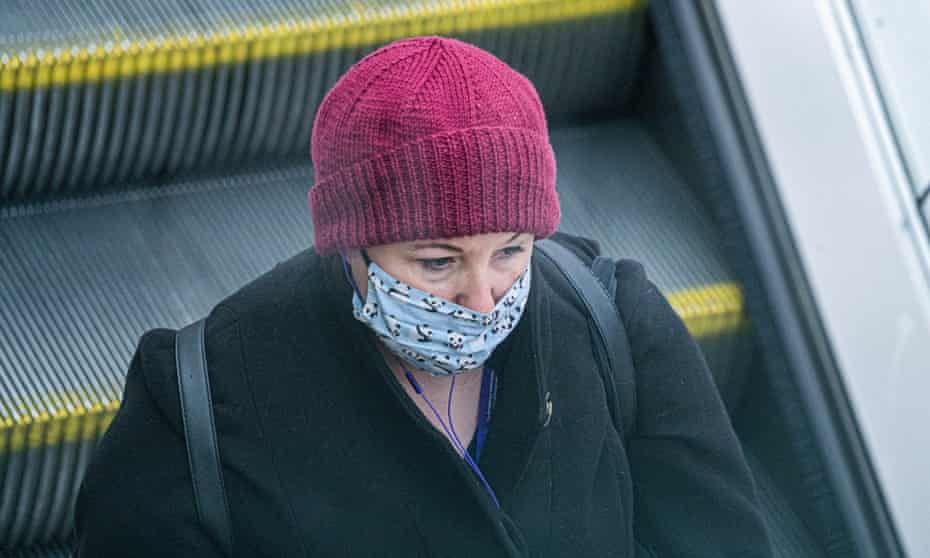
A masked commuter heads down an escalator at Waterloo station Photograph: Amer Ghazzal/Rex/Shutterstock

From Feb.24, people who test positive for coronavirus are no longer required to self-isolate by law in England. Free mass testing for the general public in England will end on 1 April.

The change is part of the government’s new “living with Covid” plan, announced earlier this week, which will see the end of all pandemic regulations

Five people share their reactions below.

‘If I knew I had Covid, I would not go out with it’

“I wouldn’t go out if I tested positive for Covid. I’d worry about spreading it to people who could suffer dire consequences. There’s still a high death rate and a lot of people who are compromised, who haven’t got much freedom to be on public transport or in the workplace. So if I knew I had Covid, I would certainly not go out and about with it.

“I have the luxury of taking that view, because my employer would accommodate it and I also have sick pay. It just worries me that other people won’t have that choice.

“I think, by and large, people are trying to be decent and mutually protect each other. In a way, we’re being exhorted to drop that, but I think people will continue to do their best.” Kathy, 59, administrator, London

‘I am worried about people at work testing positive’

“I’ve been shielding for two years, but think I will be returning to the office part-time in the middle of next month. I am worried about people at work testing positive. The current plan is that I will be working a good distance from everyone else at a desk right beside a large window I can open. I will probably remain masked, too. But the problem will be after April, when people won’t know if they are infected.

“My greatest anxiety is about commuting on public transport and being in close contact with unmasked people. I also have to deal with members of the public in my role, but I have been assured that I will not be required to meet them face to face. My employer has been quite understanding so far and if the work from home guidance hadn’t been withdrawn then I think they would have kept me at home. Harry*, 34, working in local government, Durham, who is considered clinically extremely vulnerable

‘I’ve never been testing’

“I’ve not been testing and never have. The only time was when I came back from Spain because I had to in order to travel. I want to stress that I’m not anti-vaxx, as I’ve had all my jabs.

“It’s all madness. This ridiculous desire to test for Covid is insanity and has really affected people’s mental health and should’ve stopped a long time ago. If I’m unwell, whether it’s with Covid or the flu, I will just stay at home until I feel better. It’s the way I’ve done it in the past and I seem to have survived.

“I know asymptomatic transmission of Covid is possible, but it seems to be very, very unlikely. The only time I would really have an issue with it is if someone came out with a streaming cold when they should be at home.” Norma, Cotswolds

‘I wouldn’t want to pass any illness on to anyone else’

“I guess I would fall into the more cautious spectrum, in terms of Covid. And so, I’ve been pretty careful all the way through. I don’t think I’ve had it, and I don’t think I would want to go out if I was ill, let alone the risks to the rest of the population.

“If I contracted Covid, I wouldn’t be wanting to pass it to anyone else. I wouldn’t want to pass any illness on to anyone else now we’ve gone through this.

“I received an email from my work today saying that, even though the rules have changed, the company will continue to follow the guidance. That sort of sensible, head-screwed-on approach is, as I see it, the way forward for the time being until something changes. Ben, 42, Bristol, record label employee

‘People aren’t going to be aware that they’re positive’

“There’s no way I would go out infecting other people, and I think everyone should be supported to make that choice. I just feel that it’s very unfair. We’re in a situation where we had children perhaps later than we would have liked, which meant we’ve been able to pay off our mortgage. We can make decisions that better protect my mother, ourselves and society.

“Others aren’t in that position. Statutory sick pay is just [under] £14 a day. Testing is going to be something that people have to pay for. People aren’t going to be aware that they’re positive, and they’re not going to be able to afford to stay at home even if they want to. The message is ‘Just get on with life. It’s just like the flu.’ It’s clearly not. It’s clearly still causing a lot of damage. It just seems barbaric really.” Sarah, Nottingham, 44, teacher and stay-at-home parent.

===================================================

WORLD COVID STATS

Coronavirus Cases:

432,144,844

Deaths:

5,949,018

Recovered:

361,374,405
Highlighted in green
= all cases have recovered from the infection
Highlighted in grey
= all cases have had an outcome (there are no active cases)

[back to top ↑]

Latest News

February 25 (GMT)

Updates

  • 304 new cases and 2 new deaths in Laos [source]
  • 123,460 new cases and 787 new deaths in Russia [source]
  • 65,657 new cases and 226 new deaths in Japan [source]
  • 18,252 new cases and 362 new deaths in Mexico [source]

The post Other Covid Vaccines Can Be Effective, Brits Fears as Restrictions End, World Covid Stats appeared first on The St Kitts Nevis Observer.

Guilty: 3 Officers Involved in George Floyd’s Death

The three former Minneapolis police officers who are accused of violating the civil rights of George Floyd, a Black man who died after he was pinned down by a white Minneapolis officer for close to 10 minutes, were found guilty by a jury on Thursday.

The former officers — Tou Thao, J. Alexander Kueng and Thomas Lane — were each charged with deprivation of rights under color of law for depriving the right of medical care to Floyd while he was pinned down by their colleague, officer Derek Chauvin.

Kueng and Thao were also charged with failing to intervene when excessive force was used by Chauvin to stop Floyd.

George Floyd

A sentencing date for the three officers has not yet been set, but, until then, all three will be allowed to remain free on bond, The New York Times reported.

All three could face up to life in prison.

“Today’s verdict recognizes that two police officers violated the Constitution by failing to intervene to stop another officer from killing George Floyd, and three officers violated the Constitution by failing to provide aid to Mr. Floyd in time to prevent his death,” Attorney General Merrick Garland said in a statement.

“The Justice Department will continue to seek accountability for law enforcement officers whose actions, or failure to act, violate their constitutional duty to protect the civil rights of our citizens. George Floyd should be alive today,” he continued.

During the encounter between police and Floyd, Floyd’s legs and torso were restrained by Lane and Kueng, according to CNN. Thao testified during the case that he was in a roadway nearby to serve as crowd control.

Chauvin, meanwhile, pinned his knee on Floyd’s neck for nine and a half minutes, killing Floyd. Footage of his death circulated online and sparked protests over criminal justice and police brutality across the United States.

During the trial, prosecutors accused the three of doing nothing to stop Floyd from being killed, saying that officers “directly contributed to [Floyd’s] death and failed to intervene to stop the senseless murder” and citing bystander footage.

However, the officers during their testimony justified the actions taken during the police encounter. Lane testified that he believed the arrest “seemed reasonable at the time,” adding “this guy is out of control.”

Thao testified that while he had heard Floyd say “I can’t breathe,” he said that he could not see what would have stopped Floyd from being able to breathe from his vantage point on the roadway. He also claimed that because officers had not tried to perform CPR on him, he presumed he was not in cardiac arrest.

The former officers’ defenses of their conduct also included the claims that they had deferred to the seniority of Chauvin, having had little experience themselves — both Kueng and Lane were only days into their new job — and that training that had not been consistent, according to CNN.

The three also face a separate court trial on June 13, in which the three have been accused of aiding and abetting the murder of Floyd.

Civil rights activists applauded the decision on Thursday.

“The convictions of the 3 officers on Federal Civil Rights charges is a huge victory for civil rights and police reform. It sends a clear definitive message to police they cannot cooperate w/ police criminality,” the Rev. Al Sharpton tweeted.

The post Guilty: 3 Officers Involved in George Floyd’s Death appeared first on The St Kitts Nevis Observer.
'I just want to cry': Adelaide woman living a nightmare in Ukraine

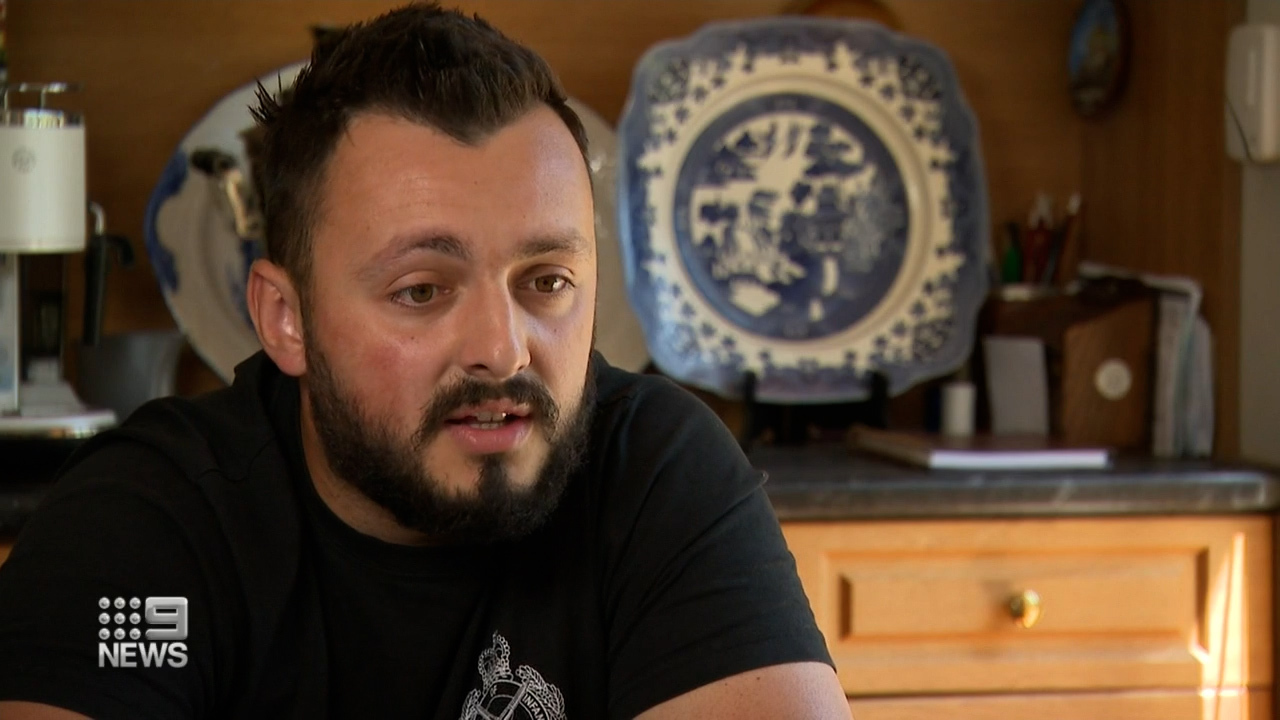
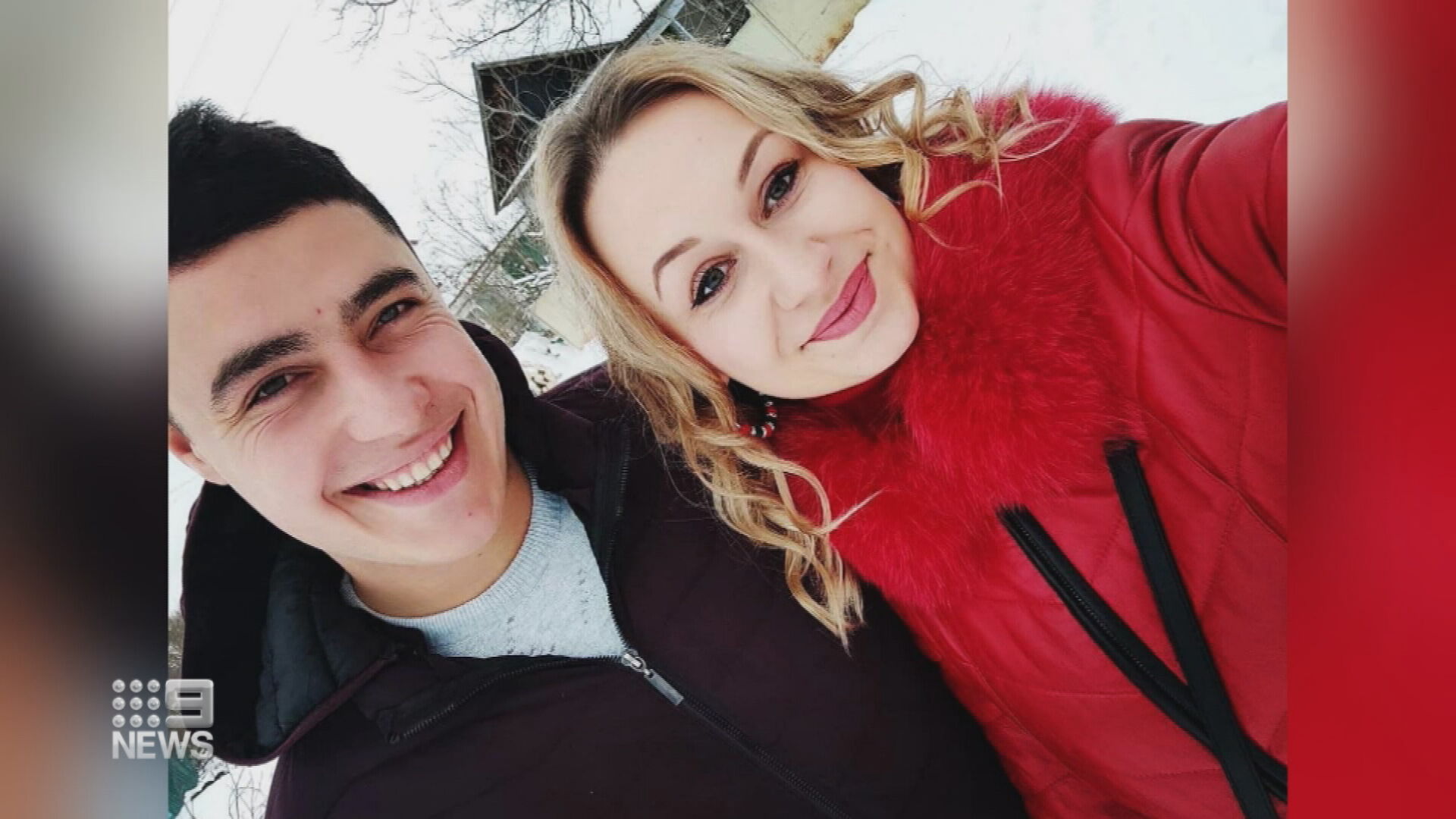
Adelaide woman Daniella Nykytyuk is living a nightmare.

The 21-year-old is 350 kilometres west of Ukraine's capital Kyiv.

"It is really terrifying, we are not sure what's going to happen in the next hour or even minute," she said.

READ MORE: Aussie parents struggling to reach their baby born by surrogate in Ukraine

Ms Nykytyuk got engaged just two weeks ago to her fiancé Sasha, who has now volunteered to fight.

"It's usually after 12am that we've been hearing loud bombing noises, shootings, yesterday during the day we saw planes flying above us."

Ms Nykytyuk got engaged just two weeks ago to her fiancé Sasha, who has now volunteered to fight.

"I'm honestly so, so proud of him but every time I think about it I just want to cry," she said.

The situation is a world away from her family in the Adelaide suburbs of Woodville West and Findon, where she went to school.

READ MORE: 'It's not a game': Australian photojournalist witnesses in Ukraine invasion

For Marko Kvasniuk, a resident of the Adelaide suburb of Wynn Vale, his fiance Tetiana is in western Ukraine.

"Now we're thinking about how to survive, we can't take any money out, we can't buy any food products, there's no petrol left, no money left at the ATMs," she said.

For Marko Kvasniuk, a resident of the Adelaide suburb of Wynn Vale, his fiance Tetiana is in western Ukraine.

"I'm trying to help her get over the border into Hungary, Poland or Slovakia," Mr Kvasniuk said.

She has decided to leave but the path out isn't clear.

"After she's out in another country then we can worry about everything else but that's kind of the priority now," Mr Kvasniuk said.

Watch the full report in the video above.

'Second morning of the all-out war': Missiles, debris rain down on Kyiv

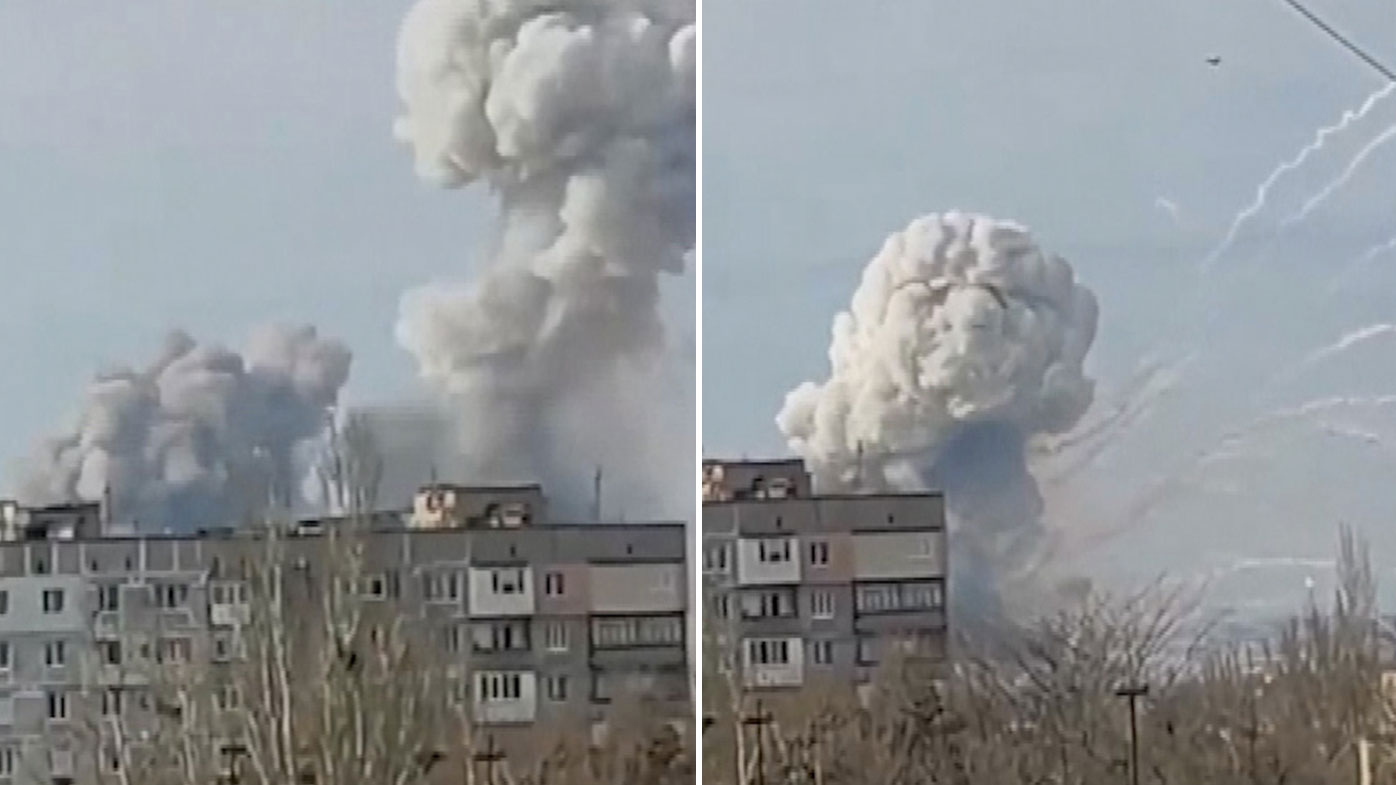
Air raid sirens are being sounded while explosions were heard before dawn in Kyiv as Ukrainians wake to a new day of Russian attacks.

Ukrainian President Volodymyr Zelenskyy has confirmed pre-dawn missile strikes took place just before 4am (local time) today.

In a video address to the nation, he said Russia had targeted both military and civilian sites.

LIVE UPDATES: Russian forces just kilometres from Kyiv

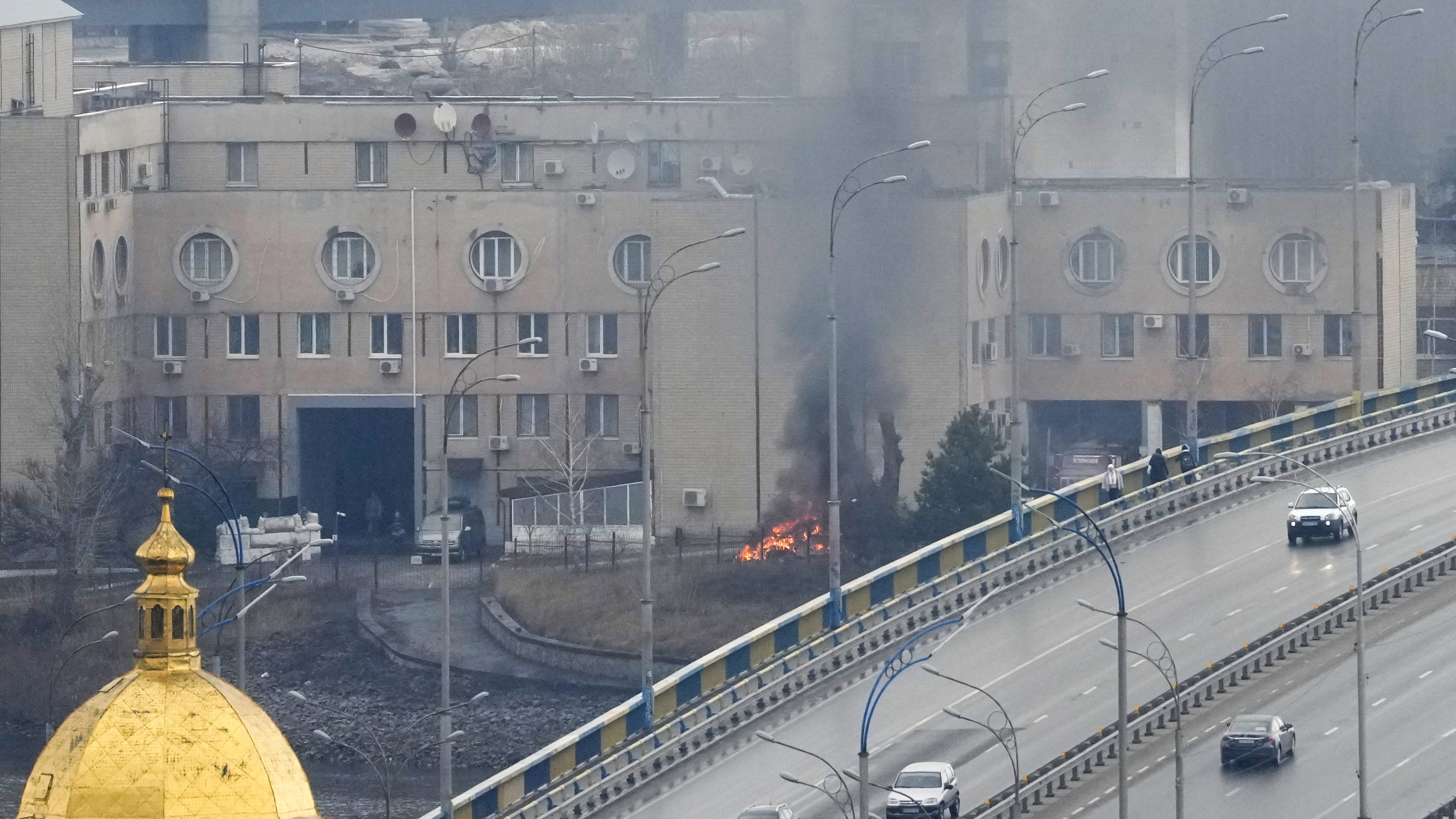
UKRAINE: APARTMENT BUILDING ON FIRE IN KYIV

"Russia will have to talk to us sooner or later about how to end hostilities and stop this invasion," he said.

Meanwhile, the adviser to the Head of the Ministry of Internal Affairs of Ukraine Anton Gerashchenko confirmed the strikes were "cruise or ballistic missiles".

A CNN team on the ground reported hearing two large blasts in central Kyiv and a third loud explosion in the distance.

CNN reporters also said air raid sirens have sounded for several minutes in the nation's capital and Lviv.

9News reporter Carrie Greenbank confirmed she had heard more explosions while live on air.

"We're also hearing the sound of low-flying military jets, we've actually heard of lot of that heading across Kyiv," Greenbank said.

Ukrainian Forces say they have shut down a Russian aircraft flying over Kyiv.

Greenbank also reported Ukrainian forces had claimed to have shot down a Russian aircraft.

She said the forces said the aircraft had been flying over Kyiv and later crashed into a nine-story apartment building.

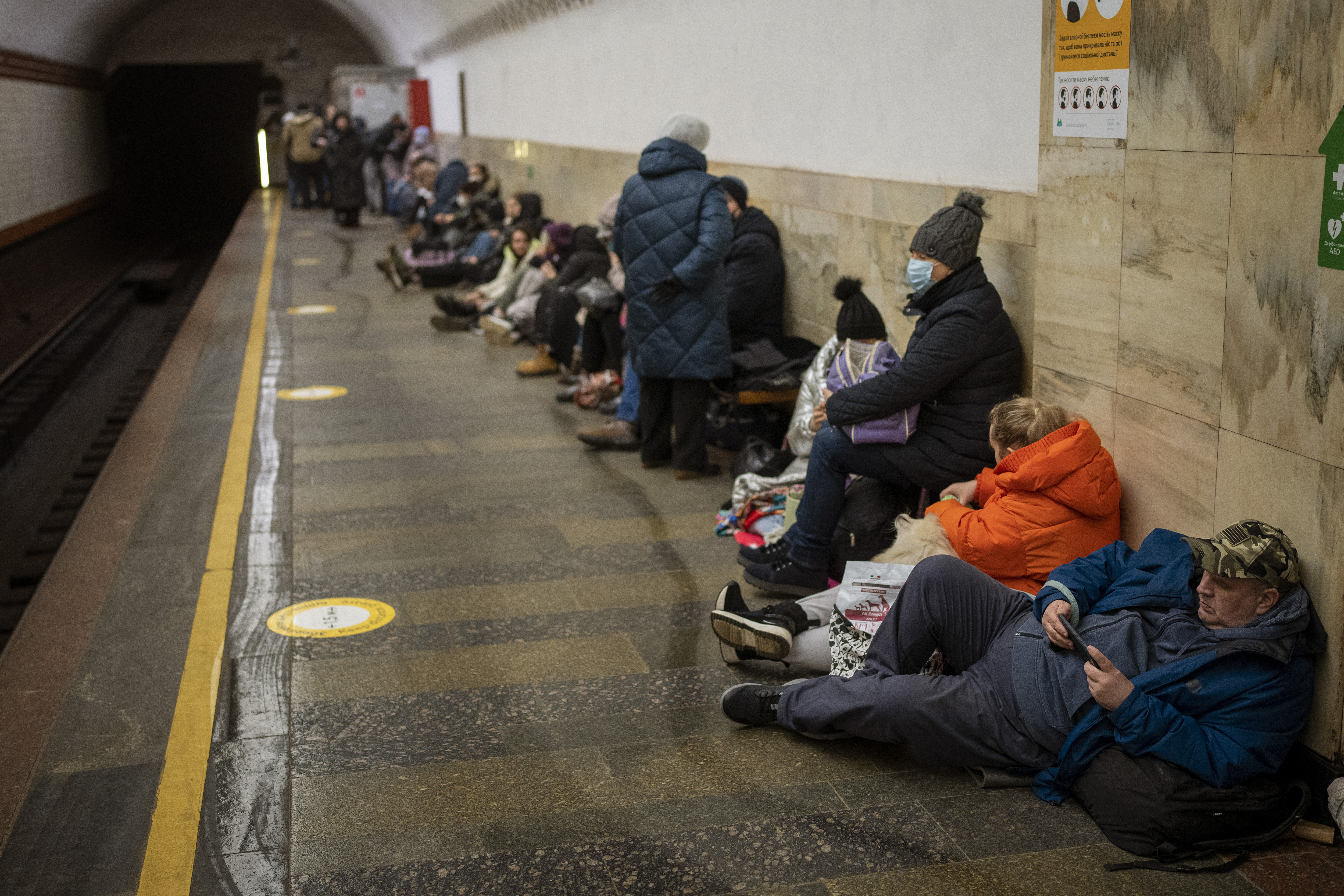
Greenbank spoke of how she and the team sheltered in a bunker overnight due to the threat of missiles.

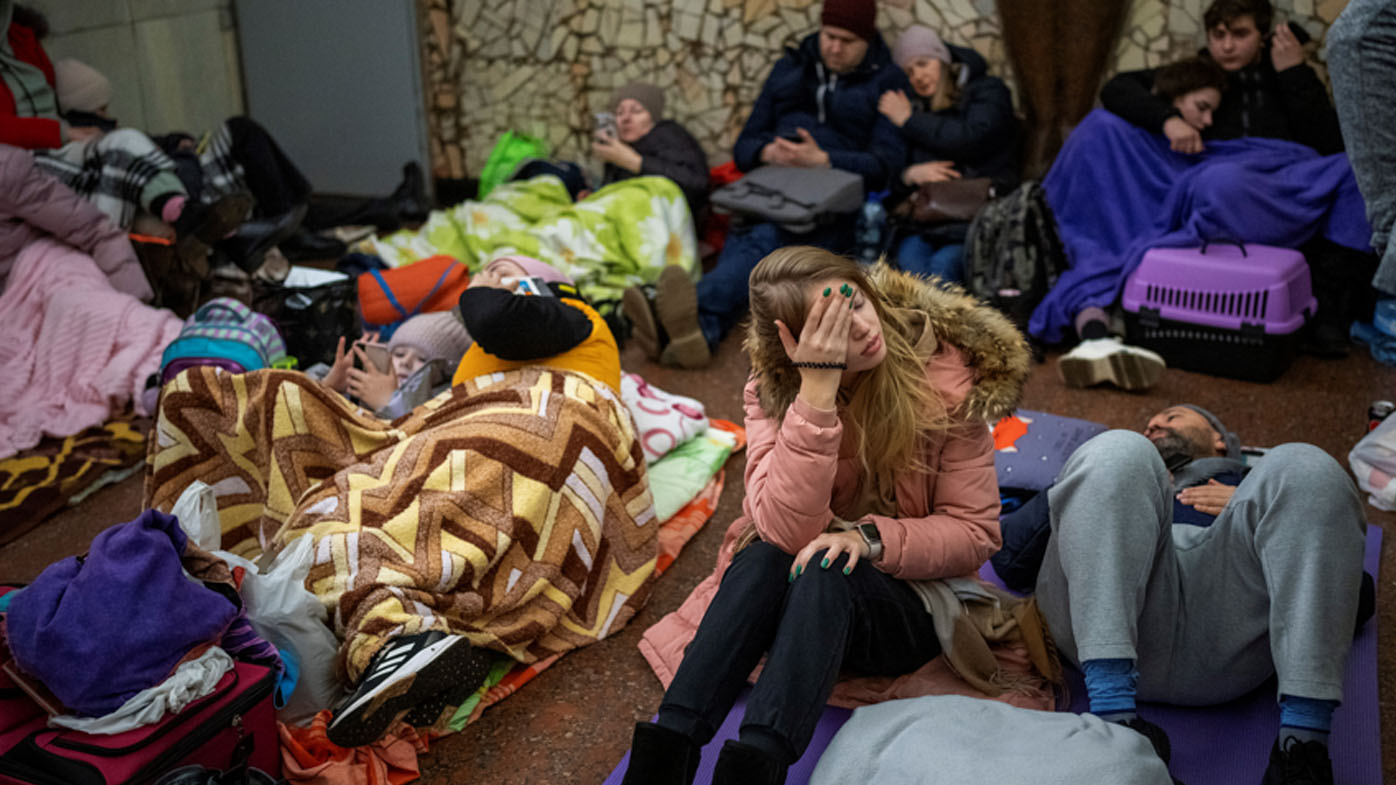
People lie in the Kyiv subway, using it as a bomb shelter in Kyiv, Ukraine, Thursday, Feb. 24, 2022.

"We were sheltering in a bunker as well because at about 1.30am in the morning we got a warning that this central part of Kyiv might face missile strikes," Greenbank said.

Greenbank added she and the team are "on edge".

"We are taking as many precautions as we can in this situation," she said.

"If we have to leave quickly, we will."

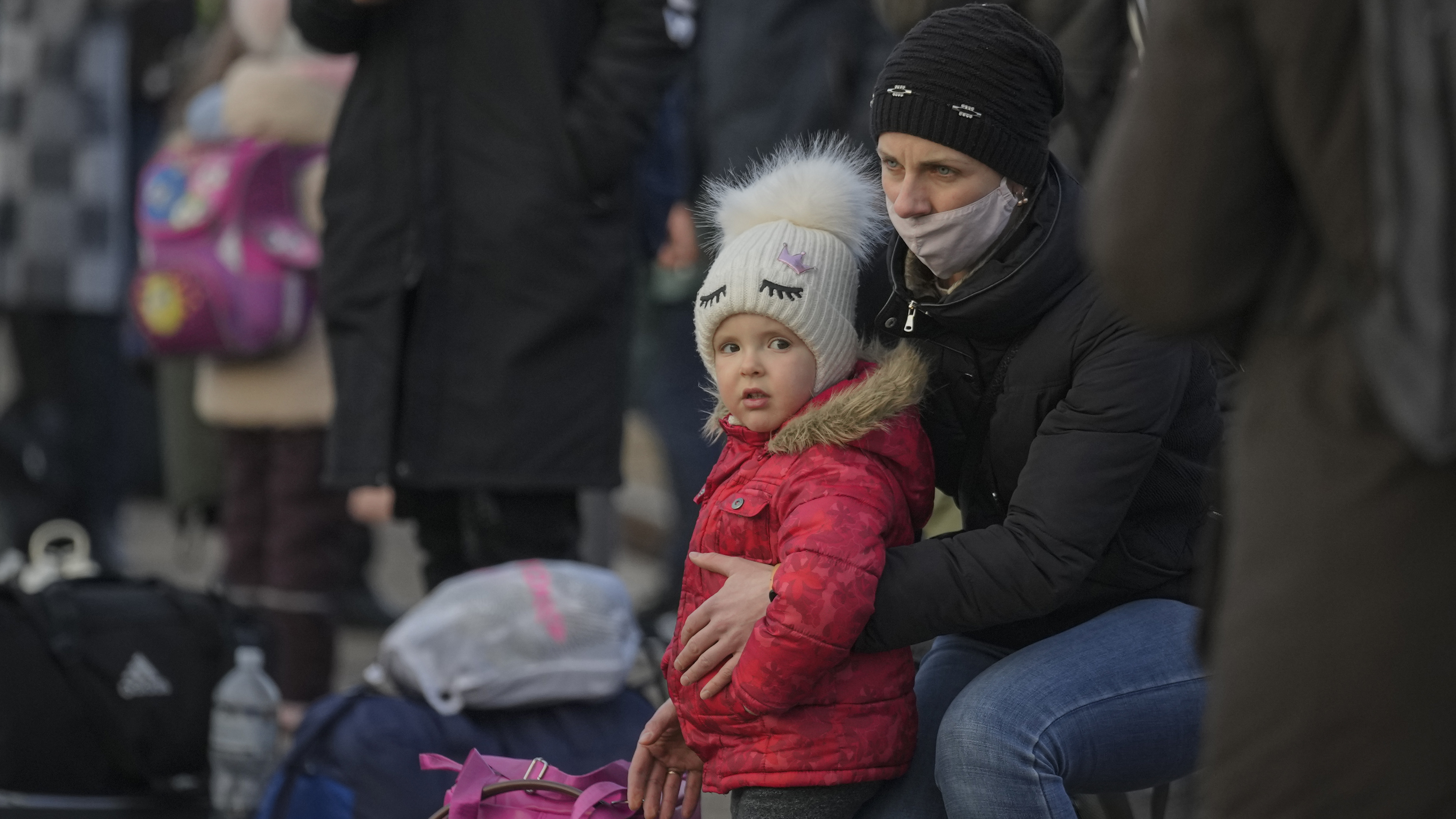
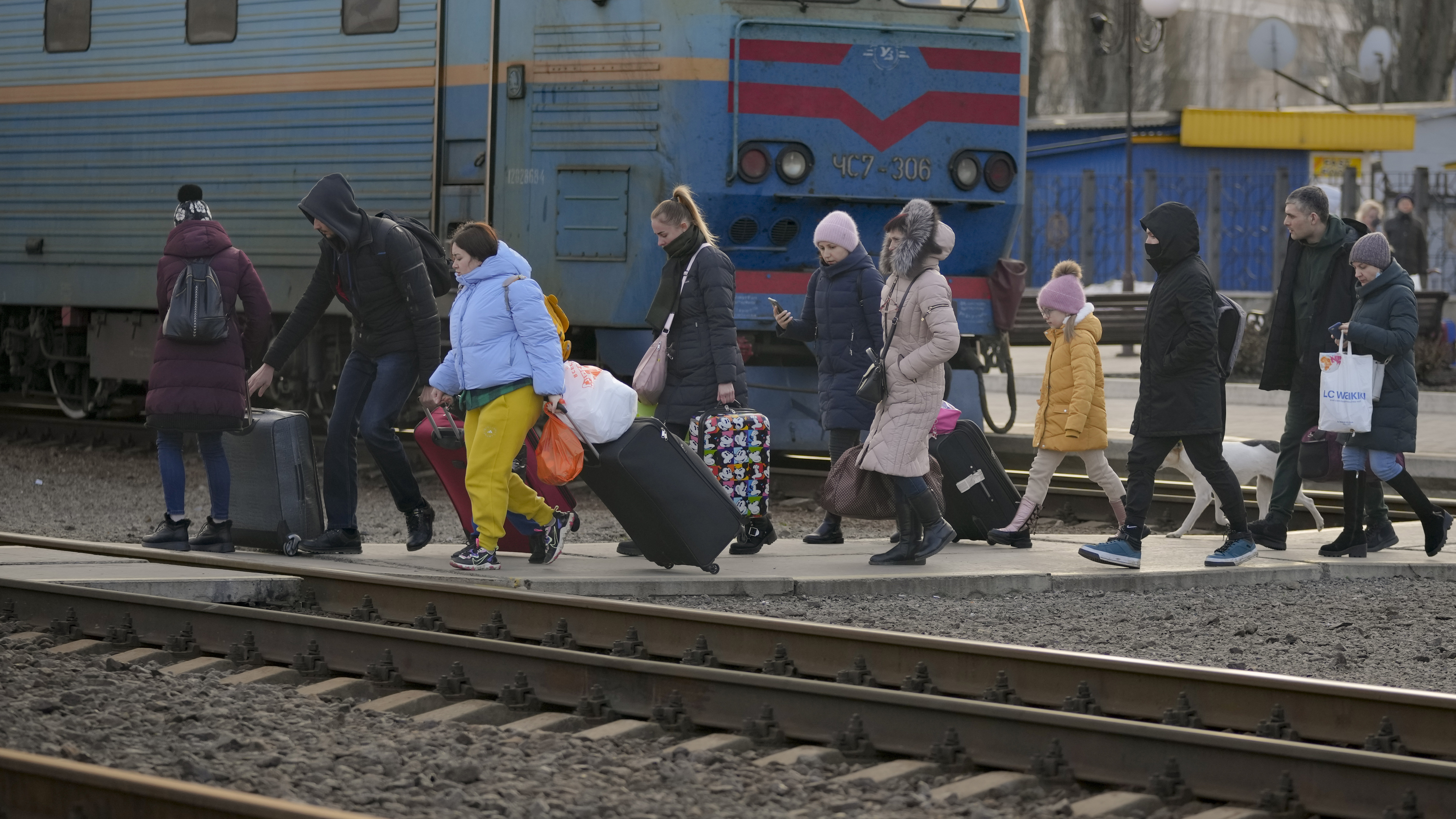
A child with people waiting for a Kyiv bound train gather on the platform in Kramatorsk, the Donetsk region, eastern Ukraine.People walk to a platform in Kramatorsk, the Donetsk region, eastern Ukraine, with luggage.

Mr Zelenskyy said the government had information that "subversive groups" were encroaching on the city, and US Secretary of State Antony Blinken said Kyiv "could well be under siege" in what US officials believe is a brazen attempt by Russian President Vladimir Putin to dismantle the government and replace it with his own regime.

US Defence Secretary Lloyd Austin told lawmakers on a phone call that Russian mechanised forces that entered from Belarus were about 32 kilometres from Kyiv, according to a person familiar with the call, AP reported.

Explosions seen in Ukraine as Russia continues to invade.

The Ukrainian military is reporting significant fighting north-west of the nation's capital as Russian forces apparently try to advance on Kyiv from the north.

The military said today a bridge across a river had been destroyed in the area of Ivankiv, about 60 kilometres north-west of Kyiv.

"The hardest day will be today. The enemy's plan is to break through with tank columns from the side of Ivankiv and Chernihiv to Kyiv. Russian tanks burn perfectly when hit by our ATGMs (anti-tank guided missiles)," Mr Gerashchenko said on Telegram.

Ukrainian and US officials said Russian forces were attacking from the east toward Kharkiv, Ukraine's second-largest city; from the southern region of Crimea, which Russia annexed in 2014; and from Belarus to the north.

Ukraine's President slams allies for 'looking on from a distance'

Mr Zelenskyy has made a video address as Ukrainians wake to another day of Russia's invasion.

He has urged resistance to the Russian invasion and criticised Ukraine's allies for the second time in just a few hours.

"This morning, we are defending our country alone," he said in a Facebook video post.

"Just like yesterday, the most powerful country in the world looked on from a distance.

"Russia was hit with sanctions yesterday, but these are not enough to get these foreign troops off our soil.

"Only through solidarity and determination can this be achieved."

Mr Zelenskyy added it was the "second morning of the all-out war".

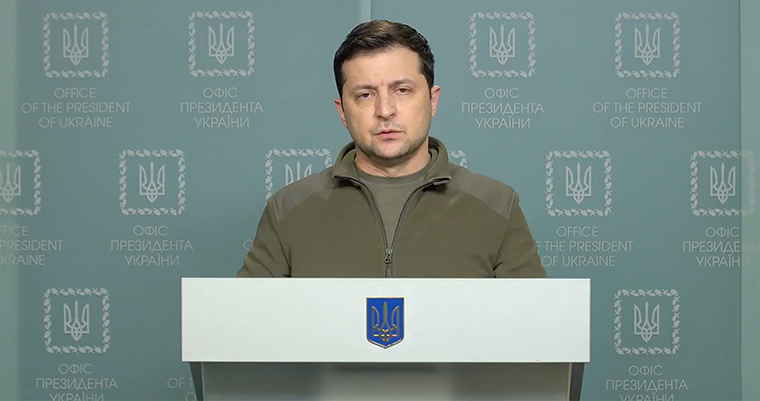
Ukrainian President Volodymyr Zelenskyy speaks in a Facebook video on February 25.

Full military mobilisation ordered

Mr Zelenskyy has ordered a full military mobilisation to challenge the Russian invasion.

He issued a decree saying the mobilisation would last 90 days.

He ordered the military's General Staff to determine the number of those liable for service and reservists as well as the order of the call-up.

Mr Zelenskyy also said 137 civilians and military personnel have been killed so far in the Russian invasion of his country.

He called them "heroes" in a video address in which he also says hundreds more have been wounded.

Mr Zelenskyy gave his Cabinet the job of allocating funds to pay for the mobilisation.

In a video statement just released, Mr Zelenskyy also said there are enemy sabotage groups in Kyiv, and that he has been identified as Russia's top target.

"According to our information, the enemy marked me as target number one, my family as target number two," Mr Zelenskyy said.

"They want to destroy Ukraine politically by destroying the head of state. We have information that enemy sabotage groups have entered Kyiv."

READ MORE: World expresses outrage, plans stronger Russia sanctions

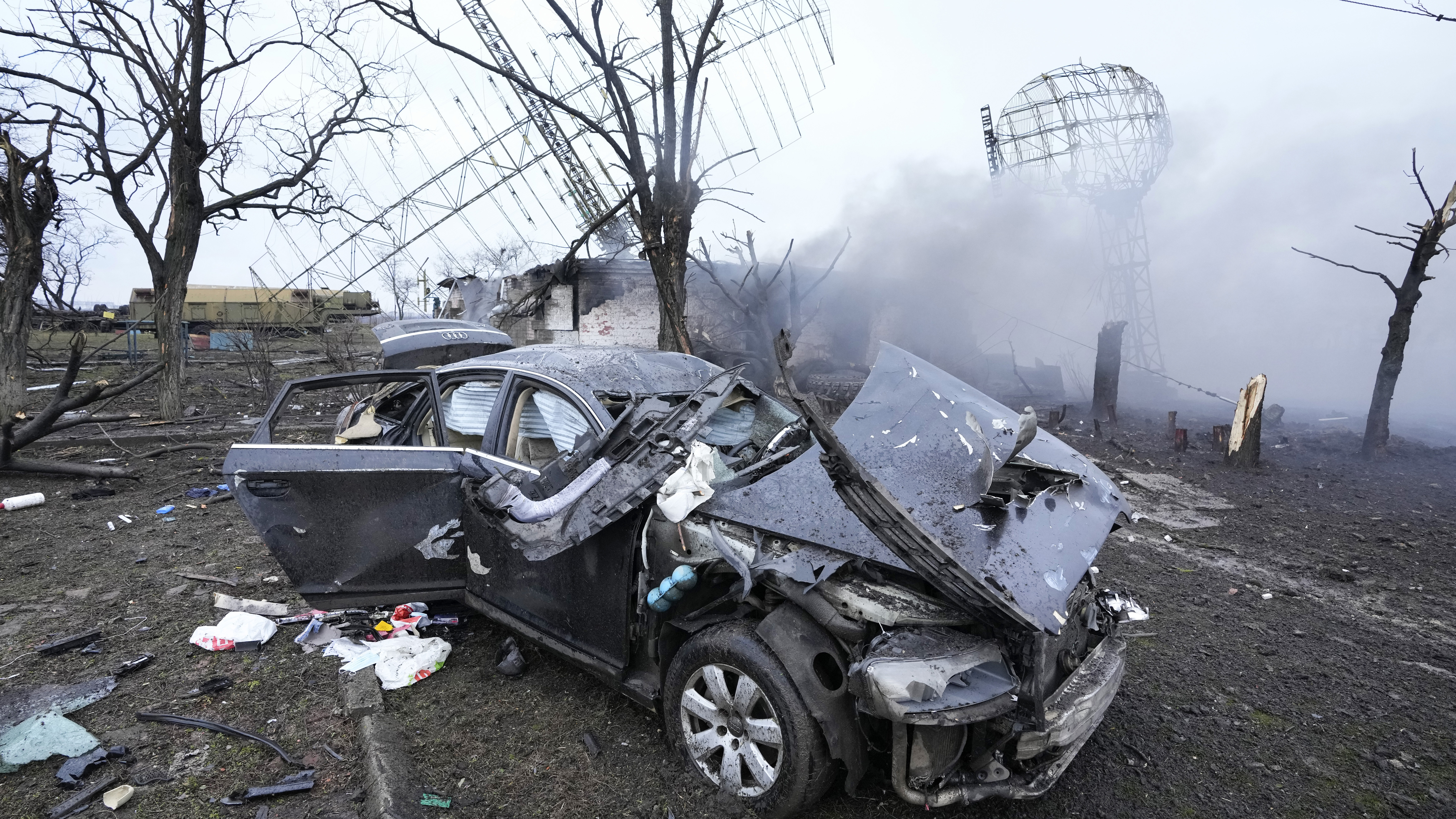
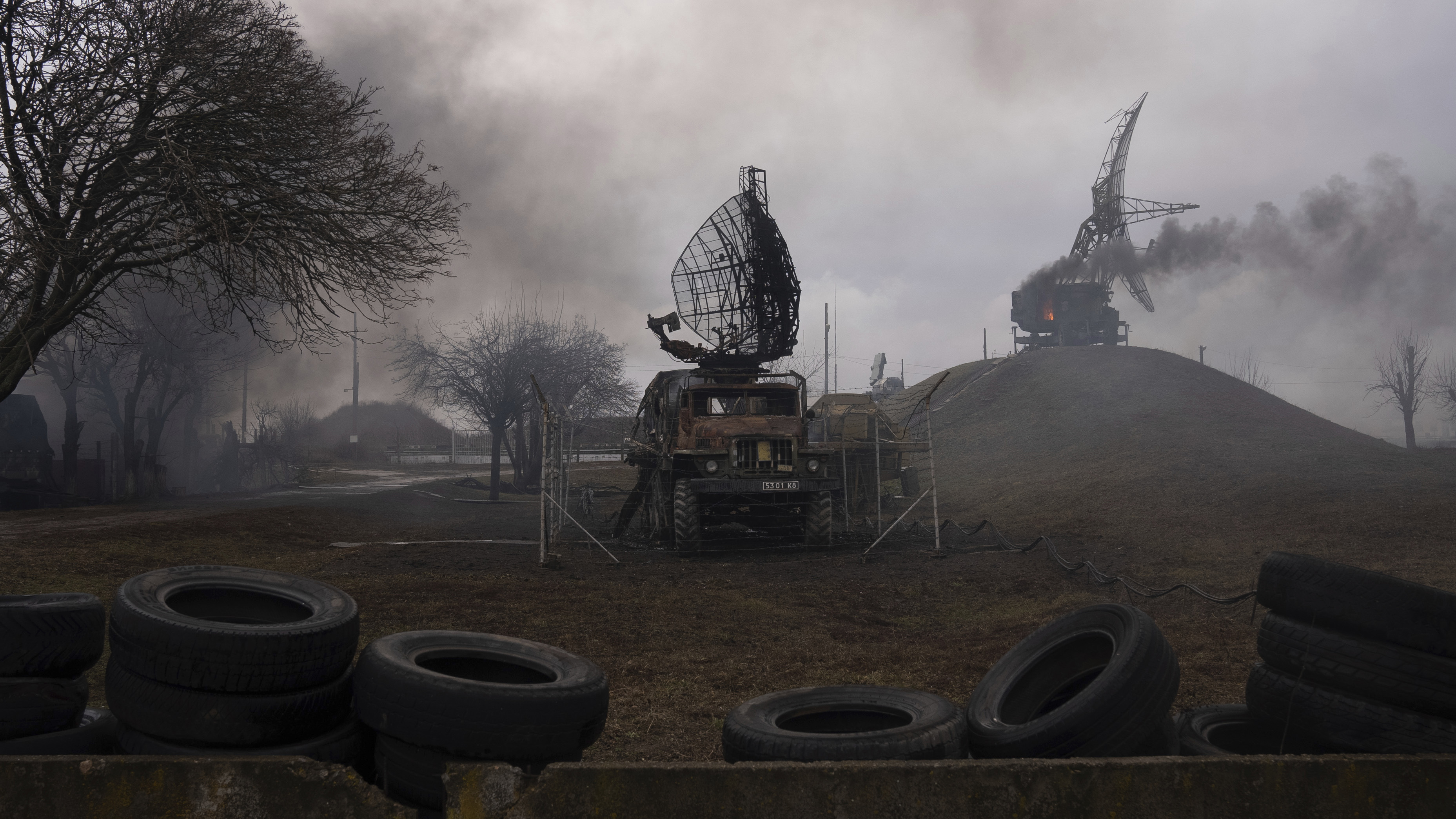
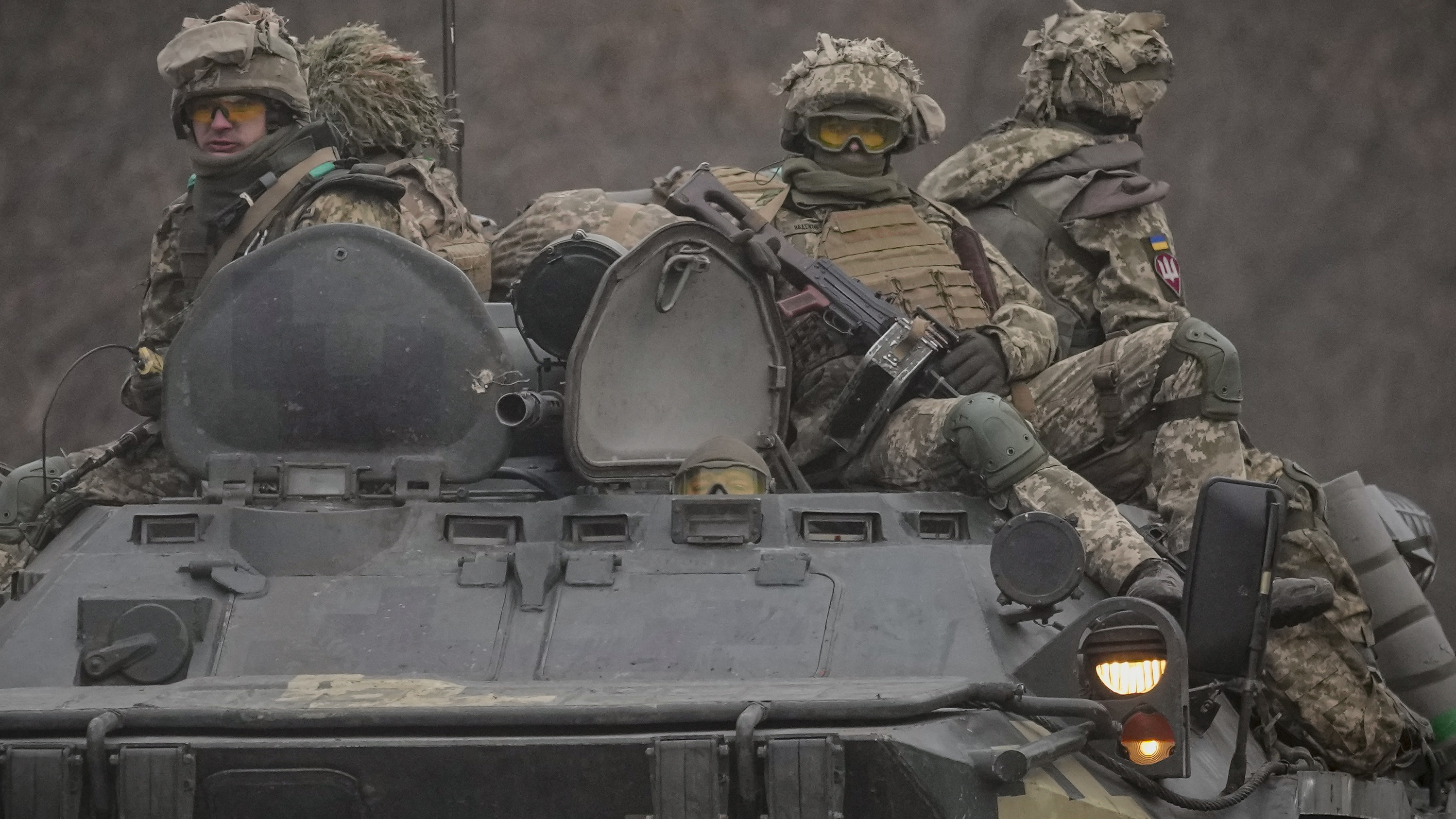
Damaged radar, a vehicle and equipment are seen at a Ukrainian military facility outside Mariupol, Ukraine.Ukrainian servicemen sit atop armored personnel carriers driving on a road in the Donetsk region.

Males banned from leaving Ukraine

Male Ukrainian citizens aged between 18 and 60 have been prohibited from leaving the country while martial law is in place.

In a statement posted on Facebook, the State Border Guard Service of Ukraine said "departure from Ukraine is restricted" temporarily.

"It is forbidden to travel outside the borders of Ukraine [for] citizens of Ukraine, male gender between 18 to 60 years old," the statement said.

It comes after Russia launched a wide-ranging attack on Ukraine on Thursday (Friday morning AEDT), hitting cities and bases with airstrikes or shelling, as civilians piled into trains and cars to flee.

Speaking live on Ukraine's 1+1 TV channel, Ukraine's Minister of Healthcare Viktor Lyashko said hospitals and medical workers had also come under fire – including in Avdiivka and Vuhledar in Donetsk – with casualties reported among medical workers.

Ukrainian military track burns at an air defence base in the aftermath of an apparent Russian strike in Mariupol, Ukraine.

Ukraine's government pleaded for help as it said Russian tanks and troops rolled across the border in a "full-scale war" that could rewrite the geopolitical order.

Mr Putin ignored global condemnation and cascading new sanctions as he unleashed Moscow's most aggressive action since the 1979 Soviet invasion of Afghanistan, and chillingly referred to his country's nuclear arsenal.

He threatened any foreign country trying to interfere with "consequences you have never seen."

'A path of evil': Russia attacks on multiple fronts

Ukrainian officials said their forces were battling Russians on a series of fronts.

"Russia has embarked on a path of evil, but Ukraine is defending itself and won't give up its freedom," Mr Zelenskyy tweeted.

Later, he offered Russia an end to the hostilities.

"It wasn't Ukraine that chose the path of war, but Ukraine is offering to go back to the path of peace," he said.

He said the Russian airborne unit at an airport outside the capital of Kyiv was being destroyed.

The Ukrainian leader said many Russian warplanes and armoured vehicles across the country were destroyed but didn't give numbers.

He also said an unidentified number of Russian troops were taken prisoners.

READ MORE: Russia begins full-scale military invasion of Ukraine

https://twitter.com/ZelenskyyUa/status/1496787304811315202?ref_src=twsrc%5Etfw

Mr Zelenskyy, who earlier cut diplomatic ties with Moscow and declared martial law, described Russian forces advancing on multiple fronts, including a "difficult situation" developing in Kharkiv, Ukraine's second-largest city, just over 20km away from the eastern border with Russia, and Russian troops slowly advancing from the north on the city of Chernihiv.

He appealed to global leaders, saying that "if you don't help us now, if you fail to offer a powerful assistance to Ukraine, tomorrow the war will knock on your door."

Mr Zelenskyy said Russian forces were trying to seize the Chernobyl nuclear plant, site of the world's worst nuclear disaster, and Ukrainian forces were battling other troops outside Kyiv for control of a strategic airport.

Large explosions were heard in the capital and in other cities yesterday, and people massed in train stations and took to roads, as the government said the former Soviet republic was seeing a long-anticipated invasion from the east, north and south.

Smoke rise from an air defence base in the aftermath of an apparent Russian strike in Mariupol, Ukraine.Smoke and flame rise near a military building after an apparent Russian strike in Kyiv, Ukraine.

US deploys aid to Ukraine

The US Agency for International Development (USAID) has deployed a disaster assistance team to Ukraine in response to Russia's invasion.

The Disaster Assistance Response Team (DART), which contains 17 disaster experts, will be deployed to Ukraine from Poland to lead the US's humanitarian response to the war.

In a statement, USAID said 2.9 million people in Ukraine needed urgent humanitarian assistance before Russia's invasion was launched yesterday, and that 1.5 million had already been displaced due to fighting around separatist regions in the country's east.

Other countries react to the conflict in Ukraine

The chief of the NATO alliance said the "brutal act of war" shattered peace in Europe, joining a chorus of world leaders who decried the attack, which could cause massive casualties, topple Ukraine's democratically elected government and upend the post-Cold War security order.

The conflict was already shaking global financial markets: Stocks plunged and oil prices soared amid concerns that heating bills and food prices would skyrocket.

Condemnation rained down not only from the US and Europe, but from South Korea, Australia and beyond — and many governments readied new sanctions.

READ MORE: Biden condemns 'Russia's unprovoked and unjustified attack' on Ukraine

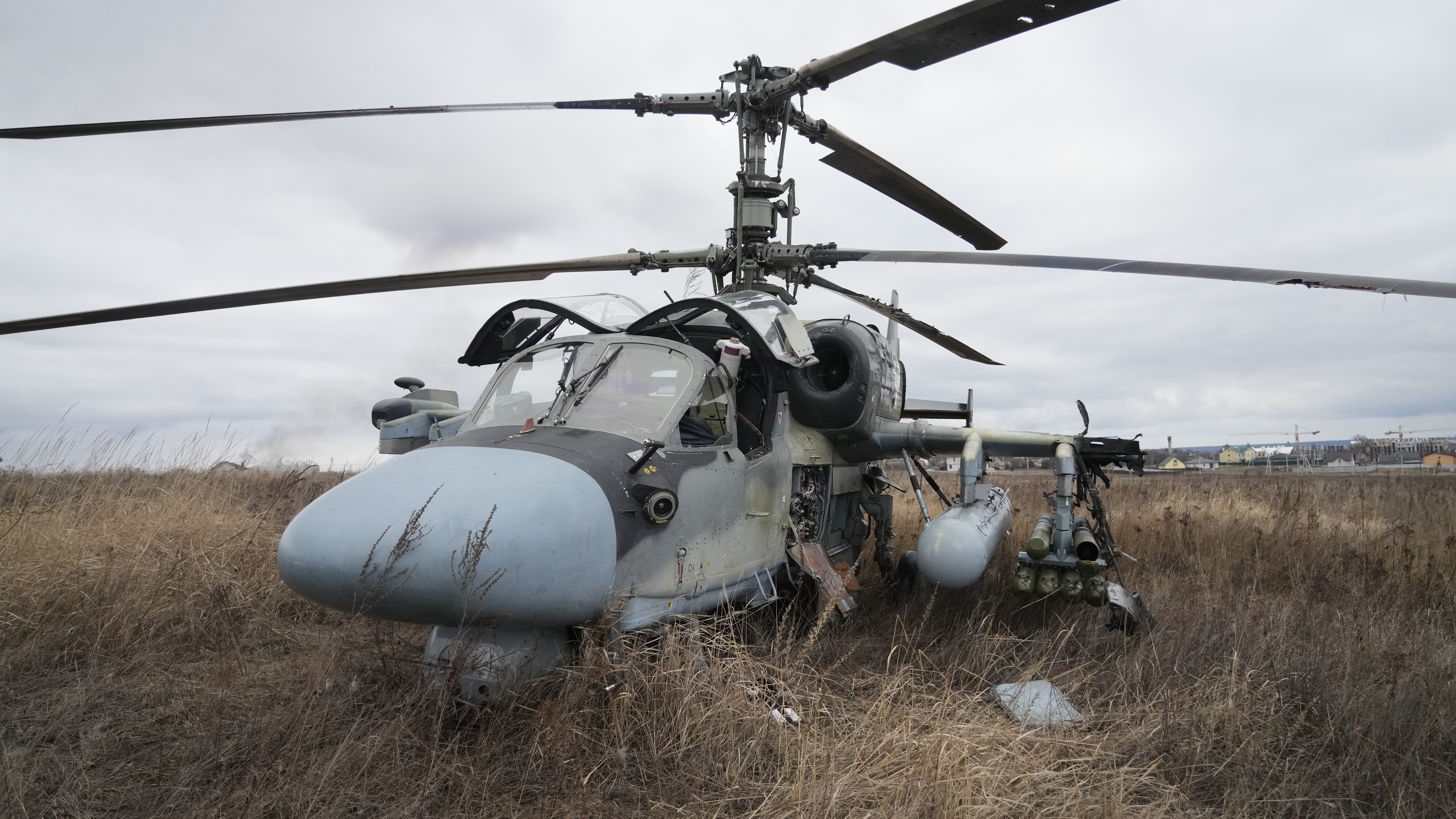
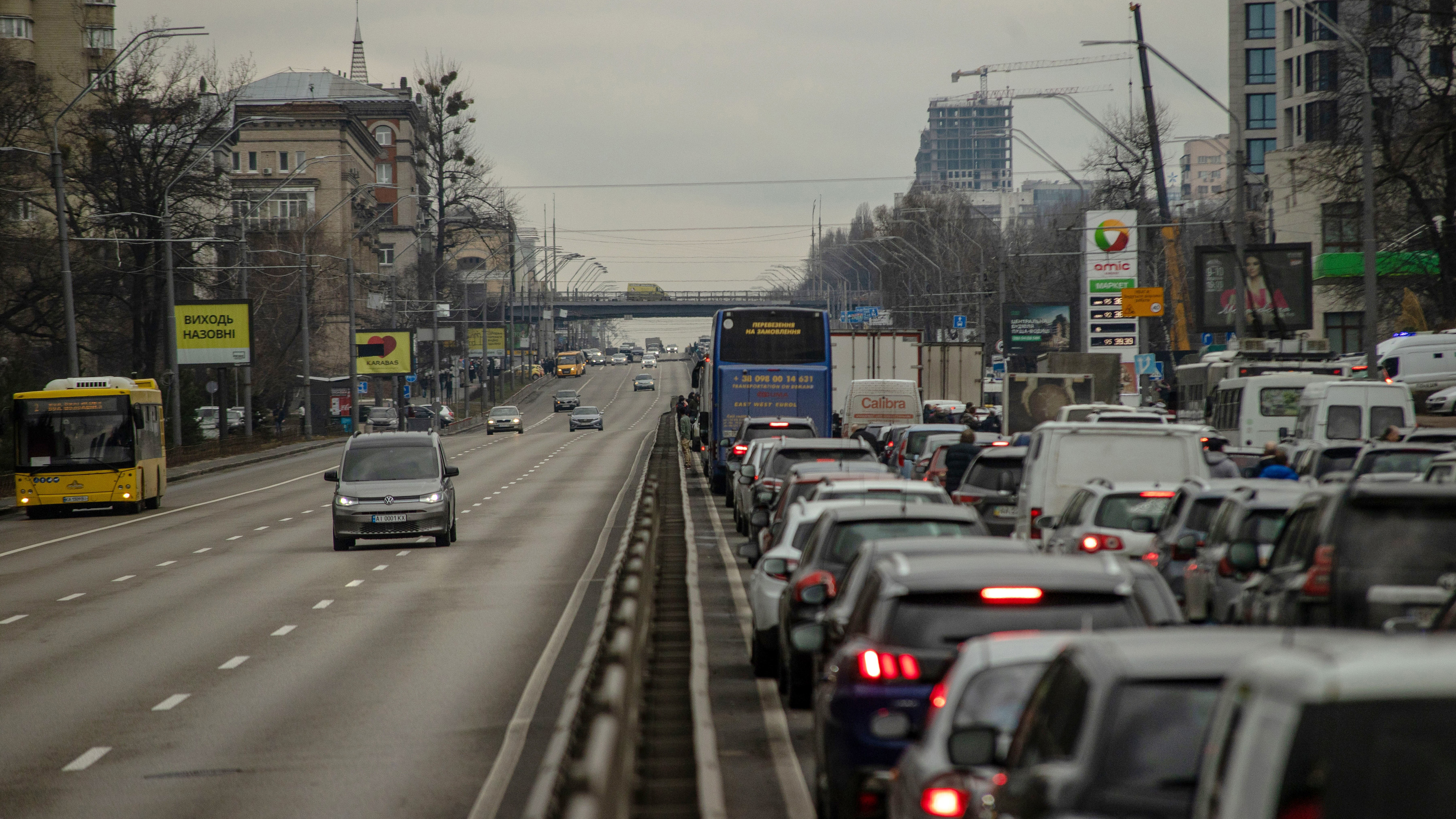
A Russian Ka-52 helicopter gunship is seen in the field after a forced landing outside Kyiv, Ukraine.Residents seeking to leave the capital are stuck in traffic on a highway in Kyiv, Ukraine.

As the first major world leader to make a big move, UK Prime Minister Boris Johnson announced a freeze on the assets of all large Russian banks and plans to bar Russian companies and the Kremlin from raising money on British markets.

Britain will also ban the export to Russia of a wide range of high-tech products, including semiconductors, and prohibit the nation's flagship airline, Aeroflot, from landing at British airports.

Even friendly leaders like Hungary's Viktor Orban sought to distance themselves from Putin.

While some nervous Europeans speculated about a possible new world war, the US and its NATO partners have so far shown no indication they would join in a war against Russia.

READ MORE: Moment CNN reporter hears loud explosions in Ukraine while live on air

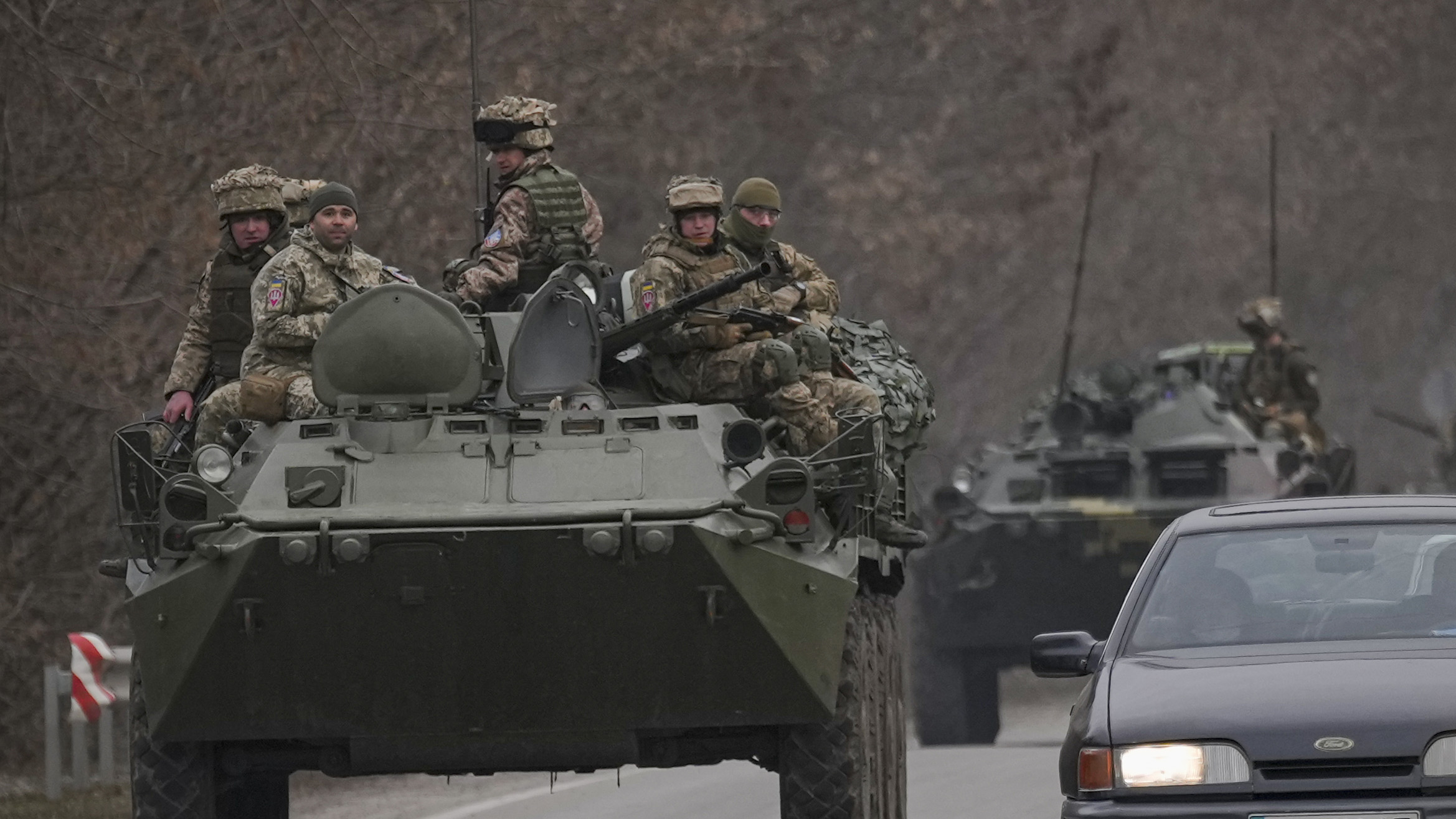
Ukrainian servicemen sit atop armored personnel carriers driving on a road in the Donetsk region, eastern Ukraine.

READ MORE: UN chief urges Putin to 'give peace a chance' in Ukraine

They instead mobilised troops and equipment around Ukraine's western flank — as Ukraine pleaded for defence assistance and help protecting its airspace.

In Washington, President Joe Biden convened a meeting of the National Security Council on Ukraine as the US prepares new sanctions.

Biden administration officials have signalled that two of the measures they were considering most strongly include hitting Russia's biggest banks and slapping on new export controls meant to starve Russia's industries and military of US semiconductors and other high-tech components.

Australian parents struggling to reach their baby born by surrogate in Ukraine

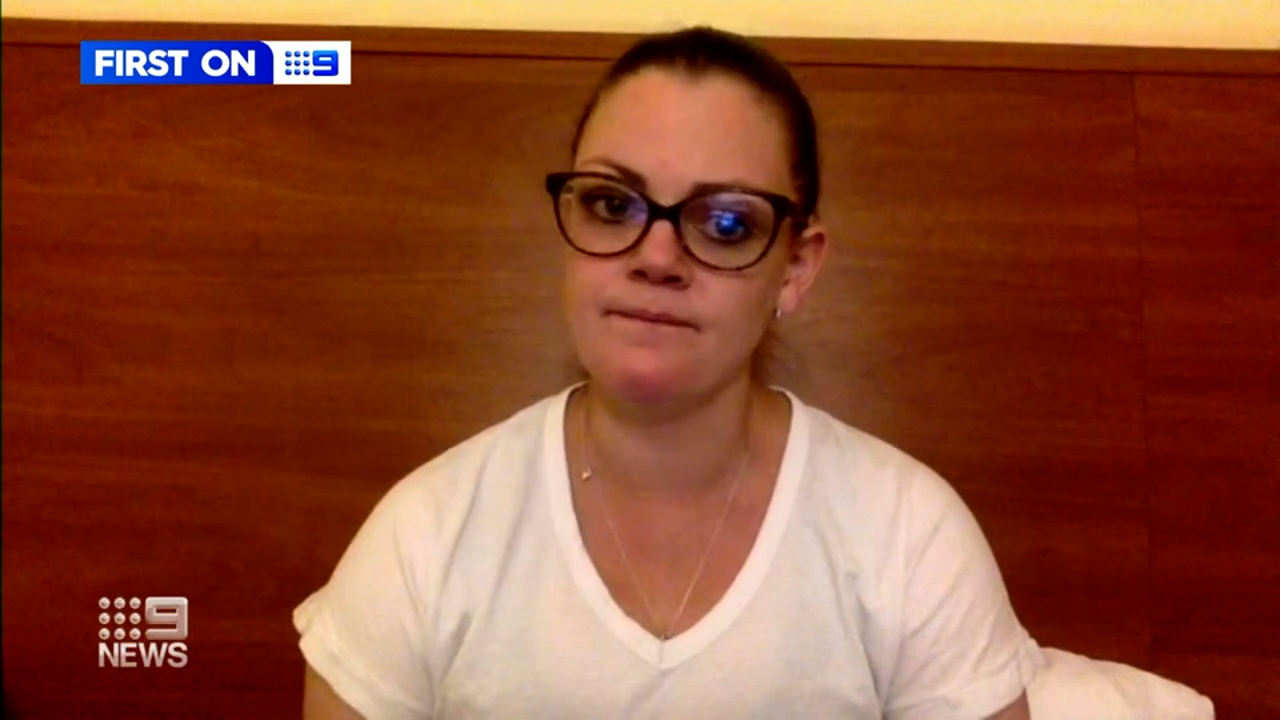
Russia's invasion of Ukraine has left Australian parents unsure how they will reach their baby, who has been born by surrogate in Ukraine.

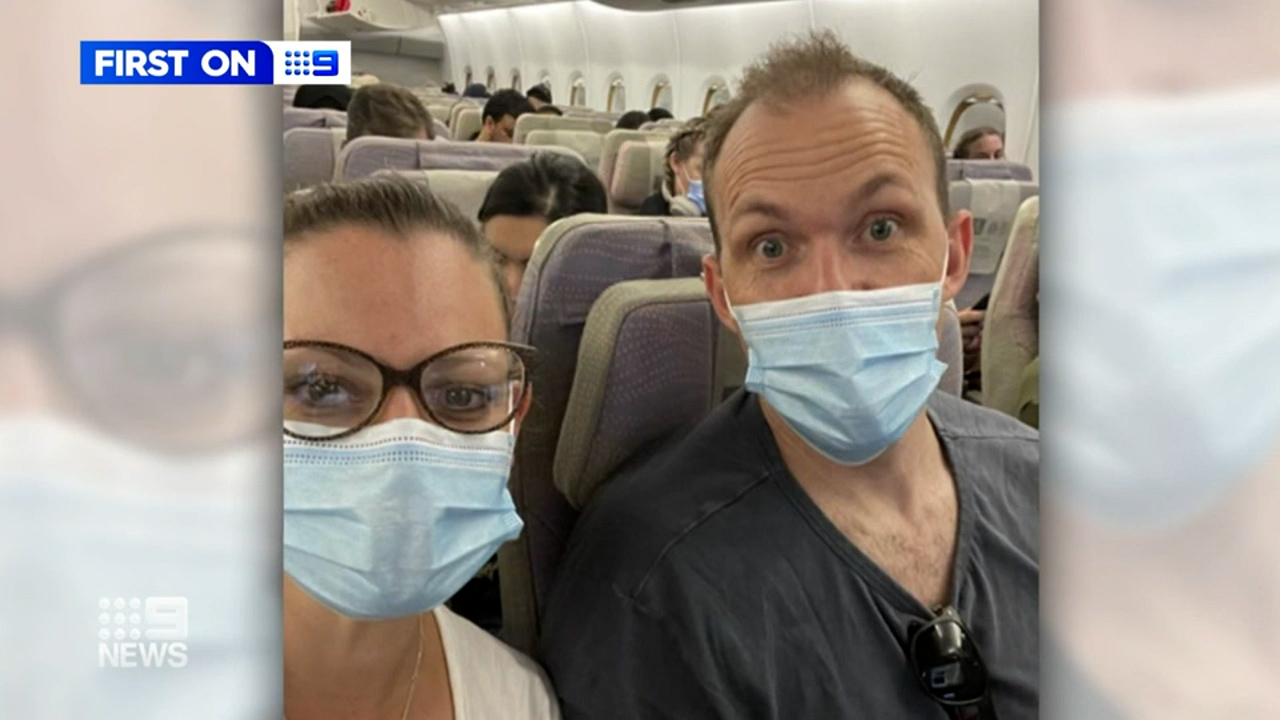
Jess and Kevin Van Nooten flew from Melbourne to Dubai on Tuesday and were due to then fly to Odessa, where their prematurely-born baby is in special care.

The conflict in Ukraine meant their second flight was diverted away to Poland.

READ MORE: 'It's not a game': Australian photojournalist witnesses in Ukraine invasion

The Department of Foreign Affairs and Trade (DFAT) says travel to Odessa is too dangerous and the parents are advised not to enter Ukraine.

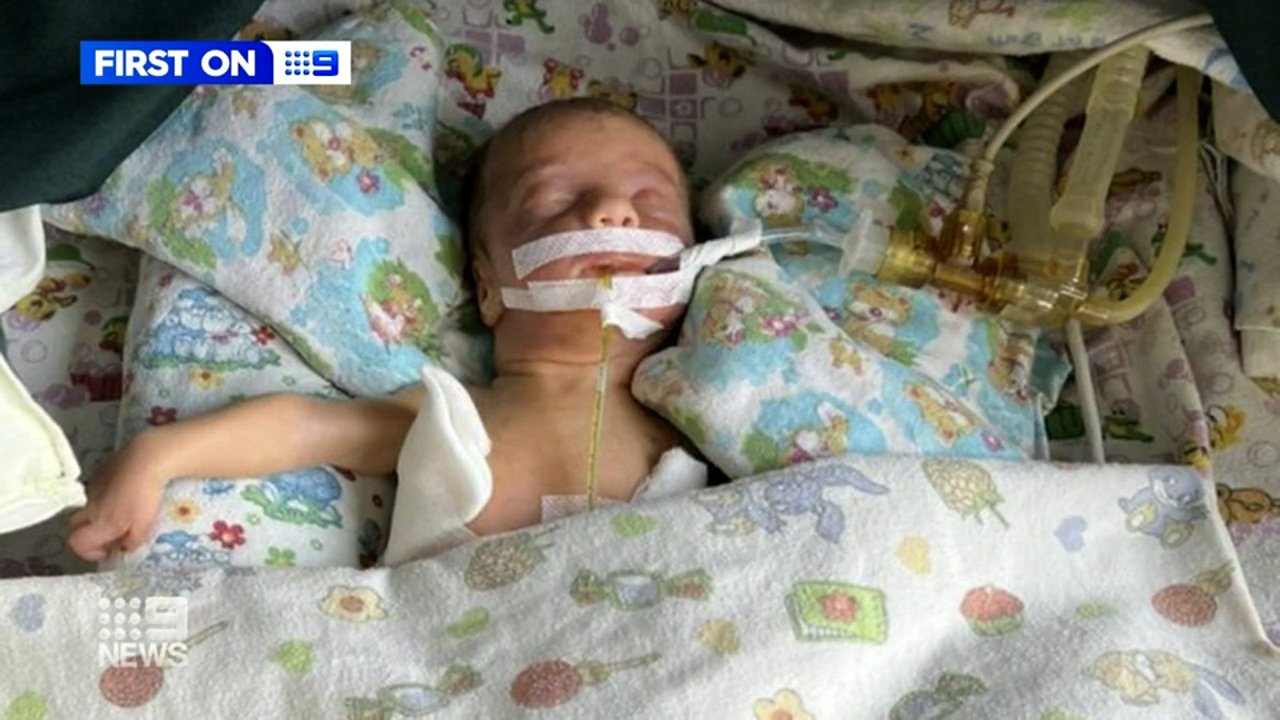
However, the couple is desperate to meet their daughter, Alba, who was born prematurely at 28 weeks with a bleed on the brain and weighing just 1500 grams.

Ms Van Nooten said the pair just wanted to see Alba and "let her know that mummy and daddy are here"

"She's our world," Ms Van Nooten said.

Ms Van Nooten said the pair had been on a long road to have a child.

"We've had 15 embryo transfers, I've had a miscarriage, and this baby is just so wanted, it's been such a long road to get her," she said.

"Now she's within arm's reach and I can't get there.

"Somehow, there's got to be a way to get there. I'll swim if I have to."

The pair do not know how they will get to Odessa.

They said they had received little help from Australia's Ukrainian embassy after it was temporarily shut down.

The parents are believed to be among dozens of parents facing the same surrogacy nightmare in Ukraine.