Category Archives: headline

Half a heart girl's family have special Christmas wish

There was a point last year, Melissa Robinson admits, when she started thinking about planning her little daughter's funeral.

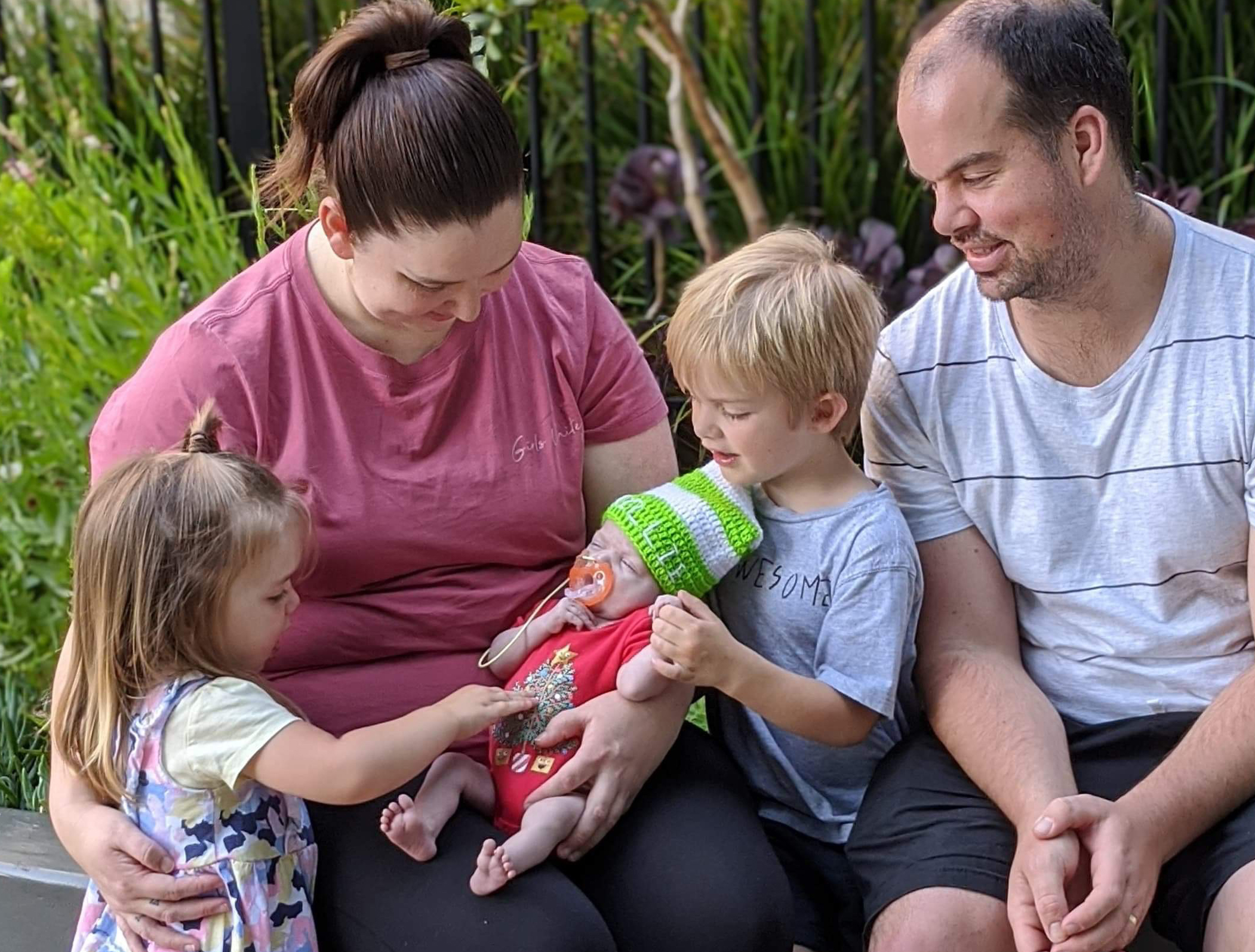
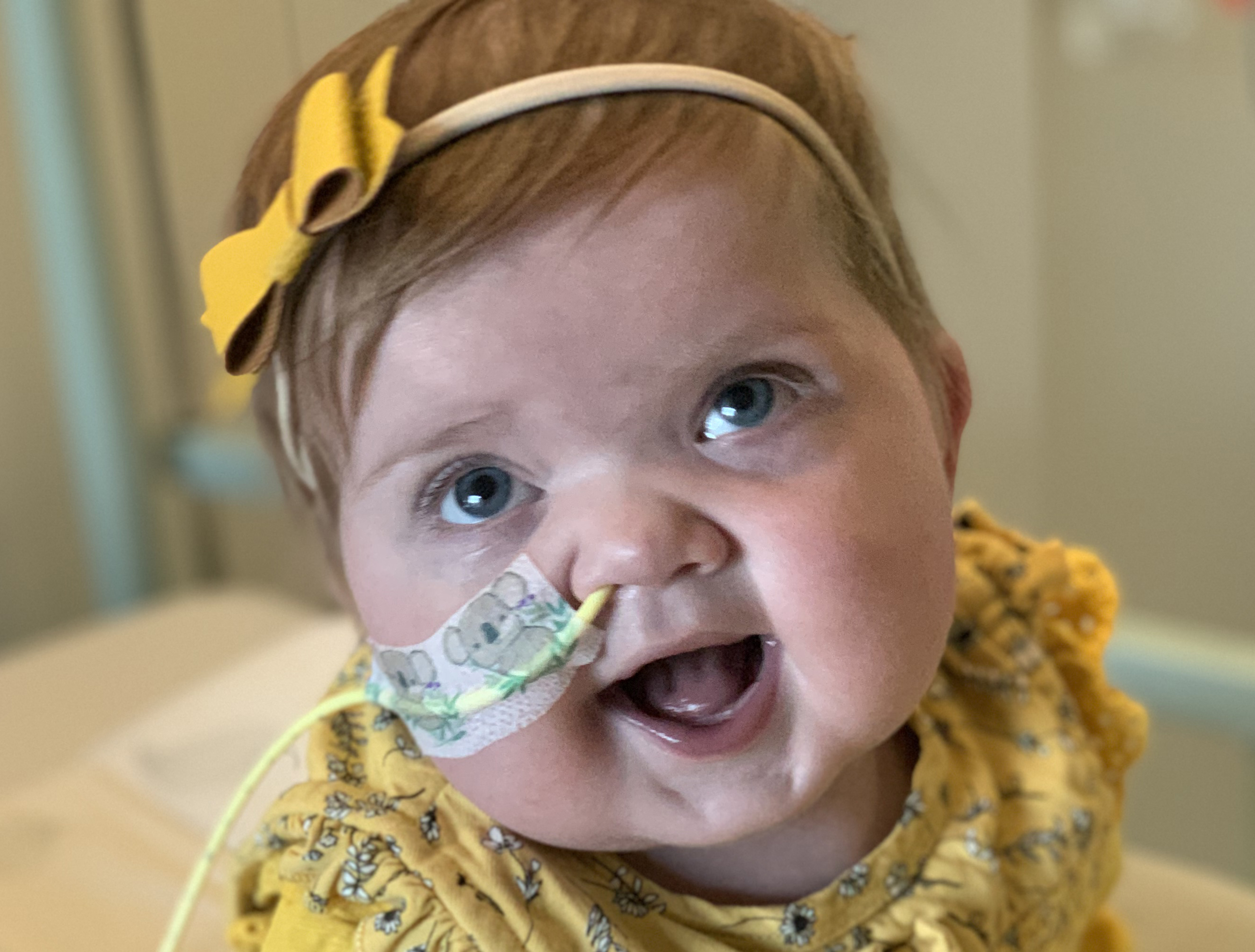
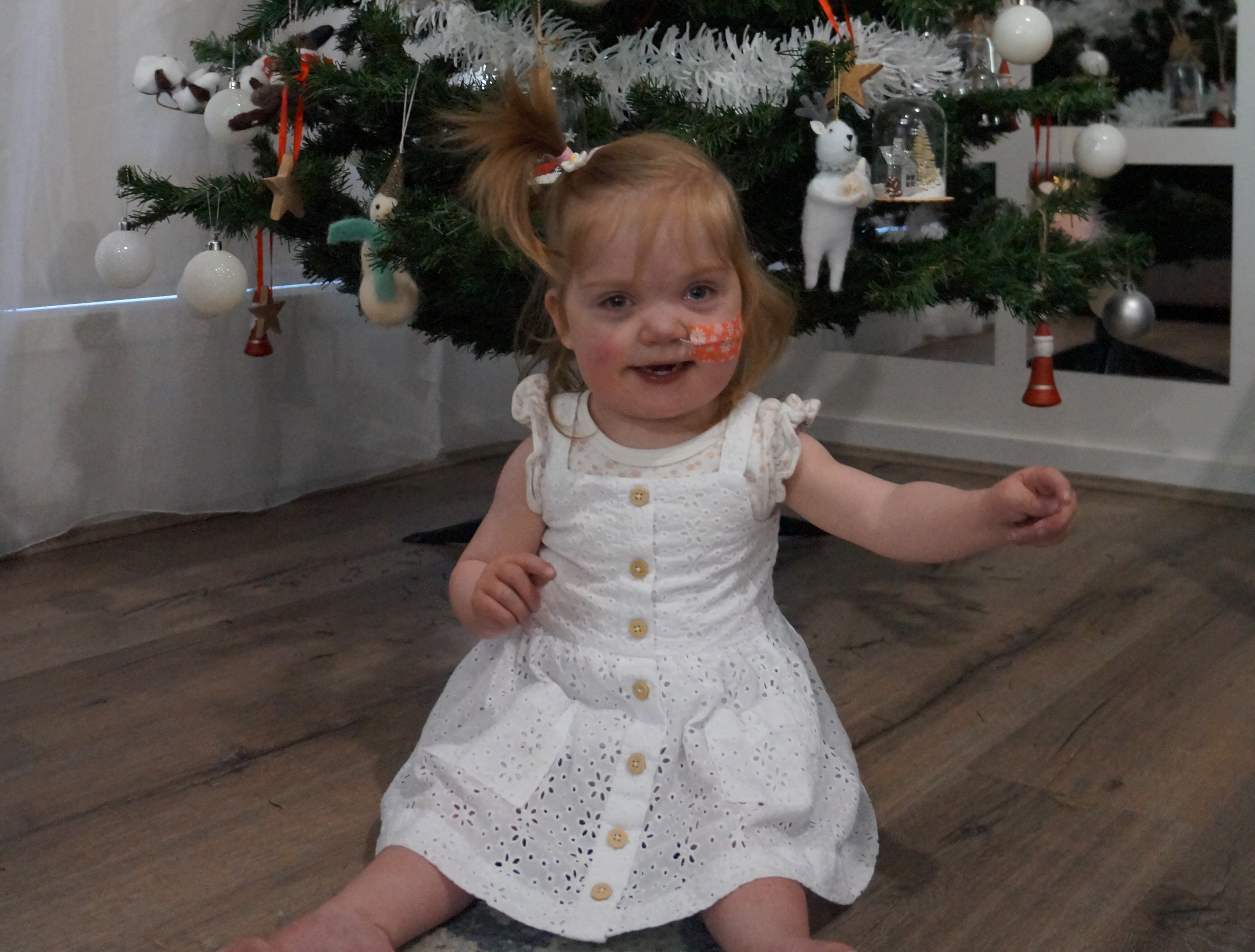
Millie Robinson, two, was born with a series of serious heart conditions, which means she has "half a heart".

When her heart stopped and she didn't breathe for six minutes last January at Monash Children's Hospital in Melbourne, the family was told to prepare their goodbyes.

LIVE UPDATES: Premiers to meet for emergency National Cabinet

The Robinson family knows what it's like to face Christmas with a sick child in hospital - Millie was there for December 25, 2019.

She entertained her other children at Melbourne Zoo while surgeons operated for eight hours to try and save Millie's life.

This is when Mrs Robinson said she considered the worst outcome.

"I walked around the zoo planning my daughter's funeral," she told nine.com.au.

"Things were not looking great at all."

READ MORE Baby born with organs outside body could finally leave hospital

Encouraged to terminate baby

Doctors had suggested Mrs Robinson and husband Mark, from Albury, New South Wales, terminate what was her third pregnancy, after doctors found the baby had complex congenital heart disease during the 20 week scan.

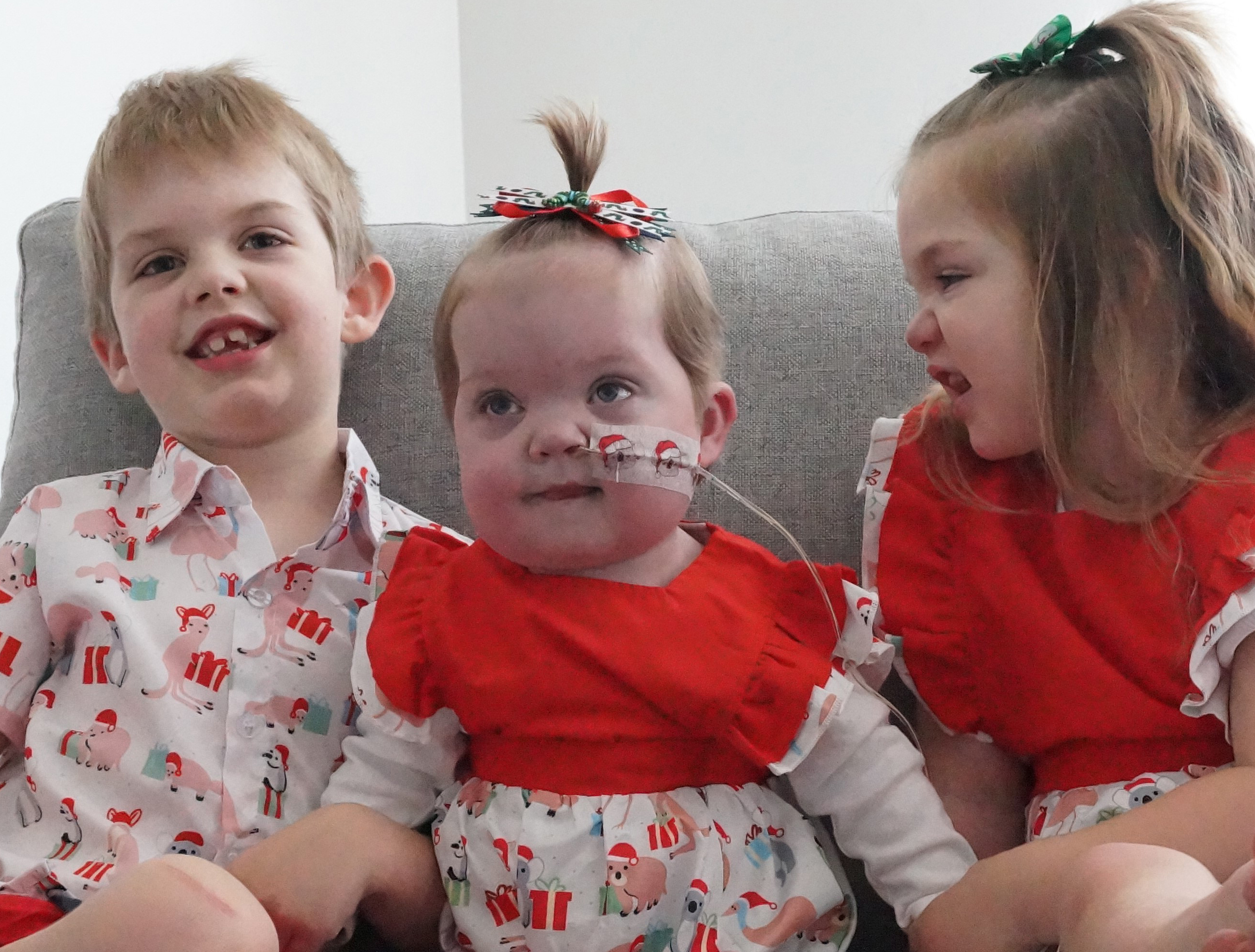
Their other two children, Evelyn, four, and Tennyson, six, had already been born with heart conditions, and both have pacemakers.

The conditions have been passed down Mark's side of the family.

"She (the nurse) kind of went quiet for a bit," Mrs Robinson said.

"She said 'the baby doesn't look like it has one side of its heart. You maybe need to consider termination."

But the couple refused, deciding instead to give birth to their little girl, and care for her until she died if need be.

Millie Robinson, two, was born with a serious heart condition which means she has 'half a heart' and multiple other related problems.

And a few days after she was born in November 2019, Millie Hope had her first of seven major lifesaving surgeries.

Her many heart conditions include double outlet right ventricle known as DORV, which means the heart is not connected properly.

"She'll only ever have one half of her heart functioning," Mrs Robinson said.

Millie came through the operations, and spent her first eight months in hospital – including the time she almost lost her fight for life.

Millie Robinson, two, was born with a serious heart condition which means she has 'half a heart' and multiple other related problems.Millie Robinson, two, was born with a serious heart condition which means she has 'half a heart' and multiple other related problems.

'Little character' pulled through

Little Millie pulled through her latest life-saving surgery and has just turned two.

She hasn't been in hospital for five months, the longest spell in her life.

Her mum said she's developing into a "little character".

"She's very cheeky," Mrs Robinson said.

The family has been told children born with her condition are now living in their 30s thanks to surgeries which allow their hearts to function.

Millie Robinson, two, was born with a serious heart condition which means she has 'half a heart' and multiple other related problems.

And while Millie will face more operations, the family said they don't let themselves think of the future.

"I just want her to know she's loved," she said.

READ MORE: How the pandemic has impacted cancer diagnosis and treatment

Christmas wish

The Robinson family knows what it's like to face Christmas with a sick child in hospital – Millie was there over the festive season in 2019.

Charity Ronald McDonald House puts up families with sick kids who don't live close enough to a hospital to go home at night.

The Robinson family – including Tenison and Evalyn – have spent an incredible 260 nights at Ronald McDonald House Parkville in Melbourne – including that Christmas.

Millie Robinson, two, was born with a serious heart condition which means she has 'half a heart' and multiple other related problems.

Mrs Robinson said it is a special place to be.

"There's lots of people come in and out – the Victorian police came with their motorbikes and cars, they have a little Santa's workshop," Mrs Robinson said.

READ MORE: COVID-19 testing clinics swamped amid growing frustration over tourism rules

"They have their volunteers come in and do a big Christmas lunch."

This year though, if Millie's health remains stable, the family hopes to be at home, where they are planning a quiet celebration.

Millie is getting a Cubbi Buddi play couch, and a lunch box, as the family hopes she'll be well enough to start day care next year.

They also have a special festive wish – that people back the Ronald McDonald House Charities Santa for Sick Kids appeal.

Millie Robinson, two, was born with a serious heart condition which means she has 'half a heart' and multiple other related problems.

It costs $160 to put a family up for a night.

"It was our lifeline," Mrs Robinson, said.

Ronald McDonald House Charities Sydney CEO, Simone Daher said: "When a family has a child that requires long term hospital treatment, not only does it impact them emotionally, but also financially.

READ MORE: PM urges 'common sense' approach to dealing with Omicron

"When they are staying with us, we like to make sure that Christmas is a special time for the whole family.

"By supporting our Christmas appeal, you are helping relieve the burden and stress and supporting the creation of special memories for these families."

Contact journalist Sarah Swain: Ss****@******om.au

Stark warning from man whose skin cancer spread to brain

Almost 90,000 fewer skin lesions have been removed across Australia during the course of the pandemic, prompting fears many people with cancer are going undiagnosed.

The number of skin lesions removed, for both suspected and confirmed cancers, has dropped dramatically in all Australian states and territories – except for ACT and Tasmania.

From January to September 2021, about 30,000 fewer skin lesions were removed across Australia compared to the same period in 2019, Medicare data provided by Pathology Awareness Australia to 9news.com.au shows.

READ MORE: Alcohol can cause skin to burn faster, may increase melanoma risk

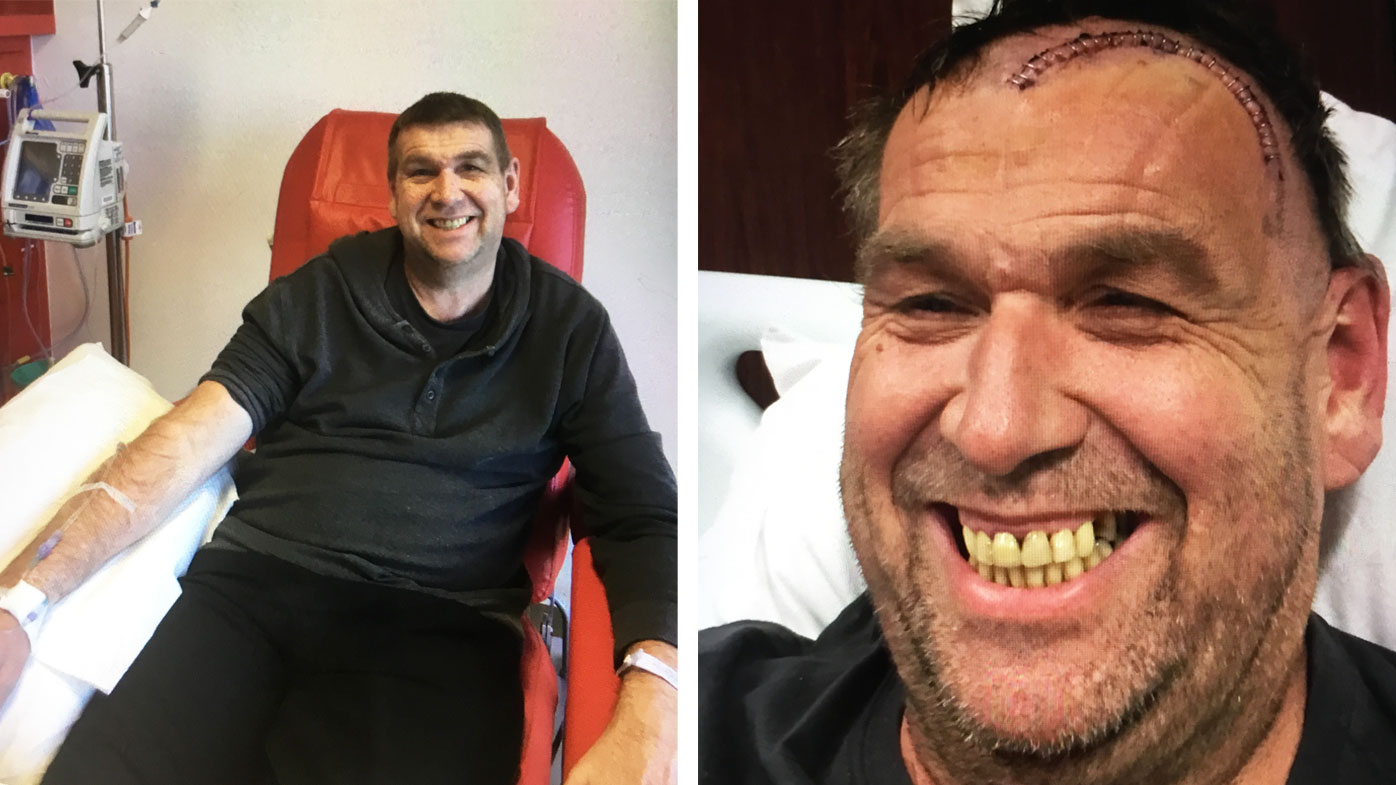
Steve Solomon pictured before and after his initial brain surgery to remove a tennis-ball sized tumour.

During the same months in 2020, there were 59,000 fewer skin lesions removed.

The most affected place was the Northern Territory with removal of lesions down seven per cent in 2020, and 17 per cent in 2021.

New South Wales had seven per cent fewer lesions excised in 2020 and six per cent fewer in 2021.

Excisions in the most locked down state, Victoria, were down 10 per cent in 2020, but started to catch up in 2021, being one per cent over 2019 numbers.

South Australia also had fewer lesions removed; eight per cent fewer in 2020 and three per cent fewer in 2021.

Pathologists say the figures point to a much larger number of skin checks being missed, given many check-ups don't lead to the removal of a lesion.

Brisbane histiopathologist Nick Musgrave said the statistics were a big concern.

"The data is unequivocal. It's a real concern that there have been fewer skin samples referred for pathology testing as a result of the pandemic," Dr Musgrove said.

"Delayed diagnosis could see patients requiring more invasive treatment or having serious complications including spread of the disease.

"It's a mistake to think of skin cancers as being fairly innocuous."

'There was a tennis ball-sized melanoma'

Steve Solomon knows all to well how dangerous skin cancers are after being diagnosed with terminal melanoma in 2016.

The 61-year-old from Melbourne has beaten the odds to survive, but not before having five brain surgeries to remove cancerous growths.

Mr Solomon's skin cancer journey started at the age of 40 when his wife noticed a lump on his scalp in 2000.

It turned out to be a melanoma, giving the father-of-three a shock.

The skin cancer was removed successfully and Mr Solomon kept up with regular skin cancer checks.

There was no sign of anything untoward for the next 16 years.

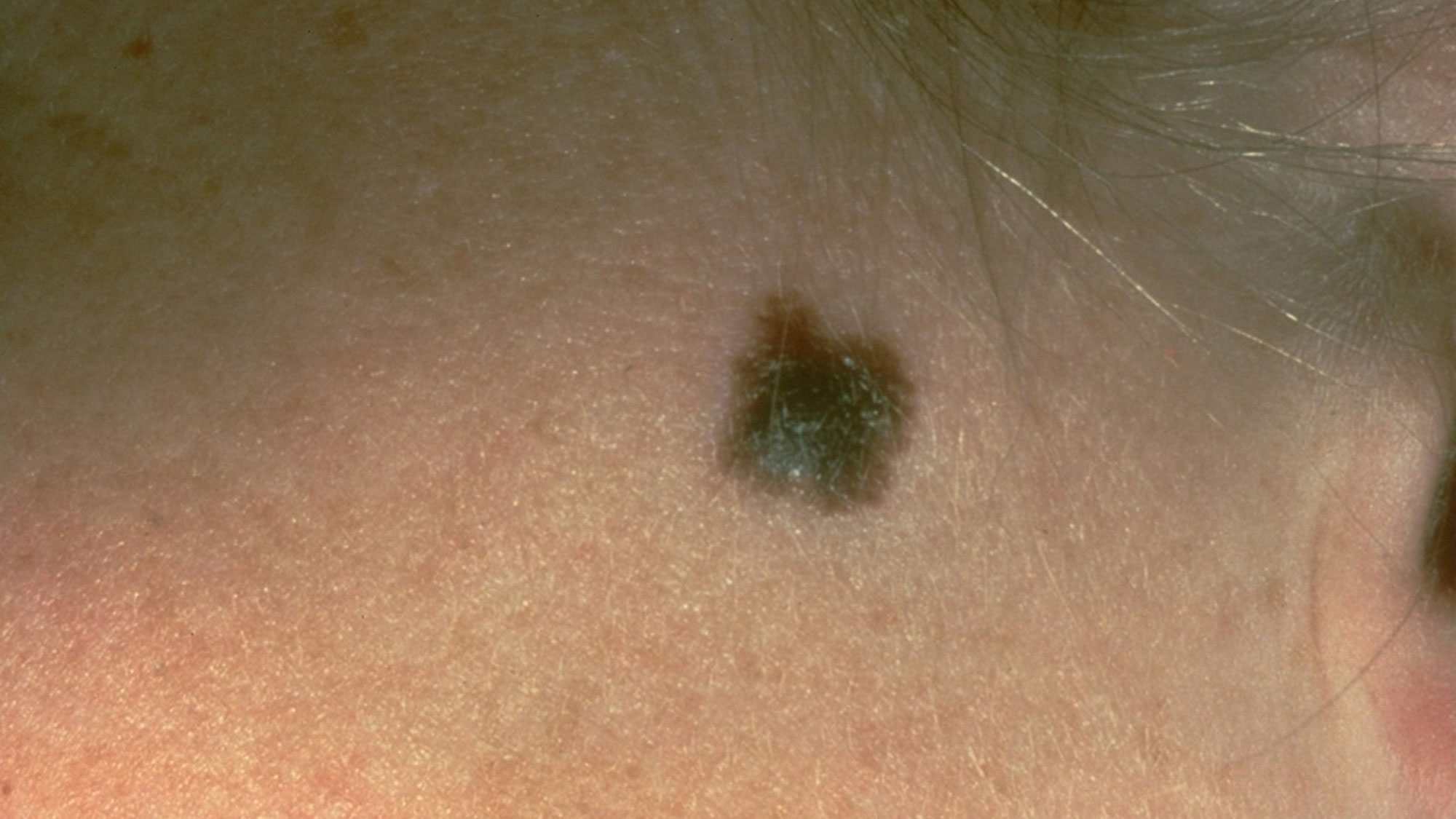
This photo, provided by the American Academy of Dermatology, shows a typical presentation of a suspicious mole that eventually was diagnosed as melanoma.

Then, in 2016, Mr Solomon said his wife became concerned something was wrong.

"My wife noticed that I was doing things out of the ordinary," Mr Solomon said.

READ MORE: How the COVID-19 pandemic has impacted cancer diagnosis, treatment in Australia

"One time, I went down to the bank to and came home without getting any money out, I had completely forgotten what I had gone for," Mr Solomon said.

Mr Solomon's wife became so concerned about his behaviour that she took him to the emergency department at their local hospital.

"They did some scans which showed there was a tennis ball-sized melanoma in my brain and one the same size in my lung," he said.

"I was told that I had stage-four metastatic melanoma and to get my affairs in order.

"I was put in an ambulance and had brain surgery the next morning."

Mr Solomon has been undergoing immunotherapy treatment and, for the past two years, no cancerous growths have appeared in his brain.

The medication is also keeping the melanoma in Mr Solomon's lung from growing.

Mr Solomon said it was important people did not put off getting regular skin cancer checks.

"The quicker doctors catch it, the quicker they can do something about it," he said.

"These days, they have mole mapping where they can pick up straight away if anything changes shape or colour and it's all pretty painless."

While science had come up with many incredible advancements that helped save his life, missing a skin cancer check-up could still mean the difference between life and death, he said.

"If you get there too late, it doesn't matter what (treatments) they have."

Contact reporter Emily McPherson at em********@******om.au.

Perfectly preserved baby dinosaur discovered curled up inside its egg

An unprecedented fossil of a baby dinosaur curled up perfectly inside its egg is shedding more light on the links between dinosaurs and birds.

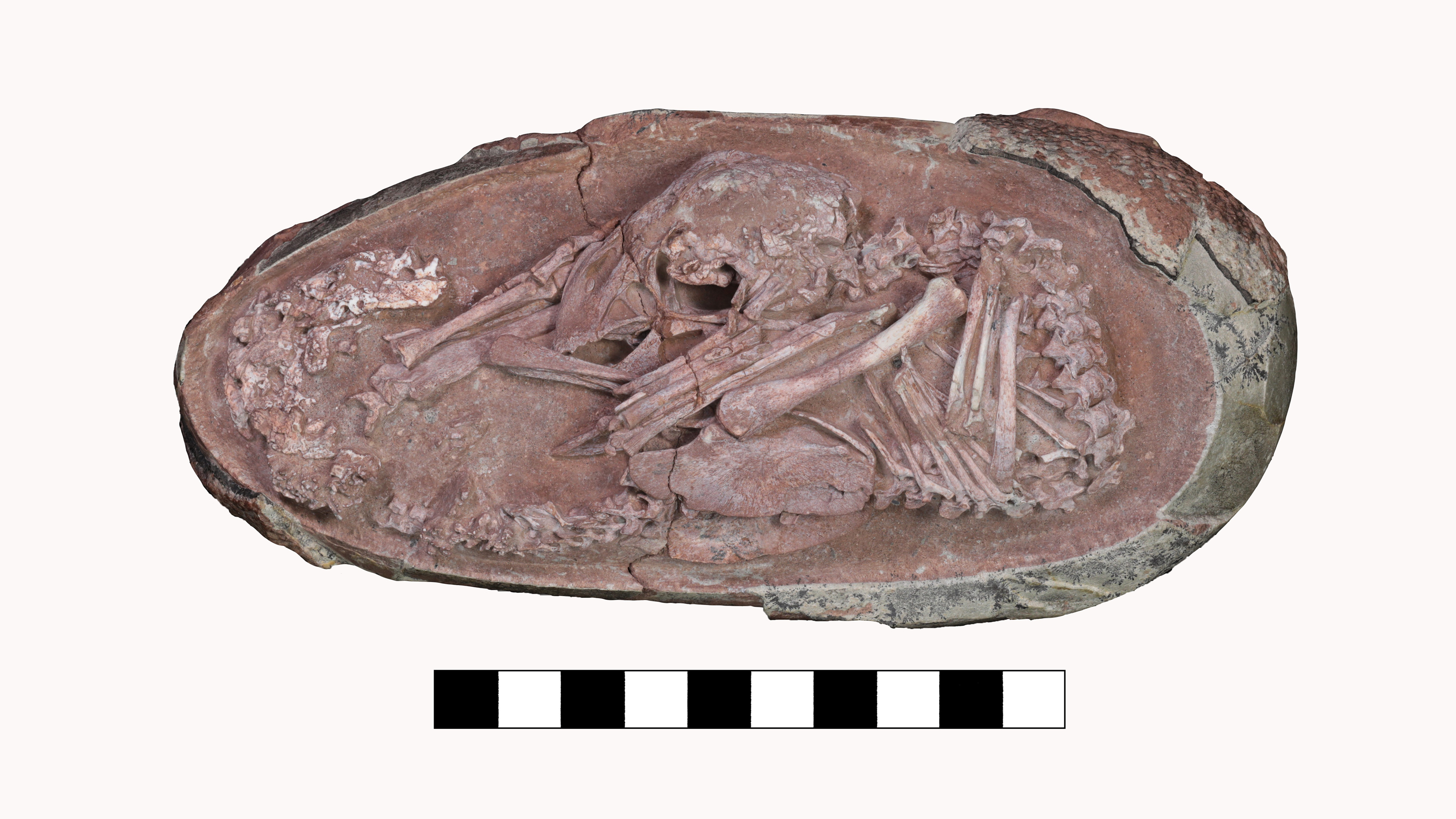
The 70-million-year-old fossil preserves the embryonic skeleton of an oviraptorid dinosaur, which has been nicknamed Baby Yingliang after the name of the Chinese museum which houses the fossil.

Baby dinosaur bones are small and fragile and are only very rarely preserved as fossils, making this a very lucky find, said Darla Zelenitsky, an associate professor in the department of geoscience at the University of Calgary in Canada.

READ MORE: NSW COVID-19 cases surge to record numbers

Embryonic dinosaur bones are small and fragile and are only very rarely preserved as fossils making this a very rare find.

"It is an amazing specimen … I have been working on dinosaur eggs for 25 years and have yet to see anything like it," said Ms Zelenitsky, a co-author of the research that published in the journal iScience on Tuesday.

"Up until now, little has been known of what was going on inside a dinosaur's egg prior to hatching, as there are so few embryonic skeletons, particularly those that are complete and preserved in a life pose," she said in an email.

The egg is around 17 centimetres long and the dinosaur was estimated to be 27 centimetres long from head to tail. The researchers believe as an adult, had it lived, it would have been about two to three meters long.

READ MORE: Vague text message leads to rescue of abducted US teen

A reconstruction of a soon-to-hatch baby dinosaur based on the fossil.

The researchers from China, the UK and Canada studied the positions of Baby Yingliang and other previously found oviraptorid embryos. They concluded that the dinosaurs were moving and changing poses before hatching in a way similar to baby birds.

In modern birds, such movements are associated with a behaviour called tucking, which is controlled by the central nervous system and is critical for hatching success.

"Most known non-avian dinosaur embryos are incomplete with skeletons disarticulated (bones separated at the joints)," said Waisum Ma, the lead author of the study and a researcher at the University of Birmingham, UK, in a statement.

"We were surprised to see this embryo beautifully preserved inside a dinosaur egg, lying in a bird-like posture. This posture had not been recognised in non-avian dinosaurs before."

READ MORE: Colossal winged reptile is largest known flying animal ever to live

All birds directly evolved from a group of two-legged dinosaurs known as theropods, whose members include the towering Tyrannosaurus rex and the smaller velociraptors.

The pre-hatching behaviour isn't the only behaviour modern birds inherited from their dinosaur ancestors. The same kind of dinosaurs are also known to have sat on top of their eggs to incubate them in a way similar to birds, Ms Zelenitsky said.

The fossil was found in China's Jiangxi province and acquired in 2000 by Liang Liu, a director of a Chinese stone company called Yingliang Group. It ended up in storage, largely forgotten until about 10 years later, when museum staff sorted through the boxes and unearthed the fossil during the construction of Yingliang Stone Nature History Museum. The museum is subsidised by the company.

How children were used in a 48-hour deadly rampage for gold

The men were shot as they slept outside, having spent their days underground, choking in the Sahel dust, digging and panning for gold.

They were killed by children – some apparently as young as 12 – and men who had arrived on dozens of motorbikes, egged on in their murderous spree by women who knew the village well, according to witnesses.

The local militia had left. The army came to the rescue for a matter of hours in the morning, but then left before dusk, letting the attackers return the following night to burn the village down and most likely steal what gold it had.

In the end, somewhere between 170 and 200 people died, according to estimates by a local police source and other officials, and it still remains unclear who the killers were.

The massacre in Solhan, northern Burkina Faso, took place over two nights of extraordinary brutality in June 2021. The killings soon faded from international headlines, absorbed into the rhythms of persistent violence in the Sahel region, an arid stretch of land sandwiched by the Sahara Desert and the African savannah, and wracked by the climate emergency.

In the lawless and remote communities of the Sahel, jihadists increasingly hold sway. Yet one likely culprit in this incident, al Qaeda's local affiliate JNIM, condemned the attack's brutality.

READ MORE: Rapid home tests could be made free, PM indicates
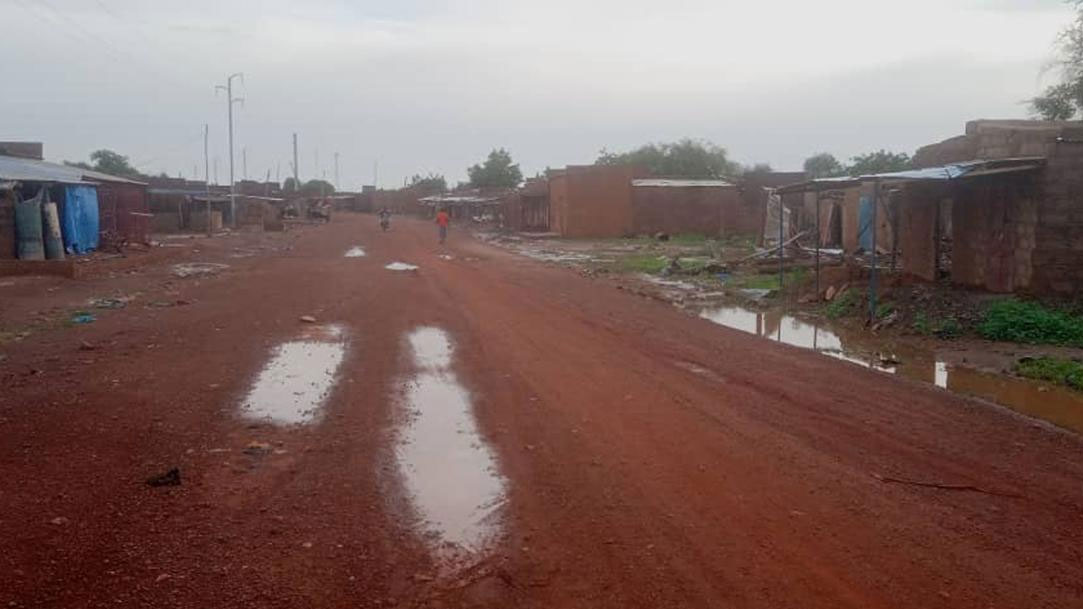
The road leading into Solhan. The attackers arrived on motorbikes, according to eyewitnesses.

And the other main suspect, ISIS, chose to blame it on al Qaeda, according to an ISIS-affiliated newspaper.

Dozens of interviews by CNN with survivors, local witnesses and Burkina Faso officials paint the most complete and disturbing narrative yet of a rampage perpetrated over 48 hours, partially by children, that the US-backed and trained Burkina Faso military was powerless to stop.

Yet few officials or witnesses agree on a coherent and consistent motive for the attack. Were the child attackers sent for Solhan's gold, as currency for their Islamist masters?

Was it a punishment killing ordered by jihadists against villagers loyal to the government?

The story of Solhan is a notable mark in the patina of brutality spreading across the Sahel. The intervention – and now ongoing drawdown – of the French military, the arrival of European Union forces, and the Pentagon's sustained support mean billions have been spent in attempts to bolster the local security forces.

Yet violence has spiralled instead, particularly in Burkina Faso over recent years. The crisis in some of sub-Saharan Africa's poorest states presents an imminent threat to Europe's security, and by extension the United States, analysts say, in providing a secure and spacious breeding ground for terror networks.

US officials have described the "wildfire of terrorism" in the Sahel, with al Qaeda and ISIS "on the march" in West Africa, aiming to "carve out a new caliphate".

READ MORE: Mystery disease kills nearly 100 in South Sudan

"Illicit gold has emerged as a key source of funding for jihadist groups, who have been seizing so-called "informal mines" – small-scale mining sites which rely largely on physical labor and basic technology to extract precious metals and minerals – in Burkina Faso, Mali and Niger since 2016, according to a Crisis Group report from 2019.

Bachir Ismael Ouédraogo, Burkina Faso's minister of energy and mines, told CNN the country lost 20 tons of gold through informal mining and exports every year, worth roughly $1 billion on the open market.

Ouédraogo describes it as a "war economy", a system that uses well-coordinated routes across the African continent. "The gold you end up buying is financing terrorism, and affecting our families here," he added.

The first night: Massacre

Trapped in the arid plains around 400 kilometres northeast of the capital Ouagadougou, Solhan's gold is the village's only asset, and its curse.

Satellite images of the village show the damage that informal mining has done to the terracotta soil – the charred grey tailings and spoil from the intense activity of men who spend so many hours digging underground that they must sleep outdoors to recover.

A local government-backed militia called the VDP (a French acronym meaning Volunteers for the Defense of the Country) provides some security.

Yet on the night of June 4, Solhan was left mostly defenseless.

More than 100 jihadists, on dozens of tricycles and motorbikes, had been spotted 20 kilometres from Solhan that afternoon, according to Boureima Ly, the emir of the local region of Yagha.
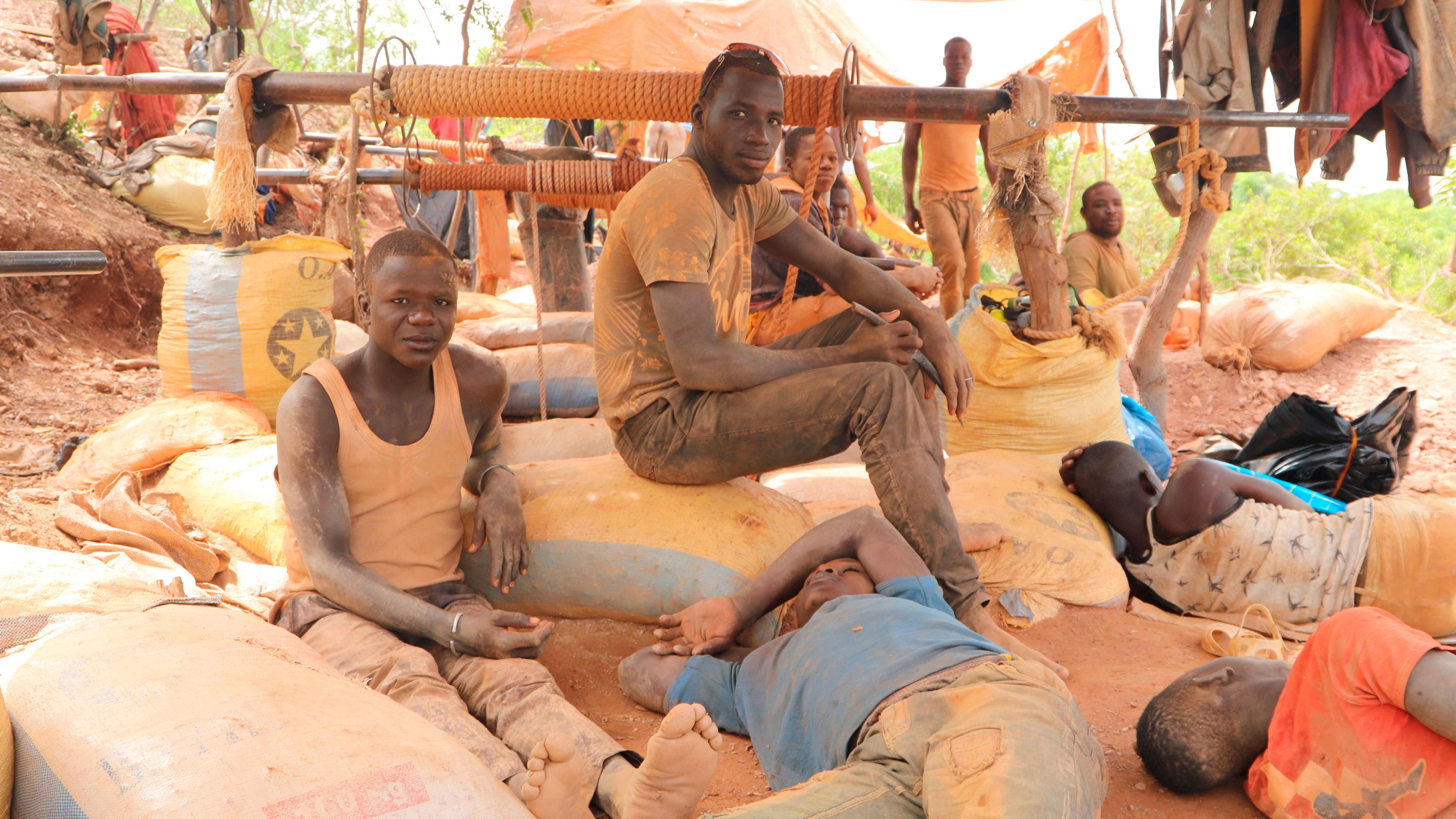
Gold miners take a break near Hounde, some 100kms northeast of Burkina Faso's town of Bobo-Dioulasso.

The army was warned of a possible attack, but it was unclear if it would target Solhan or nearby Sebba -according to Aly Bokoum, an activist with the Sahel Regional Youth Council in Burkina Faso – so the local unit chose to stay in Sebba, where it is based. The VDP in Solhan also contacted the army about the threat but were told to leave the village, according to Bokoum.

CNN has made multiple attempts to contact Burkina Faso's army for comment.

Gold appeared to set the attackers' priorities. Mines at Mousiga, a tiny settlement to Solhan's east, were hit first, according to a mining official and a miner who were present. Many of the survivors, witnesses and officials requested anonymity for their safety.

"Their faces were hidden with scarves," the miner said of the assailants. "There were many of them on bikes and they started shooting. I started running for my life – for 30 kilometres, all night, to safety."

This miner said he did not see children among this group and two other officials denied the involvement of children at the Mousiga mines.

The distant gunfire from Mousiga was misinterpreted by the Solhan miners, who "thought it was the army coming" on a routine patrol and so "stayed next to their wells", said the mining official.

The attackers then hit a VDP base on the road into the village, before moving on to their main target.

On entering Solhan, the convoy of children, women and likely some men split. One group turned left towards the mines. Another drove calmly into the centre of the village.

The first shots in Solhan, heard by witnesses at 2.08 a.m., were at the mines, the police source said. "The gold-diggers were first … ambushed … killed at random," he said, while describing the typical night-time scene.

"Most of the [miners] sleep outside, on site. They can't sleep indoors, and they don't go home either. Usually only a few of them get into the well late at night, and most come out because of the heat.

"One miner said some victims were shot dead as they slept outside and others were slaughtered as they worked, trapped underground. "All [the attackers] found outside were people sleeping," he said.

"That's what made it possible for them to massacre them like that.

"Another miner said: "People started coming out of the pits and running … running for our lives." He added that others hid inside the 30-foot-deep wells.

We saw the light from the bullets all over the place. It was only God who saved us, otherwise they were going to exterminate us all.

A survivor of the attack

The mining official described how a large gun was positioned beneath a nearby tree for use in the attack.

"Many ran away, but when you run, you're going to be seen and they shoot," he said, adding that some miners survived by hiding in the pits until 8am.

"The first person who went down to the site [the following day] called me, and said the bodies were lying like fish," the official said.

Several witnesses and officials told CNN that the attackers had in-depth knowledge of Solhan's layout.

"These are people who take the time to study their target," confirmed the police source, who said witnesses mentioned distinctly hearing women's voices among the attackers. "They indicated to 'go to into this guy's house, do this and that,' and told children to 'go here and there,' that they couldn't let one person leave," the source said.

Local activist Abdou Hoeffi, from the human rights group Burkina Faso Movement for Human and People's Rights (MBDHP), said the women played a cheerleading role with the child assailants, with shouts of, "You are a good shooter! You go!"

One witness, who said his parents were killed in the attack, told CNN in Solhan, "They came with women and little children holding guns. Francois, a shopkeeper, he was taken away, my friend. If it was a man, they killed him – a boy, they kidnapped him.

"A little one like that," he said, gesturing the embrace of an infant in his arms, "who was breastfeeding [was taken away]. His mother lost her mind."

One Solhan woman, her bright blue dress glistening as she sifted grains through a sieve, described surviving the night: "They destroyed everything … I fled into my house with my child on my back … I couldn't sleep all night.

We saw the light from the bullets all over the place … It was only God who saved us, otherwise they were going to exterminate us all."

Another witness said he and his wife were in bed with their 5-day-old baby when they heard the gunfire. "Three terrorists passed by my house, in front of me, talking. They did not stop. I could see the bullets raining down everywhere in the night."

The witness, a former security guard for the local cellphone antenna, said the attackers disabled the phone mast that night and removed its battery, cutting the village off from the outside world and a chance of help.

The attackers left at dawn, and the same witness said that the villagers started to venture outside again by 5 a.m. "I couldn't count the number of corpses that were on the side of the road," he recalled. "Everywhere you go, there are bodies lying around.

"The mine was also an apocalyptic scene. "We found that everyone died at the well. I made up to eight trips with a motorcycle cab to carry corpses," said another survivor." The mining official added that "everyone was loaded on and off the motorbikes like bags of grain."

Then the army finally arrived. One miner told CNN the attackers depended on the military's slow reaction when launching their assault.

"This is Burkina Faso. There is no fast response," the miner said. "If they knew that in 30 or 40 minutes the army would come, they wouldn't [attack]. But they took all their time.

"When the military did arrive, there was little to do but bury the dead, he said.

"They dug a big hole. There was no other solution."
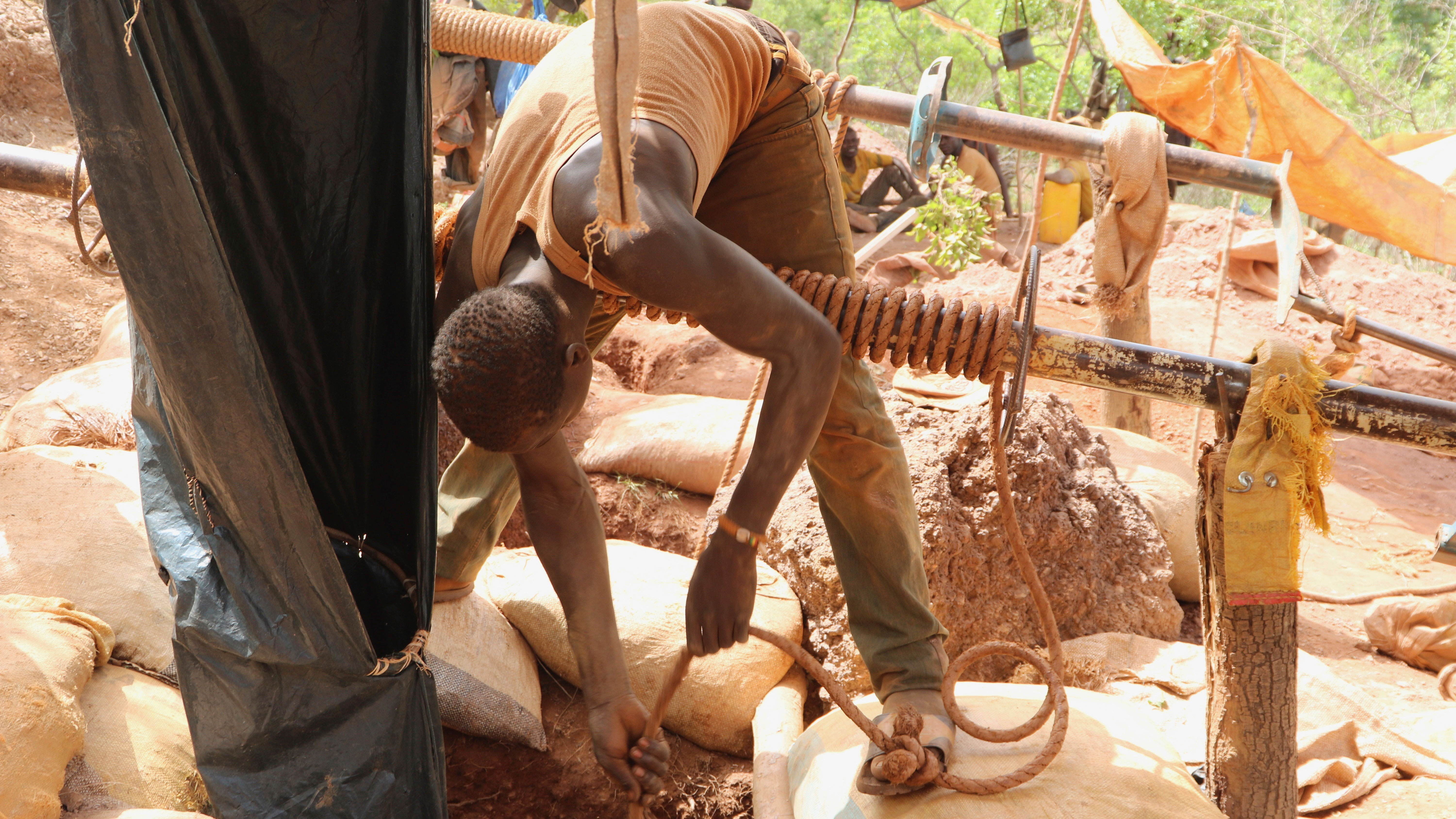
A gold miner pulls a rope from a mining shaft near Hounde, some 100kms northeast of Burkina Faso's town of Bobo-Dioulasso.

The ex-phone antenna guard said the security forces asked villagers "to go back home and lock the door, and to not hide any terrorists."

Two officials said the militants' convoy did not really leave at first light but instead relocated to a hideout in the brush, and waited. The mining official specified a remote border area where he believed they had hidden.

The police source said it was not clear if they met leaders there for further instructions, or just waited for the cover of night.

Some of the villagers who remained in Solhan tried to flee, said the police source. "They didn't know if it was over or not," he said.

The hospital in the nearest city, Dori, was "overwhelmed," he said. But it was unclear if the attackers were finished with Solhan. At dusk, the answer came.

The second night: Destruction

"I heard the sound of their motorcycles and said, 'Ah, they are [here] again,'" one witness said. "I went back to my yard, turned off the lights in my house, took my mat, took my blanket." He said he left for another village – travelling on foot with a group of Solhan's children, elderly residents and pregnant women.

But the convoy's focus was different this time: They wanted to eradicate or loot all that remained. "They started to burn. They entered the houses," said one survivor.

"At the stores, they took clothes, drinks, money, put them in their vehicles."

"They came back, they found four motorcycles at our place," another survivor said.

"They burned everything. They burned all our houses, until even the sheet metal was gone. They took rice, sugar, oil and boxes of other things."

Showing a cameraman around what remained of his home, the survivor gestured to the devastation – the walls black with soot, apart from a patch where the TV was fixed before it too was looted.

"The grenade went through the wall and went to the other side," he said, pointing at a missing patch of plaster. "The whole roof is gone.

"The mining official said 80 sheep were also slaughtered in the violence.

Young men who survived the onslaught sought medication for the psychological trauma in nearby Dori, he added.

"They were given pills or injections, because they say they couldn't close their eyes, because they could still see the dead bodies."

Video filmed in July shows the charred village clinic – the hospital beds and consultation room beyond use.

Shops and homes were incinerated, and rows of buildings left collapsed or with only their metal gates remaining. Motorcycles were torched.

Even the mining machinery used to break rocks was half-smashed, yet in the video some of it still hummed around the mines that remained functioning.

Shell casings still lay on the ground. The scale of destruction – fuelled, it seemed, by something more nihilistic than just looting – surprised some officials.

Since June, officials, experts and survivors have been seeking to understand more about the massacre.

The government, facing protests in Dori over its inaction and security failings, blamed jihadists. Government spokesperson Ousseni Tamboura told Radio France Internationale that two suspects had been detained before the attack and the arrests had led officials to link it to a little-known group called Mujahed al Qaeda, which is connected to the al Qaeda affiliate JNIM.

Tamboura said gold was also a motivating factor. In the immediate aftermath, the government fired some security personnel and declared three days of national mourning. Tamboura told CNN in November the government believes al Qaeda affiliate JNIM was behind the massacre.

He put the death toll at 132, which includes attackers killed in the incident, and fatalities from a neighbouring attack.

Tamboura declined to comment on the army's absence in Solhan that night, and said that the Burkina Faso military followed all protocols set between them and the US as a condition for aid.

The spokesman added that the jihadi groups were fueled by hunger to control resources, not by ideology.

A French military intelligence official, who didn't want to be named discussing sensitive information, agreed that jihadists were likely responsible, saying the massacre was likely committed by a group "in the process of being formed", linked to JNIM.

The official said attacks against the general population, as indiscriminate as those on Solhan, were more the hallmark of ISIS, however.
Two funerals and a wedding on Zoom for woman stuck in UK

Robbed of a special moment, left in a kind of grieving purgatory that makes it hard to move on, these are the feelings that bubble up while forced to watch some of life's most important moments via Zoom.

Lisa-Rae Horner sat through two webcam funerals and a wedding in the past year and has been left struggling to process all three as she approaches her second coronavirus Christmas.

Her mother-in-law died of COVID-19 in April, her best friend in Brisbane — "my rock" — died later this year, her middle daughter was married last December and the Brisbane-based pilates instructor was on the wrong side of the world for all three.

READ MORE: New Omicron warning as worrying modelling released

Now, after five months away from home, the 43-year-old is torn between the excitement of her first England Christmas in nine years and nerves over what's to follow: a pre-dawn Boxing Day flight from London to Sydney and a mismatched connection to Brisbane that risks keeping her and husband Perry away from their dogs for another two weeks.

Australia's borders are open, but getting home is still an impossibility for many.

Mr and Mrs Horner chose to spend Christmas in the UK after a three-month trip blew out to five months while waiting for Queensland to allow home quarantine instead of hotel quarantine and won't be able to see their third daughter back in Australia until the new year.

But they're just two of many Aussies missing out on Christmas down under or making hard choices around where to be and how to manage tricky borders, costs and logistics.

Mr and Mrs Horner chose to spend Christmas in the UK after waiting for hotel quarantine to become home quarantine but won't be able to see their third daughter back in Australia until the new year, are just two of many Aussies missing out on Christmas down under or making hard choices around where to be and how to manage tricky borders, costs and logistics.

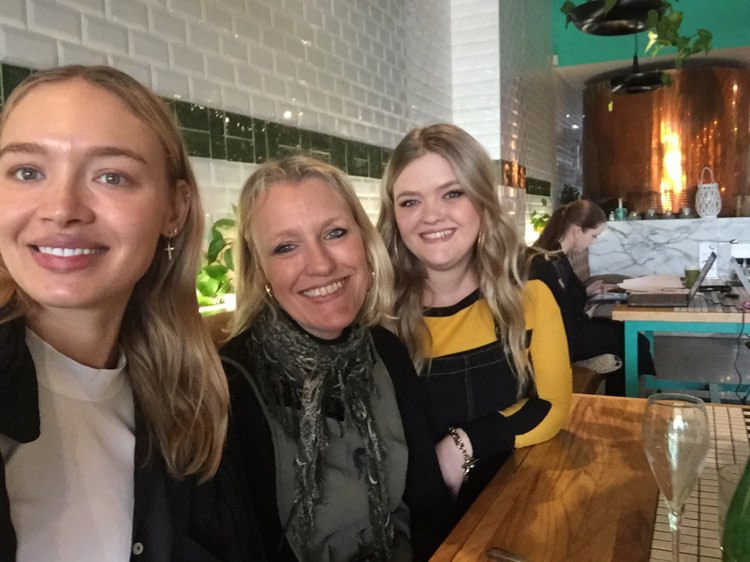
Their plan for Christmas is to "try to have a really chill day" in Essex with her mum, two of three daughters — one of whom, model Roxy Horner, caught COVID-19 and developed type-one diabetes this year — and a turkey dinner with Yorkshire puddings and all the trimmings.

READ MORE: 'I've lost a part of me': Man, 20 dies from meningococcal

But the England-born Australian citizen knows the stress of getting back into Queensland starting home quarantine will rear its head.

For one, she's still figuring out how exactly they'll make it to Brisbane to start their two-week home quarantine.

Queensland demands all overseas arrivals transiting through other states stay in the airport between international and domestic flights but the Horners' plane arrives too late.

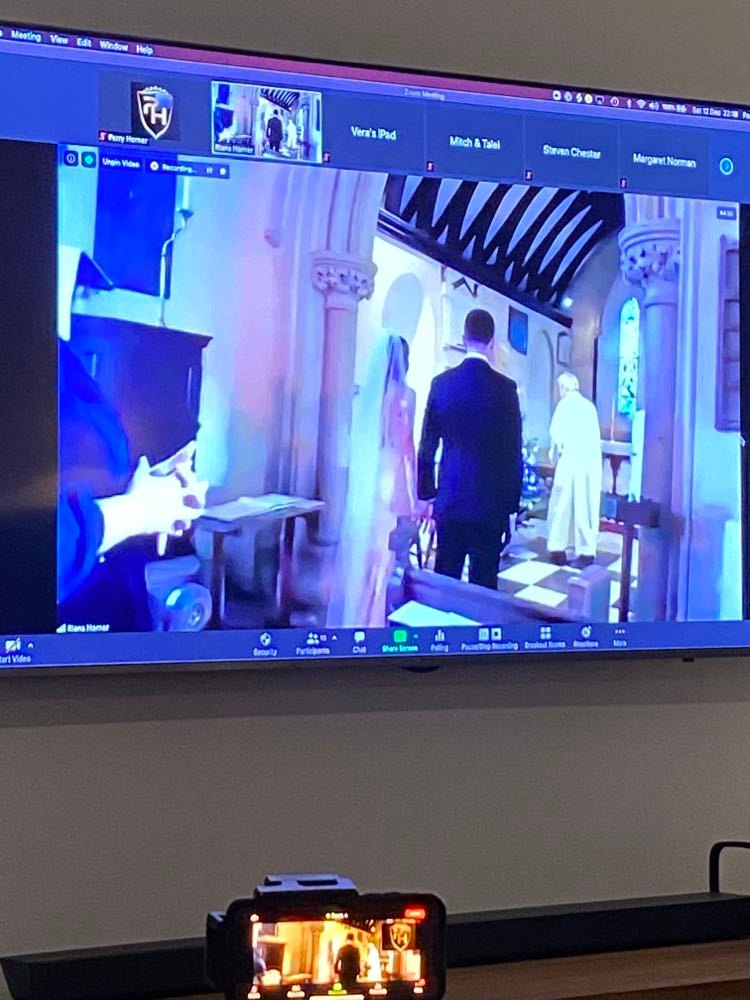
Even with the added stress, at least this is an important moment shared in real life, not via a phone screen or projector set up on the wall.

"I think for the funerals, it (Zoom) did dull emotions, but a feeling of missing out on sharing the memories, also it has made it very hard to accept it's happened," Mrs Horner told 9News.com.au.

"The wedding I think we feel robbed of a very special moment."

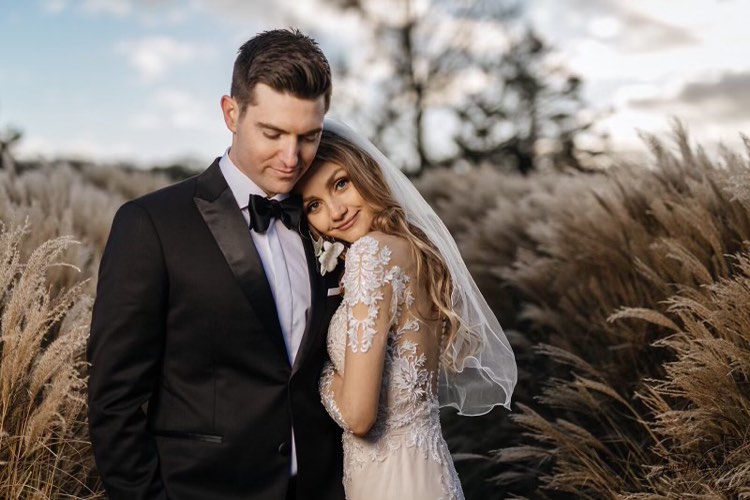
Instead of the big wedding Riana Rae and Cameron Brown had hoped for, bringing together family from both sides of the world, they stood almost alone in December last year.

Just the adoring couple, two guests, a priest and the all-important video link to the dozens left out due to distance, illness or the UK's strict coronavirus restrictions at the time.

The ceremony had already been cancelled once before, Mrs Horner explains, but they pulled the trigger once they realised how long it would be before the Australian side would be able to make an appearance.

READ MORE: Putin bristles over Russia's 'most serious challenge'

Mr Horner should get the chance to walk his daughter down the aisle in a second ceremony next year but his wife said many of the Australian guests are still very reluctant to travel, so "it won't be the same".

Through a cruel twist of fate, the pilates instructor also missed the death and funeral of her best friend in Brisbane, after she had finally made it back to the UK to visit family in July.

"Since we were six, we went to school together over here, and she emigrated 15 years ago, and we emigrated nine years ago and we ended up in the same place," she said.

"So she's been my rock since I've been over there."

With all the tragedy, the year and a half since the Horners last saw each other had felt particularly long for family used to reunions every year, if not every couple of months.

"It's been absolutely awful," she said.

"And the fact that when my mother in law died, and then my daughter got COVID and then got this diabetes (type) one, we couldn't even book a flight.

"It was really scary."

After a "really tough year", Mrs Horner said it's harder than ever to face Queensland's border restrictions.

"They made it so hard for us to come over here and see our family when we needed to, and they're making it so hard to get back,' she said.

"And there's no need for it. There's absolutely no need for it."

WORLD VIEW FROM REUTERS: Biden Offers Free Home COVID Tests, Omicron Hitting Vaxed People, EU in New Curbs, More

Today’s biggest stories

People queue to be tested for COVID-19 in Times Square, New York City, U.S., December 20, 2021. REUTERS/Andrew Kelly

U.S.
  • The Biden administration will open federal COVID-19 testing sites in New York City this week and buy 500 million at-home rapid tests that Americans can order online for free starting in January as it tries to tackle the Omicron variant sweeping the country.
  • Texas’ Harris County reported its first death related to the Omicron COVID-19 vaa man who was unvaccinated, the county health department said.
  • The National Hockey League and its players’ body have agreed to begin their holiday break after Tuesday’s matches, they said in a joint statement. The regular season schedule is set to resume on Dec. 27.
  • The Pentagon stopped short of creating a list of extremist groups that military members cannot join and declined to say explicitly whether refusing to view President Joe Biden as America’s legitimate leader was a violation of policy.
  • A Washington state man who pleaded guilty to assaulting a police officer during the deadly attack on the U.S. Capitol received a sentence of almost four years in prison, one of the longest yet for a Jan. 6 defendant.
  • Jurors retired for the evening after starting deliberations in the manslaughter trial of Kimberly Potter, the former Minnesota police officer who mistook her handgun for her Taser and shot Daunte Wright during a traffic stop.

The World Health Organization logo is pictured at the entrance of the WHO building, in Geneva, Switzerland, December 20, 2021. REUTERS/Denis Balibouse

World

A trader in a face mask works on the trading floor at the New York Stock Exchange, New York City, U.S., December 20, 2021. REUTERS/Andrew Kelly

Business
  • World shares gained as investors weighed up the extent to which the Omicron coronavirus variant would hit economies around the world, with the dollar softening as appetite for riskier assets made a cautious return.
  • Turkey’s lira rocketed back from record lows in volatile trading after Turkish President Tayyip Erdogan proposed measures to protect local currency savings against such swings.
  • Qatar plans to invest at least $10 billion in U.S. ports and has approached international banks for financing help, sources say, in an infrastructure spree that reflects the Gulf country’s deepening ties with Washington.
  • Black and Hispanic tech startup funding ticked up in Florida and Georgia this year, following an influx of investors fleeing California and efforts by some venture capitalists to focus on minority founders in the wake of George Floyd’s killing.
  • Having long shunned property ownership, rock-bottom borrowing costs, rising rents and for some the impact of having to pay to keep their money in the bank have persuaded almost one in two Germans to buy a house or apartment. The property rush is seeing high-rise buildings spring up across Frankfurt, a building frenzy replicated across Germany, where prices have hit record highs.
*****@***il.com&p=26119010&stpe=static” border=”0″ />

The post WORLD VIEW FROM REUTERS: Biden Offers Free Home COVID Tests, Omicron Hitting Vaxed People, EU in New Curbs, More appeared first on The St Kitts Nevis Observer.

Jamaica Launches Digital Vaccine Card

CNW Reporter

In keeping with a promise made by the Health and Wellness Minister, Dr. Chris Tufton earlier this year, the Jamaican government has now rolled out its digital vaccination card or “vaccine passport.”

The cards were available to download as of Monday (December 20).

Tufton said the electronic cards will provide Jamaicans with a more secure, internationally accepted and convenient means of verifying their vaccination status.

“This will now align us to global standards and so they will be accepted by the airlines, accepted by the countries around the world, and you can ultimately download this information in your phone and just show the coding on the phone and the information can be picked up which will allow you access to the locations,” Dr. Tufton said while addressing a virtual Covid Conversations press briefing on December 15.

The push for the vaccine passport was triggered by the United States’ decision to require proof of vaccine from all international travelers. As Jamaica enters a new phase in its management of COVID-19, the Health Minister also noted that having a digital vaccination card will also enable Jamaicans easier access to vaccinated-only events.

In October, Dr Tufton had promised to have the cards readily available before the end of this year. He also said that his ministry was made aware of fake vaccine cards in Jamaica, which was another trigger for the digital document.

“We have seen cases of persons allegedly having fake vaccine cards and we have heard anecdotes around the cost, and that is increasingly becoming a challenge,” he said then.

The passports are modeled off those used in Canada, the European Union, the United Kingdom, and the United States, according to Tufton. In these and other countries, vaccinated residents have been using digital vaccine cards to enter events, restaurants, gyms and other businesses.

Jamaica’s digital cards will feature a special Quick Response (QR) Code feature to enable the information in the card to be validated, thereby reducing/eliminating fraud. Tufton further pointed out that persons who are not technologically savvy, can visit their health centre and get support in accessing and downloading the QR Code.

“So it’s not going to be all up to the techno-savvy to go online. That is an option, that’s the primary option, but you can also get support at the health centre,” he said.

Highlighting other benefits of the digital card, Dr. Tufton noted that it will enable the generation of a new card on demand; electronic features allow the card to be accessed on a phone or other electronic device; and ease of use for international travel because the QR Code is readable on all international platforms.

In addition, the QR Code can be used by organizations that quickly need to validate a person’s vaccination status without violating a person’s right to privacy.

Existing physical cards are to be phased out over the next two months and be replaced by digital cards which will be available online at vaxcert.moh.gov.jm.

Dr. Tufton thanked both the in-house Ministry of Health and Wellness team, as well as the Private Sector Initiative team “who have worked together with diligence and focus” to get the cards ready for download.

He also acknowledged the support of the United Nations Children’s Fund (UNICEF) in this effort.

The post Jamaica Launches Digital Vaccine Card appeared first on The St Kitts Nevis Observer.

CARICOM Faces Pressure on Global Warming from COP-26 Decisions

The Belize based Caribbean Community Climate Change Centre (CCCCC) says the decisions reached at the United Nations Conference on Climate Change (COP26) in Glasgow last month “only afford a very narrow window of opportunity” to keep the Caribbean Community’s (CARICOM) position of maintaining global warming below 1.5 degrees centigrade.

In a statement issued here Monday, the CCCCC which is mandated to coordinate CARICOM’s response to climate change said its board of governors discussed the implications of the outcome of the COP26 for CARICOM.

“The Board noted that while the Glasgow Pact signalled a reckoning with the urgency of raising ambition around greenhouse gas emissions reduction and accelerating the implementation of actions to maintain global warming below 1.5°C, in line with the best available science, the decisions reached at COP26 only afford a very narrow window of opportunity to keep that goal within reach.”

The CCCCC said moreover, the ongoing process required for keeping global warming below 1.5°C will demand strong and global political commitment towards achieving this goal.

The CCCCC board said that “the COP26 outcomes did not meet, in the main, the region’s preCOP26 expectations.

“With increasing climate impacts already being felt worldwide, particularly so among Small Island Developing States (SIDS), and the findings of the Intergovernmental Panel on Climate Change (IPCC) Sixth Assessment report that these impacts will worsen with every fraction of a degree of warming, CARICOM States expected major emitters to step up their near-term 2030 emissions pledges and to do so in line with the science of 1.5°C and the pursuit of the net-zero target by 2050.

“In addition, CARICOM expected major emitters to urgently scale up their support to enable the far-reaching systemic transformation of economies and societies toward low emission climate-resilient development pathways.”

The CCCCC said that more than 140 countries at COP 26 announced net-zero goals, but without strengthened 2030 targets, 1.5°C of global warming “will be ‘locked in’ for this decade with devastating implications for CARICOM member states and all SIDS.

“Given current policies, global warming is still projected to surpass the 1.50C by 2030, and to reach 2.7°C within this century.”

The CCCCC said regarding adaptation and finance, it acknowledged that pledges to the financial mechanisms of the UNFCCC do not come close to the US$70 billion per annum needed now to build climate resilience in the region.

“Furthermore, the demand for climate financing is projected to quadruple by 2030 based on impacts associated with climate change and slow onset events. Still more concerning is the fact that the pledge for a US$100 billion floor by 2020 was not achieved at COP26, with developed countries indicating that they may not be able to meet this target, even with the most creative accounting matrix adopted, until 2023.”

The CCCCC said based on these indicators, the mitigation, adaptation and finance gaps are set to widen unless immediate action is taken to scale and make climate finance more available to the most vulnerable.

It agreed with the notion that the Glasgow Climate Pact consolidates a new pre2030 climate agenda which has been described as a bridge to ambition.

“Thus, from a process standpoint, COP26 completed work around the Paris Rulebook, inclusive of transparency, common timeframes, while Article 6 maps out the framework for the operationalization of a carbon market. Taken together, these processes could yield results consistent with 1.5°C ambition but how much and how fast is not yet known.”

The CCCCC said it wanted to emphasize the urgent need for the region’s effective engagement in the programmes currently underway based on strong effective leadership, continued advocacy, greater partnership with the private sector and civil society, and other key stakeholders to define deliverables in line with regional interests and priorities.

“Even more critical will be support for regional efforts to advance climate action and bolster access to affordable finance,” the statement said with the CCCCC being encouraged to advance its strategic work plan moving forward and encouraged early engagement with policymakers, member states and the donor community to ensure its adequate resourcing.

The post CARICOM Faces Pressure on Global Warming from COP-26 Decisions appeared first on The St Kitts Nevis Observer.

Group of Haitian Migrants Sue Biden Administration Over Poor Treatment


By Priscilla Alvarez, CNN

(CNN) A group of Haitian migrants is suing the Biden administration over its treatment of migrants, recounting in detail squalid conditions at a makeshift camp in Del Rio, Texas, this year and confrontations with officers on horseback, according to a lawsuit filed Monday.

In September, an influx of migrants — primarily Haitian — caught the Biden administration flatfooted, resulting in thousands amassing under the Del Rio International Bridge waiting to claim asylum. During that time, images of Border Patrol agents on horseback aggressively confronting migrants drew swift condemnation from advocates, lawmakers, and senior administration officials who pledged to investigate the incident.

Monday’s lawsuit provides first-hand accounts from migrants who had been in the encampment and had been confronted by Border Patrol, with one plaintiff saying she was “terrorized by officers on horseback.”

Mirard Joseph, a plaintiff in the case, said he watched his family suffer from hunger and dehydration while waiting at the makeshift camp under the Del Rio International Bridge in September. He decided to cross into Mexico to buy food and water, but upon returning, he encountered a mounted officer.

“After Mirard stepped out of the river, holding two bags of food for Madeleine and his daughter, he encountered a mounted officer. As other officers looked on—some on foot, others on horseback or in official vehicles—the mounted officer shouted at Mirard, lashed at him with split reins, grabbed his neck, and held his collar,” the lawsuit states.

“For several minutes, the officer attempted to drag Mirard back to the river, destroying Mirard’s shirt and causing his shoes to fall off in the process. The officer released Mirard only when the horse was about to trample him,” it continues.

Customs and Border Protection’s Office of Professional Responsibility is investigating the horse patrol incident caught in photos and videos. The office has reviewed videos and photographs and interviewed witnesses, employees and CBP leadership.

Monday’s lawsuit was filed in the US District Court for the District of Columbia. It includes accounts from 11 Haitian asylum seekers, all of whom say they fled dangerous conditions in Haiti and in South America where some of those in the complaint had been living prior to coming to the United States.

They are being represented by immigrant advocate organizations, including Innovation Law Lab, the Haitian Bridge Alliance and Justice Action Center.

Esther, another of the plaintiffs, said she was “terrorized by officers on horseback” when she tried to cross the river to find food for her baby, according to the complaint. Migrants staying at the camp had been going back and forth between the US and Mexico for resources amid a lack of adequate food and water.

Joseph and his family were ultimately expelled to Haiti under a Trump-era public health order, known as Title 42, that allows for the swift removal of migrants. The Biden administration has leaned on the order to expel tens of thousands of migrants including many of those who had been under the Del Rio International Bridge.

Monday’s lawsuit states that the Title 42 process “has been brutally deployed against Haitians.” It also claims that the Department of Homeland Security violated the rights of thousands of Haitian migrants in Del Rio, alleging that the administration knew there would be an increase of Haitians seeking asylum.

“Despite these warnings, the White House and DHS Defendants decided to take no action to plan for the arrival of these asylum seekers,” the complaint says.

CNN has reached out to DHS for comment.

For months, the Biden administration has wrestled with an unprecedented number of migrants crossing into the US, many of whom are fleeing deteriorating conditions in their home countries that have been exacerbated by the coronavirus pandemic.

CBP made 173,620 arrests in November, a 5% jump from the previous month and the first increase since the summer, when apprehensions began to drop, according to agency data.

The post Group of Haitian Migrants Sue Biden Administration Over Poor Treatment appeared first on The St Kitts Nevis Observer.

Cuba Soars to Top of COVID Vaccination Charts

HAVANA, Dec 20 (Reuters) – Cuba has vaccinated more of its citizens against COVID-19 than most of the world’s largest and richest nations, a milestone that will make the poor, communist-run country a test case as the highly contagious Omicron variant begins to circle the globe.

The Caribbean island has vaccinated over 90% of its population with at least one dose, and 83% of the population is now fully inoculated, placing it second globally behind only the United Arab Emirates among countries of at least 1 million people, according to official statistics compiled by ‘Our World in Data.’

What is Cuba’s secret? While many of its neighbors in Latin America, as well as emerging economies globally, have competed for vaccines produced by wealthier nations, health officials say Cuba vaulted ahead by developing its own.

Infections and deaths from COVID-19 have plunged on the island in recent weeks, falling to less than 1% of their peak on Aug. 22, when fewer than half its citizens were vaccinated.

Nearly all of Cuba’s children aged 2 to 18 have now been vaccinated with home-grown vaccines.

Schools have reopened and foreign tourists are once again welcome. Hospitals and morgues, overflowing in August, appear to be operating at pre-pandemic levels, according to Reuters witnesses.

“It is a truly remarkable accomplishment, given the size of Cuba, and also the U.S. embargo, that restricts their ability to import,” said William Moss, director of the Johns Hopkins International Vaccine Access Center, a U.S.-based university group that works to ensure equitable access for low-income countries.

Cuba has said its homegrown, protein-based Abdala, Soberana 02 and Soberana Plus shots give upwards of 90% protection against symptomatic COVID-19 when offered in three-dose schemes.

However, Cuba has not yet published results of its large-scale clinical trials in peer-reviewed journals, nor has it submitted the documents required by the World Health Organization for approval of its vaccines, according to the WHO’s online tally.

As a result, some public health experts in other countries remain leery of recommending them until the results are vetted.

The vaccines, which can be produced affordably and do not require deep-freezing, are seen by international health officials as a potential source for much needed doses in low-income countries in Latin America, Africa and Asia.

“They have been slow to publish results,” said Moss. “If (the vaccines) got WHO qualification… that could be really important globally.”

Cuba’s progress is being tracked by COVAX, a global scheme designed to ensure fair access to COVID-19 vaccines.

Cuba is also studying whether the Omicron variant, which was first reported on the island on Dec. 8, will impact protection.

In the last week, new research has shown that some of the most widely-used global vaccines are likely to be less protective against infection from Omicron. The shots are expected to remain effective against severe illness and death.

FINE PRINT

The documents and data necessary for vetting the Soberana vaccines, developed by Cuba’s Finlay Vaccine Institute, will be delivered to the WHO in the first quarter of 2022, Vicente Verez, Finlay’s head, told Reuters.

Verez said WHO standards, which assess not only the vaccine but also manufacturing facilities, had slowed Cuba down.

“It’s a first-world standard,” Verez said, noting the expense involved to bring facilities to that level. “We need to advance on our manufacturing process to ensure that when we apply, we get WHO pre-qualification.”

Cuba’s biotech industry began to grow in the 1980s, backed by late revolutionary leader Fidel Castro, who saw the sector as vital to the communist nation’s self-sufficiency in the face of the U.S. embargo. But some of its facilities are aging.

Verez said Cuba is negotiating with both Canada and Italy to produce its vaccines in those countries for export to regions in need, including Africa.

Brazil-based virologist Amilcar Perez Riverol said Cuba will meanwhile face a new test with Omicron.

The lofty vaccination rates, a large group that gained immunity from prior infection, plus Cuba’s early move to fully inoculate its children “put the country in a really positive position in the face of the future evolution of the pandemic,” Perez Riverol said.

But he said Cuba’s comparatively large elderly population, lack of medical supplies, and a teetering healthcare system nonetheless leave it vulnerable.

“In no way is it time to be proclaiming victory yet,” he said.

Reporting by Dave Sherwood and Anett Rios, additional reporting by Marc Frank and Mario Fuentes, editing by Michele Gershberg, Daniel Flynn and Rosalba O’Brien

The post Cuba Soars to Top of COVID Vaccination Charts appeared first on The St Kitts Nevis Observer.