Category Archives: headline

Man charged over alleged sexual touching of two teenage girls

A man in Sydney's north-west has been charged over the alleged sexual touching of two teenage girls at a hairdresser.

On November 19, police arrested a 68-year-old man at Hornsby Police Station.

He was charged with sexually touching another person without consent and intentionally touching a child between the age of 10 and 16.

READ MORE: Police find burnt-out car in relation to public shooting in Sydney's south

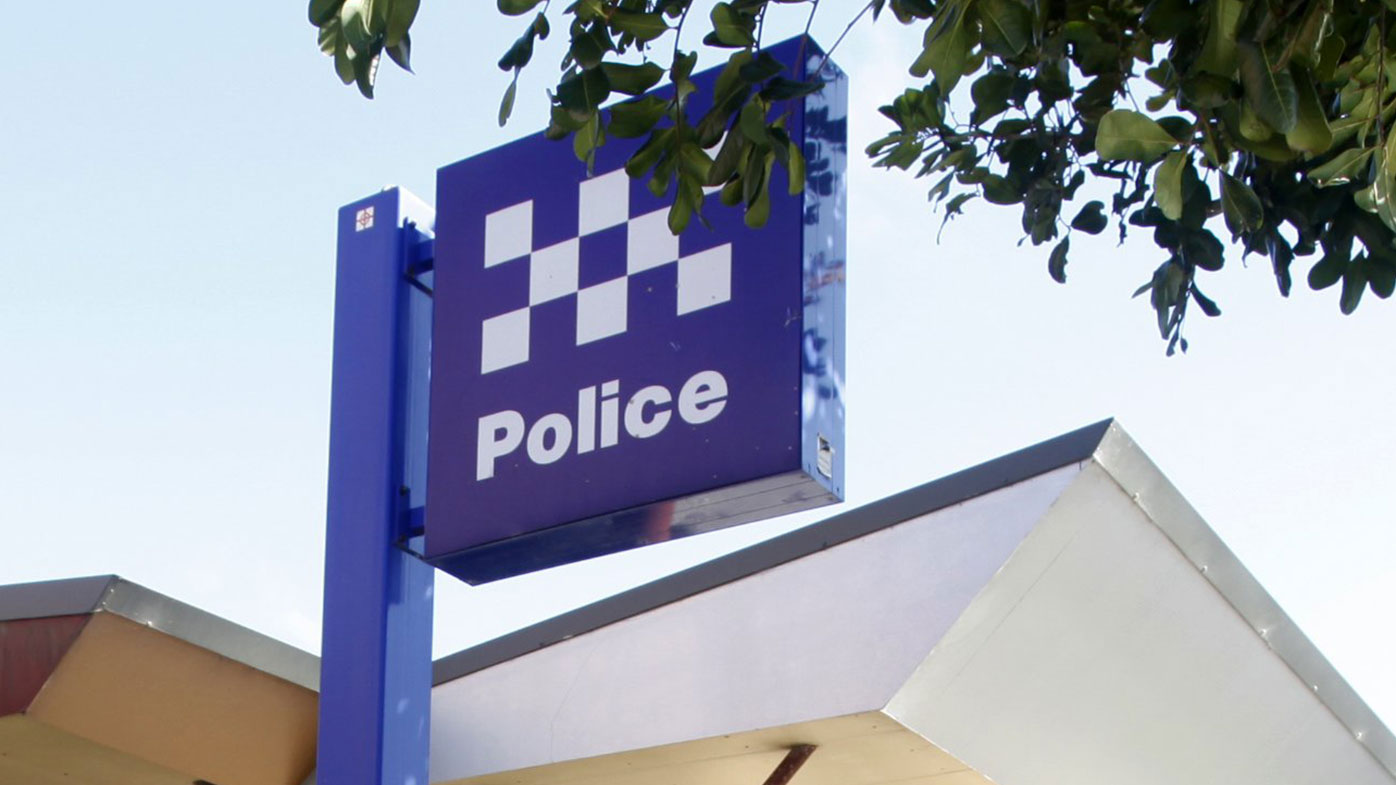
A NSW Police station.

In May, police officers started an investigation after reports a 15-year-old girl had allegedly been sexually touched by a man while at a hairdressing salon in Asquith.

During the investigation, it was established a 17-year-old girl was also allegedly sexually touched by a man while at the hairdresser.

On November 11, detectives conducted an extensive search of the hairdressing salon and seized a computer and documentation.

The items will undergo more examination.

The man who was charged was granted strict conditional bail and is set to appear at Hornsby Local Court on December 15.

Investigations into the alleged touchings are continuing.

Police find burnt-out car in relation to public shooting in Sydney's south

Police are investigating the link between a burnt-out car and a public place shooting in Sydney's south overnight.

Officers were called to Queens Road, Connells Point, after reports that shots had been fired just after 9pm yesterday.

Bullet holes in a home and a vehicle parked in the driveway were found by police.

READ MORE: What the most in-demand jobs in Australia are right now

Police investigating public place shooting in Sydney's south.

The two men in the home were uninjured.

A crime scene was established and specialist police searched the surrounding areas.

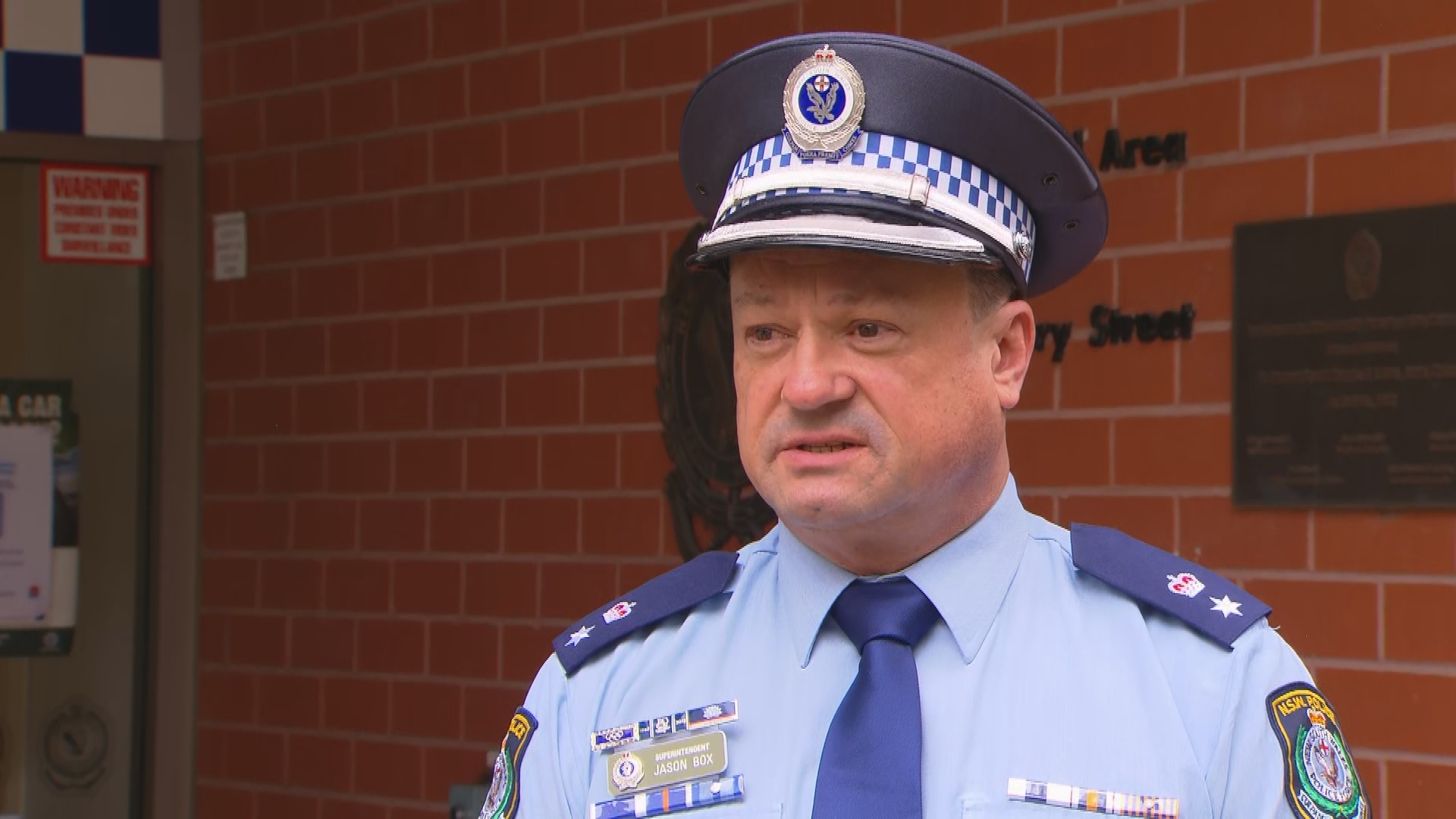
Detective Superintendent Jason Box said a vehicle seen near the home was found half an hour later.

"A vehicle seen in the vicinity of the shooting was located in South Hurstville was found burnt out," he said.

During the search of the vehicle, police uncovered a number of registration plates believed to be stolen or fabricated.

READ MORE: Sydney petrol prices reach record-high and expected to continue climbing

A burnt out car was found nearby the scene of the shooting.

Superintendent Box said there is nothing to link the occupants of the home to conflict in the area or Sydney region.

"Nothing at all to suggest the two male occupants of that premises are linked in any conflict or targeted for any reason."

Superintendent Box added the two men in the home are lucky to be alive, and could not rule out that it was a mistaken location.

"These two men are very lucky with the number of shots fired into the premises," he said.

Police are looking at CCTV from the area to try and determine the circumstances surrounding the shooting.

Investigations are continuing.

Anyone who has information is urged to contact Kogarah Police Station or Crime Stoppers.

Debate ignites over neutral pronoun included in French dictionary

It’s a neutral pronoun that’s proving anything but: a non-binary pronoun added to an esteemed French dictionary has ignited a fierce linguistic squabble in the country.

Le Petit Robert introduced the word “iel” — an amalgamation of “il” (he) and “elle” (she) — to its online edition last month.

While the term is gaining currency among young people, it is still far from being widely used, or even understood, by many French speakers.

READ MORE: NSW records drop in COVID-19 cases

Education Minister Jean-Michel Blanquer went to Twitter on Wednesday to say that "inclusive writing is not the future of the French language."

Though at first the change went mostly unnoticed, boisterous debate broke out this week in a nation that prides itself on its human rights tradition but that also fiercely protects its cultural heritage from foreign meddling.

In one camp are the traditionalists, including some political leaders, who criticise the move as a sign that France is lurching toward an American-style “woke” ideology.

In the other is a new generation of citizens who embrace non-binary as the norm.

“It is very important that dictionaries include the ‘iel’ pronoun in their referencing as it reflects how the use of the term is now well accepted,” said Dorah Simon Claude, a 32-year-old doctoral student who identifies as “iel.”

https://twitter.com/jmblanquer/status/1460644816677744640?ref_src=twsrc%5Etfw

“It is,” they added, “also a way of confronting the Academie Francaise that stays in its conservative corner and continues to ignore and scorn users of the French language.”

Education Minister Jean-Michel Blanquer is not in the same camp.

He went to Twitter on Wednesday to say that “inclusive writing is not the future of the French language.”

The 56-year-old former law professor warned that schoolchildren should not use “iel” as a valid term despite its inclusion in Le Robert, seen as a linguistic authority on French since 1967.

Francois Jolivet, a lawmaker from President Emmanuel Macron’s centrist party, also made his distaste plain.

Non-binary pronouns are, he suggested, a worrying sign that France is embracing a “woke” ideology.

Mr Jolivet wrote a letter to the bastion of French language, the 400-year-old Academie Francaise, claiming that Le Robert’s “solitary campaign is an obvious ideological intrusion that undermines our common language and its influence.”

The general director of Le Robert editions, Charles Bimbenet, jumped to the dictionary’s defence on Wednesday in a statement.

Far from dictating which terms should be used, he said, Le Petit Robert was elucidating the word’s meaning, now it is growing in currency nationwide.

Since “the meaning of the word iel cannot be understood by reading it alone,” Mr Bimbenet said, “it seemed useful to us to specify its meaning for those who encounter it, whether they wish to use it or … reject it.”

“Robert’s mission is to observe and report on the evolution of a changing and diverse French language,” he said.

Le Petit Robert introduced the word "iel" — an amalgamation of "il" (he) and "elle" (she) — to its online dictionary.

READ MORE: New $56m school opens in Sydney's south-west

In 2017, the Academie Francaise warned that moves to make French more gender neutral would create “a disunited language, with disparate expression, that can create confusion verging on illegibility.”

Gendered languages like French are seen as a particular hurdle for advocates of non-binary terms as all nouns are categorised as either masculine or feminine, unlike in English.

Not all European countries are moving at the same speed as France.

In Greece, where all nouns have not two, but three possible genders, there is no official non-binary pronoun, but groups who support them suggest using “it.”

In Spain, after former deputy prime minister and affirmed feminist Carmen Calvo asked the Royal Spanish Academy to advise on the use of inclusive language in the Constitution, its reply the next year was crystal clear: “Inclusive language” means “the use of the masculine to refer to men and women."

Nevis: Brandy-Williams Fetes International Men’s Day

The following is an address by Hon. Hazel Brandy-Williams, Junior Minister of Health and Gender Affairs in the Nevis Island Administration (NIA)

“At this time each year we pause to celebrate the men of Nevis on a day dedicated to them. International Men’s Day is recognized annually around the world on November 19th to acknowledge the cultural, economic, political and social contributions of men to their communities. We, the Ministry of Health and Gender Affairs, are always enthused to lead our local celebrations in support of the men of Nevis.

“The theme for International Men’s Day this year is, “Better Relations Between Men and Women.” This is fitting as, for too long, global discussions on gender have in a number of ways pitted us against ourselves in a battle of the sexes. If we are stronger together then we are definitely weaker apart.  

“With a focus on better relations between men and women we highlight the importance of each gender in our shared progress, and the fact that we need each other to thrive. After all, that which is good and bright in our country today is the product of men and women working together – affecting positive change, instilling and exemplifying values of respect, patriotism and industry, and nurturing the steady development of our bounded islands.

“We are extremely fortunate in our blessed island of Nevis to have men who stand as pillars of their community and treasures of our nation. They have gone above the call of duty, exemplifying the theme of Men’s Day 2021 – and they have done so through the arts, sports and fitness, volunteerism, spiritual guidance, philanthropy, community involvement among other areas. I want to congratulate these men, a number of whom we will formally recognised at our Awards Ceremony on November 30th for their sterling, selfless and salient contributions.

“In further commemoration of International Men’s Day, the Department of Gender Affairs is hosting a number of events throughout the month of November. These began with a church service on the 14th. On Tuesday November 16th we launched the Boys Mentorship Programme with a training session for mentors. This is an important social intervention that will provide for our boys’ positive role models who will guide them into becoming productive citizens and committed nation builders.

“On November 25th the Department will host its ‘Better Relations Seminar’ for men and women to deal with the socially significant topic of gender-based violence. On Saturday, the 27th we look forward to partner with the Department of Agriculture for this year’s edition of “Men Can Cook” the Grill Master Competition. This promises to be an exciting event for the family and will take place on the Villa Grounds. We are happy to announce that the champion of Men Can Cook this year will win a trip to represent our island in Florida in 2022.

“I invite you the general public to join us in celebrating the men of Nevis throughout the month of November. They are your fathers, uncles, brothers, cousins, and friends. Many go unnoticed. They face, in most instances, a tremendous struggle against the strong tide of negativity that exists in their daily reality; however, it was US President, John F Kennedy who said of his country’s mission to the moon, we do it ‘not because it is easy but because it is hard’.

“We therefore salute our men who stand as giants year after year out supporting their family, community and country. 

“I commend you. We commend you! Happy International Men’s Day 2021!”

The post Nevis: Brandy-Williams Fetes International Men’s Day appeared first on The St Kitts Nevis Observer.

Study finds millions with COVID-19 in the US may have lost their sense of smell

The COVID-19 pandemic has brought on an "emerging public health concern" of people losing their sense of smell, according to new research published on Thursday.

The research published in JAMA Otolaryngology-Head & Neck Surgery estimated that between 700,000 and 1.6 million people in the US who had COVID-19 have lost or had a change in their sense of smell that has lasted for more than six months.

This is likely an underestimate, the authors from Washington University School of Medicine in St. Louis said.

READ MORE: NSW records drop in COVID-19 cases
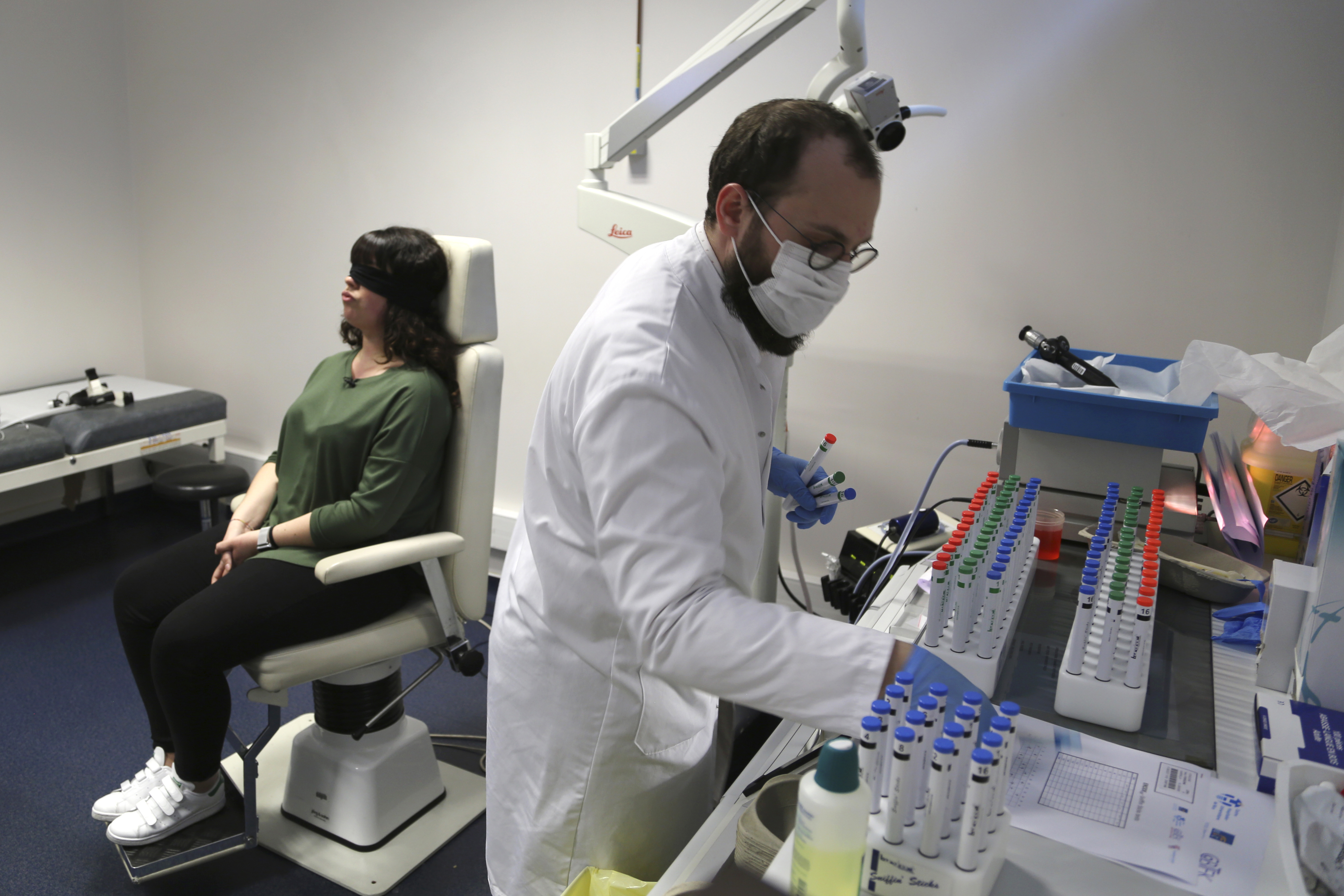
Dr. Clair Vandersteen, right, assembles tubes of odors to waft under the nose of a blindfolded patient, Gabriella Forgione, during tests in a hospital in Nice, France, on Monday, Feb. 8, 2021

The study suggests most people recover their sense of smell eventually, but some may never regain it.

The authors consider this a concern because, by comparison, prior to the pandemic, only 13.3 million adults age 40 and older had what scientists call olfactory dysfunction (OD) or chronic olfactory dysfunction (COD).

"These data suggest an emerging public health concern of OD and the urgent need for research that focuses on treating COVID-19 COD," the study said.

A study last year found that 72 per cent of people with COVID-19 recovered their sense of smell after a month, but for some, it is a much slower process.

"The long-term disease burden from this, we're literally going to be dealing with this for decades," according to John Hayes, director of the Sensory Evaluation Centre at Penn State's College of Agricultural Sciences.

Mr Hayes did not work on this study but has done research in the area.

He thinks the estimated number of people in the study with this problem is conservative and the issue could impact many millions more.

While a long-term loss of a sense of smell may sound trivial compared with other symptoms of long COVID-19, such as chronic fatigue or heart problems, not being able to smell can be dangerous, he said.
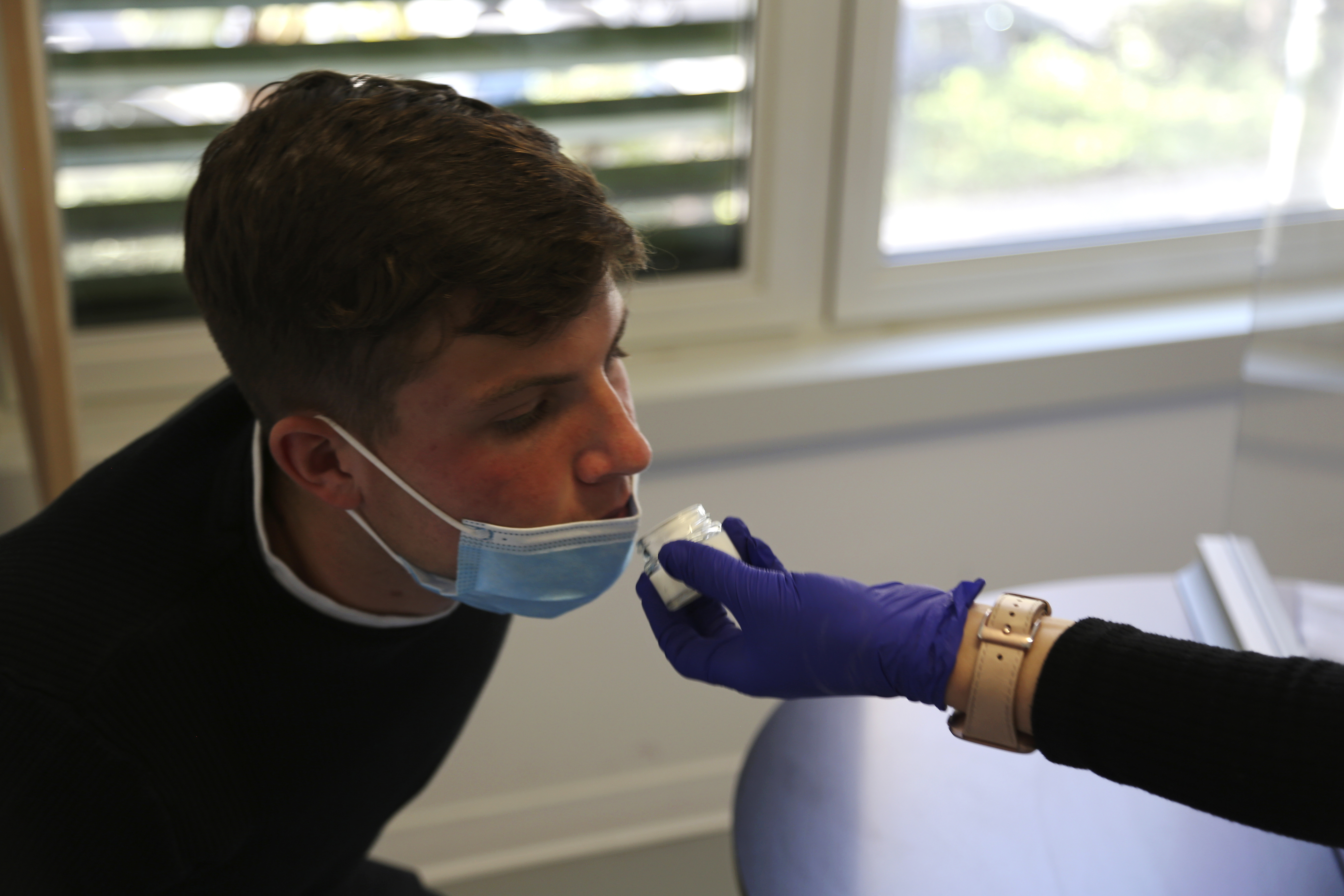
Evan Cesa, a patient, smells a small pot of fragrance during tests in a clinic in Nice, France, on Monday, Feb. 8, 2021.

READ MORE: Queensland PCR test requirement under review

A 2014 study found people who have lost their sense of smell were more than twice as likely to experience hazards such as eating spoiled food, as those who did have a sense of smell.

A loss of a sense of smell has also been linked to depression in earlier studies.

"It's really consequential to appetite and social relations, like people have lost their sense of smell may not be able to detect if they have body odour, and can impact diet too," Mr Hayes said.

Hayes said his research with COVID-19 patients has shown that they've experienced three different kinds of long-term olfactory disturbances.

Some lose or have a diminished sense of smell.

Some have a sense of smell that is off, where instead of flowers, for example, someone would smell stinky feet.

Others may have what Mr Hayes calls a kind of "phantom limb syndrome" for a sense of smell, where people smell things that aren't actually there, like a persistent chemical or burning smell.

Dr. Sandeep Robert Datta, a neurobiologist at Harvard Medical School who has been studying why people with COVID-19 lose their sense of smell, said this is an important line of research.

"We've never really had a formal estimate made of how many people have been struggling with this," Mr Datta said.

"This is a really unusual event in terms of olfactory dysfunction and an unprecedented consequence of a pandemic that's never really been observed before."
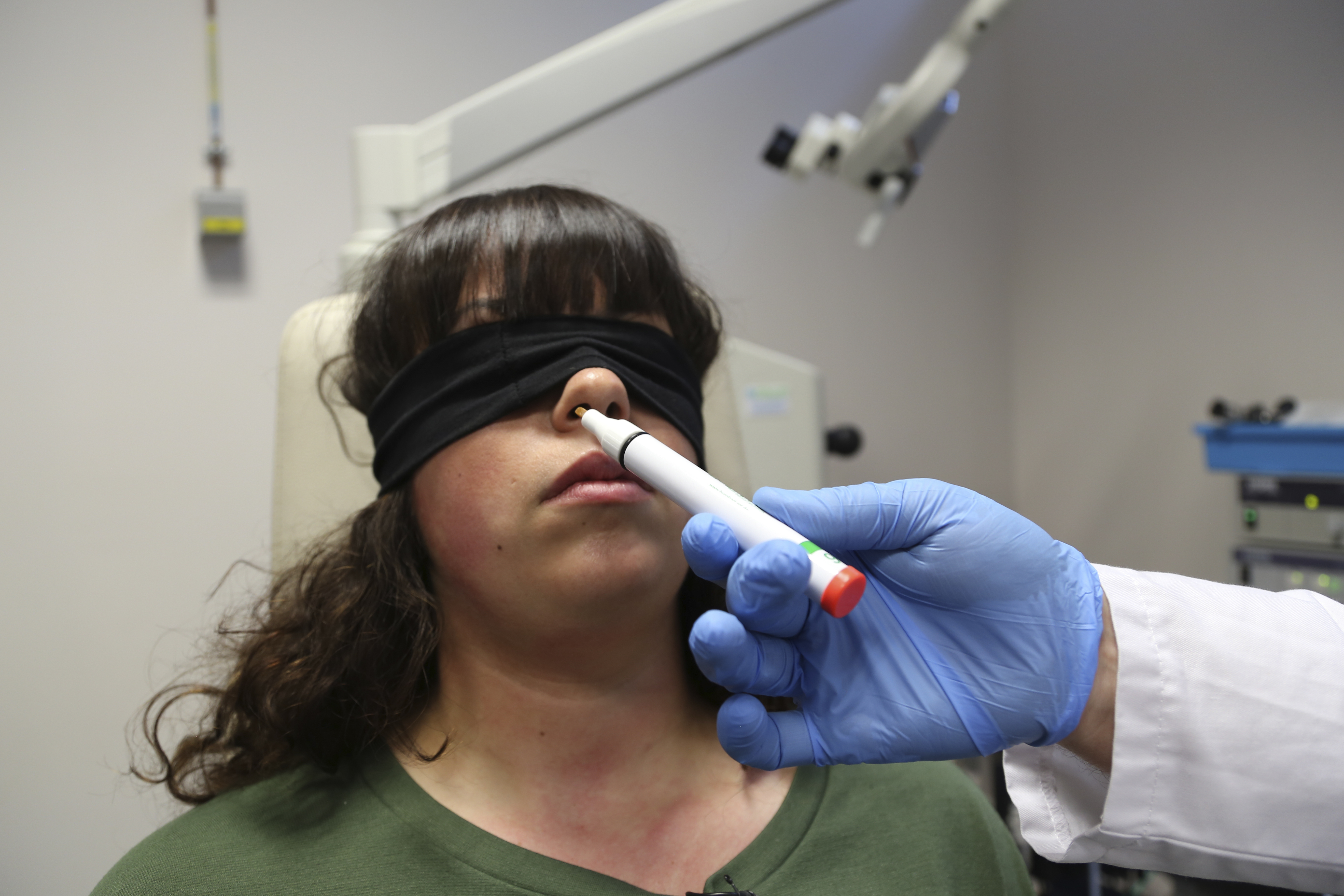
The hand of Dr. Clair Vandersteen wafts a tube of odors under the nose of a blindfolded patient, Gabriella Forgione.

READ MORE: Austria to enter lockdown, bring in mandatory vaccinations

Unless someone breaks their nose in an accident, or had some other kind of head trauma, it's unusual for younger people to lose their sense of smell, particularly from a virus.

As people age, some do lose some sense of smell.

One study found 60 to 70 per cent of people 80 years and older have some degree of smell dysfunction.

Other studies suggests it may impact fewer people, but this loss typically happens slowly over time; an acute loss is unusual.

Scientists are still trying to figure out why people with COVID-19 lose a sense of smell.

Dr Datta said the consensus seems to be that there is a disruption in the support cells in the nose.

He said it's unlikely that the neurons responsible for detecting odours are being directly attacked by the virus.

"After that, there's still a lot of mystery as to what's going on and in many labs, including my own, we continue to work on this problem," Dr Datta said.

Understanding how COVID-19 has warped someone's sense of smell will be important for scientists to determine how to help them regain it, if it doesn't come back on its own.

Some long COVID-19 clinics have been offering a kind of physical therapy for the nose and retraining people's sense of smell by exposing them to certain oduors so they can try and relearn them.

Studies show this can work for some people, but not everyone.

"I had a patient call me the other day and ask what could be done and honestly, I don't have any good recommendations yet," Mr Hayes said.