Category Archives: headline

COP26: Who Should Developing Countries Bill for Climate Impacts?

The countries hit hardest by climate change caused by developed nations want loss and damage to be included in climate finance talks. Will rich polluters finally listen?
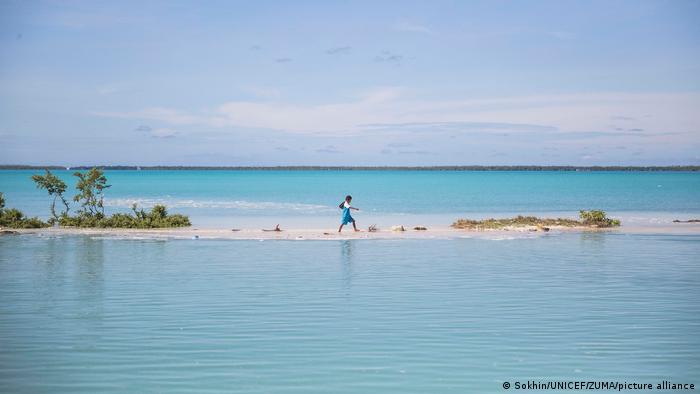
A child walking on a small strip of sand surrounded by water A boy walks from school to his house in Aberao village in South Tarawa. Kiribati is one of the countries most affected by sea level rise

As the world struggles to keep the planet from overheating, the issue of who pays for the fallout of climate change is one of the major sticking points in negotiations at the UN climate conference (COP26) in Glasgow, Scotland.

“Those who pollute are not being sanctioned,” Molwyn Joseph, Minister of Health, Wellness and the Environment for the Caribbean nation Antigua and Barbuda, told DW. “Those who pollute do not appear to be empathetic to the disaster that is faced by small island developing states as a result of the pollution.”

The effects of a hotter planet are already being felt today — droughts have wiped out entire harvests, flooding and supercharged hurricanes have destroyed people’s livelihoods and even entire islands have disappeared off the face of the Earth.

And countries most vulnerable to climate change are increasingly calling for funding commitments to address that harm ⁠— referred to in climate negotiations as loss and damage.

Broken promises

Current talks on climate financing, however, have mainly focused on helping countries develop their green economies, mitigate greenhouse gas emissions, and adapt to a warmer world. What hasn’t been properly addressed so far is the issue of loss and damage. Who picks up the tab when entire coastal communities have to be relocated, for instance?

“Small island developing states need to get a commitment that the issue of loss and damage will be dealt with in an urgent manner by this COP, and the process should start to see how the funding can be put in place,” Environment Minister Joseph said.

“Within the shortest time possible, so countries such as mine do not have to wait four years to recover from a disaster. We had a disaster in Barbuda in 2017. We’re still trying to recover and the government has been plunged into debt.”
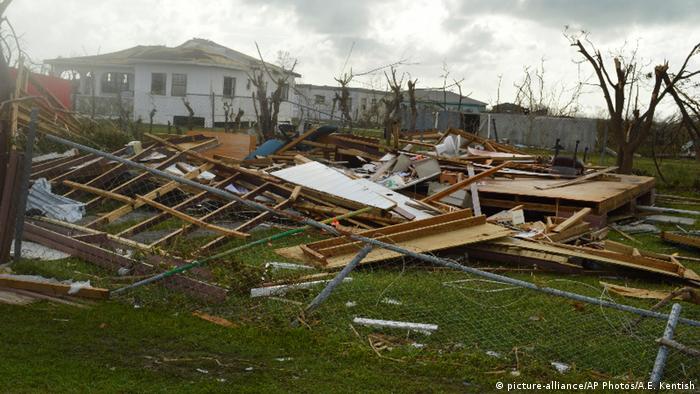
Property destroyed by a hurricane When hurricane Irma hit the Caribbean island of Barbuda in 2017, it wiped out 90% of all property

Money, money, money

The issue of loss and damage is by no means new, and has been addressed at previous climate summits. Eight years ago, COP19 in the Polish capital gave rise to what is known as the Warsaw International Mechanism for Loss and Damageas a way of helping vulnerable countries deal with the devastating impacts of climate disaster. Although it was reaffirmed in the Paris Agreement, developed countries are reluctant to make solid financial commitments. Article 8 of the mechanism clearly states that it “does not involve or provide a basis for any liability or compensation.”

The issue of loss and damage is controversial because countries fear they could be held liable for every extreme weather event. And that could become very expensive. Studies suggest the economic costs of loss and damage by 2030 could run to between $400 billion (€345 billion) and $580 billion per year in developing countries.

Climate change – What’s at stake?

The island nation of Fiji puts those costs even higher. “We should be looking at the order of $750 billion per year, of which 10% should be earmarked for small island developing states,” Satyendra Prasad, Fiji’s Ambassador and Permanent Representative to the United Nations, told DW.

More than 300 civil society organizations such as Climate Action Network, 350.org and Pan African Climate Justice Alliance sent an open letter to COP26 President Alok Sharma and world leaders, urging them to commit to delivering finance on loss and damage “on the basis of equity, historical responsibility and global solidarity, applying the polluter pays principle.”

Those in developing countries want firm agreement on how the financing will be sourced and channeled to countries suffering loss or damage.

“We are all calling for these global leaders not just to pledge, but to put the money on the table,” said Amath Pathe Sene, lead climate and environment specialist for West and Central Africa from the International Fund for Agricultural Development (IFAD). “I think how the way the world reacted to the global pandemic, and we acted quickly with billions of dollars, we should do the same for climate change.”
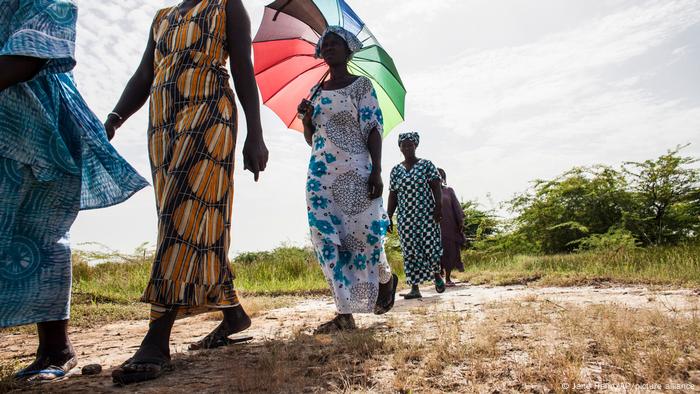
Women walking across an arid landscape Farmland has been destroyed by high salt content due to rising sea levels in Senegal

Activists have also warned that most climate finance currently comes in the form of loans.

“What they are often offering is going to create more debt in Global South countries,” Kenyan Fridays for Future activist Eric Damien Njuguna told DW. “It doesn’t recognize the historical role of Global North countries in causing the climate crisis. So, in the end, we are paying back for something we didn’t cause in the first place.”

Breakthrough talks at COP26?

There are many ideas on the table to help finance the sums of money needed to pay for loss and damage. Antigua and Barbuda’s Environment Minister Joseph suggests putting a levy on oil. “We have 90 million barrels of oil traded in the world per day. Even if you put a levy of $1 on a barrel of oil that could raise enough money to at least begin to address the issue of loss and damage,” he said.

Small island developing nations are also exploring other avenues, should negotiations fail. Joseph said Antigua and Barbuda has joined with the South Pacific Island nation of Tuvalu to look into the possibility of legal action.

“It is somewhat unfortunate it has to come to that, but you have a situation where enough has not been done. And then the small island developing states now have to look at the options that are available to them,” he said.

“We are being responsible global citizens. We are cleaning up our environment. And at the same time, we have been victims of the polluters.”

COP26 in Glasgow | Satyendra Prasad Dozens of communities had to be relocated because of climate change, says Fiji’s Ambassador Satyendra Prasad

While he says he has seen some positive signs and is cautiously optimistic, climate activists like Eric Damien Njuguna are skeptical. “This is the 26th COP — one too many. And all of them have been a failure. And to be honest, it wouldn’t be a surprise for this COP26 to be a failure, either.”

However, Fiji’s Ambassador to the UN, Prasad, says many countries are very committed to recognizing that the small island developing states are facing extreme climate crisis.

“Many countries have said to us in bilateral discussions and in larger meetings that they want to help us address that,” he said. “So let us see — we have a week to go.”

DW

The post COP26: Who Should Developing Countries Bill for Climate Impacts? appeared first on The St Kitts Nevis Observer.

A Film Producer in Paradise….MSR Media’s Big Plans for Nevis

MSR’ Media’s Philippe Martinez has extended a deal with St Kitts & Nevis, to shoot multiple feature films there over a three-year period.

Under the deal, struck with the premier of Nevis Mark Brantley, the Nevisian government provides access to locations on the island and accommodation support for cast. In return, MSR is augmenting the film industry on the island, including job creation and roles for local actors.

Christmas In The Caribbean starring Elizabeth Hurley is currently in production under the deal, while previous titles include comedies A Week In Paradise and One Year Off, and thriller Assailant.

MSR also produces from its UK base in York, making festive features such as Father Christmas Is Back, sold to Netflix; and My Dad’s Christmas Date, sold to Amazon Prime Video.

Martinez, talking to Screen Daily, answered a few questions about his operation’s plans for Nevis and the Federation.

How do you select the projects you make at MSR Media?

We have a department that receives scripts from writers. What’s key is to make screenplays that are what the platforms want. For independent producers, the business is coming down to Netflix, Amazon and some smaller platforms. Producers or sales agents don’t like to say this because they are afraid – they like to maintain the illusion that things are going well. The traditional formula of selling country by country just doesn’t work anymore; the distributors that we used to work with are facing an economical challenge, with Covid and the fact that Netflix and Amazon are now the main players.


A Week in Paradise First Look Cannes Malin Ackerman Phillip Winchester-3 (1)

Source: MSR Media      ‘A Week In Paradise’

What is the structure at MSR Media?

We have 50 people working permanently in the company – five in our US office on distribution, and 20 to 30 in the UK. The rest are on St Kitts and Nevis, where we’ve established a production company and shoot four movies a year.

Are UK crew moving there permanently?

Some go back to see families or for other reasons; we have very little turnover. When you’re a crew members and you know that you’re going to do four movies a year with a company, it’s safety in these uncertain times. I operate like a theatre company – I like to work with the same actors. It’s a good feeling to work with actors you know you can rely on.

What work are you doing to grow the Nevisian industry?

The island does not have a studio facility yet so we use the beautiful locations. We brought film equipment from the UK, and we opened an acting academy with 20 students, aged from 20 to 60+. To fly one person thousands of miles away for half a day of shooting doesn’t make sense so every time we have small speaking parts in these films, we use them [the local actors].

Are markets still important to the film industry?

It’s a cornerstone in the mentality of sales agents to say, “We have to prepare [for example] AFM.” But as a producer, I’m preparing my sales on a daily basis by talking to the platforms, and to the US distributors about what we want to develop for the next movie. For the past 30 years we used to go to markets and have one-to-one discussions with distributors. Now it’s all about zoom calls. But it’s just not the same. I don’t share the excitement about digital markets. Having a client from Italy on a zoom call? We do that all year long anyway.

Screen Daily

The post A Film Producer in Paradise….MSR Media’s Big Plans for Nevis appeared first on The St Kitts Nevis Observer.
SKN First in Eastern Caribbean to Exceed Covid-19 Vaccination Target

Economic Times– The Federation of St Kitts and Nevis is the first in the region to reach a vital vaccination milestone. As of now, over 72 percent of the adult population and over eight percent of the target population of children between 12 to 17 years are fully vaccinated. This exceeds the World Health Organisation (WHO)’s benchmark of ensuring 40 percent of a country’s population is vaccinated.

The high vaccination rate is an essential milestone for the Federation as the virus continues to wreak havoc in the health and economic sectors around the world, said the country’s medical official Dr Cameron Wilkinson.

“Earlier this year, [St Kitts and Nevis was] recognised as the nation with the lowest risk of COVID-19 in this part of the hemisphere, and we can earn that recognition again once we continue to increase vaccination coverage and use non-pharmaceutical products to protect us,” he added.

To strengthen the country’s health sector and fight the pandemic, the government has spent over EC$18 million (US$6.7 million), said Prime Minister Timothy Harris last month.

He also said that the country would spend an additional EC$5 million (US$1.85 million) on such health initiatives by the end of the year, bringing the government’s total COVID-related expenditure to more than EC$23 million (US$8.5 million).

As a small island nation, a large part of St Kitts and Nevis’ economy relies on tourism revenue. When COVID-19 spurred international border closures and lockdowns, bringing tourism to a halt, important initiatives like Poverty Alleviation Programme.

“St Kitts and Nevis entered the Covid-19 pandemic from a position of fiscal strength following nearly a decade of budget surpluses. A significant part of the large CBI revenues was prudently saved, reducing public debt below the regional debt target of 60 percent of GDP and supporting accumulation of large government deposits,” a recent IMF report stated.


The post SKN First in Eastern Caribbean to Exceed Covid-19 Vaccination Target appeared first on The St Kitts Nevis Observer.

Analysis: Big U.S., Brazil Harvests, Slow China Demand, Ease Crop Shortage Fears

CHICAGO/NEW YORK, Nov 8 (Reuters) – Big U.S. harvests, near-perfect weather for planting in Brazil and signs of slowing purchases by top buyer China are bolstering supplies of two of the top globally traded commodities: soy and corn.

The rising stocks indicate that prices for those key crops, as well as for other staples such as sugar and coffee, may have peaked after the surge sparked by the onset of the pandemic, farmers, brokers and analysts said.

Lower crop prices would be good news for consumers after global food prices soared to the highest level in a decade, according to the United Nations food agency. read more

Dwindling supplies and strong global demand for crops over the past 18 months drove food inflation and spurred fears of shortages.

Cheaper soy and corn would lower the cost of feeding livestock used to produce meat, which has been out of reach for many people during the COVID-19 pandemic. But falling prices could threaten farmers’ profits, especially after seed and fertilizer companies raised prices on crop inputs.

Since topping out at near-decade highs in May, Chicago Board of Trade soybean futures have fallen 27% while corn futures fell 24% as near-perfect growing conditions across broad swaths of the United States led to a bountiful harvest.

But with the northwestern United States and Canada still reeling from a historic drought and dry weather potentially continuing there due to the La Niña climate phenomenon, prices of oats, wheat and canola are poised to remain high, meaning food inflation is far from over. Wheat futures recently surged to a nine-year top.

The market for soybeans is under the most pressure, as rising supplies and concerns about a cooling of Chinese demand are pushing prices lower.

After finishing the 2021 harvest of what he called a bigger-than-average soybean crop on the 3,600-acre farm he operates in Woodhull, Illinois, Drew DeSutter booked some sales on soybeans he will deliver to grain dealers in 2022 in case the market declines by the time that crop, which he has not even planted yet, matures.

“I do not think it is a bad idea for farmers to set some prices on next year’s crop,” DeSutter said.

The U.S. Agriculture Department (USDA) raised its outlook for world supplies of soybeans every month since it gave initial projections for the current marketing year in May. If the current forecast of 104.57 million tonnes is realized, that would be the second-biggest world soybean stocks record.

China, the top global buyer of soybeans, has slowed purchases in recent months due to poor margins crushing soy into meal and oil to feed livestock. Analysts say shipments to China in 2021 might be less than 100 million tonnes due to a collapse in hog sector profitability and a sharp rise in the use of wheat for animal feed. read more

Even prices of vegetable oils including palm oil, which surged due in part to a labor shortage in Malaysia, have begun to show weakness, with palm oil posting losses in three of the last four weeks. But soy and canola oil have been in high demand for biodiesel, as companies transition to greener fuel. read more

While poor weather, has cast doubt on the state of China’s corn crop, the USDA and private analysts expect China to import less of the grain than it did last year. Global corn supplies were seen rising 4.1% in the 2021/22 crop year, according to USDA data.

China was set to import 20 million tonnes of corn in the 2021/22 year, down from 29 million tonnes in 2020/21, an analyst from a Chinese government institute said in late September.

“Given the current balance of supply and demand, I believe that the higher prices are behind us,” said Camilo Motter, a grain broker in Brazil, the top global producer of soybeans, sugar and coffee.

IDEAL PLANTING WEATHER

Argentina, projected to be the world’s third-largest corn supplier and fourth-largest supplier of soy this year, is expected to produce a record corn crop and a larger soybean crop than last year, according to the Buenos Aires Grains Exchange.

After a rough growing season, Brazil has had ideal weather for planting its next crop – long stretches of dry days for field work followed by ample rains that helped shepherd crops through the early stages of development.

In Brazil’s coffee belt, the largest amount of rain for the month of October since 1983 fell, after farmers struggled with the worst drought in nearly a century earlier in 2021. Although some damage was already done to plants by frosts and drought, market players believe the ample moisture could give next year’s crop a large boost.

Montesanto Tavares Group, a large coffee producer and processor in Brazil, expects a near-record crop in 2022.

“The abundant rains from the last 20 days brought breath to farmers,” Montesanto Tavares Group said.

Benchmark sugar prices on the ICE exchange touched a 4-1/2-year peak on Oct. 11 amid signs of renewed demand from China in a period when Brazil production data confirmed a dismal crop in the world’s top grower after a harsh drought.

But the long-term supply outlook seemed to improve since, analysts say, due to the weather in Brazil and good prospects for the upcoming harvest in India and Thailand, the other two large global players. Market speculators have begun to slash their long sugar position, an indication that their year-long bets on rising prices might be ending.

“With the market range-bound and upside potential deemed to be limited, speculators have probably decided to take their profits and deploy their funds elsewhere,” a European sugar trader said.

WHEAT, CANOLA REMAIN TIGHT

In the northern U.S. Plains, farmer Doyle Lentz managed to squeak through this year’s drought with a surprisingly big soybean crop but faced shortfalls in canola and spring wheat production due to the dry soils. For next year, he has booked some sales of soybeans but was holding off on canola and wheat contracts due to uncertainties about prices of fertilizer and other inputs.

Lentz said he would not be able to turn a profit on canola at current prices and would need a further rally before he committed any acres to that crop.

“We are going to have to spend a lot more time with the calculators and when we get to some point where we can make a profit we will have to lock that in,” said Lentz, who has a 6,000 acre farm in Rolla, North Dakota.

In the Canadian Prairies, the severe drought that shrank production of grains and canola is likely to extend into 2022, said Colin Laroque, professor of soil science at University of Saskatchewan.

The La Niña weather phenomenon usually means cold, dry weather for the Prairies, at least into February, he said. It would take a deluge of rain in spring to counter the drought and restore soil moisture, but a soaking on that scale would make it difficult to plant crops, he added.

“Generally, multi-year drought means a multi-year recharge,” Laroque said. “A quick solution is never a good solution.”

Reporting by Mark Weinraub in Chicago and Marcelo Teixeira in New York Additional reporting by Naveen Thukral in Singapore, Hallie Gu in Beijing, Ana Mano in Sao Paulo, Rod Nickel in Winnipeg and Maximilian Heath in Buenos Aires Editing by Caroline Stauffer and Matthew Lewis

The post Analysis: Big U.S., Brazil Harvests, Slow China Demand, Ease Crop Shortage Fears appeared first on The St Kitts Nevis Observer.

WORLD VIEW: US Opens Border, Nicaragua Election, Israel Wall, German COVID Deaths, More

Nov. 8, 2021

Alternate text
  • The U.S. lifted restrictions Monday on travel from a long list of countries including Mexico, Canada and most of Europe, allowing tourists to make long-delayed trips and family members to reconnect with loved ones after more than a year and a half apart because of the pandemic.
  • Fresh from his victory in winning the passage of the $1 trillion infrastructure bill, President Joe Biden must now see that the funds are spent so that Americans can feel a real impact.
  • In Nicaragua, provisional vote totals are expected in elections where President Daniel Ortega is seeking a fourth consecutive term in polls the United States has called a “pantomime” following the jailing of his top rivals.
  • And in the Middle East, nearly two decades after Israel sparked controversy by building a barrier on the border with Palestine, it has become a seemingly permanent feature of the landscape — even as Israel encourages its citizens to settle on both sides.
  • The magic 1.5: What’s behind climate talks’ key elusive goal.
  • German COVID infection rate at new high as vaccinations slow.
  • Tight harmonies credited for making Carpenters’ songs worldwide hits.

ANDREW MELDRUM

Africa News Editor

JOHANNESBURG

The Associated Press

The RundowoI'm an image

The U.S. lifted restrictions Monday on travel from a long list of countries including Mexico, Canada and most of Europe, allowing tourists to make long-delayed trips and family members to reconnect with loved ones after more than a year and a half…Read More

I'm an image

REHOBOTH BEACH, Del. (AP) — He has been here before. President Joe Biden doesn’t need to look any further back than his time as vice president to grasp the challenges that lie ahead in promoting his new $1 trillion infrastructure deal to the Ameri…Read More

I'm an image

QAFFIN, West Bank (AP) — Three days a week, Palestinian farmers in the occupied West Bank village of Qaffin line up at a yellow gate and show military permits to soldiers in order to tend their crops on the other side of Israel’s separation barrie…Read More

I'm an image

MANAGUA, Nicaragua (AP) — Nicaraguan President Daniel Ortega sought a fourth consecutive term in elections the United States has called a “pantomime” following the jailing of his top rivals and the country’s opposition has urged voters to boycott….Read More

I'm an image

HOUSTON (AP) — Investigators are expected to examine the design of safety barriers and the use of crowd control in determining what led to a crush of spectators at a Houston music festival that left eight people dead and hundreds more injured. …Read More

OTHER TOP STORIES

BERLIN (AP) — Germany’s coronavirus infection rate climbed to its highest recorded level yet on Monday as what officials have called a “pandemic of the unvaccinated” gat…Read More

Glasgow, Scotland (AP) — One phrase, really just a number, dominates climate talks in Glasgow, Scotland: The magic and elusive 1.5. That stands for the international go…Read More

LOS ANGELES (AP) — “Every sha-la-la-la, every wo-o-wo-o still shines,” the Carpenters’ sang in “Yesterday Once More,” their hit 1973 tribute to the songs of the past. It…Read More

TEMPE, Ariz. (AP) — A fox joined the Trojans and Sun Devils on the field. The Pac-12 game Saturday night between Southern California and Arizona State was briefly delaye…Read More

The post WORLD VIEW: US Opens Border, Nicaragua Election, Israel Wall, German COVID Deaths, More appeared first on The St Kitts Nevis Observer.

Spurred by Reopening, More Migrants Head for U.S.-Mexico Border

TIJUANA, Nov 7 (Reuters) – Emboldened by news that the United States and Mexico will reopen shared land-border crossings, hundreds of migrants have arrived at Mexican border cities like Tijuana, hoping the reset will make it easier to cross and seek U.S. asylum.

Starting on Monday, the nearly 2,000-mile (3,200-km) border will be open again to non-essential travel after a 20-month closure aimed at curbing the spread of COVID-19. Both countries have succeeded in lowering new infections and vaccinating border communities.

Another drive to enter the United States could increase pressure on Washington to tighten the border after a jump in migrantsthis year from troubled areas of Central America and the Caribbean tested President Joe Biden.

“I’m going to try. We want to get across the border. I can’t be in Mexico anymore. There’s a lot of violence here,” said Andrea Morales, a Guatemalan who has been living in a makeshift camp for a month next to Tijuana’s El Chaparral border crossing.

“Four days ago, the government took away our lights and fenced us in like animals. I put my faith in God so I can cross and give my kids a better life,” Morales said as she stood nursing her baby amid dozens of tents.

Local authorities angered migrants last week when they threw away tents and other belongings that had been left in the camp they have occupied since February.

‘MISINFORMATION’

Migrant advocates say many people have been misled about what the border restart means for their asylum prospects.

“There’s a lot of misinformation. We have explained to them that the reopening of the border is for people who have papers, a visa, to cross and it’s not a reopening for people to cross and ask for asylum and humanitarian aid,” said Jose Garcia, head of migrant shelter Movimiento Juventud 2000 in Tijuana.

“They haven’t listened to us and they don’t want to wait,” he added, saying the number of migrants in the shelter had risen by a third since the reopening was announced on Oct. 15.

Mexicans are also arriving.

Many migrants in Tijuana said they were fleeing violence in Mexican states such as Michoacan and Guerrero, and aimed to cross on Monday to ask for asylum.

In 2020, 9,700 Mexicans were displaced by violence, a jump of over a third from the previous year, according to the Geneva-based Internal Displacement Monitoring Centre.

The pandemic, along with a surge in U.S. asylum requests, has meant thousands of migrants spend months in Mexico waiting for a response to their petitions or just a chance to file them.

“I never left with the intention of staying in Mexico. It’s like Honduras,” said Augusto Martinez, a Honduran who arrived in Tijuana three weeks ago with his wife and five children. “We’re definitely going to try and cross.”

Reporting by Lizbeth Diaz; Editing by Dave Graham and Peter Cooney

Our Standards: The Thomson Reuters Trust Principles.

The post Spurred by Reopening, More Migrants Head for U.S.-Mexico Border appeared first on The St Kitts Nevis Observer.

Brazil: Tribal Chief Warns Welsh Soya Imports Wrecking Indigenous Lifestyle

BBC- A Brazilian tribal chief has warned Welsh soya imports could be responsible for “not only deforestation but indigenous blood”.

Rivelino Verá Gabriel said soy farming was wrecking the lifestyle of the South American nation’s Mbya Guarani people.

It comes as the effect on deforestation by goods imported to Wales from high risk areas is exposed in a new report.

It has led the Welsh government to promise action on products such as beef, soy and palm oil.

Mr Gabriel lives in Brazil’s Atlantic Forest and is a coordinator of the Guarani Yvyrupa Commission, which brings together members of the Guarani people.

Commenting on the report, he said: “People who buy soya must know where it comes from, that there’s strong traceability.

“They need to know whether this soya they’re buying to feed a chicken from Wales, for instance, is coming from deforested areas in indigenous territories.”

Deforestation meant the ability of his people to survive was becoming increasingly hard, he said.

Rivers became polluted, traditional herbs could not be found, and hunting was made more difficult.

Environment charities calculated an area 40% the size of Wales grew a handful of key commodities for it.

It has led to calls for climate change targets to be amended to take account of goods shipped in from abroad.

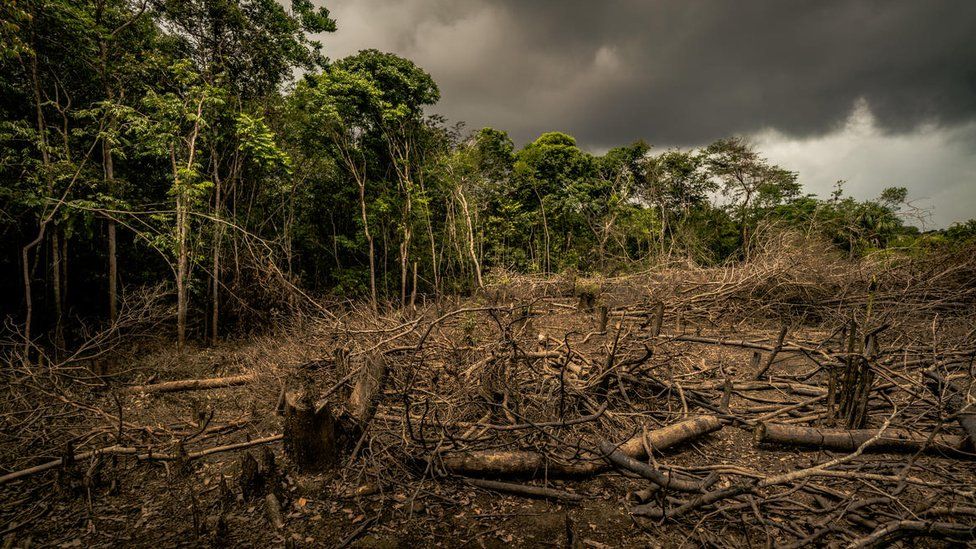
deforestation
The effect on deforestation by goods imported to Wales has been exposed in a new report

What does the report say?

Charities WWF Cymru, Size of Wales and RSPB Cymru worked on the study.

They looked at cocoa, palm, beef, leather, natural rubber, soy, timber, pulp and paper imports.

The report showed nearly a third of land used to grow these for Wales are in countries at high risk of deforestation, and exploitation of workers.

Carbon emissions linked to forest clearance to provide soy, cocoa, palm and rubber imports alone were equivalent to nearly a quarter of Wales’ transport emissions every year.

An area five times Newport’s size is used to grow soy for Wales.

The charities said Wales’ people were contributing to deforestation by eating meat fed on such “high-risk soy”.

Meanwhile, each year Wales uses land overseas the size of the Brecon Beacons to satisfy demand for beef.

More than a quarter (26%) is in countries at high risk of deforestation and labour exploitation.

What can Wales do about deforestation?

The report advises the Senedd to encourage farmers to adopt nature and climate-friendly practices which do not rely on imported animal feed.

A strategy that drives and rewards traceable farm-to-fork supply chains is also urged.

The charities want the Welsh and UK governments to ensure post-Brexit trade deals guarantee high environmental and social standards.

Newport
,

An area five times Newport’s size is used to grow soy for Wales

Current Welsh targets to cut greenhouse gases and reach net zero only focus on domestic emissions so there is a drive for a report that accounts for those caused by imports.

WWF Cymru’s Shea Buckland-Jones said Wales was having a “catastrophic” effect on the world’s forests.

“We know what needs to be done and this report sets out some of the solutions,” he said.

“Wales must act now by changing how we buy, consume and invest.”

Size of Wales’ deputy director, Barbara Davies Quy, said the COP26 summit was a chance for Wales to show leadership and take bold action.

“The Welsh government must seize this opportunity to drive positive change in our supply chains and commit to including deforestation free targets in all public sector spending,” she said.

In COP26’s first major deal last week, more than 100 leaders promised to end and reverse deforestation by 2030.

The UK was among signatories. The charities say action is needed sooner.

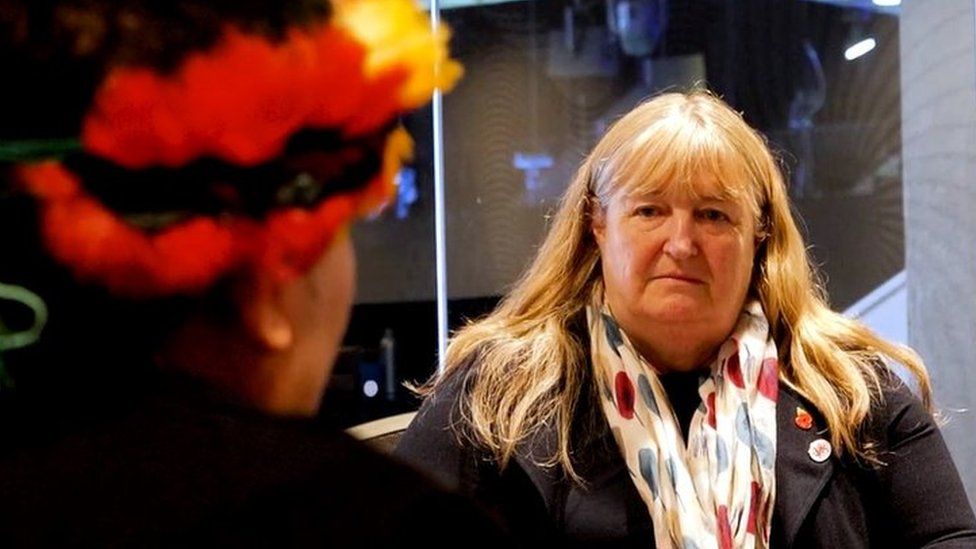
Julie James met with members of Peru's indigenous Wampis people
Welsh government minister Julie James said she was determined to change Welsh government procurement policy

Figures suggest almost 20% of the Amazon rainforest has been lost and, if another 5% goes, a tipping point could be triggered where it will not be able to sustain itself as a tropical rainforest.

Wales’ climate change minister, Julie James, said the report was “shocking”.

“We absolutely have to do something to diminish and hopefully eliminate our footprint abroad as well as at home.”

She was “absolutely determined” to change Welsh government procurement policy.

“We will also need to talk to all of our supermarkets and other purchasers across Wales to get everybody on board,” she said.

Ms James said she had met with members of Peru’s indigenous Wampis people at the conference.

“They were telling me about the destruction of their native lands, the deforestation, completely unintended by people who don’t really understand what they’re buying,” she said.

Changing climate change targets, she said, was something the Welsh government was “determined to do”.

Aled Hill of burger restaurant Ansh
Cook Aled Hill said people should question where produce comes from


Cardiff burger restaurant Ansh has started taking action.

The meat for its burgers comes from their farm, where it uses sustainable methods to rear their animals.

“It’s important that people question where produce comes from, where the meat comes from, where the food comes from,” cook Aled Hill said.

“Because you don’t know whether something you buy is causing huge damage overseas.”

The post Brazil: Tribal Chief Warns Welsh Soya Imports Wrecking Indigenous Lifestyle appeared first on The St Kitts Nevis Observer.

WA skipper and father-of-two remembered as 'a fantastic guy'

Skipper and father-of-two Paul Norris was out on the water where he loved to be when he was taken in a boating tragedy.

A major search effort resumed this morning after the skipper's boat, which was carrying four passengers, hit trouble in the Kimberley region of Western Australia on Sunday afternoon.

The 6.4m vessel, which had two men, one woman and two girls onboard, overturned in Airport Creek, a tidal river system 5km south-west of Derby.

READ MORE: Eastern states brace for week-long drenching

Those who were out with him safely made it back to shore.

"It's such a tragic loss, he was a fantastic guy and he was a great father," Derby Shire president Geoff Haerewa said.

The alarm was raised yesterday afternoon, when the boat hit a sandbar at Airport Creek near Derby.

READ MORE: Mum locked out of Queensland has to 'exchange' kids at border

Dead body feared missing skipper of capsized WA boat

That's when the search effort began in the sky and on the water.

"A helicopter that had been deployed to the search area located the boat upside down on the bank, about 10km south of where it was initially reported getting into trouble," WA Police senior sergeant Brendan Barwick said.

Cr Haerewa said the tides in the area could be treacherous.

"But Paul was a sound fisherman, a sound skipper, where Paul went he went there often," he said.

The well-known businessman was on board with his two young daughters, partner and a friend, all of whom were found uninjured by locals last night.

This morning, almost a day later, police made discovered what they believed to be Mr Norris' body, 1km from the boat.

The Derby community is in shock, as many of them had been out looking for their mate.

READ MORE: NSW wakes to new freedoms as path out of lockdown accelerates

Dead body feared missing skipper of capsized WA boat

"There's not a dry eye in the house there," Senior Sergeant Barwick said

The 51-year-old has been remembered as someone who'd give anyone a helping hand.

"He probably spent more hours volunteering than he did actually doing work and he'll be greatly missed," Cr Haerewa said.

Marília Mendonça: Popular Brazil Singer Dies in Plane Crash at 26

Marília Mendonça, one of Brazil’s most popular contemporary singers, has been killed in a plane crash at the age of 26, officials say.

Four other people – her uncle, her producer and two crew members – also died in the accident in a rural area in south-eastern Minas Gerais state.

An investigation has been launched to determine the cause of the crash.

A Latin Grammy winner in 2019, Mendonça became famous for focusing on women’s experiences with failed relationships.

One of the biggest names of Brazilian country music known as sertanejo, Mendonça started her career as a teenager, and became a national star in 2016 with a hit about infidelity. She was known as the country’s “Queen of Suffering”.

Last year, as concerts were cancelled because of the pandemic, she performed in a series of online gigs. One of them set the record of the most-watched live stream in the world, with 3.3 million peak viewers on YouTube.

In 2020, she was the most listened to artist in Brazil on Spotify.

Mendonça, who had a two-year-old son, was set to perform at a concert on Friday evening in the city of Caratinga, 12km (seven miles) from the crash site. Hours before the accident, she posted a video on social media in which she prepared to board the private aircraft.

The post Marília Mendonça: Popular Brazil Singer Dies in Plane Crash at 26 appeared first on The St Kitts Nevis Observer.