Considered one of the most popular celebrations in Mexico, the Day of the Dead takes place every year on November 1 and 2.
Category Archives: headline
Shot fired at police during burglary at Palmerston North address
By RNZ A man who shot at police called out to a burglary at a Palmerston North address last night is still at large.Police were called after reports of a burglary at an address on Vogel St at about 9.40pm.Two men were seen…
New South Wales inching closer to 90 per cent double dosed vaccination target
New South Wales is close to hitting the 90 per cent double dosed vaccination milestone.
Currently at 89.4 per cent of people over the age of 16 are fully vaccinated.
93.8 per cent of people over 16 have received their first dose of the vaccine.
READ MORE: Greta Thunberg slams COP26 as a 'failure' at youth protest in Glasgow
https://twitter.com/NSWHealth/status/1456743597923962882?ref_src=twsrc%5Etfw
It comes as the state recorded 271 new cases of COVID-19 and three deaths.
Of the new cases 270 are local, while one is a returned overseas traveller.
One dead in Canterbury crash, motorcyclist airlifted to hospital after Auckland smash
Separate crashes this morning have left one person dead in Canterbury and two people airlifted to hospital in Auckland. A crash on State Highway 1 this morning in Rakaia, Canterbury, involving a pedestrian and a vehicle around 6.30am…
Cancer teen Jemima Gazley's legacy boosted by Wellington Phoenix auction
Wellington Phoenix is auctioning off two playing kits to boost the funds raised by “selfless” teenager Jemima Gazley, who died of brain cancer last month . Diagnosed with an inoperable brain tumour known as DIPG in February, 15-year-old…
'Folk hero' Breaker Morant and comrades recognised after 120 years
One of the most controversial episodes in Australian military history has taken a new turn, 120 years on.
Three Boer War veterans – including the famous Harry 'Breaker' Morant – who were convicted in disputed circumstances of shooting prisoners – have been posthumously awarded military service medals.
British-born Morant and Australian co-accused Peter Handcock were executed in 1902 after they admitted to killing prisoners under orders.
READ MORE: Treasured World War II relics discovered in backyard
Another Australian, George Witton, was also sentenced to death, but had his sentence downgraded to life in prison.
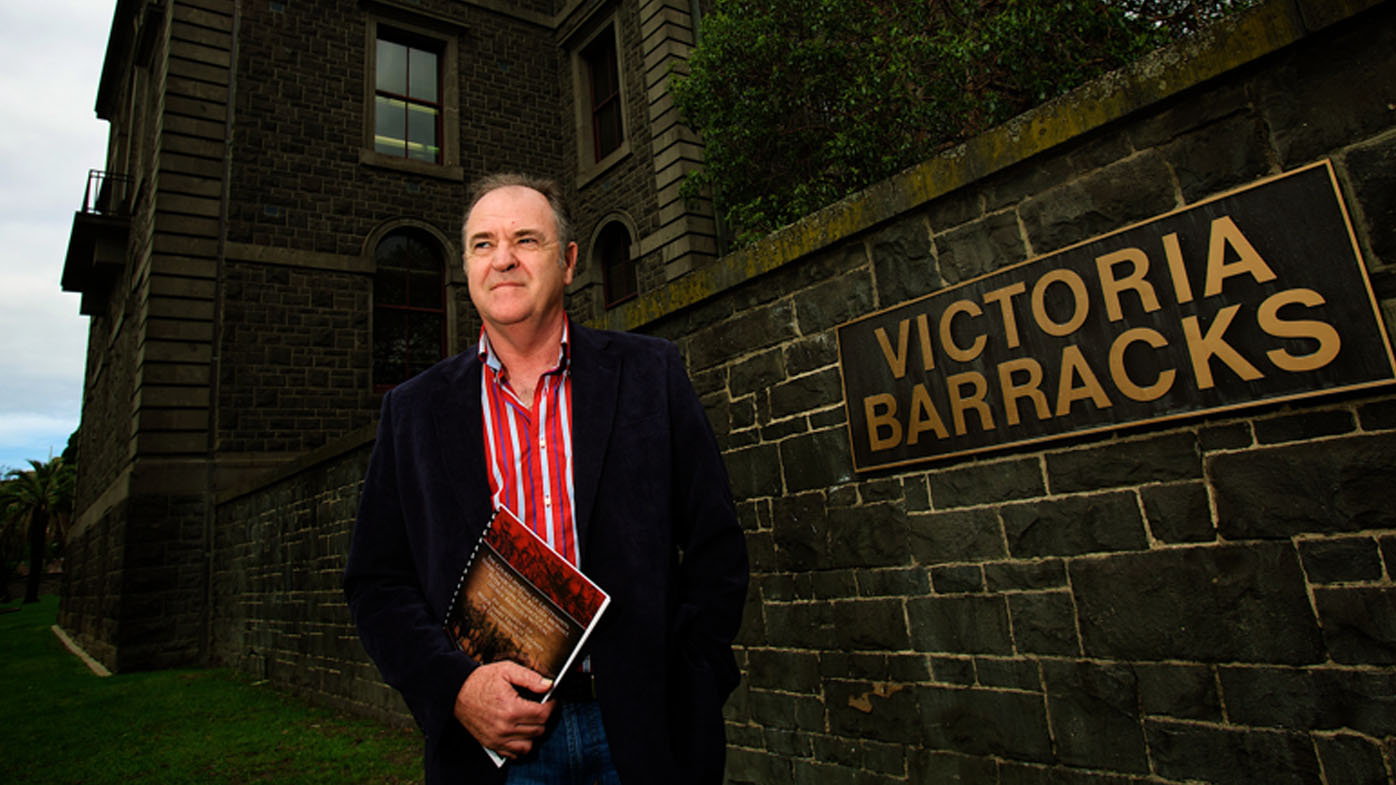
Australian military lawyer James Unkles has been working on the case pro-bono for 10 years on behalf of the trio's descendants.
He told Nine.com.au his campaign has the support of top lawyers and federal MPs.
"I have advocated for an independent inquiry into the substantial evidence I've uncovered which has been validated by so many QCs," Mr Unkles said.
"They all sing with the same song, and that is this case wreaks of a gross injustice, that these men were not tried and sentenced according to law."
Who was 'Breaker' Morant?
Harry Morant is believed to have been born in Somerset, England, in 1864. He settled in Queensland in 1883, where he established a reputation as a horseman, earning the nickname 'Breaker'.
In 1900, after the British Empire declared war on the Boer republics in South Africa, Morant joined an Australian regiment and soon saw action.
Two years later he was posted to the Bushveldt Carbineers military unit, as the conflict between the Boer guerilla forces and British-led troops became increasingly bitter.
While leading a patrol in the northern Transvaal in August 1901, Morant ordered the execution of a group of Boer prisoners.
Morant, Handcock and other officers were arrested and court-martialed for the killings.
READ MORE: Drought reveals ancient boomerangs hidden in Cooper Creek
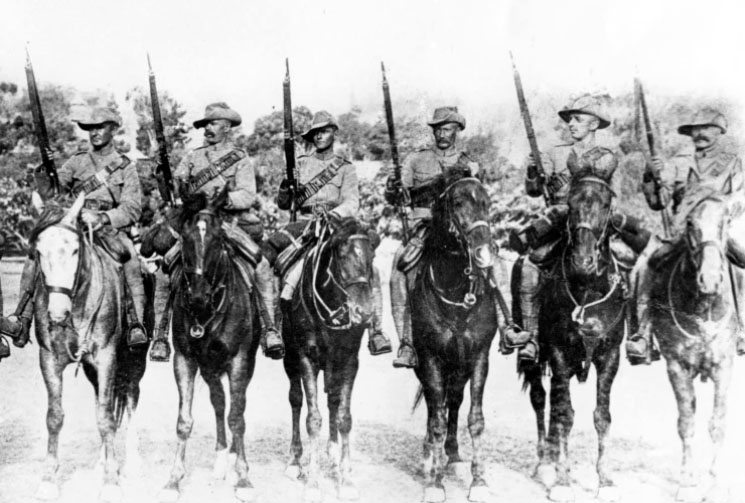
Their Australian lawyer maintained the soldiers were acting under orders from senior British commanders.
There was also claims the army's high command applied pressure for the soldiers to be found guilty and used as scapegoats for the shootings.
Handcock and Morant were executed by firing squad in February. 1902. Witton was given a life sentence and released four years later.
Divisive figure
During the past 120 years, Morant has risen to folk hero status in the manner of Ned Kelly.
A number of books and the 1979 film 'Breaker Morant', has kept the Boer War veteran in public consciousness.
But not all Australians regard him as a larrikin adopted Aussie and victim of British misjustice.
READ MORE: 'Rare and magical': Waterfalls stream down Uluru
Writer Peter FitzSimons in his book 'Breaker Morant' compared Morant with a war criminal who enjoyed boasting about his violent acts.
Descendants of Morant, Handcock and Witton, however, maintain they suffered an injustice during their trial.
They are calling on the Australian Government to set up an independent inquiry into their convictions.
What countries produce the most greenhouse gas emissions?
Ambitious new emission pledges and a plan to end deforestation in the coming decade are critical initiatives for the world to keep global heating below 2C, the COP26 Climate Change Summit heard this week.
These also happen to be two of the major outcomes agreed upon by leading countries like the US, China, Australia and India in the first week of the Glasgow-based summit.
It follows Australia unveiling its plan to reach net-zero emissions by 2050 on October 26.
So, with all this talk about greenhouse emissions – what exactly are they, and which countries are producing the most?
READ MORE: World strapped to a 'doomsday device'
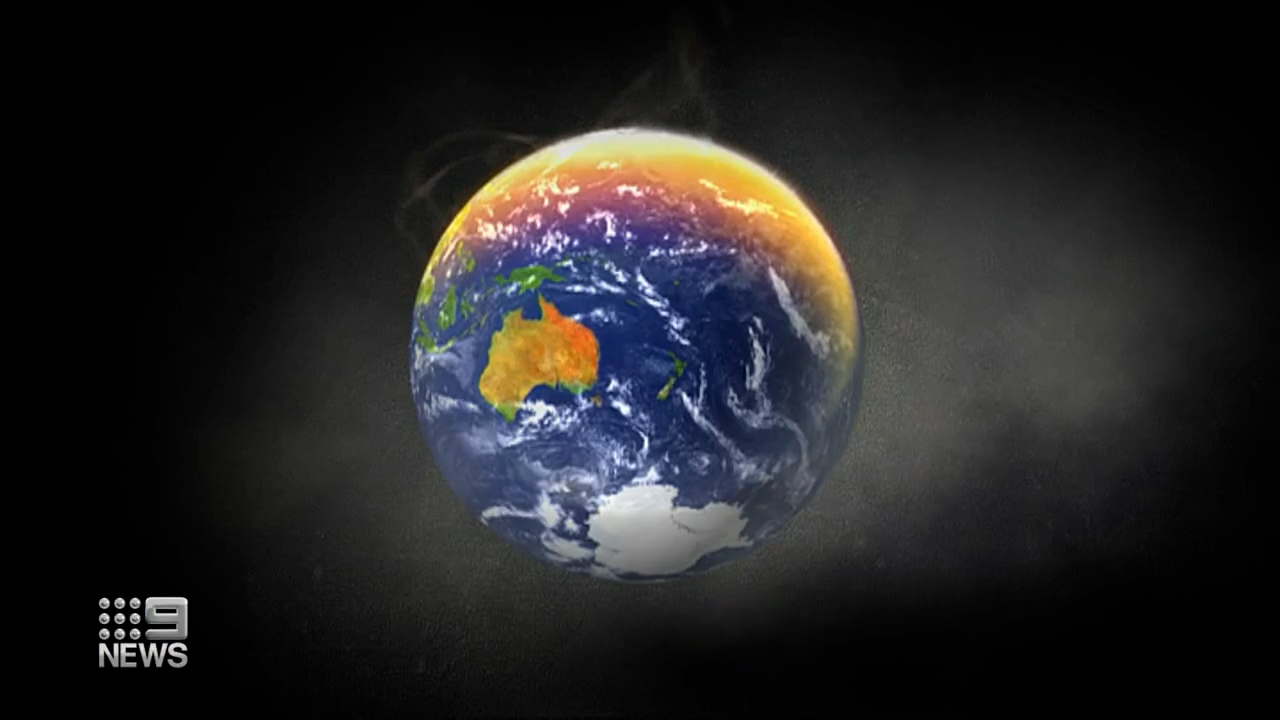
What are greenhouse gas emissions?
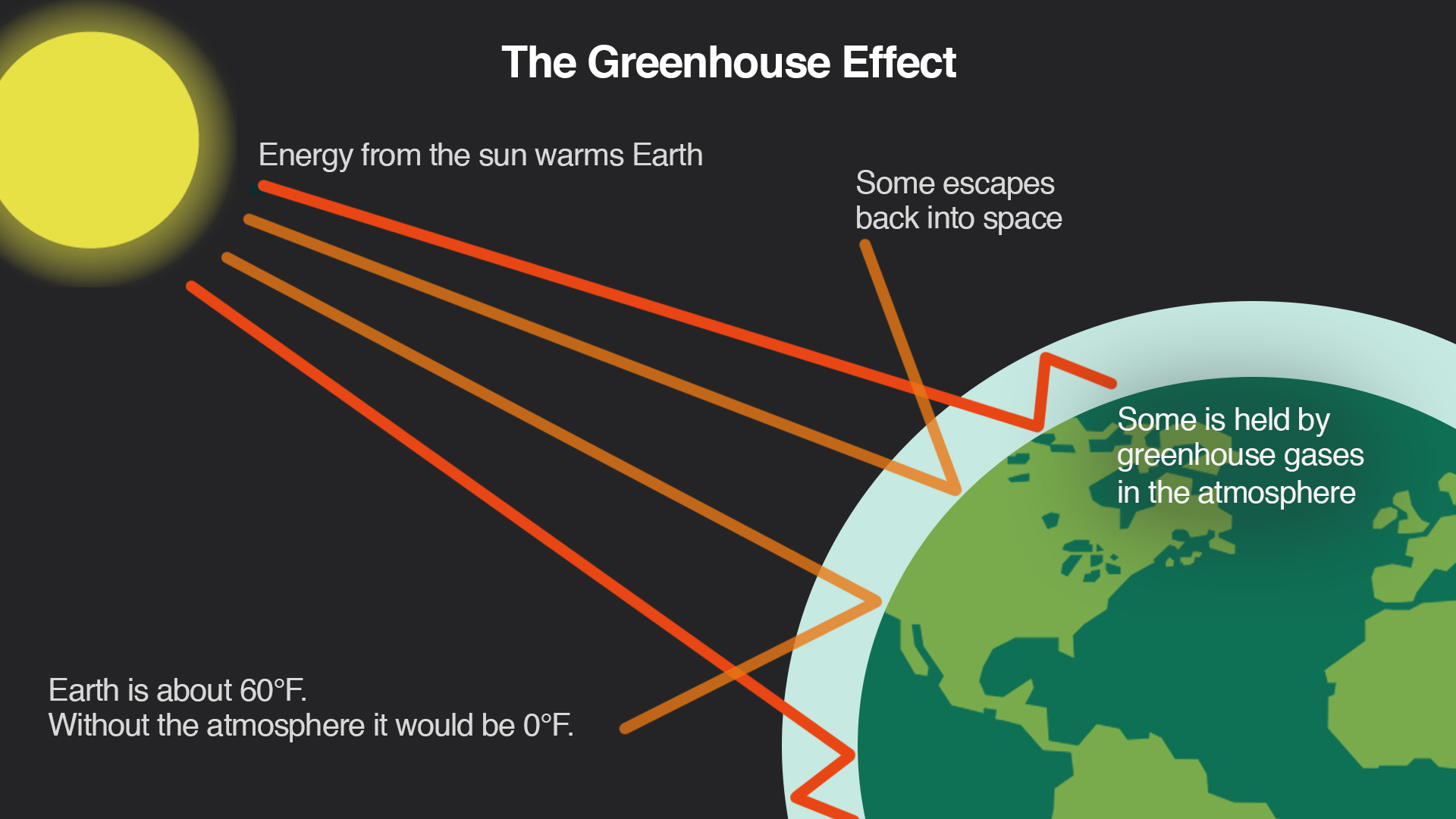
There are five main gases that trap heat in earth's atmosphere and contribute to the greenhouse effect.
These are:
- Carbon dioxide
- Methane
- Nitrous oxide
- Fluorinated gases
- and finally water vapour, which is produced naturally.
The term carbon emissions, or greenhouse gas emissions, refers to the release of these gases into the atmosphere, which was accelerated by the industrial revolution.
What is the biggest cause of emissions?
The majority of emissions is carbon dioxide, which is released through the burning of fossil fuels: coal, oil, and natural gas.
Carbon dioxide is now reaching levels 50 per cent higher than before the Industrial Revolution, recent data from the Mauna Loa observatory in Hawaii shows.
READ MORE: China turns to stranded Australian coal amid power crisis
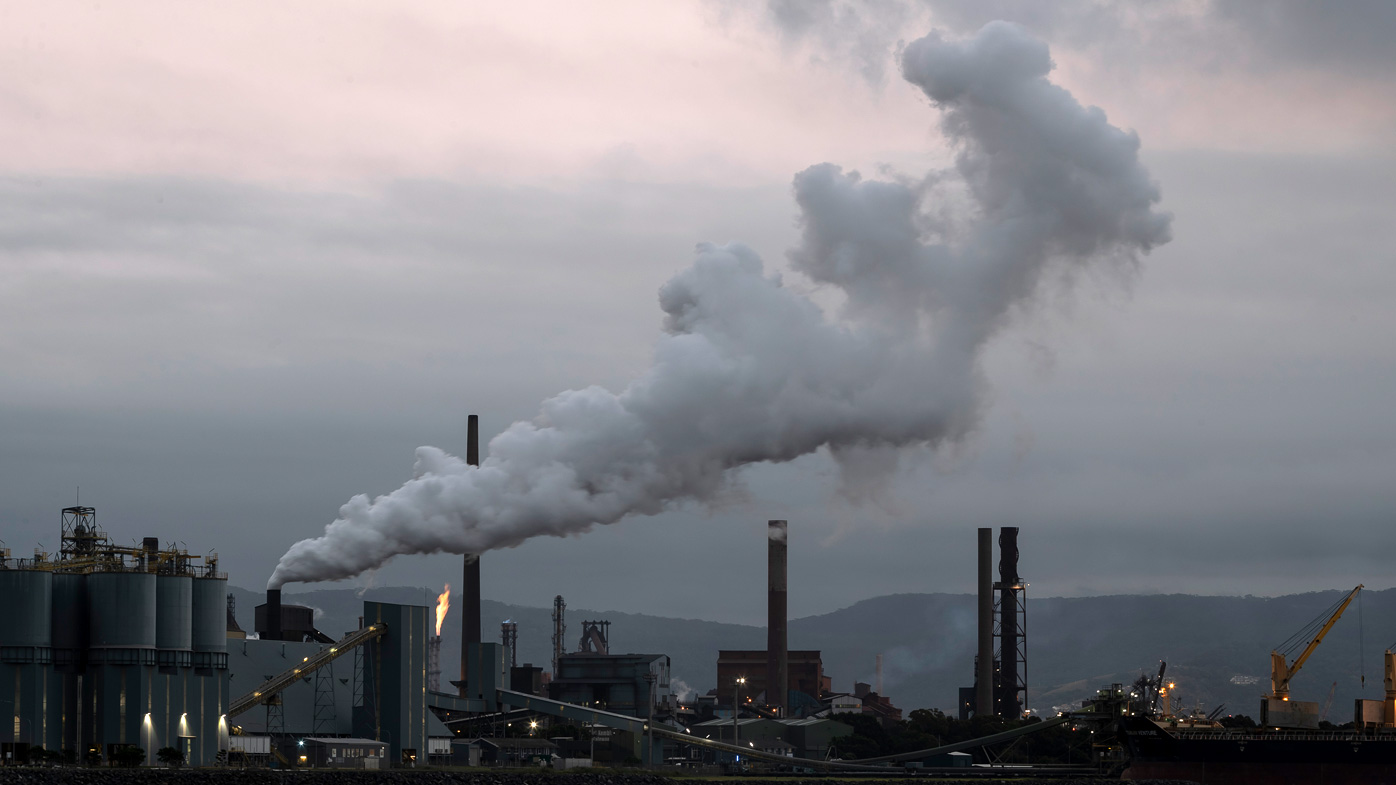
Burning coal provides electricity, heat, and transportation, but some countries, like Australia, rely on coal more than others.
What countries produce the most greenhouse gas emissions?
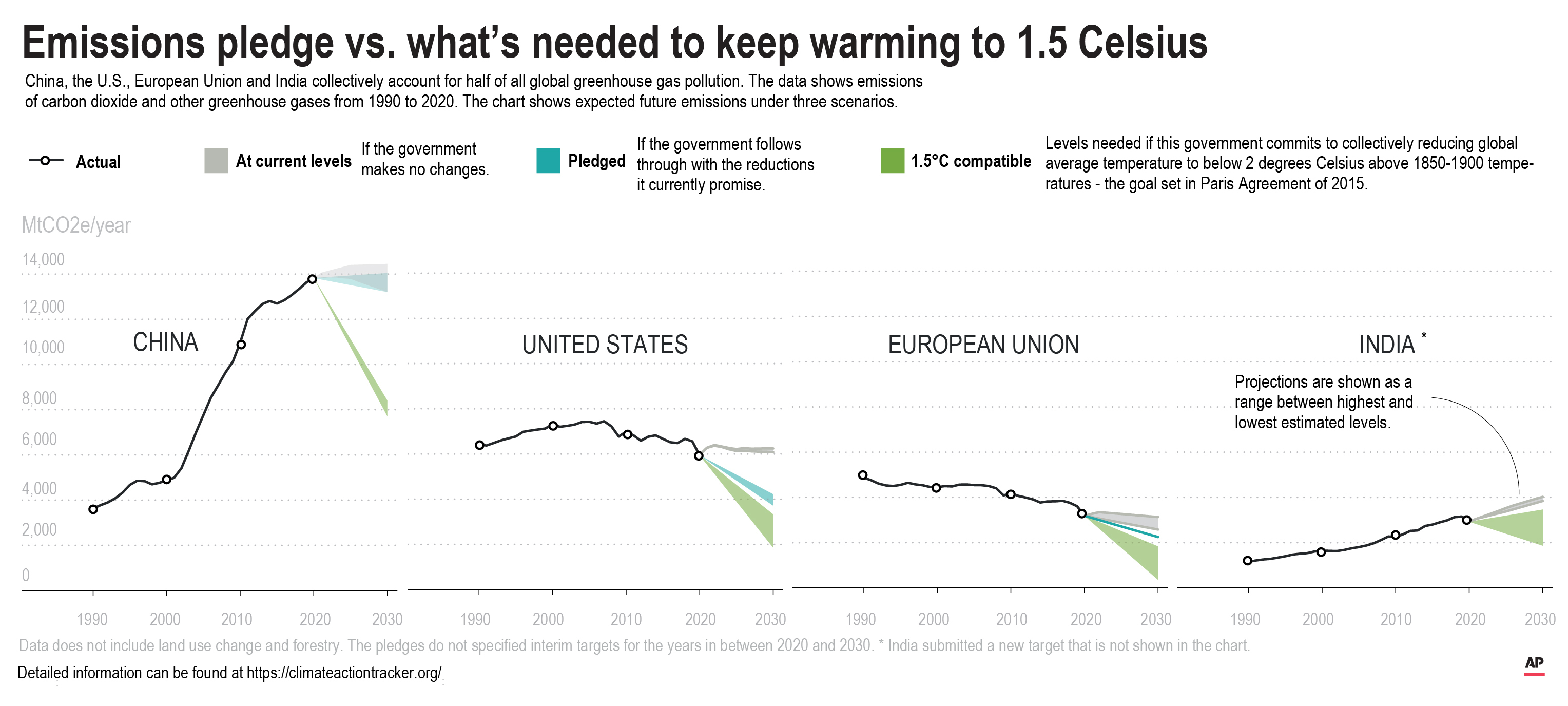
With the world's largest population – home to more than 1.4 billion people – China is by far, the world's biggest emitter of CO2 emissions.
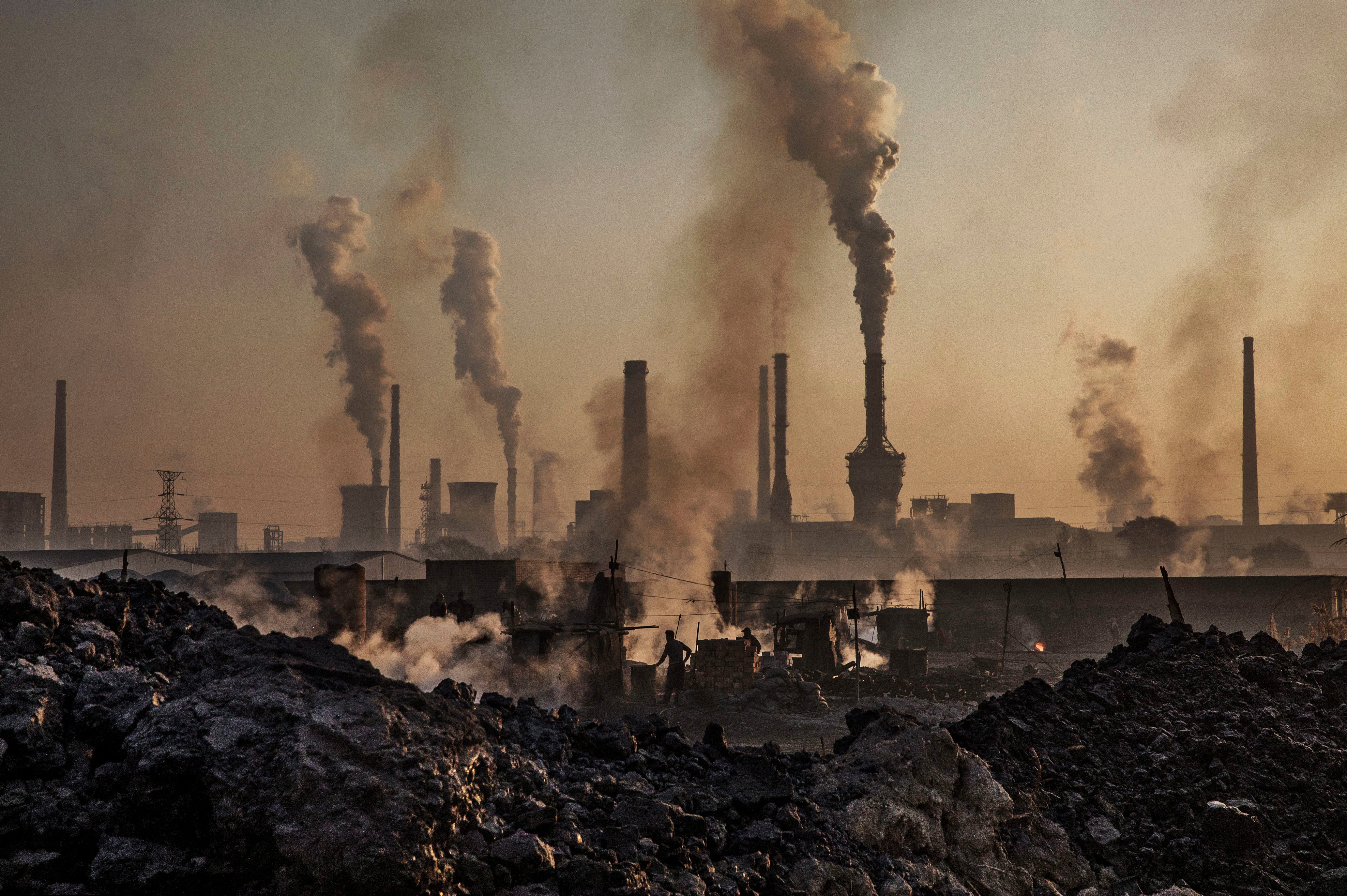
Emissions from China contribute 28 per cent to global emissions.
This is followed by the United States which contributed 15 per cent of global emissions and India, which clocked in at 7 per cent.
So what happens if we don't reduce CO2 emissions?
If countries don't agree to cut emissions then the world will see warming "well above" 3 degrees by 2100, according to the COP26 presidency.
This could be potentially catastrophic, as the planet is already feeling the effects of a warming climate.
READ MORE: NSW RFS warns repeat of 'catastrophic season' coming soon
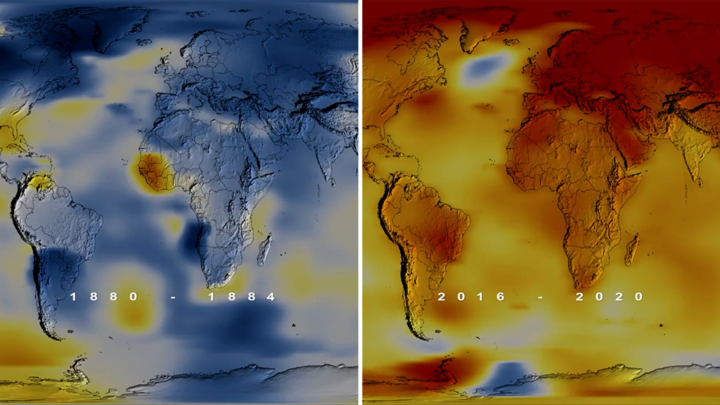
Already at 1.1 degrees above pre-industrial levels, the world is heading for average global temperatures of 1.5 degrees faster than scientists thought, the Intergovernmental Panel on Climate Change's (IPCC) "code red" report said.
If greenhouse gasses are reduced today, that threshold is on track to be crossed in the mid-2030s.
READ MORE: Bushfires sparked algae bloom the size of Australia
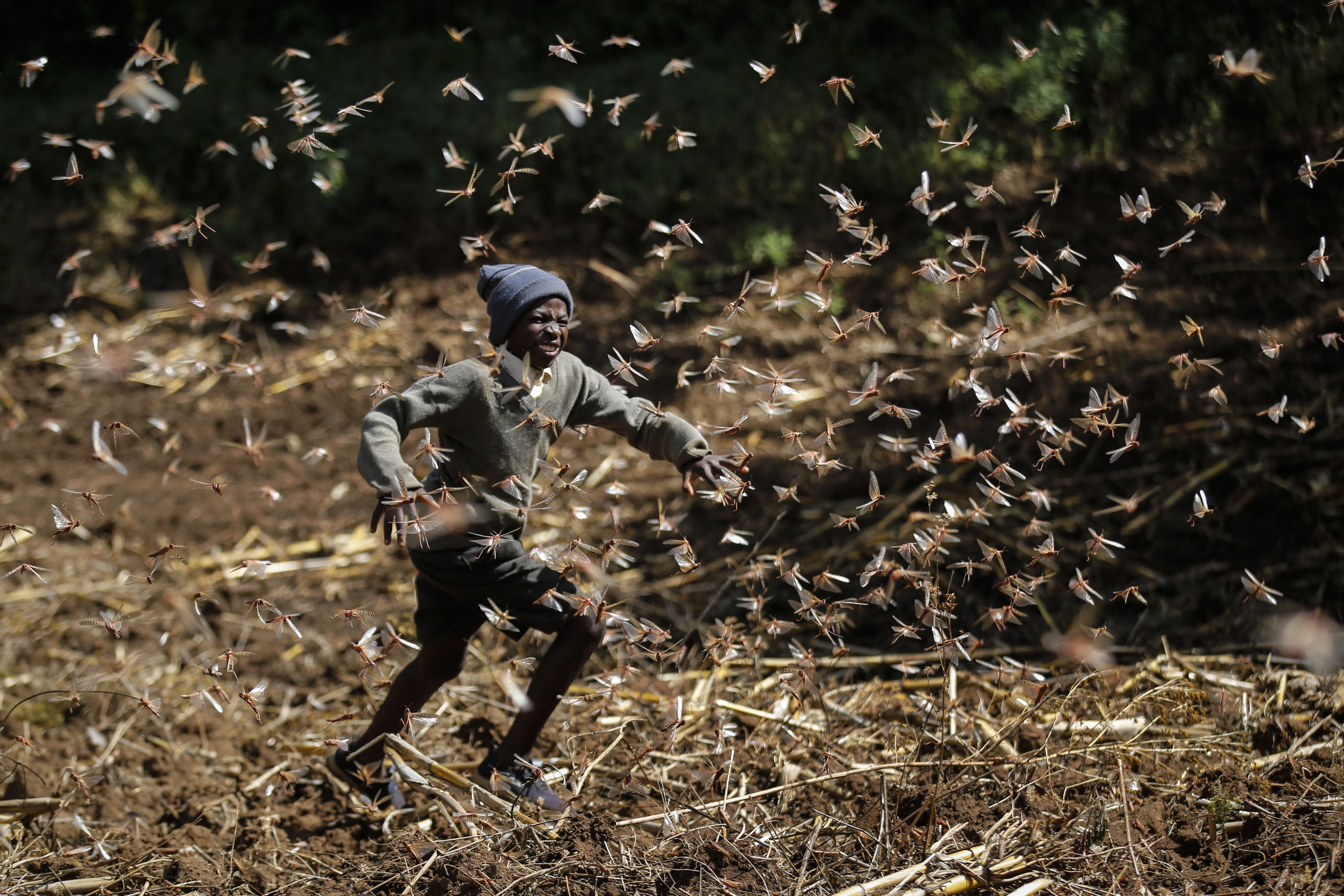
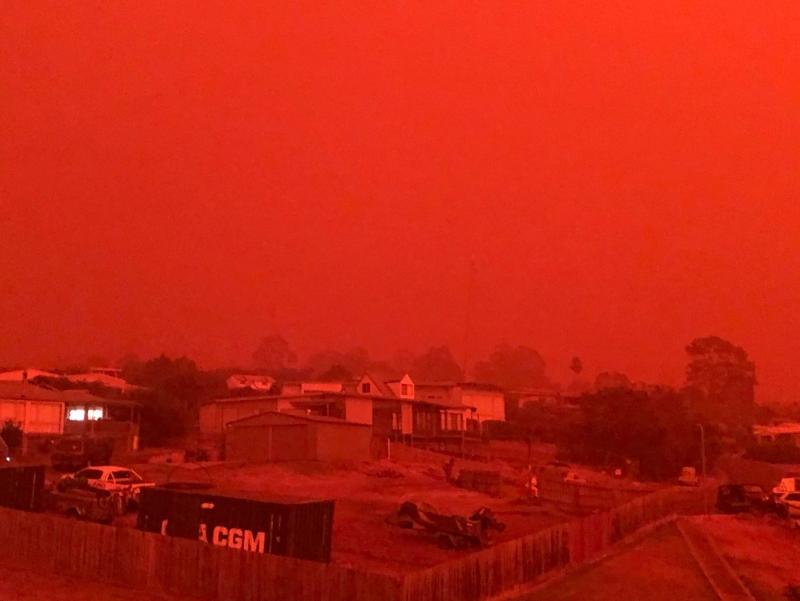
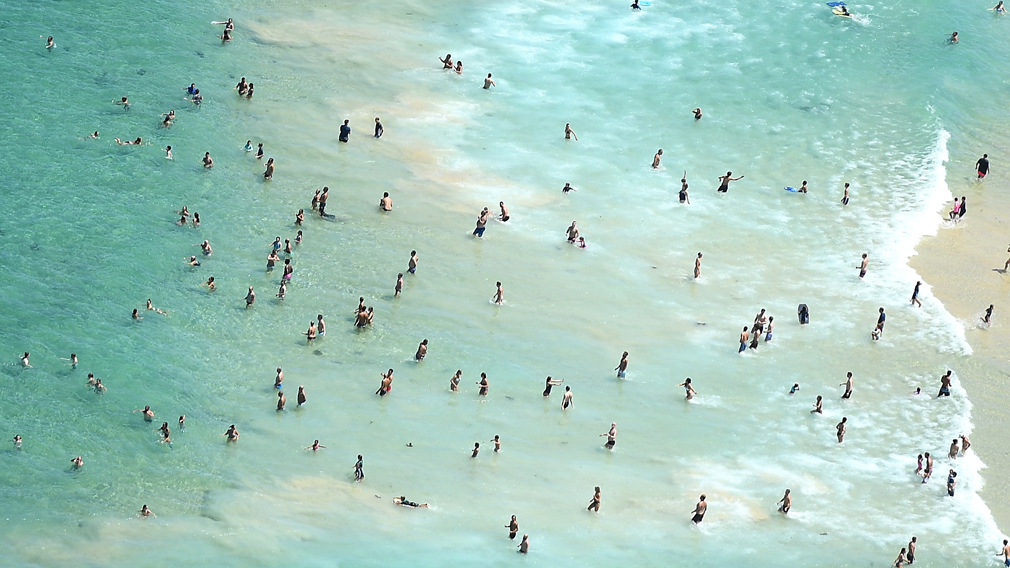
Rising temperatures, prolonged droughts, increasing sea levels due to melting ice caps, fierce storms, raging fires, drop in crop yields and insect and disease outbreaks – are all a reality of climate change.
A recent UN state-of-the-science climate report found Australia is already experiencing more heat extremes and higher sea level rises than the global average because of climate change.
Okay then, so how do we reduce emissions?
Climate leaders at the COP26 talks in Glasgow, Scotland, on Thursday intensified their efforts to put an end date on the use of coal.
At the G20 meeting in Rome over the weekend, leaders failed to specify how they would phase out coal. It will be a tough ask to convince developing countries to go further than the rich world.
The picture is fairly rosy in western Europe and even the United States, where it seems the fossil fuel is indeed on its last legs, save for some pockets of resistance.
Belgium, Austria and Sweden are among a growing number of European countries that no longer use coal to generate electricity.
In the US, which technically has no coal phaseout plan, coal has wound down dramatically in favour of natural gas, which emits about half the carbon dioxide.
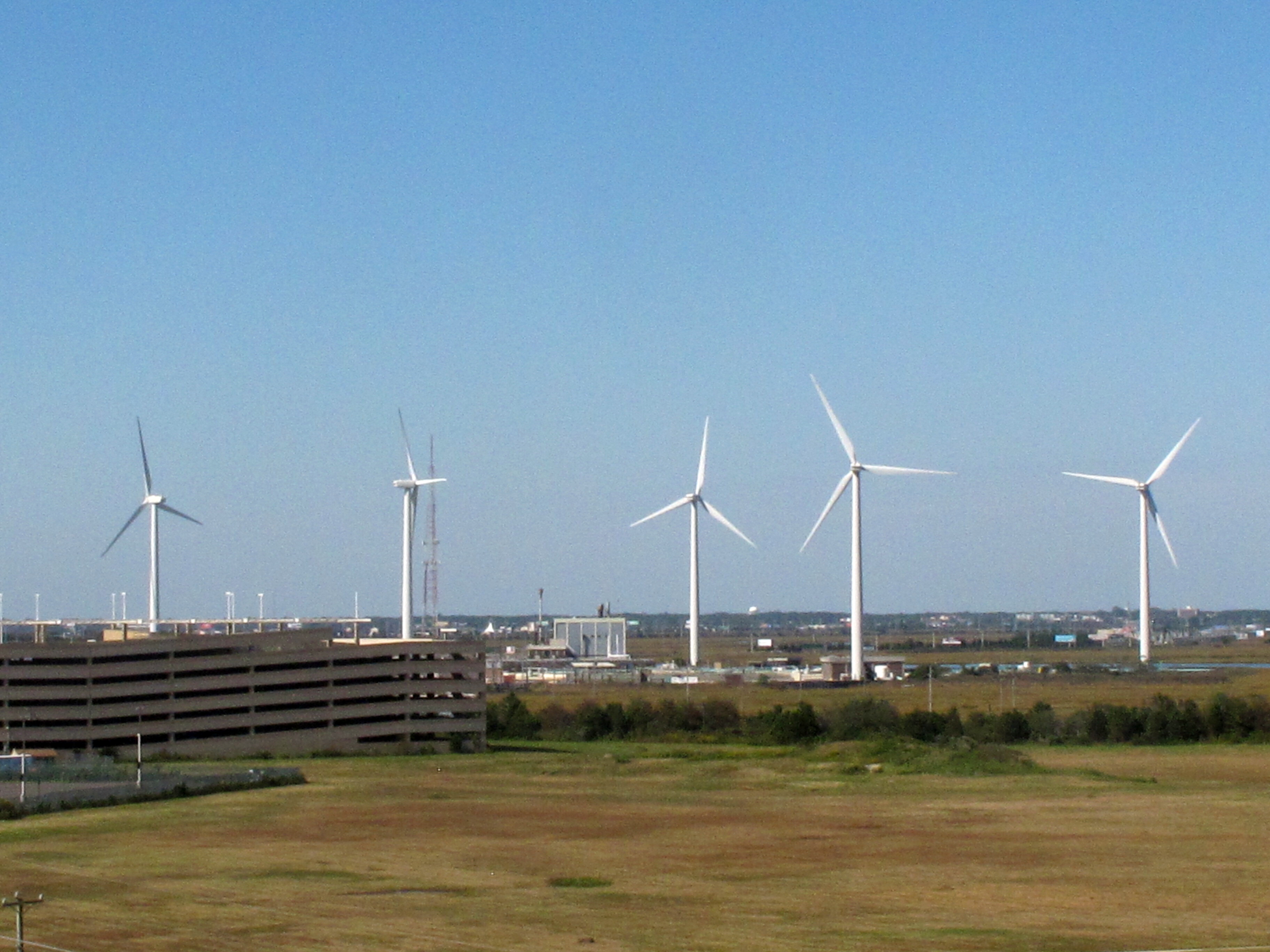
A slow but steady increase in wind power is also helping put coal out of business.
Globally, proposed coal plants are rapidly being cancelled. A report by climate think tank E3G found a 76 per cent reduction in proposed coal power since the Paris Agreement was signed in 2015.
But the trend is distributed unevenly.
Coal plants are still on rise throughout much of Asia, and while power generation from coal technically peaked in 2013, it has basically plateaued since then.
https://twitter.com/fbirol/status/1339826738776465409
The current global energy crisis, triggered by a quicker-than-expected economic rebound amid the pandemic, has even given it a bump. Coal prices last month were at an all-time high.
For every Belgium, Austria and Sweden there is a China, India, and Indonesia, where coal is still king.
Consigning coal to history is a requirement to rein in rapid climate change, but it may not happen as quickly as Western climate leaders may like.
But there has been some movement.
The UK government on Thursday announce that 18 new countries – including big coal users like Poland and Vietnam – have joined more than 40 others in a commitment to stop building new coal projects and to phase out the fossil fuel by 2030 for developed nations, and 2040 for the developing world.
Despite all this progress, a true global transition from coal will only happen when China decides.
Australia's lucrative coal business
Australia has no clear end date on coal and its government has said it plans to keep mining and exporting the fossil fuel well beyond 2030.
The country makes more money than any other nation from exporting coal from its roughly 100 mines, and it has the highest proportion of coal in its energy mix of all the developed G20 nations, at 54 per cent according to climate and energy think tank Ember.
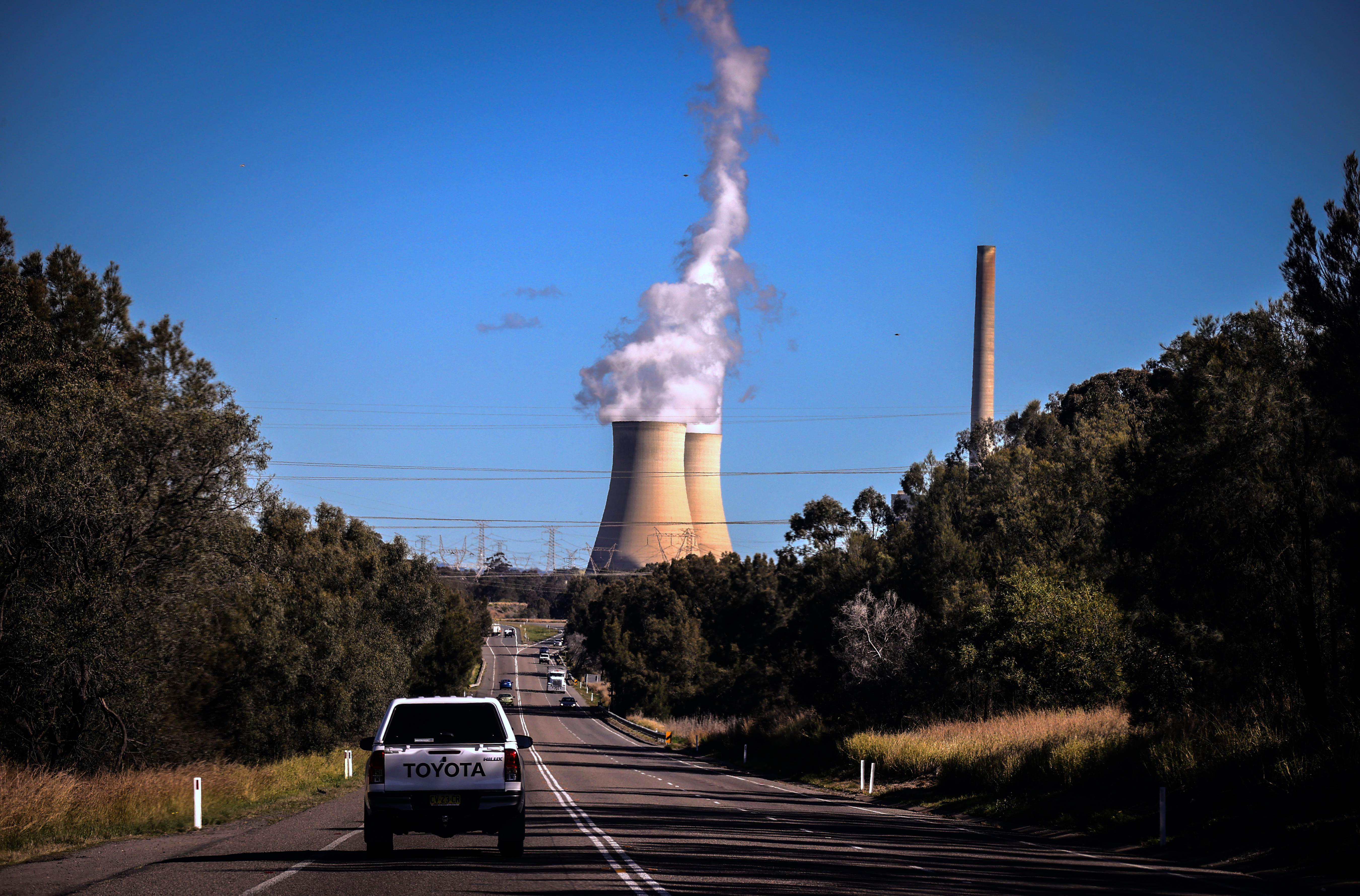
As long as countries like China demand huge volumes of coal, Australia's government has made clear it will keep supplying them.
Australia makes around $67 billion annually in coal exports and the industry directly employs around 50,000 Australians, government data shows.
– With CNN
Covid 19 Delta outbreak: Napier, Gisborne mayors urge testing, vaccination after positive wastewater samples
The detection of Covid-19 in wastewater samples taken in Napier and Gisborne is a “wake-up call” for those not yet vaccinated that the virus is “on our doorstep”, local mayors say.Gisborne mayor Rehette Stoltz told the Herald that…
Colin Powell’s Funeral Attended by Ex-Presidents

President Biden along with former Presidents Obama and George W. Bush joined others gathered in Washington, D.C., on Friday for former Secretary of State Colin Powell‘s funeral.
Powell, who died last month at the age of 84, was the first Black American to serve as secretary of State and chairman of the Joint Chiefs of Staff.
Former first ladies Michelle Obama, Laura Bush and Hillary Clinton were also at the funeral at the Washington National Cathedral. Sitting behind the former presidents were Secretary of State Antony Blinken and Defense Secretary Lloyd Austin.
Gen. Mark Milley, chairman of the Joint Chiefs of Staff, was also in attendance as well as former Vice President Dick Cheney and his wife, Lynne Cheney.
Powell was Bush’s secretary of State and served as chairman of the Joint Chiefs of Staff for former President George H.W. Bush and national security adviser for former President Ronald Reagan.
When the Bidens arrived at the cathedral Friday morning, they sat in the front row next to Obama, who hugged first lady Jill Biden. The president and first lady then chatted with Obama before the funeral began.
Powell died due to complications from COVID-19. He had been fully vaccinated and had been diagnosed with multiple myeloma, a type of cancer.
The post Colin Powell’s Funeral Attended by Ex-Presidents appeared first on The St Kitts Nevis Observer.
Russian diplomat found dead on street outside Berlin embassy
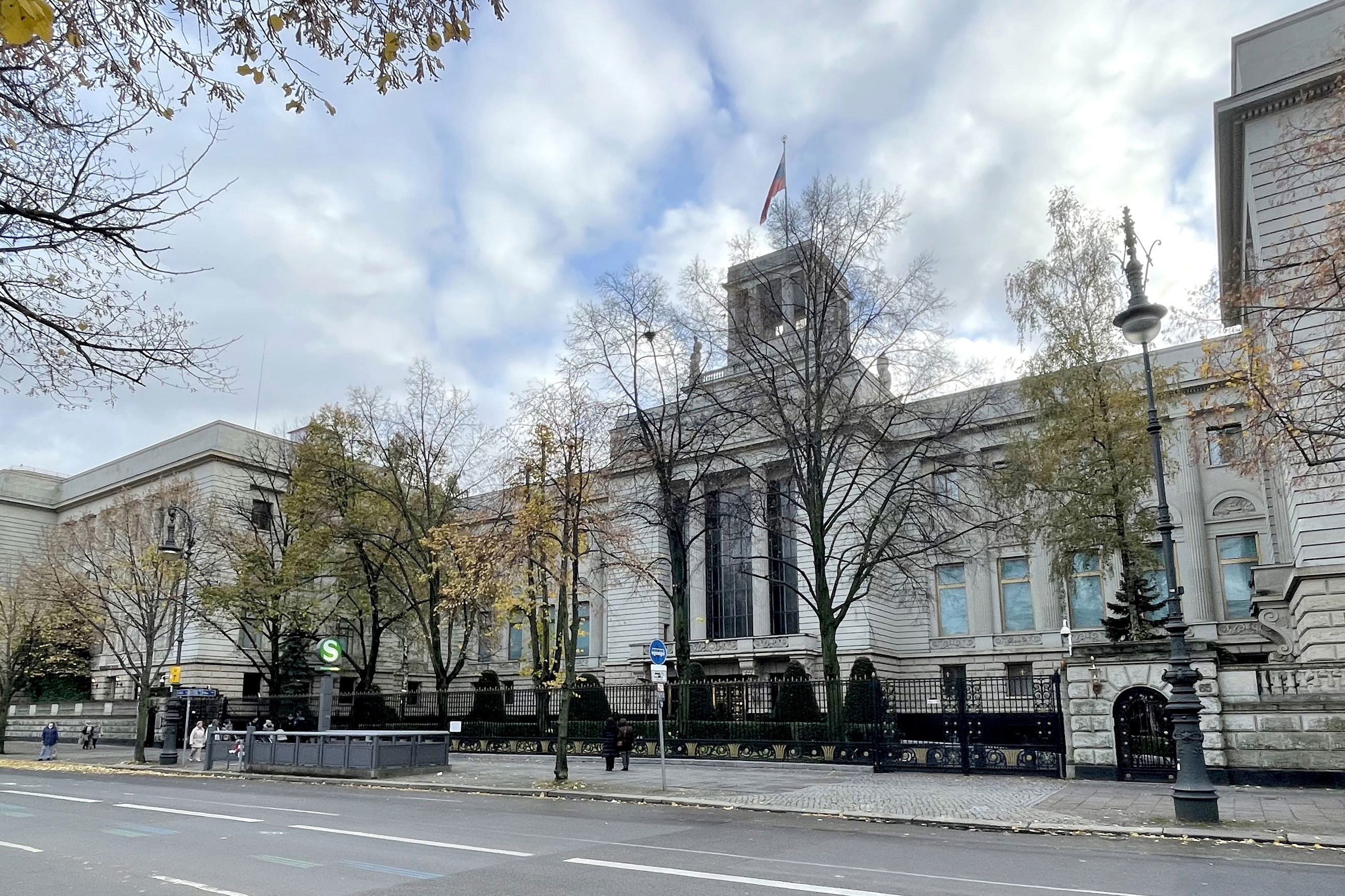
A Russian diplomat found dead on the sidewalk outside the embassy in Berlin last month is believed by German authorities to have been a secret agent for a Russian intelligence agency, Der Spiegel magazine reported Friday.
The body of the 35-year-old diplomat was found on the morning of October 19; he apparently fell from an upper floor of the Russian embassy building in the German capital, though it was unclear why he fell or what the cause of death was, Der Spiegel reported.
Der Spiegel and investigative site Bellingcat report that the dead diplomat had been accredited as second secretary at the Russian embassy in Berlin since 2019, but German security officials believe he was an undercover officer for Russia's FSB, the internal security and counterintelligence service, and that he was related to a high-ranking FSB officer.
READ MORE: Russian military reportedly massing on Ukraine border – again
The FSB was previously linked by Western intelligence services to the murder of a Georgian exile who was shot dead in a Berlin park in 2019, Der Spiegel and Bellingcat reported. The Kremlin has denied any link between the killing and the Russian state.
The Russian embassy did not agree to an autopsy of the diplomat, and the his diplomatic immunity meant that Germany's public prosecutor could not carry out an investigation, Der Spiegel reported Friday.
Russian and German officials acknowledged the death of the diplomat on Friday following the Der Spiegel report.
"A tragic accident with a Russian diplomat occurred on October 19, 2021," the Russian embassy said in a statement.
"All the formalities related to sending the diplomat's body to his homeland were promptly settled with the competent law enforcement and medical authorities of Germany in accordance with the current practice."
"We consider the speculation that appeared in a number of Western media in the context of this tragic incident to be absolutely incorrect."
A spokeswoman at the German foreign ministry told CNN the government was aware of the death of the diplomat, but due to "reasons of personal protection of the persons concerned and their relatives, no further details will be disclosed at this moment."
The death of the diplomat came nearly a year after an investigation by CNN and Bellingcat revealed that an FSB toxins team of about six to 10 agents trailed Russian opposition leader Alexey Navalny for more than three years before he was poisoned in August 2020 with the lethal nerve agent Novichok.
One of the FSB agents was later duped into telling Navalny over the phone that the Novichok had been planted in his underpants — a detail that emerged when Navalny posed as a member of Russia's National Security Council and called the agent to press him for details of the operation, as was revealed exclusively in another CNN-Bellingcat investigation.