Category Archives: headline

Movie industry: The entire Federation of St. Kitts and Nevis benefits, says PM Harris

BASSETERRE, ST. KITTS, October 28, 2021 (MMS-SKN) — One of Team Unity’s campaign promises during the 2020 election has come to fruition, putting the Federation of St. Kitts and Nevis firmly on the world stage and benefiting both islands in equal measure.

“During our last election campaign, the Team Unity administration proclaimed that we will build out an entertainment industry, and to ensure maximum benefits are delivered to our people, a new Ministry would be established to implement Government’s vision for the new sector,” said Prime Minister Dr the Hon Timothy Harris on Thursday October 28 at his monthly press conference held at NEMA’s conference room in Lime Kiln, West Basseterre.

Prime Minister Harris, who is also the Minister of Finance and Human Resource Management, recalled that no sooner than Team Unity was elected they created the Ministry of Entertainment, Talent Development and Entrepreneurship.

Picture right: Minister of Entertainment, Entrepreneurship and Talent Development the Hon Akilah Byron-Nisbett at the Press Conference. Left top: Members of Cabinet. Left bottom: A cross section of persons at the Press Conference.


He observed that Team Unity’s Manifesto commitments then, are being fulfilled, and it is a sign of their focused attention on the people’s progress and development even at a very challenging time. Also present at the press conference was Minister with responsibility for the new ministry, the Hon Akilah Byron-Nisbett.

“Managing a country during this pandemic is by no means an easy task,” said the Honourable Prime Minister. “By the end of 2020 according to the IMF our beloved St. Kitts and Nevis had the best record of management of the COVID-19 pandemic. Your government has remained committed to preserving life and livelihoods during this pandemic. It is our superb management that led Mr Phillipe Martinez of MSR Media to come to St. Kitts and Nevis to produce his films.”

Before MSR Media came to the Federation, the country was fortunate to have its first movie for 2021, ‘Below Deck’ being filmed at the Park Hyatt Hotel on St. Kitts. Dr Harris informed that the first episode of ‘Below Deck’ was aired on Monday night, October 25, and it gave not just host island St. Kitts but the entire Federation of St. Kitts and Nevis amazing positive exposure. It introduced not just the island of St. Kitts, but the Federation of St. Kitts and Nevis to an audience of millions.

“The reality is that when St. Kitts rises, the whole Federation of St. Kitts and Nevis benefits and the inverse is also true because when Nevis rises, the entire Federation of St. Kitts and Nevis benefits,” said the Prime Minister. “This is true because we are one – one Federation, one destination, but most importantly, we are one people. So I advise that we will continue to work together as one.”

He further observed that it is anticipated that the airing of films produced by MSR Media on the island of Nevis will positively impact not just the island of Nevis but the entire Federation. He added: “Again I remind us all – we are one people, one Federation and we must cooperate even more for mutual advancement and development.”

In a very difficult year, 2020, God smiled on the Federation and brought a blessing out of the misfortune of the Covid-19 pandemic. The first international movie ‘Below Deck’ was produced in St. Kitts, the second, third, and fourth movies were produced on sister island of Nevis and the fifth movie, Christmas in the Caribbean, is to be filmed on the island of St. Kitts.

According to Dr Harris, the country is moving in the right direction, and benefits will accrue to all the people with more jobs, more incomes, new careers, and a chance to further develop their talents.

“Last Saturday’s media announcement by the principal of MSR Media of its intention to do five movies on St. Kitts starting in November must be very good news for all patriots of our Federation,” said Prime Minister Harris. “Mr Martinez could have taken these five films to any other country – Barbados, Dominican Republic, Antigua and Barbuda next door, Aruba or any other, but he chose our Federation, thereby increasing jobs here, bringing visitors to our Federation, and keeping the spotlight on the Federation of St. Kitts and Nevis as a whole.”

More movie producers will come to St. Kitts and Nevis, predicted Dr Harris. He noted that the country can realise a sustainable movie industry with year-round production that will create sustainable jobs, higher incomes for the people, new opportunities for the country’s artistes – its videographers, photographers, movie crew, event planners like Mr Vaughn Anslyn of Nevis, and caterers among others.

“Right here in our Federation our creative young people will get real life experiences working with acclaimed professionals associated with MSR and other producers to come,” has said. “This situation is expected to yield significant benefits for all our people.”

Updating the press conference, that also included ministers the Hon Eugene Hamilton, Hon Lindsay Grant, Hon Jonel Powell, Hon Wendy Phipps and Hon Vincent Byron J, on new developments in the movie industry, the Prime Minister congratulated Kittitian Mr Nigel Lewis aka “Tru Capo” on his licensing deal. He advised that Tru Capo’s film ‘A Rose Between Thorns’ now has international recognition and he is making his mark as a producer.

Prime Minister Harris with from right: MSR Producer Mr Phillipe Martinez, MSR actor Mr Edouardo Costa, and MSR lead actress Ms Elizabeth Hurley at Kittitian Hill during a Media Event on Saturday October 23.

The post Movie industry: The entire Federation of St. Kitts and Nevis benefits, says PM Harris appeared first on The St Kitts Nevis Observer.
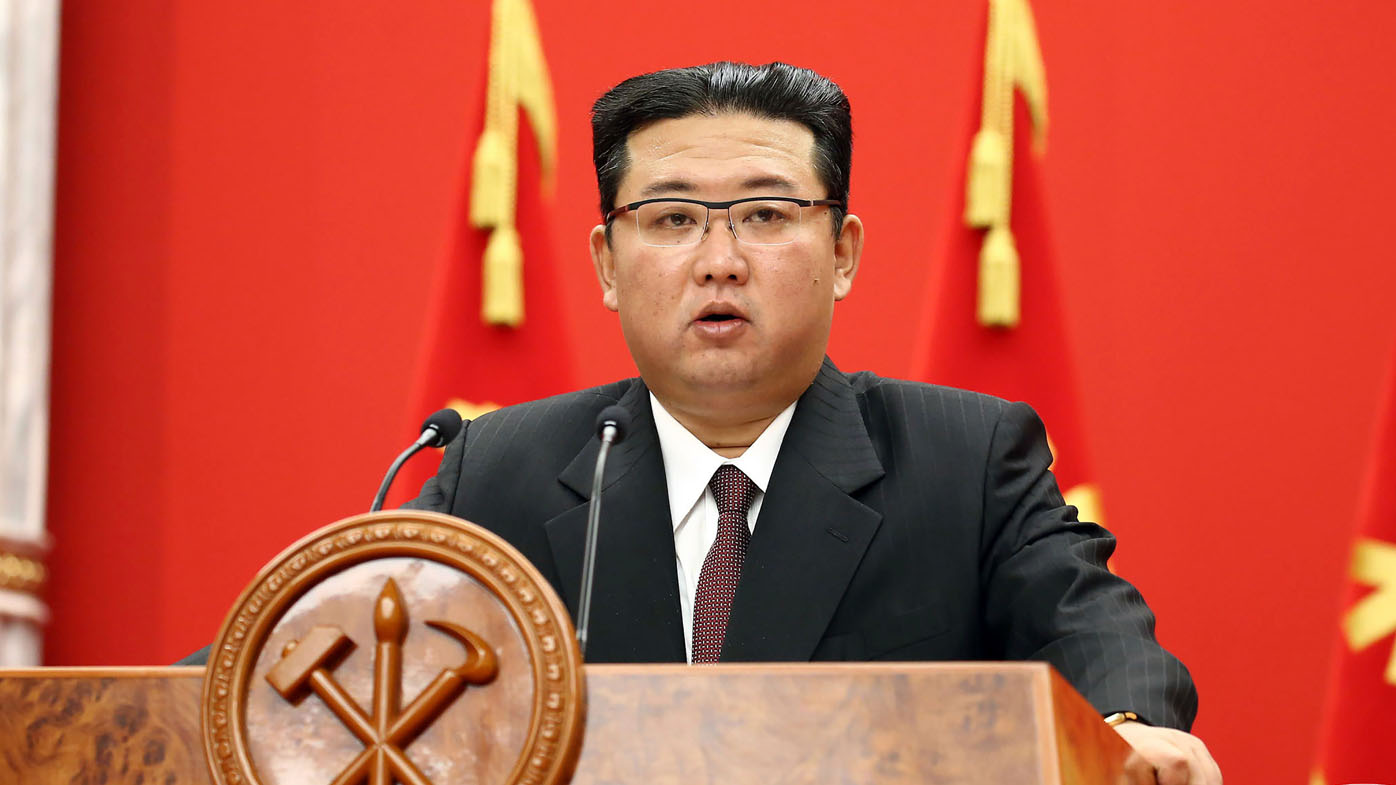
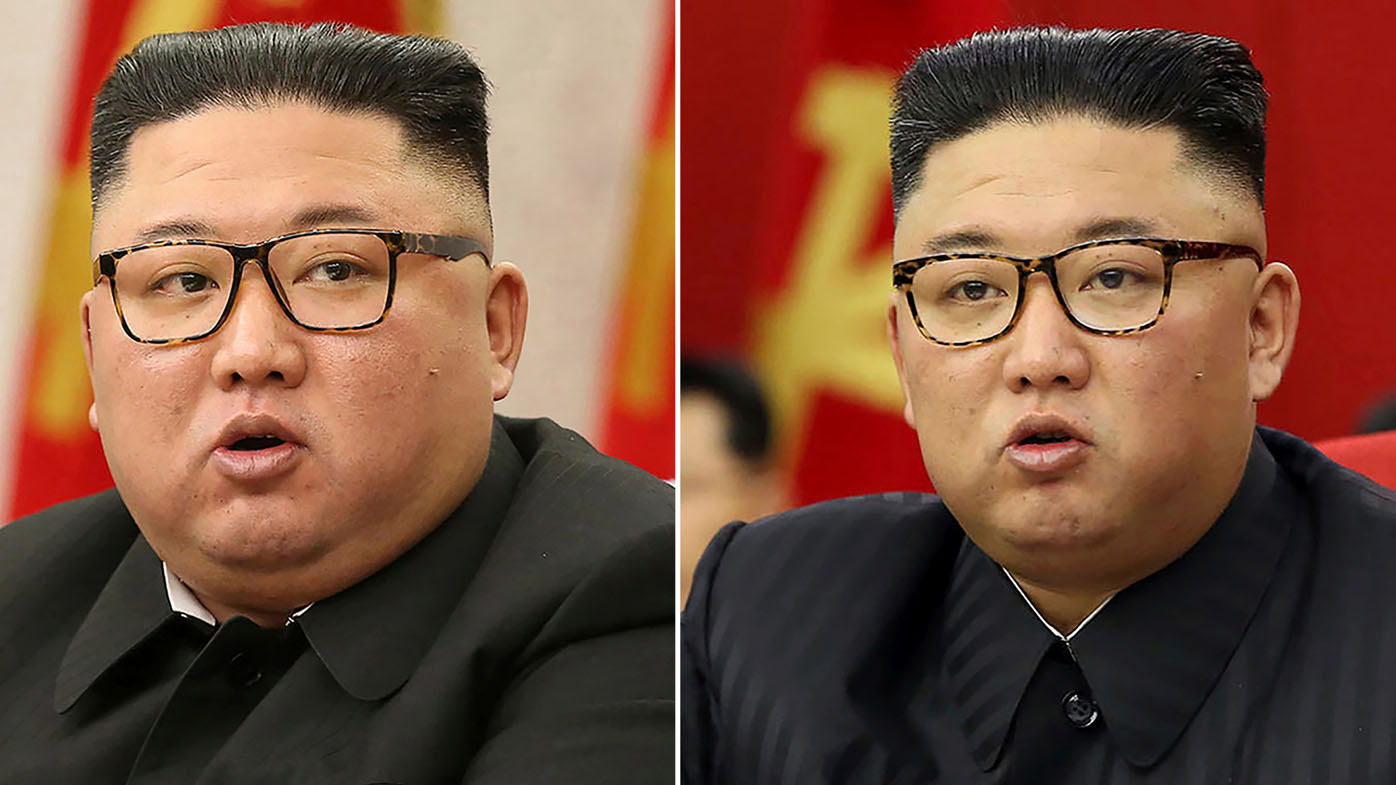
Kim Jong Un 'healthy' after weight-loss

North Korean leader Kim Jong Un has recently lost about 20 kilograms, but remains healthy and is trying to boost public loyalty to him in the face of worsening economic problems, South Korea’s spy agency told lawmakers Thursday.

The National Intelligence Service gave the assessment during a closed-door parliamentary briefing, saying it used artificial intelligence techniques, an analysis of super-resolution video of Kim and other methods to investigate Kim’s condition, said two lawmakers who attended the session.

Kim’s health has been a focus of keen outside attention in recent months because he has appeared noticeably thinner in state media photos and videos. Kim, 37, hasn’t publicly anointed a successor and some experts say an abrupt incapacitation could trigger chaos in the impoverished nuclear-armed country.

READ MORE: How does international travel work now Australian borders are opening?

Despite Kim's thinner appearance, long-time North Korea observers have said Kim has no apparent health problems and his weight loss is likely the result of his efforts to improve his physique. They noted that he has continued his regular public activities and no unusual developments have been seen in North Korean videos.

But unconfirmed rumors about him have continued to appear, with one tabloid claiming that recent public appearances used an impostor. The NIS dismissed that report as groundless, lawmaker Kim Byung-kee said.

He said the NIS told the parliamentary session that Kim’s weight has fallen from about 140 kilograms (308 pounds) to 120 kilograms (264 pounds). The NIS has previously said Kim is about 170 centimeters (5 feet, 8 inches) tall.

It said Kim has been engaged in public activities for 70 days so far this year, a 45% increase from the same period last year.

READ MORE: What does net zero by 2050 actually mean?

The lawmaker said the NIS found that Kim had photos of his late father and grandfather — who ruled North Korea before him — removed from a Workers’ Party conference room.

Another lawmaker, Ha Tae-keung, quoted the NIS as saying North Korea has begun using the term “Kimjongunism,” a political ideology named after Kim Jong Un that is independent of existing ideologies named after his father and grandfather, “Kimjongilism” and “Kimilsungism.”

After about 10 years in office, Kim is struggling to overcome what appears to be the toughest period of his rule due to economic hardships worsened by the coronavirus pandemic.

According to the NIS, North Korea’s annual trade with China, its main ally and economic lifeline, declined by two-thirds to $185 million through September this year compared to the previous year, Ha said.

North Korean officials are struggling to deal with soaring prices of goods and shortages of medicine and other essential supplies that have accelerated the spread of water-borne diseases such as typhoid fever. The country has also been unable to import the paper and ink it uses to print banknotes, forcing North Korean officials to issue temporary currency, according to Ha’s account of the NIS briefing.

While reduced trade has limited the supply of materials needed for industrial activity, North Korean officials are pushing workers hard to increase production.

Excessive factory operations caused an explosion at a major fertilizer plant in August, Ha quoted the NIS as saying.

READ MORE: New 'calculator' determines individual COVID-19 risks

The NIS corroborated recent reports by the World Health Organisation that North Korea is beginning to ease its tough COVID-19 border restrictions to receive outside help.

The western North Korean seaport of Nampo is now “saturated” with supplies from the outside world after authorities recently began allowing increased maritime transport and the entrance of medical supplies, according to the NIS.

North Korea is preparing to open another seaport in the northwest, Yongchon, to handle the increased supplies and is also considering restarting rail transport with China and Russia, it said.

North Korea has yet to report any cases of the coronavirus. While experts have questioned its claim of a perfect record, Ha said the NIS has yet to see any signs of a major COVID-19 outbreak.

Despite its severe virus-related border controls, North Korea hasn’t shown the same kind of urgency for vaccines, as mass immunizations continue to be delayed amid global shortages.

Ha said North Korea has rejected outside offers of Russian and Chinese vaccines. Kim, the lawmaker, said the NIS has determined North Korea also hasn't shown interest in obtaining Pfizer vaccines, which would require negotiations with the drugmaker and the US.

Analysts say North Korea could be uneasy about international monitoring requirements that would be attached to vaccines it receives from the outside world. There are also views that Kim Jong Un has domestic political motivations to tighten the country’s self-imposed lockdown as he calls for unity and tries to solidify his grip on power.

WORLD VIEW from REUTERS

The Reuters Daily Briefing

Thursday, October 28, 2021

Today’s biggest stories

Glasgow Protest

Activists symbolically set George Square on fire with an art installation of faux flames and smoke ahead of the U.N. Climate Change Conference, in Glasgow, Scotland, October 28, 2021. REUTERS/Russell Cheyne

U.S.

President Joe Biden wants to show the U.N. climate conference in Scotland that the United States is back in the fight against global warming. But continued haggling in Congress over legislation to advance his climate goals threatens to undermine that message on the world stage.

Senior Democrats in the U.S. Congress are at odds over a proposal to tax billionaires’ assets to help pay for Biden’s social and climate-change agenda, leaving it unclear if the idea has enough support to become law. We explain the likely legal challenges.

Senate Democrats struggled to keep paid family leave in Biden’s emerging social and climate-change legislation, saying negotiations would continue despite media reports the benefit could be axed from the bill.

Chinese telecoms giant Huawei paid Democratic lobbyist Tony Podesta $1 million to lobby the Biden administration on its behalf, double what the lobbyist has revealed publicly, according to two people familiar with the matter.

A .45-caliber Colt revolver used on the set of the film ‘Rust’ was not thoroughly checked before being given to actor Alec Baldwin, who fired a live lead bullet in an accidental fatal shooting last week in New Mexico, according to officials and a new court filing. So who faces legal liability?

A man poses for pictures in front of a countdown clock showing 100 days left to the opening of Beijing 2022 Winter Olympic Games, October 27, 2021. REUTERS/Tingshu Wang

WORLD

Singapore is looking into an “unusual surge” of 5,324 new infections of COVID-19, the city-state’s health ministry said, its highest such figure since the beginning of the pandemic, as beds in intensive care units fill up. Meanwhile, parts of northeast China are on heightened alert as COVID-19 returns.

The top U.S. military officer, General Mark Milley, has provided the first official U.S. confirmation of a Chinese hypersonic weapons test that military experts say appears to show Beijing’s pursuit of an Earth-orbiting system designed to evade American missile defenses.

Israel moved forward with plans to build some 3,000 homes for Jewish settlers in the occupied West Bank, defying the Biden administration’s strongest criticism to date of such projects.

Laos police have seized a record haul of illicit drugs in the Golden Triangle region, in what the United Nations said was Asia’s largest single drug bust ever. More than 55 million methamphetamine tablets and over 1.5 tonnes of crystal methamphetamine were intercepted.

Japan’s ruling Liberal Democratic Party could lose its majority in Sunday’s general election, polls show, potentially turning new leader Fumio Kishida into another short-term prime minister and triggering a return to political uncertainty. We look at efforts to win the hearts and votes of the alienated young.

BUSINESS

The U.S. Congress will today open a year’s worth of investigations into whether Big Oil deceived Americans about its role in climate change, with Democratic lawmakers planning to grill the chiefs of four oil companies and two lobby groups.

Royal Dutch Shell set itself tougher emissions-cutting targets as it reported a lower-than-expected third-quarter profit of $4.13 billion. Hedge fund Third Point has built a large stake in the oil major and called on it to split into multiple companies to increase its performance and market value.

The global semiconductor chip shortage cost Volkswagen and Stellantis a combined 1.4 million vehicles in lost production in the third quarter, Europe’s two biggest carmakers said, though both reported some early signs of improvement.

In wealthy Singapore, where new vehicle registration is tightly controlled to manage the city state’s traffic and pollution, Tesla is having a moment: surging sales are gobbling up rivals’ market share.

Online brokerages not licensed in China are conducting illegal businesses if they serve Chinese clients via the internet, a Chinese central banker said, in the first official comment on recent reports flagging regulatory risks facing firms such as U.S.-listed Futu Holding and UP Fintech Holding.

SPECIAL REPORT

Cement producers are burning more plastic waste as a cheap fuel and some of the world’s biggest plastic-polluting companies are helping them to do it .

The post WORLD VIEW from REUTERS appeared first on The St Kitts Nevis Observer.

Fuel Shortages Paralyze Haiti, Disrupting Everything from Drinking Water to Phones

Activities across Haiti have been halted as a result of the ongoing fuel shortage crisis, reported Le Nouvelliste and local radio station Radio Métropole.

The majority of gas stations in Port-au-Prince and in other departments were closed Oct. 26. Gangs with the G9 & Family Allies coalition have blocked access to the Varreux port terminal, where the majority of Haiti’s fuel products are stored.

Telephone company Digicel said 433 of its sites are not currently functioning due to fuel shortages and transportation issues.

The technical operating center of the National Direction of Drinking Water (DINEPA) of the metropolitan region of Port-au-Prince may no longer be able to supply drinking water to the municipalities of Delmas, Tabarre and Cité Soleil. DINEPA’s director, Paul Libenson Théodate, said it is in dire need of 15,000 gallons of diesel per week to continue operating, calling the situation “critical.”

Other sectors are experiencing similar difficulties. The National Ambulance Center (CAN), which normally operates six to eight ambulances, is down to two. Its director general, Hérold Louis, said the center may stop operating entirely in coming days if fuel does not become available. Employees are not even able to find any means of transportation to come to work, Louis said.

Jimmy “Barbecue” Cherizier, leader of the “G9” coalition of gangs in the metropolitan area of the capital, Port-au-Prince, said in a radio interview on Monday night that he would ensure safe passage of fuel trucks if Henry leaves office.

“The areas under the control of the G9 are blocked for one reason only – we demand the resignation of Ariel Henry,” Cherizier said in an interview on Haiti’s Radio Mega.

The post Fuel Shortages Paralyze Haiti, Disrupting Everything from Drinking Water to Phones appeared first on The St Kitts Nevis Observer.

Doubling Down: El Salvador Adds Nearly $25M in Bitcoin to Treasury

SAN SALVADOR, Oct 27 (Reuters) – The Salvadoran government acquired 420 more bitcoin on Wednesday, President Nayib Bukele announced on social media, as the Central American doubled down on its splashy cryptocurrency experiment.

The latest purchase of bitcoin, worth nearly $25 million at current prices, marks the first government acquisition of the cryptocurrency since Sept. 20, when Bukele said it had bought 150 bitcoins.

“It was a long wait, but worth it. We just bought the dip! 420 new bitcoin,” Bukele wrote in a post on Twitter in English.

The cryptocurrency currently trades at just above $59,000 per bitcoin.

Earlier last month, El Salvador became the first country in the world to adopt bitcoin as legal tender alongside the U.S. dollar, which Bukele has argued will lower the cost of remittances from Salvadoran migrants living overseas.

Traditional banks and other financial institutions typically charge hefty fees to process the money transfers.

Overall, El Salvador’s treasury holds 1,120 bitcoin, according to official data, worth nearly $66 million.

The impoverished country’s economy is heavily dependent on around $6 billion in remittances sent home each year, or about a quarter of gross domestic product, with around one fifth of households dependent on the cash infusions.

This comes as Bitcoin value soars internationally:

LONDON/NEW YORK/HONG KONG, Oct 15 (Reuters) – Bitcoin topped $60,000 for the first time in six months on Friday, nearing its all-time high, as hopes grew that U.S. regulators would allow a futures-based exchange-traded fund (ETF), a move likely to open the path to wider investment in digital assets.

Cryptocurrency investors have been waiting for approval of the first U.S. ETF for bitcoin, with bets on such a move fuelling its recent rally.

Reporting by Gerardo Arbaiza; Writing by David Alire Garcia Editing by Sonya Hepinstall

The post Doubling Down: El Salvador Adds Nearly $25M in Bitcoin to Treasury appeared first on The St Kitts Nevis Observer.

Massive Migrant Caravan in Slow Slog Across Mexico

VILLA COMALTITLAN, Mexico, Oct 27 (Reuters) – Thousands of mostly Central American migrants trekking across southern Mexico on Wednesday advanced only a short distance, with children and painfully blistered feet, the latest human caravan seeking to reach either Mexico City or the U.S. border.

The mass of men, women and children left the village of Huixtla early in the morning, walking about 10 miles (16 km) north along a local highway to the town of Villa Comaltitlan, in Mexico’s southern Chiapas state, witnesses told Reuters.

“We haven’t had any problems with immigration officials. God is opening doors for us,” said a hopeful Julio Gonzalez, a Honduran migrant who spent Tuesday night sleeping near a street in Huixtla with his wife and two children under a steady rain.

In Villa Comaltitlan, some migrants told Reuters they sought to rest before departing early Thursday morning, which was especially important due to the large number of young children with them.

The latest migrant caravan has not yet faced off with Mexican migration agents or soldiers who have increasingly used tough tactics to stem the tide of fleeing migrants, many of whom want to escape violent gangs and grinding joblessness back home.

The United States has registered record levels of migration this year, as border agents have apprehended or expelled more than 1.7 million migrants over the past 12 months.

The majority of the latest caravan are families with young children, according to a witness who estimated at least 2,000 migrants had gathered on Tuesday in Huixtla to rest and receive medical attention before resuming their journey north.

Among them was Arleth Chavez from Guatemala, who had walked with the caravan for about 28 miles since it departed the southern border city of Tapachula over the weekend.

“My feet are burning and in pain from the blisters,” said Chavez, who nonetheless expressed a determination to continue.

Migrants have denounced the lengthy asylum process in Tapachula, located near Mexico’s border with Guatemala, and thousands have departed the city in a series of caravans this year, including many Haitians.

Mexico’s immigration agency INM said in a statement on Wednesday that some families in the caravan had asked to be returned to Tapachula, but did not provide numbers.

Many members of the caravan aim to reach Mexico City, where they hope the asylum process might be faster, while others say they seek to make it to the United States.

The U.S. government has put pressure on Mexico to contain migrants before reaching the U.S. border, and Mexican authorities have obliged by beefing up patrols.

The caravan’s slow movement across Mexico comes as U.S. President Joe Biden has been facing increasing criticism from Republicans over the high levels of migration, which comes amid widespread violence and growing hunger in Central America and parts of the Caribbean.

Reporting by Jose Torres and Daniel Becerril in Chiapas; Additional reporting by Lizbeth Diaz in Mexico City; Writing by Laura Gottesdiener and David Alire Garcia; Editing by Simon Cameron-Moore and Karishma Singh

The post Massive Migrant Caravan in Slow Slog Across Mexico appeared first on The St Kitts Nevis Observer.

Mighty River to Muddy Trickle: South America’s Parana Rings Climate Alarm

CHARIGUE, Argentina, Oct 27 (Reuters) – Gustavo Alcides Diaz, an Argentine fisherman and hunter from a river island community, is at home on the water.

The Parana River once lapped the banks near his wooden stilt home that he could reach by boat. Fish gave him food and income. He purified river water to drink.

Now the 40-year-old looks out on a trickle of muddy water.

The Parana, South America’s second-largest river behind only the Amazon, has retreated this year to its lowest level since its record low in 1944, hit by cyclical droughts and dwindling rainfall upriver in Brazil. Climate change only worsens those trends.

The decline of the waterway, which knits together a huge swathe of the continent, has hurt river communities like Diaz’s, snarled grains transport in Argentina and Paraguay and contributed to a rise in wildfires, damaging wetland ecosystems.

“This is historic. I’ve never seen it so low in my lifetime,” Diaz said at his home in Charigue, some 300 kilometers (186 miles) upriver from the Argentine capital Buenos Aires, lamenting the impact on fish stocks and fresh water. “When everything dries up, the water rots.”

The Parana’s crisis is among the multitude of woes arising worldwide associated with global climate change linked to the burning of fossil fuels and the resulting greenhouse gas emissions.

World leaders are set to meet at the United Nations Climate Change Conference, or COP26, starting on Oct. 31 in Glasgow, Scotland amid warnings from a U.N. panel about climate-related disruptions for decades, if not centuries, to come.

The river, born in southern Brazil, snakes about 4,880 kilometers (3,030 miles) through Paraguay and Argentina before reaching the Atlantic Ocean. It is a vital waterway for commercial shipping and fishing, provides drinking water to millions of people, powers hydroelectric plants and supports rich biodiversity.

Billions of dollars worth of agricultural commodities such as soy, corn and wheat are transported to ports down the Parana to be shipped around the world. It carries about 80% of Argentina’s farm exports, though some shippers are now looking to move goods over land due to the reduced water levels.

The Parana’s flow at some points this year has fallen to just over half the normal amount. Satellite imagery clearly shows how much the river has receded.

The dry weather driving the Parana’s decline is due in part to a long-term natural cycle of weather patterns that is being worsened by global warming, wetlands burning and hydroelectric dam construction – all coinciding with the La Nina natural ocean-atmospheric phenomenon that lowers rainfall levels, agronomist and climate expert Eduardo Sierra said.

The broader dry cycle could last for decades, forcing a readjustment for communities, farmers and shippers, Sierra added.

“This is a twice-in-a century event,” said Sierra, an adviser to the Buenos Aires grains exchange, referring to the river’s decline.

“We also have a human cause which is global warming, which is accentuating all the variations in the climate,” Sierra added, noting that human activity including damming also “impacts the river’s ability to self-regulate.”

‘LIKE THE SEA’

The Parana – meaning “like the sea” in the Tupi-Guarani language spoken by local indigenous peoples, owing to its vastness – is formed by the convergence of two rivers in Brazil, the Rio Grande and the Paranaiba. The Parana fills with water in Brazilian states including Goias, Minas Gerais, Sao Paulo and Mato Grosso do Sul before its long journey to the River Plate estuary at Buenos Aires.

These areas upriver have experienced steady declines in rainfall levels over the past 10 years, according to a Reuters analysis of Refinitiv weather data spanning the past three decades.

The analysis showed that combined average rainfall in those four Brazilian states has plunged to the lowest level since at least the early 1990s. Precipitation levels during that time have dropped by half, with the trend accelerating in the past decade

“This past year will stand out compared to anything else from the past any way you measure it,” said Isaac Hankes, Refinitiv senior weather research analyst.

1/5

Nancy Gomez, member of the indigenous community Mby’a Guarani, who live from the hunting and fishing on the Parana River, washes her clothes, next to her sister Nancy Gomez, at the Parque Nacional Moises Bertoni, in the city of Presidente Franco, Paraguay October 13, 2021. Picture taken October 13, 2021. REUTERS/Cesar Olmedo

That sustained drop in rainfall directly impacts the level of the Parana thousands of kilometers (miles) down river in Argentina and Paraguay, where huge ships and barges rely on deep river channels to ferry large agricultural cargoes.

The river’s declining levels are hindering the transport of such cargo because ships are unable to be fully loaded due to concern that a deeper draft – the distance from the waterline to the vessel’s bottom – from the extra weight might cause them to run aground.

The river’s average depth over the past two years at the Argentine inland grains port of Rosario is the second lowest on record, behind a historic drought in 1944. Measuring sticks that dot the river at key points and provide depth gauges related to a set historical “zero” level – instead of the river bed – have dropped into negative territory.

Guillermo Wade, manager of Argentina’s Chamber of Port and Maritime Activities, said the lower level means that ships are cutting grain cargoes by around 20% versus normal volumes. Ships must cut from 1,600 to 2,175 tonnes of cargo to save a foot of draft, Wade added. Vessels are leaving Rosario with an average draft of about 9.1 meters (30 feet) versus the normal 10.4 meters (34 feet), Wade said.

“In more than 40 years that I have been in this job, I have never seen it reach 33 centimeters (13 inches) below zero. I had never seen that,” Wade said.

Low river levels also have forced exporters to take smaller loads in cargo ships while upriver and then add cargo at deep water ports down the river, raising logistics costs. Argentina has lost about $620 million in soybean meal and soyoil exports alone due to transport problems caused by lower river levels, according to the Rosario grains exchange.

“Through this decline we are losing cargo loads,” Wade said. “Perhaps next time instead of coming for this little bit here, boats will go directly to Brazil and we will lose out.”

‘RAPID RECHARGE’

In wetland areas around the river delta in Argentina, lower water levels have contributed to a spike in wildfires, with people in river island communities losing homes and livestock.

“When the river rises just 10 centimeters (4 inches) here they celebrate,” said Javier Herenu, 53, a local teacher near Charigue whose boat commute from his home to the school has been replaced by a long walk in a dry riverbed.

“The economic impact is gigantic,” Carlos Balletbo, a senior official at regional shipper Atria, said at his office near the tri-border area where Argentina, Brazil and Paraguay meet and the Iguazu River joins the Parana.

Paraguay’s rivers carry 96% of the landlocked county’s exports.

Atria has about 600 barges. Balletbo said low water levels have paralyzed Atria’s operations transporting soybean oil and meal. Instead, goods are going overland to the Brazilian port of Paranagua and to granary ports on the edge of Paraguay’s capital Asuncion.

Vessels leave Paraguay with just half their cargo capacity to reach the ports of Rosario and Rio de la Plata, tripling travel times and generating extra costs, Balletbo said.

“Navigation has been stopped. We practically had no work,” added Roque Gomez, a 42-year-old shipyard worker in nearby Mayor Otano on the Paraguayan banks of the Parana. “We try to keep staff and survive through this.”

Weather experts have said the Parana’s decline could last at least into next year. October rains have given some respite but the longer-term forecast is not encouraging, with only average or below average water levels predicted into 2022.

“We need a period of rapid recharge of the river,” said Lucas Chamorro, head of hydrology at the Yacyreta hydroelectric plant, adding that human activity such as cattle ranching, burning lands and soybean farming is impacting the wider Pantanal wetland area as well as the Amazon.

Dionicio Gaona, a fish seller in Santa Rita, a town in the Alto Parana department of Paraguay about 340 kilometers (210 miles) east of the capital Asuncion, said the river’s decline has forced him to shift trades to support his family.

“It’s been hard because there have been so few fish,” Gaona said. “I’ve had to work as a bricklayer just to make ends meet.”

Reporting by Lucila Sigal in Charigue, Argentina, and Daniela Desantis in Ciudad del Este, Paraguay; Additional reporting by Maximilian Heath; Editing by Will Dunham and Adam Jourdan

The post Mighty River to Muddy Trickle: South America’s Parana Rings Climate Alarm appeared first on The St Kitts Nevis Observer.

Climate Change: Human Activity Makes Forests Emit Carbon

By Victoria Gill
Science correspondent, BBC News

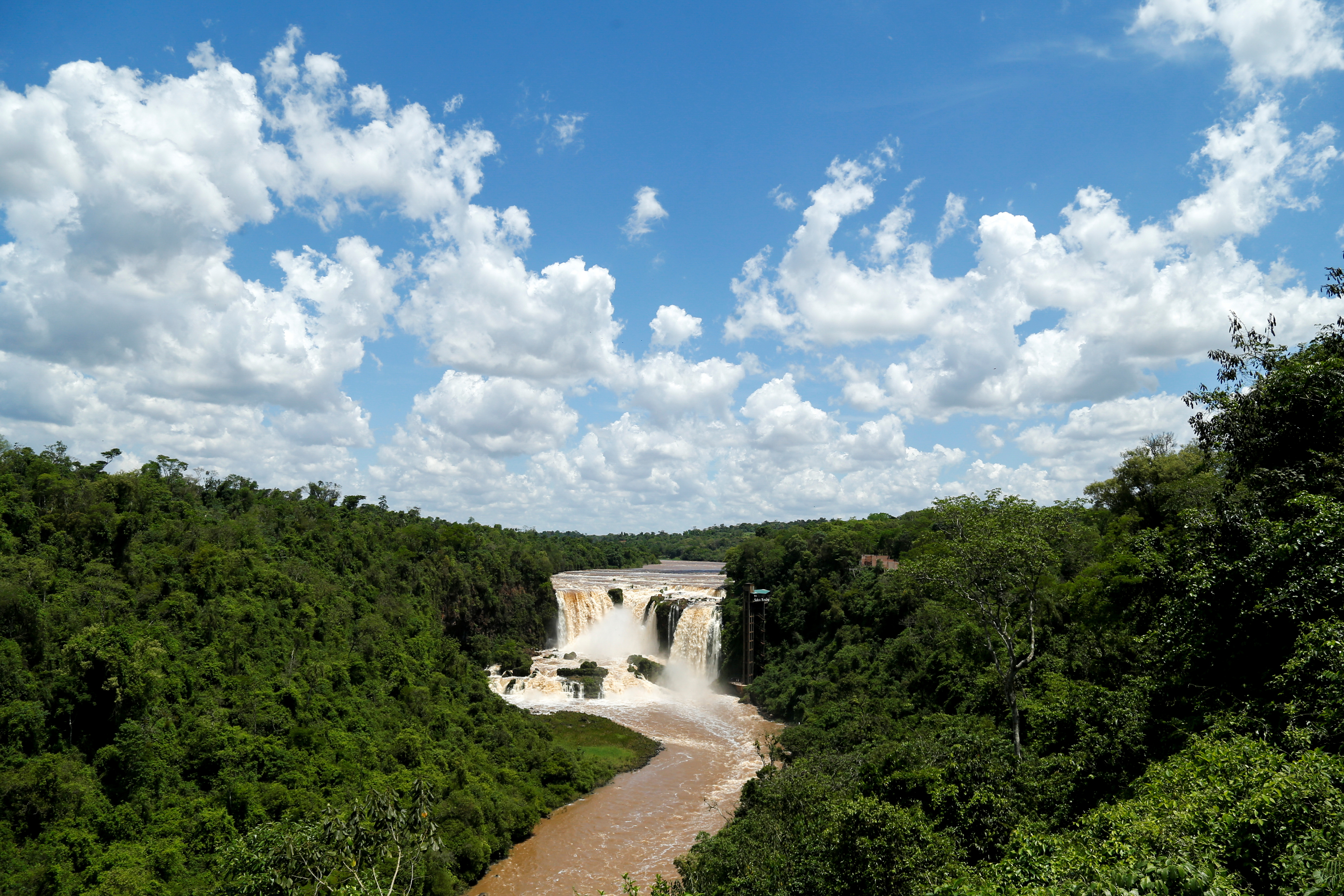
Ten of the world’s most protected forests have become net emitters of carbon, as they are degraded by human activity and climate change.

The alarming insight is from a study of  planet-warming gases emitted from and absorbed by forests in Unesco World Heritage sites.

It revealed 10  protected forests had emitted more carbon than they locked away over the past 20 years.

World heritage forests span an area twice the size of Germany.

The same research also revealed the network of 257 World Heritage forests around the world collectively removed 190 million tonnes of carbon from the atmosphere every year.

“That is nearly half of the UK’s annual carbon emissions from fossil fuels,” said Dr Tales Carvalho Resende, from the United Nations Educational, Scientific and Cultural Organization (Unesco), who co-authored the report.

“We now have the most detailed picture to date of the vital role that [these] forests play in mitigating climate change.”

But forests face a raft of pressures, including illegal logging, the expansion of farming and wildfires – which are made more likely by climate change.

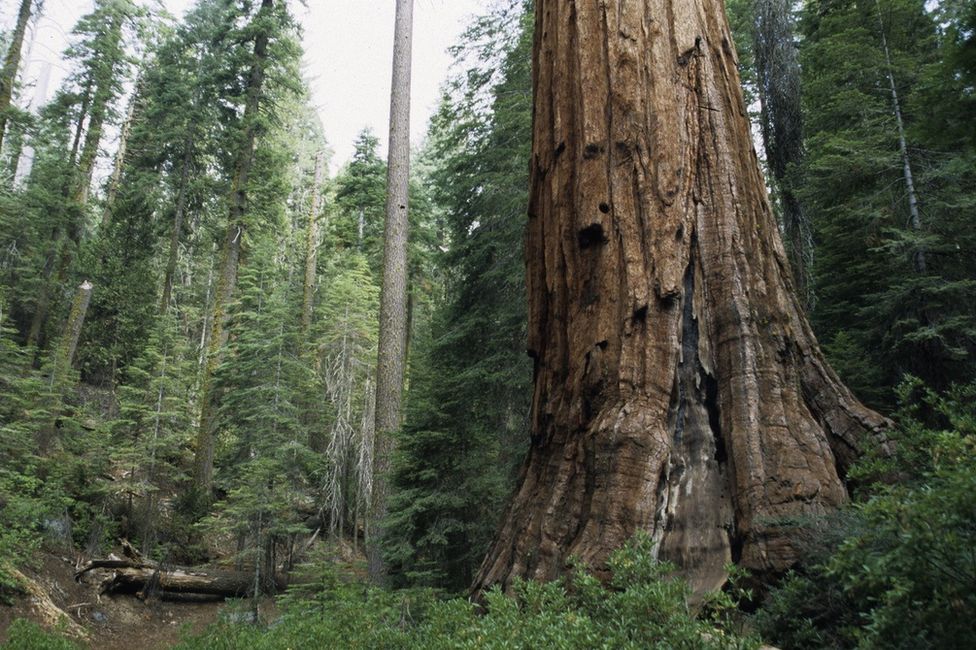
Giant sequoias in California - some of the oldest living things on Earth - have been lost to wildfire
Giant sequoias in California – some of the oldest living things on Earth – have been lost to wildfire

Combining satellite-derived data with monitoring information at the site level, researchers estimated the carbon absorbed and emitted by  World Heritage forests between 2001 and 2020.

But as well as calculating the billions of tonnes of carbon absorbed by all that “biomass” of trees and vegetation, the research revealed how much pressure some of these sites were under.

The sites studied in this assessment have some of the highest levels of official protection.

They are deemed globally significant in terms of their natural value to the world and are closely and continuously monitored.

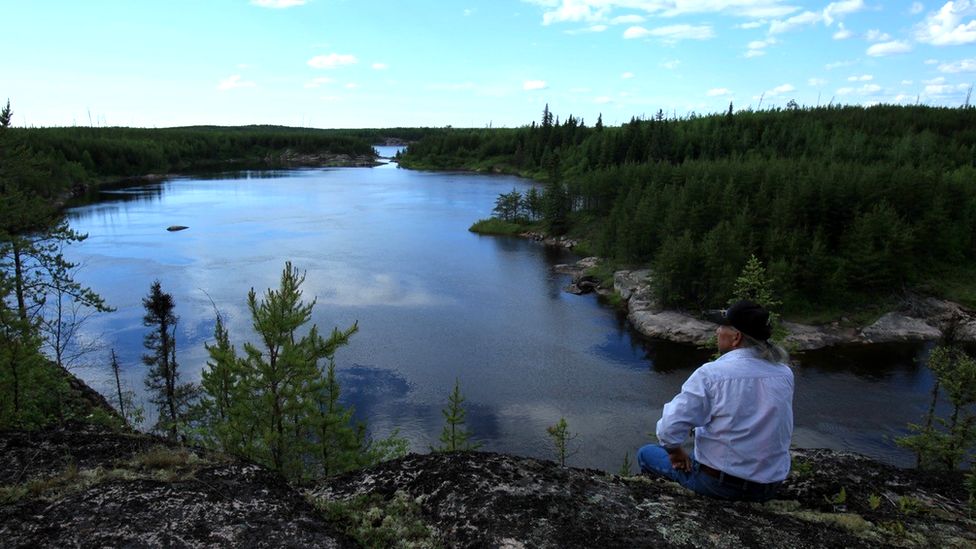
A world heritage forest in Canada
Pimachiowin Aki is a World Heritage site in Canada

“But they’re still under significant pressure,” Dr Carvalho Resende said.

“The main pressures are agricultural encroachment, illegal logging – human-induced pressures.

“But we also found climate-related threats – most specifically wildfires.”

‘Vicious cycle’

In recent years, what Unesco called “unprecedented wildfires”, notably in Siberia, the US and Australia, have generated tens of millions of tonnes of CO2.

“It’s a vicious cycle,” Dr Carvalho Resende said.

“More carbon emissions means more wildfires, which means more carbon emissions.”

And wildfires are not the only climate-related threat.

line

World Heritage sites that were net carbon contributors from 2001-2020

  1. The  tropical rainforest in Sumatra, Indonesia
  2. The Río Plátano Biosphere Reserve, Honduras
  3. Yosemite National Park, US
  4. Waterton Glacier International Peace Park, Canada and US
  5. The Barberton Makhonjwa Mountains, South Africa
  6. Kinabalu Park, Malaysia
  7. The Uvs Nuur Basin, Russia and Mongolia
  8. Grand Canyon National Park, US
  9. The Greater Blue Mountains area, Australia
  10. Morne Trois Pitons National Park, Dominica
line

‘Alarming message’

Hurricane Maria destroyed an estimated 20% of the forest cover in Morne Trois Pitons National Park, Dominica, in 2017.

“There’s an alarming message from this study,” Dr Carvalho Resende said.

“Even the best and most protected forest areas in the world are threatened by the global climate crisis.

“So action [to cut global emissions] is really needed now to ensure that these forests – that all forests – can continue to act as carbon sinks and, of course, as important sites for biodiversity.”

The post Climate Change: Human Activity Makes Forests Emit Carbon appeared first on The St Kitts Nevis Observer.
Barbados: Two Women Injured in Foiled Bank Robbery

Two female Republic Bank staff members were injured when shots were fired in an attempted bank heist at the Wildey, St Michael branch, which ended when the lone gunman fled reportedly empty-handed.

Chief executive officer and managing director of Republic Bank Barbados Anthony Clerk has confirmed that two female members of staff were injured during a foiled robbery of the Wildey, St Michael branch.

No money was taken, according to bank officials.

One woman was reportedly grazed, while the other woman was injured after a bullet appeared to have ricocheted. Both women were transported to the Queen Elizabeth Hospital by ambulance for treatment.

Clerk said other members of staff were receiving counselling under the Employees’ Assistance Programme, and noted the bank would remain closed until further notice.

Meanwhile, Assistant Superintendent of Police attached to the Bridgetown Division, Dale Crichlow, reported a masked man entered the bank at about 9:25 a.m. and handed a teller an empty bag.
Shots were fired, and the man fled the bank, escaping in a waiting vehicle. Crichlow also denied reports that one of the injured women had passed away.
Police have asked anyone with information that could assist with the investigation to contact the Police Emergency Hotline at 211, the District “A” Police Station 430-7242/46, or any other police station. 

The post Barbados: Two Women Injured in Foiled Bank Robbery appeared first on The St Kitts Nevis Observer.

Puerto Rico Leads US In Covid Vaccination Rate

The highest rate of COVID-19 vaccination in the U.S. is not in a liberal-leaning Northeastern or West Coast state. It’s in Puerto Rico, where more than 73% of the total population is fully vaccinated. The U.S. national average is just over 57%.

The high vaccination rate stands in contrast to Puerto Rico’s initial vulnerability to the coronavirus. Four years after Hurricane Maria destroyed the electricity grid, power outages still occur regularly. Many municipalities face a shortage of health care facilities and workers.

The U.S. territory responded with some of the strictest pandemic measures in the country, including nonessential-business closures, stay-at-home orders and mask mandates.

Mónica Feliú-Mójer, the director of communications and science outreach for the nonprofit organization Ciencia Puerto Rico, says that people responded pretty well to the measures.

“There was so much concern with, when the pandemic started, that we have such a fragile health care system,” she told NPR’s Audie Cornish on All Things Considered.

San Juan’s convention center hosted Puerto Rico’s first mass COVID-19 vaccination event on March 31.

“There’s a lot of concern that the pandemic could cause it to collapse. So I think everyone pretty much rallied to do what needed to be done so that we could keep that health care system from collapsing and, you know, from having the worst happen in Puerto Rico.”

The high vaccination rate also correlates with one of the country’s lowest coronavirus community transmission rates, according to data from the Centers for Disease Control and Prevention, and one of the country’s lowest test positivity rates, hovering around 2%.

The head of the scientific coalition advising Puerto Rico on COVID-19 (and the founder of Ciencia Puerto Rico), Daniel Colón-Ramos, says this correlation is not a coincidence.

“It represents a lot of saved lives,” Colón-Ramos told CNN.

“It’s really about the fact there are hundreds of people — if not thousands — right now walking around somewhere in Puerto Rico and they wouldn’t be there if it wasn’t for these efforts.”

What the mainland can learn from Puerto Rico

Feliú-Mójer says one reason for the success with vaccination is a difference in political culture compared with the mainland United States. In the continental U.S., Republicans have consistently fought mask-wearing rules and vaccine mandates, citing personal liberty.

“We don’t see that correlation between political ideologies and people’s willingness to get vaccinated or use masks,” she said. “It’s not like the issue of COVID and vaccination hasn’t been politicized. It’s just been politicized in a different way, not in terms of identities or ideologies, political ideologies.”

While Feliú-Mójer notes that there are small but vocal anti-vaccine groups in Puerto Rico, she also points to a “really good” historical acceptance of vaccines. She says a key is engaging people on their values, beliefs or identities rather than allowing them to contribute to polarization. Another is fostering solidarity in the public health effort.

“We have to take differentiated strategies to reach different audiences and understand what drives them to get vaccinated or not,” she said. “And then I think broad coalitions … different groups of people and segments of society in Puerto Rico came together to work towards preventing COVID-19, vaccinating people against COVID-19. And I think those broad coalitions are going to be really important to get vaccination levels higher in the United States.”

Its successes aside, Feliú-Mójer noted that COVID-19 has still killed over 3,200 people in Puerto Rico. And she remains concerned about vaccine equity — particularly in rural communities or among older adults who can’t get out of their homes or don’t know how to make an appointment. She says the high overall vaccination rate can hide gaps in coverage.

Dr. Susana Schwarz inoculates a man at the Puerto Rico Convention Center in San Juan during a mass COVID-19 vaccination event in March.

Ricardo Arduengo/AFP via Getty Images

“You have to look beyond that big number,” she said in a separate interview with NPR. “But then you look at certain municipalities like Loíza, a town in coastal northern Puerto Rico that’s predominantly Black and [a] very poor municipality. Their vaccination rate is about 55%. And so when you look at some of the social determinants that impact communities like Loíza, then they’re not doing as well.”

According to the Census Bureau, the poverty rate in Puerto Rico stands at 43.5%, while the official poverty rate in the U.S. is much lower, at 11.4%. The 2020 census also counted a population just shy of 3.3 million people — more than the populations in 21 states.

Those are important figures to consider in weighing Puerto Rico’s overall vaccination success, says Colón-Ramos, the adviser to the Puerto Rican government, who is also a professor at the Yale School of Medicine.

“The experience with vaccines in places like Puerto Rico and the Navajo [N]ation shows that when resources are distributed equitably AND when local scientists and health care leaders are able to direct their own strategies, they can perform better than most US jurisdictions,” Colón-Ramos wrote on Twitter.

The post Puerto Rico Leads US In Covid Vaccination Rate appeared first on The St Kitts Nevis Observer.