Category Archives: headline

Caribbean Tourism Comes Roaring Back Despite Pandemic

LoopDespite the challenges presented by the pandemic in the last year and a half, the Caribbean tourism industry has outperformed the rest of the world.

Preliminary data from member countries of the Caribbean Tourism Organization (CTO) reveal that the region outperformed the rest of the world in the first half of 2021.

The CTO said during this period, international tourist arrivals to the Caribbean reached 6.6 million, representing a 12.0 per cent decline when compared to the same period last year.

By the end of May, arrivals were at 5.2 million, down 30.8 per cent for the corresponding period in 2020, considerably better than the global average of a 65.1 per cent decline.

Of the main regions analysed, The Americas, which included the Caribbean, registered a 46.9 per cent drop, otherwise, no other region performed better than a 63 per cent fall in arrivals.

The CTO said while the tourist arrivals continued to lag pre-pandemic numbers, the first half-year performance was boosted by a second-quarter spurt when overnight tourist visits to the Caribbean jumped between 10 and 37 times greater than those in the corresponding months in 2020.

In absolute terms, there was a steady improvement, as arrival numbers increased from one million in April to 1.2 million in May to 1.5 million in June, according to data compiled by the CTO’s research department.

Among the reasons for the strong second quarter was a rise in outbound travel from the region’s primary market, the United States, from which tourist visits reached 4.3 million in the first half of the year, a 21.7 per cent increase. Other contributing factors included the easing of some travel restrictions and an increase in airlift.

“These are encouraging signs that the hard work our member countries have put into adapting to the changing environment of the pandemic is beginning to pay dividends,” said Neil Walters, the CTO’s acting secretary-general.

 “Even as we embrace a recovery mindset and the opportunities the pandemic has given us, we must continue to be mindful of the challenges we currently face and the potential challenges a dynamic situation like the pandemic can present. The Caribbean tourism sector is known to be one of the most resilient in the world.”

The post Caribbean Tourism Comes Roaring Back Despite Pandemic appeared first on The St Kitts Nevis Observer.
SKN Success Cited as Jamaica Considers CBI Scheme for Development Funding

The Government is being pushed to consider adopting a citizenship-by-investment programme with the funds gained through the process used for various development projects.

Julian Dixon, CEO and broker at Jamaica Sotheby’s International Realty, made the call on Friday during the launch of the luxury real estate dealer’s operation in Jamaica. “Of Course, I would expect that like many other countries in the world, including some of our own brothers and sisters in the Caribbean, that there would be a developed criterion which would determine eligibility.

This would include but not be limited to individuals of sound character and one’s ability to meet a minimum foreign investment value,” Dixon told the audience in attendance at the AC Marriot Hotel in St Andrew. She said funds gained from the project should be used to invest in the country’s infrastructure, real estate, job creation and business development.

Dixon pointed out to Sunday Finance that St Kitts and Nevis, which pioneered the citizenship-by-investment programme in 1984, has invested upwards of US$300 million from the programme in modernising its infrastructure and said Jamaica could do the same.

At least five countries in the Caribbean — St Kitts and Nevis, Antigua and Barbuda, Dominica, Grenada and St Lucia — have citizenship-by-investment programmes. Under the programme sometimes referred to as “economic citizenship”, people wishing to acquire citizenship of a country with which they have no previous ties, can obtain citizenship after meeting certain criteria and making a significant investment in that country’s economy.

Investments in the five Caribbean countries listed above start at US$100,000 and run into millions in some cases. Some programmes such as the one in St Kitts and Nevis require a donation in a State fund. Most seek to acquire citizenship because of ease of travel. It is not clear if Jamaica holds such advantage as other islands.

Citizenship-by-investment programmes have helped to attract high net worth individuals to the islands. Dixon is after the same cohort locally and internationally with Jamaica Sotheby’s International Realty — a company she owns and operates with Alexander Melville. Both bring 27 years of combined experience in real estate.

With Sotheby’s, they are targeting the upper end of the market with luxury real estate. The brand was founded in 1976 in the United States and now operates in 78 countries, with Jamaica being the latest addition.

“Sotheby’s International Realty is the number one network for luxury properties in the world. The shared professional knowledge of its members enables us to create new opportunities for local sellers of real estate as well as those from around the globe who are looking to buy exclusive properties in our beautiful island located in the heart of the Caribbean Sea,” Dixon said in prepared remarks.

“Jamaica offers a diverse luxury lifestyle which appeals to a wide variety of buyers,” said Philip White, president and CEO, Sotheby’s International Realty.

“In recent years, closed transactions have seen steady growth and new construction is booming on the island.

The Jamaican market has historically appreciated year-after-year with interest from domestic and international interest in North America, Europe, Canada, and most recently the Middle East, motivated by the island’s many opportunities and its tourism sector. I want to welcome Julian and her team to the network and look forward to working together to support the island.”


The post SKN Success Cited as Jamaica Considers CBI Scheme for Development Funding appeared first on The St Kitts Nevis Observer.
Migrants Deported Back to Haiti Face Challenge of Survival

A lookout keeps an eye on rival gangsters in downtown Port-au-Prince, Haiti, in September. At least 165 gangs – many with tacit political backing and support – operate in the country.

A lookout keeps an eye on rival gangsters in downtown Port-au-Prince, Haiti, in September. At least 165 gangs – many with tacit political backing and support – operate in the country. Photograph: Rodrigo Abd/AP
in Port-au-Prince
GUARDIAN

Many returned to a country they had not seen for years, and many are already plotting another escape as gang violence has left Haiti on the brink of civil war


When Reynold Joseph was deported from the US back to Haiti after five years in South America, he was unprepared for just how bad things had become in his homeland.

Outside a ramshackle guesthouse near downtown Port-au-Prince, where he and a dozen other deportees are staying, some goats were grazing on burning piles of rubbish, while drivers honked and cursed in a queue for petrol that snaked round the block. Each night, Joseph’s three-year-old son stirs in the sweltering heat, and bursts of gunfire ring out in the distance.

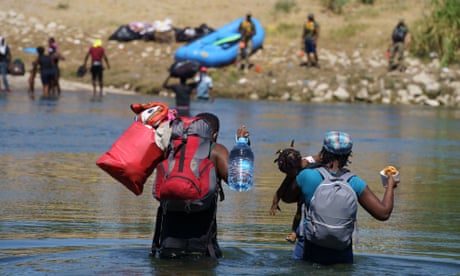
Haitians cross the Rio Grande back to the United States in Parque Ecologico Braulio Fernandez in Ciudad Acuna, Mexico.
‘They treated us like animals’: Haitians angry and in despair at being deported from US.
“It’s no secret that Haiti is poor and unsafe,” said Joseph, who along with thousands of his countrymen was detained in southern Texas last month before being shackled and flown to Port-au-Prince. “But I didn’t know it had gotten this bad.”

It was his first time back to the country after five years in Chile with his wife. For their son, a Chilean citizen who was born in Santiago, it was his first ever visit to the country.

There is a Haitian proverb, beyond mountains there are mountains, loosely meaning that after one problem comes another, and in Port-au-Prince, that saying is a harrowing reality.

Violent gangs rule the streets, kidnapping residents rich and poor alike for ransom every day, while shortages of fuel and basic goods are common, and public services from traffic lights to sewer systems are practically nonexistent. When President Jovenel Moïse was assassinated in his home on 7 July in circumstances that remain murky, the situation only worsened. An earthquake the following month added to Haiti’s misery, killing at least 2,200 people and leaving tens of thousands homeless.

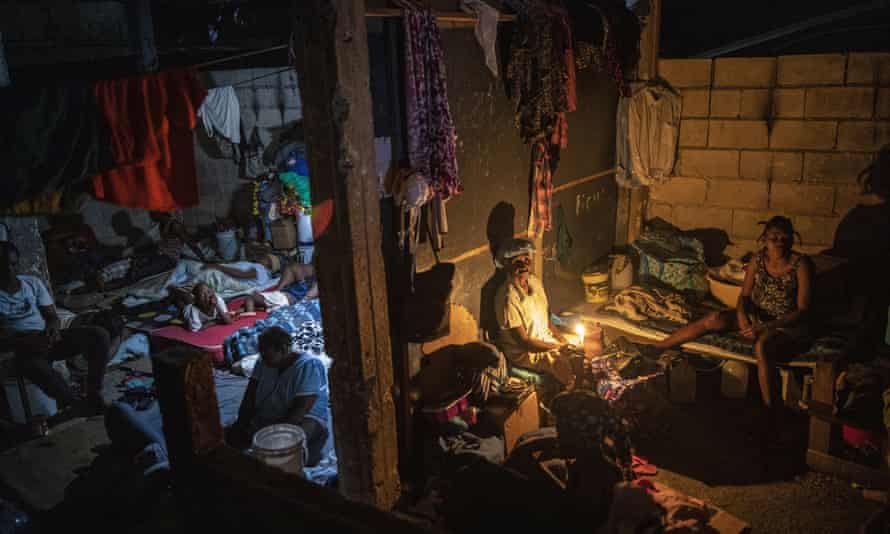
People displaced by gang violence occupy a school turned into a long-term shelter in Port-au-Prince.
People displaced by gang violence occupy a school turned into a long-term shelter in Port-au-Prince. Photograph: Rodrigo Abd/AP

Overlapping calamities led the US to advise its embassy staff to stay in the compound, and its citizens to avoid all travel to the country. After the earthquake, the Biden administration extended “temporary protected status” for thousands of Haitian migrants and refugees already in the US to live and work legally. Just a few weeks later, thousands of desperate Haitians who had been detained on the Texas border were deported.

Many of them were returning to a country they had not seen for years, and many of those deportees are already plotting another escape. Some, who had already spent years in Brazil or Chile, plan to try their luck in South America again.

But for many the immediate challenge is survival.

“Of course we want to go back but we spent all our savings trying to get into the US,” Joseph said, speaking in Spanish, which he learned while working as a builder in Chile’s capital, Santiago. “So this is our life now, while we save to try and get out.”

Many recent deportees fled Haiti after the devastating 2010 earthquake that leveled much of Port-au-Prince, killing more than 200,000 and setting the country on a downward spiral of instability from which it has still not recovered.

Since then, gang violence in Haiti has left the country on the brink of civil war. At least 165 gangs – many with tacit political backing and support – operate in the country, running extortion rackets, kidnapping for ransom, and overseeing the local drug and arms trade. Many gang leaders have links with the country’s fragile and corrupt police force; the leader of the most powerful is a former police officer.

“There are areas where the police will not go, where it’s a war zone like Vietnam or Afghanistan,” said Luis Henry Mars, who works on peace building projects in areas controlled by gangs. “The gangs are the state in these neighbourhoods.”

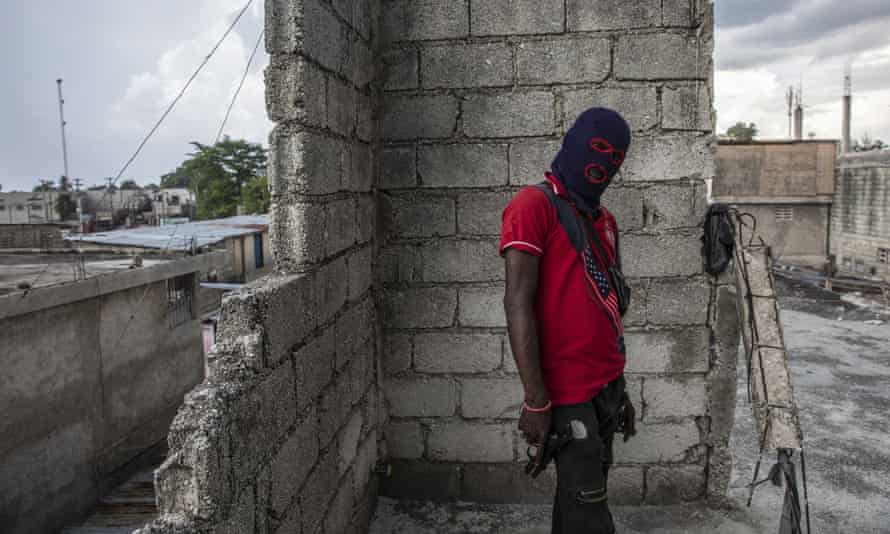
A gang member, wearing a balaclava and holding a gun, poses for a photo in the Portail Léogâne neighborhood of Port-au-Prince.
A gang member, wearing a balaclava and holding a gun, poses for a photo in the Portail Léogâne neighborhood of Port-au-Prince. Photograph: Rodrigo Abd/AP

In few places is the brutal rule of the gangs felt more than in Martissant, one of Port-au-Prince’s most notorious districts, which looks everything like an urban war zone.

The buildings that are still standing are pockmarked with bullet holes – including a police station and a hospital once run by Medecins Sans Frontiers, which in June shut its doors after stray bullets hit its walls. Shops and shacks have been looted and razed. Just a few blocks over, the markets teem with commerce, but here, the few locals who remain dare not leave their homes and the streets are a barren wasteland.

The main road, which connects the capital with the country’s southern peninsula, is barely paved and strewn with rubbish, some of it burning in smoldering, rank embers. When it rains, latrines flood, filling potholes with sewage. Up the hills that lead towards hundreds of homes, tyres and the burnt-out chassis of cars block roads, ensuring anyone who attempts to pass can be vetted or kidnapped for ransom.

Motorists immediately hit the accelerator as they enter Martissant. Trucks carrying food and supplies to survivors of the recent earthquake in the south are routinely turned back at roadblocks hastily thrown up by masked gunmen.

On Monday, the road was blocked, gang members exchanged gunfire and a commuter bus was shot at, injuring at least four.

“They only way you can get through is if you have local connections and are able to negotiate passage,” said one Haitian aid worker who grew up in Martissant.

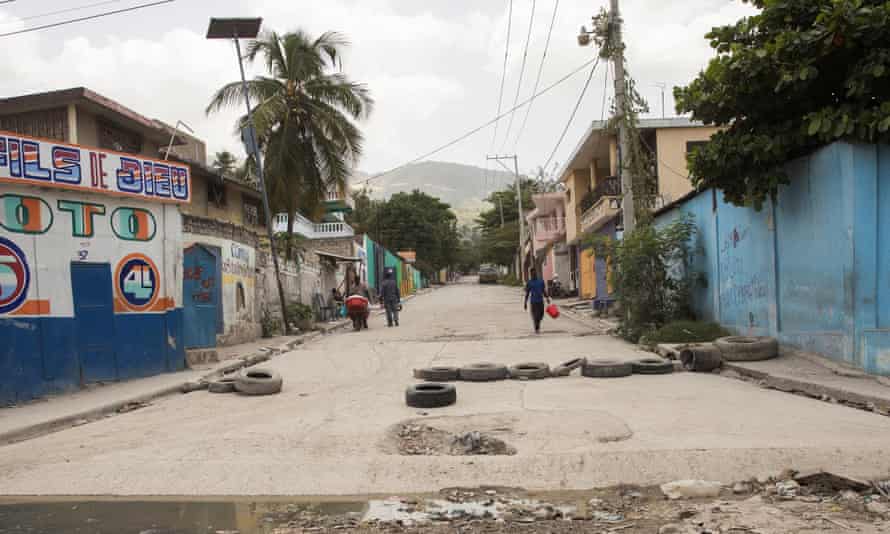
A street in Martissant, a neighborhood controlled by armed gangs, in Port-au-Prince.
A street in Martissant, a neighborhood controlled by armed gangs, in Port-au-Prince. Photograph: Orlando Barría/EPA

Thousands of residents from Martissant evacuated the neighbourhood in June due to the violence, and are now living as refugees in a sports centre that has been converted into a shelter just one mile from their homes.

Coriolande Auguste fled her home after it was was burgled and torched by gangs, and she sent her toddler daughter to live with her mother in the southern city of Les Cayes. The earthquake in August damaged their home there, leaving Auguste’s elderly mother and young daughter homeless too. The 2010 earthquake killed two uncles and her older sister, while paralyzing her father and leaving Auguste as the sole breadwinner in the family.

Now, Auguste relies on handouts to survive, often going days without eating, and sleeping on a thin roll mat on the hard floor of the overcrowded gymnasium. More than a dozen women in the shelter are pregnant, and there are nearly 350 toddlers.

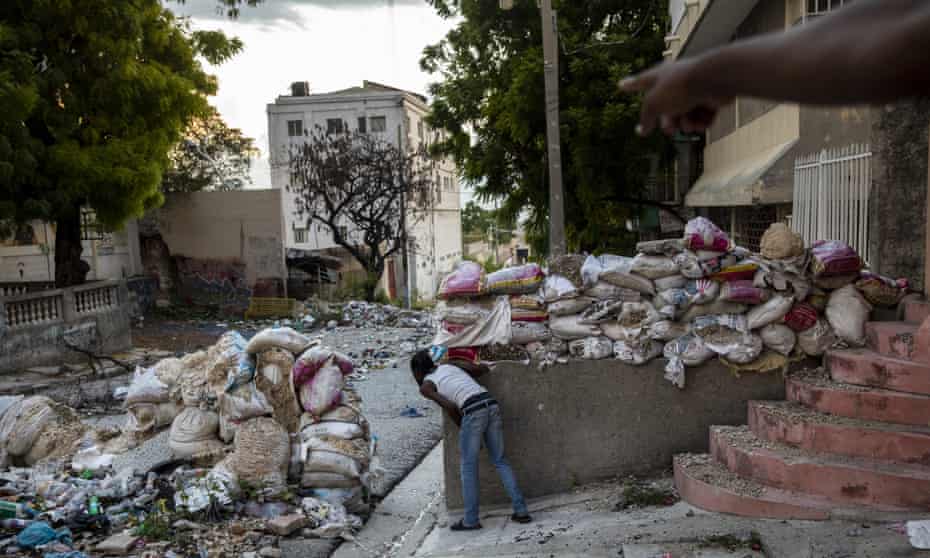
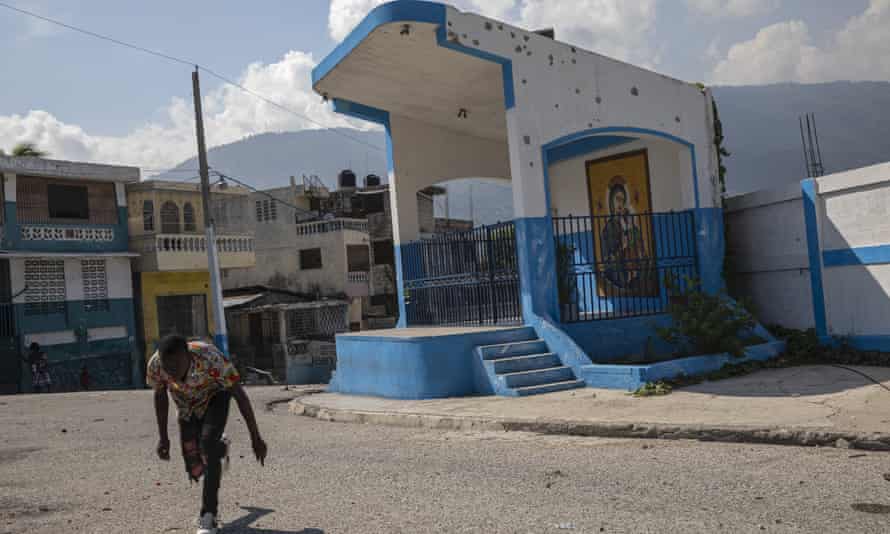
A man runs for cover as he crosses a barricaded street in the gang-controlled Bel Air neighborhood of Port-au-Prince.
A man runs for cover as he crosses a barricaded street in the gang-controlled Bel Air neighborhood of Port-au-Prince. Photograph: Rodrigo Abd/AP

“Once upon a time we were living perfectly fine but then all of a sudden all hell broke loose. So we ran – I grabbed one backpack and filled it with the first clothes I could grab,” she said, as a line for food, provided by an international charity, turned into a ruckus. “But my neighbourhood is a ghost town, and the only ones there are the crooks.”

Like so many Haitians, Auguste wants to start a new life in a safer, more stable country, but has neither the funds nor the papers to do so.

“Who wouldn’t want out of this?” she asked as a boy in a ripped T-shirt cycled laps on a dilapidated athletics track within the compound, abandoned since it was partially destroyed in the 2010 earthquake. “But I don’t have money to eat, let alone a plane ticket.

The post Migrants Deported Back to Haiti Face Challenge of Survival appeared first on The St Kitts Nevis Observer.
NIA to Hold Orientation Session for General Contractors Service Providers

NIA CHARLESTOWN NEVIS (October 12, 2021) — As part of its Public Awareness Campaign, the Department of Physical Planning and Environment announces a General Contractors’ Service Providers Orientation Session on Thursday October 21, 2021, at the St. Paul’s Anglican Church Hall at 4:30 p.m.

During this session, information relating to the Department’s requirements during the construction period of a development as well as the application of the St. Kitts-Nevis Building Code will be discussed.

The responsibility and liability of the contractor, as outlined in the Nevis Physical Planning and Development Control Ordinance, as amended, will be also be shared.

The target audience is persons providing services as general contractor on the island of Nevis.

The post NIA to Hold Orientation Session for General Contractors Service Providers appeared first on The St Kitts Nevis Observer.
World View: US Borders to Reopen, Migrant Abuse, Capt. Kirk to Blast Off, Pacific Storms, More

Oct 13, 2021

Alternate text

The Associated Press

The Rundown

I'm an image

WASHINGTON (AP) — The U.S. will reopen its land borders to nonessential travel next month, ending a 19-month freeze due to the COVID-19 pandemic as the country moves to require all international visitors to be vaccinated against the coronavirus….Read More

I'm an image

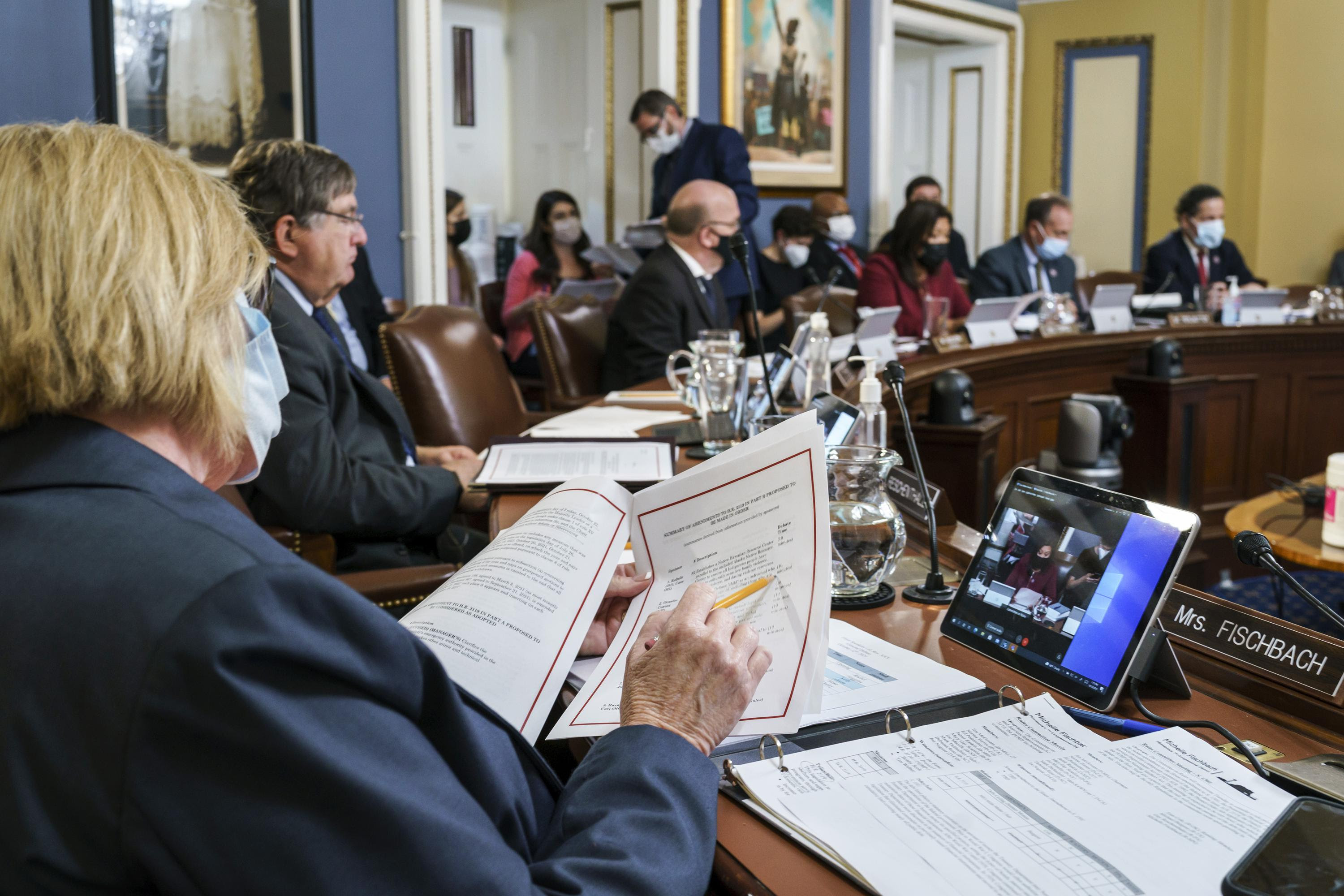
WASHINGTON (AP) — Members of the House on Tuesday pushed through a short-term increase to the nation’s debt limit , ensuring the federal government can continue fully paying its bills into December and temporarily averting an unprecedented defau…Read More

I'm an image

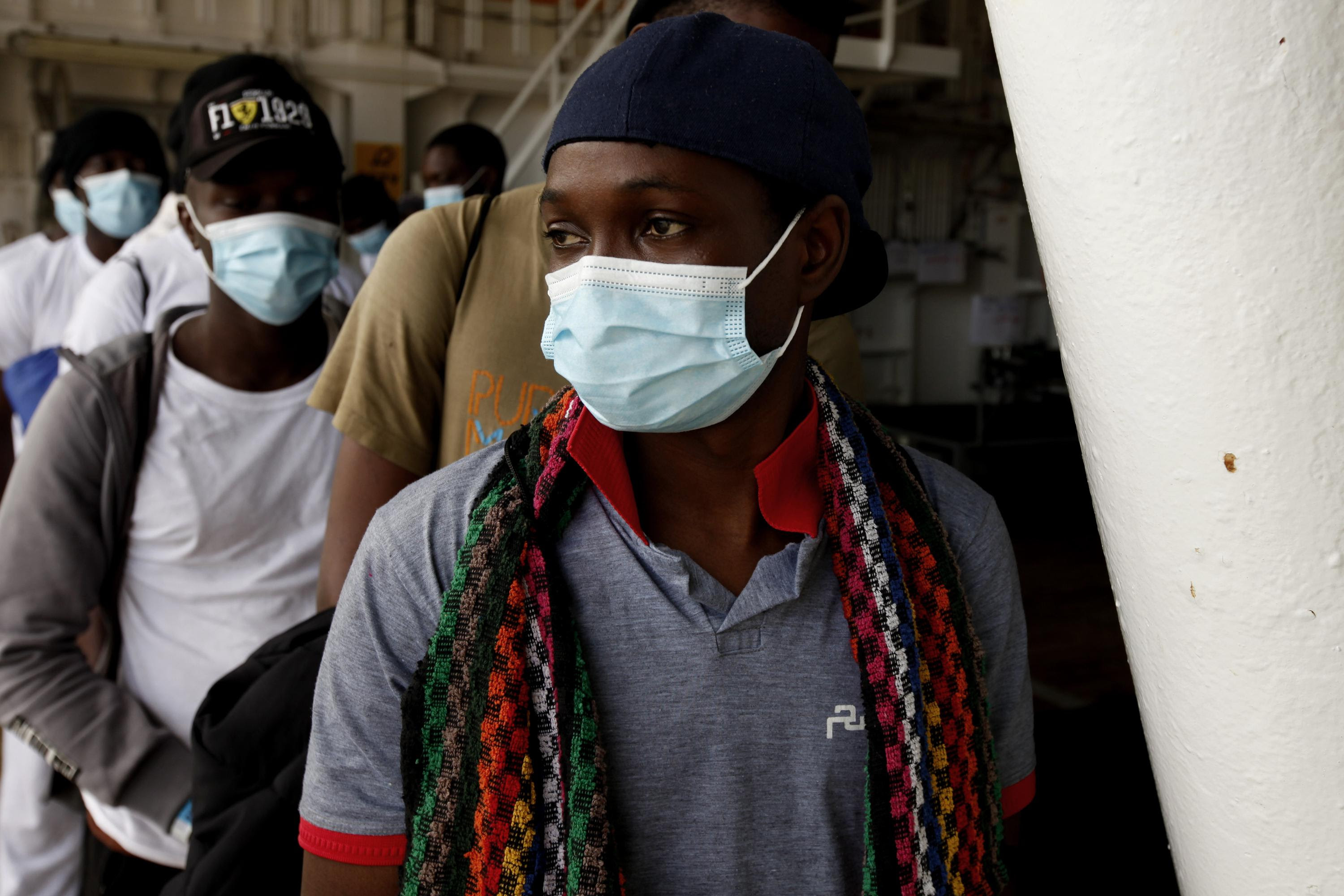
ONBOARD THE GEO BARENTS OFF LIBYA (AP) — Osman Touré was crying from the pain of repeated beatings and torture as he dialed his brother’s cellphone number. “I’m in prison in Libya,” Touré said in that August 2017 call. …Read More

I'm an image

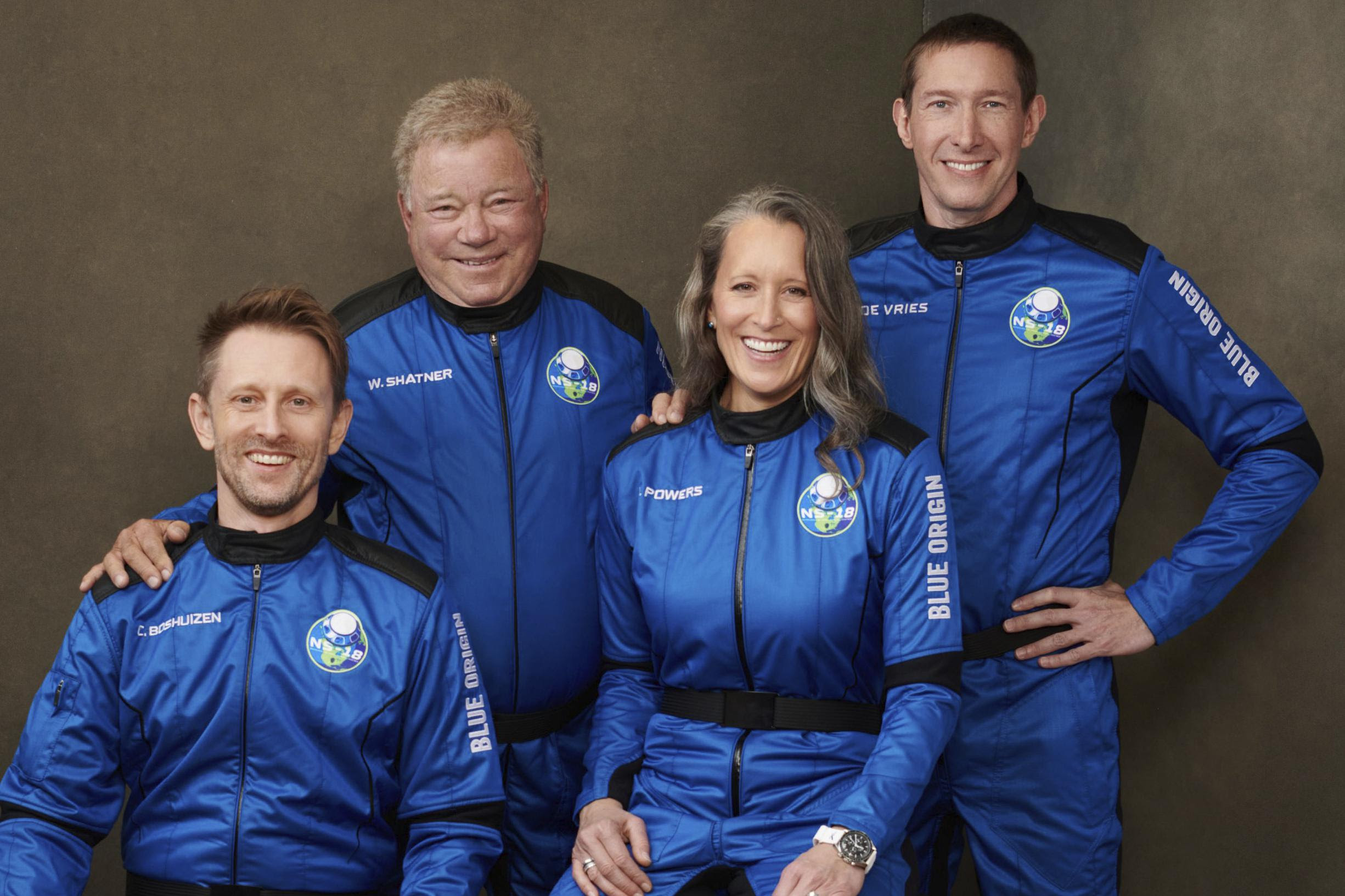
VAN HORN, Texas (AP) — Actor William Shatner counted down Wednesday to his wildest role yet: riding a rocket into space, courtesy of “Star Trek” fan Jeff Bezos….Read More

I'm an image

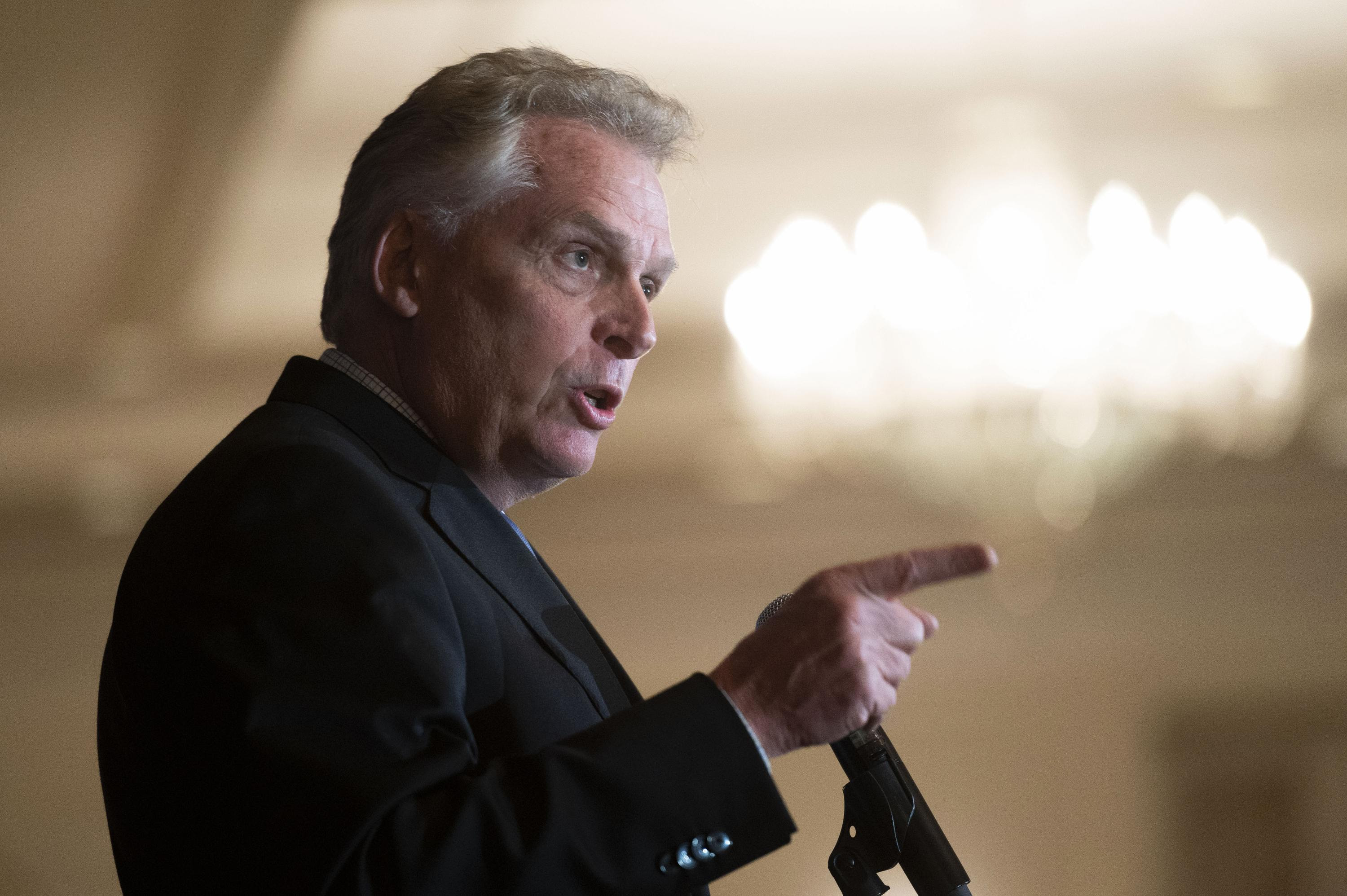
RICHMOND, Va. (AP) — Terry McAuliffe, the Democratic candidate for Virginia governor, on Tuesday called on leaders in Washington from both parties — including President Joe Biden — to “get their act together,” while pushing Senate Democrats to s…Read More

OTHER TOP STORIES

MEXICO CITY (AP) — Tropical Storm Pamela is picking up forward momentum in the Pacific off Mexico and forecasters say it should be back to hurricane strength again befo…Read More

BEIJING (AP) — Hong Kong suspended classes, stock market trading and government services as a typhoon passed south of the city Wednesday….Read More

DALLAS (AP) — When Southwest Airlines canceled more than 2,000 flights over the weekend, citing bad weather and air traffic control issues, unsupported claims blaming v…Read More

SEOUL, South Korea (AP) — “Squid Game,” a brutal Netflix survival drama about desperate adults competing in deadly children’s games for a chance to escape severe debt h…Read More

Alternate text

AP Morning Wire


Good morning. Here is today’s selection of top stories from The Associated Press at this hour to begin the U.S. day.


The Associated Press

Advancing the Power of Facts

The Rundown

I'm an image

WASHINGTON (AP) — The U.S. will reopen its land borders to nonessential travel next month, ending a 19-month freeze due to the COVID-19 pandemic as the country moves to require all international visitors to be vaccinated against the coronavirus….Read More

I'm an image

WASHINGTON (AP) — Members of the House on Tuesday pushed through a short-term increase to the nation’s debt limit , ensuring the federal government can continue fully paying its bills into December and temporarily averting an unprecedented defau…Read More

I'm an image

ONBOARD THE GEO BARENTS OFF LIBYA (AP) — Osman Touré was crying from the pain of repeated beatings and torture as he dialed his brother’s cellphone number. “I’m in prison in Libya,” Touré said in that August 2017 call. …Read More

I'm an image

VAN HORN, Texas (AP) — Actor William Shatner counted down Wednesday to his wildest role yet: riding a rocket into space, courtesy of “Star Trek” fan Jeff Bezos….Read More

I'm an image

RICHMOND, Va. (AP) — Terry McAuliffe, the Democratic candidate for Virginia governor, on Tuesday called on leaders in Washington from both parties — including President Joe Biden — to “get their act together,” while pushing Senate Democrats to s…Read More

OTHER TOP STORIES

MEXICO CITY (AP) — Tropical Storm Pamela is picking up forward momentum in the Pacific off Mexico and forecasters say it should be back to hurricane strength again befo…Read More

BEIJING (AP) — Hong Kong suspended classes, stock market trading and government services as a typhoon passed south of the city Wednesday….Read More

DALLAS (AP) — When Southwest Airlines canceled more than 2,000 flights over the weekend, citing bad weather and air traffic control issues, unsupported claims blaming v…Read More

SEOUL, South Korea (AP) — “Squid Game,” a brutal Netflix survival drama about desperate adults competing in deadly children’s games for a chance to escape severe debt h…Read More

The post World View: US Borders to Reopen, Migrant Abuse, Capt. Kirk to Blast Off, Pacific Storms, More appeared first on The St Kitts Nevis Observer.
Cuba Denies Permission for Opposition Protest Marches

HAVANA, Oct 12 (Reuters) – Cuba on Tuesday denied government opponents permission to stage what they said would be a peaceful march for civil liberties in the capital Havana and a few other provinces on grounds it was part of efforts to overthrow the government, according to a letter handed to organizers.

Protests rocked the Communist-run country for two days in July, with the biggest anti-government demonstrations in decades resulting in hundreds of arrests, one death and calls for U.S. intervention by some Cuban-Americans.

Government critics, organized by a Facebook group called Archipelago, initially planned protests across the country for Nov. 20, but switched the date to Nov. 15 after authorities declared the 20th a “National Defense Day” during which citizens practice preparedness for a U.S. invasion.

The fallback date of the 15th, however, falls on the same day Cuba, an island nation of white sand beaches and coral reefs, plans to reopen to tourism after two years in which the all-important industry was hobbled by the coronavirus pandemic.

Cuba watchers and many governments have been closely following this newest challenge to local authorities.

Protests in Cuba have always been forbidden with few exceptions on grounds the United States was behind them, but the country’s new constitution, approved three years ago, opened a new space for “legitimate” protest.

“The protesters … as well as their links with some subversive organizations … have the open intention of changing the political system in Cuba,” a letter to organizers rejecting permission said.

“The protests are a provocation and part of a regime change strategy for Cuba tested in other countries.”

Archipelago, which says it has some 20,000 members, many of whom live outside the country, said they had planned to rally for civil liberties including the right to peaceful protest and an amnesty for imprisoned government opponents.

“We thought this might happen after they declared the 20th National Defense Day,” protest leader and playwright Yunior García told Reuters.

“This response shows the most conservative and hard line have power in Cuba,” he said, adding the group was still discussing its next move.

Well-known government opponents are among those who remain behind bars following the July 11-12 unrest, some facing long sentences.

Reporting by Marc Frank and Nelson Acosta Editing by Marguerita Choy

The post Cuba Denies Permission for Opposition Protest Marches appeared first on The St Kitts Nevis Observer.
Guatemala, Mexico Come to Grips with Colonial Past, Repression


GUATEMALA CITY, Oct 12 (Reuters) – Protesters in Guatemala tried to topple a Christopher Columbus statue on Tuesday amid protests against the treatment of indigenous people by European conquerors, the latest effort in a global movement to re-examine symbols of the colonial era.

The demonstrations coincided with Hispanic Heritage Day, commemorated worldwide to mark Columbus’ arrival to the Americas, but which has faced criticism for not recognizing the disastrous effects on indigenous people, many of whom were enslaved or died of diseases brought by the foreigners.

In Guatemala’s capital on Tuesday, a group of people strained to dismantle a towering Columbus statue by pulling a long rope tied to its neck but could not tear it down, social media videos showed.

The monument, which stretches 30 feet (9 meters) up and weighs 10 tons, was shipped to Guatemala from Spain in 1896.

Another group of protesters succeeded in tearing away the head on a monument to former President Jose Maria Reina Barrios, who served from 1892 to 1898, after splashing it with red paint.

Daniel Pascual, a leading advocate for farmer rights, said he was on the streets for Indigenous Resistance Day, not to pay tribute to Columbus and the repressive leaders who followed.

“They were invaders and a continuation of the invasion,” he said.

Guatemala City said in a statement it opposed the “acts of vandalism” taken against monuments it described as “historical heritage.”

Columbus led several Spanish-funded expeditions from the 1490s onward, opening the way for the European conquest of the Americas. A number of statues honoring the Italian navigator have been removed from U.S. cities since the Black Lives Matter protests, as well as in other countries.

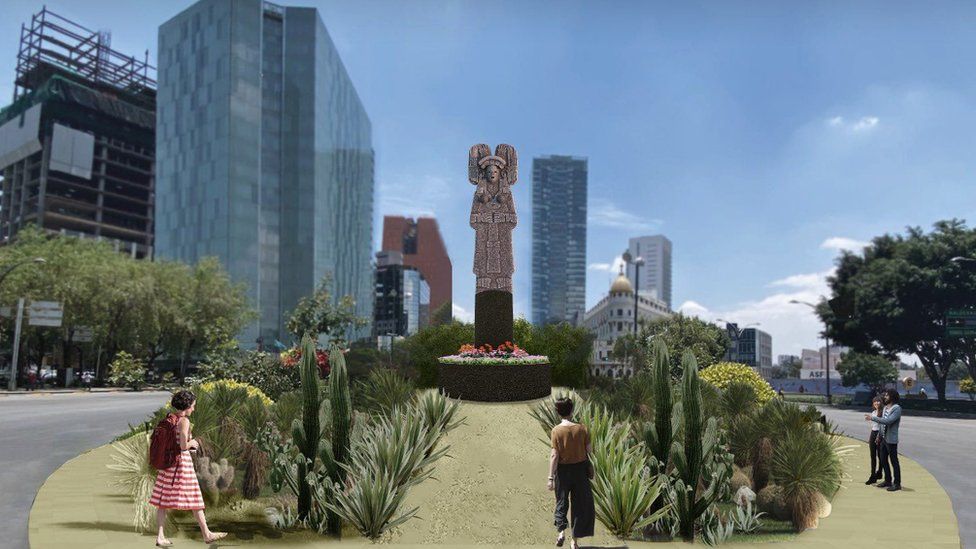
In Mexico’s capital, officials on Tuesday said a replica of a pre-Hispanic sculpture depicting an indigenous woman, dubbed “the young woman of Amajac,” will replace a bronze, 19th-century Columbus statue on the city’s main thoroughfare removed last year.

Reporting by Sofia Menchu; Writing by Daina Beth Solomon; Editing by Sandra Maler

===============================

Mexico City to swap Columbus statue for one of indigenous woman

Artist's rendition of Young Woman of Amajac statue
The Columbus statue will be replaced by a replica of the so-called Young Woman of Amajac

BBC- Mexico City’s governor has confirmed that a statue of an indigenous woman will replace the capital’s Christopher Columbus monument.

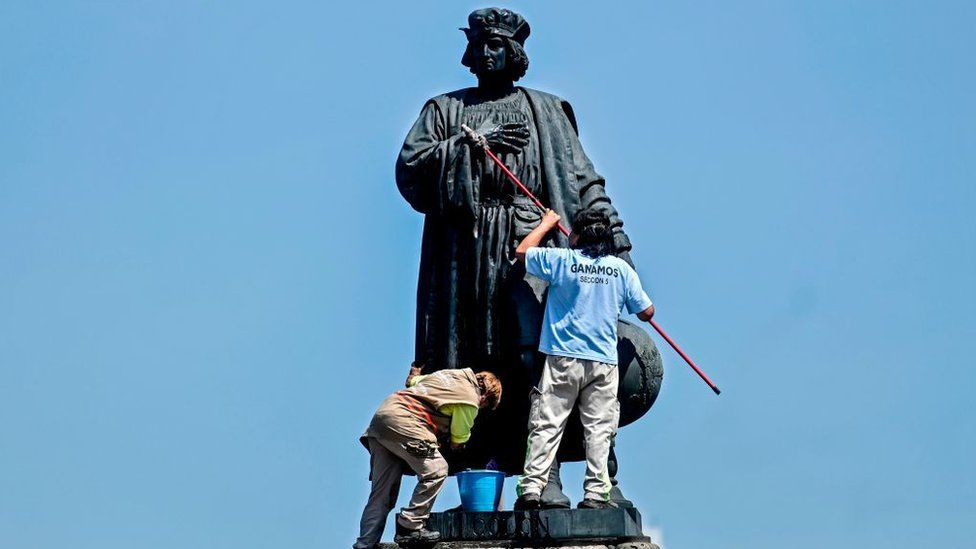
The statue was removed last year after indigenous rights activists threatened to tear it down.

Claudia Sheinbaum said it will be replaced by a replica of a pre-Columbian statue known as the Young Woman of Amajac.

Protesters have toppled Columbus statues in Latin America and the US.

Columbus, an Italian-born explorer who was financed by the Spanish crown to set sail on voyages of exploration in the late 15th Century, is seen by many as a symbol of oppression and colonialism as his arrival in America opened the door to the Spanish conquest.

Ms Sheinbaum’s latest announcement was made on 12 October – the anniversary of Columbus’ discovery of the Americas.

In the US it is widely celebrated as Columbus Day. But in Mexico and other Latin American countries it is known as Día de la Raza (Spanish: Day of the Race). Many view it as a commemoration to native resistance against European conquest.

Municipal workers clean a statue of Christopher Columbus, which was protected by a metal fence after activists called to tear it down on social networks, in Mexico City, on October 12, 2020.Image source, AFP
Image caption, The previous statue of Columbus was daubed with paint during protests last year

Ms Sheinbaum said she wanted to make the change as part of the “decolonisation” of the famous Reforma Avenue, where an empty plinth currently stands.

She added that the new monument – set to to be three times as tall as the Columbus statue – was in recognition that “indigenous women had been the most persecuted” during and after the colonial period.

The original Young Woman of Amajac was discovered in January in Veracruz.

It is believed that the sculpture depicts a leading female member of the Huastec people at the time of its creation.

The original currently sits in Mexico City’s Anthropology Museum, which is going to create the replica.

After the city government decided to remove the Columbus statute from its plinth, a number of proposals were put forward including a statue inspired by a pre-Hispanic Olmec head.

However, it was derided as a token gesture for its lack of authenticity, prompting Ms Sheinbaum to cancel it and opt instead for the Young Woman of Amajac.

The statue of Christopher Columbus will be moved to a park in another area of Mexico City.

The post Guatemala, Mexico Come to Grips with Colonial Past, Repression appeared first on The St Kitts Nevis Observer.

Havana Syndrome Reported at US Embassy In Colombia

US officials are investigating possible cases of Havana syndrome illness in Colombia, days before a visit by the Secretary of State, US media say.

US embassy staff in Bogota may have been injured by the mysterious illness, which causes a painful sound in the ears, fatigue and dizziness.

First reported in Cuba in 2016, US diplomats around the world have since reported cases of the syndrome.

Its origins are unknown, with some speculating it is a type of weapon.

On Tuesday, the Wall Street Journal first reported that emails sent by US Ambassador to Colombia Philip Goldberg confirmed a number of “unexplained health incidents” or UHIs – the term used for Havana syndrome by the US government – since mid-September.

Colombian President Iván Duque told the New York Times that the country is investigating the reports. He added that the US is leading the inquiry.

Americans who have been hit by Havana syndrome have described an intense and painful sound in their ears. Some of the estimated 200 affected have been left with dizziness and fatigue for months.

More than half of those impacted were CIA employees, according to the Times.

On Friday, reports of Havana syndrome emerged at the US embassy in Berlin. President Joe Biden released a statement vowing to find “the cause and who is responsible”.

It came hours after he signed a new law that entitles the heads of the CIA and State Department to provide financial compensation to those US government employees who have been harmed by the syndrome.

A State Department official refused to confirm the reports to BBC News on Tuesday.

In a statement, the official said “we are vigorously investigating reports of AHIs wherever they are reported,” and that they are “actively working to identify the cause of these incidents and whether they may be attributed to a foreign actor”.

The news comes ahead of US Secretary of State Antony Blinken’s scheduled travel to Bogota next week.

In August, Vice-President Kamala Harris delayed travel to Vietnam after two US officials were medically evacuated from the country after falling ill.

The post Havana Syndrome Reported at US Embassy In Colombia appeared first on The St Kitts Nevis Observer.
U.S. to Lift Canada, Mexico Land Border Restrictions in Nov for Vaccinated Visitors


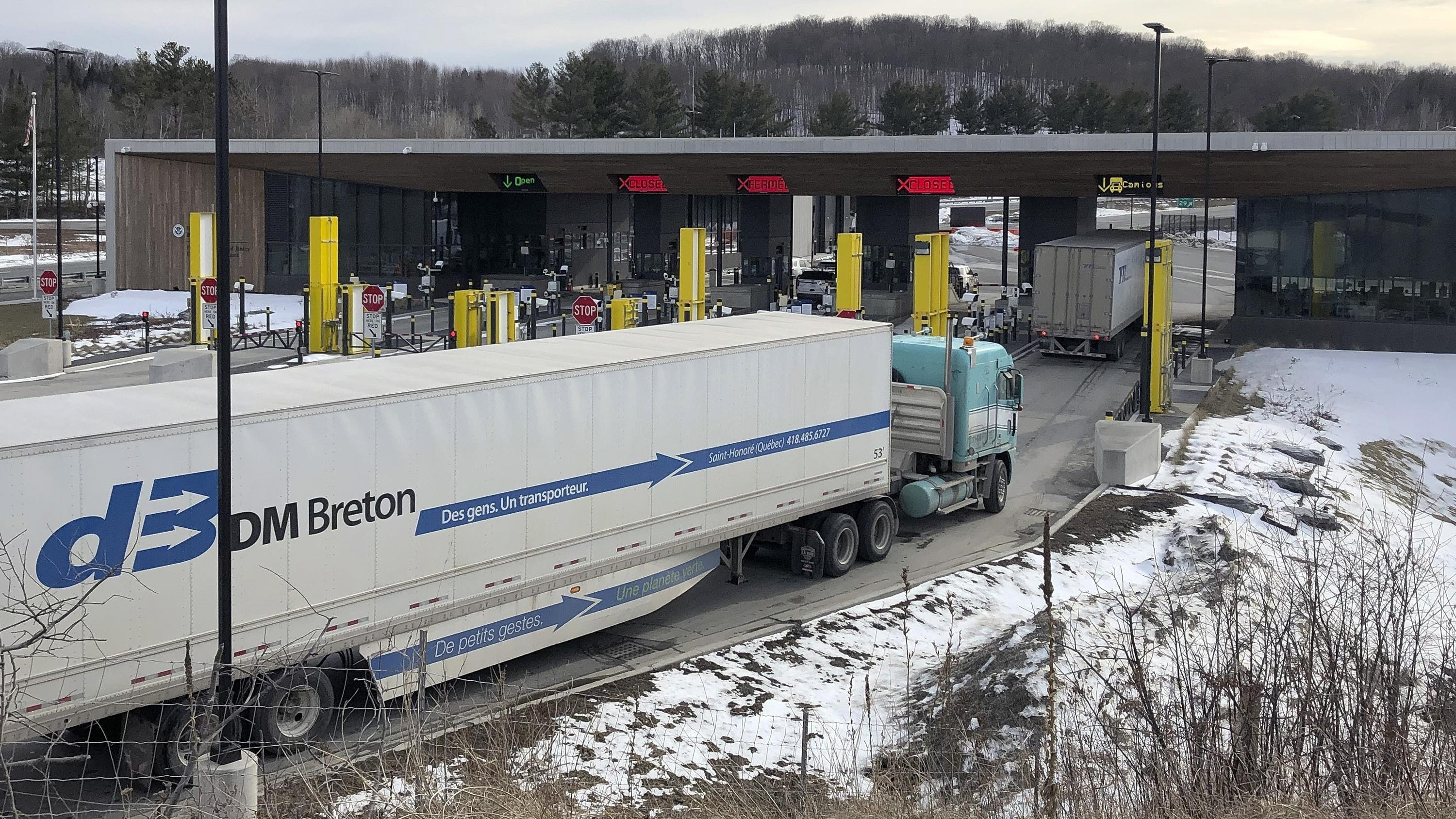
WASHINGTON, Oct 12 (Reuters) – The United States will lift restrictions at its land borders with Canada and Mexico for fully vaccinated foreign nationals in early November, ending historic curbs on non-essential travelers in place since March 2020 to address the COVID-19 pandemic.

U.S. Homeland Security Secretary Alejandro Mayorkas said in a statement the administration next month “will begin allowing travelers from Mexico and Canada who are fully vaccinated for COVID-19 to enter the United States for non-essential purposes, including to visit friends and family or for tourism, via land and ferry border crossings.”

The new rules are similar but not identical to planned requirements announced last month for international air travelers, U.S. officials said in a call earlier with reporters.

Lawmakers from U.S border states praised the move to lift the unprecedented restrictions which harmed the economies of local communities and has prevented visits to friends and families for 19 months.

“Since the beginning of the pandemic, members of our shared cross-border community have felt the pain and economic hardship of the land border closures. That pain is about to end,” Senate Democratic leader Chuck Schumer said in a statement.

Unvaccinated visitors will still be barred from entering the United States from Canada or Mexico at land borders.

The officials from President Joe Biden’s administration emphasized that the White House would not lift the “Title 42” order put in place by former President Donald Trump’s administration that has essentially cut off access to asylum for hundreds of thousands of migrants seeking to enter from Mexico.

The precise date in early November when the restrictions will be lifted on both land and air travel will be announced “very soon,” one of the officials said.

Homeland Security said the administration was creating “consistent, stringent protocols for all foreign nationals traveling to the United States – whether by air, land, or ferry.”

Canada on Aug. 9 began allowing fully vaccinated U.S. visitors for non-essential travel. read more

‘GREAT RELIEF’

Once the U.S. curbs are lifted, non-essential foreign visitors crossing U.S. land borders, such as tourists, will be able to visit if they are vaccinated. In early January, the United States will require essential visitors, like truck drivers or healthcare workers, to be vaccinated to cross land borders, the officials said.

U.S. lawmakers have been pushing the White House to lift restrictions that have barred non-essential travel by Canadians across the northern U.S. border since March 2020, and many border communities have been hit hard by the closure. Mexico has also pressed the Biden administration to ease restrictions.

Senator Maria Cantwell said the announcement “will provide great relief to those waiting to see friends and loved ones from Canada.”

The White House announced on Sept. 20 that the United States in early November would lift travel restrictions on air travelers from 33 countries including China, India, Brazil and most of Europe who are fully vaccinated against COVID-19. It also said it would extend the vaccine requirements to foreign air travelers from all other countries.

Foreign visitors crossing into the United States by land or ferry will need to be vaccinated but will not necessarily need to show proof of vaccination unless they are referred by U.S. Customs and Border Patrol for secondary inspections.

By contrast, all non-U.S. air travelers will need to show proof of vaccination before boarding a flight, and will need to show proof of a recent negative COVID-19 test. Foreign visitors crossing a land border will not need to show proof of a recent negative COVID-19 test.

On Friday, the U.S. Centers for Disease Control and Prevention said the United States would accept the use by international visitors of COVID-19 vaccines authorized by U.S. regulators or the World Health Organization.

One question unanswered is whether the United States will accept vaccines from visitors who received doses of two different COVID-19 vaccines.

The U.S. land border restrictions have not barred U.S. citizens from returning home.

Reporting by David Shepardson, Steve Holland, Tim Ahmann and Dan Whitcomb; Editing by Eric Beech, Ana Nicolaci da Costa and Richard Pullin

The post U.S. to Lift Canada, Mexico Land Border Restrictions in Nov for Vaccinated Visitors appeared first on The St Kitts Nevis Observer.

As Brazilians Flock to the U.S. Border, an Alleged Smuggler Cashes In

by

BELO HORIZONTE, Brazil, Oct 12 (Reuters) – Record numbers of Brazilians have been arrested at the U.S. southern border this year, part of the United States’ broader migration crisis. Police believe a child-custody dispute has led them to one of the smugglers moving migrants north.

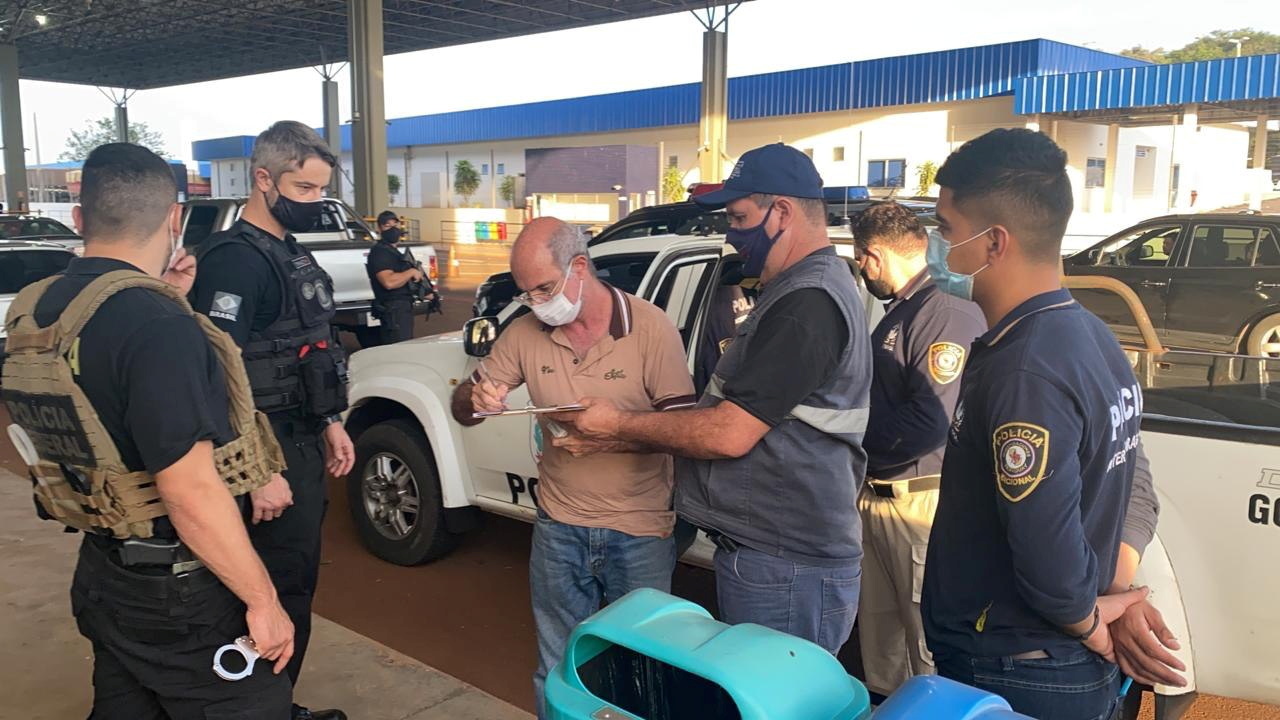
In early June, Brazilian federal police arrested Chelbe Moraes, a businessman who had allegedly absconded with his three-year-old daughter when he lost custody to his ex-partner. After tapping the phones of Moraes’ associates, the officers began to suspect he was a veteran people smuggler, or “coyote.”

In a June 25 police report sent to a federal judge and seen by Reuters, they asked that criminal charges of child trafficking, human smuggling and criminal conspiracy be filed against Moraes.

Police accuse him of charging Brazilians who lack valid U.S. visas around $20,000 each to enter the United States via Mexico. To pull it off, Moraes has constructed an international network that includes corrupt cops and officials as well as U.S-based family members, the court filing says.

Reuters spoke to more than 20 people with knowledge of the case, including police, immigration officials, associates of Moraes and three people who claimed to be his clients. Those interviews paint a picture of a seasoned people smuggler whose business has thrived amid political and economic turmoil in Brazil.

Moraes, who has declared his innocence to the police, told Reuters he runs a legitimate consultancy advising people on U.S. asylum claims from his home state of Minas Gerais. He said he has served up to 200 customers over a 20-year career, charging clients who meet U.S. criteria up to 100,000 reais ($18,086) to help them migrate.

“My advice is expensive as hell, because I know American laws,” Moraes said.

During the first 11 months of the 2021 fiscal year, 46,280 Brazilians were apprehended at the southern U.S. border, U.S. Customs and Border Protection (CBP) data show, compared with 17,893 in the whole of 2019. While that’s just a fraction of the more than 550,000 Mexicans who’ve been nabbed so far this year, Brazilians now rank No. 6 among the nationalities detained in 2021.

They’re part of a wave of Latin American migrants fleeing a region ravaged by COVID-19 and hoping for more lenient treatment since hard-line former President Donald Trump left office this year. Southern border apprehensions have jumped to their highest levels in 20 years, causing headaches for President Joe Biden.

“We’ve had flows with Brazilians in the past that I’ve seen, but not to this extent,” said Ramon Romo, chief of the Human Smuggling Unit at Homeland Security Investigations, the investigative unit of U.S. Immigration and Customs Enforcement.

Brazilian federal prosecutors on July 7 charged Moraes, 60, with child trafficking for fleeing to neighboring Paraguay with his daughter. Moraes pleaded not guilty, saying it was a planned work trip. Now back in Brazil, Moraes remains free pending trial. No charges have been filed in connection to his suspected smuggling operation; prosecutors granted police more time to investigate Moraes’ seized cellphone, computer hard drive and other documents.

Two people familiar with his alleged racket – a former customer and an ex-associate – told Reuters that Moraes coaches his clients to pose as tourists upon arrival in Mexico, sometimes gaining them entry with the help of bribed Mexican immigration officials.

Moraes then whisks the Brazilians north, where they either jump the border with the help of hired Mexican coyotes, or seek U.S. asylum using fake documents and elaborate cover stories Moraes has devised for them, the sources said.

Mexico’s National Migration Institute, the country’s federal immigration agency, did not respond to a request for comment.

People who can prove they face persecution at home due to their race, religion, nationality, social group or political opinions may be eligible for U.S. asylum. Backlogs in U.S. immigration courts mean that those who enter often can remain in the United States for years while their cases are processed.

Moraes said those who claim he ran a smuggling operation were “induced” to do so by police or were envious of his success.

But he acknowledged benefiting from Brazil’s woes.

“The worse the government here gets, the better for me,” he said.

‘UNPRECEDENTED’

Brazilian migration to the United States has surged since 2018, when right-wing President Jair Bolsonaro was elected. Just over 1,500 Brazilians were detained at the U.S. southern border in 2018, a number that jumped 1,100% the following fiscal year.

Brazil has struggled with multiple crises on Bolsonaro’s watch. More than 600,000 Brazilians have died from COVID-19, the world’s second-highest death toll after the United States. Unemployment is around 14%, while annual inflation has hit double digits. Poverty has soared.

“The average Brazilian is disillusioned with everything,” said Daniel Fantini, the lead detective investigating Moraes.

Bolsonaro’s office did not respond to requests for comment.

To enter the United States, Brazilians must obtain a visitor visa. That process has gotten stricter due to COVID-19 and the growing number of travelers overstaying their visas, three U.S. officials told Reuters.

Many Brazilians are now turning to coyotes, according to migrants, their family members, police and officials who spoke with Reuters.

Lenilda dos Santos, a nurse from northern Brazil, died of thirst in September after crossing into New Mexico. Her brother, Leci Pereira, told Reuters she had agreed to pay $25,000 to a smuggler, pledging her house as security. The alleged smuggler, who only provides his clients with the nickname “Piskuila,” did not respond to requests for comment.

In California, CBP agents are accustomed to speaking Spanish, the language of Mexico and most of Latin America. But they are struggling to handle what the agency calls an “unprecedented” jump in Portuguese-speaking Brazilians being stopped at the border.

Diplomatic efforts are underway to slow the flow.

Brazilians don’t need visas to enter Mexico, making it easy for smugglers to fly migrants there and transport them north. The Biden administration wants Mexico to impose visa requirements on Brazilians to complicate that path, two sources familiar with the situation told Reuters.

The talks began in July, but Mexico has been resistant, citing lucrative Brazilian tourism and possible reciprocal action by Bolsonaro, one of the people said.

The U.S. State Department declined to comment on “ongoing diplomatic discussions.”

The foreign ministries of Mexico and Brazil didn’t respond to requests for comment.

ACTIVE INVESTIGATION

After Moraes fled Brazil with his daughter, federal police interrogated his alleged associates.

Geisiane Batista, whom authorities claim handled the finances of the smuggling operation, helped Moraes run a lingerie factory in Minas Gerais, according to her deposition in the police report seen by Reuters. She told police that would-be migrants, none with U.S. visas, frequently visited the factory to meet Moraes and arrange passage.

Moraes denied Batista’s account. Batista could not be reached for comment.

Jose Martins worked as Moraes’ driver, taking migrants to Rio de Janeiro and São Paulo to catch flights to Mexico, he told police in his deposition. He said Moraes charged 100,000 reais to “put someone in the United States,” and offered him a commission of 1,000 reais ($181) for each new client he brought in.

Among those Martins said he transported were Ismael da Silva and his wife. An unemployed security guard, da Silva said in his deposition that he sold his car, furniture and tools to help finance their $17,000 journey.

The couple never made it. Mexican officials denied them entry after they landed in Cancun in May, da Silva told police. Contacted by Reuters, da Silva declined to comment.

Others were luckier. Martins, the driver, told police the da Silvas were part of a group of 12 Brazilian migrants on that trip, six of whom entered the United States. Martins declined to comment.

Wiretap evidence suggests Moraes relies on some U.S.-based relatives, including an adult daughter, Janaina Moraes, to help move migrants, according to the police report. Brazilian police have not accused her of wrongdoing.

Janaina Moraes, who lives near Boston, told Reuters she occasionally used her phone to manage hotel check-ins for her father’s clients, or to buy them food, but denied working for him.

A U.S. Department of Homeland Security spokesperson declined to comment on what she said was an active investigation.

FAKE FAMILIES

Brazilian migrant Bruno Lube, now 41, told Reuters he hired Moraes in 2016, but was caught by U.S. agents after scaling the border wall near El Paso with a Mexican coyote. He said he spent nearly five months in U.S. detention before being deported back to Brazil, where he denounced Moraes to the federal police.

A federal police spokesperson confirmed Lube’s 2017 complaint against Moraes, saying it was under investigation.

Moraes denied Lube’s allegations, saying he didn’t know him. U.S. CBP declined to comment about Lube’s alleged detention.

Moraes has had better success in helping families gain entry, according to Brazilian police and a source with knowledge of his operation.

Central Americans and Mexicans with children often are expelled to Mexico upon arriving at the U.S border as part of a U.S. policy initiated during the pandemic. In contrast, almost all Brazilians traveling with minors who arrive at the southern border seeking asylum are admitted to await their hearings on American soil.

Through August of this fiscal year, 99.2% of Brazilian family units have been allowed entry, CBP data show, compared with about 15% of Mexican families, 57% of those from Guatemala and 66% of Honduran family units. When the expulsion policy began, Mexico said it would only accept expelled Mexicans and Central Americans from the United States, but it has since taken some other nationalities.

To game the system, the source said, Moraes created fake “families” out of unrelated adults and minors, providing them with phony paperwork as well as fictitious backstories of domestic violence or gang threats to bolster their asylum claims.

Moraes denied those allegations, saying he only advised bona fide families.

($1 = 5.5292 reais)

Reporting by Gabriel Stargardter in Belo Horizonte, Brazil; additional reporting by Mica Rosenberg in New York City, Daniela Desantis in Asunción, and Dave Graham and Frank Jack Daniel in Mexico City; editing by Marla Dickerson

The post As Brazilians Flock to the U.S. Border, an Alleged Smuggler Cashes In appeared first on The St Kitts Nevis Observer.