Category Archives: headline

Sydney beaches expected to be packed this weekend

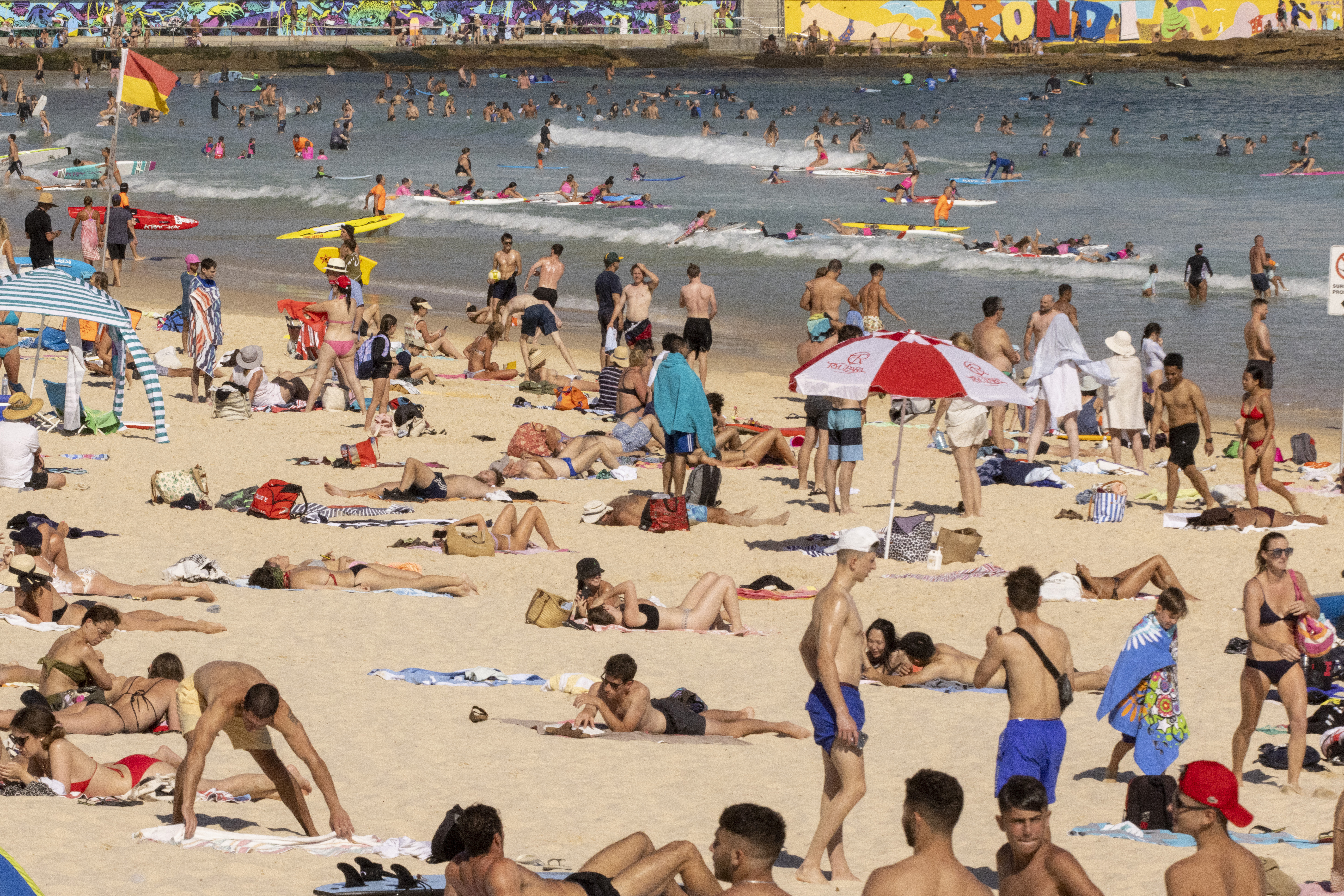
Sydney's beaches are expected to be packed over the next couple of days as the city experiences its warmest weekend in seven months.

While most of Australia's east coast is going to be warm this weekend, Sydneysiders are going to have to try extra hard to stay cool as the temperatures heats up and lockdown restrictions remain, especially for high-risk Local Government Areas.

With Greater Sydney, Wollongong and the Central Coast still under stay-at-home orders, there will be restrictions on how many people can access beaches, with councils ready to shut off public access if they get too crowded.

LIVE UPDATES: WA won't allow vaccinated NSW residents in for Christmas

A general view of Bondi Beach on January 18, 2021 in Sydney, Australia.

Temperatures will reach around 28-29C tomorrow and Sunday, while coastal fringes will remain slightly cooler with coastal winds bringing the temperature down one or two degrees.

Sydney's Observatory Hill weather station hasn't registered a weekend this warm since February and if the next two days go above 29.2C at that site, it will be the warmest weekend since January.

READ MORE: How one man escaped from the top of the World Trade Center

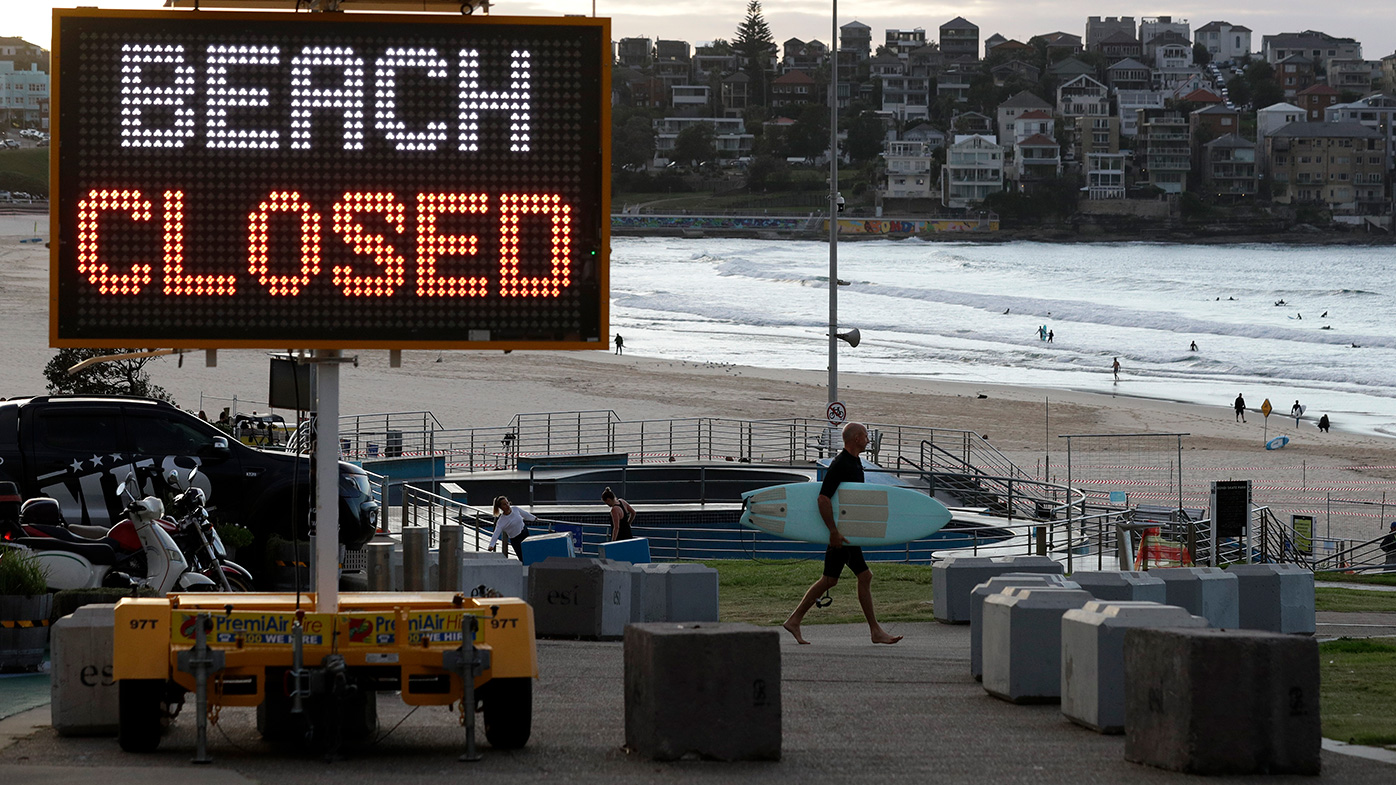
This April photo shows a sign at Bondi Beach as a surfer arrives at the Sydney beach.

READ MORE: NSW records 1542 new coronavirus cases and nine further deaths

Fire authorities are also warning the early spring warmth could mean one of the season's first spikes in grass fire danger in NSW, with a "Very High" fire danger rating likely in parts of the state between Friday and Sunday.

Northwesterly winds are developing ahead of an approaching cold front and this will cause temperatures to spike across NSW during the next 3-4 days, however once that cold front arrives, it will bring rain and strong winds for much of the east coast.

Ford pulls plug on production in India

Ford will cease auto production in India after logging accumulated operating losses of more than $2.7 billion over the past 10 years.

An end to production in India comes less than a year after Ford said it would close its three plants in Brazil, ceasing operations in a country where it had operated since 1919.

Closing plants in India will lead to job losses of about 4,000, the company said in a filing Thursday with the US Securities and Exchange Commission.

READ MORE: Morning walk to unfolding terror: On the ground with John Howard on 9/11

The blue oval logo of Ford Motor Company in east Denver.

New CEO Jim Farley signalled almost immediately after taking the top job at Ford last year that the company was taking another look at countries with fast-growing economies that had been expected to drive sales for the Detroit automaker.

“We are taking difficult but necessary actions to deliver a sustainably profitable business longer-term and allocate our capital to grow and create value in the right areas,” Mr Farley said.

READ MORE: How one man escaped from the top of the World Trade Center

“Despite investing significantly in India, Ford has accumulated more than $2.7 billion of operating losses over the past 10 years and demand for new vehicles has been much weaker than forecast.”

Ford recorded nearly $1.3 billion non-operating write-down of assets in 2019, according to the company.

The production of cars in India for sale in the country is ending immediately and Ford will wind down production at Sanand, a vehicle and engine assembly plant with about 3000 workers, by the fourth quarter.

Vehicle and engine manufacturing in Chennai, which employs around 5000, will end by the second quarter of next year.

Parts service, and warranty support in India will still be available, Ford said, and the company will continue to operate engineering, technology, and business segments in India.

Ford Motor Co. will begin importing vehicles like the Mustang coupe in India.

It will sell off current inventories in India of its Figo, Aspire, Freestyle, EcoSport and Endeavour models.

The company anticipates pre-tax special item charges of about $2.7 billion.

This includes approximately $813m this year, about $1.6m in 2022 and the balance in subsequent years.

Urgent venomous snake warning ahead of warm weekend

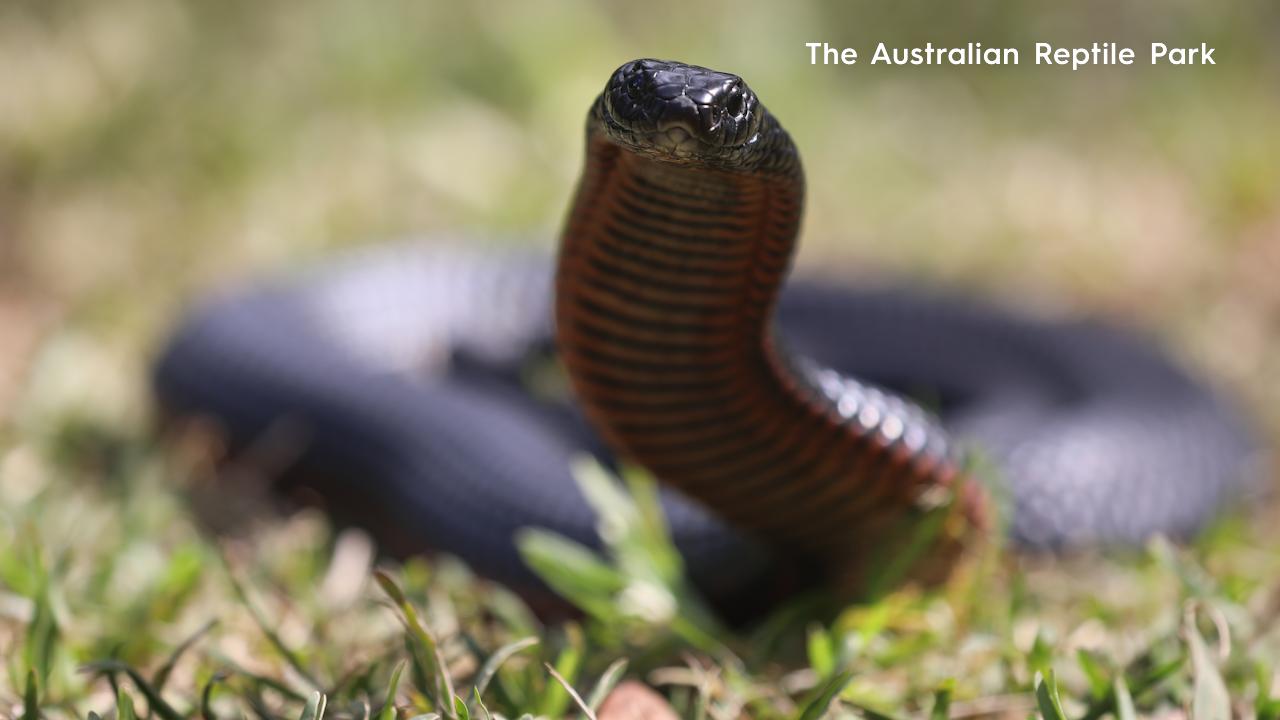
An urgent warning has been issued to New South Wales residents to be on the look out for venomous snakes ahead of hot weather this weekend.

There have been more sightings of snakes in general since spring began and with temperatures set to reach the high 20s over the next two days, the likelihood of running into a venomous reptile is much higher.

The Australian Reptile Park says with much of the state in lockdown due to COVID-19 restrictions, there has been an increase in people going outdoors and bushwalking.

LIVE UPDATES: WA won't allow vaccinated NSW residents in for Christmas

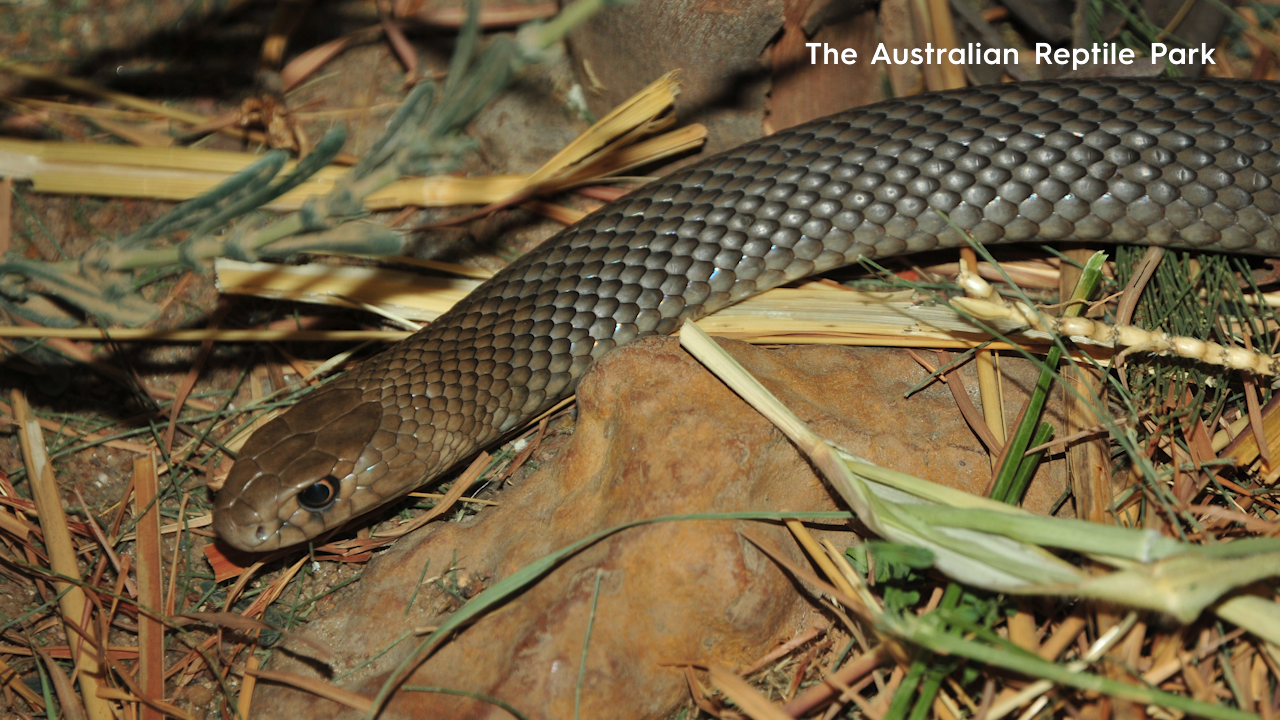
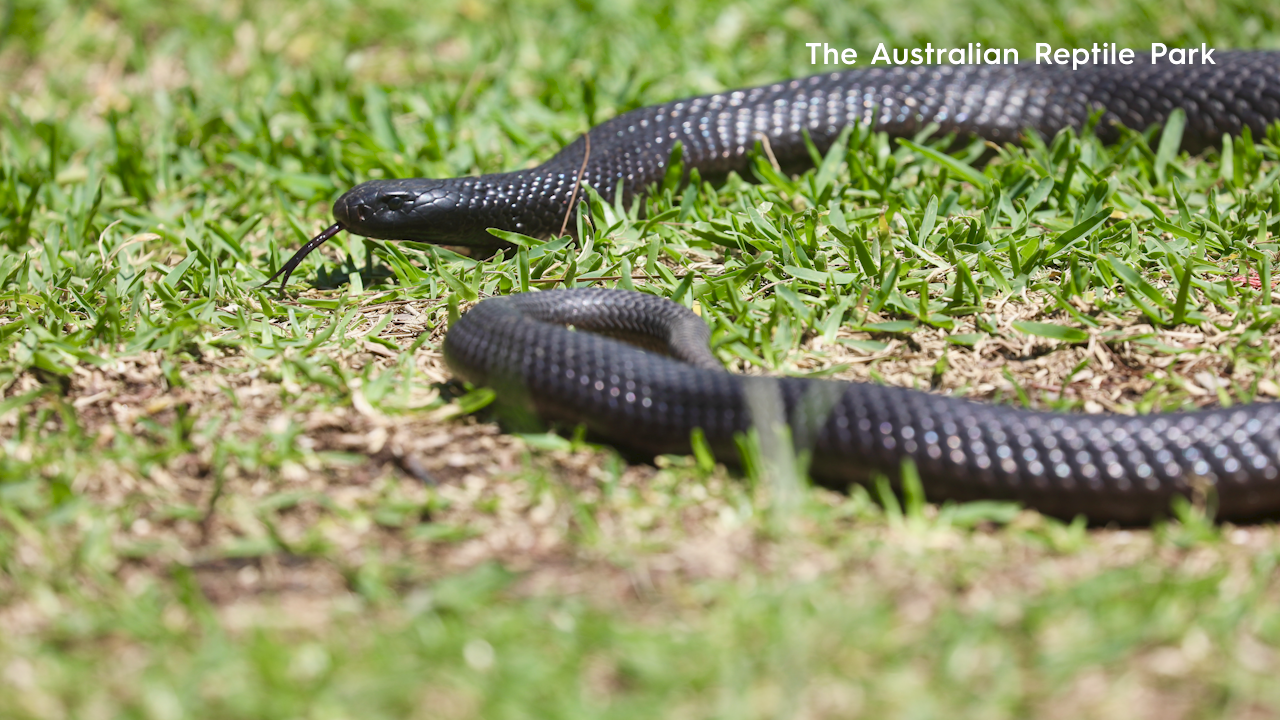
Venomous snake threat increases as weather warms upVenomous snake threat increases as weather warms up

They also advise people to brush up on first aid skills ahead of summer, especially in treating snake bites.

Reptile Keeper Jake Meney says while snakes don't go out of their way to harm humans, the start of spring is the perfect time to find out what to do if someone is bitten.

"Snake bites mostly occur when people are trying to catch or kill the snake, so if you don't do either of those things you should be okay," Mr Meney says.

"However, it is important to know the correct first aid technique, so if the worst-case scenario occurs you are prepared."

The Australian Reptile Park says a venomous snake bite could destroy blood cells, cause blood clots or excessive bleeding and destroy tissue.

Depending on the species of venomous snake, the bite could kill you within 30 minutes.

READ MORE: How one man escaped from the top of the World Trade Center

Venomous snake threat increases as weather warms up

READ MORE: NSW records 1542 new coronavirus cases and nine further deaths

The Australian Reptile Park says the warmer weather may also see more snakes venturing into people's backyards so people should make sure their yards are cleared of long grass and places snakes can hide or seek shelter.

Australia is home to the world's most venomous snakes, with approximately 3000 snake bites occurring each year.

Around 300 of these bites receive antivenom, according to The Australian Reptile Park and on average, one or two bites prove fatal.

For more information on how to treat a venomous snake bite click here.

Beards 'evolutionary development' to help protect men's delicate faces

Beards aren't just cool and trendy — they might also be an evolutionary development to help protect a man's delicate facial bones from a punch to the face.

That's the conclusion of a trio of scientists from the University of Utah who are among the winners of this year's Ig Nobel prizes, the Nobel Prize spoofs that honour — or maybe dishonour, depending on your point of view — strange scientific discoveries.

READ MORE: How one man escaped from the top of the World Trade Center

Research finds beards could protect men from being punched in the face.

The winners of the 31st annual Ig Nobels being announced today included researchers who figured out how to better control cockroaches on US Navy submarines; animal scientists who looked at whether it's safer to transport an airborne rhinoceros upside-down; and a team that figured out just how disgusting that discarded gum stuck to your shoe is.

For the second year in a row, the ceremony was a roughly 90-minute prerecorded digital event because of the worldwide coronavirus pandemic, said Marc Abrahams, editor of the Annals of Improbable Research magazine, the event’s primary sponsor.

READ MORE: The Australian animals 'shape-shifting' in warmer temperatures
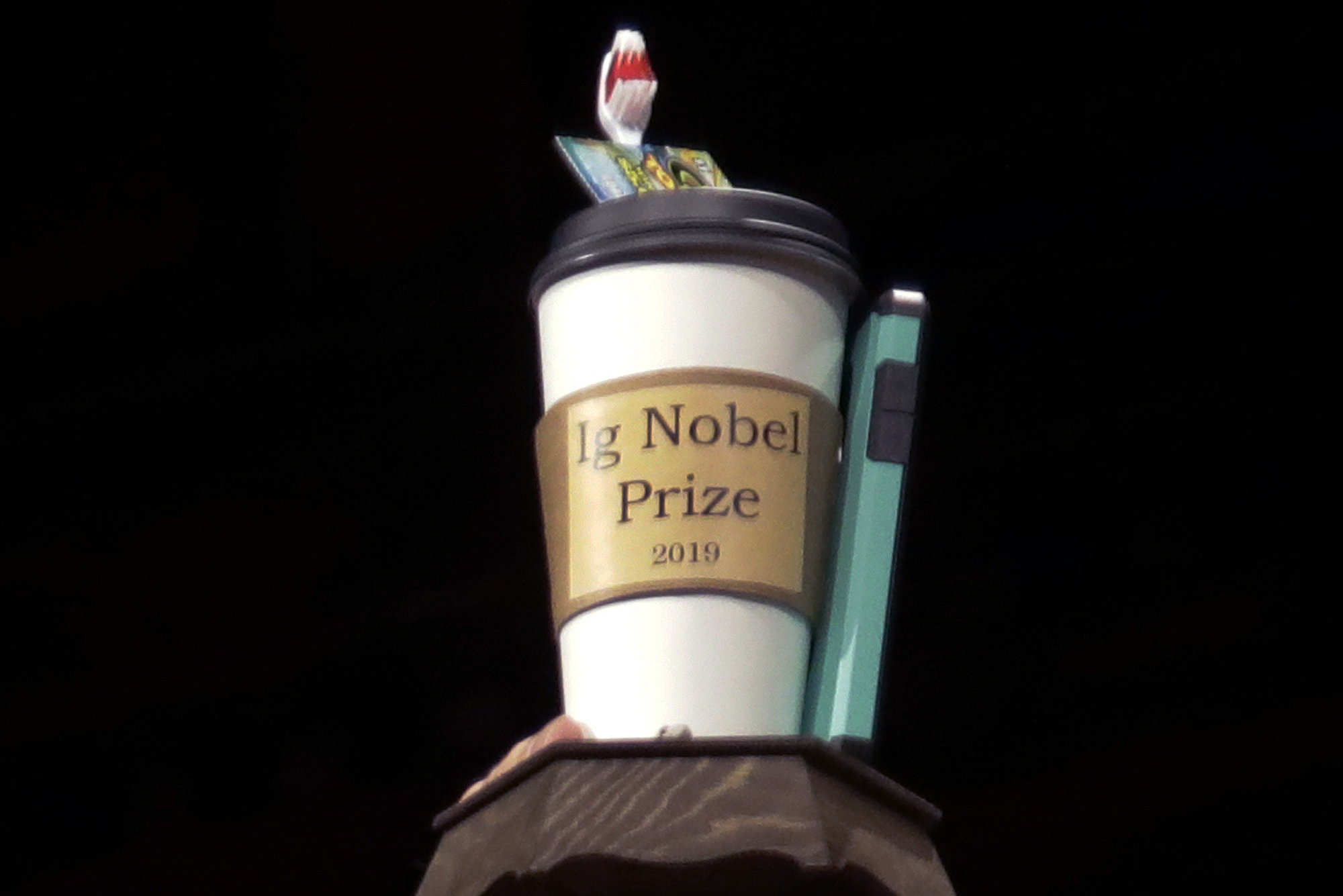
The 2019 Ig Nobel award is displayed at the 29th annual Ig Nobel awards ceremony at Harvard University in Cambridge, Mass. The spoof prizes for weird and sometimes head-scratching scientific achievement (AP Photo/Elise Amendola, File)

While disappointing in many ways because half the fun of a live ceremony is the rowdy audience participation, the ceremony retained many in-person traditions.

Those included real Nobel laureates announcing the prizes, and the world premiere of a mini-opera called “A Bridge Between People,” about children who literally build tiny suspension bridges to join two angry adults.

No faces were punched for the beard study published in the scientific journal Integrative Organismal Biology.

Instead, University of Utah scientists Ethan Beseris, Steven Naleway and David Carrier used a fibre epoxy composite to simulate human bone, and sheepskin to act as the human skin — sometimes with the fleece still on, sometimes sheared. They then dropped weights on them.

The sample with the fleece still attached absorbed more energy than the sheared samples.

 In this September 12, 2019 file photo, audience members toss paper airplanes at the 29th annual Ig Nobel awards ceremony at Harvard University, in Cambridge. (AP Photo/Elise Amendola, File)

“If the same is true for human facial hair, then having a full beard may help protect vulnerable regions of the facial skeleton from damaging strikes, such as the jaw,” they said.

“Presumably, full beards also reduce injury, laceration, and contusion to the skin and muscle of the face."

It's obvious that those wads of discarded chewing gum found on sidewalks around the world are pretty revolting.

But just how revolting?

Researchers from a Spanish university determined the already-chewed gum that has been stuck to the sidewalk for three months is teeming with nasty bacteria.

It sounds like a silly study, but as usual, there was some method to the madness.

“Our findings have implications for a wide range of disciplines, including forensics, contagious disease control, or bioremediation of wasted chewing gum residues," Leila Satari, Alba Guillén, Àngela Vidal-Verdú, and Manuel Porcar from the University of Valencia wrote in their paper, which was published at Nature.com.

A team of US Navy researchers won for figuring out a cheaper and more effective way to control cockroaches on submarines.

The 1971 study that appeared in Journal of Economic Entomology found that traditional methods such as carboxide fumigation and use of the pesticide malathion were not good enough.

They found that using the pesticide dichlorvos was less expensive and more effective.

The goal is to return next year's ceremony to its traditional home at Harvard University's Sanders Theatre, Mr Abrahams said, but much depends on whether the pandemic is under control and what kind of travel restrictions are in place around the world.