Category Archives: headline

British Rescuer Working to Make Haiti Earthquake Town Safe

BBC- A British charity worker has described the ‘sporadic collapse’ of essential buildings following a devastating earthquake in Haiti.

Rob Davis, 50, from Bath, spent 10 days leading a group of structural engineers for Search and Rescue Assistance in Disasters (Saraid) on the island.

The natural disaster struck Haiti on 14 August killing more than 2,000 people.

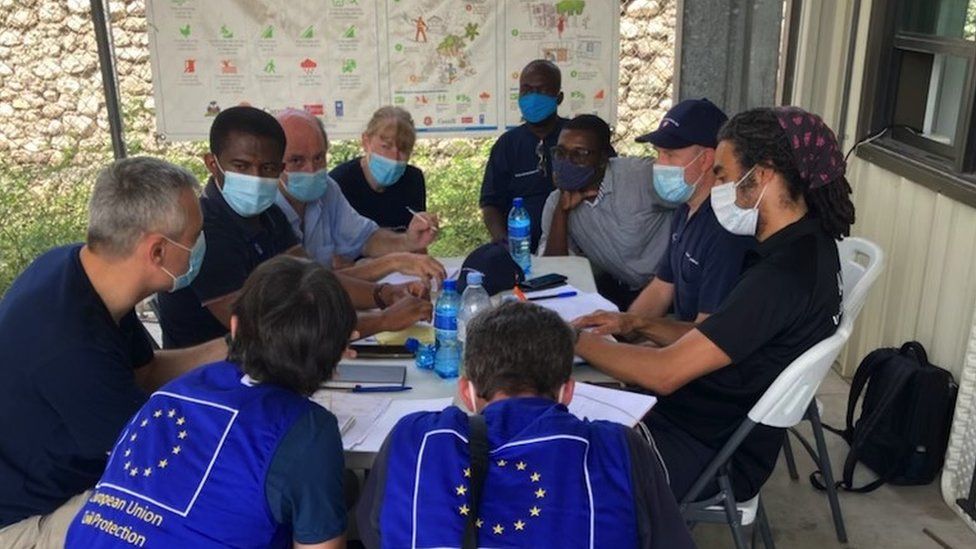
His team have been working on the south coast with local officials, helping to assess whether buildings are safe.

A collapsed building
The group spent 10 days leading a group of structural engineers on the island

Speaking on Thursday, just before he and his team left the island Mr Davis said: “We are mainly trying to get central buildings like hospitals, schools and churches back up and running as soon as possible, working with local engineers to get the community back to some sort of normality.

“We’ve been working in Les Cayes, on the south coast.

“There has been a sporadic collapse of buildings, a lot of damage. Schools are very important because they’re also hurricane shelters here in Haiti.”

During the past 20 years Saraid has responded to disasters across the world, predominantly after earthquakes.

Mr Davis says there may still be people alive in the rubble.

Relief workRob Davis
Saraid have been working with local teams to assess the safety of buildings

“The window of survivability is difficult to predict, but we have seen miracle rescues around the world some 20 days after a disaster.

“The people are extremely resilient. Since 2010 it seems like they haven’t had a break, with floods, cholera, hurricanes and now this tragic earthquake.

“It will take a long time to recover from. Disasters of this size and scale take a long time.”

The Saraid team, which is in Haiti on request of the country’s government, say it had to be completely self-sufficient during its relief mission.

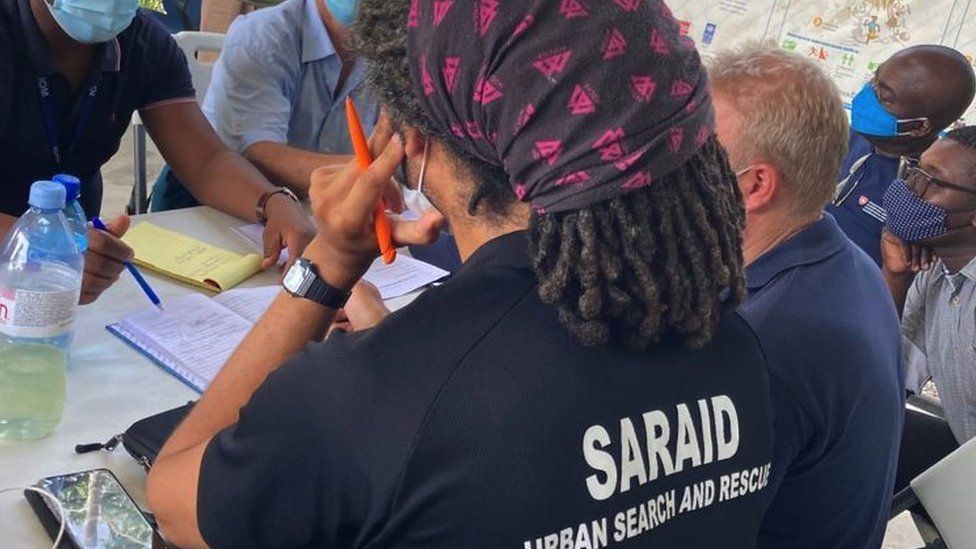
Meeting around tableimage sourceSaraid
Saraid has been working with local engineers to assess building safety

“We can’t put any undue stress on the community, and so we provide all our own equipment, tents, satellite communication and medical supplies.

“We rely heavily on the British public donating things to us.”

The team has just presented its findings at the national headquarters of the Haiti building industry, and has been running training workshops for local engineers on how to coordinate this type of event.

A worker surveys rubbleiMore than 2,000 people have died in the earthquake

The post British Rescuer Working to Make Haiti Earthquake Town Safe appeared first on The St Kitts Nevis Observer.

Two women with COVID-19 die in Victoria

Two Victorians women with COVID-19 have died in their homes, marking the state's first recorded COVID-19 deaths this year.

A woman in her 60s from Hume and a woman in her 40s from Darebin have both died in their respective homes today while infected with COVID-19.

It remains unclear why they were not hospitalised and whether they had any other health conditions.

https://twitter.com/MimiRoseBecker/status/1432614969174937604?ref_src=twsrc%5Etfw

READ MORE: Victoria's lockdown to continue but 'modest changes' to restrictions on the way

Their vaccination status also remains unknown.

The two deaths with be recorded in tomorrow's COVID-19 numbers.

They come as the Premier is set to announce a slight easing of the state's lockdown restrictions tomorrow.

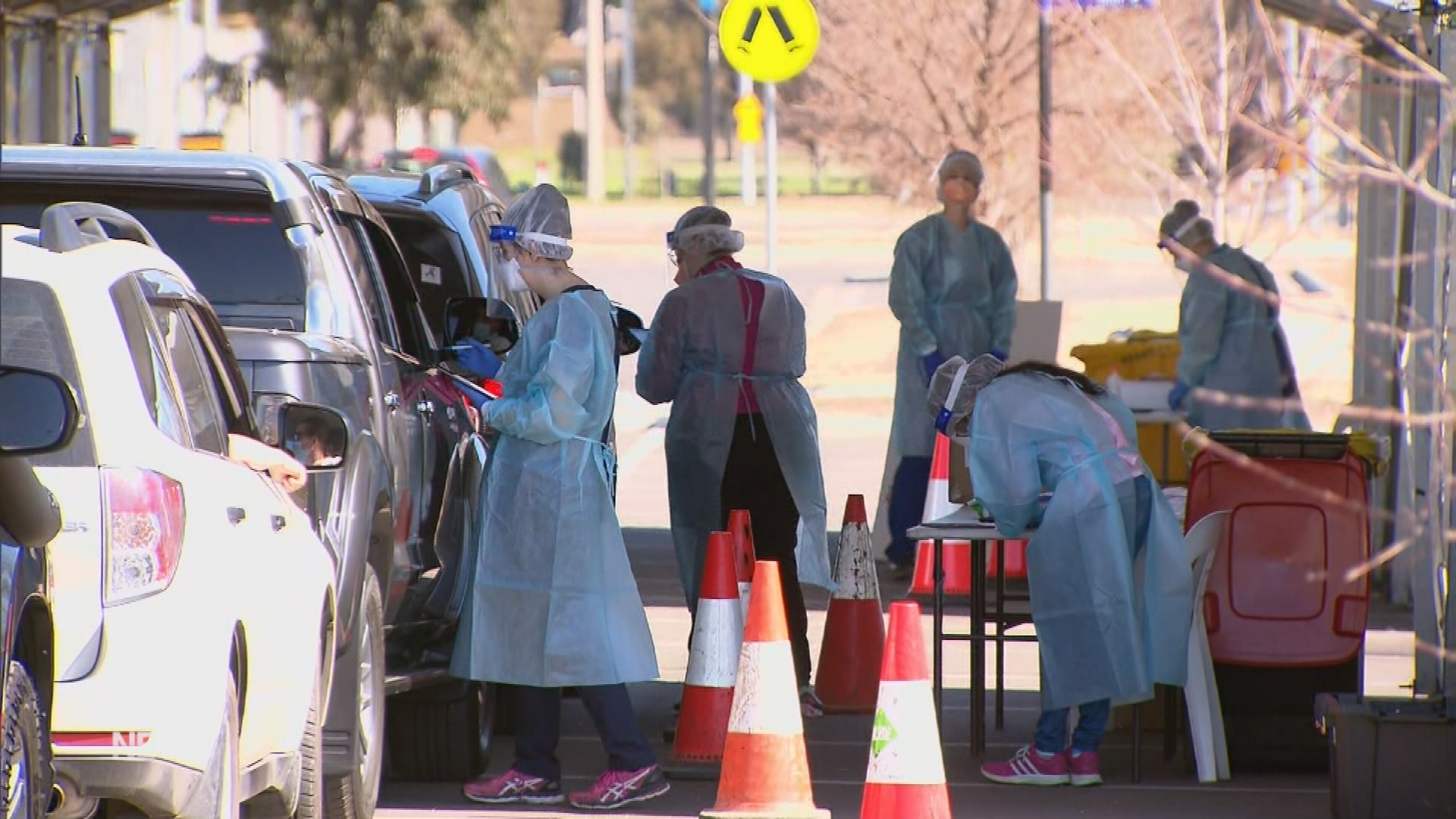
COVID-19 testing in Victoria.

Mr Daniel Andrews today said he would announce a roadmap -including case number thresholds – to get Victoria out of lockdown tomorrow.

The state recorded 76 new local cases of COVID-19 in the past 24 hours, taking Victoria's total number of active cases to 836.

Victoria had recorded no deaths of people with COVID-19 in 2021 before today.

Last year, 820 people with COVID-19 died in Victoria.

Brazil Bank Robbers Tie Hostages to Getaway Cars in Araçatuba

BBC- A large gang of armed robbers, who hit three banks in the southern Brazilian city of Araçatuba, strapped hostages to the top of their getaway vehicles after a raid.

Police said that at least three people were killed, among them one suspect.

Officials said more than 20 people took part in the heist, blocking off roads with burning vehicles and placing explosive devices across the city.

Large-scale bank robberies have become more frequent in recent years, with hostages used as human shields.

Initial reports had put the number of assailants at more than 50 but that number has since been revised down to between 15 and 20.

Lieutenant Alexandre Guedes of the Military Police told GloboNews that one man was killed by the gang when they found him filming them.

A woman and a suspect were killed in a stand-off with police outside the city as gang members tried to make their escape, officials said.

A 25-year old cyclist was seriously injured when one of the explosive devices planted by the gang went off as he cycled past.

He was taken to hospital, where both of his feet had to be amputated, local media reported.

Three other men are in hospital with bullet wounds.

Lt Guedes said there were still at least 14 bombs across the city and that the first indication was that they had some sort of sensor, which is triggered either by heat or motion.

Schools will remain closed on Monday and residents have been urged to stay indoors until all the devices have been dismantled.

Police said three suspects had been arrested.

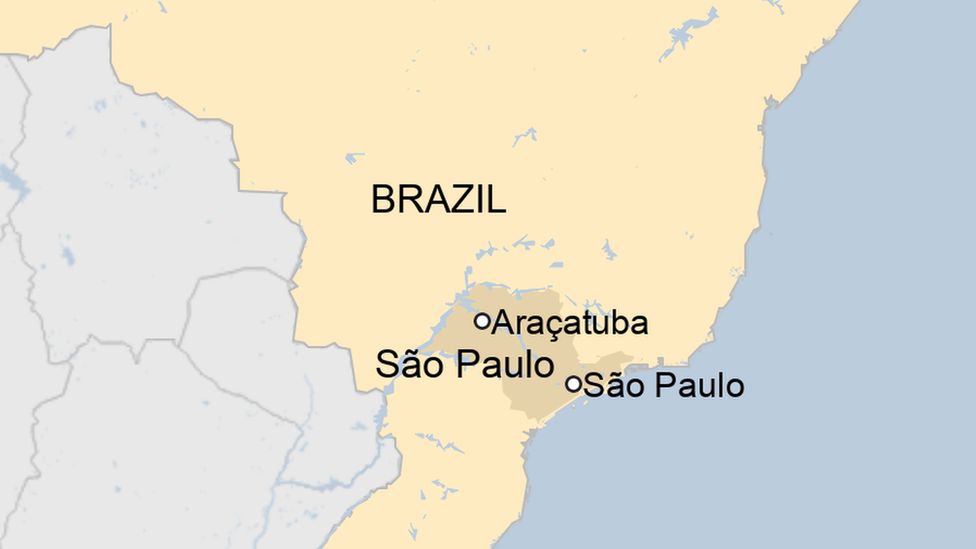
Map of Brazil

How did the robbery unfold?

A gang of heavily armed men attacked three banks in the centre of Araçatuba in the early hours of Monday local time.

After the robbery, the gang took a number of hostages and surrounded the local military police station. Gang members also blocked key access roads into the city by setting cars alight, local media reported.

Record TV journalist Yuri Macri posted video he said showed two of the getaway cars. The first has a person tied to its roof and another to its bonnet, while in the second, a person can be seen crouching on the bonnet.

CCTV footage posted by another Twitter user shows multiple cars driving through the city, some with people tied to the hoods, while another person can be seen holding up his hands while standing up through the van’s sun roof.

Many residents reported hearing gunfire and even the sound of explosions.

The mayor of Araçatuba, Dilador Borges, said police had struggled to intervene as the attack unfolded.

“The police can’t go on the attack, they can’t confront them because there are too many lives on the line,” he told Band TV.

He said he did not know if the robbers had freed the hostages yet but said the security forces had retaken control of the city centre.

It is not clear how much money the attackers took but some videos purport to show a resident gathering bank notes in the street.

News site G1 reports that the gang used drones to monitor the movements of the police from the air.

It is not the first time Araçatuba has been targeted by bank robbers. In 2017, criminals took control of various strategic spots throughout the city, attacked police stations and blocked roads as part of their robbery of a private security firm.

Raid is part of a growing trend

These well-planned robberies are part of a phenomenon Brazilians call New “Cangaço”, referring to a term first used to describe the banditry that plagued parts of Brazil in the 1920s and 1930s.

Small and medium-sized cities have been the preferred targets.

According to security expert Guaracy Mingardi these large-scale robberies started becoming more frequent around 2015. The targets are banks and firms that store and transport valuables.

Dozens of criminals take part in a single raid, many of them heavily armed with machine guns and sometimes explosives.

While most of the raids have been carried out in Brazil, there has been at least one instance where a Brazilian gang carried out a spectacular robbery in neighbouring Paraguay.

The post Brazil Bank Robbers Tie Hostages to Getaway Cars in Araçatuba appeared first on The St Kitts Nevis Observer.

What happened to the countries who opened up during COVID-19

The hopes of a regular post-COVID-19 life in Australia are largely centred on the eligible population reaching a vaccination rate of 80 per cent or more.

According to Prime Minister Scott Morrison, once Australia hits 80 per cent of its eligible population vaccinated, states should end the practice of "generalised lockdowns".

As of August 30, 35 per cent of eligible Australians over the age of 16 are fully vaccinated.

LIVE UPDATES: The new COVID-19 mutant strain detected in seven countries

Australia is not unique in its planning based on the hypothesis of 80 per cent of a nation's population vaccinated against COVID-19.

Denmark has confirmed that it will remove all COVID-19 restrictions on September 10, now that 71 per cent of the Danish population is fully vaccinated.

Denmark has a population of around 5.8 million people. Since late July, it has been recording between 700 to 1000 new cases of the virus everyday.

The current seven-day rolling average for Denmark is 944 cases.

READ MORE: How to get a COVID-19 vaccination: State-by-state guide

In Australia – taking into account all states – the seven day rolling average is 1099 cases.

In a statement, Denmark's Health Minister Magnus Heunicke explained that the local laws that permitted COVID-19 restrictions demanded that the virus be "generally dangerous" and "socially critical".

"We have now completed this assessment and our conclusion is that we will not extend the classification of COVID-19 as socially critical," Mr Heunicke said.

"If there are sudden, serious developments, new variants appear or something else that threatens epidemic control in Denmark, we will not hesitate to intervene again. But the special rules of the Epidemic Act should not be the new normal in society."

READ MORE: Australia fast-tracks 500,000 Pfizer doses

On 'Freedom Day',  the UK government lifted almost all remaining COVID-19 restrictions in England, on 19th July 2021.

Denmark is not the only country ease restrictions on the back of high vaccination rates.

The UK lifted most of its COVID-19 restrictions in late July, allowing places such as pubs and nightclubs to reopen.

Currently just over 64 per cent of the UK's eligible population of 66.65 million people are fully vaccinated. The UK is currently holding a seven-day average of daily new cases of 33,296.

Around 100 people die of the virus in the UK each day.

READ MORE: COVID-19 presents greater blood clot risk than vaccines, study finds

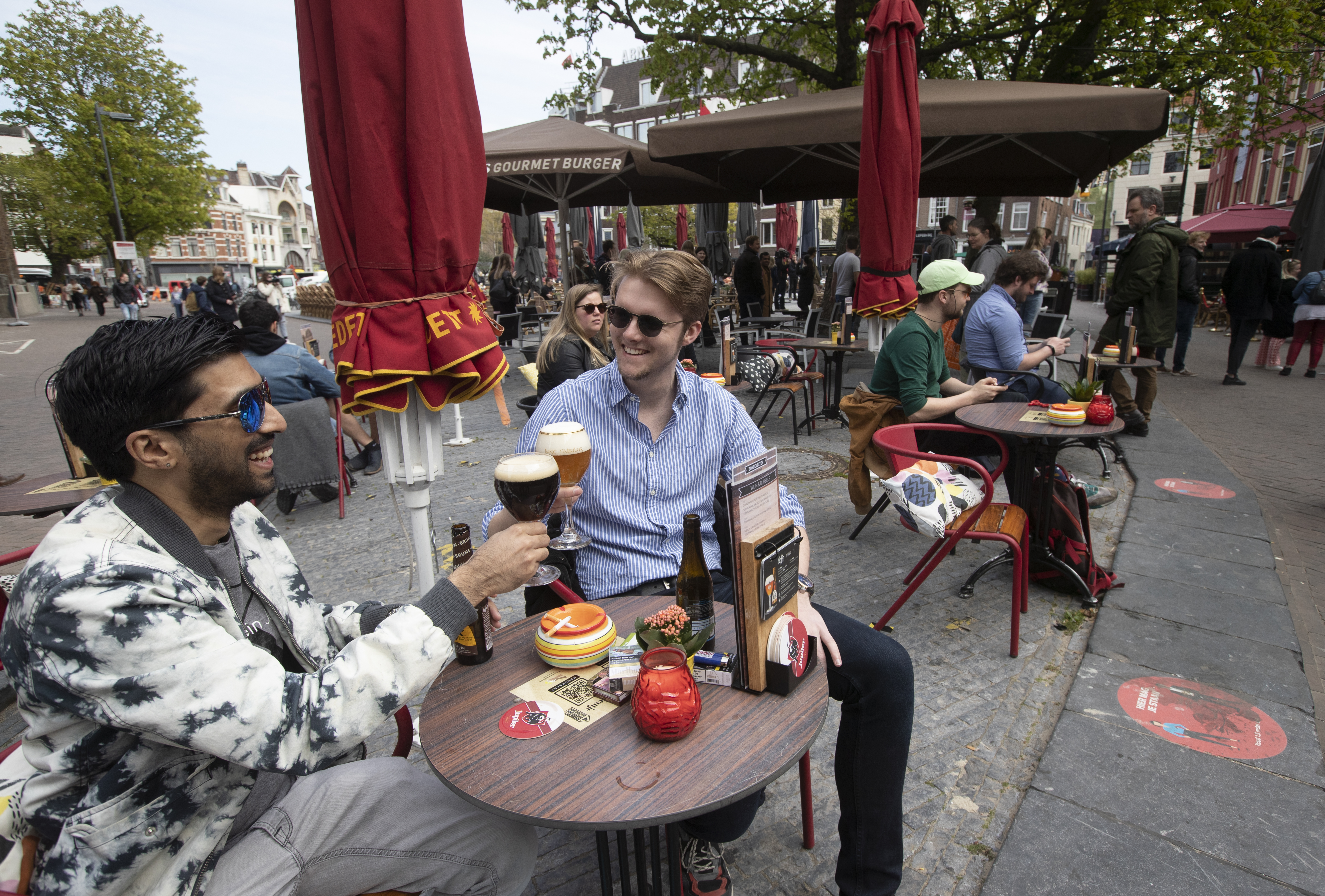
The Netherlands, where 61.9 per cent of the population is fully vaccinated, scrapped almost all of its counter-virus measures in late June.

Weeks later, it was hit by the Delta strain of the virus and recorded a 500 per cent weekly jump in cases, so much so that the government was forced to issue a snap lockdown.

WHO: Boosters Not a Luxury for the Vulnerable, US Judge Blocks DeSantis on Masks, More

A booster jab of Covid-19 vaccine for vulnerable people is not a luxury but a good way to protect them, the World Health Organization has said, as surging infection rates and a pan-European vaccination slowdown produced a “deeply worrying” situation.

“A third dose of vaccine is not a luxury booster taken away from someone who is still waiting for a first jab,” Dr Hans Kluge, the WHO’s regional director for Europe, said on Monday. “It’s basically a way to keep the most vulnerable safe.”

The comments seemed to a contradict a statement by the WHO earlier this month that available data did not suggest a need for booster shots. The body had warned that topping up already fully vaccinated people would only serve to increase vaccine inequality between wealthier and lower-income countries.

More than 30 of the 53 states that make up the organisation’s European region last week reported a rise of 10% or more in their 14-day Covid-19 incidence rate, Kluge said, while vaccine take-up, particularly among at-risk groups, was still low in several.

The combination of high transmission rates and relatively low vaccine coverage was “deeply worrying”, Kluge said, adding that several countries were starting to see an increase in hospital admissions and deaths across the region surged 11% last week.

Kluge said vaccine scepticism and science denial were preventing some European countries from controlling the pandemic, describing slower inoculation rates as a “serious concern” as case numbers climb once more.

Anti-vaxx sentiment is “holding us back from stabilising this crisis”, he said. “It serves no purpose, and is good for no one.” Health authorities must “look very closely into what determines vaccination uptake by population groups, then establish tailored interventions to boost uptake”

Kluge added that some countries in the region were also being held back by a lack of access to vaccines, with only 6% of populations in lower and lower-middle income countries having completed a full series of vaccinations.

And while across the region nearly three-quarters of health workers were now fully vaccinated, some countries had managed to jab only one in 10. “There is a clear need to increase production, share doses and improve vaccine access,” he said.

Nearly 850m vaccine doses had been administered in the Europe region over the past eight months, Kluge said, and nearly half its population were now fully vaccinated. But take-up had slowed markedly in the past six weeks.

“The stagnation in vaccine uptake in the region is of serious concern,” he said. “Now that public health and social measures are being relaxed in many countries, public vaccination acceptance is crucial to avoid greater transmission, more severe disease, an increase in deaths and a bigger risk of new variants.”

Kluge said “significant growth” in case numbers was being driven by the more transmissible Delta variant, which was now present in 50 countries in the region, a general easing of public health measures and a surge in summer holiday travel.

Other protective measures such as masks were also important, he said, but vaccines are “the path towards reopening societies and stabilising economies – and we remain challenged by insufficient production, insufficient access and insufficient vaccine acceptance.”

As millions of children return to school after their summer holidays, Kluge also reiterated a joint demand with the UN children’s fund, Unicef, that keeping schools open – and making them safe – must be a top priority for all governments.

===============================================

US intel review inconclusive on COVID-19 origin

The 90-day sprint to get to the bottom of the origins of COVID-19 found … not much.

A summary of an intelligence community report released Friday was inconclusive as to whether COVID-19 originated in a lab or jumped from animals to humans naturally, though U.S. officials stated that it was not developed as a biological weapon.

The summary said both the natural theory and lab leak theory are plausible, but noted that Chinese officials “did not have foreknowledge of the virus before the initial outbreak of COVID-19 emerged.”

“The IC assesses that SARS-CoV-2, the virus that causes COVID-19, probably emerged and infected humans through an initial small-scale exposure that occurred no later than November 2019,” according to a two-page summary of the report released by the Office of the Director of National Intelligence.

“We judge the virus was not developed as a biological weapon. Most agencies also assess with low confidence that SARS-CoV-2 probably was not genetically engineered,” the report stated, while noting two elements of the intelligence community did not believe there was sufficient evidence to draw a conclusion.

Impact: The push to find the origin of the virus has been politically charged from the start, and Friday’s report is unlikely to significantly change the debate over the issue. The report shows an intelligence community largely divided over the origins of the disease, with several of the 19 different agencies that comprise it coming to different conclusions.

CDC director calls out schools with outbreaks that aren’t following guidance

CDC Director Rochelle Walensky called on schools that are not following guidance to “do the right thing” and implement COVID-19 precautions, like masking, to avoid outbreaks and protect children from the virus.

“In our outbreak investigations, large-scale quarantines or large number of cases are generally occurring in schools, because schools are not following our guidance, particularly our recommendations for teachers as well as students aged 12 and over to be vaccinated and for everyone right now to be masked,” Walensky said during a Friday briefing.

“I want to strongly appeal to those districts who have not implemented prevention strategies and encourage them to do the right thing to protect the children under their care,” Walensky said. “We know these multi-layered mitigation strategies work, and thanks to the American Rescue Plan schools have the resources to implement these strategies.”

The CDC director said studies have shown prevention strategies, including masking, social distancing, testing, ventilation and vaccination, help to thwart COVID-19 spread in schools.

For example: One of those studies involved an unvaccinated teacher from Marin County, Calif., who was symptomatic and took off her mask to read her class. A total of 27 people, including the teacher and more than half of the students in the class, ended up infected.

Roadblock: But some schools face obstacles in requiring masks as several GOP governors, including Gov. Greg Abbott (Texas) and Gov. Ron DeSantis (Fla.), have banned schools from mandating masks, which has prompted defiance from school officials and court battles.

Speaking of school safety: Judge blocks DeSantis from banning school mask mandates

School districts in Florida will be allowed to impose mask requirements after a district judge on Friday blocked an executive order from Florida Gov. Ron DeSantis (R) banning the mandates.

Leon County Circuit Judge John Cooper ruled in favor of a group of parents who sued DeSantis over his executive order, arguing it was unconstitutional. He ruled the order is “without legal authority” and is by definition “arbitrary” and “capricious.”

Cooper issued an injunction stopping the Department of Education from taking any action against local districts that require masks in schools without a parental opt-out.

The judge said the state’s new “Parents’ Bill of Rights” does not allow the governor or the Department of Education to prohibit school districts from mandating masks.

“The law expressly permits school boards to adopt policies regarding the health care of students, such as a mask mandate, even if a parent disagrees,” Cooper said. “Parents’ rights are very important, but they are not without some reasonable limitations.”

DeSantis previously said he would appeal if the ruling was not in his favor.

Biden officials weighing shorter timeline for booster shots

President Biden on Friday said that discussions are underway over whether COVID-19 booster shots should be administered five months after second vaccine doses, a shorter timeline than the eight months previously discussed by health officials.

“This booster program is going to start here, September the 20th, pending approval of the FDA and a CDC committee of outside experts,” Biden said ahead of his meeting with Israeli Prime Minister Naftali Bennett.

“And the question raised is should it be shorter than eight months, should it be more or less five months, and that’s being discussed. I spoke to Dr. Fauci this morning about that,” Biden added, referring to White House chief medical adviser Anthony Fauci.

Background: The administration earlier this month outlined a plan to give out booster shots starting Sept. 20, recommending it for most Americans who have received the Pfizer and Moderna vaccine. Health officials have said people would need boosters beginning eight months after their second dose of either vaccine.

More questions: Health experts noted that, yet again, it appeared Biden was getting ahead of the health agencies. Typically the FDA and CDC need to sign off before the White House even considers a public announcement, but the administration has been pushing forward nonetheless, raising concerns.

US opens COVID-19 vaccination site for Afghan arrivals

The U.S. has opened a mass COVID-19 vaccination site near the Dulles airport in Northern Virginia for Afghans fleeing the Taliban, the White House said Friday.

The site is operated by the Federal Emergency Management Agency, with the single-dose Johnson & Johnson vaccine being administered by the Department of Health and Human Services.

A White House official said the vaccination clinic is set up at the Dulles Expo Center, which is where all arrivals from Afghanistan are screened.

Under rules from U.S. Customs and Immigration, all “humanitarian parolees” are required to get vaccinated against COVID-19 if they do not have proof of prior vaccination.

Evacuees are tested upon arrival and quarantined if they are positive, according to the White House. State Department translators are available to answer questions.

“This operation has been stood up in real time to ensure we are not wasting one minute, and making sure everyone arriving in the United States is able to enter the country safely and not spread COVID-19,” a White House official said. “As more arrivals from Afghanistan come, we hope to model this, including in Philadelphia, which is on track to vaccinate passengers in the next few days once flights begin to arrive.”


The post WHO: Boosters Not a Luxury for the Vulnerable, US Judge Blocks DeSantis on Masks, More appeared first on The St Kitts Nevis Observer.

Lightning strike kills young lifeguard in the US

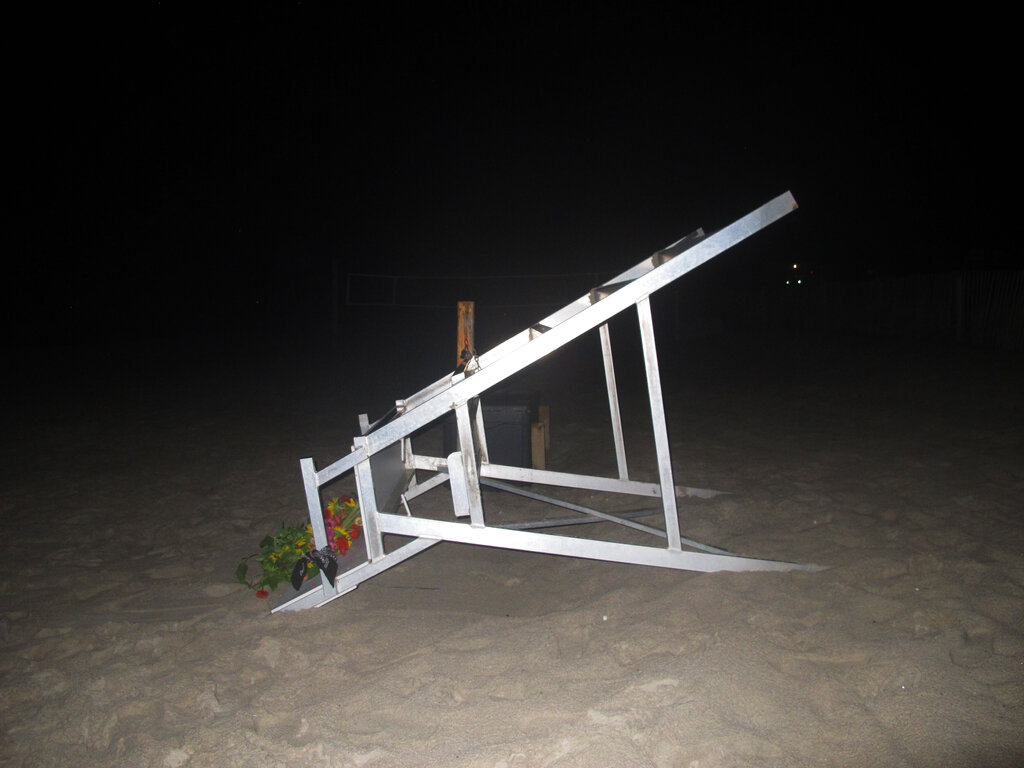
A young lifeguard was killed and seven other people, including three other lifeguards, were injured when lightning struck a Jersey Shore beach on Monday afternoon, authorities said.

New Jersey Governor Phil Murphy confirmed that a lifeguard in Berkeley Township, New Jersey, was killed in the afternoon.

It marked the second death of a young lifeguard at the Jersey Shore in a little over a week.

READ MORE: Hurricane Ida traps Louisiana residents, shatters the power grid

Ocean County Sheriff Michael Mastronardy said the others were taken to hospitals with injuries that were not considered life-threatening.

"Our hearts are with the family and friends of the young lifeguard killed by today's horrific lightning strike on the beach in Berkeley Township, and we pray for a full recovery for those injured," Mr Murphy, the state's Democratic governor, wrote on Twitter.

"I've spoken to Mayor Carmen Amato and offered the full support and assistance of our administration during this difficult time."

Ms Amato said his township's beaches will be closed Tuesday through Thursday as crisis counsellors are made available to beach staff and lifeguards. Four of those struck were lifeguards and four others were beachgoers.

"This is a tragic and heartbreaking day for our town and the entire Jersey Shore," Ms Amato said in a statement.

"This young person was out there every day protecting the lives of others. Our lifeguard teams, like so many along the shore, develop special connections with our community throughout the summer, which makes this loss even greater.

"On behalf of myself and our entire community, I offer our deepest and most heartfelt condolences to the family and friends of this young man," he said.

The identities of the lifeguard who died, as well as the others hurt by the lightning strike were not immediately released.

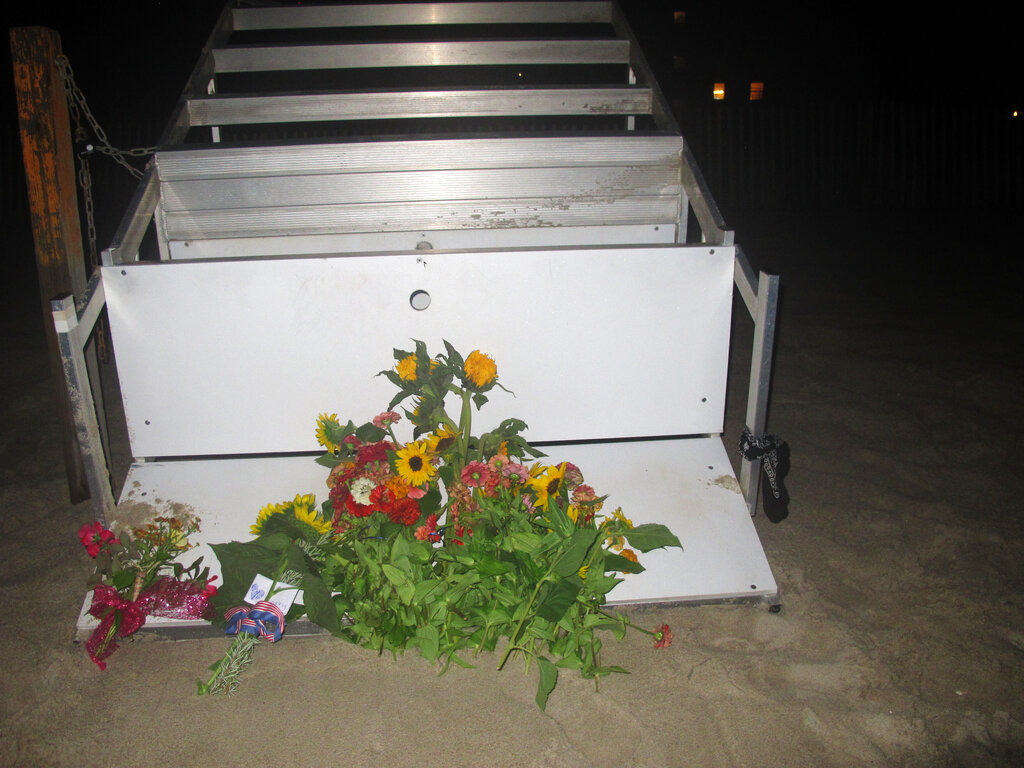
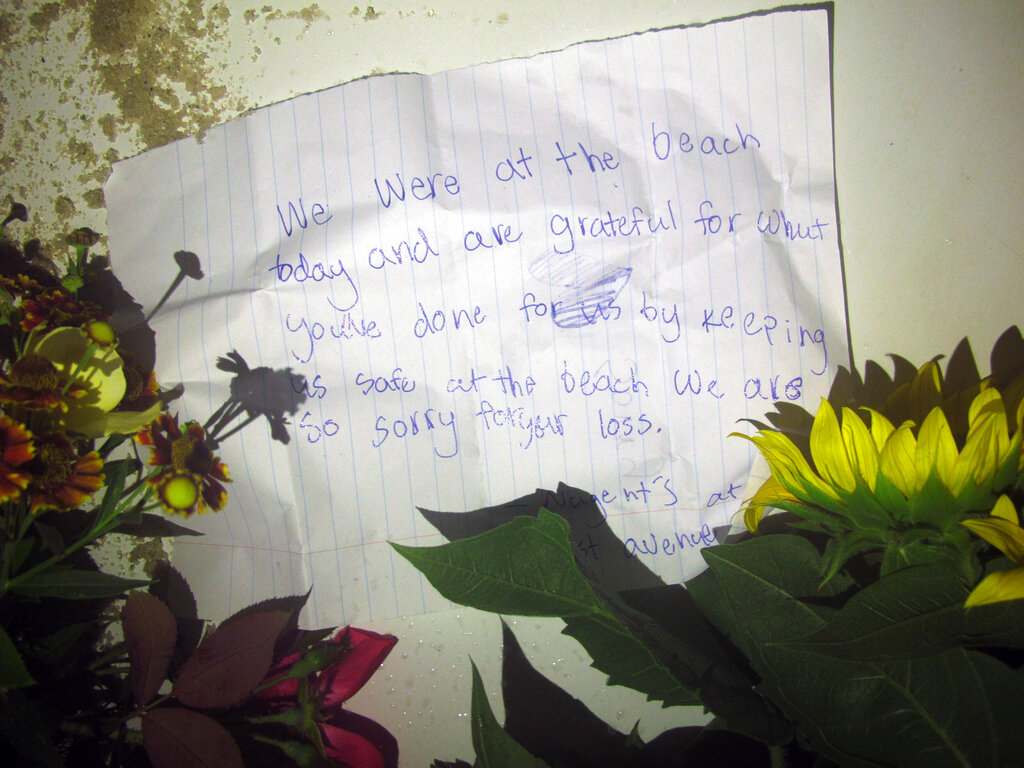
A handwritten note in purple ink was left with flowers Monday night at the base of a lifeguard stand at the beach.

READ MORE: US dropped 'Ninja bomb' to kill terrorists in Afghanistan

"We were at the beach today and are grateful for what you've done for us by keeping us safe at the beach," the note read. "We are so sorry for your loss."

Police were called at 4.31pm to a beach on 21st Avenue in Berkeley Township, near the entrance to Island Beach State Park, which is just south of Seaside Park.

Pete Tortorelli was tending an outdoor bar a block away from the beach when, he said, lightning struck seemingly out of nowhere.

"It looked a little cloudy in one direction but clear as anything in the other direction, and it was the first lightning of the day," he said. "Literally two minutes after I saw the lightning, every cop car in this town was screaming down the street."

Thomas Taberoni was at a beachfront house 90 metres away from the lifeguard stand, noticing that it was beginning to get cloudy, when he heard what he described as the loudest noise he had ever heard.

"Have you ever been to an air show when they break the sound barrier with that boom and you weren't prepared for it?" he asked. "This was like 100 times louder than that."

READ MORE: A look inside the communities hit by one of the most powerful US hurricanes

Lynda McHugh had just left the beach when she saw two large bolts of lightning come straight down. Within moments, people were running up the ramp from the beach and down the wooden stairs to safety.

Police said in a Facebook post that they were investigating reports of lightning strikes in the township, and would release further information as it becomes available.

A police dispatcher said she could not release any information other than what the department had posted on Facebook. Messages have been left for police commanders.

On August 20, 16-year-old lifeguard Norman Inferrera III died a day after an accident in Cape May, on New Jersey's southern tip. A lifeboat he was rowing was struck by a wave and flipped over, knocking him unconscious, authorities said.

And on August 12, a 13-year-old boy died after he was struck by lightning at Orchard Beach in the Bronx in New York City. Carlos Ramos was one of a group of people gathered at the beach who were struck by lightning during a fast-moving storm. Six others also were injured in that lightning strike.

Last minute Father's Day tech and gaming ideas

It's Father's Day in just a few days, and if you've left it a little late to get dad a gift – fear not.

There are plenty of gifts that can be delivered instantly thanks to the power of the digital world.

Here at 9News we've put together a list of ideas, gifts you can get your tech-obsessed dad without leaving home as well as last minute, instant gifts.

Google has just released the new Pixel Buds Series-A ($159), as well as the Nest Doorbell ($329).

READ MORE: Indie game developers speak to the success of Xbox exclusive 'Death's Door'

The Nest Doorbell retails for about $150 more than the Ring Doorbell by Amazon, but has inbuilt technology that can detect familiar faces and differentiate between a car and the postman.

READ MORE: Police hurt, more than 100 arrested and 430 fined at anti-lockdown protests

For the forgetful dad, Apple's new AirTags are budget friendly.

Starting at $49 for one, the AirTag, much like the Tile, can be attached to dad's bag, keys, or even the puppy to make sure you can always find it when missing.

READ MORE: US dropped 'Ninja bomb' to kill terrorists in Afghanistan

For the gamer dads out there, now's the time for next-gen gaming.

PlayStation have recently released two new coloured DualSense controllers for the PS5, Cosmic Red ($119.95 and Midnight Black ($109.95).

Other accessories for the new console include the Wireless Charging Station ($49.95) and the Pulse 3D Wireless Headset ($159.95).

For the states in lockdown, all of these things are simple click and collect away.

There's plenty of new games coming out next month – you can pre-order all of these digitally and have them ready for launch.

READ MORE: Melbourne made video game 'Cult of the Lamb' showcased during Gamescom opening night

NBA 2K22 releases on all platforms on the 10th, PS5 exclusive Deathloop lands on September 14th and the Director's Cut of Death Stranding is out on the 24th.

Dad loves golf? Mario Golf Super Rush ($69) is the latest Mario game for Nintendo Switch, it's out now.

Digital gaming subscriptions are a great way to keep dad entertained.

PlayStation's subscription service, PlayStation Plus, will set you back about $34 for three months, that'll allow dad to access the PlayStation Collection on his PS5, as well as give him downloadable games each month – in addition to online multiplayer gaming.

A subscription to Xbox Games Pass wouldn't go astray, for under $50 you can pick up three months of the service.

Games Pass gives Xbox and PC gamers access to over 100 of the best video games – new and old.

If a PlayStation 5 or Xbox Series X is out of your budget, the Xbox Series S may be more appealing.

$500 will get next-gen quality gaming for a fraction of the cost of a PC.

Speaking of PC, if dad like to game on the desktop, perhaps a new keyboard or mouse is in order?

READ MORE: Mario's brother Luigi finally get his own LEGO set

HyperX's new Alloy keyboards range from $140 – $180 and will brighten up any setup. They've also got a cool new gaming mouse, HyperX Pulsefire ($89) that weighs a mere 59 grams.

Don't forget video streaming services. Stan, Disney+, Amazon Prime and Netflix are all great, affordable ways to glue dad to the couch.

If all else fails, it's a fact that dads and father figures alike love a new pair of socks and undies.

Mark the date on your calendar – September 5.

Cruise Industry Vague and Confused With Various COVID Vaccine Protocols

The cruise industry has worked exhaustively during its pandemic pause to figure out how to carry passengers safely. But the restart is now being complicated by conflicting vaccine protocols that challenge its very business model.

The most impactful among them are the contradicting rules from the cruise industry’s home base and main embarkation point, Florida, and the popular ports its ships visit in the Caribbean.

On Aug. 19, the Bahamas issued an emergency order requiring that all adult cruise ship passengers be vaccinated in order for any ship to call in the islands. The Bahamas has emerged as a particularly important country for cruise lines, since it’s a close and convenient destination from Florida and is home to most of the lines’ private islands.

Several major lines changed their vaccination policies on their cruises from Florida to comply with the order: Carnival Cruise Line, Disney Cruise Line, MSC Cruises and Royal Caribbean International all now require that any cruiser 12 or older provide proof of vaccination to sail.

However, if not for Norwegian Cruise Line Holdings’ (NCLH) victory in a lawsuit against Florida, the lines would not likely have been able to make those changes.

Earlier this year, Florida made it illegal for businesses to require proof of vaccination for service. The law affected cruise ships embarking passengers in the state. Royal Caribbean, for example, changed what had been an adult-vaccine requirement on cruises from Florida to a suggestion, since it could not legally ask for proof of the jabs. MSC came out of the gate saying that it would not mandate passengers be vaccinated on its cruises, which launched this month.

NCLH, however, has stuck to its 100% passenger-vaccination mandate on its three brands, Norwegian Cruise Line, Oceania Cruises and Regent Seven Seas Cruises. And so it sued the state to invalidate its law, and earlier this month it won. A federal judge issued a preliminary injunction enabling NCLH’s brands to ask for proof of inoculation on sailings from Florida.

That has enabled the other lines to comply with the Bahamas order by being able to ask passengers for vaccination status. As CLIA said in a statement, the decision by U.S. District Judge Kathleen Williams “concluded that a cruise line engaged in international commerce could legally require proof of vaccination.”

Or as Mark Pestronk, a Washington-based lawyer specializing in travel law and a columnist for Travel Weekly explained, “if the state tried to enforce the law against them, they could file the same suit and get the same result.”

But that ability may be fleeting.The Celebrity Edge and Royal’s Freedom of the Seas docked in Nassau earlier this summer. Photo Credit: Tom Stieghorst

Florida’s next move

Florida issued a notice of appeal, and Gov. Ron DeSantis has vowed to fight.

“We disagree with the judge’s legal reasoning and will be appealing to the 11th Circuit Court of Appeals,” his office said in a statement.

Equally entrenched, NCLH CEO Frank Del Rio called it “shameful” that the company had to fight Florida for the right to keep passengers healthy.

“Here is a state that relies on tourism as its No. 1 industry,” he said in an interview with Yahoo Business. “And the No. 1 priority of any hospitality business is to keep their customers safe. I mean, that’s de rigueur. And you would expect that government, again, would do everything possible to support that. Instead, we had to go to court.”

No date has yet been set to hear the appeal, but Pestronk said that once it gets to the appeals court, NCLH may not prevail.

“The 11th Circuit Court of Appeals leans right, so the odds are fairly good that the injunction will be overturned,” Pestronk said. “However, it all depends on the luck of the draw, as appeals cases are generally heard by a three-judge panel, and you cannot predict which three judges will get assigned.”

Stakes are rising

The stakes have only risen since the Bahamas law went into effect. The U.S. Virgin Islands, another important call for cruise ships, last week formally updated its guidance and also requires all passengers age 12 and up on arriving cruise ships to be vaccinated.

In its original complaint against the Florida law, NCLH said that many foreign ports to which the line has scheduled cruises also require proof of vaccination to enter without testing, including the British Virgin Islands, Honduras and Belize, where the cruise company has a private destination, Harvest Caye.

This early look at the potential morass of pandemic-era regulation is particularly difficult for an industry that operates in various global jurisdictions on almost every trip.

“Florida’s ban poses significant burdens for NCLH, an internationally focused cruise line,” the cruise company said in its complaint. “Within as little as 30 minutes of departing from PortMiami, NCLH’s ships reach international waters and sail to interstate and foreign ports.”

In siding with NCLH, Judge Williams took note of this.

“It is undisputed that nearly every country and port that plaintiffs intend to set sail to during the remainder of the year have varying, often complicated requirements,” she wrote. “It is also clear that Covid-19 vaccination documents are the fulcrum of many of these requirements.”

The post Cruise Industry Vague and Confused With Various COVID Vaccine Protocols appeared first on The St Kitts Nevis Observer.

Victorians more concerned about mental health impacts of lockdown than virus

Victorians are more concerned about the impact of lockdown on mental health and jobs than contracting the virus.

A new YouGov poll found more than 60 per cent of people are worried about the impact of shutdowns on mental health, as well as the damage to businesses and job losses.

Sixty per cent of people are suffering from a lack of contact with family and friends.

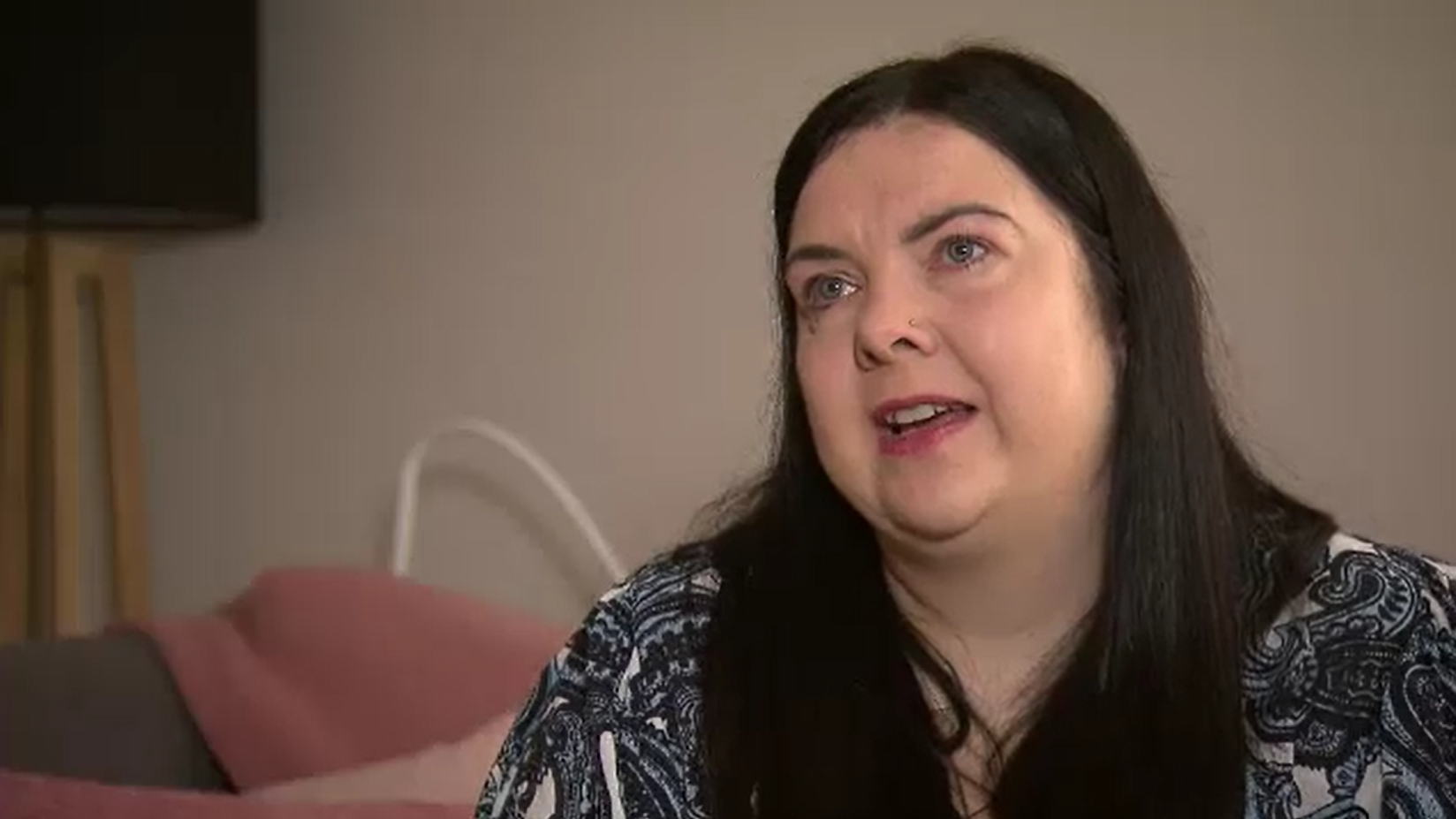
Pam Jones, 45, from Melbourne's north-east, told 9News she is struggling to see the light at the end of the lockdown tunnel.

READ MORE: How to take care of your mental health in COVID-19 lockdown

The administration professional is worried about her daughters' wellbeing and her family in the UK, who she has not seen for two years.

"I'm trying to work from home and home school at the same time and it's incredibly, incredibly difficult," she said.

The mental repercussions of ongoing lockdowns are now of greater concern for many Victorians than the risk of catching COVID-19.

Calls to Lifeline continue to rise as Victoria's gruelling lockdown continues.

READ MORE: 'Shadow' mental health pandemic spreading among Victorian children

"These numbers are extraordinary," Lifeline Australia Chair John Brogden said.

"We've seen a 32 per cent increase in the number of calls we are receiving in Victoria compared to two years ago."

Professor Patrick McGorry from mental health group Orygen said the surge in psychological distress, particularly in children, needs urgent attention.

"Our modelling shows this mental ill health will last months and probably years. So we've got to have a solution now."

For mental health support, contact Lifeline on 13 11 14 or Beyond Blue on 1300 22 4636.