Stricter measures than for past outbreaks could be on the cards if the Australian visitor turns out to have had the “explosive” Delta variant of Covid-19, a top scientist warns.From 6pm the Wellington region, including Wairarapa…
Category Archives: headline
Brazil: COVID Runs Rampant Among Copa Athletes
Sao Paulo, Brazil (CNN) At least 140 positive Covid-19 cases have been detected among players, members of delegations and service providers since the beginning of the Copa América tournament in Brazil on June 13, according to the country’s health ministry.
Brazil was chosen to host the football tournament earlier this month despite concerns about the country’s still uncontrolled spread of Covid-19, after the Copa América was moved from its original host countries of Argentina and Colombia. Brazil ranks second in the world for number of Covid-19 fatalities after the United States, and crossed the grim threshold of 500,000 deaths over the weekend.
Half of the national teams participating in the Copa América have been affected by Covid-19 so far. Venezuela, the hardest-hit team, registered eight players infected in its last report. Colombia, Bolivia and Peru also have personnel with coronavirus. The South American Football Confederation (CONMEBOL) does not release the number of cases per national team.
As the tournament was beginning, Argentine superstar Lionel Messi expressed concerns about contracting the virus while with his national team.
“It worries us because it is a risk for everyone catching Covid,” he told reporters. “We try to be careful but it’s not easy. These things happen.”
“We’ll try to do all we can so no one gets it, but sometimes it doesn’t depend solely on ourselves.”
Of the positive cases confirmed so far at the Copa América, 42 were among players and members registered in national teams, 97 cases were detected among service providers hired for the event and one case was a CONMEBOL staff member.
That’s a significant rise since the last report on Covid-19 at the tournament. Last week, the health ministry reported 37 positive cases among players and delegation members and 45 among service providers of the tournament.
Infections have been registered in all four host cities: Rio de Janeiro, Brasilia, Cuiaba and Goiania.
The post Brazil: COVID Runs Rampant Among Copa Athletes appeared first on The St Kitts Nevis Observer.
Napier supermarket shopper wins $1 million Lotto 1st division
One lucky Napier Lotto player will be celebrating a midweek windfall after winning $1 million with Lotto First Division in tonight’s live Lotto draw.The winning ticket was sold at Greenmeadows New World.Powerball was not struck…
As Venezuela’s Economy Regresses, Crypto Fills Gaps
REUTERS


The new Venezuelan cryptocurrency “Petro” logo is seen at a facility of the Youth and Sports Ministry in Caracas, Venezuela February 23, 2018. REUTERS/Marco Bello/Files
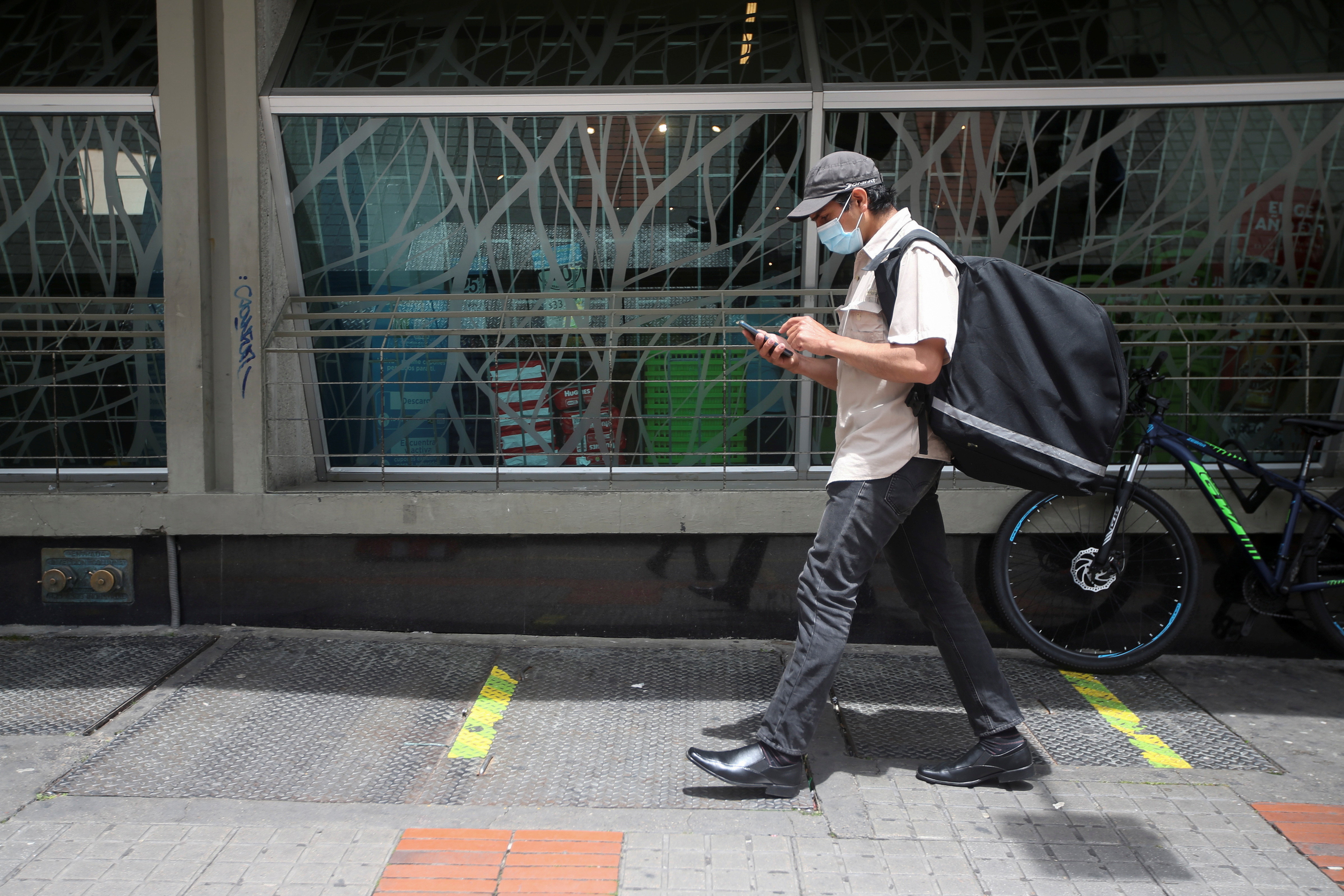
CARACAS, June 22 (Reuters) – Venezuelan food delivery driver Pablo Toro has no stake in cryptocurrency or blockchain, but indirectly uses digital tokens every time he sends money to his family.
Toro, who emigrated to Colombia in 2019, uses an app called Valiu to receive Colombian pesos from working on Bogota’sstreets and deposit the corresponding bolivars into a Venezuelan bank account.
In Venezuela’s economy, mired by hyperinflation and hemmed in by sanctions, the operation is not so straightforward.
Valiu uses pesos to buy cryptocurrency that it then sells on LocalBitcoins, a global peer-to-peer site for trading tokens in local currencies.
For Toro, the platform is more reliable than informal money changers, the main channel for Venezuelan migrants to send money home. And he need not buy traditional money orders in person.
“When the power is out in Venezuela, when internet service is down, it has a huge impact on how long it takes to send a remittance to one’s family,” said Toro, who quit working as a university security guard because his monthly salary could not even pay for a day’s groceries.
“(Now) I don’t have to worry about whether the cell signal dropped in Venezuela, or if cell service drops here.”
As hyperinflation and U.S. sanctions disrupt Venezuela’s economy, cryptocurrency is emerging as a way to provide services handled elsewhere by the traditional banking system.
It has become a tool to send remittances, protect wages from inflation and help businesses manage cash flow in a quickly depreciating currency, according to interviews with crypto users and experts.
Cryptocurrency in Latin America got renewed attention in June after El Salvador adopted bitcoin as legal tender. It has grown in popularity in Argentina as inflation resurged.
Chainalysis, a startup that researches blockchain transactions, in a 2020 report ranked Venezuela third on its Global Crypto Adoption Index, largely due to the high volume of bolivar transactions.
Mining cryptocurrency – using high-powered computers to solve complex math problems – is an attractive way to make extra income thanks to Venezuela’s ultra-low power prices, but the average citizen cannot afford the equipment.
In Venezuela, crypto is mainly used to hedge against inflation that causes bank deposits to sharply depreciate in weeks or even days.
“Valiu buys and sells bitcoin instead of directly exchanging pesos to bolivars because of the lack of availability of that currency in regulated marketplaces,” said Alejandro Machado, Valiu’s head of pilot programs.
Bolivar transactions on LocalBitcoins are the largest by value among Latin American currencies, according to LocalBitcoins data analyzed by blockchain advisor UsefulTulips.
LocalBitcoins did not respond to a request for comment.
Cryptocurrency traders and experts say volumes on the site have slipped amid the rising popularity of Binance, one of the world’s largest cryptocurrency exchanges, which offers trading of a variety of tokens.
These include so-called “stablecoins” whose values remain steady against specific assets such as the U.S. dollar, avoiding the volatility of many cryptocurrencies.
Bolivar operations on Binance’s peer-to-peer platform have risen by 75% since May, making Venezuela the only Latin Americancountry whose trading volumes have risen since bitcoin prices tumbled at the start of May, a Binance spokesperson said.
Venezuelan President Nicolas Maduro in 2017 announced the creation of the state-backed petro cryptocurrency, but it has little practical application. The government used it in 2019 to make small payments to retirees, and often uses it as a unit of value to price services or fines that are ultimately paid in bolivars.
The United States in 2019 imposed broad Venezuela sanctions that block U.S. citizens from dealing with Maduro’s government. While banks can still deal with private businesses or individuals, many avoid doing so due to perceived regulatory risk.
The country’s information ministry did not respond to a request for comment.
Fast food chains Pizza Hut and Church’s Chicken as well as some supermarkets are accepting tokens such as bitcoin and dash as payment, fueling excitement and filling malls and businesses with logos for well-known cryptocurrencies.
But a major part of Venezuela’s crypto operations involves businesses swapping out of bolivars to beat inflation, said economist and finance expert Aaron Olmos.
“Crypto is being used as a palliative for the economic situation, but you see it mostly among businesses,” said Olmos.
“Nobody is going to tell you ‘every night when we do the books, we convert bolivars into bitcoin,’ but yes, this is happening.”
Reporting by Brian Ellsworth; Editing by Richard Chang
The post As Venezuela’s Economy Regresses, Crypto Fills Gaps appeared first on The St Kitts Nevis Observer.
Covid-19 coronavirus: 'Shambles' – Te Papa worker turned away from Covid testing station
A Wellington Te Papa worker who was told to isolate and get a Covid-19 test is frustrated after struggling to get into a testing station due to the lack of facilities and availability.The employee and their family, who wish to remain…
Europe Worries As Delta Variant Spreads Fast In The U.K. & Lisbon, Mexico Deaths, World Stats
Armando Franca/AP
A worrying spike of coronavirus infections in Europe is being driven by the delta variant, according to global health leaders, even as immunization rates in some countries are on the way up.
Increased cases reported in the U.K. and Portugal have forced officials to reimplement lockdown restrictions or hold off on lifting pandemic mandates. Officials in France, Germany and Spain said they are closely monitoring clusters of infection tied to the delta variant.
The strain, also known as B.1.617.2, was first detected in India. It is now “well on its way to becoming the dominant variant globally because of its increased transmissibility,” Soumya Swaminathan, the World Health Organization’s chief scientist, said Friday.
Pfizer-BioNTech and Moderna vaccines have been shown to be effective against this strain.
A recent study from Public Health England showed two doses of the Pfizer-BioNTech vaccine were 88% effective against symptomatic disease from the delta variant compared with 93% effectiveness against the alpha variant, the variant first detected in the United Kingdom. The vaccine only provided 33% protection after just one dose.
Still, in the U.S., the Centers for Disease Control and Preventions shared similar concerns of the spread of the delta strain. The CDC declared last week that it was a “variant of concern,” meaning it poses a significant threat to unvaccinated people
UK- A delay in lifting lockdown restrictions
U.K. Prime Minister Boris Johnson announced last week a delay in plans to lift the final elements of the nation’s lockdown restrictions, citing “a faster than predicted” spread of the strain.
Originally set to end Monday, Johnson said restrictions on businesses and large events will remain in place until July 19.
In the U.K., data shows 99% of sequenced and genotyped confirmed coronavirus cases across the country are the delta variant, according to Public Health England.
The government’s weekly data as of June 18 showed numbers of the delta variant in the U.K. have risen by 33,630 from the previous week to a total of 75,953.

This comes despite the nation’s high immunization rate, with 59.5% of the adult population fully vaccinated from the coronavirus. A reported 81.6% of the adult population have received one dose, according to government data.
Dr. Jenny Harries, chief executive of U.K. Health Security Agency, said in a statement, “The increase is primarily in younger age groups, a large proportion of which were unvaccinated but are now being invited to receive the vaccine.”
On Friday, the government announced every adult over the age of 18 is eligible to receive a coronavirus vaccine.
Authorities in Portugal banned all weekend travel in and out of Lisbon, the capital, to cut down on any further spread of the virus to other parts of the country.
Portugal’s National Health Institute reported this weekend the delta variant is shown to be in at least 60% of new cases in Lisbon. The country reported more than 1,000 new COVID-19 cases for the fourth day in a row on Saturday, according to Reuters.
Spain, Germany and France watch with concern
Cases tied to the delta strain are reported as being low in France, Spain and Germany, but each nation’s health minister warn that the delta variant is perceived as a real threat.
As of June 14, Spain reported the delta variant accounted for less than 1% of cases.
Spain’s Catalonia region, in the northeast, reported 20% of new cases were linked to the delta strain, the region’s health official, Josep Maria Argimon, announced at a press conference Thursday.
Argimon warned that delta could be the predominant variant throughout the country in two to four weeks.
That hasn’t stopped the nation from moving forward with lifting some COVID-19 restrictions. Spanish Prime Minister Pedro Sánchez announced Friday that masks would no longer have to be worn outdoors in the country, starting June 26.
German Health Minister Jens Spahn said it’s not if the delta variant becomes dominant, but “when and under what conditions.”
France reported that 2% to 4% of virus samples being analyzed in the country showed the delta variant, according to French Health Minister Olivier Véran.
“We are in the process of crushing the virus and crushing the pandemic, and we must in no way let the Delta variant get the upper hand,” Véran said last week, according to The Financial Times.
“You might say this is still low but it is similar to the situation in the UK a few weeks ago,” he said.
=====================================================
Mexico’s coronavirus death toll rises to 231,505
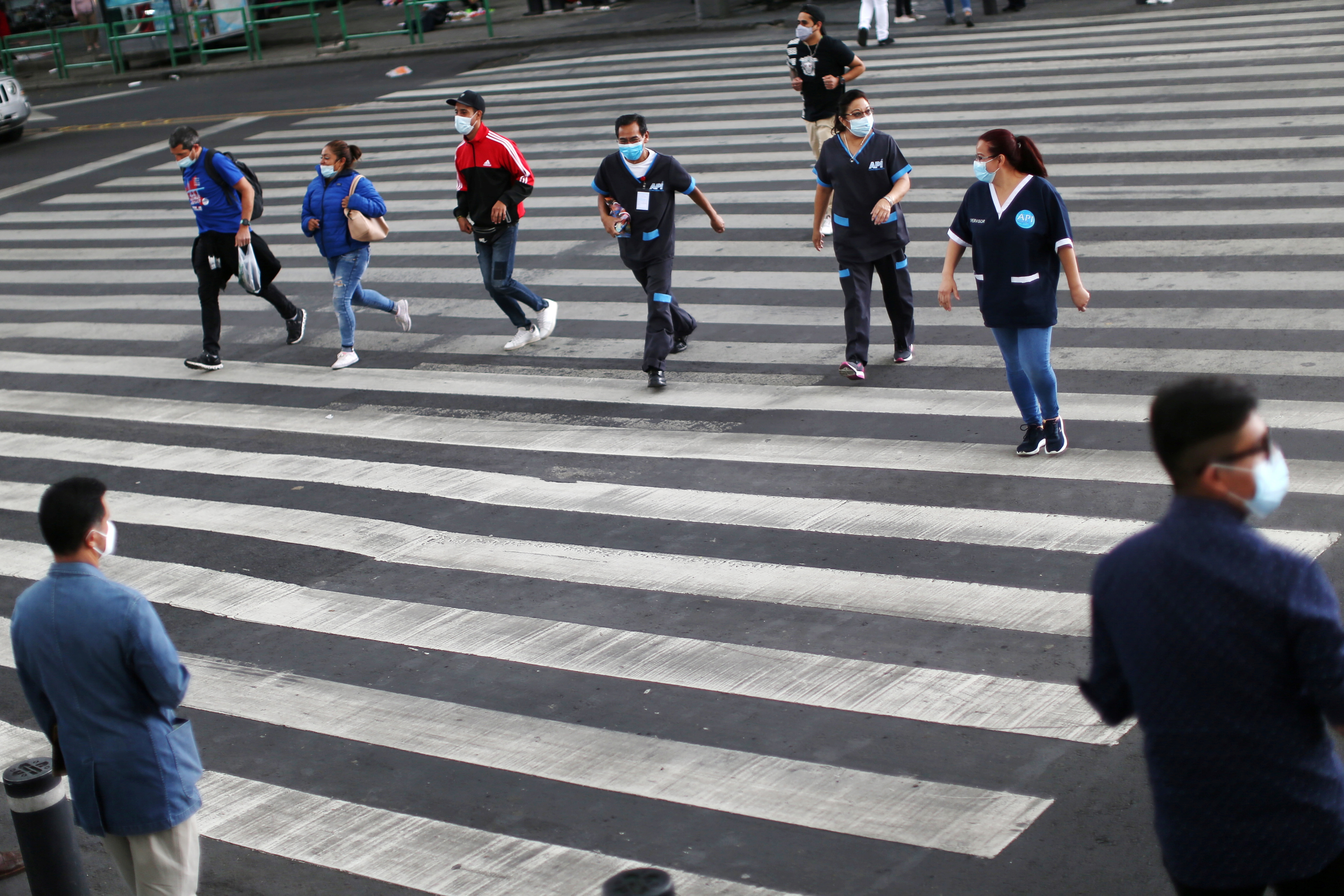
People wearing face masks cross a street as Mexico City’s authorities announce a full reopening of the city come Monday, the first time since the coronavirus disease (COVID-19) pandemic, Mexico June 4, 2021. REUTERS/Edgard Garrido
MEXICO CITY, June 22 (Reuters) – Mexico’s health ministry on Tuesday reported 4,233 new confirmed cases of COVID-19 in the country and 261 more fatalities, bringing the total figures to 2,482,784 infections and 231,505 deaths.
The government has said the real number of cases is likely significantly higher, and separate data published in March suggested the actual death toll is at least 60% above the confirmed figure.
Reporting by Diego Ore Editing by Chris Reese
===========================================
WORLD STATS
Highlighted in green
= all cases have recovered from the infection
Highlighted in grey
= all cases have had an outcome (there are no active cases)
Latest News
June 23 (GMT)
Updates
- 738 new cases and 8 new deaths in Kyrgyzstan [source] [source]
- 419 new cases and 2 new deaths in Uzbekistan [source]
- 5 new deaths in El Salvador [source]
- 1,248 new cases and 12 new deaths in Kazakhstan [source]
- 644 new cases and 1 new death in South Korea [source]
- 3 new cases in New Zealand [source]
The post Europe Worries As Delta Variant Spreads Fast In The U.K. & Lisbon, Mexico Deaths, World Stats appeared first on The St Kitts Nevis Observer.
Mexico Border: Asylum Seekers Wait for End of Trump Health Rule
Laura Gottesdiene
Reuters
REYNOSA, Mexico, June 22 (Reuters) – When Salvadoran asylum seeker Liset Ortiz was kidnapped in the Mexican border city of Ciudad Juarez on her way to the United States, a kidnapper found the police report she was carrying as proof of the death threats she says she received in El Salvador for being a lesbian.
So he dragged her away from her 8-year-old son – who was from a previous marriage before she came out as lesbian – and raped her, she said. “He told me that he’d show me he was better than a woman,” Ortiz recounted.
Ortiz, 32, and her son were freed from the warehouse where they were held with several other kidnapped women only after her family in the United States wired $4,000 to the kidnappers, her sister in Texas confirmed by phone.
Once released, they fled across the border to the United States hoping to seek asylum from the discrimination she had faced in El Salvador. Instead, that same night, U.S. immigration agents sent them back to Mexico under a Trump-era health code that has closed the border to many asylum seekers, she said.
Reuters could not independently verify Ortiz’s account.
U.S. President Joe Biden, during his successful presidential campaign, denounced a Trump-era program that returned tens of thousands of Central American asylum seekers to violent Mexican border cities to wait as their cases wound through U.S. courts. On his first day in office, Biden halted the program.
Yet, he kept in place a Trump-era health order, known as Title 42, that allows U.S. officials to rapidly expel migrants at U.S. borders during the COVID-19 pandemic. As a result, five months into Biden’s presidency, the scenes at the Mexican border are little changed.
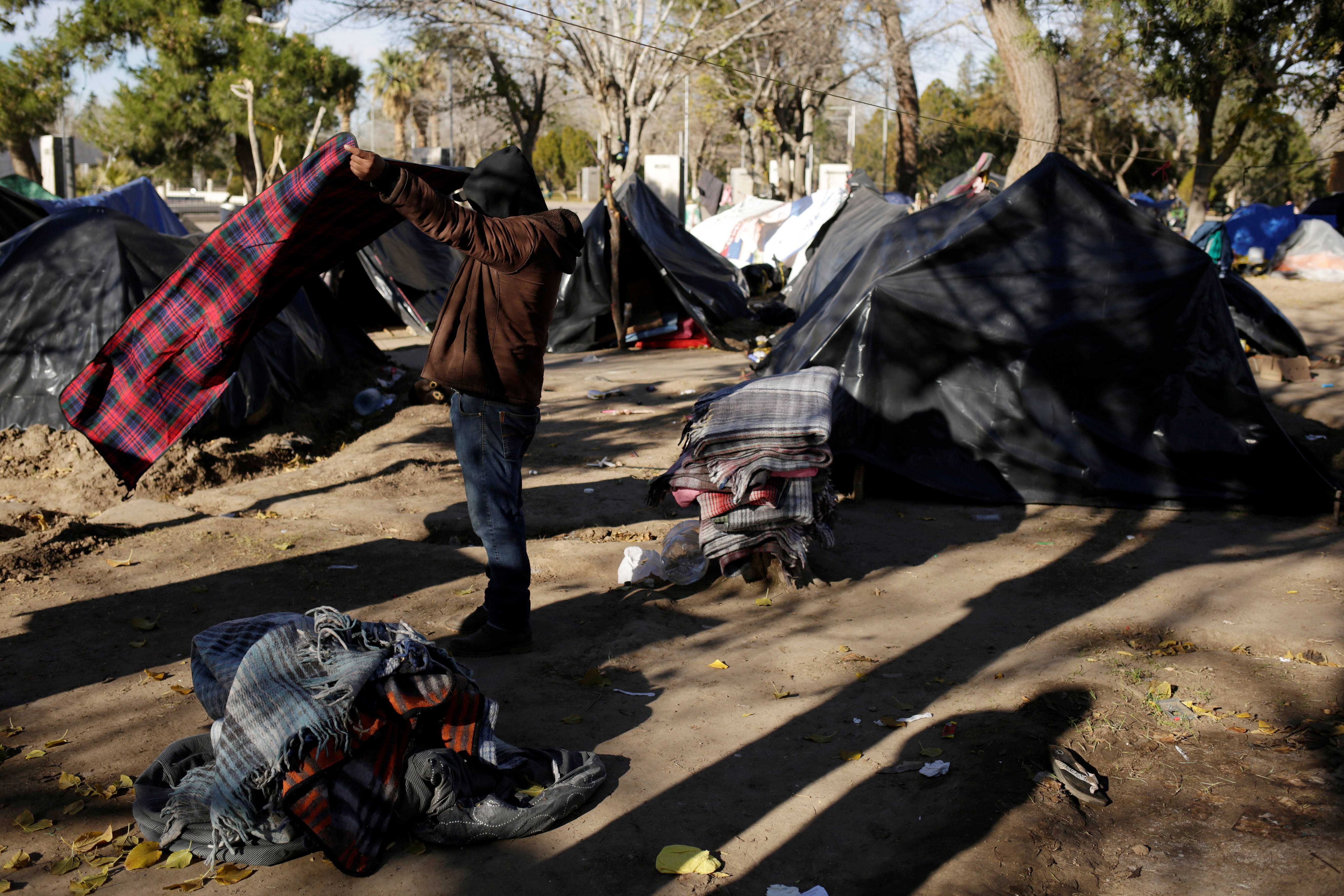
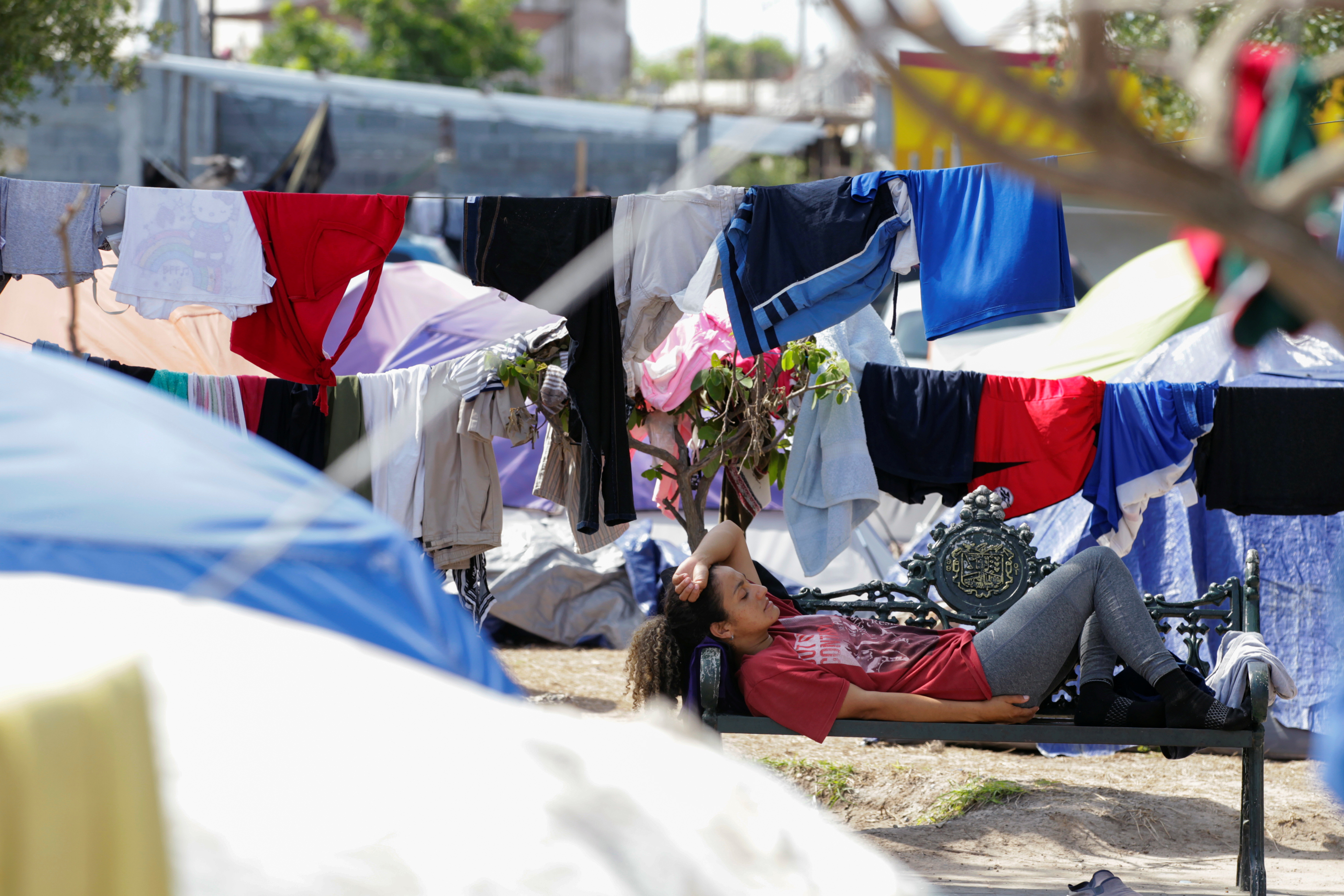
Ortiz and her son are now one of hundreds of Central American families camped at the foot of the international bridge in Reynosa, one of Mexico’s most dangerous cities. The camp is reminiscent of a symbol of Trump’s restrictive immigration policies: the now-closed squalid tent city in another cartel-run border town, Matamoros, 55 miles to the east.
Many of the families living in tents in Reynosa – just across from McAllen, Texas – arrived after they were expelled by U.S. officials to Mexico without a chance to present their asylum claims.
Since Biden took office, U.S. border authorities have recorded more than 400,000 expulsions under Title 42, according to data from the U.S. Customs and Border Protection (CBP) agency. The vast majority of those expelled are Mexicans and Central Americans. Repeat crossings are common.
A White House spokesperson said Title 42 was a public health directive, not an immigration enforcement tool, and was necessary on health grounds. The Biden administration says it is working to strengthen the asylum system along the border.
But advocate groups, U.N. officials and even some fellow Democrats say the continuation of Title 42 is subjecting migrants to the same dangers – kidnapping, extortion, and sexual violence – as the policies of the Trump administration.
Nearly 3,300 migrants and asylum seekers stranded in Mexico since Biden took office have been kidnapped, raped, trafficked or assaulted, according to a report by the New York-based group Human Rights First released Tuesday.
“We believe that it is time to end Title 42,” Kelly Clements, the deputy high commissioner for the United Nations refugee agency, told Reuters. “We think now it is having the effect of sending more people, and children in this case, into harm’s way.”
MIGRANT PATROL
In Reynosa, criminal groups for years have fought for control of the region’s lucrative drug trafficking and human smuggling routes. On Saturday, armed gunmen killed 18 apparently randomly selected people in several of its neighborhoods.
In the plaza, migrants run a nightly patrol that has beaten back some gang members who have tried to snatch residents of the encampment, migrants say.
A Reuters witness saw no police stationed near the plaza. The state-level office of public security, state government and federal immigration authorities did not respond to questions about what authorities were doing to protect migrants.
Criminal groups exert considerable control along the border in northeastern Mexico and require migrants to pay to cross their territory.
“I’m afraid to be here,” said Honduran mother Dolores Zúñiga, 40, who says she was kidnapped along with her 7- and 11-year-old sons when she arrived in Reynosa.
After crossing the border and then being expelled back to Mexico, her smuggler warned Zúñiga that unless she coughs up another $1,500 to a criminal group for permission to be in Reynosa, she risks being kidnapped again.
“They have photos of me,” she said, hiding inside her sweltering tent, where she showed Reuters text messages from her smuggler warning her against even venturing to the edge of the plaza.
Reporting by Laura Gottesdiener and Daniel Becerril; Writing by Laura Gottesdiener; Editing by Diane Craft
The post Mexico Border: Asylum Seekers Wait for End of Trump Health Rule appeared first on The St Kitts Nevis Observer.
Seven Sydney LGAs declared COVID-19 hotspot
Chief Medical Officer Paul Kelly has declared seven local government areas in Sydney as Commonwealth COVID-19 hotspots.
The hotspot will include the local government areas of City of Sydney, Waverley, Randwick, Canada Bay, Inner West, Bayside and Woollahra.
The Federal Government has offered NSW support and assistance.
FOLLOW LIVE: Bondi cluster explodes out to 31 cases
READ MORE: Sydney's newest restrictions explained
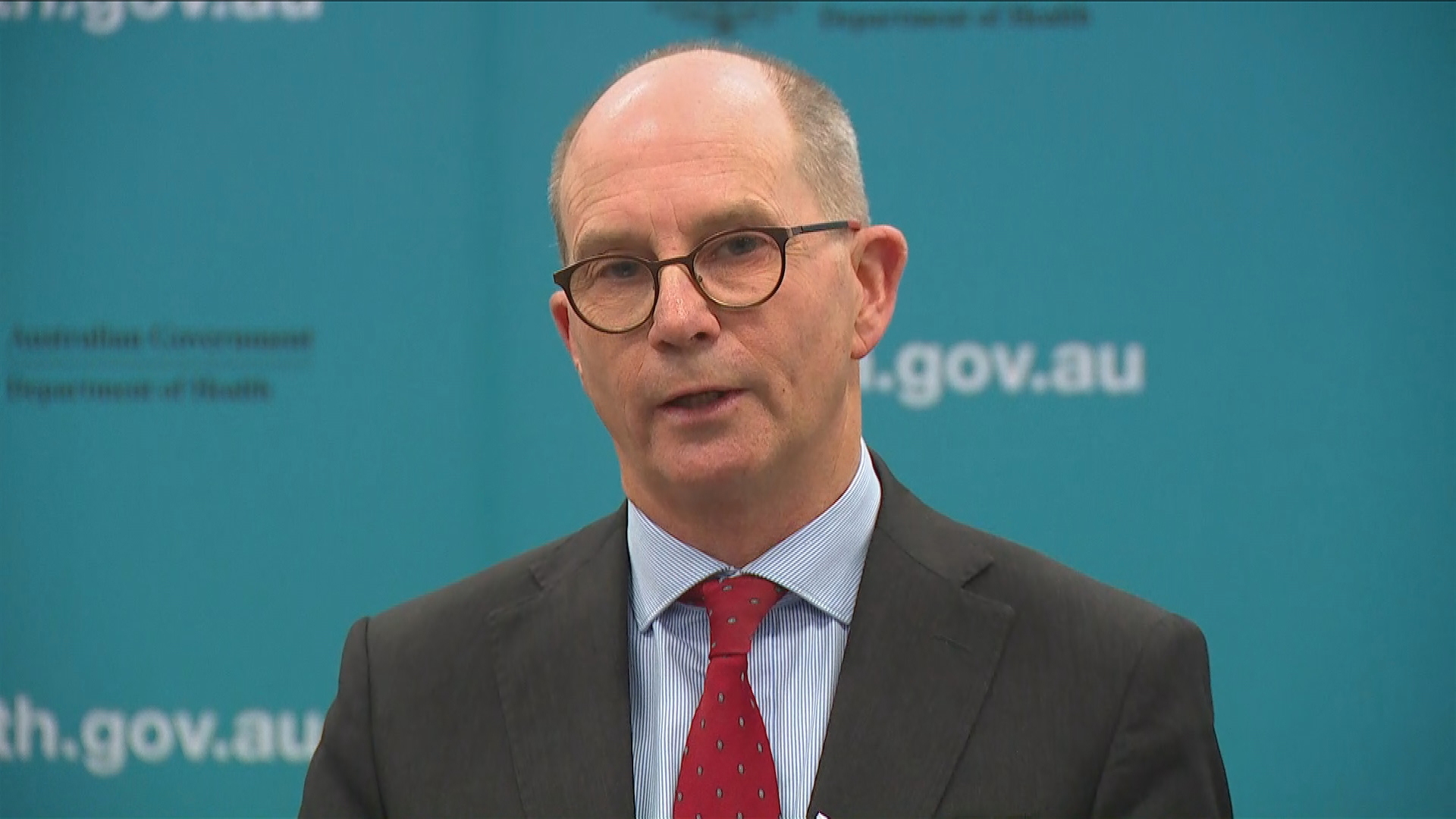
The declaration of seven LGAs in Sydney as a federal COVID-19 hotspot will have several consequences.
Extra personal protective equipment will be available for aged care centres, and Professor Kelly said it could also lead to a redistribution of vaccine supplies.
If Sydney enters a full lockdown, COVID support payments could become available, but they would only be triggered after a week.
READ MORE: Eateries, iconic hair salon added to Sydney exposure sites
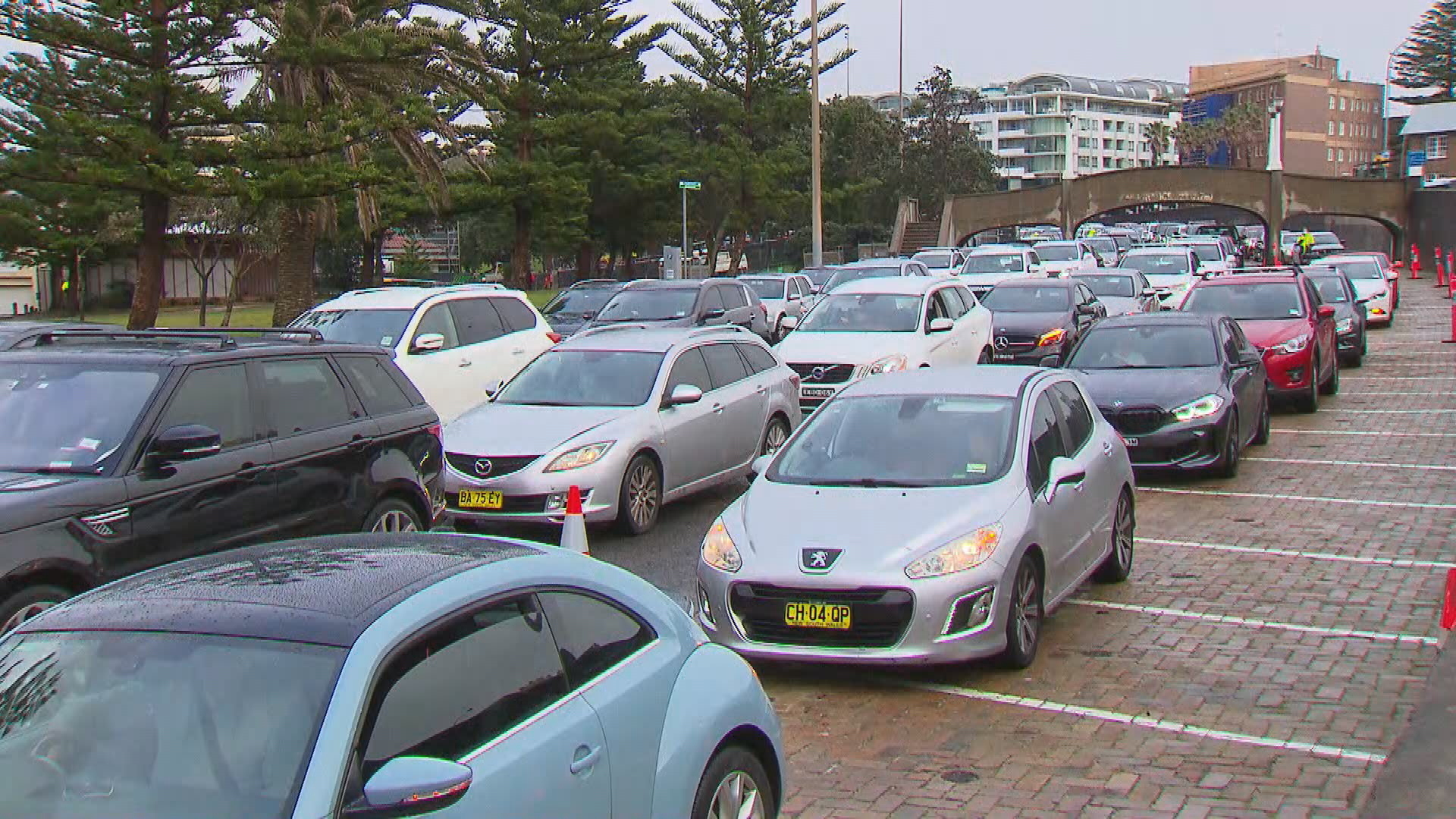
Professor Kelly said the decision had been made to declare a Sydney hotspot following the emergence of more unlinked COVID-19 cases.
"NSW have a fantastic contact tracing system, I don't think there's any doubt it's the best in the country," he said.
"But they're chasing unlinked cases now, which makes things more difficult."
Professor Kelly said the school, birthday party, and plane flights from which new cases had emerged were all "very complex" situations.
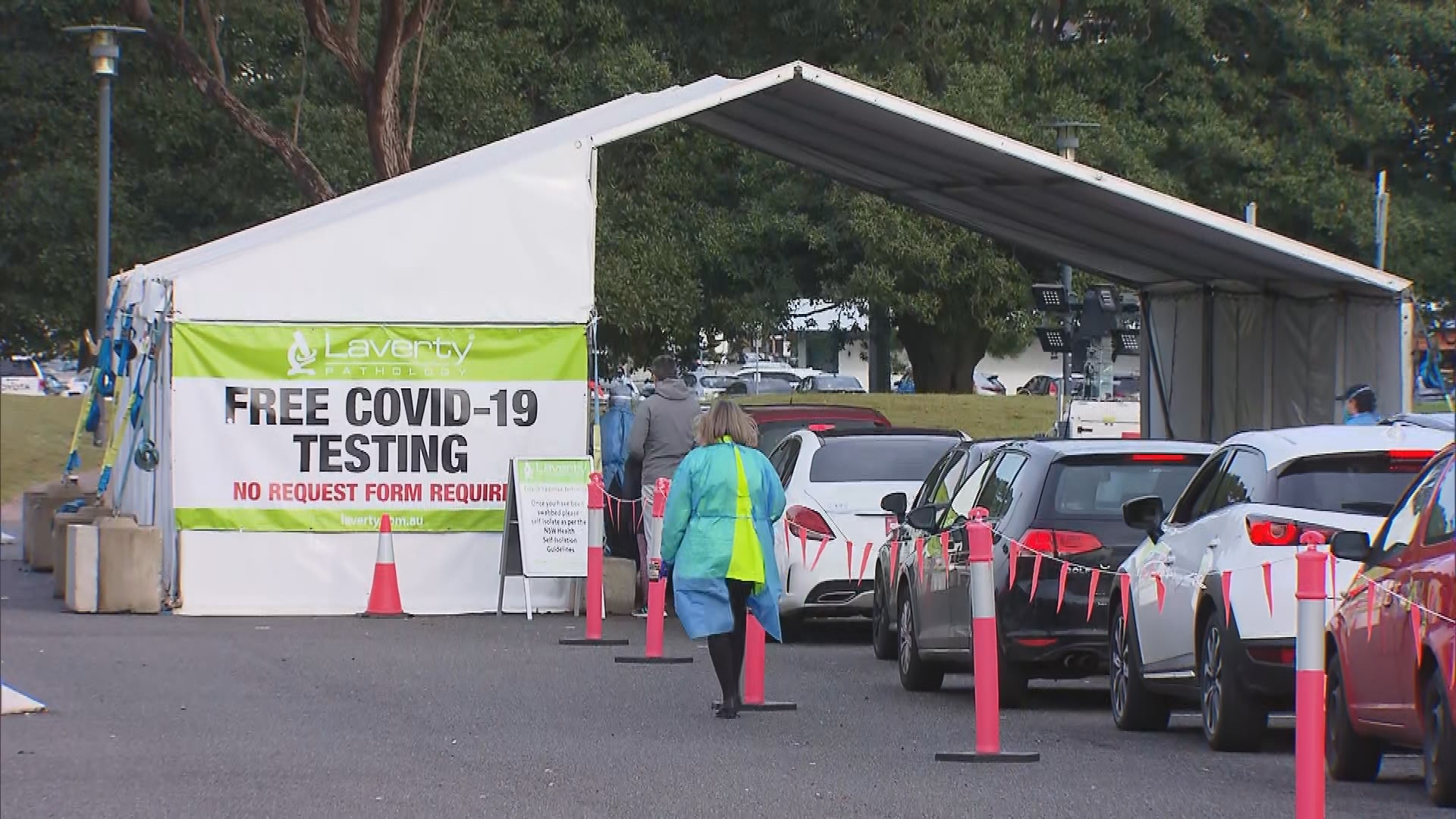
The new Sydney COVID-19 outbreak has sparked a different response to the previous Northern Beaches one for several reasons, Professor Kelly has said.
"First of all, the Northern Beaches outbreak was not a variant of concern," he said.
"And the Northern Beaches are an insular peninsula, if I can say that – most people who live on the Northern Beaches, stay on the Northern Beaches."
He said the sites of the new outbreak, particularly in Bondi Junction, were places that saw a lot of traffic from different parts of the city.
You can find out more details about how to book your vaccine through the Federal Government health site here.
Forty per cent of Chinese think Australia a 'military threat'
More than 40 per cent of Chinese people consider Australia a "military threat", according to the results of a poll published in a state-run news outlet.
The Global Times poll was published following Australia's Lowy Institute poll, which was released this morning to show Australia's trust in China had fallen considerably in the past year.
The Chinese survey, conducted online by the Global Times Research Center and the Australian Studies Centre of Beijing Foreign Studies University, found that 55.6 per cent of respondents had a positive view of the Australia-China relationship, down from 65.3 per cent in 2020.
READ MORE: Australians optimistic after horror 2020 – but trust in China plunges
About 41.3 per cent felt Australia posed a military, political or ideological threat, while 88 per cent said China functioned as primarily an economic partner to Australia.
The Times, an English-language outlet run by the Chinese Communist Party, claimed that Australia's actions were largely to blame for the changing relations.
"Australia singlehandedly has to be responsible for such simmering public opinion," Chen Hong, a professor and director of the Australian Studies Center of East China Normal University, told the Times.
"Australian media and politicians have been smearing and criticising China on every front, be it economy, COVID-19 or other issues.
"Yet Australia has been less frequently mentioned in Chinese publications."
READ MORE: Hong Kong newspaper raided by authorities may be forced to close
Nearly half those surveyed blamed the US for the deteriorating relationship.
Asked if they saw relations improving in the next couple of years, 44 per cent of respondents agreed, while 22 per cent were ambivalent.
Notably, the Australian Lowy poll found that the majority of Australians felt that meetings with Chinese people, and Chinese history and culture, influenced them positively towards the nation, with distrust and criticism mostly centred around government policy.
A majority of Australians also remained hopeful of having good relationships with China and the US.
You can find out more details about how to book your vaccine through the Federal Government health site here.
National MP Todd Muller's resignation followed admission at late-night caucus meeting
National MP Todd Muller’s resignation announcement followed a late-night caucus meeting in which Muller admitted he was one of several unnamed MPs criticising returning MP Harete Hipango in a media article.Muller has confirmed to…