Category Archives: headline

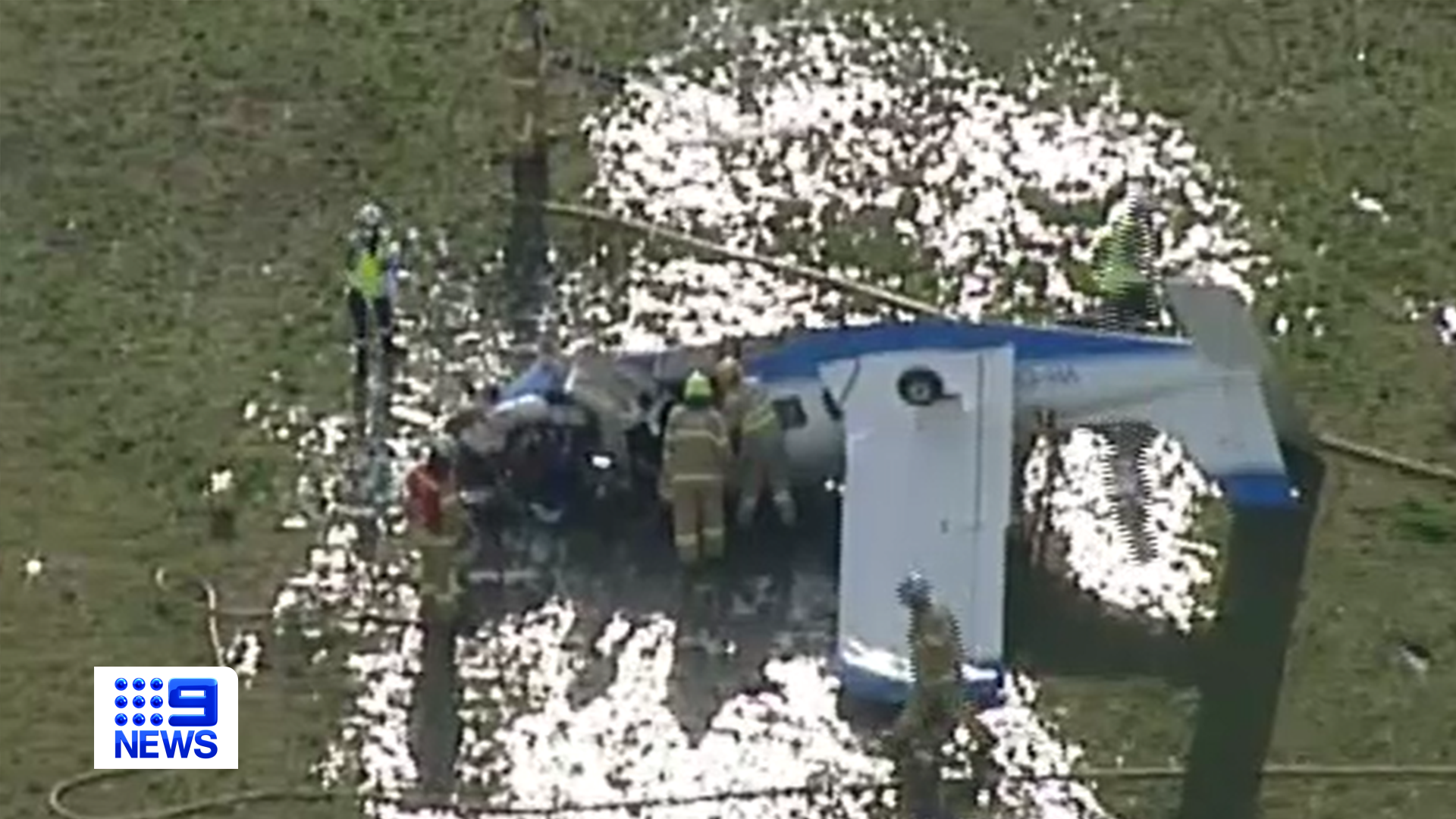
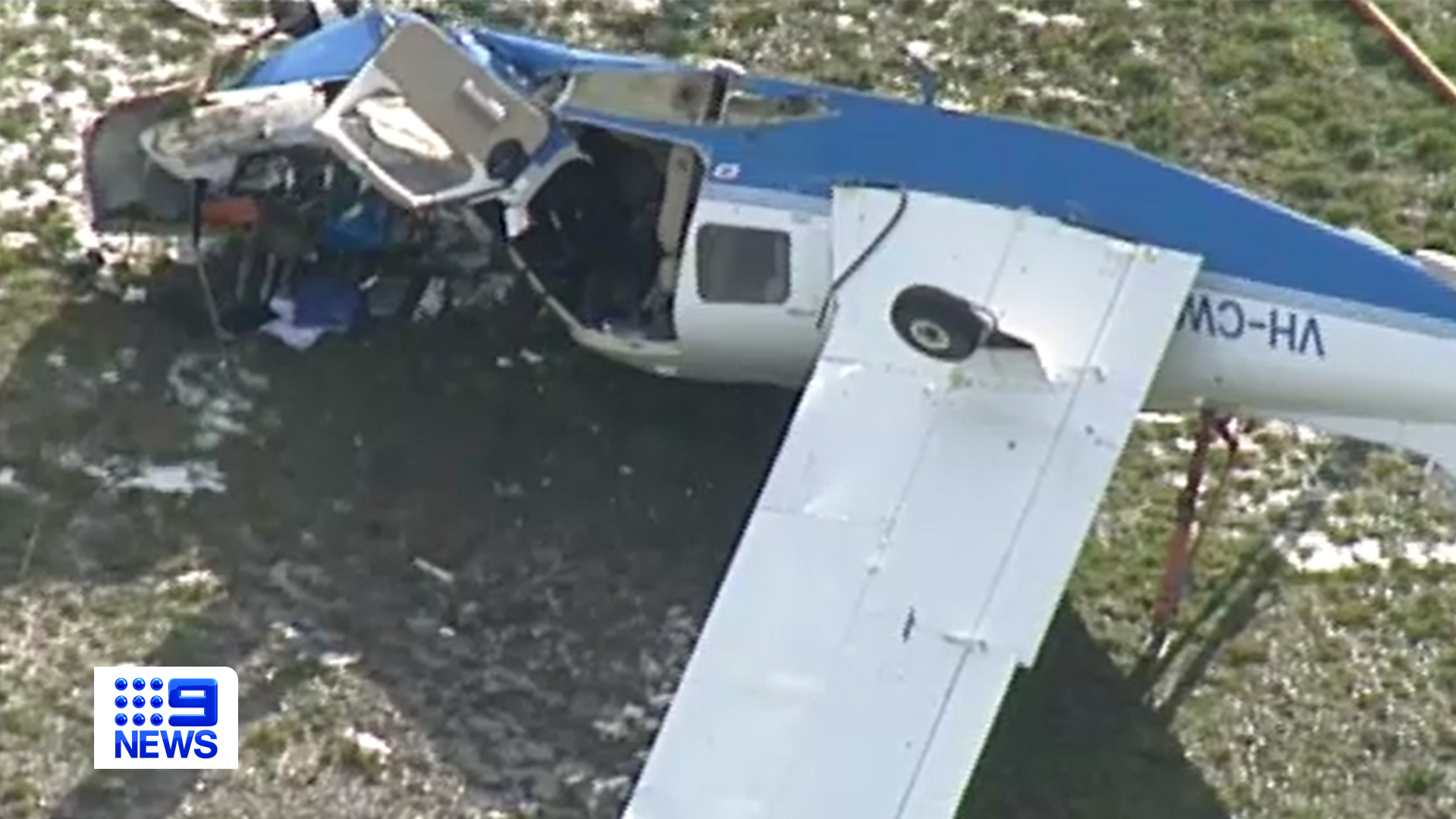
Pilot narrowly escapes plane crash near Melbourne golf course

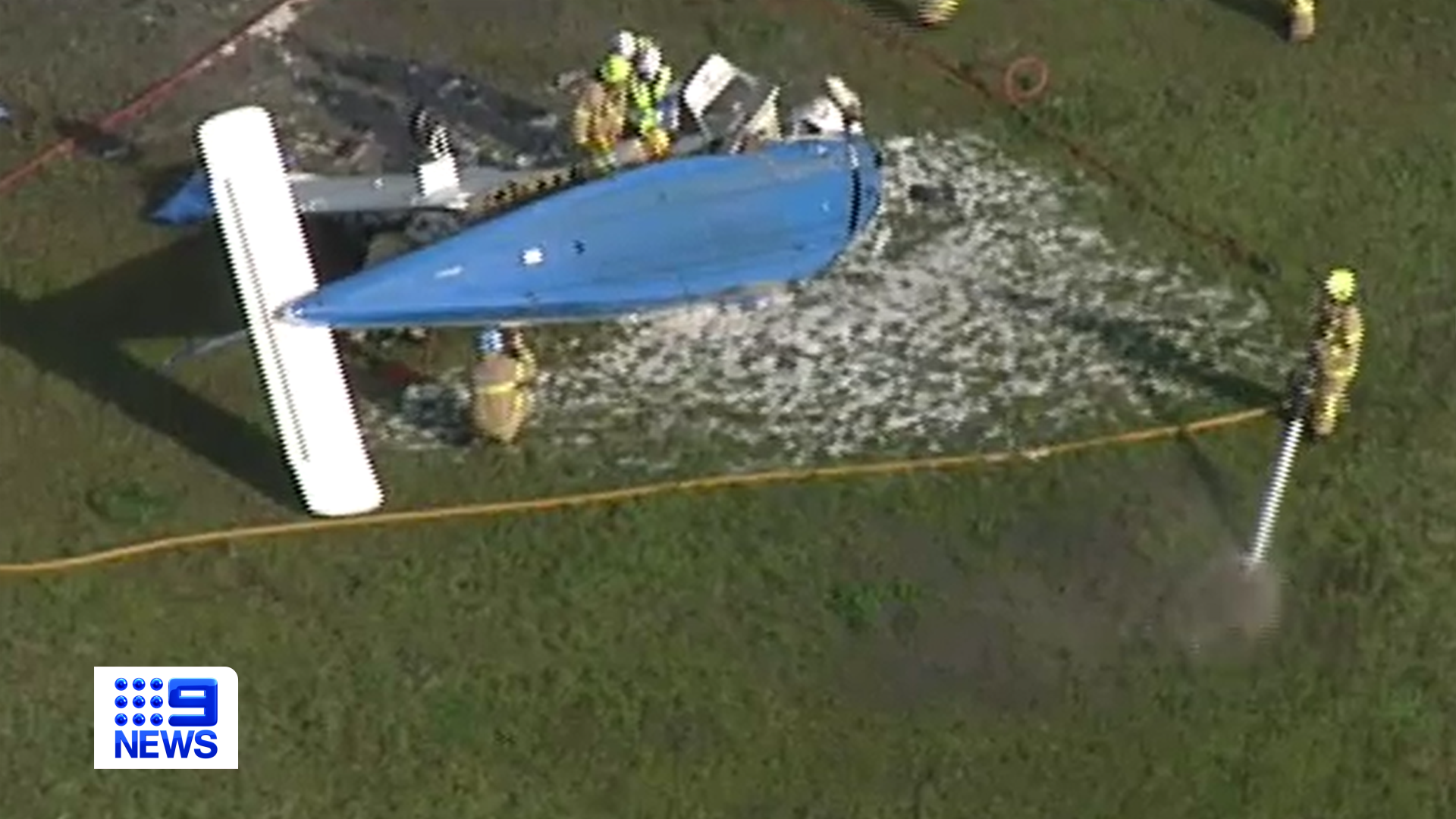
The pilot of a light plane which crashed near a Melbourne golf course has had a narrow escape thanks to some nearby workers.

The small aircraft came down today near Capital Golf Course in Heatherton today.

"My aim was for him to stay still and not move around as much as he can," witness Abel Teke said.

READ MORE: Social media helps track down a rare stolen Ferrari in Melbourne

https://twitter.com/LanaMurphy/status/1407213335624392708?ref_src=twsrc%5Etfw

The 53-year-old pilot was trapped inside the destroyed cockpit for several minutes before waste management employees ran to the wreckage, arming themselves with fire extinguishers.

"He wasn't responding, just shaking … I couldn't get anything out of him," another witness Terry King said.

"It was just a lot of metal going bang and crash."

The Piper Cherokee flew dangerously low seconds after taking off from Moorabbin Airport, crashing less than a minute after departure.

READ MORE: Toddler dies after being hit by car while riding scooter in Melbourne's west

Emergency services were quick to respond and the man was freed after 12 minutes.

He was rushed to hospital as firefighters worked to avoid any further catastrophe, pouring retardant over the destroyed aircraft.

The pilot was taken to The Alfred hospital, admitted with minor upper and lower body injuries.

He is in a stable condition.

READ MORE: Missing woman Rosie McLean found dead in Victoria

The Australian Transport Safety Bureau will now investigate the cause of the crash.

Officers are currently en route from Canberra and will start combing through the scene tomorrow.

You can find out more details about how to book your vaccine through the Federal Government health site here.

State borders reopen to Victoria in time for school holidays

No new local cases of coronavirus have been recorded in Victoria overnight as South Australia and Queensland announced their state borders would reopen in time for school holidays.

The border measures will lift at 12am on Friday in South Australia and 1am on Friday in Queensland, allowing Victorians to travel to the states over the school break.

"Dr (Jeannette) Young is comfortable with the way Victoria is at, and we will keep a close eye on New South Wales," Queensland Premier Annastacia Palaszczuk said.

READ MORE: Ten new coronavirus cases for NSW

https://twitter.com/VicGovDH/status/1407110763546918913Registration has now opened for the Queensland Government's newest expansion of its Holiday Dollars scheme, this time offering free travel vouchers for the Gold Coast.

Victoria's Chief Health Officer Professor Brett Sutton said the state recording zero new local cases of coronavirus today was "terrific news".

"As outbreaks stand, we are at a 98 per cent clearance for primary close contacts in the City of Whittlesea, Port Melbourne and the West Melbourne branches of the outbreak," he said.

"They are stabilising, but we are not all clear yet."

Health teams are testing people in high-risk complexes as a precaution due to the Southbank townhouse cluster.

"We are doing a round of testing of residents in the lower-risk townhouses, and those results should be through the course of today," Professor Sutton said.

READ MORE: Flight attendant link in new Queensland COVID-19 case

More than 13,000 test results were received in Victoria yesterday and 15,339 vaccine doses were administered.

There are fears Victoria could be forced to cut the number of daily vaccinations next month if the state does not get a boost in Pfizer doses.

Victorian health officials plan to cut the number of Pfizer doses administered from 80,000 a week to around 40,000 from July due to a lack of supply from the Federal Government.

Acting Premier James Merlino yesterday said the country was falling behind the vaccine race amid supply issues, ahead of attending a National Cabinet meeting to discuss the rollout.

Mr Merlino called for a "sense of urgency" to ramp up the program.

"When you compare how Australia is going with the rest of the world, we are falling so far behind it's not funny," he said.

READ MORE: Tragic end to search for missing Victorian woman

"I want to see confirmation of supply. This is a race, a race that nationally we are falling behind in."

You can find out more details about how to book your vaccine through the Federal Government health site here.

Three seriously injured after train hits car in NSW Hunter region

Three people have been seriously injured in a car and train crash in the NSW Hunter region.

Four ambulance crews and two rescue choppers were called to Dungog Road in Wallarobba just before 4.40pm on Tuesday.

A woman aged in her 50s suffered pelvic, abdominal, rib and shoulder injuries, NSW Ambulance said.

https://twitter.com/SammyPoate/status/1407257473119969280?ref_src=twsrc%5Etfw

A second woman, in her 60s, suffered facial injuries. And a man in his 60s was treated for pelvic and abdominal injuries.

All three were flown to John Hunter Hospital in a serious condition.

"It was quite a chaotic scene when emergency services arrived," NSW Ambulance inspector Joel De'Zuna said.

"Not only did we have to treat the three injured patients, we had to make sure the train driver and the passengers were all safe and uninjured."

https://twitter.com/NSWAmbulance/status/1407243804961239040?ref_src=twsrc%5Etfw

SKN Among Growing Number of Nations Open Only to Vaccinated Tourists

It’s one thing to require unvaccinated travelers to quarantine or undergo extra Covid tests. It’s another to bar them altogether.

A small but growing list of travel destinations is either closing its doors to unvaccinated travelers or reopening only to vaccinated ones. Either way, the unvaccinated are seeing their travel options start to dwindle as tourism-dependent nations prioritize safety and simplified entrance requirements over open-door policies for all.

Unvaccinated people no longer welcome

When Anguilla reopened last November, travelers to the small Caribbean island needed to test negative for Covid-19 before and after arriving. A rash of new cases then occurred in April, and Anguilla reclosed its borders to tourists for a month.

Unvaccinated travelers will not be allowed to go to Anguilla starting next week.
Starting next week, unvaccinated travelers will not be allowed to enter Anguilla.
Michael Runkel | Collection Mix: Subjects | Getty Images

Now, the British overseas territory is switching tactics. Starting July 1, visitors must be vaccinated at least three weeks before arriving. This applies to “all visitors … who are eligible to be vaccinated,” according to the Anguilla Tourist Board’s website, which says children are exempt from the requirement.

Vaccinated travelers will no longer need to quarantine, take a Covid test upon arrival or pay entrance fees. Earlier this year, vaccinated travelers were charged $300 to enter, while unvaccinated visitors were charged $600.

Cases rise, tolerance falls

Anguilla isn’t the only Caribbean island closing the doors to unvaccinated travelers. The dual island nation of St. Kitts and Nevis instituted a similar policy last month.

As of May 29, St. Kitts accepts only travelers who have been vaccinated with U.S. or European vaccines. The new rule was part of several initiatives announced by Prime Minister Timothy Harris in response to a cluster of 16 Covid cases detected on the islands last month, according to St. Kitts Tourism Authority.

A cluster of 16 new Covid cases in May resulted in St. Kitts and Nevis closing its borders to unvaccinated travelers.
Walter Bibikow | DigitalVision | Getty Images

“The previously announced travel requirements for non-vaccinated travelers are null and void,” according to a statement announcing the policy change.

The islands are under a 6 p.m. daily curfew, and tourist sites are closed until June 26. A timeframe for reopening to unvaccinated tourists has not yet been indicated.

Unvaccinated children traveling with vaccinated parents can also enter, though they must “vacation in place” for 14 days, rather than the nine days required for vaccinated tourists.

Anguilla and St. Kitts and Nevis are deemed Level 1 low Covid destinations by the U.S. Centers for Disease Control and Prevention. Both were highlighted by CNBC in March as being among only a handful of tourist destinations that opened while maintaining low Covid infection rates.

A ‘compelling reason’ to travel

Other locations require unvaccinated visitors to show they are traveling for reasons beyond simply needing a vacation.

When French Polynesia, which includes the islands of Tahiti and Bora Bora, reopened on May 1, it singled out Americans as the only nationality that could enter for the purpose of tourism. The policy applied to unvaccinated Americans, too, though the unimmunized were subject to quarantines.

That has since changed. From June 16, vaccinated tourists can enter if they spent the preceding 15 days in the United Kingdom, most French territories or France’s “green zone” countries, according to French Polynesia’s destination marketing organization. “Green zone” countries currently include most of Europe, plus countries such as Australia, Canada and the United States.

France’s “green” list of countries

Most of Europe, plus Australia, Canada, Israel, Japan, Lebanon, New Zealand, Singapore, South Korea and the United States

Source: French Ministry for Europe and Foreign Affairs, updated June 17

Everyone else — including all unvaccinated travelers — must demonstrate a “compelling reason” related to health, family or work to travel to French Polynesia.

“Tourism is not a compelling reason for travel,” according to Tahiti’s tourism website.

France’s policy is slightly more relaxed. It allows unvaccinated travelers from “green” countries to enter via a negative Covid test. Yet travelers from “orange” countries — which is every country not on the green or red list, i.e. the majority of the world — must be vaccinated to enter or show “pressing grounds” for travel, according to the website for the French Ministry for Europe and Foreign Affairs.

The French collectivities of St. Barts and St. Martin in the Caribbean reopened this month with a similar policy. Nils DuFau, president of St. Barts’ tourism board, separately issued an announcement that St. Barts was open to vaccinated Americans starting June 9.

St. Bart's reopened its borders to vaccinated American travelers on June 9.
St. Barts reopened its borders to vaccinated American travelers on June 9.
Walter Bibikow | DigitalVision | Getty Images

Spain went a step further. From June 7, Spain is welcoming travelers from Europe and those from a list of 10 countries with low Covid rates; all other tourists must show vaccination certificates to enter.

Note: The country lists from France and Spain are similar. However, the U.K. is currently on Spain’s list, while the U.S. and Canada are not.

Balancing act

Tourist-dependent countries, like those in the Caribbean, must balance the economic impact of welcoming tourists with the safety of its citizens, said Tim Hentschel, co-founder and CEO of hotel reservations company HotelPlanner.

“I can only imagine how challenging those conversations must be between a country’s infectious disease expert advising a more stringent policy versus a head of tourism arguing to let everyone in immediately so the economy doesn’t tank,” he said.

Hentschel said that while 13 Caribbean nations are sovereign, French territories such as Martinique and Guadeloupe and Dutch territories such as Curacao, Aruba and Sint Maarten, may end up following state policies.

Hentschel called Asia “a very different story,” mainly due to lower vaccination rates.

A largely-deserted Phuket is scheduled to waive quarantine requirements for vaccinated travelers starting July 1.
Vaccinated travelers from some countries will not be required to quarantine in Phuket, Thailand starting July 1.
Jordan Siemens | Stone | Getty Images

“As soon as there appears to be progress, a new outbreak and lockdown occur, like in Singapore,” he said. “Asia’s journey back to a semblance of pre-pandemic normal travel will be much longer — perhaps another year or more, unfortunately.”

Asian destinations have stopped short of requiring vaccinations to travel, but the continent is still largely closed to leisure visitors. The much-discussed “Phuket Sandbox” model — whereby the popular island of Phuket is scheduled to reopen on July 1, before the rest of Thailand — waives quarantine requirements for vaccinated travelers from low-to-medium-risk countries.

Unvaccinated travelers can still enter, though they are subject to 14-day isolation periods, the Tourism Authority of Thailand confirmed to CNBC.

While requiring tourists to be vaccinated makes “perfect sense” in some places, it won’t work everywhere, said Hentschel.

“Interestingly, Mexico never closed its border to American tourists throughout the entire pandemic,” he said. “So, that’s one example where a more open policy made sense for Mexico given its proximity to the U.S., the billions in cross-border shipping and commerce conducted daily and their reliance on U.S. tourism dollars.”

Unvaccinated travelers will not be allowed to go to Anguilla starting next week.

The post SKN Among Growing Number of Nations Open Only to Vaccinated Tourists appeared first on The St Kitts Nevis Observer.

Dramatic moment prisoner jumps dock in Adelaide courtroom

Newly released video has shown the moment an Adelaide prisoner made a dramatic escape attempt after learning his bail had been revoked.

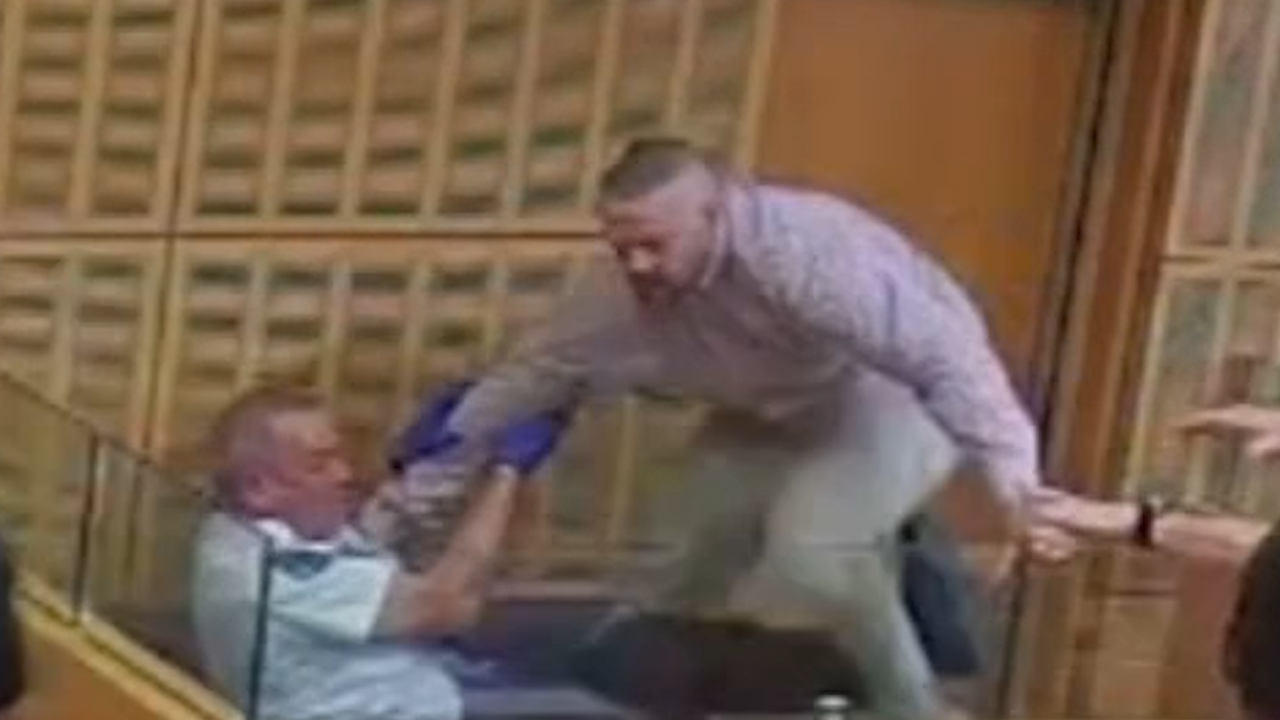
Daniel James Nicholson was at a pre-sentence hearing at Christies Beach Magistrates Court in September, when he was informed he would remain in custody.

CCTV shows the 35-year-old behind a clear partition when he suddenly stands as a sheriff's officer enters the dock.

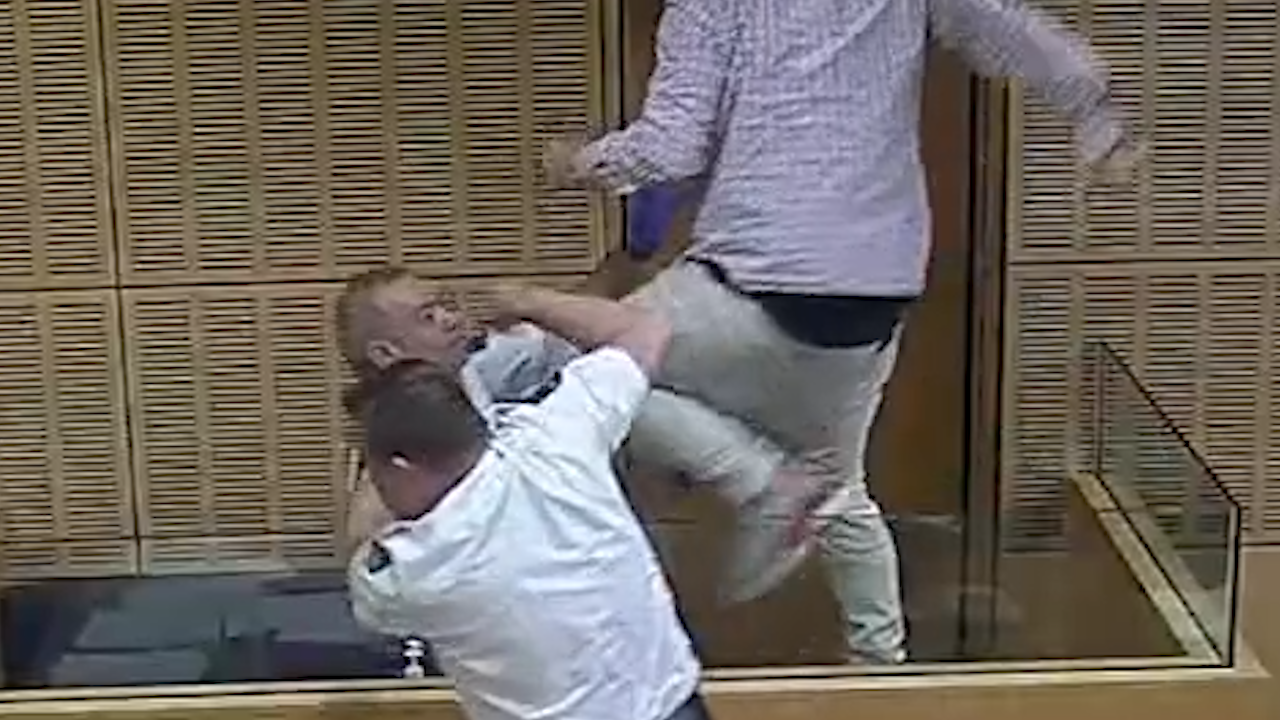
Nicholson can then be seen climbing up onto a table, swatting his hands at the officer and another who comes forward to help try and detain him.

READ MORE: Joyce begins first Question Time with 'very strange rant'

Christies Beach court escapeChristies Beach court escape

Nicholson stumbles before stepping over the partition and landing on his knees on a nearby table in the open area of the court.

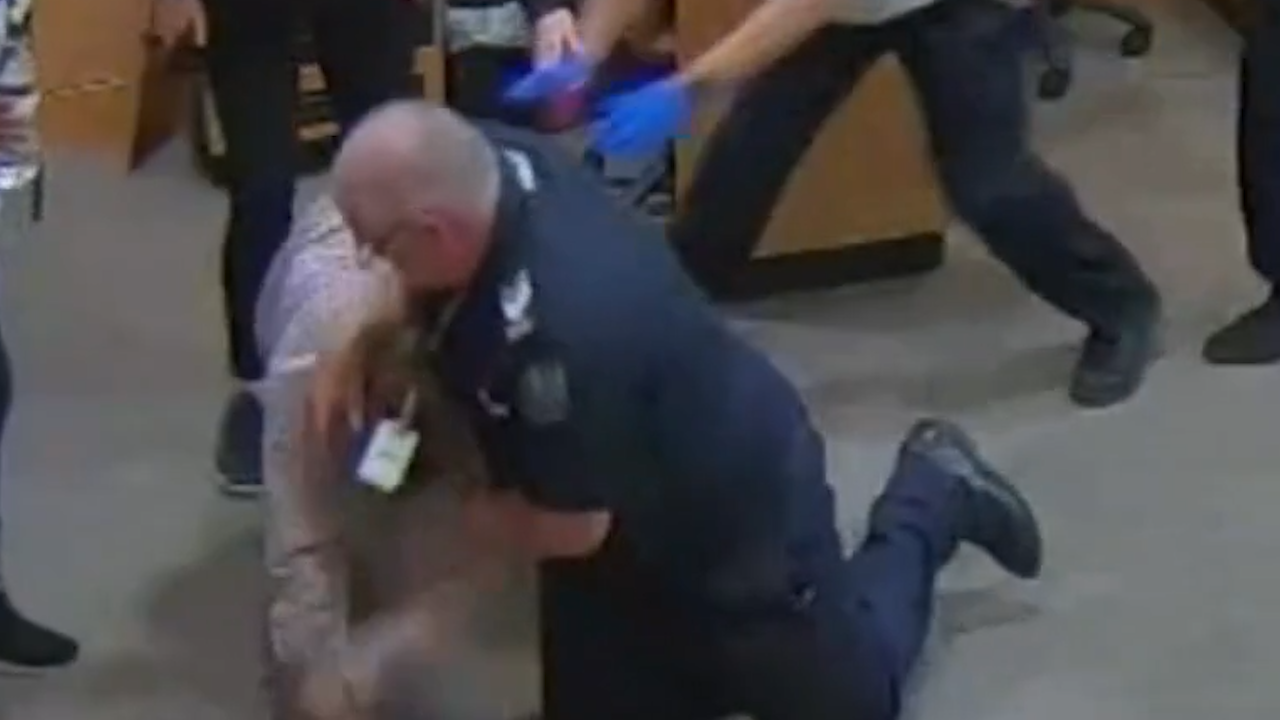
As he does this, a police prosecutor is quick to react and grabs Nicholson from the table, throwing him to the floor in an effort to stop the escape attempt.

But Nicholson makes another attempt to free himself, injuring one of the other two officers as they come to help.

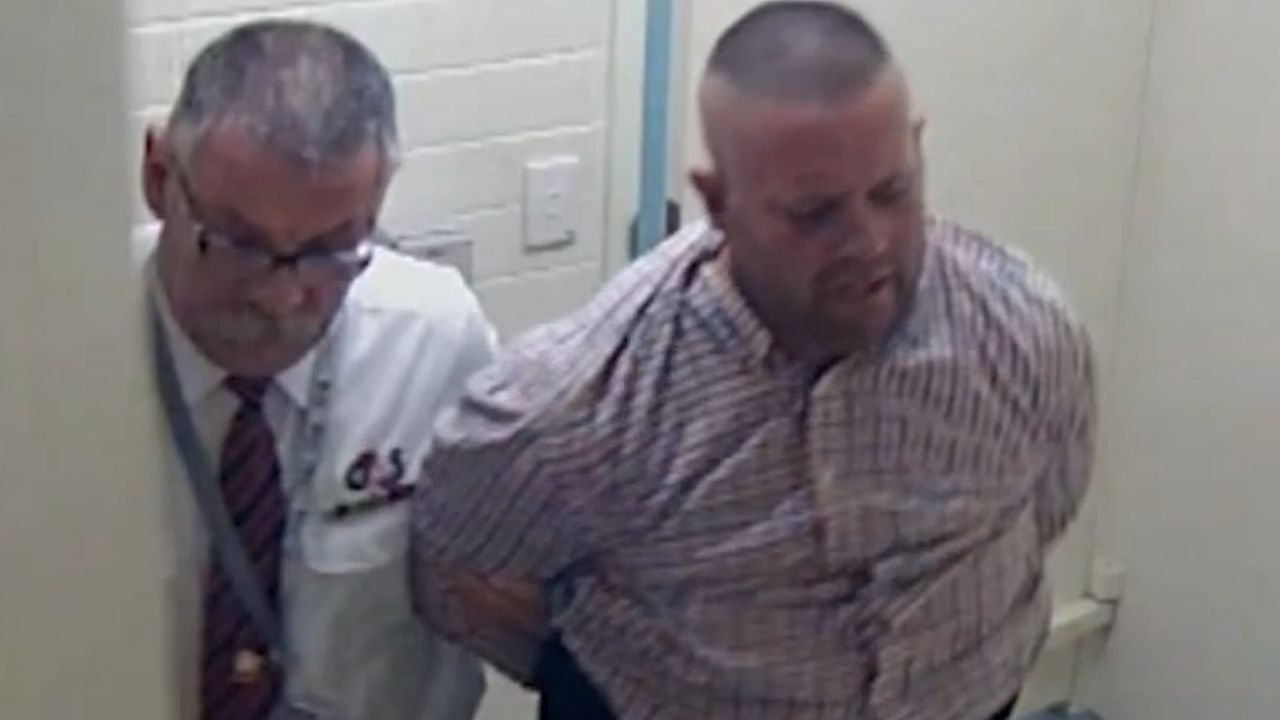
He is then finally detained, before the sheriff's officers take him back out an open door.

During a hearing yesterday, a judge said Nicholson's escape attempt was "impulsive, violent and forceful".

The court heard Nicholson had anger and impulse control issues and his offending history showed his inability to comply with court orders.

READ MORE: Adelaide prison escapee steals car as search continues

Christies Beach court escapeChristies Beach court escape

Nicholson was again refused bail and the court was urged to consider a jail term that "protects the community and reflects the gravity of Nicholson's offending".

Nicholson pleaded guilty to the offence of attempting to escape custody and two counts of recklessly causing harm to a prescribed emergency worker.

The sheriff's officer who injured his foot in the scuffle required a moon boot for eight weeks after the September incident.

The other sheriff's officer suffered a clicking jaw and headache from the scuffle.

Nicholson's defence said the father-of-four was remorseful for his behaviour and had a longstanding issue with illicit drug use.

He asked the court to consider a suspended sentence or home detention as an alternative to jail time.

Nicholson will be sentenced next month.

CARICOM Nations Among Others to Benefit from US Vaccine Offer

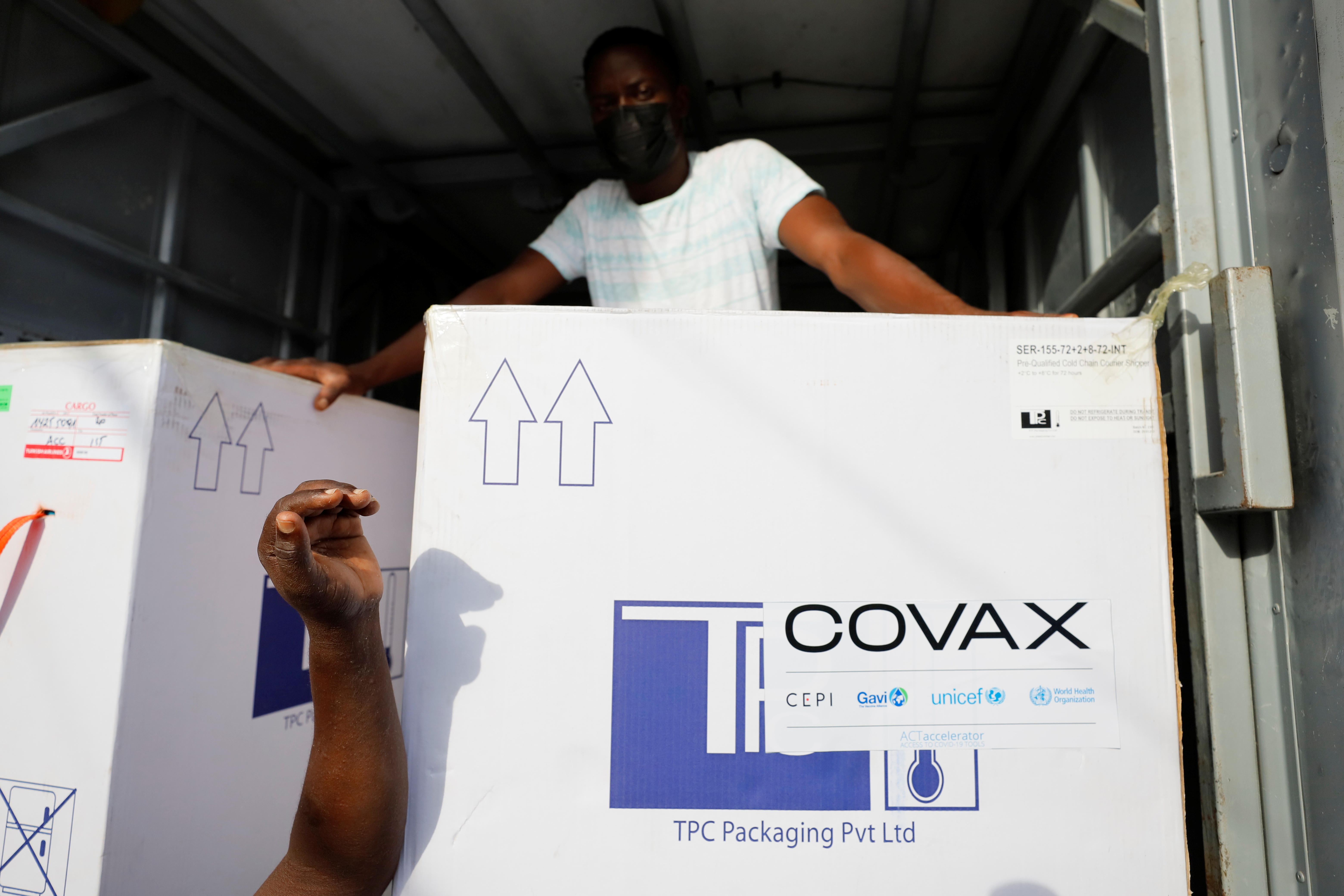
June 21 (Reuters) – The White House laid out a plan on Monday to share 55 million U.S. COVID-19 vaccine doses globally, with roughly 75% of the doses allocated to Latin America and the Caribbean, Asia and Africa through the COVAX international vaccine-sharing program.

The plan fulfills President Joe Biden’s commitment to share 80 million U.S.-made vaccines with countries around the world. The president sketched out his priorities for the first 25 million doses from that pledge earlier this month. read more

The United States has come under pressure to share more of its vaccine supply with countries that are still struggling with the deadly virus and its variants. With more and more Americans getting the shots, the White House increasingly has turned its attention to getting vaccine out internationally. (Graphic on global vaccinations)

Of the 55 million remaining doses, some 41 million will be shared through COVAX, the White House said, with approximately 14 million going to Latin America and the Caribbean, some 16 million to Asia, and roughly 10 million to Africa.

The other 25%, or roughly 14 million doses, will be shared with “regional priorities,” including Colombia, Argentina, Iraq, Ukraine, the West Bank and Gaza.

White House spokeswoman Jen Psaki said the United States had faced logistical issues getting vaccine to other nations.

“We have plenty of doses to share with the world, but this is a Herculean logistical challenge,” she told reporters, noting safety and regulatory information had to be shared, proper storage temperatures for the vaccines had to be ensured, and language barriers at times had to be overcome.

“We have announced today where these doses are going. We will continue to announce as they land on the ground and as they are being shipped, and we’re looking forward to doing that as quickly as possible,” she said.

The 55 million doses will be taken from the U.S. supply of Pfizer Inc (PFE.N), Moderna Inc (MRNA.O), and Johnson & Johnson (JNJ.N) shots, though if AstraZeneca’s (AZN.L) vaccine gets a green light from the Food and Drug Administration, it would likely be added to the mix as well.

The White House said it wanted the doses to be prioritized for health care workers and those who are most at risk.

International partners are eager to get U.S. help. Biden has announced the United States will buy 500 million doses of Pfizer’s vaccine and donate them to the world’s poorest countries. read more

The White House’s breakdown of its allocation of the 55 million vaccine doses is below.

THROUGH COVAX:

* Latin America and the Caribbean (approximately 14 million shots): Brazil, Argentina, Colombia, Peru, Ecuador, Paraguay, Bolivia, Uruguay, Guatemala, El Salvador, Honduras, Haiti, and other Caribbean Community (CARICOM) countries, Dominican Republic, Panama, and Costa Rica

* Asia (approximately 16 million shots): India, Nepal, Bangladesh, Pakistan, Sri Lanka, Afghanistan, Maldives, Bhutan, Philippines, Vietnam, Indonesia, Thailand, Malaysia, Laos, Papua New Guinea, Taiwan, Cambodia, and the Pacific Islands.

* Africa (approximately 10 million shots): Recipient countries will be selected in coordination with the African Union.

THROUGH DIRECT SHARING: Colombia, Argentina, Haiti, other CARICOM countries, Dominican Republic, Costa Rica, Panama, Afghanistan, Bangladesh, Pakistan, Philippines, Vietnam, Indonesia, South Africa, Nigeria, Kenya, Ghana, Cabo Verde, Egypt, Jordan, Iraq, Yemen, Tunisia, Oman, West Bank and Gaza, Ukraine, Kosovo, Georgia, Moldova, and Bosnia.

Reporting by Jeff Mason Editing by Chizu Nomiyama Editing by Chizu Nomiyama

The post CARICOM Nations Among Others to Benefit from US Vaccine Offer appeared first on The St Kitts Nevis Observer.
Nicaragua Political Arrests Lead Argentina, Mexico to Recall Envoys

BBC- Argentina and Mexico have recalled their ambassadors to Nicaragua following the latest in a series of high-profile political arrests.

A joint statement said the envoys would return to their capitals for talks about the Nicaraguan government’s “worrying” actions recently.

It came after another potential presidential candidate was detained.

Journalist Miguel Mora was held under Nicaragua’s controversial “treason” law.

He is the fifth presidential hopeful to be arrested in the past three weeks.

The wave of detentions comes five months before elections in which President Daniel Ortega is expected to run for a fourth consecutive term.

Recent actions taken by Nicaragua’s government “have put the integrity and freedom of various opposition figures (including presidential candidates), activists and Nicaraguan businessmen at risk,” Argentina and Mexico’s joint statement said.

Both countries would continue to “promote the full respect” of human rights and civil and political freedoms, it added.

The recent wave of arrests has led to condemnation both within Nicaragua and abroad. Regional body the Organization of American States has demanded that all the presidential hopefuls and political prisoners be released.

What’s happening in Nicaragua?

Police said that they had arrested Mr Mora, a former director of opposition TV channel 100% Noticias, for “inciting foreign interference in internal affairs and requesting military intervention”.

Since 2 June, five presidential hopefuls have been arrested. They are:

  • Miguel Mora, 57, opposition journalist
  • Félix Maradiaga, 44, academic and political activist
  • Juan Sebastián Chamorro, 52, economist
  • Cristiana Chamorro, 67, daughter of ex-President Violeta Chamorro
  • Arturo Cruz, 67, former ambassador

As well as the potential presidential candidates, police have also detained a dozen senior opposition figures. They include former comrades-in-arms of Mr Ortega from his days as a Sandinista rebel, who later turned into critics of the president.

Mr Ortega has been a dominant figure in Nicaraguan politics for decades and played a key role in the armed struggle against dictator Anastasio Somoza, whose family had ruled the country since 1936.

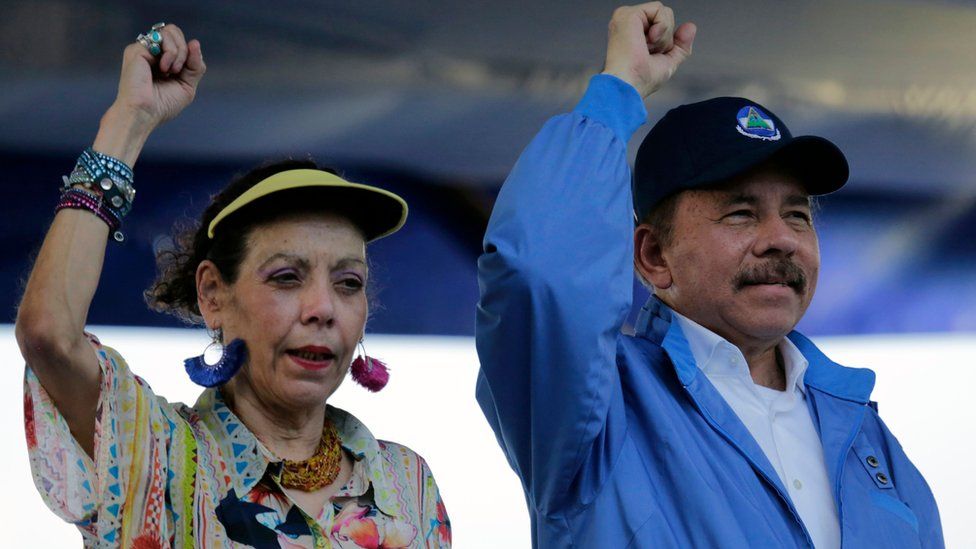
Nicaraguan President Daniel Ortega and his wife, Vice-President Rosario Murillo, raise their fists during the commemoration of the 51st anniversary of the Pancasan guerrilla campaign in Managua, on August 29, 2018image copyrightAFP
Daniel Ortega and his vice-president and wife, Rosario Murillo, are expected to stand for another term

He formed part of the Sandinista National Liberation Front (FSLN), which seized power after ousting Somoza in 1979. He served one term as president in the 1980s but was defeated in the 1990 election by Violeta Chamorro, whose daughter Cristiana is one of the presidential hopefuls now under arrest.

After rebranding himself as a Christian socialist, he won elections in 2006, 2011 and 2016 and is expected to stand again in the upcoming election in November.

Opposition to Mr Ortega has, however, been growing in recent years.

In 2018, mass anti-government protests swept through the country but were met with a violent police response. Hundreds were killed and thousands were injured in the clashes between the protesters on the one hand, and security forces and pro-government militia on the other.

After many of those who had led the demonstrations were arrested, the protests eventually fizzled out later that year. Mr Ortega rejected calls made at the time for elections to be brought forward and continued to serve his term.

What is the ‘treason law’?

Cristiana Chamorro is accused of money laundering, which she denies. The others who have been detained are accused of plotting against Nicaragua’s sovereignty and independence and of organising terrorist acts with financial help from foreign powers.

They have been held under a controversial treason law passed in December by Nicaragua’s National Assembly, which is dominated by government allies.

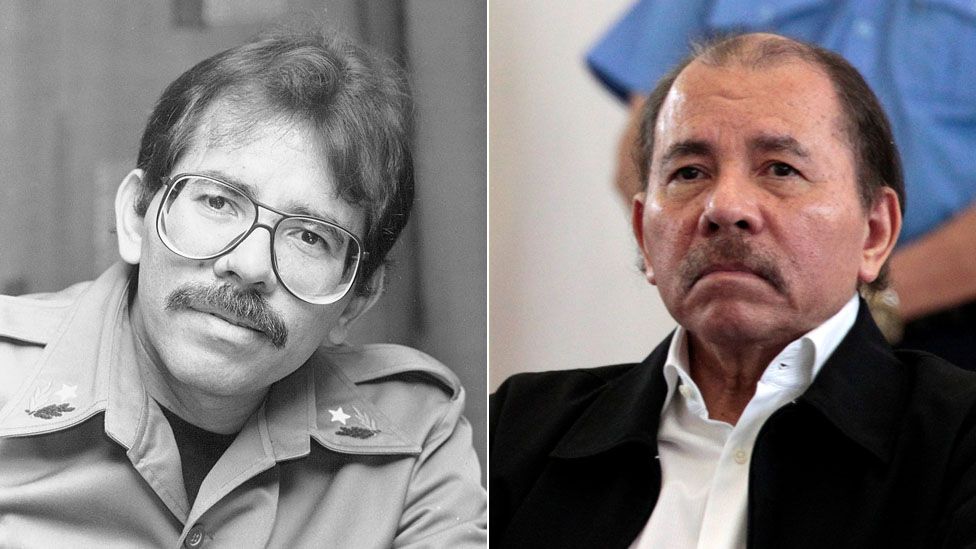
Nicaraguan leader Daniel Ortega in the 1980s and in 2018image copyrightGetty Images and Reuters
Daniel Ortega in the 1980s and in 2018

Under the law, the government has the power to ban candidates from running for office if they are deemed to be traitors to Nicaragua. Anyone designated a traitor can be sent to prison for up to 15 years.

The government says the law aims to protect “the independence, the sovereignty and self-determination” of Nicaragua. It says the country is under threat from imperialist powers in the US and “coup-mongers” within Nicaragua who are determined to overthrow President Ortega.

But critics say that with November’s scheduled presidential poll approaching, Mr Ortega is using the law to target anyone who may stand against him.

Criticism has had little effect on President Ortega and his wife, Vice-President Rosario Murillo. Ms Murillo said on Tuesday that “the law is tough, but it’s the law” and called those arrested “usurpers”.

The post Nicaragua Political Arrests Lead Argentina, Mexico to Recall Envoys appeared first on The St Kitts Nevis Observer.
Bodyboarder films close call with shark at Victorian beach

A bodyboarder has relived the heart-stopping moment he was confronted by shark on the Mornington Peninsula outside Melbourne.

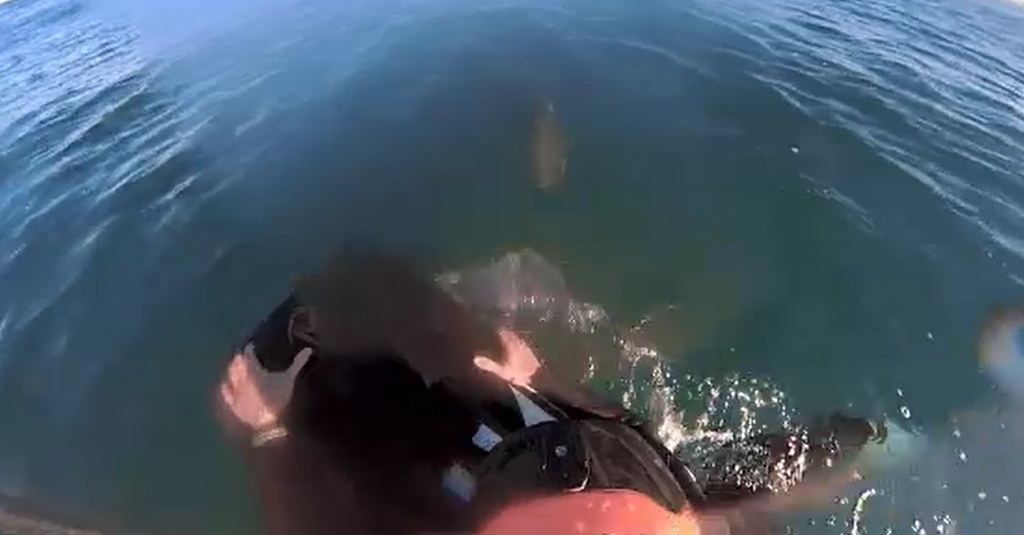
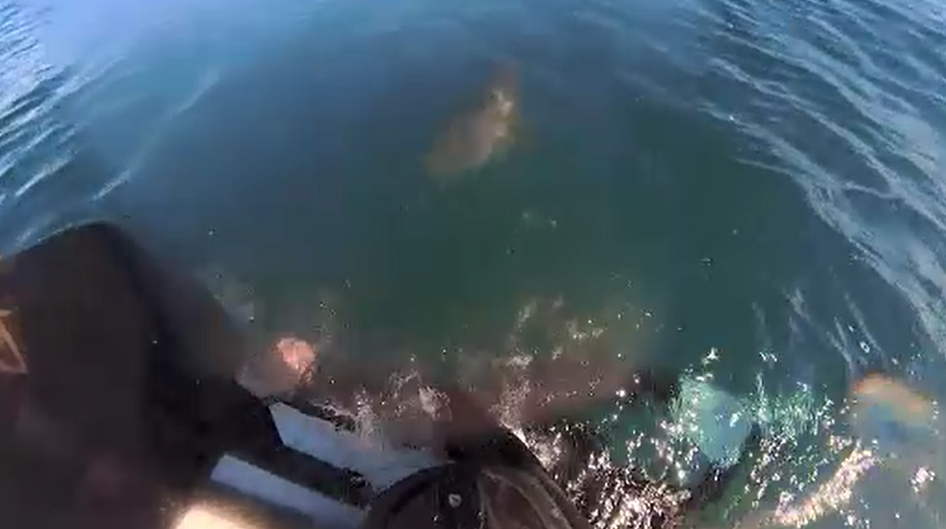
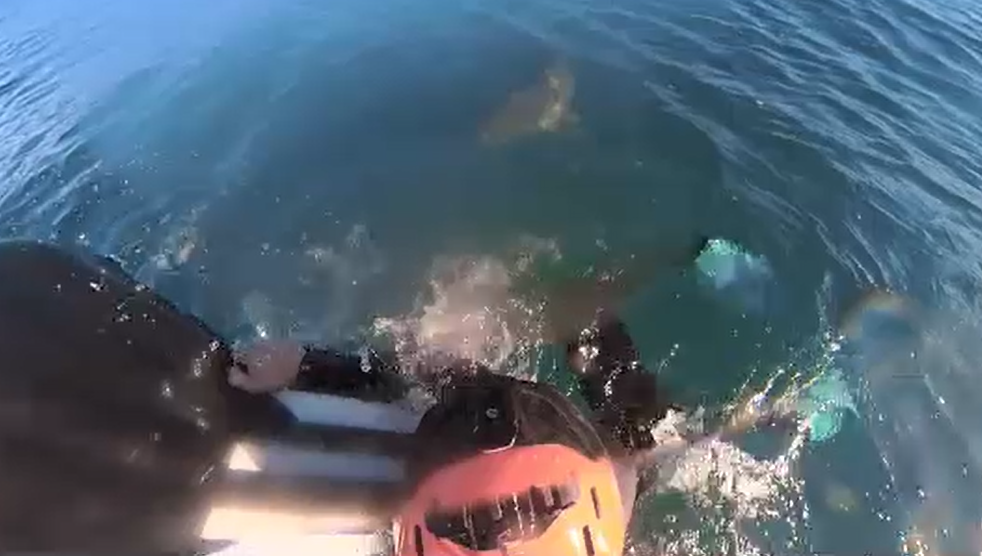
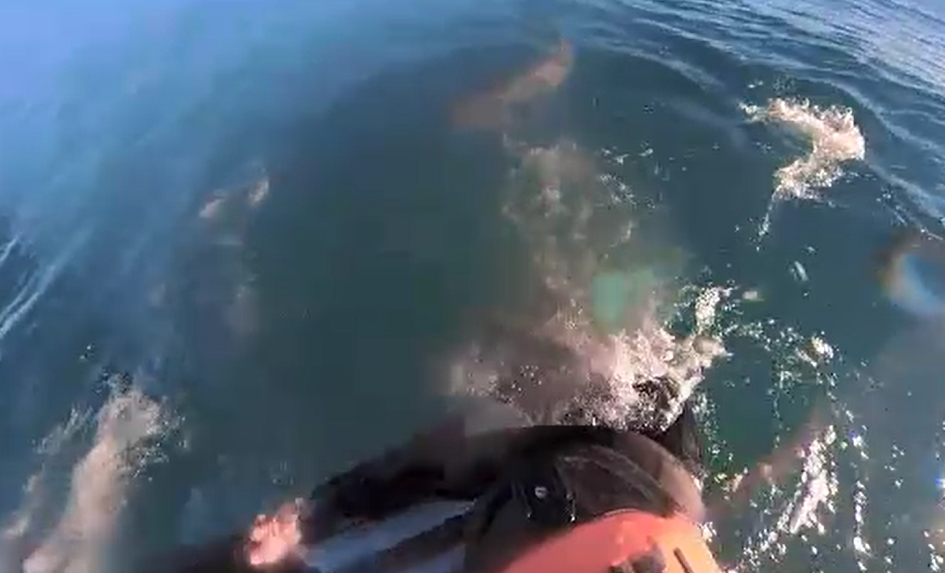
Roger Essig came face-to-face with the nearly two-metre creature in the surf at Gunnamatta Beach on Sunday, managing to record the encounter on camera as he thrashed his flippers to scare it away.

"My only reaction was to turn away from it and give it my fins," Mr Essig said.

READ MORE: Light plane crashes at Melbourne golf course, pilot taken to hospital

The artist had a moment of panic as the 1.8-metre shark approached him on an angle, coming within centimetres of the terrified bodyboarder.

Mr Essig was on an inflatable surf mat and managed to paddle away, raising the alarm to his friend nearby.

"Andre, shark!" he yelled.

It was 11.30am on Sunday morning at Gunnamatta Beach in Fingal when the pair were enjoying the waves during a three-hour session.

The encounter happened about 200 metres from the shore, with the entire incident captured on a helmet camera worn by Mr Essig.

READ MORE: Social media helps track down a rare stolen Ferrari in Melbourne

"I literally just pressed record and put it on top, put my helmet on and looked to my right and saw a shark heading straight towards my side," he said.

Surfers were out today enjoying the swell, only too aware they're always in shark territory.

"It's pretty terrifying to be honest, I didn't realise it was just out there … it's good to know I'm back on the sand," one local surfer said.

Experts believe it could have been a docile broadnose sevengill shark and the animal may have mistaken Roger for a seal.

READ MORE: Toddler dies after being hit by car while riding scooter in Melbourne's west

"He's just coming up to have a closer look, they'll circle for a little while then they might come a little bit closer to have a bit of a bump," Tereza Todd from Sea Life Melbourne said.

Despite the close shave, Mr Essig says it won't deter him from getting back in the water and he will return to the same spot on the weekend.

"Sharks are always on my mind definitely – but I probably won't go out as far."

You can find out more details about how to book your vaccine through the Federal Government health site here.

Migrant Children Report Overcrowding, Spoiled Food, Depression in U.S. Shelters

WASHINGTON, June 21 (Reuters) – Migrant children sent to emergency shelters within the United States described crowded living conditions, spoiled food, lack of clean clothes and struggles with depression, according to 17 testimonials filed in a court case on Monday.

The children, aged nine to 17 and largely from Guatemala, Honduras and El Salvador, in some cases spoke of waiting for months inside emergency shelters overseen by the U.S. government while struggling with the conditions, including trouble sleeping under bright lights and infrequent phone calls to family members.

The testimonials offer a detailed look into the conditions within a network of emergency shelters hastily erected by the administration of U.S. President Joe Biden to deal with a sharp rise in the number of unaccompanied migrant children arriving at the U.S.-Mexico border.

In recent months, the children have been moved more quickly out of crowded Border Patrol stations and into the emergency shelters as part of efforts to connect them with family members or other sponsors in the United States.

The children’s testimonials, recorded between March and early June, suggest the Biden administration, which has promised a more humane approach to immigration, in some cases struggled to provide optimal care for the children.

About 14,500 unaccompanied children are currently in the care of the U.S. Department of Health and Human Services (HHS), down from 22,000 in late April. HHS was not immediately available for comment.

In one testimonial, a 13-year-old girl from Honduras said she had been placed on a suicide watch list while at an emergency shelter at Fort Bliss in El Paso, Texas.

The girl, who had spent nearly two months at the facility as of June 4, said she was separated from her father when crossing a river into the United States.

“The food here is horrible,” she wrote. “Yesterday we were given hamburgers but I couldn’t eat it because there was a foul odor coming from the bread … I really only eat popsicles and juice because that is the only food that I can trust.”

A 14 year old Guatemalan girl who was detained at an emergency facility in Houston in April said it was very hot and that she was often thirsty. She said the girls had to drink expired milk when they ran out of water. She saw eight girls faint because of the heat and the lack of water, she said, and staff took them to a nearby hospital.

A 17-year-old girl from Guatemala detained at Fort Bliss described sleeping in a large white tent with about three hundred girls, on cots stacked on top of each other.

She said it was hard to sleep due to the rattling noise the tent’s metal beams made at night, according to a declaration dated April 28. She said it was cold and that dirt came into the tent.

The girl said she had not been able to get information on her case and that she had struggled to get an appointment with a counselor to talk about her depression.

“A lot of the girls here cry a lot,” she said. “A lot of them end up having to talk to someone because they have thoughts of cutting themselves.”

A 17-year-old teen from Honduras said they slept in a large area in the Dallas convention center, in which they had been told there were 2,600 kids.

“I feel asphyxiated having so many people around me,” the teen said in a declaration dated March 29.

“There is no one here I can talk to about my case. There’s also no one here I can talk to when I’m feeling sad. There’s no one here; I just talk to God. It helps me and I cry. It would help if I could have a Bible.”

Reporting by Ted Hesson in Washington and Kristina Cooke in San Francisco; Editing by Ross Colvin and Michael Perry

The post Migrant Children Report Overcrowding, Spoiled Food, Depression in U.S. Shelters appeared first on The St Kitts Nevis Observer.
Venezuela Exodus Reaches Record Levels

Country at a ‘tipping point’ that could affect wider region, experts warn, as ‘donor fatigue’ causes aid shortfall

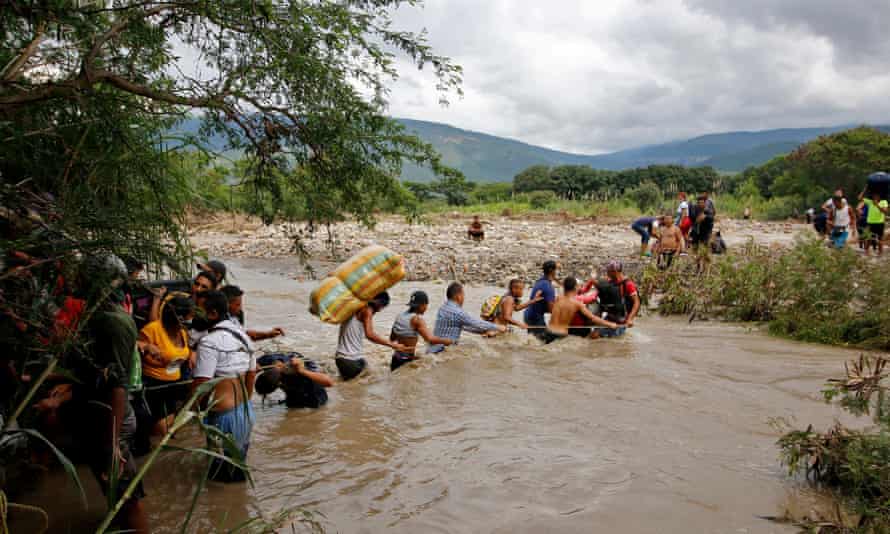
Line of migrants use a rope to cross waist-deep border river
Migrants cross the Táchira River, on the Venezuelan-Colombian border, last year, when the official crossing was closed due to Covid. Photograph: Schneyder Mendoza/AFP/Getty


Guardian- The continuing exodus of millions of Venezuelans is reaching “a tipping point” as the response to the crisis remains critically underfunded.

More than 5.6 million have left the country since 2015, when it had a population of 30 million, escaping political, economic and social hardships. It has become the largest external displacement crisis in the region’s history, and the most underfunded.

“Never in our history in Latin America have we faced such movement of people out of a country that was one of the richest in the region and a country that is not at war,” said Eduardo Stein, special representative of the UNHCR, the UN refugee agency, and the International Organization for Migration (IOM). “Whatever fails in one of the largest and richest countries in the subcontinent is going to affect the rest of the region. Latin America will never be the same.”

He claimed “donor fatigue” threatened funding, saying: “This pandemic has hit very hard those developed countries who have been traditional donors.”

Stein hoped that a conference hosted by Canada last week would bring renewed attention “because we do not think that Latin American countries by themselves will be capable of dealing with this”.

Governments and agencies at the videoconference in Canada pledged $1.5bn (£1.1bn) in funding to respond to the crisis, including $954m in grants and $600m in loans. At least 30 countries were reported to have committed money.

Dany Bahar, senior fellow at the Brookings Institution, in Washington DC, told the Guardian there remained “a big gap” in help for Venezuelan refugees, compared with other modern crises, such as Syria.

He said the total funding per capita for Syrian refugees was more than 10 times that for Venezuelans – at $3,150 compared with $265, based on figures for 2020. Venezuela is second only in the world to Syria in terms of external displacement.

“Most of the host countries in the Venezuelan refugee crisis are in the region, and are developing countries,” Bahar said, “whereas Europe had much skin in the game in the case of the Syrians. Maybe that triggered much more generous funding.”

Last year’s UN response plan received less than half the $1.41bn requested.

The Red Cross has said it needs to raise $264m to support Venezuelans and 17 host countries over the next three years.

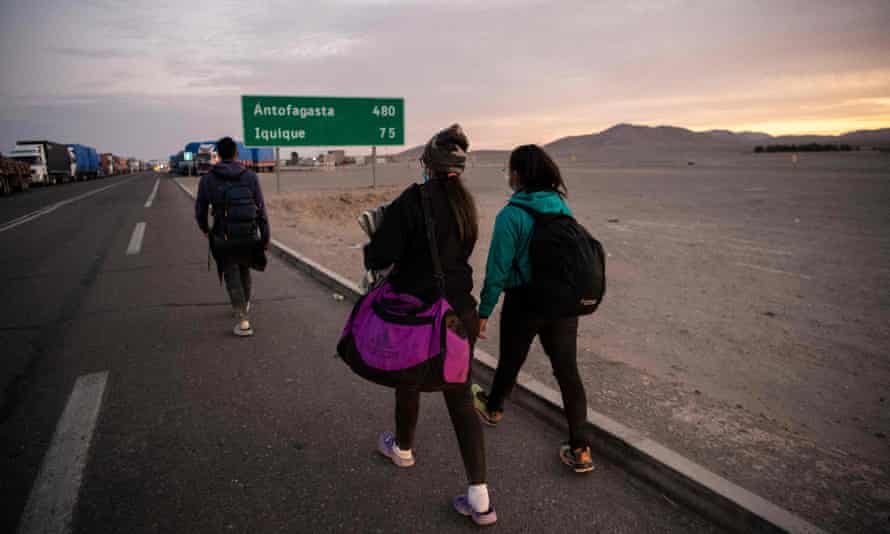
Venezuelan migrants Reinaldo, left, 26, Anyier, 40, and her daughter Danyierly, 14, cross the highlands on the border between Bolivia and Chile on foot.
Venezuelan migrants Reinaldo, left, 26, Anyier, 40, and her daughter Danyierly, 14, cross the Bolivian-Chilean border on foot. Photograph: Martin Bernetti/AFP/Getty

Border closures due to the pandemic stalled migration. But by the end of 2020, 3.9 million Venezuelans were designated as being displaced abroad without formal refugee status – but still judged in need of international protection – up from 3.6 million in 2019, according to the latest UN figures.

‘In the middle of a war zone’: thousands flee as Venezuela troops and Colombia rebels clash

Stein said 1,800 to 2,000 people had been leaving Venezuela daily in the past three months, many taking dangerous paths out, including using people traffickers.

Roger Alonso Morgui, at the International Federation of Red Cross and Red Crescent societies (IFRC), said the crisis was “not news any more”, adding: “When the big population movement happened a few years ago, there was still some attention. That now has become more silent in a way.”

Morgui said the work of aid workers was complicated by the fact that the Venezuelan refugees and migrants move through several countries before reaching a final destination.

“You need to keep on providing resources all over the path, all over the way,” he said. “When you are underfunded,” he added, you “keep on going to the emergency part of the [response] and even [the funding] is not enough to cover [it]”, which makes it “really complicated to find a longer-term solution”.

The majority of refugees are being hosted in Latin America and the Caribbean. Colombia hosts more Venezuelans than any other country, accounting for 1.73 million people..

Colombia has announced that a 10-year legal status would be granted to its undocumented Venezuelans, in a move hailed by Filippo Grandi, of the UN refugee agency, as “the most important humanitarian gesture”.

Dominika Arseniuk, director in Colombia for the Norwegian Refugee Council, said “we stand at a tipping point” amid the cash shortfall.

“International solidarity and financial support is woefully insufficient and falls desperately short of what is needed to respond to the mass exodus from Venezuela,” she said.

The post Venezuela Exodus Reaches Record Levels appeared first on The St Kitts Nevis Observer.