Category Archives: headline

Driver parked on safety ramp so they could walk their dog

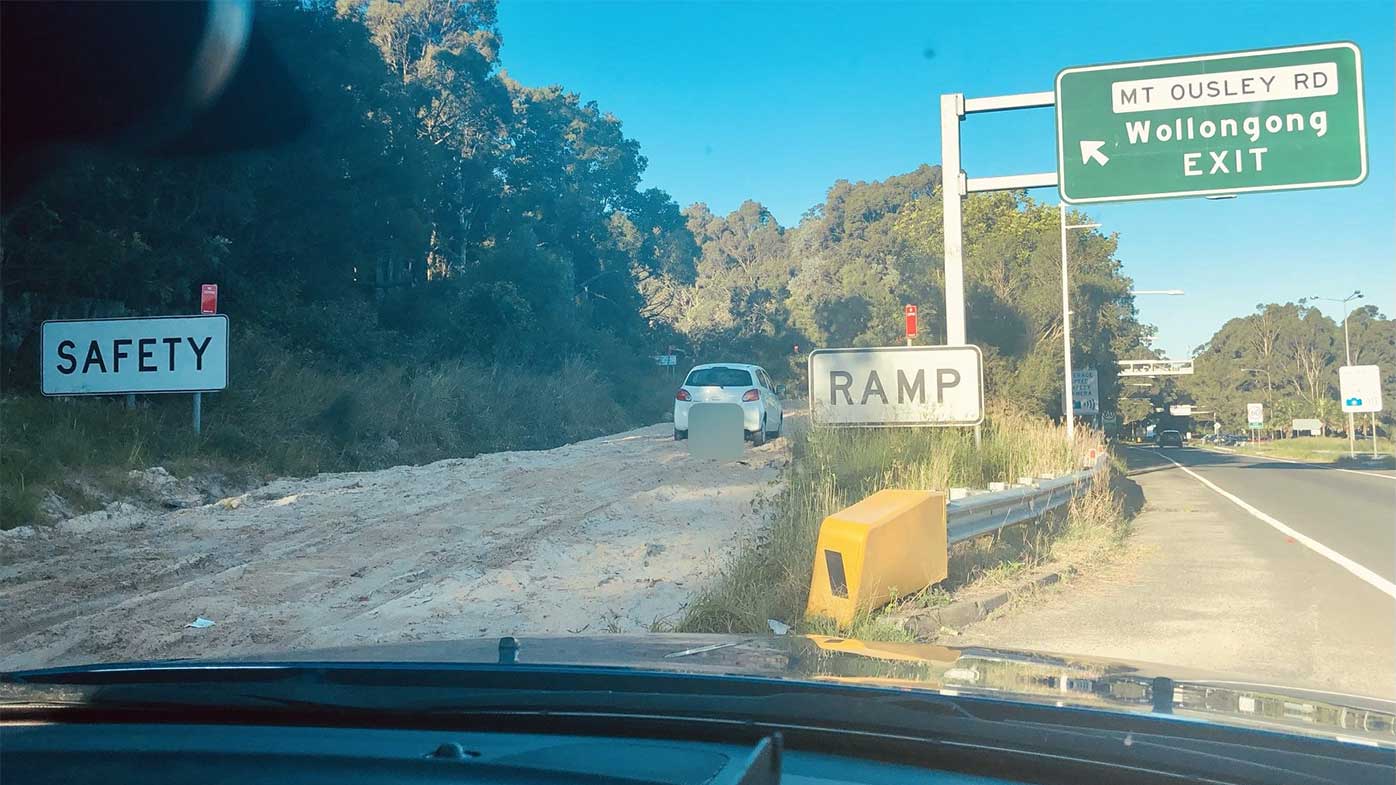
Police in Wollongong have fumed at a driver who parked their car on a safety ramp at the bottom of a notoriously dangerous road, just so they could walk their dog.

The white Mitsubishi Mirage was parked in the middle of the sandy arrester bed at the base of Mount Ousley Road on Saturday.

READ MORE: Truck slams into McDonald's carpark in Wollongong

The driver parked on the safety ramp to walk their dog.

"Police attempted to locate the driver as they were concerned for their welfare, but they weren't with their vehicle," Traffic and Highway Patrol Command said in a Facebook post.

"A canvass of the area located the driver in the nearby bushland walking their dog, and that they had deliberately parked their vehicle in the middle of the safety ramp to do so."

The driver said they did not see any signs saying they could not park in the middle of the arrester bed.

They will be issued with an infringement notice.

This particular safety ramp was utilised during a truck accident only a few weeks ago.

Mount Ousley is a particularly difficult stretch of road on the Princes Highway, with trucks often losing control on the very steep downhill slope entering Wollongong itself.

https://www.facebook.com/TrafficServicesNSWPF/posts/4092988457432770

World View: US Afghan Exit, Russian Sanctions, Another Cop Charged in Minnesota, More

April 15, 2021

Alternate text

The Biden administration’s surprise announcement of an unconditional troop withdrawal from Afghanistan later this year appears to strip the Taliban and the Afghan government of considerable leverage and could ramp up pressure on them to reach a peace deal.

The White House is considering sanctions against Russia in response to election interference and a massive hacking campaign that breached vital federal agencies.

Johnson & Johnson’s COVID-19 vaccine will remain in limbo for a while longer after U.S. government health advisers said they need more evidence to decide if a handful of unusual blood clots were linked to the shot – and if so, how big the risk really is.

Also:

  • Minnesota ex-cop charged in shooting of Black motorist
  • Bangkok’s nightlife drives COVID-19 surge
  • Oscar moment coming up for the disabled 

ANDREW MELDRUM

The Associated Press

Johannesburg, South Africa

The Rundown

I'm an image

ISLAMABAD (AP) — The Biden administration’s surprise announcement of an unconditional troop withdrawal from Afghanistan by Sept. 11 appears to strip the Taliban and the Afghan government of……Read More

I'm an image

BROOKLYN CENTER, Minn. (AP) — A white former police officer faced her first court appearance Thursday in the traffic-stop shooting of a Black motorist that has engulfed a small Minneapolis sub…Read More

I'm an image

WASHINGTON (AP) — The Biden administration is preparing to announce sanctions in response to a massive Russian hacking campaign that breached vital federal agencies, as well as for election……Read More

I'm an image

U.S. health officials are weighing next steps as they investigate a handful of unusual blood clots in people who received Johnson & Johnson’s COVID-19 vaccine — a one-dose shot that many count…Read More

I'm an image

BANGKOK (AP) — When Thailand’s transport minister was recently diagnosed with COVID-19, it was Prime Minister Prayuth Chan-ocha who got a headache. Prayuth was not particularly lauded for… …Read More

OTHER TOP STORIES

LOS ANGELES (AP) — Right down to its production design, the Oscars have not always felt like the most welcoming place for the disabled. “I’ve always seen that stage with its …Read More

Colton Underwood, the former football tight end who found fame on “The Bachelor” has revealed that he is gay. “I’ve ran from myself for a long time. I’ve hated myself for a lo…Read More

Cheri Williams looks back with regret at the start of her career as a child welfare caseworker in 1998. Systemic racism is a major reason why. “I removed probably about 100 ki…Read More

The barnyard setting of “Gunda” could hardly be more familiar, but in Russian director Victor Kossakovsky’s documentary, a pigsty is rendered an almost alien landscape. Koss…Read More

The post World View: US Afghan Exit, Russian Sanctions, Another Cop Charged in Minnesota, More appeared first on The St Kitts Nevis Observer.

Mexico’s President Anxious to Stop Child Migrants

MEXICO CITY (AP) — Mexico President Andrés Manuel López Obrador said Wednesday he plans to visit his country’s southern border to discuss with governors and mayors there how to stop the smuggling of child migrants — an issue of growing concern for the United States.

The United States government has asked Mexico and the countries of Central America’s Northern Triangle — Guatemala, Honduras and El Salvador — to help lower the number of child migrants arriving at its own border with Mexico.

The Biden administration said this week it had reached agreements with those countries to use troops to crack down on migrant smuggling. The move was criticized by human rights defenders and migrant advocates, who said it would make it more difficult for people seeking international protection.

But López Obrador said at his daily news conference on Wednesday that the desire to protect those rights is motivating Mexico’s efforts to stop child migrants.

“To protect children we are going to reinforce the surveillance, the protection, the care on our southern border because it’s to defend human rights,” he said.

He showed photographs of a tractor-trailer rig stopped in the southern city of Tuxtla Gutierrez on Tuesday that was carrying 149 migrants, including 28 minors, from Honduras and Guatemala.

The president also said that the director of Mexico’s child and families protection agency would move from Mexico City to the southern city of Tapachula until the situation improves.

The number of children arriving at the U.S. southern border has become a growing problem for the Biden administration. It continues quickly returning most migrants to Mexico, but has said it will not do so with unaccompanied minors.

The government has struggled to house and care for the children in acceptable settings before reuniting them with relatives.

Central American families, encouraged by smugglers, are increasingly bringing young children with them, hoping that it will improve their chances of being allowed to stay in the U.S. while their cases proceed. Some of the parents returned to Mexico have decided to send their children back across the border to the U.S. unaccompanied.

In late March, Biden said that Vice President Kamala Harris would take charge of U.S. efforts in Mexico and the Northern Triangle to address the root causes of migration. She said Wednesday she soon planned to visit Mexico and Guatemala.

Harris said she is working from the position that most people don’t want to leave their homes. Problems of economic resiliency, climate, water, food sustainability and corruption won’t be fixed overnight, but the U.S. is studying what it can do about economic development in those countries, she said.

The Northern Triangle has been the main source of migrants arriving at the U.S. southern border in recent years. Deeply rooted corruption, stagnant economies and high crime have been among the main forces driving people out. Then last year the COVID-19 pandemic hit, deepening economic desperation, and in November two major hurricanes raked the region increasing the misery.

The post Mexico’s President Anxious to Stop Child Migrants appeared first on The St Kitts Nevis Observer.

Cuba: Will Raul Castro Retire for a Youth Oriented Party?

HAVANA (AP) — This week’s Communist Party congress could be the last with a Castro at the helm of Cuba’s all-powerful political institution.

Six years after the death of Fidel Castro, his brother and fellow leader of the island’s 1959 revolution, Raul Castro, is being watched to see if he fulfills his commitment to give up the reins of the only political organization permitted in the country of 11 million people.

Raul Castro in 2016 said that he would give up the post of party secretary-general at the party’s eighth congress, which is scheduled to begin Friday. Standing down would complete the move to turn control over to a younger generation of revolutionaries led by Miguel Díaz-Canel, who took over the presidency from Castro in 2018.

Many Cubans are anxious over the change after having their daily affairs guided for more than six decades by a Castro, and Raul Castro’s expected exit from the political scene couldn’t come at a more difficult time.

The coronavirus pandemic, painful financial reforms and restrictions re-imposed by the Trump administration have again brought food lines and shortages reminiscent of the “special period” that followed the collapse of the Soviet Union in the 1990s. But unlike past crisis that brought Cubans together, concern is on the rise, fueled by the spread of the Internet and growing inequality that has laid bare the socialist system’s failings.

“We’ve lost an entire decade,” said Alina Lopez, a Havana historian who runs a blog that is a forum for leftist criticism of the government. “They don’t how to bring real change because any change must start with a lot of self-critique.”

At the previous Communist Party congress, in 2016, Castro announced that owing to the “inexorable laws of life,” he would step down as first secretary-general of the Communist Party in 2021 and yield power to Diaz-Canel. Also expected to resign at the gathering is Castro’s deputy, 90-year-old José Ramón Machado.

That would potentially leave the 17-member Politburo for the first time without any veterans of the guerrilla insurgency, or what many Cubans affectionately refer to as the “historic generation.”

William LeoGrande, an American University expert on Cuba, said such an outcome could greatly enhance Diaz-Canel’s ability to push through overdue reforms as part of a broader economic opening approved a decade ago.

In January, Diaz-Canel finally pulled the trigger on a plan approved two congresses ago to unify the island’s dual currency system, giving rise to fears of inflation. After the economy contracted 11% last year, he also threw the doors open to private enterprise that had been stamped out by state planning, permitting Cubans to legally operate almost any self-run businesses from their homes.

But authorities have yet to tackle what LeoGrande considers the elephant in the room — an overhaul of the bloated state-run companies and government agencies on which the vast majority of Cubans depend for their meager salaries and subsistence.

“They keep saying they will require the state enterprises to become profitable but that’s precisely where there’s resistance because the private sector isn’t growing fast enough,” said LeoGrande, who frequently conducts research in Cuba but hasn’t traveled there since prior to the pandemic. “Laying off a lot of people could lead to social and political problems.”

To be sure, any change in Cuba is likely to be slow. The word “continuity” scrawled in red is repeated multiple times on a giant billboard touting the party gathering erected in the same Revolutionary Plaza where Fidel Castro at his height in the 1960s and 1970s used to mesmerize Cubans with his anti-imperialist harangues.

But at least some on the island are agitating for more radical change. Hundreds of artists, some of them wrapped in the Cuban flag, have in recent months carried out anti-government protests.

Top leaders have tried to vilify the demonstrators, accusing them of being paid by exiles in Miami. But the movement has gained momentum thanks to the arrival of mobile internet service two years ago that has made it easier for dissidents to organize.

LeoGrande said the discontent running through Cuban society is about the basics of daily life, not political freedom and certainly not the rights of performance artists to wear the Cuban flag.

He says a bigger threat comes from the gaping inequality visible for the first time with the advent of special stores selling merchandise in dollars to the lucky few receiving hard currency from relatives abroad or who work in what, prior to the pandemic, had been a booming foreign tourism industry.

“Back in 1990s, there was a sense that we’re all in this together. There was no ostentation consumption,” said LeoGrande. “Today, the inequality is not only worse but it’s also more manifest.”

As always in Cuba’s history, the wildcard is the “Northern Empire,” as communist stalwarts refer to the U.S. This year’s congress, like the two before it, coincides with the anniversary of the 1961 invasion by CIA-funded Cuban exiles at the Bay of Pigs.

President Joe Biden campaigned on the promise to partially revive the Obama administration’s opening that saw the U.S. raise the American flag at its long-shuttered embassy in Havana, ease the decades-old trade embargo and boost air connections between the two countries. Most of those policies were reversed by Trump administration, which at the last minute even declared Cuba a state sponsor of terrorism despite having helped broker a peace deal between Colombia’s government and leftist rebels.

“Beyond tying to alleviate Cuba’s severe humanitarian conditions by removing remittance and travel restrictions, the Biden administration is likely to be very cautious in re-engaging Cuba,” said Michael Shifter, president of the Inter-American Dialogue in Washington. “The potential political costs of doing so are just much higher than the benefits.”

Associated Press writer Andrea Rodriguez reported this story in Havana and AP writer Joshua Goodman reported from Miami

The post Cuba: Will Raul Castro Retire for a Youth Oriented Party? appeared first on The St Kitts Nevis Observer.

RSPCA denies profiteering from $4500 French bulldog adoptions

RSPCA Queensland has denied accusations it is profiteering by putting on a $4500 price tag to adopt French bulldogs.

The RSPCA has been caring for 28 rescued dogs for the past nine months, but is asking people to adopt them.

But the RSPCA's Michael Beatty said the dogs needed expensive surgeries to keep them alive.

READ MORE: Beloved dog becomes millionaire after owner's death

One of the French bulldogs up for adoption for $4500 in Queensland.

"To be honest $4500 doesn't come near to paying for that," he told 4BC.

"I'd be the first to admit with some of the smaller breeds, we will often charge more for those, because they help us care for some of the larger breeds that take a lot longer to rehome.

This French bulldog will cost $4500 to adopt.

"In the case of these French bulldogs, that wasn't the case."

French bulldogs are brachycephalic, which means they have been bred to have flat faces. This quality leads them to have serious lifelong health issues.

"They all suffer from severe breathing problems," Mr Beatty said.

"Anyone thinking of buying a French bulldog should be aware of that."

French bulldogs also suffer from allergies, skin conditions, ear and eye problems and gastrointestinal issues.

Other brachycephalic dog breeds include pugs, bulldogs, boxers, Cavalier King Charles spaniels and mastiffs.

Report: Mexico’s Inadequate Virus Response Cost Huge No. of Lives

MEXICO CITY (AP) — Mexico’s unwillingness to spend money, do more testing, change course or react to new scientific evidence contributed to the country being one of the worst hit by the coronavirus pandemic, according to a report released this week by the University of California, San Francisco.

Mexico would have had a significantly lower death toll if it had reacted as well as the average government, according to the University’s Institute for Global Health Sciences, which also released a report sharply critical of the U.S. response to COVID-19.

Mexico’s Health Department says there have been almost 210,000 deaths in the country of 126 million, but because so little testing is done, it acknowledges the real toll is around 330,000. The United States and Brazil have higher tolls, but much larger populations.

The failure by officials to recommend face masks, institute travel restrictions, provide enough testing and protective equipment and institute social distancing measures were among the mistakes cited by the report, which was commissioned by the World Health Organization’s Independent Panel to the Institute for Global Health.

“Key decisions about how to confront the health crisis were based on unwarranted assumptions, without sufficient evaluation and judgement of the risks,” according to the report, which cited excessive concentration of authority and “a government communication campaign that prioritized keeping up appearances, and partisan politics, before health.”

For example, Assistant Health Secretary Hugo López Gatell, who has acted as the government’s point-man in the pandemic, repeatedly said that wearing face masks did not protect people from catching COVID-19, even after evidence mounted that they did.

“It is no coincidence that countries with the worst performance in responding to the COVID-19 pandemic have populist leaders,” according to the report. “They have in common traits such as minimizing the severity of the condition, discouraging the use of face masks, prioritizing the economy over saving lives, and refusing to come together with political opponents to mount a coherent response.”

Neither López-Gatell nor the government has commented on the report.

Former health secretary José Narro said that “while it contains some inaccuracies, the truth is, (it is) very good.”

Throughout the pandemic, López-Gatell ridiculed mass testing as a waste of money and effort. The government also emphasized the promise that there were hospital beds available, when in fact the system was saturated in many places.

Austerity-minded President Andrés Manuel López Obrador has spoken with pride of not acquiring debt during the pandemic and not launching economic stimulus programs. But the report says that penny-pinching may have played a role in decisions not to expand testing, trace cases and quickly acquire PPE.

“From the outset, health authorities deemed efforts to stop or contain the virus futile and a waste of scarce resources, arguing instead for a mitigation approach and the preparation of the health system to care for the small minority that would require medical attention,” the report said.

But concentrating so much power in the hands of López-Gatell, an appointee of López Obrador, led the government to double-down on early mistakes.

The human cost of the missteps has been overwhelming.

“Every day I cry for my son, for the circumstances” in which he died, said Martha Méndez Guevara, whose son, television sports journalist José “Pepe” Roldán Méndez, 43, died of COVID-19 in June.

Mendez Guevara brought photos of her son and an urn with his ashes to Mexico City’s Basilica de Guadalupe Wednesday to have them blessed at an improvised shrine for pandemic victims.

She says she can’t judge whether authorities’ response to the pandemic was sufficient, in part because she never got to see her son after he was admitted to a government hospital in May. “We don’t know if they did enough for him, because we we were not allowed to visit him,” she said.

To be fair, the report notes that López Obrador’s administration had to contend with an already over-stretched health care system, and people’s “delays in seeking medical care out of fear that once admitted to a hospital, people would contract the disease or die.”

That meant many patients arrived at hospitals in advanced stages of the disease.

“The high prevalence of chronic diseases, in combination with suboptimal timeliness and quality of medical attention, have likely contributed to relatively high COVID-19 mortality among the non-elderly population in Mexico,” the report said, referring to Mexico’s very high levels of obesity and diabetes.

That also led to more deaths among younger patients; 50.6% of all COVID-19 death in Mexico occurred among people under 65 years old, compared to 18.7% in the United States.

The government said it would not institute mandatory face mask rules, strict lock-downs or travel bans, saying such moves would violate individual liberties. But the report noted the government failed to follow even its own rules, something it claimed that by February made Mexico City the second worst-hit metropolis in the world after Lima, Peru.

“Authorities’ miscalculations or tampering with the established epidemiological alert-system—which by December 4, signaled the highest level of risk—led them to postpone the reintroduction of strict restrictions in the city until December 18,” the report said, referring to a four-level scale based on case loads, hospitalizations and other measures that would have triggered business closures.

“By then, on the verge of the winter holidays, transmission had already spiraled,” it said.
The post Report: Mexico’s Inadequate Virus Response Cost Huge No. of Lives appeared first on The St Kitts Nevis Observer.

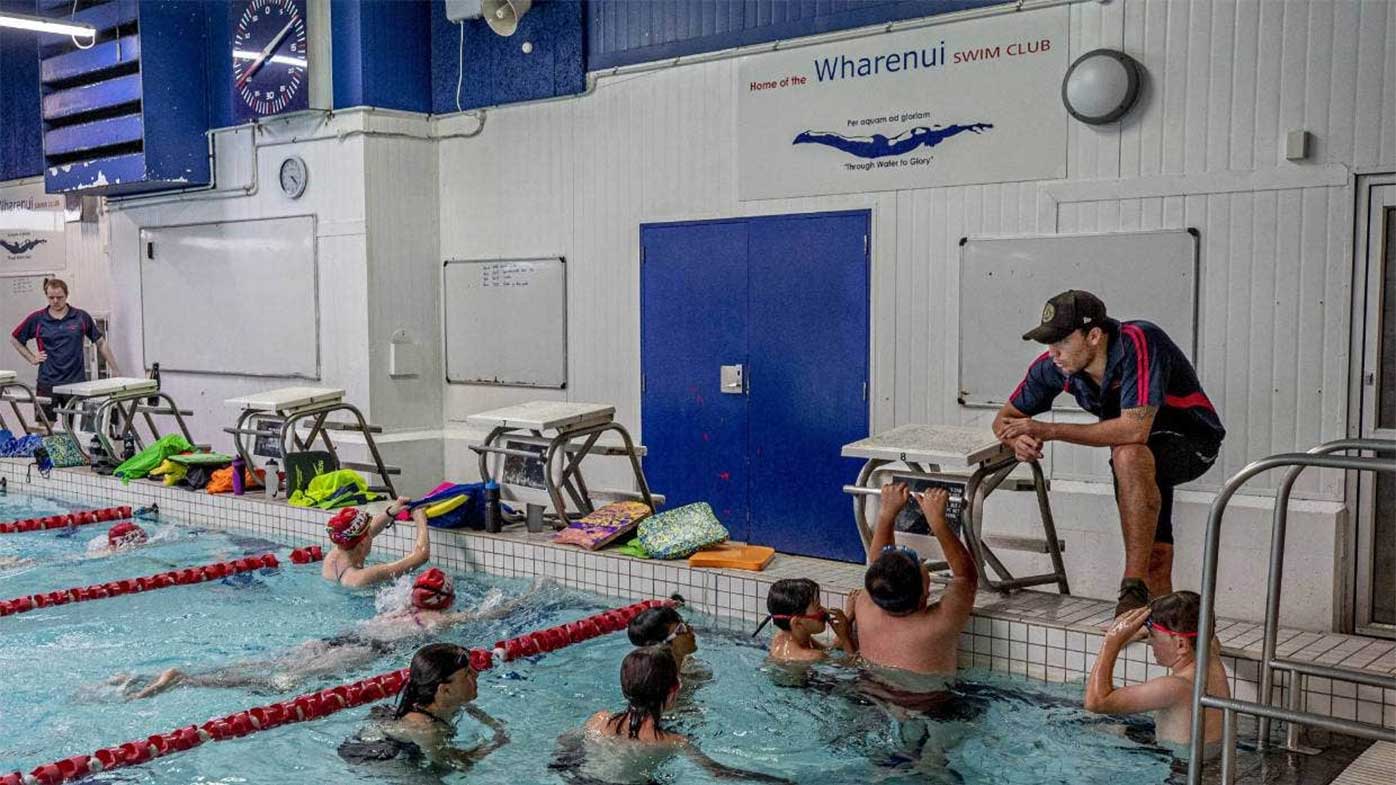
Swim coach with a calculator spots $5m accounting error in NZ council planning

New Zealand's Christchurch City Council has admitted a $5 million accounting error over the running costs for a community pool which has been earmarked for possible closure.

Independent consultants calculated it would cost $7.7m to operate and maintain Wharenui Swimming Pool and Sports Centre over the next 10 years and used the cost as justification for "decommissioning" the site.

However, members of Wharenui Swim Club asked for a detailed breakdown of the figures and discovered they did not add up – and that the estimated cost was actually closer to $2m.

READ MORE: Air New Zealand to weigh passengers before embarking

A community campaign has been launched to overturn the possible closure of Wharenui pool.

The Riccarton pool is widely used by schools, sports clubs and community groups but could close when the new Metro Sports Facility, now known as Parakiore Recreation and Sports Centre, opens in 2022.

Wharenui Swim Club president Chris Averill now hopes the council will scrap its proposal to scrap the pool and instead keep it open.

"It means the amount is far more manageable and hopefully the end result will be that the council will let it stay," he said.

"We have always said the true cost of the capital was between $1.5m and $2m. We just worked through it and they had made a simple mistake on one of the spreadsheets, that's where the $5.5 million difference came in."

He said he's proud of the team who analysed the data and discovered the error.

Swimming sessions at Wharenui pool range from those for babies of six months through to masters swimmers, many of whom are former competitive swimmers.

"We had four guys look at it and the guy who spotted it was one of our swim coaches.

"To me this is quite a big story. How often has this happened where they have put out numbers (that are incorrect) and no one knows?"

In a statement, the council apologised for the mistake and said "staff agree there is a substantial error in our calculations and the estimated cost could be up to $5 million less than what was originally projected".

David Bailey, the council's recreation sports services manager, said it will work with Wharenui Swim Club to "refresh this data to ensure we have an accurate figure for the projected costs over the next 10 to 20 years".

"We'd like to apologise to the community and key stakeholders, particularly those who have taken the time to make a submission on the future use of the pool," he said.

Wharenui Swim Club – one of the country's oldest swimming clubs, which was founded in 1911 – has launched a campaign against the proposed closure.

More than 3000 people have backed an online petition urging the council to reconsider its decision.

The proposed closure is part of the council's long term plan for the next decade, which is open for consultation until April 18.

Brazil: Court Okay for Probe Into President’s Pandemic Response

SAO PAULO (AP) — Brazil’s Supreme Court on Wednesday allowed a Senate investigation of President Jair Bolsonaro’s handling of the pandemic to go forward, one of two cases it tackled that could affect the leader’s bid for reelection next year.

The full court started weighing the political future of former President Luiz Inácio Lula da Silva, a potential powerful rival to Bolsonaro. One of the judges earlier ruled he had been unjustly convicted in a corruption case, a decision that effectively reinstated his right to run for the presidency again.

The court voted 10-1 Wednesday to uphold Justice Luís Roberto Barroso’s order that the Senate should start an investigation of into Bolsonaro’s management of the crisis because a required number of senators had sponsored such a call. The Senate president had tried to delay the probe, citing pandemic health restrictions.

Critics, including those calling for or leading the investigation, say Bolsonaro has bungled Brazil’s response to the pandemic by resisting health-driven restrictions on activity, failing to marshal resources for vaccines and stimulating the use of drugs that don’t work against the virus.

Bolsonaro and his allies say he’s being unfairly blamed for Brazil’s surge in COVID-19 deaths, a toll that trails only that of the United States. Brazil’s seven-day average death toll hit a new record on Monday.

The Senate probe “is an attempted political coup against the president,” said Sen. Márcio Bittar, a Bolsonaro ally. in a Twitter post Wednesday.

He’s also cried foul as the Supreme Court has issued rulings that go against him, prompting outrage from his conservative base that claims the court is overstepping constitutional bounds.

Carlos Melo, a political science professor at Insper University in Sao Paulo, said the investigation poses the risks for Bolsonaro

“The desperation with the pandemic tends to increase as deaths continue to grow. Economic issues are also far from being solved. And at the same time his administration is fighting with its base in congress over next year’s budget,” Melo said. “The surroundings of the inquiry don’t favor Bolsonaro.”

The top court last year knocked down Bolsonaro’s attempt to overturn local restrictions meant to slow the advance of COVID-19, ruling that governors and mayors are free to determine their own COVID-19 protocols.

On Tuesday, a justice also suspended parts of four Bolsonaro decrees aimed at loosening gun controls.

The Brazilian leader, who has long downplayed the risks of the disease and still denounces lockdowns, has argued lawmakers should also investigate the actions of governors and mayors to whom the federal government provided funds. He and his allies scored a partial win at the Senate on Tuesday when the use of such funds was made part of the investigation.

Bolsonaro on Wednesday complained that Justice Barroso’s April 8 ruling that the Senate probe should go forward had created “an atmosphere of animosity.”

“That justice is interfering with the Senate in order to go after me,” he said.

More than the required 27 senators had signed a request for the investigation, but the president of the Senate, Rodrigo Pacheco, had refrained from greenlighting the probe, citing health concerns amid the pandemic.

The court on Wednesday also began assessing the decision by Justice Luiz Edson Fachin on March 8 to annul da Silva’s two corruption convictions, which were related to the massive “Car Wash” scandal focused on the state oil company. The hearing will continue Thursday after the justices agreed by 9 votes to 2 that the case should indeed be heard in a full court session.

Early polling for the 2022 election shows the 75-year-old leftist, who governed Brazil between 2003 and 2010, neck-and-neck with Bolsonaro.

Da Silva was leading polls in 2018 when he was knocked out of the race by a conviction involving a beachfront apartment that prosecutors alleged — and he denied — belonged to him.

Bolsonaro won the election and the judge who oversaw da Silva’s conviction, Sergio Moro, became his justice minister. One of the top court’s two panels of justices already ruled Moro was biased against da Silva.

The question now before the full court was whether Moro’s court even had jurisdiction to hear the case, and the justices may also evaluate the panel’s finding regarding bias.

“The Supreme Court has the opportunity to make history today, maintaining the annulment of the sentences and the bias of Moro against him,” said Gleisi Hoffmann, chairwoman of da Silva’s Workers’ Party, on Twitter.

The post Brazil: Court Okay for Probe Into President’s Pandemic Response appeared first on The St Kitts Nevis Observer.

Blood Clots: Johnson & Johnson Vaccine Freeze to Continue, Bleach Cure Being Sold in US, Tokyo Games, More

An independent advisory group to the Centers for Disease Control and Prevention (CDC) on Wednesday postponed making a recommendation about the continued use of the Johnson & Johnson vaccine.

As a result, the current pause is likely to continue until the panel can gather more evidence about the risk of rare blood clots and the possibility that the shot is responsible.

During an emergency meeting, members of the CDC’s Advisory Committee on Immunization Practices said they did not feel comfortable making a decision about whether to continue vaccinations because there was not enough evidence about the patients who experienced the serious but rare side effects.

Panel members said they wanted more information about the people who may be most at risk for blood clots such as age and gender.

The panel did not set a date for when they will meet again, but it could be in the next week to 10 days. There is also a regularly scheduled meeting on May 5.

Federal health officials recommended the pause on Tuesday to allow the CDC and the Food and Drug Administration to review six cases of a rare and severe blood clot in the brain reported among the 7 million people who received the shot.

What makes the cases so rare is that the blood clots, known as cerebral venous sinus thrombosis (CVST), were accompanied by a condition known as thrombocytopenia, where the body has a low level of platelets, which help promote clotting.

During the meeting, CDC officials and Johnson & Johnson representatives described the cases as all occurring in women between the ages of 18 and 48. Three women also had large, dangerous clots in other parts of their body as well as in the brain.

They developed symptoms, most often headaches, six to 13 days after vaccination. But the symptoms were not necessarily indicative of a serious problem, and the CDC wants clinicians to be aware of the issue, especially because the traditional treatment for clotting — the blood thinner heparin — could actually make this specific condition worse.

Panel members stressed that they did not think the shot was necessarily dangerous or that the risks outweighed the benefits. But they wanted to be cautious and continue the pause until they felt comfortable with the level of evidence.

The committee’s recommendations are non-binding, but health officials have indicated they will use the panel to help inform their final decision about the shot.

Top Biden administration officials said this week they expect the pause will last days or weeks, not months. But it’s not clear what affect the lack of a vote from the committee will have on that timeline, nor is it clear what level of evidence the committee members want before making any recommendations.

While most of the committee members who spoke seemed to favor the pause and were convinced it would only reinforce confidence in the vaccine, some expressed frustration at the lack of action, as well as about the impact a continued pause will have on vulnerable communities.

“We are in a situation where not making a decision is tantamount to making a decision,” said Nirav Shah, president of the Association of State and Territorial Health Officials and director of Maine’s public health agency.

“The most at risk will remain at risk, and those who would benefit immediately from vaccination will remain unvaccinated for an unknown period of time,” Shah added.

He urged the committee to understand the equity concerns that could arise from delaying use of the vaccine any further.

Still, other members of the committee noted that the U.S. has two alternative vaccines in the Moderna and Pfizer-BioNTech products that can be used as a backstop. Those shots use mRNA technology, while Johnson & Johnson’s and the separate AstraZeneca vaccine are based on adenoviruses.

While J&J is only a small part of the U.S. vaccination campaign, making up less than 5 percent of the doses administered so far, the administration has been counting on an influx of supply in the coming months, and Johnson & Johnson is meant to play a major role i

the U.S. vaccination strategy.

Aran Maree, chief medical officer for Janssen, the J&J division that developed the vaccine, said two people who received the shot during its clinical trials developed blood clots, including one 25-year old male who exhibited symptoms similar to the women.

Maree said the company believes the overall benefit of the vaccine outweighs the risk, but doctors should be aware of the clotting concern and be prepared to treat it appropriately.

=========================================

US company illegally peddling ‘miracle cure’ bleach for new Covid variants

The appearance of a new marketing push out of Miami by peddlers of the bleach ‘cure’ signals the FDA’s uphill struggle in trying to control the potentially lethal trade.

 Florida company exploiting fears around new virus strains by selling chlorine dioxide, despite FDA warnings against fraudulent ‘cures’

in New York
Guardian (UK)


Peddlers of industrial bleach who urge Americans to drink the fluid as a “miracle cure” for cancer, HIV/Aids and other diseases have begun touting the product illegally as a treatment for the latest variants of Covid-19.

Chlorine dioxide, a powerful bleaching agent used in textile and paper manufacturing, is being compounded and sold out of a makeshift laboratory in Miami, Florida. The company, Oclo Nanotechnology Science, is playing on fears of the new strain of the coronavirus discovered in the UK, which is now spreading rapidly and widely through the US.

‘Archbishop’ of Florida church selling bleach ‘miracle cure’ arrested with son


The UK variant, B117, is thought to be more transmissible and deadly than the initial form of the virus.

The Miami company is invoking B117 to drive up sales of its bleach products, which the US Food and Drug Administration (FDA) warns are potentially dangerous and can be life-threatening.

The front page of Oclo’s website is dominated by a photograph of vials of its chlorine dioxide product billed as an “antiviral” treatment.

The image is superimposed with the words: “B117 … new variant of coronavirus, the most contagious and dangerous in the United States. Rescuing chlorine dioxide and its great curative potential against pathogens.”

The appearance of a new marketing push out of Miami by peddlers of the bleach “cure”, often referred to as “miracle mineral solution”, or MMS, signals the FDA’s uphill struggle in trying to control the potentially lethal trade. Since the start of the pandemic, the federal agency has been clamping down on fraudulent products which claim to treat or cure Covid-19.

It has also been using its enforcement muscle to move against chlorine dioxide dealers. Last August, the FDA arrested Mark Grenon and his four sons, who were among the most prominent “miracle” bleach peddlers in the US.

Members of the Grenon family claimed to be “bishops” of the Florida-based Genesis II “church” that sold bleach under the guise that it was a “sacrament”. They remain in jails in Miami and Colombia awaiting extradition to the US facing charges of conspiracy to defraud the US and to introduce a misbranded drug into interstate commerce.

Having taken down Genesis II, the FDA is now facing outcrops of new MMS dealers. Oclo is run by a former Cuban living in Hallandale Beach, north of Miami.

Ricardo Garcia describes himself as a “research and development scientist” trained in chemistry at the University of Havana, though he also identifies as a real estate agent. Most of his customers in the US are Latino Americans.

He is also known to be offering to transport bleach in enema form to Europe for use on autistic children, at a cost of $680 per liter plus shipping.

In text messages between Garcia and an autism advocate based in Europe, he said that he was distributing the vials mainly in “local areas in the USA”. He added: “We have been censored several times on social media but are still producing to save lives.”

Despite Garcia’s protestations, his main trading route still appears to be through social media sites. He promotes his toxic products on Facebook, Amazon and eBay.

He clearly has some success selling through Amazon. His “immune booster against pathogens”, costing $49.99, is a bestseller ranked 105 in the “sports nutrition and hydration products” category.

The Guardian asked Garcia why he was selling bleach illegally as a treatment for the B117 strain of Covid and other diseases. He gave the reply: “We are really sorry for the loss of your loved one. Thank you for publishing the latest scientific advances with chlorine dioxide in the treatment of Covid-19. We have a great interest in saving lives – you too, right?”

The Guardian also contacted the three social media giants to ask them why they were hosting a potentially life-threatening fraudulent “cure” on their platforms. Within hours eBay responded by blocking the Oclo page.

An eBay spokesperson said: “Our first priority is to ensure the safety of our employees and customers around the world. We are taking significant measures to block or quickly remove items on our marketplace that make false health claims, including listings that promote chlorine dioxide as a cure for Covid.”

Amazon was more ambivalent. It said that third-party sellers were “independent businesses” required to follow all applicable laws and regulations.

“Those who violate our policies are subject to action including potential removal of their account,” Amazon said. It left the Oclo page up, however.

Facebook did not reply.

Fiona O’Leary, a campaigner against pseudoscience, said she was concerned about Garcia because unlike other bleach peddlers he was a practicing scientist. “It’s very worrying to me because he’s a professional, and I’ve never seen a scientist make this product before. He has more knowledge on the chemicals and he’s going to be trusted more.”

Garcia claims to follow the protocols of Andreas Kalcker, one of the leading figures in the bleach “cure” movement. Kalcker, a German citizen who lives in Switzerland, is author of an influential book, Forbidden Health.

He is reported to be under criminal investigation in Argentina following the deaths of a five-year-old boy and a man aged 50 who both drank chlorine dioxide.

On his website, Garcia claims that his product treats autism – a common and especially abusive application of bleach. He quotes a parent who says that their experience of chlorine dioxide was “truly miraculous. Our five-year-old son with autism has been able to make an extraordinary recovery.”

Garcia also quotes a New York resident who says his grandfather almost died from Covid but recovered after drinking the bleach.

His site encourages consumers to buy chlorine dioxide and give it to their dogs as well as marketing the fluid as a treatment for vaginal infections in women. “Vaginal washing with a solution of chlorine dioxide allows the treatment of some vaginal and other sexually transmitted diseases,” it claims.

==================================

Cancelling Tokyo Olympics ‘remains an option’ says top Japanese politician

Toshihiro Nikai’s comments are at odds with the united front presented by the Japanese government

The Tokyo 2020 mascot poses with the Olympic rings.
The Tokyo 2020 mascot poses with the Olympic rings. Photograph: ZUMA Wire/REX/Shutterstock


A senior member of Japan’s ruling party has said that cancelling the Tokyo Olympics “remains an option” if the coronavirus pandemic continues to worsen.

“If it seems impossible to do it any more, then we have to stop, decisively,” Toshihiro Nikai, secretary general of the Liberal Democratic party, said in a TV interview that has yet to be aired.

While Nikai did not call for the Games to be called off, his comments are at odds with the united front presented by the Japanese government, Tokyo 2020 organisers and the International Olympic Committee [IOC] – all of which insist that the delayed event will open as planned on 23 July.

100 days to Tokyo: pessimism and fear remain in Japan as Games loo


The pandemic shows no signs of slowing in several parts of the world, while experts in Japan have warned that the country has entered a fourth wave of Covid-19 infections driven by mutant strains of the virus.

Nikai, a powerful party faction leader who was instrumental in electing Yoshihide Suga as prime minister last year, said cancellation was “of course” an option, telling the TBS network: “If the Olympics were to spread infections, then what are the Olympics for?”

The Nikkei business newspaper quoted a senior government official as saying in response to Nikai that it would be “impossible to cancel the Olympics”.

His intervention comes just a day after organisers marked 100 days until the opening ceremony by insisting they would hold a “safe and secure” Games that will be attended by around 14,500 Olympic and Paralympic athletes and tens of thousands of media, sponsors and officials.

“We will hold the Games in a way that’s feasible,” Taro Kono, the minister in charge of Japan’s vaccination drive, said in a separate TV interview, according to the Kyodo news agency. “That may be without spectators.”

No overseas spectators will be allowed to attend Olympic events, and a decision on whether to admit people in Japan to venues could come later this month.

Public opinion in the host nation is firmly opposed to the Games, with a recent poll showing that 39.2% thought they should be cancelled, and 32.8% calling for them to be postponed a second time – a move the IOC has said is unfeasible.

“Cancelling Olympics” was trending on Twitter in Japan on Thursday with more than 35,000 tweets. “If this person says it, Olympic cancellation looks like a reality,” one said in reference to Nikai’s comments.

Akira Koike, a Japanese Communist party MP, said holding the Games was already “impossible”, adding that a decision on cancellation should be made quickly.

Pressure on the IOC and Tokyo 2020 organisers increased after several medical experts questioned the decision to push ahead with the Olympics during the pandemic.

In an editorial in this weeks BMJ, Kazuki Shimizu, Devi Sridhar, Kiyosu Taniguchi and Kenji Shibuya said it would be a mistake to host large numbers of people from overseas in Tokyo this summer.

“The whole global community recognises the need to contain the pandemic and save lives,” they wrote. “Holding Tokyo 2020 for domestic, political and economic purposes – ignoring scientific and moral imperatives – is contradictory to Japan’s commitment to global health and human security.

“We must reconsider this summer’s Games and instead collaborate internationally to agree a set of global and domestic conditions under which international multi-sport events can be held in the years ahead.

“These conditions must embody both Olympic and Paralympic values and adhere to international principles of public health.”

The authors pointed to the slow pace of vaccinations in Japan, where less than 1% of the population been inoculated. “Even healthcare workers and other high risk populations will not have access to vaccines before Tokyo 2020, to say nothing of the general population,” they said.

=============================================

People in England waiting to start hospital treatment hits record high

============================================

Hong Kong widens vaccine scheme to include under-30s

The post Blood Clots: Johnson & Johnson Vaccine Freeze to Continue, Bleach Cure Being Sold in US, Tokyo Games, More appeared first on The St Kitts Nevis Observer.