A woman who disappeared from a dementia care facility in 2017 has been declared dead by the coroner in a report which blames staff for the length of time before she was discovered missing.Helen Maree Dale Wilkins, known best as…
Category Archives: headline
Covid 19 coronavirus: Jacinda Ardern not ruling out extending India travel ban to other high-risk nations
Prime Minister Jacinda Ardern is not ruling out extending the unprecedented Indian travel suspension to other high-risk countries in order to keep New Zealand Covid-free. She, and her director-general of health, Dr Ashley Bloomfield,…
Parts of NZ dangerously dry with no immediate end in sight
The east of the country is rapidly drying out with soil in deficit of up to 50mm of rain for this time of year, and there is no immediate end in sight.Niwa forecaster Ben Noll said in parts of Gisbourne, Marlborough, Canterbury,…
Eating disorders: 'Endless' and 'horrendous' costs for parents who cannot get sick teens into public health system
Kiwi parents are spending hundreds of dollars a week on private healthcare for their children battling serious eating disorders – unable to get a place in the overloaded public system. They say the costs can be “endless” but there…
Covid helped to normalise diverse workplace arrangements, let's normalise diversity
A “halo effect of empathy” is one of the many benefits a New Zealand energy solutions business sees in employing someone with a disability. But like working from home has become, they hope to make a diverse workplace so normal…
Mates: Sporting greats tackle shocking construction workplace suicide rates
It was a captain’s run with a difference as sporting greats braved terrifying heights to put a spotlight on reducing suicide rates in the construction industry.The daunting challenge, which took place 192m above busy central city…
Pasifika Festival 2021 right back on track
Pasifika, one of the most popular and lively events in the Auckland calendar, will be back this weekend for the first time since 2018 and for the first time at Mt Smart Stadium.There is much anticipation for the festival this year,…
Herald morning quiz: April 9
Test your brains with the Herald’s morning quiz. Be sure to check back on nzherald.co.nz at 3pm for the afternoon quiz. To challenge yourself with more quizzes, CLICK HERE.
Police disclose Phillip’s cause of death
An autopsy was performed on the body of 34-year-old Leon Phillip of La Guerite, St. Kitts, on April 7, 2021, by Resident Pathologist, Dr. Adrian Nuñez.
Dr. Nuñez concluded that death was due to hypovolemic shock due to massive hemothorax as a consequence of a single gunshot wound to the thorax.
Last Thursday Police had responded to a report of a shooting incident in Newtown last Wednesday and upon arrival found the motionless body of 34-year-old Leon Phillip of La Guerite laying on the ground with what appeared to be a gunshot wound to the chest.
The District Medical Officer had visited the scene and pronounced him dead, while personnel from the Forensic Services Unit processed the scene and had collected items of evidential value.
The post Police disclose Phillip’s cause of death appeared first on The St Kitts Nevis Observer.
Expert says George Floyd died from a lack of oxygen
George Floyd died of a lack of oxygen from being pinned facedown on the pavement with his hands cuffed behind him, a medical expert testified Thursday at former Officer Derek Chauvin's murder trial.
Floyd's breathing while he was being held down by Chauvin and other officers was too shallow to take in enough oxygen, which in turn damaged his brain and caused an abnormal heart rhythm that made his heart stop, said Dr. Martin Tobin, a lung and critical care specialist at the Edward Hines, Jr. VA Hospital and Loyola University's medical school in Chicago.
He took the stand as part of an effort by prosecutors to establish that it was Chauvin's actions — not Floyd's illegal drug use and underlying health conditions, as the defence contends — that killed the 46-year-old Black man last May.
READ MORE: Derek Chauvin trained to defuse situations: police official
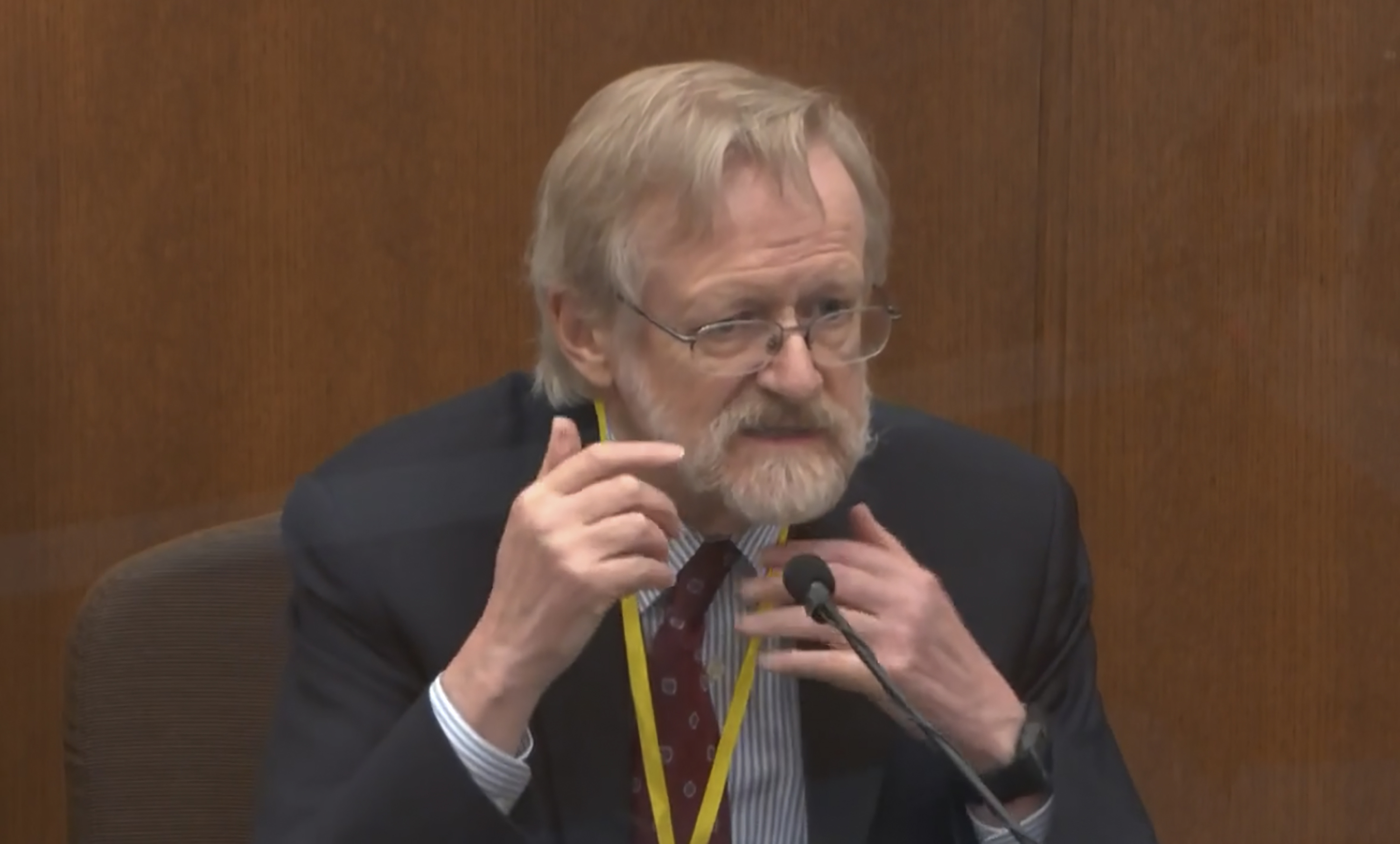
Tobin, analysing a graphic presentation of the three officers pinning Floyd for what prosecutors say was almost 9 1/2 minutes, said Chauvin's knee was "virtually on the neck for the vast majority of time." He said it was "more than 90 per cent of the time in my calculations."
He said it appeared that Floyd was getting enough oxygen for about the first five minutes to keep his brain alive because he was still speaking.
But Tobin explained to jurors what happens as the space in the airway narrows, saying breathing then becomes "enormously more difficult," adding that it would be worse than "breathing through a drinking straw."
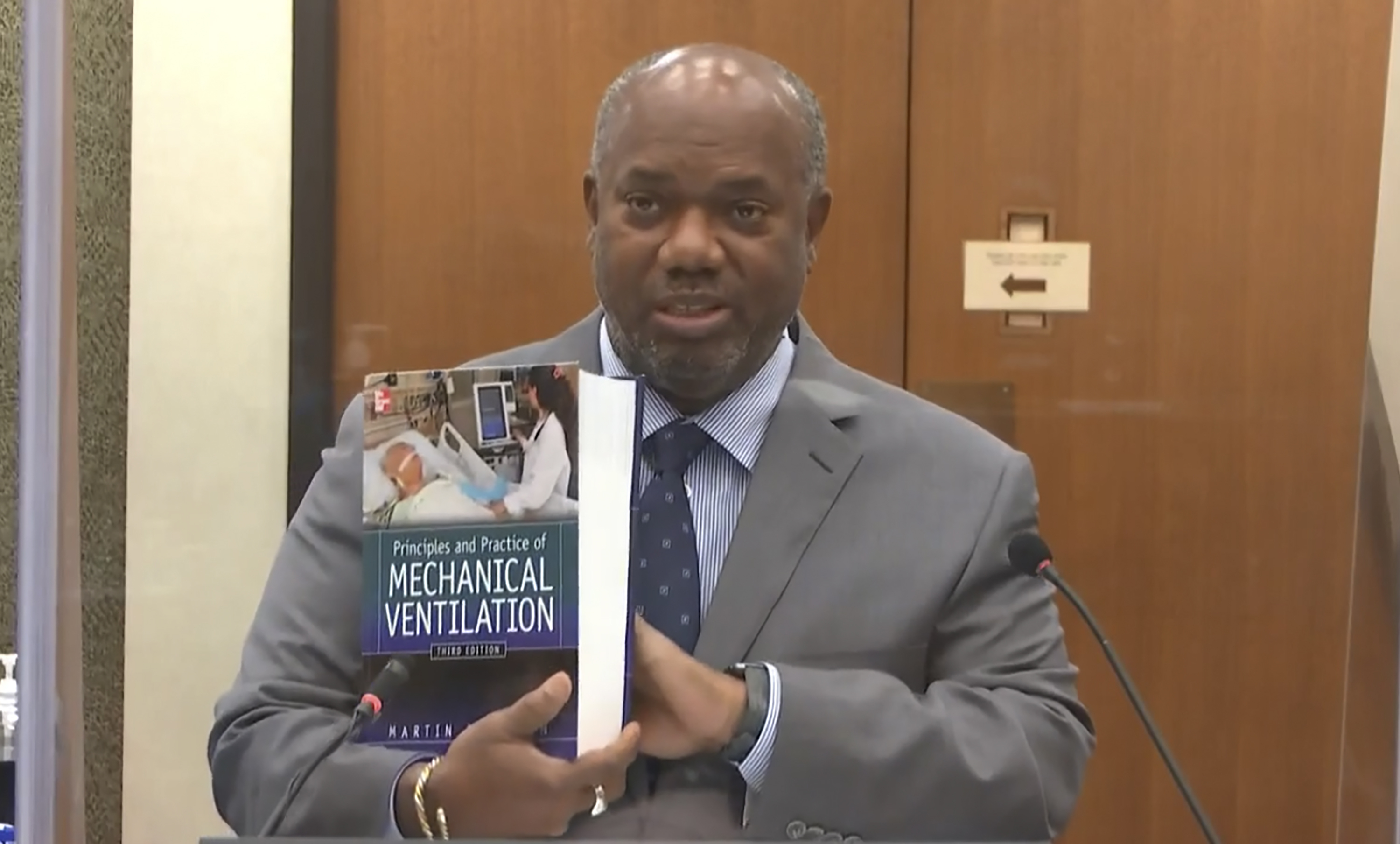
Tobin testified that if the hypopharynx – the bottom part of the throat — becomes totally obstructed, it takes just seconds to reduce the level of oxygen to where it would result "in either a seizure or a heart attack."
Prosecutors showed images of Floyd side by side, one with the front of his face smashed against the pavement and another with his head turned. Tobin said that when Floyd's head was facedown, a ligament at the back of his neck would have protected his airway. But with his head turned, Chauvin's weight would have compressed the hypopharynx.
READ MORE: ER doctor says George Floyd's heart had stopped when he arrived
The expert calculated that at times when Chauvin was in a near-vertical position, with his toes off the ground, half of Chauvin's body weight — 91.5 pounds (41.5kg) — was directly on Floyd's neck.
Tobin said other factors worsened the effect on Floyd: He pointed out that Officer J. Kueng held Floyd's left hand upward, and Chauvin's right knee compressed Floyd's side, meaning "the ability to expand his left side is enormously impaired." The handcuffs and the hard surface also interfered with Floyd's ability to breathe, Tobin said.
Tobin used simple language, with terms like "pump handle" and "bucket handle" to describe the act of breathing for jurors. At one point, he invited them to "examine your own necks, all of you in the jury right now" to better understand the effect of a knee on a person's neck. Most of the jurors felt their necks as Tobin instructed, though the judge later told them they didn't have to do so.
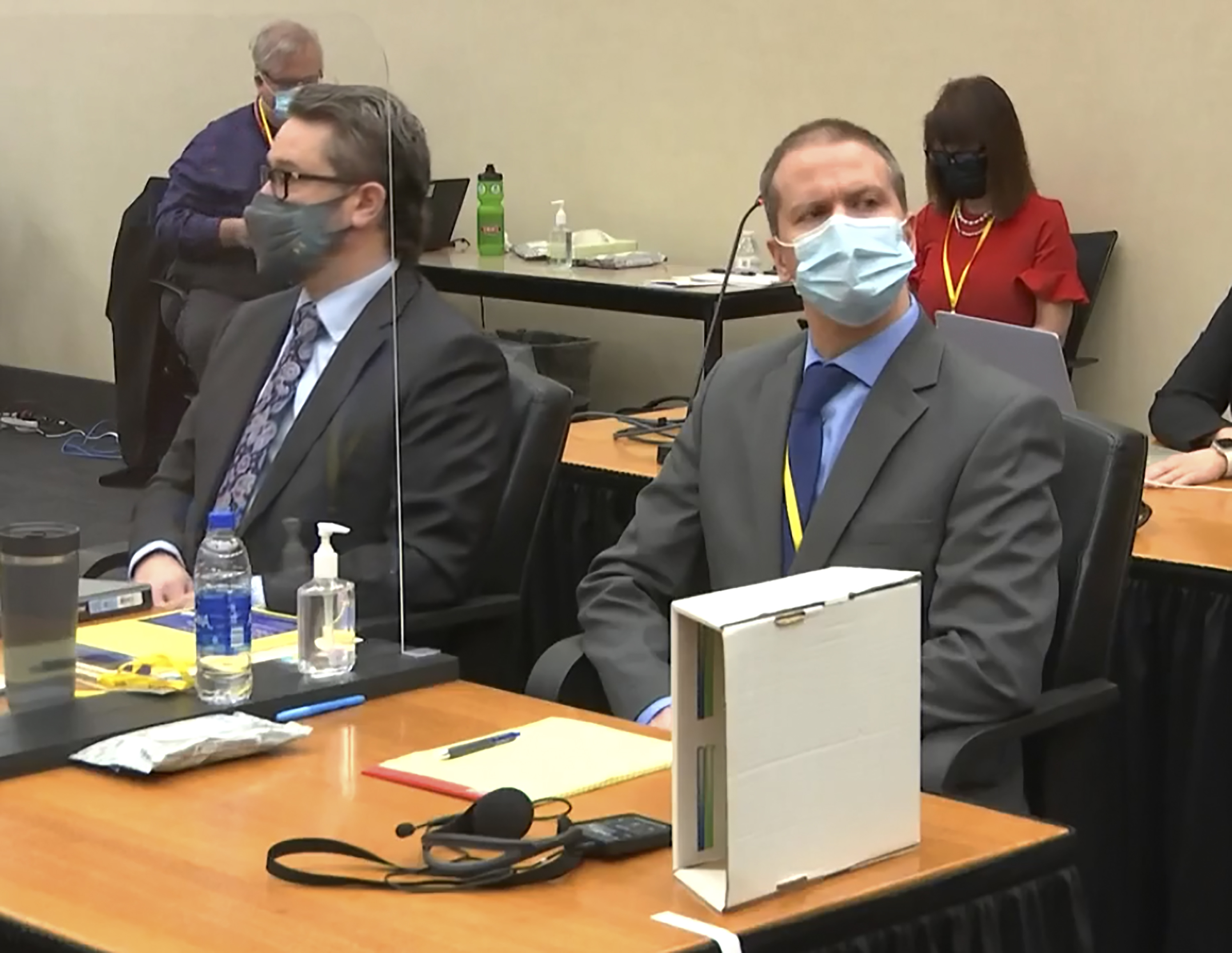
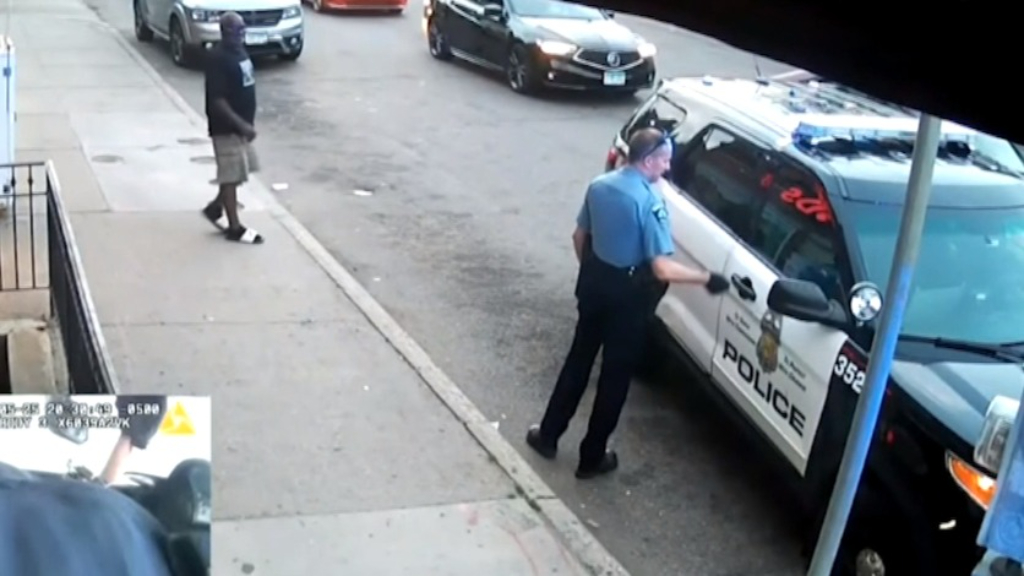
Chauvin, 45, is charged with murder and manslaughter in Floyd's death May 25. Floyd was arrested outside a neighbourhood market after being accused of trying to pass a counterfeit $20 bill. A panicky-sounding Floyd struggled and claimed to be claustrophobic as police tried to put him in a squad car, and they pinned him to the pavement.
Bystander video of Floyd crying that he couldn't breathe as onlookers yelled at Chauvin to get off him sparked protests and scattered violence around the US.
Defense attorney Eric Nelson has argued that the now-fired white officer "did exactly what he had been trained to do over his 19-year career," and he has disputed that Chauvin's actions were what killed Floyd. Fentanyl and methamphetamine were found in Floyd's system.
Tobin's testimony comes a day after a use-of-force expert testified that Chauvin bore down with most of his weight on Floyd's neck or neck area and his back the entire 9 1/2 minutes.
Jody Stiger, a Los Angeles Police Department sergeant serving as a prosecution witness, said Wednesday that based on his review of video evidence, Chauvin applied pressure to Floyd's neck or neck area from the time officers began pinning Floyd to the ground until paramedics began to move him to a stretcher.
"That particular force did not change during the entire restraint period?" prosecutor Steve Schleicher asked as he showed the jury a composite of five still images.
"Correct," replied Stiger, who on Tuesday testified Chauvin used excessive force against Floyd.
Nelson countered by pointing out what he said were moments in the video footage when Chauvin's knee did not appear to be on Floyd's neck but on his shoulder blade area or the base of his neck.
Stiger did not give much ground, saying the officer's knee in some of the contested images still seemed to be near Floyd's neck, though he agreed his weight might have shifted at times.
In other testimony Tuesday, the lead Minnesota state investigator on the case, James Reyerson, initially agreed with Nelson that Floyd seemed to say in a police body-camera video of his arrest, "I ate too many drugs."
But when a prosecutor played a longer clip of the video, Reyerson said he believed what Floyd really said was "I ain't do no drugs."