Category Archives: headline

'No signs of any causal link' between vaccine and nursing home death

Australian authorities will investigate the death of a Queensland nursing home resident but say there doesn't appear to be any causal link to the COVID-19 vaccine she had recently received.

Police were called to the Blue Care Springwood Yurana Aged Care Facility south of Brisbane about 1.30am on Friday after an 82-year-old woman passed away.

They have classed her death as non-suspicious and will prepare a report for the coroner.
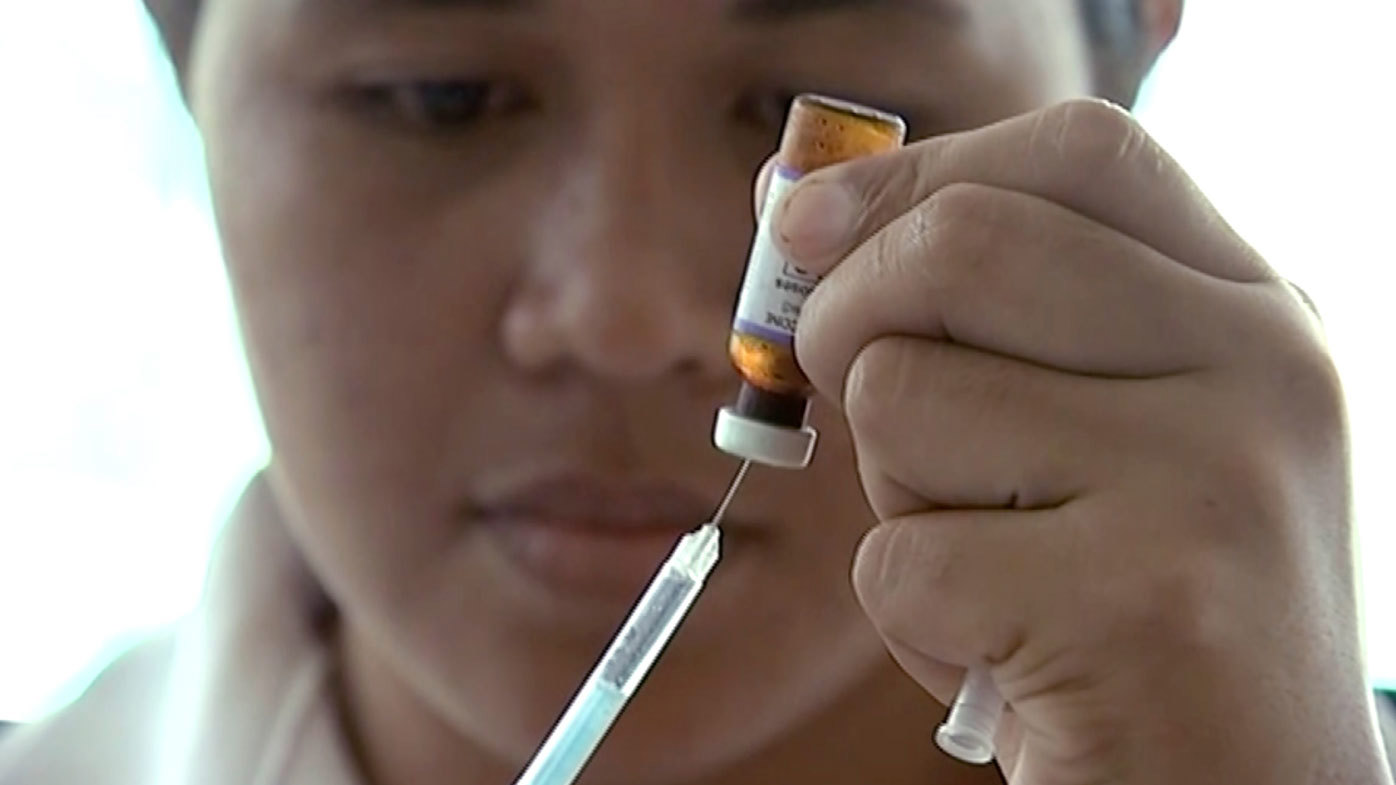
Australia's Chief Medical Officer, Paul Kelly, issued a statement on Wednesday evening pointing out more than 1000 people died in aged care every week and it was inevitable that would include some who had been recently vaccinated.

"It can be expected that older and more frail people in an aged care setting may pass away due to progression of underlying disease or natural causes. This does not mean the vaccine has contributed to this," he said.

"The TGA (Therapeutic Goods Administration) is monitoring COVID-19 vaccination in elderly patients across the world and is in regular contact with global regulators."

Professor Kelly said the TGA would continue to monitor the safety of vaccines rolled out in Australia and internationally.

"As with any other reported case it is investigated although at this stage there are no signs of any causal link," he said.

The TGA in January investigated about 30 deaths among more than 40,000 older people, including frail patients and those expected to live only a few weeks, who had received the Pfizer vaccine in Norway. 

The European Medicines Agency concluded no causal link between the vaccination and deaths could be established and the TGA found there was no specific risk of vaccinating "elderly" patients with the jab.

"Elderly patients can receive this vaccine and there is no cap on the upper age limit," the TGA said at the time.

"The product information for health care professionals contains the following advice: 'The data for use in the frail elderly (>85 years) is limited…the potential benefits of vaccination versus the potential risk and clinical impact of even relatively mild systemic adverse events in the frail elderly should be carefully assessed on a case-by-case basis'."

Both COVID-19 vaccines in use in Australia can cause minor side effects, including headache, fever, muscle pain and fatigue, but have been declared safe to use.

Authorities do monitor for anaphylaxis, a severe allergic reaction, something the TGA says can occur with any vaccine but is very rare.

The EMA has found a possible link between the AstraZeneca vaccine and "very rare cases of unusual blood clots" but says the "overall benefits of the vaccine in preventing COVID-19 outweigh the risks of side effects".

Treasurer Josh Frydenberg on Wednesday confirmed the government would continue to roll out the AstraZeneca jab unless it heard otherwise from the TGA.
Historic US Shift? Corporations Go Populist, Republicans Blast Them

The Hill- Senate Minority Leader Mitch McConnell (R-Ky.) has lashed out at corporations involving themselves in politics this week — a development that makes it seem as if politics has entered an alternative reality.

For his entire career, McConnell has been assiduous in courting big business and has been a staunch defender of corporate interests.

He has been a stalwart opponent of campaign finance reform and, roughly a decade ago, expressed approval of the Supreme Court’s decision in the Citizens United case. The court’s 2010 ruling bestowed upon corporations many of the rights to free speech enjoyed by individual citizens and loosened restrictions on political donations.

But now McConnell’s ire has been sparked by major Georgia-based corporations, including Coca-Cola and Delta Air Lines, that have criticized new voting laws passed by the Republican legislature and signed by Gov. Brian Kemp (R).

The regulations, which pare back the number of drop boxes available for early voting and make it a misdemeanor to give water or food to people waiting in line to vote, have been compared to Jim Crow-era suppression measures by critics.

Defenders argue that the laws are being misrepresented. But that has not been enough to quell the chorus of criticism. In the most high-profile rebuke, Major League Baseball has moved its All-Star Game from Atlanta to Denver.

In a statement on Monday, McConnell complained that “parts of the private sector keep dabbling in behaving like a woke parallel government.” He also warned that businesses “will invite serious consequences if they become a vehicle for far-left mobs to hijack our country.”

At a press conference in his native Kentucky on Tuesday, McConnell again warned business to “stay out of politics.”

Democrats are agog at what they consider a blatant double-standard — an erstwhile champion of big business like McConnell now expressing horror at corporate meddling.

“I haven’t had a laugh that good in a while,” said Dick Harpootlian, a Democratic state senator in South Carolina who also sat on the finance committee for President Biden’s campaign last year.

“Apparently McConnell and these guys are decrying the influence of corporations but not their money? I don’t understand where the line is. They can pack your pockets with cash, but they can’t talk to you or try to persuade you?” Harpootlian added.

McConnell is far from the only Republican to bash business in recent days, however.

Former President Trump released a statement on Tuesday morning complaining that the law that passed the Georgia legislature should have been even tougher.

“Boycott all of the woke companies that don’t want Voter I.D. and Free and Fair Elections,” the former president demanded.

Meanwhile, Texas Gov. Greg Abbott (R) called the MLB decision “absolutely ridiculous” during a Fox News interview. Addressing businesses in his own state, Abbott warned, “They need to stay out of politics, especially when they have no clue.”

But for all the incongruity of the party of big business venting fury on the corporate world, those same Republican politicians are at least in tune with their supporters’ feelings.

Conservatives have long felt that the entertainment industry in particular has disparaged their values and sought to shift social mores in a liberal direction. The media, they contend, is also permeated by a liberal ethos.

Now, they fear that big business is joining that push — or is simply allowing itself to be cowed by left-leaning groups.

“The left have become louder online and they have become very good at the kind of pressure campaigns that make companies nervous,” said Matt Gorman, a GOP strategist and former communications director for the National Republican Congressional Committee. “A lot of times companies mistake online chatter for actual public opinion.”

Gorman also contended that accusations of hypocrisy can cut both ways.

Asked about perceived double-standards on the part of figures such as McConnell, he responded, “No more so than people who are normally trying to restrict corporations’ political beliefs all of a sudden believing they have such an important role in the debate.”

There is, clearly, a widespread conservative fury at the corporations’ actions pertaining to the Georgia laws.

The Wall Street Journal editorial page, which almost always faithfully reflects corporatist views, complained last week that: “The public debate on Georgia’s new voting law has become a stew of falsehood, propaganda and panic. Part of the blame lies with the partisan distortion of Democrats, part with their media echoes, and now part with CEOs of major companies who are uninformed at best or cowardly at worst.”

About the only thing that seems certain for now is that corporations will face their own challenges as they try to navigate a polarized nation. Virtually any political stance, toward the right or the left, is guaranteed to provoke howls of protest from the other side.

And even Democrats like Harpootlian acknowledge that businesses are always motivated by the bottom line, even when they are professing noble-sounding values.

“Their constituency is customers,” he said. “I would like to attribute it to some kind of corporate altruism … but it’s a financial decision. Delta Air Lines doesn’t want people boycotting their airline and Coca-Cola doesn’t want people going to Pepsi. And there are a lot more people concerned about citizens’ right to vote being restricted than they are about Trump and McConnell and Abbott whining.”

For now, the corporations’ stance has another powerful defender.

“It’s reassuring to see that for-profit operations and businesses are speaking up about how these new Jim Crow laws are just antithetical to who we are,” Biden said on Tuesday afternoon.

The Memo is a reported column by Niall Stanage.

The post Historic US Shift? Corporations Go Populist, Republicans Blast Them appeared first on The St Kitts Nevis Observer.

Two charged after bomb, extremist material allegedly found in Adelaide raids

Two Adelaide men have been charged after police raids linked to an investigation into "ideologically motivated violent extremism" allegedly uncovered a bomb and extremist material.

The charges came after the leader of a prominent Australian neo-Nazi group said about 15 of its Adelaide members were raided early on Wednesday morning.

Police charged a 28-year-old man from Surrey Downs with possession of extremist material and a 32-year-old man from Munno Para with possession of an improvised explosive device and instructions for manufacturing explosives or dangerous weapons.

Both men were granted bail ahead of Magistrates Court hearings in the coming months.

In a video posted to social messaging app Telegram and seen by 9News on Wednesday, the neo-Nazi group's leader said police seized devices and "tried to take any sort of political material that they could" in what he described as a "full harassment operation".

He said the raids would not "slow us down" and that there were "a lot of fun activities being planned in Adelaide in the coming weeks".

In a statement provided to Business Insider in response to questions about the neo-Nazi's comments, SA Police said officers searched "a number of domestic residences" across Adelaide in an investigation related to "people associated with ideologically motivated violent extremism".

"The investigation remains ongoing and there has been no known threat to any person or the public," police said.

Australia's domestic spy agency, the Australian Security Intelligence Organisation, recently shifted away from using terms such as "right-wing extremism" in favour of "ideologically motivated violent extremism".

The 28-year-old is due to face Adelaide Magistrates Court on June 22 and the 32-year-old is set to face the Elizabeth Magistrates Court on May 26.

T&T PM Keith Rowley Tests Pos. for Covid-19, In Isolation

The post T&T PM Keith Rowley Tests Pos. for Covid-19, In Isolation appeared first on The St Kitts Nevis Observer.

Corona Effect: Yanks Told to Avoid Travel to Bermuda, Jamaica

Vaccinated Americans may be able to travel again, but not everywhere. The Centres for Disease Control, CDC has urged Americans to avoid travelling to both Jamaica and Bermuda following reports of an increase in cases of the coronavirus.

In the case of Jamaica, the CDC, extended the level four status – this means that travellers to the island have a very high possibility of contracting COVID-19.

In an updated advisory on the weekend, the CDC said because of the current situation in the country, even fully vaccinated persons may be at risk for getting and spreading COVID-19 variants.

The CDC said that those who must travel to Jamaica should get fully vaccinated and observe COVID-19 prevention measures. Meanwhile, in responding to the advisory, the senior strategist in the Ministry of Tourism, Delano Seivright, said the CDC’s alert has not discouraged persons from travelling to Jamaica.

In the case of Bermuda, the CDC also advised against all travel to the island after raising its risk level to “very high” again as the COVID-19 cases have continued to soar and two more deaths were recorded.

In the latest update, health officials report that 22 people were in the hospital with COVID-19 on Monday night with five in intensive care.

On the weekend, Bermuda logged 69 more positive cases after 3,234 tests over the weekend, bringing the total number of active cases to 656.

The death toll has climbed to 14 but health officials gave no details.

In a blow to the island’s record of low COVID-19 numbers, the CDC adjusted Bermuda’s status from Level 2, moderate, to Level 4, its highest designation.

On March 18, the CDC  dropped Bermuda’s risk from Level 3 to Level 2 — “COVID-19 moderate“. It came after the CDC switched Bermuda’s status from Level 4 to 3 on March 1.

A spokeswoman for the US Consulate General said the latest CDC move reflected “Bermuda’s recent increase in active cases”.

She said the US Consulate would continue to update the CDC and US Department of State on the island’s pandemic status, including safety protocols and testing for residents and visitors.

She added: “As the COVID-19 situation around the world changes, the CDC is monitoring COVID-19 risk in destinations around the world and making travel recommendations.”

The post Corona Effect: Yanks Told to Avoid Travel to Bermuda, Jamaica appeared first on The St Kitts Nevis Observer.

UWI Gets Record $25m Grant from US Tech Firm

US Reality software developer EON Reality is giving a $25m grant to the University of the West Indies (UWI). The university said this is the largest international grant that it has ever received.

The grant will see EON Reality, which is based in the US tech hub Silicon Valley; enter the Caribbean market as a post-COVID education development leader, according to The UWI.

EON Reality has a global development network — with more than 20 locations worldwide — and over 40 million users on its AR/VR library for education and industry.

Dr Luz Longsworth, Principal of The UWI Open Campus and Pro Vice-Chancellor of Global Affairs, spearheads the project.

Longsworth is in charge of efforts to transform the ten-year-old Open Campus into The UWI’s Global Campus. This initiative is a key part of the university’s new finance vision that seeks to “convert its global reputation into sustainable revenue.”

The Vice-Chancellor, Professor Sir Hilary Beckles noted that “this is a major and very timely step for the university as it rolls out its ‘finance revolution’ according to our strategic plan. We are determined to succeed but success comes with an orderly and systematic approach and effective leadership. Dr Longsworth is to be commended for her sophisticated negotiation skills and commitment to our strategic vision.”

The vice-chancellor further noted “that the university is moving swiftly along its plotted finance trajectory and that there are other such major funding initiatives in the global pipeline. Our development work, and institutional credibility, are now globally known and our allies are keen to offer support.”

The post UWI Gets Record $25m Grant from US Tech Firm appeared first on The St Kitts Nevis Observer.

What countries could Australians be allowed to travel to next?

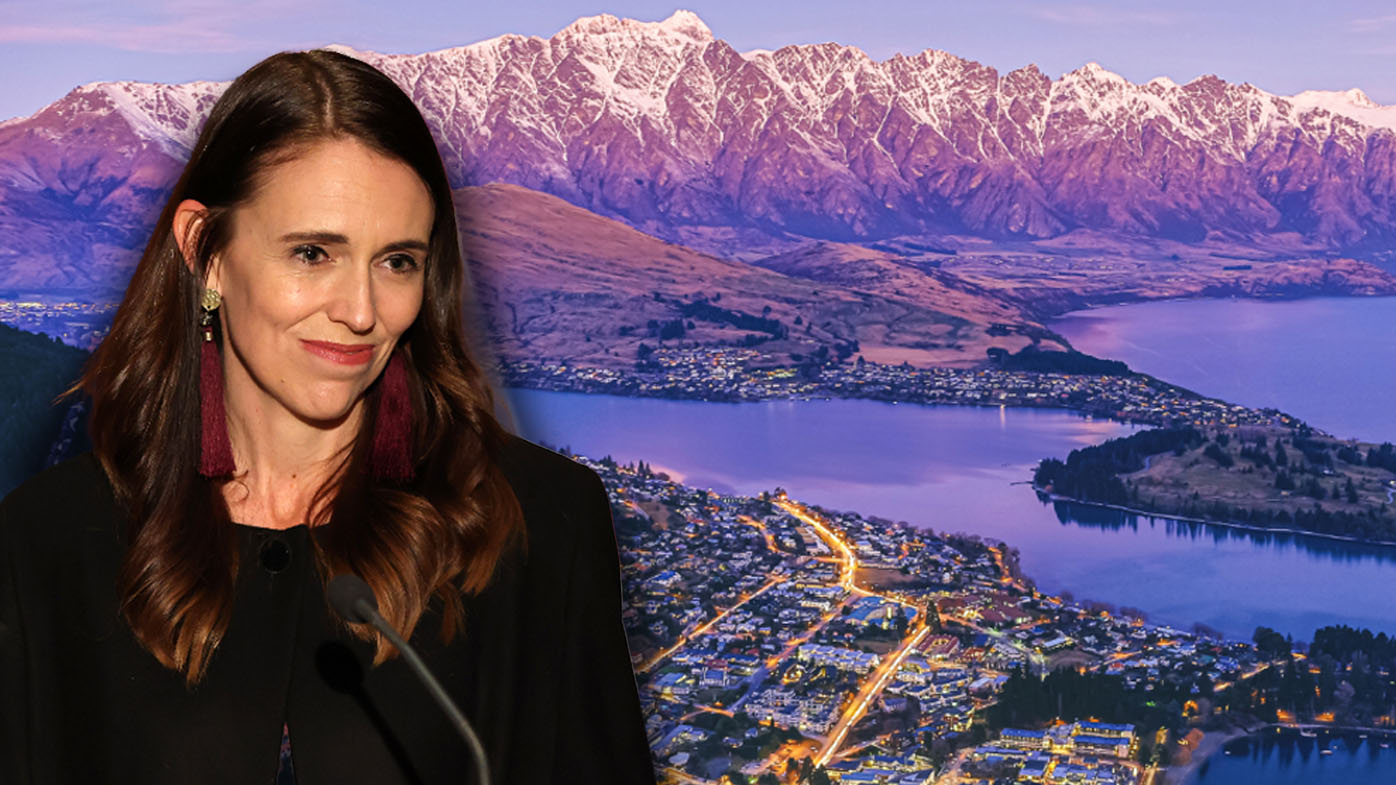
The much-hyped travel bubble between Australia and New Zealand is due to kick off within weeks, opening up overseas travel for the first time since our international borders were slammed shut last March.

With New Zealand now locked in, your thoughts may be turning to what other countries we could be allowed to travel to next.

Prime Minister Scott Morrison was asked this very question yesterday during his press conference about the New Zealand travel bubble.

READ MORE: Trans-Tasman travel bubble ends dry spell

Although he mentioned several Asian countries, he was careful not to raise expectations of anything happening soon.

"We have looked at places like Singapore and Japan and South Korea and countries like this, but at this stage we are not in a position to move forward on any of those," Mr Morrison said.

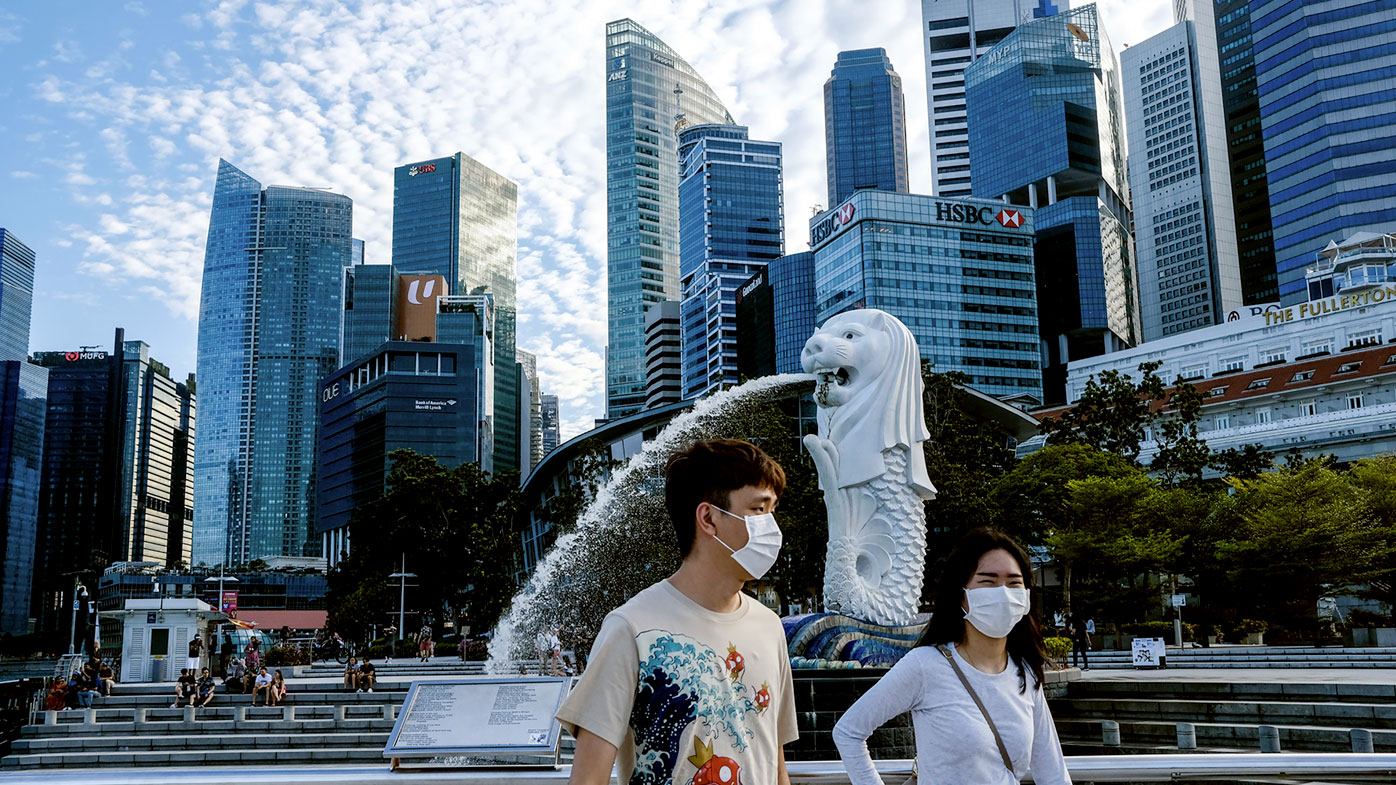
However, multiple government sources told the Sydney Morning Herald that immigration and health authorities were exploring plans to open up a travel bubble with Singapore within months.

This could be followed by other countries with low COVID-19 numbers such as Fiji, Vietnam and Thailand, as well as Japan and South Korea.

Singapore has been averaging about 25 COVID-19 cases a day for the past week, numbers it hasn't typically surpassed since September.

Fiji has only recorded 67 cases of COVID-19 during the entire pandemic, with long stretches of no daily infections.

Vietnam is currently averaging less than a handful of COVID-19 cases per day, while Thailand's daily average is slightly higher at 78.

The number of coronavirus cases in Japan and South Korea are both significantly higher again, with the former averaging around 500 cases a day and the latter 2400.

Whether those numbers will be prohibitively high remains to be seen.

Singapore Transport Minister Ong Ye Kung was questioned in Singapore Parliament on Monday about which nations the country was considering establishing a travel bubble with.

He mentioned Australia among the list of candidates, however said the potential bubble would be reliant on vaccination certificates.

"We are exploring with several countries and regions, including Australia, on the mutual recognition of vaccination certificates. The certificates can be physical or digital, and we will need them to be secure, tamper-proof and verifiable," he said.

"However, vaccinations are only one aspect of pandemic control.

"Social distancing, contact tracing, quarantine and testing are also very important aspects which countries and regions have used to control the spread of [the] COVID-19 virus even as vaccines become available."

Mr Morrison said the bubble "is the first of many more steps to come".

"This is an important first step," he said.

"But as more of the world, and particularly more of our own country, is vaccinated, then obviously we can start moving to managing this virus a lot more like other viruses that we deal with in a more standard way.

"That's our objective, but we'll let the evidence lead us on that.

"And at this point, the evidence is not strong enough to give us a good pointer about when we will arrive at that point."

US: Biden Rules Out Vaccine Passports

White House press secretary Jen Psaki on Tuesday ruled out the Biden administration playing any role in a “vaccine passport” system as Republican governors in particular balk at the concept.

“The government is not now, nor will we be supporting a system that requires Americans to carry a credential. There will be no federal vaccinations database and no federal mandate requiring everyone to obtain a single vaccination credential,” Psaki told reporters at a briefing.

The White House has been clear that it would defer to private companies if they wanted to implement some type of vaccine passport system in which individuals would have to provide proof that they received one of the coronavirus shots.

“Our interest is very simple from the federal government, which is American’s privacy and rights should be protected so that these systems are not used against people unfairly,” Psaki said.

The federal government will provide guidance about privacy related to the coronavirus vaccines, Psaki said, though she did not provide a timeline.

.@PressSec Jen Psaki on possibility of the federal government supporting vaccine passports: “The government is not now, nor will we be supporting a system that requires Americans to carry a credential.”

Full video here: https://t.co/TLFF718hVo pic.twitter.com/jJP0Ph95jH

— CSPAN (@cspan) April 6, 2021

Talk of vaccine passports has sparked pushback among conservatives who have raised concerns about potential government overreach that would discriminate against Americans who opt not to get vaccinated and infringe on their privacy rights.

Texas Gov. Greg Abbott (R) on Monday issued an executive order prohibiting vaccine passports, saying a system to track those who have been inoculated against COVID-19 infringes on citizens’ rights.

“Government should not require any Texan to show proof of vaccination and reveal private health information just to go about their daily lives,” Abbott said in a statement.

Abbott’s order came after Florida Gov. Ron DeSantis (R) vowed to take executive action to prevent companies from requiring vaccine passports before providing services to customers.

The World Health Organization on Tuesday cautioned that the use of vaccine passports may not be an effective way to reopen global travel, citing the lack of vaccinations in certain pockets of the world.

The post US: Biden Rules Out Vaccine Passports appeared first on The St Kitts Nevis Observer.

US Treasury Chief Calls for International Corporate Income Tax

In her first major address as US treasury secretary, Janet Yellen said the Biden administration will work with the Group of 20 countries to set up a minimum global corporate income tax, citing a “30-year race to the bottom” in which countries have slashed corporate tax rates to attract multinational businesses.

The move is seen as an effort to offset any disadvantages that might arise from Biden’s plan to increase US corporate tax rates such as US companies relocating overseas in search of better taxation deals.

It is important to work with other countries to end the pressures of tax competition and corporate tax base erosion,” Yellen said in a virtual speech to the Chicago Council on Global Affairs.

Yellen’s speech comes as the Biden administration’s infrastructure proposal, known as the American Jobs Plan, calls for a raise in the corporate income tax rate from 21% to 28% to fund the ambitious $2 trillion package. The plan would establish that the tax will be calculated on a per-country basis to deter companies from sheltering profits in international tax havens.

The post US Treasury Chief Calls for International Corporate Income Tax appeared first on The St Kitts Nevis Observer.

Mexico: President Angry Over Critcism of Vax Effort, as Deaths Increase

MEXICO CITY (AP) — Mexico’s president lashed out Tuesday at criticism of the country’s coronavirus vaccination effort, dismissing a pair of scandals as the work of conservative opponents or grumpy “elderly people who go grumbling because they don’t like to be vaccinated.”

Despite some successes — for example, all shots are free — there have been problems with the country’s uneven vaccine roll-out, which employs vaccination sites of varying quality and vaccines from half a dozen different manufacturers.

Mexico’s first round of vaccinations targeted health care workers, and the current second round is for those over 60.

An 84-year-old man suffered a heart attack and at least three others fainted after waiting in line for hours outside one vaccination station in the northern state of Coahuila, and a man was stuck with an empty needle at another center on the outskirts of Mexico City.

Some wealthier neighborhoods offer well-tested vaccines at shady vaccine centers with short lines, while elderly people in other, poorer or more outlying areas have been forced to stand in line in the baking sun for hours or receive less well-documented vaccines.

That has posed a problem for a president whose slogan is “the poor come first.”

Mexico has obtained more vaccines than many Latin American nations, with about 15 million doses arriving so far and about 9.3 million administered, behind only Brazil and Chile. To date, 205,000 COVID deaths have been reported.

But the rollout has also been characterized by marked inequalities. Mexico is now using at least six vaccines made by different manufacturers, some of which have released full data on their effectiveness, but others of which haven’t.

The government is using two Chinese vaccines, made by Sinovac and Sinopharm, without releasing its own data on their effectiveness.

For example, residents of two of the country’s wealthiest neighborhoods, Las Lomas de Chapultepec and Polanco, got the well-tested and effective Pfizer vaccine. Other, poorer neighborhoods got a mix of AstraZeneca or Chinese vaccines.

Last week at a vaccination center in the upper-middle-class Roma neighborhood, lines were relatively short and volunteers quickly and politely ushered elderly people through the process, sometimes in less than an hour.

At the city’s Vasconcelos Library serving poor neighborhoods, long lines snaked through a sunbaked parking lot and spilled into the street outside. Users reported waiting longer than two hours for shots. Both centers used the AstraZeneca vaccine, which has faced questions in Europe over possible links to blood clots.

Clearly, not all experiences in poor neighborhoods were bad, nor were those in wealthier neighborhoods all good. But it seemed reports of any of the incidents drew the president’s ire.

Over the weekend, a nurse-trainee at one vaccination station on the outskirts of Mexico City was filmed jabbing an elderly man’s arm with an empty syringe and then quickly withdrawing it, without injecting him with anything.

The nurse’s university and local authorities quickly described it as a simple mistake. They said the volunteer realized what had happened and rectified it by injecting him with the dose he was supposed to receive.

But President Andrés Manuel López Obrador — who sees almost any criticism as an attack by foes he describes as “the conservatives” — suggested the situation had been planned to smear him.

“There are only two explanations: either that was in effect an error, or that it was a set-up intended to damage us, and I don’t rule that out, because of the coverage it received,” López Obrador said Tuesday.

Long waits to get vaccinated came to a head in the northern city of Torreon, in Coahuila state, last week after the president of the state Human Rights Commission, Hugo Morales, confirmed that one 84-year-old man suffered a heart attack after waiting in the sun for three hours to get a shot.

Morales said the commission documented three elderly people who fainted after waiting for hours in the sun at a vaccination center in the same city on March 29.

“Elderly people were waiting in line for periods of as long as six hours,” Morales said. He said the man who suffered the heart attack was in critical but stable condition.

Despite suggesting to federal authorities — who run the vaccine program — that they provide shelter against the sun or water for those in line, Morales said that as of this week, nothing appears to have been done to address the situation.

“They have done absolutely nothing,” he said. “There are no awnings, no hydration stations.”

In large part, the vaccination campaign reflects previous trends in López Obrador’s administration, like his irritation in the face of criticism.

The president entrusted most of the vaccination logistics to the armed forces, something he has done with most of his major projects since he took office in late 2018.

The president has also sidelined the private sector, which accounts for much of Mexico’s health care, in favor of having the government handle the entire vaccination effort so far, even when private hospitals or drug store chains might be better equipped and located to handle some of the vaccinations.

López Obrador is a declared fan of big government solutions in most parts of the economy, a trend that has put him in conflict with private companies in the energy and construction sectors.

The post Mexico: President Angry Over Critcism of Vax Effort, as Deaths Increase appeared first on The St Kitts Nevis Observer.