Category Archives: headline

'At least the crater is in the right place,' Musk says after SpaceX blunder

An experimental rocket that SpaceX launched at its South Texas facilities Tuesday appears to have exploded, but heavy fog at the landing site left even SpaceX uncertain about what had occurred.

"At least the crater is in the right place!" SpaceX CEO Elon Musk tweeted.

All three of SpaceX's previous prototypes crash landed or exploded shortly after landing.

READ MORE: Earth safe from 'God of chaos' asteroid this century

https://twitter.com/SpaceX/status/1376881105689714694

SpaceX engineer John Insprucker, who hosted a webcast of the test launch, said SN11 had a normal ascent and all appeared to be well before on-board cameras lost signal and the vehicle was subsumed by fog moments before landing.

Insprucker said the company will share updates on social media once SpaceX engineers are able to check out the landing site.

The area surrounding the vehicle must be cleared before liftoff for safety reasons.

Insprucker said the company is not expecting to recover video footage.

"Don't wait for landing," he advised webcast viewers.

READ MORE: Elon Musk lost $35 billion in a week

Independent video streamers that recorded the flight did not capture the last stretch of the flight either due to fog, but NASASpaceflight — a media site — reported that one of the news outlet's cameras may have been struck by debris from the rocket.

Footage of the launch pad showed SN11 was nowhere in sight after the rocket's descent.

"Looks like engine 2 had issues on ascent & didn't reach operating chamber pressure during landing burn, but, in theory, it wasn't needed. Something significant happened shortly after landing burn start. Should know what it was once we can examine the bits later today," Musk later wrote on Twitter.

SN11 is an early iteration of Starship, the vehicle that Musk envisions will one day carry the first humans to Mars.

https://twitter.com/elonmusk/status/1376889786762428421

It's also the fourth prototype that SpaceX has launched on a high-altitude test flight as the company works to hash out how the massive vehicle will safely land upright after returning to Earth.

SN10, the last prototype to fly, landed upright earlier this month but independent footage of the event showed the vehicle exploded about three minutes later.

New push for companies to take skills-based approach to hiring

There's a new push for hiring managers to look at job candidates' skills and potential, rather than their qualifications and experiences.

Microsoft and LinkedIn have joined forces and set a goal to help 250,000 companies make a skills-first hire.

It comes as the Australian government's JobKeeper program came to an end on March 28.

READ MORE: Treasurer defends end of JobKeeper

LinkedIn is extending access to free online learning courses through to the end of 2021.

Learning modules cover a range of subjects from software development and IT administration to digital marketing and graphic design.

Treasury Secretary Steven Kennedy predicted the end of the JobKeeper program would affect up to 150,000 jobs.

However he warned the Senate that the forecast was not concrete.

READ MORE: Amazon to dominate Aussie retail by 2030

"We believe that in the order of 100,000 to 150,000 JobKeeper recipients may lose employment at the completion of the program, though there is a wide band of uncertainty around this estimate," Mr Kennedy told a Senate Estimates hearing before the end of the program.

Despite the predicted job losses, Dr Kennedy said he expected many of those people would find other work, which meant there would not be a significant rise in the unemployment rate.

READ MORE: Criminal charges against Melissa Caddick dropped

"We could see a bump in the unemployment rate as the JobKeeper program comes to an end this month, perhaps through March/April," he added.

New figures from the Australian Tax Office show there were more than 1 million employees still relying on the wage subsidy at the end of January.

Tourism to A & B Is Skyrocketing COVID-19

Officials contend the problem isn’t resort-goers. But locals aren’t so sure. 

Pre-pandemic, Gregory estimates his taxi brought in $1,110 a month, shuttling visitors from resorts to restaurants and beaches during peak tourist season on the Caribbean island. Now, with few of those visitors in sight, he’s barely averaging $110.

In the twin-island nation of Antigua and Barbuda, tourism is responsible for up to 60% of the GDP, making Gregory one of many locals living on a fraction of their typical income. According to Prime Minister Gaston Browne, the pandemic resulted in an 18% loss to the country’s GDP in 2020, and sent unemployment from single digits to more than 30%.

And while Browne reopened international borders in June, it took until the end of 2020—when a rash of bookings offered the first meaningful glimpse of tourism recovery—for the consequences to crystallize.

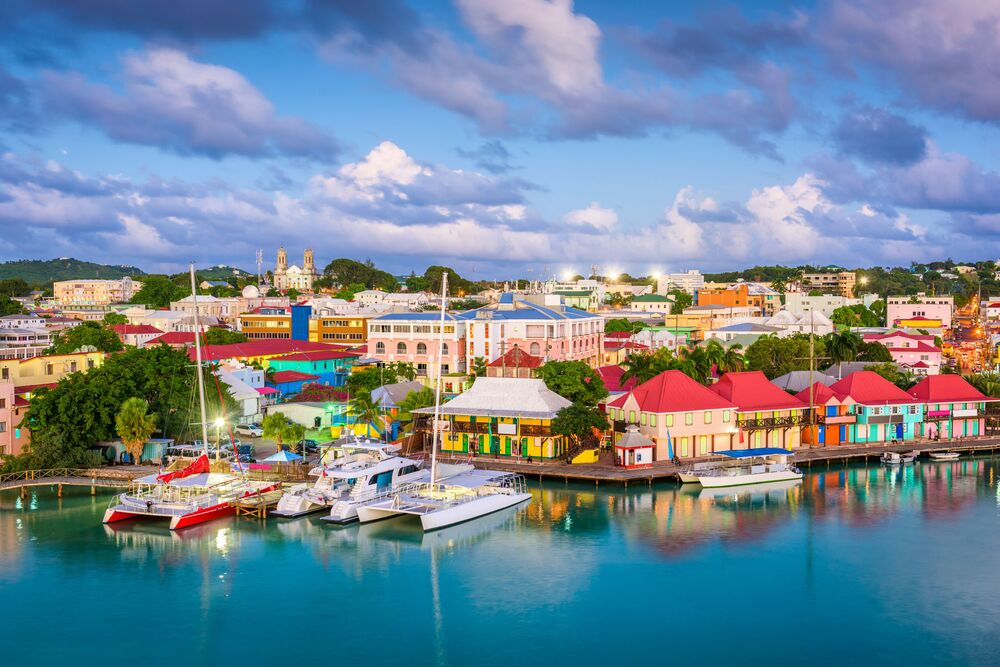
St. John's, Antigua and Barbuda
Redcliffe Quay, in St. John’s, Antigua and Barbuda.
Photographer: Sean Pavone/iStockphoto

Throughout 2020, Antigua and Barbuda’s population of 100,000 saw just 159 confirmed cases of Covid-19 and five related deaths, giving the islands of 365 beaches the appearance of a save haven. Those numbers meant that only 1 out of every 629 residents ever developed the infection in 2020; during the peak of the second wave in July, it would have taken Miami just three days to achieve roughly the same levels of virality across its population of six million.

As a result, nearly 15,000 travelers flew or boated to Antigua and Barbuda in December, more than doubling numbers from the month before. (Antigua is a convenient haven for east coast Americans, many of whom can get there via direct flights.) That began a wave of sustained tourism larger than any other throughout the pandemic.

But as more visitors arrived, so did the cases of Covid-19. Confirmed positives multiplied nearly sevenfold in 2021, reaching 1,103 as of March 25. Deaths rose to 28. As a result, the U.S. Centers for Disease Control and Prevention increased its risk assessment for the country from Level 2 (moderate) to Level 4 (very high) at the beginning of March.

That’s forced Browne and his government to reckon with how closely connected international travel has been to the public health crisis—and to uncover that not all forms of travel are equally problematic.  Their findings could take on new urgency as travel professionals are recommending Caribbean trips to clients—newly vaccinated and otherwise—not just for the remainder of the spring season, but even into the typically low-season summer months.

A Tale of Two Policies

relates to Tourism in Antigua and Barbuda Is Sending Covid Skyrocketing
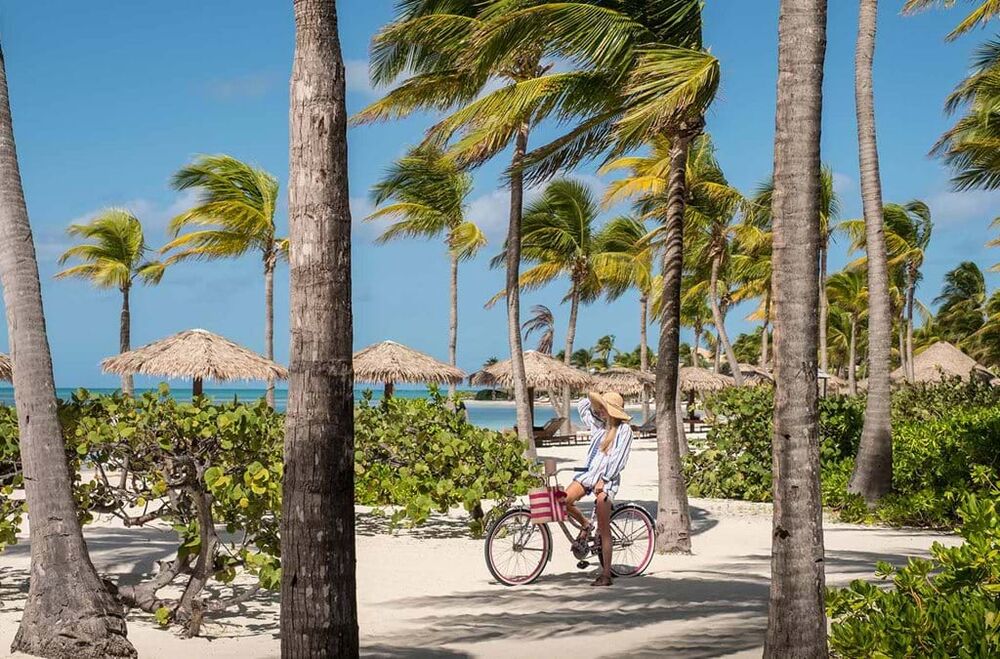
Jumby Bay, a bubble-like private island resort off the coast of Antigua.
Source: Oetker Collection

When foreign travelers arrive in Antigua and Barbuda, they’re allowed a certain level of “controlled flexibility.” All visitors must present a negative PCR test taken within seven days of arrival, wear masks, social distance, and obey a curfew currently set from 8 p.m. to 5 a.m.

Snorkeling with sting rays and exploring offshore islands is allowed, but only via certified, Covid-compliant vendors. Even hotels must be on a Covid-compliant list, like the luxury private island Jumby Bay or Auberge’s Malliouhana, where extensive public health protocol are followed to the letter.

Returning nationals—any citizen living abroad returning to Antigua and Barbuda—and other visitors not planning to stay at certified accommodations have it harder. They must quarantine for 14 days at a government-designated facility, such as the three-star Jolly Beach Resort, on their own dime.

For some locals, the double-standard is perceived as disproportionately affecting citizens, while allowing high-paying tourists to run free. And after videos and photos spread across social media in February showing people drinking, socializing, and dancing in close proximity at a resort on Valentine’s Day—allegedly including American celebrities—that debate kicked into fourth gear. (The links to the videos were quickly taken down, making them difficult to verify.)

relates to Tourism in Antigua and Barbuda Is Sending Covid Skyrocketing
Malliouhana, an Auberge resort in Antigua.
Source: Auberge  Resorts Collection

On radio shows and across social media, locals have also voiced frustration that they get fined for breaking rules, but bad behaving tourists barely get a slap on the wrist; one Antiguan who broke curfew, for instance, was fined $500. That growing resentment feeds the suspicion among some Antiguans and Barbudans that party-going Americans and other tourists may be to blame for their growing public health crisis.

Browne and members of his government disagree and point to returning nationals as the problem.

“Tourists are managed from the time they leave the plane to the time they [get back on the] plane,” says Minister of Tourism Charles Fernandez, adding that every person  a tourist comes in contact with—from taxi driver to tour operator—is trained in safety protocols. He says fewer than 10 people traveling solely as tourists have tested positive since the U.S. and U.K. mandated PCR testing before re-entry in January, and there’s no evidence of transmission in the hotel industry.

Both Fernandez and Browne say it was 1,500 expats who returned for the holidays—making up 7% of inbound arrivals throughout the festive season—that were flouting the rules when they briefly extended an opportunity for at-home quarantines. Compliance was so bad, the country at one point considered mandating ankle monitors. But it instead nixed at-home quarantine options in mid-January, sending Covid-19 cases back down.

This evidence has “proven conclusively that the problem is not tourists,” says Browne, though complaints of foreigners’ behavior are still circling social media.

A Caribbean Dilemma

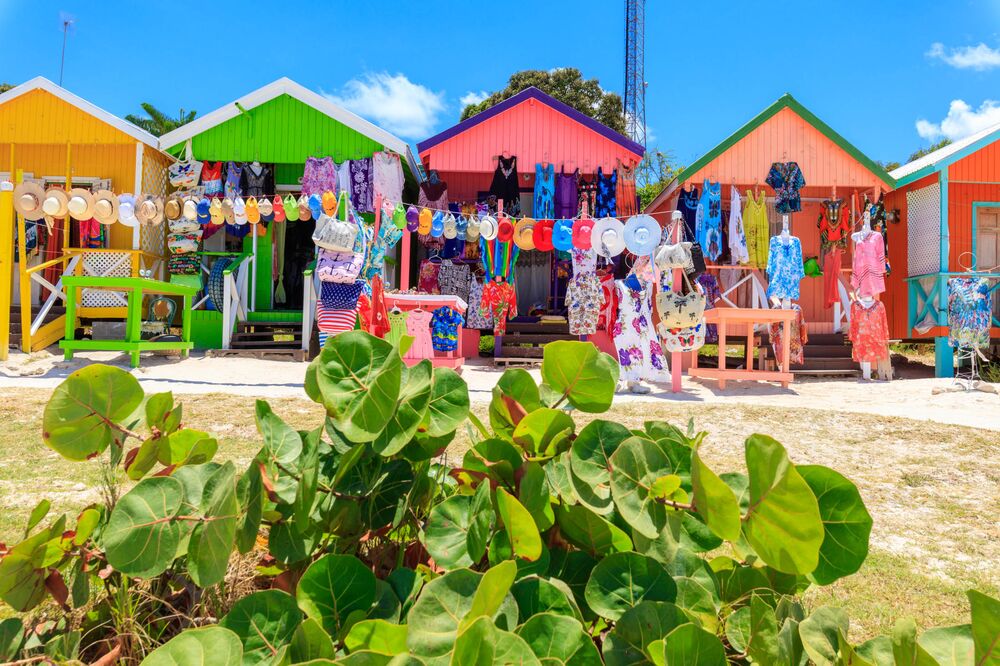
Multi colored wood cottages and tourist souvenir shops, Long Bay Beach, Antigua
Souvenir shops typically frequented by cruisers in Long Bay Beach, Antigua.
Photographer: Roberto Moiola / Sysaworld/Moment RF

Antigua and Barbuda isn’t the only Caribbean island struggling to bring tourism back safely amid the pandemic.

Barbados recorded 400 cases in all of 2020—only to see 3,071 positives in the past three months, following a year-end tourism spike. Expats returning to Cuba, and the ensuing family reunions, were behind the country’s ballooning cases in early 2021, according to Cuban head of epidemiology Francisco Duran. (Cases in February 2021 accounted for roughly one-third of the 70,000 total Covid positives the country has recorded throughout the pandemic.) And in Jamaica, a seven-day average high of 176 daily cases in September 2020 has more than tripled into 618 daily cases as of March 23, triggering the government to tighten its window for mandatory PCR testing from 10 days pre-arrival to three.

Caribbean islands with the strictest travel protocols—or the smallest tourism footprints—are faring better.

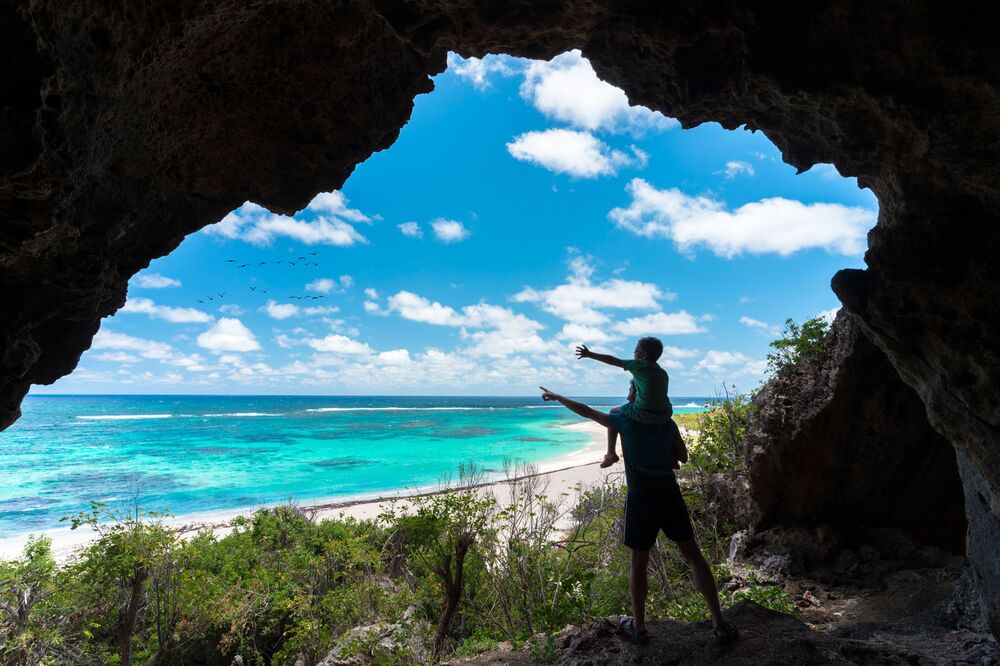
Father and child in sea cave, Two Foot Bay, Barbuda, Caribbean
Two Foot Bay cave in Barbuda.
Photographer: Roberto Moiola / Sysaworld/Moment RF

“Basically life seems normal in Anguilla,” says Haydn Hughes, tourism minister for the island of over 18,000, where only 21 cases have been reported since the pandemic’s start. Locals there interact without masks or distancing, but all visitors must be pre-approved for travel thorough a registration process, get tested on arrival, and provide proof of a negative test between three to five days of their trip, after which they can only participate in certified activities like snorkeling and spelunking while following protocols. Returning nationals to Anguilla are constantly monitored during a 14-day quarantine. Unlike Antigua and Barbuda, it has not relaxed how quarantine periods for returning nationals are handled.

Barbuda, with a population of about 1,500 and only three hotels, has recorded only seven cases and no deaths, according to resident doctor Jeremy Deazle, who credits a strict and early adherence to Covid protocols.

But restricting tourism further in Antigua would lead to more economic loss, says Fernadez. Instead, the island has shut down bars, extended the curfew, and curtailed indoor dining.

“Our Prime Minister is very realistic,” says Eli Fuller, owner of the boat tour company Adventure Antigua, who briefly considered shutting down operations again as cases rose in February. “If we don’t have tourism here, we’re going to starve,” he explains.

Vaccine Access

Curtain Bluff Beach at Sunset
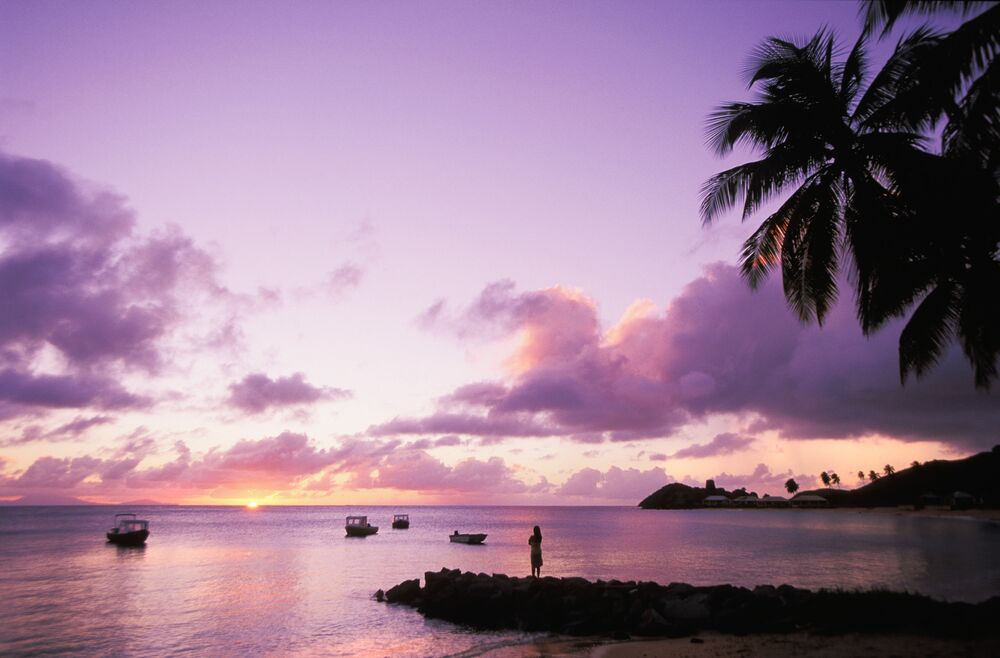
Sunset at Curtain Bluff resort, a luxury hotel in southern Antigua.
Photographer: nik wheeler/Corbis Documentary RF

In Antigua, the cruise ship terminal, usually bustling with activity, has been empty since April, absent of the more than 600,000 cruise ship passengers who arrived  from March 2019 to February 2020. That may soon change, as major cruise lines begin plotting their return to the Caribbean starting in June. Only inoculated adults will be welcome on the ships.

But Antiguans and Barbudans themselves have no clear timeline as to when they, too, will join the double-jabbed masses. Herd immunity could be achieved across the Caribbean with just 300,000 to 400,000 doses, says Browne, but vaccines have been difficult for island nations to procure, with wealthy nations buying up the supply.

The post Tourism to A & B Is Skyrocketing COVID-19 appeared first on The St Kitts Nevis Observer.

UK watchdog: Police acted correctly at vigil for slain woman

A UK police watchdog said Tuesday that officers didn't behave "in a heavy-handed manner" when they broke up a vigil for a London woman whose killing sparked an outcry about women's safety.

Matt Parr, Her Majesty's Inspector of Constabulary, said officers at the vigil in memory of Sarah Everard acted in "a measured and proportionate way in challenging circumstances."

Everard, a 33-year-old London resident, was last seen walking home from a friend's apartment on the evening of March 3. Her body was later found hidden in woodland more than 80km away. A serving police officer has been charged with murder.

READ MORE: London police tactics at vigil for slain woman draw scrutiny

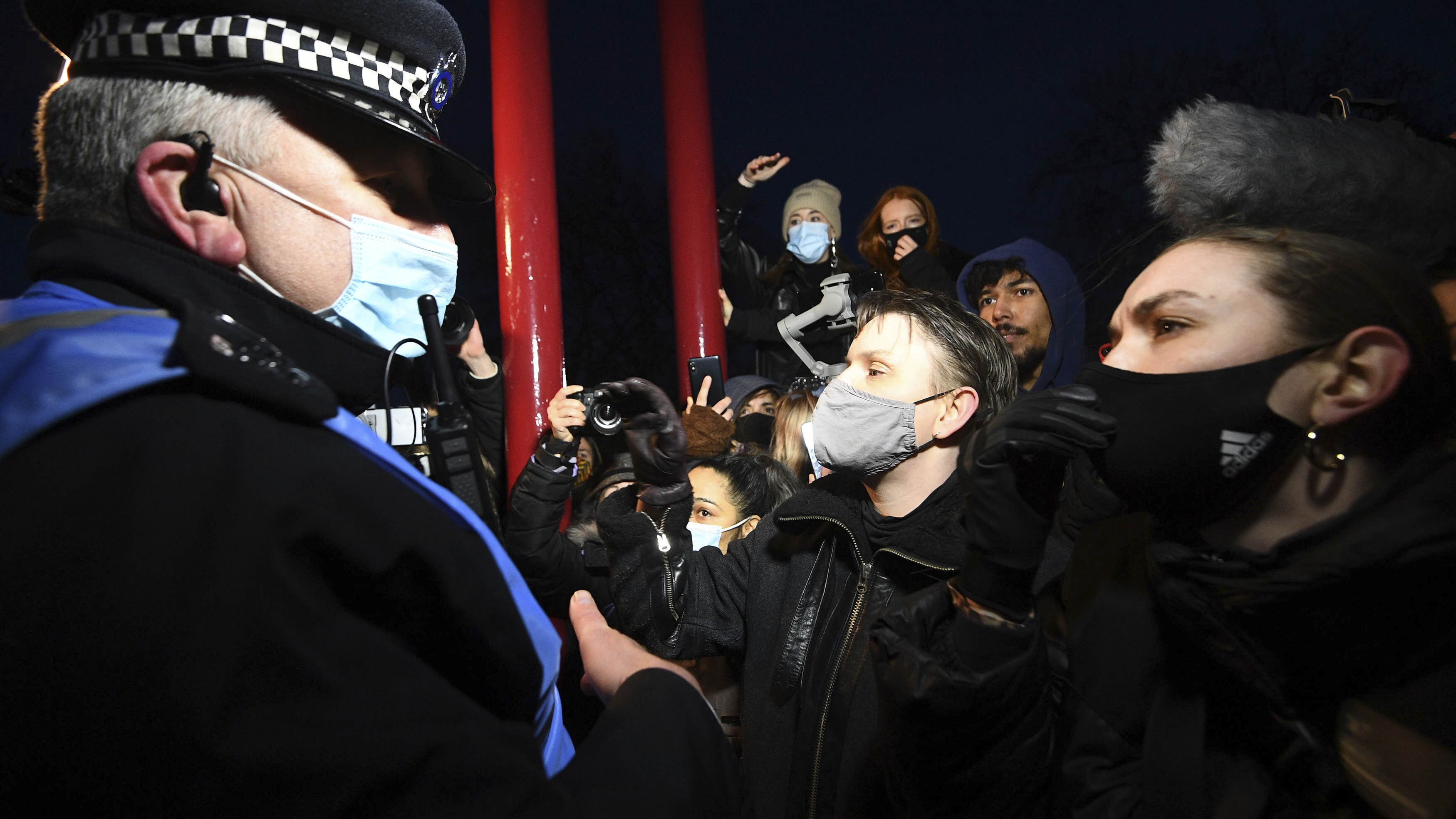
People react with police, in Clapham Common as people gather, despite the Reclaim These Streets vigil for Sarah Everard being officially cancelled.

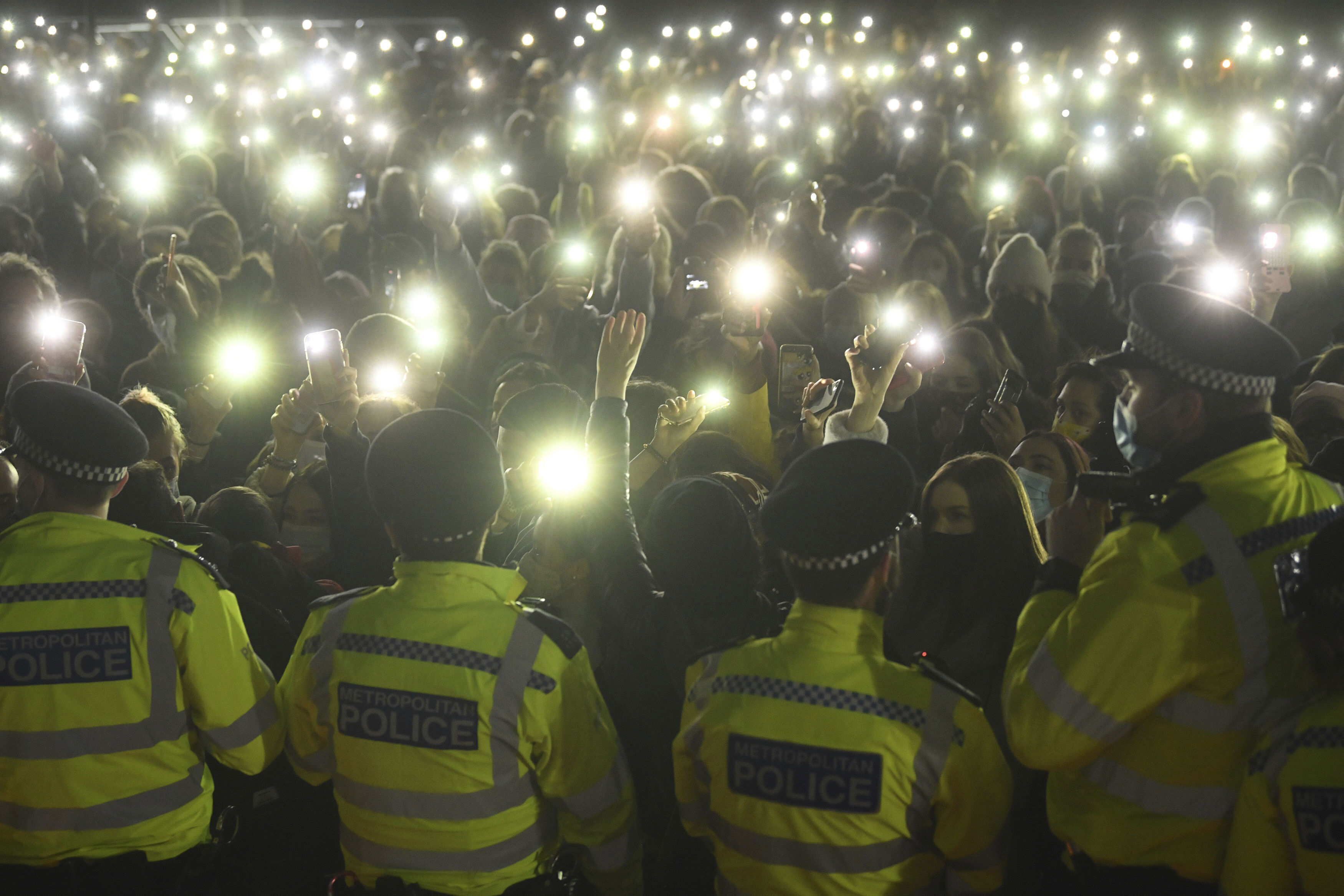
Hundreds of people gathered March 13 on London's Clapham Common to remember Everard and protest violence against women, despite a ban on mass gatherings because of the coronavirus pandemic. Images of police officers tussling with women at the peaceful rally, and leading some away in handcuffs, drew strong criticism.

Parr said the gathering presented "a complex and sensitive policing challenge" and police had acted appropriately to disperse people when the vigil turned into "a rally with dense crowds and little or no social distancing."

He said criticism of the force, including from some senior politicians, had been "unwarranted" and had undermined public confidence in the police.

He acknowledged, however, that there was "insufficient" communication between police commanders on the ground, and said the Metropolitan Police force could have taken a "more conciliatory" approach after the event.

READ MORE: Police officer charged with Sarah Everard's murder

Police are still searching for Ms Everard.

Reclaim These Streets, the group that called the vigil after Everard's death, said the report was "disappointing" and demonstrated "institutional sexism running through the force."

London Mayor Sadiq Khan, who had earlier criticised the police response, said he accepted the report, "but it is clear that trust and confidence of women and girls in the police and criminal justice system is far from adequate."

Amidst the Chaos, Haitians Fear Their Democracy is Dying

,

PORT-AU-PRINCE (Reuters) – Haiti emerged from the brutal and dynastic Duvalier dictatorship to democracy 35 years ago. Now, many Haitians fear a return to autocracy as President Jovenel Moise has been steadily amassing power.

The banana exporter-turned-politician has been governing by decree for more than a year since the Caribbean nation failed to hold elections in late 2019 due to political gridlock and violent unrest.

In this time, Moise has passed dozens of decrees, some of which implemented reforms considered long overdue, like an update to the penal code. Others, though, are deeply controversial – including an order designating certain types of street protests as terrorism, and the creation of an intelligence agency accountable only to the president.

“I don’t see how there is anyone, after God, who has more power than me in the country,” Moise said in a speech last year.

Now Moise hopes a referendum in June will approve a new constitution that would strengthen the power of the executive.

Moise says he wants to end the political instability that has plagued Haiti, hampering development in the poorest country in the Americas. He has vowed not to benefit from the changes, and says he will not stand for a second term at presidential elections set for September.

But the opposition, rights experts and many Haitians say they fear Moise is paving the way for his political camp – the Tet Kale party and its allies – to retain power indefinitely.

Thousands have been taking to the streets nationwide in a new wave of anti-government protests, chanting ‘No to dictatorship! and calling for Moise’s immediate resignation and a transition government.

The protests have shut down schools and businesses, exacerbating a humanitarian crisis in a country where two-thirds of the population make less than $2 per day and gang violence has surged lately.

“This country cannot live any more in dictatorship, murders and repression,” said Kelly Bastien, a former opposition senator, taking part in a protest. “Respect for the constitution! Down with dictatorship! Down with decrees!”

Moise’s critics say his administration are using gangs to intimidate citizens, pointing to massacres in opposition-dominated neighborhoods.

Moise denies those charges. His supporters emphasize that he was democratically elected and accuse the opposition of deliberately stirring up unrest and using gang violence themselves to create chaos.

Neighboring countries have warned the situation could worsen as the referendum and presidential election approach, threatening the stability of the Caribbean.

The Dominican Republic, which shares the island of Hispaniola with Haiti but has a gross domestic product per capita six times greater, said last month it would build a wall to keep out trouble.

And, with Haitian Americans making up a large diaspora in the United States and Haiti just 700 miles (1,125 km) off Florida, the issue is attracting scrutiny in Washington.

“It’s something that we are very actively looking at,” Secretary of State Antony Blinken told a congressional hearing this month, adding that he shared concerns over “some of the authoritarian and undemocratic actions that we’ve seen.”

DEMOCRATIC MANDATE

Haiti became the first independent state of Latin America and the Caribbean in the early 19th century and first Black-led Republic when it threw off French colonial rule. It should be a beacon of freedom, historians say.

Instead, the toll of the war for independence and successive foreign interventions, as well as natural catastrophes like a major 2010 earthquake have contributed to instability, weak institutions and a blighted economy dependent on aid.

Nearly half of Haitians will need emergency humanitarian assistance this year, similar to the needs in war-torn African countries, according to the United Nations.

Fresh political turmoil erupted last month with a dispute over when Moise’s term ended that resulted in the president denouncing a coup attempt and replacing three Supreme Court judges.

Moise told the UN Security council that the opposition’s “policy of chaos” had forced the government to “take off the gloves.”

The United Nations has denounced the erosion of the separation of powers under Moise. The UN, Haiti’s Western donors, and Caribbean neighbors have urged Moise to fulfill his promise of holding legislative and presidential elections this year.

The opposition in Haiti accuses the United States – Haiti’s top foreign donor – of being lenient towards Moise, given his support for its foreign policy. His administration broke ranks with the Caribbean community (Caricom) to oppose Venezuelan President Nicolas Maduro.

But Haitian officials and several Western diplomats told Reuters the situation was complex.

Moise won his mandate with 56% of the vote in 2016.

Members of the fractured opposition knew they could not win elections so sought to weaponize civil society discontent and foment unrest to gain power, they said. Opposition leaders have refused dialogue unless Moise offers to resign.

Fears of a return to dictatorship were overblown, the diplomats said.

“He’s made some worrying moves but there’s still freedom of press, with people accusing Moise of all sorts on the airwaves, and dozens of political parties with different views,” said one diplomat.

HOW TO FIX HAITI?

Haitians across the political spectrum agree the country needs an overhaul, including an update of the 1987 constitution that many say contains too many checks and balances in reaction to the Duvalier dictatorship.

Moise’s reform would allow the president to serve two consecutive terms, eliminate the role of prime minister and the senate, lower the age limit for electoral office, streamline the election cycle and allow the large diaspora to vote.

Western diplomats said these changes would help improve governability and broaden political participation.

Critics, including opposition and civil society leaders who say they were not consulted by the government, argue that the reform goes too far and is being conducted without broad input.

“A constitution is too important to be changed in the middle of a crisis by a criticized government,” said activist Emmanuela Douyon of the Nou Pap Domi (We Aren’t Sleeping) anti-corruption civil society group.

She said the legitimacy of the referendum was threatened by a patchy roll-out of new biometric ID cards, needed for voting, and the ongoing insecurity, which could hamper turnout.

Elections Minister Mathias Pierre said the opposition had a habit of trying to delegitimize elections and the more democratic way forward would be to engage in the process.

Pierre said Moise was taking measures to ensure elections could be held safely, like declaring a state of emergency in the most gang-ridden neighborhoods, and had invited the Organization of American States to send electoral observers.

While the political battle rages, ordinary Haitians are struggling to survive. Mimose, 42, who declined to give her last name for fear of retaliation, is one of many street vendors whose work has been disrupted by the unrest.

“The authorities need to unite to allow the population to survive,” said the mother-of-four. “As long as we are in this crisis, nothing will work.”

Reporting by Andre Paultre in Port-au-Prince and Sarah Marsh in Havana; Editing by Daniel Flynn and Rosalba O’Brien


The post Amidst the Chaos, Haitians Fear Their Democracy is Dying appeared first on The St Kitts Nevis Observer.

Brisbane hospital in lockdown as questions asked about lack of staff protection

Brisbane's Princess Alexandra Hospital has been put into lockdown following confirmation a second nurse has tested positive for the coronavirus.

Questions are being asked about why the nurse worked with COVID-19 patients while unvaccinated.

Queensland Chief Health Officer Jeanette Young will now demand local health units only allow doctors and nurses who have had at least one vaccine dose to work with confirmed patients.

READ MORE: Long weekend weather forecast for your State or Territory

https://twitter.com/TimArvier9/status/1376836481713512451

"Whether it be Pfizer or AstraZeneca — only they can work directly with confirmed cases of COVID," Dr Young said on Tuesday, noting that she had been recommending hospitals take such steps for a while 

On top of the vaccine policy change, the separate infections of the nurse, detected this week, and a doctor earlier this month, sparked a lockdown of the PA Hospital on Tuesday.

"While yesterday it was announced that the greater Brisbane area had been declared a hotpot and would be entering a lockdown from 5pm yesterday for three days, this additional lockdown will enable PA Hospital to put in place processes to manage impacts associated with these linked cases," staff were told in a memo.

"As a precautionary measure, we are continuing to test all staff that have worked in ward 5D at PA Hospital between midday Friday, 19 March, and 4pm Sunday, 21 March."

Elective surgeries and outpatient appointments would also be rescheduled, with student visits banned and the hospital's vaccination clinic restricted to serving only hospital staff.

Though 81 per cent of Queensland Health staff, 41,000 in total, have been vaccinated, Dr Young said the nurse had been on leave and was not vaccinated.

READ MORE: No new NSW COVID-19 cases but premier warns more could arise

She worked a shift on the Princess Alexandra's COVID-19 ward on March 18 but Dr Young said, based on preliminary information, she wasn't infected until a shift not managing COVID-19 cases on March 23.

"I don't know whether she's got it directly from that patient, because she wasn't working with COVID cases that night — but we have to confirm that — or whether she's got it from someone else in the hospital," she said, on Tuesday morning.

"All that has to be worked through."

The rollout at the hospital has gotten to a point that staff have opted to have their first dose of the COVID vaccine administered elsewhere, telling 9News it's just "too slow".

"You do worry that you're going to get (COVID-19) — anybody who isn't vaccinated should stay right away," Australian Medical Association Queensland president Dr Chris Perry said today. 

Italian Mobster Caught Lying Low for 7 Years in DR

A suspected Italian gangster has been caught in the Dominican Republic after seven years on the run, thanks to law-enforcement officers recognizing his tattoos on a YouTube cooking channel he and his wife started, the BBC reported.
Marc Feren Claude Biart, 53, went on the lam in 2014 when he was accused of trafficking cocaine into the Netherlands on behalf of the Cacciola clan of the ‘Ndrangheta mafia, according to Agence France-Presse.
The ‘Ndrangheta is described by AFP as Italy’s biggest mafia organization, which controls most of the cocaine entering Europe.
The police said they caught Biart after recognizing him in Italian cooking videos he and his wife had posted to YouTube. Though Biart never showed his face, his tattoos were visible, and police were able to identify him that way, the BBC reported.
Officials said Biart was laying low in the Dominican Republic when he and his wife started making the videos. He was taken into custody by Interpol agents in the Caribbean country on March 24.
Biart was arrested on March 24 and extradited back to Italy.
According to Calabria News, Biart initially fled to Costa Rica when an arrest warrant was issued in 2014, but eventually settled in Boca Chica, in the Dominican Republic, where there is a large Italian expat community.
La Repubblica reported that Biart lived humbly, so as to avoid attention.
Biart’s arrest is part of a new Interpol initiative aimed at taking down the ‘Ndrangheta mafia, called I-CAN — Interpol Cooperation Against ‘Ndrangheta, according to Calabria News. Italian police forces are working with 10 countries around the world to help combat the mafia.

The post Italian Mobster Caught Lying Low for 7 Years in DR appeared first on The St Kitts Nevis Observer.

PAHO Warns About Lowering COVID Safeguards

PAN American Health Organization (PAHO) director Dr Carissa Etienne is urging member countries to maintain coronavirus (COVID-19) protocols and safeguards, even as vaccinations get under way in a number of territories.

Speaking during PAHO’s recent COVID-19 digital briefing, Dr Etienne said that maintaining the measures is imperative, particularly against the background of increases in infections and deaths in several countries and especially in light of the upcoming Easter holidays, traditionally marked by heightened activities.


While acknowledging that cases were plateauing and declining in some regional states, Dr Etienne voiced concern that they were spiralling in others.


She described the latter scenario as an “active public health emergency” which indicates that “the COVID-19 virus is not receding, nor is the pandemic starting to go away”.


The director said that while the deployment of vaccines through the World Health Organization (WHO) COVID-19 Vaccine Global Access (COVAX) facility is under way, and all participating countries in Latin America and the Caribbean are expected to receive their first shipments by early April, those allocations are not adequate to protect the vulnerable groups being initially targeted.


“Some countries… have received zero doses of vaccines through COVAX, thus far [while] other countries are getting enough to vaccinate a mere 20 per cent of their populations,” the director pointed out.


As such, Dr Etienne said the region remains “a very long way” from achieving the 70 per cent of countries’ populations being targeted for vaccination to control transmissions and attain herd immunity.


You May Like

This Aston Martin Vantage Coupé Could Be YoursOmaze

“Until we get more than 70 per cent of our populations vaccinated, we must endeavour to continue and practise the smart, effective and targeted public health measures and do what works … like the wearing of masks, frequent handwashing and sanitising, avoiding crowded places, physical distancing, and covering of our sneeze or coughs,” she emphasised.


The director urged member countries’ governments to ensure that these measures are effected and to be “cautious about lifting restrictions” as this could spur new increases and hospitalisations.


“Vaccines are coming, but they are still several months away for most people in our region. Until they arrive, we need to continue the course, not let our guards down, and follow the guidance of [our] local health authorities,” Dr Etienne added.


The post PAHO Warns About Lowering COVID Safeguards appeared first on The St Kitts Nevis Observer.

Child Trafficking at Haitian-Dominican Border

BY KATYA BLESZYNSKA
Children from Haiti are being trafficked to the Dominican Republic in large numbers, with girls mainly exploited for sex and boys forced to work, according to media reports.

On March 24, a Haitian national accused of trafficking and sexually abusing teenage girls was arrested in the Dominican beach town of Puerto Plata, a popular tourist destination, El Nuevo Diario reported. The 40-year-old man had a warrant out for his arrest in Haiti for recruiting girls and forcing them into prostitution. Two of the victims – ages 13 and 16 – said that they were taken against their will and forced to have sex with foreigners.

Spanish news outlet El País also recently detailed how Haitian children are smuggled across the border and then forced to work, shining shoes, cleaning car windows, and begging in the streets — only to have their proceeds taken from them. In illegal gambling rings, young boys are pitted against each other in dangerous street fights, El País reported.

According to Haitian child protection legislation, anyone below the age of 18 can be considered a victim of child trafficking.

“There is no migration control, no possibility or intention to combat child trafficking or any form of trafficking,” said Sylvestre Fils, director of the Observatory of Migration and Transfrontier Trafficking, a non-governmental organization based in the Haitian border city of Ouanaminthe.

Dominican troops at border crossings accept bribes of 500 to 2,000 pesos (about $9 to $35) to turn a blind eye to the smuggling of contraband and people, he told El País.

In an attempt to crack down on illicit cross-border activity, including human smuggling, Dominican Republic President Luis Abinader announced that the country will begin building a 400-kilometer wall across the entirety of its shared border with Haiti later this year. It will be equipped with facial recognition camera and radars, he said.

Though child trafficking from Haiti to the Dominican Republic has long been an issue, trafficking rings appear to be taking advantage of the coronavirus pandemic, which has worsened poverty and hunger in Haiti, to target more children.

The post Child Trafficking at Haitian-Dominican Border appeared first on The St Kitts Nevis Observer.