Category Archives: headline

'It's absolutely a crisis': Experts say royals must respond

The Queen is grappling with a crisis that is threatening the monarchy, leaving Buckingham Palace with little choice but to respond to Prince Harry and Meghan's bombshell interview with Oprah Winfrey, royal experts say.

The Palace has remained silent since the blockbuster tell-all aired on Sunday, and royal expert Victoria Murphy understands the family has been locked in meetings ever since.

She said the Crown faced a crucial decision about how to react, particularly to accusations of "concerns and conversations" within the palace about how "dark" Archie's skin would be when he was born.

"She (the Queen) has weathered a lot of ups and downs but I do think this is a really crucial point for the monarchy," Murphy told 9News special The Crown In Crisis.

WATCH NOW: The Crown In Crisis – a 9News special

"It's absolutely a crisis.

"I think it's a very brave person who claims to know what the Queen is thinking, but clearly the Royal Family is absolutely reeling from this."

Former Buckingham Palace staffer Dickie Arbiter said the family could no longer ignore the issue because too many accusations had been levelled.

"I don't think they will ignore it. They can't ignore it. There were too many accusations levelled at the Palace," Arbiter told The Crown In Crisis.

"There's the accusation of racism. That's an interesting one, because Meghan referred to it as conversations, plural, during her pregnancy. 

"Harry, who comes into the interview an hour after it started, refers to a conversation before they were married. So what was it? While she was pregnant or before they were married?"

Another key point to emerge from Sunday's interview was Meghan's mental health struggles and what she described as a lack of support from the Palace. 

"I went to the institution and I said that I needed to go somewhere to get help. I said that I've never felt this way before and I need to go somewhere," she said. 

"And I was told that I couldn't, that it wouldn't be good for the institution."

Arbiter said he found it hard to believe that "nobody would raise a finger or even a hand to help her" during that dark time.

"To say that she wasn't looked after, I do find it a bit rich and that is something that the Palace will have to look into," he said. 

"Did she actually talk to somebody in the palace and, if so, who did she talk to?"

Readers seeking support and information about suicide prevention can contact Lifeline on 13 11 14 or Beyond Blue on 1300 22 4636.

UK: Some Black, Young People Hesitant to Get COVID Shot

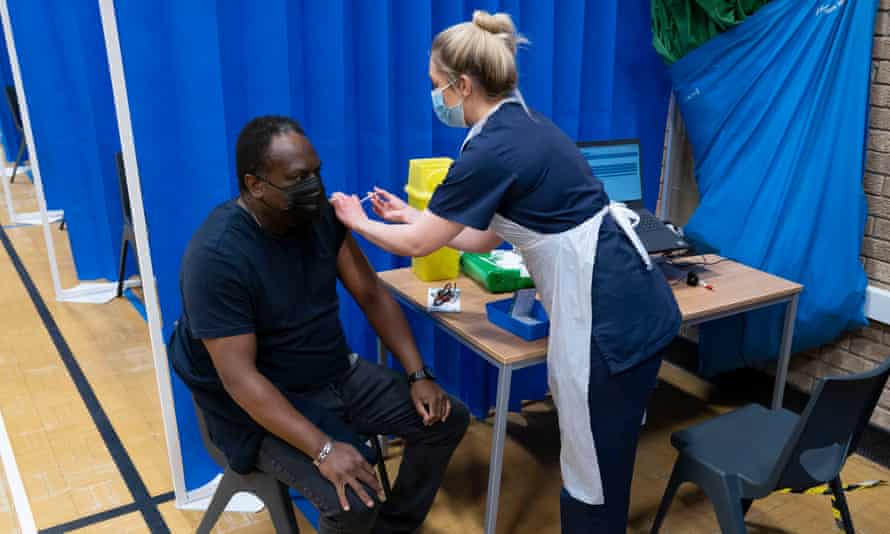
A health worker gives a Covid vaccine to a man in Barry, south Wales.
A health worker gives a Covid vaccine to a man in Barry, south Wales. Photograph: Matthew Horwood/Getty Images

Black people, younger adults, people living in deprived areas of England and parents of children under five are more likely to be hesitant to receive the coronavirus vaccine, according to Office for National Statistics research.

The ONS found that while positive sentiment about the vaccine had increased from 78% in mid-December to 94% at the end of February, hesitancy remained significant in certain groups.

Among black or black British adults, 44% reported vaccine hesitancy, more than twice the proportion of any other ethnic group.

The 16-29 age group was the most likely to report vaccine hesitancy (17%), while the figure was 16% among adults in the most deprived areas of England, more than twice that in the least deprived areas.

Tim Vizard, a public policy analyst at ONS, said: “Over the past three months, we’ve seen people become increasingly positive about the Covid-19 vaccines, with over nine in 10 adults saying they would have it if offered, or having already had it.

“Of those who are hesitant about receiving the vaccine, it’s younger and black adults who are most likely to say this, with concerns around side-effects, long-term effects and how well the vaccine works being the most common reasons.”

Vaccine hesitancy refers to people who have rejected the vaccine, report being very or fairly unlikely to have it if offered or who responded “neither likely nor unlikely”, “don’t know” or “prefer not to say” when asked whether they would have it.

The ONS found that 16% of parents living with a dependent child aged under five reported vaccine hesitancy, twice as many as among non-parents or parents not living with a dependent child (a child under 16 or under 18 in full-time education who they have responsibility for).

Among mothers of under-fives who reported negative sentiment, 21% said they were pregnant or trying to conceive and were worried about any effects on the baby, almost twice the proportion of all women with negative sentiment.

The ONS surveyed more than 18,000 over-16s in Great Britain between 13 January and 7 February, although the latest statistics on positive sentiment were gathered between 24-28 February.

The prime minister’s spokesman said: “The government as well as the NHS as well as community groups, local leaders, faith leaders, we have all worked together to promote the efficacy and the safety of the vaccine. We will continue to do that.”

The post UK: Some Black, Young People Hesitant to Get COVID Shot appeared first on The St Kitts Nevis Observer.

In 2018, Diplomats Warned of Risky Wuhan Lab. Experiments- No One Listened

After seeing a risky lab, they wrote a cable warning to Washington. But it was ignored.

On January 15, in its last days, President Donald Trump’s State Department put out a statement with serious claims about the origins of the Covid-19 pandemic.

The statement said the U.S. intelligence community had evidence that several researchers at the Wuhan Institute of Virology laboratory were sick with Covid-like symptoms in autumn 2019—implying the Chinese government had hidden crucial information about the outbreak for months—and that the WIV lab, despite “presenting itself as a civilian institution,” was conducting secret research projects with the Chinese military.

The State Department alleged a Chinese government cover-up and asserted that “Beijing continues today to withhold vital information that scientists need to protect the world from this deadly virus, and the next one.”

The exact origin of the new coronavirus remains a mystery to this day, but the search for answers is not just about assigning blame. Unless the source is located, the true path of the virus can’t be traced, and scientists can’t properly study the best ways to prevent future outbreaks.

The original Chinese government story, that the pandemic spread from a seafood market in Wuhan, was the first and therefore most widely accepted theory. But cracks in that theory slowly emerged throughout the late winter and spring of 2020. The first known case of Covid-19 in Wuhan, it was revealed in February, had no connection to the market. The Chinese government closed the market in January and sanitized it before proper samples could be taken. It wouldn’t be until May that the Chinese Centers for Disease Control disavowed the market theory, admitting it had no idea how the outbreak began, but by then it had become the story of record, in China and internationally.

In the spring of 2020, inside the U.S. government, some officials began to see and collect evidence of a different, perhaps more troubling theory—that the outbreak had a connection to one of the laboratories in Wuhan, among them the WIV, a world leading center of research on bat coronaviruses.

To some inside the government, the name of the laboratory was familiar. Its research on bat viruses had already drawn the attention of U.S. diplomats and officials at the Beijing Embassy in late 2017, prompting them to alert Washington that the lab’s own scientists had reported “a serious shortage of appropriately trained technicians and investigators needed to safely operate this high-containment laboratory.”

But their cables to Washington were ignored.

When I published the warnings from these cables in April 2020, they added fuel to a debate that had already gone from a scientific and forensic question to a hot-button political issue, as the previously internal U.S. government debate over the lab’s possible connection spilled into public view. The next day, Trump said he was “investigating,” and Secretary of State Mike Pompeo called on Beijing to “come clean” about the origin of the outbreak.

Two weeks later, Pompeo said there was “enormous evidence” pointing to the lab, but he didn’t provide any of said evidence. As Trump and Chinese President Xi Jinping’s relationship unraveled and administration officials openly blamed the Wuhan lab, the U.S.-China relationship only went further downhill.

As the pandemic set in worldwide, the origin story was largely set aside in the public coverage of the crisis. But the internal government debate continued, now over whether the United States should release more information about what it knew about the lab and its possible connection to the outbreak. The January 15 statement was cleared by the intelligence community, but the underlying data was still held secret. Likely changing no minds, it was meant as a signal—showing that circumstantial evidence did exist, and that the theory deserved further investigation.

Now, the new Joe Biden team is walking a tightrope, calling on Beijing to release more data, while declining to endorse or dispute the Trump administration’s controversial claims. The origin story remains entangled both in domestic politics and U.S.-China relations. Last month, National security adviser Jake Sullivan issued a statement expressing “deep concerns” about a forthcoming report from a team assembled by the World Health Organization that toured Wuhan—even visiting the lab—but was denied crucial data by the Chinese authorities.

But more than four years ago, long before this question blew up into an international point of tension between China and the United States, the story started with a simple warning.

***

In late 2017, top health and science officials at the U.S. Embassy in Beijing attended a conference in the Chinese capital. There, they saw a presentation on a new study put out by a group of Chinese scientists, including several from the Wuhan lab, in conjunction with the U.S. National Institutes of Health.

Since the 2002 outbreak of SARS—the deadly disease caused by a coronavirus transmitted by bats in China—scientists around the world had been looking for ways to predict and limit future outbreaks of similar diseases. To aid the effort, the NIH had funded a number of projects that involved the WIV scientists, including much of the Wuhan lab’s work with bat coronaviruses. The new study was entitled “Discovery of a Rich Gene Pool of Bat SARS-Related Coronaviruses Provides New Insights into the Origin of SARS Coronavirus.”

These researchers, the American officials learned, had found a population of bats from caves in Yunnan province that gave them insight into how SARS coronaviruses originated and spread. The researchers boasted that they may have found the cave where the original SARS coronavirus originated.

But all the U.S. diplomats cared about was that these scientists had discovered three new viruses that had a unique characteristic: they contained a “spike protein” that was particularly good at grabbing on to a specific receptor in human lung cells known as an ACE2 receptor. That means the viruses were potentially very dangerous for humans—and that these viruses were now in a lab with which they, the U.S. diplomats, were largely unfamiliar.

Knowing the significance of the Wuhan virologists’ discovery, and knowing that the WIV’s top-level biosafety laboratory (BSL-4) was relatively new, the U.S. Embassy health and science officials in Beijing decided to go to Wuhan and check it out. In total, the embassy sent three teams of experts in late 2017 and early 2018 to meet with the WIV scientists, among them Shi Zhengli, often referred to as the “bat woman” because of her extensive experience studying coronaviruses found in bats.

When they sat down with the scientists at the WIV, the American diplomats were shocked by what they heard. The Chinese researchers told them they didn’t have enough properly trained technicians to safely operate their BSL-4 lab. The Wuhan scientists were asking for more support to get the lab up to top standards.

The diplomats wrote two cables to Washington reporting on their visits to the Wuhan lab. More should be done to help the lab meet top safety standards, they said, and they urged Washington to get on it. They also warned that the WIV researchers had found new bat coronaviruses could easily infect human cells, and which used the same cellular route that had been used by the original SARS coronavirus.

Taken together, those two points—a particularly dangerous groups of viruses being studied in a lab with real safety problems—were intended as a warning about a potential public-health crisis, one of the cable writers told me. They kept the cables unclassified because they wanted more people back home to be able to read and share them, according to the cable writer. But there was no response from State Department headquarters and they were never made public. And as U.S.-China tensions rose over the course of 2018, American diplomats lost access to labs such as the one at the WIV.

“The cable was a warning shot,” one U.S. official said. “They were begging people to pay attention to what was going on.” The world would be paying attention soon enough—but by then, it would be too late.

The cables were not leaked to me by any Trump administration political official, as many in the media wrongly assumed. In fact, Secretary of State Pompeo was angry when he found out about the leak. He needed to keep up the veneer of good relations with China, and these revelations would make that job more difficult.

Trump and President Xi had agreed during their March 26 phone call to halt the war of words that had erupted when a Chinese diplomat alleged on Twitter that the outbreak might have been caused by the U.S. Army. That had prompted Trump to start calling it the “China virus,” deliberately blaming Beijing in a racist way. Xi had warned Trump in that call that China’s level of cooperation on releasing critical equipment in America’s darkest moment would be jeopardized by continued accusations.

After receiving the cables from a source, I called around to get reactions from other American officials I trusted. What I found was that, just months into the pandemic, a large swath of the government already believed the virus had escaped from the WIV lab, rather than having leaped from an animal to a human at the Wuhan seafood market or some other random natural setting, as the Chinese government had claimed.

Any theory of the pandemic’s origins had to account for the fact that the outbreak of the novel coronavirus—or, by its official name, SARS-CoV-2—first appeared in Wuhan, on the doorstep of the lab that possessed one of the world’s largest collections of bat coronaviruses and that possessed the closest known relative of SARS-CoV-2, a virus known as RaTG13 that Shi identified in her lab.

Shi, in her March interview, said that when she was first told about the virus outbreak in her town, she thought the officials had gotten it wrong, because she would have guessed that such a virus would break out in southern China, where most of the bats live. “I had never expected this kind of thing to happen in Wuhan, in central China,” she said.

By April, U.S. officials at the NSC and the State Department had begun to compile circumstantial evidence that the WIV lab, rather than the seafood market, was actually the source of the virus. The former explanation for the outbreak was entirely plausible, they felt, whereas the latter would be an extreme coincidence.

But the officials couldn’t say that out loud because there wasn’t firm proof either way. And if the U.S. government accused China of lying about the outbreak without firm evidence, Beijing would surely escalate tensions even more, which meant that Americans might not get the medical supplies that were desperately needed to combat the rapid spread of SARS-CoV-2 in the United States.

Arkansas Senator Tom Cotton seemed not to have been concerned about any of those considerations. On February 16, he had offered a totally unfounded theory of his own, claiming on Fox News that the virus might have come from China’s biowarfare program—suggesting, in other words, that it had been engineered deliberately to kill humans. This wasn’t supported by any known research: To this day, scientists largely agree that the virus was not “engineered” to be deadly; SARS-CoV-2 showed no evidence of direct genetic manipulation. Furthermore, the WIV lab had published some of its research about bat coronaviruses that can infect humans—not exactly the level of secrecy you would expect for a clandestine weapons program.

As Cotton’s speculation vaulted the origin story into the news in an incendiary new way, he undermined the ongoing effort in other parts of the U.S. government to pinpoint the exact origins and nature of the coronavirus pandemic. From then on, journalists and politicians alike would conflate the false idea of the coronavirus being a Chinese bioweapon with the plausible idea that the virus had accidentally been released from the WIV lab, making it a far more politically loaded question to pursue.

***

After I published a Washington Post column on the Wuhan cables on April 14, Pompeo publicly called on Beijing to “come clean” about the origin of the outbreak and weeks later declared there was “enormous evidence” to that effect beyond the Wuhan cables themselves. But he refused to produce any other proof.

At the same time, some members of the intelligence community leaked to my colleagues that they had discovered “no firm evidence” that the outbreak originated in the lab. That was true in a sense. Deputy national security adviser Matthew Pottinger had asked the intelligence community to look for evidence of all possible scenarios for the outbreak, including the market or a lab accident, but they hadn’t found any firm links to either. But absence of evidence is not evidence of absence. There was a gap in the intelligence. And the intelligence community didn’t know either way.

Large parts of the scientific community also decried my report, pointing to the fact that natural spillovers have been the cause of other viral outbreaks, and that they were the culprit more often than accidents. But many of the scientists who spoke out to defend the lab were Shi’s research partners and funders, like the head of the global public health nonprofit EcoHealth Alliance, Peter Daszak; their research was tied to hers, and if the Wuhan lab were implicated in the pandemic, they would have to answer a lot of tough questions.

Likewise, the American scientists who knew and worked with Shi could not say for sure her lab was unconnected to the outbreak, because there’s no way they could know exactly what the WIV lab was doing outside their cooperative projects. Beijing threatened Australia and the EU for even suggesting an independent investigation into the origins of the virus.

In May, Chinese CDC officials declared on Chinese state media that they had ruled out the possibility that the seafood market was the origin of the virus, completely abandoning the original official story. As for the “bat woman” herself, Shi didn’t think the lab accident theory was so crazy. In her March interview, she described frantically searching her own lab’s records after learning of the coronavirus outbreak in Wuhan. “Could they have come from our lab?” she recalled asking herself.

Shi said she was relieved when she didn’t find the new coronavirus in her files. “That really took a load off my mind,” she said. “I had not slept a wink in days.” Of course, if she had found the virus, she likely would not have been able to admit it, given that the Chinese government was going around the world insisting the lab had not been involved in the outbreak.

***

A key argument of those Chinese and American scientists disputing the lab accident theory is that Chinese researchers had performed their work out in the open and had disclosed the coronavirus research they were performing. This argument was used to attack anyone who didn’t believe the Chinese scientists’ firm denials their labs could possibly have been responsible for the outbreak.

But one senior administration official told me that many officials in various parts of the U.S. government, especially the NSC and the State Department, came to believe that these researchers had not been as forthcoming as had been claimed.

What they were worried about was something called “gain-of-function” research, in which the virulence or transmissibility of dangerous pathogens is deliberately increased. The purpose is to help scientists predict how viruses might evolve in ways that hurt humans before it happens in nature. But by bypassing pathogens’ natural evolutionary cycles, these experiments create risks of a human-made outbreak if a lab accident were to occur. For this reason, the Obama administration issued a moratorium on gain-of-function experiments in October 2014.

The Wuhan Institute of Virology had openly participated in gain-of-function research in partnership with U.S. universities and institutions. But the official told me the U.S. government had evidence that Chinese labs were performing gain-of-function research on a much larger scale than was publicly disclosed, meaning they were taking more risks in more labs than anyone outside China was aware of. This insight, in turn, fed into the lab-accident hypothesis in a new and troubling way.

A little-noticed study was released in early July 2020 by a group of Chinese researchers in Beijing, including several affiliated with the Academy of Military Medical Science. These scientists said they had created a new model for studying SARS-CoV-2 by creating mice with human-like lung characteristics by using the CRISPR gene-editing technology to give the mice lung cells with the human ACE2 receptor — the cell receptor that allowed coronaviruses to so easily infect human lungs.

After consultations with experts, some U.S. officials came to believe this Beijing lab was likely conducting coronavirus experiments on mice fitted with ACE2 receptors well before the coronavirus outbreak—research they hadn’t disclosed and continued not to admit to. In its January 15 statement, the State Department alleged that although the Wuhan Institute of Virology disclosed some of its participation in gain-of-function research, it has not disclosed its work on RaTG13 and “has engaged in classified research, including laboratory animal experiments, on behalf of the Chinese military since at least 2017.” That, by itself, did not help to explain how SARS-CoV-2 originated. But it was clear that officials believed there was a lot of risky coronavirus research going on in Chinese labs that the rest of the world was simply not aware of.

“This was just a peek under a curtain of an entire galaxy of activity, including labs and military labs in Beijing and Wuhan playing around with coronaviruses in ACE2 mice in unsafe labs,” the senior administration official said. “It suggests we are getting a peek at a body of activity that isn’t understood in the West or even has precedent here.”

This pattern of deception and obfuscation, combined with the new revelations about how Chinese labs were handling dangerous coronaviruses in ways their Western counterparts didn’t know about, led some U.S. officials to become increasingly convinced that Chinese authorities were manipulating scientific information to fit their narrative. But there was so little transparency, it was impossible for the U.S. government to prove, one way or the other. “If there was a smoking gun, the CCP [Communist Party of China] buried it along with anyone who would dare speak up about it,” one U.S. official told me. “We’ll probably never be able to prove it one way or the other, which was Beijing’s goal all along.”

Back in 2017, the U.S. diplomats who had visited the lab in Wuhan had foreseen these very events, but nobody had listened and nothing had been done. “We were trying to warn that that lab was a serious danger,” one of the cable writers who had visited the lab told me. “I have to admit, I thought it would be maybe a SARS-like outbreak again. If I knew it would turn out to be the greatest pandemic in human history, I would have made a bigger stink about it.”
The post In 2018, Diplomats Warned of Risky Wuhan Lab. Experiments- No One Listened appeared first on The St Kitts Nevis Observer.

Quarantine capacity increase sparks fears of COVID-19 leak

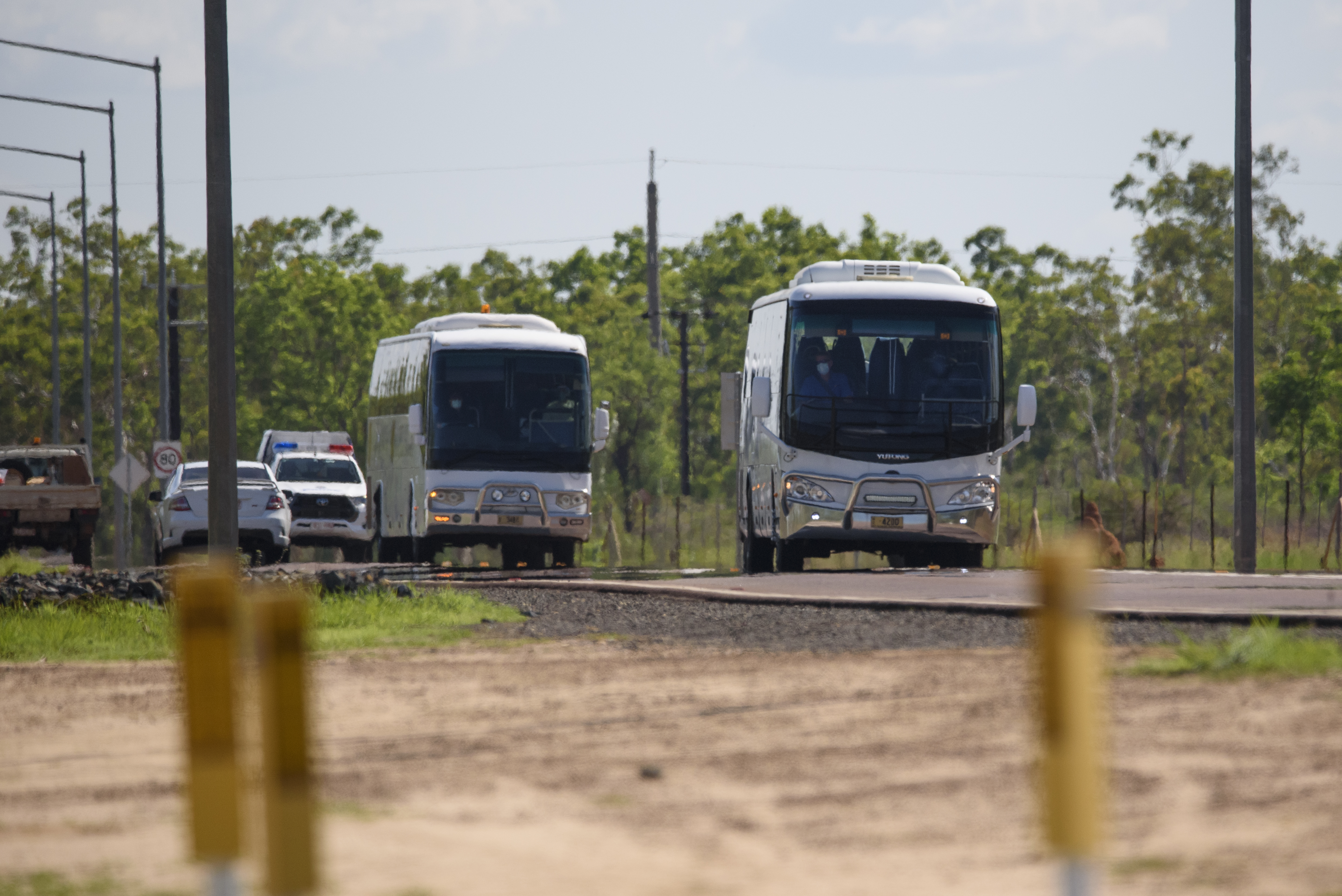
Plans to increase quarantine capacity in the Northern Territory to allow more Australians to come home have raised concerns the state will be left open to a potential COVID-19 outbreak.

The NT has recorded just 106 cases of coronavirus — the majority linked to international travel — no community transmission and zero deaths.

But Territorians now fear a quarantine leak could happen when highly skilled Australian Medical Assistance Teams (AUSMAT) staff leave the Howard Springs Quarantine Centre near Darwin, as capacity ramps up to 2000 people repatriated to Australia a fortnight.

READ MORE: More than 100,000 Aussies granted travel exemptions during pandemic

"AUSMAT have obviously had a very high level of training and supervision in respect to quarantine supervision," Dr Robert Parker of the Australian Medical Association told 9News.

"It's probably not going to be as high as it was under the AUSMAT group."

The staff and procedures put in place by AUSMAT have been highlighted as the key to Howard Springs' success.

Commonwealth and NT Government on Friday struck the deal to increase capacity, which will see the centre consolidated into one facility, combining the currently separated domestic and international arrivals.

AUSMAT, from the National Critical Care and Trauma Response Centre, oversees operations of international arrivals, while staff from the NT Health Department manage domestic quarantine.

NT Chief Minister Michael Gunner said the consolidated model was more sustainable long term.

"The NTCCRC actually have a lot of other demands upon their time that they need to be available for," he said.

NTCCRC executive director Professor Len Notaras moved to reassure Territorians his staff would lead a careful transition.

"We will be watching very closely that the scale-up is compliant with the very strict and high standards we've established, which have kept the Territory safe," he said.

But NT Opposition Leader Lia Finocchiaro isn't convinced the territory government will be able to continue managing the facility successfully.

"We've seen rave parties, attempted escapes and of course there has been questions around the territory government's ability to attract the right staff," she said.

A national recruitment drive will be launched over the next few weeks in a bid to recruit the 400 extra staff needed to manage the increased capacity.

With Vaccinations, Lower Cases US Begins to Open-Up

New federal guidelines released Monday saying it is safe for fully vaccinated people to gather indoors with each other without masks is adding hope that a return to normality — or something close to it — might be getting closer as the nation hits one year in a locked-down state.

No one knows exactly when it will be normal again — if ever, given how the coronavirus pandemic has elevated concerns about contagious diseases in general.

There’s also quite a bit of uncertainty going forward, especially as variants of the virus continue to circulate.

Still, experts are more optimistic than they have been since the pandemic began, as political leaders plot a path forward, movie theaters in New York reopen and the Chicago Cubs prepare to welcome fans to Wrigley Field for Opening Day — albeit at a 20 percent capacity.

“I think we’re on a trajectory to be in really good shape this summer, certainly in the July time frame,” said Eric Topol, professor of molecular medicine at Scripps Research.

The key to normality is getting people vaccinated, and different time frames have been projected.

Former Food and Drug Administration Commissioner Scott Gottlieb said last week he thinks vaccination appointments will be “wide open” as soon as April. Centers for Disease Control and Prevention (CDC) Director Rochelle Walensky last week pointed to a somewhat longer timeline, saying it would be take “three or four more months” to vaccinate the country.

Even with a vaccination, people are being urged to take care.

The CDC guidelines issued Monday say vaccinated people should keep wearing a mask in public and when around unvaccinated people from multiple households.

While experts say vaccination likely significantly reduces transmission of the virus, it also likely does not entirely eliminate it, meaning that vaccinated people should still take some precautions when around unvaccinated people.

Walensky said the guidance will be updated once a larger share of the population is vaccinated, and as more data becomes available on vaccinated people’s ability to spread the virus.

“Today’s action represents an important first step; it is not our final destination,” she said. “As more people get vaccinated, levels of COVID-19 infection decline in communities, and as our understanding of COVID immunity improves, we look forward to updating these recommendations to the public.”

The need for vaccinated people to wear masks and distancing in public won’t last forever.

“The pivot point will be after everyone has had a chance to be vaccinated,” said Robert Wachter, chairman of the department of medicine at the University of California-San Francisco.

In a couple of months, once everyone has had a chance to be vaccinated, “at that point [unvaccinated people] are choosing to put themselves at risk,” he said. “I become a little bit less concerned about being super careful.”

Still, the virus is not likely to be totally eliminated anytime soon. A more realistic goal, experts say, is to reduce its danger such that it blends into the background rather than dominating daily life as it has for the past year.

The virus will still spread among people who choose not to be vaccinated, and even among vaccinated people, there can still be occasional mild cases.

The key advantage of the vaccines is that so far they are extremely effective at preventing hospitalizations and deaths, helping take the teeth out of any smaller resurgences of the virus down the line, such as next fall when the weather gets colder.

“The virus isn’t going to go away,” said Michael Mina, an epidemiologist at the Harvard T.H. Chan School of Public Health. “But it will begin to do less and less damage, because people are going to be immune, so even if they get sick they’re not going to die, for example. Even if they get infected, they won’t end up in the hospital.”

One major question is what percentage of people refuse to get the vaccine. A Pew Research Center poll released last week found that 69 percent of U.S. adults planned to get the vaccine, or already had, up from 60 percent in November. But that still leaves 30 percent who said they would not get the vaccine.

While vaccine hesitancy is a setback for achieving societywide protection, the flip side is it can make vaccines available sooner for people who do want them.

“The president talked about May being a timeline when there’s going to be enough doses for every American,” Gottlieb said on CNBC last week. “I don’t think we’re going to get every American vaccinated, unfortunately, so I think as you get into the end of March, into April, supply is going to start to outstrip demand and they’re going to open up appointments. So we have about another month to go.”

The major question mark over the long-term defanging of the virus is what the trajectory of the variants is.

A variant first identified in South Africa has shown some ability to reduce the effectiveness of vaccines, though data so far indicates the vaccines would still protect against severe cases, the most important factor.

If that variant becomes more prevalent in the United States, it could complicate the situation to some degree. More ominously, a new variant could develop that is more resistant to the vaccines.

“My concern is that we might have only seen the beginning of what these mutations are capable of,” Mina said. “Will we see in the next six months a new suite of mutations that build off of the current ones that really do do greater damage to our immune system’s ability to recognize the virus? That’s what I’m concerned about. I sure hope it doesn’t happen.”

The vaccines can be updated to address new variants, and Pfizer and Moderna have both started work on that process in case it is needed.

Topol said the virus could still circulate to some degree for “many years, potentially,” but “I’m hoping it is at a really low level and basically we almost eliminate the deaths and severe illness.”

“I just can’t imagine it would ever be as horrific,” he added. “I’m very optimistic.”

The variants first identified in South Africa and Brazil could be less of a concern for the U.S., Topol said, because they will be “outrun” by yet another variant, first identified in the United Kingdom, which is more infectious and therefore will spread faster.

Luckily, the U.K. variant responds very well to the vaccines. But it poses a danger of a new spike in the short term before vaccinations are widespread enough to fully counter it.

That is in part why experts are urging states to maintain restrictions like mask mandates and restaurant limits for a few more weeks, until there are enough vaccinations to prevent the U.K. variant from really taking off.

“We have one big hurdle, one mega-hurdle, and if we get through that, we really are going to be in good shape,” Topol said.


The post With Vaccinations, Lower Cases US Begins to Open-Up appeared first on The St Kitts Nevis Observer.

Man charged over violent Mardi Gras alleged assault faces court

One of the men charged over the bashing of teenage girls on Mardi Gras in Sydney has other violent charges against women in his criminal history, a court has heard.

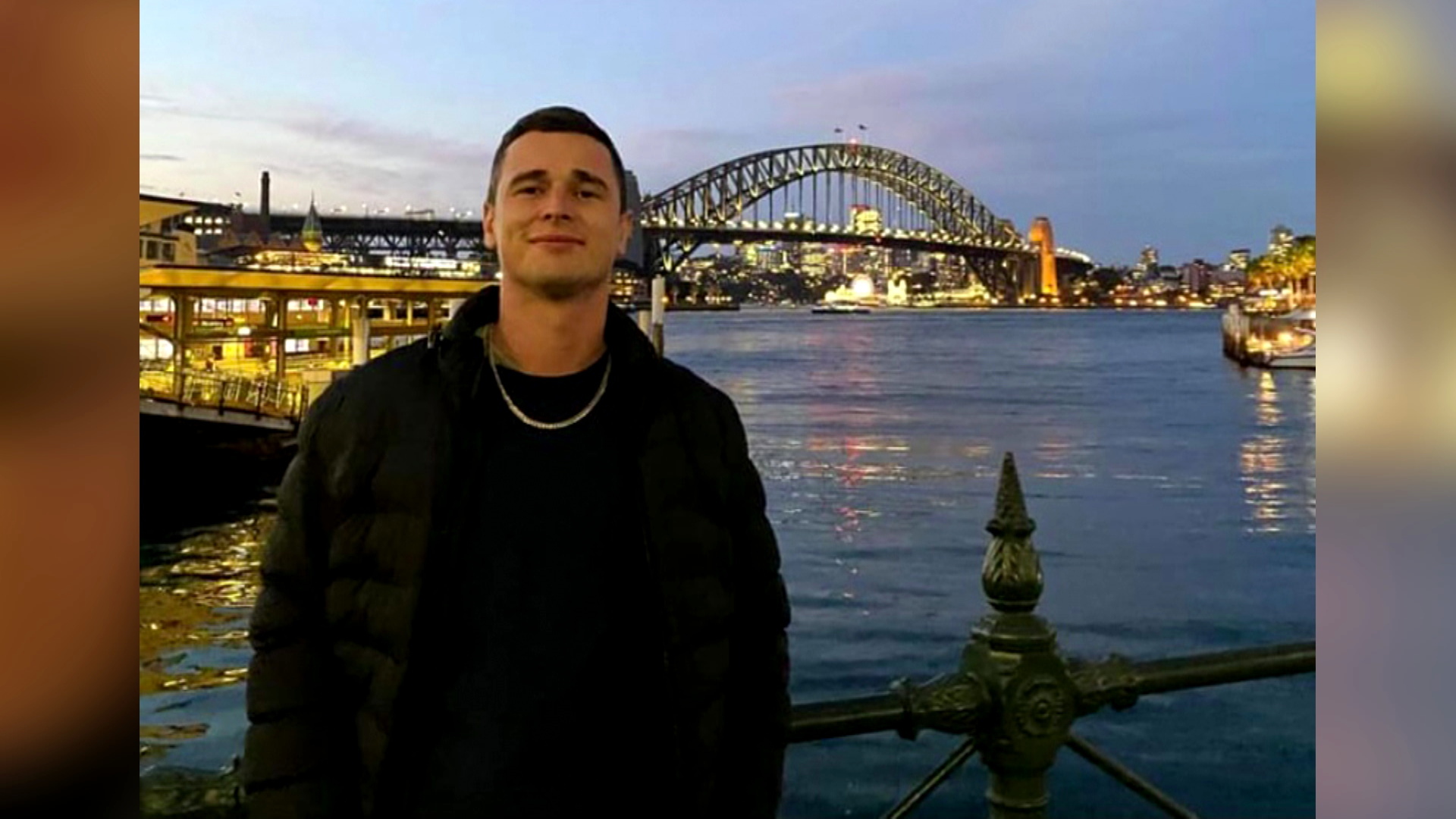
Jesse Mackenzie, 29, is accused of assaulting two girls during a brawl in Pyrmont on Saturday night.

The court heard Mackenzie is accused of punching one 16-year-old in the face, and grabbing another by the hair, dragging her five metres, then throwing her off a concrete ledge.

READ MORE: Fourth man sought over alleged Mardi Gras assault of teen girls

"Whilst the experience must have been traumatic, we hope they make a full and speedy recovery," his lawyer Mostafa Daoudie said outside court today.

In a bid for bail Mackenzie, a Telstra worker, offered to live under house arrest when not at work or reporting to police.

This was denied after a magistrate read his criminal history, which includes other violent charges against women.

Two other men, William Shepley and Hong Lee, also remain behind bars over the attack.

The trio were charged after video of the fight was posted to social media yesterday.

Prince and the Showgirl: Palace Reacts to Oprah Interview

Traditionally the Palace protects the family by drawing a curtain between the public, formal stuff and the personal stuff; its refusal to comment on the personal is a strategic interpretation of the family’s maxim – “never explain, never complain”.

The public/personal divide has always been an artifice. Royals get married in front of tens of millions of people, have state funerals, release photos on birthdays and anniversaries, exchange insights into their lives in return for easy-going and generous coverage.

But the divide, however often disregarded, remains the guiding principle of the family’s formal relationship with the outside world. Now the contradictions that spring from the mix of personal and public are playing out.

Some key allegations are about the personal behaviour and comments of members of the Royal Family and how, through collective neglect and perhaps some malicious intent, they left Harry and Meghan no choice but to leave.

Other statements painted a terrible portrait of unfeeling staff and courtiers. The entire institution was portrayed as if nothing had been learnt from the days of Diana – Prince Harry and Prince William’s late mother.

The duchess is a formidable communicator and has proved herself a very bad woman to pick a fight with. A newly-liberated Harry spoke with almost-eloquence.

‘A knife to the heart’

Meghan dealt some of the heaviest blows. What is the Palace to say about the accusation that an unnamed member of the family made a comment – more than one by the sounds of things – about the skin colour of the couple’s child-to-be? The mind boggles.

But alongside the personal pain and anger rippling through the duchess’s testimony, there came from Harry condemnation of the institution – the suggestion that it was incapable of change, incapable of love, incapable of understanding.

The contradictions of the Palace, and of the monarchy, are exactly that which makes it so special, so strange, so interesting and so difficult to work within – the merging of personal and public roles, the accretion of tradition, the mix of public accountability, ceaseless media interest and the need to remain relevant.

Harry’s suggestion that his family too – his father Prince Charles, his brother Prince William – are “trapped” in their world, and that he felt “compassion” for them, was a velvet-covered knife into the heart of the modern monarchy.

Royal life is conducted from within a gilded cage; the players are not meant to rattle the bars from the outside.

These are the contradictions Harry walked away (or, in his words, stepped back) from. He was uncomfortable with them before he was married. And when he saw his wife suffering as a result of his being “trapped” in royal life, he found a way out with her.

There are also the contradictions that lie behind many of the decisions that they both spoke out about and are clearly very unhappy about.

It is public money that pays for security. It is tradition that dictates who gets what title. There is no HR department for working royals because it is a family affair. What you do in front of the cameras matters because it reflects on the institution as a whole.

This meshing of personal and public is unique. It is what being a modern royal is all about. And inside it is often a hugely uncomfortable place to be. Harry knew that. Presumably he warned Meghan. But that warning wasn’t enough.

Harry and Meghan’s experience suggests that the contradictions are too great. Maybe their interview will act as a catalyst for change. But the Crown has been around for a very long time, and change does not come easily to a body in which the past plays such an outsize role.

=====================================================

And in the UK– Crisis meetings involving senior royals have taken place following the Duke and Duchess of Sussex’s interview with Oprah Winfrey.

BBC royal correspondent Daniela Relph said Buckingham Palace “will not want to feel rushed into saying something” about Prince Harry and Meghan’s claims.

Prince Harry and Meghan spoke about racism, mental health, the media and other royals in the interview.

Meghan’s father Thomas Markle has criticised the interview’s timing.

The duchess – who is the first mixed-race member of the modern Royal Family – said a low point came when Harry was asked by an unnamed royal family member “how dark” their son Archie’s skin might be.

Prince Harry later clarified to Oprah that the comments were not made by either the Queen or the Duke of Edinburgh.

Meanwhile, US President Joe Biden’s spokeswoman said he would praise anyone for having the courage to speak out about mental health.

White House press secretary Jen Psaki described Prince Harry, 36, and Meghan, 39, as “private citizens” who were “sharing their own story in their own struggles”.

The post Prince and the Showgirl: Palace Reacts to Oprah Interview appeared first on The St Kitts Nevis Observer.

Biden Grants Protected Status for US Venezuelan Migrants

Washington (CNN) The Biden administration on Monday granted humanitarian protection for Venezuelans, allowing an estimated 300,000 people to apply and remain lawfully in the United States, according to senior administration officials.

Venezuelans in the United States will have the opportunity to apply for Temporary Protected Status, or TPS — a form of humanitarian relief, which can be granted when it is deemed unsafe to return to one’s home country. Additional details will be published in the Federal Register.

Secretary of Homeland Security Alejandro Mayorkas is designating Venezuela for Temporary Protected Status for 18 months, until September 2022, according to DHS.

This marks a shift from the Trump administration, which had sharply criticized TPS and moved to terminate protections the program had provided for immigrants from other countries, arguing that years of extensions were prolonging immigrants’ stays in the United States long after crises abroad had abated.

Many Venezuelans had been pushing for protections but for years met resistance from Trump administration officials who were more focused on pushing for regime change in the South American country. Ultimately, former President Donald Trump granted them similar protections from deportation on his last day in office, but no details about how they could apply had been announced and lawmakers have been pushing for answers.

Word of the new protections left many Venezuelans in the United States relieved and eager for more details.

“I don’t think people can believe it yet,” said John De la Vega, an immigration attorney in Miami, whose phone started ringing Monday afternoon as soon as the change was announced. After years of uncertainty, he said, finally Venezuelans who’ve been living in fear of deportation will feel like they have a safe place to stay.

“It’s a big relief,” said Adriana Kostencki, president of the Venezuelan American National Bar Association, which began petitioning the White House for TPS for Venezuelans in 2017.

“This is a big deal for the thousands of families that can’t go back to their own country and now can call this country their own country, at least for a while,”

Kostencki said. “That’s important, for people to have a sense that, ‘Now I have a chance to stay here. Now I don’t need to be under the shadows. I’m here. I can work. I can contribute. At some point, I can go back. But while I cannot, I will be a member of this society as well.’ ”

The TPS designation is due to “extraordinary and temporary conditions” in Venezuela, including widespread hunger and malnutrition, a growing influence and presence of non-state armed groups, repression, and a crumbling infrastructure, DHS said.

President Joe Biden “has been very clear that Nicolás Maduro is a dictator, and the May 2018 elections were fraudulent and illegitimate,” a senior administration official said Monday.

Biden plans to provide “robust humanitarian assistance,” in particular, to the regional countries that have been impacted by the over 5 million Venezuelans that have fled their country, the official added.

Another administration official acknowledged that this designation would likely prompt smugglers and others to claim the “border is now open,” saying “that is not the case.”

All travel and admission restrictions remain in place at the US borders, the official said.

On his final day in office, Trump issued a memorandum offering protections for Venezuelans known as Deferred Enforced Departure. The Trump designation remains in place, however, as TPS has a statutory basis.

“It is another way of being able to provide people protection,” a senior official said, adding it is up to individuals on how they want to apply for protection.

CNN previously reported that a growing group of Venezuelans who fled to the US found themselves in legal limbo. Lawmakers previously weighed options to temporarily shield Venezuelans from deportation.

Two top Senate Democrats praised the Biden administration’s decision Monday.

“For years, the world watched in horror as man-made humanitarian and political crises turned Venezuela into a failed state—leaving the Venezuelan people to face political violence and without access to food, water, and electricity. Despite these disastrous and dangerous conditions, Venezuelans were still forcibly deported back to their country by the Trump Administration,” Senate Foreign Relations Committee Chairman Bob Menendez, a New Jersey Democrat, and Sen. Dick Durbin, an Illinois Democrat who chairs the Senate Judiciary Committee, wrote in a statement.


Monday’s action ensures that “more than 300,000 Venezuelans in the United States can receive temporary legal status so they will not be forced to return to such terrible conditions and brings stability to these Venezuelan families,” the senators said.

This story has been updated with additional reporting and reaction.

CNN’s Jennifer Hansler contributed to this story.

The post Biden Grants Protected Status for US Venezuelan Migrants appeared first on The St Kitts Nevis Observer.

Mexico: Women Protest President’s Lack of Support for Feminist Causes

MEXICO CITY (AP) — Mexico’s President Andrés Manuel López Obrador tried to focus attention Monday on the high number of women in his cabinet, and not on a day of protests over the fact he has refused to break with a governorship candidate accused of rape.

Thousands of women marched in Mexico City Monday to mark Women’s Day, focusing the spotlight on López Obrador’s contradictions. A progressive who cites his long record of social struggle and says “the poor come first,” the president is also a social conservative who leaves abortion largely to state legislation and says the family is the center of society.

“He should start really fighting, but for the women of Mexico,” said marcher Ana De la Toba, a 39-year old Mexico City lawyer.

Those contradictions were on display in Mexico City’s vast central plaza, after the government erected tall steel anti-riot barricades in front of the National Palace and activists quickly adorned the structures with flowers and the names of female murder victims.

The president said the barriers were meant to protect buildings and monuments in the colonial-era downtown that have been spray-painted with graffiti in past feminist demonstrations, but marchers weren’t accepting that.

“Why do they want clean monuments, in a country awash in blood?” the marchers chanted.

Some marchers broke through barricades and smashed plate-glass windows at a hotel downtown. Later, others damaged centuries-old tile on a landmark building with hammers and some protesters battled police in the main square with rocks, bottles, metal poles, spray paint and streams of flame from lit aerosol cans.

Sixty-two officers and 19 civilians were injured during the incidents, said Marcela Figueroa, an official of the city’s police agency.

“Half of the cabinet are women,” López Obrador said at his daily morning news conference. “That was never seen before in Mexico.” Nevertheless, old habits die hard; During the same news conference, the president referred to one female reporter as “corazón,” roughly “sweetheart.”

Last week, the president sought to deflect criticism of his support for party’s candidate for the governorship of the southern state of Guerrero, Félix Salgado, who has been accused of rape by two women, though he has not been charged. López Obrador said the issue should be left up to voters in Guerrero, and claims it is being brought up by his foes, “the conservatives.”

“All of a sudden, the conservatives are disguising themselves as feminists, very strange. Why? Because they see it as an opportunity to attack us,” the president said.

Attention focused on the barricades erected in fronts of the colonial-era National Palace where López Obrador lives and works. )The president himself once led protests in the same plaza. The president said the barriers were to prevent attacks with incendiary devices on the historic palace, which occurred at a women’s march last year.

“The barricades were put up because the conservatives are very upset,” López Obrador said. “They infiltrate all the movements to create provocations … they were planning to vandalize the National Palace.”

The president said two women had been found with gasoline bombs at a workshop in an upscale Mexico City neighborhood, saying, “I am sure … they were put up to this.”

Salgado has not been charged because prosecutors say the statute of limitations ran out on one of the accusations while another remains under investigation. His lawyer has denied the accusations.

López Obrador’s Morena party has scheduled a rerun of an internal poll to see whether Salgado should remain as the candidate, and a group of female Morena legislators publicly called on him to resign.

Authorities estimated there would be almost 100 women’s marches in cities and towns throughout Mexico. Some local and state authorities designated squads of female officers to provide security at the marches.

The post Mexico: Women Protest President’s Lack of Support for Feminist Causes appeared first on The St Kitts Nevis Observer.

Mexico in Opium Study Leading to Possible Drug Legalization

MEXICO CITY (AP) — Mexican President Andrés Manuel López Obrador said the government is studying what to do about growers of opium poppies who have been hit by competition from synthetic opioids, suggesting that some sort of legalization scheme might be possible.

Asked about legalizing marijuana production — a bill for which is now before Congress — López Obrador said the question also involves opium poppies grown illegally in some parts of Mexico to make heroin.

“As far as commercializing marijuana and opium poppies, the decision has been made to undertake a thorough study of these crops,” López Obrador said.

The government has tried introducing alternative crops, like timber and fruit orchards, in poppy-growing areas, but López Obrador clearly suggested the new study was in addition to those efforts.

He said farmers in remote mountain communities in Mexico had lost income because traffickers are switching to buying fentanyl from Asia, rather than paying people to grow poppies and harvest poppy gum needed to process heroin.

“We are in the stage of analysis and reflection about what will most benefit Mexico,” he said. “There are now unparalleled conditions to do what most benefits Mexico and our people, because the current government is completely free, it is not subordinated to any foreign government.”

That was an apparent reference to U.S. pressure to reduce Mexico’s production of opium, almost all of which is smuggled into the United States.

Studies of legal opium production have circulated in Mexican government circles since before López Obrador took office in December 2018. However, a number of factors meant those proposals were never adopted.

Production of medicinal opioids needed for operations and terminal patients — something that has been proposed in the past — would require a much stricter control over farmers than Mexico is ever likely to achieve in the mountain communities of northern Mexico and the Pacific coast state of Guerrero where illegal production is currently centered.

The U.S. Drug Enforcement Administration said in a recent report that poppy and heroin production in Mexico both declined in 2019. It said “low opium prices paid to poppy farmers in Mexico, coupled with an increase in fentanyl use in the United States, likely impacted the decrease in cultivation.”

Dealers are increasingly cutting heroin with fentanyl to increase its potency, and “DTOs (drug trafficking organizations) may come to view heroin as simply an adulterant to fentanyl,” according to the report.

But even if marijuana growing is legalized and some solution is found for poppy growers, Mexico still faces an expansion of illicit drug crops.

In February, López Obrador said experimental plots of coca leaves, the raw material for cocaine, had been found in the southern Mexico state of Guerrero. The plant is native to South America and up to now has mostly been cultivated in Bolivia and Colombia.

“I want to tell the bad guys that we know that they are experimenting with coca production in Guerrero,” the president said. “We found some coca plots in Atoyac,” a conflictive township known for drug gang violence and drug production.

Any legalization of opium poppies would present yet another point of friction with U.S. authorities, already stung by Mexico’s decision to withdraw immunity for foreign agents and restrict their activities in Mexico.

Mexico also strong-armed the United States into releasing a former Mexican defense secretary arrested in Los Angeles in October on drug charges. Mexico cleared retired Gen. Salvador Cienfuegos after conducting only a cursory investigation of the U.S. evidence against him, and then published the whole case file.

The post Mexico in Opium Study Leading to Possible Drug Legalization appeared first on The St Kitts Nevis Observer.