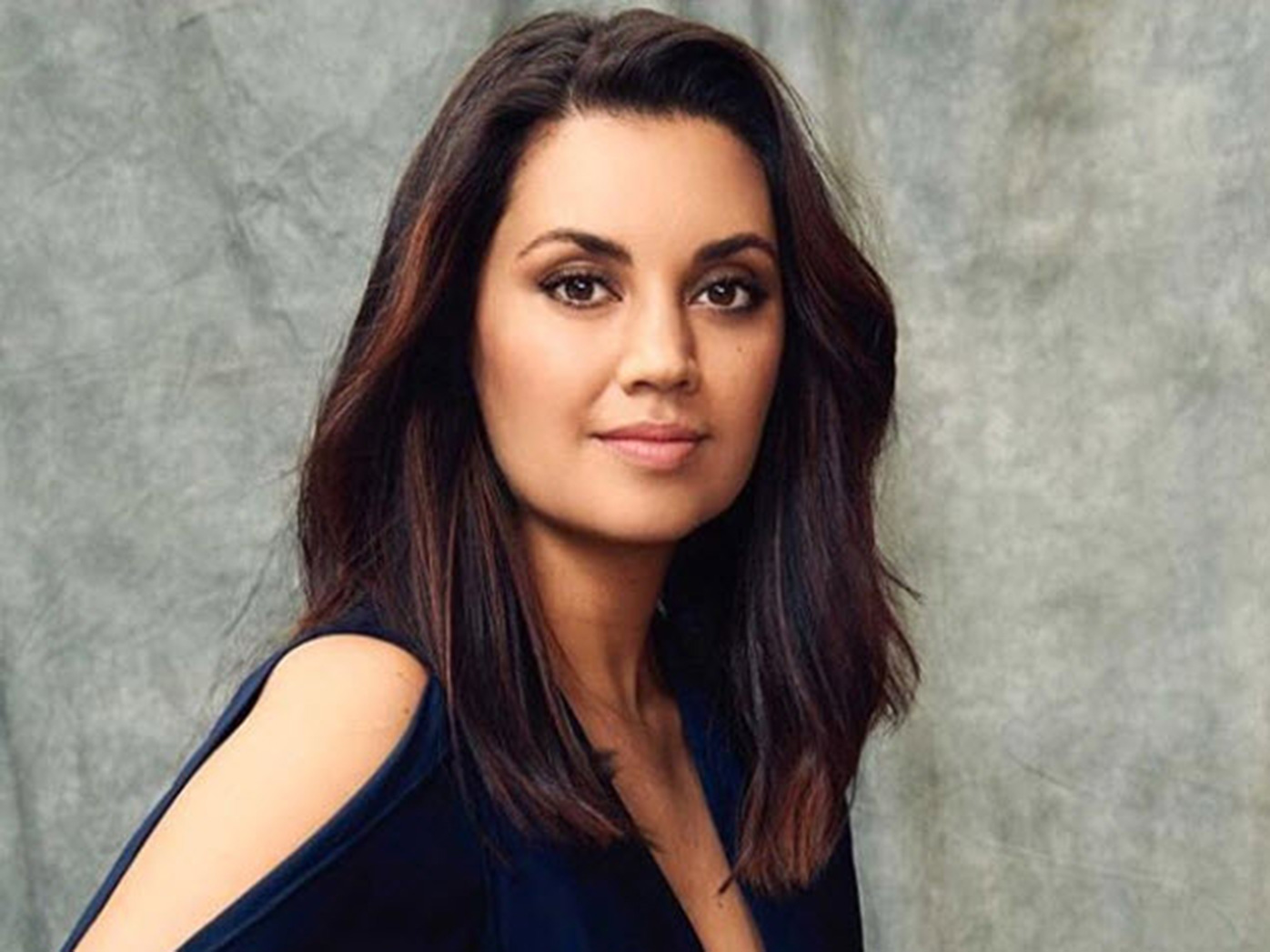
This is the full keynote speech delivered by Jamila Rizvi at the Future Women Leadership Summit, held today.
I was 22 years old when I started working as a government staffer at Australian Parliament House. I was employed there for four years.
I grew up in a building where everyone else seemed very grown up and it wasn't until years later that I realised just how unusual the experience was.
Let me set the scene. One night I was at a hotel bar with a dozen or so colleagues. Most of them are men. Everyone is drunk.
It's after 11 at night. We have an early start in the morning but that doesn't seem to bother anyone awfully much.
READ MORE: Brittany Higgins responds to 'lying cow' comment from Linda Reynolds
There are two women, aside from me. Neither of whom I know very well. We're seated together on a long couch, sitting primly with our knees together – not that there is any real alternative when wearing a skirt suit
The man who has been sitting on my left stands to make his goodbyes. He's a married father. We've been chatting for much of the night.
The way he talks reminds me of my dad holding court at the breakfast table back when I was at high school, arguing as a method of preparing me for an exam.
His questions are confrontational, but his tone is warm and encouraging. Oozing with charm, my new friend makes a point of singling out everyone in the group for individual mention as he departs. They all feel special.
He's an important guy. Being recognised by him makes them feel important too.
As he walks off, I realise he's left his hotel room key on the table in front of me. Innocently, I jump up and call out his name, waving the plastic card in the air. 'I think you forgot something?'
He walks slowly and deliberately back towards us. He comes right up close beside me to collect the card. His fingers clasp unnecessarily around mine as he leans in, face inches from my own. 'You're so naïve, it's delicious,' he says.
He continued 'That was meant for you.' He speaks in an exaggerated faux whisper. The whole group can hear him and that's exactly what he wanted. Everyone is looking at us. Everyone laughs. And I am mortified.
READ MORE: Politics needs to change, Frydenberg says after Bishop weighs in
That's one occasion that stands out in my memory but there were many. As a staffer, I was a young woman in a world of older men, and for many of those men, parliament was their playground. Away from their family and friends for 22 weeks of every year, Canberra was a place where they worked hard and played harder.
I know now, of course, that I was one of the lucky ones.
While sexual harassment certainly happened to me, I was not sexually assaulted. I was not raped. I was spared that indignity, that distress, that trauma and brutality and the memories that go along with it.
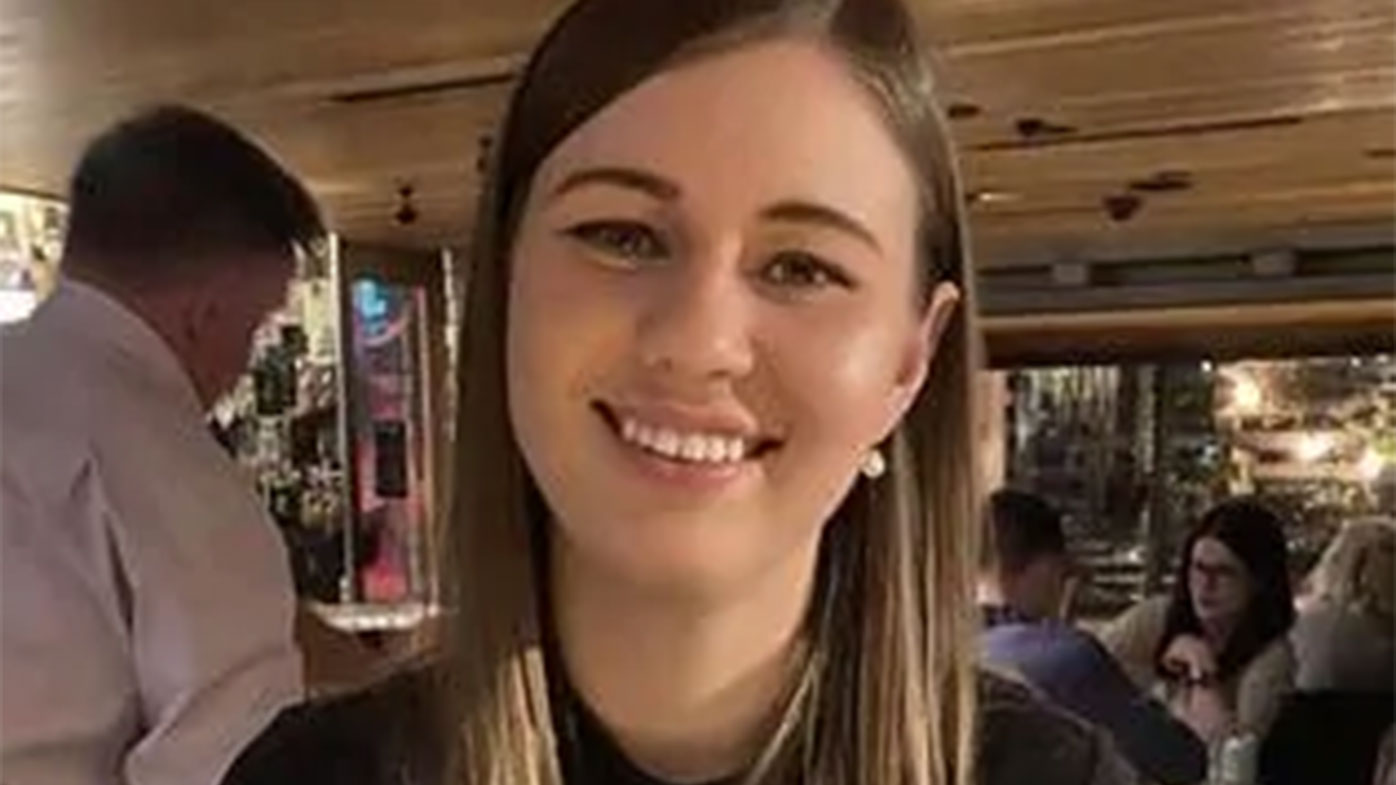
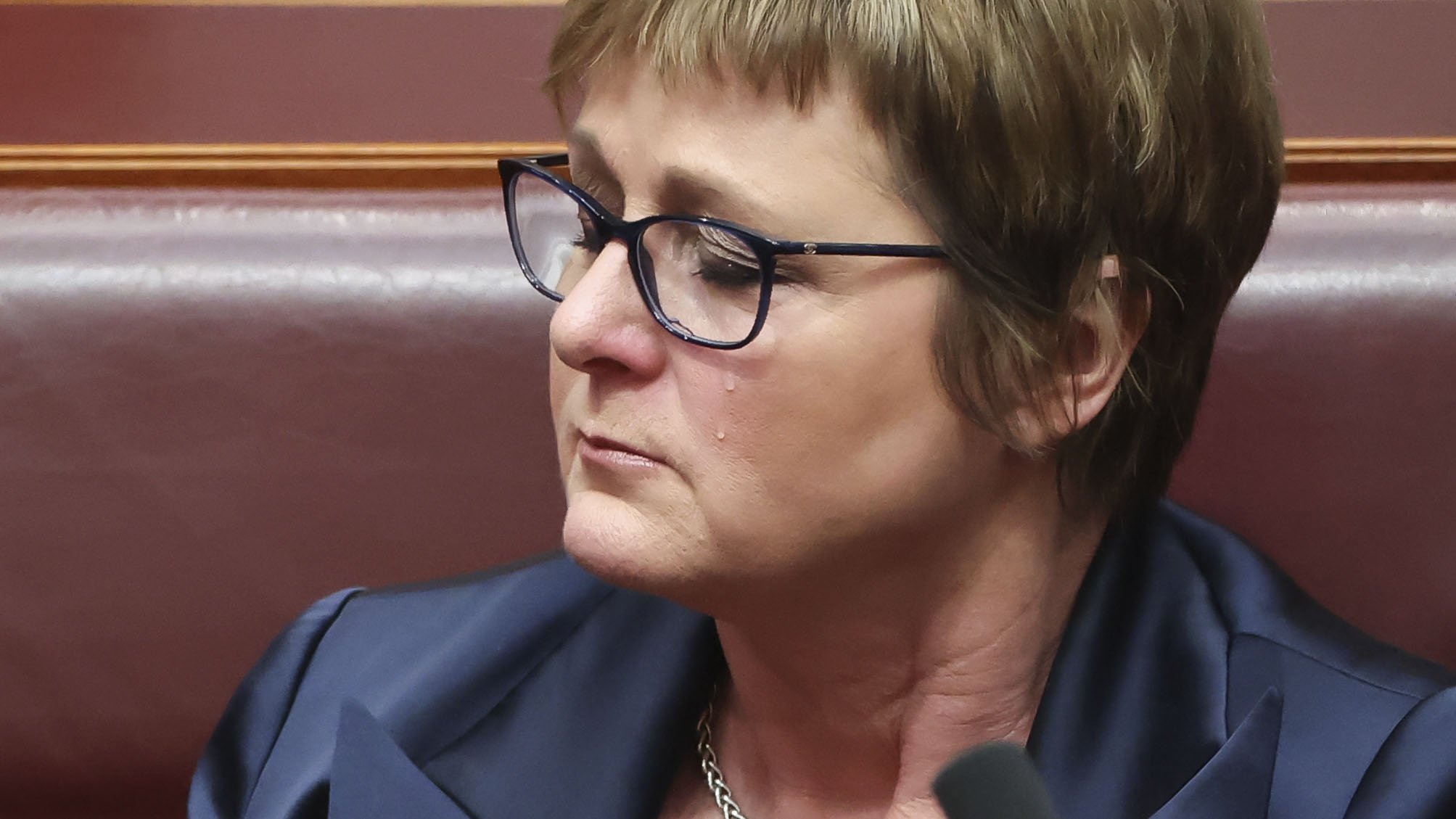
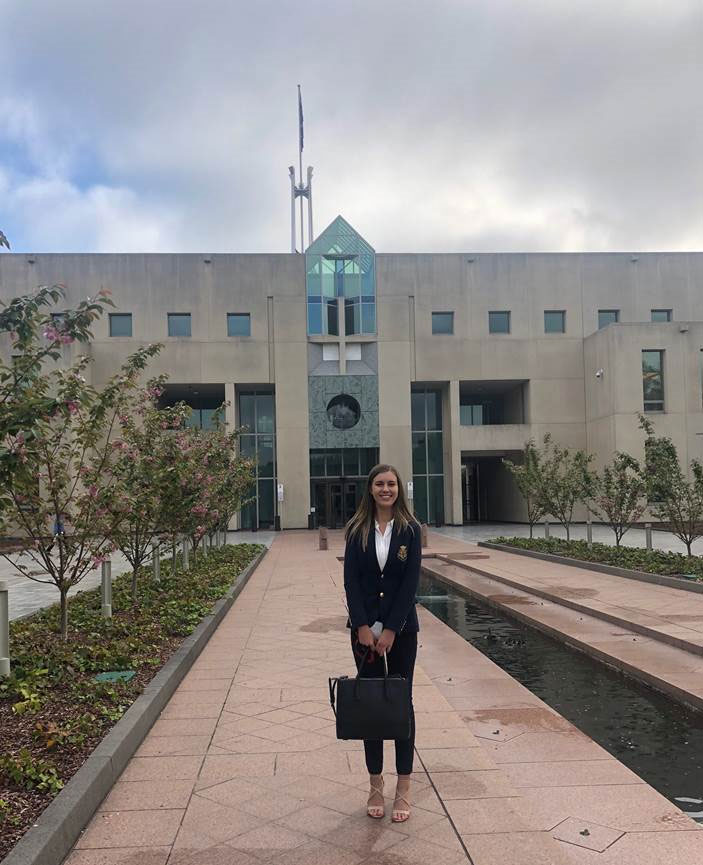
I was spared the experience alleged by Brittany Higgins. The brave former liberal staffer who says she was raped on the couch of Australia's now Defence Minister Linda Reynolds.
While Brittany went public with what she says happened to her in late February, we know that Brittany is not alone. And not only because other women have made allegations against the same man.
We know Brittany is not alone because as women working in any industry, we know that our safety and security at work are not guaranteed.
We know that Brittany is not alone because just this week an online petition for sexual consent education in schools was swamped with stories from women who said they were assaulted by their teenage male peers.
This is not about party. This is not even about politics. As women we know that in male dominated environments, we are particularly vulnerable.
According to a report by Sex Discrimination Commissioner Kate Jenkins' office, almost 40 percent of women have been sexually harassed at work.
This work, as well as similar studies show that the rate of sexual harassment is much higher amongst vulnerable groups including young women, queer women, Indigenous women, migrant women and non-binary people.
READ MORE: Rape claims continue to haunt government
Make no mistake. Sexual harassment and assault tend not to be the fault of one evil wrongdoer.
They are the result of a culture that normalises the privilege of powerful men and says they can do and take what they want.
In fact, nearly half of those people who have experienced sexual harassment in the workplace consider it common behaviour. Two in five are aware of someone else in their workplace being harassed. Yet only one in five will make a complaint.
While the nation's Defence Chief, General Angus Campbell reportedly thinks women can ward off the sexual violence of men by avoiding alcohol and 'presenting themselves as attractive' – the truth is that none of that matters.
Not in schools, not in communities, not at church, not at a bar or a party. And not in workplaces where the very infrastructure – the so-called system – that is supposed to protect us, is protecting the powerful.
I haven't met Brittany Higgins, but I know she did not come forward with these allegations for herself.
I know this from speaking to the half a dozen or so fellow former staffers who have called me in recent days to whisper, to reveal, to sob and to say out loud for the first time that they too experienced sexual assault while working in Australian Parliament House.
Brittany Higgins came forward to protect others.
My friends tell me that is the only reason they would consider doing the same.
I imagine Brittany Higgins made her allegations public in both a desperate bid for justice, and to make sure another woman did not experience what she alleges happened to her. And what did she get for her trouble?
A media storm seeped in inuendo, a bunch of raised eyebrows, her boyfriend forced to resign his job, her old boss reportedly calling her a 'cow' – and an employer – a government – whose focus appeared fixed on the political consequences and not their former employee's personal wellbeing.
Let me take you on another trip down memory lane. When we were teenagers, my sister and I watched a lot of Neighbours. It was our go-to mode of decompression following classes and sporting matches but before family dinner.
We'd lounge on the couch after school, munching on the good biscuits if Mum wasn't looking, and inhaling the increasingly ludicrous plot lines. We were addicted. I wonder if some of you were also.
There was the episode when Harold fell off a cliff face before returning five years later with amnesia and thinking his name was Todd. There was the car crash that saw Dee and Toadie plummet into the sea between their wedding and the reception. Poor Toadie would continue to be morbidly unlucky in love.
Neighbours released Delta Goodrem's Born to Try single as part of an actual plotline involving a complex love triangle with Taj and Jack. Paul Robinson was pushed from the Lassiter's balcony, after having lit the place on fire a couple of years prior.
The six possible suspects who all lived on the same street provided literal months of content. And then, in the year I turned eighteen, the year I started university and would later leave home, my sister and the old TV playing Neighbours behind?
Izzy falsely accused her boyfriend Gus of rape. My 15-year-old sister and I lapped it up. We called our mates on three-way-dialling to dissect this shocking plot twist. It was appalling. Disgusting.
This fictional crime was so great that it seemed too awful to comprehend, even for the terrible Izzy. It was unbelievable. Which is exactly right. It was unbelievable. Because false claims of sexual assault and rape are exceedingly rare.
The most commonly cited figure is that five percent of rape allegations are found to be false. But to rely on that figure alone would be a misrepresentation.
Because only one in ten women actually reports her sexual assault to police. The vast majority of us stay silent.
What this means is that 90 percent of rapes go unreported. And because the 'five-per cent of rape allegations are false' figure can, by its very definition, only apply to reported rapes, this leaves the actual false allegation figure at around 0.5 per cent. Or one in two hundred.
And yet these are the stories we were fed as teenagers. And it is a myth that is still allowed to permeate dinner table discussions and water cooler conversations. It is the undertone of internet articles and snide tweets.
There is a repeated intimation that women can't always be trusted in these matters.
That women make things up. That women bend the truth. That women are mad, crazy, emotional beings.
That women lie.
On Friday a week and a half ago, the media reported that a cabinet minister was at the centre of a historical rape allegation made by a woman who had since taken her own life. A letter detailing the deceased's accusation had been sent to the Prime Minister, amongst other powerful political figures, by the woman's friends.
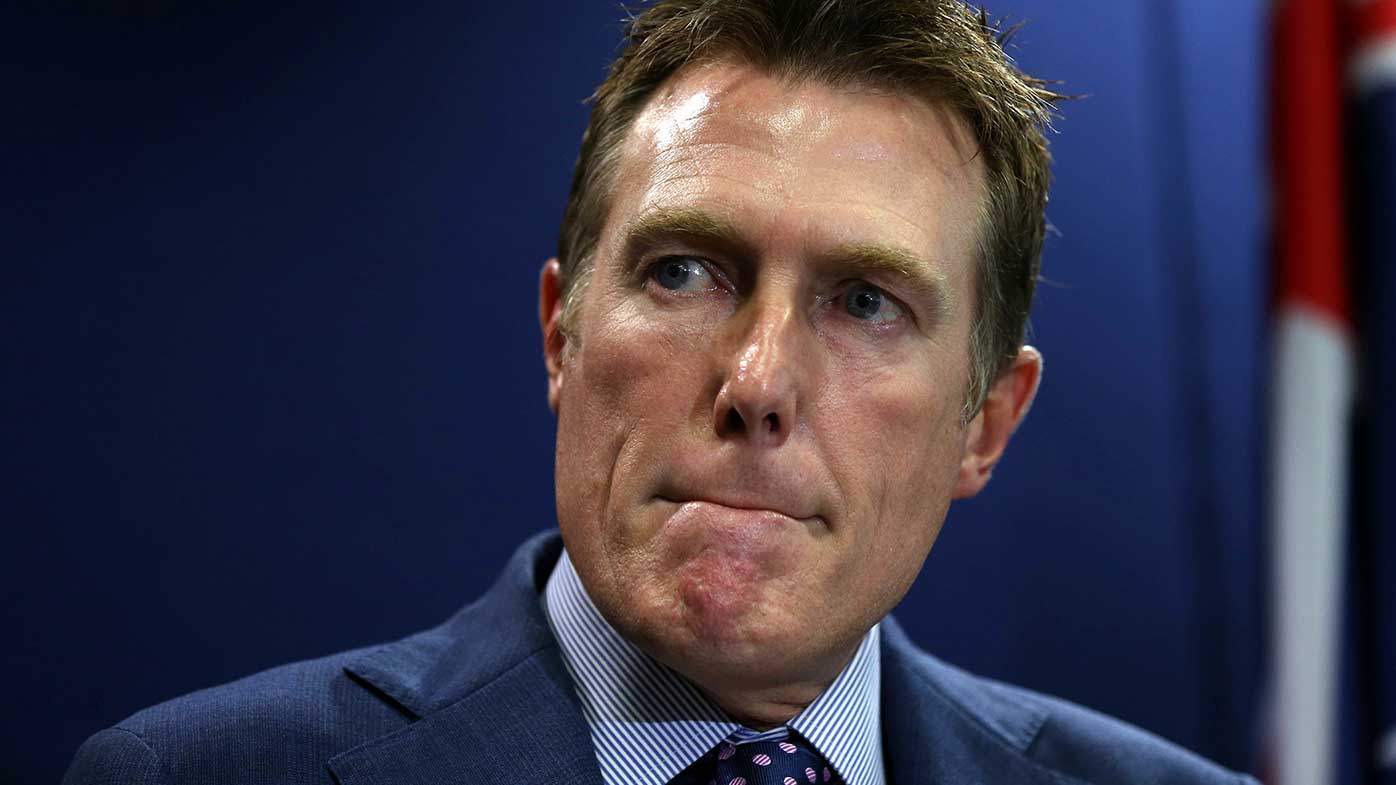
On Wednesday last week, that minister – the Attorney-General Christian Porter – came forward. In a press conference, he denied the allegations. Vigorously and categorically. He was visibly distressed and rattled.
On Thursday morning last week the Prime Minister dismissed calls for an independent inquiry. This is despite the fact the Prime Minister did not read the contents of the accusatory letter. He was merely briefed on them by others.
During his emotional press conference, Christian Porter – the highest law officer in our country – asked journalists to imagine, just for a second that the allegations were not true. This is a perfectly fair and reasonable question to for him to ask. He is the subject of a serious and life-altering allegations that may well be false.
However, the woman who made those allegations is now deceased. She cannot ask us to imagine the opposite. And so, we must do that for ourselves.
I would like to share with you now, some powerful words that are not my own:
While we can't be so vain to pretend to answers, we must be so humble to fall before those who were forsaken and beg to them our apology. A sorry that dare not ask for forgiveness. A sorry that dare not try and make sense of the incomprehensible or think it could. A sorry that does not insult with an incredible promise. A sorry that speaks only of profound grief and loss. We honour every survivor in this country, we love you, we hear you and we honour you.
Those are the words of Prime Minister Scott Morrison. Spoken as part of his apology to the survivors of institutional child sex abuse. His speech was delivered in parliament during October 2018 following the Royal Commission.
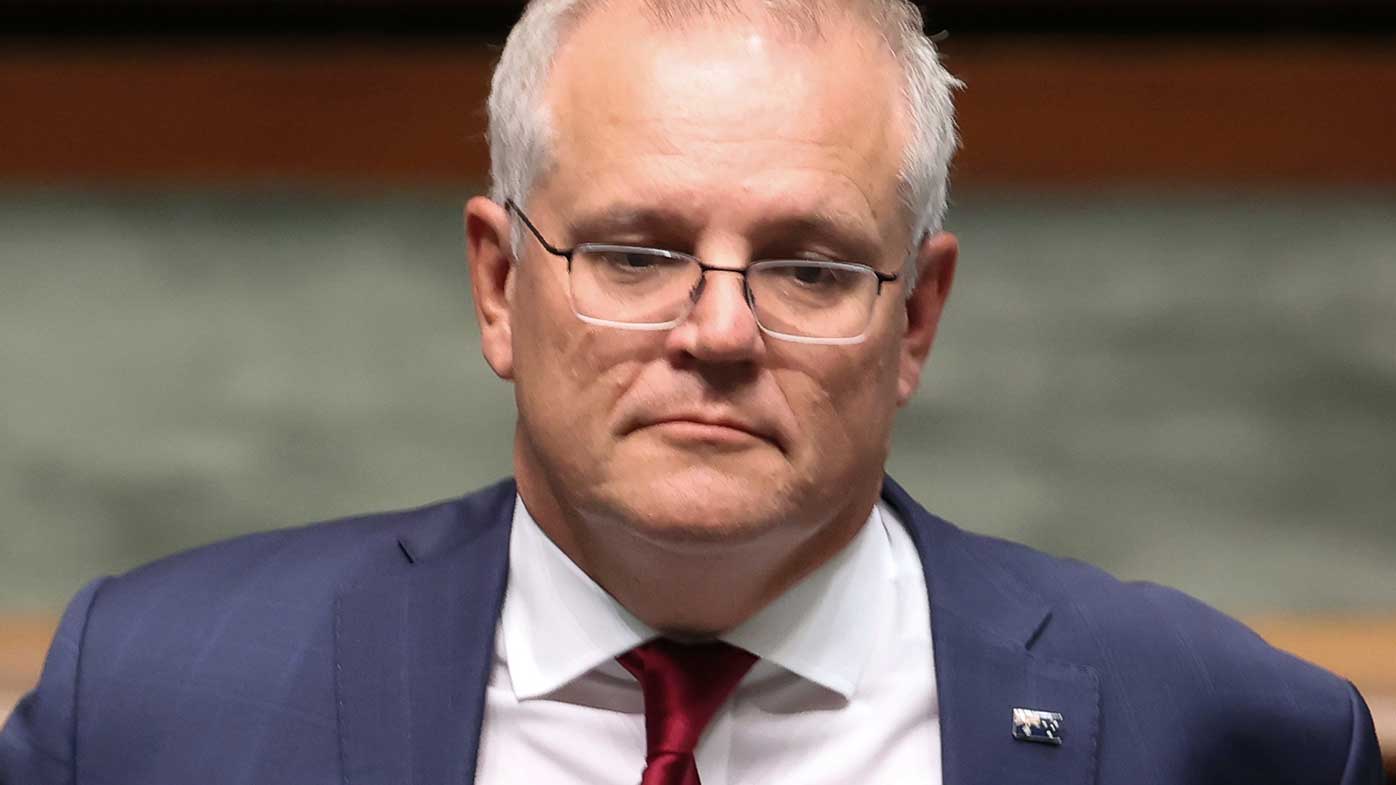
That Royal Commission heard testimony from survivors whose abusers have since died. Survivors for whom a conviction of their abuser would never be possible, but for whom an apology still mattered.
The Commission also heard testimony from the friends and family of child sex abuse victims had taken their own lives or since passed away. Their stories were meaningful and their evidence significant to the Commission's final report.
Just because the police have decided not to investigate, that does not render other forms of inquiry void. And just because testimony cannot be given by the alleged victim, does not make an independent inquiry futile.
At present there is no clear forum in which this woman's allegation against the Attorney General can be tested. It is imperative that one is created. Otherwise, the court of public opinion will decide.
And that serves nobody's interest.