(Bloomberg) — Democrat Jon Ossoff claimed victory over Republican David Perdue in Georgia Wednesday morning with a lead of about 16,000 votes in a race that was still too close for major news organizations to call.
“Whether you were for me or against me, I will be for you in the U.S. Senate,” Ossoff said in an online statement.
He held a slight lead of about 16,000 votes over Perdue, a former corporate executive and one-term senator.
Democrats have already captured one of Georgia’s two U.S. Senate seats as Raphael Warnock defeated Republican Senator Kelly Loeffler in one of the runoff races, according to the Associated Press.
In Ossoff’s race, some of the outstanding votes yet to be counted are coming from heavily Democrat precincts. But it could take days to get the final tally, as 17,000 military and overseas ballots can still be counted as late as Friday, and some domestic absentee ballots were still out. The narrow results will almost certainly spark legal challenges or recounts that also could delay a final determination of Senate control.
Two Democratic victories in Georgia would narrowly flip control of the Senate to Democrats. The chamber would be split 50-50 between Republicans and the Democratic caucus, with Vice President-elect Kamala Harris casting tie-breaking votes.
Senate control, paired with the Democrats’ narrow majority in the House, would give Democratic President-elect Joe Biden a unified U.S. government and could smooth the path for his nominations and some major legislation.
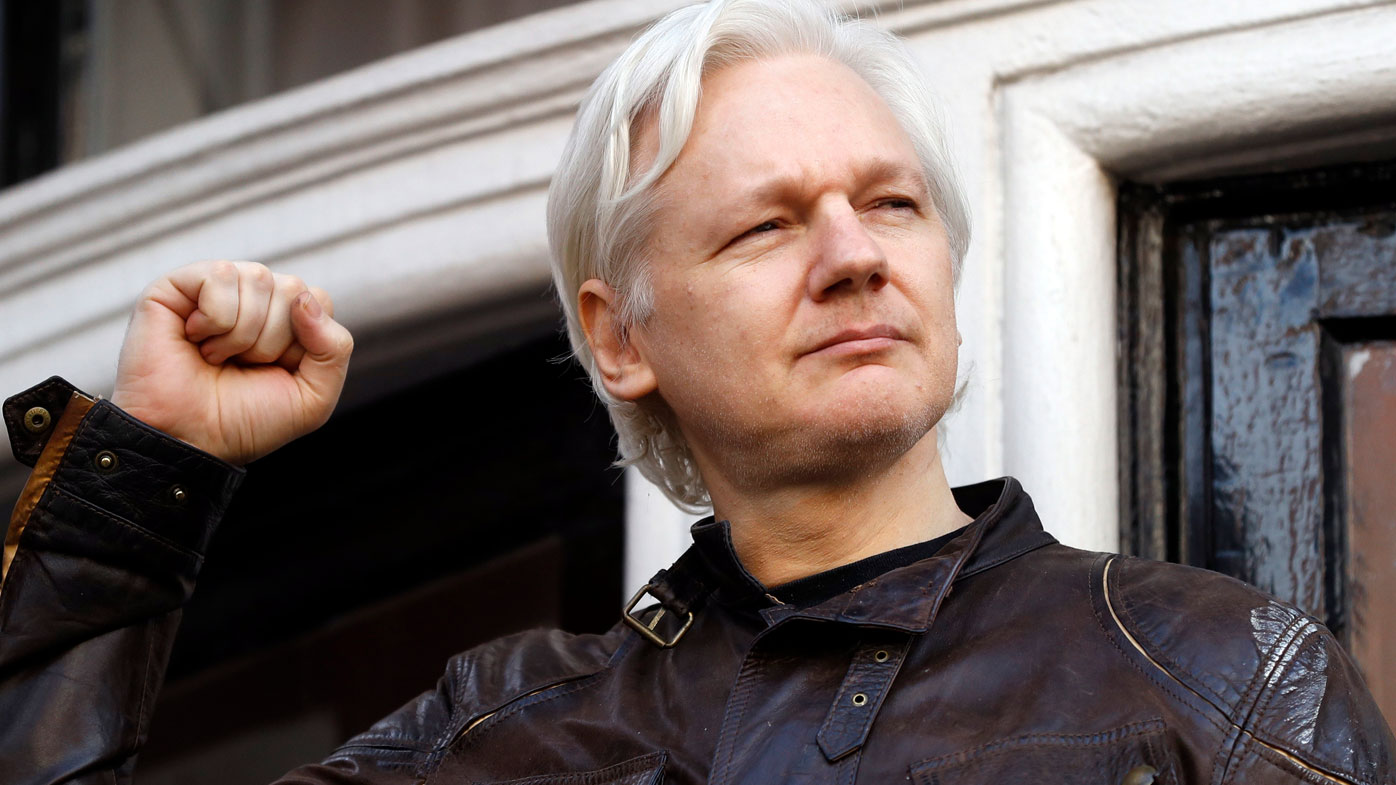
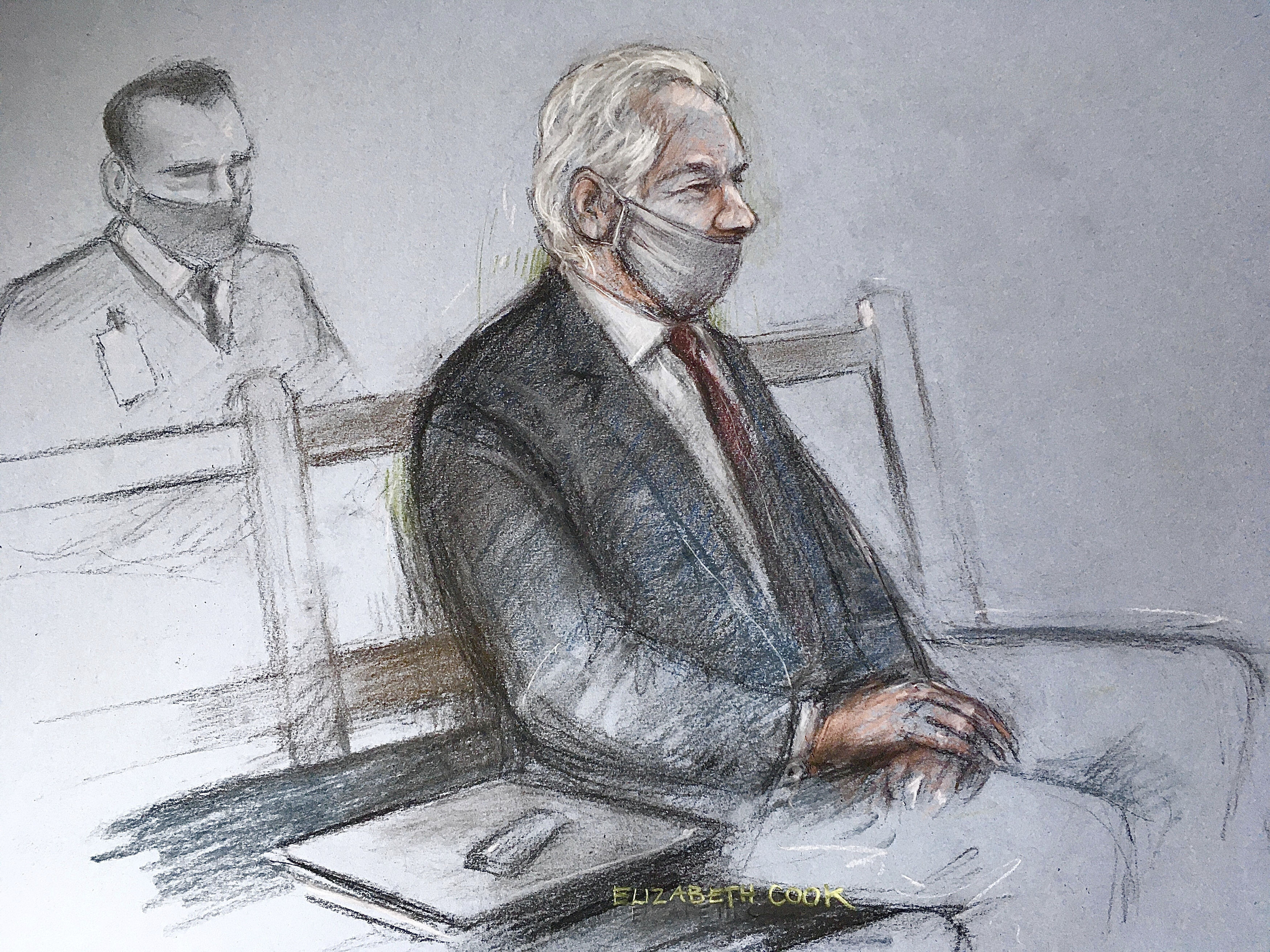
Julian Assange has been refused bail by a judge who this week rejected a US request to have him extradited to face espionage and hacking charges.
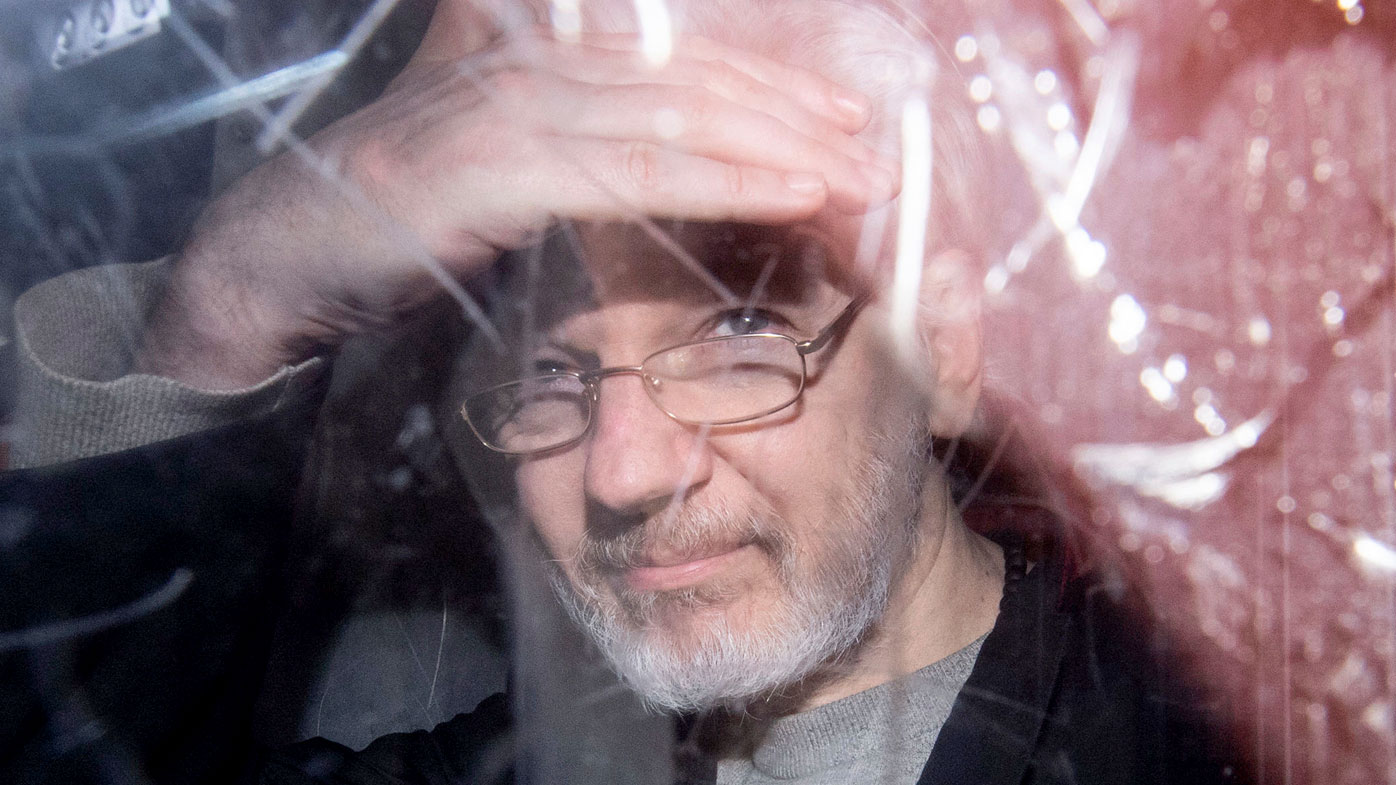
The co-founder of WikiLeaks has been held at Belmarsh prison in south-east London for the past 18 months after he was evicted from the Ecuadorian embassy, where he sought asylum for seven years.
Two days after her ruling against the US extradition request, which is being challenged, district judge Vanessa Baraitser said the 49-year-old “still has an incentive to abscond from these, as yet unresolved, proceedings” and she was satisfied he would fail to surrender if bailed.
“As a matter of fairness the US must be allowed to challenge my decision,” said the judge, sitting at Westminster magistrates court after overseeing the extradition hearing at the Old Bailey earlier this week and last year.
Advertisement
Assange “had already demonstrated a willingness to flout” the orders of the court, she said, and people who had previously put their trust in him and given sureties had been let down and had their money forfeited. She was also satisfied that his mental health was being managed at Belmarsh.
Making the bail application, Assange’s lawyers said when he absconded eight years ago to enter the Ecuadorian embassy was in “totally different circumstances” and he now had the opportunity to be reunited in the UK with his partner and two young children. He would live at their address and wear an ankle tag.
After Monday’s rejection of the US extradition request, Edward Fitzgerald QC said Assange “now has every reason to stay in this jurisdiction, where he has the protection of the rule of law and this court’s decision”.
“The experience of going to the Ecuadorian embassy was in the end an extremely unpleasant experience leading to him being confined for seven years and a change in the government leading to a change in the position. That is something he is never likely to repeat,” he added.
The bail application was contested by Clair Dobin, a barrister appearing for the US authorities, who said the court “should be under no illusions” as to readiness of other states to offer protection to Assange.
She referred to an offer of asylum the president of Mexico had extended to Assange following Monday’s ruling. Assange would not necessarily have to leave the UK, she said, adding: “He would just have to enter another country’s embassy.”
His past activities, including involvement in helping the US whistleblower Edward Snowden, showed Assange had resources and “the sheer wherewithal” to arrange his own flight.
However, Fitzgerald said Mexico’s offer was “quite clearly” intended come into effect after the legal proceeding in the UK had concluded and provide Assange with an option of refuge elsewhere in the world were he to choose to leave the UK.
“It was not a suggestion that they would welcome him into their embassy,” said Fitzgerald.
There was a dispute over Covid-19 rates in Belmarsh prison, where Assange’s lawyers maintained there had been a severe outbreak among dozens of prisoners on the wing where the 49-year-old was being held.
“In any view, the [Covid-19 in prison] position is worse now than before Christmas and he would be safer isolating with his family in the community subject to severe restrictions rather than at Belmarsh, which clearly has had a very significant outbreak,” said Fitzgerald.
The court also received confirmation that lawyers for the US would appeal against Monday’s extradition ruling. While rejecting arguments that Assange would not get a fair trial in the US, on Monday Baraitser blocked extradition on the basis that procedures in prisons there would not prevent him from potentially taking his own life.
The American prosecutor seeking to put Assange on trial in the US has meanwhile said he was uncertain if Joe Biden’s incoming White House administration would continue to seek the extradition of the WikiLeaks co-founder.
LONDON, Jan. 6, 2021 /PRNewswire/ — With many countries starting the new year with another national lockdown, working from home has transcended as a norm.
The COVID-19 pandemic has led destinations, hospitality providers and travellers to implement creative travel solutions, including extended stays for people who are able to work remotely.
In the tourism-reliant Caribbean, citizenship by investment programmes helps provide a method for regional destinations to maintain a level of tourism activity while also ensuring local communities’ health and safety.
Several nations across the planet currently offer Citizenship by Investment (CBI) programmes. These Programmes grant investors an instantaneous route to nationality in return for a contribution to the host country’s society, culture or economy.
Ranked best in the industry are the Caribbean islands of the Commonwealth of Dominica and the Federation of St Kitts and Nevis. Their 12-week citizenship process, affordable investment thresholds and tropical climate make the islands give high-earning remote workers the chance to elevate their work-life balance with sun, sand, sea and safety.
“As remote working becomes the norm, individuals are welcoming the idea of living and working remotely from a safer, less populated destination that offers a healthier lifestyle,” says Micha Emmett, the CEO of London headquartered legal advisory firm CS Global Partners.
The firm continually monitors the various citizenship by investment programmes, and since the beginning of the pandemic, the firm has noticed a peak in inquiries about second citizenship. “Many of the hotels and resorts offer villa experiences so travellers and remote workers can quarantine and social distance in luxury,” Emmett added.
Dominica and St Kitts and Nevis also have some of the lowest coronavirus cases in the region. As of January 5th, the UK no longer requires getting a PCR test to depart Dominica and the CDC has marked St Kitts and Nevis as “Level 1: Low Level of COVID-19”.
With second citizenship from these Caribbean countries, investors and their families can also live and work in the nation while gaining visa-free or visa-on-arrival access to over 75 percent of the globe. Those interested in applying can do so from their homes’ safety by getting in touch with an authorised agent. Once due diligence checks are cleared, applicants can apply for a passport and embody the digital nomad persona.
Los Angeles County, CA. : More than 1,000 Die in Less than a Week
More than 1,000 people have died of Covid-19 in Los Angeles County over the past week as California grapples with surging cases and overwhelmed hospitals.
“L.A. County reached the terrible milestone of more than 11,000 deaths due to Covid-19,” Los Angeles County Department of Public Health Director Dr. Barbara Ferrer said in a statement, as she urged all residents to stay home and follow public health orders.
“As a community, we must commit to stopping the spread of Covid-19 in its tracks so that we can save as many lives as possible.”
The pandemic has devastated much of the US state.
On Tuesday, the state reported 368 new coronavirus deaths — pushing the number of lives lost in the state to 27,000 since the start of the pandemic. Some 2.45 million have been infected.
The surge in cases has put California at the epicenter of the US’s struggle against coronavirus.
Colombia brings back lockdowns as coronavirus cases rise
By MANUEL RUEDAyesterday
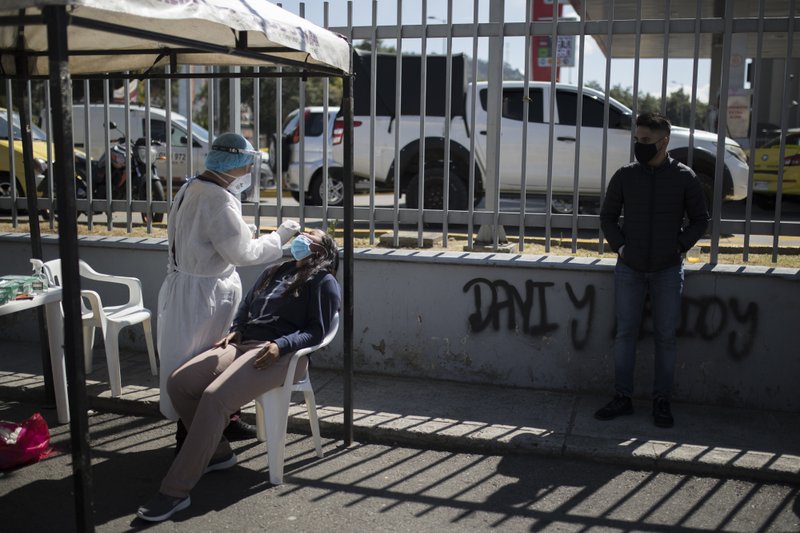
A healthcare worker collects a nasal swab sample to test for COVID-19, in Bogota, Colombia, Tuesday, Jan. 5, 2021. Colombia’s capital city is reimposing lockdown measures on Tuesday as new coronavirus infections rise around the country. (AP Photo/Ivan Valencia)
BOGOTA, Colombia (AP) — As the holiday season winds down, Colombia is experiencing a sharp rise in coronavirus infections that has prompted several cities to impose curfews and stay at home measures that had not been implemented for months.
In the capital city of Bogota, the local government locked down three districts that have a population of about 2.5 million people, ordering all businesses except for supermarkets and pharmacies in that part of the city to close.
In Medellin, Colombia’s second-largest city, authorities announced a curfew that will last from 10 p.m.to 5 a.m. every day until next week. Night-time curfews have also been adopted in the city of Cali and in some towns along Colombia’s Caribbean coast where thousands of tourists are still spending their holidays.
Officials said the measures are being taken to control a growing number of infections and stabilize hospitalization rates.
Colombia was reporting around 8,000 new coronavirus infections per day at the end of November, but transmission appears to have risen in December as people traveled for the holidays, met with their families, and in some cases, held mass gatherings and dance parties, despite a government ban on such activities.
Over the past week, the South American country has been reporting more than 11,000 infections per day, while in some cities ICU wards for coronavirus patients have reached 90% occupancy rates.
In Bogota, 23 hospitals – out of 60 – reported on Monday that their ICU wards were fully occupied. On Tuesday, officials said that they were locking down part of the city to prevent hospitals from overflowing.
“In the following days we will have 1.3 million people returning” from vacation, Luis Ernesto Gomez, the city’s acting mayor, said on Tuesday. Mayor Claudia Lopez is currently on vacation. “That will put pressure on our hospitals and increase interactions and contagion,” Gomez said.
The districts which have been placed on lockdown for two weeks include wealthy Usaquen, which is expected by officials to receive large numbers of people coming back from holidays. Officials in Bogota urged incoming travelers to self isolate for a week and work from home.
But many residents expressed their frustration with the return of lockdowns.
“I don’t agree with this,” said Johanna Parra, a housewife from Suba, one of the locked down districts. “Many other area areas of the city are still open, so people will continue to go out and interact.”
European Medicines Agency approves Moderna coronavirus vaccine
The Guardian (UK)- The EU’s drug watchdog has authorised emergency use of Moderna’s Covid-19 vaccine, nearly two weeks after approving Pfizer and BioNTech’s shot for the virus.
On Tuesday, Israel became the first country outside North America to grant authorisation to Moderna’s vaccine. The US and Canada have already started rolling out the two-dose vaccine.
Here are some more details on Moderna’s vaccine:
The vaccine, called mRNA-1273, is based on messenger RNA (mRNA) technology, which relies on synthetic genes that can be generated and manufactured in weeks, and produced at scale more rapidly than conventional vaccines.Pfizer’s mRNA vaccine for Covid-19 was the first authorisation of any treatment developed using this technology. Other firms using mRNA technology for developing Covid-19 vaccines include Germany’s Curevac and US biotech firm Arcturus Therapeutics.
Moderna’s vaccine can be stored for up to six months at -20C, though it is expected to be stable for 30 days at normal fridge temperature of 2-8C (36-46F).Those are less onerous requirements than Pfizer’s, which must be stored at ultra-cold temperatures of -70C, but can last in normal refrigeration for up to five days, or 15 in a thermal shipping box.
The vaccine was shown to be nearly 95% effective, with no serious safety concerns in a late-stage study.Moderna was among the first to conduct Covid-19 vaccine human trials, starting in March. Its late-stage 30,000 participant testing began on 27 July in the US. It finished enrolling participants in October.The company slowed enrolment in September to increase the diversity of the trial population. It ultimately enrolled 3,000 Black American participants and more than 6,000 Hispanic participants.The vaccine candidate is being tested at 100 clinical research sites in the US. Moderna’s US trial was the first under the government’s Operation Warp Speed program.
Over in Greece churches have opened their doors – in defiance of nationwide lockdown measures – to celebrate the feast of the Epiphany.
The decision to mark the baptism of Christ, a major holiday in the Orthodox calendar, has put the powerful institution on a collision course with the centre right government following a dramatic increase in confirmed coronavirus cases.
Police patrols could be seen imploring mask-wearing worshippers to maintain social distancing rules as services got underway. Local media reported chaotic scenes in Thessaloniki, the country’s northern metropolis, with faithful refusing to adhere to the public health measures as they attended the blessing of the waters.
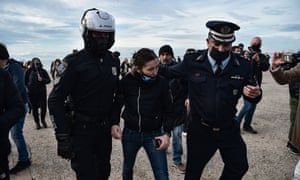
Police officers arrest a woman for trying to throw a cross into the sea in Thessaloniki, as Greek bishops’ determination to keep churches open for today’s Epiphany holiday in the face of a coronavirus lockdown have stepped up a confrontation with the government over health restrictions Photograph: Sakis Mitrolidis/AFP/Getty Images
On Tuesday Greece’s public health organisation, EODY, said infections had more than doubled after 928 people were diagnosed with the virus, up from 427 on Monday. Fatalities rose by 40 bringing the death toll to 5,051 since the onset of the pandemic in March.
After easing restrictions over the Christmas period the government on Saturday unexpectedly ordered a week-long nationwide lockdown, enforcing the closure of places of worship to facilitate the planned reopening of schools next week.
Previously it had said churches could conduct liturgies on Christmas Day, New Year’s day and Epiphany, which officially marks the ending of the festive season.
Infuriated it had not been consulted earlier, the Holy Synod, the Church’s governing body, announced it would not accept the restrictions with bishops telling congregations to attend services.
Moderna’s coronavirus vaccine has become the second to receive approval from Europe’s medicines regulator, as authorities accelerate the roll-out of jabs aimed at curbing the pandemic amid worries about more infectious variants.
Following the green light from the European Medicines Agency (EMA), the final step is approval by the European commission which is expected to quickly follow.
Japan’s daily coronavirus cases hit record as state of emergency looms
Japan’s Covid-19 cases reached a new daily record on Wednesday, as the government faced mounting pressure from health experts to impose a strict state of emergency for the Tokyo greater metropolitan area.
Rising infections have driven Tokyo and surrounding areas to the highest level of a four-stage alert, prompting regional governors to call for a declaration of emergency that prime minister Yoshihide Suga is expected to announce on Thursday.
The health ministry held a meeting of infectious disease experts on Wednesday, the second in as many days. They have called for stricter and longer countermeasures, while Suga has sought a more limited response to avoid damaging the economy.
“Even if we take strong measures immediately, it will be difficult to bring the Tokyo metropolitan area down to stage 3 by the end of January,” said Takaji Wakita, chief of the National Institute of Infectious Diseases.
New infections nationwide reached at least 6,001, a new daily record according to a tally by national broadcaster NHK. Tokyo reported 1,591 cases, also an all-time high.
Without new measures, daily infections in Tokyo could nearly triple to 3,500 per day by February and hit 7,000 by March, according to simulations by Kyoto University scientist Hiroshi Nishiura.
An emergency declaration would need to last at least two months to bring infections to manageable levels, he said.
A senior ruling party lawmaker said on Tuesday it should be imposed for one month, and extended if necessary. The government is anxious about the economic impact as it prepares to host the Olympics this summer.
The government’s top spokesman, Katsunobu Kato, said a decision would likely come on Thursday on whether and for how long to impose the second state of emergency since the start of the pandemic.
Economists warned of a big hit to gross domestic product (GDP) if restrictions are prolonged or expanded, but said that could be unavoidable.
Nationwide, Covid-19 infections reached what was then a daily record of 4,915 on Tuesday, while deaths were also an all-time high of 76.
Tokyo and the three surrounding prefectures have asked residents to refrain from non-essential, non-urgent outings after 8pm from Friday until at least the end of the month, and said restaurants and bars must close by that time.
But measures are likely to be far less sweeping than they were during last year’s six-week state of emergency, during which schools and non-essential businesses shut down.
Russia has inoculated 1 million people against Covid-19 with its Sputnik V vaccine, according to a statement on the Sputnik V Twitter account.
Russia, which has the world’s fourth highest number of Covid-19 cases, started large-scale vaccinations last month.
No new adverse reactions have been reported, RIA news agency quoted Alexander Gintsburg, the director of the Gamaleya Institute, which developed the vaccine, as saying.
Hungary should extend a partial lockdown due to end on Monday because of a rise in coronavirus infections in neighbouring countries, the surgeon general, Cecília Müller, said.
The measures imposed by prime minister Viktor Orbán’s government in November include a 7pm curfew, a ban on all gatherings and the closure of hotels and restaurants.
Hungary had received three shipments of Pfizer/BioNTech’s Covid-19 vaccine so far, enough to inoculate 79,000 people, Müller said, adding further doses would arrive on a weekly basis.
As of Wednesday, Hungary had reported 331,768 Covid-19 cases with 10,198 deaths and 179,541 recoveries. More than 5,000 people are in hospital.
With the future leadership of Angela Merkel’s Christian Democratic Union to be decided next week and a general election looming in the autumn, Germany’s debate over the slow rollout of the vaccination drive is becoming increasingly politicised.
Influential tabloid Bild, which has in the past done little to hide its enthusiasm for the conservative hardliner Friedrich Merz, has pinned the blame for what it calls the “vaccine debacle” on centrist Merkel’s push for a joint European procurement process.
“Angela Merkel should explain herself”, said a Bild editorial. “She owes this especially to all the old people who now fear for their lives because they cannot be vaccinated”.
Though the start of the immunisation push in Germany has been slow, the country has given a first dose of the BioNTech/Pfizer vaccine to 316,962 people, more than any other country in the EU.
The CDU’s junior coalition partner, the Social Democratic party, has meanwhile also turned its guns on health minister Jens Spahn, with finance minister Olaf Scholz sending the conservative politician a catalogue of 24 questions over the handling of the procurement process.
“Mrs Merkel and Mr Spahn have sworn an official oath to shield the German people from harm”, said SPD delegate Florian Post. “But both made a decision to thrust the task of procuring vaccines to the dilettantes around EU commission president von der Leyen”.
The attack line comes as a surprise from the German centre-left, which campaigned in national elections in 2017 with the slogan: “Why Europe? Because we are stronger together than alone”.
Updated at 11.44am GMT
Critics of France’s slow Covid-19 vaccination programme – by 5pm Tuesday evening 7,000 people had received the vaccine – have turned their sights on the health minister, Olivier Véran.
Véran, a doctor/neuroloigist, is under intense political pressure over France’s response to the coronavirus crisis not just from opposition members of parliament, but from his own centrist LREM party.
This pressure was increased after president Emmanuel Macron criticised the slowness of the vaccine rollout.
Véran has promised the inoculation programme will be speeded up and simplified and said 500-600 vaccination centres will be opened across France by the end of the month.
At the moment, those receiving the vaccine attend a medical appointment, are given information about the vaccine and time to consider their options, then asked for written consent. This is taking time among the first patients, most of whom are in elderly care or nursing homes.
France also has a high number of vaccine sceptics: polls suggest more than half the population is unwilling to be inoculated. However, Véran has insisted France will catch up with its neighbours in the coming days.
The French PM’s office has said between 25-30% of the Pfizer/BioNTech vaccine doses “might be lost” because of logistical problems.
This figure represents 50-60m doses of the 200m ordered by France. Officials say the figures are a “margin of security that we’re taking to evaluate the number of people who would be vaccinated by the number of doses (of vaccine) we have,” a spokesperson for the PM said.
These losses are likely to be caused by a loss of cooling – the Pfizer/BioNTech vaccine must be stored at -70 C (-96F) – as the vaccine is transported to where it is to be used, broken phials or those that are partially used.
“The vaccine is made in multidoses but cannot be kept once it is open. It could happen that certain doses are not used,” the official added.
The University of California’s San Diego campus has launched a newly installed vending machines stocked with do-it-yourself Covid-19 tests for students.
The 11 dispensers at UC San Diego since 2 January – with nine more to be added over the next week or two – are the first of their kind to be introduced on a college or university campus in the US, according to school officials.
Adapted from conventional vending machines, the systems aim to make it easier and less costly to regularly screen the school’s student body.
All 10,000 students living on campus, accounting for about a quarter of the school’s total enrolment, are required to be tested at least once a week, up from once every two weeks last quarter, university officials said.
The test kits are free and can be obtained from the machines with the swipe of a university ID card. Students then swab their own nostrils and deposit the sample for collection and analysis by one of two on-campus laboratories.
Self-testing Covid-19 vending machines on campus at UC San Diego as students return to classes. Photograph: Mike Blake/Reuters
Results are usually returned within 12 to 24 hours, UC San Diego chancellor Pradeep Khosla told Reuters.
“They’re an amazing innovation – simple, effective and impactful,” he said of the machines, which have dispensed thousands of tests a day since they began operation.
Students may otherwise avail themselves of testing provided at any of a half-dozen walk-up or drive-through sites on campus.
For anyone testing positive, the university has set up a 600-bed housing unit where infected students who are asymptomatic or suffering mild illness can recover in isolation until they are not contagious.
But the quarantine housing has so far been sparsely used. Fewer than 600 UC San Diego students have contracted Covid over the past 10 months, a university spokeswoman said.
UC San Diego also has the most advanced wastewater Covid testing program of any US college, with sewage samples collected from campus housing sites scanned every 24 hours. The wastewater surveillance enables health officials to indirectly screen all students daily and detect potential outbreaks before they occur.
Despite its ambitious testing, the campus offers fewer than 10% of its winter undergraduate courses in person, using outdoor classrooms under special Covid safety restrictions in effect for educational programs within San Diego County. All other undergraduate courses are conducted remotely
Commissioner Dale Holness with the first Black State Attorney of Broward County 17th Judicial Circuit, Harold Pryor.
On January 5, Broward County’s first Black State Attorney, Harold Pryor was officially been sworn in.
The ceremony took place at his home with his wife and son by his side. Broward Circuit Judge Elijah Williams administered the oath.
This is the first time since 1976 that Broward County has a new state attorney. Mike Satz, who held the position for more than four decades decided to leave the top prosecutor’s job in early 2020.
In the November 2020 elections, Pryor beat his Republican challenger Gregg Rossman, 64% to 36% of votes.
Pryor will spend his first day on the job swearing in new members of his staff at the main courthouse in Fort Lauderdale.
Joe Scott was also sworn in as Supervisor of Elections for Broward, taking over for Republican Peter Anotonacci, who was appointed to the office in 2018.
(CNN) US President Donald Trump directed acting Secretary of Defense Christopher Miller to reverse course and order a US aircraft carrier to return to the Middle East following a White House meeting Sunday, according to a senior defense official.
This decision overturned Miller’s order last week to send the USS Nimitz out of the region and home, in part, to send a de-escalation signal to Iran amid rising tensions between Washington and Tehran.
One defense official says Miller’s idea of de-escalation had not been adopted as a formal, approved policy. It took top commanders by surprise, several defense sources said. US Central Command wanted the carrier to stay in the region to deter Iran at a time of rising tension and less than three weeks before President-elect Joe Biden takes office.
US officials were particularly concerned that Iran or its proxies might stage some sort of attack to the one-year anniversary of the Trump administration’s January 3 assassination of Iran’s second most powerful leader, Gen. Qasem Soleimani, and the Iraqi Shia militia leader Abu Mahdi al-Muhandis in a drone strike.
A calibrated response
Tehran’s carefully calibrated response came Monday, when Iran announced it has restarted enriching uranium to 20% levels seen before the international nuclear deal froze its nuclear program in exchange for sanctions relief. And a maritime security company said Iranian forces had detained a chemical tanker bearing the flag of close US ally South Korea.
Foreign diplomats and officials who watch Iran closely said that Iran is mindful that with Biden’s arrival in the White House, the US approach to Iran will change sharply. “I think that Iran knows in a few days the game starts again and if they do something stupid now it doesn’t help their position,” one diplomat told CNN.
Another said worries haven’t subsided though. “There’s nervousness around Iran globally because there’s always a possibility that someone will misstep and go too far, or someone will do something,” a European diplomat said. “There’s been a long catalogue of misunderstanding between Iran and the US, so they’re not always calibrated to understanding each other’s red lines well.”
The State Department said it was tracking reports that Iran had detained the South Korea-flagged tanker.
“The regime continues to threaten navigational rights and freedoms in the Persian Gulf as part of a clear attempt to extort the international community into relieving the pressure of sanctions,” a spokesperson said. “We join the Republic of Korea’s call for Iran to immediately release the tanker,” they said.
The White House and NSC did not immediately respond to CNN’s request for comment.
On Sunday, Miller announced that the aircraft carrier would remain in place due to purported Iranian threats “against President Trump and other US government officials.” Miller said in a statement that he had “ordered the USS Nimitz to halt its routine redeployment.” The carrier will now “remain on station in the US Central Command area of operations,” Miller added.
“No one should doubt the resolve of the United States of America,” he said.
US officials have been concerned that Iran or its proxies would mark the January 3 anniversary with some sort of attack. President Donald Trump had threatened that he would “hold Iran responsible” if any Americans were killed. Along with the change of course for the USS Nimitz, the US had also sent nuclear-capable bombers to the Mideast and publicized the presence of nuclear submarines around the Persian Gulf as a deterrent.
On Monday Iran’s Foreign Minister Javad Zarif said in a tweet that “we resumed 20% enrichment, as legislated by our Parliament. IAEA has been duly notified,” and added that, “Our measures are fully reversible upon FULL compliance by ALL.”
Trita Parsi, a vice president at the foreign policy think tank Quincy Institute, said he suspected that Iranian politics “compelled the government to respond to all of these threats that the Trump administration has made in the last couple of weeks in a way that would allow them to claim they have pushed back, but not do it in a way that would provide Trump with a pretext to attack, which would have been the case if something had happened in Iraq.”
‘Nuclear extortion’
Mark Dubowitz, chief executive of the Foundation for Defense of Democracies, described the move as “nuclear extortion, the nuclear blackmail that Iran has quite effectively engaged in over the years.”
Referring to the Iran nuclear deal’s formal name, the Joint Comprehensive Plan of Action, Dubowitz said, “They’re counting on Biden’s already stated objective of going back into the JCPOA and will not want a nuclear crisis his first few months in office.”
The European Union has said there will be consequences for Iran’s decision. One diplomat from a member country said they “do not appreciate at all” Iran’s move to increase enrichment but sees it as “all part of a negotiating process” with “the US and Iran sending signals to each other.”
This diplomat agreed that Iran’s move to increase enrichment and seize the South Korean-flagged tanker was carefully chosen. “What they don’t want to do is provoke too much of a reaction from the current administration, but they don’t mind poking a bit, here they are poking a stick at one of America’s closest allies,” the diplomat said.
Iran has been working for months for the release of $7 billion in oil payments that South Korea owes Tehran but has not released because of fear of US oil sanctions.
While Tehran responded to the January 3 anniversary carefully, Iran-affiliated leaders were explicit that they would not be attacking US interests. On Sunday, the leader of the Iran-backed Iraqi Shiite militia group Kataib Hezbollah issued a statement saying the group would not try to “enter” the US Embassy in Baghdad, which was attacked in the wake of Soleimani’s killing, or seek to overthrow the current Iraqi government, even as crowds gathered in Baghdad’s Tahrir square Sunday to demand that US forces leave the country.
“We will not enter the embassy of evil today, and we will not overthrow this government, as there is still time,” Abu Hussein Al-Hamidawi said in the statement. The US has previously accused Kataib Hezbollah of being behind attacks on US facilities.
Last week CNN reported there have been conflicting messages that reflect divisions within the Pentagon on the current threat level from Iran.
A British judge has denied bail to WikiLeaks founder Julian Assange, who has been jailed in Britain since 2019 as he fights extradition to the United States.
District Judge Vanessa Baraitser ordered Assange to remain in prison while the courts consider an appeal by US authorities against a decision not to extradite him.
On Monday, the judge rejected an American request to send Assange to the US to face espionage charges over WikiLeaks' publication of secret military documents a decade ago.
She denied extradition on health grounds, saying the 49-year-old Australian was likely to kill himself if held under harsh US prison conditions.
The judge said on Wednesday that Assange "has an incentive to abscond" and there is a good chance he would fail to return to court if freed.
The ruling means Assange must remain in London's high-security Belmarsh Prison where he has been held since April 2019, when he was arrested for skipping bail during a separate legal battle seven years earlier.
Lawyers for the US government have appealed the decision not to extradite Assange, and the case will be heard by Britain's Hugh Court at an unspecified date.
Clair Dobbin, a British lawyer acting for the US, said Assange had shown he would go "to almost any length" to avoid extradition, and it was likely he would flee if granted bail.
She noted that Assange had spent seven years inside Ecuadorian Embassy in London after seeking refuge there from a Swedish extradition request in 2012
Ms Dobbin said Assange had the "resources, abilities and sheer wherewithal" to evade justice once again, and noted that Mexico has said it will offer him asylum.
But Assange's lawyer, Edward Fitzgerald, said the judge's decision to refuse extradition "massively reduces" any motivation to abscond.
"Mr Assange has every reason to stay in this jurisdiction where he has the protection of the rule of law and this court's decision," he said.
Mr Fitzgerald also said Assange would be safer at home with his partner Stella Moris and two young sons — fathered while he was in the embassy — than in prison, where there is "a very grave crisis of COVID."
But the judge ruled that Assange still had a strong motive to flee.
"As far as Mr Assange is concerned this case has not yet been won," she said. "Mr. Assange still has an incentive to abscond from these as yet unresolved proceedings."
US prosecutors have indicted Assange on 17 espionage charges and one charge of computer misuse over WikiLeaks' publication of thousands of leaked military and diplomatic documents.
The charges carry a maximum sentence of 175 years in prison.
US prosecutors say Assange unlawfully helped US Army intelligence analyst Chelsea Manning steal classified diplomatic cables and military files that were later published by WikiLeaks.
Lawyers for Assange argue that he was acting as a journalist and is entitled to First Amendment protections of freedom of speech for publishing documents that exposed US military wrongdoing in Iraq and Afghanistan.
The judge rejected that argument in her extradition ruling, saying Assange's actions, if proven, would amount to offences "that would not be protected by his right to freedom of speech."
She also said the US judicial system would give him a fair trial.
Assange's legal troubles began in 2010, when he was arrested in London at the request of Sweden, which wanted to question him about allegations of rape and sexual assault made by two women.
In 2012, Assange jumped bail and sought refuge inside the Ecuadorian Embassy, where he was beyond the reach of UK and Swedish authorities — but also effectively was a prisoner in the tiny diplomatic mission.
The relationship between Assange and his hosts eventually soured, and he was evicted from the embassy in April 2019.
British police immediately arrested him for breaching bail in 2012.
Sweden dropped the sex crimes investigations in November 2019 because so much time had elapsed, but Assange has remained in prison throughout his extradition hearing.
Among the shelves of the Frutas Selectas Food Stand in Holguín there are photographs of the revolutionaries Camilo Cienfuegos and Ernesto Che Guevara, as well as a large poster with the slogan of this State company: “Selected Fruits: the most select from the tropics.”
What is missing is fruit for sale.
Frutas Selectas is a food market that before the COVID-19 pandemic was a provider to hotels, restaurants and other tourist businesses. Now, in the absence of foreign visitors, its clients are the almost 300,000 inhabitants of this city in the eastern part of the Island.
Although the market was completely out of supplies, a line had started to form outside. Some waited sitting on a wall or leaning against the counter with their empty crates and their arms crossed.
“We are the only country in the world where we line up in underserved markets waiting for whatever arrives”
They hoped that at some point the store would put something up for sale, anything.
“We have been in line for two days to see if something arrives,” says Hilda Lobaina, a 72-year-old housewife whose mask does not hide the frustration in her gaze.
“We are the only country in the world where we line up in underserved markets waiting for whatever arrives” adds a retiree from the commerce sector who only wanted to identify himself as Antonio for fear of retaliation.
Since April 1st in Holguín’s number one State agricultural market, there is also a sign that reads that since April 1st all fruits, vegetables or viands “will be regulated by the [ration] book.” In other words, only a maximum amount of food per person is sold each month
Until the arrival of the pandemic, fresh produce had not been subject to such strict regulations. In the case of plantains, the only product for sale that day, the limit was five pounds. Hundreds of people lined up to get them.
Raciel Céspedes, a 75-year-old man, explains that despite having arrived first thing in the morning and spending two hours in line, he still hasn’t gotten the “fongos,” as this type of dwarf plantain is known here.
“In my house there is no food and if I don’t buy something for lunch I won’t eat today,” says Céspedes.
In recent months, the scenes of undersupplied markets and long lines or of those with a single product for sale have been repeated throughout the country.
Cubans, who have suffered from food shortages for years, have seen the situation worsen as the state-controlled economy plunged into a deeper crisis since the arrival of COVID-19.
With its main sources of income declining and without access to international financial markets, the Cuban State has more difficulties than usual obtaining foreign exchange
After years of slow decline in the wake of the crisis in Venezuela and the tightening of US sanctions, the pace of economic collapse now appears to have accelerated. The main symptom of the problem is a severe food shortage.
Today’s Cuba does not produce enough food to supply its population and needs to get it overseas in dollars or euros.
With its main sources of income declining and without access to international financial markets, the Cuban State has more difficulties than usual obtaining foreign exchange.
Although precise and up-to-date economic statistics are not disseminated in the country, the information available abroad highlights the precariousness of the situation.
According to official data from the International Settlement Bank (BIS), at the end of June 2020, Cuban companies had the equivalent of 867 million US dollars on deposit in bank accounts abroad.
For Cuba, this is the worst figure since the end of 2005, according to the BIS records.
In the last 15 years, Cuba had an average of 2,200 million US dollars in foreign currency at the end of each quarter, according to the statistics of the aforementioned institution. Now it’s averaging less than half.
This is translating into a drastic reduction in imports, which fell by 34% in the first eight months of this year compared to the same period in 2019, according to data from the International Monetary Fund (IMF).
Each month until August, Cuba was importing about 210 million US dollars less than the previous year.
Among the countries that Cuba has stopped buying from are its main food suppliers, such as Brazil, the United States and Spain, according to official data from those countries.
Sales from Brazil to Cuba decreased 23% compared to last year; from Spain, 36%, and from the United States, 45%.
This translates into less chicken, oil, rice, corn or beans, and the fear is that a situation like the one experienced in the 1990’s, during the so-called Special Period, will repeat itself.
In a country that prided itself on having eradicated hunger, the government has had to resort to donations from the World Food Program (WFP) to ensure the availability of beans, rice and oil in five eastern provinces
Today, virtually all daily consumer products are subject to some form of rationing. In a country that prided itself on having eradicated hunger, the government has had to resort to donations from the World Food Program (WFP) to ensure availability of beans, rice and oil in five eastern provinces, as the organization explained in a recent report.
“Without a doubt, this is the most critical situation that has affected Cuba since the Special Period,” asserts for this report Economist and former professor at Baltimore’s John Hopkins University, Ernesto Hernández-Catá.
Other prominent Cuban economists have agreed on this diagnosis. “Cuba is suffering the worst economic crisis since the one that occurred in the 1990’s, after the collapse of the USSR,” Carmelo Mesa-Lago, an academic at the University of Pittsburgh, recently wrote.
In most countries, the prevailing perception is that the current economic crisis has a culprit: the pandemic. In Cuba, many economists present a more complex analysis.
“Cuba has arrived at a crisis in crisis” Havana University professor Omar Everleny Pérez has maintained in several interviews. In his opinion, Cuba was already going through a period of shortages in 2019 due to the country’s economic difficulties in exporting products or services, generating foreign exchange and importing food from the proceeds.
Other experts agree that, although the current crisis has conjunctural causes, the most important ones are the structural ones, related to the Cuban economic model.
The Economist even declared, in a discussion organized by the magazines El Toque and Periodismo de Barrio, that “the existing shortages in the stores where the population obtains its foods has nothing to do with the pandemic”.
Other experts agree that, although the current crisis has conjunctural causes, the most important ones are the structural ones, related to the Cuban economic model.
“Cuba suffers from a chronic currency crisis due to the insufficiency and decline of exports of goods over many years (…). Although the crisis has conjunctural elements stemming from the pandemic, the serious problems are structural”, explains economist Luis R. Luis, one of the directors of the Association for the Study of the Cuban Economy (ASCE) for this report.
“The current crisis has two elements. One reflects the effects of the pandemic. The other is the character of the Cuban economy, which is rigid, distorted and inefficient. This will not be resolved with the end of the pandemic and will require fundamental reforms of the economy”, details Professor Hernández-Catá.
Among many experts there is the feeling that Cuba has reached the end of a road and what is coming is a transition period in which the country will have to find a new model.
If the population’s standard of living did not fall further, it was mainly due to the sale of medical services, tourism, remittances from Cubans living abroad and trade with Venezuela.
In the last two decades, Cuba practically ceased to be a sugar producing country, but it failed to develop another industry of similar magnitude that would allow it to generate foreign exchange.
If the population’s standard of living did not fall further, it was mainly due to the sale of medical services, tourism, remittances from Cubans living abroad and trade with Venezuela. The latter has been, by far, the main economic activity in the country in recent years.
Cuba now faces the uncertainty of whether visitors will return en masse and whether emigres will continue to send as many remittances. But it also faces the certainty that its most lucrative activity, its relationship with Venezuela, will no longer be as beneficial as before.
This has motivated some experts to consider that the country cannot continue to think about depending on a single activity or partner.
“For the past 60 years, Cuba has been unable to finance its imports (…) without the substantial aid or subsidies from a foreign nation. That is the long-term legacy of the Cuban socialist economy,” wrote Professor Mesa-Lago in an article published last year.
“History has shown that dependence on Soviet subsidies first, and later on, swaps (exchanges) of Venezuelan oil for doctors were a serious mistake. These political agreements are unhealthy because they do not depend on the comparative advantages of their participants, but rather on the largesse of basically fragile countries like the USSR and Venezuela”, concludes Professor Hernández-Catá.
When Venezuela’s economy began to collapse around 2015, the impact on Cuba was not immediately felt. An initial slow decline of the country’s economy began then, and ended up worsening with the arrival of the pandemic.
Since the beginning of the century, Cuba has sent tens of thousands of workers, mainly health workers, to Venezuela. In exchange, in addition to cash, Cuba received oil that was refined and re-exported to Venezuela itself and elsewhere.
When Venezuela’s economy began to collapse around 2015, the impact on Cuba was not immediately felt. An initial slow decline of the country’s economy began then, and ended up worsening with the arrival of the pandemic.
All this trade came to represent 20% of Cuba’s gross domestic product (GDP).
Although the country has only published information on the benefits of its relationship with Venezuela on specific occasions, the calculations made by some economists highlight that trade with the “sister” Bolivarian Republic was the Cuban State’s biggest business.
Trade with Venezuela also allowed the State to keep pace with imports of basic products that the population needed and that are now in short supply.
According to the calculations of academic Luis R. Luis, the relationship between the two countries reached its peak around 2014. At that time, the export of doctors and other professional services reached about 7.5 billion US dollars. Venezuela paid slightly less than half, 3.4 billion, in barrels of crude oil and another 4.1 billion in cash.
But as Venezuela entered the worst crisis in its history and, as sanctions by the United States and other countries tightened against it, this trade was reduced.
Cuba, which has an abundance of health professionals, only partially reduced the size of its missions, but Venezuela found it increasingly difficult to pay for them in crude oil or dollars.
Luis estimates that the oil payment went from $ 3.4 billion in 2014 to just under $ 900 million last year, a drop of 74%.
These data are consistent with official figures released by Cuba’s National Office of Statistics and Information (ONEI), which show how the value of trade in goods with Venezuela, which consisted mainly of crude and refined oil, plummeted between 2013 and 2019. The value of exports to the South American country fell almost 90%, while that of imports fell 63%.
With less oil to refine and sell in dollars, the country began to suffer from shortages.
“The economy has been hit by declining imports of Venezuelan oil,” noted a November 2016 report from the Embassy of the Netherlands in Havana. “As a result, foreign exchange earnings from oil re-exports fell and led to a cash shortage that is threatening Cuba’s ability to meet its payments with foreign suppliers.”
According to the ONEI, the Cuban State’s debts with foreign suppliers doubled between 2013 and 2017.
But the problem went further. As we received less and less payment in kind, the amount that had to be disbursed in cash grew. What happens to this money is an enigma, given that Cuba hardly publishes information about its economic relationship with Venezuela.
In 2019, the ONEI reported that Cuba had exported medical services valued at almost 5.4 billion dollars. It was the second time that the authorities published this data
Until now, it is not known if the cash is being paid, or in what currency the payment would be made (in US dollars or Venezuelan Bolivars, for example) or how much the debt currently amounts to.
In 2019, the ONEI reported that Cuba had exported medical services valued at almost 5.4 billion dollars. It was the second time that the authorities published this data.
But it is not clear if that sum, which in large part comes from Venezuela and represents the largest income for the country, really reached bank accounts of the Cuban State or if the money only exists, “in theory”, for the purposes of State accounting. There are reasons to doubt.
The country governed by Nicolás Maduro has suffered in the last five years the greatest economic collapse that has been registered in a country at peace in decades, and its capacity exporting oil and getting dollars in return has been declining for years.
This means that Venezuela is finding it increasingly difficult to pay off its debts to Cuba. Several Cuban economists take it for granted that the country has not received what it’s owed from Venezuela for years.
In a 2018 analysis for the Cuba Study Group, economist Pavel Vidal stated that the ONEI had not adequately accounted for the country’s economic activity, since it had reflected money as income that in reality there was no way to collect from Venezuela in the short term.
“They are assuming that Venezuela’s inability to pay for medical services is due to a temporary liquidity problem. In reality, it is a structural problem.”
“They are assuming that Venezuela’s inability to pay for medical services is due to a temporary liquidity problem. In reality, it is a structural problem,” wrote Vidal.
ASCE academic Luis R. Luis also stated in a recent article that Venezuela lacks the ability to pay Cuba in hard currency and that it could only do so with crude oil or in the national currency, the bolivar.
This constitutes a serious problem for Cuba, since Venezuela produces less and less oil, and its tankers – and specifically those traveling to Cuba – have been subject to United States sanctions since the middle of last year.
In addition, the bolivar has suffered constant devaluations that have practically turned it into a symbolic currency. Since Venezuela does not produce most of the food that Cuba needs to buy, its currency is also not good for purchasing it.
In an interview for this report, Luis assures that there are several facts that explain the current shortage situation in the country, such as the disappearance of tourism due to the pandemic, or the tightening of US sanctions, but not one has as much weight as Venezuela’s inability to pay.
“There has been a massive drop in these payments from a level of $ 6.6 billion in 2016 to less than $ 1 billion in 2019. Other crisis factors are much less important.”
“There has been a massive drop in these payments from a level of 6.6 billion dollars in 2016 to less than 1 billion dollars in 2019. Other crisis factors are much less important,” said the Economist.
So far, Cuban leaders have not publicly shown signs of the deterioration of the economic relationship with the Maduro government. But since Venezuela began to collapse, they have taken steps to seek alternatives to dependency, such as encouraging foreign investment.
At the end of 2015, they reached an agreement with the Paris Club, which groups together a series of countries, mostly European, to which Cuba owed billions of dollars. According to the deal that was reached, Cuba would open itself to investment from these countries in exchange for partial debt forgiveness.
“The deterioration Venezuela has experienced has led Cuban authorities to a repositioning process with a view to reducing the traumas associated with the possible collapse of relations with the South American country”, was the interpretation of the Paris Club when announcing the agreement.
But Cuba failed to attract significant foreign investment outside of tourism; dependence on Venezuela continued, the situation in the South American country worsened, and the United States sanctions against both governments tightened, making crude shipments even more difficult.
In the last year and a half, Cuban leaders began to prepare the population for difficult times, even mentioning the possibility of a new Special Period, which has a profound impact for Cubans, who remember that time as traumatic.
“The harshness of the moment requires us to establish clear and well-defined priorities, so as not to return to the difficult moments of the Special Period,” said President Miguel Díaz-Canel in an April 2019 speech.
A few days earlier, the first secretary of the Communist Party, Raúl Castro, made similar statements, alerting Cubans that, although the country now had a more diversified economy than when the Soviet bloc fell, they should prepare “always for the worst variant”.
As 2019 progressed, the “worst variant” took place. The statistics compiled by the BIS on deposits and loans in international banks indicate that the country has been running out of dollars and euros.
In March 2019, Cuban state-owned companies had the equivalent of 2.3 billion dollars in foreign currency abroad. By December, the figure dropped to 1.3 billion and continued to fall in 2020
In March 2019, Cuban state-owned companies had the equivalent of 2.3 billion dollars in foreign currency abroad. By December the figure dropped to 1.3 billion and continued to fall in 2020. By the end of June, already in the midst of the pandemic, 867 million were available, the worst since 2005.
Although Cuba has close ties with countries such as Russia or China, it hardly imports food from them. To buy food (except rice, which is bought from Vietnam, mainly), the country needs dollars or euros with which to pay Brazilian, American or Argentine suppliers.
The country was running out of foreign exchange and, consequently, without food.
Long lines, irregular distribution and months-long disappearance of some products have been a cyclical problem in Cuba for decades.
However, in recent years, at the same time that the Venezuelan economy has collapsed, there has been a slow decline in the stocks of everyday consumer products.
Out of a selection of 64 commonly used products, 39 experienced a drop in their availability in stores between 2015 and 2018, according to data from the ONEI. The amount of cooking oil for sale in retail stores decreased by 36%; soap and toothpaste, 30%; fresh milk, pasta and pork, 25% and powdered milk and chicken, 20%.
Although the ONEI has not yet released data for 2019, many Cubans agree that the availability of products continued to fall and that the shortage worsened even more during the pandemic.
Official data available abroad show that the country is importing considerably less food than a year ago.
Purchases of frozen chicken from the United States last August were 25% of the same month’s imports in 2019. Purchases of Brazilian soybeans between January and September of this year (used to make cooking oil) were half of those during the same period last year.
Another phenomenon must be added to this: last year’s decline of the national agricultural production. According to an analysis by economist Pedro Monreal, between 2018 and 2019 (last years with available information), 12 products groups for everyday consumption experienced a decline. The amount of beef produced declined by 23%, and rice by 18%.
In a recent official report, the authorities recognized that in 2020 some 30,000 tons of rice will not be harvested due to lack of fuel
Although data are not available for this year, it is possible that this downward trend has continued, since the shortage of foreign exchange has also negatively affected imports of fertilizers and fuels necessary to maintain production.
In a recent official report, authorities recognized that some 30,000 tons of rice will not be harvested due to lack of fuel in 2020. This is the equivalent of about 10% of the national production.
The shortage is significant in all the cities of the country and has resulted in long queues from the early morning hours in State stores and the rise of a digital black market in which products fetch irrational prices.
“The main problem we have is food. It cannot be that in the midst of the COVID-19 pandemic people have to go out and spend all day trying to buy chicken. It is something elementary,” said Economist Omar Everleny Pérez in the aforementioned meeting with independent magazines.
There are long lines In Holguín every day in front of stores or markets, especially if there has been a rumor that some establishment will put a high demand product for sale which has been absent for weeks.
During an August morning, María Eugenia Durán, a 67-year-old woman, had been waiting for two hours to buy cassava in a market in the city. It was the only product for sale in the establishment.
Visibly tired and with her bag empty, Durán complained that “everything is scarce and to buy very little you have to stand in endless lines. Sometimes you can’t buy anything because the products run out, there are shortages of all basic products and food since last year”.
Economist Luis assures that as long as foreign exchange is scarce, the country will continue in a food crisis. “Recent data suggest that the worst case, a nutrition catastrophe, will be avoided at a high cost by cutting imports such as medicines, fuels and other raw materials”, he states.
________________________
Editor’s note: This work was supported and edited by the Institute for War & Peace Reporting (IWPR), an independent non-profit organization that works with media and civil society to promote positive change in areas of conflict, closed societies and countries in transition throughout the world.
UK Love Island reality TV show star Zara Holland has escaped jail but been hit with a 12,000 Barbados dollar fine for breaking Barbados coronavirus laws.
Zara, 25, was summoned to appear before District A magistrates’ court after attempting to flee this love island when her boyfriend tested positive for coronavirus.
Before the court, Holland pleaded guilty to “contravening the emergency Covid-19 curfew directive”.
Holland faced fines of up to £18,000, but was handed just a £4,417 ($12,000 Barbados dollars) fine in the ruling.
The former Miss Great Britain had been accused of “contravening the emergency Covid-19 curfew directive” in Barbados by leaving “her hotel premises without reasonable explanation” while being “a person in quarantine”.
Holland and her boyfriend Elliott Love, 30, underwent coronavirus tests upon arrival in Barbados on December 27 and were instructed to isolate at the island’s Love Sugar Bay hotel.
However, when Love’s test came back as positive, the pair headed to the airport to escape the island.

 This is the first time since 1976 that Broward County has a new state attorney. Mike Satz, who held the position for more than four decades decided to leave the top prosecutor’s job in early 2020.