Tag Archives: caribbean

Key U.S.-Canada Border Crossing Blocked by Truckers Fighting Trudeau’s COVID Curbs

OTTAWA, Feb 8 (Reuters) – The busiest land crossing from the United States to Canada remained shut on Tuesday after Canadian truckers blocked lanes on Monday to protest their government’s pandemic control measures.

While traffic in both directions was initially blocked, U.S.-bound lanes have since reopened, Windsor Police tweeted. Canadian police also said late on Tuesday another border crossing at Coutts, Alberta, had been shut down by protesters for inbound and outbound traffic.

Drivers demanding an end to federal COVID-19 vaccine mandates for cross-border traffic began blocking the streets of Canada’s capital, Ottawa, on Jan. 28. Since Sunday night, police have started slowly taking back control, seizing thousands of liters of fuel and removing an oil tanker truck.

Ottawa Deputy Police Chief Steve Bell told reporters on Tuesday that police have immobilized many of the heavy vehicles taking part in the blockade. He said about a quarter of the 418 protest vehicles in the downtown have children in them, and police are concerned for their welfare in relation to cold, noise, carbon monoxide risks and access to sanitation.

Canada’s Public Safety Minister Marco Mendicino told reporters that he had been in touch with the mayor of Windsor and local legislators about the blockade at the Ambassador Bridge, connecting Detroit, Michigan, with Windsor, Ontario.

“We will continue to work…so that we can keep the supply chains moving across the Ambassador Bridge, as well as the wheels of our economy turning,” he said.

Canada sends 75% of its exports to the United States, and the bridge usually handles around 8,000 trucks a day.

“It is clear these disruptions have broadened in scope beyond the vaccine requirement implementation,” White House press secretary Jen Psaki said. “We are of course in touch with our Canadian counterparts” on the blockade, Psaki added.

The owner of the bridge, the Detroit International Bridge Co, said international commerce on the bridge needed to resume as quickly as possible in a manner that reflects mutual respect, the company’s chairman, Matt Moroun, said in a statement.

REOPENING PLANS

The president of the Canadian Vehicle Manufacturers’ Association called for an immediate end to the blockade, saying “persistent delays at the Ambassador Bridge risk disrupting automotive production that employs tens of thousands of Canadians.”

Canadian Prime Minister Justin Trudeau appeared in public on Monday for the first time in more than a week after being infected with COVID-19, saying the protest had to stop. Trudeau reiterated on Tuesday that “we’re going to continue to follow the science” when interim Conservative leader Candice Bergen asked Trudeau in parliament whether he will follow the science and end the restrictions quickly.

Trudeau has denounced the demonstrators’ tactics but one of his Liberal Party colleagues has broken rank on the government’s hardline stance on vaccine mandates. Joel Lightbound called on the government to move away from divisive politics and present a clear roadmap for lifting pandemic restrictions.

Alberta became the latest Canadian province to announce plans to ease pandemic restrictions. Premier Jason Kenney said starting Tuesday midnight, Albertans can dine in restaurants and sit at entertainment venues without showing their vaccine passports, as part of a three-step reopening plan.

Quebec Premier Francois Legault also announced on Tuesday a gradual reopening of the province’s offices, businesses, bars and social activities through March 14, while lifting restrictions on the number of visitors allowed in private homes.

Legault said a recent protest by truckers in Quebec City did not influence his plans, but acknowledged that some people in the French-language province were fed up with the restrictions.

Saskatchewan Premier Scott Moe said the requirement to provide proof of vaccination or a negative COVID-19 test for businesses, workplaces and other public venues will end on Feb. 14.

Reporting by and Ismail Shakil Bengaluru and Anna Mehler-Paperny in Ottawa; Additional reporting by David Ljunggren in Ottawa, Allison Lampert in Montreal, Susan Heavey and Heather Timmons in Washington; Writing by Denny Thomas Editing by Jonathan Oatis and Lisa Shumaker

The post Key U.S.-Canada Border Crossing Blocked by Truckers Fighting Trudeau’s COVID Curbs appeared first on The St Kitts Nevis Observer.

Peru’s Leftist Government Will Embrace Free Market, Says New PM

LIMA, Feb 9 (Reuters) – The latest prime minister picked by Peru’s embattled president, Pedro Castillo, pledged to pursue free-market policies in his first public remarks on Wednesday, a day after a new Cabinet was unveiled that aims for stability in the Andean nation.

Speaking at a government news conference, Prime Minister Anibal Torres also emphasized that Castillo’s leftist administration will promote a strong government that can prevent monopolies and other concentrations of economic power

Torres, who previously served as justice minister, was tapped Tuesday night as the president’s fourth prime minister since he took office last July.

“Our policy is the free market, free economic enterprise, free business, but with the participation of the state to control monopolies, oligopolies and (other) dominant positions,” Torres said, as he was flanked by other ministers.

The Cabinet re-shuffle took place after the departure of the previous prime minister, who was heavily criticized for allegations of domestic violence, which he had denied.

Torres is seen as a Castillo loyalist and will be tasked with helping advance the president’s agenda in a fragmented Congress dominated by conservative opposition parties.

Finance Minister Oscar Graham, a more centrist technocrat who previously worked at the central bank, was kept on in the new Cabinet, which was welcome news for investors and other business-friendly advocates.

“They won’t be able to label us communists because we haven’t carried out any actions that align with that political ideology,” said Torres.

He emphasized that the new Cabinet will seek measures to improve security as well as the South American country’s COVID-19 vaccination program, which he pitched as key to economic growth.

Reporting by Marco Aquino; Writing by Carolina Pulice; Editing by David Alire Garcia and Leslie Adler

The post Peru’s Leftist Government Will Embrace Free Market, Says New PM appeared first on The St Kitts Nevis Observer.

Mexico Says Alleged journalist’s Killers Have Been Arrested

MEXICO CITY, Feb 9 (Reuters) – Mexico has arrested the alleged perpetrators of the murder of journalist Lourdes Maldonado, President Andres Manuel Lopez Obrador said Wednesday, following the killing of four media workers this year.

“We are working, they are not forgotten,” Lopez Obrador in a news conference, during which his team presented photographs and maps showing the movements of the alleged perpetrators.

Rosa Icela Rodriguez, head of the Security and Citizen Protection law enforcement agency confirmed the arrest of three people linked to the crime.

Neither Lopez Obrador nor his security team gave details on their identity or motive.

Maldonado, 68, was shot in front of her house in the border city of Tijuana on Jan. 23. Three years earlier, she had raised the issue of journalist killings with Lopez Obrador during a news conference and said she feared for her life.

So far this year, three other journalists have been killed: Jose Gamboa in the eastern state of Veracruz, Margarito Martinez in Tijuana and Roberto Toledo in the western state of Michoacan.

Activists say criminal groups and drug gangs, as well as corrupt officials, are suspected of carrying out many of the killings of reporters in Mexico.

U.S. lawmakers urged Mexico to step up protection for journalists and criticized the president for publicly lashing out at his government’s critics in the media on Tuesday. read more

Senators Tim Kaine and Marco Rubio asked the Biden administration in a letter to U.S. Secretary of State Antony Blinken to take a bigger role in pushing the Mexican government for stronger action.

Reporting by Raul Cortes Fernandez and Diego Ore; Writing by Valentine Hilaire Editing by Alistair Bell

The post Mexico Says Alleged journalist’s Killers Have Been Arrested appeared first on The St Kitts Nevis Observer.

Experts Warn Against England Ending Covid Rules, Virus Devastating Afghanistan, US-Worst Over?, Mask Mandates

Covid rules are to be axed in England, but is pandemic’s end really in sight?

Analysis: Plans to end isolation rules have been gleefully announced, but questions about infection control remain

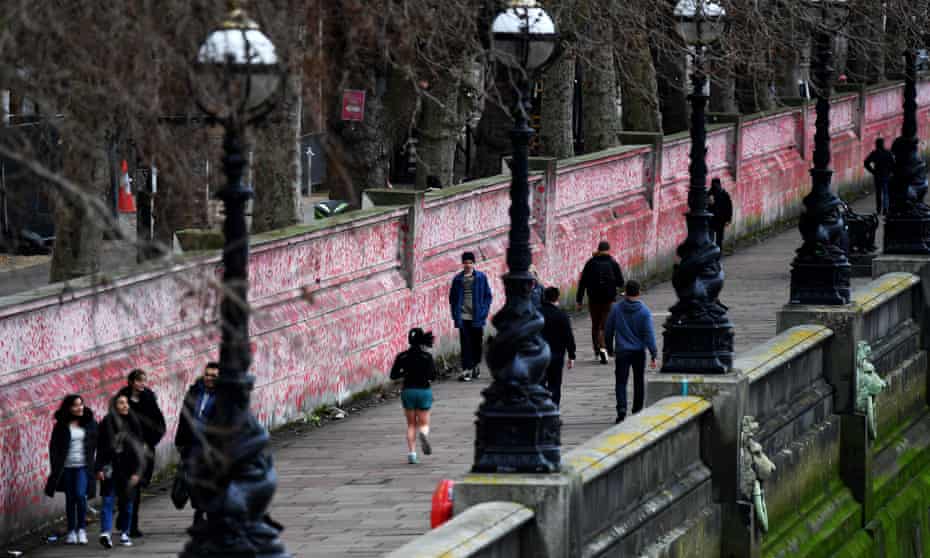
People walk past the National Covid Memorial Wall in London
People walk past the National Covid Memorial Wall in London on Wednesday.
Photograph: Andy Rain/EPA

As the threat of the Omicron wave has receded in England, the government has been quick to move the conversation on to “living with Covid”.

It was inevitable that this would mean the eventual lifting of legal restrictions, including the need to self-isolate. But even given the optimistic tone in recent weeks, Boris Johnson’s announcement on Wednesday came sooner than many expected.

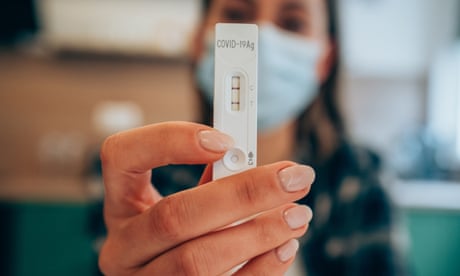
Positive test result by using rapid test device
Boris Johnson plans to end England’s Covid rules a month early

While he signalled the scrapping of restrictions in England by 24 February – a month earlier than had originally been planned – he provided no detail.

It is unclear whether any specific scientific advice was provided on the impact of the move – none has been published – and some of the latest evidence published by the government’s Sage advisers gives an idea of potential risks.

An assessment in mid-January concluded that lifting of plan B measures could result in a return to epidemic growth, “particularly if precautionary behaviour, including testing, decreases as a result of reduced perception of risk”. Since then, case numbers have remained high and on Wednesday figures from the Office for National Statistics (ONS) showed that in England infection levels rose to one in 19 people in the first week of February.

But those figures are not as frightening as they once were.

Vaccines and immunity from infection mean that a large surge of cases no longer translates to tens of thousands of deaths. Nevertheless, the Sage analysis points out that another increase could result in “a sustained period of high levels of hospitalisations [that] would have detrimental consequences for the NHS”, at a time when waiting lists are at a record high.

As we move out of the crisis phase of the pandemic, it is perhaps also time to recalibrate what we expect from public health policy, beyond simply avoiding large numbers of deaths in the immediate term. Restrictions have to be balanced against the real downsides of self-isolating, but policies should also be evidence-based, coherent and consider the impact on those in vulnerable groups.

The latest announcement has left a sense of confusion about how the public will be expected to live out the changes to rules in two weeks’ time.

Following the jubilant tone of the announcement regarding people no longer needing to self-isolate, Downing Street later clarified that “in the same way that someone with flu, we wouldn’t recommend they go to work, we would never recommend anyone goes to work when they have an infectious disease”.

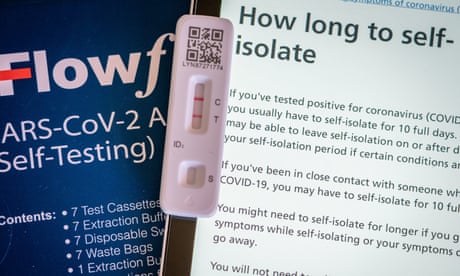
A positive lateral flow test.
What will happen after Covid rules are scrapped in England?

A substantial proportion of Covid infections are asymptomatic, or mild, though. So as England moves to a new phase, so new questions will have to be faced. Most employers would not expect – or tolerate – people staying off work when suffering from mild cold symptoms. Will they feel the same way about Covid?

Will people just need to stay at home as long as they are ill – as with flu? Or will there be a suggested isolation period? And how will the rules apply to NHS staff, who until last week faced being sacked unless they were fully vaccinated? The details are, so far, unclear.

There is also continued concern about how the latest policy will affect those in the clinically vulnerable group, for whom Covid remains a more serious threat because their immune systems do not respond as effectively to vaccines.

Campaign groups and charities representing those with blood cancer, kidney disease and other immunocompromised people say that while the government has celebrated being able to return people’s freedoms, it has failed to set out plans for how vulnerable groups will be able to return to a normal life, or to ensure that all of these people are able to access fourth vaccine doses and antiviral drugs.

The emergence of future variants also remains a possibility, and Sage scientists have repeatedly stressed the need for vigilance. While requirements for individuals to test and isolate may be relaxed, it will be crucial for national surveillance to continue to ensure that there is time to react in the case of new variants.

=====================================================

COVID surge in Afghanistan puts more pressure on devastated health care system

An Afghan patient infected with COVID-19 sits on a bed in the intensive care unit of the Afghan Japan Communicable Disease Hospital, in Kabul, Afghanistan, Feb. 7, 2022

Credit: Hussein Malla/AP

Afghanistan
A new COVID-19 surge is devastating an already faltering health care system in Afghanistan. Only five hospitals are still offering treatment for the coronavirus, with 33 others being forced to shut down over a lack of doctors, medicine and heating due to a shortage of fuel. The Ministry of Public Health had published detailed daily charts of COVID-19 cases, hospitalizations and deaths prior to the Taliban takeover in August. But now, without sufficient funding, it’s struggling to keep proper records. The country’s economy has been suffering after nearly $10 billion in assets were frozen and most international aid was withheld from the Taliban government.

================================================#

Fauci: US exiting ‘full-blown’ pandemic phase 

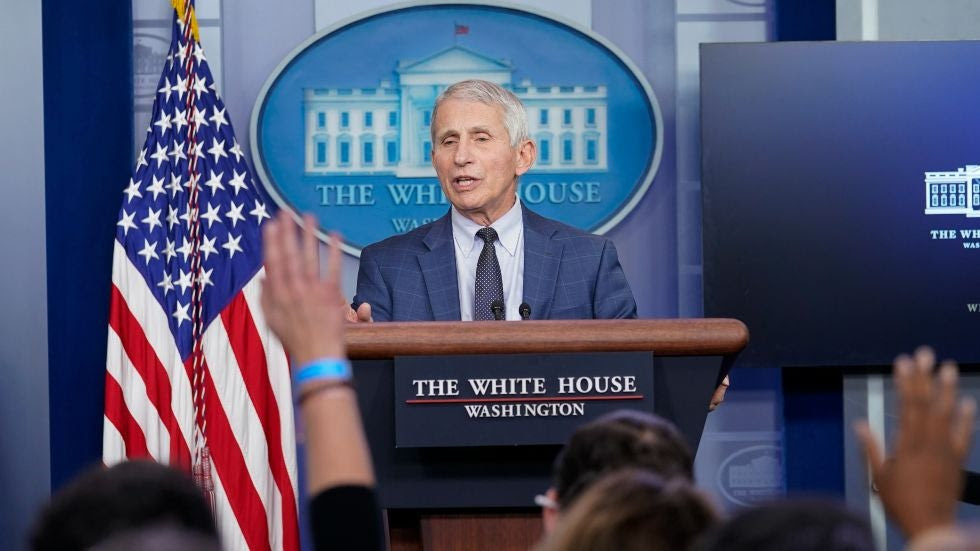
Anthony Fauci responds to reporters' questions at the White House


© Associated Press/Susan Walsh

The U.S. is exiting the “full-blown” pandemic phase of the years-long COVID-19 crisis that began in 2020, the Biden administration’s chief medical adviser Anthony Fauci told the Financial Times on Tuesday.

Fauci, who is the director of the National Institute of Allergy and Infectious Diseases, said that new developments that limit COVID-19, including vaccinations, medical treatments and prior infection, will alter the pandemic situation significantly in the coming months.

“As we get out of the full-blown pandemic phase of COVID-19,” Fauci said to the Times. “Which we are certainly heading out of, these decisions will increasingly be made on a local level rather than centrally decided or mandated. There will also be more people making their own decisions on how they want to deal with the virus.”

Fauci said that he hopes all COVID-19 restrictions will be halted in the coming months as well, citing mandatory mask-wearing as one of the restrictions he expects to end. He agreed that restrictions might end in 2022.

Nonetheless, Fauci warned that local health departments might bring back certain restrictions if regional outbreaks occur.

“There is no way we are going to eradicate this virus,” said Fauci, according to the Times. “But I hope we are looking at a time when we have enough people vaccinated and enough people with protection from previous infection that the COVID restrictions will soon be a thing of the past.”

Officials face new pressure to lift mask rules

© Getty Images

The White House is facing pressure to revise its position on wearing masks, as declining COVID-19 cases and pandemic fatigue among voters leads an increasing number of Democratic states to lift requirements on public masking.

Some governors and local health officials are calling for the White House and Centers for Disease Control and Prevention to release guidance for an off-ramp for mask usage.

Mask requirements are one of the only remaining COVID-19 restrictions in place in many areas of the country. But agency director Rochelle Walensky is insistent that it’s not yet time to lift mask requirements anywhere.

The consequences: Public health experts said the administration risks losing credibility as more and more states go at it alone.

“No one is expecting the CDC to say that mask mandates need to end overnight. But where are the metrics for when restrictions can be lifted? With each passing day, the CDC is making itself less relevant, not only for COVID-19, but for other public health matters as well,” said Leana Wen, a professor of health policy and management at George Washington University.

Politics too: The decisions states are making are just as political as they are scientific, and Democratic strategists said the Biden administration should recognize that. For example, New Jersey Gov. Phil Murphy barely won reelection in November against Republican Jack Ciattarelli, as many voters in the state disapproved of his COVID policies during the pandemic.

Murphy this week said the state’s mask mandate in schools will be ended next month.

CDC advises against ending mask mandates

Rochelle Walensky, Director of the Centers for Disease Control and Prevention, arrives to a Senate Health, Education, Labor, and Pensions Committee hearing on Tuesday, July 20, 2021.


© New York Times/Pool

The head of the Centers for Disease Control and Prevention (CDC) said the agency is still not ready to make recommendations on relaxing mask requirements, even as more governors announce their intentions to do so.

“We are working on that guidance,” Rochelle Walensky told reporters during a White House briefing, but “our hospitalizations are still high, our death rates are still high. So as we work towards that and as we are encouraged by the current trends, we are not there yet.”

Her comments come as a growing number of states, like California, Delaware and New York announced this week their intentions to drop indoor mask mandates in the coming days. Some others, like Connecticut, Massachusetts and New Jersey, are eliminating mask mandates in schools.

Walensky noted that decisions on masks should be made at the local level based on local metrics, like hospital capacity, transmission rate and vaccinations. While numbers are trending downward, she said there’s still too much viral transmission.

“At this time, we continue to recommend masking in areas of high-end substantial transmission. That’s much of the country right now in public indoor settings,” Walensky said.

According to the CDC, 99 percent of U.S. counties still have high levels of coronavirus transmission.


The post Experts Warn Against England Ending Covid Rules, Virus Devastating Afghanistan, US-Worst Over?, Mask Mandates appeared first on The St Kitts Nevis Observer.

Judge Claims Haiti’s PM Henry Helped Plan Moise Murder

By Matt Rivers, Etant Dupain and Natalie Gallón, CNN

CNN Exclusive: Port-au-Prince, Haiti (CNN) In the early morning hours of July 7, 2021, Haitian President Jovenel Moïse was assassinated in the presidential residence.

More than two dozen armed men swarmed the president’s compound where they encountered little to no resistance from security forces there to protect the president.

Moïse was shot 12 times and killed. His wife, Martine Moïse, was also shot multiple times but survived.

The man in charge of organizing the assassination squad, according to Haitian authorities, was a former Haitian anti-corruption official named Joseph Felix Badio, who was on the run.

But on a September night two months earlier, a meeting of undercover officers thought they knew exactly where Badio would be: at a meeting with the new Haitian Prime Minister Ariel Henry, inside his official residence in the capital.

A confidential informant had told the officers that Henry would meet with Badio that night. Since the assassination, the pair had already met twice in-person, according to investigators.

For weeks, Haitian investigators believed that Henry himself was involved in both the planning of the assassination and a subsequent cover-up.

A private meeting between Henry and one of the top suspects in the case, they believed, would help connect those dots.

The plan was to arrest Badio when he left the house and then, at a later date and with proof of the meeting in hand, arrest Henry as well.

But Badio never showed up.

Henry stayed inside all night, and after sunrise, the officers decided to abandon their mission.

Investigators told CNN they later learned that word of the would-be raid had leaked. Badio and Henry had been tipped off, they said, so the pair called it off.

The failed raid is just one example of Haitian investigators being thwarted in their attempts to investigate the assassination of the president.

Multiple law enforcement sources have told CNN one man lies at the center of much of that obstruction: Ariel Henry. We are not identifying them for security reasons.

“Henry is at the center of everything. All he has done since taking over as PM is obstruct (the investigation) and f**k us over.”- a Haitian investigator

Those sources say they have laid out a series of questionable actions that, they say, detail the Prime Minister’s alleged involvement in the assassination: both in plotting Moïse’s death and in helping orchestrate the subsequent cover-up. And, when two of the top judicial authorities sought potential charges against him, they were fired.

“Henry is at the center of everything,” one investigator told CNN. “All he has done since taking over as PM is obstruct (the investigation) and f**k us over.”

CNN’s calls to Henry have not been returned, although he has previously denied any involvement in the assassination.

The Prime Minister has often described solving the murder case as a personal mission.

“Nothing. Absolutely nothing. No political maneuver, no media campaign, no distraction can deter me from this goal to bring justice for President Moïse,” Henry told world leaders at the United Nations General Assembly in September.

Judge: ‘Ariel is connected … to the mastermind’

The official case looking into the assassination is still proceeding in Haiti, but practically, it is all but dead. It has produced no new arrests, no new suspects or any evidence since August but technically, it continues.

Dozens of suspects arrested in the first few weeks after the assassination are still being held in a Haitian prison. None of them have been formally charged.

Until recently, Judge Garry Orélien was the top judicial official in Haiti overseeing the case.

In a recording taken in the fall of 2021, when he was still presiding over the investigation, Orélien makes his views on Henry’s involvement very clear.

“Ariel (Henry) is connected and friends with the mastermind of the assassination. They planned it with him. Ariel is a prime suspect of Jovenel Moïse‘s assassination, and he knows it,” Orélien said in the recording, obtained exclusively by CNN.

CNN has verified the recording by comparing it to other known recordings of Orélien and through extensive conversations CNN has had with him, as well as from voice messages. Orélien did not know he was being recorded.

“I don’t recall talking to anyone about the case in great detail,” said Orélien when asked about the recording. “Lots of people are trying to influence the case and I will not play their game.”

Henry, the suspect

Henry became prime minister on July 20 after a power-sharing agreement was brokered in the wake of Moïse’s death.

Moïse had nominated Henry to the post two days before he was killed, but Henry had not yet been sworn in at the time of Moïse’s death. In mid-July, the American, French, European Union and other embassies in Haiti all called for Henry to lead the country in the interim, paving the way for him to take power.

But it didn’t take long for questions to arise about Henry’s alleged connections to at least one of the assassination’s participants, or his alleged attempts to shut down the investigation and cover it up.

In early August, just a couple of weeks after Henry’s inauguration, police investigators produced an initial report on the assassination, as required by Haitian law.

In that report, Haiti’s then-top prosecutor Bed-Ford Claude, said that there was clear evidence that phone calls were made between Henry and Badio, a top suspect in the assassination, in the hours after the President’s murder.

Claude went public with the evidence in early September, barring him from leaving the country and requesting in a letter that Henry appear for formal questioning.

“It is confirmed you, Ariel Henry, had multiple phone calls, especially two on July 7, (about two hours after the president was assassinated) at 4:03 AM and 4:20 AM with one of the main suspect(s) wanted in the assassination of President Jovenel Moïse, Joseph Felix Badio,” Claude said in the letter.

Claude told CNN shortly after the letter was released that he was discussing charges against Henry with a judge.

Henry declined to appear for questioning, and later, Henry told CNN he had “no recollection” of a phone call, “or if it took place.”

He said the allegations by Claude and his boss, Justice Minister Rockefeller Vincent, were merely political.

“I want to tell those who still have not understood, that the diversionary tactics to seed confusion and impede justice from doing its work serenely will not stand,” Henry wrote in a series of tweets.

Several days later, Henry fired Claude and Vincent.

“The evidence is overwhelming…Ariel is one of the main suspects in my opinion,” Claude said to CNN recently when asked for comment.

“I wanted to indict Ariel Henry after questioning him and I think Ariel knew it, and fired me, and ignored my request (to come in for questioning),” he said.

Vincent, the justice minister, has gone into hiding in Haiti, fearing for his safety. He spoke to CNN in the fall about Henry from an undisclosed location.

“He should resign. And we are still waiting for him to resign,” he said. “Because on the night of the president’s death, a few hours later … he had phone conversations with the president’s assassin,” Vincent said.

But multiple law enforcement sources have told CNN that any official inquiries into Moïse’s death have been stalled for months.

‘It won’t see the light of day’

For one, the preliminary report about the assassination, produced in August, failed to progress into a full-blown investigation after it was submitted to judicial authorities.

The report included evidence seized from the phones of suspects that had been arrested shortly after the president was murdered, according to a copy of the report seen by CNN.

Investigators said they saw messages on at least one of these phones that alluded to bank transfers between the US and Haiti — transfers that investigators believe could provide crucial evidence in finding out who funded the assassination plot.

However, when investigators requested permission in August to expand their investigation, as required by Haitian law, including following up on the alleged bank transfers, they never received an answer from the head of the judicial police, Frédéric Leconte.

A source close to the investigation told CNN that investigators have never been given any reason why their request was ignored.

“That means there is no longer a formal investigation in Haiti into the president’s assassination,” the source told CNN. “It’s incredibly frustrating.”

Leconte, who reports to both the Minister of Justice and to Henry, could not be reached for comment.

Henry then reshuffled his cabinet in November, appointing a lawyer, Berto Dorcé, as justice minister.

Prior to that appointment, Dorcé was among several attorneys who filed a letter to the country’s top prosecutor arguing that Henry should not be forced to answer questions about his alleged complicity in the assassination, citing Henry’s executive privilege.

Dorcé was arrested for drug trafficking in 1997, according to a Haiti law enforcement source, a charge he said at the time was untrue.

He now oversees huge swaths of the justice apparatus in Haiti. That gives him the ability to block any further requests from prosecutors or judges to question or charge Henry.

There is no official record of him blocking such a request. But at least one of the judges, Orélien, who could have questioned Henry or sought charges against him while leading the investigation, believed he wouldn’t get very far if he tried.

In the secret recording from November, Orélien is asked why he has not gone after Henry legally, given that he believes Henry is complicit in the assassination and the cover-up.

“Do you think I can touch Ariel (Henry) now? How can I do that? I won’t be able to give (any order to indict him), it won’t see the light of day,” Orélien said.

Dorcé did not respond to CNN’s request for comment.

“It all can’t be just a coincidence,” one investigator said. “All of these things are connected.”

As the group of investigators continue to search for justice, there are growing calls for Henry to step down.

“Ariel Henry doesn’t have any legitimacy or credibility to govern. His positions might send us to a deeper crisis,” said James Beltis, president of the Transition National Council, a group of Haitian civil society leaders who want to install an independent transitional government to oversee the next round of elections.

But Henry has no plans to step aside, something the US government has so far raised no opposition to.

However, when asked by CNN why the US continues to support a prime minister that investigators have clearly implicated in the presidential assassination, a US State Department spokesperson conspicuously made no mention of backing Henry, and referred CNN to the US Department of Justice and to the government of Haiti.

CNN also asked why the US government has stayed so quiet on the claims against Henry.

“The United States has vocally and repeatedly supported a thorough, independent investigation into President Moïse‘s assassination consistent with both Haitian law and international rule of law standards,” said the spokesperson. “We want to see those who planned, funded, and carried out the assassination of President Moïse held accountable. The Haitian people need to see a transparent process and resolution to this investigation to demonstrate that perpetrators of such heinous crimes cannot escape justice.”

The US Justice Department has ramped up its own investigation into the assassination, recently extraditing and charging two top suspects in the case for allegedly planning the assassination on US soil. According to the federal complaint, one of the men provided the arms and ammunition to kill Haiti’s President.

Two Haitian investigators told CNN they believe that if their US counterparts keep digging, Henry will emerge as a key suspect for them as well.


The post Judge Claims Haiti’s PM Henry Helped Plan Moise Murder appeared first on The St Kitts Nevis Observer.

Jamaica Cop Arrested in Ft. Lauderdale for Scamming South Florida Residents

CNW- The Jamaica Constabulary Force (JCF) has suspended a female cop following reports of her arrest in the United States on charges of alleged wire fraud, mail fraud, and drug trafficking.

Shelian Allen, 42, was arrested on February 4 by members of the Homeland Security Investigation team shortly after she arrived in Fort Lauderdale, Florida.

According to court documents, Allen has been accused of leading a lottery scamming organization that fleeced millions from unsuspecting victims.

“A review of numerous accounts tied to this organization revealed a loss amount in excess of US$1.69 million from 17 victims across the country, including a Brown County victim,” the document stated.

In a statement, the High Command of the Jamaica Constabulary Force said it will continue to collaborate with its international counterparts in this matter.

With lottery scamming as one of the prominent criminal activities in Jamaica, more women getting involved in its operations. Less than a week ago in Jamaica, a woman was also arrested after police seized lottery scamming paraphernalia in St. James.

South Florida is a key target for scammers

Jamaican scammers have also begun to target South Florida more heavily. In 2021, a popular dancehall music producer Donte Johnson, widely known as Papi Don Muziq, was arrested and charged for scamming in South Florida.

The 25-year-old hitmaker, who hails from Montego Bay, was taken into custody after being accused of running an elaborate scam operation in the state. Detectives identified at least 17 additional elderly victims and believe there may be others who fell victim to the producer’s scam. In total, detectives estimate Johnson stole approximately US$300,000 from the 17 victims who live all over the country.

In recent years, lottery scamming, which illegally generates millions of US dollars each year, has reached crisis levels, and has ironically, become a trending topic in dancehall music. The scammers, in their perfected international accents, call foreigners and convince them they have won a prize or the lottery, but the cash or prizes will not be released without payment of fees or taxes. Montego Bay, whilst marketed as a tourist city, is considered the center of lottery scamming activities in Jamaica.

Since late last year, the Anti-Lottery Scam Task Force of the JCF has intensified its operations, conducting several raids across the island to clamp down on individuals involved in lottery scamming. The task force’s operations have concentrated heavily in the parishes of St. James, Hanover, Trelawny, and St. Elizabeth.

The post Jamaica Cop Arrested in Ft. Lauderdale for Scamming South Florida Residents appeared first on The St Kitts Nevis Observer.

Archbishop of Canterbury Calls for Removal of Cambridge Memorial to Slave Trade Investor

The plaque memorialising Tobias Rustat, who invested in the Royal African Company, is located inside a Cambridge University college chapel.


The Archbishop of Canterbury has said the Church of England is taking too long to remove a memorial to a man who funded the slave-trade.

The plaque memorialising Tobias Rustat, who invested in the Royal African Company, is located inside a Cambridge University college chapel.

In comments carried by the BBC, Archbishop of Canterbury Justin Welby asked: “Why is it so much agony to remove a memorial to slavery?”

Jesus College requested last year that the plaque be moved and exhibited in a “place of learning”.

Mr Welby asked why that was “so difficult” and said “we need to change our practices”.

Earlier, Lord Boateng, chair of the Archbishops’ Commission on Racial Justice, said at the General Synod that a lack of action on recommendations to address racial injustice was “chilling” and “a scandal”.

He said: “The most chilling thing about this report, the most concerning thing about this report, are the appendices, the long lists of previous recommendations which have not been implemented, promises made that have not been fulfilled.

“It is chilling, it is wounding, it is a scandal, and it has to be addressed.”


The post Archbishop of Canterbury Calls for Removal of Cambridge Memorial to Slave Trade Investor appeared first on The St Kitts Nevis Observer.
WORLD VIEW: Ukraine Calm, Macron to Kyiv, GOP Split on Riot, Musk Helps Tonga, Olympic News, More

Alternate text

February 09, 2022


Morning Wire 

Today’s Headlines

I'm an image

ADIIVKA, Ukraine (AP) — In the trenches of eastern Ukraine, across the lines from some of the 100,000 Russian troops amassed north and east of the country, Ivan Skuratovskyi’s…Read More

WASHINGTON (AP) — Senate Republican Leader Mitch McConnell is criticizing the Republican National…Read More

I'm an image

WASHINGTON (AP) — The Justice Department announced Tuesday its largest-ever financial seizure — more…Read More

I'm an image

Editor Selections

Can you get long COVID after an infection with omicron? It’s too early to know for sure, but many…Read More

I'm an image

KYIV, Ukraine (AP) — French President Emmanuel Macron said Tuesday that Russian President Vladimir…Read More

I'm an image

WELLINGTON, New Zealand (AP) — Entrepreneur Elon Musk is helping reconnect Tonga to the internet…Read More

I'm an image
]

Cross Section

ZHANGJIAKOU, China (AP) — Australian snowboarder Scotty James calls the process of perfecting his…Read More

I'm an image

LOS ANGELES (AP) — Shaquille O’Neal will return to the city where he helped the Los Angeles Lakers…Read More

I'm an image

BEIJING (AP) — They said he should play soccer. They said figure skating was for girls. They said…Read More

The post WORLD VIEW: Ukraine Calm, Macron to Kyiv, GOP Split on Riot, Musk Helps Tonga, Olympic News, More appeared first on The St Kitts Nevis Observer.
‘No to the IMF’: Thousands Protest in Argentina Against Debt Deal

By and

BUENOS AIRES, Feb 8 (Reuters) – Thousands of Argentines marched through the streets of Buenos Aires on Tuesday to protest against a likely deal with the International Monetary Fund (IMF) to revamp more than $40 billion of debt the country cannot pay back.

The protesters paraded through the capital with banners saying “no to paying the IMF” and “no to an IMF deal”, a sign of rising tension in the South American nation over the tentative agreement struck late last month.

Argentina and the IMF announced a breakthrough in talks in late January to revamp a failed 2018 loan, which would see debt payments pushed back but involve pledges to meet certain economic targets agreed with the lender. read more

That agreement still needs details ironed out and approval from both Argentina’s Congress and the IMF board.

“No to the government’s deal with the IMF,” said Celeste Fierro, a protest leader, wearing a T-shirt reading “scams are not paid”.

“They want us to pay with more (fiscal) adjustments, with more precariousness and taking more out of us, that is why we cannot allow the submission of our people to the designs of the IMF.”

IMF chief Kristalina Georgieva said last week that while an agreement had been reached in principle with Argentina on a new standby loan, “hard work” still lay ahead. read more

In Argentina, splits have appeared in the ruling Peronist coalition over the deal, with one prominent lawmaker stepping down from his position in Congress in opposition to it. read more

Juan Carlos Giordano, a representative for a leftist group in the march, said that the debt deal was akin to making working class people foot the bill and that the funds should be used to pull people out of poverty.

“The aim is to defend wages, defend work so that the money goes to combat social ills,” he said, blaming the previous government of conservative Mauricio Macri for taking on the IMF debt.

“We are marking a path. The path of no submission, no to resignation, and no to the IMF.”

Reporting by Miguel Lo Bianco and Horacio Soria; Writing by Adam Jourdan; Editing by Robert Birsel

The post ‘No to the IMF’: Thousands Protest in Argentina Against Debt Deal appeared first on The St Kitts Nevis Observer.
Russia Says Military Aid to Venezuela Will Not Be Used to Attack Colombia

BOGOTA, Feb 8 (Reuters) – Russia has promised that military equipment given to Venezuela will not be used to attack Colombia, destabilize Latin America or end up in the hands of illegal armed groups, Colombia’s Foreign Minister and Vice President Marta Lucia Ramirez said.

“We need there not to be even the smallest risk that military cooperation which exists between Russia and Venezuela, and has for a long time, could eventually, because of carelessness or whatever reason, lead to any Russian military equipment being in the hands of illegal armed groups which are present on the border,” Ramirez told journalists Monday night after a meeting with Russian ambassador Nikolay Tavdumadze and other officials.

“The Russian ambassador has expressed to us that no military cooperation of Russia with Venezuela will ever be used for any military action against Colombia, nor any country in Latin America, nor to affect the stability of the region,” she added.

Colombia’s Defense Minister Diego Molano said last week that Venezuela was moving troops to the countries’ border with technical assistance from Russia and Iran, calling the possible deployment “foreign interference.”

Molano, citing intelligence sources, said there were troop movements opposite Colombia’s Arauca province, which has seen fierce fighting between National Liberation Army (ELN) guerillas and former FARC rebels for control of the drugs trade.

Colombian officials at the meeting between Ramirez and Tavdumadze, including Molano, asked Russia to guarantee that final-use agreements for weapons are enforced, so they cannot be used by third parties, Colombia’s foreign ministry said in a statement.

Tavdumadze, also speaking after the meeting, said the situation had been resolved and conversations would continue through diplomatic channels.

The Colombian government accuses Venezuelan President Nicolas Maduro of sheltering FARC dissidents who reject a 2016 peace deal as well as the ELN, something he has repeatedly denied.

Arauca province is facing a wave of increased violence, with at least two dozen people killed recently in clashes and a car bombing. read more

Reporting by Luis Jaime Acosta Writing by Julia Symmes Cobb Editing by Paul Simao

The post Russia Says Military Aid to Venezuela Will Not Be Used to Attack Colombia appeared first on The St Kitts Nevis Observer.