Tag Archives: caribbean

Miami Tower Collapse: Final Victim Identified from Rubble

BBC- The family of the final victim unaccounted for in a deadly apartment block collapse in Florida say her remains have been found and identified.

The discovery ends a weeks-long wait for the family of 54-year-old Estelle Hedaya, who had been missing since her building collapsed on 24 June.

Her brother Ikey Hedaya told US media that local New York police delivered the news to their family on Monday. Her discovery brings the death toll in the collapse disaster to 98.

Search teams spent weeks combing the rubble for victims but said on Friday that their search had finally ended. At that time, Estelle Hedaya was still unaccounted for.

Miami-Dade County Mayor Daniella Levine Cava said Monday that police volunteers were continuing to “carefully and meticulously” sift through millions of pounds of debris at a secondary site looking for remains and personal items.

“We have done everything possible to bring closure to the families and I am especially proud that through these tireless efforts we were able at last to bring closure to all those who reported missing loved ones,” she told reporters.

The number of people missing had initially been put as high as 159, but police brought that figure down after weeks of checking reports.

Officials say the site where the 12-floor Champlain Towers South building once stood is being treated as a crime scene.

What caused the 40-year-old building to fall to the ground remains unknown, but a 2018 report had found structural problems with the ocean-side block.

All but one of those killed were recovered dead in the rubble, with one victim dying in hospital.

A Jewish funeral is expected to take place for Estelle Hedaya in New York on Tuesday, the AP news agency reports.

Her family and friends described her as outgoing and fun-loving and said she loved to travel and try new things, like salsa dancing.

Other victims of the disaster include the seven-year-old daughter of a Miami firefighter, a 92-year-old grandmother and the sister of Paraguay’s first lady.

The post Miami Tower Collapse: Final Victim Identified from Rubble appeared first on The St Kitts Nevis Observer.

Mexican President says Biden Must “Make Decision” on Cuba Embargo

MEXICO CITY, July 26 (Reuters) – Mexican President Andres Manuel Lopez Obrador said Monday that he thinks U.S. President Joe Biden must make a decision about the embargo against Cuba amid the biggest unrest in the Caribbean nation in decades.

Lopez Obrador said it was not enough for countries to vote to end the embargo via the United Nations General Assembly, but that it was time to make a real decision about it, given that “almost all countries of the world” are against it.

“It is not conceivable that in these times they want to punish an independent country with a blockade,” Lopez Obrador said.

“I think that President Biden must make a decision about it. It is a respectful call, from no point of view of interference, but we must separate the political from the humanitarian.”

Cuban families should also face fewer restrictions on receiving remittances from those who live in the United States or any other country, Lopez Obrador added.

“How can it be blocked if it’s not even government money?” Lopez Obrador said.

Remittances to Cuba are believed to be around $2 billion to $3 billion annually, representing its third biggest source of dollars after the services industry and tourism.

The transfers have been slowed by policies brought in under U.S. former President Donald Trump that led Western Union to close Cuban operations.

The Cuban government has blamed the protests mostly on what it calls U.S.-financed “counter-revolutionaries” exploiting economic hardship caused by decades-old U.S. embargo.

Lopez Obrador says the U.S. embargo is a cause of the protests, which erupted amid Cuba’s worst economic crisis since the fall of former ally the Soviet Union in the 1990s.

Mexico is due to send food and medical supplies, including syringes, oxygen tanks and masks, to Cuba via cargo ships. read more

Reporting by Diego Ore and Cassandra Garrison; Editing by Frank Jack Daniel

The post Mexican President says Biden Must “Make Decision” on Cuba Embargo appeared first on The St Kitts Nevis Observer.
Robert Moses, Prominent U.S. Civil Rights Activist, dies at 86

Moses championed Black voter registration, improving math education for children

Robert Parris Moses, a civil rights activist who endured beatings and jail while leading Black voter registration drives in the American South during the 1960s and later helped improve minority education in math, has died. He was 86.

Moses worked to dismantle segregation as the Mississippi field director of the Student Nonviolent Coordinating Committee during the civil rights movement and was central to the 1964 “Freedom Summer,” in which hundreds of students went to the South to register voters.

He started his “second chapter in civil rights work” by founding in 1982 the Algebra Project thanks to a MacArthur Fellowship. The project included a curriculum Moses developed to help poor students succeed in math.

Ben Moynihan, director of operations for the Algebra Project, said he had talked with Moses’s wife, Dr. Janet Moses, and she said her husband had died Sunday morning in Hollywood, Fla. Information was not given as to the cause of death.

Moses was born in Harlem, in New York City, on Jan. 23, 1935, two months after a race riot left three dead and injured 60 in the neighbourhood. His grandfather, William Henry Moses, was a prominent Southern Baptist preacher and a supporter of Marcus Garvey, a Black nationalist leader at the turn of the century.

But like many Black families, the Moses family moved north from the South during the Great Migration. Once in Harlem, his family sold milk from a Black-owned co-operative to help supplement the household income, according to Robert Parris Moses: A Life in Civil Rights and Leadership at the Grassroots, by Laura Visser-Maessen.

While attending Hamilton College in Clinton, N.Y., he became a Rhodes Scholar and was deeply influenced by the work of French philosopher Albert Camus and his ideas of rationality and moral purity for social change. Moses then took part in a Quaker-sponsored trip to Europe and solidified his beliefs that change came from the bottom up, before earning a master’s in philosophy at Harvard University.

Moses didn’t spend much time in the Deep South until he went on a recruiting trip in 1960 to “see the movement for myself.” He sought out Rev. Martin Luther King, Jr.’s Southern Christian Leadership Conference in Atlanta but found little activity in the office and soon turned his attention to the Student Nonviolent Coordinating Committee (SNCC).

“I was taught about the denial of the right to vote behind the Iron Curtain in Europe,” Moses later said. “I never knew that there was [the] denial of the right to vote behind a Cotton Curtain here in the United States.”

The young civil rights advocate tried to register Blacks to vote in Mississippi’s rural Amite County, where he was beaten and arrested. When he tried to file charges against a white assailant, an all-white jury acquitted the man and a judge provided protection to Moses to the county line so he could leave.

Moses later helped to organize the Mississippi Freedom Democratic Party, which sought to challenge the all-white Democratic delegation from Mississippi. But then-president Lyndon Johnson prevented the group of rebel Democrats from voting at the convention and instead let Jim Crow southerners remain, drawing national attention.

Disillusioned with white liberal reaction to the civil rights movement, Moses soon began taking part in demonstrations against the Vietnam War, then cut off all relationships with whites, even former SNCC members.

Moses worked as a teacher in Tanzania, returned to Harvard University to earn a doctorate in philosophy and taught high school math in Cambridge, Mass.

Later in life, the press-shy Moses started his “second chapter in civil rights work” by founding in 1982 the Algebra Project.

Historian Taylor Branch, whose Parting the Waters won the Pulitzer Prize, said Moses’s leadership embodied a paradox.

“Aside from having attracted the same sort of adoration among young people in the movement that Martin Luther King did in adults,” Branch said, “Moses represented a separate conception of leadership” as arising from and being carried on by “ordinary people.”

The post Robert Moses, Prominent U.S. Civil Rights Activist, dies at 86 appeared first on The St Kitts Nevis Observer.

Saving Mangrove Forests A Priority in the Dominican Republic

A new initiative to save mangrove forests in the Dominican Republic aims to protect coastal regions and sequester carbon.

Mangrove forests are hugely valuable ecosystems with an image problem. These small trees and shrubs, which grow in the brackish and saline water along tropical and subtropical shorelines, make a critical contribution to climate regulation and can sequester up to four times more carbon than most other tropical forests. They also provide a sheltered habitat for juvenile fish and endangered wildlife.

Get Geographical’s latest news delivered straight to your inbox every Friday!

Despite all this, mangrove forests everywhere are in decline. One of the reasons, says Grupo Jaragua, an environmental NGO based in the Dominican Republic, and Seacology, an island conservation organisation, is poor public perception. ‘Mangroves are usually seen as swampy, mosquito ridden areas,’ says Andrea Thomen, Grupo Jaragua projects manager.

On 26 July, for World Mangrove Day, in partnership with Seacology, Grupo Jaragua has launched a five-year nationwide mangrove conservation initiative focused on raising awareness of the importance of these ecosystems and promoting solutions for their sustainable future.

‘This is really about changing attitudes and allowing people to love mangroves and see them for the ecosystem services that they provide and for their biodiversity,’ says Thomen.

Oviedo Lagoon by Ariel ContrerasOviedo Lagoon, a saltwater lake fringed with mangrove forests in Jaragua National Park, Dominican Republic [Ariel Contreras]

The Dominican Republic has lost more than a third of its mangroves over the last 50 years. It’s a critical issue on the island, where the forests act as a crucial barrier between hurricanes and rising sea levels, and the coastal communities that live alongside them.

Research by the United Nations Development Programme indicates that 70 per cent of the population of the Dominican Republic is at risk from floods and storms. Global management consulting firm McKinsey & Company estimates it would cost about $10,000 to replace the benefits provided by each hectare of mangrove, including the funds needed to build new barriers to prevent coastal erosion.

Mangrove deforestation Manglares de Bajo Yuna nation. Photo by Ariel Contreras.al park 3. by Ariel ContrerasMangrove deforestation in Manglares de Bajo Yuna national park [Ariel Contreras]

Thomen says conservationists in the Dominican Republic have ‘actually seen a loss of shoreline, erosion and degradation of the coast in areas where mangroves have been removed, particularly in the province of Monte Cristi.’ Although most of the island’s mangroves are already legally protected, there is little enforcement against threats such as coastal development for tourism infrastructure, agriculture, over-extraction of wildlife such as fish, birds and crabs, and the impact of invasive species.

Impact of drought on slider turtles at Ramsar site Laguna Cabral by Ariel ContrerasDrought conditions at the Ramsar site Laguna Cabral led to death of these slider turtles [Ariel Contreras]

To date, most of the mangrove conservation efforts on the island are focused on individual areas or forests, and are usually fragmented and small-scale. ‘This is why we started to develop this national awareness initiative,’ says Thomen, ‘to integrate a lot of these small projects and to create national pride in our mangrove forests. So that whenever a site is endangered, the conservation community can unite and it will have the public support to do so.’

Grupo Jaragua s mangrove nursery by Ariel ContrerasGrupo Jaragua runs a mangrove nursery where young mangroves are grown ready for planting [Ariel Contreras]

In addition to raising awareness among the general public, the initiative aims to work with schools and rural communities to promote environmental education and to have a long term impact on the teaching curriculum, while using sport as a way to engage the island’s youth in conservation. Its secondary aim is to increase and diversify incomes of island communities that are under economic pressure to exploit the natural resources of the mangrove forests by promoting local ecotourism and working with fishermen to develop sustainable harvesting practices.

Magnificent frigatebirds on red mangrove by Ariel ContrerasFrigate birds rest within red mangroves [Ariel Contreras]

‘Our final goal is to be able to say that, at a national level, we’ve increased the number of mangrove conservation projects, the number of actions implemented and of sites conserved because of advocacy efforts that were supported by an increase in awareness,’ says Thomen, who is optimistic about the impact the initiative will have on the future of mangrove conservation. ‘If you look at a mangrove forest, and you don’t know how to appreciate it, you might just see a bunch of trees with muddy water underneath. But once you get to know this magical ecosystem, you can actually see its value.’

The post Saving Mangrove Forests A Priority in the Dominican Republic appeared first on The St Kitts Nevis Observer.
World View: COVID Leaves Indians Broke, Fauci Says US Going Backwards, Mexico Drug Cartel Violence, More

July 26, 2021

Alternate text


  • Without health insurance, many Indians drown in debt as COVID-19 treatment costs pile up.
  • Anthony Fauci says the U.S. is heading in the “wrong direction” as a COVID-19 surge is fueled by unvaccinated people and the delta variant.
  • The U.S. wins gold in the men’s 4X100-meter freestyle swimming relay at the Tokyo Olympics,
  • While a Canadian women’s soccer team player becomes the first openly transgender athlete to compete in Tokyo.
  • Some French health care workers resist mandatory COVID-19 vaccinations.
  • Homeschooling surges in the U.S. amid the pandemic.
  • AP offers an inside look into a sophisticated ransomware attack in Texas.
  • China blames the U.S. of trying to “contain and suppress” its development.
  • Drug cartel violence pushes a Mexican state’s murder rate to the country’s top spot
  • And a trial opens into the Vatican’s financial scandal that’s rocking the Papacy itself.

Menelaos Hadjicostis

The Associated Press

The Rundown

I'm an image

NEW DELHI (AP) — As coronavirus cases ravaged India this spring, Anil Sharma visited his 24-year-old son Saurav at a private hospital in northwest New Delhi every day for more than two months. In May, as India’s new COVID-19 cases broke global…Read More

I'm an image

WILMINGTON, Del. (AP) — The United States is in an “unnecessary predicament” of soaring COVID-19 cases fueled by unvaccinated Americans and the virulent delta variant, the nation’s top infectious diseases expert said Sunday. …Read More

I'm an image

TOKYO (AP) — Caeleb Dressel got started on his quest for six gold medals in swimming, while Katie Ledecky found herself in a very unusual position. Second place. Dressel led off a U.S. …Read More

I'm an image

PARIS (AP) — While most French health care workers are vaccinated against the virus, a small but vocal minority is holding out. With infections exploding, a new law requiring them to get the shots is exposing the divide. …Read More

DALLAS (AP) — It was the start of a steamy Friday two Augusts ago when Jason Whisler settled in for a working breakfast at the Coffee Ranch restaurant in the Texas Panhandle city of Borger. The most pressing agenda item for city officials that…Read More

OTHER TOP STORIES

Although the pandemic disrupted family life across the U.S. since taking hold in spring 2020, some parents are grateful for one consequence: They’re now opting to homeschool t…Read More

TIANJIN, China (AP) — America’s No. 2 diplomat has arrived in China to discuss the fraught relationship between the countries on Monday with two top Foreign Ministry officials…Read More

VALPARAÍSO, Mexico (AP) — When they heard gunfire in the valley, residents locked their doors and cowered inside their homes. Some 200 armed men had just looted a gas station,…Read More

VATICAN CITY (AP) — A cardinal who allegedly induced an underling to lie to prosecutors. Brokers and lawyers who pulled a fast one over the Vatican No. 2 to get him to approve…Read More

The post World View: COVID Leaves Indians Broke, Fauci Says US Going Backwards, Mexico Drug Cartel Violence, More appeared first on The St Kitts Nevis Observer.

Colombia Boosts Budding Cannabis Industry by Loosening Restrictions

BOGOTA, July 23 (Reuters) – Colombia on Friday gave the green light for exports of dried cannabis for medical and other industries, as the Andean country took another step to develop its marijuana industry, where progress has been slow despite high potential.

President Ivan Duque signed a decree lifting a prohibition on exporting dried cannabis flower, a move seen as crucial by investors.

The directive also allows for the expansion of sales of cannabis-based medicines and streamlines regulatory procedures.

While Colombia has been hailed as a pioneer in regulating the possession, production, distribution, commercialization and export of seeds, plants and substances derived from cannabis – like oils, creams and extracts for medicinal purposes – investors have long complained about what they say is a tortuous export-approval process.

“This means Colombia can enter to play a big role in the international market,” Duque said after signing the decree, adding the new rules would allow Colombia’s cannabis industry to expand into food and drinks, cosmetics and other sectors.

Latin American cannabis exports could be worth $6 billion, Duque said.

“Lifting the prohibition on exporting the dry flower will start a regulatory process which we hope will be performed in great detail, to the highest international standards,” Juan Diego Alvarez, vice president of regulatory issues for cannabis producer Khiron, told Reuters.

Colombian cannabis industry association Asocolcanna urged the country to seize the opportunity to make the most of its competitive advantages.

“It’s crucial for Colombia to achieve its potential at a time when the global cannabis industry is being refined,” Asocolcanna said in a letter published on its website.

In countries where the medicinal cannabis industry has more mature regulation, like the United States, the United Kingdom, Germany and Israel, dried cannabis is the most developed sector of the market, accounting for more than 50% of all sales.

Reporting by Nelson Bocanegra in Bogota Writing by Oliver Griffin Editing by Matthew Lewis

The post Colombia Boosts Budding Cannabis Industry by Loosening Restrictions appeared first on The St Kitts Nevis Observer.

Russia Sends COVID-19 Aid to Cuba – Defence Ministry

MOSCOW, July 24 (Reuters) – Russia has sent a shipment of coronavirus-related humanitarian assistance to Cuba, including 1 million medical masks, the defence ministry said on Saturday, adding President Vladimir Putin had given instructions for the aid.

Cuba, which kept coronavirus infections low last year, earlier this week reported the highest rate of contagion per capita in Latin America. That has strained its healthcare sector and helped stoke rare anti-government protests earlier this month on the Communist-run island.

Two military planes carrying 88 tonnes of aid – including food and personal protective equipment, including over 1 million medical masks, departed from an airfield near Moscow on Saturday, the defence ministry said in a statement.

“On the instructions of the Supreme Commander-in-Chief of the Armed Forces of the Russian Federation, Vladimir Putin, military transport aircraft are delivering humanitarian aid to the Republic of Cuba,” the ministry said.

The ministry did not mention the United States, but with its aid to longstanding ally Havana, Russia could also be looking to make a point against Washington.

The Cuban government has blamed the protests mostly on what it calls U.S.-financed “counter-revolutionaries” exploiting economic hardship caused by decades-old U.S. embargo. Government critics say the island’s economic woes are caused largely by the inefficiencies of the state-run system.

Mexico said on Thursday it would send to Cuba two navy ships loaded with medical and food supplies, including syringes, oxygen tanks and masks, along with powered milk, cans of tuna, beans, flour, cooking oil and gasoline.

Mexican President Andres Manuel Lopez Obrador has blamed the U.S. embargo for fomenting the unrest in Cuba.

With a population of 11 million, Cuba reported nearly 4,000 confirmed coronavirus cases per million residents over the last week, nine times more than the world average, in an outbreak fuelled by the arrival of the more contagious Delta variant on the island.

Reporting by Polina Ivanova Editing by Frances Kerry

The post Russia Sends COVID-19 Aid to Cuba – Defence Ministry appeared first on The St Kitts Nevis Observer.
Venezuela’s Maduro Aims for Dialogue with Opposition in August

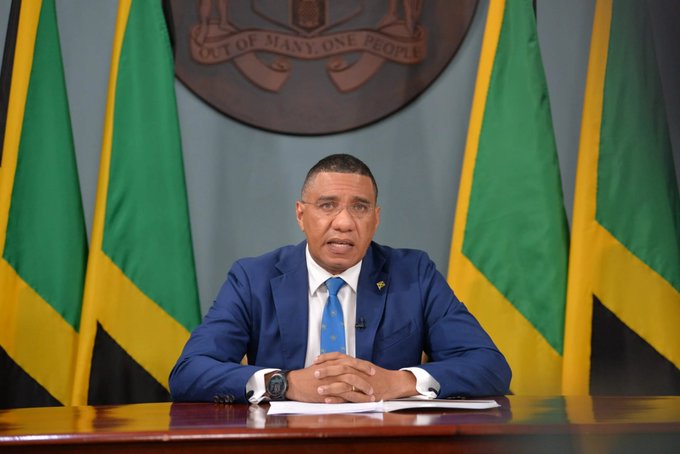
CARACAS, July 25 (Reuters) – Venezuelan President Nicolas Maduro said that he was aiming to begin a dialogue with the country’s political opposition next month in Mexico facilitated by Norway, a process he hoped the United States would embrace.

In May the opposition changed strategy and indicated its willingness to return to negotiations to resolve the political crisis in OPEC member Venezuela.

Maduro has overseen an economic collapse in once-prosperous Venezuela since taking office in 2013, and stands accused by his domestic opponents, the United States and the European Union of corruption, human rights violations and rigging his 2018 re-election. Maduro denies the accusations.

In June, top diplomats in Washington, Brussels and Ottowa said they would be willing to revise their sanctions on Maduro’s government if the dialogue with the opposition led to significant progress toward free and fair elections.

“I can tell you that we are ready to go to Mexico,” Maduro said in an interview on the state-funded Telesur television network late on Saturday. “We have begun to discuss a complicated, difficult agenda.”

Venezuela’s opposition, led by Juan Guaido, has accused Maduro of using previous rounds to buy time in the face of diplomatic and sanctions pressure by the United States and others. Guaido is recognized by Washington and several other Western democracies as the country’s rightful leader.

Opposition groups have said they are willing to negotiate the conditions for presidential and parliamentary elections with Maduro’s government.

Maduro, in turn, has said he wants the negotiations to focus on the lifting of U.S. sanctions targeting the financial and oil sectors.

He added that the negotiations would include “all the oppositions,” a reference to opposition politicians who broke with Guaido’s call to boycott the 2020 parliamentary elections, which were won handily by Maduro’s ruling United Socialist Party of Venezuela.

Reporting by Vivian Sequera Writing by Luc Cohen; editing by Grant McCool

The post Venezuela’s Maduro Aims for Dialogue with Opposition in August appeared first on The St Kitts Nevis Observer.

Brazilians Take to Streets Again to Demand Bolsonaro’s Impeachment

SAO PAULO, July 24 (Reuters) – Protesters took to the streets in several Brazilian cities on Saturday to demand the impeachment of far-right President Jair Bolsonaro, whose popularity has fallen in recent weeks amid corruption scandals against the backdrop of the pandemic.

This week, news broke that Brazil’s defense ministry told congressional leadership that next year’s elections would not take place without amending the country’s electronic voting system to include a paper trail of each vote.

Bolsonaro has suggested several times without evidence that the current system is prone to fraud, allegations that Brazil’s government has denied.

Bolsonaro is facing reelection next year, in a race in which he is likely to face his political nemesis, former leftist President Luiz Inacio Lula da Silva. Polls currently show Bolsonaro losing against Lula.

Saturday’s protests were at least the second time this month that Brazilians have taken to the streets in several cities to oppose Bolsonaro.

“I’m here because it is time to react to the genocidal government that we have, that has taken over our country,” said Marcos Kirst, a protester in Sao Paulo.

Over 500,000 Brazilians have died of COVID-19 under Bolsonaro’s leadership, who has been widely criticized for dismissing the severity of the disease and opposing masks and social distancing measures.

Bolsonaro is now being investigated in the Senate, which is probing the possibility of corruption tied to the purchase of an Indian coronavirus vaccine.

In Sao Paulo’s Paulista Avenue, the traditional location for political protests, over a thousand people were gathering as of 4 p.m. Saturday.

Bolsonaro was in Brasilia, the capital, on Saturday and went out for a motorcycle ride while greeting supporters.

Reporting by Marcelo Rochabrun; Additional reporting by Pedro Fonseca; Editing by Leslie Adler

The post Brazilians Take to Streets Again to Demand Bolsonaro’s Impeachment appeared first on The St Kitts Nevis Observer.

Haiti: Dignitaries Flee as Gunfire Mars Moise Funeral

The sound of gunfire has interrupted the funeral of the late Haitian President, Jovenel Moïse, who was shot dead two weeks ago.

The US and other delegations left early after shooting rang out as the event got under way.

Protesters blamed some of those at the service for the leader’s death.

Authorities accuse foreign mercenaries of the killing but questions about the attack remain.

The president’s widow Martine, who was injured in the attack and treated in hospital in the US, was at the funeral with three of her children.

“Cry for justice. We don’t want revenge, we want justice,” she said, according to Reuters news agency.

The president’s coffin was carried by men in military uniform. It sat on a stage in a Haitian flag, surrounded by white flowers. A Roman Catholic priest blessed it.

But even the funeral could not escape the unrest suffered by Haiti for so long.

Protesters clashed with police outside the venue and witnesses smelt tear gas at the ceremony, but it seems nobody was hurt.

Some officials faced the anger of demonstrators, with police chief Leon Charles accused of being an “assassin”.

Haitian police accuse a group made up of 26 Colombians and two Haitian Americans of carrying out the killing. At least 20 were detained, while three were killed by police and five are still on the run.

Moïse, 53, had been president of Haiti, the poorest nation in the Americas, since 2017. His time in office was rocky as he faced accusations of corruption and there were widespread demonstrations against him earlier this year.

Also this week, a new prime minister, Ariel Henry, was sworn in after a political row with a rival.

He has called for unity and said he would form a temporary government until elections, due in September.

The post Haiti: Dignitaries Flee as Gunfire Mars Moise Funeral appeared first on The St Kitts Nevis Observer.