Improving matters relating to trade and security between St Kitts and Nevis and Great Britain were the main agenda items, during the first official visit of Barbados-based British High Commissioner to the Federation of St Kitts and Nevis, His Excellency Scott Furssedonn-Wood.
The High Commissioner met with the Governor General, the Prime Minister, the Leader of the Opposition, Cabinet Ministers in the Federal and Nevis Island Administration and the Chamber of Industry and Commerce, among others.
Furssedonn-Wood noted that he came here with colleagues to look at different aspects of the relationship between both countries, and the various things the United Kingdom and St Kitts and Nevis can do in the future.
“It is a longstanding relationship. Our countries have been friends for a very long time. We know each other well, our people know each other well. Our people come here on holiday, people from St Kitts and Nevis come to the UK to study and see their family. We have a very vibrant diaspora of Kittitians in the UK, but the partnership is about being forward-looking and how we can help each other in the world in the things that matter to us.”
He said one of the aims of the visit was about building a relationship that brings mutual benefits, with trade being a big part of that.
“We don’t spend British aid money here in St Kitts and Nevis because you have graduated from eligibility for aid; you are too wealthy of an economy to be given aid money.”
He reminded that now there is a new economic partnership between the UK and countries of CARICOM dubbed Cariforum.
“There is a need to use that to get trade going and prosperity moving back and forth.
“There are British companies that can help with all sorts of challenges that your government is facing, and opportunities your government want to address.”
The envoy said he met with Minister of Education Jonel Powell, and among the discussions were educational opportunities.
“We already have our Chevening scholarship – which is our flagship British scholarship programme – that has some fantastic students from St. Kitts and Nevis that have been successful in getting scholarships to study.”
Furssedonn-Wood added that there will be more opportunities in the future.
“There are other opportunities for our educational systems to work together…to do great work here in support of your government’s ambitions, whether it is through developing capacity and content, or providing remote learning opportunities so that people in this country can study in British Universities for a degree from the comfort of their homes here.”
He noted that he was interested in finding new ways to work together.
“Security is an important area of cooperation. Our national crime agency and other security agency work very closely with the RSS in the Eastern Caribbean to build capacity, and to provide support in relation to threats to your own security as well as threats to our own security in the UK.
“We are keen to find more ways to do that; more ways to increase cooperation.”
He reiterated that trade could provide those opportunities as well.
“The whole field of climate change is a really good one. We just hosted COP26 in the UK. We have the presidency of COP for the coming years, and would want to use our presidency to champion the voices of small island developing states.
“We know countries like St Kitts and Nevis are on the frontlines of climate change. We want to stand with countries like St Kitts and Nevis. We want to work with you around adaptation to climate, and finance available internationally that helps small island states become climate-resilient. We want to work with international systems to ensure your voices are heard. The voice of St Kitts and Nevis is heard loud and clear, because you have a strong credible presence on the world stage.”
As Social Security in St Kitts and Nevis celebrates its 44th Anniversary, Minister Eugene Hamilton has said that the fund remains strong despite many challenges, and remains resilient for all in times of need.
Delivering an address on Tuesday, 1st February 2022 – the 44th anniversary of the St Christopher and Nevis Social Security Board’s establishment – Hamilton reflected that over the last 44 years, Social Security has solidified itself as the premier pillar of society, providing pecuniary benefits to the insured in situations such as sickness, maternity, employment injury and in old age, amongst others.
“All insured persons can rely with confidence on the ability of the Social Security Fund to pay benefits. This could not be achieved without the appropriate measures for sound financial management and administration.”
He reminded that apart from the fund’s primary objective to pay benefits, it has demonstrated time and time again its thrust to ensure the sustainability of the economy, through its various corporate social responsibility programmes.
“Annual donations to health and national security, capital investment in local development projects, support to youth programmes and NGOs, all add value to the core function of social security.
“A major show of solidarity in 2020 was the initiation and rollout of the COVID-19 Relief Fund, where over 8500 persons were provided with the COVID-19 grants to the tune of over $23 million.”
Hamilton revealed that in 2021, Social Security again stepped up to support families whose income was further interrupted by the second wave of the COVID-19 outbreak, in St. Kitts and Nevis.
“Social Security in collaboration with Ram’s Supermarkets and Valu Mart provided financial support of $275,000 in food vouchers through the Food Vouchers Initiative of the Ministry of Social Services and NEMA. This level of support is outside the usual scope of Social Security benefits, but it underscores the importance of Social Security, not only in normal times, but also in times of crisis.”
Hamilton said that although there are growing challenges of a maturing fund and the intricacies of changing demographics, Social Security “continues to grow and maintain the fund as a strong and resilient safety net for all who depend on the fund to meet its obligations”.
“As responsible administrators of the fund, it is equally important to improve upon the current financial infrastructure; implement transformational reforms aimed at increasing the longevity of the Fund, and continue to be a reliable corporate partner through the next 44 years and beyond.”
Hamilton said that going forward it is important to reflect on the past, and move ahead with renewed vigour to advance the products and services provided by Social Security
He also revealed the figures of some of the work done by Social Security in 2021: – 659 New Age Pensioners guaranteed monthly benefits; 88 New Invalidity Claimants guaranteed monthly support; 145 New Survivors Pensioners approved for monthly benefits including spouses, dependent parents, and children, and a total benefit expenditure for the year amounting to $120,816,494.68.
“Not only do these figures magnify the level of support to the insured in times of need, it also underscores the equal importance for both employers and the self-employed to remain compliant and meet their obligations to the fund. It requires all hands on deck, dutifully committing to the long-term goal of financial soundness and sustainability. Any other approach would be counterproductive,” Hamilton stated.
He also urged all stakeholders to pay keen attention to their social security matters and to ascribe to their rights and obligations as insured persons.
“I pray for God’s continued blessings on the fund, the administrators, the Economy, and our government and all of our people, so that the mission to provide the best possible benefits is achieved for generations to come.”
The entertainment industry could be given the green light to restart events in March, according to Chair of the National COVID-19 Task Force, Abdias Samuel.
Delivering what he described as “good news”, Samuel said the Task Force in their deliberations agreed to have the Cabinet consider commencement of major events, fetes and other activities as of the month of March
“As for the date, we will communicate that with you as soon as we get the consideration and deliberation from Cabinet. We are hopeful that we can get that information to you so you can begin to advertise your events as necessary.”
Samuel said that he will be communicating with the Ministry of Entertainment, who should be liaising with the promoters and entertainers so they can get the industry restarted.
“Restarted gradually and restarted safely. We want you to restart.”
He noted that they will reopen in a phased way, so that it would not be closed down again, unless there is a huge spike in COVID cases.
“The reason we are saying gradually, we don’t want to regress, unless we have a major outbreak. So let’s get it right so we don’t have to swing back and forth. We start it, start it right, get it done correctly, and we have it sustained so we don’t have to look back unless it is a major outbreak.
“We are here to work with everyone to bring back the sector to operation.”
Since the end of Sugar Mas 50, the entertainment sector has been at a standstill following the start of the fourth wave of increased COVID-19 infection, and the discovery of the Omicron variant in St Kitts and Nevis in early January.
The Hero Caribbean Premier League (CPL) has delivered outstanding exposure for partner tourist boards during the 2021 season with a total sponsorship value of US$316.1million. This figure was generated from a report by independent and world-leading research company, YouGov Sport.
The tournament took place in St Kitts & Nevis between 26 August and 15 September with all 33 matches taken place at Warner Park.
The total viewership figure for 2021 was 517.4million, with the tournament passing half a billion viewers for the second successive year. This massive TV and digital viewership is the driver behind these fantastic sponsorship valuations and created massive exposure for tourism boards across the region.
The tourist boards in St Kitts & Nevis, Saint Lucia, Barbados, Jamaica and Guyana all had innovative and engaging advertising throughout the Hero CPL broadcast, including branding and tourism vignettes highlighting why these countries are must visit locations.
Pete Russell, Hero CPL’s CEO, said: “While it hasn’t been possible for us to travel around the region over the last two years we have been working very hard to ensure that the region is given the exposure that it so richly deserves. As the world begins to open up and travel is gets easier, we want to make sure that CPL viewers around the globe see the Caribbean as a must visit destination.”
Basseterre, St. Kitts, February 03, 2022, (RSCNPF): On February 01, 2022, 59-year-old Brian Etienne of the Commonwealth of Dominica, was convicted and sentenced to two (2) years imprisonment for the offence of Illegal Entry at a Port that is not a Formal Port of Entry. He was also convicted and sentenced to two (2) years imprisonment for the offences of Allowing Persons to Disembark Without the Consent of an Immigration Officer. His sentences are to run concurrently. He was convicted and cautioned for the offence of Disembarking Without the Consent of an Immigration Officer.
Basseterre, St. Kitts, February 03, 2022, (RSCNPF): On February 01, 2022, 57-year-old Wensley George of the Commonwealth of Dominica, was convicted and sentenced to two (2) years imprisonment for the offence of Illegal Entry at a Port that is not a Formal Port of Entry. He was also convicted and sentenced to two (2) years imprisonment for the offence of Allowing Persons to Disembark Without the Consent of an Immigration Officer. His sentences are to run consecutively. He was convicted and cautioned for the offence of Disembarking Without the Consent of an Immigration Officer.
BEIJING (AP) — The country where the coronavirus outbreak emerged two years ago launched a locked-down Winter Olympics on Friday, proudly projecting its might on the most global of stages even as some Western governments mounted a diplomatic boycott…Read More
When helicopters carrying some 50 U.S. commandos thumped onto the ground in Syria an hour after midnight, the raiders confronted a houseful of extremists and children. Baby comforts were inside — a stuffed bunny, a blue plastic swing, a crib. …Rd More
WASHINGTON (AP) — Last month’s huge wave of omicron infections is thought to have weakened hiring in January, though the pullback is considered all but sure to prove a temporary one. …Read More
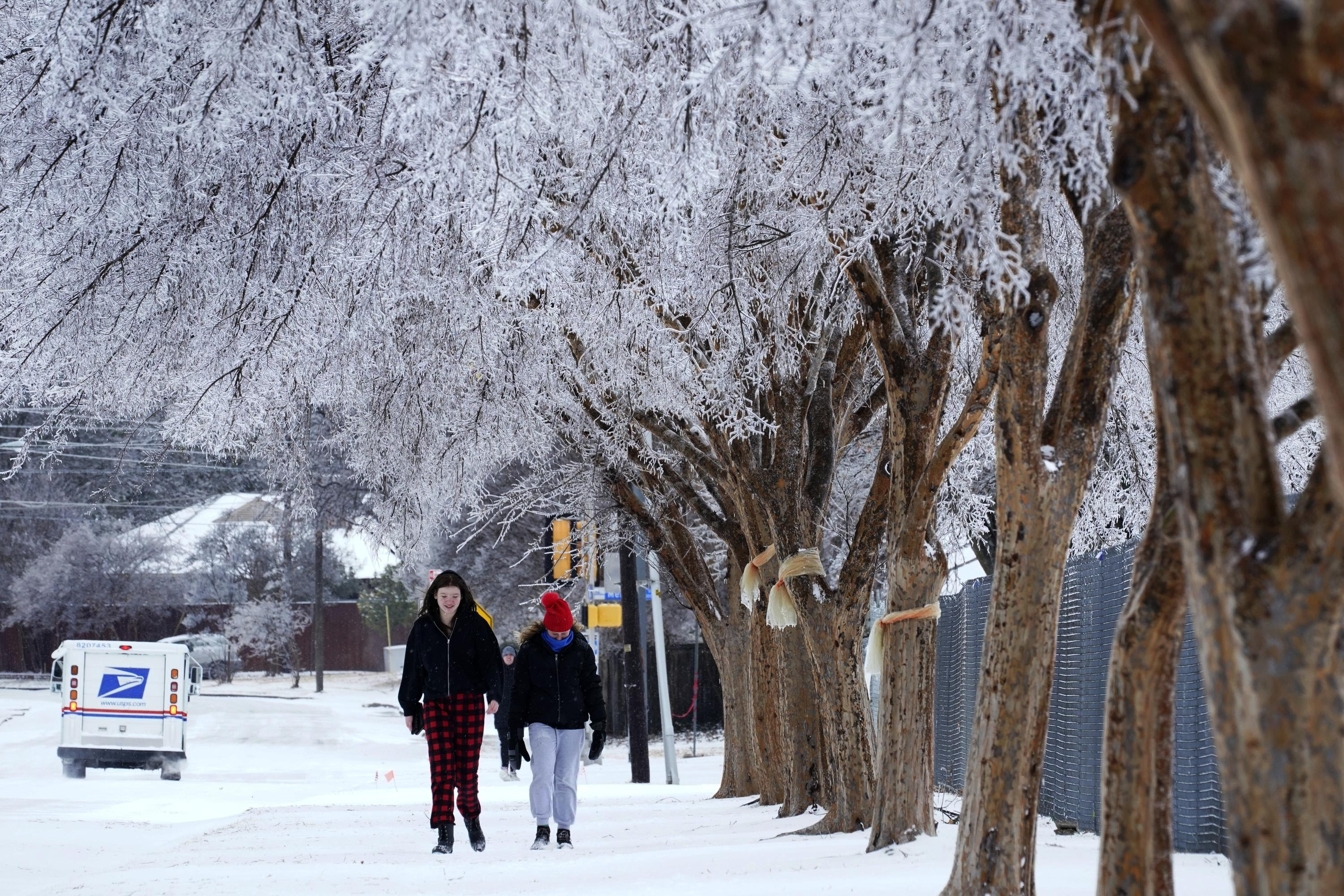
A major winter storm that already cut electric power to about 350,000 homes and businesses from Texas to the Ohio Valley was set to leave Pennsylvania and New England glazed in ice and smothered in snow Friday, forecasters said. …Read More
MOSCOW (AP) — When the U.S. and NATO rejected the Kremlin’s security demands over Ukraine last week, fears of an imminent Russian attack against its neighbor soared….Read More
NEW DELHI (AP) — India won’t be sending its top diplomat in Beijing to the Winter Olympics after the honor of carrying the Olympic torch went to a Chinese soldier wounded…Read More
WADI NAHLEH, Lebanon (AP) — Two weeks before he was supposed to get married, Bakr Seif told his mother he was going out to see his fiancee and would be back for lunch. Wh…Read More
LONDON (AP) — Elizabeth Alexandra Mary Windsor wasn’t born to wear the crown. But destiny intervened. The woman who became Queen Elizabeth II will mark 70 years on the th…Read More
Nevis Sun Tours, a new tour operator and destination management company (DMC), has launched to “make it easier for agents and consumers” to book and sell trips to Saint Kitts and Nevis.
The new organisation said it aims to ‘help agents and consumers’ arrange travel to and within the Caribbean islands.
The organisation has created unique one-day and multi-week holiday packages for the islands which include pre-arranged airport transfers, hotel choices and dining and activity options.
Greg Phillip, former chief executive of the Nevis Tourism Authority, will lead the new team alongside his wife Moreen, who will manage the operations.
Phillip said he was “proud to have a team of such knowledgeable and experienced individuals” at Nevis Sun Tours.
“It is an excellent feeling to deliver travel industry innovation in service to travellers, travel advisors and other travel professionals,” he added.
“Our local hotel partners in Saint Kitts and Nevis are among the best in the Caribbean, and they, along with our other service providers, make it possible for us to deliver on our promise to serve travellers and travel professionals by making it easier to sell and book Caribbean vacations to Saint Kitts and Nevis.
Miami-Dade County, home to many Caribbean nationals, will soon issue immigrant IDs to migrants living in the country illegally and others who don’t have identification.
When she was a Miami-Dade commissioner, Levine Cava unsuccessfully proposed community IDs modeled on other North Carolina and Virginia municipalities. In 2021, a year after becoming Mayor, she placed the item back on the agenda. Levine Cava and others who supported the proposal noted that immigrants struggle to access COVID-19 tests and vaccines because of the ID requirement.
They also noted that the IDs would enable immigrants to use library resources, local recreation facilities, and storm shelters and provide them with the necessary identification to return to their homes after evacuating during hurricanes or fires.
Miami-Dade not the first to pass this program
Other South Florida counties, namely Broward and Palm Beach, have also passed similar programs. These counties are also home to a large percentage of Florida’s immigrant community. According to the American Immigration Council, one in five residents in Florida is an immigrant.
Broward County’s community ID program was proposed last year by then-Commissioner Dale Holness – a Jamaican immigrant. He stated that news of an immigrant resident in his district being turned away from a vaccination site after attempting to use a passport as an ID triggered the proposal.
“In an email that I received, someone gave the story of an elderly immigrant Haitian woman who was in line to get the vaccination. She presented her passport to get the vaccination, and she was told she couldn’t use that form of identification to get the vaccine. Police officers told her they only accept Florida ID. She was turned away,” he told the Broward Commission.
Broward Sheriff Gregory Tony also showed his support for the program in a letter to the Commissioners.
“Broward County has thousands of residents who lack identification for various reasons. With the homeless, undocumented, formerly incarcerated, to elderly, these and other bureaucratically challenged residents do not have access to many basic and vital services. The community ID will provide these residents with a way to access those services,” Sheriff Tony stated.
Program starts this month
Starting this month, Broward residents can apply for the community ID card through the Legal Aid Service of Broward County, a non-profit agency.
Individuals must first register for an orientation session to apply for a community identification card. A session scheduled for Saturday, Feb. 5, in Miramar is already fully booked. The next session is Saturday, March 5, in Pompano Beach.
The first in-person event (by appointment only) will occur at the Miramar Multi-Service Complex, 6700 Miramar Parkway, from 10 a.m. to 5 p.m. To register, visit BrowardLegalAid.org/CommunityID. Both events are by appointment only.
The ID card includes a photo, date of birth, and address and costs $20. It is also not exclusively for immigrants. Formerly incarcerated people, foster youth, homeless people, refugees, or anyone in Broward who has difficulty getting a government-issued ID may apply.
HAVANA (NBC News) — Nestled in his bedroom studio under vinyl records and a cluster of microphones, DJ Milano makes electronic music that combines traditional Cuban sounds with modern beats. It is a tortuous process.
“We can’t use certain applications because they are blocked,” said DJ Milano, 33, who hasn’t been able to update Rekordbox,the platform he needs to mix samples, as he can’t get a protected virtual network for his Mac computer. “I have no way of buying it — I have the money in my bank, but you can’t use Cuban bank cards to buy online.”
Sixty years ago Thursday, President John F. Kennedy signed the “embargo on all trade with Cuba” into law. Despite some changes through the decades, the embargo has endured so long that it has become the longest sanctions regime in modern history.
Throughout the island today, the effects are clear.
Log in to PayPal in Cuba and you’re greeted with this message: “Access Denied.” On Amazon: “Unable to process this order.” Try downloading an app on the Apple App Store: “unavailable in the country or region you are in.”
Software developer Eduardo Perez, 27, lost all the programming he had done for his university thesis a few years ago when the source code repository GitLab suddenly restricted access from Cuba. He spent months rewriting the code before access was restored.
“It’s so trivial,” he said. “They take away access and then they give it back.”
Leonardo Milanes, aka DJ Milano, 33, an electronic music producer, in his home studio.Roberto León / NBC News
Unable to bid for freelance contracts on upwork.com, he loses out on jobs. “I understand that there are sanctions,” he said, “but they are supposed to be against the government, not the people.”
Those who visit the island today can see the impact of the sanctions and 60 years of a highly inefficient centrally planned communist economy: Crumbling buildings dot Havana’s post-apocalyptic skyline, 1950s Chevrolets and Cadillacs rumble on, yellow street lamps flicker at night.
For many tourists, Cuba’s “frozen in time” feel is part of the island’s allure. For its residents, it has meant living with chronic shortages and deteriorating economic conditions, aggravated by the Covid-19 lockdown, which shut down tourism. Last summer’s historic protests against the government reflected the frustration and anger with the current situation.
By the time Kennedy signed the total embargo into law in 1962, Cuba’s government had nationalized billions of dollars in U.S. property — the largest expropriation ever of U.S. assets — and moved into the Soviet Union’s orbit. The Bay of Pigs invasion had failed dramatically, and Fidel Castro formally declared Cuba a socialist state.
But even before the Soviets got involved in 1962, the Eisenhower administration had decided to use sanctions as part of the toolkit to overthrow Castro, according to declassified documents.
“Every possible means should be undertaken to promptly weaken the economic life of Cuba,” Lester D. Mallory, then the deputy assistant secretary of state for Western Hemisphere affairs, said in April 1960, arguing that U.S. policy should aim “to bring about hunger, desperation and overthrow of government.”
Although the U.S. can export food and medicine to Cuba under the embargo, the laws significantly limit the amount of goods that can be sent, even from third countries.
Critics of the embargo, including human rights groups, such as Oxfam, have called for the sanctions to be lifted, saying they “hamper access to inputs, medical technologies, medical equipment, and other essential basic items” for everyday Cubans.
The sanctions amount to “collective punishment” that is incompatible with human rights, said Alfred de Zayas, a professor of international law at the Geneva School of Diplomacy and a retired senior lawyer with the office of the U.N. High Commissioner for Human Rights.
“It is a fundamental principle of law that each person has the right to be treated individually and fairly and not punished for crimes or offenses he or she has not committed,” he said.
But critics of the Cuban government see the embargo as the gift that keeps on giving — for the Cuban leadership.
“It’s allowed them to blame other countries, in this case the U.S., for its own inability to create wealth and well-being,” said Manuel Cuesta Morúa, a vice president of the Cuban Democratic Transition, an opposition group outlawed on the island.
“The government has used [the sanctions] to stall the internal reforms the country needs,” Morúa said.
Making do with what’s possible
Together with a stagnant economy, the sanctions have propelled Cubans to come up with gutsy, creative and often bizarre ways to make do with what they can get.
“Everybody knows about their cars,” said Emily Morris, an economist at the Institute of the Americas at University College London. “And that’s symbolic: If you look at the cars, you realize how the economy’s kept going. There’s a whole capacity to adapt existing machinery to give it a longer life or to make it do things it wasn’t designed for.”
For want of traditional glass airlocks, some Cubans use condoms to monitor fermentation when they make wine. Because they lack ball bearings, athletes use old medicine pots for grips on skipping ropes that allow the cords to rotate. Priced out of ventilators and vaccines on the international market during the pandemic, the island manufactured its own.
A functionary said in an interview on condition of anonymity for security reasons that because of the difficulty of making wire transfers from the island, he has flown many times to Canada, his suitcase flush with millions of dollars, to purchase oncological medical equipment.
After former President Barack Obama softened the embargo and re-established diplomatic relations, Trump restored and strengthened the restrictions, issuing over 240 economic measures against the island: Cruise ships were prevented from docking, flights were cut back, U.S. firms were authorized to sue multinational companies making money from their former property, and tankers carrying petroleum from Venezuela were fined for docking in Cuba.
Sen. Marco Rubio, R-Fla., widely seen as the architect of the Trump-era sanctions, said in an emailed statement that the changes were necessary to hold the regime accountable. Ending the embargo, he argued, is up to the ruling Communist Party.
“The U.S. embargo is now codified in law and clearly lays out what the regime must do to end it,” Rubio said, citing “free, fair and multiparty elections,” the release of “all political prisoners,” freedom of the press and a return of property “expropriated by the Cuban regime to American citizens.”
Rubio has previously argued that “there is no embargo on Cuba” as such, but rather “an embargo on the Cuban regime.”
But U.S.-Cuba policy, including the embargo, isn’t strictly along partisan lines, with Democrats recently divided around the country’s recent protests.
President Joe Biden hasn’t lifted any of the current restrictions; Secretary of State Antony Blinken recently said the government is “looking at the whole policy” on Cuba. He said Biden is focused on human rights following the Cuban government’s crackdown and arrests after the July 11 protests.
Assistant Secretary of State Brian Nichols told lawmakers Thursday that the administration had received recommendations for easing remittances and would send temporary officers to the embassy in Havana to ease visa processing, Reuters reported.
Easing remittances would be welcome news for Armando Collazo, 72, a retired sewing machine repairman. He used to walk around the block to his local Western Union every month to pick up the equivalent of $100 that his daughter sent him from Florida. Since remittances were banned two years ago, things have gotten dicey.
“Now she has to find someone traveling here to bring me the money — they rip her off,” Collazo said, adding that his daughter has “miraculously” managed to remit him money every month. But with U.S. flights to all cities but Havana no longer running, this economic lifeline has run dry for many Cubans.
Collazo, who battles stomach ulcers and heart disease, said that a few years ago he could get the medicine he and his wife needed for a few cents. Now they are short and must stand in “huge lines” outside his local pharmacy when the drugs they need occasionally come in.
Perhaps because of the rise of social media, perhaps because many have become so fed up with the government’s failure to improve the economy, a tendency to simply deny the embargo’s existence has grown in recent years in Cuba. A fringe belief before, it is now held by a small but significant minority. “No hay bloqueo” (“There is no blockade”) has become a common rebuttal, especially among young people, of the government’s claim that the sanctions constitute a “blockade.”
New technology, enforcement boost sanctions
Technology has made the sanctions easier to enforce.
While Cuba has long been forbidden to use U.S. dollars, in the past customers and suppliers could find workarounds. But the advances in computing and a tightening of anti-money-laundering efforts over the last 15 years have put an end to Cuba’s ability to use dollars, as well as euros.
“We are at an all-time high,” said a Western businessman operating on the island. “Banks all over the world have upped their game on money laundering. This means it’s far harder to conceal the Cuban relationship behind the payment.”
Sources say that following stiff fines in U.S. courts over the last decade, the pool of banks in Europe prepared to receive wire transfers from Cuban banks has shrunk. That in turn has raised costs and reduced the range of clients and suppliers the island can do business with.
The Trump administration’s decision to put the island back on the State Department’s list of state sponsors of terrorism has only increased the risk of doing business with Cuba. Cuban banks last year took the unprecedented step of suspending cash bank deposits in dollars.
Politics vs. intelligence findings
Over the years, a chasm has opened between U.S. politicians and intelligence agencies about the embargo. A secret CIA 1982 case study, published by the National Security Archive, a public interest research center in Washington, D.C., concluded that two decades from their imposition, the sanctions had “not met any of their objectives.” The embargo, the study found, “did little to weaken” the government’s position but did provide the Cuban government with a “scapegoat.”
“The intelligence community has long said — analytically — that the embargo wasn’t working and wouldn’t work,” said Fulton Armstrong, a former national intelligence officer for Latin America who is now a senior fellow at American University’s Center for Latin American and Latino Studies. “Analysts correctly identified the embargo as enhancing government nationalist credibility, even though most Cubans also don’t exonerate the Communist Party for its failed economic policies.”
For Hal Klepak, a professor emeritus of history and strategy at the Royal Military College of Canada, “there is no occasion in modern history where one sees a great power sanctioning a small power for a period of time similar to that of the present U.S.-Cuban situation.”
“The stakes are high,” he said. “If you install a government in a region which takes as a given that its first needs are health, education, free funerals, access to the arts and sports and only afterwards democracy, if you bring that into play in a region where those are the aspirations of the vast majority of the population, you are ipso facto a threat to the whole structure of the post-colonial world in Latin America.”
But if it hasn’t rocked the Cuban government, why does the embargo endure?
 *****@
 *****@


 *****@
 *****@
 *****@

 *****@
 *****@
 *****@

 *****@
 *****@
 *****@
 *****@
 *****@
 *****@