Tag Archives: caribbean

US: House Passes Bill to Remove Confederate Statues from Capitol

The Hill- The House passed legislation on Tuesday that would remove artwork from the Capitol that honors people with legacies of defending slavery, including by serving the Confederacy.

The 285-120 vote was bipartisan, but it split Republicans. A minority of 67 Republicans joined with all Democrats in support, while 120 voted against it.

“We ought not to forget history. We must learn from history. But we ought not to honor that which defiled the principles for which we think we stand,” said House Majority Leader Steny Hoyer (D-Md.), the bill’s primary author. “It’s time to remove those symbols of slavery, segregation and sedition from these halls.”

The legislation would order the removal of more than half a dozen Confederate statues currently displayed in the Capitol as part of the National Statuary Hall Collection. Under the current rules for the collection, a statue can be removed only if the state government that contributed it gives the green light.

Those statues include figures such as Jefferson Davis, the president of the Confederacy; Alexander Hamilton Stephens, the Confederacy’s vice president; and Wade Hampton, a South Carolina planter who served as a Confederate military officer and went on to become a governor and a senator.

It would further replace a bust of former Supreme Court Chief Justice Roger Taney, the author of the 1857 Dred Scott ruling that Black people lacked the rights of citizens, with one of Thurgood Marshall, the first African American justice to serve on the high court.

Other statues depicting people with histories of defending white supremacy that are singled out in the legislation include Charles Aycock, who served as North Carolina governor; John C. Calhoun, the former vice president and member of Congress from South Carolina; and James Paul Clarke, a former senator and governor of Arkansas.

North Carolina and Arkansas are already in the process of replacing the Aycock and Clarke statues, but the current statues remain in the Capitol until the new ones are finished. Florida is similarly working to replace a statue of Edmund Kirby Smith, a Confederate general, with civil rights activist Mary McLeod Bethune.

A statue of Robert E. Lee, the Confederate army commander, was removed from the Capitol in December at the request of Virginia state leaders. It will be replaced with a statue of Barbara Johns, a civil rights activist who led a student walkout to protest school segregation.

Some Republicans argued the legislation unnecessarily undermined states’ authority, especially when some Southern states are already moving to replace the statues.

“This bill naming statues that are in the process of being replaced is nothing more than what I believe is an attempt by Democrats to prematurely thwart the authority of states in order to claim the moral high ground for themselves,” said Rep. Bruce Westerman (R-Ark.).

Republicans opposed to the bill also warned that removing the Confederate statues could lead to a slippery slope.

“Unfortunately, Democrats, animated by the Critical Race Theory concepts of structural racism, microaggressions, and a United States based solely on white supremacy, have chosen to remove statues that underscore the failures of our pre-1861 Constitution. Make no mistake, those who won the West and George Washington are next,” said Rep. Matt Rosendale (R-Mont.).

Rep. Marjorie Taylor Greene (R-Ga.), another conservative firebrand, called the legislation a “power grab.”

“All the tyrants throughout history tear down statues and attempt to erase history in order to reign with an iron fist,” Greene tweeted.

The House previously passed a version of the bill last year in response to nationwide protests advocating for racial justice that followed the death of George Floyd, who was murdered by a former Minneapolis police officer.

But that bill stalled in the Senate, as it was still controlled by Republicans at the time.

Democrats were nonetheless able to take some unilateral action to get rid of Confederate homages in the Capitol. Speaker Nancy Pelosi (D-Calif.) ordered the removal last year of four portraits of former House Speakers who served the Confederacy.

House Democrats are also advancing an annual spending bill for legislative branch programs that includes provisions mirroring the legislation passed on Wednesday to remove the controversial statues.

Members of the Congressional Black Caucus (CBC) have long called for taking down the Confederate statues in the Capitol, including after the violence at a white supremacist rally in Charlottesville, Va., in 2017.

Wednesday’s vote marked a victory for their efforts after spending years in the Capitol passing statues of people who fought to keep their ancestors enslaved.

“My ancestors built this building. Imagine how they would feel knowing that more than 100 years after slavery was abolished in this country, we still paid homage to the very people that betrayed this country in order to keep my ancestors enslaved,” said Rep. Karen Bass (D-Calif.), a former CBC chairwoman.

“Imagine how I feel and other African Americans and people of color feel walking through Statuary Hall and knowing that there are monuments to people who supported and embraced and fight for the break-up of our country,” she said.

The post US: House Passes Bill to Remove Confederate Statues from Capitol appeared first on The St Kitts Nevis Observer.

Cricket: St Kitts Ready to Host CPL, Some Spectators Will Be Allowed

Venues will be at 50% capacity, only vaccinated spectators will be allowed.

by Karla Berridge

Cricket will be played just a  bit Louder this year with some spectators allowed in the stands for the hosting of the Hero Caribbean Premier League T20 cricket tournament in ST. Kitts and Nevis later this summer.

The 2021 Hero Caribbean Premier League (CPL) will get underway on August 28 and will run until 19 September. All 33 matches will be played at the Warner Park Cricket Stadium.

The other teams competing for the coveted title are the Barbados Tridents, Trinbago Knight Riders, Guyana Amazon Warriors, Jamaica Tallawahs and St. Lucia Zouks.

Initially, when negotiations got underway for the hosting of CPL 2021, it was done on the basis that there would be no spectators as had been done for CPL 2020 in Trinidad.

Since then, decisions have been made to allow 50% capacity for spectators. These spectators will of course have to be vaccinated.

The St. Kitts Marriot Resort has been named as the official hotel for CPL and members of the CPL cohort will arrive in St. Kitts by mid-August to facilitate quarantining ahead of the start of the tournament.

Minister of Sport in St. Kitts and Nevis, Jonel Powell told Loop Caribbean that preparation for the 2021 hosting of CPL is well underway.

“We are very much in an advanced stage in terms of preparation of the two venues; Warner Park is the match venue and Conaree Cricket Field is the practice venue.

A local organizing committee is in place and is in the process of setting up a local team that will deal with the day to day administration on the ground.”

As it stands, everything that was in place in the previous years in terms of media attendance and streaming remains.

“We are very excited!”

A CPL Bubble?

Essentially, everyone associated with the CPL will have to be vaccinated. The success of the tournament depends on it. In a covid19 age, vaccination is promoted as the best and safest way to resume daily activities.

Minister Powell said: “Approximately 90% of the cohort are already fully vaccinated; spectators will have to be vaccinated and there are vaccination requirements for all staff which includes ground staff, caterers, drivers, bar and concession stand operators among others.”

He said most of the players are on board in terms of the vaccination programme and have been vaccinated. There are only a few players who have not been vaccinated and this is either due to access to vaccines where they are or because of religious purposes.

“You would have seen recent ads through Cricket West Indies (CWI), with some of their players encouraging persons to get vaccinated and showing that there are vaccinated and so we are very happy with that compliance.”

St. Kitts Nevis Patriots Squad

St. Kitts and Nevis is home of the Patriots team which will be under some pressure as expectations will be high in terms of their performance on the home pitch. The question is, will they be able to win their first CPL title at home?

Here are the players who make up the squad:

  • Dwayne Bravo (Captain)
  • Evin Lewis
  • Fabian Allen
  • Chris Gayle
  • Rassie Van Der Dussen
  • Anrich Nortje
  • Sherfane Rutherford
  • Sheldon Cottrel
  • Wanindu Hasaranga
  • Devon Thomas
  • Rayad Emrit
  • Rahmanullah Gurbaz
  • Collin Archibald
  • Jon-Russ Jaggesar
  • Dominic Drakes
  • Joshua Da Silva
  • Mikyle Loius.

A new look for the Patriots

It’s a new captain, some new players and a new look for the patriots this August as the team gears up to show off its new jersey ahead of the tournament.

“I would have been briefed in terms of the new jersey that the team will be utilizing this year. I’ve seen it, I think it’s looking very good, we have a very good team. We are looking at a new team captain in Dwayne Bravo from Trinidad and Tobago, and we see the return to the Patriots of Chris Gayle from Jamaica. We also have coming back to the fray, who have always been with us, players like Evin Lewis who is our opening batsman, Fabian Allen,  Sheldon Cotrell and a number of others including at least one local player, Colin Archibald.”

As the date draws closer, it is expected that the owners of the Patriots will reveal the new jersey very soon.

The post Cricket: St Kitts Ready to Host CPL, Some Spectators Will Be Allowed appeared first on The St Kitts Nevis Observer.

Brazil: COVID Killing Kids at Alarming Rate, World Stats

São Paulo, Brazil (CNN) “Who’s mommy’s little girl?” 22-year-old Brazilian Sameque Gois asks as she plays with her baby’s tiny hand, in one of the several videos she showed CNN. In the footage, little Sarah responds to her mother with an ear-to-ear smile.

Sarah was born in January this year. Despite having a few issues during pregnancy that caused her baby to be born prematurely, Gois says her daughter was generally healthy. But after she took her baby girl to the Casa de Saúde Hospital in São Paulo’s coastal city of Santos to treat a urinary tract infection, Sarah started to present persistent fever and flu-like symptoms.

“When her symptoms started, the doctors said it was bronchiolitis, that it wasn’t anything serious,” Gois explains. But her daughter would not recover.

Despite her pleas, her daughter died from Covid-19 on May 27. She was just five months old.

Sarah’s case is one of many in Brazil. The Brazilian Health Ministry says 1,122 children under the age of 10 have died from Covid-19 since the pandemic started. The Brazilian government records the number people who died from severe acute respiratory diseases — such as severe cases of the flu, and others.

However, researchers from global health organization Vital Strategies, which works in more than 70 countries around the world, say its studies suggest such case numbers have been severely underreported.

When comparing the number of Brazilian child deaths from such illnesses in 2018 and 2019 with the number of deaths since the beginning of the pandemic, Vital Strategies found an excess 2,975 deaths. The organization says it’s likely that the vast majority of these excess deaths — not just the official number of 1,122 — were because of Covid-19.

“What we see in Brazil is that the number of kids dying with Covid specified as the cause of death is higher than what we are seeing in other countries of the world — it’s 10 times higher,” Dr. Ana Luiza Bierrenbach, an epidemiologist at Vital Strategies, told CNN.

In the United States, the only country in the world with a higher overall official death toll than Brazil’s, far fewer children have died from Covid-19 — 382 Americans under the age of 18, according to CDC data.

Bierrenbach adds that the coronavirus variant known as Gamma or P.1, which was first identified in Brazil, may not be entirely to blame.

“Kids have been dying more in Brazil since the original variant was here, so it was not the addition of the P.1 variant that made kids die more here than in other countries,” she said.

Recognizing Covid-19 in children

Covid-19 is widely shown to have a more severe impact on the elderly than the very young. Even if all 2,975 excess child deaths were caused by Covid-19, children are still dying in much lower numbers than adults — the overall death toll in Brazil is now more than 514,000. Researchers fear that this small representation of children in Covid fatalities is causing some doctors to miss diagnoses in their youngest patients.

“Truthfully, Covid-19 in children was neglected at the beginning of the pandemic,” says Brazilian pediatrician Dr. Andre Laranjeira.

“A lot of pediatricians had a certain resistance when it came to requesting Covid-19 tests for children, when they were exhibiting those typical respiratory tract symptom — runny nose, cough, fever — practically all children have those symptoms this time of the year, in the autumn, and some doctors were not testing them,” he says.

According to Gois, it took 12 days after baby Sarah developed the first symptoms before doctors tested her for Covid-19. It was only when Gois herself was diagnosed with Covid-19 that doctors tested her daughter.

Dr. Marisa Dolhnikoff, a lung specialist and researcher at the São Paulo University Medical School has been studying the impact of the novel coronavirus on children and adolescents, and says children with Covid-19 could present symptoms different from the ones exhibited by adults with the disease.

“If a child presents high fever, (skin) rash, abdominal pain, doctors could potentially think of other diagnosis and not relate it to Covid-19,” Dolhnikoff says.

“We need to be aware that these different kinds of symptoms can be related to Covid-19 and these children can present a very severe disease.”

Disparity in treatment

And while different symptoms might throw off some doctors, most physicians and researchers also agree the main culprit for Brazil’s higher Covid-19 death rate in children is likely disparities in the country’s health care system — although Brazilians benefit from universal health care, there are vast differences in quality of treatment between private elite hospitals and small or rural public health care providers.

“In large centers we are prepared to deal with these children and we have very, very good ICUs but it doesn’t apply for the whole country,” Dolhnikoff explains. “We have a lot of poor regions in the country that struggle to deal with this situation.”

Bierrenbach at Vital Strategies agrees that inequality could be at play.

“Why is this happening? Probably due to higher vulnerability, lack of access to good quality health care,” Bierrenbach says. “Maybe they are undernourished, and they perish more from Covid.”

More than half of Brazilians — 116 million people — faced food insecurity in 2020. Of those, 19 million people, or 9% of the population, are starving, according to the Brazilian Network for Research in Sovereignty and Food and Nutrition Security.

Laranjeira says the disparity shows up not just in the quality of accessible health care, but also in how they are affected by the disease.

“When you take the fatalities within the pediatric age group, more than 60% are from vulnerable socio-economic groups,” he concludes. “It’s impossible to turn a blind eye to that.”

Journalists Rodrigo Pedroso and Marcia Reverdosa reported from São Paulo. CNN’s Vasco Cotovio and Isa Soares reported from London. Reporting also contributed by Juliana Koch in São Paulo.

======================================================

WORLD STATS

Coronavirus Cases:

182,663,041

Deaths:

3,955,540

Recovered:

167,264,996
Highlighted in green
= all cases have recovered from the infection
Highlighted in grey
= all cases have had an outcome (there are no active cases)

[back to top ↑]

Latest News

June 30 (GMT)

Updates

  • 11,748 new cases and 137 new deaths in Iran [source]
  • 236 new cases and 2 new deaths in Libya [source]
  • 2,009 new cases and 44 new deaths in Oman [source]
  • 21,042 new cases and 669 new deaths in Russia [source]

The post Brazil: COVID Killing Kids at Alarming Rate, World Stats appeared first on The St Kitts Nevis Observer.

Out of Office Trump Faces Growing Legal Peril

Former President Trump’s attempts to remain politically powerful and position himself as a viable 2024 candidate could hit a big hurdle.

Prosecutors in New York look to be on the brink of leveling criminal charges against the Trump Organization, according to recent reports from The New York Times and The Washington Post.

Much remains unclear — and it is still technically possible that no charges will be brought, even though Manhattan District Attorney Cy Vance Jr. (D) empaneled a new grand jury in May. But if charges are leveled, they will deal a heavy blow to the former president regardless of whether he is himself accused.

Any such actions would place him under a whole new cloud even if, as expected, he protests his innocence and accuses prosecutors of being politically motivated.

It would also give some cover to Republicans who wish to distance themselves from the former president, including those who are mulling a 2024 White House bid.

“I think it would give some form of permission for those folks who are clearly wanting to campaign but who can’t publicly campaign — the people who are going to Iowa and stumping for other people. They could take another step further,” said Doug Heye, a former communications director for the Republican National Committee.

Heye also outlined another danger for Trump if criminal charges were to be brought.

“Given Trump’s proclivities, would a judge potentially put a gag order on him? In which case, that would obviously have an effect,” he said.

Trump remains banned from Twitter and Facebook in the wake of his incitement of the Jan. 6 riot at the U.S. Capitol — an offense for which he became the only president in history to be impeached twice.

The restrictions from social media have had the effect of edging Trump a little further from the center of the political stage, even though he has sought to ameliorate their effects by issuing emailed statements from his office.

In one such statement released late Monday afternoon, Trump branded the New York prosecutors “a disgrace to our Nation!”

The former president also enjoyed the adulation of a huge crowd in Ohio at the weekend, and he appears to be quickening the pace of such events. Another rally is set for Sarasota, Fla., on Saturday.

But the apparent culmination of criminal probes in New York involving not only Vance but New York state Attorney General Letitia James (D) could put Trump under a new burden of pressure.

Reporting so far indicates that prosecutors are interested in at least two areas. One is whether the Trump Organization engaged in fraud by inflating the value of its assets when it suited the company to do so — as collateral to get loans, for example — while then deflating those same values to lighten its tax burden. The other is whether benefits to employees were appropriately taxed.

A central figure in the matter is Allen Weisselberg, the Trump Organization’s chief financial officer, whose association with the family goes back to the 1970s, when he worked for the former president’s late father, Fred Trump.

There has been much speculation about whether Weisselberg might be “flipped” to testify against the company or against Trump himself. At this point, that prospect seems to have receded.

A Washington Post report on Sunday evening indicated that lawyers for Trump had been given a deadline of Monday afternoon to make their case as to why the Trump Organization shouldn’t be criminally indicted.

The Times previously reported that Trump attorneys had met with senior prosecutors from Vance’s office on Thursday.

The idea of charging an entity rather than a person with criminal wrongdoing can seem peculiar to the legal layperson. However, experts emphasize that it does not connote any lesser seriousness.

Harry Litman, a former U.S. attorney and former deputy assistant attorney general, said he thinks it is possible the Trump Organization could be prosecuted under New York laws modeled after federal RICO statutes — laws that were originally created to aid the fight against organized crime.

“The notion would be, with Mafia families, that you took a regular company and completely took it over and ran it as a criminal enterprise. So the idea is that a normal company has been commandeered for criminal ends, so it is just a shell for crime.”

Litman notes that, if he is proven right about the use of so-called little RICO laws, that would expose high-ranking individuals such as Weisselberg or Trump to criminal penalty.

The mere fact of charges being pressed could greatly complicate the Trump Organization’s existing loans, or its search for new credit. Given that Trump has always been something of an evangelist for the use of leverage — he in the past referred to himself as “the king of debt” — such consequences could be “ruinous” for his company, Litman said.

There are, of course, vital caveats.

Trump continues to brand the investigation a “witch hunt.” His enemies have taken glee in his facing apparent legal peril before, only for him to emerge basically scot-free. And his hold on a swath of the GOP grassroots is so strong that almost nothing, including an indictment against him or his company, is likely to loosen it.

But none of that changes that there are troubles likely ahead for the ex-president, and they come from prosecutors who are deadly serious.

The Memo is a reported column by Niall Stanage.

The post Out of Office Trump Faces Growing Legal Peril appeared first on The St Kitts Nevis Observer.

Venezuela Will Allow Opposition to Field Candidates


CARACAS, June 29 (Reuters) – Venezuela will allow a coalition of major opposition political parties to field candidates in upcoming elections, the head of the electoral council said on Tuesday, as the opposition and government prepare to enter into a negotiation process.

The South American country’s supreme court in 2018 ruled that the Democratic Unity Roundtable (MUD), which groups large opposition parties, could not participate in elections, arguing candidates could not be members of both the MUD and the individual political parties that form it.

The lifting of that ban by National Electoral Council (CNE) President Pedro Calzadilla comes after several actions by President Nicolas Maduro seen by some diplomats and analysts as olive branches to the opposition of state and local elections in November in the midst of a years-long political crisis.

Opposition leader Juan Guaido has not said whether or not he believes opposition candidates should take part in the upcoming vote, after the mainstream opposition boycotted presidential and parliamentary elections in 2018 and 2020, respectively, arguing they were rigged in favor of Maduro’s ruling socialist party.

The opposition, backed by the United States and most Western democracies, labels Maduro a dictator who has clung to power through rigged elections and persecution of opponents. Maduro, supported by Russia and China, labels Guaido a puppet of Washington seeking to oust him in a coup.

Tuesday’s move comes after the socialist-held National Assembly in May named opposition-linked figures to a new elections council for the first time in years, and after Maduro said he would be willing to negotiate with Guaido in an effort to ease tensions and convince Washington to lift sanctions. read more

“This step is an opportunity to regroup and rebuild the alternative for political change,” opposition politician Stalin Gonzalez, who participated in a prior round of negotiations in 2019, wrote on Twitter.

Reporting by Deisy Buitrago Writing by Luc Cohen; Editing by David Gregorio

The post Venezuela Will Allow Opposition to Field Candidates appeared first on The St Kitts Nevis Observer.

Bill Cutting Indigenous Land Rights Advances in Brazil’s Congress

BRASILIA, June 29 (Reuters) – A bill allowing commercial agriculture and mining on protected tribal reservations in Brazil advanced in Congress on Tuesday in what indigenous leaders said could be the biggest setback since their land rights were guaranteed in the 1988 Constitution.

The proposal, known as PL 490, cleared the constitutional affairs committee and headed for the lower house plenary.

Brazil’s powerful farm lobby and far-right President Jair Bolsonaro have pushed for the bill, arguing that indigenous communities are blocking development of the Amazon while sitting on reservations with mineral resources and agricultural promise.

PL 490 bars recognition of indigenous lands not occupied by October 1988, favoring farmers in several ongoing land disputes. The bill would also end a ban on the use of GMO crops on reservations.

It would also allow the government to build roads and dams, tap strategic resources on reservations and allow access to the police and military without consulting indigenous communities.

“This is the worst moment since 1988 for the rights that indigenous people gained,” Almir Surui, chieftain of the Paiter Surui, said by telephone from the state of Rondonia.

Surui, who made his name campaigning against hydroelectric dams that left-wing governments worked to build in the Amazon a decade ago, hopes that the Supreme Court will rule that the measure in unconstitutional and block its enactment into law.

If not, he warned of potential conflicts to come.

“There will be war because indigenous people will not allow their territories to be taken at any cost,” said Surui, who heads a forum of traditional tribal chiefs called Parlaindio.

Last week, riot police used tear gas and rubber bullets to disperse indigenous people protesting against the bill outside Congress. read more

Protesters, including children and elders, ran for cover, many coughing their way through clouds of gas. Some shot arrows at the windows of the government’s indigenous affairs agency Funai, now seen as an ally of farming interests.

Reporting by Anthony Boadle in Brasilia; Editing by Angus MacSwan

The post Bill Cutting Indigenous Land Rights Advances in Brazil’s Congress appeared first on The St Kitts Nevis Observer.

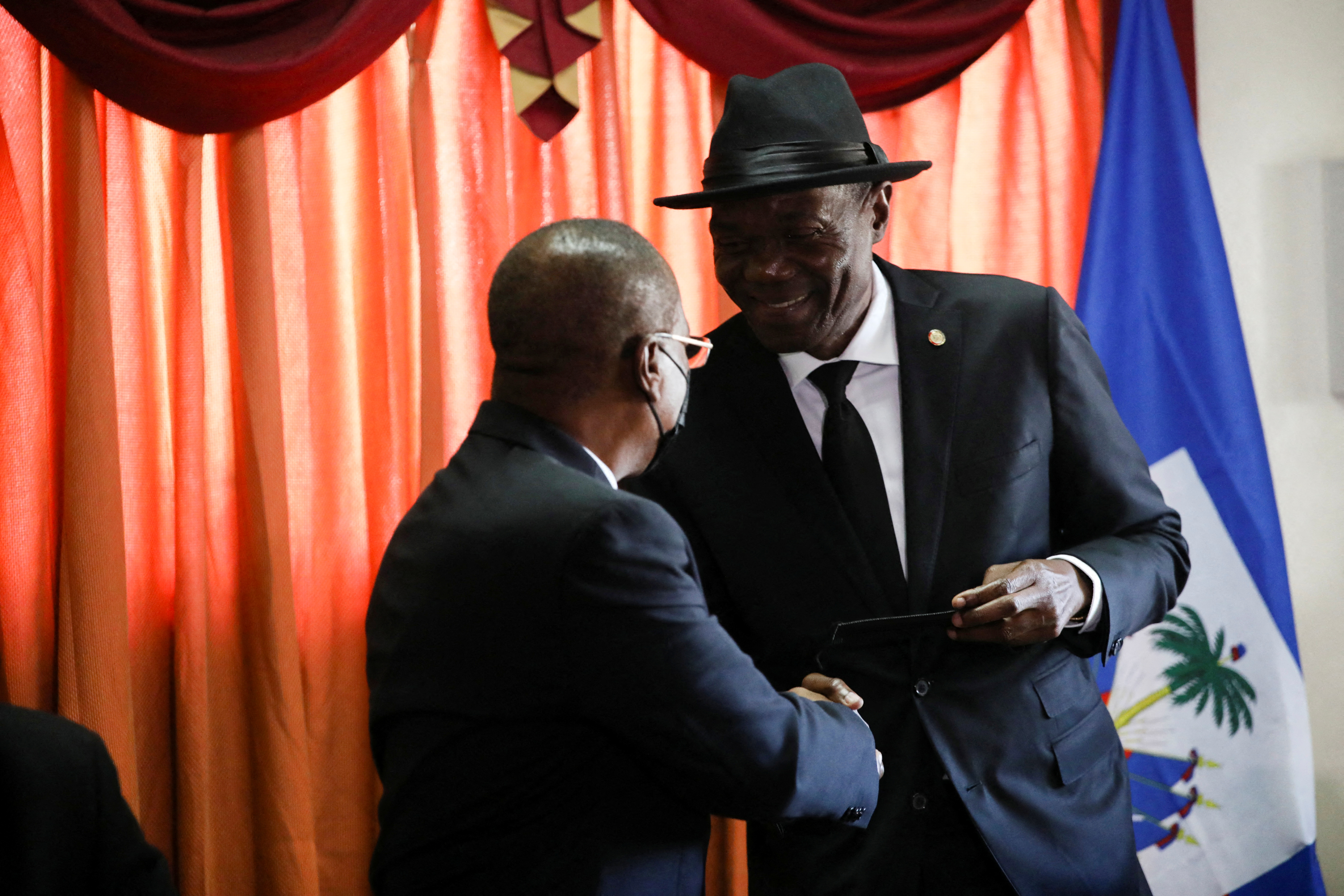
Haiti: MSF Hospital Closes for Week after Armed Attack

PORT-AU-PRINCE, Haiti (AFP) — Doctors without Borders (MSF) said Monday it had closed a hospital in Haiti’s capital Port-au-Prince after it was hit by gunfire at the weekend — a gloomy sign of an escalation of violence in the city.

Luckily, no one was wounded in the attack on the clinic in Port-au-Prince’s Martissant neighbourhood, which has been run by the Nobel Peace Prize-winning charity since 2006 and provides critical care to the poor.

The area is now effectively under siege by armed gangs, and Doctors Without Borders (or Medecins sans Frontieres or MSF) said it could no longer “keep caring for the population without putting its staff in danger”.

The facility has been evacuated and patients transported to other clinics, the group said in a statement.

“The safety of our personnel is a priority because we cannot care for others if our own staff is at risk,” said Alessandra Giudiceandrea, the head of MSF’s mission in Haiti.

She added she did not believe the group was directly targeted in the attack.

The impoverished Caribbean nation, which is deep in political and security chaos, has seen a marked uptick in the number of kidnappings for ransom by armed gangs, and is also facing an increase in the number of COVID-19 cases.

The post Haiti: MSF Hospital Closes for Week after Armed Attack appeared first on The St Kitts Nevis Observer.

DR: Former Atty. Gen. Arrested on Corruption Charges

SANTO DOMINGO, June 29 (Reuters) – Dominican authorities arrested a former attorney general on Tuesday over accusations of diverting public funds to a political group that backed the Dominican Liberation Party, (DLP) during his term that ran until August.

Jean Alain Rodriguez becomes the Caribbean nation’s first former attorney general to be prosecuted. His arrest is the fourth in “Operation Medusa”, an investigation into officials of the attorney general’s office in recent years.

Television broadcast images of Rodriguez, surrounded by numerous security personnel, being handcuffed and taken to a cell to wait for the charges to be presented and a judge to formalise the arrest.

“If this isn’t persecution, then tell me what it is,” Rodriguez said in a recent post on Twitter.

He was denouncing a campaign he said was “based on hate and revenge” after being prevented from boarding a flight to the United States on June 24.

“We’ll see each other at the attorney general’s office today, Tuesday.”

He later posted two pictures of himself in a suit, arriving voluntarily at the office.

Several officials of the 2012 to 2020 administration of former president Danilo Medina, of the DLP, have already been detained in other investigations.

Since the end of last year, one of Medina’s brothers has also been held on accusations of diverting public funds while one of his sisters is under house arrest.

Medina has not publicly commented on the operations and Reuters was unable to immediately reach him for comment.

Members of PLD, which ruled the country from 2004 to 2020, demanded the formation of a special commission to investigate alleged irregularities in the raids on Rodriguez and others.

“What is being done with this cornering of the PLD is political persecution,” said Gustavo Sanchez, a party spokesman in the lower house of Congress.

Authorities raided several of Rodriguez’s properties on Monday night, in addition to 38 simultaneous raids on those of other former officials, on suspicion of offences such as defrauding the state, forgery, electronic crimes and money laundering.

At least eight of the officials, all from Medina’s administration, were also detained, authorities said.

Reporting by Ezequiel Abiu Lopez in Santo Domingo; Writing by Stefanie Eschenbacher; Editing by Clarence Fernandez

The post DR: Former Atty. Gen. Arrested on Corruption Charges appeared first on The St Kitts Nevis Observer.

Canada: Dozens Dead as 121 Degree Heatwave Shatters Records

A woman enters a cooling centre during the scorching weather of a heatwave in Vancouver
A woman enters a cooling centre set up in Vancouver

Dozens of people have died in Canada amid an unprecedented heatwave that has smashed temperature records.

Police in the Vancouver area have responded to more than 130 sudden deaths since Friday. Most were elderly or had underlying health conditions, with heat often a contributing factor.

Canada broke its temperature record for a third straight day on Tuesday – 49.6C (121.3F) in Lytton, British Columbia.

The US north-west has also seen record highs – and a number of fatalities.

Experts say climate change is expected to increase the frequency of extreme weather events, such as heatwaves. However, linking any single event to global warming is complicated.

The heat over western parts of Canada and the US has been caused by a dome of static high-pressure hot air stretching from California to the Arctic territories. Temperatures have been easing in coastal areas but there is little immediate respite for inland regions.

Before Sunday, temperatures in Canada had never passed 45C.

British Columbia Premier John Horgan said the hottest week the province had ever experienced had led to “disastrous consequences for families and for communities”.

The number of heat-related fatalities is likely to rise as some areas say they have responded to sudden death incidents but have yet to collate the numbers.

In Vancouver alone, heat is believed to have been a contributing factor in the unexpected deaths of 65 people since Friday.

Map
1px transparent line

“I’ve been a police officer for 15 years and I’ve never experienced the volume of sudden deaths that have come in in such a short period of time,” police sergeant Steve Addison said. Three or four a day is the normal number.

He said people were arriving at relatives’ homes and “finding them deceased”.

Dozens of officers have been redeployed in the city, while the increased volume of emergency calls has created a backlog and depleted police resources.

British Columbia Chief Coroner Lisa Lapointe said 100 more deaths than normal had been reported in the period from Friday to Monday.

The BBC is not responsible for the content of external sites.View original tweet on Twitter
1px transparent line

The tiny village of Lytton, about 155 miles (250 km) east of Vancouver – and not much further south than London – has recorded all of Canada’s recent record highs.

Resident Meghan Fandrich said it had been “almost impossible” to go outside.

“It’s been intolerable,” she told the Globe & Mail newspaper. “We’re trying to stay indoors as much as possible. We’re used to the heat, and it’s a dry heat, but 30 [degrees] is a lot different from 47.”

Many homes in British Columbia do not have air conditioning as temperatures are usually far milder during the summer months. Temporary water fountains and cooling centres have been set up in the Vancouver area.

The country’s weather service, Environment Canada, has issued heat warnings for the provinces of British Columbia and Alberta, along with areas of Saskatchewan, the Northwest Territories and Manitoba.

Records fall in western US

In the US Pacific Northwest on Monday, temperatures hit 46.1C in Portland, Oregon, and 42.2C in Seattle, Washington, the highest levels since record-keeping began in the 1940s, the National Weather Service said.

At least a dozen deaths in Washington and Oregon are believed to be linked to the heatwave.

A doctor in a Seattle hospital told the Seattle Times the number of patients streaming in with heat stroke was comparable to the beginning of the Covid-19 pandemic.

Dr Jeremy Hess said some had kidney or heart problems, and one man had third-degree burns from walking on asphalt.

The heat has been intense enough to melt cables, shutting down the Portland Streetcar Service on Sunday.

The BBC is not responsible for the content of external sites.View original tweet on Twitter
1px transparent line

An electrical utility in Spokane, Washington, has also introduced rolling blackouts to cope with huge power demand as residents run air conditioners.

Agricultural workers are often now being given the option to start at dawn and finish at noon. But labour contractors say that some stay regardless of the heat.

One worker was found dead in a field at the end of his shift at a farm in Oregon.

One Seattle resident told the AFP news agency that the city felt like a desert: “Normally… 60, 70 degrees [farenheit] is a great day – everybody is outside in shorts and T-shirts – but this is… ridiculous”.

Amazon allowed members of the public into areas of its Seattle headquarters as a cooling-off location on Monday, while people in Portland also flocked to cooling centres.

People rest at the Oregon Convention Centre cooling station in Oregon, Portland
Portland residents have flocked to cooling centres
line

The post Canada: Dozens Dead as 121 Degree Heatwave Shatters Records appeared first on The St Kitts Nevis Observer.

Canada: Heat Hits Record 116F, US North-West also Sizzles

Canada has recorded its highest ever temperature as the country’s west and the US Pacific north-west frazzle in an unprecedented heatwave.

Lytton in British Columbia soared to 46.6C (116F) on Sunday, breaking an 84-year-old record, officials said.

A “heat dome” – static high pressure acting like a lid on a cooking pot – has set records in many other areas.

The US and Canada have both warned citizens of “dangerous” heat levels that could persist this week.

Experts say that climate change is expected to increase the frequency of extreme weather events, such as heatwaves. However, linking any single event to global warming is complicated.

BBC forecaster Nick Miller says that “heat dome” isn’t a strictly defined meteorological term but has become associated with describing large areas of high pressure, leading to clear skies and hot sunny days. The longer the high pressure pattern lasts, the longer the heatwave is and temperatures can build day by day.

This high pressure zone is huge, from California right up to Canada’s Arctic territories and stretching inland through Idaho.

Sales of air-conditioners and fans have surged, and cooling shelters have sprung up. Some bars and restaurants – and even a swimming pool – were deemed too hot to function.

Lytton, which is about 150 miles (250km) north-east of Vancouver, surged past the previous Canadian record.

That was set in two towns in Saskatchewan – Yellow Grass and Midale – back in July 1937 at a balmy 45C (113F).

Lytton was not alone. More than 40 other spots in British Columbia set new records.

Environment Canada senior climatologist David Phillips told CTV: “I like to break a record, but this is like shattering and pulverising them. It’s warmer in parts of western Canada than in Dubai.”

He said there was a chance of topping 47C somewhere, with Monday the likeliest day.

British Columbia’s power providers said there had been a surge in demand for electricity to keep air-conditioners running.

Environment Canada said Alberta, and parts of Saskatchewan, Yukon and the Northwest Territories, should also be on alert.

In its warning, it forecast a “prolonged, dangerous, and historic heatwave will persist through this week”, with temperatures 10C-15C above normal, at near 40C in many places.

Map
Presentational white space

‘Historic’ heat in US north-west

The Pacific north-west has also been breaking records, particularly in parts of Washington and Oregon states.

The US National Weather Service called the heatwave conditions “historic” and said they would persist through the week, “with numerous daily, monthly and even all-time records likely to be set”.

A worker tends to a fibre-optic line in Lake Forest Park, Washington, amid the scorching heatA worker tends to a fibre-optic line in Lake Forest Park, Washington, amid the scorching heat

Seattle and Portland, cities with famously rainy climates, both recorded their hottest temperatures ever on Sunday.

Portland shattered its prior record when temperatures reached 44C, according to the US National Weather Service. Seattle also passed a historic high as the mercury hit 40C.

Oregon eased Covid attendance restrictions to open up swimming pools and air-conditioned areas like shopping centres. But Seattle in Washington had to close one pool because of “unsafe, dangerous pool deck temperatures”.

Fruit growers have been rushing to pick crops, fearing the heat could shrivel cherries and other fruit. Pickers have been starting at dawn and stopping at lunchtime in the unbearable temperatures.

BJ Thurlby, president of the Northwest Cherry Growers, told the Seattle Times: “We are travelling in absolutely uncharted waters.”

People sleep at a cooling centre set up in Portland in the US state of OregonPeople sleep at a cooling centre set up in Portland in the US state of Oregon

The US track and field Olympic qualifying trials had to be halted in Eugene, Oregon, on Sunday, as the crowd was told to leave the stadium for safety reasons.

Some Covid vaccination centres also closed because of the heat.

Some areas along the coast could cool a little later in the week, but Boise, Idaho, could see a week of 40C+ temperatures. The National Weather Service said parts of the state could suffer “one of the most extreme and prolonged heatwaves in the recorded history of the Inland Northwest”.

The warnings for all were to stay hydrated, avoid strenuous activities, and check on vulnerable neighbours.

The post Canada: Heat Hits Record 116F, US North-West also Sizzles appeared first on The St Kitts Nevis Observer.