NIA CHARLESTOWN NEVIS — The Nevis Tourism Authority (NTA) has announced its intentions to host its “Nothing Like a Nevisian Holiday” event again in December 2022. The announcement came on the heels of the inaugural event which was held at The Hermitage Inn on December 18, 2021.
Ms. Jadine Yarde, Chief Executive Officer at the NTA said the worldwide support shown for the event was gratifying.
“The holiday season is such a special time for everyone to get together and celebrate life, and we wanted to gift Nevisians and travellers with the opportunity to celebrate together, safely, this year. This is when the event ‘Nothing Like a Nevisian Holiday’ was born.
“We were elated to see the amount of support we received from people of all backgrounds and cultures from across the globe, and we look forward to an even better celebration in 2022,” she said.
The NTA noted that there were more than 2,000 online viewers via Facebook Livestream from the United States, Canada, and the United Kingdom, in addition to those who attended in person.
Locals and travellers gathered to celebrate the return of the holiday season Nevisian-style, after two tumultuous years of canceled holiday activities. The festive event featured traditional delights from local vendors, electrifying musical performances, and storytelling sessions.
The “Nothing Like a Nevisian Holiday” Christmas event shared a piece of Nevisian culture with the world through special performances by the Honey Bees String Band, the Coelis Choir, and other local performers, as well as participation from local vendors, and storytelling sessions that highlighted Nevis’ rich holiday culture.
Special appearances included moko jumbies, also known as stilts walkers, and the cakewalk dancers – a traditional dance with its roots in the mid-19th century.
The NTA described “Nothing Like a Nevisian Holiday”as the cherry on top of a successful year for Nevis, having been recognized internationally by National Geographic, The Telegraph, Travel + Leisure, and Conde Nast Traveler as a hidden gem nestled in the Caribbean.
In addition, the Nevisian Tourism Authority recently lifted the quarantine requirement for fully-vaccinated international travellers who show proof of a negative RT-PCR test, increasing the desire for travellers to escape to the island.
For more information on Nevis, visit https://nevisisland.com/ or follow @NevisNaturally on Facebook and YouTube.
DENVER, Dec 27 (Reuters) – A lone gunman shot four people to death and wounded three, including a police officer, on Monday in a Denver-area shooting spree that unfolded at several locations and ended with police killing the suspect, authorities said.
Investigators have yet to determine a motive for the rampage, which began around 5 p.m. when the gunman shot and killed two women and wounded a man near downtown Denver, Police Chief Paul Pazen said a news briefing.
The suspect then fled in a car and fatally shot a man in east Denver’s Cheesman Park neighborhood, before opening fire again in a west Denver community where no one was hit, Pazen said. According to Pazen, the suspect twice exchanged gunfire from his vehicle with Denver officers pursuing him, disabling a police cruiser.
From there, the gunman drove into the neighboring city of Lakewood, where he shot and killed a fourth person inside an unspecified business, according to Lakewood Police spokesman John Romero.
The gunman fled from Lakewood police when they attempted to pull him over and engaged in a running gun battle with officers before fleeing on foot and entering a hotel, where he shot and wounded a clerk, Romero said.
He then shot at police officers again, wounding one of them, before police shot him dead, Romero told reporters. Authorities did not publicly identify the suspect, and said circumstances leading to the shooting remained under investigation.
The conditions of the wounded officer and civilians were not immediately known, Romero said.
Anne Wilson, a shopper who was inside a cellular phone store in Lakewood when gunfire erupted nearby, told a Denver-based NBC-affiliate TV station she heard “seven or eight gunshots, and then like another set of maybe five more.”
Wilson said she and other customers were quickly ushered by store employees into a back room behind security gates until the danger had passed. “It is scary, scary times we live in,” she said.
Reporting by Keith Coffman in Denver; Writing by Steve Gorman Editing by Shri Navaratnam, Robert Birsel
The good news in Latin America and the Caribbean: much of the region turned vaccination tragedy into triumph. The bad news? Just about everything else.
Few parts of the world have suffered as badly from the COVID-19 pandemic — from death rates to unemployment rates — as Latin America and the Caribbean have.
In 2021 that also put heavy political strain on the region, especially in countries with strong ties to South Florida such as Colombia, Cuba, Haiti.
WLRN Americas Editor Tim Padgett looked back at the year in Latin America and the Caribbean with Florida International University’s Eduardo Gamarra, an expert on the region and its politics.
Here are excerpts from their conversation, edited for clarity.
WLRN: Happy New Year, Eduardo.
GAMARRA: Happy New Year, Tim.
So we both chose our top three stories of the year in Latin America and the Caribbean. Your number three pick is the region’s worsening migrant and refugee crisis — something we sadly got a reminder of earlier this month when more than 50, mostly Central American, migrants were killed in a truck crash in Mexico while making their way north.
I think it’s important to appreciate the magnitude of this crisis right now. For example, anywhere between six and eight million Venezuelans have left Venezuela as a result of the collapse of the country’s economy and democracy. And they have essentially affected domestic politics wherever they have gone.
In Colombia, it has generated significant backlash; in Peru and Ecuador; in Chile, a significant rise in xenophobia — as candidates [have] campaigned on the basis of sending these migrants back.
AP Rescue workers place the corpses of more than 50 mostly Central American migrants killed when the truck they were crowded into crashed in Tuxtla Gutierrez, Mexico, earlier this month as they made their way to the U.S. border.
And of course you can say the same thing about the migrant crisis in Central America — which is now a global phenomenon, like the Haitians that are coming up through the Central American caravan, or African and Middle Eastern refugees. The impact politically has of course been felt here in the United States. And this is all likely to get worse.
Felix Marquez/AP
Horse-mounted U.S. Border Patrol agents drive back asylum-seeking Haitian migrants on the bank of the Rio Grande at Del Rio, Texas, last summer.
My number three pick is somewhat happier: Much of Latin America turned the region’s COVID vaccination tragedy into triumph. Last March, Brazil had administered only three vaccine doses per 100 people, compared to 18 per 100 people in the U.S. But at the start of this month, Brazil had two-thirds of its population fully vaccinated; so did hard hit Ecuador. In Chile, 84 percent; Cuba 82 percent.
UNHCR A woman receives a COVID-19 vaccination shot in Guayaquil, Ecuador in June.
The shame is that in many countries, health care officials had to overcome the vaccine obstruction of leaders like right-wing Brazilian President Jair Bolsonaro or left-wing Mexican President Andrés Manuel López Obrador — and also, Eduardo, the fact that the U.S. and other developed countries didn’t donate more doses to Latin America sooner?
I think you’re right, and it’s something that several Latin American countries have pointed out. But then again, there hasn’t been a tradition of doing this kind of grand-scale donation of vaccines, and so I think the Biden administration has been playing catch-up.
Your number two story was also COVID- related, and that’s the deep economic hole the pandemic dug for most countries.
Ivan Valencia/AP
Colombian protesters, angry about a government tax hike plan during a pandemic that choked their economy and livelihoods, and police clash in Gachancipa in May.
The region as a whole was utterly unprepared for such a pandemic. Latin America was already facing an economic downturn with the slowdown of their export markets. More importantly, this is a part of the world with a very high number of people in the informal economy [who can’t afford to go on economic lockdown]. And you have to understand that, relative to the U.S., the ability of all but a few of these countries to provide economic stimulus to keep people out of poverty [during a pandemic] or out of absolute hunger is not very high.
So trying to enforce shutdowns made things even worse — and the economic impact, of course, ended up being drops in GDP on average of about eight percent.
My number two pick is Cuba. We saw street protests elsewhere in the region, especially in Colombia. But the anti-government demonstrations that erupted all over Cuba in July — fueled by anger over shortages of just about everything, especially human rights, not to mention a protest anthem, “Patria y Vida,” that won the Latin Grammy for song of the year — were unprecedented.
YouTube
Cuba rapper Yotuel Romero (center) and other Cuban singers in the music video of Patria y Vida
Still, we also saw the communist regime’s predictable, iron-fisted crackdown. So will the unrest lead to any real change to the island’s ramshackle economy or its political repression?
I don’t think so, largely because the international community today lacks any kind of capacity to force regimes [like Cuba’s] to change their behavior, especially on the human rights side, let alone bring about the end of those regimes.
The trend toward authoritarian rule in the region became even more serious in 2021 — and it’s not a left or right issue any longer, a case in point being Salvadoran President Nayib Bukele.
Eduardo Gamarra
This is a good segue way to your number one story of the year in Latin America and the Caribbean: how threatened democracy became in the region again. How serious is the new trend toward authoritarian government?
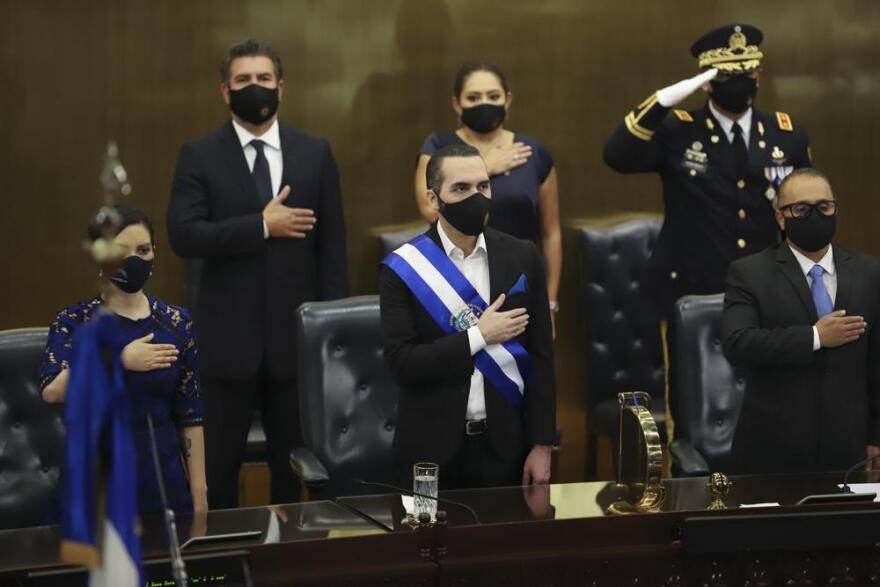
I think it’s very serious. Of course, we have the left-wing regimes in Cuba, Venezuela, Nicaragua. But this is not a left or right issue any longer — a case in point being President Nayib Bukele of El Salvador [where a Congress he controls summarily removed Supreme Court justices this year who oppose his agenda, including presidential re-election].
He showcases that trend toward the concentration of power in the executive, especially control over the judiciary and how justice is doled out in the region. We’ve got a similar situation in Brazil with President Bolsonaro.
Salvador Melendez/AP
Salvadoran President Nayib Bukele (center, wearing sash) at the Congress in San Salvador in June.
The U.S., especially with its recent democracy summit, is trying to say, “Look, we have to counter this authoritarian trend,” but it’s a very big task.
Just consider the fact that in Bukele’s case, most Salvadorans appear to be satisfied with what he’s doing. Or look at the sham [November] re-election of [authoritarian President] Daniel Ortega in Nicaragua – which got extraordinary support from other countries in the region like Cuba, Venezuela and Bolivia and a conspicuous lack of condemnation from countries like Argentina.
My number one story is Haiti: the still unsolved assassination of President Jovenel Moïse in July; a major earthquake in August; economic implosion — and the takeover of much of the country by violent, ransom-kidnapping street gangs. In fact, many Haitians right now consider gang alliance leader — and former cop — Jimmy “Barbecue” Cherizier the most powerful man in the country.
FREE FALL
Failed state doesn’t seem a strong enough term to describe what’s happened to Haiti. What, if anything, can the U.S. and international community do at this point to stop the country’s free fall? And should the Biden administration as a result be deporting Haitians back to the country under these circumstances?
No, it makes no sense deporting Haitians to a country in that state. There really is no government there right now. There is a lot the U.S. and the international community should do, but aren’t doing. They first have to solve the public security collapse in Haiti before new elections can be held. But so far there’s been no real call for action. And unless there is a call for action, 2022 could result in something even worse.
Loop- VOfficials on the US Virgin Islands are confident that the recent spike in coronavirus (COVID-19) cases in the territory is due to the omicron variant.
During today’s press briefing, Governor Albert Bryan stated: “The evidence is clear that it is here amongst us whether it is verified or not.”
“We have seen an exponential increase in a matter of days and this is the highest number of active cases we have seen in our almost two-year response to this virus.”
Commissioner of Health Justa Encarnacion said 84 samples were sent to Yale University for genetic testing and they were positive for the delta variant.
Another batch of over 80 samples has been sent to the US Centres for Disease Control and Prevention (CDC) and the results are expected back tomorrow.
Encarnacion said the rise in cases in the USVI is mimicking what is taking place across the US mainland and that is what has led authorities to believe omicron is on island.
Active infections of COVID-19 in the USVI jumped to 544 on Sunday when the weekly epidemiological report was released.
The seven-day positivity rate increased to 11.6 per cent.
This is up from just over 72 in the previous week.
Since March 2020, the US Virgin Islands has recorded 8,213 infections.
The governor said Virgin Islanders are not to blame for the recent spread of COVID-19 across the territory since he has observed that the restrictions were being followed by most people.
Bryan and a number of US Governors held a phone conference with President Joe Biden and Dr Anthony Fauci, Chief Medical Advisor to the President of the United States, to discuss the rapid rise in new infections across the nation.
He urged persons who feel ill to “stay home for the holidays” to avoid spreading COVID-19.
The government’s work from home program will be initiated from tomorrow until January 3. Bryan called on the private sector to do the same.
Bars, restaurants and clubs must shut at midnight and last call will be 11 pm.
This program will stay in place until January 10 but the governor noted it will be reassessed.
An exception has been made for New Year’s Eve and places of entertainment will be allowed to operate until 2 am with last call at 1 am.
Churches and places of worship will not be placed under restrictions but Bryan urged caution.
From January 3, all travellers will have to submit a negative test prior to travelling to the US Virgin Islands.
The test must be taken 72 hours before arrival.
Bryan expects this test requirement to last for 30 days.
“We know omicron is going to tear through here [and] there’s nothing we can do about that but we can slow it down,” Bryan said while noting the surge is expected to last for about a month.
In Germany, Lutheran pastors are offering COVID-19 shots inside churches. In Israel’s science-skeptical ultra-Orthodox community, trusted rabbis are trying to change minds. And in South Africa, undertakers are taking to the streets to spread the…Read More
NEW YORK (AP) — U.S. health officials on Monday cut isolation restrictions for Americans who catch the coronavirus from 10 to five days, and similarly shortened the time that close contacts need to quarantine. …Read More
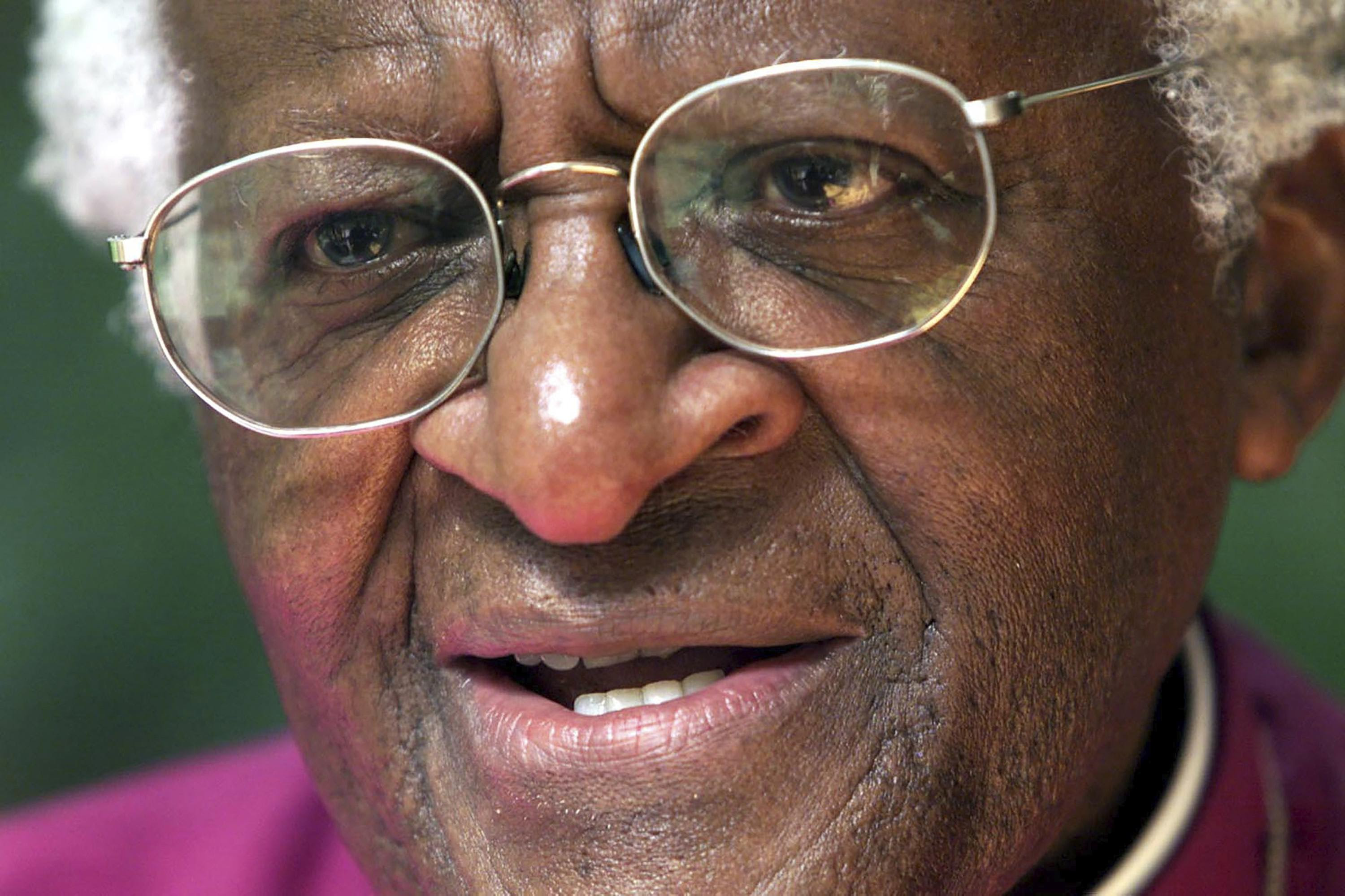
One Christmas Day in the 1980s, Desmond Tutu led a packed church service in Soweto, the Black Johannesburg township and fulcrum of protest against white racist rule in South Africa. An American family — mine — found standing room at the back. …Read More
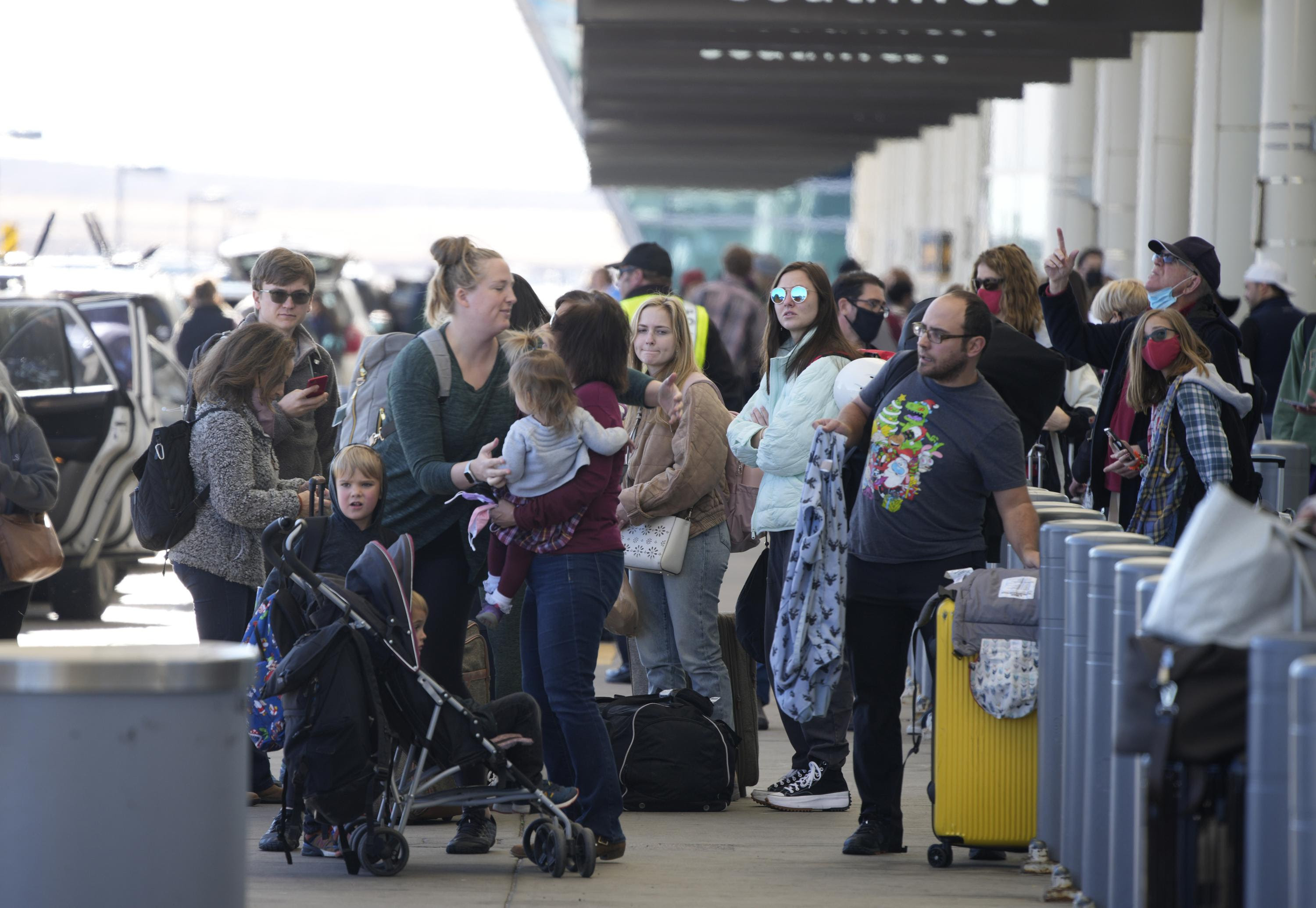
NEW YORK (AP) — Flight cancellations that disrupted holiday travel, stretched into Monday as airlines called off more than 1,000 U.S. flights because crews were sick with COVID-19 during one of the year’s busiest travel periods, and storm fronts…Read More
“Some say the world will end in fire,” wrote the poet Robert Frost — and for much of 2021, Associated Press photographers captured scenes of a world ablaze, amid rumblings of ruin. In New Delhi, a man sprints amid the funeral pyres of COVID-19 …Read More
LONDON (AP) — English sparkling wine has been gaining prestige in recent years, with some experts comparing it to Champagne in taste and quality. Globally, the sector is st…Read More
WASHINGTON (AP) — Dr. Anthony Fauci, the top U.S. infectious disease expert, said the nation should consider a vaccination mandate for domestic air travel, signaling a pote…Read More
BEIJING (AP) — To help make China a self-reliant “technology superpower,” the ruling Communist Party is pushing the world’s biggest e-commerce company to take on the tricky…Read More
TOKYO (AP) — Global shares advanced Tuesday following a rally on Wall Street as investors shrugged off concerns about the highly transmissible omicron variant of the corona…Read More
MEXICO CITY, Dec 27 (Reuters) – Mexico plans to promote job creation programs in the Caribbean that President Andres Manuel Lopez Obrador has rolled out in southern Mexico and parts of Central America to stem migration, a senior government official was quoted as saying on Monday.
The programs, “Sembrando Vida,” (Sowing Life) a tree-planting drive, and “Jovenes Construyendo el Futuro,” (Youths Building the Future) a work scheme for young adults, are part of Lopez Obrador’s plan to slow migration by helping poor regions like southern Mexico, Guatemala, Honduras and El Salvador.
“We already have an agreement with Haiti, and we’re in talks with Cuba,” Laura Elena Carrillo, Executive Director of the Mexican Agency for International Development Cooperation (Amexcid), told newspaper El Universal in an interview.
Mexico and Cuba signed a letter of intent on Dec. 22 to implement rural development programs in Cuba. That will include the two job-creating schemes, Carrillo said. Mexico signed a similar letter with Haiti in November, and plans to negotiate with the Dominican Republic soon, she told the paper.
Mexico has earmarked $31 million for each of the countries currently enrolled in the programs, though the Caribbean nations are likely to receive somewhat less, Carrillo said.
Apprehensions of undocumented migrants at the U.S.-Mexico border have leapt to record levels this year, with tens of thousands of Haitians and Cubans among them.
Mexico has pressed the United States to invest in development schemes, and the Mexican government said last month Washington had agreed to contribute to its efforts.
Reporting by Kylie Madry; Editing by David Gregorio
ITABUNA, Brazil, Dec 27 (Reuters) – The death toll from floods hammering northeast Brazil rose to 20 on Monday, as the governor of Bahia state declared it the worst disaster in the state’s history and rescuers braced for more rain in the coming days.
Much of Bahia, home to about 15 million people, has suffered from intermittent flooding for weeks, after a long drought gave way to record rains. Flooding in some areas intensified late on Christmas Eve and early on Christmas Day after a pair of dams gave way, sending residents scrambling for higher ground.
Rescue workers patrolled in small dinghies around the city of Itabuna, in southern Bahia, plucking residents from their homes, including some who escaped through second-floor windows.
Bahia Governor Rui Costa said on Twitter that 72 municipalities were in a state of emergency.
“Unfortunately, we’re living through the worst disaster that has ever occurred in the history of Bahia,” he wrote.
Manfredo Santana, a lieutenant-colonel in Bahia’s firefighting corps, told Reuters that emergency workers had rescued 200 people in just three nearby towns. The heavy currents of the swollen Cachoeira River complicated rescue efforts.
“It’s difficult to maneuver even with jet skis,” he said. “Rescue teams had to retreat in certain moments.”
Bahia’s civil defense agency said on Monday afternoon that 20 people had died in 11 separate municipalities.
Newspaper O Globo, citing a state firefighting official, said that authorities are monitoring an additional 10 dams for any signs they may collapse.
The scrutiny of public infrastructure and urban planning comes just a couple years after the collapse of a mining dam in neighboring Minas Gerais state killed some 270 people.
In televised remarks, Costa, the Bahia governor, attributed the chaotic scenes in part to “errors that have been committed over the course of years.”
Reporting by Leonardo Benassatto; Writing by Gram Slattery Editing by Alistair Bell
Sandile Cele, a researcher focused on the Omicron variant of Covid-19, at work at the Africa Health Research Institute in Durban, South Africa. Jerome Delay/AP
Since the Omicron variant was recently discovered, epidemiologists have been crunching data as fast as scientists on the front lines can produce it to scope out what the newest coronavirus variant means for the pandemic this winter and beyond. While many uncertainties remain, disease modelers have cranked out several potential visions for what the first months of 2022 may have in store. Worst case — they could bring the deadliest phase of the pandemic yet. But even the most optimistic scenarios aren’t exactly pretty.Which immediate future plays out will be a function of a few big unknowns — some already baked into Omicron’s biology and some that can be altered based on how people behave in the coming days and weeks. Further out, the models get fuzzier still. But though they differ in the details, all of them point to SARS-CoV-2 being here to stay.
“I think we may be in for a longer road than we had hoped,” said Jeffrey Shaman, an infectious disease forecaster at Columbia University’s Mailman School of Public Health.
What’s obvious about Omicron is its record-setting spread. Harder to grasp is the extent to which it is intrinsically more contagious than previous variants, versus the extent to which it’s simply better at infecting vaccinated and previously infected individuals.
In a preprint published this week, Shaman and his colleague Wan Yang tried to disentangle these two dynamics using data from South Africa, where the variant was first discovered. They found Omicron to be only about 35% more transmissible than Delta, a departure from the going estimate of twice to five times as infectious. The takeaway? The researchers believe that the majority of South Africans had been infected with SARS-CoV-2 before the Omicron wave, meaning the rapid spread was due more to the variant’s ability to erode the immunity conferred by previous infections or vaccines.
“That’s not something that should apply directly to other countries, like the U.S., because it’s very specific to the South African context,” said Shaman. Different strains took off there, leading to an immunological history not as relevant to the Northern Hemisphere. “How much immune erosion we can expect here will be hard to say,” said Shaman. “However, we’re talking about large numbers, so we could imagine it’s going to be pretty potent at running by the immunity of people who’ve already been infected or vaccinated in most places it shows up.”
That could be a recipe for the Omicron surge being the most devastating one yet. In one of the most comprehensive forecasts to date, researchers from the Covid-19 Modeling Consortium at the University of Texas, Austin, played out 18 different scenarios for how the new variant might hit the U.S.
In the report, which has not been peer-reviewed, the worst outcome arose when the researchers assumed Omicron to be no more transmissible than Delta, but far better at evading immunity and more likely to cause severe disease — meaning requiring hospitalization. Combined with low booster uptake, this scenario resulted in cases peaking in early February, resulting in 342,000 deaths over the first six months of the year, a 20% spike over Covid-19 casualties in 2021.
In the most optimistic outcome — which assumes high transmissibility relative to Delta, little ability to evade immunity, slightly elevated severity, and high booster uptake — the researchers project the Omicron spike to lead to 50% fewer deaths compared to last year.
“Across all scenarios we expect to see cases that are at least as high as the Delta surge in September 2021, but that would be the minimum,” said Lauren Ancel Meyers, director of the UT Covid-19 Modeling Consortium. “At a maximum we could see a surge in cases that is even higher than our January 2021 surge, which would make it the biggest national surge seen to date.”
Whether these surges lead to equally calamitous casualties hinges hugely on that question of severity, an issue that has remained murky for weeks. On Wednesday, however, three separate teams of researchers, tracking Omicron’s advance through South Africa, Scotland, and England, reported new findings that suggest the variant was less likely than Delta to send people to hospitals. Though preliminary, these studies are providing an injection of optimism that the worst-case scenarios won’t come to pass.
Looking overseas for clues
In South Africa, where the Omicron infection wave went steeply up and then sharply back down, particularly in Guateng province, the peak of hospitalizations looks to be about half of the previous Delta wave. Deaths and ICU admissions appear even lower.
“That initial coming in really hot … is really scary, but what we saw in Guateng, of it kind of crashing early, gives some hope here,” said computational biologist Trevor Bedford of the Fred Hutchinson Cancer Research Center, who was among the first U.S. experts to sound the initial alarm on SARS-CoV-2.
It’s a tricky thing though, to extrapolate the shape of that curve from South African provinces like Gauteng, because the populations there look very different from either Europe or the U.S. People there tend to be younger, and therefore less prone to serious disease than in the U.S., where the population skews older and sicker, with more comorbidities like heart disease and diabetes. Another difference is that in South Africa, Omicron was a standalone surge, whereas here Omicron is hitting on top of Delta surges in the Northeast and Midwest, compounding the strain on health care systems.
Bedford is keeping an eye on London, where infections have exploded in recent days. Even by conservative estimates of detection rates, 1% of London is getting infected every day. That’s a big number. And even if the risk of hospitalization may be substantially lower per individual — a new analysis suggests that might be the case — that many infections would be markedly disruptive to the society and to the functioning of health care systems. “So it really matters when that crests,” said Bedford. “If it crashes as early as it did in Gauteng, then it’s not so bad. But if it gets past that, then things get bad pretty quickly.”
Since Friday, Meyers’ team has updated its forecasts based on the increasing evidence that Omicron is becoming dominant in the U.S. even faster than expected. The researchers will continue to do so as more and better data on the severity question come in. But given how rapidly Omicron is advancing, the peak might arrive before firm answers do. Especially if a “less severe” narrative begins to take hold and people’s behaviors don’t change.
“Even in our most optimistic scenarios, the numbers are already surging to such high levels that we’re worried about what’s to come in the next couple of weeks in our hospitals,” said Meyers.
The models might be noisy; assumptions and uncertainties abound when data is sparse, which happens when a new variant emerges. But they’re better than nothing. And right now they’re telling us we’ve entered a high-risk period, said Meyers. “So if ever there was a time to err on the side of caution, it’s now,” she said. “If we all tap the brakes a little bit right now, that can help us to protect the integrity of our health care system and also prevent us from really having to slam on the brakes at some point in the future.”
‘A viral blizzard’
On Tuesday, President Biden announced steps the White House is taking to curb Covid-19 as Omicron overtakes Delta, which was already causing 115,000 daily new infections at the beginning of December. Those steps included delivering 500 million at-home rapid tests to households, starting in January, and urging Americans to get vaccinated and boosted. “Your choice can be the difference between life and death,” Biden said.
The administration also announced it would deploy some 1,000 military doctors, nurses, and medics to support hospitals, as well as activate pop-up vaccination and testing units run by the Federal Emergency Management Agency. Some public health experts say it’s not enough to deal with the coming body blow to the American health care system.
“All of the surges we’ve had to date have been regional and time-limited in a way that meant you could allocate resources from one place to another as needed,” said Michael Osterholm, director of the University of Minnesota’s Center for Infectious Disease Research and Policy. When the first wave of 2020 slammed New York City, other states sent ventilators and personal protective equipment. Later that summer, supplies were shuttled to Florida and other southern states feeling their first surge. And on through 2021 as northern states felt the worst of the winter wave and the south got smacked with Delta this past summer. But SARS-CoV-2 has never walloped everywhere all at once.
“We’re going to be in a viral blizzard nationwide these next two to eight weeks, and the impact of this perfect storm is going to be felt hardest by our health care systems,” said Osterholm. “It could very well represent the darkest days of the pandemic.”
The U.S. currently employs about 9.8 million doctors, nurses, and high-level medical technicians. Omicron’s ability to erode protections from vaccination and prior infections means that at least 10% of those health care workers are likely to become infected and have to isolate, even if their symptoms are mild. “That’s 900,000 people off the job at a time when we’re already hanging on by the skin of our teeth as it is,” said Osterholm. “The president’s plan does not really address that problem.”
A worldwide wave
It’s not just the U.S. being hit in every state simultaneously. For the first time since the start of the pandemic, modelers are expecting a rapid surge all over the world.
On Wednesday, the University of Washington Institute for Health Metrics and Evaluation released new projections, showing approximately 3 billion infections globally between now and the end of February. “We believe it will reach all countries quite soon,” the institute’s director, Chris Murray, told reporters at a briefing.
If the numbers are to be believed — critics have previously assailed the institute’s Covid-19 modeling as unreliable — then we’re talking about two years’ worth of infections cresting in the next two months. Murray’s team is projecting comparatively modest deaths during that staggering surge, fewer than the number caused by Delta, owing to a vast number of the infections being mild or asymptomatic. But stealth spread coupled with Omicron’s rapid replication rate causes other sorts of problems; traditional public health strategies like testing, contact tracing, isolation, and quarantine start to fall apart.
“There’s just not enough time to detect infections and act on that information,” said William Moss, executive director of the International Vaccine Access Center at the Johns Hopkins Bloomberg School of Public Health. That means even countries who’ve had very few cases, like New Zealand and many small Pacific Islands, may have a hard time holding off Omicron.
China, where most citizens have received either the Sinopharm or Sinovac shots, is also particularly vulnerable to major disease and disruption. Both vaccines have shown particular weakness against Omicron in preliminary labstudies. Strict lockdowns in areas where many countries still outsource production of many pharmaceuticals and medical supplies could lead to new and more severe rounds of shortages.
“As countries experience surges, there’s going to be demand within those countries for a whole range of products and treatments, which limits the ability to get those to other countries that lack the manufacturing capacity themselves,” said Moss. “This pandemic, over and over, has exacerbated these inequalities, and a huge global surge will place the low-income and most vulnerable countries at a disadvantage yet again.”
He also worries about the long-term knock-on effects of massive disruptions to already fragile health care systems. Huge waves will likely mean pausing other medical services, like malaria and tuberculosis prevention, care for chronic disease patients, and routine childhood immunization. “I’m very afraid of huge measles outbreaks in the next year or two, particularly in sub-Saharan Africa,” said Moss. “We could be seeing ripple effects of Omicron for years.”
The long view
The newest variant has also inexorably altered the course of the pandemic. Although it’s still unclear how high and how fast the curves will climb (and how many people will get very sick or die in the process), Murray said when he and his team run their models further out, they see Covid-19 quieting down for much of 2022. “The thing Omicron will do, because it’s going to infect 40% of the entire world in the next two months, is it will raise population-wide immunity for a while,” he said. After a massive Omicron wave passes through, transmission should drop to very low levels. Ongoing rollouts of vaccines should help keep it that way.
But forecasting is hard, and gets harder the further out you go. And the one big caveat to every far-out-future scenario is how the coronavirus will evolve next. “The long-term prospects for 2022 and beyond are very much a function of what the next variant that comes along shows,” said Murray.
Next year should see the scaling up of antiviral production, he also pointed out. As future variants drive new waves in infections, the wide availability of these treatments — especially Pfizer’s newly authorized pill, which the company expects to make 120 million courses of in 2022, should blunt hospitalizations and deaths further.
“We would be in a different place, at least temporarily, at the end of the current surge than we’ve been at any point since the beginning of the pandemic,” said UT’s Meyers.
The result could be something that starts to look like SARS-CoV-2 becoming an endemic coronavirus and joining a quartet of more ancient, cold-causing cousins. As Bedford has suggested, we might look back on the Omicron surge as the last wave of the pandemic. If, after all the dust settles, Omicron does turn out to cause milder disease, then its world domination could turn out to be a good thing in the very grand scheme of things.
But between variant evolution and waning immunity, that’s not to say the virus won’t still lead to significant casualties in that endemic future. “I could still easily imagine 100,000 people [in the United States] dying every year from Covid in the endemic state just because you have a very big number of infections, even if the infection fatality rate is quite low,” Bedford told STAT. In 2020, 385,000 Americans died from Covid-19, according to data collected by the CDC. By November of this year, deaths associated with Covid-19 in 2021 had already surpassed that.
But guessing where exactly the next variant will arise and what problematic properties it will have is pretty much impossible, even for the sharpest Covid minds. Back in September, Bedford predicted that whatever came next would almost certainly be a twist of the then-dominant variant, Delta. But then Omicron materialized almost out of nowhere — its closest evolutionary relatives versions of the virus not seen since summer of 2020, leading some scientists to hypothesize that it might have come from an animal host.
If it could happen with Omicron, it could certainly happen again. SARS-CoV-2 is what’s known as a promiscuous virus. It gets around, and not just in humans. Scientists have found it in dogs and house cats. Tigers and lions. Gorillas. Mink. And it’s really taken off in white tail deer.
Last month, researchers reported that up to 40% of deer populations in Illinois, Michigan, Pennsylvania, and New York had antibodies to the coronavirus. Another group found active SARS-CoV-2 infections in at least 30% of deer tested across Iowa in 2020. The findings suggest that the animals could become a long-term reservoir: a safe haven where the virus can circulate and evolve indefinitely, spilling back mutated versions of it to humans from time to time. While the virus doesn’t have infinite capacity to mutate — it still needs to be able to bind to human receptors to get into our cells — this promiscuity will certainly complicate efforts to manage SARS-CoV-2 in the coming years and decades. And yes, you heard that right: decades.
“Whether or not it becomes endemic in six months or a year or five years from now, this virus is sticking around on Planet Earth, probably forever,” said Jeremy Kamil, a virologist at Louisiana State University Health Shreveport. “As long as humans and animals and rodents are around it will continue to evolve and change and probably won’t be the threat it is today, but it’s not going away.”
Even if we accept that permanence, we still hunger to see around the corner. At the beginning of the pandemic, Osterholm and his colleagues attempted to predict its future course, using historical influenza pandemics as a guide. As STAT’s Sharon Begley wrote at the time, they envisioned three possible futures: a monster-wave followed by mini-waves every few months with placid times between; recurring small outbreaks, and constant crisis. What we’ve had in reality is something that doesn’t look exactly like any of these.
In the United States, SARS-CoV-2 was never really brought under control, so the successive viral surges of spring, then summer, then winter of 2020 weren’t really waves so much as humps in an ever-building coronavirus current. Vaccines brought a precipitous drop in the first few months of 2021, but then Delta emerged, and then Omicron, and now 2021 is looking like 2020 again, but bigger, with even more infectious energy behind it.
“At the time, we had no way to understand the power of these variants,” said Osterholm. “What has made this such a challenging pathogen to predict is that its mutational changes are really different than what we see with the flu virus. We thought it would behave somewhat like influenza but it’s turned out to be a very different animal.”
Helen Branswell contributed reporting.
Correction: An earlier version of this story misstated Trevor Bedford’s view on when SARS-CoV-2 will enter the endemic phase. He says it will reach that point next year, after the Omicron wave.
The Centers for Disease Control and Prevention (CDC) is cutting its recommended isolation time for people infected with COVID-19 from 10 to five days, as long as they are asymptomatic.
The agency on Monday said that change applies to everyone, regardless of vaccination status and that after the five days is up, people should wear a mask around other people at all times for another five days.
Additionally, the CDC said it was shortening the recommended quarantine to five days for people who are unvaccinated or vaccinated but not boosted if they are exposed.
People who have received booster shots do not need to quarantine after an exposure, the agency said, but should wear a mask for 10 days.
The CDC said the change was driven by science showing that the majority of virus transmission occurs early in the course of illness, generally in the first two days prior to onset of symptoms, and the two to three days after.
“CDC’s updated recommendations for isolation and quarantine balance what we know about the spread of the virus and the protection provided by vaccination and booster doses. These updates ensure people can safely continue their daily lives,” CDC Director Rochelle Walensky said in a statement.
No testing: Monday’s announcement follows the agency’s move last week to change guidelines to allow health care workers to reduce their time in isolation from 10 days to seven, or even five, in times of a staffing crisis. The Biden administration was under pressure to extend the reduced isolation guidance to everyone.
But while the guidance for health workers said they needed to test negative 48 hours before returning to work, there was no language on testing for the general public
For nearly two years, Americans have looked carefully at coronavirus case numbers in the country and in their local states and towns to judge the risk of the disease.
Surging case numbers signaled growing dangers, while falling case numbers were a relief and a signal to let one’s guard down in terms of gathering with friends and families and taking part in all kinds of events.
But with much of the nation’s population vaccinated and boosted and the country dealing with a new COVID-19 surge from omicron — a highly contagious variant that some studies suggest may not be as severe as previous variants — public health officials are debating whether the nation needs to shift its thinking.
Many people are going to get omicron, but those that are vaccinated and boosted are unlikely to suffer dire symptoms.
As a result, hospitalizations and deaths are the markers that government officials need to monitor carefully to ensure the safety of communities as the nation learns to live with COVID-19.
Rising case numbers still say something about the disease, and the spikes from omicron are leading to real concerns.
Anthony Fauci, the government’s top infectious disease expert, noted on Sunday that even if omicron leads to less severe cases of COVID-19, if it infects tens of millions it will have the potential of straining resources in hospitals.
Many states have been seeing staggering numbers of positive tests and lines for COVID-19 testing that stretch for several blocks. Washington, D.C., and New York state have set records in recent days for the number of new cases reported as omicron barrels through the population.
But even with case totals surpassing last year’s numbers, President Biden and White House officials have been quick to point out that hospitalizations haven’t been as high as the numbers seen in the winter of 2020
BIDEN SAYS ‘MORE WORK TO DO’ AMID TESTING SCRAMBLE
President Biden acknowledged Monday there is “more work to do” on COVID-19 testing in the U.S. after many scrambled to get tests over Christmas and ahead of New Year’s Day amid a sharp rise in cases.
“Seeing how tough it was for some folks to get a test this weekend shows that we have more work to do. We’re doing it,” Biden said on a White House COVID-19 response team call with governors to discuss the administration’s response to the omicron variant.
“I know the lines have gotten very long in some states,” he said, adding that he ordered the Federal Emergency Management Agency to set up pop-up sites in places with high demand such as New York City, where six new sites have been established in the last five days. While acknowledging the need for more testing, the president touted the wider availability of over-the-counter tests, noting that eight at-home tests are now on the market and another was cleared last week.
“But it’s not enough, it’s clearly not enough,” he said.
================================================
Argentina braces for new COVID wave as cases rise to highest in almost 6 months
A woman walks past a graffitti depicting a healthcare worker embracing a man, during the coronavirus disease (COVID-19) pandemic, in Cordoba, Argentina, July 10, 2021. Picture taken July 10, 2021. REUTERS/Agustin Marcarian
BUENOS AIRES, Dec 27 (Reuters) – Confirmed COVID-19 cases in Argentina almost doubled on Monday from Friday to 20,263 new infections, according to the country’s health ministry, the highest daily tally in almost 6 months as the Omicron variant spreads around the world.
On Friday, the government had registered 11,181 new cases of the virus. While it publishes daily case counts on weekends, those numbers tend to be lower than on weekdays.
Argentina’s government has not said how many of the new cases could be tied to the highly transmissible Omicron variant, which also has been detected in most neighboring countries. Paraguay reported its first case on Monday.
The recent spike is still well below Argentina’s record day for new infections. On July 1 it reported 41,080 new cases, according to Reuters data.
Still, deaths have not spiked in Argentina, according to the health ministry. The country has vaccinated 70% of its population with two doses and is currently offering booster shots to frontline workers and citizens over 60 years old.
South America in general is the most vaccinated region in the world, following a couple of crushing COVID waves.
Reporting by Maximilian Heath and Marcelo Rochabrun; Editing by Dan Grebler







 *****@
 *****@
 *****@
 *****@
 *****@
 *****@
 *****@
 *****@
 *****@
 *****@
 *****@
 *****@