Tag Archives: caribbean

Bermuda Set to Lift Most COVID-19 Restrictions

Bermuda, which currently has only five active cases of the coronavirus (COVID-19) after peaking at 904 in April, is to lift all social distancing restrictions apart from mask-wearing in indoor public places and large groups.

Premier David Burt told a media briefing on Tuesday night that while patience was growing thin with restrictions and lockdowns, many countries still had restrictions because of highly transmissible variants.

Burt said more than 10 people could sit at a table at restaurants, land and sea restrictions would cease and the overnight curfew would end as of Sunday morning.

Outdoor mask-wearing will also be unnecessary, but masks will still be required inside building.

Meanwhile, the Bermuda Hotel Association (BHA) announced that hotel staff not vaccinated against COVID-19 will have to get tested for the coronavirus every seven days from next Tuesday.

The BHA said the policy would apply in all its member hotels.

“The purpose of the policy is to ensure that all non-immunized hotel employees are aware of their health status as a means of protecting themselves, their co-workers, family members, visitors and guests, as well as all members of the wider community,” a BHA spokesperson said.

“The hotel industry as a key employer wishes to ensure that we exercise a heightened level of care for the safety of everyone as we seek to successfully achieve the reopening of our tourism economy.”

The policy is in line with the government’s controversial mandatory quarantine restrictions for non-immunized travelers, which is expected to come into force on June 24, the measure having originally been due to come into place on June 6 but twice put back.

Seven hotel properties — including the Fairmont Southampton which is undergoing renovations and is not open to the public — will be used as quarantine centers.

Travelers must pick one of the locations, cover the cost of the stay themselves and book before arrival in Bermuda.

A fresh batch of 4,680 doses of the Pfizer vaccine sent by the British government is due to arrive on June 24 from London, Government House has announced.

Britain has already sent around 80,000 doses of the vaccine to the island, a British Overseas Territory. In all, Bermuda has carried out almost 300,000 COVID-19 tests, resulting in 2,499 positive cases.

Dr Carika Weldon, head of the diagnostic laboratory, confirmed that there had been no cases of the virulent Indian – or Delta – variant in Bermuda, where 33 people have died, including five in May.

CMC

The post Bermuda Set to Lift Most COVID-19 Restrictions appeared first on The St Kitts Nevis Observer.

More SCASPA employees test Positive for COVID

Management of the St. Christopher Air & Sea Ports Authority, (SCASPA), wishes to advise, that as of today, 17 June, 2021, four (4) employees have tested positive for Coronavirus. These persons are currently in Isolation and SCASPA is assisting the Health Authorities and the COVID 19 Task Force with contact tracing.

As per the Covid-19 protocols, exposed employees were asked to self-quarantine pending contact tracing by the Health Officials. To date, thirty-one (31) employees have been quarantined, seventeen (17) of which have been released.

Additionally, at present, 63.596 of SCASPA staff have been vaccinated with the first dose and we are continuing our efforts to get most of our staff members vaccinated.

We wish to remind you, however, that as stakeholders operating on the Ports, you are susceptible to contracting and spreading the Coronavirus. Given this, you are strongly encouraged to vaccinate, if medically cleared, and to take all required actions that would protect you and limit the spread of COVID-19.

Moreover, we wish to allay any concerns associated with the positive cases and give the assurance that paramount in our efforts will be the health and safety of all employees and users of our air and seaports.
SCASPA Management

The post More SCASPA employees test Positive for COVID appeared first on The St Kitts Nevis Observer.

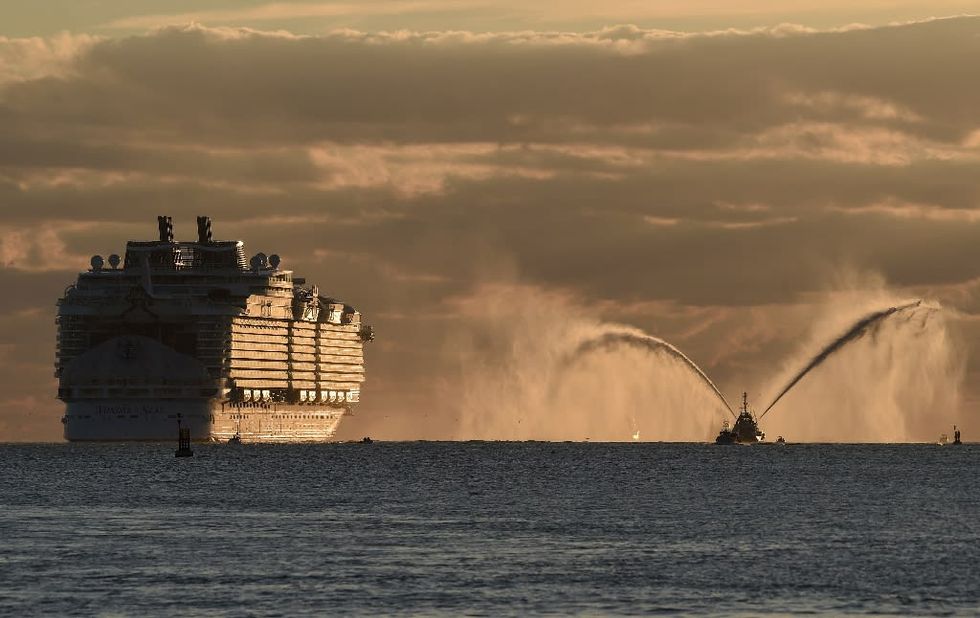
Corona Effect: Royal Caribbean Postpones US Sailings

MIAMI (AP) — Royal Caribbean International is postponing for nearly a month one of the highly anticipated first sailings from the US since the pandemic began because eight crew members tested positive for COVID-19, the company’s CEO said.

The brand new Odyssey of the Seas was to set sail from Fort Lauderdale, Florida, on July 3 but is now postponed to July 31. Royal Caribbean International’s CEO Michael Bayley said late Tuesday on Facebook that the decision had been made “out of an abundance of caution,” adding that the company is also rescheduling a simulation cruise scheduled for late June.

“While disappointing, this is the right decision for the health and well-being of our crew and guests,” he said.

Bayley said all 1,400 crew members aboard the Odyssey of the Seas were vaccinated on June 4, but two weeks had not passed for their bodies to build protection against the virus. Six of the crew members who tested positive are asymptomatic and two are mildly sick, he said, adding that the company has quarantined all crew members for 14 days and will continue routine testing.

Company spokeswoman Lyan Sierra-Caro said the trial voyage with volunteer passengers that was originally planned for later this month would help the cruise line meet Centers for Disease Control and Prevention requirements before resuming trips with paying passengers. The CDC has not yet approved the trial run, Sierra-Caro said.

The debut of the Odyssey of the Seas was highly anticipated as cruise lines attempt a comeback after more than 15 months of not sailing from the US because of the pandemic. Royal Caribbean International has said that passengers are “strongly recommended” to get vaccinated, adding that unvaccinated passengers must be tested for the virus and follow other measures.

Celebrity Edge, also part of the Royal Caribbean Group, is set to become the first post-pandemic ship to sail from the US with ticketed passengers on June 26. A Celebrity Cruises’ spokeswoman told The Associated Press that Celebrity Edge is able to sail without a test run because it is following CDC guidelines allowing ships with 98% vaccinated crew and 95% vaccinated guests to skip that step.

“We are exceeding these guidelines,” said Celebrity Cruises spokeswoman Susan Lomax in an email.

A new Florida law bans businesses from requiring customers to show proof of vaccination. Gov. Ron DeSantis argues the legislation was meant to preserve individual freedom and medical privacy.

Lomax said the state law stipulates that businesses may not require customers to provide any documents, “but we are able to ask guests if they would like to share their vaccination status.”

Written by Adrianna Gomez Licon

The post Corona Effect: Royal Caribbean Postpones US Sailings appeared first on The St Kitts Nevis Observer.

Jamaica Tries to Balance Boosting its Economy and Protecting Environment

By Kate Chappell

KINGSTON, June 14 (Thomson Reuters Foundation) – As a child, Sophie Grizzle Roumel remembers swimming in the warm turquoise waters near a beach surrounded by mangroves outside her small village on Jamaica’s west end.

Today, the white sand beach is crowded with heavy trucks and around it the land is denuded of trees as diggers level part of the mangrove forest to make way for a new $550 million resort project.

“It is a beautiful property. It is heartbreaking to see what is being done,” said Grizzle Roumel, a director of the beach resort town of Negril’s Chamber of Commerce.

“I’m devastated at the destruction and the long-term effects it will have.”

Located just past Jamaica’s famed stretch of all-inclusive resorts on the north coast, the project is a stark example of the twin challenges the country faces: how to bring in visitors and boost jobs in the wake of COVID-19 while also keeping its commitment to slowing global warming.

Across the Caribbean, one of the world’s most tourism-dependent regions, states are struggling to balance protecting the environment and stoking their economies, said Mark Bynoe, assistant executive director of the Caribbean Community Climate Change Centre (CCCCC).

“Governments are often caught in a position of wanting to do what is right, but the rest of the population is agitating to see changes and those are often measured in very discrete terms,” including in jobs and poverty rates, he said.

The new more than 2,000-room resort will be one of the largest in Jamaica, according to Spanish developer Princess Hotels and Resorts, which started preparatory work on the project two years ago.

Rafael Millan, country manager for Princess Hotels and Resorts, said the completed resort could welcome up to 4,070 visitors per day and will create 3,500 jobs.

The company is focused on minimizing the project’s environmental damage, he added. “Every single action that we take has compensation measures,” he told the Thomson Reuters Foundation in a phone interview.

That includes replanting any mangroves, seagrass and coral that are removed during construction.

“We know that preserving the mangroves is a sign of the identity of our resort,” Millan said. “There is a way to keep sustainable tourism within an existing natural area which is subject to tourism activity.”

PROTECTED AREAS CONSTRUCTION

An assessment published by the National Environment and Planning Agency (NEPA) in January 2020 noted that the Princess resort is being built in an area that includes four environmentally protected areas, including a fish sanctuary.

Once finished, the 84-acre (34-hectare) development will have removed more than 10 acres of mangroves and 10,000 square metres (107,600 square feet) of seagrass, as well as hard coral, according to estimations in the report.

Scientists say mangrove forests are invaluable to fighting both the causes and effects of climate change.

They absorb planet-heating carbon dioxide from the atmosphere and protect coastlines against storms, flooding and erosion.

The trees also provide habitat for wildlife, including the fish and crabs that locals harvest to earn a living.

As part of the permit-granting process, Princess Hotels agreed to rigorous adaptation and compensation measures, but Diana McCaulay, founder of the Jamaica Environment Trust, a non-profit, said they are not enough.

“You still lose the ecosystem functions of the mangroves in the area from which you are taking them. Even if you manage to restore them or create them in (another) part of the coast, you still leave an impact on this part of the coast,” she said.

“Even if they survive in the new area, you still have to wait 20 or 30 years for them to grow. And it may fail.”

The NEPA and Jamaica’s environment ministry did not reply to requests for comment.

POST-PANDEMIC RECOVERY

Jamaica has been lauded by the international community for its commitments to addressing the climate crisis.

By 2030, the country has promised to plant three million trees, restore its mangrove forests, reduce carbon emissions by at least 25% from business as usual levels, and shift to cleaner energy sources like wind and solar power.

According to estimates in a 2019 government report, Jamaica has lost more than 770 hectares of mangroves over the past two decades for a variety of reasons, mainly coastal development.

Carlos Fuller, Belize’s ambassador to the United Nations and a former officer with the CCCCC, said balancing economic development with protecting the environment is possible but not easy.

“It is a challenge. (Belize) also really depends on establishing (economic) resources. But with hotels, we have gone much more toward small scale as opposed to the mega resorts,” Fuller said over the phone.

“At the end of the day, you may want to rush to get a quick return. But in five years, you will degrade the environment and you will lose your market.”

Figures from the Tourism Ministry show that before the pandemic, tourism accounted for nearly 10% of Jamaica’s gross domestic product.

But last year, border closures and cruise cancellations due to the pandemic caused visitor arrivals to the country to fall by nearly three-quarters.

The economy is expected to contract between 10% and 12% in the fiscal year 2020/21, according to the Bank of Jamaica.

Tourism Minister Edmund Bartlett told Parliament in April that Jamaica is relying on tourism to jump-start its post-COVID-19 recovery, with 7,000 hotel rooms due to be built over the next two years, including the Princess Hotels development.

Bartlett told the Thomson Reuters Foundation that protecting the local environment, particularly coastal areas, is the government’s primary concern.

But Sophia Frazer-Binns, a critic from the People’s National Party, the country’s main political opposition party, said the development represents a failure of the government to match words with actions.

Instead, she said, authorities should focus on smaller-scale community tourism.

“It is just one of the instances where we are seeing the government has not really shown a real commitment to environmental protection,” she said.

The post Jamaica Tries to Balance Boosting its Economy and Protecting Environment appeared first on The St Kitts Nevis Observer.

Shipping Registry: St Kitts & Nevis Elevated to Paris MOU Grey List

Paris MOU has confirmed that the St Kitts & Nevis International Ship Registry (SKANREG) has been elevated to the Grey List of the Paris Memorandum on Port State Control (Paris Memorandum of Understanding)).

Confirming the news, Liam Ryan, International Registrar and CEO of SKANREG, said: “This is a major development for SKANREG and vindicates our declared policy of bringing the Registry into the main stream.

“Our vision was to shine a light on questionable operations of some of our vessels and weed out those who failed to comply with our pragmatic approach to ship operations.

“With Paris MOU’s publication of the three Lists it is clear our hard work and diligence has paid off. Not only have we moved to the Grey List but we now rank half way up the listing. This demonstrates our policy is working as it should.”

Far from resting on its laurels, St Kitts & Nevis has its sights set on moving further up the Grey List rankings and eventual listing as a White List Registry of quality with no hiding place for vessels that fail to comply with the Registry’s reasonable operational demands.

The Paris MOU Committee’s revised lists take effect from 1st July 2021.

Placing SKANREG at No 52 in the overall rankings and roughly halfway up the Grey List, conforms to the Paris MOU view that such positioning incentivises a Registry to continue with performance improvement and minimal detentions thereby increasing the chances of higher ranking and eventual transfer to the White List.

Mr Ryan commented: “You could say this is Stage Two of our journey up the rankings and our overall plan continues to be elevation to the White List within the next four years.”

SKANREG has always taken a pragmatic approach to what it terms its partnership with flagged vessels under its control.

Compliance is a key factor for a vessel seeking listing and on-going membership of the Registry of St Kitts & Nevis and is set out in detail when a ship flags in.

Mr Ryan concluded: “Compliance not complacency is our watchword and we thank all of the stakeholders involved with the Registry who have contributed to our vast improvements made in recent times.”

The MOU has three ranking sections, black, grey and white.

The post Shipping Registry: St Kitts & Nevis Elevated to Paris MOU Grey List appeared first on The St Kitts Nevis Observer.

World View: Biden & Allies, Pandemic Olympics, Iran, More

June 17, 2021

Alternate text

AP Morning Wire

The Associated Press

The Rundown

I'm an image

WASHINGTON (AP) — President Joe Biden spent his first trip overseas highlighting a sharp break from his disruptive predecessor, selling that the United States was once more a reliable ally with a steady hand at the wheel….Read More

I'm an image

TOKYO (AP) — Public sentiment in Japan has been generally opposed to holding the Tokyo Olympics and Paralympics, partly based on fears the coronavirus will spike as almost 100,000 people — athletes and others — enter for …Read More

I'm an image

DUBAI, United Arab Emirates (AP) — Iran’s tattered nuclear deal with world powers hangs in the balance as the country prepares to vote on Friday for a new president and diplomats press on with efforts to get both the U.S….Read More

I'm an image

MILWAUKEE (AP) — Every Sunday at Friendship Missionary Baptist Church, the Rev. Joseph Jackson Jr. praises the Lord before his congregation. But since last fall he’s been praising something else his Black community needs:…Read More

I'm an image

NEW YORK (AP) — They arrive every year in their snazzy black and white tuxedos, causing traffic jams and clamoring for quality real estate. Endangered African penguins have long been a source of delight to visitors of th…Read More

OTHER TOP STORIES

HONG KONG (AP) — Hong Kong police used a sweeping national security law against a pro-democracy newspaper for the first time Thursday, arresting five editors and executives …Read More

WASHINGTON (AP) — The Democratic-led House, with the backing of President Joe Biden, is expected to approve legislation to repeal the 2002 authorization for use of military f…Read More

MUMBAI, India (AP) — Dr. Kedar Toraskar hasn’t been able to sleep much over the last few months. His mind would constantly turn to the young COVID-19 patients fighting for th…Read More

WASHINGTON (AP) — The United States will soon have a new federal holiday commemorating the end of slavery. The House voted 415-14 Wednesday to make Juneteenth, or June 19th, …Read More

The post World View: Biden & Allies, Pandemic Olympics, Iran, More appeared first on The St Kitts Nevis Observer.

Peru: Election Winner Castillo Says ‘He’s Not a Communist’

LIMA, June 16 (Reuters) – Pedro Castillo, a former teacher and political outsider on the verge of being named president of Peru, has looked to temper fears in the divided Andean nation after a slow vote count showed him winning the June 6 ballot.

Socialist Castillo on Tuesday claimed victory in the election, though his right-wing rival Keiko Fujimori has not conceded, alleging fraud with little evidence and seeking to get votes annulled. The electoral body has yet to confirm the result.

“The Peruvian people have raised their heads to say democratically we are going to save this country,” Castillo told cheering supporters from a balcony late on Tuesday.

The abrupt rise of 51-year-old Castillo has rattled Peru’s political establishment and could have a major impact on the vital mining industry in the world’s No.2 copper producer, with Castillo planning sharp tax hikes on the sector.

In the capital Lima, fears have spread among the city’s small but powerful urban elite about the policies of the little-known leftist, whose Free Peru party espouses Marxist ideas but who himself has looked to moderate his rhetoric.

“We are not Chavistas, we are not communists, no one has come to destabilize this country,” he said, a reference to a common refrain from Fujimori’s party and supporters comparing him to Venezuela’s late leftist President Hugo Chavez.

“We are workers, we are entrepreneurs and we will guarantee a stable economy, respecting private property, respecting private investment and above all respecting fundamental rights, such as the right to education and health.”

Castillo, who gained prominence as a teachers’ union leader in the rural north, said his government would serve both the voters in wealthy areas who rallied behind Fujimori and his rural base in Peru’s “furthest corners.”

Fujimori pledged on Tuesday to keep fighting and “defend Peru’s democracy.” She hoped the result would swing her way once ballots that her party is seeking to annul had been checked, although election observers have said that the process appeared clean.

Her supporters are planning a march later on Wednesday.

Peru’s electoral oversight body said it would confirm the result once it had resolved all appeals and requests for annulment. In previous Peruvian elections the announcement took until late June, even with fewer contested ballots.

‘BATTLE BEGINS’

Castillo addressed the uncertainty over those claims and called on Peruvians to “remain vigilant” of attempts to destabilize the country’s democracy. He called on the electoral body to “respect the popular will of this country.”

He said Peru needed to rally together to get beyond what has become the world’s deadliest per capita outbreak of COVID-19 and heal more entrenched rifts of poverty and inequality.

Healing divisions will not prove easy, however. Neither Castillo or Fujimori had been most Peruvians’ first choice candidate. In a fragmented first-round election in April, neither got over 20% of the vote.

Alfredo Rodriguez, a plumber who now knocks on doors in the working class Lima district of Callao to beg for rice and potatoes, said many people were disillusioned by both candidates. He did not vote for either, he said.

Rosario Llanos, a manager, was waiting at a public health clinic in Lima on Wednesday. She cast her vote for Fujimori although she was not initially her preferred choice and was now concerned about rising tensions.

“We Peruvians have spent so many years working to finally achieve political stability,” Llanos, 44, said. “With the comments both candidates are now making, they’re only creating more instability.”

“You can’t even talk to a friend if you don’t know how he or she voted because it could result in an argument.”

Reporting by Marco Aquino and Stefanie Eschenbacher in Lima; Writing by Adam Jourdan Editing by Alistair Bell

The post Peru: Election Winner Castillo Says ‘He’s Not a Communist’ appeared first on The St Kitts Nevis Observer.

Brazil’s Indigenous People in Land Rights Protest

BRASILIA, June 16 (Reuters) – Several hundred indigenous Brazilians protested outside the Congress building in Brasilia on Wednesday against a bill backed by the country’s farm sector that would limit recognition of reservation lands.

Protesters wearing feathered headdresses and body paint later tried to invade a downtown building to demand the ouster of the head of the government’s indigenous affairs agency Funai for not defending their interests.

Riot police fired pepper spray to contain the crowd, and some arrows were shot at the glass windows of the building.

“This bill PL 490 is harmful not just to us, but to humanity,” Sonia Guajajara, head of Brazil’s largest indigenous umbrella organization APIB, told Reuters.

The legislation, first tabled in 2007, would fix 1988 as the cut-off date for the demarcation of reservation lands if they were not occupied at that time. The lower house is expected to vote on the bill in committee next week.

Brazil’s Supreme Court must rule on a case that would set jurisprudence in the issue and is expected to uphold indigenous arguments that fixing the 1988 date violates constitutional guarantees to ancestral lands.

“The bill was rejected by the human rights commission in 2009. This is an unacceptable setback for indigenous rights and a constitutional absurdity,” Brazil’s only indigenous lawmaker Joenia Wapichana said in a congressional committee session.

The bill would open up protected indigenous lands to commercial agriculture and mining, and is backed by far-right President Jair Bolsonaro who advocates developing the Amazon region by tapping mineral resources on reservations.

Guajajara said the campaign to stop passage of the bill comes at a time of increased attacks on indigenous communities by wildcat gold miners who have illegally invaded indigenous lands.

Reporting by Anthony Boadle, Editing by Rosalba O’Brien

The post Brazil’s Indigenous People in Land Rights Protest appeared first on The St Kitts Nevis Observer.

World Bank Rejects El Salvador Bitcoin Plan

The World Bank has rejected a request from El Salvador to help with the implementation of Bitcoin as legal tender.

The international lender cited concerns over transparency and the environmental impact of Bitcoin mining.

Earlier this month, the Central American country announced plans to become the first nation to formally adopt the digital currency.

It aims to use Bitcoin as a parallel legal tender alongside the US dollar.

The World Bank’s decision could mean the country faces problems in hitting its deadline to ensure that Bitcoin is accepted nationwide in the next three months.

“We are committed to helping El Salvador in numerous ways including for currency transparency and regulatory processes,” a World Bank spokesperson told the Reuters news agency via email.

“While the government did approach us for assistance on Bitcoin, this is not something the World Bank can support given the environmental and transparency shortcomings,” they added.

It comes after El Salvador’s Finance Minister Alejandro Zelaya said on Wednesday that the country had asked the World Bank for technical assistance with the implementation of the cryptocurrency as an official method of payment.

Mr Zelaya also said that discussions with the International Monetary Fund (IMF) have been successful, saying the IMF was “not against” the implementation of Bitcoin.

But the IMF last week said it saw “macroeconomic, financial and legal issues” with El Salvador’s adoption of Bitcoin.

Last week, El Salvador became the first country in the world to officially classify Bitcoin as a legal currency.

Its Congress approved President Nayib Bukele’s proposal to embrace the cryptocurrency.

President Bukele said the government had made history, and that the move would make it easier for Salvadoreans living abroad to send money home.

Under the legislation Bitcoin will become legal tender, alongside the US dollar within 90 days of the approval by Congress.

The new law means every business must accept Bitcoin as legal tender for goods or services, unless it is unable to provide the technology needed to process the transaction.

El Salvador’s economy relies heavily on remittances, or money sent home from abroad, which make up around 20% of the country’s gross domestic product (GDP)

More than two million Salvadoreans live outside the country, but continue to keep close ties with their place of birth, sending back more than $4bn (£2.9bn) each year.

The post World Bank Rejects El Salvador Bitcoin Plan appeared first on The St Kitts Nevis Observer.

Construction Flaws at Heart of Mexico City Train Wreck

A preliminary report into the deadly collapse of a metro overpass in Mexico City last month has found that it was caused by flaws in the construction.

Jesús Esteva, head of the city’s public works department, said deficiencies had been found in building materials and structural supports along the line.

More reports will be made in the coming months about the collapse, which happened on 3 May.

The incident killed 26 people and has led to protests in the Mexican capital.

It has also put pressure on allies of President Andrés Manuel López Obrador, and on Mexican billionaire Carlos Slim, Latin America’s richest man, whose construction firm Grupo Carso was involved in building the section of train line that collapsed.

The crash happened at around 22:00 local time near Olivos station on the metro’s Line 12, in the south-east of the city.

In its probe, Norwegian auditor DNV, found six deficiencies in its construction.

Rescuers search for survivors at a crash site in Mexico City, Mexico. Photo: 4 May 2021image copyrightReuters
image captionThe incident happened late at night

These included missing bolts on some girders, and unfinished or poorly executed welding.

Experts also found deformations and fractures in support beams of the section that collapsed.

Two further phases of DNV’s report will be released in July and August.

Mexico City Mayor Claudia Sheinbaum said that a special team will be created to repair and reinforce the metro line.

She has faced criticism about the line’s maintenance. A local labour union said its earlier warning about damage had been ignored by city authorities.

Composite picture showing images before and after and after the accidentimage copyrightGetty and Google Maps
image captionImages show the site of the incident now and in 2019

Under the spotlight is also Foreign Minister Marcelo Ebrard, who directed the route’s construction in 2012 when he was the city’s mayor.

Both of them are allies of President López Obrador, and are seen as potential contenders for the presidency when his term ends in 2024.

In a statement, Mr Ebrard, defended how his mayoral administration had overseen construction of the line. He added that a broader enquiry should be made into the decision-making processes of its design, supervision and maintenance.

Map of where the incident took place

Line 12, known as the Golden Line, was built at a cost of around $1.2bn (£860m) – about 70% more than was originally planned.

Operations were suspended at a dozen stations along the line in 2014, for over a year, due to deteriorating conditions along the track.

Before the latest report was published, President López Obrador said those responsible for its collapse would be punished.

Prosecutors are investigating the disaster but have yet to publish their findings.

The post Construction Flaws at Heart of Mexico City Train Wreck appeared first on The St Kitts Nevis Observer.