Tag Archives: caribbean

UK Tightens Borders, Travel Rules as Variants Spark New Alarm

PHE data indicates dominant variant ‘more likely to cause serious illness’ as Grant Shapps warns of threat to reopening on 21 June

Passengers queue at Heathrow airport
Flights at Heathrow airport this February. Portugal was scheduled on Thursday to be removed from the UK’s green list for travel without quarantine. Photograph: Getty Images

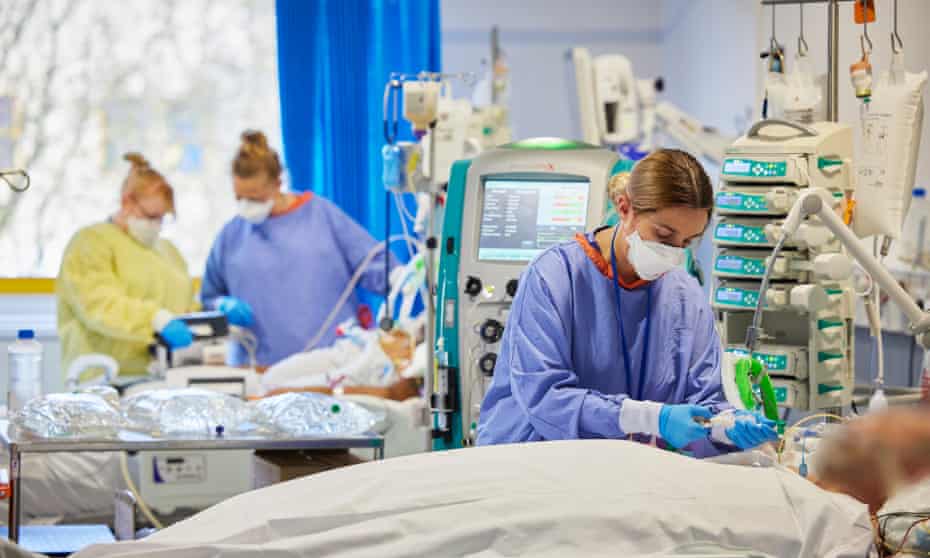
Guardian- Ministers have moved to tighten Britain’s borders as new data suggests the Delta coronavirus variant is much more likely to cause serious illness and is circulating more rapidly within schools.

With England’s reopening on 21 June hanging in the balance, the government removed Portugal from the green list of countries and added seven more countries to the red list – moves that provoked fury within the travel industry and left many holidaymakers in limbo.

Portugal, including Madeira and the Azores, was the only mainstream tourist destination Britons could visit without having to quarantine. On Tuesday, these destinations will be moved to the amber list, requiring travellers to self-isolate for 10 days upon return.

British travellers count cost of Portugal’s sudden removal from green list

Grant Shapps, the transport secretary, said that as well as rising Covid test positivity rates in Portugal, a “difficult decision” hinged on worries about Covid variants, particularly a possible additional mutation of the Delta variant.

Data from Public Health England released on Thursday evening showed that the Delta variant, B.1.617.2, first detected in India, is dominant in the UK, now accounting for 75% of infections.

The data also indicated that the variant was significantly more likely to cause serious illness than the Alpha variant of Covid, which has been dominant across the UK since its detection in Kent in the autumn.

While the PHE team stressed that more research was needed, an analysis of 38,805 sequenced cases in England showed that the Delta variant carried 2.61 times the risk of hospitalisation within 14 days compared with the Alpha variant (B.1.1.7) once demographic factors and vaccination status were taken into account.

Data from Scotland pointed to a more than twofold higher risk of hospitalisation for those infected with the Delta variant compared with the Alpha.

The new PHE data also revealed for the first time the spread of variants within schools and colleges in England. By the start of June, there had been 140 outbreaks of the Delta variant within educational settings, and since the end of April the figures showed 90 outbreaks of this variant within schools alone.

Responding to the PHE report, Prof Christina Pagel, director of UCL’s clinical operational research unit, said: “Every technical report seems to bring worse news. Added to increased transmissibility and some vaccine escape, we now have evidence that your chance of being hospitalised might be twice as high with the Delta variant than with the Alpha variant. This makes it harder for vaccines to weaken the link between cases and hospitalisations.

 'Safety first': Grant Shapps on Portugal's removal from travel 'green list' – video
‘Safety first’: Grant Shapps on Portugal’s removal from travel ‘green list’ – video

“The other new thing in this report is data on outbreak settings, and it is clear that schools are a major source of transmission and that outbreaks in primary and secondary schools have been growing a lot week on week.”

Shapps tied the decision about Portugal to fears that returning travellers could bring in more variants, further jeopardising the government’s timetable to end many of the remaining Covid social restrictions on 21 June. There is still no decision as to whether the planned reopening will happen then, or if restrictions might need to be extended allowing more people to be vaccinated. A decision is due by 14 June.

“We just don’t know the potential for that to be a vaccine-defeating mutation, and we don’t want to take the risk as we come up to 21 June and the review of the fourth stage of the unlock,” Shapps said in a TV interview.

He also highlighted what he called “a sort of Nepal mutation”. A mutation of the Delta variant, this is suspected of potentially being more resistant to vaccines, but is not under observation by PHE. It has been seen in numerous countries but only once in Nepal, which carries out very little genome sequencing for Covid.

As news leaked out about the green list decision hours before the official announcement, hundreds of millions of pounds were wiped off the value of tour operators and airlines, and there was significant anger.

Green-list destinations are in effect the only choice for holidays. The listing allows people to return to England without quarantining, although they must take a Covid-19 test before coming back and another within two days of arriving.

Aside from Portugal, Gibraltar and Israel, the initial 12-destination green list mainly comprised places – such as Australia, New Zealand, the Falkland Islands and Iceland – that did not allow entry to Britons.

Ahead of the three-weekly review of the list, there had been expectation that more tourism centres could be added, for example Spain’s Balearic islands and some Greek islands.

Johan Lundgren, EasyJet’s chief executive, said the decision “essentially cuts the UK off from the rest of the world”.

John Holland-Kaye, chief executive of Heathrow airport, said: “Ministers spent last month hailing the restart of international travel only to close it down three weeks later, all but guaranteeing another lost summer for the travel sector.”

Henry Smith, the Conservative MP whose Crawley constituency includes Gatwick, said he was “very concerned that [the government was] not being more ambitious” on travel. “I think we should be going in the other direction and liberalising the amount of countries on the green travel list. This decision really puts a question mark over a significant number of travel and aviation sector jobs – going forward, if they can’t manage to have something of a summer season, I think it’s going to lead to increased unemployment.”

The post UK Tightens Borders, Travel Rules as Variants Spark New Alarm appeared first on The St Kitts Nevis Observer.

Nicaragua Opposition Figure Chamorro Under House Arrest

BBC- Police in Nicaragua have placed opposition presidential hopeful Cristiana Chamorro under house arrest.

Prosecutors have accused Ms Chamorro of money laundering, which she denies, and demand she be barred from running in November’s election.

Ms Chamorro is seen by many in the opposition as their best hope of defeating President Daniel Ortega, who is expected to run for a fifth term.

Her mother defeated Mr Ortega in the 1990 presidential poll.

The arrest is the latest in a series of measures which the opposition says are aimed at crushing its chances of defeating the government in the upcoming election.

Who is Cristiana Chamorro?

The 67-year-old journalist comes from one of Nicaragua’s most influential families.

Her father, Pedro Joaquín Chamorro, was the editor of newspaper La Prensa, which opposed the autocratic Somoza family that ruled Nicaragua for decades. He was assassinated in 1978.

Violeta Chamorro, her mother, won the 1990 election to become the first female president in Latin America, putting an end to Daniel Ortega’s first 11 years as president.

Authorities begin a raid at the home of opposition candidate for the Presidency, Cristiana María Chamorro Barrios, in Managua, Nicaragua, 02 June 2021.
Cristiana Chamorro’s home was raided Wednesday

Cristiana Chamorro had until recently been leading the Violeta Barrios de Chamorro Foundation, which is focused on press freedom. But she stepped down from the post earlier this year.

On Tuesday, she announced she would seek to become the presidential candidate for the opposition Citizen’s Alliance. The Alliance wants to field one single name in the hope of defeating Mr Ortega.

The president, who has been in power since January 2007, is widely expected to run again, though an official announcement is yet to be made.

How did things get here?

Shortly after Ms Chamorro’s announcement, prosecutors accused her of “abusive management [and] ideological falsehood” during her time at the helm of the foundation.

She has also been charged with “the laundering of money, property and assets, to the detriment of the Nicaraguan State and society”.

The investigation against her was opened in May at the request of the Ortega government. Ms Chamorro says they are trumped up charges to prevent her from challenging the president.

On Wednesday, shortly before Ms Chamorro was due to give a news conference, police raided her home in the capital, Managua, and placed her under house arrest.

What’s the reaction been?

In a statement issued before Ms Chamorro’s arrest, the regional body Organization of American States (OAS), of which Nicaragua is a member, said the country was “heading for the worst possible elections”.

“The use of the prosecutor’s office, injunctions and precautionary measures, the politicised handling of justice and the de facto banning of candidates are in violation of the Inter-American Democratic Charter, the OAS Charter, the instruments on human rights and of international pacts to which Nicaragua is party,” the statement read.

US Secretary of State Antony Blinken also condemned the move, saying on Twitter: “Arbitrarily banning opposition leader [Ms Chamorro] reflects Ortega’s fear of free and fair elections. Nicaraguans deserve real democracy.”

Opposition parties in Nicaragua accused the government of “unleashing a witch hunt”, alleging Mr Ortega feared “going to a free, transparent and observed” election.

Meanwhile government-friendly newspapers printed the arrest warrant issued for Ms Chamorro.

What’s the background?

Last December, the legislative, which is dominated by parties allied with the government, passed a law giving the government the power to ban candidates from running for office if they are deemed to be “traitors” to Nicaragua.

The government says the law aims to protect “the independence, the sovereignty and self-determination” of Nicaragua. It claims the country is under threat from imperialist powers in the US and “coup-mongers” within Nicaragua who are determined to overthrow the government.

The opposition alleges that repression has grown since 2018, when anti-government protests swept through the country and were met with a violent police response.

The post Nicaragua Opposition Figure Chamorro Under House Arrest appeared first on The St Kitts Nevis Observer.

Peru: Devastated by Pandemic, Faces Uncertain Political Future

Peru has had a turbulent year. The Andean nation has churned through three presidents since late 2020, has the world’s highest per capita COVID-19 death toll, and experienced its worst economic crash in three decades.

Now voters in the copper-rich nation have a chance to set a new course in elections on Sunday – a polarized run-off between surprise socialist candidate Pedro Castillo and Keiko Fujimori, the free-market scion of a powerful political dynasty.

Whoever wins, the South American country is set for a volatile and uncertain road ahead, analysts say.

Voters are almost evenly split between the two candidates, who offer sharply contrasting visions for the world’s no. 2 copper producer and its 33 million people.

Castillo, whose socialist Free Peru party has been buoyed by support in poorer rural regions, has a slim lead in the polls, ahead of conservative neo-liberal Fujimori, who is popular in capital Lima. Pollsters say the vote is too close to call.

The congressional vote in April saw around a dozen parties win seats, meaning there will be a fragmented legislature with no one party holding a majority.

Giovanna Peñaflor, a political analyst, said the stark divisions meant the new government would be vulnerable to more volatility, whoever won.

“Instability will be the norm in the years ahead, because we have weak institutions and because the government will lack legitimacy because things are so polarized,” she said.

“In theory, this election was supposed to end (instability), to bring a government with some legitimacy to make reforms, but this won’t happen and the political struggle won’t stop.”

Over the course of one week in November last year, one president was impeached by Congress and another forced out of office after fiery protests from young people angry at what they saw as an illegitimate coup led to at last two deaths. Since then, Peru has been ruled by interim President Francisco Sagasti. The uncertainty has rattled Peru’s once-steady markets.

In marches this week ahead of the vote, protest placards claimed Castillo would turn Peru into a “communist or chavista” state, a reference to Venezuela’s former leftist President Hugo Chavez. Castillo rejects the comparison.

Others lambasted Fujimori over corruption charges she denies and criticized her as “authoritarian,” linking her to her father Alberto Fujimori’s divisive presidency in the 1990s. He is currently in jail for human rights abuses and corruption.

“It’s because of the Fujimoris that we have a constitution with a neo-liberal economic model that benefits multinational firms to the detriment of the people,” said one university student who asked not to be named at an ‘anti-Keiko’ march on Tuesday.

‘FIGHT FOR DEMOCRACY’

Fujimori supporters, who include the country’s storied writer Mario Vargas Llosa, say Castillo would risk destabilizing Peru, which has been a relative safe haven for investors and miners in the region despite the recent political turmoil.

“We have to fight for democracy, we do not want to be a Venezuela, we do not want to be Cuba,” said Roberto Rios, a pro-Fujimori protester who participated in one of the marches through downtown Lima on the weekend.

“We want to maintain our freedoms, that’s all.”

Castillo, a primary school teacher little-known until his surprise win in April’s first-round vote, plans to rewrite Peru’s constitution, taking vastly more profits from miners and increasing spending on education and health.

He has said that mining firms are “plundering” Peru’s mineral wealth and threatened to nationalize strategic sectors if needed, though has moderated his stance as the campaign has proceeded and he has sought to win middle-ground voters.

Fujimori, who came within a percentage point of winning the 2016 election, has shot up in opinion polls over the last month, playing up her security credentials following a May attack by Shining Path militants that left 16 dead.

The Fujimori family is loved and loathed in almost equal measure in Peru. Some herald Alberto Fujimori for his fight against the rebel group in the 1990s and say he laid the foundations for economic growth after years of crisis and hyperinflation.

Others condemn his authoritarian streak, a legacy that weighs heavily upon the younger Fujimori’s shoulders.

Analysts also said a close vote could spark off more protests, if the losing side did not accept the result.

“Crises have made the country quite unstable already,” said Peñaflor. “There will be people who are interested in pulling the rug out from under whoever is in power.”

The post Peru: Devastated by Pandemic, Faces Uncertain Political Future appeared first on The St Kitts Nevis Observer.

Bolivia’s Aymara Women Train to Fight Domestic Violence

A Bolivian Aymara woman poses for a photograph with Sports Psychologist Laura Roca (L) and Personal Development and Women’s coach Kimberly Nosa (R) of the Warmi Power social project during a taekwondo class to learn self-defence, on the outskirts of La Paz, Bolivia April 23, 2021. Picture taken April 23, 2021. Laura Roca/Warmi Power/Handout via REUTERS

Lucrecia Huayhua has survived domestic violence for most of her life. Now, with other indigenous Aymara women in Bolivia’s highlands, she is taking things into her own hands with taekwondo classes to learn self-defense.

In the high-altitude cities of La Paz and El Alto, indigenous “cholita” women, who have long faced discrimination, train wearing their distinctive billowing skirts and bowler hats as part of a female empowerment drive by the Warmi Power project.

The women learn self-defense to protect themselves against domestic violence attacks, most often by partners or other family members. UN Women data shows eight out of ten Bolivian women suffer some type of violence during the lifetime.

“Men are not afraid of hitting women,” said Huayhua, 52, who has five children. “That’s why women live in great fear.”

“I have suffered a lot of physical and psychological abuse since I was a child. Up until now that I am an older woman, I have always suffered a lot.”

This year Bolivian authorities have already tallied 48 femicides, mostly by partners or husbands of the victims. Reports of abuse are common, though most perpetrators never face justice despite robust laws meant to prevent gender violence.

The self-defense classes are taught free of charge by instructors from the Warmi Power project, which says it has already reached some 20,000 Bolivian women.

“Our workshops look at psychology, attitude and emotions, to empower women to be able to stop certain aggressions,” said Laura Roca, a sports psychologist with the project.

“So women can recognize when they are in a situation of violence, a toxic relationship and can stop violence before it occurs and reaches femicide.”

The post Bolivia’s Aymara Women Train to Fight Domestic Violence appeared first on The St Kitts Nevis Observer.

India Orders 300M Unapproved Vaccine Doses, World Stats

A woman receives a dose of COVISHIELD, a coronavirus disease (COVID-19) vaccine at a Kolkata Municipality medical centre in Kolkata.image copyrightGetty Images

India has ordered 300 million doses of an unapproved coronavirus vaccine amid a devastating second wave.

The unnamed vaccine from Indian firm Biological E is in Phase 3 trials, and had showed “promising results” in the first two phases, the federal government said in a statement.

The $206m order is the first India has signed for a jab that has not received emergency approval.

This comes as the country struggles to speed up its lagging vaccine drive.

India has administered just over 220 million jabs so far although much of its 1.4 billion population is now eligible for the vaccine. Less than 10% of the country has received at least one dose of the vaccination, largely because of a severe shortage of doses.

Although Covid case numbers have been dropping, India is still adding more than 100,000 news cases a day. It has recorded more than 340,000 deaths from the virus so far, but experts say the number is vastly underestimated.

India’s federal government, led by Prime Minister Narendra Modi, has been criticised for not placing huge orders ahead of time with either Indian or foreign vaccine makers.

Daily wagers wait in a queue for vaccination at the 'Vaccination on wheels' in Kolkata. A bus was turned into a COVID vaccination centre to curb the surge in COVID-19 cases in India.image copyrightGetty Images
image captionIndia has fully vaccinated less than 10% of its 1.4 billion people

India is currently giving three vaccines – Covishield, manufactured by the Serum Institute of India (SII), and Covaxin, developed by Indian firm Bharat Biotech and the government’s Indian Council of Medical Research, and Sputnik V, which is developed by Moscow’s Gamaleya Institute.

Compared to the single order from Biological E for 300 million doses, India brought about 350 million doses from both Covishield and Covaxin between January and May.

India’s drug regulator gave Covaxin emergency approval in January before trials were completed – data on its efficacy is yet to be released.

The new vaccine from Biological E is “likely to be available in the next few months,” according to the government.

Mr Modi’s government is racing to shore up its vaccine stocks as Covid numbers dip, hoping to be well-prepared for what experts say is an inevitable third wave.

India’s vaccine drive, which had a promising start in January, began to slow down because vaccine hesitancy crept in as cases dropped. But numbers soon rose again in a deadly second wave that saw hospitals falling short of beds and crematoriums running short of space.

Hoping to stem the tide, the government threw open the drive in May to everyone above the age of 18 but India’s two vaccine makers – Serum Institute and Bharat Biotech – could not guarantee supply at that scale.

But shortages persist and have also led to vast inequalities in access with rural areas, the poor and women falling behind in the line for jabs.

================================================

WORLD STATS

Coronavirus Cases:

172,924,775

Deaths:

3,717,705

Recovered:

155,648,233
Highlighted in green
= all cases have recovered from the infection
Highlighted in grey
= all cases have had an outcome (there are no active cases)

[back to top ↑]

Latest News

June 4 (GMT)

Updates

The post India Orders 300M Unapproved Vaccine Doses, World Stats appeared first on The St Kitts Nevis Observer.

US: Biden Puts Harris in Charge of Voting Rights Protection

President Biden has tasked Vice President Harris with leading his administration’s efforts to protect voting rights, adding an urgent and complex issue to her growing portfolio.

Biden made the announcement during a speech in Tulsa, Okla., where he marked the 100th anniversary of a massacre in which a white mob killed hundreds of Black people and destroyed a thriving community known as Black Wall Street.

The president pointed to the systemic challenges facing Black Americans 100 years later, including threats to the right to vote as multiple states debate and pass laws that experts say will make it more difficult for minorities in particular to cast their ballot.

“To signify the importance of our efforts, today I’m asking Vice President Harris to help these efforts and lead them among her many other responsibilities,” Biden said. “With her leadership and your support, we’re going to overcome again, but it’s going to take a hell of a lot of work.”

Biden called the challenges to voting rights in recent months a “truly unprecedented assault on our democracy.” Georgia, Florida and Arizona, all competitive states in the 2020 election, have seen Republican-led legislatures drastically overhaul voting procedures. Texas is looking to pass a similar law, though Democratic lawmakers there managed to thwart its passage over the weekend.

In a subsequent statement, Harris said she would engage the public, voting rights groups, community organizations and the private sector “to help strengthen and uplift efforts on voting rights.” She noted nearly 400 bills have been introduced at the state level since the 2020 election to make it more difficult for some Americans to vote.

“The work ahead of us is to make voting accessible to all American voters, and to make sure every vote is counted through a free, fair, and transparent process,” Harris said. “This is the work of democracy.”

Biden called on voting rights groups to redouble their efforts to register and educate voters, and he expressed hope that June would be a “month of action on Capitol Hill” as the Senate prepares to take up the For the People Act, a sweeping elections bill passed earlier this year in the House.

“I hear all the folks on TV saying, ‘Why doesn’t Biden get this done?’ ” he said Tuesday. “Well, because Biden only has a majority of effectively four votes in the House and a tie in the Senate, with two members of the Senate who vote more with my Republican friends.”

The president appeared to be referring to Sens. Joe Manchin (W.Va.) and Kyrsten Sinema (Ariz.), two centrist Democrats who have been outspoken about their opposition to certain progressive priorities and to ending the legislative filibuster that requires a bill gets 60 votes in the Senate to pass.

While Manchin and Sinema vote with Democrats more frequently than with Republicans, they receive most of the scrutiny when Democratic priorities are unable to garner majority support within the party conference in the Senate.

Manchin has urged his party to focus more narrowly on strengthening the 1965 Voting Rights Act rather than try to pass a more expansive bill that is unlikely to garner enough support to pass the Senate.

But several Republicans are balking at supporting even the pared-down legislation and are dismissing Democrats’ alarm bells about the state-level actions as political.

The post US: Biden Puts Harris in Charge of Voting Rights Protection appeared first on The St Kitts Nevis Observer.

Biden Will Donate 25M Doses of COVID Vaccine Abroad During June

The Biden administration on Thursday announced it will donate 25 million coronavirus doses abroad, with most of them allocated to the World Health Organization’s COVAX initiative.

In a fact sheet, the White House said it will donate about 19 million doses to COVAX; about 6 million directly to countries in need, including Mexico, Canada and South Korea; and for United Nations front-line workers.

“We are sharing these doses not to secure favors or extract concessions. We are sharing these vaccines to save lives and to lead the world in bringing an end to the pandemic, with the power of our example and with our values,” President Biden said in a statement.

Pressure has been growing on the White House to develop a plan to donate its excess vaccines to countries that have been hit hard by the virus without the same access to vaccines as wealthier nations. The concern is that without vaccinations, new variants of the virus may arise in those countries that could threaten the rest of the world.

Thursday’s announcement, which comes ahead of the Group of Seven Summit next week, stops short of the 80 million total doses promised by the administration last month. Instead, it focuses only on the 20 million authorized vaccine doses from Pfizer-BioNTech, Moderna and Johnson & Johnson.

Biden has said the U.S. will donate “at least” 20 million of those by the end of June.

He has also pledged to donate 60 million doses of AstraZeneca’s vaccine, which is not authorized for use in the U.S., but that effort has been hamstrung by manufacturing safety concerns and a related Food and Drug Administration review.

The Biden administration has been facing growing calls to help bolster the global vaccination effort as demand and enthusiasm for vaccines wane in the U.S. while other countries face a crisis.

According to the World Health Organization, the U.S. and other high-income countries have secured almost 90 percent of the available coronavirus vaccine supply.

The administration had initially been reluctant to send any doses overseas, saying the extra doses could be a backstop for possible manufacturing issues in the U.S., used to vaccinate children or serve as booster doses if necessary to fight against variants of the virus.

To date, most of the U.S. international support has come in the form of money, with the administration committing $4 billion to COVAX.

The administration earlier agreed to give 4.2 million doses of vaccines to Mexico and Canada — the only U.S.-owned doses that have been sent abroad.

The post Biden Will Donate 25M Doses of COVID Vaccine Abroad During June appeared first on The St Kitts Nevis Observer.

Haiti: Curfew Imposed as Nation Waits for Vaccines

The government of Haiti has announced the imposition of a new nightly curfew and other restrictions in an attempt to curb the spread of the novel coronavirus as the French-speaking nation still awaits the long-promised delivery of the 756,000 AstraZeneca vaccine doses arranged through a United Nations program.

Though organised over a month ago, Haiti does not yet have any vaccines to offer its more than 11 million people as COVID-19 cases increase, raising concerns among health experts that the well-being of Haitians is being pushed aside as violence and political instability across the country deepen.

“We are all working hard with the government of Haiti, the Ministry of Health and other stakeholders so that Haiti can receive vaccines as soon as possible,” said Dr. Ciro Ugarte, director of health emergencies for the Pan American Health Organization, the WHO’s Americas branch.

The free doses were scheduled to arrive in May at the latest, but delays are expected because Haiti missed a deadline and the key Indian manufacturer is now prioritizing an increase in domestic demand.

Haiti is among 10 countries in the Americas that will receive vaccines at no cost through COVAX, an initiative to provide COVID-19 inoculations to countries that would otherwise have difficulty getting them. The nation of more than 11 million already struggled to administer routine vaccines and provide basic health care before the pandemic.

For this reason, all outdoor activity will be banned from 10 p.m. until 5 a.m. under the decree issued by President Jovenel Moise, who was in Ecuador on Monday for the inauguration of that country’s new president.

The decree also makes the use of face masks mandatory for anyone out in public, while temperature checks and handwashing stations are required for all public or private buildings, such as banks, schools, hospitals and markets. Social distancing in public places is set at nearly 5 feet.

The president also ordered public institutions to reduce staff on duty by 50 percent, while he encouraged that other employees work from home.

According to official government statistics, Haiti has had 13,906 coronavirus cases since the pandemic began in March 2020 and 288 deaths related to COVID-19. But a recent surge in daily cases of contagion has prompted authorities to declare a state of emergency.

The post Haiti: Curfew Imposed as Nation Waits for Vaccines appeared first on The St Kitts Nevis Observer.

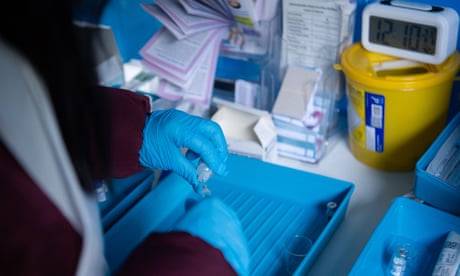
SKN: More Than 60% of Population Vaccinated

More than 60 per cent of the population of Saint Kitts and Nevis has gotten at least one dose of the COVID-19 vaccine.

Medical Chief of Staff of the Joseph France General Hospital, Dr Cameron Wilkinson, said: “So far, more than 60 per cent of the nation’s adults sent a strong message that they listened to the facts and believed in the science and went forward and got vaccinated.

“So far, more than 60 per cent of the nation’s adults have decided not to wait for an alternative vaccine and took action now, not just to protect themselves but our children, our pregnant mothers and the unborn, and the elderly and frail.”

Dr Wilkinson said the government’s robust education and awareness campaign contributed to the number of people who availed themselves of the vaccine.

“Getting vaccinated is still a voluntary choice. But with choices come consequences. By not getting vaccinated, you can jeopardize the health of those around you, in your homes, schools, churches, and places of business. More importantly, you are jeopardizing your own life.”

The post SKN: More Than 60% of Population Vaccinated appeared first on The St Kitts Nevis Observer.