HONG KONG, Dec 9 (Reuters) – The dollar failed to pick up ground on most major peers on Thursday as markets saw optimism in early data hinting the Omicron variant of the new coronavirus may not be as bad as feared, even as new COVID-19 restrictions in Britain hurt the sterling.
The euro was at $1.1338, after gaining 0.7% on Wednesday to a week high of 1.1354, and the Aussie dollar was at $0.7168 just off Wednesday’s week high, after a midweek rally in risk assets such as equities had helped the currency.
MSCI’s all-country world index (.MIWD00000PUS) is back in sight of all-time highs, having had its best day in more than a year on Tuesday and rising further on Wednesday.
Markets were roiled late last week by news of the new strain of COVID-19, which drove investors to safe havens, but have since taken heart from signs that the worst fears may not be realised.
BioNTech and Pfizer (PFE.N) said on Wednesday a three-shot course of their COVID-19 vaccine neutralised the new Omicron variant in a laboratory test, an early signal that booster shots could be key to protection against infection from the newly identified variant. read more
“It’s very ‘virus-on’ ‘virus-off’ in the FX market, and I think we are going to be stuck with this for a while,” said Paul Mackel, global head of FX research at HSBC. “The headline risk associated with Omicron is very high, it’s very confusing, and it’s making the intraday moves fairly volatile.”
Illustrating this, the pound dropped to a year low on Wednesday after British Prime Minister Boris Johnson imposed tougher COVID-19 restrictions in England, ordering people to work from home, wear masks in public places and use vaccine passes. read more
The pound rebounded a little to last trade at $1.3202.
Also on traders’ minds is the U.S. Federal Reserve’s December meeting next week, at which it could announce an acceleration of tapering of its bond-buying programme.
Before the arrival of the Omicron variant, the different paces at which global central banks would raise rates had been the major factor shaping currency markets.
The Canadian dollar was largely unchanged after the Bank of Canada held its key overnight interest rate at 0.25%, as expected, and maintained its guidance that a first hike could come as soon as April 2022, having gained to its highest in around three weeks ahead of the meeting along with higher oil prices.
Bitcoin was about flat on Wednesday at $50,400, after top executives from six major cryptocurrency companies including Coinbase and Circle urged Congress to provide clearer rules for the booming $3 trillion industry. read more
Omicron variant has “robust ability” to evade COVID vaccines, but Pfizer says booster shots “neutralized” it
Johannesburg — South African scientists who’ve been testing the current COVID-19 vaccines against the new Omicron variant of the coronavirus have released some early findings that show the strain has a “robust ability” to evade the immunity offered by inoculation. But, as CBS News foreign correspondent Debora Patta reports, it’s not all bad news.
U.S. vaccine maker Pfizer and its German partner BioNTech said on Wednesday, meanwhile, that while the standard two-dose regimen of their vaccine was “significantly less effective at blocking the virus,” a booster shot “neutralized the Omicron variant in lab tests.”
The pharmaceutical companies released a statement reporting their latest data as both they and independent researchers race to understand how much of a threat Omicron poses to the world. The news from Pfizer and BioNTech echoed what scientists in South Africa have reported — including that the standard two-dose inoculation “may still induce protection against severe disease.”
Alex Sigal, the researcher behind the latest data from South African trials, said what his team had found was “better than I expected,” showing that Omicron still relies on the same biological mechanism to attack human cells that previous variants have used. That means the current vaccines — which prompt the body to deploy two weapons against COVID-19 that work in different ways, T-cells and antibodies — will still have some effect.
Sigal said in a series of tweets announcing his team’s preliminary data, which has not yet been peer reviewed, that while there was “a very large drop in neutralization of Omicron” seen with the Pfizer/BioNTech vaccine, the highly-mutated strain’s “escape” from the vaccine’s protection was “incomplete,” which he said “means its a tractable problem with the tools we got (sic).”
In other words, while the vaccines alone appear to offer significantly less protection against catching the new variant, they’ll still help. Crucially, the vaccines are expected to continue keeping people out of hospitals, even with Omicron, and there’s also information suggesting the new strain may land fewer people in ICUs than previous variants to begin with.
Dr. Mike Ryan, the World Health Organization’s emergencies director, stressed on Wednesday that there was no indication yet that the vaccines would prove less effective at preventing serious illness with Omicron than with previous variants.
“We have highly effective vaccines that have proved effective against all the variants so far, in terms of severe disease and hospitalization,” he told the French news agency AFP. “And there’s no reason to expect that it wouldn’t be so” for Omicron.
Ryan also pointed to early, real-world information coming from South Africa, which suggests that while Omicron is extremely contagious, it does not appear to make people any sicker than Delta or other strains: “If anything, the direction is towards less severity.”
As South Africa heads toward the peak of its fourth wave, one of the country’s leading vaccinologists told Patta that the world doesn’t need to wait for lab results to determine whether Omicron is more deadly, as there’s already data from hospitals, and it’s better news than predicted.
South African health officials are racing to vaccinate people as Omicron spreads fast across the country, but Patta says there has been one notable difference with this wave: It has not been accompanied by the high number of hospitalizations and deaths associated with previous surges in infections from other variants.
When Patta and her team visited a hospital COVID ward six months ago during the country’s deadly third wave, fueled by the Delta variant, it was overwhelmed. ICU beds and oxygen were in desperately short supply.
Today, despite the huge spike in new infections from Omicron, the same hospital is unrecognizable. Their COVID wards are half empty — and the science is backing up the powerful anecdotal evidence.
While the study carried out by Sigal’s team shows the Pfizer shot may be 40 times less effective at preventing Omicron infections, the cases confirmed so far in South Africa have been far milder than those seen during previous waves, according to vaccinologist Professor Shabir Madhi.
“What that tells us is that we’re building up some level of immunity, even against Omicron, which is adequate to prevent the progression from infection to severe disease and death,” said Madhi, a senior researcher who has led many of South Africa’s COVID-19 trials.
What appears to be helping so much is “T-cell immunity.” Unlike antibodies that can prevent a virus from bonding to human cells in the first place, the body’s T-cells, induced by both vaccines and past infections, attack infected cells to prevent the disease from becoming severe.
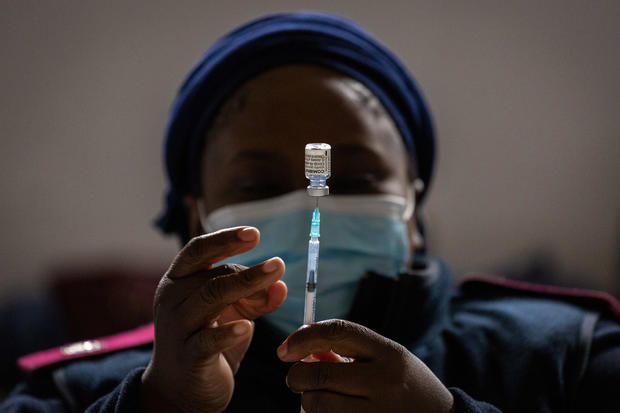
A health worker prepares a dose of the Pfizer-BioNTech Comirnaty branded COVID-19 vaccine at a mass vaccination site at Athlone Stadium in Cape Town, South Africa, August 20, 2021. Photographer: Dwayne Senior/Bloomberg/Getty
Madhi said that in Johannesburg, where infections have been surging, over 70% of the population have developed antibodies against COVID-19, and not just from the vaccines.
Vaccination rates remain low in South Africa, but so many people have been previously infected with COVID that there are high levels of natural immunity in the population. Getting there has come at a cost, however. Nearly 90,000 lives have been lost to the disease according to official tallies, but many experts say the real toll is probably closer to 270,000.
Scientists stress that while the current vaccines may not be nearly as effective at preventing infections with the Omicron variant, they are still crucial.
“When people choose not to be vaccinated, they’re more likely to end up in hospital and die of COVID-19,” said Madhi.
South Africa now has enough vaccines for the country, but uptake has slowed down in recent weeks due to apathy and vaccine hesitancy.
==============================================
Covid: Vaccines should work against Omicron variant, WHO says
Existing vaccines should still protect people who contract the Omicron variant from severe Covid cases, a World Health Organization (WHO) official says.
It comes as the first lab tests of the new variant in South Africa suggest it can partially evade the Pfizer jab.
Researchers say there was a “very large drop” in how well the vaccine’s antibodies neutralised the new strain.
But the WHO’s Dr Mike Ryan said there was no sign Omicron would be better at evading vaccines than other variants.
“We have highly effective vaccines that have proved effective against all the variants so far, in terms of severe disease and hospitalisation, and there’s no reason to expect that it wouldn’t be so” for Omicron, Dr Ryan, the WHO’s emergencies director, told AFP news agency.
He said initial data suggested Omicron did not make people sicker than the Delta and other strains. “If anything, the direction is towards less severity,” he said.
The new South African study – which has not yet been peer-reviewed – found the Pfizer/BioNTech vaccine may result in up to 40 times fewer neutralising antibodies against Omicron than against the original Covid strain.
But Omicron’s ability to escape vaccine antibodies is “incomplete”, said Prof Alex Sigal, a virologist at the Africa Health Research Institute, who led the research.
He said the results, based on blood tests from 12 people, were “better than I expected of Omicron”.
Prof Sigal said vaccination, combined with previous infection, could still neutralise against the variant. That suggests boosters may bring a significant benefit.
Scientists believe previous infection, followed by vaccination or a booster, is likely to increase the neutralisation level and will probably protect people against severe disease.
More data on how well the Pfizer jab works against Omicron is expected to be released in the coming days.
There is no significant data yet on how the Moderna, Johnson & Johnson and other jabs hold up against the new variant.
================================================
Omicron: What are the new Plan B rules for England?
The government has announced new Covid rules for England, in response to concern over the Omicron variant.
It says people should work from home where possible, and will have to show their Covid status for entry to many venues.
What are the new measures for England?
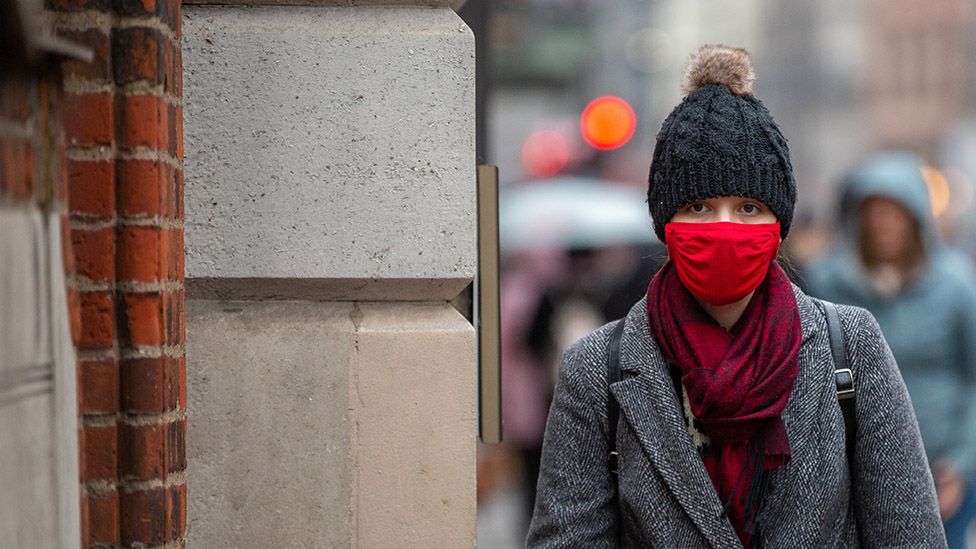
From Friday 10 December, face coverings will be mandatory for most indoor public venues including places of worship, theatres and cinemas, as well as in shops and on public transport.
Masks will still not be needed in hospitality settings such as pubs or restaurants, nor in venues where it is “not practical to wear them” (for instance, where exercise or singing takes place).
From Monday 13 December, people should work from home “if they can”.
From Wednesday 15 December (subject to parliamentary approval), people will need an NHS Covid Pass – or a negative lateral flow test – to gain entry to:
Nightclubs
Indoor unseated venues with more than 500 people
Unseated outdoor venues with more than 4,000 people
a limit of 30 people from different households mixing indoors in domestic settings
face coverings compulsory in shops, indoor seated venues and visitor attractions, public transport and some other settings
post-primary pupils must wear a face covering inside school buildings, as well as on school transport. Staff are encouraged to wear masks in school areas where they can’t socially distance
vaccine passports for venues including nightclubs, bars and cinemas
14ymedio, Havana — A first group of 44 Cubans out of 71 who were detained at the Vnukovo airport, in Russia, returned to the island this Saturday. “The citizens do not meet the requirements established by the Russian immigration authorities to enter their territory as tourists,” according to a post by the Cuban Consulate in Moscow.
The Foreign Ministry acknowledged that there is “a free visa agreement between the two countries,” although it argued that it must “verify the current requirements for entry into Russian territory.”
Last Friday the diplomatic headquarters listed on its social networks that among the requirements are to “present financial solvency to guarantee your stay, valid medical insurance in Russia with coverage of covid-19 and a PCR with a valid negative result.” To these requirements are added the accreditation of the purpose of the trip, presenting a valid passport, having a return ticket and having a lodging reservation for the time of stay.
The information was published a day after a group of Cubans announced that they were detained “for no reason” at the Vnukovo airport. Dailey Ponce Carmenates shared a video on the Facebook group ’Russia for Cubans’ , where one of the travelers is heard saying, “So that the world can see what they are doing with us. Díaz-Canel puts the dogs on us and here too.”
Ponce specified that they met the entry requirements. “We all have return tickets, money for lodging and the required documents.” This complaint was followed by that of Marisleisis Díaz, who arrived on December 3 at the same Russian airport from Varadero on flight ZF556, of the AZUR Airline company. “They detained us in migration having everything in order.”
Díaz mentioned that the saddest thing about the retention is that they had “more than 24 hours with only one meal, without blankets,, having to “sleep in the bathrooms to be able to cushion the cold.” The complainant assured that they offered no answer to her situation and that “there were children” in the group.
After being detained for several days, the Foreign Ministry reported that the consul contacted them and “specified details for their safe return to Cuba as soon as possible.” And it was indicated that the return of the remainder of the travelers is already being coordinated jointly with the Russian authorities and the airline.
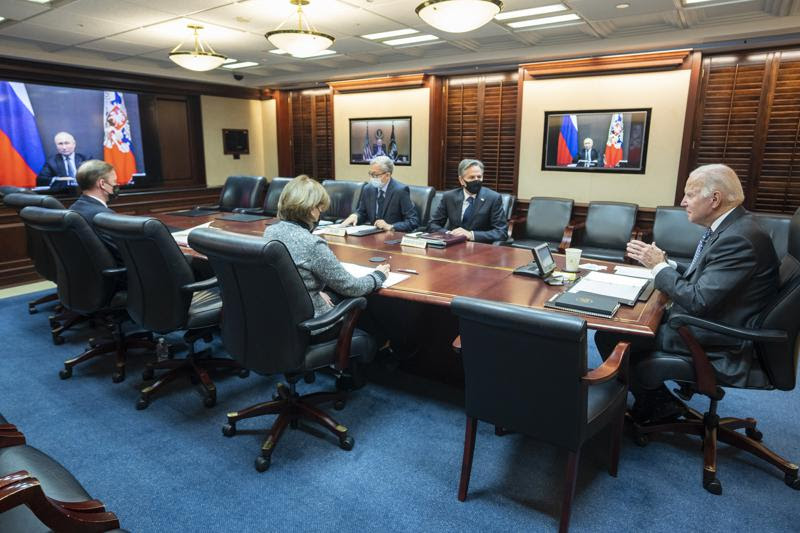
WASHINGTON (AP) — President Joe Biden and Vladimir Putin were still far apart after two hours of talks on the escalating crisis caused by Russia’s massing of tens of thousands of troops near its border with…Read More
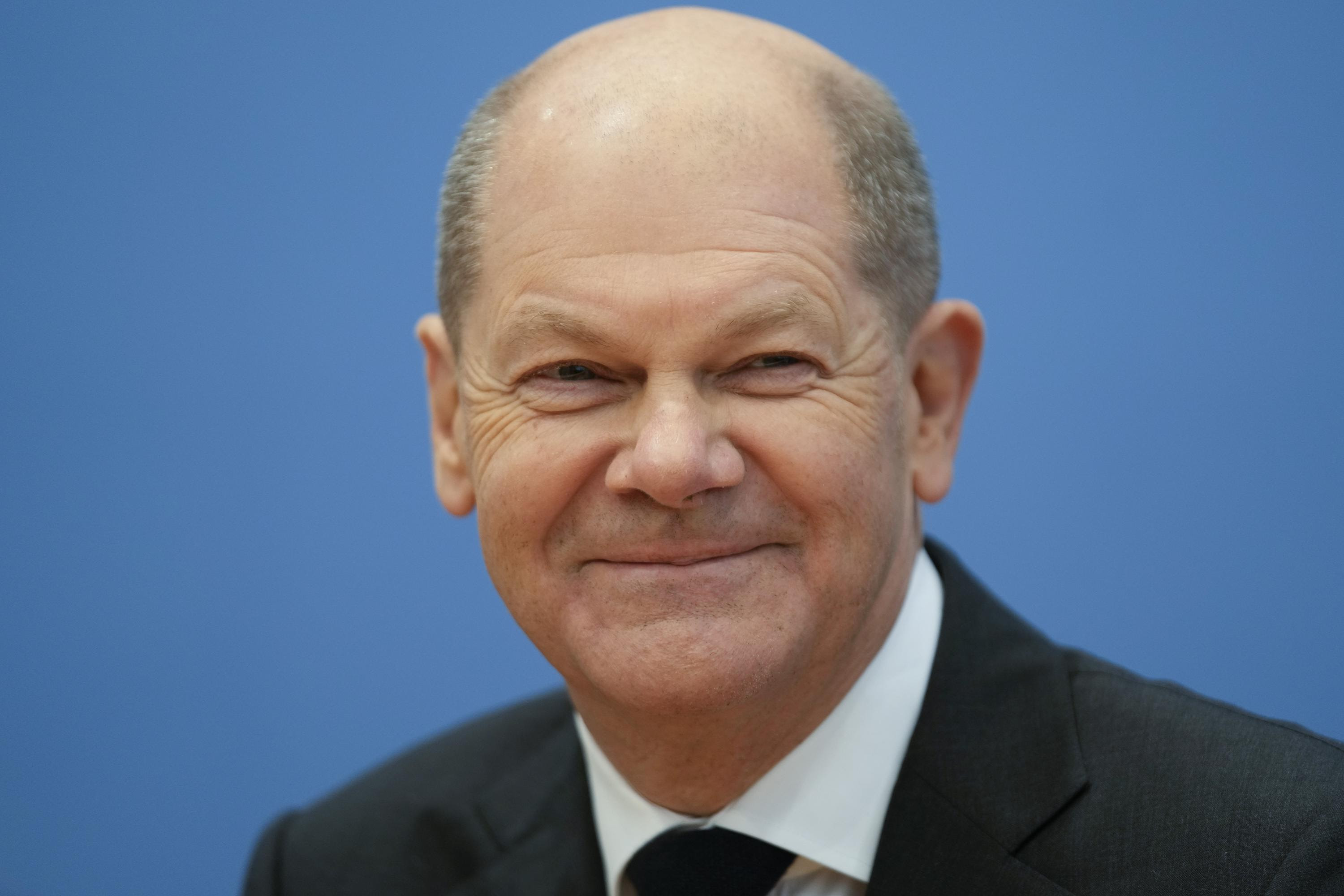
BERLIN (AP) — Olaf Scholz is set to take office Wednesday as Germany’s ninth post-World War II chancellor, succeeding Angela Merkel after her heralded 16-year tenure. …Read More
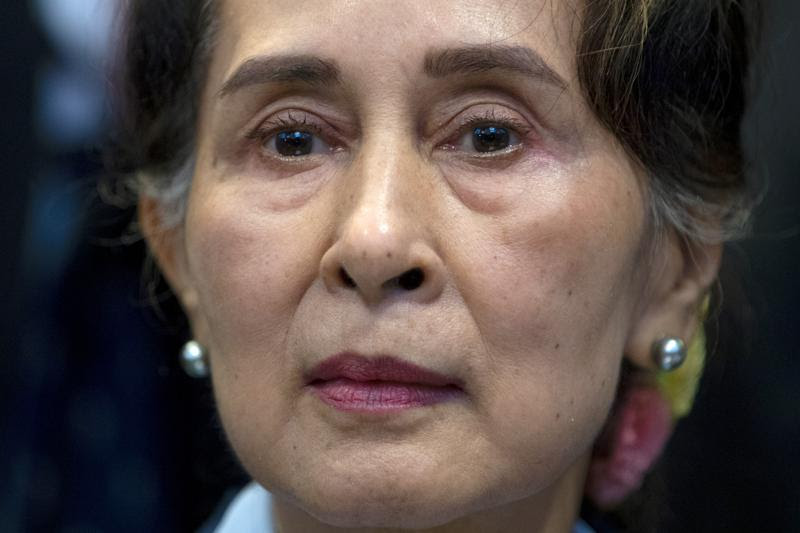
BANGKOK (AP) — In sentencing Myanmar’s iconic democracy leader Aung San Suu Kyi to prison, the country’s generals have effectively exiled her from electoral politics. But that doesn’t mean the Southeast Asi…Read More
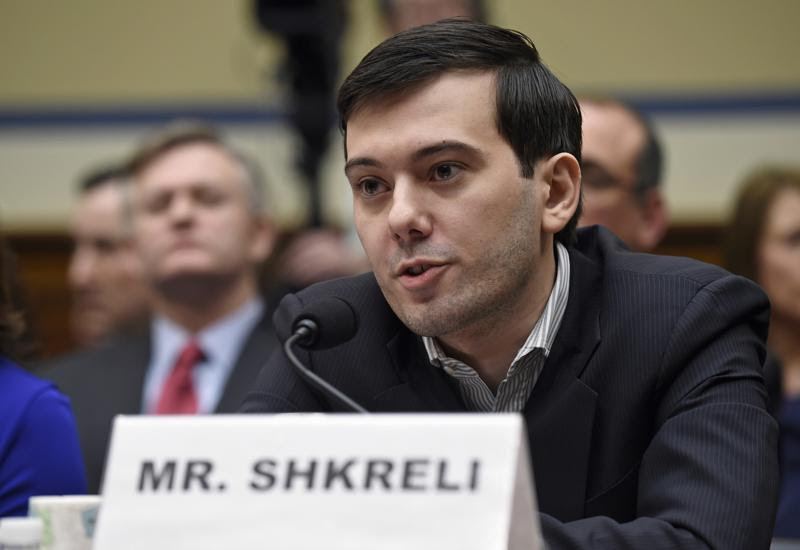
SACRAMENTO, Calif. (AP) — A company once owned by “Pharma Bro” Martin Shkreli will pay up to $40 million to settle allegations that it jacked up the price of a life-saving medication by roughly 4,000% after…Read More
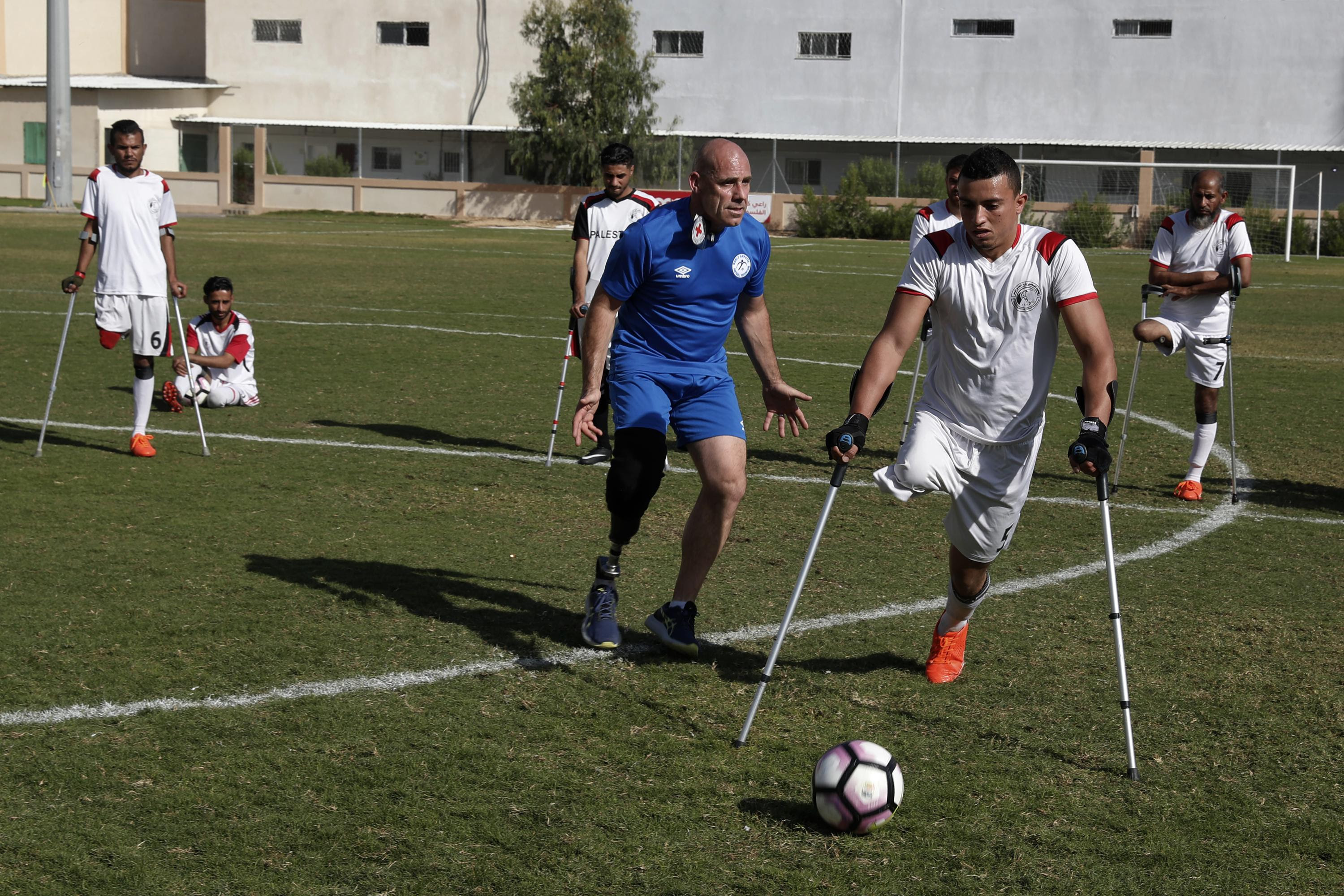
GAZA CITY, Gaza Strip (AP) — The players race across the pitch on crutches, jostling for the soccer ball and passing it back and forth, their prosthetic legs lined up along the sidelines at a stadium in the…Read More
HERAT, Afghanistan (AP) — Since the Taliban took over Afghanistan more than three and a half months ago amid a chaotic withdrawal of U.S. and NATO troops, their fighters have …Read More
A major outage in Amazon’s cloud computing network Tuesday severely disrupted services at a wide range of U.S. companies for more than five hours, the latest sign of just how …Read More
LONDON (AP) — Rohingya refugees sued Facebook parent Meta Platforms for more than $150 billion over what they say was the company’s failure to stop hateful posts that incited …Read More
MINNEAPOLIS (AP) — Jurors will be presented with starkly different views of the Minnesota police officer who killed Black motorist Daunte Wright during opening statements at …Read More
BASSETERRE, ST. KITTS, December 7, 2021 (MMS-SKN) — Integrity Commission (IC) of St. Kitts and Nevis is joining the rest of the world in observing International Anti-Corruption Day on Thursday December 9 with a number of activities including a worship service on Sunday December 5, at the Antioch Baptist Church.
On behalf of the Integrity Commission, Chairperson, Retired High Court Judge, Justice Pearletta Lanns thanked lead Pastor Lincoln Connor, the Church Executive, and members for welcoming them and their invitees to worship at the church in Lime Kiln, West Basseterre.
The invitees included His Excellency the Governor General who was represented by the Governor General’s Deputy His Excellency Michael Morton who was accompanied by Mrs Cynthia Morton; Prime Minister, Dr the Hon Timothy Harris; Executive Director of the Chamber of Industry and Commerce, Mr Kevin Hope; and Deputy Commissioner of the Financial Services Regulatory Commission (FSRC), Ms Tevince Coker.
The Integrity Commission team was made up of Chairperson, Justice Pearletta Lanns, and two members, Chartered Accountant, Mrs Carol Boddie, and Consultant and Court Connected Mediator, Mr Dennis ‘Freddie’ Knight. The office management team comprised of former Director of Audit, Mr Albert Edwards, and former teacher and Librarian, Ms Virginia Browne.
“I want to commend Ms Lanns on this occasion, as the chair of the Commission, and of course to recognise the importance of their work in building a strong democracy that delivers for the people,” said Prime Minister Harris at the end of the worship service.
He added: “They are watchdogs in terms of matters to do with corruption, and St. Kitts and Nevis has a long-established support for international and hemispheric efforts to fight against corruption. I am happy that they have started this outreach which will make their work, and the strides that St. Kitts and Nevis have made in this regard, even better known.”
According to Justice Lanns, since the year 2005, the 9th day of December has been observed worldwide as International Anti-Corruption Day, for the purpose of raising awareness of corruption, and to promote the fight against corruption. The designation was made by the United Nations.
“The Integrity Commission has a mandate to join in raising public awareness, and to join in promoting the fight against corruption,” she noted. “The IC was established under the Integrity in Public Life (IPL) Act, which came into force in 2018. Our offices are located upstairs Delisle Walwyn & Company Ltd Building on Liverpool Row, Basseterre.”
She pointed out that given IC’s mandate under the Integrity in Public Life Act, the Commission decided to do its part in the country to raise awareness about the issue of corruption, and against that background the Commission planned some activities to commemorate International Anti-Corruption Day.
One event on the calendar of activities, talk to 5th and 6th Graders of selected schools, was however held on Tuesday November 16 because of the timeline for closure of school. Involved were the Cayon, Dr William Connor, and the Immaculate Conception Primary Schools on St. Kitts.
“We were well received – the children were enthusiastic and quite responsive,” said the Integrity Commission Chairperson. “You would be surprised to know some of the questions they asked, and some of the answers they gave to our questions.”
Other activities started with the church service on Sunday December 5, and a press conference was held on Monday December 6 at the CUNA Conference Centre, in West Basseterre. Activities will continue on Wednesday December 8 with a Panel Discussion on ZIZ Radio and TV, whose topic will be ‘Your right, Your Role: Say No to Corruption’.
“On Thursday, 9th December, Anti-Corruption Day, there will be a broadcast of the message from the UN Secretary General,” observed Justice Lanns. “Additionally, the Commission and Staff will be distributing promotional material like brochures, leaflets, and more. We look forward to your continued support of the domestic efforts of the global fight against corruption.”
In conclusion, she observed that an Essay Competition was also planned as part of the activities but had to be rescheduled for January 2022.
HAVANA, Dec 7 (Reuters) – Cuban entrepreneurs Henry and Yendri Garcia have long peddled home-made ice cream in their small town of Bauta outside the capital Havana, but now they are dreaming big.
Communist-run Cuba in August lifted a ban on private companies in place since 1968, a move that has Cubans scrambling for business opportunities. The Caribbean island’s state-dominated economy shrank 13% over the last two years during the coronavirus pandemic.
Thanks to that groundbreaking reform, the Garcia brothers, known as “ice cream guys” in Bauta, say they hope to move their small, home-based operation, cobbled together with patched up discarded equipment, to a larger facility and increase their workforce of 12 to perhaps 30 or more.
The government has already registered their “Helados Cid” operation as a private enterprise – one of around 900 small- and medium-sized businesses to have been incorporated since September, according to the Economy Ministry.
“We’ve been recognized as a company and this increases our reach,” Henry, one of the two brothers, told Reuters. “There will be opportunities that were previously unavailable.”
In one of the biggest economic transformations since Fidel Castro’s 1959 Revolution, Cuba is banking on the creation of hundreds – even thousands – of small businesses to help the economy rebound from the devastating impact of the pandemic, soaring inflation and crippling U.S. sanctions heaped atop the Cold War-era embargo. read more
The new rules, Henry said, mean they can now operate with foreign currency, obtain credit and sell ice cream to hotels, state-run shops and even online.
“My lifelong dream is to have an ice cream factory and an industrial-sized company,” Henry said.
There are still plenty of hoops to jump through, according to economists consulted by Reuters. Regulations require companies to go through the state to engage in foreign trade, prohibit entrepreneurs from owning more than one company, and cap individual firms at 100 employees.
“There are real shortcomings that I hope they will overcome quickly,” Cuban economist Ricardo Torres, a visiting professor at American University in Washington, said.
“But this is very positive. It marks a new era. You can begin to talk about a mixed economy,” he said.
SCORES OF NEW COMPANIES
Since the economy minister announced the measures as part of President Miguel Diaz-Canel’s economic reforms in August, scores of businesses have incorporated, allowing them to partake in the state wholesale system, ally with state-run firms, and seek loans and investors.
The businesses range in focus from construction, food processing, bakeries, and industrial repair to waterworks, online home delivery and software production.
According to the government, some 40 percent are new initiatives while the remainder were already operating, but in legal limbo and with far more limited rights as self-employed “cuentapropistas.”
The government has said it expects to approve thousands more small and medium-sized private businesses over the coming months, such as Cuba’s well-known private restaurants, bars and hostels.
Dforja is another small firm benefiting from the reforms. The Havana company of six swapped its focus from building restoration to making patio and indoors iron and wood furniture, with the hope of tapping the export market.
“The reforms have allowed us to mature and regularize the inflow of materials and sales of our product in coordination with state companies,” owner Luis Betancourt said outside his rustic workshop.
“Now we have to work hard and grow from a small to mid-sized company,” he said.
STATE SUPPORT
Betancourt’s enthusiasm and grit in the face of a major economic crisis that has imports down 40% and inflation soaring is shared by seven Cuban entrepreneurs consulted by Reuters, who say that for the first time they are experiencing state support.
But many stumbling blocks remain as Cuba’s nascent private sector takes root.
The pandemic, combined with the U.S. sanctions that limit Cuban access to goods and financing, have cut deeply into “convertible” currency flows needed to import from abroad, where the local peso has no value, said Oscar Fernandez from Deshidratados Habana, which processes dried fruits.
The predicament has forced both state and private enterprise to seek alternatives, and often more costly sources of funding. Larger loans, Fernandez said, are hard to come by.
“In our case, working with a state company set up to help small businesses, and a foreign financial services company, we managed to purchase machinery in Europe for a new small factory,” he said. “But I fear we are an exception.”
Reporting by Marc Frank, Nelson Acosta and Reuters television; editing by Dave Sherwood, Daniel Flynn and Aurora Ellis
BRASILIA, Dec 7 (Reuters) – Brazil will require that unvaccinated travelers entering the country go on a five-day quarantine followed by a COVID-19 test, its health minister said on Tuesday, after its president said he opposed the use of a vaccine passport.
President Jair Bolsonaro criticized Brazil’s health regulator Anvisa for proposing the vaccination passport be required for arriving travelers to help prevent the spread of new coronavirus variants.
“Anvisa wants to close the country’s airspace now. Not again, damn it,” Bolsonaro, a vaccine skeptic, said at a business event in Brasilia.
Health Minister Marcelo Queiroga, speaking after a Cabinet meeting later on Tuesday, said Brazil would not discriminate against people who are not vaccinated by adopting the passport.
He said, however, that Brazil will require unvaccinated travelers entering the country to quarantine and have a COVID-19 test. He did not give details on how that would be implemented.
Anvisa last month proposed adopting a “vaccination passport” for entry into Brazil, but the government has not yet decided on the matter. Bolsonaro has repeatedly attacked the proposal.
Vaccine skepticism from Bolsonaro, who says he has not gotten a COVID-19 shot, has done little to dampen Brazilians’ eagerness to get immunized, with more than 85% of adults now fully vaccinated.
The Supreme Court on Monday gave 48 hours for the executive branch to explain why the vaccination passport had not yet been adopted.
Last week, at the suggestion of Anvisa, the government suspended flights from six countries in southern Africa, where the new, fast-spreading Omicron variant of the coronavirus was identified.
Bolsonaro repeated his criticism of COVID-19 vaccines on Tuesday, saying vaccinated people can still be infected, spread the coronavirus and die from COVID-19. He also minimized the new variant, saying there are “thousands of viruses” and the pandemic was ending.
While much is still not known about Omicron, unvaccinated people account for the vast majority of severe COVID-19 cases and deaths.
Reporting by Lisandra Paraguassu Writing by Anthony Boadle; Editing by Bill Berkrot and Sandra Maler
BBC- Chile has approved a landmark law allowing same-sex marriage in a historically Catholic country.
The legislation, overwhelmingly approved by parliament, also enables gay couples to adopt children.
The bill was supported by President Sebastián Piñera, who has to sign it into law. But it has been criticised by members of his conservative coalition.
Chile’s LGBT community has long pushed for the law, which has been stalled by Congress since 2017.
The Latin American country approved civil unions between same-sex couples in 2015, allowing them to register for a Civil Union Agreement (AUC) that gives some legal benefits.
But the bill to legalise same-sex marriage has languished in Congress for four years after it was presented by former left-leaning President Michelle Bachelet.
On Tuesday, the bill was passed in the lower house of parliament – shortly after its passage in the Senate – by 82 votes to 20. There were two abstentions.
President Piñera had vowed to push the legislation through parliament during his annual State of the Union address in June this year.
In comments that stunned some of his conservative allies, he said in his address that Chile must “guarantee this freedom and dignity to all people”.
“I think we should deepen the value of freedom, including the freedom to love and to form a family with a loved one. Also the value of the dignity of all relationships of love and affection between two people,” the right-wing leader added.
The move had faced strong criticism from some of the president’s allies, including evangelical lawmaker Leonidas Romero of the National Renewal (RN) party.
Mr Romero had described the law change as “a tremendous betrayal for the Christian world”.
Chile joins a handful of Latin American countries to recognise marriage between same-sex couples. Others include Argentina, Brazil, Colombia, Costa Rica, Uruguay, and 18 states in Mexico and Mexico City.
By Vanessa Buschschlüter
BBC News Online Latin America editor
The capture in October of drug lord Dairo Antonio Úsuga was described by the Colombian government as “the most important blow to drug trafficking since the fall of Pablo Escobar”.
While no one doubted that the arrest of Úsuga constituted a significant victory for the security forces, some in Colombia questioned whether the Gulf Clan he led could be compared to Pablo Escobar’s Medellín cartel and the immense power it wielded in the 1980s and 90s.
Some analysts also warned that the capture of Úsuga, who is better known under his alias of Otoniel, could lead to a spike in violence as other drug traffickers rush to fill the vacuum created by his arrest.
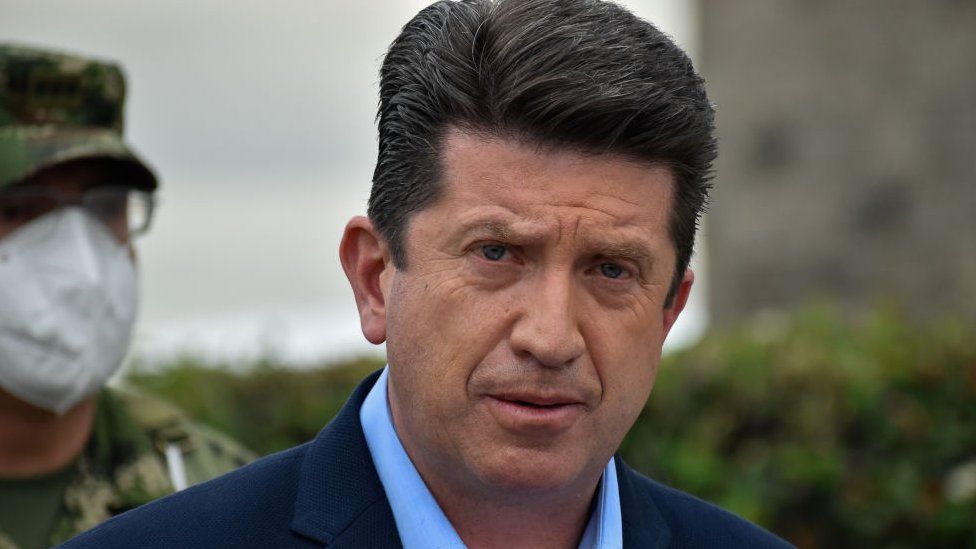
But in an interview with the BBC, Colombian Minster of Defence Diego Molano insisted that Otoniel’s arrest spelled “the end of the Gulf Clan”.
Diego Molano has been defence minister since February 2021
Mr Molano said that Otoniel had ruled the Gulf Clan – a transnational criminal organisation engaged in drug trafficking and other criminal activities such as extortion – with an iron fist and that his capture had left the organisation rudderless.
“I recently spoke to one of Otoniel’s men who has surrendered and he told me: ‘He [Otoniel] was in control of everything, he was like our father, he was the one in the know, the one who controlled everything’.”
Mr Molano said that, nevertheless, Colombia’s security forces had not let up the pressure since Otoniel’s arrest but were now on the hunt for his deputies, known as “Siopas” and “Evil Shorty”
And Otoniel’s men are not the only ones the Colombian military and police are after.
Five years after the implementation of a peace deal with Colombia’s largest rebel group, the Revolutionary Armed Forces of Colombia (Farc), the country is by no means free of armed gangs.
According to Mr Molano, these gangs have 13,000 members, half of them armed and half acting as support.
There are dissident groups made up of former Farc rebels who objected to the peace deal, members of another Marxist guerrilla group, the National Liberation Army (ELN), as well as right-wing paramilitary groups and criminal gangs such as the Gulf Clan.
For all of them, Mr Molano has one message: “Surrender, or we’ll hunt you down.”
It is these groups, which finance themselves mainly through drug trafficking, that are behind much of the violence which continues to blight Colombia and has forced thousands of families to flee their homes.
Official figures suggest that in 2021, the number of displaced families jumped by 213% compared to 2020.
The number of children forcibly recruited by gangs also remains high, as does the murder rate of environmentalists and social activists, who defend land and human rights.
For Colombia’s defence minister, the key to bringing down the violence lies in tackling the drugs trade.
According to the United Nation’s Office on Drugs and Crime (UNODC), Colombia remained the world’s largest producer of cocaine in 2020, even though it had managed to reduce the area planted with coca – the plant used to make cocaine – by 7%.
“Each hectare planted with coca means more deaths, more destruction of the environment, more murders of social activists,” Mr Molano told the BBC.
Mr Molano said that cocaine seizures had increased significantly in 2021 compared to the previous year and that the security forces had destroyed thousands of laboratories in which the base for cocaine is produced from coca leaves.
But while Colombia’s criminal gangs mainly finance themselves through drug trafficking, the government is also deeply worried about some of the gangs’ other criminal activities – such as illegal logging and illegal mining.
Government figures suggest that in 2020, deforestation rose by 8% compared to 2019, with nearly 64% of the deforestation taking place in Amazonian areas, which are havens of biodiversity.
Mr Molano thinks that combatting the criminal structures behind the cutting down of trees for the illicit trade in timber or to make way for coca plantations is key to protecting the Amazonian region.
He welcomed a move by the attorney-general’s office two weeks ago in which three leaders of break-away Farc groups had been charged with environmental crimes.
While the three – known as Gentil Duarte, Iván Mordisco and John 40 – are on the run, Mr Molano thinks that the charges send a strong signal that Colombia will go after those who engage in criminal activities that harm Colombia’s unique flora and fauna.
NIA CHARLESTOWN NEVIS (December 07, 2021) — Artist Ms. Danielle Moore says a mural she created for the Department of Gender Affairs, as a permanent reminder of its continued fight against gender-based violence, was done in a style to draw attention to the department’s campaign.
The mural which was painted on the outer walls of the David Freeman Center of Excellence along the Island Main Road in Gingerland, was officially unveiled on November 25, 2021, in line with the observance of “16 Days of Activism against Gender-based Violence,” which runs from November 25, the International Day for the Elimination of Violence against Women to December 10, Human Rights Day.
“The piece that I created depicts both the half a face of a man and a woman and it utilises a lot of colours. Based on the theme “Break the Silence; End Gender Based Violence.” Most of the victims in a number of cases are unable to talk about the difficulties that they are going through, so the reason for creating my piece in this way is to utilise the colours to express the emotion, the distress and the difficulties they are going through in a bold way that will stand out, while at the same time making sure that their message is brought across.
“It utilises the theme colour for the 16 Days of Activism which is orange. The woman is painted on a background of orange. The guy is painted against the background of purple, so both of them are in a setting which would describe what kind of difficulties, struggles, they are going through while at the same time not being able to tell anyone. So that is the reason for creating my piece in this way,” she said.
Ms. Moore is actively engaged in the production of a second mural in the same area in Gingerland which is expected to be unveiled later this month. The first mural which was painted on a water dam in Camps Village at the intersection of the Island Main Road and Camps Road, was done in 2020 by Mr. Vaughn Anslyn.
Ms. Latoya Jeffers, Assistant Secretary in the Ministry of Health and Gender Affairs, was also present and spoke of the campaign.
“The Ministry of Health and Gender Affairs has been on this campaign, 16 Days of Activism against Gender Based Violence. It is usually celebrated on November 25th through the 10th of December, and this year we are celebrating under the theme “Orange the World: End Violence against Women Now!”
“Now, we know that this thing is a taboo and we do not talk about it but our ministry is saying that we have to break the silence. We have to talk about it. We have to end the violence against not only women but against men now!” she said.
Also present was Mr. Mario Phillip, Gender Affairs Officer in the Department of Gender Affairs.

 *****@
 *****@
 *****@
 *****@
 *****@
 *****@
 *****@
 *****@
 *****@
 *****@
 *****@
 *****@