Tag Archives: caribbean

NCB Manger Gets 7 Years for Massive Bank Funds Swindle

Gleaner- The former senior manager at the National Commercial Bank (NCB), who admitted to swindling $34 million from the financial institution,  has been sentenced to a total of seven years and six months in prison.

Andrea Gordon, 52, was sentenced to five years and four months on three counts of larceny as a servant, two years and 11 months on three counts of access with intent to commit an offence, and to seven years and six months on seven counts of engaging in a transaction involving criminal property.

Her fate was decided by Justice Lorna Shelly Williams in the Home Circuit Court who ruled that her sentences are to run concurrently.

The mother of two appeared remorseful and ashamed as she sat in the prisoner’s dock.

The once highly-respected bank manager previously pleaded guilty in April and was remanded.

The court heard that Gordon’s criminal behaviour was discovered in June 2020 after the bank received intelligence that she had been conducting fraudulent transactions.

Based on subsequent investigations, it was discovered that she transferred money from the bank’s internal system to her personal accounts and also to her family members as well as accounts belonging to customers.

Gordon had used the funds to purchase items including clothing, handbags and to fund construction work on her Coolwater Havendale premises in St Andrew.

However, when confronted about the embezzlement, Gordon told investigators that she took the money to assist a relative who had cancer and also because she was going through financial difficulties after she started building her home in 2017.

The court had previously heard that NCB had linked $111 million in suspicious transactions to Gordon.

However, the indictment on which she was sentenced only accounted for $34 million over the period 2017 to 2020.

Gordon, who worked at NCB’s Atrium headquarters, was employed to the bank for 30 years and at the time of the offence was earning $11.1 million per year.

Attorney-at-law Vincent Wellesley represented Gordon.

In the meantime, a July 9 date has been scheduled for a case management hearing pertaining to an application for a forfeiture and pecuniary penalty order that has been filed by the Financial Investigation Division.

The post NCB Manger Gets 7 Years for Massive Bank Funds Swindle appeared first on The St Kitts Nevis Observer.

World View: Biden Honors Tulsa Massacre Victims, Spare Vaccine Debate, Osaka Quits French Open, More

May 28, 2021

Alternate text

The Associated Press

Advancing the Power of Facts

The Rundown

I'm an image

ARLINGTON, Va. (AP) — President Joe Biden honored America’s war dead at Arlington National Cemetery on Memorial Day by laying a wreath at the hallowed burial ground and extolling the sacrifices of the fallen for the pursuit of democracy, “the soul of…Read More

I'm an image

TULSA, Okla. (AP) — Hundreds gathered Monday for an interfaith service dedicating a prayer wall outside historic Vernon African Methodist Episcopal Church in Tulsa’s Greenwood neighborhood on the centennial of the first day of one of the deadliest ra…Read More

I'm an image

WASHINGTON (AP) — In April, the Biden administration announced plans to share millions of COVID-19 vaccine doses with the world by the end of June. Five weeks later, nations around the globe are still waiting — with growing impatience — to learn wher…Read More

I'm an image

WASHINGTON (AP) — President Joe Biden will take part in a remembrance of one of the nation’s darkest — and largely forgotten — moments of racial violence, marking the 100th anniversary of a massacre in Tulsa, Oklahoma, that wiped out a thriving Black…Read More

I'm an image

NEW YORK (AP) — Though Brian Walter knows he tried to protect his parents from the coronavirus, doubts torment him. Did he grab a wrong bottle of orange juice, one covered with infectious droplets? …Read More

OTHER TOP STORIES

VIENNA (AP) — The United Nations’ atomic watchdog hasn’t been able to access data important to monitoring Iran’s nuclear program since late February when the Islamic Re…Read More

Naomi Osaka withdrew from the French Open on Monday and wrote on Twitter that she would be taking a break from competition, a dramatic turn of events for a four-time Gr…Read More

KEOKUK, Iowa (AP) — Democrats lost last year’s election for Iowa’s 2nd Congressional District by the narrowest margin in a House race in almost 40 years. After the six-…Read More

NEW YORK (AP) — Moviegoing increasingly looks like it didn’t die during the pandemic. It just went into hibernation. John Krasinski’s thriller sequel “A Quiet Place Pa…Read More

The post World View: Biden Honors Tulsa Massacre Victims, Spare Vaccine Debate, Osaka Quits French Open, More appeared first on The St Kitts Nevis Observer.

Biden Shows Little Desire to Reverse Trump’s Cuba Policies

The Biden administration’s first major move on Cuba is the strongest signal yet it has little appetite to reverse Trump-era policies toward the island nation.

The State Department this past week listed Cuba as among those “not cooperating fully with United States antiterrorism efforts,” renewing a determination first made in 2020.

For those in favor of normalizing U.S. ties with Cuba, the move was seen as a purely political decision, but one that suggests the Biden administration may continue with the hardline approach taken by former President Trump.

“It’s a political determination, and a signal they’re trying to give the right wing that they’re going to stick with the status quo,” said Fulton Armstrong, an American University professor and director of Inter-American Affairs at the National Security Council during the Clinton administration.

“These determinations are B-O-G-U-S,” he added, criticizing the State Department for offering little insight into what factored into its decision.

The determination was made under the Arms Export Control Act, which requires a report every May listing countries barred from defense exports and sales with the U.S. Obama had removed Cuba from the list in 2015.

But the statute is also one of the three laws weighed when adding countries to the state sponsors of terrorism list — something Trump added Cuba to in the final days of his presidency.

While the Biden team has pledged to review Trump’s state sponsor of terror listing, White House press secretary Jen Psaki told reporters in March that “a Cuba policy shift is not currently among President Biden’s top priorities.”

To Cubans, the latest determination looks like a continuation of the Trump era.

“The U.S. changed presidents, but it’s more of the same,” Alejandro Gil Fernández, Cuba’s deputy prime minister and top economic policy minister, wrote on Twitter.

The State Department said the decision was made after “a review of a country’s overall level of cooperation in our efforts to fight terrorism, taking into account our counterterrorism objectives with that country, and a realistic assessment of its capabilities.”

Iran, North Korea, Syria and Venezuela are among the other countries on the list.

The decision earned praise from Sen. Marco Rubio (R-Fla.), who has blasted Cuba for remaining close with Venezuela. He called the move “a positive step that follows four productive years of the Trump Administration’s efforts to end Havana’s destructive and destabilizing efforts.”

But others see little fodder for the determination beyond Cuba agreeing to let Colombian National Liberation Army members stay in the country after negotiations it hosted on behalf of the nation in 2018 fell apart, and the Colombian government refused safe passage for the group to return.

“It’s hard to have cooperation on counterterrorism or anything else if you’re not talking with one another,” Rep. Jim McGovern (D-Mass.) a longtime proponent of normalizing ties with Cuba, told The Hill, noting the limited diplomatic relations between the two countries.

“And it’s hard to get cooperation when the United States has not moved forward with any kind of genuine reengagement with Cuba,” he added. 

The hesitancy to do anything similar to the Obama-era thawing of Cuban relations follows significant losses for Democrats in Florida. Trump won the state in November, while Democrats also lost two South Florida districts in an election that underscored the party’s struggles to win over more Latino voters.

The designation is the latest move from an administration that has publicly sought to distance itself from the Obama administration — not its predecessor — when it comes to Cuba.

“Joe Biden is not Barack Obama on policy toward Cuba,” Juan Gonzalez, senior director for the Western Hemisphere at the National Security Council, told CNN en Español in April.

Geoff Thale, president of the Washington Office on Latin America, described Cuba and Venezuela as the center of the GOP’s successful messaging in Florida before they gained the two House seats in November, including the district encompassing Miami’s Little Havana neighborhood.

“It wasn’t really saying, ‘You don’t want to end the embargo on Cuba,’ it was a campaign that said ‘Democrats are all socialists and socialism will ruin your life.’ And is that a wild distortion of Democrats’ policies and the Democratic party? Yes, it is. But as a media hit it was fairly effective,” he said.

“The easy answer is to say, ‘We won’t do anything about Cuba or Venezuela, and if we do, we’ll do it as quietly as possible,’ ” he said.

But Thale doesn’t think that’s the smart strategy.

“Say ‘We are making challenges in Cuba policy, and those changes actually benefit Cubans in America and their families in Cuba that will overtime lead to greater freedom in Cuba,’ ” he said.

“[Democrats] will probably get painted as socialists no matter what they do, so it seems to me they need to think smarter about what they can do on strategy,” he added. 

But some see Biden’s approach toward Cuba as part of a broader strategy of taking a tough stance on other communist countries.

“They are returning to the Cold War with practically everyone — with Russia, with China, with Cuba — and I don’t know that that is very smart right now,” said Carlos Alzugaray, a former Cuban diplomat and ambassador.

“But he won’t admit the Obama option is the only option. Because what other option is there? Continue pressuring the government of Cuba? First, that doesn’t get done what you think it gets done,” he said, arguing that Cubans are not going to overthrow their government because of the U.S. embargo, which has been in place in some form since 1958.

“But secondly, it makes the United States look bad. It makes the U.S. look mean and vindictive with a small neighbor.”

Still, not all proponents of normalizing ties are worried the carryover determination means the U.S. policy toward Cuba has been settled.

“I’m choosing to look at this as not that big of a deal,” McGovern said. “My understanding is there is a review going on in the administration of what our Cuba policy should be. And my hope is that if it is done objectively and rationally, he will conclude that we need to reengage.”

But Armstrong said the lack of an appetite to reverse even on the Arms Control Export Act list doesn’t signal an administration seriously considering sweeping change.

At the Cuba Communist Party’s eighth party congress in April, the nation for the first time established a government without a single Castro on its roster. Still, the theme was “continuidad,” a nod to continuity of its plans to slowly loosen the government’s grip on the economy as Raúl Castro stepped down from his post.

“There is more continuidad on Cuba policy in Washington than there is in Havana,” Armstrong said.

“They’ve continued the Trump policy without public debate, without evidence, and without the normal government processes of looking at the facts.”

Yet, the vice president of the European Parliament, Dimitrios Papadimoulis, urged US President Joe Biden to end the blockade of Cuba as anachronistic and inhumane, according to an interview published today here.

The economic sanctions imposed on Cuba by the United States seriously affect the country’s development potential and inhumanely limit the standard of living of the Cuban people, said Papadimoulis, of Greek origin, in an interview released this Monday by the National Assembly of People’s Power. (parliament).

This suffocating policy is condemned every year for decades, almost unanimously by the General Assembly of the United Nations (UN), recalled the legislator when he urged Biden to take concrete measures in the direction of stopping it.

Likewise, he believed that the European Union (EU) could play its role as an honest intermediary between Cuba and the United States, to resume dialogue, initiate the normalization of relations between the two countries and, ultimately, lift the sanctions.

He praised the Cuban government’s dispatch of 56 medical brigades to 40 countries to help fight Covid-19, despite the effects of US hostility, he emphasized.

The post Biden Shows Little Desire to Reverse Trump’s Cuba Policies appeared first on The St Kitts Nevis Observer.
Canada: Indigenous People Call for Continued Mass Grave Search

Indigenous groups in Canada are calling for a nationwide search for mass graves at residential school sites after the discovery of the remains of 215 children at one former school last week shocked the country.

Prime Minister Justin Trudeau said on Monday that searching for more mass graves was “an important part of discovering the truth” but did not make specific commitments.

Tk’emlúps te Secwépemc First Nation announced last week they had found the remains of 215 children, some as young as three years old, buried at the site of the Kamloops Indian Residential School, once Canada’s largest such school.

Between 1831 and 1996, Canada’s residential school system forcibly separated children from their families, subjecting them to abuse, malnutrition and rape in what the Truth and Reconciliation Commission tasked with investigating the system called “cultural genocide” in 2015.

Last week’s announcement sparked outrage, prompting flags to be flown at half-staff and people to lay hundreds of tiny shoes in public squares, places of government and on the steps of churches, in reference to the role of Christian churches from a range of denominations in running the schools.

There have long been rumors within indigenous communities, also discussed by the commission, of children buried at these schools.

The fourth volume of the commission’s report, titled ‘Missing Children and Unmarked Burials,’ identified 3,200 children who died at residential schools, about a third of whom were not named. Since that report’s publication in 2015, an additional 900 have been identified.

Parents “spoke of children who went to school and never returned,” the report reads.

A working group established by the commission in 2007 proposed, among other things, a study to identify unmarked gravesites. While the federal government initially denied the C$1.5 million ($1.2 million) needed to conduct this work, the government announced in 2019 C$33.8 million over three years for a ‘National Residential School Student Death Register’ and an online registry of residential school cemeteries.

Now there are renewed calls for Canada to do more to uncover what happened.

In meetings across the country, indigenous communities are working to figure out how to investigate, said Grand Chief Stewart Phillip, President of the Union of British Columbia Indian Chiefs.

“It’s absolutely essential that there be a national program to thoroughly investigate all residential school sites in regard to unmarked mass graves,” he said.

The post Canada: Indigenous People Call for Continued Mass Grave Search appeared first on The St Kitts Nevis Observer.

Cuba: Dissident Artist Released, Vows to Keep Fighting

Leading Cuban dissident Luis Manuel Otero Alcantara vowed to keep fighting after he was released from hospital on Monday, four weeks after authorities admitted the “artivist” while he was staging a hunger and thirst strike.

The General Calixto Garcia hospital in Havana said its treatment had enabled the 33-year-old artist to completely recover from his diagnosis of “voluntary starvation,” and his clinical and health parameters were now all within normal range.

His supporters denounced contradictions in statements by health authorities. When he was first admitted on May 2, they had said they could detect no sign of malnutrition and that he was in a stable condition, in what appeared a bid to cast doubt on his hunger strike.

Otero Alcantara said in a video published by outlet CubaNet that he needed to get up to date on all that had happened while he was kept incomunicado in hospital and would then explain in further detail his side of the story.

His release comes after pressure from U.S. officials and rights groups like Amnesty International, which 10 days ago named Otero Alcantara a “prisoner of conscience,” saying state security appeared to have him under supervision at the hospital. read more

Cuba’s government accuses him of being a mercenary for the United States, which in recent years has tightened its decades-old sanctions on the Communist-run island, deepening its economic crisis.

“I’ve got to get up to date and emerge from a state of shock, but what is clear is that … we are going to keep fighting,” Otero Alcantara told CubaNet after arriving at the home of relatives, noting he was worried about fellow activists who remained detained after protesting his hospitalization.

Reuters was unable to immediately reach Otero Alcantara, who is the head of the San Isidro Movement, a group of a few dozen artists, writers and activists that has protested restrictions in Cuba on civil liberties for the last few years.

The movement has used the advent of mobile internet in Cuba at the end of 2018 to document its provocative performances on social media and command attention. A collective hunger strike sparked a rare protest outside the culture ministry last Nov 27 which in turn catalysed a new protest movement: 27N.

Last week, around 20 Cuban artists including some from 27N asked that their works in Havana’s Fine Arts Museum be hidden from public view, in a sign of solidarity with Otero Alcantara. The museum denied the request saying it was not in the public interest.

The hospital said in its statement that the artist had reiterated many times his gratitude toward the medical staff that “respected his will” both regarding his treatment and the length of his stay.

“I’m really happy and relieved, he’s at his family home now at least,” his friend and fellow activist Iris Ruiz said. “There was so much uncertainty before.”

The post Cuba: Dissident Artist Released, Vows to Keep Fighting appeared first on The St Kitts Nevis Observer.

“Bizarre” the Reaction to the Copa America Tourny Moving to Brazil

BBC- The 2021 Copa America will be hosted by Brazil, after Argentina was stripped of the tournament just two weeks before it startsm mainly due to a coronavirus surge there.

The South American Football Confederation (Conmebol) said Argentina was removed as host because of the “present circumstances”.

The country is currently experiencing a surge in Covid-19 cases. Yet Brazil has the 2nd highest Pandemic death rate in the world, behind the USA.

Later on Monday, Conmebol confirmed Brazil would host the showpiece event, which starts on 13 June.

“Conmebol thanks the president @jairbolsonaro and his team, as well as the Brazilian Football Confederation for opening the doors of that country to what is today the safest sporting event in the world. South America will shine in Brazil with all its stars!” Conmebol said on Twitter.

But Mr Bolsonaro’s chief of staff warned that there is “no done deal yet” and tough conditions would have to be met.

“We are in the middle of the process (of negotiations). But, we will not shy away from a demand that, if it’s possible to be done, it could be done,” Luiz Ramos said.

It is not known which stadiums would host the tournament if it goes ahead.

Argentina was originally set to co-host with Colombia, who were removed on 20 May with wide-spread protests sweeping the country.

Opposition to the tournament had grown both inside and outside Argentina’s government, while Uruguay striker Luis Suarez told reporters on Friday that priority had to be given “to the health of human beings”.

On 22 May Argentina went into a new nine-day lockdown after seeing 35,000 new cases each day that week.

Meanwhile, in Brazil, protests over the management of the Covid-19 pandemic by the government of President Jair Bolsonaro took place on Saturday.

Brazil has registered nearly 460,000 deaths – the second-highest toll in the world after the United States. It also has the third-highest number of recorded coronavirus cases at more than 16 million.

Brazil’s Senate is holding an inquiry into the Bolsonaro government’s handling of the pandemic and the slow roll-out of the vaccine programme.

Brazil are defending champions, having won the tournament in 2019.

Every game at the Copa America will be shown live on the BBC.

Analysis

Hugo Bachega, BBC Latin America online desk

“Bizarre” and “out of touch”. That’s how Brazilians have labelled Conmebol’s surprise decision to move the Copa America to a country which continues to be a hotspot in the pandemic, with an average of 2,000 deaths a day. Even if the matches end up being played behind closed doors.

When you take into account that the previous host, Argentina, was removed because of its struggle to contain the virus, the move becomes even harder to explain.

Brazilian cities are experiencing an upsurge in infections as restrictions are lifted and many people continue to ignore advice to socially distance and wear masks.

Intensive Care Unit beds are full, and the vaccination campaign is progressing very slowly.

It is all about money. Cancelling the event, which many say would have been the most sensible decision, would have resulted in huge losses for the organisers.

And it is also about Brazil’s president who, it seems, gave his backing to the country becoming a last-minute host.

Jair Bolsonaro opposes lockdowns, face masks and, some months back, even raised doubts about the vaccine.

He has been accused of doing very little to control the virus, so some commentators have argued that agreeing to host a massive sporting event as the pandemic rages on is very much in the Bolsonaro style.

The post “Bizarre” the Reaction to the Copa America Tourny Moving to Brazil appeared first on The St Kitts Nevis Observer.

Haiti: Child Malnutrition Expected to Double This Year

Severe acute childhood malnutrition is expected to more than double this year in Haiti amid the pandemic, rising crime and low resources, Unicef says.

More than 86,000 children under the age of five could be affected, compared to 41,000 last year, the UN agency said.

Haiti is the poorest country in the Americas, and more than 60% of its population live in poverty.

The country has suffered from decades of political and economic crises as well as several natural disasters.

Violence has also surged recently, with a wave of kidnappings. After a group of Catholic clergy were abducted last month, the Church described the situation as “a descent into hell”.

Unicef also said acute malnutrition, which is a less dangerous category than severe acute malnutrition, increased 61% last year, affecting 134,000 children under the age of five. It said the number could rise to about 217,000 this year.

“I was saddened to see so many children suffering from malnutrition,” Jean Gough, the Unicef Regional Director for Latin America and the Caribbean, said in a statement after a visit to the country. “Some will not recover unless they receive treatment in time.”

About 4.4 million people out of a population of 11 million are estimated to be food insecure in Haiti, including 1.9 million children, according to Unicef. It warned that the upcoming hurricane season – from June to November – is likely to worsen access to nutritious food.

The country also saw a sharp decline in child immunisation rates last year, fuelled in part by the disruption of health services because of the pandemic. Diphtheria cases have risen as a result, and there are fears of a possible measles outbreak this year.

Unicef warned that unvaccinated children were also more vulnerable to suffer and die from malnutrition.

The agency also said that next month it would run out of a special food past given to children in need, and that it urgently needed $3m (£2.1m) to purchase supplies. Overall, it said it needed $48.9m to provide aid this year but that very little of that amount had been pledged.

The post Haiti: Child Malnutrition Expected to Double This Year appeared first on The St Kitts Nevis Observer.

New Report: Peru Doubles COVID Death Toll, World’s Highest, More

Aerial view of people walking among tombs during a burial at "Martires 19 de Julio" cemetery on April 17, 2021 in Comas, in the outskirts of Lima, Peruimage copyrightGetty Images
image captionThe rise is in line with so-called excess deaths figures

BBC- Peru has more than doubled its Covid death toll following a review, making it the country with the world’s highest death rate per capita, according to Johns Hopkins University data.

The official death toll is now more than 180,000, up from 69,342, in a country of about 33 million people.

PM Violeta Bermudez told reporters that the number was increased on the advice of Peruvian and international experts.

This was in line with so-called excess deaths figures.

Excess deaths are a measure of how many more people are dying than would be expected based on the previous few years.

“We think it is our duty to make public this updated information,” Ms Bermudez said.

The news, released on Monday, came just six days before Peru holds a presidential run-off election between leftist Pedro Castillo and right-wing candidate Keiko Fujimori.

Peru has been one of the worst-hit countries in Latin America, resulting in an overstretched healthcare system and a lack of oxygen tanks.

The criteria for recording Covid deaths has now been broadened beyond people who tested positive for the virus to include “probable” cases – those with “an epidemiological link to a confirmed case” or who present “a clinical picture compatible with the disease”.

The president of the Peruvian Medical Federation, Godofredo Talavera, said the increased toll was not a surprise.

“We believe this occurs because our health system does not have the necessary conditions to care for patients.

“There has been no government support with oxygen, with intensive care beds. We do not have enough vaccines at the moment. The first line of care has not been reactivated. All this makes us the first country in the world in mortality,” he said.

Chart showing there have been more than 168 million coronavirus cases reported worldwide. Updated 28 May.

The official number of Covid deaths now stands at 180,764, a huge increase on the previous official figure of 69,342.

That makes more than 500 Covid deaths per 100,000 people, overtaking Hungary with 300 per 100,000.

In comparison, neighbouring Colombia, with a larger population than Peru, has registered 88,282 deaths.

Brazil has one of the world’s highest death tolls with more than 460,000, but in a country of more than 211 million.

2px presentational grey line

A true picture emerges

Analysis box by Will Grant, Mexico and Central America correspondent

Peruvians had long suspected they weren’t getting the true picture of the country’s dire coronavirus situation from the government.

The revised figure for Covid-19 related deaths shows they were right to be doubtful. In fact, the government has admitted the real number is more than twice the previous figure.

A government working group of experts, formed to analyse Peru’s data, published the revised figures after establishing broader criteria by which deaths from coronavirus were recorded.

Now that the narrower definition has been abandoned, the country’s per capita death toll is in fact much higher than Brazil’s.

Such a figure coincides more closely to the anecdotal evidence coming from hospitals and intensive care units across the country and with the images of cemeteries struggling to find space for the high number of burials each day.

Meanwhile, the process of vaccination has been slow and beset with difficulties across most of South America.

=================================================

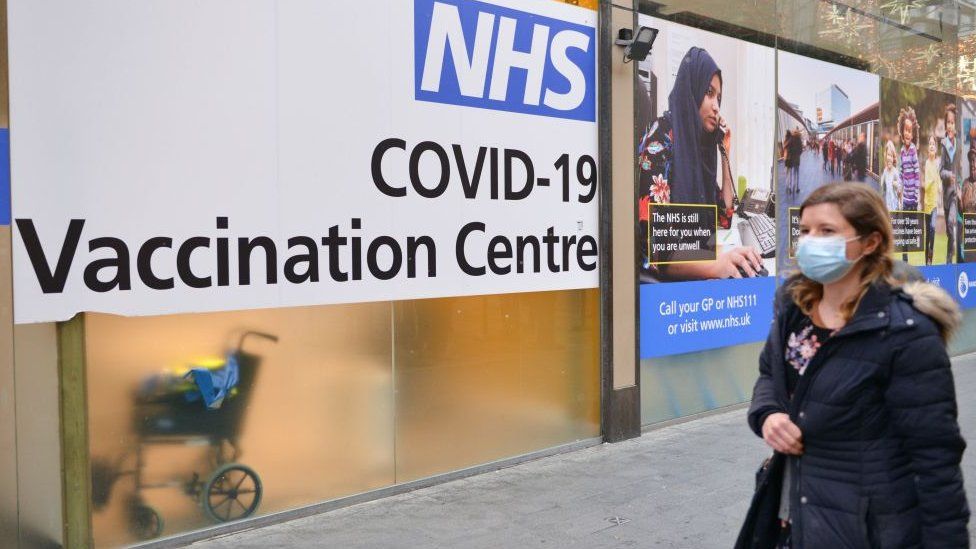
Scientists call on UK to speed up second Covid jabs as India variant spreads

Government urged to delay decision on ending lockdown restrictions amid fears of third wavee

Young people wait to receive vaccinations
Young people wait to receive a Covid-19 vaccination jab at Twickenham rugby stadium in London on Monday. Photograph: Andy Rain/EPA
Guardian (UK)

Scientists are urging the government to speed up second doses of Covid vaccines and delay a decision on easing lockdown restrictions in England on 21 June in an effort to tackle the creeping spread of new cases.

Data has shown the coronavirus variant first detected in India, known as B.1.617.2, is continuing to spread across England, and is thought to be driving a rise in cases. It is believed to be both more transmissible than the variant first detected in Kent, which previously dominated, and somewhat more resistant to Covid vaccines, particularly after one dose.

The situation has led some scientists to warn the country is in the early stages of a third wave of coronavirus which, despite the vaccination programme, modelling suggests could lead to a rise in hospitalisations and deaths, and that full easing of restrictions in England in three weeks’ time should be reconsidered.

The British Medical Association called on the prime minister, Boris Johnson, to honour his pledge to lift measures based on “data, not dates” and said the government should hold off giving the green light to progressing to stage four of the roadmap “until the latest data can be scientifically considered”.

“We are at a pivotal moment,” said the BMA council chair, Dr Chaand Nagpaul, who warned a “premature” ending of all legal restrictions may result in a surge of infections that “would undermine our health service” and undo all the progress made suppressing Covid-19. “We cannot afford to repeat past mistakes,” he said.

Labour accused the government of being distracted by the turbulence resulting from Dominic Cummings’ bombshell claims last week.

Jon Ashworth, the shadow health secretary, said the single biggest threat to the 21 June reopening was “ministerial incompetence”, and claimed members of the cabinet were engulfed “by internal rows and blame shifting at just the moment we need a laser-like focus on this variant”.

Ministers have been unable to say in recent days whether the 21 June unlocking will be delayed or only implemented partially. George Eustice, the environment secretary, told the BBC on Monday that infection rates are “going up again slightly but from a low base” which was “probably to be expected, given there are a significant number of younger people who are now out and mixing but haven’t had the vaccine”.

But despite guidance that adults under 30 not in a priority group are still ineligible for a jab, a vaccination centre at Twickenham Stadium in London began offering injections to all over-18s in an attempt to avoid wastage – causing large queues of what appeared to be largely young people outside.

In the run-up to the official announcement expected on 14 June about what will happen the following Monday, government scientists on the Scientific Pandemic Influenza Group on Modelling (SPI-M) have been asked to model how the India variant and other factors could affect cases if restrictions are lifted. A No 10 source said the government was continuing to monitor the data closely.

Calls for further delay in easing restrictions were met with concerns from the hospitality sector. Kate Nicholls, the chief executive of UK Hospitality, told BBC News that not being able to fully reopen in June would be devastating for venues. She said many were operating at 60% capacity and “haemorrhaging cash”. A delay would “push them closer to the cliff edge of business failure”, she added.

Some experts have called for the gap between the first and second Covid jabs to be reduced to eight weeks for all adults in order to tackle rising number of cases. Second doses have already been brought forward for priority cohorts 1 to 9, which included health workers and elderly people, while efforts to get the first dose to other adults has been ramped up, particularly in areas with high levels of the India variant.

Prof Lawrence Young, a virologist at the University of Warwick, told the Guardian that while a longer interval between first and second jabs resulted in a stronger and longer protective immune response, it was necessary to accelerate second doses more widely.

“The importance of full vaccination is now becoming even more obvious with real-world data showing how it protects from infection and spread of the Indian variant. We need to do everything we can to speed up vaccination, particularly second shots,” he said.

Prof Danny Altmann, an expert in immunology of infectious disease at Imperial College London, also backed an acceleration of second doses beyond priority groups, adding he was concerned about the current situation.

“When we speak of a third wave … we mean resetting the clock yet again, as happened to us with the Kent variant. Having got this far, why not hold our nerve and do the job properly,” he said. “I’m disturbed that we may be drifting into a plan to tolerate long-term endemic virus – at a cost – while other countries aim for elimination. This is too important to drift to without debate.”

However, Prof Adam Finn of the University of Bristol, a member of the Joint Committee on Vaccination and Immunisation, urged caution, noting that the schedule for doses involved balancing a number of factors.

At present, he said, available vaccines were being used either to give second doses to the most vulnerable, or a first dose to others – few of whom are near the timeframe for a second dose in any case. Furthermore, reducing the dosing interval for these groups would reduce their overall protective immune response, and could delay delivery of the first doses to others.

The debate came as data from the Wellcome Sanger Institute, which tracks the variants detected in Covid-positive samples through genome sequencing, revealed the variant has spread further across England.

While parts of north-west England, such as Bolton and Blackburn with Darwen, have previously been identified as hotspots for the India variant, the data shows that in the two weeks to 22 May it cropped up in areas as far afield as Babergh, Wycombe and Cornwall – although numbers in these areas remain low. This data includes Covid-positive samples analysed for general surveillance and surge testing, but not those related to travel.

The Department of Health and Social Care said: “We are working in partnership with local authorities to put in place additional measures to help control the spread of Covid-19 variants and rapidly break chains of transmission.

“It is imperative we all continue to be vigilant and keep following current guidance on social distancing, and come forward for a vaccine as soon as eligible.”

===================================================

US: Dr. Fauci Warns Too Early to Declare Victory


Guardian- Dr Anthony Fauci, the top infectious diseases expert in the US, has warned it is too early to declare victory against Covid-19 as cases fall in the country to the lowest rates since last June.

“We don’t want to declare victory prematurely because we still have a ways to go,” Fauci told the Guardian in an interview. “But the more and more people that can get vaccinated, as a community, the community will be safer and safer.”

Wisconsin: ground zero of America’s battle against vaccine hesitancy
Read more

The Memorial Holiday weekend marks the unofficial start of summer in the US, and for the at least 50% of the adult population that is fully vaccinated, it could usher in a season of maskless barbecues and trips to the beach.

Daily coronavirus cases have dropped 53% since 1 May, according to Johns Hopkins University data, but the rates are still high in the unvaccinated population and cases are growing globally. Already there have been more global cases in 2021 than in all of 2020, according to Johns Hopkins University data.

“As long as there is some degree of activity throughout the world, there’s always a danger of variants emerging and diminishing somewhat the effectiveness of our vaccines,” said Fauci, director of the National Institute of Allergy and Infectious Diseases (Niaid).

The US has been under pressure to provide greater aid in global vaccine efforts and has in recent weeks committed to donate 80m vaccines in addition to the $4bn donation its pledged to Covax, the global vaccine-sharing scheme. Fauci said more help could be on the way.

“We are discussing right now at various levels about how we might be able to up production to get vaccine doses from the companies that are already making them for us, get more doses that will be able to be distributed to lower- and middle-income countries,” Fauci said.

Commuters receive the Johnson & Johnson vaccine at the Coney Island subway station in Brooklyn.
Commuters receive the Johnson & Johnson vaccine at the Coney Island subway station in Brooklyn. Photograph: Brendan McDermid/Reuters

At the same time, the US must address the issues stopping its people from getting vaccinated. Part of this group is strongly opposed to the vaccine but there is also a portion of the unvaccinated population that hasn’t been able to get the shot because of lack of access to information or transportation or concerns about missing work because paid sick leave is not guaranteed in the US.

Fauci said this too is something the US is focusing its efforts on as Joe Biden’s administration seeks to get a first dose of the vaccine to 70% of the US adult population by 4 July.

This month, the White House deployed more vaccination resources to underserved areas and mobile clinics and supported an effort by ride-share companies to offer free trips for people getting vaccinated. In April, Biden called for all employers to provide paid time off for employees to get vaccinated and made a tax credit for small and medium-sized businesses to offer paid leave for employees to get the shot and to recover from any side-effects they might experience after.

“Today, in our current day, the accessibility and the convenience of getting a vaccine is really rather striking,” Fauci said.

But until the overwhelming majority of Americans have been vaccinated, the Covid-19 risk is still high in the US.

As of Friday, 59.1% of Americans 12 and older had received their first dose of the vaccine and 47.4% were fully vaccinated, according to the Centers for Disease Control and Prevention(CDC).

“We cannot abandon public health measures when you still have a degree of viral activity in the broad community in the United States,” Fauci said. “Although we’re down to less than 30,000 infections per day that’s still a lot of infections per day.”

The national death rate among the unvaccinated population is roughly the same as it was in late March, according to a Washington Post data analysis published this month. The adjusted hospitalization rate is as high as it was in late February, though cases are declining, according to the analysis.

Tara Kirk Sell, a senior scholar at the Johns Hopkins Center for Health Security, said in the next few months, coronavirus could spread out of hand among unvaccinated people.

“Unfortunately these groups of people who are anti-vax or who will end up being susceptible to the disease are going to be in pockets,” Sell said. “It’s not going to be evenly distributed through the population.”

Earlier this month, the CDC released an optimistic report which said in a best case scenario, Covid-19 infections could be driven to low levels by July if the vast majority of people get vaccinated and take other precautions, such as wearing masks and social distancing.

The CDC report was not a forecast, but a set of scenarios created by six independent research teams using data through 27 March. The modeling does not include what could happen if there was a new, more dangerous variant.

Sell expects things will be better this summer, but warned that autumn is still an unknown.

“I think we should be humble about what our certainty is about how things will unfold,” Sell said. ”There have been a lot of curveballs.”

Sandra Lindsay, left, receives the Covid vaccine from Dr Michelle Chester, right, in Queens, New York, inDecember.
Sandra Lindsay, left, receives the Covid vaccine from Dr Michelle Chester, right, in Queens, New York, inDecember. Photograph: Mark Lennihan/AP

In the meantime, clinicians like Dr Michelle Chester, who administered the first Covid-19 vaccine in the US outside a clinical trial, are pushing to get vaccinations in as many people as possible.

“I’m happy with the numbers but we need to do more because there is still a huge number of people that are still not vaccinated,” said Chester, director of employee health services at Northwell Health, the healthcare system which has treated more hospitalized Covid-19 patients than anywhere in the US.

Northwell Health has vaccination sites operating for people 12 and older in the greater New York City area. Some are open 24 hours a day to ensure people with difficult work schedules can find time to get the vaccine.

“The more that we can get people vaccinated, the less we have to worry about the virus in a sense of it affecting those individuals who maybe cannot get the vaccine for medical reasons,” Chester said. “We’re protecting them.”

Chester said there is still “a long way to go”, but she expects for her family, at least, a more normal summer than last year.

“My husband is vaccinated, my daughter couldn’t wait to get her vaccine,” Chester said. “I feel very comfortable that my family is protected and I want that same level of comfort everyone else because I just want to get back to normal.”


The post New Report: Peru Doubles COVID Death Toll, World’s Highest, More appeared first on The St Kitts Nevis Observer.

POLICE OFFICERS AND SOLDIERS FORM PART OF RSS PEACEKEEPING MISSION TO ST. VINCENT AND THE GRENADINES 

Basseterre, St. Kitts, May 31, 2021 (RSCNPF): A 10-member contingent comprising Police Officers from The Royal St. Christopher and Nevis Police Force (RSCNPF) and Soldiers from St. Kitts and Nevis Defence Force (SKNDF) left the Federation on May 29, 2021, for St. Vincent and the Grenadines. 

The team will form part of a peacekeeping mission to the territory following a request made to the Regional Security Service (RSS) by its government. The six (6) Soldiers and five (5) Officers will be in St. Vincent and the Grenadines for three (3) weeks with their regional counterparts to assist local authorities to maintain security and protect property on the main island where the La Soufrière Volcano forced thousands to be evacuated. They have all been vaccinated against the COVID-19 virus. 

Before boarding the RSS plane, Prime Minister and Minister of National Security, Dr. the Honourable Timothy Harris, wished them all well, adding that the exercise was crucial and would provide support to the people of St. Vincent and the Grenadines. He also reminded them that the COVID-19 virus was still very much a threat and encouraged them to stay safe. 

 “Let this be a good show of regional solidarity to the people of St. Vincent and the Grenadines from the Government and people of St. Kitts and Nevis. Let your conduct and behaviour be such that you will enhance the respect and regard of the people of St. Vincent and the Grenadines for the people and Government of St. Kitts and Nevis. So may God bless you. Keep safe,” said Prime Minister Harris. 

 All the Officers on St. Kitts and Nevis team are nationals of St. Vincent and the Grenadines. Commissioner of Police, Hilroy Brandy, said that the initiative provided them the opportunity to visit their families and property during their downtime. He encouraged them to do their best. 

“Remember you are there as members of The Royal St. Christopher and Nevis Police Force. I want you to stay alert and to follow orders and make us proud. The people of St. Vincent and the Grenadines are going through a difficult time and the authorities there need help,” the Commissioner implored. 

Also present at the Robert Llewellyn Bradshaw International Airport to see the contingent off were Assistant Commissioner of Police with responsibility for Operations (RSCNPF), Adolph Adams, Public Affairs Officer (SKNDF), Major Kayode Sutton and Commanding Officer, ‘A’ Company (SKNDF), Captain Jervin Lapsley. They also wished them well and a safe journey.

The post POLICE OFFICERS AND SOLDIERS FORM PART OF RSS PEACEKEEPING MISSION TO ST. VINCENT AND THE GRENADINES  appeared first on The St Kitts Nevis Observer.

Three honoured on Nevis for National Centenarians Day 2021

NIA CHARLESTOWN NEVIS (May 31, 2021) — Three centenarians on Nevis were honoured on Monday, May 31, 2021, as St. Kitts and Nevis celebrated National Centenarians Day.

Hon. Eric Evelyn, Minister of Social Development in the Nevis Island Administration (NIA), lead a delegation from the Ministry and the Department of Social Services’ Senior Citizens Division to present tokens of appreciation to Mr. Nathan “Neville” Sutton, 100, of Rawlins in Gingerland; Mrs. Mary Browne, 104, of River Path also in Gingerland; and Mrs. Eliza “Liza” Jeffers, 101, of Hamilton.

In brief remarks Mr. Evelyn lauded the centenarians and called for God’s continued blessings on them. He also thanked their care givers for taking care of them.

The Social Development Minister noted that women would normally dominate those who become centenarians on Nevis and expressed satisfaction that Mr. Sutton has achieved the milestone.

“We were all very proud when Mr. Sutton made his century mark because normally here on the island of Nevis when we hear centenarians, it’s normally female, and over the past couple of years I think probably over 90 percent of our centenarians have been females, and so we are delighted that Mr. Sutton would have made it to the century and it’s just another six or seven months to go before he makes 101,” he said.

The Minister who is also a member of the Federal Government presented the three centenarians with a medal of honour on behalf of His Excellency Sir Tapley Seaton, Governor General of St. Kitts and Nevis inscribed with the words “St. Christopher and Nevis National Centenarians Day, May 31, 2021 honorary.”

Among those present were Mrs. Kim Sing, Acting Director of the Department of Social Services; and Ms. Trudy Prentice, Coordinator at the Senior Citizens Division in the Ministry of Social Development; and Ms. Joyce Moven, a family friend, who accepted the tokens on behalf of Mrs. Mary Browne.


The post Three honoured on Nevis for National Centenarians Day 2021 appeared first on The St Kitts Nevis Observer.