Tag Archives: caribbean

World View: Israel-Gaza, Attack on Abortion, New Ransomware Hack, More

March 19, 2021

Alternate text

Here are today’s selection of top stories from The Associated Press at this hour .

The Associated Press

The Rundown

I'm an image

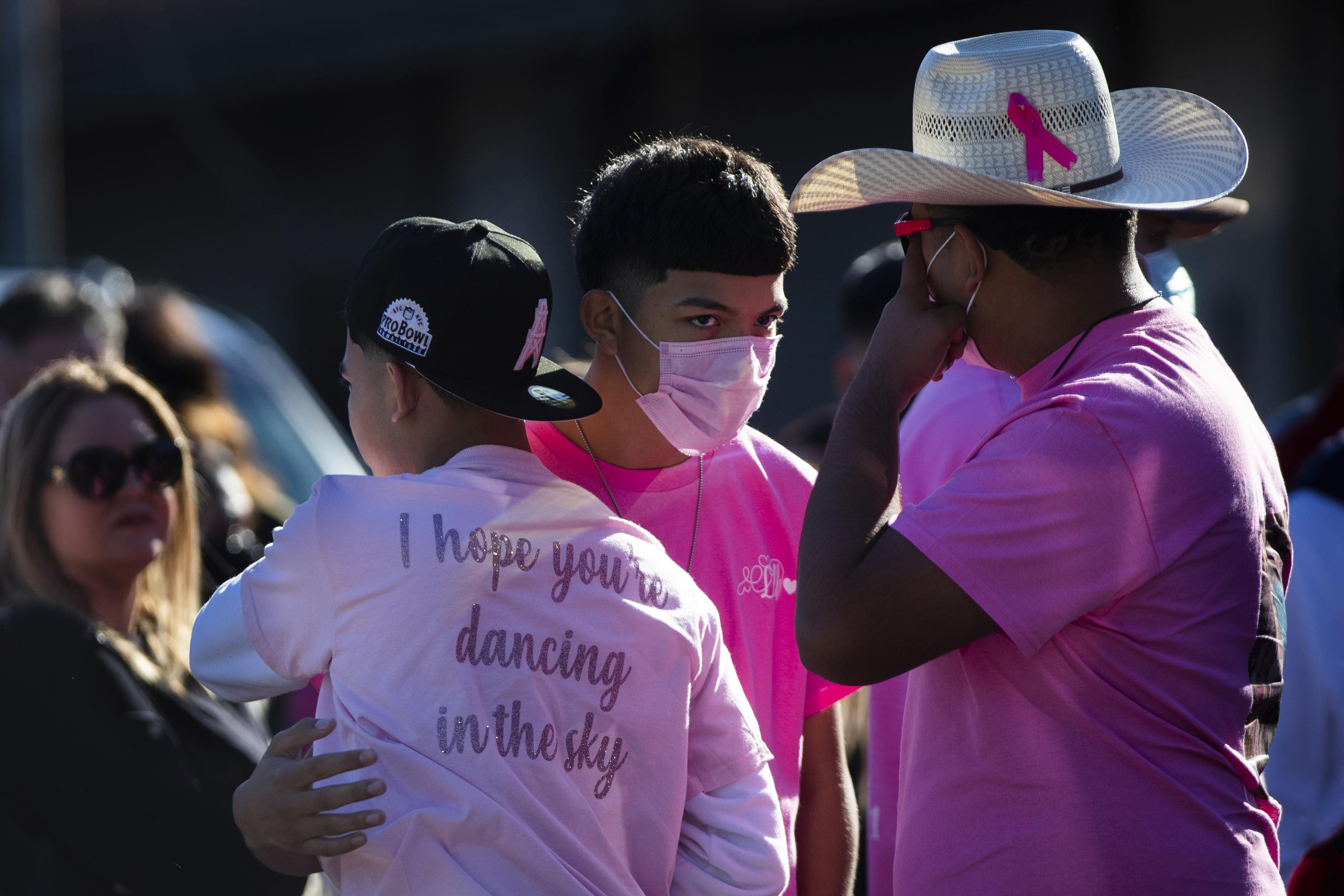
GAZA CITY, Gaza Strip (AP) — Israel carried out a wave of airstrikes on what it said were militant targets in Gaza, leveling a six-story building, and militants fired dozens of rockets into Israel on Tuesday. Palestinians across the region observed a…Read More

I'm an image

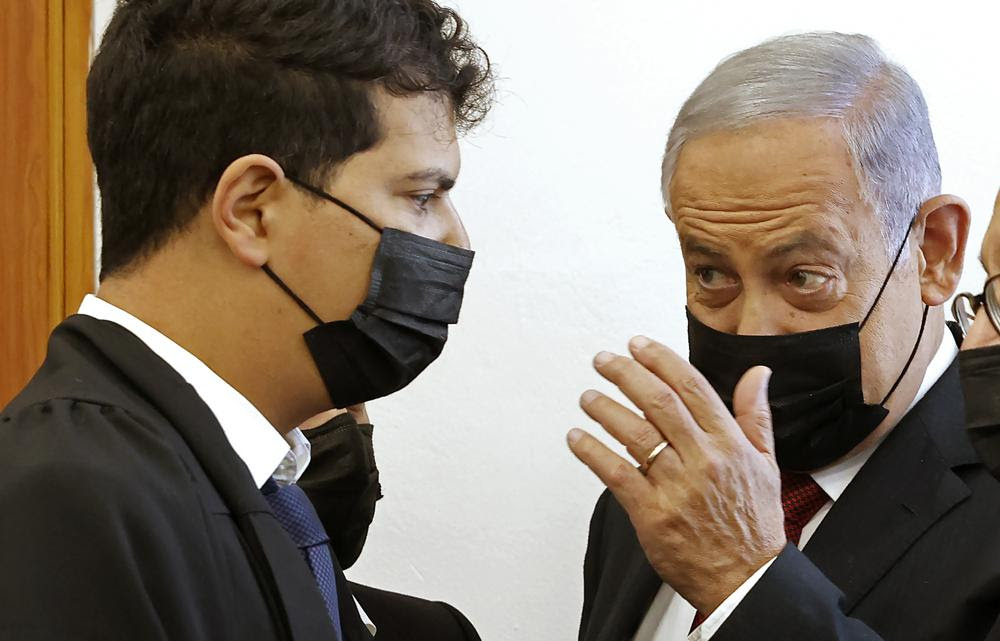
President Joe Biden expressed support for a cease-fire between Israel and Gaza’s militant Hamas rulers in a call to Israeli Prime Minister Benjamin Netanyahu, but he stopped short of demanding an immediate stop to the eight days of Israeli airstrikes…Read More

I'm an image

WASHINGTON (AP) — In agreeing to hear a potentially groundbreaking abortion case, the Supreme Court has energized activists on both sides of the long-running debate who are now girding to make abortion access a major issue in next year’s midterm elec…Read More

I'm an image

NEW DELHI (AP) — India’s total virus cases since the pandemic began swept past 25 million on Tuesday as the country registered more than 260,000 new cases and a record 4,329 fatalities in the past 24 hours. …Read More

I'm an image

WASHINGTON (AP) — Colorado Rep. Jason Crow, a former Army Ranger who served three tours in Iraq and Afghanistan, says it took time for him to stop constantly scanning his environment for threats when he returned from war 15 years ago. …Read More

OTHER TOP STORIES

JERUSALEM (AP) — A week into their fourth war, Israel and the Hamas militant group already face allegations of possible war crimes in Gaza. Israel says Hamas is using Palest…Read More

NAGURSKOYE, Russia (AP) — During the Cold War, Russia’s Nagurskoye airbase was little more than a runway, a weather station and a communications outpost in the Franz Josef L…Read More

BANGKOK (AP) — The Thai affiliate of Paris-based insurance company AXA said Tuesday it is investigating a ransomware attack by Russian-speaking cybercriminals that has affec…Read More

CANBERRA, Australia (AP) — Australia’s oldest-ever man has included eating chicken brains among his secrets to living more than 111 years. Retired cattle rancher Dexter Krug…Read More

The post World View: Israel-Gaza, Attack on Abortion, New Ransomware Hack, More appeared first on The St Kitts Nevis Observer.

Female Voters New Chilean Electorate Power

Chilean women made such a strong showing in elections to pick candidates to draft the country’s new constitution that adjustments to ensure the body was equally split between genders had to be made in favor of more men, elections body Servel said on Monday.

A total of five seats were handed to female candidates who polled lower than male counterparts in certain districts to ensure a 50-50 gender split, while seven seats were handed to men who polled lower.

The idea to ensure the body drafting the new constitution was equal in gender was originally blocked by right wing parties but eventually approved by Congress – in what rights activists said was a world first.

Analysts celebrated the moving to the fore of women in a historically conservative nation, while others lamented the fact any ceiling had been placed on victorious female candidates at all.

Alondra Carrillo Vidal, 29, a psychologist who acted as spokeswoman for the 8M women’s movement that has driven some of the largest protests against the center-right government in recent years, was picked to represent the capital Santiago’s working class southern suburbs. She said she had raised concerns at the start about a 50% cap on women which she suggested had been borne out.

“What this result shows is that our power overflows all the frameworks that try to contain it and what was presented as a democratic minimum was actually a way of maintaining the presence of men in representative spaces,” she said.

A total of 699 women stood for seats on the convention, and 674 men. The electoral body said 77 women had secured seats, and 78 men.

The requirement for gender parity forced political groups to look for competitive female candidates, Julieta Suarez-Cao, academic at the Catholic University’s Political Science Institute, told the Diario Financiero newspaper.

“This shows Chile is not a macho country, that if you find the competitive and good candidates – and there are many – people will vote for them,” she said.

Javiera Arce, a political scientist at the University of Valparaiso, told Reuters the victory of so many women underscored how they had previously been undervalued as a political force in Chile, while men had been nudged up through the ranks.

“From now on, I think men will simply have to up their game,” she said.

The post Female Voters New Chilean Electorate Power appeared first on The St Kitts Nevis Observer.

Havana Displays Giant Rainbow Flags in Solidarity for Cuban LGBT Rights

Reuters

Cuba draped its health ministry with a giant rainbow flag on Monday to mark International Day against Homophobia, in a key year for LGBT+ rights as the Caribbean country decides on a new family code that could approve same-sex marriage.

Cuba, which sent gays to correctional labor camps in the early years after its 1959 leftist revolution, made considerable advances in LGBT+ rights in the 2000s and 2010s, despite the widespread persistence of machismo.

The island nation introduced the right to free sex-change operations, banned workplace discrimination on the basis of sexual orientation, and started holding annual congas against homophobia – Cuba’s equivalent of gay pride.

Forced to suspend the conga this year due to the COVID-19 pandemic, Havana added a touch of gay pride through the giant rainbow flag instead. Authorities say they will project the flag onto two colonial castles in Old Havana at night as well.

“I never thought I would live to see the flag of the sexual diversity movement hung next to the Cuban one on such an important institution as the health ministry,” said Teresa de Jesus Fernandez, coordinator of the national network of lesbian and bisexual women, after posing for a photo with the flag.

Cuban President Miguel Diaz-Canel, who as a young provincial leader bucked party orthodoxy by backing an LGBT-friendly bar, wrote on Twitter on Monday the country was committed to guaranteeing all rights for all people.

People pass in a vintage car in front of a rainbow flag hanging beside a Cuban flag at the Health Ministry building in Havana, Cuba, May 17, 2021. REUTERS/Alexandre Meneghini

Many members of the LGBT+ community say, however, they have been frustrated by a slowdown in the pace of change in recent years while a handful of other Latin American countries have moved forward with approving gay marriage.

Activists were further irked by the 2018 decision to withdraw an amendment to Cuba’s new constitution that would have opened the doorway to same-sex unions after campaigning by evangelical churches.

Authorities decided instead for the controversial issue to be determined in the update to the family code, a draft of which is slated to be unveiled at parliament’s July session, before it is eventually submitted to a referendum.

“We’ve already made it this far,” said LGBT+ activist Yasiel Valdes Girola, referring to the flag outside the health ministry. “What remains is for the new family code to recognize the legal union between two people, regardless of gender or sex, and the opportunity to build a family.”

Some LGBT+ activists complain that bringing about change in society has been complicated by the fact that grassroots campaigning outside state institutions is at best tricky in Cuba, and at worst causes run-ins with Communist authorities.

Two years ago there was a schism in the LGBT+ community when a small group of activists held an independent gay pride march, which eventually was dispersed by police. Authorities denounced it as an attempt to undermine the government.

Meanwhile, churches that oppose gay marriage have powerful platforms for spreading their message which they wielded to their advantage during the constitutional revamp, gathering signatures for a petition against the article that would have opened the door to gay marriage and railing against it at church gatherings.

The post Havana Displays Giant Rainbow Flags in Solidarity for Cuban LGBT Rights appeared first on The St Kitts Nevis Observer.

Galapagos Islands: Erosion Fells Darwin’s Arch

A famous rock formation off the Galapagos Islands known as Darwin’s Arch has collapsed.

The Ecuadoran Ministry of Environment said it was due to “natural erosion”.

“The collapse of Darwin’s Arch, the attractive natural bridge found less than a kilometre from the main area of Darwin Island, was reported,” the ministry said.

The formation, named after the English biologist Charles Darwin, is considered a top diving location.

Darwins Archimage copyrightGetty Images
The waters round the arch are considered a premier diving location

The Galapagos Islands, 563 miles (906km) west of continental Ecuador, are a Unesco World Heritage site renowned worldwide for their unique array of plants and wildlife.

The archipelago is made up of 234 islands, inlets and rocks. Four of them are home to some 30,000 people.

Tourists across the globe travel there to see the islands’ biodiversity, which inspired Darwin’s theory of evolution.

The post Galapagos Islands: Erosion Fells Darwin’s Arch appeared first on The St Kitts Nevis Observer.

‘A Decade’ to Vaccinate Venezuela Against Covid?

Head of country’s academy of medicine issues warning with less than 1% of population having received a dose

Workers handle a shipment of Russia’s Sputnik V vaccine in Caracas, Venezuela, in March.
Workers handle a shipment of Russia’s Sputnik V vaccine in Caracas, Venezuela, in March. Photograph: Manaure Quintero/Reuters
Reuters in Caracas

Venezuela’s slow rate of vaccination for Covid-19 means it could take up to 10 years for the country to be fully vaccinated, the president of the nation’s academy of medicine said on Monday.

Venezuela, with about 30 million inhabitants, has received 1.4m vaccines from China and Russia, according to its health ministry. Authorities hope to receive enough doses for about 5 million people from the World Health Organization’s Covax system.

The government has not announced how many people have received the vaccine.

Venezuela has administered at least 250,000 doses of Covid-19 vaccines, with less than 1% of the population having received a first dose, according to Reuters vaccine tracker.

Since the first Covid-19 infections were announced in March of last year, authorities have announced 215,301 cases and 2,396 deaths from Covid-19, increased by a second wave this past March.

But Dr Enrique López-Loyo, president of Venezuela’s National Academy of Medicine, said specialists from the independent institution and international studies calculate the official figure should be multiplied by eight or 10 due to the country’s low test rate.

‘They think they’ll be left to die’: pandemic shakes already fragile Venezuela


By the end of 2020, some 2,500 to 3,000 tests were being done each day in Venezuela, he said, comparing it with other South American countries such as Chile or Colombia, where about 30,000 to 50,000 daily tests were reported.

“No system of [quarantine] relaxation or restriction is perfect,” López-Loyo said, referring to President Nicolas Maduro’s quarantine plan that alternates between “flexible” weeks, during which it is easier to enter stores and move around, and “radical” weeks, marked by more closed businesses and more strict checkpoints.

The post ‘A Decade’ to Vaccinate Venezuela Against Covid? appeared first on The St Kitts Nevis Observer.

White House to Send US Approved Vaccines Overseas, India Record, Russia Surge

By Nathaniel Weixel – 05/17/21 12:48 PM ED


© Getty Images

The Hill- The U.S. will share an additional 20 million doses of domestically authorized coronavirus vaccines with the rest of the world by the end of June, President Biden announced Monday.

The vaccine exports will consist of doses from either Moderna, Pfizer-BioNTech or Johnson & Johnson, which are the only three vaccines authorized for use in the U.S.

The move is in addition to a previous commitment to send 60 million AstraZeneca vaccine doses overseas as soon as they are cleared by the Food and Drug Administration, and comes amid mounting pressure on the Biden administration to provide more help to other countries.

It is not known how long it will take for the FDA to declare the AstraZeneca vaccine safe.

“We know America will never be fully safe until the pandemic that’s raging globally is under control,” Biden said during a White House address. “No ocean’s wide enough, no wall is high enough, to keep us safe.”

Biden has pledged that the U.S. would soon become an “arsenal” of global vaccine supply. He said on Monday that the 80 million doses will represent 30 percent of the vaccines produced by the United States by the end of June.

“This will be more vaccines than any country has actually shared to date, five times more than any other country. More than Russia and China, which have donated 15 million doses,” Biden said.

Biden stressed that unlike Russia and China, the U.S. would not use its vaccine surplus to expand its influence abroad and leverage favors from other countries.

“We want to lead the world with our values. With this demonstration of our innovation and ingenuity, and the fundamental decency of American people,” Biden said. “We’ll share these vaccines in service of ending the pandemic everywhere.”

Biden said White House COVID-19 response coordinator Jeff Zients will be in charge of the effort, working with the National Security Council and the State Department.

“We have the vaccine. We’ve secured enough supply to vaccinate all adults and children above the age of 12,” Biden said. “Over the past 118 days, our vaccination program has led the world. And today, we’re taking an additional step to help the world.”

The administration had initially been reluctant to send any doses overseas, saying the extra doses could be a backstop for possible manufacturing issues, used to vaccinate children, or serve as booster doses if necessary to fight against variants of the virus.

But the vaccine supply picture has improved dramatically in the U.S., while there are at the same time worsening crises in other countries. India has even faced shortages of oxygen as it deals with an alarming spike in cases.

The U.S. has taken some steps toward international cooperation.

In February, Biden announced $2 billion in funding for COVAX, an international initiative dedicated to equitable distribution of the vaccine.

In March, the administration shared over 4 million doses of available AstraZeneca vaccine with Canada and Mexico.

Earlier this month, the administration announced support of a World Trade Organization waiver of patent rights. But experts have said it won’t help to increase supply this year.

Advocates, still, are calling for a more concrete plan from the administration.

According to the World Health Organization, the U.S. and other high-income countries have secured almost 90 percent of the available coronavirus vaccine supply.

“Twenty million is a depressingly tiny figure compared to the global need; akin to tossing a bucket of water at a raging inferno. If India were to receive all 20 million doses, it would vaccinate less than one percent of its population, beyond what it has already,” said Peter Maybarduk, director of Public Citizen’s Access to Medicines program.

“Dose donations are welcome, but they are no substitute for a plan of scale and ambition to end the pandemic. The world is in dire need of such a plan from leaders including President Biden,” Maybarduk said.

On Monday, WHO Director General Tedros Adhanom Ghebreyesus repeated his calls for manufacturers and high-income countries to share their doses with COVAX.

“There’s a huge disconnect growing where in some countries with the highest vaccination rates, there appears to be a mindset that the pandemic is over, while others are experiencing huge waves of infection. The pandemic is a long way from over,” Tedros said. “No one is safe until we’re all safe.”

==================================================

India Posts Record Daily Deaths of 4,329

Relatives mourn during the last rites of a family member who died from coronavirus at a cremation ground in Srinagar, the summer capital of Indian Kashmir, 17 May 2021.

India variant will be dominant UK Covid strain ‘in next few days’

Scientists’ warning comes as government comes under pressure to explain border policy

Matt Hancock

Matt Hancock: Covid India variant more transmissible, evidence suggests – video


The Covid variant first detected in India is set to be the dominant strain in the UK within days, experts have said, with the government and health teams struggling to contain cases, which have risen by more than 75% since Thursday.

With the rapid spread of the more transmissible B.1.617.2 variant threatening to reverse moves to ease lockdown, the government faced intense pressure to more fully explain the delay in adding India to the so-called red list of countries.

Dominic Cummings, Boris Johnson’s former chief adviser, joined the criticism on Monday, calling the UK’s border policy a “joke”

Johnson is now set to delay plans to announce an end to social-distancing rules, postponing the conclusion of a review expected by the end of the month, casting significant doubt over the wider plan to relax most lockdown rules on 21 June.

Speaking on the day indoor hospitality and other venues were allowed to reopen, Matt Hancock told MPs that 2,323 cases of the variant known as B.1.617.2 had been confirmed, up from 1,313 on Thursday, with 483 of those in the outbreaks in Bolton and Blackburn. There are now 86 local authorities with five or more confirmed cases, he said.

Describing a “race between the virus and the vaccine”, the health secretary rejected calls from Labour to consider a push to vaccinate all adults in the most affected areas, saying that surge testing was the best remedy.

Hancock said 35,000 more tests had been distributed or collected in Bolton and Blackburn, along with a push to target those eligible for vaccinations, with 6,200 jabs carried out in Bolton alone over the weekend.

But new data from the the Wellcome Sanger Institute’s Covid-19 genomic surveillance, which excludes samples from recent travellers and surge testing, has shown how rapidly and widely the variant appears to be embedding.

According to an analysis of the data by Prof Christina Pagel, the director of the Clinical Operational Research Unit at University College London and a member of the Independent Sage group of experts, the variant was detected in almost 30% of Covid samples collected in England in the week ending 8 May.

Paul Hunter, a professor in medicine at the University of East Anglia, said the India variant seemed set to supplant that first detected in Kent, which was in turn notably more transmissible than earlier forms of coronavirus.

“There is no evidence that the recent rapid rise in cases of the B.1.617.2 variant shows any signs in slowing,” he said. “This variant will overtake [the Kent variant] and become the dominant variant in the UK in the next few days, if it hasn’t already done so.”

This has prompted renewed questions about why India was not added sooner to the red list of countries, where all arrivals apart from UK nationals are banned, and those who do come must quarantine in a hotel for 10 days.

Responding in the Commons, Labour’s shadow health secretary, Jonathan Ashworth, said UK borders “have been as secure as a sieve”.

Yvette Cooper, the Labour chair of the Commons home affairs committee, said people would “understandably feel angry” if reopening from lockdown was put at risk due to border decisions, citing statistics showing that in early April, arrivals from India tested positive for Covid at 50 times the then UK rate.

Separately, in a Twitter thread prior to his appearance before the Commons health and science committees on 26 May, Cummings lambasted the UK’s response to Covid, citing as an example “our joke borders policy”.

In a sentiment likely to raise some eyebrows given his own long-distance drives last spring, Cummings also argued that lockdowns only worked with “serious enforcement”.

Hancock defended the government’s approach in the Commons, saying it had added India to the red list on 23 April, six days before the B.1.617.2 variant was put under investigation and two weeks before it was labelled as being of concern.

However, another variant first discovered in India and closely related to the variant of concern, called B.1.617.1, was was designated under investigation on 1 April, weeks before travel from India was restricted.

Ministers could face a significant backlash if the spread of the B.1.617.2 variant derails the planned June reopening, or even forces the reversal of some of Monday’s changes.

A government source said more time was needed to gather data about the effect of the variant, but stressed it did not necessarily mean the 21 June date would slip. “We thought we would be in a position to give some notice well in advance, now we will need a bit more time,” the source said.

The review into social distancing was expected to announce an end to the 1-metre rule for hospitality venues, which has seen some needing to significantly reduce capacity, as well as an end to fines for not wearing masks.

In a sign that the UK government could be preparing ground for its roadmap to slip, a Downing Street spokesman said: “The variant first identified in India could pose serious disruption to this progress, and could make it more difficult to move to step 4.

“Our decision will be based on the very latest data, and we want to allow as much time as possible to assess this so we will set out plans as soon as the data allows.”

Some Conservative MPs have expressed grave worries at the idea of a reversal to reopening.

“When will this government actually take a little bit of risk and allow people to get on with their lives again?” Huw Merriman, the Tory MP who chairs the transport committee, told Hancock in the Commons.

Giles Watling, who represents the seaside resort of Clacton in Essex, said that local businesses had reported a boom in bookings as people planned UK holidays this summer, and there was huge worry about the idea of new restrictions.

“I understand that ministers have to act, but we didn’t really get a summer season last year, and it would be a real kick in the teeth if we couldn’t open up in the way we have been planning.


The post White House to Send US Approved Vaccines Overseas, India Record, Russia Surge appeared first on The St Kitts Nevis Observer.

Disaster Fatigue as New Hurricane Season Nears

The hurricane season is right around the corner. It’s the second year in a row when tropical storms and a pandemic have created the opportunity for overlapping disasters and “disaster fatigue.”

Officials worry that may leave residents in vulnerable areas less prepared than usual.

The Atlantic hurricane season starts June 1, but in each of the past six years, named storms — given to storms that exceed 39 miles per hour — have formed before that date. The National Hurricane Center will start issuing its routine tropical weather advisories on May 15, for the first time this year.

Improvements in satellite technology make it easier to spot these early storms, “but there’s also good reasons to suspect that there’s something really going on related to climate change,” said Kevin Trenberth, a distinguished scholar at the National Center of Atmospheric Research.

There is some evidence to suggest that storm season is starting earlier and ending later. “This is consistent with the idea that climate change is occurring. … and so the oceans are warming and the environment evidently is changing sufficiently to enable these tropical storms to occur,” according to Kevin Trenberth, distinguished scholar, National Center of Atmospheric Research 

Regional hurricane officials are meeting this spring to discuss moving the official start date for the Atlantic hurricane season in future years to May 15, a move that would bring it in line with the beginning of the Pacific basin season.

Another change this season: No more storms named after Greek letters. They were used last year for just the second time ever after the 21-name alphabetical list of storm names was exhausted.

After the record-breaking season ended, the World Meteorological Organization committee tasked with naming storms decided that the Greek-letter names used last year — nine in all, including Theta, Eta and Zeta — were confusing.

“Some of the names were similar sounding,” said Daniel Brown, a senior hurricane specialist at the National Hurricane Center. “Some of the names didn’t translate well into other languages that are used in the region, Spanish and French, so it was decided by the committee to no longer use that as a supplemental name list.”

Instead, there’s a second alphabetical list of names as a backup.

=======================================================

Overlapping Disasters Hit the Region

Last season’s Atlantic storm season was the most active ever, with 30 named storms, including back-to-back November hurricanes Eta and Iota, estimated to have impacted 7 million people in Guatemala and Honduras.

The Caribbean islands were spared the worst of last year’s hurricanes.

“We really were quite pleased that we did not have any cyclones that would have put persons in emergency shelters because we know that opens up the conduit for the spreading of the COVID-19 virus,” said Michelle Forbes, director of the National Emergency Management Organization for St. Vincent and the Grenadines.

But in a year of overlapping disasters, that changed for St. Vincent in early April, when the La Soufriere volcano erupted.

Forbes said nearly 20,000 people were displaced, and emergency shelters are still full.

Thick volcanic ash deposits mean even average rains can trigger dangerous landslides and flooding, which the National Emergency Management Organization has been warning against through videos posted on Facebook.

“That’s a different twist now to the hurricane season,” Forbes said. “It’s not just the regular flooding. So, these are the things now that we are working on communicating to the public.”

Forbes called the pandemic, volcano and the upcoming hurricane season a triple whammy, one that has meant late nights in the office. She said she’s slept at home only five nights since April 8, the day before La Soufriere erupted.

“I made that decision that this week I’m going to return and sleep at my home every night, just for my sanity,” Forbes said.

============================================

Disaster Fatigue 

La Soufriere

At the institutional level, capacity and budgets for emergency response are already under strain.

“It’s been quite an intense period both regionally and nationally for the Caribbean, and of course we wait to see what the 2021 season will bring,” said Elizabeth Riley, acting head of the Caribbean Disaster Emergency Management Agency.

She said emergency operation centers in the region that may typically be activated for three weeks after a tropical storm hits have been running for more than a year straight due to the pandemic.

“There is at the national level, very clearly a level of fatigue,” Riley said.

The pandemic has also complicated regional response efforts.

Riley’s team mobilized responders from across the region to help in the aftermath of the volcanic eruption in St. Vincent.

When they did, they had to avoid sending people from countries with high COVID-19 transmission rates who would have been required to quarantine for weeks before getting to work.

“It has made the situation that much more complex,” Riley said. “We have to take into account looking at the risk related to multiple hazards as we’re undertaking the planning in the region.”

Andres, the first named storm of 2021, formed earlier than ever before in the Pacific, just this week.

The post Disaster Fatigue as New Hurricane Season Nears appeared first on The St Kitts Nevis Observer.

Ministry of National Security Slams Sham Letter

The Ministry of National Security has sent out an alert to the public of a fraudulent visa approval letter being sent to persons desirous of entering the Federation of St. Kitts and Nevis.

the statement said that the scammers behind this fraudulent letter are posing as officials from the Immigration and Passport Office and attempting to extract payment from recipients of the letter.

“The Ministry of National Security takes St. Kitts and Nevis passport and visa fraud very seriously and will work with its National Securitycounterparts in other territories to end fraudulent practices.”

It said to apply for a St. Kitts and Nevis visa can be done completely online with interested individuals should visit evisa.stkittsnevisonline.com to access the application process.

They said once the online application has been submitted with the required information, the
the applicant will receive an email confirming that the application has been received.
“It takes about 7-10 days to process the application. If additional information is needed by
the Ministry of National Security, the individual or host is contacted. If the application is approved, a confirmation travel letter is sent via email to the
applicant in the form of an Electronic Entry Visa (EEV). It is important to note, however,
that this document does not guarantee entry into the country.”

The Ministry of National Security said it was important to also note that a photo of the applicant is not included in the document and the processing fee is payable to the Immigration Department upon arrival in St. Kitts and Nevis.


The post Ministry of National Security Slams Sham Letter appeared first on The St Kitts Nevis Observer.

Andrea Meza of Mexico Wins Miss Universe Crown

Andrea Meza of Mexico has been crowned Miss Universe.

Meza, who has a software engineering degree, beat out out Miss Brazil at the end of the night, screaming Sunday when the announcer shouted “Viva Mexico!”

Previous winner Zozibini Tunzi fit the crown on Meza’s head and waited to make sure it would stay in place as Meza beamed and took her first walk to the front of the stage.

Tunzi, a public relations professional who became the first Black woman from South Africa to win the contest, had held the title since December 2019. Last year’s ceremony was cancelled due to the pandemic.

The pageant was hosted by “Access Hollywood’s” Mario Lopez and actor and model Olivia Culpo, the 2012 Miss Universe. It was broadcast live from the Seminole Hard Rock Hotel and Casino Hollywood in Hollywood, Florida.

Ahead of the pageant, Paula M Shugart, president of the Miss Universe Organization, stated that they had spent months planning a safe competition that followed similar guidelines as last November’s 2020 Miss USA competition held in Memphis.

The Miss Universe competition airs in more than 160 territories and countries across the globe including in the US on the FYI channel and on Telemundo.

The post Andrea Meza of Mexico Wins Miss Universe Crown appeared first on The St Kitts Nevis Observer.

PM Harris Makes Plea for Regional Vaccine Availability

CNW- Prime Minister of St Kitts and Nevis, Dr. Timothy Harris has called on the United States and other vaccine-producing countries to ensure the equitable distribution of the vaccine needed to curb the spread of the coronavirus (COID-19) that has killed thousands of people in the Caribbean Community (CARICOM) grouping.

Harris, who also has lead responsibility for Health within the quasi-CARICOM cabinet, said greater effort is needed from larger countries with greater resources, like the United States, to ensure the equitable distribution of vaccines globally, and particularly within CARICOM.

“The US is the most important partner to the CARICOM member states, and St. Kitts and Nevis in particular. It supplies us with the largest intake of tourists, and it is the market for most of what we export,” Harris said on the US-based Bloomberg QuickTake, a global streaming news network.

“What we really would have loved to see is that the US would have shown early leadership in terms of support to the region as we fight a most dangerous pandemic. The US at this moment has excess vaccines.

“The Caribbean region needs vaccines desperately and in the short term, we would require the United States of America to make a portion of those excess vaccines available to CARICOM member states, including St. Kitts and Nevis,” Prime Minister Harris said during the programme

Harris told the programme that his twin-island Federation’s vaccination process is progressing reasonably well, despite some levels of vaccine hesitancy amongst the population.

“We have about 42 percent of our target population covered; covered meaning they at least had their first shot of the vaccine. The vaccine of choice here is the AstraZeneca vaccine and that is of course a two-dose regime.

“So, we are moving on the path of getting to the target population which is 70 percent of our population. We still have a significant journey to go but we are satisfied to date that in the short of some 10 weeks we have been able to cover 42 percent of the target,” he added.

Prime Minister Harris said that as the Federation moves towards its vaccination target of 70 percent he will continue his advocacy on behalf of the wider Caribbean region for the equitable distribution of vaccines.

Earlier this week, Barbados Prime Minister Mia Mottley, speaking at the Grantley Adams International Airport during a handover ceremony of 33,600 COVID-19 vaccines under the COVAX Facility, reiterated the need for a global summit on the availability of COVID-19 vaccines.

“If ever there was a need for the world to stand up and recognise that we need a global summit for coordinated action with respect to how we treat to the COVID pandemic, how we treat to the equitable distribution of vaccines, how we treat to the restricted movement of people and countries in a coordinated way to give the global community the best chance of putting this behind us, it is now,” Mottley said.

“In the spring meetings that just concluded for the World Bank and the IMF, we were clear that there is going to be no serious global recovery economically, until we wrestle COVID-19 to the ground. We cannot wrestle COVID-19 to the ground unless there is vaccine equity and unless there is coordinated actions across countries and not by single countries one by one,” she added.

Prime Minister Mottley insisted that at the global level, there was nothing stopping leaders from hosting a global summit, other than themselves.

The post PM Harris Makes Plea for Regional Vaccine Availability appeared first on The St Kitts Nevis Observer.