Tag Archives: caribbean

World View: Israel-Gaza War Week 2, Afghan US Collaborators Fear Future, Blinken at Climate Talks, More

May 17, 2021

Alternate text

Here’s the news to start the week.

  • As the fourth war between Israel and Hamas enters its second week, the Israeli military has unleashed airstrikes on the Gaza Strip targeting militant tunnels and the homes of alleged Hamas commanders.
  • Residents of Gaza awakened by the overnight barrage described it as the heaviest since the war began. Meanwhile, the AP’s top editor is calling for an independent investigation into the Israeli airstrike that targeted and destroyed a Gaza City building housing the AP, broadcaster Al-Jazeera and other media.
  • And in Afghanistan, interpreters and other civilians who served the U.S. and NATO fear Taliban reprisals with the looming withdrawal of troops from their country after two decades of war.

Also today

  • U.S. Secretary of State Antony Blinken is in Denmark for talks on climate change, Arctic policy and Russia
  • A dip in the number of coronavirus cases in Mumbai is offering a glimmer of hope for India
  • Sanofi-GSK reports success in virus vaccine, after earlier setback

VANESSA GERA

The Associated Press

Warsaw, Poland

The Rundown

I'm an image

GAZA CITY, Gaza Strip (AP) — The Israeli military unleashed a wave of heavy airstrikes on the Gaza Strip early Monday, saying it destroyed 15 kilometers (nine miles) of militant tunnels and the homes of nine alleged Hamas commanders….Read More

I'm an image

WASHINGTON (AP) — The Associated Press’ top editor on Sunday called for an independent investigation into the Israeli airstrike that targeted and destroyed a Gaza City building housing the AP, broadcaster Al-Jazeera and other media, …Read More

I'm an image

KABUL, Afghanistan (AP) — For Mon PMs; XMZ501-516; video (blv LON is filing the video); Spotlight He served as an interpreter alongside U.S. soldiers on hundreds of patrols and dozens of firefights in eastern Afghanistan, earning a g…Read More

I'm an image

BENGALURU, India (AP) — For the first time in months, Izhaar Hussain Shaikh is feeling somewhat optimistic. The 30-year-old ambulance driver in India’s metropolis of Mumbai has been working tirelessly ever since the city became the e…Read More

I'm an image

MOORESTOWN, New Jersey (AP) — Shannon Keeler was enjoying a weekend getaway with her boyfriend last year when she checked her Facebook messages for the first time in ages. A name popped up that stopped her cold. …Read More

OTHER TOP STORIES

COPENHAGEN, Denmark (AP) — U.S. Secretary of State Antony Blinken is in Denmark for talks on climate change, Arctic policy and Russia as calls grow for the Biden admin…Read More

PARIS (AP) — Sanofi and GlaxoSmithKline’s potential COVID-19 vaccine triggered strong immune responses in all adult age groups in preliminary trials, boosting optimism …Read More

CANBERRA, Australia (AP) — Australia’s oldest-ever man has included eating chicken brains among his secrets to living more than 111 years. Retired cattle rancher Dexter…Read More

ROTTERDAM, Netherlands (AP) — Pounding beats? Check. Uplifting lyrics? Check. Huge, backlit white wings? Check. After last year’s Eurovision Song Contest was canceled a…Read More

The post World View: Israel-Gaza War Week 2, Afghan US Collaborators Fear Future, Blinken at Climate Talks, More appeared first on The St Kitts Nevis Observer.

Jamaicans Top Immigrants to Canada

JAMAICANS top the number of migrants making their way to Canada from the Caribbean region, data from Immigration, Refugees and Citizenship Canada (IRCC) has revealed. St. Kitts and Nevis is next to last.

Some 21,215 Jamaicans have acquired permanent resident status in the North American country, accounting for 45 per cent of the 47,265 Caricom nationals who have immigrated there since 2015.

Haiti followed with 12,885 nationals immigrating, Guyana 2,605; Trinidad and Tobago 2,525; St Vincent and the Grenadines 2,310; St Lucia 1,970; Barbados 985; The Bahamas 845; Grenada 615; Antigua 455; Belize 380; Dominica 215; St Kitts and Nevis 185; while Suriname accounted for 55.

The IRCC data, requested by the Jamaica Observer, showed that in 2015, 3,415 Jamaicans packed for Canada; 3,560 left in 2016; 3,830 in 2017; 3,875 in 2018, 3,980 in 2019, 2,030 in 2020; and 525 between January and March 2021.

It is believed that economic challenges in addition to the country’s high crime rate are the push factors behind the steady exodus.

The IRCC data showed that most Jamaicans immigrated through sponsorship from a spouse or partner under the Federal Skills Trade Program or the Federal Skilled Worker Program.

The Federal Skilled Worker Program is for skilled workers with foreign work experience who want to immigrate to Canada permanently, while the Federal Skilled Trades Program (Express Entry) caters to skilled workers who want to become permanent residents based on being qualified in a skilled trade.

Since 2015, the majority of Jamaicans (785) invited to apply to provinces under the country’s Federal Skilled Trades Program (Express Entry) acquired permanent resident status in New Brunswick, one of the least populated provinces in the country. Vancouver and Ontario accounted for the lowest.

Immigration consultant Renee Braham-Gordon singled out health-care and economic stability as the two most common reasons for Jamaicans resettling in Canada.

The Jamaican, who is managing director of MEIA Immigration Consulting Inc, explained that the country offers universal health care to citizens and permanent residents through a public health insurance scheme. With it, the two groups do not have to pay for most health-care services.

Braham-Gordon, who lives and operates out of Canada, noted also that education and cultural diversity are other factors that account for relocation.

“Canada needs immigrants. They need people to work and people are willing to come and do that. There is always employment here. It may not be in the field that you want, but employment is always here. We’re the second-largest country in the world by land mass and the government needs people to occupy and work in these different areas and spaces.

“So, even though the population is now estimated at 37.5 million, people are needed. When you go to the countrysides you get a better understanding of how much human capital is needed. We need people to farm, we need people for construction and so much more. At one point they were paying people to move to certain areas in the country,” Braham-Gordon told the Sunday Observer in an interview last week.

“People come here also to secure their kid’s future, because here, where education is concerned, what an international student will pay for tuition is sometimes three, four or five times [more] than what a domestic student will pay. So to give their children that opportunity persons migrate,” she added.


The post Jamaicans Top Immigrants to Canada appeared first on The St Kitts Nevis Observer.

E. Caribbean Earthquake Felt in Federation

A magnitude 4.3 earthquake was felt in three Eastern Caribbean states, including St. Kitts & Nevia, early this morning. There have been no reports of damage or injuries.

The Seismic Research Centre at the University of the West Indies (UWI) said the quake occurred just after 8:00 a.m. (local time) and was felt 126 kilometres (km)  north of St. John’s, Antigua and Barbuda ; 131 km north east of Basseterre, St Kitts and Nevis  and 226 km north north-west  of Point-à-Pitre, Guadeloupe.

The earthquake had a focal depth of 10 km the seismic scientists say.

The post E. Caribbean Earthquake Felt in Federation appeared first on The St Kitts Nevis Observer.

Ecuador Indigenous Party Wins National Assembly Presidency, backed by Lasso

Ecuador’s National Assembly on Saturday evening elected a representative of the Pachakutik indigenous political party as its president for the next two years, with the support of allies of conservative President-elect Guillermo Lasso.

Lawmaker Guadalupe Llori won the National Assembly presidency with 71 votes in the 137-seat chamber. She previously served as a local official in Orellana province in the Amazon region and was jailed during former President Rafael Correa’s government on terrorism and sabotage charges after organizing protests against oil companies.

Llori was later granted amnesty and calls the charges politically motivated.

The alliance between Pachakutik and Lasso’s CREO party effectively sidelined the left-wing UNES party. UNES won the most seats in the congress in elections earlier this year but fell short of an outright majority.

“Even though CREO is a party of the right, on this occasion it has given us a great opportunity for all political parties to work together to seek a true reconciliation,” Llori, who was also supported another left-wing party called Democratic Left, said in her first speech as National Assembly president.

Lasso, a former banker, will take office in the oil-producing South American country on May 24 after beating out UNES candidate Andres Arauz, a Correa protege, in an April runoff. Pachakutik candidate Yaku Perez placed third in a first-round vote in February. read more

Indigenous activists in Ecuador protested heavily against current market-friendly President Lenin Moreno’s austerity policies, but also had major disagreements with Correa, who they accused of prioritizing oil production over the environment and indigenous communities.

Lasso has pledged to revamp crude production contracts to attract more investment to the sector but has also promised to review the need for more drilling in the environmentally sensitive Amazon region. r

The post Ecuador Indigenous Party Wins National Assembly Presidency, backed by Lasso appeared first on The St Kitts Nevis Observer.

Brazil: Sao Paulo Mayor Survived COVID, Dies of Cancer

Bruno Covas, the 41-year old mayor of Brazil’s largest city and financial hub Sao Paulo, has died of cancer, the Sirio-Libanes Hospital where he was being treated confirmed on Sunday.

Tributes poured in from across the political spectrum for Covas, who followed in the political footsteps of his grandfather Mario Covas, who served as both mayor and governor of Sao Paulo.

“Bruno Covas’ strength came from his character and the example he set. He was loyal to his family, friends, the people of Sao Paulo and the members of his party, the PSDB,” said Sao Paulo state Governor Joao Doria in a statement, referring to the Brazilian Social Democratic Party.

“His determination and work are an inspiration to us all,” he said.

Covas was Doria’s running mate in the 2016 Sao Paulo race for mayor and replaced him in April 2018 when Doria became governor.

He had already been diagnosed with cancer when he won re-election in November last year. He tested positive for COVID-19 last year and made a full recovery.

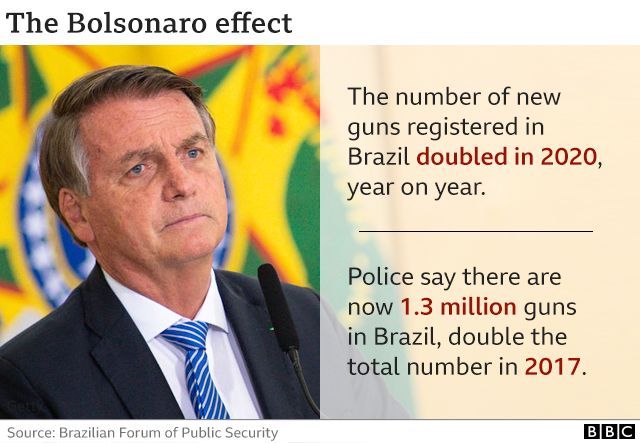
Covas’ win in November boosted Doria, an increasingly thorny adversary of far-right President Jair Bolsonaro. The two have repeatedly clashed over the COVID-19 pandemic and Doria plans to seek his party’s nomination for president in 2022.

The post Brazil: Sao Paulo Mayor Survived COVID, Dies of Cancer appeared first on The St Kitts Nevis Observer.

Chile’s Indigenous People Making Their Voices Heard

BBC- Last October, millions of Chileans voted in favour of scrapping the country’s constitution, which dates back to the repressive rule of Gen Augusto Pinochet.

Replacing it had been one of the demands made in nationwide protests which swept through the country in 2019.

This weekend, Chileans are being asked to choose the 155 members of the Constitutional Convention tasked with drawing up a new draft.

Not only will there be gender parity with half the seats reserved for women but 17 seats have also been set aside for representatives of Chile’s indigenous groups, which make up around 12% of its 19 million inhabitants.

With Chile the only country in Latin America whose constitution has until now not even recognised the existence of indigenous groups, those running for the seats are keen to make their voices heard.

Ten indigenous groups will be represented with seats allocated according to their size. Journalist Jane Chambers spoke to some of the candidates from the smaller indigenous groups to hear what they hope to achieve.

Inés Carvajal & Felipe Retamal, Diaguita: We’re concerned about how our land is being used

Inés Carvajal and Felipe Retamal pose for a photographimage copyrightHugo Godoy Aranguiz

Felipe and I come from two different valleys in the north of Chile. Like many other indigenous communities, we are concerned about our territories and how the land around us is being used.

We both share the same vision to look after our people and their rights and if Felipe wins the election to represent the Diaguitas, I will support him.

We have a distinct culture with our own way of dressing, tunics made from natural fabrics and dyes, woven head bands. We also have a special bag that our ancestors used to carry the seeds when they were sowing their crops.

Like Inés, I am passionate about preserving our identity. The Diaguitas were in danger of extinction. I am teaching children our language and music. I also want people to know about the art and ceramics which we are famous for.

Many people living in Chile do not know much about our culture and that needs to change.

Tiare Aguilera, Rapa Nui: I want our culture to be taken into account

Tiare Aguilera on Rapa Nuiimage copyrightCourtesy of Tiare Aguilera

Even though our territory [on Rapa Nui, also known as Easter Island] was recognised as a World Heritage site by Unesco in 1995 there is still a lot more to be done. Whilst we are part of Chile, we are a Polynesian island, so I want our culture to be taken into account.

According to the last census, there are around 7,700 long-term residents on the island, roughly half of which are Rapa Nui.

If I win, I will be representing my people and will listen to them about what their priorities are in a new constitution and put them forward.

I want more resources invested in the island and the teaching of our language. I am a lawyer and it is tough here because there are no universities and you have to travel outside the island if you want to study.

I am the only female candidate in Rapa Nui. For me, it is really important not only that indigenous communities will be included in the drafting of the constitution, but also that there will be an equal number of male and female members on the committee.

Luis Jiménez, Aymara: We want a plurinational Chile

Luis Jiménezimage copyrightCourtesy of Luis Jiménez

There are about 160,000 Aymara people in Chile. They mainly live right up in the north of Chile on the border with Peru and Bolivia in the Altiplano, the Andean Plateau.

But many of us have had to move to the big cities in the region and the capital, Santiago, to find work. I am a lawyer and live in [the northern city of] Arica but my family still live in our traditional territories.

We want a plurinational state in Chile where our culture, ancestral lands and language are recognised. For us, our community is more important than the individual.

There are large Aymara communities just across the border in Bolivia and Peru that we are part of and we want to be able to trade freely with them and not be constrained by the Chilean frontier which has been imposed on us.

Zulema Mancilla, Colla: Our relationship with nature is vital

Zulema Mancilla poses for a photoimage copyrightChristian Milla Mancilla

I am part of the Colla indigenous group and I live in Pastos Grandes which is in the foothills of the mountains, in the northern Atacama region.

“Colla” means people from high places. The Chilean Collas have always lived in this area, although recently, because of a lack of work, some of us have emigrated to other parts of the country. According to the 2017 census, there are 20,874 of us.

I am an artisan and I teach people about our culture through my traditional weaving. It is up to the women in our community to look after our way of life.

I have been campaigning for my community for years. For us, our relationship with nature is vital. We have always had problems with the mining companies in our region. I want that to change so that we have ownership over our natural resources and how they are used.

I am campaigning for three things – our identity, our culture, and our right to be recognised. Being part of drafting the new constitution will be a huge step towards that.

line

You may be interested in:

media captionCelebrations for Chile after constitution vote

The post Chile’s Indigenous People Making Their Voices Heard appeared first on The St Kitts Nevis Observer.

Colombia Wants Other Nations to Take Venezuelan Refugees, Too

By Vanessa Buschschlüter
BBC News

When the Colombian government announced in February that it would grant almost a million undocumented Venezuelan migrants legal status, the move was welcomed as “a historic gesture”.

The United Nation’s High Commissioner for Refugees, Filippo Grandi, praised Colombia “for its extraordinary generosity”.

Three months on from the announcement, Lucas Gómez, Colombia’s presidential adviser on border matters, in an interview with the BBC is urging other countries in the region to follow suit and for the international community to step up financially to make the integration of the Venezuelan migrants a success.

The number of Venezuelans who have left their country in the past five years to escape their homeland’s political and economic crisis currently stands at more than 5.6 million.

line

Read about why Venezuelans are leaving their country

line

That makes it the second largest migration crisis worldwide.

Countries of origin of refugees and forced migrants. . Chart showing the top five countries of origin of refugees and forced migrants worldwide .
line
Map showing the routes of Venezuelan migration
line
Chart showing where Venezuelans are emigrating to
line

Almost one third of all of those who leave Venezuela go to neighbouring Colombia.

The country is currently hosting 1.74 million Venezuelan migrants who are intending to stay in Colombia long term. More than half of them are undocumented, meaning they have trouble accessing essential services and getting work.

Most of them have left Venezuela since 2017, when mass anti-government protests swept through Venezuela and an economic crisis started to cause widespread shortages of medicine, fuel and food.

Venezuelan migrants in Colombia. . .
1px transparent line

Faced with such a large number of Venezuelan migrants, the Colombian government took the unprecedented step of granting them temporary protected status for 10 years.

The measure applies to Venezuelans who entered Colombia before 31 January 2021 both through official border posts and to those who slipped across without registering.

People cross through the low waters of the Táchira River near the Simón Bolívar international bridge, which connects Cúcuta with the Venezuelan town of San Antonio del Táchira, after the closure of the border bridge on February 27, 2019 in Cucuta, Colombia.image copyrightJoe Raedle
Colombia wants to encourage migrants to cross at official border posts rather than wade across streams

It will also be on offer until 1 July 2023 to Venezuelans entering the country through legal channels once the borders – which are currently closed due to the Covid pandemic – re-open. The idea is to encourage future migrants to use the official border crossings and enter through legal channels rather than “trochas”, the name given to the paths which criss-cross the 2,200km-long (1,375 miles) frontier.

Colombia’s Central Bank predicts that the re-opening of the border will lead to a steep increase in the number of Venezuelans entering the country. It estimates that by the end of 2022 between three and five million could have settled in Colombia.

A Venezuelan migrant toddler walks inside a humanitarian camp in Bogota on November 13, 2018.

AFP
By granting Venezuelan migrants temporary protected status for 10 years, we gave them room to breathe and a licence to dream
Lucas Gómez
Adviser to the Colombian president on border matters
1px transparent line

The government predicts that by granting them temporary protected status, which in turns allows them to find formal work and access social services, the Venezuelans will contribute to Colombia’s productivity rather than be a burden.

But in the short term, there are costs involved to integrating such a large influx of migrants, many of whom come with only the belongings they can carry on their backs.

With public health services on their knees in Venezuela, many of the migrants have health problems in need of urgent attention, and hospitals in cities with high numbers of migrants have seen a large influx of patients without the means to pay for their treatment.

Colombia has spent $187.8m (£133.2m) on providing health care for migrants. Colombia’s Central Bank expects that figure to quadruple for the period between 2020 and 2022.

Veronica Calmenarez stands with her husband Luis Alfredo Lopez Molina, (C) both of whom are originally from Venezuela, as he receives health care in the emergency room of the University Hospital Erasmo Meoz after seeking medical care for a severe infection on his leg on March 1, 2019 in Cucuta, Colombia.image copyrightGetty Images
Hospitals in border towns such as this one in Cúcuta have seen an influx of Venezuelan patients

With almost half a million migrant children attending public schools, the cost to Colombia’s public school system has also been considerable.

The government hopes an international donor conference scheduled for next month will raise funds to cover some of the debts incurred by public hospitals.

But while funds are important, what matters more is to send a signal, says Lucas Gómez, Colombia’s presidential adviser on border matters.

Lucas Gomez​ at the 2019 Concordia Americas Summit in Bogota on May 14, 2019.image copyrightGetty Images
image captionLucas Gómez hopes the international community will step up

“We gave Venezuelan migrants a licence to dream,” he told the BBC. “By granting them temporary protected status (TPS) for 10 years, they have room to breathe,” he says, pointing out that the term is much longer than the 18 months granted by the United States.

For many undocumented Venezuelan migrants, the announcement in February was life-changing as it allows them to work legally without the need for a visa.

But Mr Gómez says that it cannot stop there. “Granting TPS was a crucial first step but we still have a long way to go towards full integration and we’ll need support with that.”

Mr Gómez hopes an international donors’ conference to be hosted by Canada in June will bring some support, especially for a cash transfer system the Colombian government is planning in order to offer struggling Venezuelan migrants a minimum income.

But while Colombia’s decision to grant Venezuelan migrants TPS may have been lauded abroad, many Colombians feel the government should be putting the needs of its own people first.

Demonstrators hold signs as they march through Cruz de la Loma towards Universidad del Valle during national strike against Ivan Duque's administration on May 12, 2021 in Cali, Colombia.image copyrightGetty Images
image captionColombians have been demanding the government do more to reduce inequality

During the coronavirus pandemic, unemployment has risen and 3.6 million Colombians were pushed into poverty.

For the past two weeks, tens of thousands of people have taken to the streets to demand that the government do more to reduce high levels of inequality.

Mr Gómez insists that the TPS is a win-win for Colombia as it will allow migrants to work legally and contribute to Colombia’s economy but he acknowledges that closing the gap between the haves and have-nots – be they Colombians or newcomers – will be a challenge.

But above all what he wants the international community to do is to send a message that decisions like the one Colombia took to grant TPS to more than a million migrants will not only be applauded but supported financially.

“We’re hoping that it will create a domino effect and that other countries like Ecuador, Peru and Chile will follow in our footsteps.”

“What we can’t allow to happen is for Colombia to take a decision like this and for it to go wrong, then no other country will follow suit.”

The post Colombia Wants Other Nations to Take Venezuelan Refugees, Too appeared first on The St Kitts Nevis Observer.

Johnson ‘Must Rethink Relaxing Covid Rules,’ COVAX Hit by India’s Surge, World Stats

Top adviser warns of India variant impact as scientists urge delay in lockdown changes

Boris Johnson in mask
Leading scientists are concerned that the prime minister’s relaxation of the rules may be coming too soon. Photograph: Justin Tallis/AFP/Getty Images

People should ignore Monday’s easing of lockdown and avoid socialising indoors in pubs and restaurants to prevent the new Covid-19 variant first detected in India sparking a third wave of the disease, health experts say.

A former government chief scientific adviser, a leading public health specialist and the union representing Britain’s doctors are urging the public to stick to meeting outdoors to reduce the risk of catching or spreading the variant.

Prof Sir Mark Walport, a former director of the Wellcome Trust and a chief scientific adviser until 2017, called on the public to be cautious. “My personal judgement is that I will do things outside as far as possible,” he said. “My advice is that just because you can do something doesn’t necessarily mean you should.”

Asked by Sophy Ridge on Sky News if that meant he would avoid going inside a pub, he replied: “For the moment, yes.”

Martin McKee, a professor of public health at the London School of Hygiene and Tropical Medicine, backed Walport. He said: “Based on the precautionary principle and on the experience in earlier waves, I am very concerned. Personally I will not be going indoors in bars or restaurants for some time.”

Under the rule changes in England groups of six people or two households will be allowed to meet indoors in homes, pubs, cafes and restaurants for the first time since last autumn. Rules will also be relaxed in Wales and most of Scotland.

The British Medical Association, however, also recommended that people keep meeting outside for the time being because the of threat posed by the new variant.

“We are urging the public, and young people in particular, to take a cautious approach to social and physical contact, to continue practising ‘hands, face, space’ and to meet outdoors wherever possible,” said Dr Richard Jarvis, the co-chair of the BMA’s public health committee.

“People must look at their own personal risk and adjust their activities accordingly. We are asking people to take a cautious approach as we enter the next stage of lockdown

Cases linked to the variant first detected in India more than doubled in a week from 520 to 1,313, the most recent official figures show. Bolton, Blackburn, Erewash in Derbyshire and Moray in Scotland have been among the initial hotspots, but cases are now being detected all over the country, including in places such as London, Essex, Hertfordshire and Cambridge.

The health secretary, Matt Hancock, has said that the variant could “spread like wildfire” among unvaccinated groups. It is likely to replace the Kent variant as the dominant strain of coronavirus across the UK, he added. The government’s Scientific Advisory Group on Emergencies fears the new strain could be 40 to 50% more transmissible and, if it is, “would lead to a substantial resurgence in hospitalisations [similar to, or larger than, previous peaks]”.

Hancock defended Boris Johnson’s decision to let Monday’s easing of limits on social contact go ahead. Uncertainty about how transmissible the new variant is means that “it’s appropriate to continue down the road map, but people need to be cautious and careful”, he said.

Johnson himself said people should “take this next step with a heavy dose of caution” and called for an increased uptake of twice-weekly testing and vaccination. “I urge everyone to be cautious and take responsibility when enjoying new freedoms today in order to keep the virus at bay,” he said.

“We are keeping the spread of the variant first identified in India under close observation and taking swift action where infection rates are rising,” he said on the eve of restrictions lifting.

“The current data does not indicate unsustainable pressure on the NHS and our extraordinary vaccination programme will accelerate, with second doses being bought forward to give the most vulnerable maximum protection.”

Some members of the Independent Sage group of medical and scientific experts said, however, that the new variant’s upward trajectory was so worrying that the prime minister should have delayed the relaxation.

Surge testing is under way in areas with the highest number of cases linked to the new variant and expanded vaccination is being used to immunise as many people as possible. A new vaccination centre is opening in Bolton in the next few days to cope with demand. Ministers could again resort to local lockdowns to try to reduce infections in hotspots, Hancock said.

Saffron Cordery, the deputy chief executive of NHS Providers, which represents hospital trusts in England, said: “It is reassuring that the spike in cases isn’t translating into unmanageable pressures on the NHS at the moment, but we cannot afford to be complacent.”

Comments from Hancock on Sunday that hospitalisations in Bolton mainly involve people eligible for the vaccine who have not taken one have provoked some internal disquiet among Conservative MPs, who privately say ministers should not delay lifting restrictions to protect those who have declined vaccination.

The infection rate in Bolton stands at 254.9 per 100,000, more than ten times the national average. Mark Logan, the Conservative MP for Bolton North East, said the town had endured far longer restrictions than almost anywhere in the country because of local lockdowns that began last year, and demanded that everyone over 18 be vaccinated before the end of May.

Hancock denied that Johnson was too slow to ban flights into the UK from India. It was only added to the red list of high-risk countries from which travel is banned on 23 April, two weeks after its neighbour Pakistan. Critics, including Labour, say Johnson’s refusal to impose a ban sooner was linked to his planned trade mission to India to meet his counterpart, Narendra Modi, allowing thousands of potentially infectious people to arrive in Britain.

A Channel 4 Dispatches documentary on Monday will also raise new questions about the government’s pandemic response. In it Prof Sharon Peacock of Public Health England, who runs the UK programme for tracing variants and is a member of Sage, denies that the emergence of the Kent variant late last year was down to bad luck. That variant led to the second wave of Covid and led to many thousands of deaths.

It also examines why Johnson invited Prof Sunetra Gupta and Prof Carl Heneghan, two prominent academics who had argued against blanket lockdowns, to join a zoom call with him and Rishi Sunak, the chancellor, last September, around the time he was being advised by Sage to instigate an immediate two-week lockdown – a meeting first disclosed by the Guardian.

The Joint Committee on Vaccination and Immunisation, meanwhile, may again allow under-40s to receive the AstraZeneca vaccine in response to the threat from the new ‘variant, the JCVI member Prof Adam Finn said on Sunday. That age group have been advised to have either the Pfizer/BioNTech or Moderna jabs because the risk of blood clots.

=============================================#

India’s Covid crisis hits Covax vaccine-sharing scheme

By Tulip Mazumdar
Global health correspondent

Guardian (UK)

Vaccination in Ghanaimage copyrightUnicef/Kokoroko
image captionA woman is vaccinated in Ghana

The international scheme to ensure equal access to Covid-19 vaccines is 140 million doses short because of India’s continuing Covid crisis.

The Serum Institute of India (SII), the largest single supplier to the Covax scheme, has made none of its planned shipments since exports were suspended in March.

The UN children’s agency Unicef buys and distributes vaccines for Covax.

It is urging leaders of G7 nations and EU states to share their doses.

They are due to meet in the UK next month.

Unicef says data it has commissioned suggests that together this group of countries could donate around 153 million doses, while still meeting their commitments to vaccinate their own populations.

‘A huge concern’

The SII was due to supply around half of the two billion vaccines for Covax this year but there were no shipments for March, April or May. The shortfall is expected to rise to 190 million doses by the end of June.

“Unfortunately, we’re in a situation where we just don’t know when the next set of doses will materialise,” said Gian Gandhi, Unicef’s Covax co-ordinator for supply.

Covax distribution in Nepalimage copyrightUnicef/Panday
image captionCovax distribution in Nepal

“Our hope is, things will get back on track, but the situation in India is uncertain… and a huge concern.”

Unicef is calling on the G7 countries – Canada, France, Germany, Italy, Japan, the UK and the US, as well as the EU, to donate their surplus supplies urgently.

Some countries have ordered enough to vaccinate their population many times over, including the UK, US and Canada.

In February British Prime Minister Boris Johnson promised to donate most of the UK’s surplus supply to poorer countries but he has so far given no specific timescale. It is a similar story for the US. So far France is the only G7 country to donate doses in view of the crisis in India.

Vaccine over-ordering
line

Unicef said the rich and powerful G7 countries could make a huge dent in the vaccine deficit for poorer countries by donating 20% of their supplies in June, July and August, which would release around 153 million doses for the Covax scheme.

France has pledged half a million doses by mid-June while Belgium has promised 100,000 from its domestic supply in the coming weeks.

Spain, Sweden and the United Arab Emirates are some of the very few others pledging to share their supplies now.

There are grave concerns that events in India could play out in other countries too – both near and far from the region.

“Cases are exploding and health systems are struggling in countries like Nepal, Sri Lanka and Maldives… and also in Argentina and Brazil,” said Unicef director Henrietta Fore. “The cost for children and families will be incalculable.”

Booster jab dilemma

Countries in Africa are some of the most reliant on doses through the Covax scheme.

But, like in many parts of the world, there has also been hesitancy around receiving the vaccine among some communities. Another major challenge is physically getting the doses into people’s arms – all that requires health workers to be specially trained and the vials to be transported to far-flung parts of countries where infrastructure can be limited.

Some nations are now facing the prospect of deciding whether to give second doses to the most vulnerable who have already been given one jab or continue vaccinating more people as planned in the hope that the next shipments turn up soon.

“We’re in a situation now where healthcare workers and frontline workers in many countries in Africa are yet to be vaccinated,” said Gian Gandhi. “And yet higher-income countries are vaccinating lower-risk populations, such as teenagers.”

Nations including Rwanda, Senegal and Ghana are already using some of their last remaining doses, according to the World Health Organization (WHO).

2px presentational grey line

Covax doses in Africa

  • Seven countries in Africa have used almost 100% of their Covax doses including Botswana, Ghana, Rwanda and Senegal
  • Kenya and Malawi have used nearly 90% of their Covax doses
  • Cabo Verde and the Gambia have used 60% of their Covax doses
  • 1.3 million doses have been redistributed from Democratic Republic of Congo to other parts of Africa because the country will not be able to use them all before their expiry date in June

source: WHO

2px presentational grey line

“We really do sympathise with the situation in India,” said Dr Richard Mihigo, who heads up the immunisation and vaccine development programme for the WHO in Africa.

“Most of our [18 million] Covax doses so far have come from India.

“I think it’s very important [to keep] the global promise of solidarity for those countries that have enough vaccines – to distribute and share them because unless we stop the transmission everywhere, it will be very difficult to end this pandemic, even in places where people have been fully vaccinated.”

2px presentational grey line

What is Covax?

  • Aim is to distribute two billion Covid-19 vaccine doses by the end of 2021
  • No country to receive vaccines for more than 20% of their population before all countries have vaccinated at least 20% of the population
  • Scheme has so far shipped around 60 million doses to 122 participants
  • Co-led by the WHO and the vaccine alliance – Gavi and the Coalition for Epidemic Preparedness Innovations (Cepi)
  • Unicef is the key delivery partner
2px presentational grey line

New deals with different vaccine suppliers and manufacturers are under way to try to get the Covax scheme back on track but none of those deals will help fill the shortfall from India in the coming weeks.

The only way to fill the gaping hole for poorer countries right now is for richer countries to donate some of their supplies.

“We have issued repeated warnings of the risks of letting down our guard and leaving low- and middle-income countries without equitable access to vaccines, diagnostics and therapeutics,” said Ms Fore.

“We are concerned that the deadly spike in India is a precursor to what will happen if those warnings remain unheeded. The longer the virus continues to spread unchecked, the higher the risk of more deadly or contagious variants emerging.”

====================================================

WORLD STATS

Coronavirus Cases:

163,729,285

Deaths:

3,393,668

Recovered:

142,216,489
Highlighted in green
= all cases have recovered from the infection
Highlighted in grey
= all cases have had an outcome (there are no active cases)

[back to top ↑]

Latest News

May 17 (GMT)

Updates

2px presentational grey line

The post Johnson ‘Must Rethink Relaxing Covid Rules,’ COVAX Hit by India’s Surge, World Stats appeared first on The St Kitts Nevis Observer.

US: Biden Facing Growing List of Challenges

President Biden entered office knowing he was inheriting dueling crises in the coronavirus pandemic and a massive economic slowdown, but the White House is now grappling with several challenges beyond those at the top of Biden’s mind.

The new challenges are testing the resolve and abilities of the president and his team as they approach the four-month mark of his administration.

The latest is the cyberattack against Colonial Pipeline that’s shaken Americans and prompted fuel hoarding and gas shortages along the East Coast of the United States.

Biden’s national security team is simultaneously trying to ease escalating hostilities between Israel and Hamas while domestic policy officials work to get coronavirus relief out the door as quickly as possible following a disappointing April jobs report.

The lower-than-expected employment gains coupled with a new report showing accelerating inflation is testing Biden’s economic agenda and his plans for spending $4 trillion on infrastructure and social safety net programs. With an eye toward the 2022 midterm elections, Republicans are seeking to weaponize some of the new developments against Biden, having already seized on the increase in migrants at the southern border.

Biden brought on veteran government officials to serve in his White House and broader administration, something that puts him at an advantage in tackling competing crises, and he has been laser-focused on the pandemic since even before taking office on Jan. 20.

In remarks on the Colonial Pipeline cyberattack Thursday, Biden called for calm and patience as operations return to normal, echoing his overall tenor on the pandemic.

“This is not like flicking on a light switch,” Biden said from the Roosevelt Room. “This is a temporary situation. Do not get more gas than you need in the next few days. Panic buying will only slow the process.”

The White House has mounted a concerted effort, externally and internally, to confront the situation, with officials appearing at regular briefings three consecutive days this week to explain the administration’s response to mitigate fuel shortages.

“In many cases with crises, the White House is not the action agent. It’s often a department or agency that is an action agent, but what we demand from the White House is for them to: A, show us that they are in charge … and B, to be accountable to the events as they unfold,” said Tony Fratto, deputy press secretary under former President George W. Bush.

“They have got a sense of how things are supposed to be done and I think they are hitting all of those marks,” Fratto said of the Biden officials. “It is refreshing to see after the past four years when you never knew what to expect from the White House except for an early morning tweet.”

Biden has drawn perhaps the most significant contrast with former President Trump in his response to the pandemic. He has set modest, achievable goals on vaccines — often exceeding them ahead of schedule — while clearly communicating public health guidelines. Trump often set lofty goals that he wasn’t able to meet and behaved as if the virus was in the rearview mirror.

The U.S. notched a major milestone on Thursday when the Centers for Disease Control and Prevention announced vaccinated Americans no longer need to wear masks indoors.

Still, the White House’s attention and resources have been pulled in multiple directions since Biden took office as challenges have mounted beyond the pandemic, both domestically and abroad.

Biden has had to contend with bitter winter weather that left millions without power across the South; two high-profile mass shootings in the span of a week; a surge in migrants, including young unaccompanied children, at the southern border; Russian provocations in Ukraine; and now violence in the Middle East and fallout from the Colonial Pipeline cyberattack.

Ben LaBolt, who served as a spokesman in the Obama White House, said Biden and his team “came into the office battle tested and with more experience managing government than any administration in recent memory.”

“They hit the ground running with an aggressive plan to use executive authority to combat the pandemic while moving quickly to get a historic package through a tightly divided Congress,” LaBolt said. “This team can walk and chew gum at the same time. They know it’s easy to get overtaken by events in the White House and they’ve so far successfully managed incoming on multiple fronts without getting distracted from the core mission of stemming the pandemic while supercharging the economy.”

Some Democrats acknowledge, however, that the administration has been more successful at confronting the pandemic than it has with other unforeseen challenges, such as the situation at the border.

“These kinds of things tend to creep up on you if you’re focused too much on one issue,” said one Democratic strategist. “They definitely needed to make the pandemic a priority, but I don’t see the same focus on other issues facing the nation and that’s when they can get into trouble.”

The April jobs report, the strategist said, also showed that “they have their work cut out for them.”

Polls show that Biden enjoys strong numbers on his handling of the pandemic, with 71 percent of Americans approving of his performance, according to a recent Associated Press-NORC poll. Fifty-seven percent approve of his handling of the economy, while less than half approve of how he’s handling both gun policies and immigration.

Republicans have regularly attacked the president on the border issue, arguing that Biden’s policies are responsible for the migrant surge. They have also criticized his $1.9 trillion economic relief bill in the wake of the April jobs report, arguing that enhanced unemployment benefits drove down growth, which the White House has disputed.

William Howell, a political science professor at the University of Chicago Harris School of Public Policy, noted that even before taking office Biden pointed to crises like climate change, racial injustice and the pandemic as reasons for a big, bold agenda.

“Crises cut in two ways and I think we’re seeing them both. Pitched that way, they justify and buoy presidential claims to power but crises also can distract and make life really difficult for a president who is trying to methodically advance a policy agenda and can also serve as fodder for his critics,” Howell said.

Biden has tried to balance the demands of the moment without deviating too much from his overall agenda.

After the shootings in Atlanta and Boulder, Colo., in March, Biden interrupted his coronavirus relief victory lap to decry anti-Asian violence and call on Congress to ban assault weapons and strengthen background checks. While the White House accelerated efforts to draft executive orders on gun control, Biden plowed forward on his $2.3 trillion infrastructure plan.

More recently, the president and his top officials have engaged with the Israelis, Palestinians and other regional partners in an effort to tamp down the violence between Israel and Hamas over the past few days. Biden has remarked on his conversation with Israeli Prime Minister Benjamin Netanyahu in exchanges with reporters but otherwise not commented extensively on the developments.

“Biden wants to continue to keep his focus on the home front,” said Charles Kupchan, who served on Obama’s National Security Council. “That doesn’t mean that the White House isn’t going to engage in diplomacy as needed, but they’re not going to be looking for opportunities to get more engaged in international crises. If anything, they will be treading cautiously.”

Handling unforeseen crises has always been part of the job description at the White House. Fratto, the former Bush spokesman, said the biggest advantage that Biden officials have is that many of them have worked in government before.

“The advantage they have is they know it. They don’t have to be surprised by it. Their families aren’t surprised by it,” Fratto said. “It’s not easy. It’s never going to be easy.”


The post US: Biden Facing Growing List of Challenges appeared first on The St Kitts Nevis Observer.

Nepal Chaos as Virus Forces PM to Resign

(CNN) Nepal has been thrown into political turmoil after the country’s Prime Minister was forced to step down following public anger over his response to a deadly second wave of Covid-19.

K. P. Sharma Oli — who touted unproven coronavirus remedies and attended crowded events even as cases rose — was removed from his position after losing a vote of confidence on Monday.

Just a month ago, the Himalayan nation of 31 million people was reporting about 100 Covid-19 cases a day. On Tuesday, it reported 9,483 new cases and 225 virus-related fatalities, according to its health ministry — the highest single-day death toll since the pandemic began.

Some have linked the country’s second wave to the outbreak in neighboring India, which began in mid-March. The two countries share a long, open land border that people easily travel back and forth across.

Scenes in India, of funeral pyres and people queuing outside hospitals, are being replicated in Nepal, where hospitals are running out of oxygen and turning away patients.

A worker cremates Covid-19 victims at Pashupatinath Temple crematorium in Kathmandu on May 9.

Critics say public complacency and government inaction likely worsened Nepal’s coronavirus outbreak. While it might not have been possible to prevent a second wave, experts say the government could have done more to control it.

As the crisis developed, the government’s key coalition partner, the Maoist Centre, withdrew its backing, prompting Oli to seek a parliamentary vote to prove he had enough support to remain in power.

Oli needed at least 136 votes in the 275-member House of Representatives to ensure a majority and save his government. But he only received 93 votes — 124 members voted against him.

Given Oli’s failure to secure a vote of confidence, Nepal’s President and ceremonial head of state Bidhya Devi Bhandari will now put out a call to form a new government.

Mixed messaging

Nepal’s coronavirus cases began rising in early April, but the government was slow to take action, allowing mass religious festivals, large weddings and other public gatherings to continue.

On April 8, when daily new cases had already tripled, Oli said Covid-19 could be treated by gargling with guava leaves — adding to his ridiculed comments last year that Nepalis had stronger immune systems due to their daily intake of spices.

It wasn’t until April 29, when daily cases had reached more than 4,800, that the government imposed a two-week lockdown on the capital, Kathmandu.

Beyond India, a growing number of Asian countries are being ravaged by fresh coronavirus waves

In May, authorities closed border crossings, ordered oxygen cylinders from overseas, built new health care facilities and banned all international flights. But by then it was too late.

The messaging from Oli and his administration has at times been unclear and contradictory.

On May 8, Oli told CNN the Covid-19 situation in Nepal was “under control,” insisting the government was taking appropriate action. “We are taking very serious measures to control the situation to supply oxygens, to supply beds, to supply ICU beds,” he said.

When asked about large events held in the country in recent weeks, he admitted “some mistakes” had been made, but said: “this should not be a political issue.”

His assertion the situation was under control drew anger from those struggling to survive.

“People are not getting beds, people are not getting oxygen, people crying out for help,” said Suraj Raj Pandey, a volunteer at Covid Connect Nepal, a volunteer-run website that connects patients with supplies and beds. “And the executive head of this country comes up and says to the international community, ‘Yeah, everything’s fine, Nepal is normal, everything’s under control,’ while people are dying out in the streets.”


Nepal’s former Prime Minister K.P. Sharma Oli inside parliament in Kathmandu on May 10.

Oli took a dramatically different tone two days later, in an opinion piece published in The Guardian newspaper on May 10, before the no confidence vote.

“Nepal’s history is one of hardship and struggle, yet this pandemic is pushing even us to our limits,” he wrote. “The number of infections is straining the healthcare system; it has become tough to provide patients with the hospital beds that they need.”

Despite government efforts, “due to the constraints of resources and infrastructure, the pandemic is turning out to be an overwhelming burden,” he wrote. “I have, therefore, appealed to the international community to help us with vaccines, diagnostic tools, oxygen kits, critical care medicines and equipment, to support our efforts to save lives. Our urgent goal is to stop preventable deaths occurring.”

Later that day, he was removed from his post.


Nepali Army personnel load the body of a Covid-19 victim into a van to be taken to a crematorium.

Covid crisis intensifies

All the while, as Oli and his administration fell into chaos, Nepal has continued to drown under Covid-19 cases.

Nepal’s cases skyrocket, prompting concern the country’s outbreak could mimic India’s

“It’s a humanitarian crisis at the moment,” said Eeda Rijal from volunteer group Covid Connect Nepal. “And we, working in the front line, we’ve seen that surge, and we don’t understand why the government has not been able to see this.”

Desperate families and Covid patients are pleading for supplies on social media. Surajan KC is among them. Both his parents are hospitalized with Covid-19; his father, whose oxygen levels have been unstable, is now in the ICU.

“We’re just waiting and watching whether he’s going to recover soon,” he said. “It is still pretty scary, especially when it comes to oxygen, because even if you find beds in the hospitals, I’ve heard that so many hospitals are telling patients that they have to find oxygen … by themselves.”

Doctors, too, say they have been pushed to their limits.

“It’s been sleepless nights for the last seven days … I’ve hardly slept for two hours,” said Saugat Poudyal, the medical director of Karuna Hospital in Kathmandu. “I think the global community needs to step forward from now on. It’s the lack of oxygen that’s going to bring about a huge catastrophe here.”

In an interim order on Tuesday, Nepal’s Supreme Court urged the government to set up a task force to direct the distribution of oxygen cylinders and other life-saving equipment. The court said no Nepali should be deprived of medical treatment due to oxygen shortages, and that it was the government’s responsibility to ensure supply and save lives.

A lockdown in the Kathmandu Valley — home to around 2.5 million people — has been extended until May 27, with residents advised not to go out unless necessary. Gatherings have been banned at party venues, and gatherings in private homes are capped at 10 people.

The ban on international flights has also been extended until May 31 — although two flights per week are allowed between Kathmandu and the Indian capital, New Delhi, under a “travel bubble” program, according to Nepal’s Civil Aviation Authority.

CNN’s Julia Hollingsworth, Nishant Khanal, Kosh Raj Koirala and Sugam Pokharel contributed to t

The post Nepal Chaos as Virus Forces PM to Resign appeared first on The St Kitts Nevis Observer.