Tag Archives: caribbean

Butlers Shop burns to the ground

By Monique Washington 

A furious fire early Tuesday morning has completely destroyed a Butlers Village shop that has served the community for decades.

Butlers Domino College owned by Clarence Jeffers went up in flames sometime after midnight (Tuesday, May 11). Villagers stood and witnessed as the shop that provided them with bread,  beverage food and domino matches burnt to the ground.

At this time the cause of the fire has not been determined. More to this story as it becomes available.

The post Butlers Shop burns to the ground appeared first on The St Kitts Nevis Observer.
Johnson’s Mustique Stay Subject of Ethics Probe

Britain’s parliamentary ethics watchdog confirmed Monday that she is investigating Prime Minister Boris Johnson over a vacation in the Caribbean just before the coronavirus pandemic.

Parliamentary Commissioner for Standards Kathryn Stone listed Johnson as one of nine lawmakers who are under investigation for potential breaches of Parliament’s code of conduct.

The probe concerns a New Year’s break on the island of Mustique that Johnson took with his fiancée Carrie Symonds in December 2019 and January 2020.

(Photo credit: @islandmustique/Facebook)

Johnson has declared the stay as a as a “benefit in kind” from businessman David Ross, who has a villa on the island. Ross initially said he did not pay for the vacation, but later said he “facilitated” accommodation valued at 15,000 pounds ($21,000).

Johnson’s spokesman, Max Blain, said the prime minister “transparently declared the benefit in kind.”

“Clearly the rules are set out and it’s important that everyone abides by them, as the prime minister has done throughout,” he said.

Johnson is facing a separate probe into who paid for renovations to his official Downing Street residence in London. The Electoral Commission is looking into whether any funds used to pay for renovating the apartment should have been declared under the law on political donations, amid claims Johnson received a loan from his Conservative Party for the work.

The post Johnson’s Mustique Stay Subject of Ethics Probe appeared first on The St Kitts Nevis Observer.
Haiti’s Current Constitution ‘Makes Good Governance Impossible,’ Says Ambassador

Haiti’s president is holding a controversial referendum next month on overhauling the 1987 Constitution. His Ambassador to the U.S., Bocchit Edmond, defends it.

Next month, Haiti will hold a referendum on reforming its 1987 Constitution. Haitian President Jovenel Moïse is pushing the change. He says it could make the country’s often dysfunctional government more effective – and give the Haitian diaspora more involvement in that government.

His opponents — and many legal experts — say the referendum itself is unconstitutional and could lead instead to more authoritarian government.

In these uncertain times, you can rely on WLRN to keep you current on local news and information. Your support is what keeps WLRN strong. Please become a member today. Donate Now. Thank you.

During a visit to Miami last week, Haiti’s Ambassador to the U.S. — and former foreign minister — Bocchit Edmond spoke with WLRN’s Tim Padgett about the referendum’s proposals, President Moïse and Haiti’s numerous current crises.

Here are excerpts from their conversation, which have been edited for clarity.

WLRN: Most Haitian constitutional experts argue that reforming the country’s charter requires a more complicated process than just a referendum. Why does President Moïse think doing it this way is constitutional?

EDMOND: I must tell you that this is not an exercise to modify the current constitution. We’re talking about a new text, a new constitution. There is nothing in the current constitution that forbids that. There is an independent committee put in place led by a former president of the republic, and a draft document that is being circulated to receive comments and suggestions. That finished text will be put on the referendum for the people to decide. But this is the way it’s done in any democratic society.

BocchitEdmondUN.jpeg

Haiti’s Ambassador to the U.S., Bocchit Edmond, speaking to the U.N. as Haiti’s foreign minister in 2019.

Why do you think so many Haitians, according to polls, want a new constitution?

Because they have lived it – and they realize it is almost impossible to have good governance with this current constitution. For example, in Haiti, once the president names the prime minister he cannot fire him. Only the Parliament can. We understand the 1987 Constitution was written right after the end of a dictatorship in Haiti and it wanted to limit executive powers. But now that prime minister has more power than the president – a prime minister who has never been elected by the people.

What’s more, a Haitian president takes office in February and often we find ourselves in May without a government because the Parliament still hasn’t approved a prime minister to run the government. And that can favor corruption in negotiations with parliamentarians. Therefore we have a big problem of governance in Haiti.

READ MORE: Rise in Deportations Spawns Effort to Aid Deportees Struggling in Haiti

And this is why President Moïse wants to replace the position of prime minister with a vice president reporting directly to the president.

Of course, there is no other way we can solve this problem.

Do you also think it’s good for Haitian democracy to eliminate Haiti’s Senate, as the new constitution would do, and create a simple unicameral legislature?

Most Haitians will tell you the Senate is not popular, that it’s not very effective and a waste of money. Personally, I may not see it that way but that would be the will of the people.

Haiti’s problems are the result of political instability — because of political instability we cannot attract investment — and the new constitution will open a path for political stability.

Bocchit Edmond

At the same time right now, the U.N. says almost half of Haitians are going hungry. The criminal violence situation, especially the wave of kidnappings for ransom, is alarming. Is it fair for critics to suggest President Moïse should be more focused on those problems than on overhauling Haiti’s constitution?

Remember, those issues are the results of political instability. Because of political instability, the country cannot attract investment. The new constitution may not solve those problems right away but at least it’s going to create a path for political stability.

ELECTRIFYING HAITI

One of the most controversial proposals was to let Haitian presidents serve two consecutive five-year terms. (Note: Right now, they have to wait five years before they can run again.) Critics fear that if referendum voters approve a change like that, President Moïse will simply run again in presidential elections scheduled for September. Will he?

No. The new draft, the new text, of the constitution does not allow a president to be re-elected president [for consecutive terms]. President Moïse cannot be re-elected under the new constitution. And let me make it clear for them that he’s not seeking reelection.

HaitianProtesterConstitution.jpeg

Dieu Nalio Chery
A Haitian protester holds up the country’s Constitution during a demonstration against President Jovenel Moise last year.

His opponents fear that possibility, I guess, because they say Mr. Moïse has become an authoritarian leader. He’s ruled by decree for the past year; he’s prevented parliamentary elections from being held. You feel those accusations are unfair?

They are unfair because they are not true. President Moïse twice sent the Parliament $50 million from the national budget for the legislative election? And he sent the electoral law to the Parliament. None of [it was] voted on, none of [it]. But he couldn’t force the parliament to vote on the law.

And those parliamentary elections will finally be held in September as well?

Yes.

President Moïse’s supporters say he’s not part of Haiti’s corrupt elite and that he’s doing good things for regular Haitians. What is he doing right that you feel we in the international media might be ignoring?

Yeah, let me give an example. There are places in Haiti that for the last 217 years have never seen electricity. But President Moïse is electrifying these places, and installing solar powered pumps to distribute water for the small farmers. This is a good thing to applaud.

Of special interest to Haitian expats here in South Florida is a proposal to let members of the diaspora run for President and other high offices in Haiti.

Right, because we understand that Haiti cannot be a progressive country without the contribution of our diaspora. Most of our intellectual elite is in the diaspora today. Haitians abroad have lived democracy, they’re practicing it. And so we feel it would be best for Haiti to have those people participating in its reconstruction

The post Haiti’s Current Constitution ‘Makes Good Governance Impossible,’ Says Ambassador appeared first on The St Kitts Nevis Observer.
UK: SKN, Could Join Green to Travel List Next Month

The UK government is set to review the list every three weeks, with the next expected at the beginning of June.

A handful of Caribbean countries are likely to be added to the government’s green list destinations in an upcoming review.

Many islands, such as Antigua and Barbuda, St Kitts and Nevis, and Anguilla are reporting to have close to zero infection rates

The British Virgin Islands, a British overseas territory, is also among the destinations expected to make the list, The Daily Telegraph reports.

However, popular European summer destinations  – such as France, Greece, Italy and Spain – are unlikely to be added to the green-list until late July or even August given their infection rate and case numbers.

Fiji, the Cayman Islands, Grenada, Finland and Malta were also among the nations are also expected to be included in the upcoming review.

The green list is to be reviewed on the week commencing 7 June, and then again three weeks after, with the government expected to add a number of destinations.

The countries that could be added to the list are thought to be “near-misses” from the green list published last week, in which Transport Secretary Grant Shapps announced 12 countries deemed safe to travel.

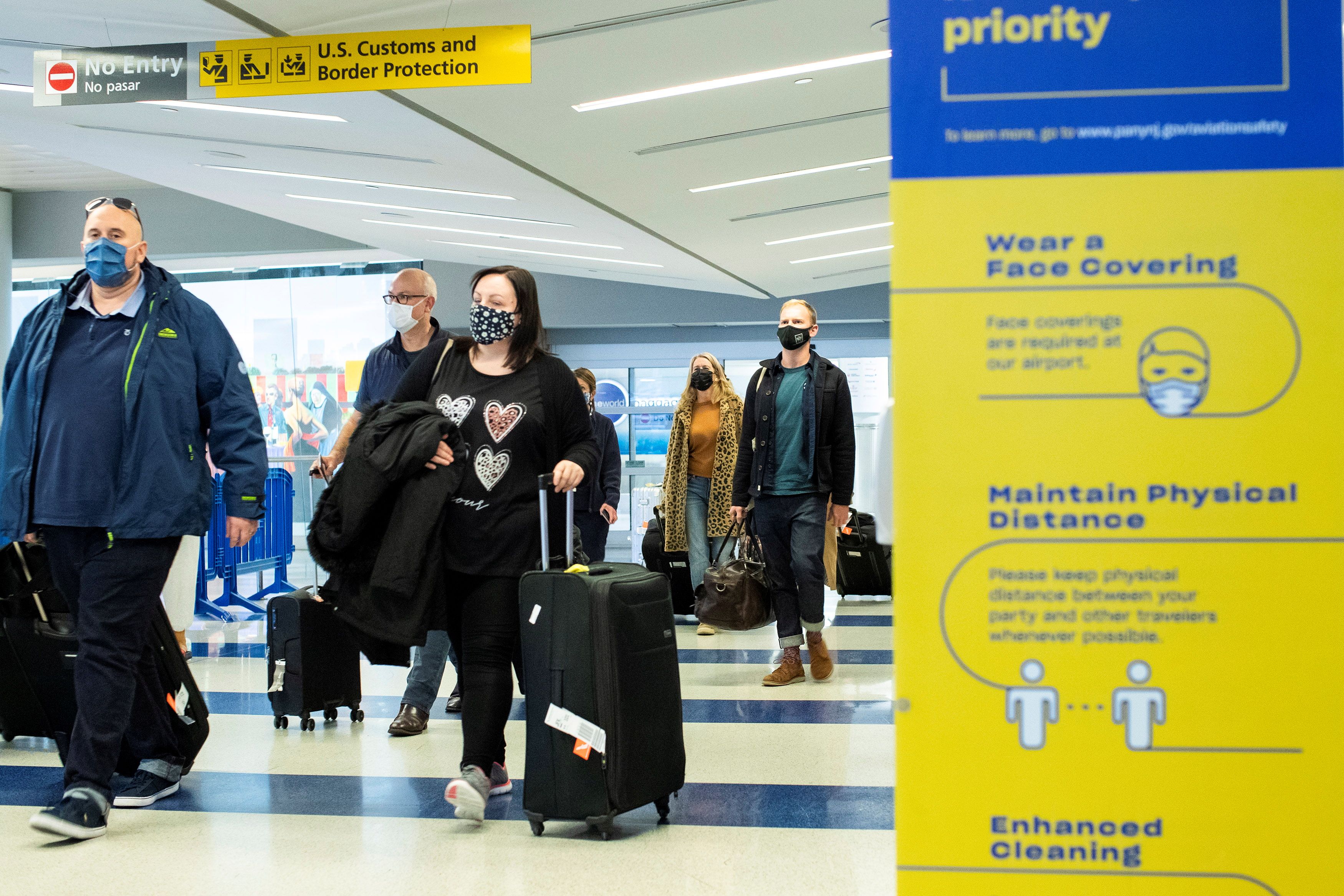
Passengers returning from green list destinations will need to take a pre-departure test as well as a PCR test on or before day two of their arrival back into England, but will not need to quarantine unless the result is positive.

Health Secretary Matt Hancock insisted the government was taking a “cautious approach” to easing travel restrictions, to protect the progress made by the vaccination rollout.

Speaking on BBC Radio 4’s Today programme, he said: “We have some degree of confidence that the vaccine works effectively against the so-called Indian variant, and then against the South African variant we are a little bit more worried, but we don’t have full data on those yet.

“These are reasons to take a cautious approach at the borders in order to protect the progress that we have made at home.

“People would be loath to see us put that at risk by going too fast at the borders. But on the other hand we are seeing countries get this virus under control in the same way we appear to be able to get it under control.”

The post UK: SKN, Could Join Green to Travel List Next Month appeared first on The St Kitts Nevis Observer.

Colonial Pipeline Attack Shows US Energy’s Vulnerability

The Hill- The ransomware attack on Colonial Pipeline, the largest supplier of oil to the Northeast region of the United States, is underscoring just how vulnerable critical U.S. infrastructure is to cybercriminals in a way no previous attack has done, say U.S. officials and experts in the field.

The successful breach of Colonial Pipeline’s IT system forced the company to shut down 5,500 miles of pipelines to ensure hackers could not gain access to its operational technology.

The attack was shocking in some ways in that it illustrated how vulnerable a critical and large company such as Colonial Pipeline was to increasingly frequent ransom attacks.

And it also showed such attacks an have a far larger impact. The entire nation could see a rise in gas prices because of the attack on the pipeline, which carries around 45 percent of oil used on the East Coast and runs between Texas and New York.

“There’s obviously much still to learn about how this attack happened, but we can be sure of two things: This is a play that will be run again, and we’re not adequately prepared,” Sen. Ben Sasse (R-Neb.) said in a statement on Saturday.

Sen. Angus King (I-Maine) and Rep. Mike Gallagher (R-Wis.), the co-chairs of the Cyberspace Solarium Commission (CSC), said Sunday in a separate joint statement that they were “disappointed, though unsurprised” to learn of the incident.

“This interruption of the distribution of refined gasoline and jet fuel underscores the vulnerability of our national critical infrastructure in cyberspace and the need for effective cybersecurity defenses, including a robust public-private collaboration to protect both the pipeline system and electric grid, as well as the infrastructure of the telecommunications and financial services systems,” King and Gallagher said.

Threats to critical infrastructure have built steadily in recent years, and over the past year during the COVID-19 pandemic have spiked, particularly as more work is done remotely and online.

Both nation states and cyber criminals have increasingly turned to ransomware as the weapon of choice to pressure organizations, including hospitals and schools, to pay large sums to decrypt their networks.

Utilities have been another key target. A hacker breached and unsuccessfully attempted to poison the water supply for Oldsmar, Fla., earlier this year, while experts said last month that they had seen an “unprecedented” spike in attacks aimed at the electricity sector.

According to data provided to The Hill by cybersecurity company Check Point Research, hackers attempt to breach American utility companies 260 times per week on average, with the company seeing a 50 percent increase in these attempts since March, and a general increase since the beginning of 2020.

But despite the steadily increasing cyber threats against critical infrastructure, experts say the U.S. remains worryingly vulnerable.

“Cybercriminals follow the money and the biggest potential payouts are with critical infrastructure,” Marty Edwards, the vice president of OT Security at cybersecurity group Tenable, told The Hill on Monday.

“What’s worse is that not only are these systems high-value, but many organizations don’t have the adequate people, processes and technology to secure the very complex and sensitive environments,” he said. “Put all of this together and you have a recipe for ongoing, large-scale attacks.”

Tobias Whitney, vice president of energy security solutions at Fortress Information Security, which works with grid operators, told The Hill on Monday that the incident was “eye-opening” for all critical infrastructure sectors.

“It’s a wake-up call to the rest of all the critical infrastructure industries to really make sure we are not just giving lip service to these issues, that there are actual detailed, nuanced controls we are implementing to thwart these kinds of events,” Whitney said.

The CSC — a group founded by Congress that is made up of lawmakers, officials, and industry leaders — released a report last year highlighting cyber threats to critical infrastructure, and outlining recommendations for the federal government to take to boost security.

The group warned that the U.S. is “dangerously insecure” against cyber threats, and that “a major cyberattack on the nation’s critical infrastructure and economic system would create chaos and lasting damage.”

King and Gallagher on Sunday pointed to the Colonial Pipeline attack as illustrating the need for the federal government to form a cyber “social contract” with critical infrastructure groups.

“It is well past time for the Federal government to enhance its partnership with these entities and ensure these companies are executing their security responsibilities effectively,” the lawmakers said.

The incident also puts pressure on President Biden to support greater funding and initiatives around securing critical systems against cyberattacks, an issue left out of his initial infrastructure proposal. Lawmakers on both sides of the aisle have called for providing funding to shore up cybersecurity, pointing to escalating attacks.

“If Congress is serious about an infrastructure package, at front and center should be the hardening of these critical sectors — rather than progressive wishlists masquerading as infrastructure,” Sasse said.

Both House Energy and Commerce Committee Chairman Frank Pallone (D-N.J.) and ranking member Cathy McMorris Rodgers (R-Wash.) tweeted over the weekend their support for passing stalled legislation aimed at shoring up cybersecurity of the energy sector.

“This cyberattack is a sharp reminder of just how deeply we all rely on our energy infrastructure every day, and just how crucial it is that we invest in modernizing and protecting it,” Pallone tweeted.

The Biden administration monitored the situation closely over the weekend. The Department of Energy is leading the response effort, and the Department of Transportation issued an emergency directive on Sunday allowing drivers of trucks carrying oil and diesel fuel to work longer hours.

Other administration officials warned utilities to be on high alert against cyberattacks.

“@DHSgov is monitoring the ransomware incident affecting Colonial Pipeline,” Homeland Security (DHS) Secretary Alejandro Mayorkas tweeted Saturday. “Every organization must be vigilant and strengthen its cybersecurity posture against ransomware and other types of cyber-attacks.”

While the response to the attack is still in its early stages, King and Gallagher compared the nation’s cyber vulnerabilities to the gaps in preparedness that allowed the September 11 terrorist attacks to take place.

“One of the gravest lessons from the terrorist attack twenty years ago was that it was a failure of imagination,” the lawmakers said. “America can and must be better – we must be imaginative, and proactive, in navigating the threats of the Age of Cyber Aggression.”

The post Colonial Pipeline Attack Shows US Energy’s Vulnerability appeared first on The St Kitts Nevis Observer.
Russia Mass Murder: 7 Kids & Teacher Gunned Down at School

A school shooting in the Russian city of Kazan has left at least eight people dead, reports say.  Most of the victims were children.

REUTERS- At least eight people have been killed and many more wounded after one or more gunmen opened fire in a school in the Russian city of Kazan, the RIA news agency reported on Tuesday, citing the emergency services ministry.

Two children could be seen leaping from the third floor of the four-storey School Number 175 as gunshots sounded, in a video filmed by an onlooker that was circulated by RIA.

Some Russian news agencies reporting two teenage gunmen were involved and others said a sole shooter took part.

RIA said one 19-year-old gunman had been detained and that an explosion had been heard at the school. Footage posted on social media showed a young man being pinned to the ground outside the school building by a police officer.

Footage also showed emergency service vehicles parked outside the school, with people running towards the building.

It was not clear whether any other shooters remained at large. Nor was it immediately clear what the motive for the attack was.

School shootings are rare in Russia. One of the last major shootings of its kind took place in Russian-annexed Crimea in 2018 when a student at a college killed 19 before turning his gun on himself.

Kazan is the capital of the Muslim-majority region of Tatarstan and located around 450 miles (725 km) east of Moscow.

A teenager was detained after the attack at the school, located some 820km (510 miles) east of Moscow in the mainly Muslim republic of Tatarstan. Police have opened an investigation, but no motive has yet been established.

Tatarstan President Rustam Minnikhanov described the shooting as a “disaster” and a “tragedy”.

Heavily armed police and emergency vehicles responded to the shooting at School No. 175 on Tuesday.

Footage shared on social media showed some children jumping from windows to escape as well as injured people being evacuated.

Tactical team responds to a deadly shooting at School Number 175 in Kazan, Tatarstan, Russia May 11, 2021 in this image obtained from social mediaimage copyrightReuters
Armed police arrived at the school and then sealed off the fourth floor, reports said

Reports initially said that there were two shooters, one of whom had been killed. But officials later said there was only one suspect.

Mr Minnikhanov told reporters outside the school that in addition to the fatalities, 12 children and four adults were being treated in hospital.

“The terrorist has been arrested. He’s 19. He’s a registered firearm owner,” he said.

One video on social media captured a teenager lying on the ground apparently being detained outside the building.

The post Russia Mass Murder: 7 Kids & Teacher Gunned Down at School appeared first on The St Kitts Nevis Observer.
Mexico City Train Wreck: The Warnings Signs Were There

(CNN) It’s known as the “Golden Line.” The Mexico City subway system Line 12, spanning 25.1 kilometers (15.6 miles) and featuring 20 stations, was touted as one of the most expensive and ambitious public works projects in Mexican history when it was inaugurated in October 2012.

“It reflects a technological advancement and state-of-the-art features that can only be compared to the construction of the great metro systems of the world,” a Mexico City government official boasted during the kickoff ceremony.

The highly publicized ribbon-cutting was attended by the who’s-who of Mexican politics and power at the time, including then-president Felipe Calderón and Marcelo Ebrard, who was then in his last days as Mexico City’s mayor and is now foreign minister. Carlos Slim, Mexico’s richest man and owner of one of the construction companies involved, was also there.

But fast forward eight years and the Golden Line is, in many respects, a symbol of Mexico’s social ills and challenges from corruption to impunity, inequality to negligence — especially after last week’s deadly elevated rail collapse killed at least 26 people, making headlines around the world.

The Golden Line was supposed to connect historically marginalized neighborhoods with more prosperous areas of the Mexican metropolis and give people equal access to jobs, cultural centers and some of the best things Mexico City has to offer in an affordable way.

But several experts who spoke with CNN in the days following the collapse say this was a tragedy foretold.


‘It could’ve been avoided with proper maintenance’

Jorge Gaviño Ambriz, who served as Mexico City’s Metro Director between 2015 and 2018, said he believes the collapse could have been avoided, though he would like to see first what kind of maintenance and inspection was done throughout the line.

“Evidently, it could’ve been avoided with proper maintenance,” said Gaviño Ambriz. “I believe that if there are already photos from 2020 taken by some neighbors and showing the stretch that collapsed was already getting curved, a beam that curved down like a bow. If this doesn’t get fixed, immediately an accident can happen,” Gaviño Ambriz said.

Mexico City officials said at a press conference the day after the accident that the last structural inspection was done in January 2020 and showed no irregularities.

Sergio Alcocer, a structural engineer and researcher at the National Autonomous University of Mexico’s Engineering School, said it is impossible to tell at first sight what caused the accident, even if there were cracks in the walls or bent beams.

“What happened with this structure is that there have been indeed some deficiencies in other stretches and we may want to extrapolate what happened with those stretches with what happened with the one that failed. There was indeed damage to a column that had to be repaired in 2017,” Alcocer said. “Some have inferred that the damage resulting from the September 19, 2017 earthquake caused the collapse. I don’t think so, but the investigators will have to look into that.”

Commuters told CNN that over the years they had seen signs — an uneven wall, a crack, service interruptions — that made them wonder about its safety. The dozens of deaths and injuries caused by the collapse was the culmination of a long series of red-flag incidents that should have prompted authorities to suspend service or shut down the line completely, they say.

Outrage over the collapse has led to calls for current Metro Director Florencia Serranía to resign. The day after the collapse, she told the press she would not resign, but vowed to cooperate with any government and independent investigations.

Her agency will “submit to the attorney general’s office all information in our possession so that the cause of this accident can be found,” Serranía said last week. “Just like all the riders, we want to know the truth about what happened and we will cooperate with the authorities to that end.”

The Golden Line’s troubled history

In fact, the Golden Line had already been shut down or suspended service multiple times due to safety and operational concerns, sometimes leaving the estimated 385,000 passengers who depend on the service with limited alternatives. The two main disruptions in service happened in 2013 (only a year after opening) and for a long stretch between 2014 and 2015.

In October 2013, service was suspended on late nights and weekends at six of its 20 stations, due to what Mexico City’s Metro Authority described as overnight and weekend maintenance to the tracks. And then, for a period of 20 months, from March 2014 to November 2015, the Golden Line was shut down in 11 stations due to structural concerns.

Transit system authorities concluded that it was “not possible to keep the elevated portions of Line 12 in operation until an exhaustive review is completed and we make the corrections and major maintenance work that will be needed,” then-Metro Director Joel Ortega said at the time.

Upon reopening, then-Mexico City Mayor Miguel Angel Mancera vowed the line would never shut down again. “What we have now as opposed to what we had before is that maintenance will be guaranteed; I mean, we’re guaranteeing that there can’t be a shutdown because the companies we’re working with are making sure this doesn’t happen again,” Mancera said.

Just after the March 2014 shutdown, The Mexican Institute for Competitiveness, a nonpartisan Mexican think tank, called Line 12 “a spectacular fiasco,” not only because of its high cost, but also because of the apparent inability of the Mexico City authorities and the federal government to get things done right and within budget.

Icela Lagunas, an independent journalist who has covered the Line 12 issues for years, told CNN there were structural questions from the beginning about the type of trains and rail system that would be appropriate for the notoriously unstable ground in vast sectors of Mexico City, a metropolis that has been plagued by earthquakes. In September 2017, nearly 400 people died in central Mexico, including more than 200 in Mexico City, after a 7.1 magnitude earthquake rocked the area.

“This week’s tragedy is a combination of many factors. It’s a combination of corrupt officials, dismissing warnings and of a badly executed project that had mistakes since its inception,” Lagunas said.


Firefighters work to lower to the ground a subway car dangling from a collapsed elevated section of the metro, in Mexico City, Tuesday, May 4, 2021.

Investigations to follow

Ebrard, now Mexico’s Foreign Minister under President Andrés Manuel López Obrador, reacted to the tragedy hours after the collapse. “What happened today [Monday] with the Metro is a terrible tragedy. My solidarity for the victims and their families. Of course, the cause must be investigated and justice sought. I reiterate that I’m at the disposal of authorities to assist as necessary,” Ebrard wrote on his official Twitter account.

The following morning, during the president’s daily morning press conference, Ebrard said he would cooperate with authorities. “This project was finalized with the approval of the following administration in July 2013. We could argue a lot about that. They reviewed everything for seven months. The final completion was achieved in July 2013.

Moreover, I would like to say that he who acts with integrity fears nothing. He who owes nothing fears nothing,” the foreign minister said.

Ebrard continued: “Like everybody, and especially as a high-level official and somebody who promoted the construction of the line, I’m subject to whatever authorities determine based on the investigation and their findings about who’s responsible.”

President Andrés Manuel López Obrador, who has been criticized by some for showing little empathy to victims and issuing warnings about using the tragedy for political gain, promised Wednesday his government will seek justice. “A thorough investigation will be conducted to punish those responsible. To that end, we have already established communication with a team of experts that will be in charge of this investigation and will issue an opinion so that we know the causes,” the president said.Current Mexico City Mayor Claudia Sheinbaum announced that, in addition to an investigation by the local attorney’s office, Norwegian firm DNV will conduct an independent investigation.

Alejandro Hope, a Mexican columnist, told CNN that Line 12 “has been plagued by controversy from day one. It has been a project that was grossly over budget, about 70 percent of the original projected amount. It was also plagued by corruption allegations.”

He also points out that there have been three major accidents in 14 months, including a train collision, a fire in a command center and the Monday Line 12 collapse.

“One incident is a coincidence, two incidents are bad luck, but when you talk about three you can say that this is already a pattern that has to be investigated,” Hope said.

Enrique Bonilla, a Mexico City resident who says he frequently used Line 12, is one of the collapse survivors. He says he always suspected there was something wrong with it. “It would make very weird noises,” Bonilla said. But he says he kept on using it because, like many people in his neighborhood, it made his commute significantly faster, easier and affordable.

He was able to return to his family hours after the accident. Other than some neck pain and a minor left arm injury, he says he’s physically fine. His emotional well-being, Bonilla said, is an entirely different matter.

“I have been born again,” he said, choking back tears. “I still can’t figure out why I’m still here and others aren’t. I get very emotional about it. I just want to forget.”

The post Mexico City Train Wreck: The Warnings Signs Were There appeared first on The St Kitts Nevis Observer.

Venezuela Needs $58B to Restore Crude Output to 1998 Levels

Luc Cohen
Reuters

Venezuelan state oil company PDVSA would need $58 billion in investment to revive its crude production to the levels of 1998 before ex-President Hugo Chavez came to power, equivalent to 3.4 million barrels per day (bpd), a document seen by Reuters shows.

In the February 2021 document entitled “Investment Opportunities,” Petroleos de Venezuela’s (PDVSA.UL) planning and engineering division said it was seeking capital investment from Venezuelan and foreign partners, mostly to recover and upgrade oil production infrastructure “under new business models”.

The main new partnership model PDVSA detailed in the document was the use of production services agreements (ASPs).

Under these deals, contractors would finance 100% of operations in the oilfields and in return would receive a portion of the project’s free cash flow as payment. The Venezuelan state would remain the full owner of the fields and the associated infrastructure.

The crisis-stricken South American nation produced just 578,000 bpd of crude in March, according to figures the country provided to OPEC, well below the 2021 goal set in the document of 1.28 million bpd.

The proposal comes as President Nicolas Maduro is seeking to mend ties with the private sector to attract investment to rebuild the OPEC nation’s collapsing economy, in a reversal of tightening state control under Chavez’s socialist model.

Venezuelan oil industry’s top three goals, according to the document, are to “stabilize and recover crude and gas output,” “restore reliability, safety and quality of operations,” and “fully supply the domestic market with fuels.”

Washington imposed sanctions on PDVSA in a bid to oust Maduro, whom it brands a dictator. Venezuela’s Socialist government has accused the United States of seeking to control its oil resources.

A toughening of sanctions in 2019 under former U.S. President Donald Trump complicated the company’s ability to attract investment, given the risks that its partners could themselves be blacklisted.

In addition, even state-owned companies from countries that are staunch Maduro allies, like Russia and China, are wary of boosting cooperation with PDVSA after years of corruption and operational inefficiency blurred projects’ lofty goals.

In total, PDVSA identified a total of 152 “opportunities” requiring $77.6 billion in investment including crude and gas production, midstream operations such as transport and storage, and refining and commercialization operations.

The lion’s share of the required investment, or over $69 billion, would go to crude and gas production infrastructure.

Of that, $58 billion is needed to return crude output from joint ventures and PDVSA’s own oilfields to their 1998 levels, while another $11.3 billion would go to onshore and offshore gas fields.

PDVSA also estimated that $7.65 billion is needed for reviving pipelines, projects for gas injection to oilfields, terminals and refineries that are idled or underperforming due to lack of maintenance.

Neither PDVSA nor Venezuela’s oil ministry replied to requests for comment.

Venezuela is home to some of the largest crude reserves on earth, but its oil industry is operating well below capacity after years of underinvestment.

The country’s opposition has been developing its own plan to restructure the industry and attract investment following a potential change in government.

A technical committee working with the opposition last year set less optimistic goals: the country would require around $98 billion to boost output to 2.2 million bpd.

In addition to the production services agreements (ASPs), the PDVSA document also advertised investment opportunities in its joint ventures with private partners, though it did not specify what, if anything, would change in the business model for those projects.

Venezuelan law requires PDVSA to have a majority stake in all joint ventures.

The post Venezuela Needs $58B to Restore Crude Output to 1998 Levels appeared first on The St Kitts Nevis Observer.

Venezuela’s Academy of Medicine Asks U.S. for COVID-19 Vaccines

Reuters
A woman holds a small bottle labelled with a "Coronavirus COVID-19 Vaccine" sticker in this illustration taken, October 30, 2020. REUTERS/Dado Ruvic/File Photo

A woman holds a small bottle labelled with a “Coronavirus COVID-19 Vaccine” sticker in this illustration taken, October 30, 2020. REUTERS/Dado Ruvic/File Photo

Venezuela’s main academy of medicine has asked the United States to add the South American nation to its international donor list for millions of doses of COVID-19 vaccines, despite a political freeze between the two countries.

Enrique Lopez-Loyo, president of the politically independent National Academy of Medicine, made the request to U.S. Ambassador to Venezuela James Story at a meeting on May 2, the academy said in a statement on Monday.

“To control the pandemic in our country, we need to vaccinate around 70% of the adult population, nearly 15 million people, in as little time as possible,” the academy said in the statement. “The amount of vaccines that have arrived to Venezuela … represents less than 10% of what Venezuela needs.”

Venezuela has received around 1.4 million vaccines from China and Russia, according to the Health Ministry, and hopes to receive doses for about 5 million people from the World Health Organization’s (WHO) COVAX program.

The academy is a member of the Venezuelan government’s round table developing a response to the coronavirus crisis for its 30 million people.

The academy’s plea, however, for U.S. supplies of AstraZeneca PLC (AZN.L) vaccines runs contrary to the government’s refusal in March to authorize the vaccine because of reports of blood clotting in some recipients.

The academy’s request also comes amid U.S. sanctions on Venezuela to protest the re-election of President Nicolas Maduro in 2018 in elections it, and many other nations, viewed as fraudulent. Venezuela blames Washington’s sanctions for its economic woes.

Story, appointed at the end of last year, is based in Bogota, Colombia, because of the rupture in relations.

The academy said Story responded to its request, saying the United States valued the independence of the academy and it looked “forward to working with all like-minded parties in the search for a solution to this crisis.”

Venezuela’s information ministry did not immediately respond to a request for comment.

Venezuela has reported a total of around 209,000 COVID-19 cases, including some 2,300 deaths.

==================================================

WHO says India Covid variant of ‘global concern’

Small bottles of the Covishield Covid vaccineimage copyrightGetty Images
image captionThe WHO has classified the coronavirus variant first found in India last year as a “variant of global concern”

The World Health Organization (WHO) has classified the coronavirus variant first found in India last year as a “variant of global concern”.

It said preliminary studies show the B.1.617 mutation spreads more easily than other variants and requires further study.

The variant has already spread to more than 30 countries, the WHO says.

Three other variants from the UK, South Africa and Brazil have been given the same designation.

A mutation is elevated from a “variant of interest” to a “variant of concern” (VOC) when it shows evidence of fulfilling at least one of several criteria, including easy transmission, more severe illness, reduced neutralisation by antibodies or reduced effectiveness of treatment and vaccines.

The variant is being studied to establish whether it is responsible for a deadly surge in India, which is currently overwhelming hospitals and crematoriums.

India reported 366,161 new infections and 3,754 deaths on Monday, down from record peaks. Experts say the actual figures could be far higher than reported.

Surging cases have meant that oxygen shortages continue to be a problem and have spread beyond the capital, Delhi.

Local media in the southern state of Andhra Pradesh reported that 11 Covid patients died overnight in the city of Tirupati after an oxygen tanker supplying the hospital was delayed.

The Indian government says there is evidence of a link between the variant and India’s deadly second wave, but that the correlation is not yet “fully established”.

Several states have imposed localised lockdowns, curfews and curbs on movement over the last month.

However, Prime Minister Narendra Modi’s government is coming under increasing pressure to announce a nationwide lockdown and stop the spread of the virus.

He is also facing criticism for allowing massive gatherings at Hindu festivals and election rallies to go ahead despite rising cases.

A crowd - mainly without masks - at a BJP rallyimage copyrightGetty Images
image captionLarge election rallies are thought to have worsened the situation

On Monday, Delhi’s health minister said the capital had just three or four days of vaccine supplies left.

Shortages are further disrupting a lagging vaccination programme, with just over 34.8 million, or about 2.5% of the population receiving both doses of a vaccine so far.

The WHO says current vaccines will continue to be effective against the Indian variant, although the WHO’s technical lead did say there may be some evidence of “reduced neutralization,” at a press conference on Monday.

==================================================

FDA authorizes Pfizer vaccine for adolescents

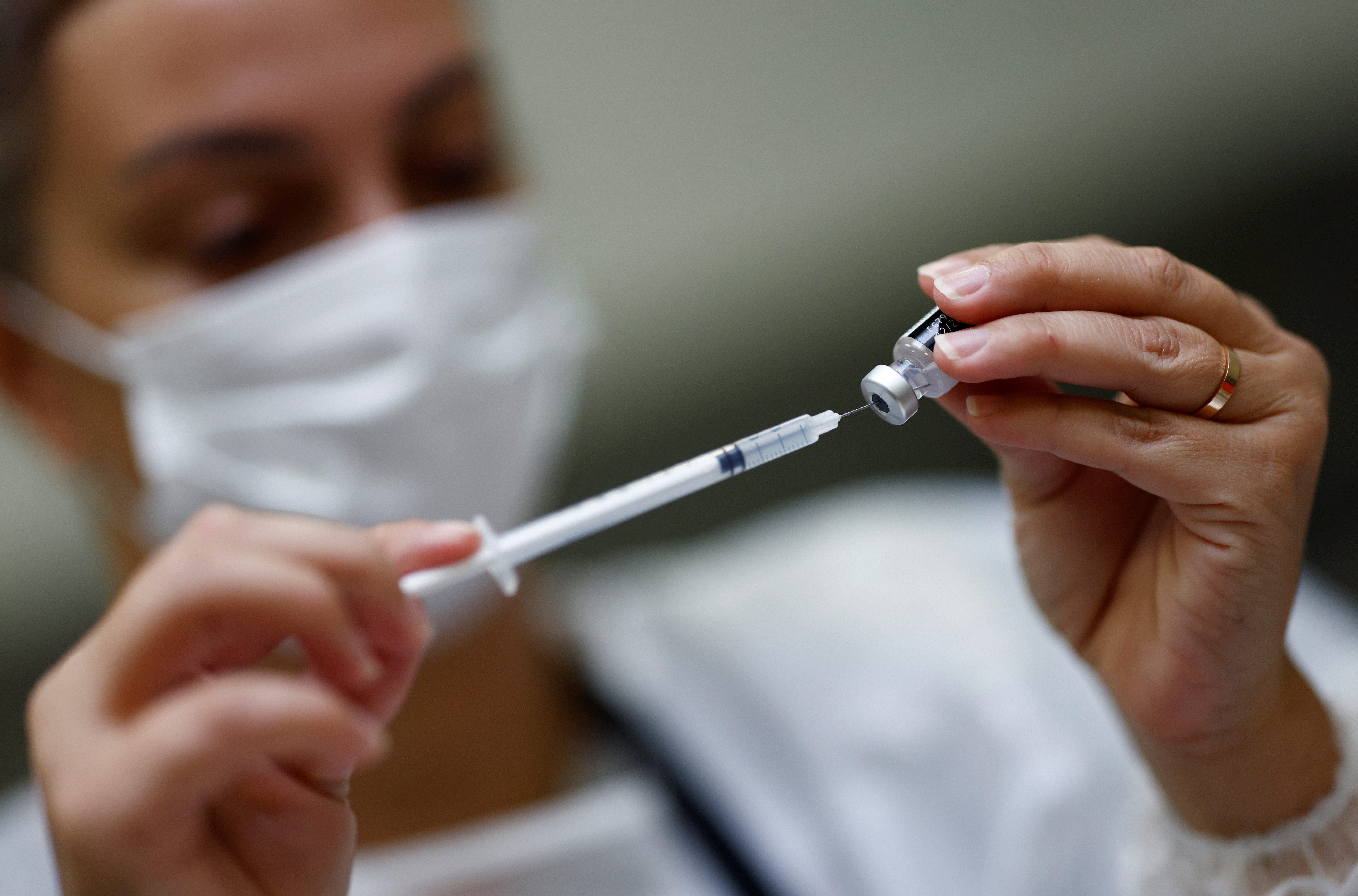
The Food and Drug Administration on Wednesday gave the green light for the Pfizer-BioNTech coronavirus vaccine to be used in adolescents 12-15 years old, a move that will make millions more people eligible for a vaccine.

The highly anticipated decision is a key step toward ensuring middle and high schools can operate for full in-person learning next fall — and a major boon to parents concerned about the safety of summer activities.

FDA has been reviewing the amended application from Pfizer and BioNTech for more than a month. The companies cited research from their clinical trial in late March that found the vaccine was effective in the younger population, and produced strong antibody responses. The side effects were also about the same as the older population.

Following the announcement, the Centers for Disease Control and Prevention vaccine advisory committee will meet Wednesday to review the data and vote on recommendations for use of the shot in adolescents.

Pfizer’s vaccine is currently authorized for teenagers aged 16 and older. The other two vaccines on the market in the U.S., from Moderna and Johnson & Johnson, are only authorized for adults.

Kids matter: Children need to be vaccinated in order to raise the overall level of immunity in the country. While herd immunity may not be within reach, getting more people vaccinated will lower the numbers of COVID-19 infections, hospitalizations and deaths.

“Today’s action allows for a younger population to be protected from COVID-19, bringing us closer to returning to a sense of normalcy and to ending the pandemic,” Acting FDA Commissioner Janet Woodcock said in a statement.

The challenge: Officials need to convince adults to get themselves vaccinated before they’ll vaccinate their kids. A recent poll from the Kaiser Family Foundation showed limited eagerness from parents to get their children vaccinated, and that parents’ views on inoculating their children lined up with whether they planned to get vaccinated themselves.


The post Venezuela’s Academy of Medicine Asks U.S. for COVID-19 Vaccines appeared first on The St Kitts Nevis Observer.

Colombia Protesters, Government at Odds After Meeting

Reuters- A meeting between Colombian protest leaders and President Ivan Duque broke up on Monday with little sign of progress on curbing nearly two weeks of sometimes deadly anti-government protests.

Protest leaders said the government had not shown empathy for their demands, while the government emphasized the meeting was exploratory and said it wanted to reach agreements with demonstrators.

Protests, fueled by outrage at a now-canceled tax plan, began on April 28. Amid more than 20 deaths, mostly of marchers, demands have expanded to include action to tackle police violence and the withdrawal of a long-debated health reform. read more

The National Strike Committee, made up of major unions and student groups, attended the meeting with Duque, other government officials and representatives from the United Nations and the Catholic Church.

“There was not empathy from the government with the reasons, with the demands that have taken us to this national strike,” said Francisco Maltes, president of the Central Union of Workers (CUT).

The meeting was an echo of similar discussions held after protests in 2019, to little result, student leader Jennifer Pedraza said.

“The discourse of President Ivan Duque was permissive toward the excesses of the security forces,” she said, calling on Colombians to participate in further protests on Wednesday.

“There was an environment of listening and of respect,” said High Peace Commissioner Miguel Ceballos, speaking on behalf of the government. “I repeat before the country: the clear, express willingness of the president of the republic is to create a space to reach deals.”

Attendees agreed on the need to reject violence, said Ceballos, who repeated a government call for road blockades around the country to be lifted. The government has proposed a further meeting with the strike committee, he said.

Protests continued in several cities on Monday, with an estimated 13,000 participants according to a police estimate.

Duque made a lightning-fast visit to the city of Cali – a protest epicenter – earlier on Monday, after it was the scene of weekend violence which left over a dozen injured.

Nine indigenous demonstrators, who were marching as part of a “minga” or protest, were wounded by gunshots, the Regional Indigenous Council of Cauca said in a statement on Sunday.

Four people were wounded by minga protesters, Cali’s police said.

The human right ombudsman has reported 26 people killed since protests began, but says seven were unrelated to the marches themselves.

Human Rights Watch said it has reports of 38 deaths, while local rights groups Temblores and Indepaz have reported 47 killings, the majority by police.

The post Colombia Protesters, Government at Odds After Meeting appeared first on The St Kitts Nevis Observer.