WASHINGTON (AP) — The House has voted to hold Steve Bannon, a longtime ally and aide to former President Donald Trump, in contempt of Congress for defying a subpoena from the committee investigating the violent Jan. 6 Capitol…Read More
BEIJING (AP) — China’s capital Beijing has begun offering booster shots against COVID-19, four months before the city and surrounding regions are to host the Winter Olympics. Anyone 18 or older who have received two-dose Chin…Read More
WASHINGTON (AP) — Millions more Americans can get a COVID-19 booster and choose a different company’s vaccine for that next shot, federal health officials said Thursday….Read More
TEHRAN, Iran (AP) — Iranian hard-liners, now back at the helm of the country, may regularly rail against the poisoning of Islamic society by Western culture, but in Tehran, Iranians are flocking to the contemporary art museum…Read More
SANTA FE, N.M. (AP) — Authorities are investigating after confirming that a prop firearm discharged by actor Alec Baldwin, while producing and starring in a Western movie, killed the cinematographer and wounded the director….Read More
PORT-AU-PRINCE, Haiti (AP) — The boss of a notorious Haitian gang accused of kidnapping 17 members of a U.S.-based missionary group last weekend is warning that the hostages …Read More
NIZHNY NOVGOROD, Russia (AP) — As she stood in the courtyard of the morgue holding the body of her grandmother who died of COVID-19, Ramilya Shigalturina had a message for an…Read More
BUNN, N.C. (AP) — A North Carolina town finds itself under siege by buzzards, and nothing the locals do to scare them off seems to work. The buzzards have chosen the town of …Read More
CANBERRA, Australia (AP) — Qantas Airways on Friday brought forward its plans to restart international travel from Sydney as Prime Minister Scott Morrison predicted tourists …Read More
St. Kitts and Nevis Ministry of Health officials will offer coronavirus Antigen testing to departing travelers whose countries require exit testing prior to their return from international destinations.
The dual-island nation has also removed the exit testing requirements for travelers whose countries of origin do not require return testing. Earlier this month, St. Kitts and Nevis officials narrowed the country’s “Vacation in Place” quarantine requirement for fully vaccinated international travelers from four days to 24 hours.
Exit testing will be performed at visitors’ hotel or resort by a professional from the Ministry of Health 48 to 72 hours prior to the travelers’ departure. Samples will be tested at one of three certified local labs: The Joseph N. France Laboratory; Next Gen Laboratory; Avalon Laboratory and Quality Diagnostics.
Travelers are required to schedule testing through their certified “Travel Approved” hotel or resort concierge, with pricing at $50 to $55 per person, according to St. Kitts and Nevis officials. The Travel Approved-certified hotels for international travelers are: the Four Seasons Resort Nevis, Golden Rock Inn, Marriott Beach Club, Montpelier Plantation & Beach, Paradise Beach, Park Hyatt and Royal St. Kitts Hotel.
Travelers staying in villas, condos or private homes should contact St. Kitts and Nevis’ COVID-19 taskforce hotline by phoning 311 or emailing Co**************@*ov.kn. St. Kitts & Nevis entry protocols require travelers to submit a negative result from an RT-PCR test 72 hours prior to arrival.
Visitors can now explore accommodations, activities and attractions on Nevis via the Nevis Tourism Authority’s revamped website, which features optimized information on hotels and resorts, restaurants and bars, island events and historic and cultural sites and attractions.
Oct 21 (Reuters) – U.S. asylum officers have documented dozens of incidents since 2016 of migrants alleging U.S. border agents physically abused them after they were apprehended at the U.S.-Mexico border, according to records obtained by Human Rights Watch and released Thursday.
The New York-based nonprofit sued for copies of internal reports filed by U.S. asylum officers of alleged misconduct committed by U.S. and Customs and Border Protection (CBP) agents. The records, which also included allegations of verbal abuse and violations of migrants’ legal rights, were heavily redacted but spanned from 2016 to 2021, across three administrations with varied approaches to immigration policy.
Under U.S. immigration law, migrants arrested by border agents are referred for an interview with asylum officers from U.S. Citizenship and Immigration Services (USCIS) if they express fear of returning to their home countries. It was during those interviews that migrants brought up descriptions of verbal and physical abuse by U.S. border agents, the records show.
Since the beginning of the coronavirus pandemic, most migrants have been expelled without getting a chance to claim asylum.
A spokesman for the U.S. Department of Homeland Security, which oversees both CBP and USCIS, said that the agency “does not tolerate any form of abuse or misconduct.” Since Biden took office in January, the spokesman said, the agency has begun an internal review of use of force as well as “to identify and terminate intolerable prejudice.”
According to one 2017 internal report, a woman whose nationality is redacted, told an asylum officer that a border patrol agent slammed her to the ground multiple times, drawing blood, and kneed her in the lower pelvis.
Another report describes a migrant’s testimony that he was attacked in June 2018 by a border patrol dog in the California desert, injuring his testicle. He said he was not given treatment for about a month while in custody, the documents showed.
There were multiple internal reports of verbal abuse, including a migrant from Honduras who said border agents: “called us sons of bitches, dogs, parasites, trash.” Another asylum applicant said border agents “told us that we gave birth to rats,” according to the records.
U.S. President Joe Biden, a Democrat, has pledged a more humane approach to immigration policy than his Republican predecessor Donald Trump but advocates have been disappointed at the slow pace of reforms.
CBP has come under more recent criticism for tactics used by border agents on horseback trying to push back crowds of mostly Haitian migrants crossing into south Texas from Mexico in large numbers last month.
At the same time, Republicans have criticized Biden for not doing enough to curb migrant crossings as apprehensions at the southwest border have recently surpassed previous records.
Reporting by Kristina Cooke in San Francisco; Editing by Mica Rosenberg and Aurora Ellis
(CNN) The leader of the gang that kidnapped 17 US and Canadian missionaries in Haiti has threatened to kill them if he doesn’t get what he wants, according to a video released Thursday.
The video appears to show Wilson Joseph — who goes by the alias Lanmò Sanjou, or Death Without Days — speaking at a funeral Wednesday for gang members whom he alleges were killed by police, a Haitian security force source told CNN.
The missionary group, which includes several children, has been held captive since Saturday, kidnapped by the 400 Mawozo gang while traveling by car northeast of capital city Port-au-Prince.
Their captors have demanded $1 million per hostage, according to Haitian Justice and Interior Minister Liszt Quitel.
“We will not comment on the video until those directly involved in obtaining the release of the hostages have determined that comments will not jeopardize the safety and well-being of our staff and family members,” Christian Aid Ministries said Thursday.
Among the kidnapped are an 8-month-old infant, a 3-year-old and a 6-year-old, as well as two young teenagers. All of the group’s members hail from Amish, Mennonite and other conservative Anabaptist communities across six US states and Ontario, said Weston Showalter, an official with the mission organization Christian Aid Ministries.
‘Love your enemies’
The death threat follows the first public statement by the victims’ families, who earlier on Thursday described the kidnapping as a “unique opportunity” to show compassion.
“God has given our loved ones the unique opportunity to live out our Lord’s command to love your enemies, bless them that curse you, do good to them that hate you,” the families said in a message read outside Christian Aid Ministries‘ Ohio headquarters.
Both Haitian police negotiators and the FBI are involved in helping to resolve the kidnapping, and the local government is working tirelessly to find a peaceful solution, Quitel told CNN. But on Thursday, the country’s interim national police chief Leon Charles abruptly resigned.
The incident has focused global attention on an epidemic of gang violence and insecurity in the impoverished Caribbean nation. Kidnappings for ransom in Haiti are widespread and often indiscriminate, targeting rich and poor, young and old.
And at least 782 people were kidnapped in Haiti between the start of the year and October 16, including over 50 foreign nationals, according to the latest estimates by the Port-au-Prince organization Center for Analysis and Research for Human.
At least 30 children have been abducted this year, according to UNICEF, which warned in a statement Thursday that the experience inevitably causes trauma.
“Nowhere is safe for children in Haiti anymore,” said Jean Gough, the children’s agency’s regional director.
“Criminal gangs are using children as bargaining chips and making money off parents’ love for their children,” he also said.
Rising crime in Haiti has accompanied the country’s political instability, with kidnappings spiking in the months after the July assassination of President Jovenel Moise, according to CARDH.
400 Mawozo in particular has become notorious for group kidnappings this year, forcing whole buses off the road, according to CARDH.
Father Michel Briand, a French priest who survived a kidnapping by 400 Mawozo this spring, points to poverty and inequality as drivers of crime in a country where many Haitians live on the equivalent of a few dollars per day.
“The problem in Haiti is that what is abnormal has become normal, that which is illegal has become a part of daily life, and seeds trouble in the country. (The kidnappers) are doing a job. It’s a means of subsistence.”
He and several other priests and nuns were held for more than two weeks in April before being released. He says his captors began to withhold food toward the end, which he believes to have been a pressure tactic.
“If the kidnapped missionaries are together, their captivity will be easier and they can comfort each other. But they must not lose hope. The kidnappers play with time and play on people’s nerves and the nerves of the negotiators,” he said.
Briand, who has lived in Haiti for more than 30 years, also blamed the Haitian government for failing to put a stop to the rash of kidnapping. “Things seem out of their control,” he told CNN. “One day, the whole country will be a hostage.”
There is little doubt about the immense power exerted by well-armed Haitian gangs in the country’s capital. On the same weekend as the missionaries’ kidnapping, security concerns forced Prime Minister Ariel Henry to backtrack on plans to lay a wreath at a memorial to revolutionary leader Jean-Jacques Dessalines in a gang-controlled area of Port-au-Prince.
Nearly 800 kidnappings have been reported in Haiti so far this year, a local group says, as gangs expand their control amid political instability.
The Center for Analysis and Research in Human Rights (CARDH) said 119 people were abducted in the first half of this month alone.
People from all walks of life, both local and foreign, have been targeted.
The most recent high-profile case involves 17 missionaries from the US and Canada, kidnapped last weekend.
The security situation in Haiti, which was already precarious, has deteriorated significantly since the assassination of President Jovenel Moïse in July. Rival factions are fighting to gain control of the country in the face of a struggling police force.
“Citizens do not trust the Haitian national police and this poses a problem because we cannot have an efficient police force if the population does not collaborate,” Gedeon Jean, the CARDH director, told AFP news agency.
“According to our statistics, there are at least two policemen in every large armed group: some policemen are active in gangs and others provide cover, allowing gangs to operate, or they share information with them.”
CARDH said at least 782 kidnappings were reported this year to 16 October, compared with 796 cases in the whole of 2020. The actual numbers were likely to be much higher, it said, as many people do not report abductions, fearing retaliation from the gangs.
The rise in violence and a dire economic situation, made worse by several natural disasters in recent years, have led to a growing number of Haitians seek opportunities in other countries.
On Saturday, the missionaries from the Ohio-based Christian Aid Ministries were returning from a visit to an orphanage when their bus was seized by members of the 400 Mazowo gang in Ganthier, a town east of the capital, Port-au-Prince.
Ganthier is located in the Croix-des-Bouquets area which is controlled by the gang. The kidnappers are demanding $1m (£725,000) in ransom for each hostage.
All of those kidnapped are US citizens, except one who is a Canadian national. Among those seized are five men, seven women and five children, the youngest reported to be two years old.
Seizing vehicles and all of their occupants for ransom is one of the main activities the 400 Mazowo uses to finance itself. In April, the gang abducted a group of Catholic clergy, who were later released. It is not clear if a ransom was paid.
Cinematographer Halyna Hutchins airlifted to hospital, where she died, while director Joel Souza also injured
Alec Baldwin, who is acting in and producing the film Rust, had fired the prop gun in an incident on Thursday. Photograph: Startraks Photo/Rex/Shutterstock
Alec Baldwin fired a prop gun on a movie set in an accident that killed the film’s director of photography and injured its director, authorities in New Mexico have said.
A statement from the Santa Fe Sheriff’s office said Baldwin, who is acting in and producing the film Rust, had fired the prop gun in an incident on Thursday.
Deputies were dispatched to the set at about 2pm in Bonanza Creek Ranch when a 911 caller reported a shooting, added the statement.
“The sheriff’s office confirms that two individuals were shot on the set of Rust. Halyna Hutchins, 42, director of photography, and Joel Souza, 48, director, were shot when a prop firearm was discharged by Alec Baldwin, 68, producer and actor,” it said.
“Ms Hutchins was transported, via helicopter, to University of New Mexico hospital where she was pronounced dead by medical personnel. Mr Souza was transported by ambulance to Christus St Vincent regional medical center where he is undergoing treatment for his injuries.”
“This investigation remains open and active. No charges have been filed in regard to this incident.”
Juan Rios, from the sheriff’s office, said: “Mr Baldwin came in voluntarily to speak with investigators and after speaking with them he left.”
Halyna Hutchins. Photograph: Mat Hayward/Getty Images for AMC Networks
A spokesperson for Baldwin said there was an accident on the set involving the misfire of a prop gun with blanks.
The Santa Fe New Mexican reported Baldwin was seen on Thursday outside the sheriff’s office in tears, but attempts to get comment from him were unsuccessful.
“According to investigators, it appears that the scene being filmed involved the use of a prop firearm when it was discharged,” Rios told the Albuquerque Journal. “Detectives are investigating how and what type of projectile was discharged.”
Production has been halted on the film, which was being directed by Souza with Baldwin producing and starring in it.
Hutchins, 42, was director of photography on the 2020 action film Archenemy, starring Joe Manganiello. A 2015 graduate of the American Film Institute, she was named a “rising star” by American Cinematographer in 2019.
“I’m so sad about losing Halyna. And so infuriated that this could happen on a set,” said the Archenemy director, Adam Egypt Mortimer, on Twitter. “She was a brilliant talent who was absolutely committed to art and to film.”
“The details are unclear at this moment, but we are working to learn more, and we support a full investigation into this tragic event,” the International Cinematographers Guild’s president, John Lindley, and executive director Rebecca Rhine said in a statement.
Tributes to Hutchins have poured in over social media.
“I will miss you my friend … this is devastating,” the director James Cullen Bressack wrote under a video that Hutchins had posted two days earlier. At the time she had written: “One of the perks of shooting a western is you get to ride horses on your day off.”
The model Katya Zharkova also said she would miss Hutchins “terribly” while the actor Jeff Daniel Phillips described her death as “an absolute tragedy.”
Filming for Rust was set to continue into early November, according to a news release from the New Mexico Film Office.
The movie is about a 13-year-old boy who is left to fend for himself and his younger brother after the death of their parents in 1880s Kansas, according to the Internet Movie Database website. The teenager goes on the run with his long-estranged grandfather, played by Baldwin, after the boy is sentenced to hang for the accidental killing of a local rancher.
In 1993, Brandon Lee, 28, son of the late martial-arts star Bruce Lee, died after being hit by a .44-caliber slug while filming a death scene for the movie The Crow. The gun was supposed to have fired a blank, but an autopsy turned up a bullet lodged near his spine.
A memorial service for Colin Powell will be held on Nov. 5 at the Washington National Cathedral, according to a spokesman for the former secretary of State.
The service, set for noon, will have “very limited seating and it will be by invitation only,” Powell spokeswoman Peggy Cifrino told multiple outlets in a written statement.
A nation’s loss: Powell, the first Black secretary of State, Joint Chiefs of Staff chairman and National Security Advisor, died on Monday due to complications from COVID-19. He was 84.
He had been fully vaccinated against the coronavirus but had a history of multiple myeloma, a common blood cancer that weakens the immune system.
Powell’s decorated military career that included two tours in Vietnam led to key military and diplomatic positions throughout Washington, serving under both Democratic and Republican presidents.
He was President Reagan’s National Security Adviser, Chairman of the Joint Chiefs of Staff under President George H.W. Bush and President Clinton, and secretary of State during under President George W. Bush.
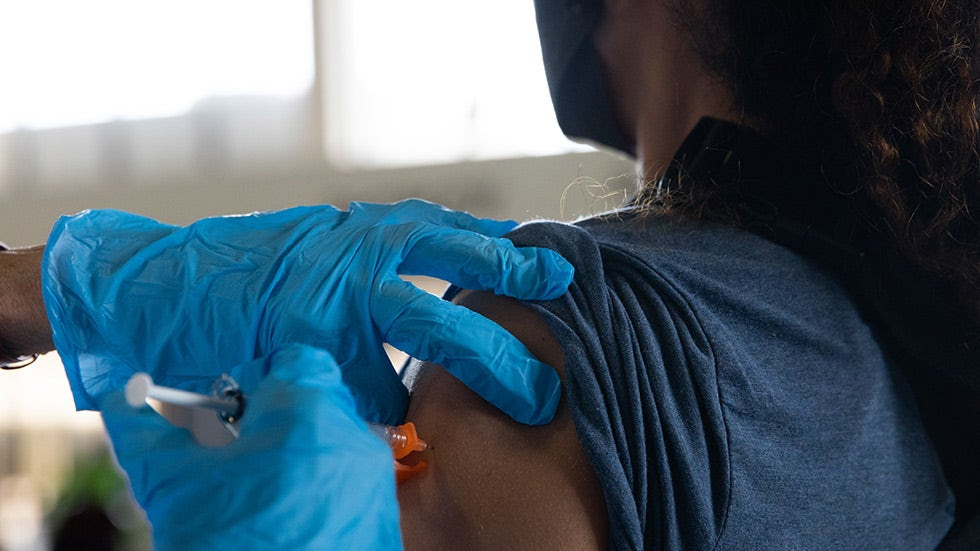
A Centers for Disease Control and Prevention (CDC) advisory panel recommended the agency allow Moderna and Johnson & Johnson coronavirus vaccine booster doses to be administered, the latest step toward expanding access to extra doses nationwide.
The committee backed widening booster accessibility for people who initially received Moderna or Johnson & Johnson after the CDC previously approved the Pfizer-BioNTech booster shots for specific populations.
The panel, in a 15-0 vote, endorsed a third shot for certain populations at least six months after their second dose of an mRNA vaccine, either Moderna or Pfizer-BioNTech. It also unanimously suggested allowing a second dose for all adults who initially received Johnson & Johnson at least two months after their first shot.
What the votes mean: The vote brings recommendations for Moderna recipients in line with those who got the Pfizer-BioNTech vaccine and opens up opportunities for Johnson & Johnson recipients to get another shot.
The panel did not take a position on whether any vaccine booster was better, and did not recommend giving people the flexibility to mix and match, after the Food and Drug Administration (FDA) amended its emergency use authorization to permit mix-and-match booster doses. The panel was not able to express a preference for people using a different brand for a booster, but they asked CDC to give more details in clinical guidance. So mixing and matching will be allowed, but there wasn’t an official recommendation.
What’s next: CDC Director Rochelle Walensky will next consider the committee’s suggestions before ruling on these boosters.
If she approves the other two booster populations, about 99 million Americans in total will be considered eligible to get a booster. The director generally goes along with the recommendations, but she overruled aspects of the committee’s decision in a rare departure on the Pfizer booster.
=================================
India: A Billion COVID 19 Shots Given
India has reached a milestone in its COVID-19 vaccination campaign: 1 billion COVID-19 vaccine doses have been administered. Now, half of the country’s nearly 1.4 billion people have received at least one dose of the vaccine, and many of those shots have come in the past few months, following a slow initial roll out. Still, millions of Indians are yet to receive a single dose of the jab.
Russia is another Matter
Meanwhile in Russia, Moscow announced a new set of restrictions that will shut down restaurants, cinemas and non-food stores, as the country hit a new record in the daily numbers of new coronavirus infections and deaths since the start of the pandemic. About 45 million Russians are fully vaccinated in a country with a population of 146 million.
====================================
What you need to know about the coronavirus right now
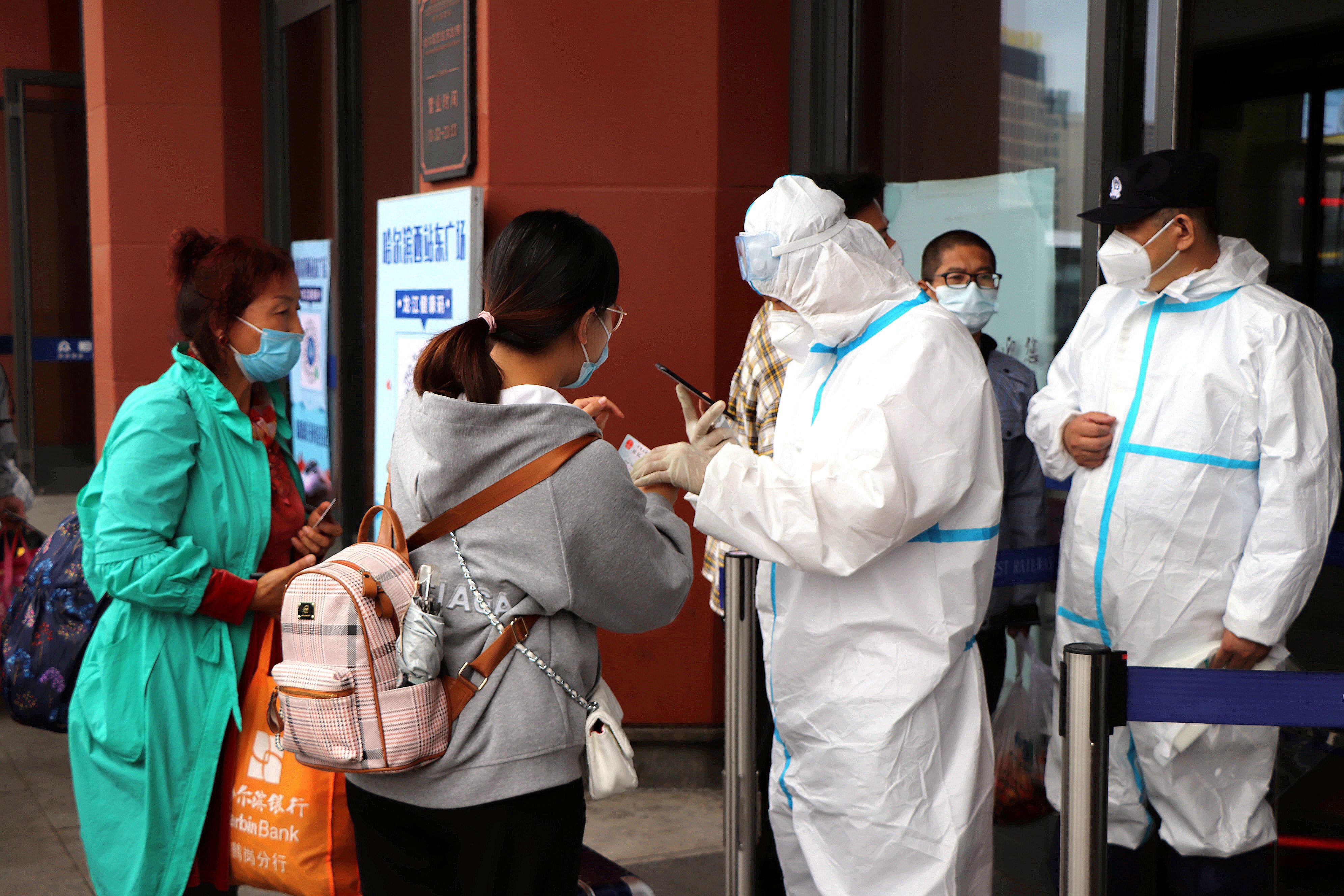
Staff members in protective suits check proof of negative test results for travellers at an entrance to the Harbin West Railway Station following new local cases of the coronavirus disease (COVID-19) in Harbin, Heilongjiang province, China September 22, 2021. cnsphoto via REUTERS ATTENTION EDITORS – THIS IMAGE WAS PROVIDED BY A THIRD PARTY. CHINA OUT.
World’s most locked-down city eases pandemic restrictions
Melbourne residents flocked to the city’s pubs, restaurants and hair salons in the early hours of Friday after the world’s most locked-down city emerged from its latest spate of restrictions designed to combat the spread of COVID-19.
People were seen cheering and clapping from their balconies, while cars honked horns continuously at 11:59 p.m. on Thursday when lockdown restrictions in place since early August ended. Many venues, including food outlets and even haircutters, opened at the unusual hour for the occasion. read more
Hong Kong halts cruise to nowhere as COVID-19 suspected in crew member
Hong Kong authorities stopped “Spectrum of the Seas”, a Royal Caribbean cruise ship, from departing its terminal late on Thursday on a “cruise to nowhere”, as a crew member was suspected to have COVID-19 after routine testing, the government and the cruise operator said.
About 1,000 passengers out of a total of 1,200 had already boarded the ship before the four-night trip was cancelled. All have to undergo compulsory testing but were allowed to leave the ship as they did not have direct contact with the crew member. read more
U.S. CDC signs off on vaccine boosters, mix-and-match shots
The U.S. Centers for Disease Control and Prevention (CDC) on Thursday recommended the COVID-19 vaccine boosters for recipients of the Moderna Inc and Johnson & Johnson shots, and said Americans can choose a different shot from their original inoculation as a booster.
The panel struggled with trying to make the language of its recommendations as clear as possible, and also offer flexibility for patients to get a vaccine of their choice.
“A really important aspect of all of this is being clear and not dancing on the head of a pin, so that we don’t further confuse the American people,” said Dr. Beth Bell, a panel member and clinical professor in the department of global health at the University of Washington in Seattle. read more
Thailand to allow quarantine-free travel from 46 countries
Thailand will let vaccinated visitors from 46 countries forgo COVID-19 quarantine from next month, up from 10 previously announced, Prime Minister Prayuth Chan-ocha said on Thursday.
The 46 countries include Britain, the United States, China, Singapore, Germany and Australia, according to the ministry of foreign affairs.
Prayuth said the visitors could skip mandatory quarantine as long as they arrive via air, have been fully vaccinated and have a document to show they are virus-free. read more
New Zealand sets 90% vaccine target for ending lockdown
New Zealand will end its strict lockdown measures and restore more freedoms only when 90% of its eligible population is fully vaccinated, Prime Minister Jacinda Ardern said on Friday. Some 68% of eligible New Zealanders are fully vaccinated and 86% have had one dose.
When the vaccine target is reached, the country will move into a new traffic-light system to manage outbreaks in regions.
Vaccine certificates will be central to the new system, which will also use three settings – green, orange and red – to manage fresh outbreaks and cases, Ardern said. The new system would also mean an end to nationwide lockdowns. read more
Compiled by Karishma Singh; Editing by Himani Sarkar
Loop- Prime Minister Dr Timothy Harris has encouraged the people of the Federation to consider large or small scale farming in the face of the global supply chain bottleneck.
Addressing the nation, the Prime Minister said the government appreciates the importance of agriculture in the delivery of a better quality of life to the people of the federation, as food is a basic human need. He said globally, the challenge to have food in adequate quantities and simultaneously at affordable prices is great.
The bottleneck is due to an increase in demand for products as online shopping has significantly increased due to the COVID-19 pandemic. In many instances, however, manufacturers are unable to meet the rise in demand due to staff shortages and reduced operating hours restrictions and curfews continue to be put in place to limit the spread of the virus. Labour shortages are also impacting ports where the goods land, which in turn slows the offloading and inspection process thereby creating a bottleneck. Experts are predicting that this issue will get worse before it gets better.
Prime Minister Harris pointed to the supply chains around the world that continue to be disrupted by COVID-19 as backlogs increase. He also warned that there will be an adverse movement in the price of food items as an increase in transportation costs and fuel prices are realized. Costs of goods are likely to increase as a consequence of the supply chain disruptions and shortages due to climate change.
This is where, he said, locally grown foods play a critical role. “In the medium and long term, our challenge is to produce more of what we need to feed ourselves. We need to produce, store and distribute food at affordable prices. From a health perspective, a conscious effort has to be made by all of us to include more fresh fruits and vegetables in our diet. Fresh food is to be preferred over-processed foods. Foods that are low in salt and sugar are better for our health and wellness. A determined effort is required by our farmers and backyard gardeners to produce more of what we need.”
At a recent National Emergency Operations Center briefing, the Chairman of the COVID-19 Taskforce Abdias Samuel brought attention to the supply chain bottleneck which has not yet affected the federation. He however encouraged citizens and residents to manage resources and supplies that are currently available until a global solution is found. He said there was no need for panic, but necessary preventative measures must be put in place to be resilient against these types of global challenges.
In 2020 the St Kitts Nevis government responded to the food security challenge with additional budgetary support of $10 million. Support was offered to farmers in land preparation, fencing wire, reduced cost of bayticol, etc. Fisherfolk have been supported with fishing wire, fishing ropes and other necessities of their trade. In 2021, the budget support to the sector was increased while maintaining the support of duty-free concessions on farm vehicles, and removal of VAT from agricultural inputs including seeds and other implements.
Harris said the growth in the agriculture sector is highlighted by more lands being made available for farmers. There are over 1200 registered farmers and over 1200 registered fisherfolk, highlighting the growth in our agriculture sector. The Basseterre Public Market has been renovated and new farmers vending areas have been created as part of the government’s mission to build ‘stronger, healthier and more economically advanced communities.’
As more persons take advantage of the opportunities provided to them to earn through farming, new farms have been coming on stream in areas across the country.
The COVID-19 pandemic has prompted the government of St. Kitts and Nevis to offer stimulus packages to offer assistance to those persons most affected by the devastating global phenomenon.
Prime Minister Harris in his address also gave an update on elements of the government’s second stimulus package.
The Prime Minister informed that the third round of payments under the income support programme totalling $2.6 million was made on Monday. He said to date, 2,973 persons (98.8% of the approved applications) have benefitted from the programme which has recorded a total payout of $7.7 million since its launch.
In giving an update on the fuel Subsidy Programme, he pointed out that 118 individuals have submitted applications to the Ministry as of 15 October 2021. The total payout to date is $129,800.
For the Disability Support Programme, The Treasury has made the third round of payments to 155 applicants. The total payout to date is $248,000 ($233,000 to individual applicants plus $15,000 to Ade’s Place).
Food Truck Vendors Support Programme has assisted the four persons who have applied for assistance. The applications were received and approved by the Ministry and these vendors have all received payment.
The government’s second stimulus package also includes the waiver of commercial rent for small businesses which lease space from select government ministries, the waiver of stall fees for vendors using the public market and the reduction in travel tax in an effort to boost visitor arrival to the Federation.
The concessions associated with the government’s second stimulus package end in December 2021.
The appointment of Kenneth Merten as chargé d’affaires signals a commitment to continued meddling in the Haitian government—despite warnings from the last envoy.
Hardly anyone in the United States has heard of the senior American diplomat Kenneth Merten, but in Haiti, he was already a widely disliked household name even before the State Department reassigned him to Port-au-Prince on October 12. Haitians view his appointment as a provocative sign that the Biden administration will continue interfering in their country’s affairs.
Meanwhile, the mainstream U.S. media is giving front-page coverage to the October 16 kidnapping of 17 American missionaries—and to what TheNew York Times calls “a country reduced to near lawlessness by natural disaster, corruption and political assassination.” Left out of the sensationalist American reports, however, is the firm conviction of many Haitians that the disastrous U.S. policies of the past decade have contributed to the present instability and chaos, and that the appointment of Merten is a dangerous indication that the State Department is doubling down on failure.
U.S. policy makers have apparently learned nothing from the former diplomat Daniel Foote, who resigned his senior post last month with a blistering indictment of America’s role in Haiti. On October 7, Foote appeared before a House foreign affairs subcommittee to elaborate on his critique. Veteran Haiti watchers were astonished by his candor. He blamed the U.S. for manipulating Haiti’s politics, for imposing the current “de facto” prime minister, Ariel Henry, and for propping up the ruling party, the PHTK, which he said is “blamed by Haitians for putting Haiti where it is today.”
Haitians who know Merten, Foote’s replacement, tell me he is pleasant, and fluent in Kreyol, the national language. But they have bad memories of his previous role there. In 2016, for instance, as special coordinator for Haiti, he vigorously pushed for Haitians to swallow the results of the October 2015 presidential election, which was widely regarded as rigged.
Haitians resisted but held a questionable re-vote later that year in which the ruling party won again. One well-placed Haitian source told me the episode was “an electoral coup d’etat.” In recent days, old photos circulated on social media showing Merten beaming alongside the corrupt previous president, Michel Martelly; in one, the U.S. diplomat is even pictured wearing a pink wristband, the PHTK’s color.
But there is hope for Haiti. Foote told the House subcommittee that a broad-based coalition of civil society organizations and a range of political groups have already tentatively agreed on a comprehensive two-year transitional process that would restore order and eventually lead to new elections.
The coalition pointedly calls itself the Commission for a Haitian Solution to the Crisis. (It is known as the Montana Accord, after the hotel where it was signed.) The group is also successfully negotiating with other political forces. “There’s been a good dialogue process, the best I’ve ever seen,” Foote said. “They’ve reached agreements in Haiti that I didn’t think they would ever come up with.”
The State Department is not heeding the advice of either the Haitian coalition or Foote, but it continues to prop up the discredited de facto regime. As Foote told the subcommittee, “Haitians are close to an agreement if it doesn’t have to include the Ariel Henry government, which is . . . perceived as completely corrupt, with impunity, with ties to the gangs. The U.S. should stop imposing Ariel Henry on the Haitian people.”
The Haitian people are not sitting by waiting to be rescued. On October 18, they carried out a successful nationwide road blockade and work stoppage, which closed the country down, to protest the wave of violence and to demand that Henry resign. The latest protest is nothing new. Earlier this year, tens of thousands of Haitians regularly filled the streets in pro-democracy marches, and back in late 2019 a general strike against corruption brought the country to a standstill for two months.
TheNew York Times did recognize the resistance with a brief report on Monday’s protest, after mostly ignoring the mass movement for democracy. But the Gray Lady and the rest of the mainstream press continue to say nothing about the Haitian indictment of U.S. policy, even though reporters could stop just about anyone in the streets of Port-au-Prince and get some sharp comments.
Over the years, apologists for the U.S.-Haiti policy argue, usually discreetly and sometimes with embarrassment, that the State Department supports undemocratic governments there because it craves stability, which it believes will prevent Haitians from fleeing to the United States—its number one concern. Daniel Foote demolished that view in his resignation letter: “I do not believe that Haiti can enjoy stability until her citizens have the dignity of truly choosing their own leaders fairly and acceptably.”


 *****@
 *****@
 *****@
 *****@
 *****@
 *****@
 *****@
 *****@
 *****@
 *****@
 *****@
 *****@