NIA CHARLESTOWN NEVIS – Dane Sandiford who hails from Barbados, will be the Manager of the Pinneys Park. He was selected from a shortlist of 11 candidates who applied for the position to manage the park which is scheduled to open in Nevis in December 2021.
The Ministry of Tourism in the Nevis Island Administration (NIA) made the announcement on September 29, 2021, via a press release.
According to the release, Mr. Sandiford whose appointment will come into effect from October 15, 2021, was one of 65 applicants for the position, two thirds of whom were residents of St. Kitts and Nevis.
Applications were also received from other countries including: Trinidad, Barbados, Dominica, St. Vincent, Antigua, Statia, the US Virgin Islands, United States of America, Brazil and India.
The 11 candidates were shortlisted based on a preliminary assessment of their resumes which examined whether candidates possess the relevant qualifications, as well as management and technical experience. The shortlisted candidates were rated based on specific criteria.
However, Mr. Sandiford whose credentials stood out was successful.
“Mr Sandiford was chosen by the selection panel as the most fitting candidate due to his 20 years of experience in horticulture, and the technical aspects of green space management which includes landscape design, installation and maintenance. He also has extensive management experience, which includes 12 years at the Four Seasons Resort Nevis.
“Mr Sandiford holds a BSc in Environmental Horticulture and Landscape Design. He also has experience in managing horticultural projects in Nevis, Barbados and Florida,” the release stated.
Pinneys Park is scheduled for completion in December, 2021. The facility will feature a unique visitor centre with a turf covered roof, a lawn amphitheatre, children’s playground and eight acres of grounds landscaped with approximately 3,000 plants.
Mr. Sandiford is expected to manage the day-to-day operations of the park under the guidance of the Ministry of Tourism when his tenure begins.
Meantime, Mr. Sandiford told the Department of Information on September 30, 2021, that he was grateful for the opportunity afforded him.
“I would like to thank the Ministry of Tourism for selecting me as the Pinneys Park Manager. I am excited for the opportunity to working with a highly motivated team; to working with the citizens and residents of the federation who will visit the park and to contribute to the ongoing commercial and financial goals of the ministry,” he said.
The park is a collaborative project jointly funded by the Republic of China (Taiwan) and the Nevis Island Administration (NIA).
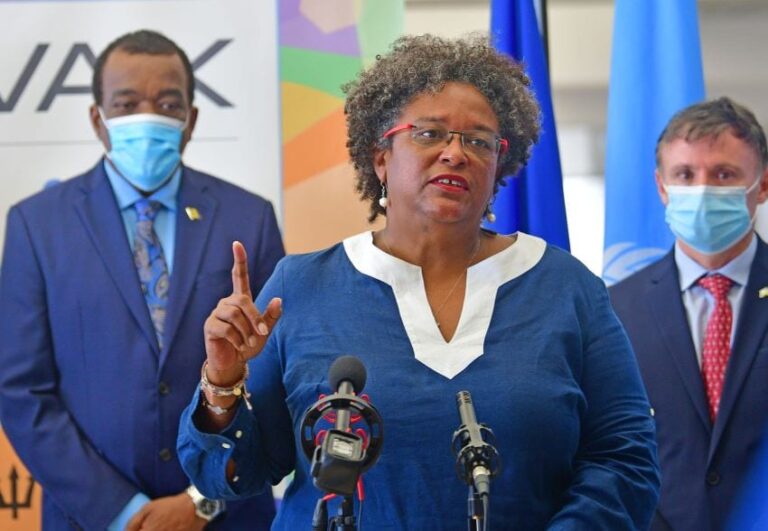
Prime Minister Mia Mottley addressing a press conference hosted by the WHO. Looking on are Minister of Health and Wellness, Lieutenant Colonel Jeffrey Bostic (left) and UN Resident Coordinator to Barbados and the Eastern Caribbean, Didier Trebucq (right).
Prime Minister Mia Mottley says much thought has gone into the decision to transition Barbados to a parliamentaryrepublic, even as Opposition Leader Bishop Joseph Atherley, raised concerns over the legality of the government’s intended move, despite declaring full support for the impending status.
Parliament voted by a 25-0 margin to amend the Constitution (Amendment) Bill to bring the Republic into force by November 30.
Prime Minister Mottley told legislators that her administration was not rushing into republicanism and that talks regarding the transition began more than two decades ago.
“There can be no rush, therefore, about this Act. This Act has taken long in coming and if we go back, we agreed that there are aspects that are certainly worthy of consultation and that is the majority of the work that relates to the Constitution, we get that and we are committed to that.”
She described it as a “simple but functional bill” the constitutional amendment would revoke the Barbados Order of 1966 as an Order in Council of Her Majesty while keeping complete the Barbados Constitution.
The amendment makes provision for a Barbadian to be a Head of State, change the oath of allegiance from that to Her Majesty to now the state of Barbados and to ensure continuity in all of the other aspects of the functioning of the state of Barbados through offices, appointments and commissions.
“This has been a conversation that has been taking place since December 1998. The fact that I was part of the cabinet that agreed to the establishment of this Commission explains why I have so much grey hair now because it has been a long journey. It has been a long journey.
“Indeed one of my greatest regrets is that while there are a few who are still with us the majority of persons who served on this Commission and, in fact the Cox Commission, before have gone to the Great Beyond.”
The government said that the change would bring to an end a British head of state of Barbados ever since English settlers landed here in 1625 and claimed the island for King James I and Prime Minister Mottley maintained that the time had come for the transition as Barbados needed to be in complete control of all of its affairs.
She dismissed any notion that Barbados would change its name.
“This bill does nothing else but seek to make a Bajan the head of state of Barbados and is as simple as that because that is the lacuna that will take us from one point to another. By also revoking the Order in Council we make the clear statement that we want to be in control of our affairs as a Republic,” she explained.
She told legislators that together with Atherley they will make a joint nomination for the election of a president of Barbados and a date will then be set for that election and that she expects the process to take place this month.
Barbadians will also be notified as to when the new head of state would be sworn in.
But in his contribution, Atherley raised concerns over the legality of government’s intended move to republican status, despite declaring full support for the move
The Opposition Leader citing unnamed members of the legal profession, said the manner in which government was proceeding to move Barbados from a realm to a republic with a Barbadian Head of State could be unlawful.
Atherley said he was not attacking the government but merely wanted the transition to republican status to be done the right way.
Atherley also opposed the timing to become a republic describing it as “the wrong moment” as Barbados continued to battle the coronavirus (COVID-19) pandemic, questioning whether government had an alternative agenda in ensuring the transition was done speedily.
“Beyond the constitutional and legal arguments, it is a bad moment with COVID. It is not the right moment. We do not know what next year will bring, we may still be faced down with COVID. I would prefer to believe that by the middle of next year this thing would be gone.”
He also said the November 30 date for the transition was inappropriate as it could diminish the work of Errol Barrow, the Father of Independence.
He suggested that July 26, 2022, coinciding with the Day of National Significance that memorialises the 1937 Disturbances, would be most appropriate.
There are no coastal watches or warnings in effect for Tropical Storm Victor which has formed over the eastern tropical Atlantic.
The US National Hurricane Center (NHC) says at 8 pm CVT (2100 UTC), the centre of Tropical Storm Victor was located near latitude 8.3 North, longitude 25.5 West.
Victor is moving toward the west-northwest near 13 miles per hour (20 km/h) and this motion is expected to continue during the next couple of days, followed by a turn to the northwest. Maximum sustained winds have increased to near 40 miles per hour (65 km/h) with higher gusts. Steady strengthening is forecast, and Victor is expected to become a hurricane in a day or two.
Tropical-storm-force winds extend outward up to 60 miles (95 km) north of the centre.
Meanwhile, at 5 pm AST, the centre of Hurricane Sam was located over the Atlantic Ocean about 385 miles (620 km) east-northeast of the northern Leeward Islands.
Hurricane Sam ( Source: NHC)
Sam is moving toward the northwest near 9 miles per hour (15 km/h), and this general motion with an increase in forward speed is expected during the next couple of days.
A turn toward the north is forecast by Friday. On the forecast track, Sam will continue to pass well to the east-northeast of the northern Leeward Islands through tonight.
Maximum sustained winds are near 130 miles per hour (215 km/h) with higher gusts – a category 4 hurricane on the Saffir-Simpson Hurricane Wind Scale.
Hurricane-force winds extend outward up to 40 miles (65 km) from the centre and tropical-storm-force winds extend outward up to 140 miles (220 km).
Some fluctuations in intensity are expected during the next couple of days, but Sam is forecast to remain a major hurricane through late this week.
Swells generated by Sam will impact the Lesser Antilles during the next several days. Swells are expected to reach Bermuda and the Bahamas in a day or so, and then spread to the United States east coast by this weekend.
These swells could cause life-threatening surf and rip current conditions.
The crew members of a Bolivian cargo vessel who were left stranded in Trinidad since March after being abandoned by their employer, have successfully petitioned a High Court Judge to sell the vessel to cover their outstanding salaries, living expenses, and repatriations.
High Court Judge Frank Seepersad ordered the sale yesterday as he upheld the lawsuit brought by the nine crew members of the “BTMAX 1” vessel, which still remains anchored off the Port-of-Spain harbour outside of Queen’s Wharf.
In an affidavit, attached to the lawsuit, deckhand Trevor Bishop, from the British Virgin Islands, claimed that in 2019 he entered into an agreement with two financiers for them to purchase and operate the vessel, which is registered in the Port of La Paz in Bolivia.
Bishop claimed that he was given a minority shareholding in the company, Inter Caribbean Shipping Limited, and agreed to work on-board the vessel for a salary until the venture became profitable and he could receive a share of the profits.
He claimed that while he and the other crew members from Honduras, St Vincent, Guyana, Grenada, and T&T, performed their duties, they were not paid for several months and were not provided with provisions or subsistence as required under their contracts.
In October, last year, the vessel’s former captain Dalton Young, of Honduras, fell ill and had to seek medical attention at the Port-of-Spain General Hospital.
Young was eventually repatriated to his country, where he died.
Last month, Bishop and the remaining crew members filed a lawsuit for a warrant of arrest for the vessel, which was granted by High Court Judge Ricky Rahim.
The crew members then sought to have the vessel sold to clear the company’s US$190,507.16 debt to them. The lawsuit was not defended by the owners of the vessel and Justice Seepersad eventually granted a default judgement, yesterday.
Under the terms of the judgement, the vessel is to be sold at auction based on a reserve price set by a local marine engineer.
The proceeds of the sale would be used to pay the nine workers including Young and to cover the ongoing costs associated with maintaining and preserving the arrest of the vessel.
In issuing the judgement, Seepersad commended the crew members’ legal team, who assisted with their plight, and criticised their former employer.
“A no-tolerance approach to wrongdoing and dishonesty in its many manifestations has to be adopted. These crew members were placed in an untenable and unfortunate situation and the callous and inhumane way they were treated must be condemned,” Seepersad said.
The crew members were represented by Nyree Alfonso and Asif Hosein-Shah.
CARACAS, Sept 29 (Reuters) – Around three-fourths of Venezuelans now live in extreme poverty as the once-prosperous OPEC nation’s hyperinflationary economic collapse continued for a seventh straight year, according to a study published on Wednesday.
The 2020-2021 National Survey of Living Conditions (ENCOVI), conducted by researchers at Andres Bello Catholic University (UCAB), found that of the country’s 28 million residents, 76.6% live in extreme poverty, up from 67.7% last year.
The report attributed the rise to both the COVID-19 pandemic and chronic fuel shortages, which at least 20% of respondents said meant they could not put gasoline in their cars, a major obstacle to employment.
The ENCOVI study was created in 2014 to make up for the absence of official data, according to Pedro Luis Espana, a UCAB sociologist who contributed to the study.
Espana said that beyond the loss of purchasing power, the lack of employment has led to boredom, adding that Venezuela’s public sector pays poorly, as the country’s minimum wage hovers around $3 a month, and the country’s private sector is small.
“It is the absence of opportunities,” Espana said. “It is sitting in front of the door of the house, doing nothing, not because you do not want to do anything, but because there is nowhere to do it.”
Venezuela’s information ministry did not immediately respond to a request for comment on the findings. President Nicolas Maduro’s government frequently blames U.S. sanctions for the country’s woes, but critics attribute the country’s crisis to his government’s economic mismanagement.
When measured solely by income levels, 94.5% of the population lives in poverty, a figure unmatched elsewhere in the region, the ENCOVI survey found.
The survey was conducted through questionnaires distributed to 14,000 households in 21 of the 23 states of the country between February and April.
Reporting by Vivian Sequera; Writing by Sarah Kinosian
TIJUANA, Mexico, Sept 30 (Reuters) – While thousands of Haitians were detained, deported or expelled from a camp on Mexico’s frontier with Texas last week, many others traveled west to the border city of Tijuana, hoping to avoid a crackdown aimed at stemming the rising tide of migrants.
Evading detection, paying thousands of dollars, and shunning popular routes, those coming to Tijuana have drawn on the help of fellow Haitians who reached the doorstep of the United States five years ago during another spike in migration.
Contact with established Haitians in the city, including those in local business, has smoothed the pathway north, according to more than two dozen travelers who spoke to Reuters.
Since July, that network has also helped some Haitians to cross into the United States, they said.
“Thank God, we made it,” said Alexandre Guerby, a 26-year-old recently arrived in Tijuana with his wife after a month-long journey from Chile, where the couple had been living for the past four years with their Chilean-born daughter.
“I feel much safer now,” added Guerby, who acknowledged the help of other Haitians in reaching Tijuana.
Mexico last week worked with the United States to clear an impromptu camp of several thousand Haitians that sprang up between Ciudad Acuna, Mexico and Del Rio, Texas. Many had come from Chile or Brazil to reach the United States.
Guerby’s family is among hundreds who have been trickling into the city opposite San Diego this month, according to new arrivals and operators of migrant shelters.
His journey mirrors that of predecessors who first fled a major 2010 earthquake in Haiti and chronic poverty for South America. Many then moved north en masse for the United States in 2016 as the Brazilian economy deteriorated.
A number of Haitians came with children born in Chile, voicing the belief that would make it easier for them to get into the United States. Chilean citizens can enter the United States for up to 90 days with a visa waiver.
Settling in various parts of Tijuana, some Haitians work in restaurants and factories, while others have businesses ranging from cell phone shops to car washes, gardening, plumbing and interior decoration, local advertising and residents say.
Most are wary of going public about their achievements lest it cause them problems with migration authorities or attract the attention of organized crime.
Diverson Pierre, an industrial painter, said he had arrived in Tijuana in 2017 intending to go to the United States.
“But once I saw that people treated us well here, I decided to stay,” he said. “My aim was to find work, and I found it.”
Reuters spoke to more than 20 Haitians and Mexicans in Tijuana who said they were advising new Haitian arrivals where to stay, or had offered them rooms to rent themselves.
“They have extraordinary communication with each other. They all pull in the same direction,” said Jose Garcia, director of the city’s Juventud 2000 shelter. “They have phones in their hand all the time and always know how things are on the border.”
Wilner Metelus, a Haitian who heads advocacy group the Citizens Committee in Defense of Naturalized Persons and Afro-Mexicans, said previous arrivals had shown the latest influx of Haitians how to avoid official raids and make progress.
New arrival Guerby also wants to reach the United States, but plans first to work in Mexico to replenish his exhausted savings, having spent thousands of dollars getting north.
‘EXPENSIVE’
Fearful of being deported home, or sent back to southern Mexico, or even to Guatemala, Haitian migrants said they traveled in small groups to avoid detection.
Sometimes that even meant getting into private cars or taxis so they could dodge authorities by avoiding the main roads.
“Everything on the way was much more expensive because we did not have papers,” said Astride Petit, a 25-year-old Haitian.
Migrants sometimes had to pay up to 500 pesos ($25) for stretches that would usually cost 80-100 pesos, Petit noted. Still, the additional cost made for safer travel, he said.
Other Haitians were able to travel through Mexico like regular tourists, despite lacking the requisite papers. A number showed Reuters early morning bus tickets they had bought to get north from the eastern town of Poza Rica.
In contrast to the arrival of Haitians to Tijuana in 2016, many arrived with the aid of “coyotes” or guides, who took them straight to boarding houses and apartments, making them less conspicuous, the heads of five migrant shelters told Reuters.
That has also made it harder to estimate how many Haitians are in Tijuana, local officials say.
The biggest Mexican city on the U.S. border, Tijuana has long been a major thoroughfare for migrant traffic, and there is strong sympathy for the Haitian migrants in some quarters.
“In Tijuana, our experience has been they’re very hard working. They should be given a chance,” said Ruben Iturriaga, a local hairdresser who said he had many Haitian clients.
“We Mexicans are also immigrants: we go to the United States and that’s why we shouldn’t close the door on them.”
Footage broadcast on television and social media showed Mexican officials at times using heavy-handed methods to beat back migrants, prompting sharp protests from rights groups and even criticism from President Andres Manuel Lopez Obrador.
Baja California, the state where Tijuana lies, has traditionally been one of the fastest-growing in Mexico, and local labor minister Luis Algorri said the Haitians are welcome.
“We’re open to the migrants getting jobs quickly,” he said. “We have 25,000 posts to be filled on the coastal region.”
Reporting by Lizbeth Diaz Editing by Dave Graham and Alistair Bell
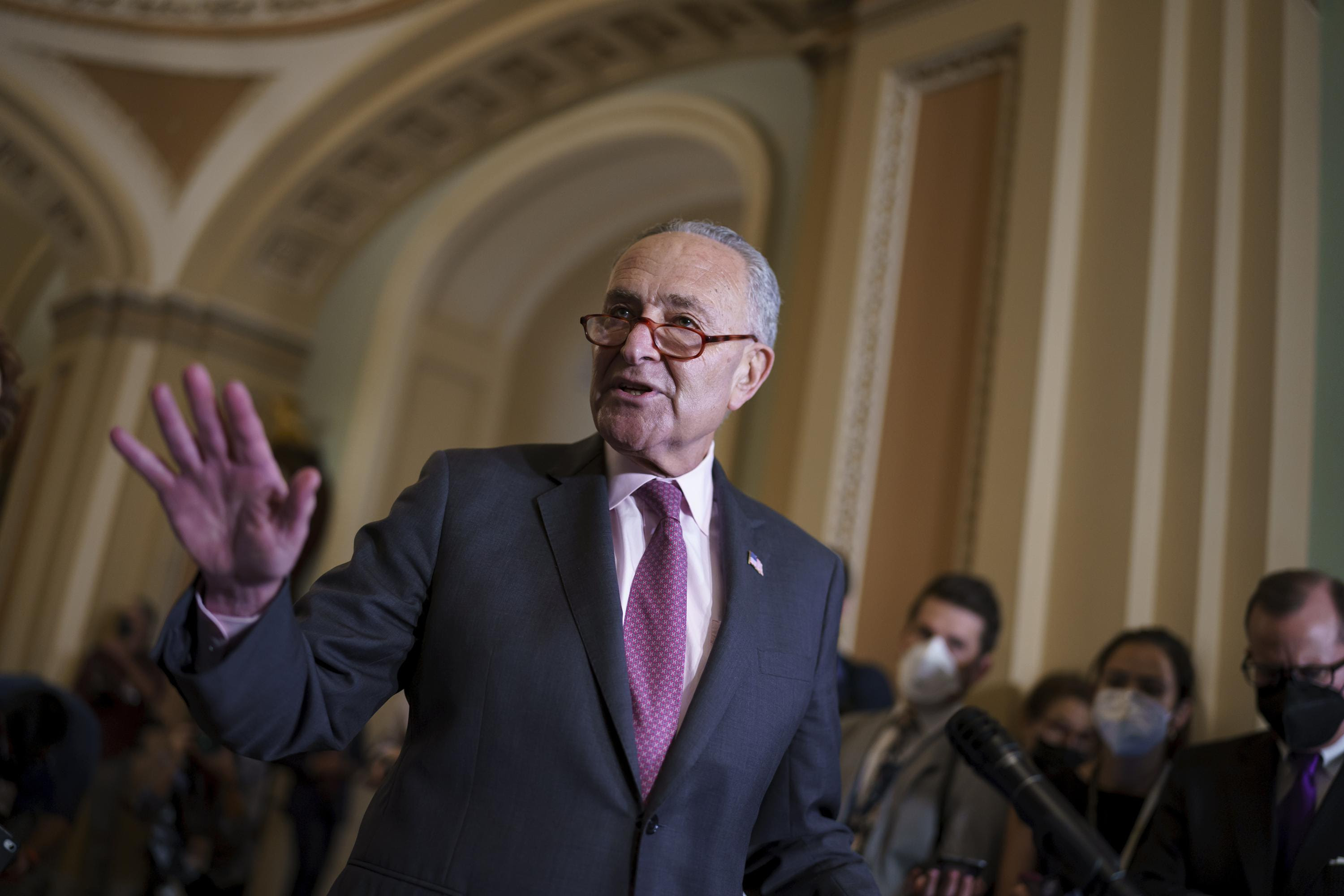
WASHINGTON (AP) — Congress is moving to avert one crisis while putting off another with the Senate poised to approve legislation that would fund the federal government into early…Read More
Determined to keep track of their guns, some U.S. military units have turned to a technology that could let enemies detect troops on the battlefield, The Associated Press has fou…Read More
QUITO, Ecuador (AP) — Ecuador’s president has declared a state of emergency in the prison system following a battle among gang members in a coastal lockup that killed at least 11…Read More
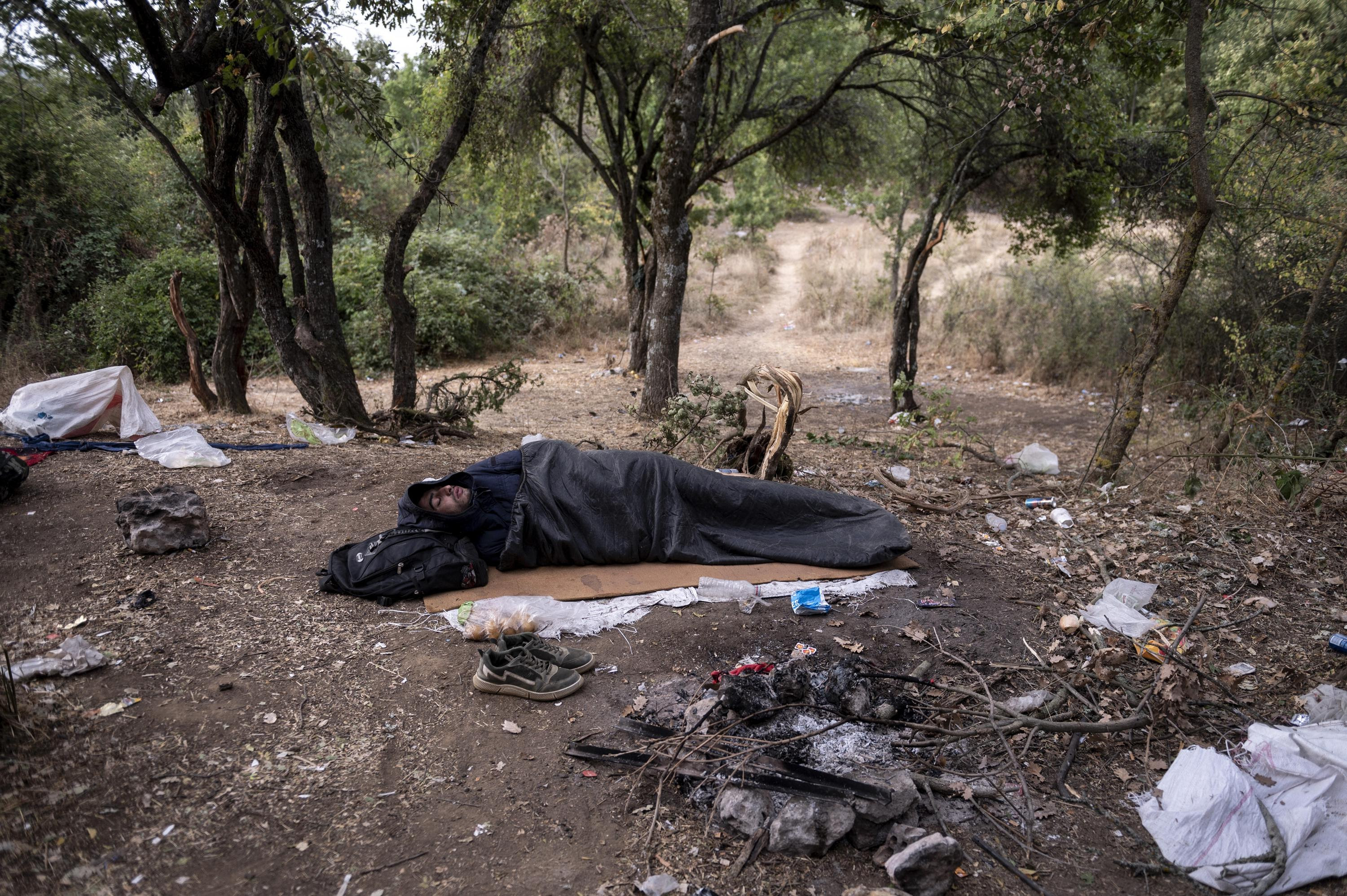
IEROPIGI, Greece (AP) — In the early 1990s, tens of thousands of impoverished Albanian migrants slogged through the oak woods near the village of Ieropigi, dodging Greek border p…Read More
WASHINGTON (AP) — In their fight over trillions of dollars, their paramount policy goals and perhaps their political fate, this isn’t helping: Democratic progressives and centris…Read More
NEW YORK (AP) — Ferocious tantrums. Family gossip. Petty nicknames. Stephanie Grisham, once a White House press secretary and chief of staff to first lady Melania Trump, is…Read More
SINGAPORE (AP) — Living through the coronavirus pandemic in Singapore, Joys Tan followed the rules that helped the city-state keep its cases low: keeping her distance from …Read More
LOS ANGELES (AP) — Britney Spears has successfully ousted her father from the conservatorship that controls her life and money, and she is likely to be freed to make her …Read More
COPENHAGEN, Denmark (AP) — A Danish artist who was was given a pile of money by a museum with which to create a piece of artwork, submitted two empty canvases — titled “Tak…Read More
A pack of Hydroxychloroquine Sulfate medication is held in London, United Kingdom. John Phillips/Getty
COVID-19 infections have soared in red states, where many governors have fought mask mandates and anti-vaccine sentiment runs high. The latest political battle is being fought over medicines used to treat the thousands of patients who are crowding emergency rooms and intensive care units.
Florida Governor Ron DeSantis attributes a 60-percent reduction in COVID-19 hospital admissions to the success of monoclonal antibodies, an antiviral treatment for people who are considered high risk for severe illness. People have been flocking to the treatment since states expanded access and significant increases in orders were seen in Alabama, Mississippi, Georgia and other states with low vaccination rates—only seven states account for 70 percent of orders. To stave off a potential shortage, the Department of Health and Human Services (HHS) put a temporary limit on the amount providers could order.
That prompted DeSantis to rip into President Joe Biden for restricting his state’s access to the drugs. The White House says it is merely concerned with distributing the drugs equitably among the states that need them. Biden accused DeSantis of “playing politics” with public safety.
Vaccines remain the best option, by far, to prevent COVID-19. But it’s too late for the vaccine-hesitant now swarming hospitals. For them, antiviral drugs are their best bet to stop COVID-19 in its tracks, particularly among those patients with severe symptoms.
Although millions of Americans are reluctant to get their COVID-19 jabs, they’re apparently eager to try drugs for treatment—even dubious ones like hydroxychloroquine, the malaria drug promoted by President Donald Trump, and unproven drugs like ivermectin, a miracle drug for treating parasites in people and animals but not cleared as a treatment for COVID-19.
Ivermectin has nevertheless proven so popular that veterinarians have had trouble getting hold of the medication for treating horses.The craze started when ivermectin was shown to inhibit the ability of SARS-CoV-2, the virus that causes COVID-19, to reproduce. But the effect was observed in human cells cultured in petri dishes and in concentrations high enough to damage the human body.
Results from clinical trials have shown mixed results and many have been plagued by poor quality data. Since many of the studies were performed outside the U.S. with no oversight by the Food and Drug Administration, “we actually have no way of confirming whether the results reported in those trials are real or not,” said Dr. John Farley, director of the FDA‘s office of infectious diseases in the Center for Drug Evaluation and Research’s Office of New Drugs, in an interview with the American Medical Association.
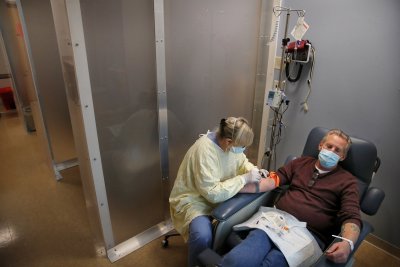
Registered nurse Janet Gilleran prepares to treat coronavirus patient Mike Mokler with Bamlanivimab, a monoclonal antibody, in the Respiratory Infection Clinic at Tufts Medical Center in Boston, MA on December 31, 2020. Craig F. Walker/The Boston Globe/Getty
Doctors have some bona fide treatment options for COVID-19 patients, but they’re limited in duration and effectiveness, and they’re expensive and time consuming to administer. Scientists are developing new therapeutics that have great promise—notably an antiviral pill—but they will not be ready in time to help the patients already crowding into hospitals in West Virginia, Alabama, Tennessee and other states with where relatively few people have received vaccinations.
“I think that is important because I’ve had a lot of patients who think there are a lot of drugs and that message may make people be a little risky,” says Dr. Adarsh Bhimraj, a physician at the Cleveland Clinic’s infectious disease department. “Our treatments are not that great.”
The stalwart drug in fighting the worst effects of COVID-19 is dexamethasone, the steroid that Trump took when he was airlifted to Walter Reed National Military Medical Center in October 2020. It is the most important tool doctors have for the severely ill and the only treatment that has been shown to decrease mortality. But dexamethasone is only useful for patients who already have so much trouble breathing that they require supplemental oxygen, at which point the risk of dying of COVID-19 is higher than for those admitted to the hospital with normal blood oxygen levels.
open pack of Remdesivir pillsAlex Sava/GettyNurses Assistant Vanessa Gutierrez, left, and Jamie McDonough, RN, talk to a COVID-19 patient in the COVID ICU at St. Joseph Hospital in Orange, CA on Wednesday, July 21, 2021. Paul Bersebach/Getty
The next most important tool is Remdesivir, the only FDA-approved antiviral for treating COVID-19. It has shown some benefit in slightly reducing the average hospital stay, but it is ineffective if administered too late and can only be given for five or 10 days, depending on the treatment cycle. By then, a person’s viral load has significantly waned, rendering Remdesivir ineffective. After that, doctors are left managing the ramifications of COVID-19, usually with dexamethasone and oxygen.
“After those 10-days, even if the patient is still gravely ill, it is no longer the virus causing that illness, it’s the inability of the patient’s inflammation to turn off,” says Dr. Panagis Galiatsatos, a pulmonary physician and professor at Johns Hopkins. “The match has been put out, but the resulting fires continue.”
Doctors are also turning to monoclonal antibody treatments, which studies have shown to be 70 percent effective at reducing hospitalizations. The antibodies act in the same fashion as those the human body naturally produces after an infection or inoculation, offering protection against the virus. Regeneron’s treatment has become popular in Florida and other states. Although it’s only approved for use in patients who are considered “high risk,” that includes more than 179 million Americans.
Monoclonal antibodies, which were never intended to be used in lieu of a vaccine, have helped reduce the strain on hospitals. But they are time-consuming and expensive to administer. They are given intravenously (or as multiple shots if an intravenous infusion isn’t possible), which requires a health care professional to administer and can take several hours. The treatment is also 52 times more expensive than the FDA-approved Pfizer vaccine and does nothing to reduce the spread of the virus.
Current antiviral and monoclonal antibody treatments have failed to break the logjam of patients overwhelming many ERs and ICUs, where a typical COVID-19 stay can stretch for weeks.
The Holy Grail of COVID-19 antivirals would be a daily pill that could be prescribed on an outpatient basis and administered in the early stages of the disease. Three major companies—Pfizer, Merck and Roche—are conducting clinical trials for oral medications that prevent serious illness by blocking the virus from replicating.
“When we get into crisis mode as hospitals, our ability to care for patients will impact outcomes regardless of what drugs we have,” says Dr. Bhimraj. “That is why I like the idea of a pill you could take early at home so people don’t progress to the point they need hospitalization. That’s a promising area.”
The trouble with an antiviral pill is that they are still in clinical trials and likely won’t be rolled out for many months. The U.S. has agreed to spend $1.2 billion for enough of Merck’s twice-daily pill to treat 1.7 million people, provided it receives clearance from the FDA. But that clearance could take months and come too late to help stem the current wave of cases.
Still, oral antivirals could come in handy in the ongoing battle against COVID-19, which looks like it will rage well into 2022 and perhaps 2023. Researchers are conducting clinical trials to determine if oral antivirals can be used to prevent someone from contracting COVID-19 after being exposed. A prophylactic pill would provide people with immediate protection, which would be important for helping people who can’t get inoculated for medical reasons or don’t develop the necessary antibodies to fight COVID-19 after being vaccinated.
Unlike vaccines, pills are easy to store, transport and administer. They would also be the first treatments that don’t require a health care provider to administer. “Oral antivirals could be a real game changer in terms of how we treat and manage COVID in an outpatient setting,” says Dr. Andrew Bradley, head of the Mayo Clinic’s Coronavirus Task Force. “Hopefully that too would help offset the burden of the need to take care of people in hospital beds.”
Of course, even an antiviral pill is not likely to be as effective in protecting against COVID-19 as the vaccines we already have on hand
================================================
Fake News of New COVID Miracle Drug Causing Major Problems
The Hill
An avalanche of misinformation about the antiparasitic drug ivermectin’s ability to treat COVID-19 has caused a series of national problems, from increased calls to poisoning centers to a shortage of the medicine itself.
Patients have become desperate for a treatment that’s most commonly used for livestock and have taken their disputes over ivermectin with hospitals to court.
Disinformation has flooded the internet, where dozens of Facebook groups centered around ivermectin remain active despite insufficient evidence that the medicine works in treating people for COVID-19.
It’s also gone well beyond the internet to popular podcast hosts like Joe Rogan, who has touted the medicine to his millions of listeners.
The Food and Drug Administration (FDA), other state health departments and even Merck, the drug’s main manufacturer, have all warned against using ivermectin for COVID-19.
Still, online influences supporting the controversial COVID-19 treatment endure.
It’s all raising questions about whether the government needs to do more to step in.
“The promise that there are miracle solutions to an illness is really persuasive,” Jennifer Reich, a professor of sociology at the University of Colorado Denver. “And the idea that individuals can manage their own health, if they read a lot, gather information and make their own decisions is really powerful.”
Media Matters for America found 60 public and private Facebook groups dedicated to ivermectin last month, before the social media giant removed 25 of them after the liberal watchdog’s report. But the other groups still involve more than 70,000 combined users.
Media Matters released a report on Tuesday concluding that Facebook users are getting around the platform’s moderation strategies by posting links and screenshots of misinformation in the comments of posts and by purposely misspelling keywords such as ivermectin and vaccines.
“Unfortunately, due to Facebook’s lax moderation of the content on its platform, these evasion techniques are working, and misinformation is thriving on the social media site,” the report reads.
Kayla Gogarty, the associate research director for Media Matters, criticized Facebook for not adequately responding to such misinformation in groups.
“The fact that Facebook has not taken much action against these groups is definitely problematic,” she said.
A Facebook spokesperson told The Hill that the company has removed 20 million pieces of content from Facebook and Instagram for violating COVID-19 misinformation policies.
“As we enforce our policies against COVID misinformation, we know people will keep trying new tactics to get around our policies and we are constantly evolving to stay ahead of them,” the spokesperson said.
“We will continue to enforce against any account or group that violates our COVID-19 and vaccine policies,” the statement continued.
A spokesperson also told The New York Times that the platform removes “content that attempts to buy, sell or donate for ivermectin” and any claims that the drug is “a guaranteed cure or guaranteed prevention.”
Ivermectin is not the first drug to gain traction online as a possible COVID-19 treatment despite lacking evidence. Several experts compared the dewormer’s popularity to that of antimalarial hydroxychloroquine that former President Trump promoted last year.
Yunkang Yang, a postdoctoral research scientist at the Institute for Data, Democracy and Politics at George Washington University, said that influential figures, including Republican politicians, have contributed to the discourse of ivermectin as a “miracle cure.”
For instance, Rogan declared to his millions of listeners that he was taking ivermectin following his COVID-19 diagnosis.
“It would be hard to imagine this information gaining any traction without [their] participation,” he said.
Misinformation surrounding ivermectin specifically is also not new, as the drug was proposed as a possible treatment earlier in the pandemic, including in some studies retracted due to flawed or fabricated data.
But ivermectin-related calls to poison control centers this year have more than tripled compared to the same period last year, with 1,440 calls through Sept. 20, according to the American Association of Poison Control Centers.
July, in particular, saw a five-fold increase in ivermectin calls compared to the “pre-pandemic baseline,” according to the Centers for Disease Control and Prevention. Some cases have been fatal, with New Mexico reporting this week two deaths from misusing ivermectin as a COVID-19 medication.
The spikes in ivermectin misuse sparked the FDA to issue an advisory against using the drug for the virus earlier this month.
“You are not a horse. You are not a cow. Seriously, y’all. Stop it,” the agency said on Twitter.
While the FDA has approved ivermectin to treat parasitic worms, lice and skin conditions like rosacea among humans, the drug is more often used to treat animals, including cattle and horses.
In addition to taking unprescribed ivermectin, several cases have emerged where people have been using these animal products.
“The issue happens when you have inappropriate use where you have a non-human product, for example, that is meant for cattle that has a different formulation composition,” said Ziad Kazzi, a professor of medical toxicology at Emory University.
“The strength of the formulation is different than what you would use in a human,” said Kazzi, who is also the secretary treasurer of the American College of Medical Toxicology.
A Los Angeles judge has suspended Britney Spears’ father from the conservatorship that has controlled her life for 13 years, marking a major victory for the singer, who has long objected to the arrangement that has stripped her of independence.
At a court hearing on Wednesday, Judge Brenda Penny ordered Jamie Spears suspended as conservator effective immediately.
Britney Spears: team says father crossed ‘unfathomable lines’ on surveillance
“The current situation is untenable,” Penny said after hearing contentious arguments from both sides. “It reflects a toxic environment which requires the suspension of James Spears.”
She scheduled a hearing for 12 November to discuss the complete termination of the conservatorship, which it appears all parties now support.
Mathew Rosengart, Britney Spears’ attorney, had pushed for her father to be removed immediately before any other actions were taken, saying it was necessary for the singer’s wellbeing. Spears was not present at Wednesday’s hearing.
“The conservatorship can and should be wound up and terminated promptly – ideally this fall … Britney Spears deserves to have her father out of her life as a conservator, today,” Rosengart said.
The decision comes three months after the pop star first publicly pleaded for her father to be removed, alleging that he had been abusive and saying: “He loved the control to hurt his own daughter.”
Jamie Spears has aggressively fought efforts to be removed and recently requested that the conservatorship be terminated entirely – a move that Britney Spears’ lawyer said was an effort “to avoid accountability and justice”.
Vivian Thoreen, Jamie’s attorney, strongly objected to his suspension during Wednesday’s contentious hearing, in which she cast doubts on Spears’ emotional testimony to a court in June, saying: “She wasn’t cross examined. Nobody knows the veracity of those statements.” Thoreen argued that the conservatorship should be entirely terminated immediately so that the issue of suspension would be “moot”. The judge sided with the singer’s attorney.
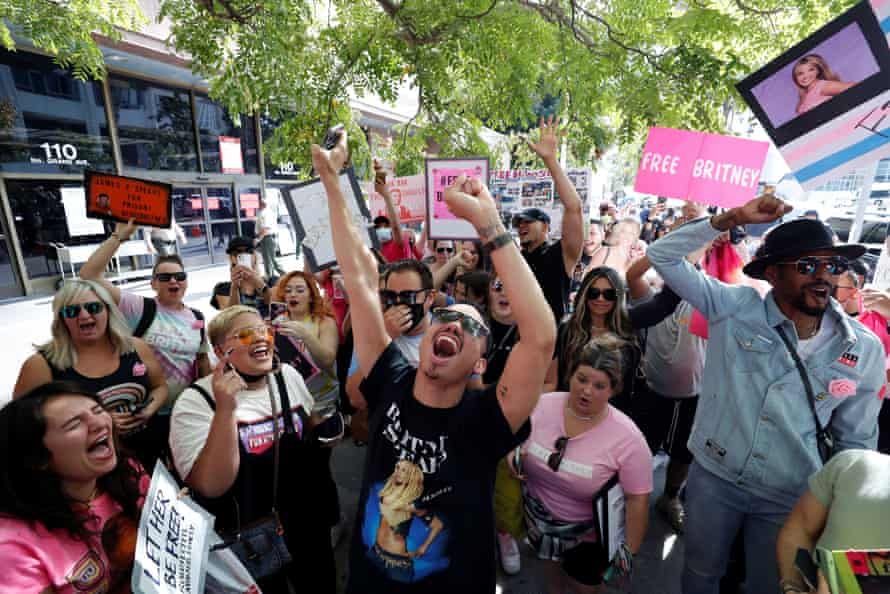
Supporters of Britney Spears celebrate after a judge suspended her father from the conservatorship. Photograph: Mario Anzuoni/Reuters
The case has sparked international outrage, and state and federal lawmakers are considering major reforms to the conservatorship system. A large, fan-led #FreeBritney movement first drew public attention to the arrangement and has recently held huge rallies in support of the pop star.
Fans traveled from across the country to support Spears in LA on Wednesday, with protesters shutting down the street outside the courthouse for their rally. Supporters marched and shouted: “Hey, hey, ho, ho, the conservatorship has got to go!” and “Britney’s body, Britney’s choice!”
“Today could be life-changing for Britney,” said Martino Odeh, 27, before the hearing. “Britney means the world to us, and I know if we can help her get out of this fraudulent, tragic conservatorship, it would mean the world to her.”
Mona Montgomery, a 79-year-old retired lawyer who arrived hours before the hearing was due to start, said she was glad the public was finally learning about conservatorship abuse: “This information has been kept secret for so many decades.”
Spears has strongly objected to the conservatorship for years, records have revealed, but she spoke publicly for the first time in court in June. She called the arrangement “abusive” and alleged that her father and others controlled intimate details of her personal life, including her birth control, and had forced her to work against her will.
A recent New York Times documentary also alleged that Jamie Spears had hired a security firm that was secretly surveilling his daughter’s phone, recording her conversations in her bedroom and monitoring fans who protested to end the conservatorship.
Conservatorship is a type of court-appointed guardianship intended for people who can no longer make decisions for themselves, typically older and infirm people. But critics have argued that the process can be exploited and have pointed to Spears’ case as an example of such abuse.
Spears was placed in the arrangement in 2008 while facing apparent mental health struggles amid intense paparazzi abuse and media scrutiny. The arrangement gave her father control over her finances and healthcare, even though reporting has suggested he was largely absent from her life before the conservatorship.
At the Wednesday hearing, Rosengart said Jamie’s removal was the first step toward ending a “Kafka-esque nightmare” for his client, adding that she “has been abused by this man not only for the past decade, but since her childhood”.
Jamie stepped down as Spears’ personal conservator in 2019, but has continued to control her estate and finances. And his daughter alleged that he has continued to tightly control her life.
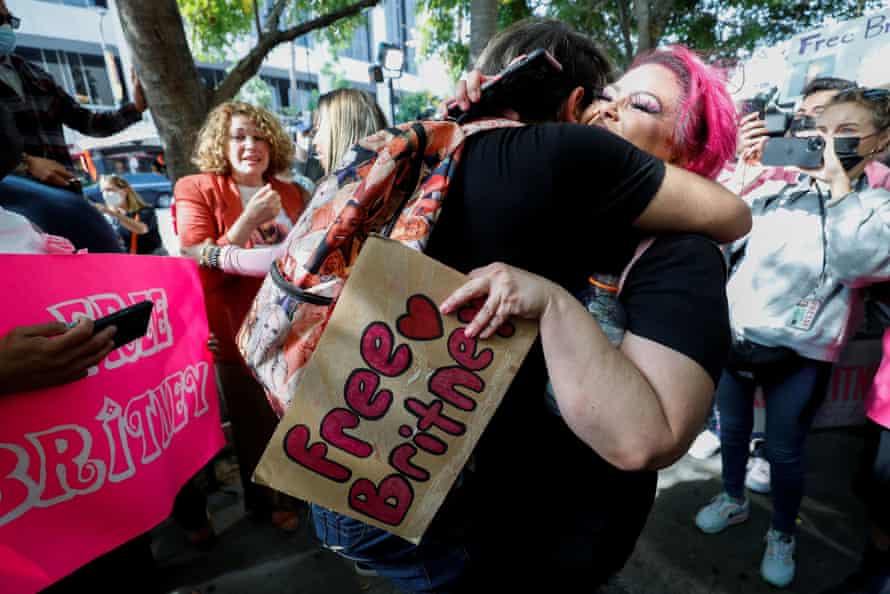
Supporters of pop star Britney Spears hug after they hear the results of Wednesday’s hearing. Photograph: Mario Anzuoni/Reuters
Jodi Montgomery, a licensed conservator, now oversees Spears’ healthcare, and she has also signaled her support for ending the conservatorship.
A certified public accountant will now take over as temporary conservator of the estate, according to Penny.
Rosengart said Thoreen, Jamie Spears’ lawyer, was fighting his suspension because Jamie did not want to have to hand over documents or face a deposition under oath: “What he’s afraid of is the revelation of his corruption.” He said that Jamie had “reaped millions of dollars” from her estate, paying himself more per month than his daughter was given as an allowance.
Rosengart also addressed the surveillance allegations from the documentary: “Mr Spears and his representatives did something unfathomable, unfathomable – they eavesdropped on some of the most intimate communications of my client.” He noted that the security team allegedly spied on conversations with her children, boyfriend and previous lawyer. He said that law enforcement would determine whether any criminal conduct occurred.
Black Box, the security firm hired by her father, has responded that its operations are ethical and legal.
Thoreen did not directly deny the allegations of surveillance and bugging Spears’ bedroom but rejected the “rhetoric” of the “television show”. Thoreen suggested she may seek to challenge the judge’s ruling to suspend Jamie, though the judge later said it was not an “appealable” order.
After the three-hour hearing, Rosengart emerged from court to a large crowd of supporters celebrating the ruling.
“This means the world to everyone here,” said Alex Lebron, 30. “This means Britney can be free to be who she wants to be, whether that’s singing or not.”
Nelson Saavedra, 27, who flew in from Boston and arrived at the courthouse at 7.30am so he could get a seat in the room, choked up as he reflected on Jamie’s suspension: “This is something that I’ve been looking toward since 2008, since I was 14 years old … This is the start of justice being served for this situation that should have never happened.”
If the judge approves full termination in November, he added, “She will finally have full freedom and autonomy. I want her to do whatever she wants to do now.”
Another #FreeBritney supporter, Santiago Escartin, 32, said the fight wasn’t over yet but that fans were feeling hopeful: “There are many questions to still be answered, but it definitely looks like brighter days ahead for Britney.”
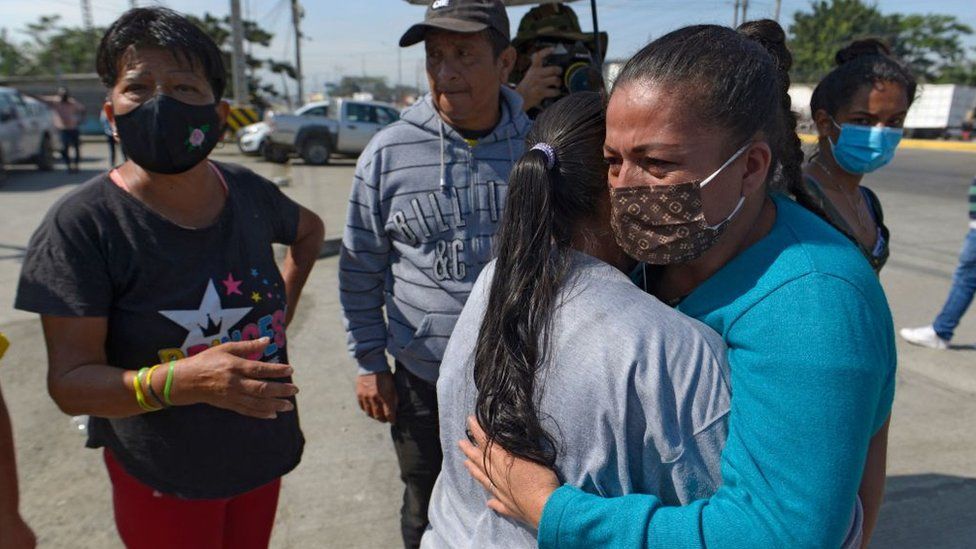
At least 116 people are now known to have died in a fight between rival gangs in Ecuador’s jail, officials say, making it the worst prison violence in the country’s history.
At least five inmates were decapitated in Tuesday’s clashes in the city of Guayaquil, while others were shot dead.
The Litoral Penitentiary houses inmates from Ecuadorean gangs thought to have links to Mexican drugs cartels.
It is considered one of the most dangerous prisons in the country.
Police commander Fausto Buenaño says the prisoners also threw grenades. It took 400 police officers to regain control.
Local media report that the uprising was ordered by powerful Mexican drug trafficking gangs that are now operating in Ecuador.
Ecuador’s prisons service director Bolivar Garzón told local radio the situation was “terrible”.
“Yesterday, police took control at 14:00 [local time], but last night there were other shootings, other things, explosions and today in the morning we took total control. We are entering the pavilions where there was conflict and discovering more bodies,” he said.
It is the latest in a series of deadly incidents involving rival gang members fighting for control of prisons. In February, 79 prisoners were killed in simultaneous fights.
Mr Buenaño said that inmates from one wing of the prison had crawled through a hole to gain access to a different wing, where they attacked rival gang members.
More than 80 inmates were injured.
Police managed to reach six cooks who had been trapped in the wing where the fight unfolded and get them to safety.
President Guillermo Lasso has declared a state of emergency in the prison system.
Relatives have gathered outside the prison seeking information about their loved ones
The Litoral Penitentiary holds inmates from Los Choneros, an Ecuadorean gang which is thought to have links with Mexico’s powerful Sinaloa drugs cartel.
But another Mexican criminal group, the Jalisco New Generation cartel (CJNG), is also trying to forge alliances with Ecuadorean gangs to seize control of drug smuggling routes leading from Ecuador to Central America from its Sinaloa rivals.
In July, President Lasso said that Ecuador’s prison system was 30% over capacity.
He announced plans to expedite the process of releasing those inmates who had served most of their time or had committed minor crimes in order to ease the overcrowding.


 *****@
 *****@
 *****@
 *****@
 *****@
 *****@
 *****@
 *****@
 *****@
 *****@
 *****@
 *****@