YouTube announced Wednesday that it will ban several prominent accounts that spread false information about vaccines, a move that is part of an expansion of its medical misinformation policies.
Under the new policies, the Google-owned site will remove any videos claiming that approved vaccines are dangerous or cause chronic health side effects.
That means videos implying vaccines cause autism, cancer or infertility will now be taken down.
Videos about vaccine policies, like ones arguing against mandates, will not run afoul of the new guidelines.
As part of the policy launch, several high-profile accounts are being pulled down.
The accounts of Robert F. Kennedy’s Children’s Health Defense Fund, alternative medicine influencer Joseph Mercola and vaccine critic and physician Sherri Tenpenny will all be removed.
These individuals have been identified by experts as partially responsible for the vaccine skepticism that has slowed efforts to inoculate Americans against COVID-19.
YouTube did not act on these well-known accounts sooner, according to Vice President of Global Trust and Safety Matt Halprin, because the platform was focused specifically coronavirus vaccine misinformation.
“As we saw false claims about the coronavirus vaccines spill over into misinformation about vaccines in general, we worked to expand what we’d started with COVID-19 to other vaccines,” he said in a statement.
YouTube, like Facebook and Twitter, banned coronavirus misinformation near the beginning of the pandemic.
Despite those rules, falsehoods about the threat of the virus and vaccines have still flourished online.
NIA CHARLESTOWN NEVIS — Ms. Christiana Smith, a 64-year-old grandmother of Fountain Village was one of the 11 persons honoured in Nevis in celebration of the 38th Anniversary of the Independence of St. Christopher and Nevis. She has etched her name in the annals of the island’s history books for her contribution to Community Service for which she is honoured.
During an awards ceremony at Government House on September 20, 2021, where she was presented with a plaque by Her Honour Mrs. Hyleeta Liburd, Deputy Governor General in Nevis, it was said that soon after Ms. Smith’s return to Nevis 57 years ago, having lived in St. Kitts from the age of seven, she observed with concern the regular occurrence of many boys loitering and engaging in reckless behaviour in the Fountain community with no apparent supervision.
It was as a result of her observation that she was moved to take action to create a club through which she could divert the boys’ attention and remove them off the streets. Following a meeting with parents and guardians to enlighten them on her observations, concerns and plan to tackle the issue, she won support from them to allow the boys to join the club.
Hence the Nuff Tings Boys’ Club (NTBC) was founded in Fountain Village in September 2015 with the motto “I can do all things through Christ who strengthens me.” The club was subsequently registered with the Department of Community Development in the Nevis Island Administration.
The club commenced with 32 boys from four to 18 years old. At that time Ms. Smith was assisted by Mr. Jason Seabrookes, Mr. Lynell Nolan, Mr. Ronald Powell and Mrs. Elvena Webbe. Today, however, she is assisted by Nurse Beverly Jones.
The club members are engaged in a number of activities and personal development sessions: Sports, including cricket, football, swimming, bicycle riding and bicycle mechanics; culinary arts; Bible Study; gardening; ethics; communication; learning to play musical instruments; visitation to shut-ins; concerts and movies; participating in clean-up campaigns; supporting various church activities; camping; homework assistance; basic life skills including household chores, etiquette, personal hygiene; and dress including learning to tie a tie, appropriate mode of dress and personal grooming.
Ms. Smith believes that the club’s name is a direct reflection of the many activities in which the members are engaged. However, in light of COVID-19 and its associated protocols the club has been forced to significantly scale back its activities until permission is granted to do otherwise.
On a parcel of land which she owns at Spring Hill in Fountain Village, she was also able to finance the construction of a club house, and with assistance from the GEF Small Grants Programme (SGP) of the United Nations Development Programme (UNDP) in St. Kitts, a gazebo was constructed.
She says she has been able to continue her community service because of God and her relationship with Him. Ms. Smith thanks God first and foremost and every person and organisation who has made the club a reality and success, especially her family whom she has often times neglected in the process.
BASSETERRE, ST. KITTS, September 29, 2021 (MMS-SKN) — In an exciting and hotly contested game, defending champion team in the longest running domino league in the Federation scrapped through with a narrow win over a former champion team on the opening night of the 26th edition of Constituency Number Seven Dr the Hon Timothy Harris Domino League on Tuesday evening September 28.
Prime Minister Harris watches as Clifford Richard of Mansion Domino Club makes a move in their game with Christ Church Domino Club at the Edgar Gilbert Sporting Complex pavilion in Molineux on the opening night.
Defending champion team, Tabernacle Domino Club, captained by Kerone Roache faced former champion team, Lodge Domino Club, at the Tabernacle Community Centre in what turned out to be a game that could have gone either way, but at the end of the encounter Tabernacle edged out Lodge 13-12.
Fourteen teams are taking part in this year’s league which will only be a one-round affair as a lot of time would have been lost due to the prevailing Covid-19 pandemic. Games are being played at four venues in the constituency.
Sponsor of the league, Prime Minister Dr the Hon Timothy Harris who is also the Area Parliamentary Representative, visited two of the venues, the old Lodge Community Centre in Lodge Project and the Edgar Gilbert Sporting Complex pavilion in Molineux, where he not only encouraged the players but also took part in an exhibition game.
At the old Lodge Community Centre in Lodge Project, Prime Minister Harris presented a set of non-contact thermometers to President of the league’s Executive Committee and League Co-ordinator Calvin Farrell. The thermometers came in handy as the tournament is being held under very strict Covid-19 protocols which require temperatures of all the players to be taken and recorded.
While there, Dr Harris teamed up with a player from Saddlers Domino Club and played an exhibition game against two players from Phillips Domino Club including their captain, Allington Berridge.
That exhibition game might have spurred up players on the Saddlers team as at the end of the evening they upset the hot favourite Phillips by handing them a 13-7 beating. Phillips Domino Club who had finished in fourth position last year were expected to run over their counterparts from Constituency Number Six.
In the second game at the old Lodge Community Centre, which was also witnessed by Prime Minister Harris, Sylvers Domino Club captained by Octavia Huggins-Sewell beat Guinness Domino Club 13-8.
Next door neighbouring venue, Cuban Bar, saw action where another former league champion team Unity Domino Club stopped Unstoppable Domino Club with a sound 13-6 beating.
At the Edgar Gilbert Sporting Complex pavilion in Molineux, where two games were supposed to take place, Mansion Domino Club beat Christ Church Domino Club 14-8. However, the second game between Molineux Domino Club and Otlley’s Domino Club did not take place as one of the teams did not have a full complement of players.
The Executive Committee will be meeting shortly to discuss the fate of that game with the possibility of the two teams being given a second chance to play their first game.
The second game of the evening at the Tabernacle Community Centre saw yet another former champion team, Parsons Domino Club – the only team from outside Constituency Number Seven to have been crowned champion – beat Small Corner Bar Domino Club 13-6.
Second segment of play in this only one round of play in the 26th edition of Constituency Number Seven Dr the Hon Timothy Harris Domino League will be on Thursday September 30 at the same four venues with all games starting at 7:00 p.m.
Tabernacle Community Centre will host the games between Tabernacle and Sylvers, and Saddlers and Molineux. The Edgar Gilbert Sporting Complex pavilion in Molineux will host games between Guinness and Ottley’s and Mansion and Phillips.
The old Lodge Community Centre in Lodge Project will be the venue for the Lodge vs. Small Corner Bar, and Unstoppable vs. Christ Church games. The final game, between two former champions Unity and Parsons, will be held at Cuban Bar in Lodge ProjectBASSETERRE, ST. KITTS, September 29, 2021 (MMS-SKN) — In an exciting and hotly contested game, defending champion team in the longest running domino league in the Federation scrapped through with a narrow win over a former champion team on the opening night of the 26th edition of Constituency Number Seven Dr the Hon Timothy Harris Domino League on Tuesday evening September 28.
Defending champion team, Tabernacle Domino Club, captained by Kerone Roache faced former champion team, Lodge Domino Club, at the Tabernacle Community Centre in what turned out to be a game that could have gone either way, but at the end of the encounter Tabernacle edged out Lodge 13-12.
Fourteen teams are taking part in this year’s league which will only be a one-round affair as a lot of time would have been lost due to the prevailing Covid-19 pandemic. Games are being played at four venues in the constituency.
Sponsor of the league, Prime Minister Dr the Hon Timothy Harris who is also the Area Parliamentary Representative, visited two of the venues, the old Lodge Community Centre in Lodge Project and the Edgar Gilbert Sporting Complex pavilion in Molineux, where he not only encouraged the players but also took part in an exhibition game.
At the old Lodge Community Centre in Lodge Project, Prime Minister Harris presented a set of non-contact thermometers to President of the league’s Executive Committee and League Co-ordinator Calvin Farrell. The thermometers came in handy as the tournament is being held under very strict Covid-19 protocols which require temperatures of all the players to be taken and recorded.
While there, Dr Harris teamed up with a player from Saddlers Domino Club and played an exhibition game against two players from Phillips Domino Club including their captain, Allington Berridge.
That exhibition game might have spurred up players on the Saddlers team as at the end of the evening they upset the hot favourite Phillips by handing them a 13-7 beating. Phillips Domino Club who had finished in fourth position last year were expected to run over their counterparts from Constituency Number Six.
In the second game at the old Lodge Community Centre, which was also witnessed by Prime Minister Harris, Sylvers Domino Club captained by Octavia Huggins-Sewell beat Guinness Domino Club 13-8.
Next door neighbouring venue, Cuban Bar, saw action where another former league champion team Unity Domino Club stopped Unstoppable Domino Club with a sound 13-6 beating.
Captain of the defending champion team Tabernacle Domino Club, Kerone Roache, seen in action in their game against former champion team Lodge Domino Club at the Tabernacle Community Centre.
At the Edgar Gilbert Sporting Complex pavilion in Molineux, where two games were supposed to take place, Mansion Domino Club beat Christ Church Domino Club 14-8. However, the second game between Molineux Domino Club and Otlley’s Domino Club did not take place as one of the teams did not have a full complement of players.
The Executive Committee will be meeting shortly to discuss the fate of that game with the possibility of the two teams being given a second chance to play their first game.
The second game of the evening at the Tabernacle Community Centre saw yet another former champion team, Parsons Domino Club – the only team from outside Constituency Number Seven to have been crowned champion – beat Small Corner Bar Domino Club 13-6.
Second segment of play in this only one round of play in the 26th edition of Constituency Number Seven Dr the Hon Timothy Harris Domino League will be on Thursday September 30 at the same four venues with all games starting at 7:00 p.m.
Tabernacle Community Centre will host the games between Tabernacle and Sylvers, and Saddlers and Molineux. The Edgar Gilbert Sporting Complex pavilion in Molineux will host games between Guinness and Ottley’s and Mansion and Phillips.
The old Lodge Community Centre in Lodge Project will be the venue for the Lodge vs. Small Corner Bar, and Unstoppable vs. Christ Church games. The final game, between two former champions Unity and Parsons, will be held at Cuban Bar in Lodge Project.
Sponsor of the league, Prime Minister Harris, paired up with a Saddlers Domino Club player for an exhibition game with two Phillips Domino Club players at the old Lodge Community Centre in Lodge Project.
The St. Kitts-Nevis government says it has spent in excess of EC$18 million in implementing measures aimed at curbing the spread of the COVID-19 pandemic which has killed 12 people and infected 1, 891 in the Federation since March last year.
Prime Minister Dr Timothy Harris told a news conference that his administration has borne a significantly high cost to contain the spread of the virus here and prevent the Federation’s health system from being overwhelmed.
“The Federal government has spent EC$18.4 million since March 2020 to procure equipment, additional manpower, including the cost of Cuban and Filipino medical brigades, other physicians and specialist support, pharmaceuticals, particularly vaccines.”
Harris said that the funds were also spent to procure vehicles, retrofit wards and health centres, to rent quarantine facilities and to provide testing support.
Prime Minister Harris, who is also the Minister of Health, said funds were also spent to ensure early child care facilities and schools were fit for purpose.
“We have spent EC$1.3 million to enhance our national security system, recruiting quarantine officers etc. for the islands of Nevis and St. Kitts. Additionally, the Federal government spent EC$2.7million to retrofit and upgrade the R.L.B International Airport to protect all employees, visitors and indeed all who use the facility.”
He said that an additional five million dollars will be spent by the end of the year, bringing the total cost of COVID-19 related expenditure to more than EC$23 million.
But Harris told reporters that nationals needed to get vaccinated against the virus since it provides the safest way out from the pandemic.
“The right choice is for all to get vaccinated but more so for parents, adults, teachers, and all who work in our schools, health facilities, and our security forces to get vaccinated without further delay. It is the responsible thing to do,” said Prime Minister Harris.
Nurse Manners honored for dedicated 39-year contribution to Health in Nevis
NIA CHARLESTOWN NEVIS– Retired Registered Nurse Mrs. Ernette Claudia Manners of Brick Kiln Village in Nevis was honored on the occasion of the 38th Anniversary of the Independence of St. Christopher and Nevis for her contribution to the development of healthcare in the federation.
To mark the occasion, Nurse Manners was presented with a plaque by Her Honour Mrs. Hyleeta Liburd, Deputy Governor General on of Nevis at an awards ceremony at Government House on September 20, 2021
Nurse Manners is regarded as a registered nurse par excellence who after dedicating 39 years to the Nursing profession retired in 2016.
Over the years Nurse Manners received a number of awards from the Ministry of Health for outstanding service, including attaining the Nurse of the Year Award for 2001. Special recognition was also given to her at her local church where she continues to devotedly perform basic clinical checks on a weekly basis.
Retired Nurse Manners attributes her success to God to whom she has entrusted her life. She has no doubt that God has gifted and guided her to her lifetime calling.
A wife of 44 years and counting, her union produced two sons. However, despite her commitment to her family, she was always available to assist the ailing and hurting in the community.
Mrs. Manners remains grateful to her family including her church family, friends, the Nevis Island Administration, colleagues and others who have inspired her. She remains motivated by the words of the Apostle Paul: “Whatever you do, do it heartily as unto the Lord.
Independence Day honoree Mr. Troy McKoy with his plaque in honour of his 25-year contribution to Business on Nevis following an awards ceremony at Government House on September 20, 2021, on the occasion of the 38th Anniversary of Independence of St. Christopher and Nevis
Brown Pasture businessman Troy McKoy honoured for 25-year contribution to Business Sector on Nevis
NIA CHARLESTOWN NEVIS —Mr. Troy McKoy of Brown Pasture was awarded for his 25-year contribution to the Business Sector on Nevis, as part of the 38th Anniversary of Independence of St. Christopher and Nevis.
He was one of two persons who were awarded in the field of Business and was presented with a plaque by Her Honour Mrs. Hyleeta Liburd, Deputy Governor-General on Nevis, at an awards ceremony at Government House on September 20, 2021.
From an early age Mr. McKoy knew he wanted to become a businessman. However unknowingly his first step toward that goal presented itself when in 1989, a friend and neighbor Mr. Michael Jones of blessed memory gave him a hair clipper and asked him to cut his hair.
From working in his mother’s yard under a mango tree, he knew that for him to get the business to advance and to attract people from all walks of life, he needed a proper barbershop. The business grew to the point where he was forced to open early at mornings and close late at nights,” the profile said.
After spending almost 20 years in the small barber shop and due to the overwhelming support, Mr. McKoy saw the need to expand his business, employ an assistant, provide better accommodations, and to offer better customer experience.
He subsequently moved from his original shop in his mother’s yard to a space that was available a few metres away to erect his shop.
After 25 years in the business, Mr. McKoy has learnt that hard work, perseverance and good customer relation skills can bring success
Jamaica Tourist Board representatives have joined the world premiere for the new James Bond film, ‘No Time To Die.’ The event led a series of premieres in 57 cities across the globe.
‘No Time To Die’ will be released internationally in cinemas from September 30th through Universal Pictures International and in the United States on October 8th from Metro Goldwyn-Mayer (MGM) via their United Artist Releasing banner.
Jamaica is a key location in ‘No Time To Die’ where Bond has left active service and is enjoying a tranquil life on the island.
His peace is short-lived when his old friend, Felix Leiter, from the CIA turns up asking for help.
Jamaica is the birthplace of 007, where Ian Fleming created and wrote the Bond novels.
The island also features in the first James Bond film, ‘Dr. No” (1962), as well as in ‘Live And Let Die’ (1973).
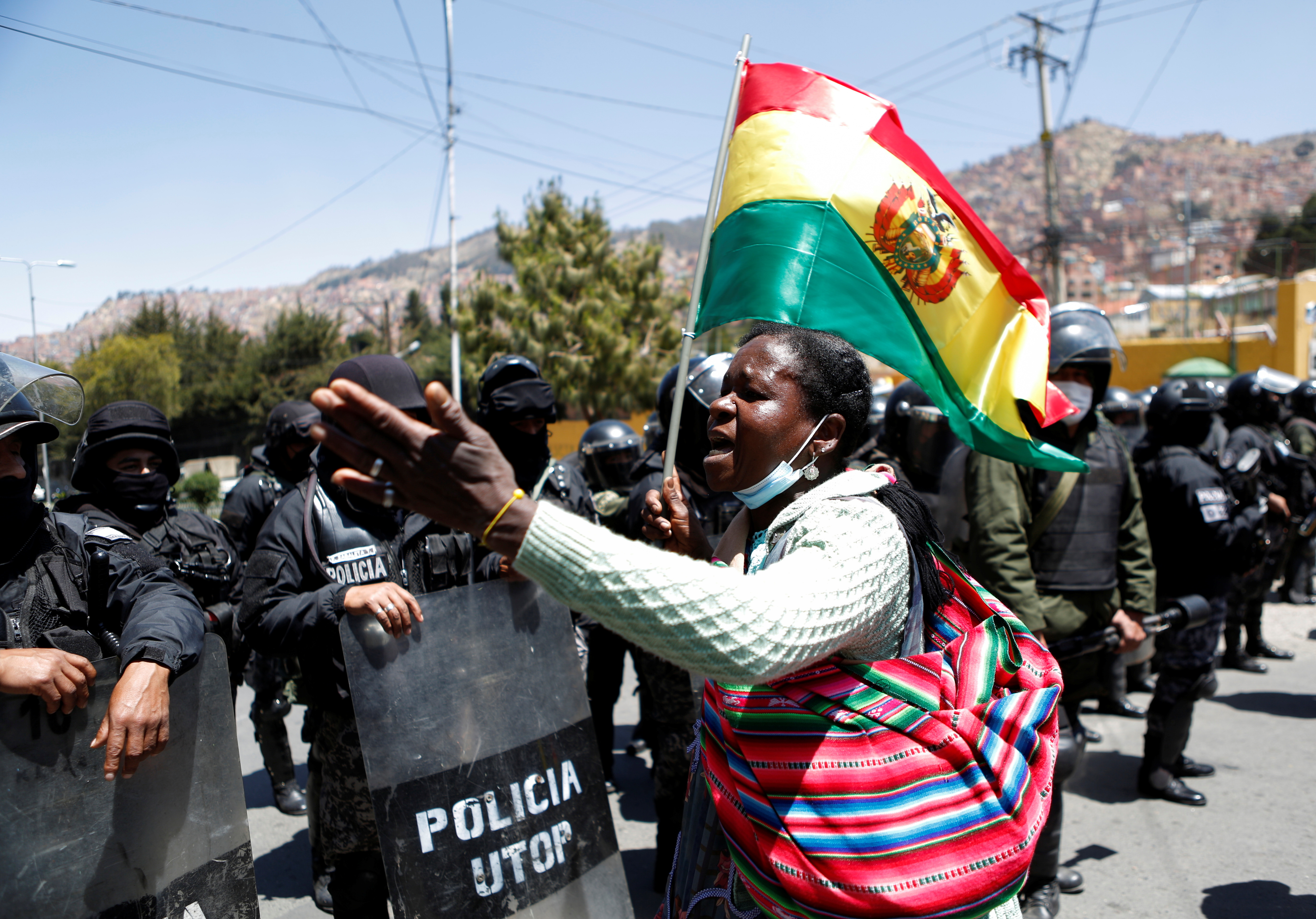
LA PAZ, Sept 28 (Reuters) – Bolivia’s coca farmers are battling for control of the leaf’s main market in the highland city of La Paz, a conflict which has seen producers and police clash in the streets with slingshots and tear gas, and even a building set on fire.
Coca growers from the nearby Yungas region are at odds over the leadership of the body that runs the huge market for coca, the raw ingredient for cocaine, but which many in the Andes chew to ward off the effects of high altitude or brew into teas.
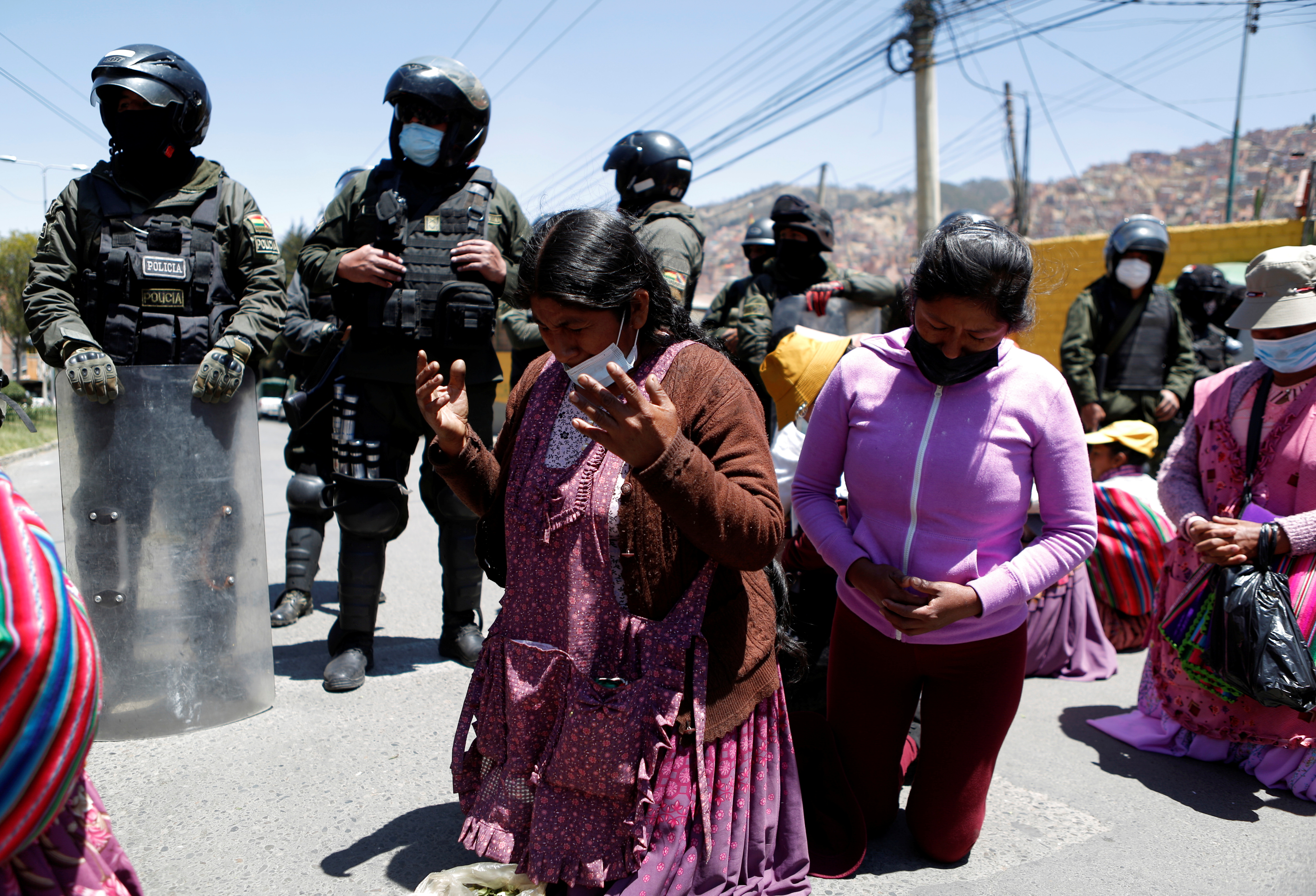
Protests on Monday led to a fire breaking out in an apartment building near where protesters and police were clashing, with both sides blaming each other. Last week, a number of police vehicles were set alight during similar process.
Two cliques have formed. One around the government-backed head of the coca management body Adepcoca, Arnold Alanes, while others have rallied behind government critic Armin Lluta who says the ruling party – and former president Evo Morales – is trying to seize greater control of the trade.
“Evo Morales… wants to form a great national confederation of coca leaf producers, he wants to be the leader of the Chapare and the Yungas,” Lluta told reporters, referring to the two main coca growing regions.
The Yungas region produces and trades some $200 million of coca a year in the local market, according to estimates by the U.N. Office on Drugs and Crime, which has said that most Bolivian coca is not traded in approved markets.
1/4
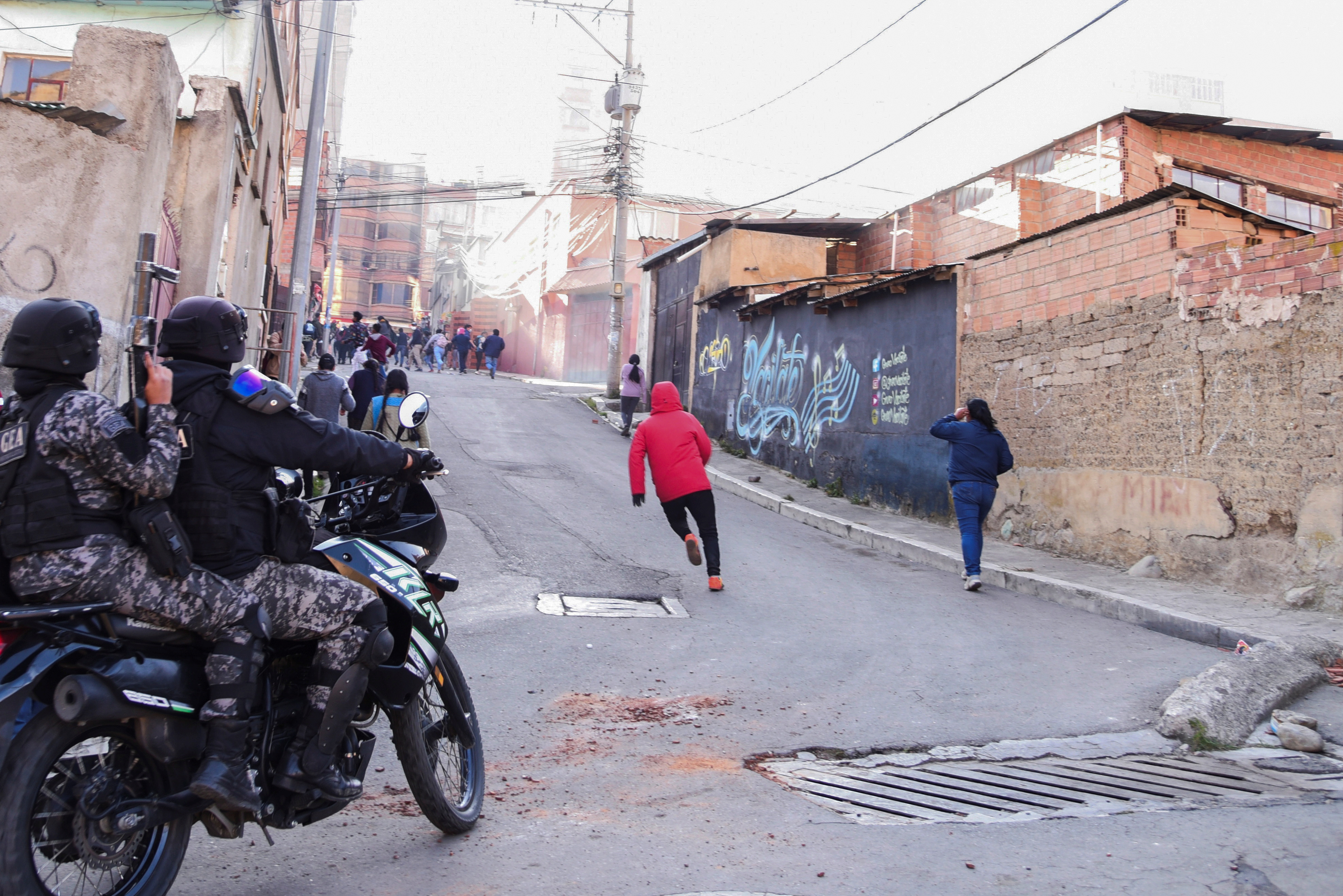
Demonstrators run from police officers during a protest by coca producers for control of the coca market, in La Paz, Bolivia September 27, 2021. REUTERS/Claudia Morales
Alanes told a group of coca growers on Tuesday that he had been elected to his position by farmers themselves and said that the criticism against him was because he was trying to stamp out corruption in the market.
“The crime of Arnold Alanes is to propose the systematization of Adepcoca’s economic income. Arnold Alanes’ crime is to prevent and eradicate corruption,” he said.
Augusta Colpa, a coca grower, said that conditions were tough for farmers which were stoking unrest.
“How much do we harvest from a coca plot? In cold weather we don’t harvest much. … It’s not enough for our family,” she said, denying police accusations farmers were throwing dynamite in the protests.
Ronald Lopez, a coca farming leader, said during protests that have hit the city over the last week that the Yungas groups hoped for dialogue with the government towards installing a new head of Adepcoca.
“We put this government in power, with our struggle and fighting,” he said. “Brothers, you can’t treat us like this.”
Reporting by Daniel Ramos and Monica Machicao in La Paz; Editing by Adam Jourdan and Alistair Bell
WASHINGTON (AP) — Pressure mounting but with signs of progress, President Joe Biden will hunker down at the White House to try to strike a deal and win over two holdout Democratic senators whose support is needed for his potentially historic $3.5…Read More
WASHINGTON (AP) — The newly installed chief of the U.S. Capitol Police says the force, still struggling six months after an insurrection that left its officers battled, bloodied and bruised, “cannot afford to be complacent.” The risk to lawmakers…Read More
SEOUL, South Korea (AP) — North Korea said Wednesday it successfully tested a new hypersonic missile it implied was being developed as nuclear capable as it continues to expand its military capabilities while pressuring Washington and Seoul over …Read More
CANBERRA, Australia (AP) — An Australian wildlife tour operator said he was lucky to escape more serious injury or even death when a crocodile lunged from a river and clamped his hand in its jaws. Sean Dearly was attacked on Monday on the Adelaid…Read More
MANILA, Philippines (AP) — Boxing legend Manny Pacquiao is officially hanging up his gloves. The eight-division world champion and Philippines senator on Wednesday announced his retirement from the ring,…Read More
TOKYO (AP) — Japan’s former Foreign Minister Fumio Kishida won the governing party leadership election on Wednesday and is set to become the next prime minister, facing…Read More
LOS LLANOS DE ARIDANE, Canary Islands (AP) — Lava from a volcano on Spain’s Canary Islands has reached the sea after 10 days of wiping out hundreds of homes and causing…Read More
BILLINGS, Mont. (AP) — Death’s come knocking a last time for the splendid ivory-billed woodpecker and 22 more birds, fish and other species: The U.S. government is decl…Read More
ABOARD GEO BARENTS (AP) — The small fiberglass boat had begun to take on water not long after the engine stopped working. Its six passengers started bailing it out, not…Read More
GUATEMALA CITY, Sept 28 (Reuters) – Residents of a Mayan community in Guatemala prevented experts on Tuesday from beginning to exhume the remains of more than 100 children believed to have been buried clandestinely in a former military garrison during the country’s civil war in the 1980s.
The search efforts in the village of Chiul, more than 120 miles (200 km) from Guatemala City, were scheduled to begin early on Tuesday morning but were suspended after residents disrupted the plans without offering an explanation for their opposition.
Arnulfo Oxlaj, one of the survivors of the massacre who was at the site on Tuesday, said that among those who opposed the exhumations were former members of the country’s armed forces, which has been accused of carrying out the massacre.
“(They are) interested in opposing justice,” he said.
Reuters could not independently confirm the allegations by Oxlaj, who had to be guarded by local authorities to avoid being attacked during the protest, according to the Public Ministry.
A Guatemalan army spokesman did not respond to a request for comment.
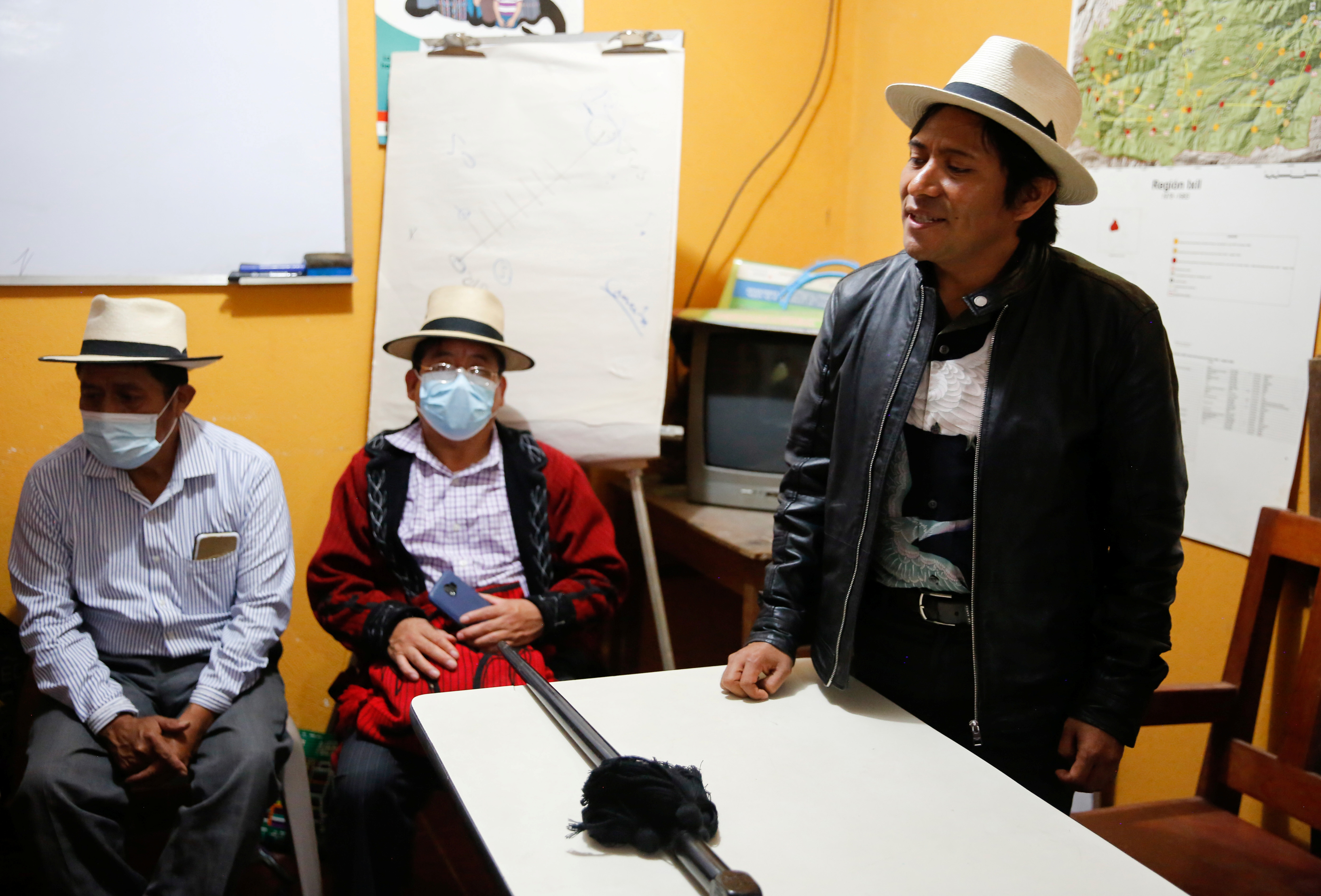
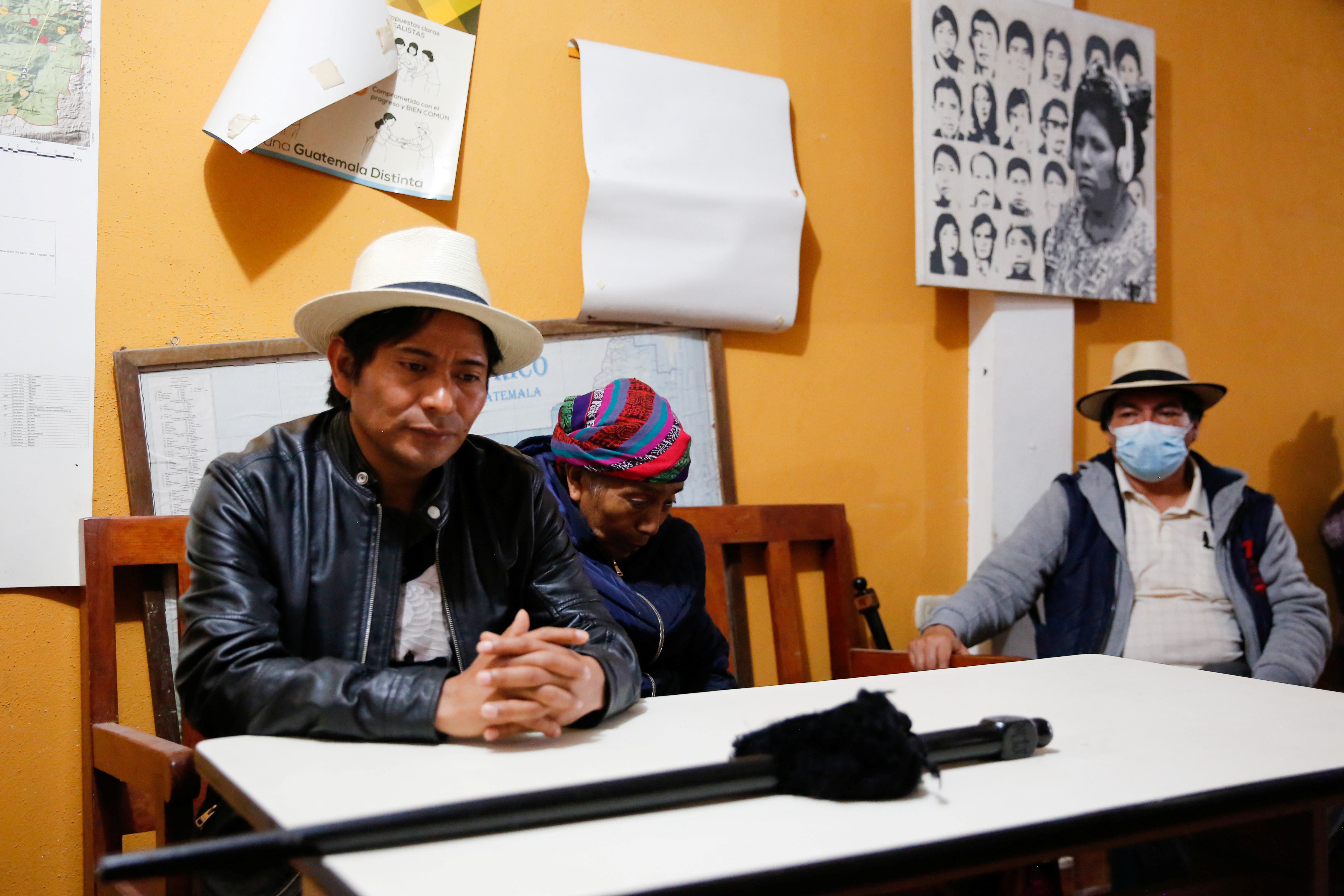
Arnulfo Oxlaj, a survivor of the massacre of children from the Chiul Indigenous community in Guatemala’s civil war, meets with Indigenous leaders after local authorities prevented an exhumation at the site where the children are believed to be buried, in Nebaj, Guatemala September 28, 2021. REUTERS/Luis Echeverria
During the dispute, community journalist Jose Guarcas was temporarily detained by the protesters, civil society organizations said.
The massacre, one of many targeting Mayan communities during the civil war, occurred on May 21, 1988, in the remote Chiul indigenous community. Witnesses say members of the armed forces captured hundreds of residents and took them to the military garrison, where they separated the children from their parents.
According to Oxlaj, 116 children between the ages of 2 and 15 were tortured and thrown into what was then a well inside the facility, where they drowned.
There is no official record of the number of victims or clarity about the motivations behind the killings. The Guatemalan military has been accused of conducting a genocide campaign against indigenous peoples during the conflict.
The Public Ministry opened an investigation into the case earlier this year, following a complaint filed by Oxlaj.
The planned excavation was coordinated by the Guatemalan Forensic Anthropology Foundation and the Human Rights Prosecutor’s Office – part of efforts to seek justice for the hundreds of thousands of victims of the armed conflict that lasted from 1960 to 1996.
Reporting by Bill Barreto; Writing by Laura Gottesdiener; Editing by Peter Cooney




 *****@
 *****@
 *****@
 *****@
 *****@
 *****@
 *****@
 *****@
 *****@
 *****@
 *****@
 *****@