Tag Archives: caribbean

Racism UK: Society of Editors in Turmoil over Statement on Meghan

Some board members ‘deeply angry’ about claim racism was not a factor in coverage of Duchess of Sussex

Guardian (UK)

The media industry body the Society of Editors was in turmoil on Tuesday night with some members of its board said to be “deeply angry” over a statement it put out claiming that racism was never a factor in coverage of the Duchess of Sussex.

More than 160 journalists of colour and the editors of the Guardian, Financial Times and HuffPost have objected to the statement, written by the SoE’s executive director, Ian Murray, which argued that Meghan’s claims that parts of the media were racist were “not acceptable”.

Following the backlash, discussions were under way over the publication of a new statement intended to address the concerns. But the Guardian understands the SoE’s board was split over the wording of that statement, with a dispute over the phrasing of a possible apology and some urgently demanding a clear change in tone.

There were calls for an emergency meeting to address the decision to release the statement, which one member said was “deeply unfortunate”.

Piers Morgan leaves Good Morning Britain after Meghan row


The SoE draws members from nearly 400 national and regional outlets and says that while its members “are as different as … the communities and audiences they serve”, they “share the values that matter”.

The board split came after 168 journalists, writers and broadcasters of colour from across the British media wrote an open letter describing the SoE’s initial statement as “laughable” proof of “an institution and an industry in denial”.

In the interview, Meghan summarised the couple’s view of much of the British media by saying: “From the beginning of our relationship, they were so attacking and incited so much racism.”

Murray said on Monday that the claims were “not acceptable” and made without “supporting evidence”, insisting that the UK media “has a proud record of calling out racism”. In a piece headlined “UK media not bigoted” he said the tone of tabloid coverage was simply driven by “holding a spotlight up to those in positions of power, celebrity or influence”.

The signatories of the open letter – including staff and contributors at the Guardian, Metro, Grazia and Channel 4 – say they “deplore and reject” the SoE’s defence, which they argued “shows a wilful ignorance [of] not just the discriminatory treatment of Meghan … but that of other people from an ethnic minority background”.

The letter concluded: “The Society of Editors should have used the comments by the Sussexes to start an open and constructive discussion about the best way to prevent racist coverage in future … The blanket refusal to accept there is any bigotry in the British press is laughable, does a disservice to journalists of colour and shows an institution and an industry in denial.”
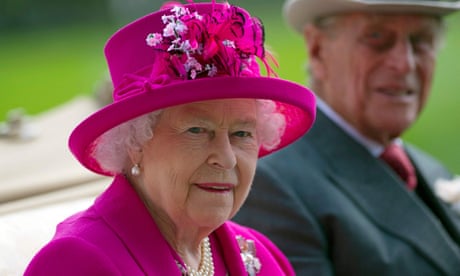
Buckingham Palace breaks silence on Meghan and Harry claims to Oprah
Read more

The row reflects a fierce debate over the extent of the media’s culpability in the issues raised by Harry and Meghan, with the Daily Mail most frequently cited. Articles raised as evidence of discriminatory treatment include those saying that Meghan is “(almost) straight outta Compton” and has “exotic” DNA.

Murray’s statement was immediately the subject of controversy on social media and in private. A tweet from Press Gazette linking to the statement was viewed more than 13m times, the trade publication said, with most of more than 3,000 replies disagreeing with the defence of the industry.

Earlier, the organisation’s board was divided on whether it was an appropriate reaction. “It’s incredibly frustrating because that is far from a universal view in the media,” one said. “It’s tone-deaf.”

The statement was not cleared with the board, although another member pointed out that statements were routinely issued without approval. “I don’t think there was anything out of turn about this,” they said.

The Guardian has requested an explanation for how the statement came to be published. Its editor-in-chief, Katharine Viner, said: “Every institution in the United Kingdom is currently examining its own position on vital issues of race and the treatment of people of colour. As I have said before, the media must do the same. It must be much more representative and more self-aware.”

Roula Khalaf, the editor of the Financial Times, also disagreed with the statement. “There is work to be done across all sectors in the UK to call out and challenge racism,” she said. “The media has a critical role to play, and editors must ensure that our newsrooms and coverage reflect the societies we live in.”

In a BBC interview on Tuesday, Murray defended the statement and reiterated that he felt negative coverage of Harry and Meghan had been balanced by earlier positive coverage. He responded to the suggestion that the “straight outta Compton” headline was an example of the problem by saying: “I’m not au fait completely with areas of … California.”

On Twitter, the HuffPost UK editor, Jess Brammar, wrote: “I’m aware I won’t make myself popular with my peers but I’m just going to stand up and say it: I don’t agree with statement from my industry body that it is ‘untrue that sections of UK press were bigoted’.” Charlie Brinkhurst-Cuff, the editor of gal-dem, said the SoE “simply deny there’s any issue”.

Others suggested that the statement suggested a failure to grapple with the underlying structural issues that some have identified as a factor in coverage that goes well beyond the royal couple. “Pains me to say that my industry has been in denial about its institutional racism for all the two decades I’ve been in it,” said Sathnam Sanghera, a columnist at the Times.

The Society of Editors did not respond to a request for comment.

The post Racism UK: Society of Editors in Turmoil over Statement on Meghan appeared first on The St Kitts Nevis Observer.
Equatorial Regions Including Caribbean May Become Too Hot to Handle

Rising heat and humidity threatening to plunge much of the world’s population into potentially lethal conditions, study finds
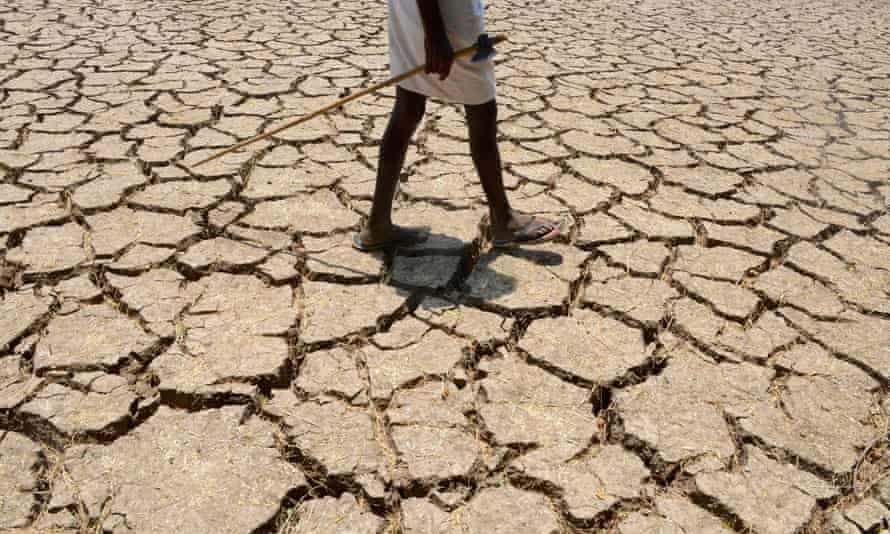
Research was centered on latitudes found between 20 degrees north, a line that cuts through Mexico, Libya and India, to 20 degrees south.
Research was centered on latitudes found between 20 degrees north, a line that cuts through Mexico, Libya and India, to 20 degrees south. Photograph: Noah Seelam/AFP/Getty Images

Guardian (UK)

The climate crisis is pushing the planet’s tropical regions towards the limits of human livability, with rising heat and humidity threatening to plunge much of the world’s population into potentially lethal conditions, new research has found.

‘It is the question of the century’: will tech solve the climate crisis – or make it worse?

Should governments fail to curb global heating to 1.5C above the pre-industrial era, areas in the tropical band that stretches either side of the equator risk changing into a new environment that will hit “the limit of human adaptation”, the study warns.

Humans’ ability to regulate their body heat is dependent upon the temperature and humidity of the surrounding air. We have a core body temperature that stays relatively stable at 37C (98.6F), while our skin is cooler to allow heat to flow away from the inner body. But should the wet-bulb temperature – a measure of air temperature and humidity – pass 35C, high skin temperature means the body is unable to cool itself, with potentially deadly consequences.

“If it is too humid our bodies can’t cool off by evaporating sweat – this is why humidity is important when we consider livability in a hot place,” said Yi Zhang, a Princeton University researcher who led the new study, published in Nature Geoscience. “High body core temperatures are dangerous or even lethal.”

The research team looked at various historical data and simulations to determine how wet-bulb temperature extremes will change as the planet continues to heat up, discovering that these extremes in the tropics increase at around the same rate as the tropical mean temperature.

This means that the world’s temperature increase will need to be limited to 1.5C to avoid risking areas of the tropics exceeding 35C in wet-bulb temperature, which is so-called because it is measured by a thermometer that has its bulb wrapped in a wet cloth, helping mimic the ability of humans to cool their skin by evaporating sweat.

Dangerous conditions in the tropics will unfold even before the 1.5C threshold, however, with the paper warning that 1C of extreme wet-bulb temperature increase “could have adverse health impact equivalent to that of several degrees of temperature increase”. The world has already warmed by around 1.1C on average due to human activity and although governments vowed in the Paris climate agreement to hold temperatures to 1.5C, scientists have warned this limit could be breached within a decade.

This has potentially dire implications for a huge swathe of humanity. Around 40% of the world’s population currently lives in tropical countries, with this proportion set to expand to half of the global population by 2050 due to the large proportion of young people in region. The Princeton research was centered on latitudes found between 20 degrees north, a line that cuts through Mexico, Libya and India, to 20 degrees south, which goes through Brazil, Madagascar and the northern reaches of Australia.

Mojtaba Sadegh, an expert in climate risks at Boise State University, said the study does “a great job” of analyzing how rising temperatures “can render portions of the tropics uninhabitable in the absence of considerable infrastructure investments.”

“If this limit is breached, infrastructure like cool-air shelters are absolutely necessary for human survival,” said Sadegh, who was not involved in the research. “Given that much of the impacted area consists of low-income countries, providing the required infrastructure will be challenging.”

“Theoretically no human can tolerate a wet bulb temperature of above 35C, no matter how much water they have to drink,” he added.

The study is just the latest scientific warning over severe dangers posed by heat. Extreme heatwaves could push parts of the Middle East beyond human endurance, scientists have found, with rising temperatures also posing enormous risks for parts of China and India.

The global number of potentially fatal humidity and heat events doubled between 1979 and 2017, research has determined, with the coming decades set to see as many as 3 billion people pushed beyond the historical range of temperature that humans have survived and prospered in over the past 6,000 years.

The post Equatorial Regions Including Caribbean May Become Too Hot to Handle appeared first on The St Kitts Nevis Observer.

Brazil’s Top Stadium to be Named After Legendary Pele

Brazil’s iconic Maracana stadium is to be named in honour of the country’s legendary footballer Pele.

The move follows a vote by the Rio de Janeiro state legislature to change the venue’s name to the Edson Arantes do Nascimento – Rei Pele stadium.

Edson Arantes do Nascimento is the 80-year-old’s full name, while Rei means king in Portuguese.

The Rio de Janeiro’s state governor must approve the name change before it becomes official.

Pele, who won three World Cups as a player for Brazil, scored his 1,000th goal at the stadium in 1969 when playing for Santos against Vasco da Gama.

The Maracana held the 1950 and 2014 World Cup finals, as well as the opening ceremony of the 2016 Olympics.

More than 200,000 spectators are reported to have been in the stadium to watch Uruguay beat Brazil in the 1950 final, although its capacity is now 78,838.

It was named after Mario Filho, a journalist who lobbied for its construction in the 1940s, but was known as the Maracana after the area in which it is located.

The post Brazil’s Top Stadium to be Named After Legendary Pele appeared first on The St Kitts Nevis Observer.

Puerto Rico’s Controversial Debt-Restructuring Plan Filed

SAN JUAN, Puerto Rico (AP) — A framework that outlines how Puerto Rico will restructure at least $35 billion in public debt and more than $50 billion in public pension liabilities threatens a 10% cut to certain public pensions if no agreement is reached with retirees.

The amended plan of adjustment of 233 pages was filed late Monday in U.S. court by a federal control board that oversees Puerto Rico’s finances and was created by Congress to lift the U.S. territory’s government out of bankruptcy.

The plan includes a proposed cut of up to 8.5% to monthly pensions of at least $1,500. That has long been a point of contention between the board and the governor, who has repeatedly said he would not approve such cuts.

Board Chairman David Skeel called the plan “a milestone for Puerto Rico’s recovery, stability, and prosperity. This plan substantially reduces the burden of debt payments on future generations, stabilizes and protects pensions that have been mismanaged for so long, and affirms the collective bargaining agreements of government workers.”

The board said that if the proposed pension cut is rejected, it would return to the original proposal of imposing a 10% cut on monthly pensions of at least $1,000.

Gov. Pedro Pierluisi issued a statement saying the plan was a great step in helping end the debt-restructuring process.

“Puerto Rico needs to leave this bankruptcy process behind in order to achieve the sustainable economic development to which we all aspire and eliminate the uncertainty inherent in this process, as well as the million-dollar restructuring expenses that the government has had to incur,” he said.

But Pierluisi noted the government will state in court that it does not wholly support the plan.

“My administration has been emphatic that this pension cut is not reasonable,” he said.

Meanwhile, Puerto Rico economist José Caraballo said the plan had positive and negative aspects and recommended that the governor negotiate with the board to protect pensions up to $2,000 and then impose a 10% cut on anything higher.

“You have to seek a little flexibility,” he said in a phone interview.

Caraballo said he supports the plan’s call to create a pension reserve trust, noting that pensions are currently paid by tax revenues. He also agrees that the amount of money bondholders would receive is to be contingent on the ups and downs of government revenue flows. However, he worries that creditors would be paid what he considers an excessive amount.

“Practically 30% of Puerto Rico’s budget will go toward paying retirees and bondholders,” he said, adding that the island’s legislature could be a game changer because it would have to approve the issuance of new bonds as outlined in the plan. “That’s where we could see a roadblock.”

Ultimately, the plan also has to be approved by a judge overseeing Puerto Rico’s bankruptcy-like process. If that occurs, the plan would reduce Puerto Rico’s outstanding debt from $35 billion to $7.4 billion, an 80% cut. Among other things, it also would cut total debt service payments by more than 60%, which the board said would save the government nearly $60 billion in debt service payments.

The board said the amended plan has “substantial” support from creditors, including from those who hold more than $13 billion worth of bonds.

“This diverse group of stakeholders agrees that it is time to move on, to heal, to build, and to grow this economy,” said Natalie Jaresko, the board’s executive director. “Bankruptcy has taken a huge toll on the people of Puerto Rico.”

The amended plan was filed nearly six years after the U.S. territory declared it was unable to pay its more than $70 billion public debt load, an amount accumulated following decades of mismanagement, corruption and excessive borrowing to balance budgets. In 2017, the island filed for the biggest U.S. municipal bankruptcy in history. That same year, Puerto Rico was hit by Hurricane Maria, a Category 4 storm that caused more than an estimated $100 billion in damage.

The post Puerto Rico’s Controversial Debt-Restructuring Plan Filed appeared first on The St Kitts Nevis Observer.

Record Number of Unaccompanied Kids At US-Mexico Border

A record 3,200 unaccompanied migrant children are being held along the US-Mexico border according to new reports; a figure said to have tripled over the past two weeks.

About 1,400 minors have been held past the legal limit of 72 hours, after which they are required to be transferred to government-sponsored shelters (see an overview of the process). Those shelters are now reaching bed limits, having already removed a 50% capacity rule designed to limit the spread of COVID-19.

The estimates come amid a broader monthslong surge of migrants—mostly single adults—along the southwest border, with encounters averaging around 74,000 per month since October (see data). It marks the highest level during the same time period in at least eight years, but is less than a 2019 summer surge that exceeded 100,000 encounters per month.

Some critics blame softer border policy by the Biden administration for the surge. Others argue the White House has largely kept the previous administration’s “Remain in Mexico” policy intact, while being more accommodating with unaccompanied children.

The post Record Number of Unaccompanied Kids At US-Mexico Border appeared first on The St Kitts Nevis Observer.

Caribbean Airlines Plans Barbados-New York Service

MIAMI – Caribbean Airlines (BW), based in Trinidad and Tobago (PSS), is starting a non-stop service from Barbados (BGI) to New York (JFK) effective April 1, 2021, pending approval from concerned authorities. The new flight has been announced by a press release published by BW.

The flight is planned to operate on Thursday departing from BGI at 12:40 and arriving at JFK at 17:30. Departure from JFK is planned at 08:50 and arrival at BGI at 13:35. All times are local.

According to the AlternativeAirlines website, BW, a public company owned by the Trinidad and Tobago government, was created in 2007. It has an extended network of over 20 destinations which include Toronto (YYZ), Fort Lauderdale (FLL), Miami (MIA), Orlando (MCO), Caracas (CCS), Havana (HAV), and New York (JFK). The destinations are those planned in a pre-Covid situation.

The carrier’s main hub is located at Piarco International Airport, (POS) and has a secondary hub in Jamaica, Norman Manley Airport (KIN). According to the above citéd source, Caribbean Airlines is the largest region’s air carrier and operates up to 600 flights per week. According to Planespotters BW has a fleet composed of 6 ATR72 and eight Boeing 737.

The post Caribbean Airlines Plans Barbados-New York Service appeared first on The St Kitts Nevis Observer.

21 Cases of Mis-C Among T&T Children

Minister of Health Terrence Deyalsingh said there were 21 confirmed cases of Multi-system Inflammatory Syndrome (Mis-C) among infants in Trinidad and none in Tobago — and all have recovered.

“I checked with doctors (yesterday morning) and there are no fatalities,” Deyalsingh added in confirming the situation yesterday.

He said initially there were 29 suspected cases – 28 in Trinidad and one in Tobago.

But the confirmed number is 21 in Trinidad and none in Tobago.

Deyalsingh was replying in the Senate to a query from Opposition Senator Wade Mark on what, if any, measures are being implemented to reduce the incidence of Mis-C among infants in Tobago.

Deyalsingh said, “TT is a one country state and this Government’s approach to the COVID pandemic and all health-related matters is and will always be a national response. As such measures to reduce the incidence of Mis-C among infants is one for Trinidad and Tobago. As of March 9, there are no confirmed cases of Mis-C among infants in Tobago.”

He said to mitigate any risk of occurrence, all public health facilities are strictly adhering to the public health regulations, protocols and guidance.

The Minister added all patients who are COVID positive in state quarantine health facilities are also being monitored to minimise the risk of exposure to infants. He said all daycare centres and schools were also closed last March as were the country’s borders.

Contacted for further comments yesterday, Senator Mark said he was informed that 28 children had been diagnosed with Multisystem Inflammatory Syndrome (MIS-C), with one in Tobago.

However, it is not known if the number includes cases dating back to December 5, 2020 – when T&T was first informed that the condition had been diagnosed in three children who had contracted the COVID-19 virus.

Efforts to seek clarification on exactly how many children have so far been diagnosed; if they have had to be hospitalized; and what their progress reports indicate proved futile as calls to Chief Medical Officer Dr Roshan Parasram went unanswered.

Referring to Deyalsingh’s disclosure yesterday, Mark said the minister claimed that 21 of the 28 are, “in the best of health.”

Pressed to say if any of the 21 are currently hospitalized, Mark said, “He did not say.”

The former House Speaker said the figures are alarming for local authorities.

MIS-C in children is a condition where different body parts can become inflamed including the heart, lungs, kidneys, brain, skin, eyes, or gastrointestinal organs.

According to the Centres for Disease Control and Prevention (CDC) “We know that many children with MIS-C had the virus that causes COVID-19 or had been around someone with COVID-19.”

One local health official believes the figures in this area may be increasing because parents are not as prudent in ensuring that children wear face masks as they should when going out and even at home, especially in a setting where someone in the house has contracted the virus.

MIS-C is said to be observed in children mainly in ages between six and 14.

Up to December 10, 2020 – T&T was reported to have recorded 20 such cases – mainly in children of African and mixed descents.

The post 21 Cases of Mis-C Among T&T Children appeared first on The St Kitts Nevis Observer.

Taiwan Donates PPEs to Allies in Africa, America

In conjunction with Taiwan’s Ministry of Foreign Affairs, Medtecs Group, a leading personal protective equipment (PPE) supplier headquartered in Taiwan, donated coveralls, isolation gowns and other COVID-19-related PPE to the Kingdom of Eswatini, the Republic of Somaliland and the Commonwealth of Saint Lucia in partnership with TSMC Charity Foundation. The donation was designed to help Taiwan Government fulfill its Taiwan Can Help pledge.

Medtecs has joined forces with the Foundation to support Taiwan Can Help diplomatic initiative in conjunction with Taiwan’s Ministry of Foreign Affairs by identifying and assisting countries that are in need of PPE.

The donation comprises 150,000 surgical masks, 7,000 coveralls, 11,000 isolation gowns, 6,000 caps, 6,000 sets of shoe covers and 1,500 CoverU Jackets (flight suits). The items will be distributed across the three countries, all of which are struggling to cope with the COVID-19 crisis. TSMC Charity Foundation had generously paid for the shipping costs of the donated goods.

Since the outbreak of COVID-19 in early 2020, Medtecs has donated a large amount of anti-epidemic supplies, including surgical masks, coveralls, isolation gowns, headcovers and shoe covers, to certain countries and regions worldwide that have been affected by the pandemic, including CambodiaFranceGermanyItalyJapanthe Philippines, Taiwan and the United States. By doing so, the company has demonstrated its commitment to deliver personal protective supplies as well as rapid-response humanitarian services based on its operating philosophy of keeping people safe and healthy.

In response to the humanitarian aid program, Medtecs, in cooperation with TSMC Charity Foundation, has donated a series of anti-epidemic supplies to front-line medical staff in the three countries through Taiwan’s embassies in Eswatini and Saint Lucia as well as the Taiwan representative office in Somaliland, in the hope of helping them fight against COVID-19 pandemic.

The post Taiwan Donates PPEs to Allies in Africa, America appeared first on The St Kitts Nevis Observer.

UK COVID-19 Variant Spreading Among Jamaican Population

The more contagious United Kingdom variant of COVID-19 called B.1.1.7 is now spreading among the Jamaican population.

This revelation was made by Minister of Health and Wellness, Dr Christopher Tufton, at a virtual press conference on Monday, March 8.

Tufton said seven of the eight samples that were sent to the Caribbean Public Health Agency (CARPHA) in Trinidad and Tobago returned positive test results.

None of the patients had a travel history to the UK. The samples were taken from the parishes of St Catherine, St James, Clarendon, Trelawny, Kingston, and St Andrew. The minister said the samples were randomly selected in January and the results were returned on March 6.

According to Tufton, there is a possibility that the presence of the variant could be contributing to the vast increase in the number of positive cases on the island

In December, the island had confirmed four cases of the UK variant but the ministry had said that those patients were isolated and did not pose a threat to any members of the public.

In the meantime, Tufton said that the Government is taking steps to establish its own testing facility for the new variants. He said the equipment required to achieve this should cost approximately J$60 million.

Laboratories in Florida are being eyed to help with additional testing for the variant, the minister said.

The post UK COVID-19 Variant Spreading Among Jamaican Population appeared first on The St Kitts Nevis Observer.

Haiti & D.R. Talk Border Security, 25 Boat People Rescued

The post Haiti & D.R. Talk Border Security, 25 Boat People Rescued appeared first on The St Kitts Nevis Observer.