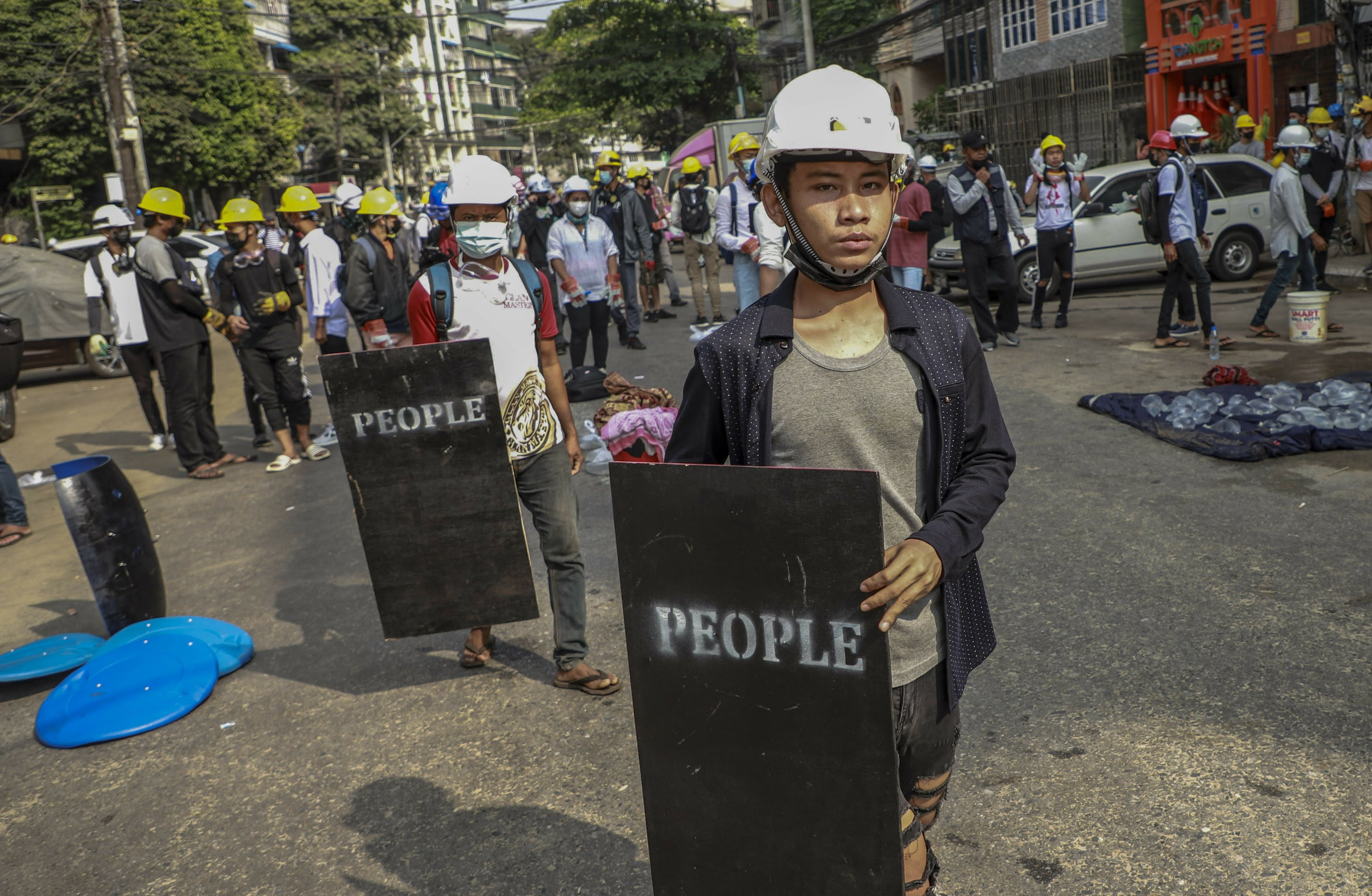
YANGON, Myanmar (AP) — Myanmar security forces were seen firing slingshots at protesters, chasing them down and even brutally beating an ambulance crew in video showing a dramatic escalation of violence against opponents of last month’s military coup.
A U.N. official speaking from Switzerland said 38 people had been killed Wednesday, a figure consistent with other reports though accounts are difficult to confirm inside the country. The increasingly deadly violence could galvanize the international community, which has responded fitfully so far.
“Today it was the bloodiest day since the coup happened on Feb. 1. We have today — only today — 38 people died. We have now more than over 50 people died since the coup started” and more have been wounded, the U.N. special envoy for Myanmar, Christine Schraner Burgener, told reporters at U.N. headquarters on Wednesday.
Demonstrators have regularly flooded the streets of cities across the country since the military seized power and ousted the elected government of leader Aung San Suu Kyi. Their numbers have remained high even as security forces have repeatedly fired tear gas, rubber bullets and live rounds to disperse the crowds, and arrested protesters en masse.
The intensifying standoff is unfortunately familiar in a country with a long history of peaceful resistance to military rule — and brutal crackdowns. The coup reversed years of slow progress toward democracy in the Southeast Asian nation after five decades of military rule.
The Democratic Voice of Burma, an independent television and online news service, also tallied 38 deaths. A toll of at least 34 was compiled by a data analyst in Yangon, Myanmar’s biggest city, who spoke on condition of anonymity because he feared for his safety. He also collected information where he could on the victims’ names, ages, hometowns, and where and how they were killed — an effort he said he had made to honor those who were killed for their heroic resistance.
The Associated Press was unable to independently confirm most of the reported deaths, but several square with online postings.
According to the data analyst’s list, most were in Yangon, where 18 died. In the central city of Monywa, which has turned out huge crowds, eight deaths were reported. Three deaths were reported in Mandalay, the country’s second-biggest city, and two in Salin, a town in Magwe region. Mawlamyine, in the country’s southeast, and Myingyan and Kalay, both in central Myanmar, each had a single death.
As part of the crackdown, security forces have also arrested hundreds of people, including journalists. On Saturday, at least eight journalists, including Thein Zaw of The Associated Press, were detained. A video showed he had moved out of the way as police charged down a street at protesters, but then was seized by police officers, who handcuffed him and held him briefly in a chokehold before marching him away.
He has been charged with violating a public safety law that could see him imprisoned for up to three years.
The escalation of the crackdown has led to increased diplomatic efforts to resolve Myanmar’s political crisis — but there appear to be few viable options. It’s not yet clear if Wednesday’s soaring death toll could change the dynamic.
The U.N. Security Council is expected to hold a closed meeting on the situation on Friday, council diplomats said, speaking on condition of anonymity because they were not authorized to make the information public before the official announcement. The United Kingdom requested the meeting, they said.
Still, any kind of coordinated action at the United Nations will be difficult since two permanent members of the Security Council, China and Russia, would almost certainly veto it. Some countries have imposed or are considering imposing their own sanctions.
The U.N. special envoy, Schraner Burgener, who supports sanctions, said she receives some 2,000 messages per day from people inside Myanmar, many “who are really desperate to see action from the international community.”
The 10-member Association of Southeast Asian Nations, which includes Myanmar, issued a statement after a teleconference meeting of foreign ministers Tuesday that merely called for an end to violence and for talks on how to reach a peaceful settlement. ASEAN has a tradition of non-interference in each other’s internal affairs.
Ignoring that appeal, Myanmar’s security forces have continued to attack peaceful protesters.
In addition to the deaths, there have been reports of other violence. In Yangon, a widely circulated video taken from a security camera showed police in the city brutally beating members of an ambulance crew — apparently after they were arrested. Police can be seen kicking the three crew members and thrashing them with rifle butts.
Security forces are believed to single out medical workers for arrest and mistreatment because members of the medical profession launched the country’s civil disobedience movement to resist the junta.
In Mandalay, riot police, backed by soldiers, broke up a rally and chased around 1,000 teachers and students from a street with tear gas as gun shots could be heard.
Video from the AP showed a squad of police firing slingshots in the apparent direction of demonstrators as they dispersed.
___
Associated Press writer Edith M. Lederer at U.N. headquarters in New York contributed to this report.
___
This story has been updated to correct that there has been a report of one death in Myingyan, not two.
Bolivia, El Salvador, Honduras, and Nicaragua are set to receive the next COVID-19 vaccine distributions to Latin America from the COVAX project, Pan American Health Organization Director Carissa Etienne said Wednesday.
Two of those countries, El Salvador and Bolivia, are part of the World Health Organization’s First Wave initiative, a global pilot program that delivers a limited number of doses of the vaccine developed by Pfizer and BioNTech to countries as part of the quota allotted by COVAX. Colombia and Peru are also participating.
“PAHO is working virtually with every country in our region to address pending documentation and requirements. As countries are ready … orders will be placed on a daily basis. These shipments are the first of many, and all member states will continue to be supplied as more vaccines become available,” Etienne said.
She said that through May, PAHO expects 28.7 million doses to arrive in the region, where 36 countries are participating in COVAX, the global equitable vaccine access platform. According to WHO, the region will need to vaccinate approximately 700 million people to control the pandemic.
After COVAX announced country allocations last week, the first doses sent to Latin America and the Caribbean arrived in Colombia on Monday. Those 117,000 doses of the Pfizer-BioNTech vaccine are just the beginning of the 20 million that Colombia anticipates receiving from COVAX this year. The country began its vaccination campaign last week with shots obtained through bilateral agreements.
Etienne said Peru should be receiving its doses shortly.
“Expanding equitable access to COVID vaccines in the Americas must … be a global priority. PAHO is committed to ensuring that our region receives the doses that we need as quickly as possible.”
— Carissa Etienne, director, Pan American Health Organization
The Americas have been hit harder by COVID-19 than any other region in the world, with 1.2 million deaths and more than 50 million confirmed cases.
In addition to Pfizer’s, shipments of the AstraZeneca vaccine will begin to arrive in Latin America and the Caribbean this month through COVAX, WHO said. The first phase of COVAX distribution in the region will provide countries with enough doses to vaccinate between 2.2% and 2.6% of their total population — excluding small island states, which will receive enough to cover 16% to 20% of their population because of the logistical cost of small vaccine deliveries.
Etienne encouraged countries to prioritize people for vaccine distribution based on risk factors, putting health care workers, older people, and those with preexisting conditions at the front of the line. She said the region will see the same challenge with vaccines that countries have faced in obtaining other supplies during the pandemic; demand has often outstripped supply for items such as personal protective equipment, tests, and oxygen.
“Manufacturers are working around the clock to produce more doses and new vaccine candidates being reviewed and included in the WHO emergency use listing so that more vaccines will be hopefully available soon. But we expect that the world will continue to face a shortage of vaccines for much of 2021,” Etienne said. “As more doses are produced, we’ll see several waves of shipments arriving in the region every month. In the short term, doses will remain limited, and we must use them wisely.”
After Europe overtook Latin America and the Caribbean in coronavirus cases, Pan American Health Organization Director Carissa Etienne said the region must not relax measures to combat community spread.
Despite the fact that 55% of the world’s COVID-19 deaths over the past week were recorded in Latin America and the Caribbean, Etienne said, the region is lagging behind in vaccination efforts because many countries cannot access doses through bilateral agreements with manufacturers.
Some countries also need to pass legislation to meet COVAX requirements, ensure import licenses and regulations are in place, and make payments to receive their doses through the facility, she said. Once PAHO receives purchase order information from Geneva, it works with countries to ensure these administrative requirements are in place. Then orders can be signed and countries can prepare for delivery.
Etienne called on countries to make sure that vaccine allocation within their borders is equitable and that doses are not immediately used on the privileged. Distribution plans must be transparent and address geographic and socioeconomic disparities, she said.
“If only a few are vaccinated, many will remain at risk. And this is not the outcome that we are working towards. So now we must do everything in our power to protect those most vulnerable everywhere,” Etienne said. “Expanding equitable access to COVID vaccines in the Americas must therefore be a global priority. PAHO is committed to ensuring that our region receives the doses that we need as quickly as possible.”
Alarming revelations of threats to the Capitol and members of Congress prompted House Democratic leaders to wrap up their legislative work for the week on Wednesday night, underscoring the security concerns that remain nearly two months after the Jan. 6 insurrection.
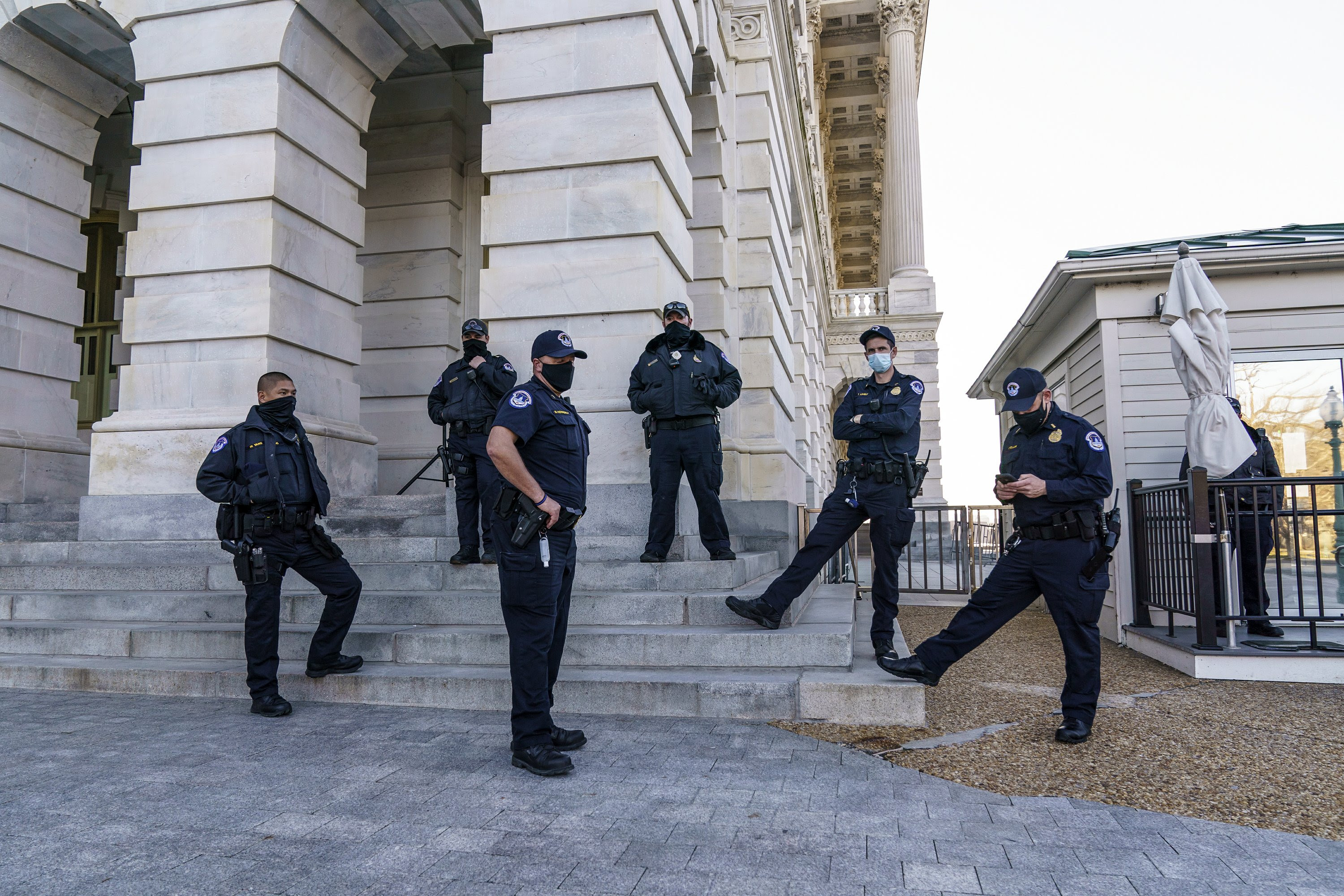
The immediate threat is intelligence related to a possible plot by a militia group to attack Athe Capitol on Thursday. Followers of the QAnon conspiracy theory believe former President Trump will be reinaugurated on March 4, a traditional date for presidential inaugurations until 1933. Capitol Police said they were enhancing their security posture in response to the threat.
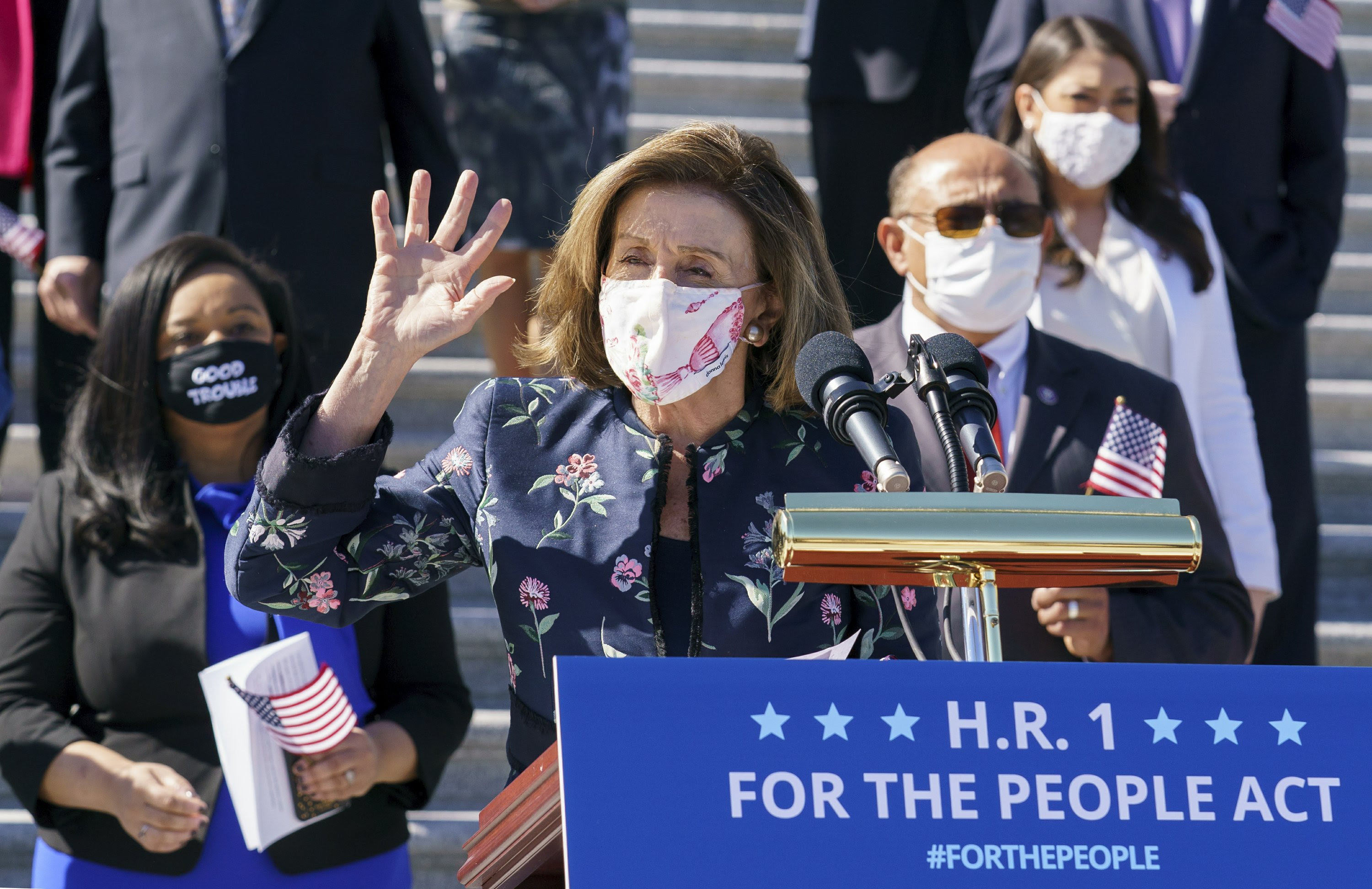
The House had been scheduled to be in session to vote on a police reform bill. But Democratic lawmakers and aides confirmed that the House would instead take up the police legislation on Wednesday night, along with a sweeping voting rights and election overhaul package, in response to the threat outlined by Capitol Police.
The Senate, meanwhile, is still expected to be in session on Thursday to consider the $1.9 trillion COVID-19 relief package.
The new threat came as lawmakers learned more about the ugly mob attack on the Capitol that left physical and psychological scars on Capitol Hill.
In the Senate, the head of the D.C. National Guard testified that the Pentagon slow-walked efforts to deploy troops to respond to the Jan. 6 insurrection, underscoring the need for major changes to security protocols.
Acting Capitol Police Chief Yogananda Pittman testified before members of the House Appropriations Committee that threats to members of Congress are “through the roof.”
Pittman said that threats have increased by 93.5 percent in the first two months of 2021 compared to the same period a year ago.
She also told a House Appropriations subcommittee that the intelligence related to the QAnon threat is “concerning” but assured lawmakers that “we are prepared to respond appropriately.”
Questions have lingered about the inadequate security preparations ahead of the Jan. 6 incident.
D.C. National Guard chief William Walker testified at a Senate hearing that he could have had another 150 National Guard members to the Capitol within 20 minutes on Jan. 6, but he was hamstrung by an “unusual” letter from the Pentagon’s higher ups.
Walker said a Jan. 5 letter from then-Secretary of the Army Ryan McCarthy, an appointee of former President Trump, restricted his ability to deploy the Quick Reaction Force without approval. The entire process of activating the guard took more than three hours that day.
“I would have sent them there immediately as soon as I hung up,” Walker told lawmakers on the Senate Rules Committee and Homeland Security and Governmental Affairs Committee when asked how he would have responded if he did not need to seek approval.
“My next call would have been to my subordinate commanders, to get every single guardsman in this building and everybody that’s helping the Metropolitan Police … to the Capitol, without delay,” he said.
While the exchange is renewing focus on Pentagon leaders, it also reinforces concern from lawmakers that the Capitol Police Board, composed of both the House and Senate sergeants-at-arms and the Architect of the Capitol, hindered security efforts leading up to the attack.
Senate Rules Committee Chairwoman Amy Klobuchar (D-Minn.) laid the blame for the anarchy at the feet of the former House and Senate sergeants-at-arms, who have both since resigned.
“The decision to reinforce local police with the National Guard was not made ahead of time,” she said, referring to their testimony in the first hearing the committees held on the attack.
“Now that decision was made – or maybe I should say, rather, not made – by the former House and Senate sergeant-at-arms,” she said.
The FBI is warning of elevated threats of violence from domestic terrorism into 2022.
“We expect racially or ethnically motivated and violent extremists and anti-government, anti-authority violent extremists will very likely pose the greatest domestic terrorism threats throughout 2021, and in fact leading into 2022,” Jill Sanborn, the bureau’s assistant director of the counterterrorism division, told senators.
Under the Capitol Police’s budget request for the next fiscal year, outlined on Wednesday, there would be 111 dignitary protection agents assigned to individual high-profile members of Congress facing greater threats and 20 more intelligence analysts.
Pittman is requesting a $107 million budget increase, which would help hire 212 more officers while paying for extra security equipment.
The police chief described strains on a force that has new duties. As an example, she cited the nine House impeachment managers who prosecuted Trump’s impeachment last month, saying they now have security details accompanying them wherever they go.
Capitol Police previously only had regular security details for members of congressional leadership and had to borrow agents from those teams to protect the House impeachment managers.
Overall, threats against lawmakers have spiked dramatically during the Trump era as partisan tensions worsened. Pittman testified that there has been a nearly 119 percent increase in total threats between 2017 and 2020.
In the Senate, lawmakers pushed the FBI and the Department of Homeland Security to better inform Capitol Security of potential threats, following a Jan. 5 report from the FBI’s Norfolk, Va., office that detailed specific calls for violence on Jan. 6, including those that suggested protesters go to the Capitol “ready for war.”
However, top officials with the Capitol Police and the FBI itself have since said they were not aware of the report until after the incident.
The FBI has since characterized the report as raw, unverified intelligence as lawmakers have pressed leadership on why the bureau didn’t work harder to ensure the information would be delivered to those doing security planning.
Lawmakers also complained that FBI and the Department of Homeland Security (DHS) need to redouble their efforts to address domestic terrorism.
“I understand the FBI and the DHS’s commitment today to doing better in their intelligence collection and monitoring this threat, which I appreciate,” said Senate Homeland Security and Governmental Affairs Committee Chairman Gary Peters (D-Mich.). “But we need to actually see these improvements. It has to be demonstrated in a meaningful way. It’s not enough for agencies to simply promise to do better.”
BASSETERRE, St. Kitts — To date, 2,085 persons in the Federation of St. Kitts and Nevis have received their first dose of the Oxford University-AstraZeneca COVID-19 Vaccine, according to Chief Medical Officer Dr. Hazel Laws.
In week one of the rollout, on February 22, 1,356 people were vaccinated. On March 3 alone, 729 persons received their vaccine. Dr. Laws said that she was proud to be in that batch.
“To date, we have vaccinated 2,085 people in the Federation,” she said. “We have reached 6.3 percent of our target population just in a matter of nine days.”
“More persons are making an informed decision to take the vaccine,” said Dr. Laws. If people have a cold or are experiencing respiratory tract infection and have a fever, they should postpone their vaccination. If a person is pregnant or breastfeeding she should also postpone getting the vaccine.”
People eligible to receive the vaccine should be between 18- and 80-years of age. If anyone has an allergic reaction to any of the components of the vaccine, they should not take it.
People are asked to visit their nearest health centre if they want to receive the vaccine irrespective of the priority group.
“On Monday, we will have received an additional 20,000 doses of the vaccine,” concluded Dr. Laws. :”We are no longer adhering to the priority groups as we explained last week. Irrespective of the priority group that you are in, if you are ready and have read information about the vaccine, you can make an informed decision. Then, they can go to the nearest health centre to access the vaccine. You do not even have to call 311. Just go to the nearest health centre.”
Dr. Laws said that after having their first shot, people would be given an appointment to come back in 10 weeks for the second dose.
Prime Minister of Grenada, Dr Keith Mitchell has announced steps to reopen the island’s tourism sector in the coming months.
Speaking in an interview, Mitchell said commercial fights from the United Kingdom and hotel properties including the Sandals Resort, will be reopened in two months.
“The UK airlines have now reported that they will be resuming flights from April which coincide with the movement by some of the hotels to reopen.”
Sandals, Grenada’s largest all-inclusive resort will also be reopening in early April.
In December 2020, the hotel announced a suspension of operations after the Government disclosed that a cluster of COVID-19 cases had been identified among staf
“All efforts are being made to put all systems in place to protect the country as far as the virus is concerned and I must say that we are getting cooperation from the tourism sector at all levels,” he said.
The decision, which was in line with that taken by several other countries, was aimed at preventing, as best as possible, the introduction into Grenada of the COVID-19 strain discovered in the UK.
A group of African, Caribbean, and Pacific countries have supported India for supplying COVID-19 vaccines to different developing and least developed nations.
During a discussion at the WTO (World Trade Organisation), a group of Latin American member states including Colombia, Costa Rica, Ecuador, Panama and Paraguay have also expressed their concerns on the export restrictions imposed by European Union on COVID-19 vaccines and their trade distorting impact.
St. Lucia, on behalf of CARICOM group of countries expressed appreciation and thanked India and South Africa for vaccine supplies to them.
CARICOM is a grouping of Caribbean countries that includes Antigua and Barbuda, the Bahamas, Belize, Guyana, Jamaica, Haiti, and Saint Lucia.
“We thank the Government of India and South Africa as well as the African Union for their generosity and solidarity at this time. The Government of India, through the generosity of Prime Minister Narendra Modi has donated an initial instalment of 1,70,000 vaccines to Barbados and Dominica through bilateral arrangements,” St. Lucia has said adding that India has dispatched an additional 1,75,000 vaccines to five CARICOM member states.
Similarly, in its intervention, Jamaica, on behalf of ACP (African, Caribbean and Pacific) Group of countries, also thanked Indian efforts in delivering vaccine supplies to developing and least-developed countries (LDCs).
Jamaica has said, “There is absolutely no place for vaccine nationalism in this crisis, as no member is spared the impact of the virus until all members are able to contain its spread. Therefore, we recognize the efforts of countries such as India and South Africa that have arranged delivery of vaccines to many developing countries and LDCs.”
The interview with Winfrey, which will air in the US on Sunday and in the UK on Monday, is expected to detail Harry and Meghan’s short period as working royals together before they stepped down for a life in the US.
In the 30-second teaser clip released by CBS, Winfrey asks the duchess: “How do you feel about the palace hearing you speak your truth today?”
Meghan replies: “I don’t know how they could expect that, after all of this time, we would still just be silent if there is an active role that The Firm is playing in perpetuating falsehoods about us.”
The Duke and Duchess of Sussex quit their roles as senior working royals in March 2020, and now live in California.
According to the story, it was made in October 2018, while the duke and duchess were living at Kensington Palace after their marriage in May of that year.
A leaked email sent from a staff member, which was published by the newspaper, alleges that Meghan drove two personal assistants out of the household. The report claims she undermined the confidence of a third member of staff.
In a statement later, Buckingham Palace – which is responsible for the hiring of royal staff – said it was “clearly very concerned about allegations in the Times” and its HR team would look into the circumstances outlined in the article.
“The Royal Household has had a Dignity at Work policy in place for a number of years and does not and will not tolerate bullying or harassment in the workplace.”
The gloves have come off
If anyone thought Prince Harry and Meghan were going to restrict their criticism to the British media, a sector they have made clear they loathe, they should think again. “The Firm” – aka the Royal Family and its staff- is clearly in their sights.
This isn’t directly about the allegations of bullying levelled at Meghan, and also to a lesser degree Harry. They were published after the interview was recorded. But the couple see the allegations as an example of how some people in the palace brief against them.
We’ll have to wait for the interview to find out exactly what “falsehoods” the couple believe have been put out by the palace. The bullying allegations – which are vigorously denied by the couple – are being investigated.
But it’s clear that the gloves have come off, and that the ties of family have not restrained the couple as they seek to put their side of the story.
Past and present royal employees are to be invited to speak in confidence about their experiences of working for Meghan as part of the investigation.
‘Attack on her character’
The bullying allegations are denied by Meghan and Prince Harry.
A statement issued by Meghan’s spokesman in response to the newspaper’s story said: “The duchess is saddened by this latest attack on her character, particularly as someone who has been the target of bullying herself and is deeply committed to supporting those who have experienced pain and trauma.
“She is determined to continue her work building compassion around the world and will keep striving to set an example for doing what is right and doing what is good.”
Prince Harry has previously said the decision to step back was in order to protect himself and his family from the press.
image captionThe Duke and Duchess of Sussex now live in California
Meghan and Prince Harry’s TV interview with Oprah Winfrey will be aired on CBS in the US on the evening of Sunday 7 March.
In the UK, the interview will be screened on ITV at 21:00 GMT on Monday 8 March.
CBS has said Meghan will be interviewed about “stepping into life as a royal, marriage, motherhood” and “how she is handling life under intense public pressure”.
She will then be joined by Prince Harry, and the couple will speak about their move to the US last year and their future plans.
WASHINGTON (AP) — House Democrats passed sweeping voting and ethics legislation over unanimous Republican opposition, advancing to the Senate what would be the largest overhaul of the U.S…….Read More
WASHINGTON (AP) — Many questions remain unanswered about the failure to prevent the Jan. 6 insurrection at the U.S. Capitol. But after six congressional hearings, it’s clear that the Capitol….Read More
Demonstrators in Myanmar protesting last month’s military coup returned to the streets Thursday, undaunted by the killing of at least 38 people the previous day by security forces. New… …Read More
WASHINGTON (AP) — President Joe Biden and Democrats in Congress are jamming their agenda forward with a sense of urgency, an unapologetically partisan approach based on the calculation that i…Read More
LONDON (AP) — Buckingham Palace says Prince Philip has had a successful heart procedure in a London hospital. The palace says the 99-year-old Duke of Edinburgh, the husband of Queen… …Read More
SACRAMENTO, Calif. (AP) — California will begin setting aside 40% of all vaccine doses for the state’s most vulnerable neighborhoods in an effort to inoculate people m…Read More
WASHINGTON (AP) — The world’s hopes for curbing climate change hinge on action by two giant nations whose relations are deteriorating: China and the United States. The…Read More
LONDON (AP) — Buckingham Palace said Wednesday it was launching an investigation after a newspaper reported that a former aide had made a bullying allegation against t…Read More
NEW YORK (AP) — When will children be able to get COVID-19 vaccines? It depends on the child’s age, but some teenagers could be rolling up their sleeves before too lon…Read More
The two biggest cities in each of the neighboring South American countries are headed in opposite directions, reflecting how those that loosen restrictions despite warnings from scientists see a spike in the pandemic while others that keep social distancing measures in place are able to reopen their economies sooner.
Sao Paulo, home to almost 12 million people, is bracing for the worst two weeks yet in the pandemic and the growing risk that its once-resilient health care system will collapse, Gov. João Doria told reporters Wednesday. More than 75% of the city’s intensive-care beds are occupied by COVID-19 patients and some wards — like those of the private Albert Einstein hospital — are full for the first time.
Doria announced that the entire state, where 46 million people reside, on Saturday will face the highest level of restrictions to arrest the virus’ spread. That means closure of all bars, restaurants, shopping malls and any other establishment deemed non-essential until at least March 19.
Meanwhile, the nearly 3 million residents of Buenos Aires are enjoying an easing of their restrictions, with authorization to attend movie theaters taking effect this week. On Wednesday, official figures showed just 26% of intensive-care beds were occupied by COVID-19 patients. The low hospitalization rate also enabled local authorities in mid-February to reopen bars and restaurants until 2 a.m. — something long sought in a city famous for its all-hours culture.
That means Buenos Aires’ famed steakhouses are reigniting their fires, while counterparts in Sao Paulo extinguish theirs.
Buenos Aires’ casinos also reopened at the end of 2020, and authorities are discussing whether the soccer-crazy city will be able to return to the stadiums soon. In Brazil, despite President Jair Bolsonaro’s push to allow fans back, no local authorities are seriously considering opening stadiums. The 48,000-seater NeoQuimica arena on the east side of Sao Paulo is being used as a vaccination post.
Some good news from the Sao Paulo region came on Tuesday, when soccer great Pelé received his first dose of a COVID-19 vaccine. The 80-year-old posted the news on his social media channels.
“The pandemic is not over yet. We must keep discipline to preserve lives until many people have taken the vaccine,” the three-time World Cup winner said. “When you go out please don’t forget your mask and maintain social distance.”
His plea is important — even one year after the pandemic began — as Bolsonaro continues to cast doubt on the effectiveness of masks.
The distance between the two nations has seemingly widened during the pandemic, with Bolsonaro and Argentina’s Alberto Fernández adopting opposite tacks in their handling of the crisis. The former downplayed the disease’s risks and has insisted on keeping the economy churning, while the latter has taken a more cautious approach.
Fernández imposed one of the longest quarantines in the world between March and October, despite risks of damaging an economy already in a recession.
Over the past week, Brazil has recorded 35 COVID-19 deaths per million residents, almost triple that of Argentina.
Troubles in Sao Paulo worsened after furtive Carnival celebrations in mid-February. Though street celebrations and parades were canceled, many paulistas, as residents are known, traveled or joined unmasked gatherings. The city declined to allow days off work traditionally allowed during the Carnival period, in a bid to keep people from partying.
Izidoro Silveira, 34, got a job waiting tables at a pizzeria in downtown Sao Paulo two months ago, after almost a full year unemployed. He’s upset about his restaurant’s imminent shutdown.
“Those doing deliveries won’t be hurt, but I and many others will,” a distressed Silveira said as he watched a televised news broadcast about the shutdown. “I don’t know what to tell my wife and my daughter. I’m afraid I’ll lose my job again, even though I work at a place that takes all precautions.”
Not far away, movie theaters on the city’s main drag, Paulista Avenue, are empty, just as they have been since the pandemic first began.
Argentina’s ease doesn’t mean the virus is completely under control. Wednesday’s official figures showed 262 deaths and more than 8,700 new infections in the country. Vaccine rollout is slow. But the overwhelming gloom seen in Sao Paulo seems to be far from Buenos Aires.
With a bag of popcorn in one hand and a soft drink in the other, 8-year-old Bautista Sundblat was eager to enter a movie theater in Buenos Aires’ tony Palermo neighborhood to watch “Bad Boys Forever”.
“He’s very excited,” said his mother, Martina. “We’d been waiting for a long time. There are few seats, everything has been taken care of. He’s a movie fanatic. There’s still a long way to go, but little by little we’re getting where we wanted.”
Experts think Brazil’s second wave may be linked to a new variant of the coronavirus
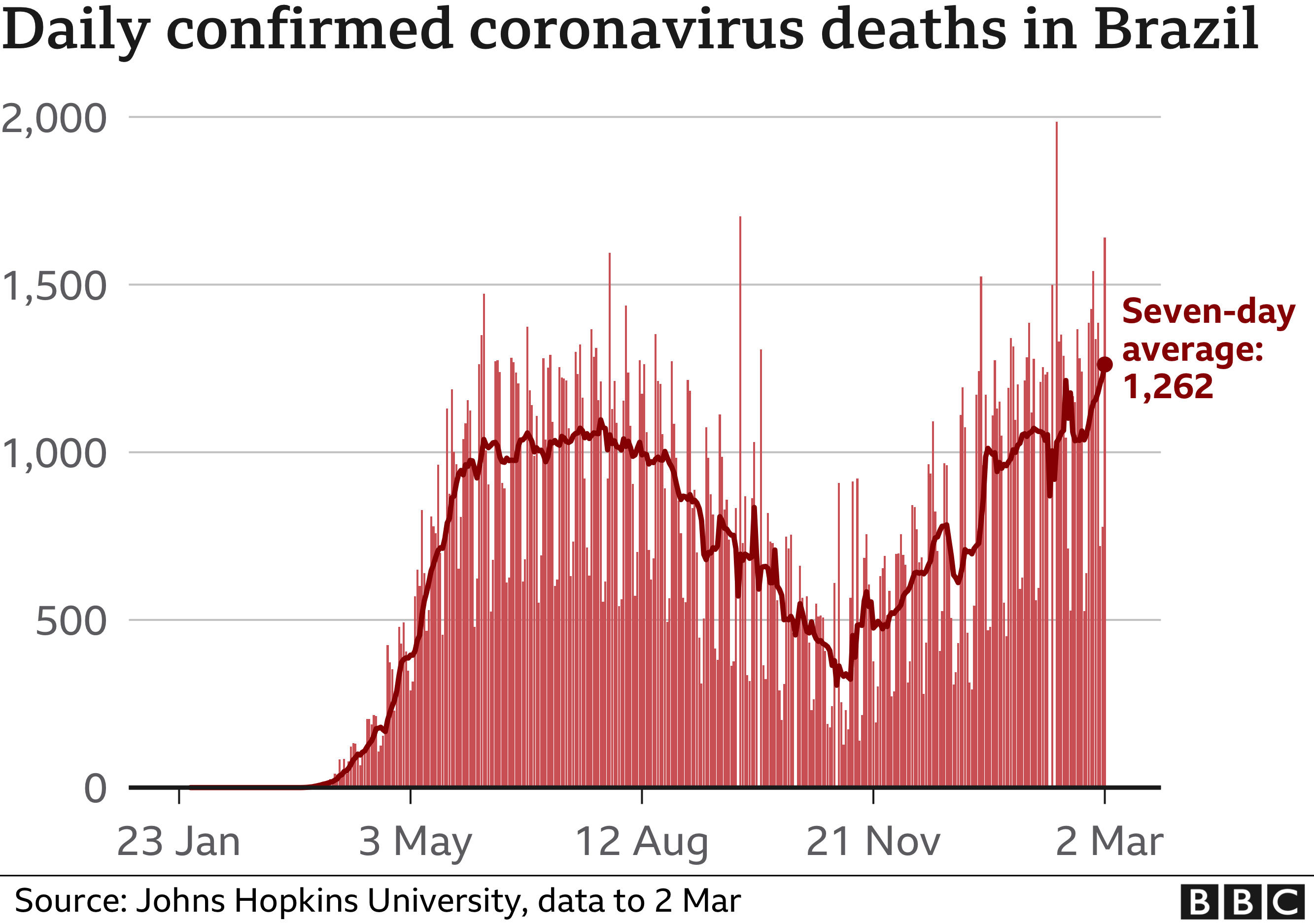
Brazil on Wednesday registered its highest daily number of Covid deaths since the pandemic started.
The health ministry said 1,910 people had died with Covid in the previous 24 hours, the second day in a row of record deaths.
The record was reached as scientists said that a new variant first found in Brazil appears more contagious.
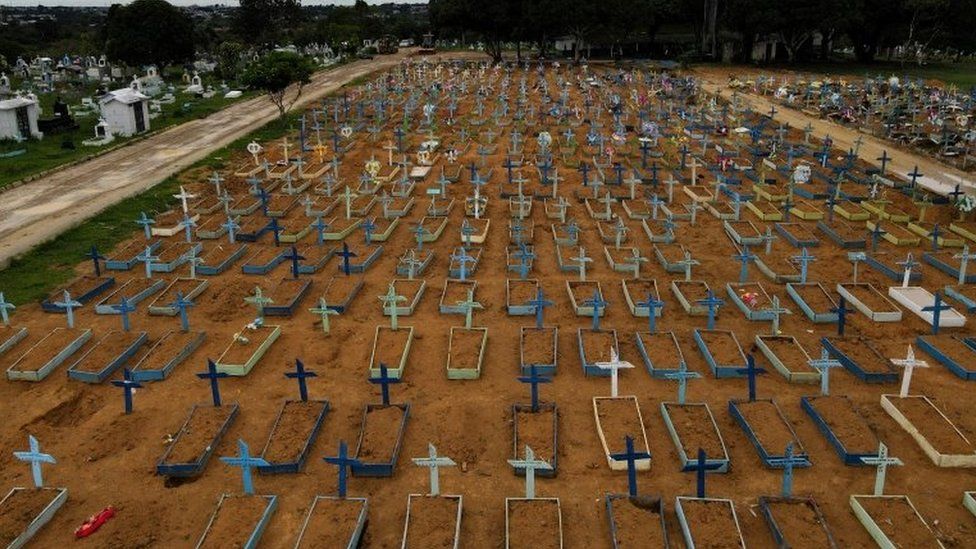
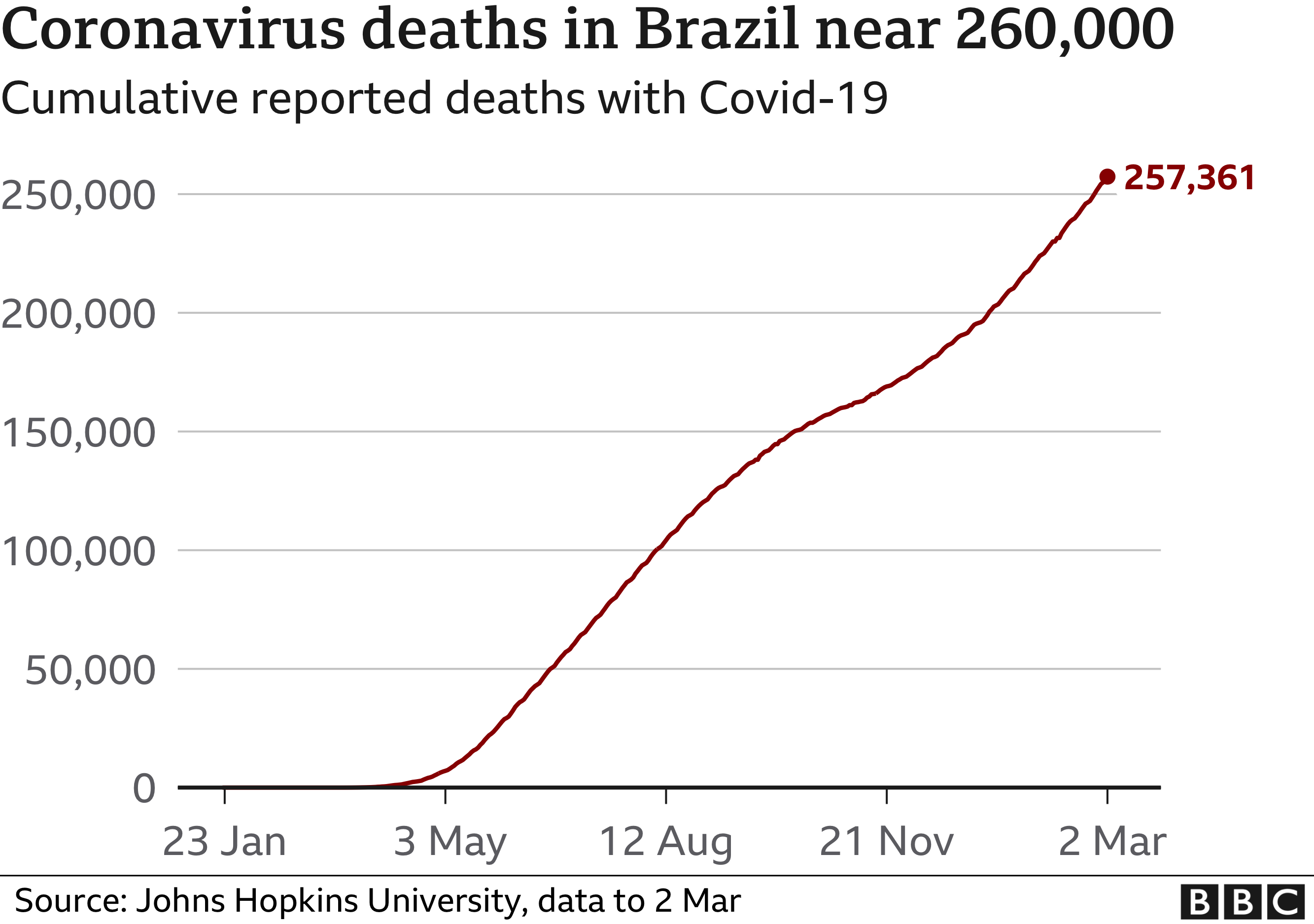
Brazil has the second highest coronavirus death toll after the US, at more than a quarter of a million.
What’s the situation in Brazil?
Across the country, there have been more than 10.5 million confirmed cases of coronavirus. Only the US and India have registered more.
The pandemic spread quickly after first arriving in Brazil and reached a first peak at the end of July, when daily new cases were above 70,000 and daily deaths above 1,500.
Cases and deaths across Brazil fell until early November before a second wave saw cases rise again, a rise which appears to have further accelerated since January.
FILE PHOTO: A healthcare worker hands over doses of the Pfizer-BioNTech COVID-19 vaccine to a doctor at Messe Wien Congress Center, which has been set up as coronavirus disease vaccination centre, in Vienna, Austria February 7, 2021. REUTERS/Lisi Niesner
VIENNA/COPENHAGEN (Reuters) – Austria and Denmark, chafing at the slow rollout of COVID-19 vaccines within the European Union, have joined forces with Israel to produce second- generation vaccines against mutations of the coronavirus.
The move by the two EU member states comes amid rising anger over delays in ordering, approving and distributing vaccines that have left the 27-member bloc trailing far behind Israel’s world-beating vaccination campaign.
Austrian Chancellor Sebastian Kurz said it was right that the EU procures vaccines for its member states but the European Medicines Agency (EMA) had been too slow to approve them and lambasted pharmaceutical companies’ supply bottlenecks.
“We must therefore prepare for further mutations and should no longer be dependent only on the EU for the production of second-generation vaccines,” the conservative chancellor said in a statement on Tuesday.
Danish Prime Minister Danish Mette Frederiksen was also critical of the EU’s vaccine program.
“I don’t think it can stand alone, because we need to increase capacity. That is why we are now fortunate to start a partnership with Israel,” she told reporters on Monday.
When asked whether Denmark and Austria wanted to take unilateral action in obtaining vaccines, Frederiksen said: “You can call it that.”
The European Commission said member states were free to strike separate deals should they wish to. “It’s not that the strategy unravelled or it goes against the strategy, not at all,” spokesman Stefan de Keersmaecker said.
An EMA spokeswoman did not have an immediate comment.
FIRST MOVERS?
Kurz and Frederiksen are due to travel to Israel this week to see Israel’s rapid vaccine roll-out up close.
Israel, which was quick to sign contracts for and to approve vaccines from U.S. drug makers Pfizer and Moderna, has given 94 doses per 100 people and the EU just seven, according to monitoring by Our World in Data.
Prime Minister Benjamin Netanyahu, who has made the campaign a showcase of his bid for re-election on March 23, has spoken of “an international corporation for manufacturing vaccines”.
None of the three countries has significant vaccine making capacity, however, raising questions over how realistic their ambitions are to gain greater self-sufficiency.
A growing number of EU countries have placed side orders for vaccines from Russia and China, even though the EMA has yet to rule on whether they are both safe and effective.
Slovakia said on Monday it had ordered 2 million doses of Russia’s Sputnik V vaccine and expects half to arrive this month to help it end a surge in infections.
The neighbouring Czech Republic – tackling the worst COVID-19 outbreak of any EU country – is also considering ordering Russia’s Sputnik V.
Hungary, meanwhile, has taken delivery of a vaccine developed by China’s Sinopharm, with Prime Minister Viktor Orban announcing on Sunday that he had received the shot.
The three vaccines so far cleared for use in the EU, made by Pfizer and German partner BioNTech, Moderna and AstraZeneca, rely on production in countries including Germany, Britain, Switzerland, Belgium and the Netherlands.
Kurz said Austria and Denmark would work with Israel on vaccine production against mutations of the coronavirus and jointly research treatment options in an alliance called the First Movers Group.
The initiative, which seeks greater protection against future pandemics in addition to joint EU vaccine supply, follows Germany’s decision last month to set up a task force to address supply bottlenecks and boost local manufacturing.
Kurz invited pharmaceutical companies with a local presence including Pfizer, Valneva, Novartis, Polymun and Boehringer Ingelheim on Tuesday to discuss the new initiative.
Pfizer, which declined comment for this story, has said it will make 2 billion doses this year – 70% of them in the EU – and has conducted extensive research into their effectiveness against coronavirus variants.
A spokesman for Boehringer Ingelheim said its focus was not on human vaccines “but if we receive requests we will of course look into them.”
(Additional reporting by Gabriela Baczynska in Brussels, Ludwig Burger in Frankfurt and Robert Muller and Jason Hovet in Prague; Writing by Douglas Busvine and Caroline Copley; Editing by Philippa Fletcher)
FRANCE OPPOSES THE MOVES
France has criticised a push by Austria and Denmark to coordinate with Israel on developing new Covid-19 jabs, as EU unity frays even further over its troubled vaccine rollout, Agence France-Presse (AFP) reports. It says:
The Austrian chancellor Sebastian Kurz announced the Israeli partnership on Monday, saying the European Medicines Agency (EMA) was “too slow in approving vaccines” leaving the bloc vulnerable to supply bottlenecks at pharmaceutical companies.
But France’s foreign ministry defended the agency and insisted that “the most effective solution for meeting our vaccination needs must remain within a European framework”.
“This is what guarantees the solidarity among member states that is more essential than ever,” it said on Wednesday.
European officials are under pressure to step up vaccination drives that have lagged behind those of other countries, including Israel and Britain, which approved coronavirus vaccines several weeks before the EMA.
“We should not be solely dependent on the EU any more,” Kurz said ahead of a trip to Israel with his Danish counterpart Mette Frederiksen on Thursday to agree on common production of future vaccines and cooperation on research.
Austria’s neighbours Slovakia, Hungary and the Czech Republic have already bypassed the EMA to approve Russian and Chinese coronavirus vaccines.
France’s Foreign Minister Jean-Yves Le Drian acknowledged “significant” shortcomings in the EU’s vaccination policies on Wednesday, but criticised what he called “attempts at secession”.
European nations should instead pool their resources to increase vaccine production capacity in Europe, “something we are in the process of doing”, the ministry said in its statement.
“The approval process for the European market has also been reviewed, with the introduction of ‘emergency procedures’ for vaccines targeting new variants,” it added.
=============================================
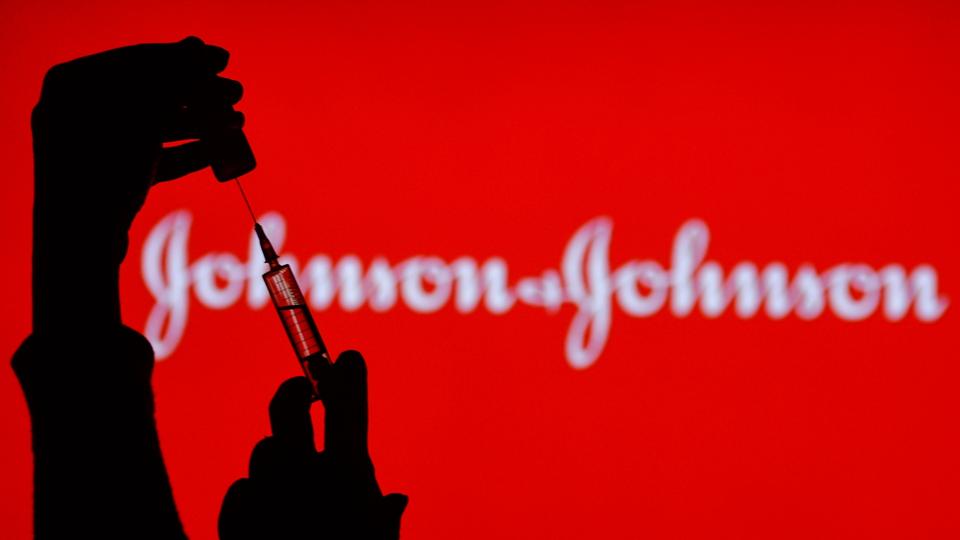
US CATHOLICS TOLD TO AVOID jOHNSON & JOHNSON VACCINE
The U.S. Conference of Catholic Bishops—the official group representing the church in the U.S.—urged Catholics Tuesday to avoid taking the one-shot Johnson & Johnson vaccine if other options are available, saying the J&J vaccine “raises questions about the moral permissibility”—even though Johnson & Johnson has stated it did not use fetal tissues in its vaccine.
U.S. Catholics are being told to avoid the Johnson & Johnson Covid vaccine if other options, like … [+]NURPHOTO VIA GETTY IMAGES
KEY FACTS
The directive says the Johnson & Johnson vaccine should be avoided since it was “developed, tested and is produced with abortion-derived cell lines.”
In a statement to Forbes, Johnson & Johnson said “there is no fetal tissue” in its vaccine, adding the company used an “engineered cell-line system that enables the rapid production of new viral vaccines to combat many of the most dangerous infectious diseases,” though it did not offer further specifics on its process.
Pfizer and Moderna, on the other hand, did not use aborion-derived cell lines in production, Archbishop Joseph F. Naumann of Kansas City in Kansas—chairman of the USCCB’s Committee on Pro-Life Activities—said in a statement.
The J&J vaccine was approved for U.S. use on Saturday, and has been touted as a major step in vaccinating the population since the vaccine only requires one shot, while the other two approved so far both require two doses.
The statement from the U.S. Conference of Catholic Bishops is the most significant opposition the J&J vaccine has coming from an official body of the Catholic church, and follows a well-publicized statement last week from the New Orleans Archdiocese.
The Vatican released a statement in December after questions were raised over vaccine ethics, in which it asserted “it is morally acceptable to receive Covid-19 vaccines that have used cell lines from aborted fetuses” in cases where “ethically irreproachable Covid-19 vaccines are not available.”
CRUCIAL QUOTE
“If one can choose among equally safe and effective COVID-19 vaccines, the vaccine with the least connection to abortion-derived cell lines should be chosen,” Naumann said. “Therefore, if one has the ability to choose a vaccine, Pfizer or Moderna’s vaccines should be chosen over Johnson & Johnson’s.”
CHIEF CRITIC
President Joe Biden, also known for his strong Catholic faith and being only the second-ever Catholic president, praised the vaccine’s approval over the weekend, calling it “exciting news for all Americans.”
KEY BACKGROUND
The Vatican made its statement in December after citing “diverse and sometimes conflicting pronouncements in the mass media by bishops, Catholic associations, and experts” when it came to vaccine ethics, especially given that there has also been concern around Pfizer and Moderna’s development practices. One week before the Vatican released its statement, the U.S. Conference of Bishops said Pfizer and Moderna vaccines came from a “remote connection to morally compromised cell lines,” while saying a potential vaccine from AstraZeneca was “more morally compromised” when it came to abortion.
Russia expects several European Union countries to approve the use of its Sputnik V vaccine this month and Moscow could provide vaccines for 50 million Europeans starting from June if the shot wins EU-wide approval, Russia’s RDIF fund has said.
Reuters quoted Kirill Dmitriev, the chief executive of the fund tasked with promoting Sputnik V internationally, as saying the shot could act as a bridge between Russia and Europe – and that its potential roll-out should not get bogged down in politics.
He was speaking after the European Medicines Agency said it had begun a rolling review of Sputnik V.
The German chancellor Angela Merkel and state leaders have agreed a phased easing of coronavirus curbs along with an “emergency brake” to let authorities reimpose restrictions if case numbers spike again, Reuters reports.
With elections looming, Merkel and the regional leaders have faced growing pressure to set out plans to restore normal activities after four months of lockdown. However, daily cases are creeping up again and only around 5% of the population have received a first vaccine shot.
“We are at the threshold of a new phase of the pandemic that we can go into not carelessly but still with justified hope,” Merkel told reporters on Wednesday after what she described as “tough negotiations” with the regional chiefs.
According to Reuters, the leaders agreed to use the full length of the approved interval between first and second vaccinations and to minimise stockpiling of booster shots to get more people started on the two-shot course.
The European Medicines Agency (EMA) recommends giving Pfizer and BioNTech’s injections three weeks apart and AstraZeneca’s up to 12 weeks apart.
They also said they expected a decision soon from Germany’s standing committee on vaccination on administering the AstraZeneca shot to over-65s, “in order to be able to adjust the vaccination schedule accordingly”.
Germany currently only allows the AstraZeneca vaccine to be given to people aged 18 to 64, which has led to a low take-up of available doses, slowing vaccination efforts.
We will have a fast-track approach to safely approving future vaccines that work against a variant of Covid-19.
The vaccine programme has clearly been a huge UK success story, and part of the reason that we have been able to develop the vaccines so far so quickly is because of the MHRA’s rigorous yet flexible approach, which has been based entirely on looking as quickly as possible at the safety and efficacy of vaccines.
I’m delighted that they’re taking that same principled approach to the approval process for vaccines that may work against variants.
The MHRA’s chief executive Dr June Raine said there’s no evidence current vaccines are lacking effectiveness against known variants.
Since December last year, we have all been concerned about the appearance of variants – Kent, South Africa, more recently Brazil – and, therefore, we’re well-prepared to look at, when it’s needed, updates to ensure the vaccines being used in citizens are fully effective.
Our goal is to ensure that the vaccine modifications in future that respond to the new variants can be available in the shortest possible time but without compromising in any way on safety, on quality and on effectiveness.
What I would emphasise at the outset is that we don’t have evidence at the moment that the vaccines in use in the UK are significantly lacking in effectiveness but we are now well-prepared.




 *****@
 *****@
 *****@
 *****@
 *****@
 *****@
 *****@
 *****@
 *****@
 *****@