Tag Archives: caribbean

US: Hundreds Volunteer to Protect Asian Americans from Attacks

(CNN)Jacob Azevedo’s stomach turned as he watched a disturbing video of an 84-year-old Thai American man who was fatally shoved to the ground on a sidewalk in San Francisco.

It was the second video of an unprovoked attack on an elderly Asian American that Azevedo, a resident of Oakland, had seen on social media out of the Bay Area within an hour, he told CNN.

Ever since the world learned of the new coronavirus outbreak in Wuhan, China, harassment and violence targeting the Asian American and Pacific Islander community has rapidly increased across the United States.

More than 2,808 firsthand accounts of anti-Asian hate from 47 states and the District of Columbia were reported between March 19 and December 31, 2020, with 7.3% of those incidents involving Asian Americans over the age of 60, according to a report by Stop AAPI Hate, a coalition documenting anti-Asian hate and discrimination amid the COVID-19 pandemic.

A recent surge in attacks on older Asian Americans in the Bay Area has heightened concerns among activist and leaders in the community.

Exhausted by the violence, Azevedo offered on social media to walk with anyone in Oakland’s Chinatown neighborhood to help them feel safe.

“I wasn’t intending to be some kind of vigilante,” Azevedo, 26, told CNN. “I just wanted to offer people some kind of comfort.”

His idea quickly resonated throughout the community and within days he had nearly 300 volunteers reaching out to join him to protect the community in a project now called Compassion in Oakland.

Azevedo, who is of Hispanic descent, believes this is a moment for all minority groups to stand in solidarity with the Asian American community. He said people from all racial backgrounds and ages reached out to him sharing the same desire to help support the community.

“This is important because this community just needs healing,” Azevedo said. “There’s a lot of racial tensions going on because of the previous president’s rhetoric but in general our communities need healing. This is an issue that’s been ongoing for a while.”

Stop APPI Hate Co-Founder, Cynthia Choi, told CNN that crime and violence is nothing new to the Asian community.

“This is a problem and issue that doesn’t get a lot of attention, especially in low income communities,” Choi said. ” And of course the pandemic, I think has exacerbated the conditions and exposed racial disparities.”

Choi said in times of crisis when vulnerable people are being targeted it’s heartwarming to see community members come out and take action.

“In Oakland, they’re planning this action and it’s really less about controlling and more about supporting the community and showing up,” she said. “It’s showing our elders who are afraid, afraid to leave their house that we’re here, we want to support you we’re holding you right now.”

Azevedo hopes that the organization can work with law enforcement in the future to protect the community.

“All of us need to come together if we hope to make this a safer community for the years to come,” Azevedo said.

The group planned a soft launch of the project on Saturday with a few volunteer groups on the streets. They hope to continue to build awareness of the issue in the community.

The post US: Hundreds Volunteer to Protect Asian Americans from Attacks appeared first on The St Kitts Nevis Observer.

Dr. Anthony Fauci, US Disease Chief, Awarded $1m Israeli Prize for His Work

Dr. Anthony Fauci, director of the National Institute of Allergy and Infectious Diseases, was awarded Israel’s $1 million Dan David Prize on Monday in recognition of his leadership on HIV research and AIDS relief, his advocacy for the vaccines against coronavirus and for “courageously defending science in the face of uninformed opposition during the challenging COVID crisis.”

“As the COVID-19 pandemic unraveled, [Fauci] leveraged his considerable communication skills to address people gripped by fear and anxiety and worked relentlessly to inform individuals in the United States and elsewhere about the public health measures essential for containing the pandemic’s spread,” the prize committee explained in a statement. “In addition, he has been widely praised for his courage in speaking truth to power in a highly charged political environment.”

The committee commended his efforts to fight for the recognition of novel approaches to treating the coronavirus pandemic, including the development of the world’s first-ever mRNA vaccines, which are now being given to millions of people worldwide – including in Israel. 

In addition, it said that he was receiving the award for his contributions to HIV research and being the architect of the US  President’s  Emergency Plan for AIDS Relief, ultimately saving  millions of  lives in the developing  world.

The Dan David Prize, established in 2000 by the late international businessman Dan David is headquartered at Tel Aviv University. It gives $1 million awards in three categories each year for contributions addressing the past, present and future.

Fauci won the prize alongside other health and medical scholars and researchers this year, including health and medicine historians Prof. Alison Bashford, Prof. Katharine Park and Prof. Keith Wailoo in the field of History of Health and Medicine (past category); and the pioneers of an anti-cancer immunotherapy, Prof. Zelig Eshhar, Prof. Carl June, and Dr. Steven Rosenberg in the field of Molecular Medicine (future category).

Fauci won the prize for achievement in the present.

The post Dr. Anthony Fauci, US Disease Chief, Awarded $1m Israeli Prize for His Work appeared first on The St Kitts Nevis Observer.

Salsa Music Pioneer Johnny Pacheco Dies at 85

Johnny Pacheco, the Dominican-born bandleader and co-founder of Fania Records, which opened the world to salsa music, died Monday. He was 85.

His wife, Maria Elena Pacheco, announced his passing at Holy Name Medical Center in Teaneck, New Jersey. No cause of death was provided.

Fania Records posted a tribute to Pacheco on Facebook, writing: “It is with profound sadness we share the news of the passing of Johnny Pacheco today at 85 years old, he was one of Fania’s founders and the man most responsible for the genre of Salsa music. Born in Santiago, RD and later moving to NY as a child he was much more than a musician, bandleader, writer, arranger and producer, he was a visionary. His music will live on eternally and we are forever grateful to have been a part of his wonderful journey.’

Pacheco’s music career began in 1954, when he pulled together The Chuchulecos Boys band. With Pacheco on percussion, they played at social events and weddings. He later went on to play for several other bands, including Tito Puente and Xavier Cugat. In 1958, he recorded his first album, playing congas and bongos aside Charlie Palmieri on piano on the Latin jazz album “Easy Does It.”

After joining Alegre Records, Pacheco recorded the album “Pacheco y su charanga.” The album’s success was thanks to a new dance fad at the time called the pachanga — a brisk blend of cha-cha-cha and merengue — that propelled him to worldwide notoriety.

In 1963, he and co-founded and became creative director and musical producer of a new label, Fania Records, which launched the careers of many popular salsa artists and became known by many as the Motown of salsa. The label’s roster of salsa musicians toured as Fania’s All-Stars.

During his multi-decade career, Pacheco wrote and recorded over 150 songs, earned nine Grammy nominations, 10 gold records and was presented with the Presidential Medal of Honor in 1996 from the then-President of the Dominican Republic, Joaquin Balaguer. The same year he became the first Latin music producer to receive the National Academy of Recording Arts & Sciences Governor’s Award.

Pacheco is survived by his wife Maria Elena, two daughters, Norma and Joanne; and two sons, Elis and Phillip.

The post Salsa Music Pioneer Johnny Pacheco Dies at 85 appeared first on The St Kitts Nevis Observer.

Barbados Care Homes COVID Hotspots, Lockdown Extended

BRIDGETOWN, Barbados, Feb. 15, CMC – Minister of Health Lt. Col. Jeffrey Bostic said Monday that his ministry has been monitoring a number of COVID-19 “hotspots” at elderly care facilities, one of which has had to be turned into an isolation facility because of the large number of residents and staff testing positive for the virus.

This comes when Prime Minister Mia Mottley announced the national lockdown would remain until February 28.

Bostic cited the Geriatric Hospital and two senior citizens’ homes – one in the parish of St Michael and the other on the eastern side of the island – as the facilities which public health officials have focused their attention over the last ten days.

Bostic said the home located on the east of the island posed a challenge for health officials since it was a larger institution where there were 31 positive patients.

Three staff members also tested positive using PCR tests, while another three were diagnosed as positive using antigen rapid tests and were awaiting results from their PCR tests.

“Because of the peculiarity with the situation with several elderly people and given the layout of this particular home, which is bigger than the average home, we’ve decided in collaboration with Dr Corey Forde [Head of Isolation Facilities] that we will designate, and we have done so, this particular home as an isolation facility because the majority of people there are positive,” Minister Bostic said.

“We’ve taken control of the home for this period to help them get out of the situation by utilising resources of the Queen Elizabeth Hospital as well as the Ministry of Health in terms of our public health officers and medical officers.

“We have done a serious job of sanitising the place and rearranging things so that we can do what we are doing at the moment under the safest of conditions and that will be ongoing,” he added.

As for the senior citizens home in St Michael, Bostic said it recorded five positive cases using the antigen rapid test. However, he added that when public health officials tested everyone using the PCR tests, there were two additional positive cases.

Meanwhile, the Health Minister said since the last report of one positive case at the island’s Geriatric Hospital a few weeks ago, there have been five additional cases at that institution – two kitchen staff members and three nurses. They were all asymptomatic.

The silver lining, he explained, was that after conducting several tests all of the patients there had returned negative test results for COVID-19.

“And the remainder of the staff except for 20, who we are awaiting tests for, they are all negative. So that the kitchen which was stood down, sanitised and everything is going to be back in operation from today, and I give my sincerest appreciation to the entire staff at the Geriatric Hospital for staying the course. So, we are comfortable with where we are with the Geriatric Hospital at this time,” Minister Bostic stated.

============================================

PM Mottley: Lockdown Will Remain Until End of Feb.

Barbadians will now remain on lockdown until the end of the month, Prime Minister Mia Mottley announced Monday, as the number of confirmed COVID-19 cases and deaths continued to climb.

On the same day that it was announced the island had recorded the first death of a healthcare worker due to the virus, Mottley said that the period of “national pause” which was to end on February 17 would continue until February 28.

“We are going to require a little more time to do what has to be done,” Mottley said.

The Prime Minister said there would be an estimated loss in economic activity of about BDS$150 million (US$75 million) as a result of the extended lockdown.

“This is not an easy decision that we’ve had to make. I met this morning with my finance and economic team and I asked a simple question: Can this country withstand any further extension of the period of pause, or stop as we’re now hearing from our public health officials. The simple answer from the finance and economic team is ‘yes, we will be hurt by any further extension but it will not kill our economy and it will not collapse our economy’,” Mottley said.

“The advisors have indicated to me that it is likely that we will come in at just under BDS$78 million (US$39 million)for this first part of the lockdown, in terms of loss of economic activity. If we go for an additional period of time – just under two weeks – then the most that will be is probably another BDS$70 million-$75 million (US$35 million-$37.5 million). So that we are potentially looking at a loss of about BDS$150 million (US$75 million) in economic activity for the month of February.”

The 7 p.m. to 6 a.m. curfew will remain in place until February 28. The only changes are that the post office will reopen on Thursday to facilitate the cashing of pension cheques; remittance offices will also open; and minimarts, which were not allowed to operate during the lockdown, will be allowed to open Mondays to Fridays, like the supermarkets.

Both minimarts and supermarkets will be closed on weekends.

Prime Minister Mottley’s announcement came after Minister of Health Lt. Col. Jeffrey Bostic disclosed in a statement that a Queen Elizabeth Hospital nursing assistant had died on Sunday, as a result of COVID-19.

“As the first health care worker to die from COVID-19 in Barbados, her death shook the nursing and health care communities yesterday,” Bostic said on Monday.

“Prior to yesterday, Barbados had so far been spared the loss of any of its health care workers and the cases of COVID among the QEH staff have largely been the result of community spread and not direct patient to caregiver contact.”

The nursing assistant’s death brings to 25 the number of deaths attributed to COVID-19 since the first case here in March 2020.

Up to Saturday, Barbados had recorded 2,268 confirmed cases.

The post Barbados Care Homes COVID Hotspots, Lockdown Extended appeared first on The St Kitts Nevis Observer.

Cuba Set to Test Its Own Covid Vaccine

By Will Grant
Cuba correspondent, BBC News

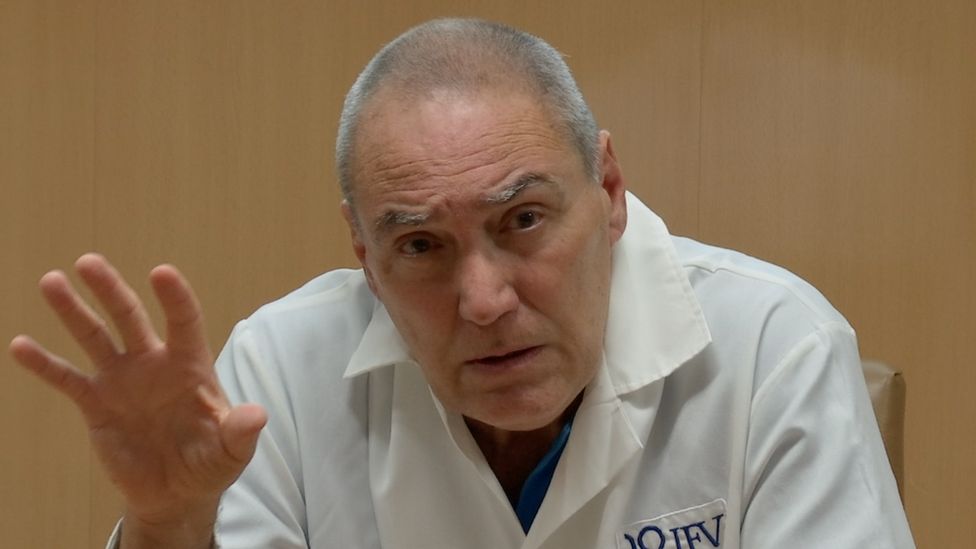
Cuban scientists are working against the clock on their Soberana 2 vaccine

Some of the equipment at the Finlay Institute of Vaccines in Havana might be considered outdated elsewhere in the world but the science taking place behind its white-washed walls is cutting edge.

Researchers are working long shifts on Cuba’s best shot to solve its coronavirus crisis: Soberana 2, the island’s domestically-produced Covid-19 vaccine.

Soberana (Spanish for “sovereign”) 2 is a conjugate vaccine – meaning an antigen is fused to a carrier molecule to bolster the vaccine’s stability and effectiveness.

Within weeks, it will be tested on tens of thousands of volunteers.

Vicente Vérez Bencomo speaks at a news conference
i
Vicente Vérez Bencomo says the results from the first trials have been encouraging

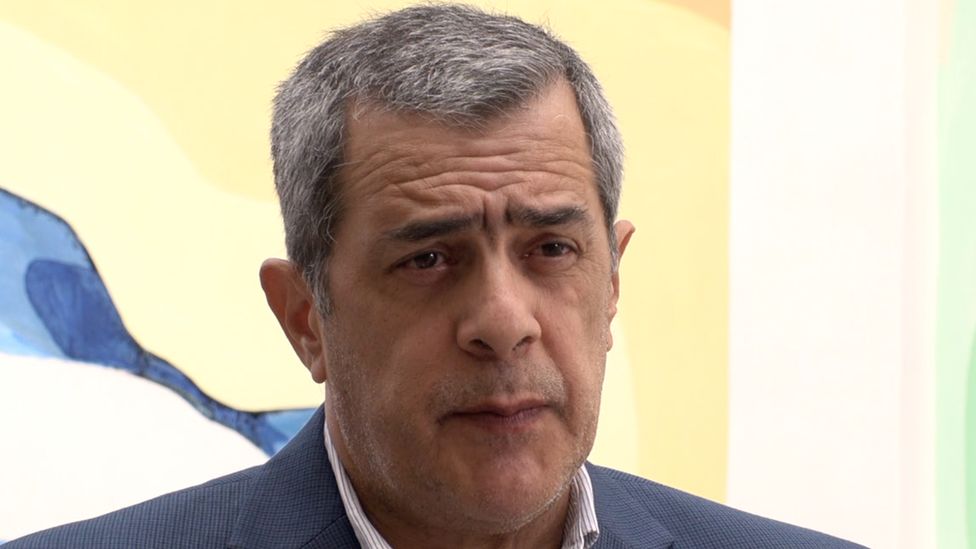
The results from the first clinical trials were “encouraging” and “very important”, says the institute’s director, Dr Vicente Vérez Bencomo, and the Communist-run government hopes to give the vaccine to everyone on the island by the end of the year.

“Our plan is to, of course, first immunise our population,” explains Dr Vérez at a news conference. “Moving to commercial production of Soberana 2, we’re planning to have in the order of 100 million doses during 2021 and we will dedicate an important part of these doses to the full immunisation of the country.”

No US role

It is an ambitious goal but a realistic one as Cuba has more than 30 years of experience in biotechnology and immunology.

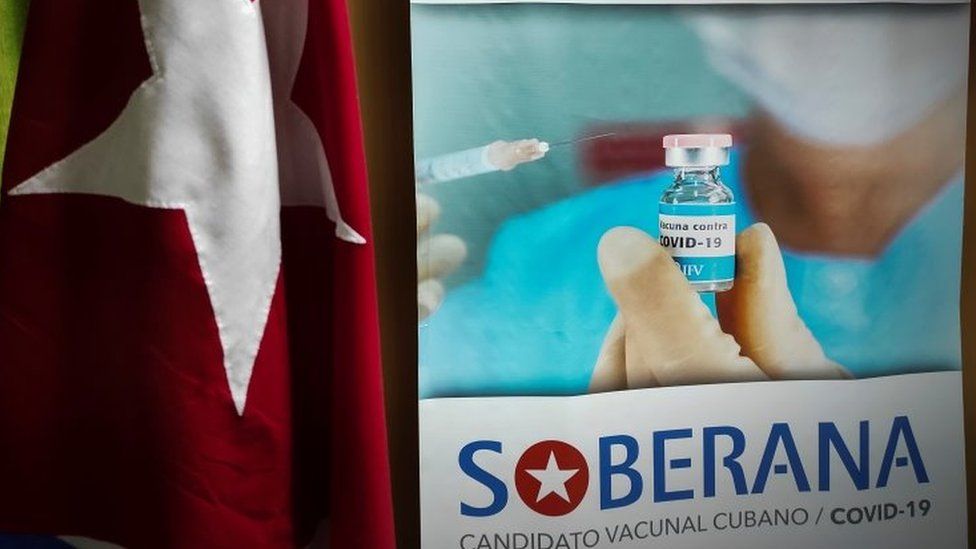
An advertisement poster of Cuba's Soberana 2 Covid-19 vaccine hangs next to the Cuban national flag at the Finlay Institute in Havana, Cuba, 20 January 2021.
Cuba is not new to the development of vaccines

In the late 1980s, Cuban scientists produced the first meningitis B vaccine and the then-leader, Fidel Castro, opened the Finlay Institute partly with a view to finding ways around the decades-old US embargo on the island.

If patents from US pharmacological companies would not be available to Cuba, it would find its own solutions in that field, he reasoned.

However, it remains beyond the island’s production capacity to make 100 million doses of the vaccine without some form of international assistance.

Still, even if the US government under President Joe Biden reverses the hard line former President Trump took towards Cuba, the US will not play a role in producing Soberana.

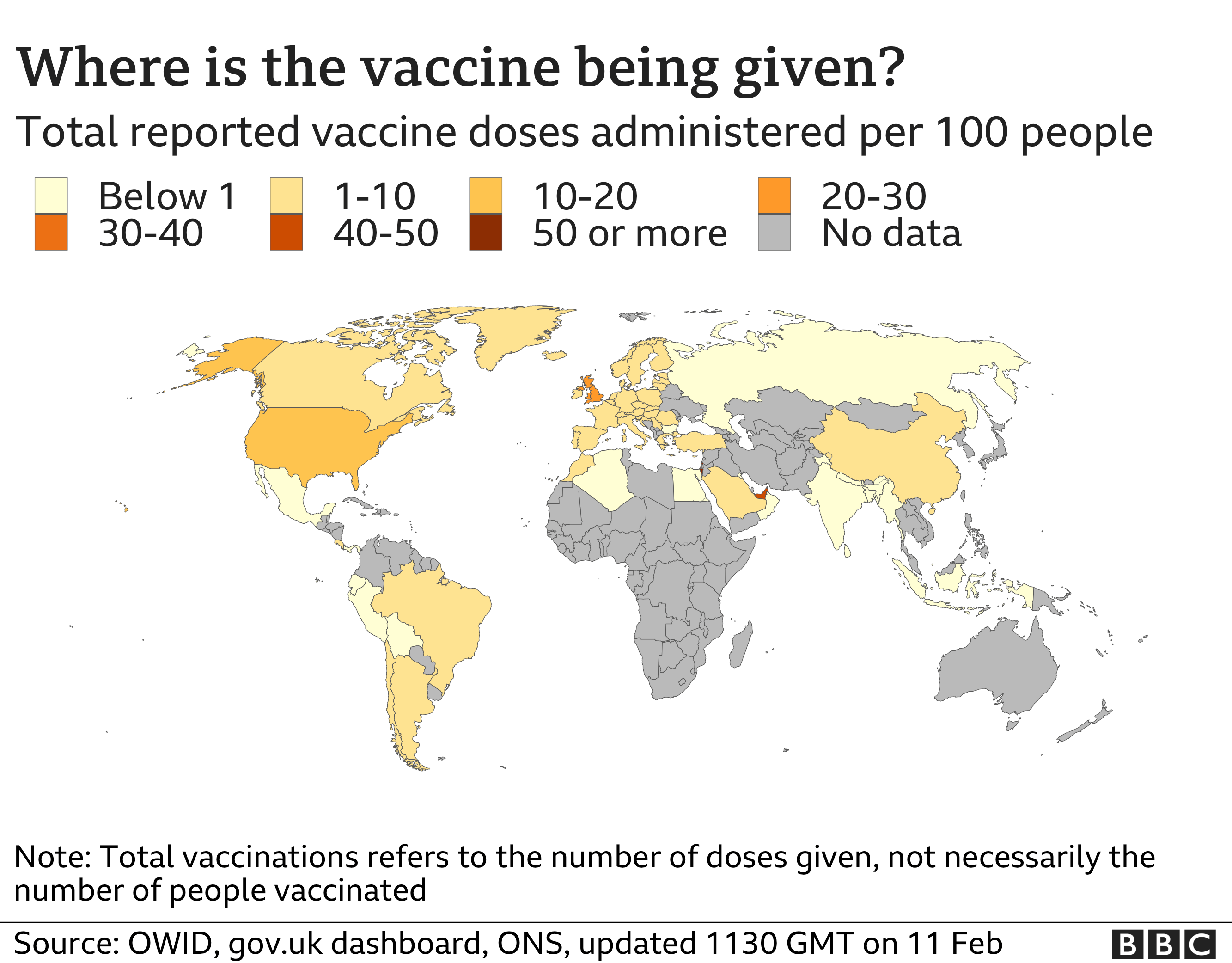
A world map showing which countries have administered Covid-19 vaccines
1px transparent line

“Our main contacts are with Europe and Canada and we have people participating from Italy and from France,” Dr Vérez explains, adding that “unfortunately” at this point there is no US participation. “We hope in the future it will be possible to move to the next step in co-operation,” he says.

International bodies like the Pan-American Health Organisation (PAHO) hope that Cuba will become the first Latin American country to produce its own vaccine.

Dr José Moya speaks at a news conference in Havana
Dr José Moya shares the Cuban scientists’ optimism

“We’re very optimistic,” says PAHO’s representative in Cuba, Dr José Moya. “We’ve been kept informed since the pilot phase of Soberana 2 and during the experimental trials, and we’ve known that Cuba has been investigating the viability of several vaccines since August last year.”

Healthcare under strain

The stakes for Cuba are high. Firstly, its own Covid-19 statistics are worsening by the week.

Confirmed cases recently climbed to more than 1,000 a day for the first time since the pandemic began. While those figures are tiny compared to those in Mexico, Brazil and the US, they are still serious enough to place additional strain on Cuba’s creaking healthcare system.

By the middle of last year Cuba had largely contained its outbreak through a combination of an aggressive public information campaign and the closure of its airports. In July and August, there were several consecutive weeks of minimal transmission and very few deaths.

But cases have gradually crept up again, much to Cubans’ frustration.

Dr Moya of the Pan-American Health Organization says the situation is not out of control and mirrors that in other countries. “There came a moment in all our countries when you had to start to reopen. And that’s what happened here, as they tried to progressively move towards the so-called ‘new normal’.”

Short-term pain

But Cuba is currently experiencing its worst economic outlook since the end of the Cold War so there is also an important economic incentive to a successful vaccine.

The coronavirus lockdown has been very painful for an island so dependent on tourism with the economy contracting a whopping 11% last year.

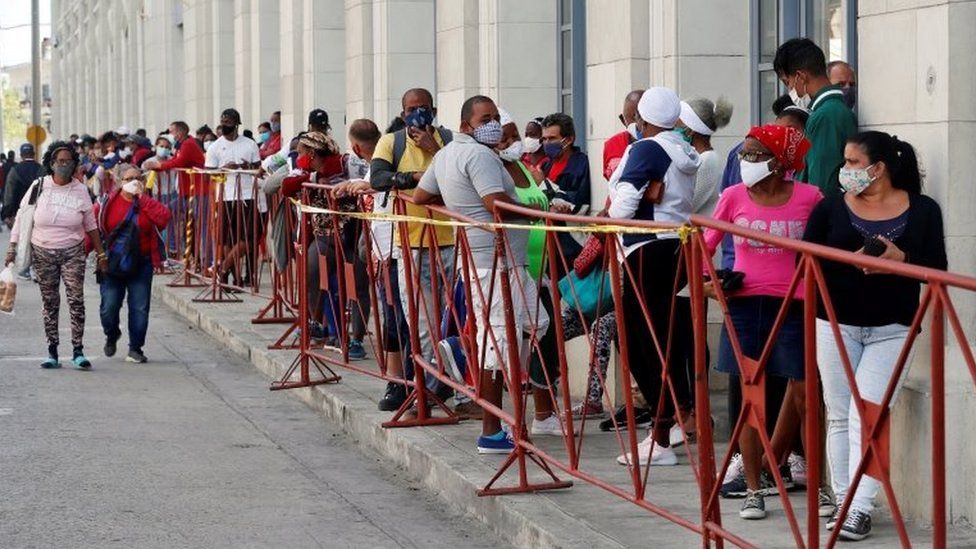
Long lines form every day outside food shops and supermarkets as people queue for basic goods.

People wearing masks line up to buy food in a market in Havana, Cuba, 02 February 2021.

Cubans often have to brave long queues to buy food

The government has chosen this moment to implement a number of overdue reforms, from unification of Cuba’s tangled dual currency system to some liberalisation of self-employment licences.

While those steps may eventually strengthen Cuba’s troubled economy, they spell short-term pain for many families, especially those without relatives sending remittances from abroad.

Cubans are very resilient and resourceful – they have had to be to face the twin challenges of US sanctions and the state’s overbearing control. But many are exhausted at the relentless months of coronavirus restrictions and the grinding economic hardship.

A ray of hope?

With children still out of school, businesses going bust and a curfew in place across Havana, people long for some encouraging news about vaccination.

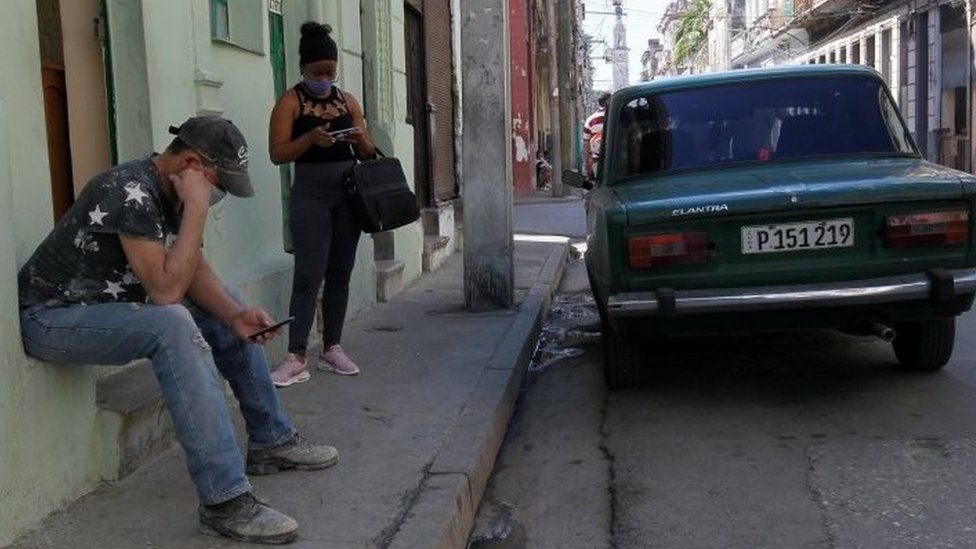
Cubans check their phones as telephone and internet connections were knocked out in a nationwide failure, in Havana, Cuba February 12, 2021
Everyone is hoping for good news on the vaccine front

A viable vaccine would allow the island to reopen sooner and with more certainty than before. Soberana 2 would also generate some much-needed income if exported around the region.

It all places real urgency on the scientists working on it, not only to alleviate the island’s health crisis but its economic one, too.

The post Cuba Set to Test Its Own Covid Vaccine appeared first on The St Kitts Nevis Observer.

Mass Protests Over President Continue in Haiti

BBC- Thousands of people have taken to the streets of the Haitian capital Port-au-Prince and other cities for renewed protests against the government.

They lit barricades of burning tyres and debris, demanding the resignation of President Jovenel Moïse.

Some demonstrators were reportedly injured as police fired rubber bullets to disperse them.

The cause of the Caribbean nation’s fresh unrest is a bitter dispute over Mr Moïse’s legitimacy.

A police officer puts out a burning fire as demonstrators take part in a protest against Haiti's President Jovenel Moïse, in Port-au-Prince, Haiti February 14, 2021.image copyrightReuters
image captionProtesters erected burning barricades and clashed with police

Haiti’s opposition says that Mr Moïse’s five-year term should have ended on 7 February 2021, five years to the day since his predecessor in office, Michel Martelly, stepped down.

Mr Moïse, however, insists he has one more year to serve as he did not take office until 7 February 2017.

The year-long delay was caused by allegations of electoral fraud which eventually saw the result of the 2015 election being annulled and fresh polls being held, which were won by Mr Moïse.

‘Two presidents’

Mr Moïse’s time in office has been rocky as he faced repeated accusations of corruption and was challenged by waves of often violent anti-government protests

He has been ruling by decree for the past year after his administration failed to hold scheduled legislative elections in October 2019.

On 7 February, the day his opponents said his term should have ended, he said that a “coup to overthrow his government and assassinate him” had been foiled.

Twenty-three alleged coup-plotters were detained including a senior Supreme Court judge, Ivickel Dabresil. Mr Dabresil had reportedly been chosen by the opposition to act as “provisional president” to replace Mr Moïse.

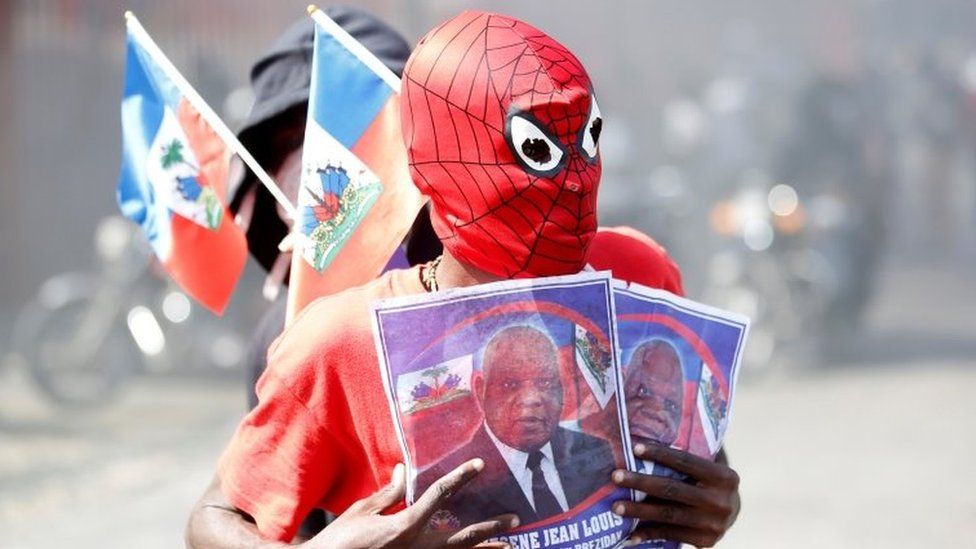
With Mr Dabresil in detention, the opposition named another Supreme Court judge, Joseph Mécène Jean-Louis, as interim leader.

With Mr Moïse refusing to step down, one Haitian news outlet reported that “Haiti has two presidents”.

Coup or counter-coup?

Mr Moïse’s opponents have denied his allegation of a “coup attempt”.

A demonstrator wearing a Spiderman mask holds photos of Supreme Court Judge Joseph Mecene Jean-Louis, as he takes part in a protest against Haiti's President Jovenel Moïse, in Port-au-Prince, Haiti February 14, 2021.image copyrightReuters
image captionProtesters held up photos of Joseph Mécène Jean-Louis, whom the opposition has chosen as “interim leader”

They argue that Mr Moïse has “illegally” extended his mandate and that they were therefore justified in choosing a temporary replacement head of state.

Mr Moïse’s government called the move an illegal “usurpation” and Mr Moïse issued a decree sending the top members of the Supreme Court, including Judges Dabresil and Jean-Louis, into retirement.

As the Moïse administration strengthened the police presence in Port-au-Prince, especially around the Supreme Court, some local commentators suggested that the sitting president was carrying out his own “counter-coup” to bolster his position and suppress his opponents.

Why does the opposition want Moïse out?

The anti-Moïse opposition – which besides political parties is made up of religious and civil society groups, members of the judiciary and human rights organisations – say the Moïse administration has been chronically “irresponsible” and “corrupt”.

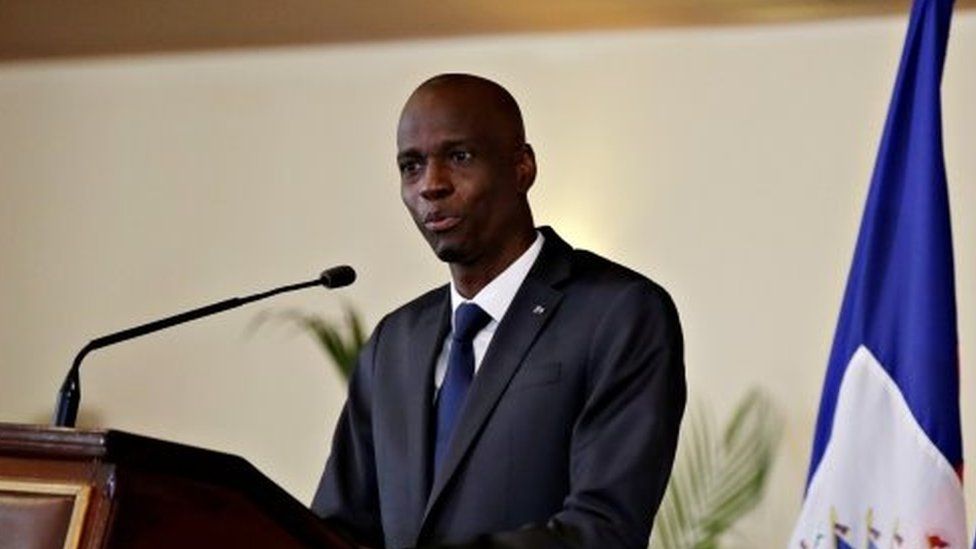
Jovenel Moïse speaks during the investiture ceremony of the independent advisory committee for the drafting of the new constitution at the National Palace in Port-au-Prince, Haiti October 30, 2020.image copyrightReuters
image captionJovenel Moïse has faced a series of protests during his four years in power

They argue this has led to a surge in violent gang crime and kidnappings as well as worsening living standards in a nation where nearly 60% already live below the poverty line.

Critics blame Mr Moïse for the postponement of the legislative elections from October 2019 to October 2021, which has left Haiti without a parliament.

Opponents have also questioned Mr Moïse’s use of decree powers to push through his policies.

Mr Moïse meanwhile argues that he is committed to democracy and that he will devote his remaining 12 months in power to organising local, municipal legislative and presidential elections to be held this year.

He is also planning to hold a referendum to overhaul Haiti’s constitution, which he argues needs to be modernised.

His critics fear that his intention is to get rid of a clause which bans presidents from serving two consecutive terms in office so he can run again for the top job in September.

How is the crisis playing out on Haiti’s streets?

The escalating tension between Mr Moïse and his opponents risks prolonging Haiti’s long-running political turmoil and economic deterioration.

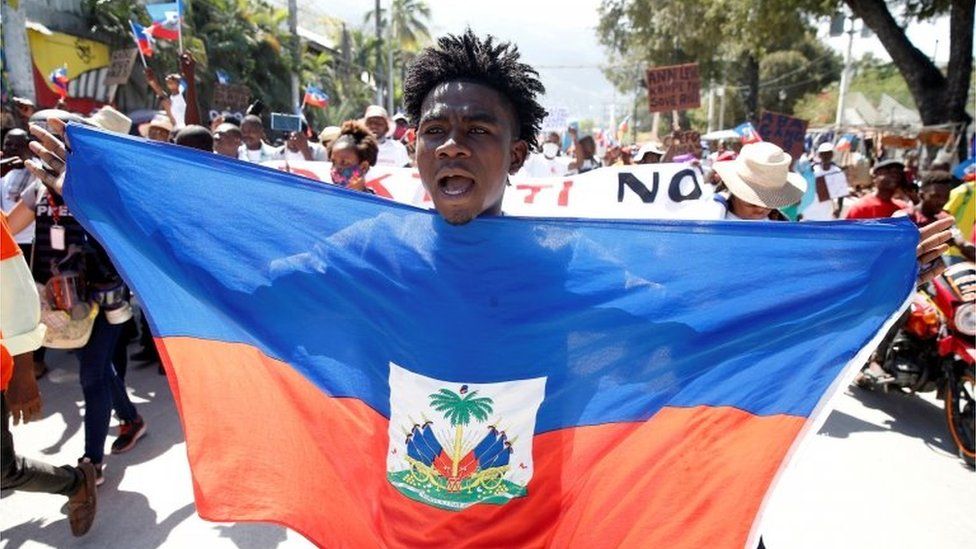
A demonstrator takes part in a march during a protest against Haiti's President Jovenel Moïse, in Port-au-Prince, Haiti February 14, 2021.image copyrightReuters
image captionFresh anti-government protests erupted in Haiti on Sunday

The opposition has promised more anti-government demonstrations, even though some observers see signs of protest fatigue among a population also battered by the Covid-19 pandemic.

“The remarkable lack of popular response to calls for mass protests in recent weeks indicates that Haitian people are tired of endless lockdowns and squabbling over power,” a US State Department spokesperson was quoted as saying recently in the media.

Nevertheless, Haitian media spoke of a “human tide” of “several thousand” anti-Moïse protesters marching in the streets of Port-au-Prince on 14 February, and similar protests were reported in Cap-Haitien, Les Cayes, and Mirebalais in the north, south and centre of the nation.

But the commander of Haiti’s armed forces has so far sided with the sitting president, saying that he backs Mr Moïse.

What reaction has there been?

The US government, the United Nations and the Organization of American States (OAS) have all indicated support for Mr Moïse to continue governing on the understanding that he holds free and fair elections in 2021. They appear to view this as the best strategy to avoid a descent into greater chaos.

Some Haitian media commentators have criticised what they call misplaced international support for an “unconstitutional” head of state.

Some of the 14 February protesters in Port-au-Prince shouted slogans condemning what they called the “interference” of the UN and the OAS.

On the other hand, the Army chief of the Dominican Republic, Julio Ernesto Florián Perez, reported on Monday that over 11 000 Haitians had been arrested trying to cross the border thus far in February illegally.

The post Mass Protests Over President Continue in Haiti appeared first on The St Kitts Nevis Observer.

Biden Admin. Set to Tackle Gun Violence, Laws

White House officials met last week with several gun violence prevention groups as they weigh how to move forward on an issue that has stymied Democrats for years.

The White House says President Biden is “personally committed” to action on an issue he has tackled many times in the past. Less than a month into the new administration, Biden officials are meeting with advocates backing reforms that Democrats have been pushing for in Congress, like strengthening background checks.

However, Americans’ views on guns may be even more divided than the last time Biden confronted the issue. A November Gallup poll found support for stricter gun laws is at its lowest level since 2016.

But anti-gun violence groups still see momentum. Brady, Giffords, Everytown for Gun Safety and Moms Demand Action met virtually on Wednesday with Susan Rice, the head of the Domestic Policy Council, and Cedric Richmond, a senior adviser to the president.

Officials familiar with the meeting said Rice and Richmond signaled the White House was prepared to use multiple avenues to try to curb gun violence, including executive action, though the administration has yet to roll out any specific proposals.

“I think everything is on the table. I think the White House is certainly supportive of Congress doing their part. I think there are things we’d like to see happen through legislation. … But certainly there is a role for executive action,” said Adzi Vokhiwa, director of federal affairs at Giffords, an anti-gun violence advocacy group.

The meeting comes as gun sales are on the rise across the U.S., which has been attributed to the concerns that Biden will act on gun control and amid fear and uncertainty around the pandemic and protests over racial injustice.

Sunday was the third anniversary of the Marjory Stoneman Douglas High School shooting in Parkland, Fla. Rice and Richmond held a call Thursday with most of the families of the victims of the shooting, a White House official said, and listened to stories about their loved ones and work they’ve pursued since the shooting.

Biden, who visited Parkland to comfort victims’ families in 2018, pledged during his presidential campaign to take numerous actions to try to curb gun violence. He vowed to pass legislation banning the manufacture and sale of assault weapons and high-capacity magazines and buy back the ones already in circulation. The president’s campaign website also said he would “enact universal background check legislation.”

“This meeting provided more evidence that the Biden Administration is committed to being the strongest we’ve ever seen on gun safety,” said John Feinblatt, president of Everytown for Gun Safety, of Wednesday’s meeting. “With Covid making gun violence worse and armed extremists literally holding our democracy at gunpoint, the time for action is now — and we fully expect to see it soon.”

Shannon Watts, founder of Moms Demand Action, also released a statement on the White House meeting, saying it confirmed that gun safety is a top priority for the administration.

“We look forward to working with the administration to save lives and stop gun violence, and we’re confident that we will see executive and legislative action in the near future,” she said.

The White House is still staffing up and has yet to nominate a head of the Bureau of Alcohol, Tobacco, Firearms and Explosives, which enforces gun laws. Both are a sign that the administration is still some time away from formally putting anything forward on guns, sources said.

Biden has repeatedly been involved in efforts to pass stricter gun laws dating back to his time in the Senate. He helped pass the Brady Bill in 1993, which implemented the modern background check system that advocates are now pushing to reform, and he helped pass the original assault weapons ban.

Through executive orders, Biden could change or expand the definition of who is in the business of selling guns, prioritize funding for community violence prevention programs and eliminate “ghost guns” by defining what constitutes a gun, according to gun control advocates.

The term ghost guns refers to guns available for purchase, typically without a background check or a serial number, that are not fully finished or may have a missing part.

Momentum has repeatedly hit a wall in Congress, even as mass shootings become commonplace in the United States. Congress failed to pass stronger gun laws after the Sandy Hook shooting, when Biden was vice president, and initial optimism fell by the wayside following back-to-back massacres in El Paso, Texas, and Dayton, Ohio, in 2019.

While Democrats control the House, the party would need all 50 members in the Senate to rally around gun legislation and be joined by at least 10 Republican senators to overcome the legislative filibuster. A bill proposed by Sens. Joe Manchin (D-W.Va.) and Pat Toomey (R-Pa.) after the Sandy Hook shooting only garnered 54 votes.

Sen. Chris Murphy (D-Conn.), an active voice on gun control ever since the Sandy Hook shooting in his home state, told The Hill he plans to introduce background check legislation “in the upcoming weeks” and is committed to getting a bipartisan bill passed in this Congress.

“President Biden and his administration are clearly committed to signing commonsense gun violence prevention legislation into law and taking executive action to save lives and make our communities safer. Two years ago, we got pretty darn close to striking a bipartisan deal to expand background checks that I believe would have passed on the floor if [Senate Minority Leader Mitch] McConnell put it up for a vote,” Murphy said.

The Democratic-led House last Congress passed control gun legislation, but those bills never received votes in the GOP-controlled Senate.

That bill, the Bipartisan Background Checks Act, is aimed at strengthening background checks for gun purchases and passed the House on Feb. 27, 2019. A day later, the House approved the Enhanced Background Checks Act, which would close the so-called Charleston loophole, giving federal investigators more time to do background checks.

Rep. Mike Thompson (D-Calif.), who authored the Bipartisan Background Checks Act, has not yet reintroduced it this Congress. But the bill is expected soon.

“The White House is definitely committed to gun violence prevention and Mike’s top priority on this issue is the Bipartisan Background Checks Act. We are still actively working with leadership and advocates on timing of that bill,” a Thompson aide said.

Assault weapon ban legislation to prohibit the sale of semi-automatic rifles and pistols with certain military-style features was also introduced last Congress by Rep. David Cicilline (D-R.I.).

Rep. Dan Kildee (D-Mich.), another vocal gun rights advocate, noted that passing background checks in the House last Congress was the first legislative action to prevent gun violence in decades.

“While the bill to expand background checks received bipartisan support, it was unfortunately blocked by Mitch McConnell in the U.S. Senate. Now, with a new Congress and White House, I know that action to prevent gun violence remains a top priority for President Biden and Democrats in Congress,” Kildee told The Hill.

Democrats are also looking to take advantage of the weakened National Rifle Association (NRA). The once powerful pro-gun lobbying group filed for bankruptcy last month following a lawsuit that alleged it violated New York state law governing nonprofit organizations.

“It will be up to these millions of law-abiding gun owners, and millions of NRA members, to make their voices heard in opposition to any infringement upon their constitutional rights,” the group wrote in response to comments from White House press secretary Jen Psaki last week that Biden “would love to see action on additional gun safety measures.”

Democrats point to public polling to argue that basic actions intended to limit gun violence, such as universal background checks, are overwhelmingly popular.

Still, former President Trump’s vow to protect his supporters’ Second Amendment rights was one of his reliable applause lines on the trail in 2020. The Gallup poll found that only 22 percent of Republicans favor stricter laws for gun sales, the lowest percentage in 20 years. Conservatives are likely to ardently object to any effort that is perceived as taking guns away from Americans and use it to fuel their base heading into the 2022 midterm elections.

The post Biden Admin. Set to Tackle Gun Violence, Laws appeared first on The St Kitts Nevis Observer.
COVID Latest Feb.16: US Hospitals Running Short of Supplies, World Stats

Hospitals around the country say their supplies of crucial medical supplies including personal protective equipment (PPE) are lower than ever as demand for different items has soared to an all-time high.

Data detailing usage rates of PPE and other supplies analyzed by Premier, a company that consults for health care systems, revealed that usage of supplies for COVID-19 testing and treatment has reached the highest rate seen since the pandemic began last year.

The data, gathered between May 2020 through January 2021, was supplied by 50 health care systems across the nation that are representative of the company’s larger population of clients.

PPE shortages first emerged last March, with officials in several states warning that they did not have enough supplies to adequately protect health care workers from being infected themselves.

Among the items seeing the highest demand as a result of surging COVID-19 hospitalizations through January include sterile water, which is used in many injections including the Remdesivir treatment former President Trump received as part of his COVID-19 treatment regimen at Walter Reed Medical Center last year.

Usage of sterile water is up 350 percent from rates seen last May, according to Premier’s data, and hospital inventories have dropped an average of 50 percent.

Pipette tips and micro pipettes, used during the COVID-19 laboratory testing process, are also seeing higher demand than last year. Usage of pipette tips spiked to a more than 100 percent increase over last May during the holiday season in November and December before falling slightly in January, though it still remains at a far higher rate than hospitals reported early last year.

Hospital systems are also reporting these supplies much harder to find as of January, with the average delivery time for pipette tip orders jumping from a few days to nearly a month.

Some shortages were the result of the medical equivalent of the wave of panic-buying that swept U.S. stores early last year as the first lockdown measures were announced by various states, Premier’s data found.

“What was correlated … was the request for supplies and the stock market volatility index,” a Premier spokesperson said. “In other words, buying was more linked to perceived, rather than real, need. And even the perception of need is enough to trigger panic-buying that leads to shortages.”

The challenges faced by hospitals trying to acquire necessary supplies for COVID-19 testing and treatment extends to the efforts of states around the country to administer COVID-19 vaccines as well.

Premier representatives told The Hill that hospital systems are finding it difficult to acquire special syringes called “low-dead-space needles” required to extract the sixth dose from vials of Pfizer’s COVID-19 vaccine, a process not possible with normal syringes and further complicated by confusion over whether all the syringes provided by the federal government in vaccine ancillary kits fit the low-dead-space description.

In an emailed statement, an HHS spokesperson told The Hill that 80 percent of the syringes contained in new ancillary kits the federal government began issuing on Jan. 20 were low-dead-space needles, while the remaining 20 percent could not be used to extract the last dose from Pfizer vaccine vials.

“What has become a more pressing issue for our members, even more so than improving access to the low-dead-space syringes, is the need for vaccine,” a Premier spokesperson added to The Hill. “Despite increases in overall distributions to jurisdictions around the country, our members are often reporting steady or declining allocations of vaccine that is making it very difficult for them to continue or expand vaccination efforts in the communities that they serve.”

When asked what federal officials could do to respond to supply chain shortages, the company’s representatives pointed approvingly to a recent update of Centers for Disease Control and Prevention (CDC) guidelines that advise Americans to avoid purchasing N95 masks as an example. Urging Americans to buy such masks could create a surge of demand, complicating existing shortages.

“While N95 supply is improving, the demand for highly protective masks has surged twelvefold during the pandemic, and Premier data shows that N95 usage increased 500 percent between July 2020 and January 2021,” a company spokesperson noted to The Hill.

The company is also urging President Biden to form a public-private advisory council consisting of manufacturers, physicians, pharmacists and others to identify supplies critical to COVID-19 testing, treatment and vaccine administration to ensure the availability of such supplies going forward. The Hill has reached out to the White House for comment.

The Trump administration faced criticism throughout 2020 from Democratic lawmakers for not taking greater action via the Defense Production Act (DPA) to address shortages in medical supplies related to the pandemic. The Biden administration announced in January that it would use the DPA in a more aggressive fashion, and at the time identified roughly a dozen items including N95 masks that were in short supply.

“The team will work with the states and the manufacturers to ensure that we’re using the DPA as aggressively as needed to accelerate the supply of the vaccine,” said Bechara Choucair, Biden’s COVID-19 vaccine coordinator, in a statement last month.

===================================================

Vaccines & Variants: The makers of COVID-19 vaccines are working out how to tweak their recipes just in case the shots need an update against worrisome virus mutations.

But changing the mix is just one step. Harder is deciding if the coronavirus has mutated enough to update vaccines — and if so, how. Flu vaccines are reformulated just about every year, and authorities are looking to that system as a blueprint.

“It’s not really something you can sort of flip a switch, do overnight,” cautioned an expert who directs a World Health Organization flu center from St. Jude Children’s Research Hospital. Viruses always mutate, and one key step will be better tracking to target only the variants that really threaten the vaccines’ effectiveness, Lauran Neergaard reports.

Grocery Workers: As panicked Americans cleared supermarkets of toilet paper and food last spring, grocery employees gained recognition as among the most indispensable of the pandemic’s front-line workers. A year later, most of those workers are waiting for vaccines, with little clarity about when their turns may come. The chaotic U.S. vaccine rollout has resulted in a patchwork of policies that differ from state-to-state and even county-to-county. The result has been an inconsistent approach to vaccinating low-paid essential workers who are exposed  to hundreds of customers each day. Alexandra Olson, Dee-Ann Durbin and Anne D’ Innocenzio report.

Muted Mardi Gras: Fat Tuesday has arrived in New Orleans. But officials in the tourism-dependent city aren’t hoping for big crowds. All Mardi Gras parades are canceled and bars have been closed since Friday. Even take-out drinks are forbidden. And officials put restrictions on crowds in the historic French Quarter, which is usually the scene of huge gatherings, Kevin McGill reports.

India’s dramatic fall in virus cases leaves experts stumped; South African health care workers eager for first J&J vaccines; WHO authorizes AstraZeneca’s shot 

When the pandemic gripped India, there were fears it would sink the fragile health system of the world’s second-most populous country.

Infections and deaths were soaring in a country where social distancing was not easily practiced and unsustainable lockdowns impoverished millions.

But infections began to plummet, and now the country is reporting only about 11,000 new cases a day, compared to a peak of nearly 100,000.

The reasons for the decline are unclear. Experts have suggested some areas of the country may have reached herd immunity or Indians may have some pre-existing immunity. Krutika Pathi and Aniruddha Ghosal have this story from New Delhi

The government has also credited mask-wearing for reducing the spread of the virus. Determining what’s behind the drop in infections could help authorities control the virus in the country, which has reported nearly 11 million cases and over 155,000 deaths. While the caseload is the second worst in the world after the U.S., the reported death toll is less than that suffered by America, Brazil or Mexico.

South Africa Vaccines: Health care workers at the Ndlovu Care Group in a rural part of the country, from where Andrew Meldrum reports, are among those eagerly awaiting the first jabs of the Johnson & Johnson vaccine, which is being rolled out to them starting this week. South Africa’s inoculation campaign has been disrupted by a last-minute change. Officials have decided to use the Johnson & Johnson vaccine, even though it is not approved for general use anywhere in the world, after a small study raised questions about how effective the AstraZeneca vaccine is against the variant found in South Africa.

“So many people, I test them and within days they have passed away,” says one South African nurse. “I want protection.” Many people are eager to be vaccinated in the nation, which has seen nearly 1.5 million confirmed cases and more than 47,000 deaths.

WHO AstraZeneca: The World Health Organization has granted an emergency authorization to the vaccine made by AstraZeneca and Oxford University. The move should allow the U.N. health agency’s partners to ship millions of doses to countries as part of a U.N.-backed program to tame the pandemic. It is the second vaccine green-lighted by WHO after the Pfizer-BioNTech vaccine was approved in December. The AstraZeneca vaccine has been licensed in over 50 nations but some African health experts worry it may be less effective against a virus variant first seen in South Africa, Maria Cheng reports.

France’s Youth in Despair: The long lines of young people waiting for food aid that stretch through Paris neighborhoods several times a week are a dramatic symbol of the toll the pandemic has taken on France’s youth. The economic fallout has weighed particularly heavily on young people in France — and their woes have been compounded by disruptions to their studies and social interactions. Nearly a quarter of young people in the nation can’t find work, and many university students now rely on food aid. A hotline devoted to students has seen a surge in calls, and young people have streamed into psychiatric wards. As President Emmanuel Macron acknowledged, “it’s hard to be 20” in coronavirus times. Sylvie Corbet reports.

More from Around the World: 

  • Britain’s newly established quarantine hotels have received their first guests as the government tries to prevent new variants derailing its fast-moving vaccination drive. Under the new rules, people arriving in England from 33 high-risk countries must stay in designated hotel rooms for 10 days at their own expense.
  • The World Health Organization says coronavirus case numbers are stabilizing in parts of the Middle East. But the organization says the situation remains critical with more than a dozen countries reporting cases of new variants.
  • New Zealand has reported no new virus cases in the community for a second straight day. That raises hopes that a three-day lockdown in Auckland, the nation’s first in six months, will be lifted Wednesday.
COVID-19 CORONAVIRUS PANDEMIC
Last updated: February 16, 2021, 10:22 GMT
Graphs – Countries – News

Coronavirus Cases:

109,735,577

Deaths:

2,420,383

Recovered:

84,299,544
Highlighted in green
= all cases have recovered from the infection
Highlighted in grey
= all cases have had an outcome (there are no active cases)

[back to top ↑]

Latest News

February 16 (GMT)

Updates

  • 105 new cases in Nepal
  • 337 new cases and 1 new death in Oman [source]
  • 5,178 new cases and 196 new deaths in Poland [source]
  • 13,233 new cases and 459 new deaths in Russia [source]
  • 3,098 new cases and 450 new deaths in Mexico [source]


The post COVID Latest Feb.16: US Hospitals Running Short of Supplies, World Stats appeared first on The St Kitts Nevis Observer.
One new COVID-19 case reported; now two active cases

BASSETERRE, St. Kitts — One additional COVID-19 case has been confirmed as of Saturday, February 13 by the Federation.

The national landed in the Federation on January 30 from the United States.

The patient has been in quarantine at one of the COVID-19 certified hotels since arrival. The patient was duly notified and is now in isolation.

This additional case brings the total number of COVID-19 confirmed cases to 41 with 29 cases for St. Kitts and 12 cases for Nevis. Thirty-nine 39 cases have fully recovered with zero deaths. There are now two active cases. These patients are stable and are being monitored.

We continue to adhere to the ‘St. Kitts and Nevis Health and Travel Protocols.’ These can be found at website/ URL: https://www.knatravelform.kn.

All front-line workers continue to adhere to the COVID-19 protocols along the corridor of containment between the ports of entry and hotel/accommodation sites.

The Ministry of Health assures the public that the following measures are being taken to restrict the spread of coronavirus:
• in-depth contact tracing to effectively assess the front-line workers with whom the recently diagnosed cases would have interacted; and
• quarantine, monitoring and testing of contacts as indicated.

The Ministry of Health and Federal Government assures all citizens and residents that every effort is being made to prevent the spread of this virus locally.

With reports of the SARS -CoV-2 variant in the region and with increase in cases locally more and more persons are adhering to the COVID-19 prevention and control measures. These include:
• Wearing a face mask when in public places;
• Maintaining good hand hygiene;
• Maintaining physical distance of at least 6-feet from others when in public places; and
• Avoiding crowds and events. These control measures work, and we are encouraging you to continue.

Let us work together to maintain and protect the health and wellbeing of the people of the Federation.

The post One new COVID-19 case reported; now two active cases appeared first on The St Kitts Nevis Observer.

Nevis Public Library Hosts ‘Book Tasting’ to mark Black History Month

CHARLESTOWN, Nevis — The Nevis Public Library is hosting a “Book Tasting” starting February 15, an activity intended to mark Black History Month.

“The “Book Tasting” is the latest of the initiatives the institution has employed to commemorate Black History Month,” said Mrs. Anatasia Parris-Morton, Chief Librarian at the Nevis Public Library.

“Over the years the Nevis Public Library has celebrated Black History Month in various ways,” she said. “We’ve had movie nights, exhibitions, and cultural presentations. This year we decided to do something a little different.

“The public can visit the library from February 15 to 20, during normal working hours 9 a.m. to 5 p.m.,” said Mrs. Parris-Morton. “You are asked to select a book from those that are presented on the tables that are laid out, and look at the cover of the book, read the summary at the back of the book, and then further read two- to three-pages of the book.

“After your interest is piqued, you use menus that are provided, write down as many books you like, with the books, the titles, the author, and the classification number on your menu,” she said. “Then after this week you can reserve these books on our Online Access Public Catalogue (OPAC), or you can visit the library or call to borrow these books.”

Mrs. Parris-Morton said there are several objectives behind the initiative. The staff wanted persons to become familiar with the new location on Market Street opposite the Charlestown Public Market in Charlestown; to encourage people to expand their reading taste; and for persons to become accustomed to using the OPAC.

Several categories of local, regional, and international books are available, including fiction, nonfiction, and biographies about black persons.

“For your reading pleasure, we have a few categories of books,” said Mrs. Parris-Morton. “There’s one particular book I’d like to suggest to the public. It’s about a gentleman who left Nevis many years ago who originated from Brown Hill, and he went on to New York and became the first black person in the New York Legislature.

“The general public is invited to visit us and take a little nibble and decide which books you would like to fully devour,” concluded Mrs. Parris-Morton.

A section on the books available for selection for the “Book Tasting” event.

The post Nevis Public Library Hosts ‘Book Tasting’ to mark Black History Month appeared first on The St Kitts Nevis Observer.