Here’s a selection of news stories from The Associated Press to start the week.
The U.S. military struggled to manage a chaotic evacuation from Afghanistan as the Taliban patrolled the capital and tried to project calm after toppling the Western-backed government.
The pace of the Taliban’s nearly complete takeover of Afghanistan has stunned President Joe Biden and other top U.S. officials.
Now America’s top general says the United States could face a rise in terrorist threats from a Taliban-run Afghanistan.
Meanwhile, a young Chinese woman says she was held for eight days at a Chinese-run secret detention facility in Dubai along with at least two Uyghurs, the only testimony known indicting that Beijing has set up a so-called “black site” in another country.
Also,
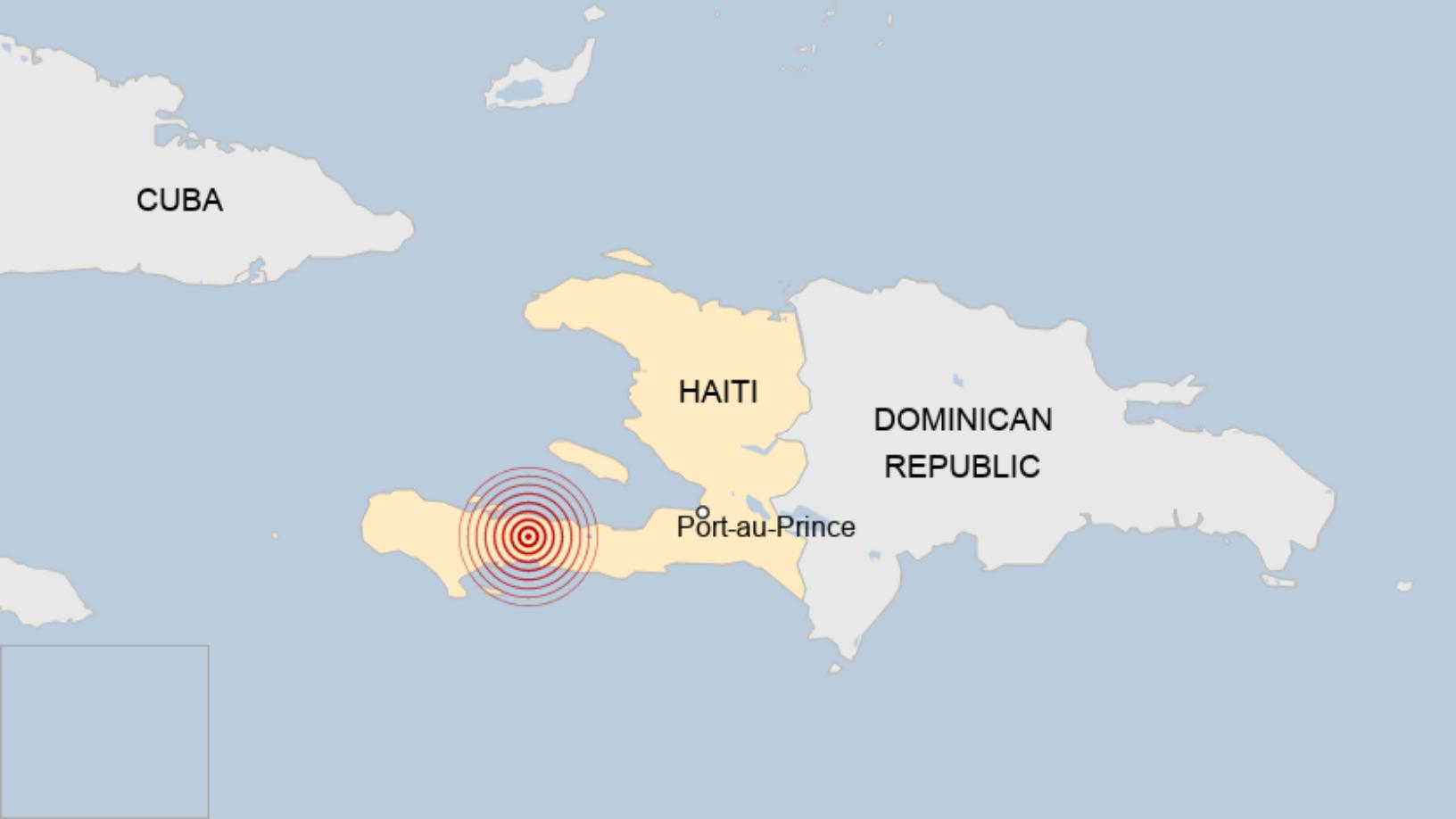
As the death toll rises from the earthquake in Haiti, AP explains why the country is prone to devastating earthquakes
After the UN climate report, individuals seek to do their part
U.S. officials to declare first-ever water shortage from a river that serves 40 million people in the West
KABUL, Afghanistan (AP) — The U.S. military took over Afghanistan’s airspace on Monday as it struggled to manage a chaotic evacuation after the Taliban rolled into the capital, as the militants tried to project calm amid widespread fears of unrest….Read More
The chop of U.S. military helicopters whisking American diplomats to Kabul’s airport punctuated a frantic rush by thousands of other foreigners and Afghans to flee to safety as well, as a stunningly swift Taliban takeover entered the heart of Afgh…Read More
WASHINGTON (AP) — President Joe Biden and other top U.S. officials were stunned on Sunday by the pace of the Taliban’s nearly complete takeover of Afghanistan, as the planned withdrawal of American forces urgently became a mission to ensure a safe …Read More
A young Chinese woman says she was held for eight days at a Chinese-run secret detention facility in Dubai along with at least two Uyghurs, in what may be the first evidence that China is operating a so-called “black site” beyond its borders. …Read More
WASHINGTON (AP) — America’s top general said the United States could now face a rise in terrorist threats from a Taliban-run Afghanistan. That warning comes as intelligence agencies charged with anticipating those threats face new questions after t…Read More
WASHINGTON (AP) — U.S. officials on Monday are expected to declare the first-ever water shortage from a river that serves 40 million people in the West, triggering cut…Read More
Earthquakes have been wreaking havoc in Haiti since at least the 18th century, when the city of Port-au-Prince was destroyed twice in 19 years. The 21st century has be…Read More
Afghan President Ashraf Ghani slipped out of his country Sunday in the same way he had led it in recent years — a lonely and isolated figure. Ghani quietly left the sp…Read More
HOBOKEN, Belgium (AP) — Young urban shepherd Lukas Janssens guides his flock among the graves in Schoonselhof, one of Belgium’s iconic cemeteries, knowing sheep are ki…Read More
HAVANA, Aug 15 (Reuters) – Cuba’s public health minister said on Sunday efforts were underway to restart the country’s main oxygen factory which had broken down even as the death toll from COVID-19 on Saturday reached 98, equal to the pandemic record.
Minister Jose Angel Portal’s appearance on the state’s mid-day news broadcast came as a Delta-driven surge in coronavirus cases and deaths swamped some provincial health services.
Daily cases are averaging between 8,000 and 9,000 and fatalities at nearly 1% of cases, low by international standards but high for Cuba which last year had a death rate of 0.67%.
As of Saturday Cuba had reported 577,668 cases and 4,023 deaths.
The health crisis, on top of an economic one that saw the economy fall 10.9% last year, and an additional 2% through June compared with the same period last year, has resulted in a scarcity of consumer goods and frayed nerves in the Communist-run country. Last month tens of thousands took to the streets in protest, the most serious unrest since the early days of the 1959 Revolution.
Residents and some medical staff have taken to social media complaining of treatment in a land that prides itself for the quality of its free health system.
The country of 11.2 million residents has fully vaccinated three million with homegrown vaccines, with another two million expected to get a final shot before September.
Last week, official comments seemingly blaming health workers for collapsing health services provoked an unusual push back on social media with doctors blaming the government for a lack of supplies and poor management.
Portal took pains on Sunday to praise “the work of our health professionals on the front lines” while admitting there were shortages of some medicines used to treat COVID patients, 80% of which are produced locally.
Cuba’s Health Minister said a high-level commission was doing everything possible to make up for the oxygen shortage without indicating when the main plant would come back online.
Reuters- The number of migrants detained at the US-Mexico border in July exceeded 200,000 for the first time in 21 years, government data shows.
A total of 212,672 migrants were apprehended by US Customs and Border Protection (CBP), including an all-time high of 19,000 unaccompanied minors.
It continues a trend of rising migrant numbers this year, despite the White House urging people to stay away.
Experts say many migrants are fleeing violence and extreme poverty.
The July figure represents the highest monthly total since April 2000 – the latest sign of the growing humanitarian crisis facing the Biden administration.
Attempted migrant crossings have historically dipped during the hot summer months along the nearly 2,000-mile southern border.
But July’s numbers are a 13% increase from June, when over approximately 188,000 migrants were detained by US border control. In May, 180,000 migrants were stopped in attempted crossings.
On Thursday, US Homeland Security Secretary Alejandro Mayorkas described the situation as “one of the toughest challenges” the country faces.
“It is complicated, changing and involves vulnerable people at a time of a global pandemic,” he said.
It is also proving politically troublesome for President Joe Biden. An AP-NORC poll in May found that 54% of Americans disapprove of how the Democrat is handling immigration issues.
In early August, the Biden administration announced that it would indefinitely extend a Trump-era pandemic policy that allows the US to swiftly expel undocumented migrants. Unaccompanied children and some families are exempt.
More than 45% of July’s total were processed for expulsion under this policy, known as Title 42.
Many, however, re-attempt the crossing.
CBP data shows that 27% of the migrants detained last month had at least one prior encounter with authorities in the past year. The remaining 154,288 were recorded as “unique individuals”. Between 2014 and 2019, the re-encounter rate stood at 14%.
US authorities have also begun controversial “expulsion flights” that fly Central American families to southern Mexico. Officials have said they hope that these families return to their home countries, rather than the US border.
But activists have warned that many families are dropped off in areas that put them at risk. Earlier this week, the United Nations High Commissioner for Refugees called the practice “a troubling new dimension” in Title 42 enforcement.
Mr Mayorkas said that the migrants are being taken to “where it’s far more difficult to try again.”
“We are working with Mexico to ensure for individuals subject to the expulsion flights [that] their needs are addressed.”
Tens of thousands of people from the Central American nations of Guatemala, El Salvador and Honduras have tried to enter the US in recent years.
The reasons migrants give for why they undertake the dangerous journey are varied: family, better economic opportunity, or the chance to escape violence and corruption.
At times it seems like the word “crisis” is applied to the situation on the US southern border almost every month. Certainly, it is important to distinguish between when it is real and the constant overuse of the word for political ends.
However, when the number of migrants reaching the border after the gruelling trip north is at its highest level in more than two decades and the figure for unaccompanied minors is at its highest ever recorded, then clearly something especially complex is happening.
For those attempting the journey, the motivations over the past 18 months of the coronavirus pandemic have become even more urgent. The lack of stable work in much of the region has become desperate as the ongoing pandemic batters the rural economies in Guatemala, El Salvador and Honduras month after month.
However, political conditions are also in play as well as economic ones. There has been a noticeable uptick in the number of migrants from Nicaragua amid its political crisis and the instability in Haiti following the assassination of its president last month has also played a role.
Aid agencies and migrant rights groups have urged the Biden administration to treat this as a humanitarian crisis rather than a security one. However, with no obvious end in sight to the poverty and sense of crisis prompting the migrants travel north, the high rate of apprehensions is likely to continue for some time.
media captionRisking everything for an American dream
PORT-AU-PRINCE, Aug 15 (Reuters) – A “humanitarian corridor” through Haiti’s gang-infested areas should be established so aid can flow to the southern regions hit by a powerful earthquake on Saturday that killed more than 1,200 people, a U.N. official said on Sunday.
The United Nations and the Haitian government have struggled to send medical supplies and doctors by road to the town of Les Cayes, which bore the brunt of the damage, due to security concerns. Instead, they have been using boats and air transport.
A spike in kidnappings and gang violence has left some roads in Port-au-Prince dangerous to drive on, including the urban area of Martissant, home to the main thoroughfare linking the coastal capital with the southern regions.
Bruno Maes, the United Nations Childrens Fund (UNICEF) Representative in Haiti, said the U.N. was “calling for a humanitarian corridor in Haiti to allow quicker and safer transfer of goods and people”.
“We are really advocating for armed groups to allow this humanitarian aid to go to reach the people as soon as possible,” Maes told Reuters.
UNICEF has managed to send one container with medical supplies to southern Haiti but the agency and many other aid organizations need to dispatch much more help to Les Cayes and surrounding areas, Baes said.
Jery Chandler, head of Haiti’s Civil Protection Agency, said the authorities were working on providing access through Martissant but for the time being the government was sending most of the help by helicopters, planes and boats.
“Now we’re working on establishing a real open access road through Martissant,” Chandler said.
Reports on social media, including an interview with a purported gang leader, suggested the armed groups had called a truce and would let aid pass, though so far there has been no confirmation of this.
Writing by Drazen Jorgic; Editing by Stephen Coates
BBC- Officials in Haiti have confirmed at least 1,297 people are dead after a powerful 7.2-magnitude earthquake hit the Caribbean nation on Saturday.
Rescuers are picking through rubble in a desperate search for any survivors.
Homes, churches and schools were among buildings flattened in the quake. Some hospitals were left overwhelmed and in need of supplies.
An unknown number of people are missing and about 5,700 have been injured, officials say.
The disaster compounds problems facing the impoverished nation, which is already reeling from a political crisis following the assassination of its president last month.
The south-west of Haiti appears to have suffered the worst of the damage, especially around the city of Les Cayes.
Footage on social media showed residents desperately trying to pull victims from ruined buildings.
“The streets are filled with screaming,” Archdeacon Abiade Lozama, head of an Anglican church in Les Cayes, told the New York Times. “People are searching, for loved ones or resources, medical help, water.”
The epicentre of Saturday’s quake was about 12km (7.5 miles) from the town of Saint-Louis du Sud, the US Geological Survey (USGS) said.
But the tremor could be felt in the densely-populated capital of Port-au-Prince, some 125km away, and in neighbouring countries.
Prime Minister Ariel Henry declared a month-long state of emergency and urged the population to “show solidarity”.
“The most important thing is to recover as many survivors as possible under the rubble,” he said on Saturday. “We have learned that the local hospitals, in particular that of Les Cayes, are overwhelmed with wounded, fractured people.”
The international community has promised to help.
US President Joe Biden said he had authorised an “immediate US response” through USAID. The UN also said it was supporting the rescue effort.
The neighbouring Dominican Republic has offered to send food and medical equipment, with Cuba also reportedly deploying more than 250 doctors.
Jerry Chandler, the head of the Haiti’s civil protection agency, said on Sunday that in the South department, where Les Cayes is situated, about 1,500 houses had been completely destroyed and 3,000 damaged.
“In Nippes [department], there are 899 houses destroyed and 723 houses damaged. In the Grande’Anse department, there are 469 houses destroyed and 1,687 houses damaged,” he added.
He warned that Tropical Storm Grace, which is approaching the country, is “likely to make matters worse” in the coming days.
The Pope offered prayers for the victims during a Sunday address and expressed hope that aid would arrive soon.
Aftershocks were felt after the initial tremor, with the USGS initially warning the earthquake could result in thousands of fatalities and injuries.
A 2010 earthquake in Haiti killed more than 200,000 people and caused extensive damage to the country’s infrastructure and economy.
Reuters
Haiti: Key facts
11 million inhabitants
59%percentage who live below the poverty line
2004-2017years in which a UN peacekeeping force was present
200,000number of people killed in the 2010 earthquake
People look for survivors at a house destroyed following a 7.2 magnitude earthquake in Les Cayes, Haiti August 14, 2021. REUTERS/Ralph Tedy Erol
PORT-AU-PRINCE, Aug 15 (Reuters) – When Lydie Jean-Baptiste saw her neighbors running from their homes on Saturday and felt the ground begin to shake beneath her feet, the 62-year-old Haitian was flooded by terrifying memories of the earthquake a decade ago that devastated her hometown.
For many in the poor Caribbean nation, Saturday’s major quake – which killed more than 300 people and left hundreds injured – revived the trauma of the Jan. 12, 2010 temblor from which the country was still reeling. read more
“The neighbors, I saw them running and running. I said ‘What’s wrong?’ They said ‘Earthquake!’ and I rushed to the front door,” Jean-Baptiste said. “All of a sudden, I had all those images of January 12 coming to my mind and I felt really, really scared.”
Her neighborhood of Delmas, in the southern outskirts of Port-au-Prince, was tossed by Saturday’s quake, whose epicenter was some 150 km (90 miles) to the west of the capital.
But in 2010, the tremor struck much closer, leveling many of the houses in her neighborhood and across the capital.
Estimates of the number of dead from that tremor vary widely, from below 100,000 to as high as the government’s 316,000.
When the 2010 quake struck just before 5 pm, Jean-Baptiste was covered in debris in her office and had to walk home through the wreckage of familiar streets.
“People had their head cut off, corpses, everything. For 48 hours, I just felt like: Am I alive? Did I awake somewhere else?” Jean-Baptiste said, adding it took her nearly a year before she was able to sleep under her own roof without worrying it would collapse.
“The trauma is coming back. I am home and we are just wondering, are we sleeping inside? Are we going to sleep on the veranda?”
Her worries were echoed by Haitians across the south of the country, with some in the worst-affected areas saying they preferred to sleep outdoors than worry about the roof crashing down on them.
“There are aftershocks every now and then, so I will be sleeping outside,” said Yvon Pierre, 69, former mayor of Saint Louis du Sud, now living in Les Cayes.
“I am strong but this affected me psychologically and that is probably the same as the rest of the population.”
Saturday’s earthquake came from the same system of seismic faults as the massive tremor that convulsed Port-au-Prince in 2010, running east to west across the nation.
Haiti – the poorest nation in the Americas – still bears the scars of the 2010 quake, with its infrastructure and economy weakened.
Iconic buildings, including the Notre Dame l’Assomption cathedral, have not been rebuilt, while tens of thousands of people still live in provisional housing.
Efforts to rebuild have been hampered by a flawed international aid system, corruption and political turmoil, experts said. Just last month, President Jovenel Moise was assassinated at his home.
Fonie Pierre, director of Catholic Relief Services for Les Cayes, 49, said Saturday’s quake was so strong that she could not bring herself to move, and as she stood there in her home, she had flashbacks from 2010.
She had traveled from Les Cayes to the capital days after the tremor and seen corpses piled up on the side of the road.
“It brought back to my mind’s eye the dead bodies, the white dust of homes crumbling” said Pierre. “I thought: this is it, it’s the same thing.”
Haiti had been struck by calamity after calamity – and now also has to face Tropical Storm Grace, on track to blow through the nation early next week, she lamented.
“It’s as if the sky were falling in on us,” she said. “And you ask yourself: What have we done to deserve this?”
Reporting by Andre Paultre in Port-au-Prince, Kate Chappell in Kingston and Sarah Marsh in Havana; Writing by Daniel Flynn and Sarah Marsh; Editing by Christopher Cushing
The delta variant has overtaken the U.S. in a matter of weeks as it spreads around the world in what President Biden’s chief medical adviser Anthony Fauci called a “global outbreak” of the strain.
The highly contagious variant of COVID-19 is considered at least two times more contagious than the previously dominant alpha strain, and experts say the increased transmissibility has likely fueled the surge in COVID-19 cases, hospitalizations and deaths nationwide.
But much is still unknown about delta as scientists scramble to better understand the strain.
Here’s what we know about the delta strain and how it blunted earlier momentum in the fight against the coronavirus.
Delta is more transmissible than previous COVID-19 strains
Delta’s contagiousness is considered key to its domination, having spread to at least 117 countries after first being detected in India. Like other viruses, COVID-19 is evolving, particularly through unplanned mutations.
A study from the United Kingdom in May suggested the delta strain could be 60 percent more transmissible than the alpha variant, which was already more contagious than the original strain.
But experts are split on that figure, with some saying delta could be more transmissible and others saying it could be less.
“You don’t necessarily want to attribute that all to the virus. You know, a lot of it may reflect the people as well,” said David Dowdy, an associate professor of epidemiology at the Johns Hopkins Bloomberg School of Public Health.
Researchers aren’t certain about what makes the delta variant more transmissible, but there are some clues.
Michael Farzan, head of the Department of Immunology and Microbiology at Scripps Research, said one of the variant’s advantages is that it can more strongly attach to a certain receptor when spreading in the body.
“This is one of the reasons why the virus … in a person gets made at a higher level, meaning that there’s a lot more being spit out or coughed out, meaning that it’s more likely to hit the next person,” he said.
The Centers for Disease Control and Prevention (CDC) has its own figures illustrating how the strain became so prevalent this summer. The agency’s latest projection is that 97.4 percent of all coronavirus cases come from all the different lineages of the delta variant, as of the week ending last weekend.
That marks an astronomical increase from the 1.6 percent estimated at the beginning of May and the 14.1 percent from the beginning of June.
Most people infected with COVID-19 at this point won’t know for sure whether they contracted the delta strain since available testing doesn’t make the distinction between strains — it only shows whether the virus itself is present.
It has a higher magnitude of viral loads
Health experts are examining the delta variant’s viral load, the measure of how much virus a person carries and can potentially transmit, compared to previous COVID-19 strains.
A study from China suggested that the strain’s viral load could be more than 1,000 times higher than the original strain, which Fauci on Thursday said “is a mechanistic reason why you have such a tremendous increase in transmissibility.”
Basically a higher viral load can make it more likely that an infected person can “shed” the virus, allowing someone nearby to contract it.
“If a little droplet that you sent out, it has more particles and that means it’s more likely to infect the next person over and it’s more likely to infect the next person over more times,” Farzan said.
Dowdy of Johns Hopkins cautioned that other variables, including people’s behavior, may be influencing how scientists understand delta’s viral load. With more people relaxing their COVID-19 precautions and interacting with others indoors, those same people could contract more of the virus than they might otherwise.
A study of a Massachusetts outbreak indicated that delta led to fully vaccinated people having a similar viral load compared to the unvaccinated, sparking the CDC to update its mask guidance late last month.
The outbreak on Cape Cod, where nearly three-quarters of confirmed cases were among fully vaccinated people, suggested that vaccinated people could potentially transmit and spread the delta variant. But researchers said at the time that microbiological studies would be needed to confirm whether vaccinated individuals can transmit the strain.
Vaccines are still effective against delta
Studies have found that at least five vaccines, including all three used in the U.S., are effective against the delta variant in lab and real-world settings, Fauci said on Thursday.
It was previously unclear whether the Johnson & Johnson vaccine, which requires only one dose instead of two, was equally effective. But a study released last week found the immune response lasted at least eight months, resulting in the first real-world data for the vaccine, Fauci said.
Recent studies have indicated that vaccines may see a very slight dip in effectiveness against symptomatic versions of the coronavirus caused by the delta variant. The COVID-19 vaccines, like any other, are also not perfect at preventing all delta infection and illness.
But scientists agree that studies have demonstrated that the vaccinated population is less likely to get infected and much less likely to be hospitalized or die from the delta variant than the unvaccinated.
“The only reason our case numbers are lower now than they were back in December is because half of our population has been fully vaccinated,” Dowdy said.
Still more to learn
Experts acknowledge there is much more to learn about the delta variant.
“A big thing is we still don’t know how much of what we’re seeing is due to the virus versus due to behavior,” Dowdy said. “That makes a big difference because things that are due to the virus, we can’t really change as a society.”
Although there’s a growing number of studies, not all scientists are certain that the variant itself necessarily causes more serious illness among the unvaccinated, leading to more hospitalizations and deaths. It’s also unclear whether the strain is sparking more severe illness among children as pediatric hospital admissions have picked up.
Additionally, scientists have more analysis to do on under-researched mutations that may give the virus more of an advantage, Farzan said.
NIA CHARLESTOWN NEVIS (August 13, 2021) — The construction of a multi-million-dollar, state of-the-art multi-purpose technical wing at the Gingerland Secondary School is nearing completion.
Hon. Troy Liburd, Junior Minister of Education, made the disclosure during a tour of the site on August 12, 2021, with his Cabinet colleagues led by Hon. Mark Brantley, Premier of Nevis.
“Very happy this morning to welcome the Cabinet, the Premier and other Cabinet colleagues to a visit here at the Gingerland Secondary School at the [Technical and Vocational Education and Training] TVET wing which is just about 90 percent completed. This project would have started sometime last year. I believe about 13 months ago and we are now nearing completion…
“It is part of the wider TVET project that has been happening here on Nevis for some time… Our contractors on this project were Lefco [Equipment Rentals & Construction Co. Ltd.], and the consultants on the project were FDL Consult Inc. out of St. Lucia. So, the project is set to be completed at the end of this month and then we would have some remedial work and to move in all of the equipment and so on and then the Gingerland Secondary School would have access to the building shortly.
Mr. Liburd expressed hope that the project would be of benefit to the island’s youth as the NIA strives to bring technical and vocational subjects to them.
The Junior Education Minister also spoke of the type of classrooms which will be housed in the 4,800 sq. ft. two-storey building.
“The classrooms to be housed in the building when it’s complete would be a woodwork shop, technical drawing classrooms, electricity, cosmetology and there would be some general classrooms,” he said.
On completion of the $4million project, a similar but larger building will be constructed at the Charlestown Secondary School (CSS) to house the TVET programme there. Construction is expected to commence by 2022.
Both projects on Nevis form part of the wider $8million St. Kitts and Nevis TVET Enhancement Project which is funded by the Government of St. Kitts and Nevis and the Caribbean Development Bank (CDB).
Also present on the tour were Hon. Alexis Jeffers, Deputy Premier of Nevis; Hon. Eric Evelyn, Hon. Spencer Brand; Mr. Stedmond Tross, Cabinet Secretary; Mrs. Hélène Anne Lewis
Legal Advisor to the NIA; Mr. Darius Cumberbatch, Engineer for FDL Consult Inc.; Mr. Lester Blackett, Project Manager; and Mr. Dorson Ottley, TVET Officer at the Department of Education.
NIA CHARLESTOWN NEVIS (August 13, 2021) — The Department of Social Services’ Yes To Success (YTS) Youth Skills Training and Diversion programme, which will enter its 7th Cycle, from Monday August 16, 2021, continues to grow.
Speaking on the success of the programme so far, Mrs. Sandra Maynard Morton, Director of Social Services said on August 11, 2021, that it continues help participants to succeed in the wider community.
“The programme is still growing. We are trying to stay focused on who it is meant to serve with the knowledge that young people who are more academically inclined may find it easier to compete in the world of work and life in general, so those that we target, we work hard with them to give them an edge.
“It is always good to see them succeed, complete the programme, get long-term work even go on to other technical programmes, as this raises their confidence and sets them on a good path in life. Some can be challenging to work with. We anticipate drop outs every year but overall we are pleased with the outcomes of YTS thus far,” she said.
The programme, which targets school leavers and older youth up to the age of 25 years, is a three-month skills training programme.
“The programme is strictly targeted to those who are not heavily academically inclined but have the potential to succeed in skilled work. It combines skills training, job preparation and other life skills sessions with a work internship to give the young persons a holistic experience. Its programming is also aimed at providing meaningful engagement to young persons to encourage them to steer clear of crime and violence.
“With good participation, the participants are paid a work stipend. Since 2015 the department has trained between 18 and 25 young persons annually, with an approximate 60 percent success rate of placing them in long-term employment up to 2018,” Ms. Maynard explained.
This year’s training sessions were tailored in anticipation of the reopening of hotels and restaurants affected by the COVID-19 pandemic and hopefully a surge in the construction industry, the director stated.
“The planning team at Social Services is offering Hospitality Preparedness Training, and Basic Plumbing, Electrical classes over the next three months to help boost the young person’s confidence in job search at hotels and in the construction industry.
“This year’s training will also incorporate several recreational videography training sessions to help keep the young persons interested,” she said.
The YTS programme is funded through the NIA’s recurring youth development funding and the Organisation of Eastern Caribbean States (OECS) Juvenile Justice Reform Project.
The training sessions are held at the YTS site at Pinney’s Estate which was officially opened on October 19, 2020. During the opening ceremony Hon. Eric Evelyn, Minister of Social Development on Nevis, gave the programme his blessings.
An Eastern Caribbean Supreme Court August 16, 2019 filing by Blue Lagoon Management Ltd., a Belize company, claiming $150,000 worth in shares in the new ownership in the Bank Of Nevis International Ltd. (BONI), came some four and a half months before the new ownership of the international bank became effective.
The Observer attempted to contact BONI’s Managing Director Michael J Prest several times this week, but he didn’t return our calls or respond to our messages.
To get an idea of what to expect in any challenge to Mr. Prest, the Observer made contact with a past colleague and sometimes adversary of his.
“He is the most calculated businessman that I have ever known”, the source told the Observer, speaking on condition of anonymity.
“You can tell that his brain is always working. Every action and everything that he says; every move is well thought out and well calibrated. He does more observing and listening than speaking. The toughest negotiator the industry produced. You go up against him, and when you think that he has backed off, is when he comes on like a tonne of brick. He grinds his opponents into submission. He goes quiet on you, behaving as though he has a hundred years to spare, then out of the blue he attacks,” our source said.
Prest became Managing Director of The Bank of Nevis International Ltd. on January 3 ,2020, following a December 29th 2019 announcement by
The Bank of Nevis Limited that read that the bank had entered into an agreement with Petrodel Investment Advisers (Nevis) Limited (PIAN), a Nevis-registered company, for the purchase of the banking operations of Bank of Nevis International Limited. “PIAN will own one hundred percent (100%) shares of Bank Of Nevis International Limited and will continue to operate the Bank under its existing name”.
The sale was executed on 31st December 2019.
March 5th this year, the Bank of Nevis International, otherwise referred to as BONI, acquired over 1.9 million ordinary shares, representing 24.08 per cent stake in Investrust of the African country, Zambia.
Prest in a speech at an event in April hosted by Edgar Lungu, President of Zambia, said that BONI’s involvement in Investrust would allow investments in natural resources in that country to be scaled up twentyfold.
Last month, the bank’s sister company, Bank Of Nevis International Trust Services (BONITS) announced that it has been approved to promote the island of St. Lucia’s Citizen By Investment Programme.
The launch of Citizenship Investment Programme (CIP) products to St. Lucia by BONITS, followed the announced launch of the entity’s first overseas office in Dubai in April 2021, as the organisation continues to grow its geographic footprint and focus on providing global clients with Migration Investment solutions that meet their changing demands.
The Bank of Nevis International Limited was incorporated under the Nevis Companies Ordinance, Cap 7.06 of the laws of St. Christopher and Nevis, on April 29th, 1998 and commenced operations on July 1st, 1998.
According to a 2010 post by Muhtar Bakare in “Oil and Gas Tanzania”, Michael Prest was “the chief executive officer of Petrodel Resources Limited but was not well-known outside business circles, but he is well-regarded in the exclusive and close-knit world of international independent oil trading”.
Prest is Nigerian, but “not the typical successful Nigerian businessman. He avoids flamboyance and prefers to keep a low profile”, according to the Bakare article.
He is currently 57, and has completed a lot in this life.
Bakare describes Prest as having completed four international marathons, and being “lean, wiry, possessed of a body toned by self-discipline and an aura of incredible calm and self-control”.
“Mr. Prest is from a prominent Warri family. His grandfather was a judge and minister for communication in the first republic, his father was a lawyer, chief of staff and special adviser to President Shehu Shagari. He speaks of his family in reverential tones,” according to Bakare, who interviewed him.
“I wouldn’t be here today without the sacrifices my parents made for me.”
Mr. Prest went to public school in England, considered becoming a priest and gave up a place at the School of Oriental and African Studies, University of London to read law at the then University of Ife.
“That was the first time in my life where I really was put in an arena where people wanted to succeed. I had experienced adversity but I’d never had it right in my face, and I think it was the first time in my life where I got a chance to understand who I was in the context of my own history,” Prest told Bakare.
He sees himself as an introvert, and Bakare said that Mr. Prest admits to a restless spirit. He was called to the bar as a lawyer in 1984 and went into legal practice, but acted on the urge to do something bigger.
“I was impatient because at that time a lot of my friends were getting involved in the global markets. Although, I didn’t understand what it was at the time, I knew there was some momentum building, and that young people were making some fairly big decisions. So, I left Nigeria in 1986, not knowing what I was going to do, but I had this energy,” Prest told Bakare.
“You have to be phlegmatic about failure. When you were young and you had those discos and the boys would stand on this end of the room and the girls would stand over there, I was always that child, as ugly and as short as I am, who would walk across and ask the most beautiful girl in the room to dance,” Bakare quoted him.
His sister Helen Prest, who was at the time Miss Nigeria, was also at the same university at the time as Prest, showed him off as her well-spoken, confident always, well-dressed younger brother. That increased his popularity.
“My brother has always been very determined and focused,” said Helen Prest-Ajayi in an interview with Bakare. “He is very much the same now as he was then. He always knew what he wanted to do and where he was going.”
An old school friend’s reference resulted in Prest being interviewed and hired by the Phillip Brothers (Salomon Brothers) and he was hired as a soft commodities trader covering Africa, Eastern Europe and China.
After four years of successful trading, he moved to the oil section as an apprentice to John Brunner, one of the most influential physical oil traders of his time, who took Mr. Prest under his wing.
Prest opened up to Bakare about his apprentice days.
“I was boy-boy to John Brunner. He asked me to make the tea, I’d make the tea. I met the top echelon of NNPC through him. NNPC was going to buy a refinery; he made me an integral part of the discovery and negotiation process. So I got the best education, from the best, at the time, on how to operate in the oil business.”
Prest made a name for himself in the world of high-rolling oil trading as a calm and shrewd negotiator.
He took his father’s death in 1993 hard, and took over the role as the leader of the family and ensured that his two younger brothers finished university. His father was only 56 when he died.
Prest said in his interview with Bakare, “My father taught me: Never die until they kill you. Always work hard. Look after your siblings because it’s your people, who when you have a problem will save you. And most importantly, he taught me from a very young age; know who you really are; not that image you project to people.”
Prest cemented himself as a star at John Brunner’s. The 1990s were fierce years in the oil trading business and traders knew each other, and the Rich brothers topped that business.
Prest soon came to the attention of oil trading legend Marc Rich, who reached out to him in 1996, according to Bakare’s blog.
“If you were in oil trading, there were two companies or two individuals you always wanted to have worked for because you hoped some of the aura would rub off on you. One was Phillip Brothers, and the other one was Mr. Marc Rich. Despite all the stories you hear about him, if you’re in oil trading, you don’t get any bigger personality than Marc. So, when he was thinking of creating a new business, for him to have me in mind…It was simply a call I had to take…but it was a double-edged sword, because…I know what the world says about him.”
“The only thing I will say is; there’s a human side to this man…a lot of people feel like they haven’t been given an opportunity for whatever reason…and to find an iconic figure, who didn’t care that I was from Nigeria. He didn’t care that you were black, white, Indian or Muslim. He just wanted to know, can you stay the course and can you cut the deal? Can you look him in the eye? Yes or No?” Prest told Bakare.
Bakare quoted the following sources in the comments below;
“The art of the Rich deal according to a 2005 Businessweek article is: Do whatever it takes. The magazine went on: “Rich is notorious for trading with Iran during the hostage crisis, South Africa during apartheid, and Cuba and Libya during U.S. trade embargoes.”
“The Rich Boys, as his protégés have been called by Businessweek, form the most “powerful informal network of independent commodities traders on earth… .” Companies associated with Marc Rich and his protégés include, Glencore, Trafigura and Vitol, which do very brisk business in Nigeria.”
He worked for Marc Rich between 1996 and 2001; at one point running a global business with 400 employees and an annual turnover of $14 billion.
“Mr. Prest’s tenure at Marc Rich heralded the introduction of many young Nigerians and Africans into the company and as counterparties to the company. Many of them are still active today in the oil industry across the continent,” Bakare wrote.
Prest told Bakare, “Marc took a great interest in me and spent hours upon hours in his office in Zug literally teaching me and keeping me on my toes… he then allowed me to run his company trading crude oil and all the derivative products. He respected hard work and most of all valued loyalty”.
Rich ran enterprises that brokered oil, gold, sugar, grain, aluminum and nickel. He even sold copper to the U.S. mint until lawmakers found out about it, according to The Chicago Tribune.
Marc Rich died in June 2013.
Early in 2002, Michael Prest felt that he had learned all he possibly could from Marc Rich, so he lounged out on his own and started Petrodel.
“Don’t forget I’d been an employee since 1986. It’s the experience which I think, money can’t buy. I really do understand the oil business. Wake me up at any time of the day. In this sector, when I talk; I know what I’m talking about. I don’t want to seem arrogant when I say this but, if you had to pick 5-10 personalities in the oil trading business, my name would be there,” Prest told Bakare.
“My father made a point of telling everybody he knew in government; this is my son. Everywhere I went, they would give me an audience. So when I came home, my foot was already in the door. Not just because of me, but people knew my dad and they knew my grandfather, they knew my mother and they knew my sister…Without their sacrifices I would not be where I am today…truth be told, I had to do very little,” Prest related to Bakare.
By 2010, Petrodel had diversified interests in real estate, leisure and hospitality.
Prest opined then that Petrodel would thrive, so long as it continued to add value to its host communities and invest in people:
“We haven’t got to that point yet and we will only get to that point when the wheels of industry are driven by the resolute and the bold, who have now said to themselves, that theirs is a sacrifice where the benefit is a legacy they leave behind for our children.”
Is Bank Of Nevis Int. Chief Prest hard-pressed?
An Eastern Caribbean Supreme Court August 16, 2019 filing by Blue Lagoon Management Ltd., a Belize company, claiming $150,000 worth in shares in the new ownership in the Bank Of Nevis International Ltd. (BONI), came some four and a half months before the new ownership of the international bank became effective.
The Observer attempted to contact BONI’s Managing Director Michael J Prest several times this week, but he didn’t return our calls or respond to our messages.
To get an idea of what to expect in any challenge to Mr. Prest, the Observer made contact with a past colleague and sometimes adversary of his.
“He is the most calculated businessman that I have ever known”, the source told the Observer, speaking on condition of anonymity.
“You can tell that his brain is always working. Every action and everything that he says; every move is well thought out and well calibrated. He does more observing and listening than speaking. The toughest negotiator the industry produced. You go up against him, and when you think that he has backed off, is when he comes on like a tonne of brick. He grinds his opponents into submission. He goes quiet on you, behaving as though he has a hundred years to spare, then out of the blue he attacks,” our source said.
Prest became Managing Director of The Bank of Nevis International Ltd. on January 3 ,2020, following a December 29th 2019 announcement by
The Bank of Nevis Limited that read that the bank had entered into an agreement with Petrodel Investment Advisers (Nevis) Limited (PIAN), a Nevis-registered company, for the purchase of the banking operations of Bank of Nevis International Limited. “PIAN will own one hundred percent (100%) shares of Bank Of Nevis International Limited and will continue to operate the Bank under its existing name”.
The sale was executed on 31st December 2019.
March 5th this year, the Bank of Nevis International, otherwise referred to as BONI, acquired over 1.9 million ordinary shares, representing 24.08 per cent stake in Investrust of the African country, Zambia.
Prest in a speech at an event in April hosted by Edgar Lungu, President of Zambia, said that BONI’s involvement in Investrust would allow investments in natural resources in that country to be scaled up twentyfold.
Last month, the bank’s sister company, Bank Of Nevis International Trust Services (BONITS) announced that it has been approved to promote the island of St. Lucia’s Citizen By Investment Programme.
The launch of Citizenship Investment Programme (CIP) products to St. Lucia by BONITS, followed the announced launch of the entity’s first overseas office in Dubai in April 2021, as the organisation continues to grow its geographic footprint and focus on providing global clients with Migration Investment solutions that meet their changing demands.
The Bank of Nevis International Limited was incorporated under the Nevis Companies Ordinance, Cap 7.06 of the laws of St. Christopher and Nevis, on April 29th, 1998 and commenced operations on July 1st, 1998.
According to a 2010 post by Muhtar Bakare in “Oil and Gas Tanzania”, Michael Prest was “the chief executive officer of Petrodel Resources Limited but was not well-known outside business circles, but he is well-regarded in the exclusive and close-knit world of international independent oil trading”.
Prest is Nigerian, but “not the typical successful Nigerian businessman. He avoids flamboyance and prefers to keep a low profile”, according to the Bakare article.
He is currently 57, and has completed a lot in this life.
Bakare describes Prest as having completed four international marathons, and being “lean, wiry, possessed of a body toned by self-discipline and an aura of incredible calm and self-control”.
“Mr. Prest is from a prominent Warri family. His grandfather was a judge and minister for communication in the first republic, his father was a lawyer, chief of staff and special adviser to President Shehu Shagari. He speaks of his family in reverential tones,” according to Bakare, who interviewed him.
“I wouldn’t be here today without the sacrifices my parents made for me.”
Mr. Prest went to public school in England, considered becoming a priest and gave up a place at the School of Oriental and African Studies, University of London to read law at the then University of Ife.
“That was the first time in my life where I really was put in an arena where people wanted to succeed. I had experienced adversity but I’d never had it right in my face, and I think it was the first time in my life where I got a chance to understand who I was in the context of my own history,” Prest told Bakare.
He sees himself as an introvert, and Bakare said that Mr. Prest admits to a restless spirit. He was called to the bar as a lawyer in 1984 and went into legal practice, but acted on the urge to do something bigger.
“I was impatient because at that time a lot of my friends were getting involved in the global markets. Although, I didn’t understand what it was at the time, I knew there was some momentum building, and that young people were making some fairly big decisions. So, I left Nigeria in 1986, not knowing what I was going to do, but I had this energy,” Prest told Bakare.
“You have to be phlegmatic about failure. When you were young and you had those discos and the boys would stand on this end of the room and the girls would stand over there, I was always that child, as ugly and as short as I am, who would walk across and ask the most beautiful girl in the room to dance,” Bakare quoted him.
His sister Helen Prest, who was at the time Miss Nigeria, was also at the same university at the time as Prest, showed him off as her well-spoken, confident always, well-dressed younger brother. That increased his popularity.
“My brother has always been very determined and focused,” said Helen Prest-Ajayi in an interview with Bakare. “He is very much the same now as he was then. He always knew what he wanted to do and where he was going.”
An old school friend’s reference resulted in Prest being interviewed and hired by the Phillip Brothers (Salomon Brothers) and he was hired as a soft commodities trader covering Africa, Eastern Europe and China.
After four years of successful trading, he moved to the oil section as an apprentice to John Brunner, one of the most influential physical oil traders of his time, who took Mr. Prest under his wing.
Prest opened up to Bakare about his apprentice days.
“I was boy-boy to John Brunner. He asked me to make the tea, I’d make the tea. I met the top echelon of NNPC through him. NNPC was going to buy a refinery; he made me an integral part of the discovery and negotiation process. So I got the best education, from the best, at the time, on how to operate in the oil business.”
Prest made a name for himself in the world of high-rolling oil trading as a calm and shrewd negotiator.
He took his father’s death in 1993 hard, and took over the role as the leader of the family and ensured that his two younger brothers finished university. His father was only 56 when he died.
Prest said in his interview with Bakare, “My father taught me: Never die until they kill you. Always work hard. Look after your siblings because it’s your people, who when you have a problem will save you. And most importantly, he taught me from a very young age; know who you really are; not that image you project to people.”
Prest cemented himself as a star at John Brunner’s. The 1990s were fierce years in the oil trading business and traders knew each other, and the Rich brothers topped that business.
Prest soon came to the attention of oil trading legend Marc Rich, who reached out to him in 1996, according to Bakare’s blog.
“If you were in oil trading, there were two companies or two individuals you always wanted to have worked for because you hoped some of the aura would rub off on you. One was Phillip Brothers, and the other one was Mr. Marc Rich. Despite all the stories you hear about him, if you’re in oil trading, you don’t get any bigger personality than Marc. So, when he was thinking of creating a new business, for him to have me in mind…It was simply a call I had to take…but it was a double-edged sword, because…I know what the world says about him.”
“The only thing I will say is; there’s a human side to this man…a lot of people feel like they haven’t been given an opportunity for whatever reason…and to find an iconic figure, who didn’t care that I was from Nigeria. He didn’t care that you were black, white, Indian or Muslim. He just wanted to know, can you stay the course and can you cut the deal? Can you look him in the eye? Yes or No?” Prest told Bakare.
Bakare quoted the following sources in the comments below;
“The art of the Rich deal according to a 2005 Businessweek article is: Do whatever it takes. The magazine went on: “Rich is notorious for trading with Iran during the hostage crisis, South Africa during apartheid, and Cuba and Libya during U.S. trade embargoes.”
“The Rich Boys, as his protégés have been called by Businessweek, form the most “powerful informal network of independent commodities traders on earth… .” Companies associated with Marc Rich and his protégés include, Glencore, Trafigura and Vitol, which do very brisk business in Nigeria.”
He worked for Marc Rich between 1996 and 2001; at one point running a global business with 400 employees and an annual turnover of $14 billion.
“Mr. Prest’s tenure at Marc Rich heralded the introduction of many young Nigerians and Africans into the company and as counterparties to the company. Many of them are still active today in the oil industry across the continent,” Bakare wrote.
Prest told Bakare, “Marc took a great interest in me and spent hours upon hours in his office in Zug literally teaching me and keeping me on my toes… he then allowed me to run his company trading crude oil and all the derivative products. He respected hard work and most of all valued loyalty”.
Rich ran enterprises that brokered oil, gold, sugar, grain, aluminum and nickel. He even sold copper to the U.S. mint until lawmakers found out about it, according to The Chicago Tribune.
Marc Rich died in June 2013.
Early in 2002, Michael Prest felt that he had learned all he possibly could from Marc Rich, so he lounged out on his own and started Petrodel.
“Don’t forget I’d been an employee since 1986. It’s the experience which I think, money can’t buy. I really do understand the oil business. Wake me up at any time of the day. In this sector, when I talk; I know what I’m talking about. I don’t want to seem arrogant when I say this but, if you had to pick 5-10 personalities in the oil trading business, my name would be there,” Prest told Bakare.
“My father made a point of telling everybody he knew in government; this is my son. Everywhere I went, they would give me an audience. So when I came home, my foot was already in the door. Not just because of me, but people knew my dad and they knew my grandfather, they knew my mother and they knew my sister…Without their sacrifices I would not be where I am today…truth be told, I had to do very little,” Prest related to Bakare.
By 2010, Petrodel had diversified interests in real estate, leisure and hospitality.
Prest opined then that Petrodel would thrive, so long as it continued to add value to its host communities and invest in people:
“We haven’t got to that point yet and we will only get to that point when the wheels of industry are driven by the resolute and the bold, who have now said to themselves, that theirs is a sacrifice where the benefit is a legacy they leave behind for our children.”
The Bank of Nevis International announces the departure of Board member Dr Janice Hodge. Since her appointment to the Board of Bank of Nevis International Limited in April 2020 Dr Janice Hodge has provided counsel and strategic advice to the Board. However since her election as leader of The Nevis Reformation Party (NRP) in September 2020 Dr Hodge has had to re-assess her position as a director of the bank and determine whether she can meet her duties as a director. Dr Hodges departure from the Board is with immediate effect. We wish Dr Hodge all the best for the future.” A statement issued to The Observer by the bank.
 *****@
 *****@


 *****@
 *****@
 *****@

 *****@
 *****@
 *****@

 *****@
 *****@
 *****@

 *****@
 *****@
 *****@