Tag Archives: caribbean

Europe In Recruitment Drive for Female and Disabled Astronauts

European Space Agency aims to take on 26 people for missions to the Moon and eventually to Mars

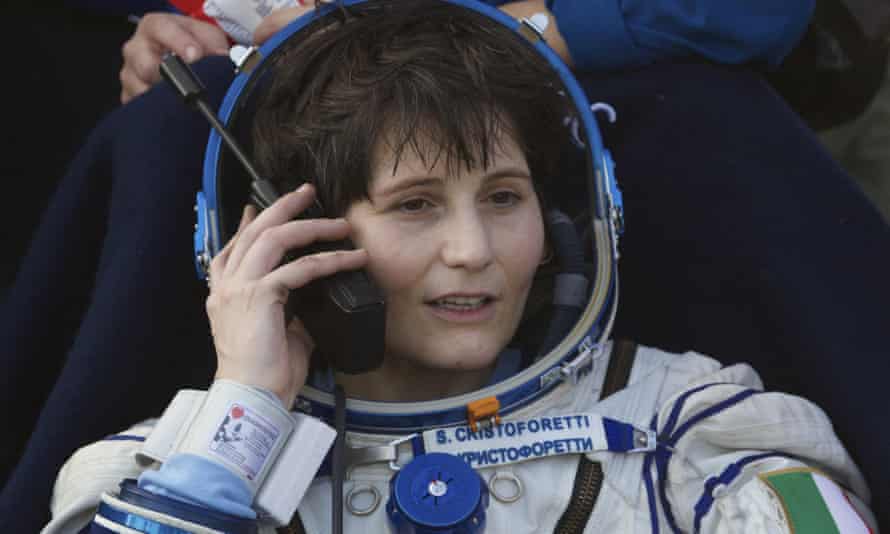
‘When it comes to space travel, we are all disabled,’ said Italian astronaut Samantha Cristoforetti.
‘When it comes to space travel, we are all disabled,’ said Italian astronaut Samantha Cristoforetti. Photograph: Ivan Sekretarev/AP


European space chiefs have launched their first recruitment drive for new astronauts in 11 years, with particular emphasis on encouraging women and people with disabilities to join missions to the Moon and, eventually, Mars.

The European Space Agency (ESA) said on Tuesday that it was looking to boost the diversity of its crews as it cavassed for up to 26 permanent and reserve astronauts.


But the ESA warned that it expected a “very high number” of applications to come in during the eight-week recruitment drive from 31 March, and said candidates would have to endure a tough selection process lasting until October 2022.

“Candidates need to be mentally prepared for this process,” Lucy van der Tas, ESA head of talent acquisition, said at a media conference.

Adapting technology that enabled humans to be in space could open the opportunity for people with disabilities, Italian astronaut Samantha Cristoforetti said.

“When it comes to space travel, we are all disabled,” Cristoforetti added.

Requirements for an astronaut job at ESA include a master’s degree in natural sciences, engineering, mathematics or computer science and three years of post-graduate experience.

“I think it’s a great opportunity … It will be an opportunity to learn a lot about yourselves,” Cristoforetti said.

It comes as human space flight appeared set for a revival.

After years in which the only launch site for crewed flights to space was Baikonur in the steppes of Kazakhstan, cooperation with private companies such as SpaceX has raised prospects for more human missions.

Topics

The post Europe In Recruitment Drive for Female and Disabled Astronauts appeared first on The St Kitts Nevis Observer.
Another COVID Variant Found in UK, World Statistics

Scientists have identified another new coronavirus variant in the UK which has potentially concerning mutations.

B.1.525, the new variant, contains a genetic change called E484K which is also found in the Brazilian and South African variants.

Public Health England (PHE) has said there is no evidence that the mutations in the new variant make the virus more transmissible or cause severe disease.

Laboratory studies have shown that viruses with the E484K mutation can escape human defences, making them more efficient at evading natural and vaccine-triggered immunity.

PHE said 38 cases involving B.1.525 have been identified so far in the UK, after samples dating back to December were studied.

It is not clear where the cases in the UK were found.

The experts said the variant has alterations in its genetic material that make it similar to the Kent variant, which is the dominant virus in the UK

=================================================

Seven symptoms should trigger a Covid test, new evidence shows – so what are they

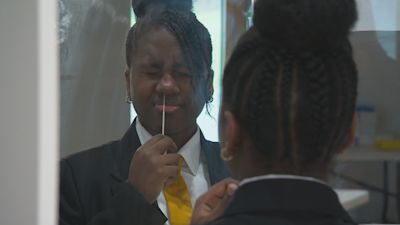
Most of the pupils have adapted quickly to the new weekly testing process

Four more symptoms of Covid should be added to the ‘classic’ cough, fever or loss of taste/smell that should prompt people to get a test, experts have concluded.

They say millions of coronavirus cases could be going undetected because people are only being told to have a test if they have the three most widely recognised signs.

Anyone who feels unwell has been urged to get a test by the researchers behind a new study which suggests that extending the list of symptoms to include fatigue, sore throat, headache and diarrhoea would help pick up around a third more Covid-19 cases.

The findings, published in the Journal of Infection, are based on data from 122,000 UK adults using the Zoe Covid Symptom Study app.

Professor Tim Spector, lead scientist on the Zoe app and professor of genetic epidemiology at King’s College London (KCL), said: “We’ve known since the beginning that just focusing testing on the classic triad of cough, fever and anosmia (loss of smell) misses a significant proportion of positive cases.

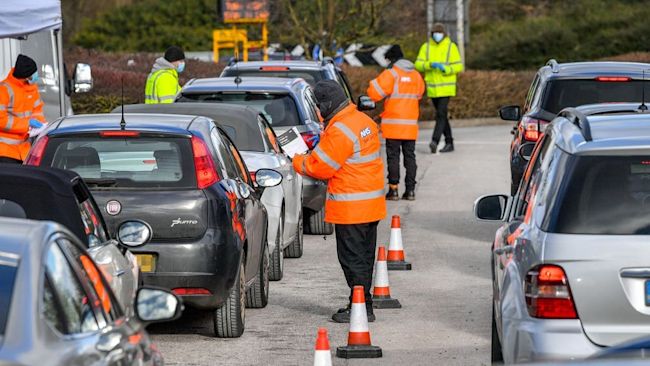
Surge testing has been carried out in various postcodes across England. Credit: PA

“We identified anosmia as a symptom back in May and our work led to the Government adding it to the list; it is now clear that we need to add more.

“By inviting any users who log any new symptoms to get a test, we confirmed that there are many more symptoms of Covid-19.

“This is especially important with new variants that may cause different symptoms.

“For us, the message for the public is clear: if you’re feeling newly unwell, it could be Covid and you should get a test.”


Scientists at KCL teamed up with the Coalition for Epidemic Preparedness Innovations (Cepi) to analyse data from 122,000 people, 1,202 of whom reported receiving a positive coronavirus test within a week of first feeling ill.

They found that testing people with any of the three classic symptoms would have spotted 69% of symptomatic cases, with 46 people testing negative for every person testing positive.

But the researchers said that extending the list of symptoms to fatigue, headache, sore throat and diarrhoea in the first three days of illness would have detected 96% of symptomatic cases, with 95 testing negative for every positive test.

================================================

A world-first ‘human challenge’ trial will infect healthy young people with coronavirus to study how it spreads and which vaccines work best

vaccine trial
A volunteer receives an injection from a medical worker during the country’s first human clinical trial for a potential vaccine against the novel coronavirus, at Baragwanath Hospital in Soweto, South Africa, June 24, 2020.
Siphiwe Sibeko/Reuters
  • A world-first study in the UK is infecting 90 healthy young people with coronavirus.
  • Scientists will figure out the smallest amount of virus needed to cause COVID-19.
  • They will also study how it spreads from person to person, and which vaccine works best.

A world-first study will infect young, healthy people with coronavirus in a controlled environment to learn more about its characteristics, UK officials announced Monday.

The so-called “human challenge” study has just received ethical approval, and will recruit 90 people between the ages of 18 and 30 who are at low risk of COVID-19 complications.

The study is backed by £33.6 million ($46.5 million) of UK government funding, and will begin within weeks, provided the hospitals with the secure facilities designed to contain the virus give the go-ahead, the Department for Business, Energy and Industrial Strategy (BEIS) said in a press release. 

The volunteers will be exposed to a lab-made coronavirus and monitored for 24 hours so that scientists can determine the smallest amount of virus that can cause infection. Researchers will also study how the virus spreads from person, and the volunteers’ immune responses.

The study will start with the original virus found in the UK in March 2020— that has shown to be low risk for young, healthy people — rather than the more contagious coronavirus variant now spreading in the UK and elsewhere, called B.1.1.7.

Challenge trials regularly play a role in the development of treatments for diseases, such as for cholera and flu, but this is the first human challenge trial for COVID-19.

In a second wave of the study, a small number of volunteers will receive a COVID-19 shot that has proven in clinical trials to be safe, and then be exposed to coronavirus, to help identify which vaccines are most effective.

“These human challenge studies will take place here in the UK and will help accelerate scientists’ knowledge of how coronavirus affects people and could eventually further the rapid development of vaccines,” Kwasi Kwarteng, the UK business secretary, said.

Dr. Chris Chiu, the study’s chief investigator, from Imperial College London, said that the researchers’ eventual aim was to establish which vaccines and treatments work best “in beating this disease.”

=========================================

Coronavirus Cases:

110,160,765

Deaths:

2,432,625

Recovered:

84,977,987
Highlighted in green
= all cases have recovered from the infection
Highlighted in grey
= all cases have had an outcome (there are no active cases)

[back to top ↑]

January Timeline:

  • On January 31, the first 2 novel coronavirus cases in the UK, [18] the first 2 cases in Russia, [20] and the first case in Sweden and in Spain were reported. Canada reported its 4th case.
  • On Jan. 31, the United States
    • declared Coronavirus a Public Health Emergency
    • issued 14 days quarantine rules for US citizens entering the US from China (mandatory if entering from the Hubei province).
    • issued an order to deny entry to foreigners who have traveled to China within the past two weeks.
  • On January 30, the novel coronavirus total case count surpassed that for SARS (which affected 8,096 people worldwide).
  • On January 30, the World Health Organization declared the coronavirus outbreak a Global Public Health Emergency.
  • On January 30 CDC confirmed the first US case of human to human transmission[17].
  • Germany, Japan, Vietnam and the United States have reported cases in patients who didn’t personally visit China, but contracted the virus from someone else who had visited Wuhan, China[15]. These cases of human to human transmission are the most worrisome, according to the WHO[16].
  • Wuhan (the city where the virus originated) is the largest city in Central China, with a population of over 11 million people. The city, on January 23, shut down transport links. Following Wuhan lock down, the city of Huanggang was also placed in quarantine, and the city of Ezhou closed its train stations. This means than 18 million people have been placed in isolation. The World Health Organization (WHO) said cutting off a city as large as Wuhan is “unprecedented in public health history.”[12and praised China for its incredible commitment to isolate the virus and minimize the spread to other countries.

How dangerous is the virus?

There are three parameters to understand in order to assess the magnitude of the risk posed by this novel coronavirus:

How contagious is the Wuhan Coronavirus? (Ro)

The attack rate or transmissibility (how rapidly the disease spreads) of a virus is indicated by its reproductive number (Ro, pronounced R-nought or r-zero), which represents the average number of people to which a single infected person will transmit the virus.

WHO’s estimated (on Jan. 23) Ro to be between 1.4 and 2.5. [13]

Other studies have estimated a Ro between 3.6 and 4.0, and between 2.24 to 3.58. [23].

Preliminary studies had estimated Ro to be between 1.5 and 3.5. [5][6][7]

An outbreak with a reproductive number of below 1 will gradually disappear.

For comparison, the Ro for the common flu is 1.3 and for SARS it was 2.0.

Fatality Rate (case fatality ratio or CFR) of the Wuhan Coronavirus

See full details: Coronavirus Fatality Rate

The novel coronavirus’ case fatality rate has been estimated at around 2%, in the WHO press conference held on January 29, 2020 [16] . However, it noted that, without knowing how many were infected, it was too early to be able to put a percentage on the mortality rate figure.

A prior estimate [9] had put that number at 3%.

Fatality rate can change as a virus can mutate, according to epidemiologists.

For comparison, the case fatality rate for SARS was 10%, and for MERS 34%.

Incubation Period (how long it takes for symptoms to appear)

See full details: COVID-19 Coronavirus Incubation Period

Symptoms of COVID-19 may appear in as few as 2 days or as long as 14 (estimated ranges vary from 2-10 days, 2-14 days, and 10-14 days, see details), during which the virus is contagious but the patient does not display any symptom (asymptomatic transmission).

Age and conditions of Coronavirus cases

 See latest findings: Age, Sex, Demographics of COVID-19 Cases and Deaths

According to early estimates by China’s National Health Commission (NHC), about 80% of those who died were over the age of 60 and 75% of them had pre-existing health conditions such as cardiovascular diseases and diabetes.[24]

According to the WHO Situation Report no. 7 issued on Jan. 27:

  • The median age of cases detected outside of China is 45 years, ranging from 2 to 74 years.
  • 71% of cases were male.

A study of 138 hospitalized patients with NCIP found that the median age was 56 years (interquartile range, 42-68; range, 22-92 years) and 75 (54.3%) were men.[25]

The WHO, in its Myth busters FAQs, addresses the question: “Does the new coronavirus affect older people, or are younger people also susceptible?” by answering that:

  • People of all ages can be infected by the novel coronavirus COVID-19.
  • Older people, and people with pre-existing medical conditions (such as asthma, diabetes, heart disease) appear to be more vulnerable to becoming severely ill with the virus.

Patient who died in the Philippines was a 44-year old male

The patient who died in the Philippines on February 2, in what was the first death occurring outside of China, was a 44-year-old Chinese man from Wuhan who was admitted on Jan. 25 after experiencing fever, cough, and sore throat, before developing severe pneumonia. In the last few days, “the patient was stable and showed signs of improvement, however, the condition of the patient deteriorated within his last 24 hours resulting in his demise.” according to the Philippine Department of Health.

Serious Cases of 30 year old patients in France

As of Jan. 29, according to French authorities, the conditions of the two earliest Paris cases had worsened and the patients were being treated in intensive care, according to French authorities. The patients have been described as a young couple aged 30 and 31 years old, both Chinese citizens from Wuhan who were asymptomatic when they arrived in Paris on January 18 [19].

Age and Sex of the first deaths as reported by the China National Health Commission (NHC)

The NHC reported the details of the first 17 deaths up to 24 pm on January 22, 2020. The deaths included 13 males and 4 females. The median age of the deaths was 75 (range 48-89) years.[21]

WHO Risk Assessment: Global Emergency

See full details: WHO coronavirus updates

On January 30, the World Health Organization declared the coronavirus outbreak a Global Public Health Emergency.

For more information from the WHO regarding novel coronavirus: WHO page on 

The post Another COVID Variant Found in UK, World Statistics appeared first on The St Kitts Nevis Observer.
Bahamas Launching Prepaid Sand Dollar Card

The Bahamas is moving to make its national digital currency more accessible by launching a prepaid card for the “sand dollar.”

The Central Bank of The Bahamas has partnered with global payment giant Mastercard and local payment startup Island Pay to create a card that supports the sand dollar central bank digital currency.

According to a Wednesday announcement, the card is running under a new program from Mastercard and Island Pay, allowing users to convert the digital currency to traditional Bahamian dollars and pay for goods and services. The new card will be accepted for payments across the Caribbean region and other locations supporting Mastercard, the companies said.

The new solution is based on technology from Island Pay, a digital payment startup mainly operating across the Caribbean region. The company holds a license from the Central Bank of The Bahamas to operate as a payment service provider and electronic money institution.

The announcement does not provide more details on how exactly Mastercard’s CBDC technology works. As previously reported, the company has been actively engaged with several major central banks around the world to support CBDC initiatives.

The Bahamas is known as one of the first countries in the world to ever launch a CBDC. The sand dollar launched in pilot mode in late 2019 and became available across its entire archipelago in October 2020.

Delivered every Monday
Subscribe to
the Markets Outlook newsletter

The post Bahamas Launching Prepaid Sand Dollar Card appeared first on The St Kitts Nevis Observer.
Valentine’s Day love: Senior Monarch Queeny-G recognises fellow calypsonians

A Celebration with the Monarch 2020-2021: National Senior Calypso Monarch Gloria Esdaile Robinson, Queeny-G, addresses attendees at the Mill House, Garvey’s Estate, Boyd’s, West Basseterre.

BASSETERRE, St. Kitts — At a colourful event dubbed, ‘A Celebration with the Monarch 2020-2021’ reigning National Senior Calypso Monarch Gloria Esdaile Robinson, stage name Queeny-G, did what no other monarch before her has done, she recognised contributions of fellow calypsonians and supporting affiliates with awards.

Held at the Mill House, Garvey’s Estate in Boyd’s, West Basseterre, on February 14, the event saw the official launch of Queeny-G’s video ‘We’re in this together.’ The highly anticipated ‘Monarch’s Choice Awards,’ according to Queeny-G, “honour the contributions of calypsonians and supporting affiliates for their continuous participation, promotion and development of the Calypso art-form and industry.”

Receiving top awards included the person she dethroned to capture the Senior Calypso Monarch title, Sylvester Hodge, stage name King Socrates, one of three recipients of the ‘Lifetime Achievement Award in Calypso.’ His award for ‘Calypso Development,’ sponsored by the Minister of Tourism et al the Hon Lindsay Grant.

Other ‘Lifetime Achievement Awards in Calypso’ recipients were Daven Liburd, stage name Lord Kut, who has participated in all 48 carnivals, but was taken ill and could not take part in the Sugar Mas 49, was honoured for ‘Long Service,’ sponsored by Trevor Fraites & Associates; Glen Hanley of Grand Masters Proud Sounds who was recognised for ‘Sound Engineering,’ sponsored by Jenkins Ltd.

‘Legacy Award in Calypso’ awards were presented to well-known cameraman Mervin Sage of the St. Kitts Nevis Information Service for ‘Historical Documentation (videography);’ and Wingrove Hicks Williams of Grand Masters for ‘Band leadership, talent development, and music arrangement.’

A Celebration with the Monarch 2020-2021: National Senior Calypso Monarch Gloria Esdaile Robinson, Queeny-G, addresses attendees at the Mill House, Garvey’s Estate, Boyd’s, West Basseterre.

“For this year’s awards, a panel of experienced calypsonians/writers and engineers were tasked with the responsibility to select nominees from amongst the calypsonians and supporting affiliates who participated in Sugar Mas 49,” said Queeny-G, who during Sugar Mas 49 became only the second woman to ever be crowned Senior Calypso Monarch.

Having won the 2020/21 Senior Calypso Monarch, Gloria Esdaile Robinson made history by becoming the first person to have won both the National Carnival Queen Pageant in 1996, and the National Carnival Calypso Competition. In 1993, Ms. Robinson won the St. Kitts Talented Teen Pageant and capped it with the Miss Haynes Smith Caribbean Talented Teen Pageant crown.

The extraordinary event, held on Valentine’s Day evening, ‘A Celebration with the Monarch 2020-2021,’ was emceed by Andy Blanchette, with the category descriptions for ‘Monarch’s Choice Award Segment’ being read by Lanein Blanchette, while Clement ‘Monarch’ O’Garro, and St. Clair ‘G-Cue’ Liburd announced the category nominees and winners.

The categories included ‘Best Personally Uplifting Calypso,’ with five nominees. Kibiane Willett, ‘Queen Kibi,’ won for her song ‘Don’t Give Up;’ ‘Most Entertaining Calypsonian,’ had four nominees. It went to Daven Liburd ‘Lord Kut,’ and ‘Best Witty Calypso’ had three nominees, and was won by Junior Newton, ‘Bad Man Polo,’ for his song ‘Mark that mother.’

“I really prefer to honour others, that I guess is part of my nature,” observed Queeny-G. “Calypso is alive, I am just doing my part. I have been given a responsibility and tonight I wanted to do something extra special. It is important for us to recognise calypso and the contribution calypsonians and the affiliates, the persons who help to make calypso what it is.”

‘People’s Choice’ category had two nominees. Clement Williams, ‘King La La,’ walked away with the award for his song, ‘How you get it do.’

‘Best Social Commentary’ had seven nominees. ‘Queen Brown Sugar,’ Kendra Hutton, walked away with the award for her song ‘Sex offenders list.’

‘Best Political Commentary’ attracted four nominees, which were outdone by Duncan Wattley, ‘Big Lice,’ for his song, ‘We want to know.’

‘Most Improved Calypsonian’ category, which had five young-lady calypsonians, saw the award go to Venetia Clarke, ‘Lady Composer; while the ‘Media Award for the Best Promotion of Calypso Music,’ had four radio stations from both St. Kitts and Nevis contending for the award which however went to ZIZ Broadcasting Corporation.

‘Rising Star in Calypso’ category had five nominees. ‘Singing Sensation,’ Tiandra Francis, received a sponsorship opportunity to produce/record one song at the Monarch’s Studio, Abo’s Digital Factory, in Gingerland, Nevis.

In the ‘Best Calypso Writing Award 2020-2021,’ four great song writers were presented. Bernard Wattley, won the award for writing ‘We’re in this together,’ which was sung by the eventual winner Queeny-G. The same song won Antonio Abonaty Liburd the ‘Best Calypso Arrangement 2020-2021’ award from a field of four nominees. Two outright winners were Kimberly Gumbs who received the award for ‘Most Dedicated Female Calypso Fan,’ and Warren Bradshaw for the ‘Most Dedicated Male Calypso Fan’ award.

In thanking her many sponsors, most of whom were present or represented, Gloria Esdaile Robinson said: “I trust that the sponsors who have supported us this time around are pleased with the showing tonight, and will be willing to come on board next year’s event. We are going to make this a February event. It is all about the love for calypsonians, and I know a lot of the times we experience challenges because some persons win, some persons thought they should have won, some persons lose.”

There was plenty of entertainment: National Senior Calypso Monarch Gloria Esdaile Robinson, Queeny-G, pictured with members of the Jingle Bells String Band.

The post Valentine’s Day love: Senior Monarch Queeny-G recognises fellow calypsonians appeared first on The St Kitts Nevis Observer.
US Land: Biden Wants to Protect That Which Trump Wanted to Develop

It was an executive order that made waves in environmental circles: after only a week in office, President Joe Biden pledged to preserve 30% of US lands and waters by 2030.

The so-called 30 by 30 conservation goal has already met with bipartisan support in Congress, and it aligns with science-based global preservation targets to reach an eventual target of 50% by 2050.

So which US areas might be at the top of the list? Environmentalists have a few ideas.

The US Geological Survey reports that only 12% of US lands are permanently protected, with roughly 23% of its coastal waters protected. That means that in order to reach Biden’s goals, the country will have to conserve more than 400m acres land and inland waterways alone in the next 10 years.

Restoring national monuments such as Bears Ears and Grand Staircase-Escalante, where Trump slashed protections in 2017, is a likely first step – it’s “the low-hanging fruit”, according to Aaron Weiss, deputy director of the Center for Western Priorities.

Bears Ears national monument was reduced by the Trump administration by a combined 2m acres.
Bears Ears national monument was reduced by the Trump administration by a combined 2m acres. Photograph: The Washington Post/Getty Images

As for the next moves, “I think to make this work durable and lasting over time, this work has to come from the ground … we should start where agreement [already] exists,” said Tracy Stone-Manning, associate vice-president for public lands at the National Wildlife Federation.

She counted off a slew of locally driven initiatives primed to expand conservation areas, including 80,000 acres of big sky country in Montana and 1.3m acres of Mojave desert, and bighorn sheep habitat, in Nevada. A proposal on the cards in California could save 250,000 acres of river rapids and redwood groves. And a recently reintroduced act in Colorado would protect over 400,000 acres of craggy mountains and key migration corridors.

Conservationists also anticipate the return of locally based national monument campaigns to preserve red-rock gorges and rolling hills in Oregon’s Owyhee Canyonlands, as well as towering rock formations and ancient cliff dwellings in Arizona’s Greater Grand Canyon.

A majestic redwood in Roosevelt Grove at Humboldt Redwoods state park in California.
A majestic redwood in Roosevelt Grove at Humboldt Redwoods state park in California. Photograph: Danita Delimont/Getty Images/Gallo Images

But even that incremental acreage, Weiss says, won’t get the country to 30 by 30 alone – “not even close”.

Millions of acres of additional protected landscapes will need to emerge in the next 10 years. At the top of conservationists’ lists are areas rich in biodiversity: mountain ranges like the Appalachians and the Blue Ridge Mountains, wide swaths of prairieland across the Great Plains, old-growth forests in the Pacific north-west, and currently under-protected coastal forests in the American south-east.

Some of these regions, like the Cumberland Forest in Virginia, Kentucky and Tennessee, are already the subject of preservation efforts. Others are previously acquired lands by conservation groups, like Lake Wimico, a freshwater wetland refuge for resident and migratory wildlife in Florida, or scattered parcels of forested land in the west. And still others, mainly in the south-east, are held by private landowners, making voluntary protection agreements – commonly called conservation easements – a key strategy.

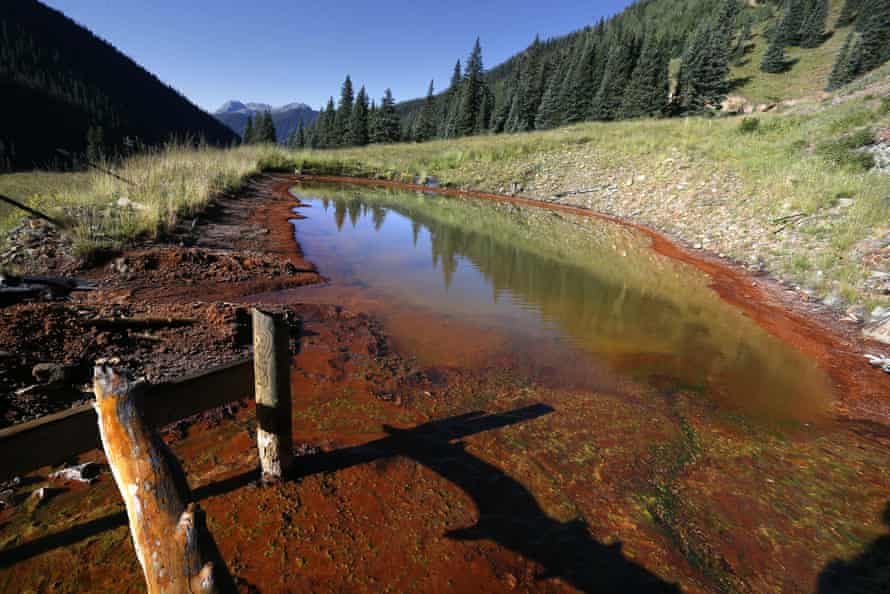
An abandoned mine wastewater pond high in the San Juan mountains in southwestern Colorado.
An abandoned mine wastewater pond high in the San Juan mountains in south-western Colorado. Photograph: Brennan Linsley/AP

Although environmentalists will likely encourage Biden to meet his goals by utilizing the Antiquities Act, which allows presidents to set aside nationally significant lands and waters for permanent protection, they say local efforts pushing protections for a given area will be essential.

“One of the real exciting opportunities for [30 by 30] is that it’s really not a top-down mandate, where someone in DC is drawing the map and getting us towards 30%,” said Sierra Club lands, water and wildlife director Dan Ritzman. “The idea is really locally driven conservation efforts – these are bottom-up campaigns, where people familiar with the land and affected by its management will be deeply involved in its conservation.”

This may also require rethinking traditional definitions of conservation, which have often equated protection with human absence, and largely ignored or excluded indigenous communities’ ways of life and ties to sacred land. But Woody Lee, member of the Navajo Nation and executive director of indigenous-led organization Utah Diné Bikéyah, says Bears Ears national monument — which is directly co-managed by sovereign tribal nations and the US federal government — could serve as a model.

“I think [Bears Ears] blazed a trail … this particular type of initiative has never been done,” Lee said. “I would support other tribes that want to go the same path, or a similar path that would have the same result.”

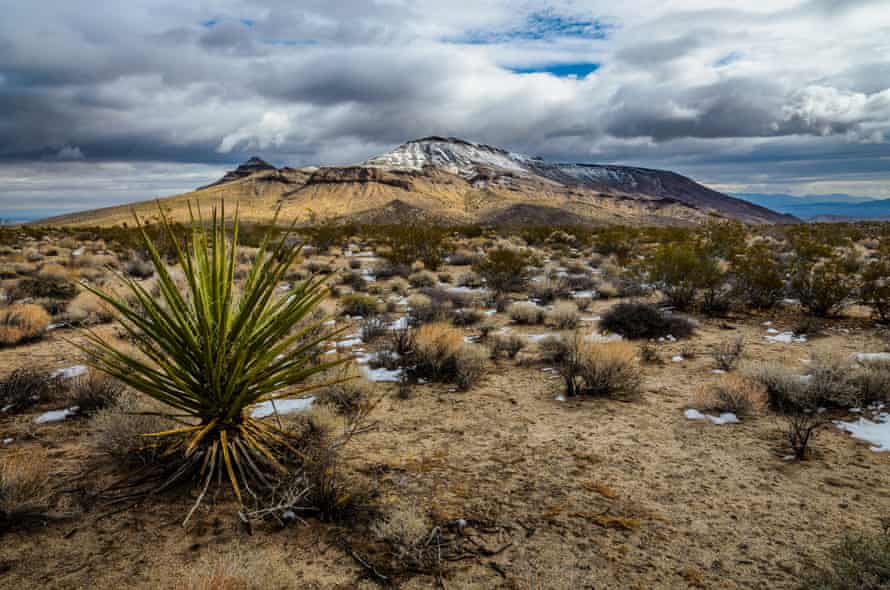
Granite and Silver Peaks in Mojave national preserve in California.
Granite and Silver Peaks in Mojave national preserve in California. Photograph: Posnov/Getty Images

Even if some protected areas are still privately owned, “ownership isn’t as important as outcome,” said Tom Cors, government relations director of lands for the Nature Conservancy, which has used approaches like acquiring land itself or obtaining easements on private lands in order to protect an area.

Cors calls the 30 by 30 goal a “10-year moonshot” precisely because it demands federal and state government work alongside local stakeholders, including private farmers and ranchers, urban communities and sovereign tribal nations. In other words, it will require a tremendous amount of collaboration at an unprecedented scale and speed.

The good news is that, according to the recent Conservation in the West survey, which polls rural and urban western voters across the political spectrum, 77% supported 30 by 30 targets. And many favored limiting resource extraction on public lands.

By summer, it is likely that the interior department and other US agencies will have developed a roadmap to reach the 30 by 30 goals. That means there is still time for Americans to influence the process.

“There is no secret list [of lands for conservation]; I wish there was,” said Stone-Manning.

“We need to put a call out to America: send us your ideas. Let’s hear from the people who know their places best.”

The post US Land: Biden Wants to Protect That Which Trump Wanted to Develop appeared first on The St Kitts Nevis Observer.
US Based Cuba Study Group Seeks End to Blockade

Washington, Feb 16 (Prensa Latina) An organization based in this capital, called Cuba Study Group (CSG), asked President Joe Biden on Tuesday to promote the lifting of the measures that make up the United States blockade against the island.

The CSG also called on the president to order an immediate review of the inclusion of Cuba in the list of states that, according to Washington, sponsor terrorism, and once again renounce Title III of the Helms-Burton Act, as a way to initiate improvement in bilateral ties.

The members of the organization, who are business leaders and young Cuban-American professionals living in the United States, asked the US Executive to update and restore the 2016 Presidential Policy Directive entitled United States-Cuba Normalization, approved by President Barack Obama.

The organization, self-defined as a non-profit and non-partisan entity, called on the president and his advisers to generate ‘the political space necessary for Congress to lift the unilateral sanctions,’ imposed for almost six decades on Cuba.

The document’s authors advice the Biden administration to modify Washington’s traditional policy of ‘regime change’ – rejected by the Cuban authorities – aimed at overthrow the Government of Havana.

The post US Based Cuba Study Group Seeks End to Blockade appeared first on The St Kitts Nevis Observer.

Volunteer Paramedics Take to Streets of Caracas

CARACAS, Venezuela (AP) — Venezuela’s deepening crisis has gutted emergency ambulance services, so a group of volunteer paramedics has stepped into the void to offer life-saving help on the tough streets of Caracas.

Calling themselves Angels of the Road, the volunteer corps relies on donated medical supplies and funding from international organizations. Despite receiving no paychecks, its roughly 40 paramedics are ready at a moment’s notice to jump onto motorcycles and fire up their single ambulance and race into the streets.

Jonathan Quantip, 44, said he and co-founder Zuly Rodiz launched the project two years ago after watching their native Venezuela precipitously decline over years of political and social crisis.

“We Venezuelans have to solve our own country’s problems,” Quantip said. “We have to use the skills we’re each good at.”

The group works on a shoestring budget with nothing left over for wages, so each paramedic relies on another source of income. Some donate their off-time after working in hospitals and firehouses. Others flip burgers in fast-food restaurants.

The paramedics say they feed off the adrenaline of each emergency call to a chaotic crash scene or shooting in an underserved barrio. Simple gestures of gratitude also motivate them, said 21-year-old paramedic Laura Lara.

“It’s helping people and hearing them say ‘thank you’ after hanging on despite their pain and suffering,” Lara said. “All that emotion is what makes you fall in love with this.”

Venezuela was once a wealthy oil nation, but years of political crisis has left it in ruins. Most residents don’t have reliable running water and electricity at home. The crisis has sent more than 5 million fleeing in a migration rivaling that of war-torn Syria.

Venezuela’s hospitals lack basic medicine and trained personnel and there aren’t enough ambulances in service to meet the needs of its population, said Quantip, adding that no other volunteer paramedic organizations like this exist in Venezuela. Some state services exist, but they are unreliable and often don’t have adequate medical supplies, while private companies are more expensive than most Venezuelans can afford.

Staffers for Angels of the Road work in rented office space at a national newspaper that no longer prints a paper edition. They keep a constant ear on walkie-talkie radio traffic and scan online chats dedicated to emergency services.

Sometimes, colleagues in the public sector ambulance and fire services need help and call them for backup, they said, noting a recent call from a firehouse with a truck that had no gasoline.

Most of their calls involve traffic accidents in Caracas, where general lawlessness means few obey stop signs and signals, Rodiz said.

Rodiz said they’ve abandoned any sense of rivalry with public services, including police, fire and ambulances. Their colleagues in the public sector often lack basic medical supplies like gloves, so they share what they have, she said.

“The moment comes that they call saying, ‘Look, we need your help,’” she said. “OK, you do it with all the love and care in the world in order to be able to help anybody who opens the door for us.”

Each day brings on average three to four calls, and the new coronavirus pandemic means that at least one of those is a request to take a patient with trouble breathing to a hospital, putting the volunteers themselves at risk of catching the disease.

Dr. Luis Richard, a surgeon who specializes in trauma care, trained many members of Angels of the Road, calling them “stars.” He said there simply aren’t enough paramedics to meet the need.

Richard, who recently migrated to Costa Rica, said the first responders often mean the difference between life and death.

“Fifty percent of the patients live or die because of their pre-hospital care,” Richard said. “They’re the ones making the difference.”

The post Volunteer Paramedics Take to Streets of Caracas appeared first on The St Kitts Nevis Observer.

Peru: Francisco Sagasti, 3rd President in Week, Sworn-In

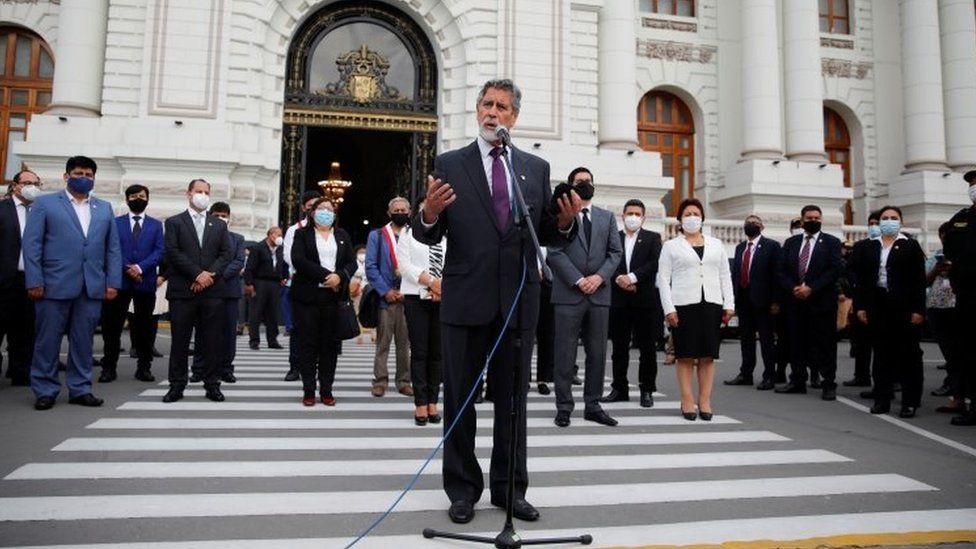
Francisco Sagasti (right) will act as an interim president ahead of next year’s general election

Francisco Sagasti has been sworn in as Peru’s new interim president – the country’s third head of state in under a week.

The 76-year-old engineer and academic will lead Peru until the presidential election next year.

Last week, President Martín Vizcarra was impeached over bribery allegations, which he denies – a move that sparked protests across the country.

At least two people were killed and many were injured in the protests.

President Sagasti was elected leader after securing the minimum 60 votes required. He belongs to the only party that voted against the impeachment of Mr Vizcarra last week.

In an address to Congress, President Sagasti asked for “forgiveness on behalf of the state” from the families of those killed during demonstrations.

“We cannot bring these young people back to life,” he added. “It is absolutely necessary to remain calm, but do not confuse this with passivity, conformity, or resignation”.

What’s been happening in Peru?

Mr Sagasti has taken over from Manuel Merino, the former speaker of Congress who became interim president following the impeachment of Mr Vizcarra.

Mr Merino had been in the post for less than a week when protesters and politicians called for his resignation following a violent crackdown on demonstrations against him.

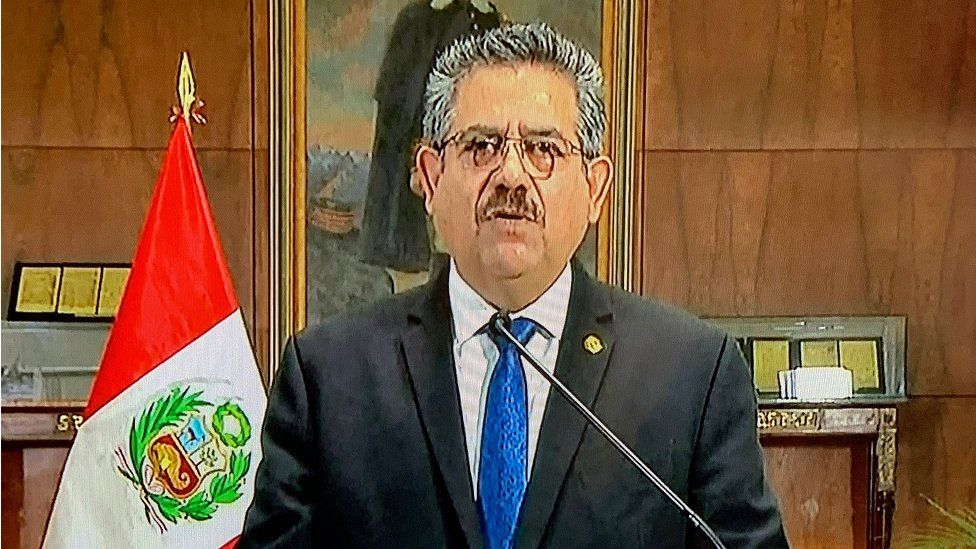
A TV grab taken as Manuel Merino announces his resignation in a televised message from the Government Palace, on 15 November 2020
Mr Merino announced his resignation in a televised address on Sunday

Tens of thousands of demonstrators – many of them young – took part in protests against Mr Vizcarra’s removal from office.

While some were there to support Mr Vizcarra and his reform agenda, others said they were fed up with members of Congress and what they described as the “parliamentary coup” it staged in the middle of the coronavirus pandemic and an economic downturn.

Peru has so far reported nearly 935,000 infections and more than 35,000 deaths, according to Johns Hopkins University – making it the country with the third highest rate of deaths per 100,000 people in the world.

The violence used by police to disperse the protests further fuelled anger against Mr Merino.

Twelve ministers from his newly appointed cabinet resigned on Sunday in protest against police brutality and his handling of the crisis.

What next?

Mr Sagasti has said his main task will be to ensure that general elections scheduled for April 2021 go ahead as planned.

Francisco Sagasti addresses the media after he was elected by Congress as Peru's interim president, in Lima, November 16, 2020
Francisco Sagasti struck a conciliatory note

He struck a conciliatory note in his first interviews, saying that he would lead an inclusive cabinet which could continue to fight against corruption.

He visited some of the protesters who were injured in clashes with the police in hospital and paid tribute to the two students who were killed.

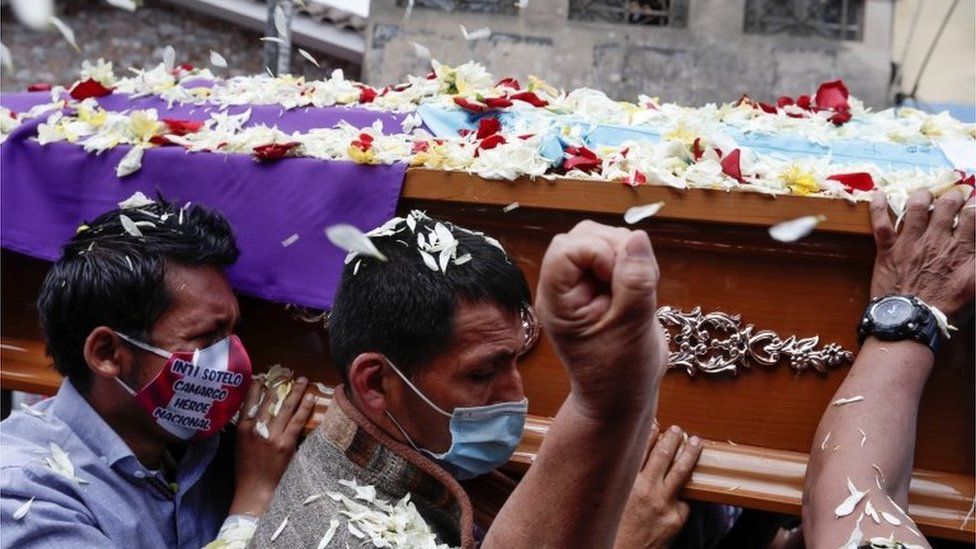
Friends and family members carry the coffin holding the body of Inti Sotelo, who died in clashes following the ouster of Peru"s President Martin Vizcarra, in Lima, November 16, 2020.
Sotelo, one of the students killed in the protests, was buried on Monday

“Today is not a day of celebration because we have seen the death of two young people,” he said. “We cannot bring them back to life but from the Congress and the executive we can take actions so that this does not happen

The post Peru: Francisco Sagasti, 3rd President in Week, Sworn-In appeared first on The St Kitts Nevis Observer.

Russian COVID Vaccine Spreads Over Latin America

(CNN) Russia is becoming a major provider of Covid-19 vaccines to Latin America, a move that could have long-standing consequences in shaping the post-pandemic world and further dent US prestige in the region.

While Moscow faces protests at home and condemnation over human rights issues from the US, France, UK, Canada and other Western countries, those issues have had little resonance in Latin America, where the recent publication of a positive peer-reviewed assessment of the Russian Sputnik V vaccine in The Lancet, Britain’s leading medical journal, was widely celebrated.

Eduardo Valdes, a former diplomat and member of government coalition Frente de Todos, who now serves in as chair of the Foreign Affairs Committee in Argentina’s Chamber of Deputies, says there’s a clear line between vaccine negotiations and external factors.

“Now is not the time to do ideology. Our goal is for the Western Hemisphere to get its vaccines and not to poke into someone else’s internal affairs,” he told CNN.


Healthcare workers hold national flags from Venezuela and Russia as workers unload a shipment of the Russian COVID-19 vaccine Sputnik V, at the Simon Bolivar International Airport in Maiquetia, Venezuela, Saturday, Feb. 13, 2021.

Turning to Moscow for help

Though historically seen as Washington’s geopolitical “backyard,” Latin America is increasingly turning to Moscow for help dealing with the pandemic. Six countries across the region — Argentina, Bolivia, Mexico, Nicaragua, Paraguay, and Venezuela — have now authorized use of the Sputnik V vaccine. Others are considering authorization requests, ever more urgent given the global shortage of available vaccines.

Colombia’s case is an example: America’s closest regional ally, Bogotá is now poised to authorize Sputnik V as well — a decision that surprised many due to the close alignment between some sectors of the government coalition and the US Republican Party. In the past, right-wing members of Duque’s own party, Centro Democrático, openly criticized Putin’s involvement in Latin America.

But when the country found itself without vaccines in hand at the end of January, Duque seems to have decided to push ideology to the side. The day after The Lancet’s publication on the Sputnik V, Colombia announced it was entering negotiations with Russia.

Less than three months prior, Bogotá had expelled two Russian officials in unclear circumstances. But the expulsion “did not influence the negotiations to bring here the vaccine,” Leonid Sboiko, first secretary at the Russian Embassy in Bogotá, told CNN. The Colombian Health Ministry declined to comment on the status of negotiations.

If anything, the vaccine deal could be a step toward smoothing things over. “Both countries want to turn the page. It was regrettable, but we want to move on,” Sboiko said, adding, “Cooperating on the vaccines is the most pressing issue right now, and is going to positively influence [Colombia and Russia’s] bilateral relationships.”

Sboiko told CNN that the Russian Direct Investment Fund (RDIF) which handles Sputnik V’s commercialization, last week presented an emergency authorization request to the Colombian medical agency INVIMA, and it is ready to deliver 100,000 doses within 14 days after a purchase.

“I think they had to bite the bullet and buy the vaccine regardless to whom they bought it from. And the Russians acted with enormous pragmatism,” Juan Carlos Ruiz, professor of Foreign Relationships at Bogotá’s Universidad del Rosario, told CNN.

Colombia will begin vaccinations this week, after receiving 50,000 doses as first shipment from Pfizer.

Ease of doing business

The need to secure more vaccines is urgently felt in the region. Latin American countries have been among the most affected in the world by the pandemic, but large-scale vaccination campaigns have not commenced yet, with limited exceptions.

According to the University of Oxford, South American countries have on average dispensed less than two doses of any coronavirus vaccine per 100 people, compared to almost five doses per 100 people in the EU and over 14 doses per 100 people in the US.

Russia’s readiness to strike deals has been key in spreading the vaccine across Latin America so far, according to Danil Bochkov, an expert of international relationship at the Russian International Affairs Council.

“It is always easier to deal with the state than with a private company, which has to hedge possible risks fearing huge losses. State-owned companies are easier to negotiate with, especially when they are pursuing political goals,” Bochkov told CNN.

Valdes, the Argentinian lawmaker, says negotiations with Moscow were easier than with Pfizer, from whom the Argentinian government initially planned to purchase vaccines. “When we looked at the contract, we evaluated that the ones with Pfizer did not comply with the legal protocols we expected,” Valdes said. “We reached out to the Russians and [Argentinian] President Fernandez related directly with Putin, and this sped things up,” he told CNN.

Argentina has so far purchased up to 25 million doses of the Sputnik vaccine and dispensed over 600,000 doses. Meanwhile, it is still waiting to dispense the first Pfizer vaccine.

In a statement to CNN, Pfizer said the company remains committed to working with the Argentinian government but refused to comment on the status of confidential negotiations.

Regional neighbors Peru and Brazil have also cited issues in negotiations with Pfizer, allegedly because of some of the liability clauses it requested, and ultimately turned to other vaccines — Chinese-made Sinopharm in Peru, and Coronavac and AstraZeneca in Brazil.

Apart from ease of negotiations, two more factors have worked to advantage the spread of Sputnik V through Latin America, according to analysts and lawmakers involved in vaccine purchases in Argentina and Bolivia: Sputnik V is cheap, and relatively easy to store.

Even before the negotiations start, the RDIF lists Sputnik V’s price at approximately $10 per doses — roughly half the price of the Pfizer vaccine, which costs $19.50 per dose. Latin American economies have been badly hit by the pandemic, and any possible saving is more than welcome by administrators and politicians.

The Russian vaccine can also be stored at a temperature of 2 to 8°C (35 to 45°F) and does not require the ultra-freezing temperature the Pfizer vaccine is stored at. Most of Latin America lacks the infrastructure to maintain ultra-freezing temperatures, especially in rural regions with limited road access.

Other privately made vaccines, like those made by AstraZeneca and Moderna, are yet to arrive in large quantities in Latin America, while countries like Brazil, Chile and Mexico have invested in Chinese-made vaccines.

Around the world, 26 countries have approved the Sputnik V vaccine.

What Russia stands to gain

Former diplomats and analysts in Buenos Aires, Bogota and La Paz say Russian president Vladimir Putin could now reap benefits from the vaccine’s spread, potentially using it as a global business card to start new and more forgiving relationships.

According to Andres Serbin, president of the Regional Coordinator of Social and Economic Research (CRIES), a foreign policy think tank in Buenos Aires, Russia’s interests in Latin America are both political, to rival the United States’ hegemony in the Western hemisphere, and commercial, expanding markets for Russian-owned companies. Selling the vaccine serves both of these objectives.

“Russia made a big bet on the vaccine: in the last few years, Russia has re-discovered Latin America, not for ideology but because if your goal is to question the norms and values of the liberal international order, Latin America is a region particularly sensitive to that goal,” Serbin said.

Both Russia and China are looking to improve their reputations after years of confrontation with the US and the EU, and the role of vaccine provider for the developing world is a perfect opportunity for a positive PR campaign. As Bochkov puts is, “Russia has mastered the Sputnik V as a diplomatic instrument so far.”

Commercially, selling millions of vaccine doses also means turning multi-million dollar profits — something of primary importance for the Russian economy, which has been hit by Western sanctions in recent times.

In contrast, the West’s handling of vaccine distribution has often seemed inward-looking. In January, Britain and the EU squabbled over vaccine distribution, while the White House bulked up purchases of vaccines to a total of more than 7 potential doses available for every American, according to data collected by Duke University.

“The difference is that the United States are working to get vaccines mostly to vaccinate US citizens. Others like Russia and China are looking to stretch relationships where they can,” Pablo Solon, a former Bolivian ambassador to the United Nations, told CNN.

A missed opportunity for the West?

Western powers could have seized the political — and even moral — advantage, says Amadeo Gandolfo, an Argentinian scholar in political communication at Berlin’s Humboldt University. He argues that Western countries missed a key opportunity to claim a moral victory when they allowed companies to patent their vaccines.

“Faced with the absolute necessity for the whole world to obtain the vaccine, leaving it in the hands of the pharmaceutical companies and not allowing a liberalization of the formula, I think it is something that pushed some sectors of Latin America away,” he told CNN.

Now, as with any new patented product, the privately developed vaccines are protected by property right and cannot be replicated by other companies or countries. So while private companies like Pfizer and AstraZeneca are struggling to meet committed orders, other laboratories cannot step in to produce the same vaccines and increase supplies.

Many Western countries have instead invested in the Covax mechanism, a framework promoted by the World Health Organization to purchase vaccines in bulk and secure deliveries to developing countries that cannot afford to purchase them on their own.

But while Covax promises to inoculate up to 20% of the developing world and says it will prioritize four Latin American countries including Bolivia and Colombia for early access, it has yet to deliver a single dose.

Whether vaccination efforts would be more equal if Western pharmaceutical companies were not allowed to patent and commercialize the vaccines has been discussed since the beginning of the pandemic. An effort by South Africa and India urging the World Trade Organization to suspend intellectual property rights related to Covid-19 has so far proved unsuccessful.

This will cost Western governments dearly in post-pandemic geopolitics, argues Solon, the Bolivian diplomat. “The world has been multipolar for some time,” he told CNN. “But within this multipolar world Russia and China are advancing fast. This vaccine situation is only strengthening the trend.”

The post Russian COVID Vaccine Spreads Over Latin America appeared first on The St Kitts Nevis Observer.