Tag Archives: caribbean

Caribbean Development Bank programme to aid market access to St. Kitts and Nevis

BRIDGETOWN, Barbados — St. Kitts and Nevis will be offered a Regional Quality Infrastructure Programme (RQIP) with globally standardised testing at domestic laboratories as early as next year, according to Daniel Best, Director Projects Department at the Caribbean Development Bank (CDB). The program will also be offered to Barbados and Dominica.

The RQIP will provide the Federation with a national quality policy to ensure businesses can deliver globally recognised goods and services required for trade. CDB has partnered with the European Union (EU) and the Caribbean Community (CARICOM) Regional Organisation for Standards and Quality (CROSQ) to provide the program.

According to Best, the strengthening of the RQIP is supporting these upgrades “to add value to local and regional enterprises and focuses on several important subsectors in each economy namely, agro-processing, transportation and construction.” This, he indicated is being provided at an opportune time given the economic hurdles being faced by the region.”

The intervention is being funded by the CARIFORUM-European Union Economic Partnership Agreement
(EPA), and the CARICOM Single Market and Economy (CSME); Standby Facility for Capacity Building financed by the 11th European Development Fund (EDF) and managed by CDB. It is part of the bank’s wider thrust to stimulate private sector led growth focused on Micro, Small and Medium Enterprise (MSME) development.

CARIFORUM Director General at the CARICOM Secretariat, Percival Marie, set the context for the project, stating that while there have been improvements in the region’s trade with Europe by businesses leveraging export opportunities. There were gaps in both private and public sectors which required attention.

In response, the region has committed significant funding to strengthen the relevant institutions.

“One of the major components of this CARIFORUM regional capacity building programme is a programme of support to CARIFORUM Member States in seizing market access opportunities,” said Marie. “The programme advances the use of an internationally recognised regional quality infrastructure.”
Increasing the capabilities of the regional enterprise is the intent of several interventions supported by the EU in the region.”

“As COVID-19 forces unprecedented changes to the way we work, live, and learn,” said Luis Maia, Head of Cooperation at the EU Delegation in Barbados. “The Standby Facility creates a critical avenue to address inequalities and constraints threatening growth in trade while providing much needed aid to effectively implement CSME and EPA related activities at the national level.”

“Through projects and resources, such as the European Union’s Standby Facility, we can make steps to bring our businesses and, by extension, our economies ever closer to being more competitive and sustainable,” explained Deryck Omar, Chief Executive Officer at CROSQ, “which is implementing the US $874,932 project, supported this view. US $ 587,325 was allocated from the Standby Facility while CDB provided US $118,840 from its Special Development Fund (SDF).

Exporters from various productive sectors in the region face several barriers when entering new markets, including issues related to quality and adherence to globally accepted standards. This project will assist local firms in accessing resident metrology services increasing export readiness. These arrangements will serve to strengthen manufacturing, reduce production costs and increase the competitiveness of local commodities.

The Standby Facility is a € 8.75 million resource managed by CDB, which offers opportunities to 15 Caribbean economies to grow trade; deepen integration and economic involvement; and impact competitiveness, market access, and exports by implementing targeted projects in thematic areas.

The post Caribbean Development Bank programme to aid market access to St. Kitts and Nevis appeared first on The St Kitts Nevis Observer.

COVID-19 vaccine race, we win together or lose together

GENEVA — “Of the 128 million vaccine doses administered so far, more than three quarters of those vaccinations are in just 10 countries that account for 60 percent of the global GDP,” according to the World Health Organisation (WHO) and the United Nations Children’s Fund (UNICEF).

“As of February 10, almost 130 countries, with 2.5 billion people, are yet to administer a single dose,” according to a press release from WHO and UNICEF. “This self-defeating strategy will cost lives and livelihoods; give the virus further opportunity to mutate and evade vaccines; and will undermine a global economic recovery.

“UNICEF and WHO – partners for more than 70 years – call on leaders to look beyond their borders and employ a vaccine strategy that can actually end the pandemic and limit variants.

“Health workers have been on the frontlines of the pandemic in lower- and middle-income settings and should be protected first so they can protect us.

“COVAX participating countries are preparing to receive and use vaccines. Health workers have been trained, cold chain systems primed. What’s missing is the equitable supply of vaccines.

“To ensure that vaccine rollouts begin in all countries in the first 100 days of 2021, it is imperative that:
• Governments that have vaccinated their own health workers and populations at highest risk of severe disease share vaccines through COVAX so other countries can do the same.
• The Access to COVID-19 Tools (ACT) Accelerator, and its vaccines pillar COVAX, is fully funded so that financing and technical support is available to lower- and middle-income countries for deploying and administering vaccines. If fully funded, the ACT Accelerator could return up to US$ 166 for every dollar invested.
• Vaccine manufacturers allocate the limited vaccine supply equitably; share safety, efficacy and manufacturing data as a priority with WHO for regulatory and policy review; step up and maximize production; and transfer technology to other manufacturers who can help scale the global supply.

“We need global leadership to scale up vaccine production and achieve vaccine equity.

“COVID-19 has shown that our fates are inextricably linked. Whether we win or lose, we will do so together.”

The post COVID-19 vaccine race, we win together or lose together appeared first on The St Kitts Nevis Observer.

COVID: Jamaica Imposes 8 PM Nightly Curfew

Jamaica has imposed a new 8 PM to 5 AM daily curfew, amid the current spike in COVID-19 cases.

Between February 4 and February 8, the island had some 1,451 new cases of COVID-19, with over 200 cases being reported each day.

The highest single-day total of 403 cases was reported on February 8. Jamaica’s current positivity rate stands at 20.8%. In the last week of 2020, Jamaica’s positivity rate was 7%.

The island’s curfew will run from Wednesday, February 10 until February 24. The previous curfew, imposed in December, was from 10 PM to 5Public gatherings have also been reduced from 15 to 10 people.

In making the announcement, Prime Minister Andrew Holness said that the government’s priority is making sure that the healthcare system is not overwhelmed.

“We cannot dedicate the entire capacity of our healthcare system to COVID-19 alone. There are other critical illnesses and events to which our healthcare professionals have to continue to respond,” Holness said.

He also pointed out that three of the country’s biggest hospitals, the Kingston Public Hospital, Spanish Town Hospital in St Catherine and the May Pen Hospital in Clarendon are all above 90% capacity.

Before the curfew announcement, these same sentiments were shared by the Former President of the Nurses Association of Jamaica, Carmen Johnson, who said that wards and isolation areas in hospitals across the country are now full, as hospitalizations are increasing.

The President of the Medical Association of Jamaica, Dr. Andrew Manning also stated that the healthcare system was approaching the point of over-capacity.

“In the blink of an eye, we could reach a stage where people come to the hospitals for treatment and we have nowhere to put them. We’re not far from that,” he said on Nationwide Radio on February 9.

In the meantime, the Prime Minister has warned that the police will be enforcing the curfew in a more vigorous manner. Holness urged Jamaicans to take the virus more seriously and to display a greater sense of personal responsibility.

The post COVID: Jamaica Imposes 8 PM Nightly Curfew appeared first on The St Kitts Nevis Observer.

COVID-19 Latest: Case Numbers Worldwide Continue Decline

(CNN) The number of new Covid-19 cases reported across the globe has declined for a fourth week in a row, according to data from the World Health Organization, offering a glimmer of hope that the world is turning a corner in its efforts to contain the pandemic.

The number of Covid-19 deaths reported worldwide decreased for the second week running, with 88,000 new deaths reported last week, a 10% drop compared to the previous week, according to WHO.

More than 3.1 million new cases of Covid-19 were reported around the world last week, the WHO said in its weekly epidemiological update. That was a 17% decline from the previous week and the lowest number of cases worldwide since the week of October 26, 2020.

“Although there are still many countries with increasing numbers of cases, at the global level, this is encouraging,” the weekly update said.

The United States accounted for the highest number of new Covid-19 cases, with 871,365. However, this figure represented a 19% decline in cases from the previous week, according to WHO data.

Brazil, France, Russia and the United Kingdom were also among the nations reporting the highest number of new cases worldwide, the WHO noted, although all of them saw a decrease compared to figures from the previous week.

Of all the regions, compared to WHO’s previous weekly update, Africa saw the greatest decline in cases, at 22%, while the Eastern Mediterranean saw the smallest, at 2%.

Overall, new cases in the Americas accounted for more than half of all new cases worldwide, with more than 1.5 million new cases and more than 45,000 new deaths.

Globally, there have been almost 107 million Covid-19 cases, and more than 2.3 million deaths from the virus, since the start of the pandemic, according to Johns Hopkins University figures.

Many countries are hoping that coronavirus vaccines will offer a way out of the crisis.

But while some countries have already administered millions of doses, about 130 countries — home to some 2.5 billion people — are yet to administer a single dose, WHO Director General Tedros Adhanom Ghebreyesus said in a briefing Friday.

Early data this week showing that the Oxford-AstraZeneca vaccine may provide only “minimal protection” against mild to moderate illness caused by the coronavirus variant first identified in South Africa has dented optimism in some quarters.

The Oxford/AstraZeneca vaccine is cheaper and easier to transport and store than some of the other vaccines approved for use to date and, as such, has been tipped to play a key role in combating the pandemic in low and middle-income countrys

The post COVID-19 Latest: Case Numbers Worldwide Continue Decline appeared first on The St Kitts Nevis Observer.

3 Cubans Rescued from Deserted Island After 33 Days

Stranded boaters seen on deserted Island

(CNN) — The U.S. Coast Guard rescued three Cuban nationals from a deserted Bahaman island, where they had been living off coconuts for 33 days, the agency announced.

“It was incredible. I don’t know how they did it. I was amazed they were in as good as shape as they were,” Lt. Justin Dougherty told CNN affiliate WPLG.

While doing routine patrols on Monday, US Coast Guard aircrews saw the two men and a woman waving makeshift flags on Anguilla Cay, located in a chain of islands between the Lower Florida Keys and Cuba.

The Coast Guard dropped down a radio, food, and water to the trio on Monday and rescued them off the island on Tuesday.

The Cubans’ boat capsized in rough waters about five weeks ago, the trio told the Coast Guard, and they swam to the island.

The trio reportedly had no serious injuries but were flown to the Lower Keys Medical Center to be checked out. .

The post 3 Cubans Rescued from Deserted Island After 33 Days appeared first on The St Kitts Nevis Observer.

Associated Press World View-Feb. 10, 2021

Feb 10, 2021

Alternate text

AP MORNING WIRE

  • Impeachment trial to proceed after emotional first day; Trump fumes.

  • US vaccine drive complicated by first, second dose juggling act.

  • Israel’s ultra-Orthodox reject sharp criticism, defy virus safety rules.

  • Safety officials: Kobe Bryant crash pilot got disoriented flying in clouds.


TAMER FAKAHANY
DEPUTY DIRECTOR – GLOBAL NEWS COORDINATION, LONDON

The Rundown

Alternate text

Impeachment trial gets go-ahead after emotional, graphic first day; Senators to hear opening arguments as Trump fumes 

Confronting a painful and bloody moment or period in a nation’s history can take years, decades, even centuries, if it transpires at all. And even then, there will be those who fight against addressing and extricating the thorn in the country’s shared past.

It’s rare, almost inconceivable, such a reckoning in a hallowed democratic setting would take place just one month after it occurred.

But that’s what is happening as U.S. House prosecutors wrenched senators and the country back to the deadly attack on Congress on Jan. 6.

They opened Donald Trump’s historic second impeachment trial with graphic video of the insurrection and Trump’s own calls for a rally crowd to march to the iconic building and “fight like hell” against his reelection defeat to Joe Biden.

Trump is charged with inciting the violent mob attack.

“That’s a high crime and misdemeanor,” Democratic Rep. Jamie Raskin declared in opening remarks. “If that’s not an impeachable offense, then there’s no such thing.”

Democratic prosecutors argue Trump committed a “grievous constitutional crime,” but his defense team insists his fiery words at the rally were just figures of speech — and thus protected by the Constitution’s First Amendment.

The opening arguments are set to begin today.  House Democrats prosecuting the case and Trump’s attorneys will lay out their opposing arguments before the senators, who are serving as jurors. Lisa Mascaro, Eric Tucker, Mary Clare Jalonick and Jill Colvin report.

The defense lost a vote seeking to halt the trial on constitutional grounds, 56-44

Trump fumed over his lawyers’ widely-panned, meandering performance as a disaster, and his allies are openly questioning the defense strategy, Jonathan Lemire and Jill Colvin report.

Trial Highlights: History lessons, Trump tweets and more from Brian Slodysko on the opening day.

VIDEO: Trump’s historic second impeachment trial opens.

VIDEO: Republicans criticize Trump lawyers’ performance. 

What to Watch Today: Democrats to argue Trump is solely responsible for inciting the mob.

AP FACT CHECK: Trump’s lawyers and the Constitution: The question of impeaching a former president has not been settled, but the AP’s Hope Yen and Calvin Woodward find that the weight of legal views contradicts the Trump team’s assertions.

Rep. Raskin: Congressman Raskin evoked tragedy in his own life as he argued for Trump’s conviction during the trial. Raskin described how, because of the funeral of his son who took his own life in December, his adult daughter was with him at the Capitol when the mob overran the building. The Maryland Democrat wiped away tears as he recalled his daughter believing that she would be killed and how she said afterward that she didn’t want to come back to the Capitol again, Will Weissert reports.

VIDEO: Raskin recounts Capitol riot after son’s death.

Media Decisions: The opening of the trial featured some explicit language not normally seen on daytime television or broadcast TV at all. But ABC, CBS, NBC and the cable news networks all aired unedited the 13-minute film prepared by House impeachment managers that showed disturbing details of the attack on the Capitol.The language included obscene chants by demonstrators surging toward the Capitol, David Bauder reports.

Alternate text

SOUTH FLORIDA SUN-SENTINEL VIA AP/JOE CAVARETTA

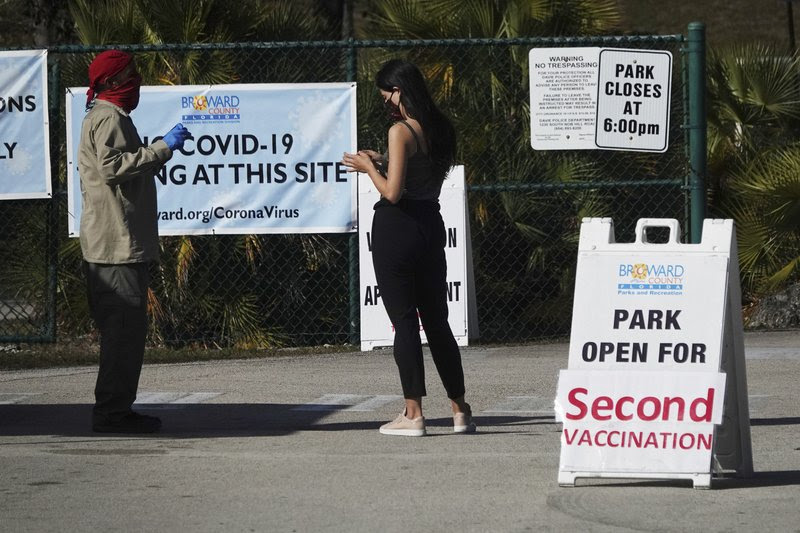
US vaccine drive complicated by first, second dose juggling act; Stimulus plan: Democrats attempt to push through school funding, wage increase

The U.S. has entered a precarious phase of the COVID-19 vaccination effort as providers try to ramp up the number of people getting first shots while also ensuring a growing number of others get the required second doses.

The shift is happening just when millions more Americans are becoming eligible to receive vaccines, Candice Choi and Marion Renault report.

The need to give each person two doses a few weeks apart vastly complicates the country’s biggest-ever vaccination campaign. And persistent uncertainty about future vaccine supplies fuels worries that some people will not be able to get their second shots in time.

Some providers have curbed or canceled appointments for first doses to ensure there are enough second doses.

U.S. Relief Bill: House Democrats muscled past Republicans on major portions of President Biden’s pandemic plan, including a proposed $130 billion in school relief and a gradual increase of the federal minimum wage to $15 an hour. It’s part of a $1.9 trillion relief package of Biden’s plan reopening plan. Democrats say schools won’t be able to reopen safely until they get funding to repair ventilation systems, buy protective equipment and take other steps recommended by health officials. Republicans oppose the legislation. Colin Binkley reports.


Small Business Struggles-New Orleans: The pandemic is tamping down the joy — and revenue — associated with Carnival season in New Orleans. Parades that normally draw thousands in the weeks before Mardi Gras, or Fat Tuesday, which falls on Feb. 16 this year, have been canceled. Bars and restaurants that usually overflow with customers are closed or operating at limited capacity. Live music is all but dead. Many small business owners have weathered a lot already. Even as vaccinations ramp up, they’re preparing for a long wait before business gets back to normal, Rebecca Santana reports.


The Garden in Winter: Deep into this pandemic winter, it’s worth noting everything that a garden offers — indoors, outdoors and even in people’s own minds. It can be hard to remember what a refuge gardens were for many people last spring and summer. Seed companies sold out and household vegetable plots sprang up all over in the U.S. But even in winter the garden can provide comfort and perspective, assuring that spring is coming. Already, seed companies are selling out again. And along with spring, the arrival of vaccines might just signal a turn in the season, Julia Rubin reports.

Alternate text

AP PHOTO/ODED BALILTY

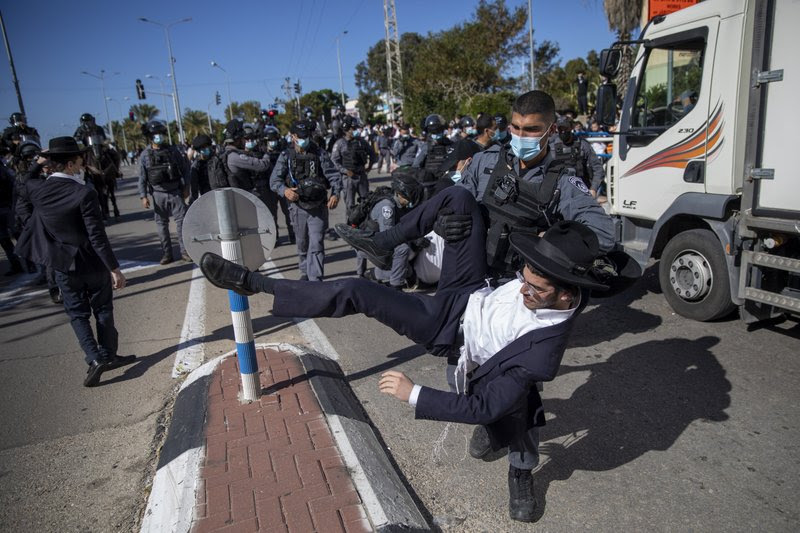
Israel’s ultra-Orthodox believers defy virus safety rules, reject sharp criticism; South Africa scraps AstraZeneca vaccine, will give J&J jabs; World’s second-oldest person survives COVID-19 at age 116

Israel’s ultra-Orthodox community has come under heavy criticism for holding large funerals and weddings in clear and dangerous violations of coronavirus restrictions.

The gatherings have brought clashes with police and unprecedented public anger toward the religious community. But many of its members believe Israeli society fails to understand their way of life and has turned the community into a scapegoat, reports Ilan Ben Zion from Jerusalem.

The ultra-Orthodox community makes up 12% of Israel’s 9.3 million people but accounts for an estimated third of the country’s virus cases.

Preserving the ultra-Orthodox way of life is the community’s ultimate aim. And if that means infections spread and put others at risk, it’s a price that some members are willing to pay.

South Africa Vaccines: The country will begin administering the unapproved Johnson & Johnson vaccine to its front-line health care workers next week. It will also study them to see what protection the J&J shot provides from COVID-19, particularly against the variant dominant in the country. Health Minister Zweli Mkhize said South Africa has scrapped its plans to use the AstraZeneca vaccine because it “does not prevent mild to moderate disease” of the variant dominant in the nation. Mkhize said the J&J vaccine, which is still being tested internationally, is safe. Andrew Meldrum reports from Johannesburg.

WHO in Wuhan: A team of international and Chinese scientists looking for the origins of the virus have said it most likely first appeared in humans after jumping from an animal. The team dismissed as unlikely a theory that the virus leaked from a Chinese lab. The mission leader of the closely watched visit by the World Health Organization to Wuhan said the probe did not dramatically change the current understanding of the early days of the pandemic,  But it did offer more details. The pandemic has now killed more than 2.3 million people worldwide. Emily Wang Fujiyama reports from Wuhan.

France Island Inequality: It’s the poorest corner of the European Union and was the last to receive any coronavirus vaccines. Welcome to the French Indian Ocean territory of Mayotte, where virus cases are spiking to their highest levels since the pandemic began, and demand for ICU beds is more than triple the supply. The French army is sending in relief, but the temporary aid will only go so far in a region where masks are a luxury and where nearly a third of the population has no running water. Local authorities say their difficulties in fighting the virus reflect long-standing inequalities between the French mainland and its far-flung former colonies, Sony Chamsidine and Angela Charlton  report.

France Oldest Survivor: A 116-year-old French nun who is believed to be the world’s second-oldest person has survived COVID-19. Sister André tested positive for the coronavirus in mid-January in France’s southern city of Toulon. But just three weeks later, she has recovered and is healthy enough to look forward to her 117th birthday on Thursday. She said, “I didn’t even realize I had it.” Once doctors declared the nun no longer infected, she was allowed to attend Mass. The Gerontology Research Group lists her as the second-oldest known living person in the world.

Japan Quarantine: What’s it like traveling to Japan, six months ahead of the Olympics? Almost impossible, unless you’re Japanese or have resident status. A state of emergency for a large part of the country means even those allowed to enter have to take multiple coronavirus tests and stay quarantined. So, what could the entry process be like for the thousands of Olympic athletes scheduled to arrive for the July Games? Plans now call for the athletes to be tested 72 hours before they leave home, again when they arrive and frequently inside the athletes’ village “bubble.” There are other restrictions too, but the biggest caveat is that the plans can change quickly. Mayuko Ono reports from Tokyo.


PHOTOS: Raucous dragon dance ban in Manila’s Chinatown saddens residents. 

Alternate text

AP PHOTO/CHRIS CARLSON

Kobe Bryant Crash

The pilot of the helicopter that crashed last year in South California, killing Kobe Bryant and seven other passengers, made a key error by flying through thick clouds that ended up disorienting him, U.S. safety officials said during a hearing aimed at pinpointing probable causes of the crash.

Pilot Ara Zobayan violated federal standards that required him to be able to see where he was going before the helicopter crashed during a roughly 40-minute flight, according to members of the National Transportation Safety Board, Stefanie Dazio, Brian Melley and David Koenig report.

Zobayan was among the nine people killed, including Bryant’s 13-year-old daughter, Gianna.

The pilot went against his training by becoming spatially disoriented in thick clouds, a condition that can happen to pilots in low visibility, when they cannot tell up from down or discern which way an aircraft is banking, board members said.

The NTSB said  Zobayan was under self-induced pressure to deliver the star, his daughter and six others to a girls basketball game. 

The others killed in the crash were Orange Coast College baseball coach John Altobelli, his wife, Keri, and their daughter Alyssa; Christina Mauser, who helped Bryant coach his daughter’s basketball team; and Sarah Chester and her daughter Payton. Alyssa and Payton were Gianna’s teammates.

The crash has generated lawsuits and countersuits.

On the day that a massive memorial service was held at the Staples Center, where Bryant played most of his career for the NBA’s Los Angeles Lakers, Vanessa Bryant sued Zobayan and the companies that owned and operated the helicopter for alleged negligence and the wrongful deaths of her husband and daughter. Families of other victims sued the helicopter companies but not the pilot.

VIDEO: US safety panel says pilot error likely in Bryant crash.

TIMELINE of chopper crash that killed Bryant, 8 others in California on Jan. 26, 2020.

Other Top Stories

Larger numbers of immigrant families have been crossing the U.S.-Mexico border in the first weeks of the Biden administration. Warning signs are emerging of the border crises that marked Donald Trump’s term: Hundreds of newly released immigrants are getting dropped off with nonprofit groups and there are growing accounts of prolonged detention in short-term facilities. Measures to control the virus have sharply cut space in holding facilities that got overwhelmed during a surge of arrivals in 2018 and 2019. To deal with the new influx, the Border Patrol reopened a large tent facility in South Texas to house migrant families and children. Meanwhile, long-term facilities for kids who cross alone are 80% full.

Crowds demonstrating against the military takeover in Myanmar have again defied a ban on protests even after security forces ratcheted up the use of force against them and raided the headquarters of the political party of ousted leader Aung San Suu Kyi. Fresh protests were reported in Yangon and Mandalay, the country’s two biggest cities, as well as the capital Naypyitaw and elsewhere. The protesters are demanding that power be restored to Suu Kyi. They’re also seeking freedom for her and other governing party members since the military detained them after blocking the new session of Parliament on Feb. 1. The growing rallies and the junta’s latest raid suggest there is little room for reconciliation.

A hacker’s botched attempt to poison the water of a small Florida city is raising alarms about just how vulnerable such systems may be to attacks by more sophisticated intruders. Treatment plants are typically cash-strapped and lack the cybersecurity depth of the power grid and nuclear plants. Suspicious incidents are usually chalked up to mechanical or procedural errors. But experts say they occur more often than the public is told and many go unreported to protect reputations, customer trust — and revenues. Officials say the Florida town of Oldsmar was only briefly in jeopardy last week, with safety features likely to have triggered alarms had the hack gone undetected.

The offspring of hippos illegally imported to Colombia by drug kingpin Pablo Escobar in the 1980s are flourishing in the lush area and experts are warning about the dangers of the growing numbers. One group of scientists is now urging that some of the animals be killed. They say the hippos pose a major threat to the area’s biodiversity and could lead to deadly encounters with humans. The scientists concluded that Colombia’s current sterilization program is not enough to control hippo numbers. The population has increased in the last eight years from 35 to somewhere between 65 and 80. The scientists’ forecast published last month says there could be roughly 1,500 by 2035 if some aren’t killed.

[Message clipped]  View entire message

The post Associated Press World View-Feb. 10, 2021 appeared first on The St Kitts Nevis Observer.

Hard Hit Peru Begins COVID Vaccination Program

The first doses of Sinopharm vaccines have arrived

Peru, with one of the world’s highest virus death rates, has started its Covid vaccination campaign after the first consignment of 300,000 Sinopharm vaccines arrived on Sunday.

The South American country is in the midst of a second wave of the pandemic. With the hospitals close to full capacity, the authorities have decided that medical staff should be among the first to be vaccinated.

On Tuesday morning local time, Josef Vallejos, the chief of the intensive care unit at a hospital in Lima, received the first jab.

Members of the military, security guards and election workers will also be given priority ahead of the general election scheduled for 11 April.

Peru has had almost 1.2 million confirmed cases and more than 42,000 people have died.

The post Hard Hit Peru Begins COVID Vaccination Program appeared first on The St Kitts Nevis Observer.

Jamaica PM: No Evidence of New Pandemic Phase Here

A woman has blood drawn for COVID-19 antibody testing. The Ministry of Health and Wellness has sent samples overseas to determine if the latest variant of the virus is in Jamaica.

PRIME Minister Andrew Holness said yesterday that while there has been a significant increase recently in the number of people testing positive for COVID-19, there is no evidence that the country has entered a new phase of the novel coronavirus pandemic.

Holness made the statement while announcing new measures which have been included in the orders under the Disaster Risk Management Act (DRMA), which regulates activities during the crisis, as follows:

Effective today, February 10, the islandwide curfew will commence at 8:00 pm instead of 10:00 pm, and end at 5:00 am the following morning, until February 24. Additionally, the gathering limit will be reduced from 15 to 10 people.

However, the prime minister conceded that he was well aware there were other issues which were still on the minds of the public.

“I know one of the questions on persons’ minds is whether the spread we are now seeing is related, in any way, to the new strains or variants of the SARS-CoV-2 virus,” Holness told the House of Representatives.

He said the Ministry of Health and Wellness has advised that, as part of its surveillance activities on new variants, it has sent off for genome sequencing, 14 positive samples from travellers from the United Kingdom and, later this week, plan to send off another 101 samples randomly selected from parishes.

“The results from genome sequencing will give us better insights into how prevalent the new variants may be in Jamaica,” he told the House.


The post Jamaica PM: No Evidence of New Pandemic Phase Here appeared first on The St Kitts Nevis Observer.

Hundreds Die from Colombia Human Right Crimes

BOGOTA, Colombia (AP) — Colombia has failed to protect human rights activists in its remote communities, resulting in hundreds of slayings since the government reached a peace deal with the country’s biggest rebel movement in 2016, an international monitoring group said Wednesday.

Armed groups, including some that emerged from the now-demobilized Revolutionary Armed Forces of Colombia, known as FARC, are responsible for part of the killings, researchers with Human Rights Watch said in a report.

“Authorities’ failure to exercise effective control over many areas previously controlled by the FARC has in large part enabled the violence against human rights defenders,” the report said. “The government has deployed the military to many parts of the country but has failed simultaneously to strengthen the justice system and ensure adequate access to economic and educational opportunities and public services.”

The United Nations Office of the High Commissioner for Human Rights has documented more than 400 slayings of activists since 2016, of which 108 happened in 2019 and 53 in 2020. The figure for last year could increase because 80 additional reported killings are still being verified.

Human rights defenders include community, Indigenous, peasant and Afro-Colombian leaders as well as victims’ and women’s rights activists.

The 2016 peace deal with the FARC ended five decades of war. But the group has suffered deep divisions, with some of its members heading to mainstream leftist movements while others have given up on the peace process and returned to arms.

While the accord included strategies for remedying problems that have kindled conflict for decades, the government has been slow to implement initiatives to strengthen authorities’ presence in rural areas, combat illegal economies and address the dearth of legitimate economic opportunities, according to the report.

Left to act as quasi government officials, the leaders of Indigenous groups and other social organizations are put at increased risk as armed groups can target them. The New York-based human rights organization said some rights activists have been killed for their support of government proposals started under the accord, including substituting food crops for the cultivation of coca, the plant from which cocaine is produced.

Among the slayings mentioned in the report is that of Deiver Quintero Pérez, who organized activities for children to keep them away from armed groups in his northern Colombia community. He was shot multiple times in the head in February 2018, and his body was found by a river. Prosecutors have said another rebel group, the Popular Liberation Army, killed him because he appeared to be assisting the government.

“Colombia has had the highest number of human rights defenders killed of any Latin American country in recent years, but the government’s response has been mostly talk, with little meaningful action,” José Miguel Vivanco, Americas director at Human Rights Watch, said in a statement. “The administration of President Iván Duque frequently condemns the killings, but most of the government systems to address the problem are barely functional or have serious shortcomings.

The post Hundreds Die from Colombia Human Right Crimes appeared first on The St Kitts Nevis Observer.