Tag Archives: caribbean

2 Hurricanes in One Month Devastates Honduras

The extent of the flooding is particularly visibly from the air, as here in Omoa, on Honduras’ northern coast

Honduras is one of the countries in Central America to be hit not by one but two hurricanes this month.

Eta arrived in Nicaragua on 3 November as a category four hurricane and ripped through Honduras and Guatemala on its path north.

Less than two weeks later, Iota – also a category four hurricane – made landfall just 15 miles (24km) south of where Eta had hit.

The torrential rain brought by the almost back-to-back hurricanes caused deadly landslides, flash flooding and destruction in large areas of Central America.
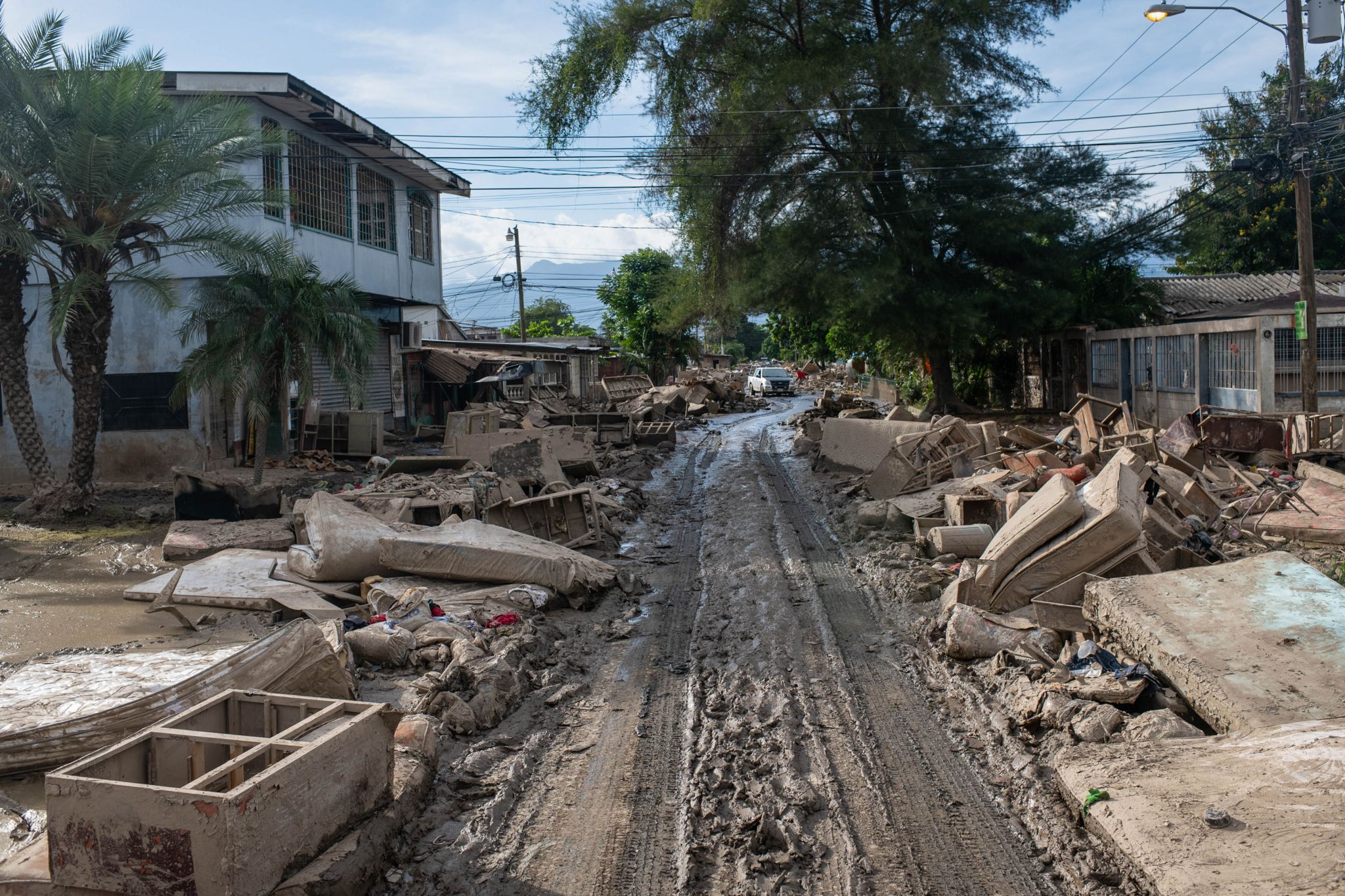
A view of a street in the Lima neighbourhood of San Pedro Sulaimage copyrightEncarni Pindado
image captionThe Lima neighbourhood in San Pedro Sula was quickly flooded after a levy broke during Hurricane Eta

More than 200 people died across the region, 94 of them in Honduras, according to official figures.

Photojournalist Encarni Pindado travelled to Honduras’ second city and its industrial hub, San Pedro Sula, to survey the damage and speak to some of the three million Hondurans affected by the storms.
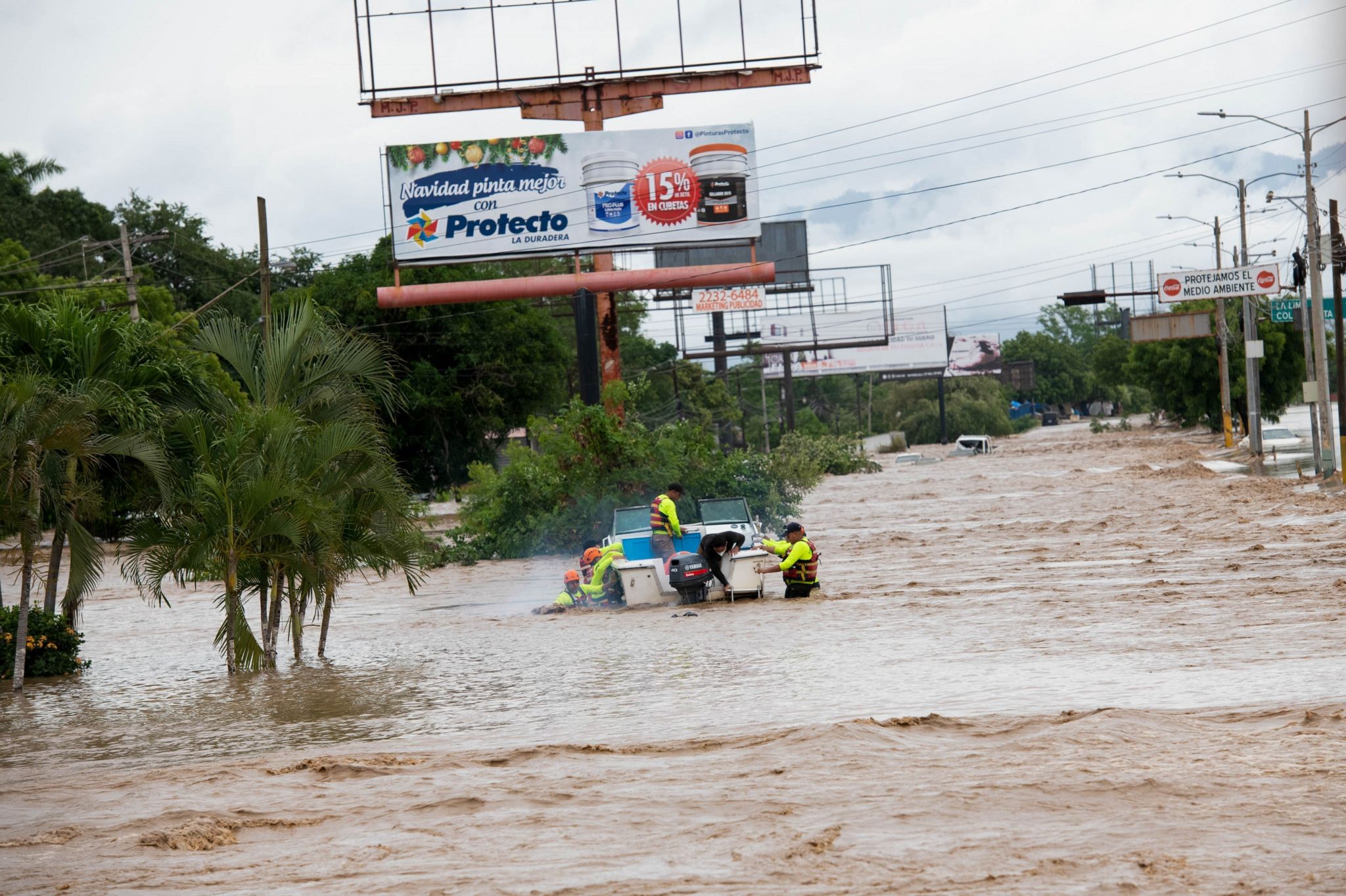
A view of the Planeta neighbourhood in San Pedro Sulaimage copyrightEncarni Pindado
image captionThousands of families lost their homes in the Planeta neighbourhood after the Chamelecón river burst its banks

Susan Jesenia Aguilar is eight months pregnant. The twenty-three-year-old, her partner and their baby had to flee their home due to the flooding caused by Hurricane Eta. She has epilepsy and has not been able to get hold of the medication she needs since the floods.

The family have been living in a makeshift tent on the pavement by the side of a highway in San Pedro Sula for more than two weeks. She says both she and her baby have developed a cold with a cough, temperature and headaches.
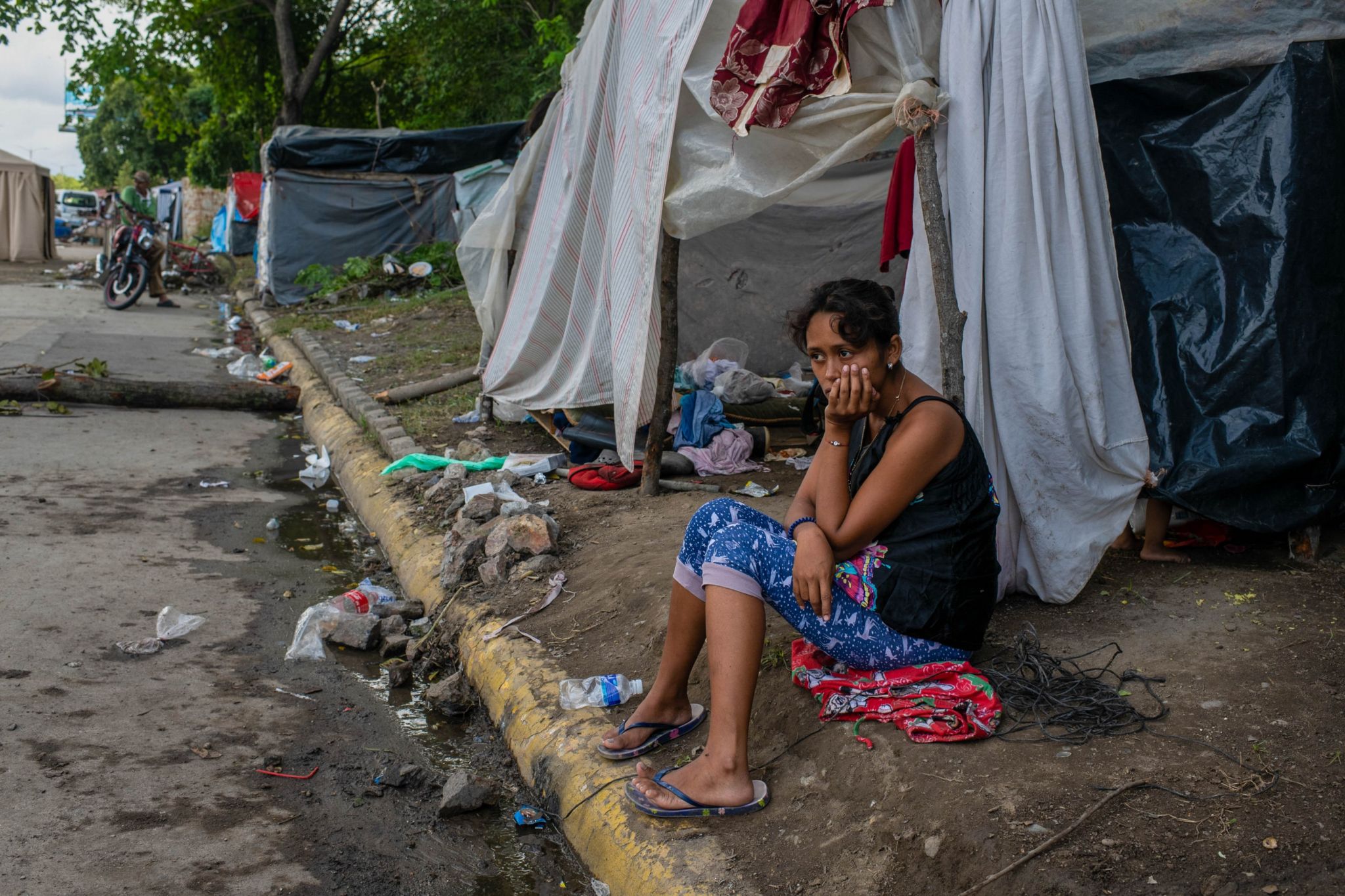
Susan Jesenia Aguilar sits in front of the makeshift tent where she has been living since her home flooded.image copyrightEncarni Pindado
image captionSusan Jesenia Aguilar has been living in a makeshift tent

Juan Argueta, 46, lives in Bajos de Choloma, north of San Pedro Sula. When the authorities warned residents to leave the area ahead of Hurricane Iota, Mr Argueta told his family to go to a shelter. But he, like many of his neighbours, stayed behind to look after the family’s belongings and their animals.

When the waters rose quickly, he had to abandon his home for his own safety. Wading through strong currents in the floodwaters, he was eventually rescued by the Honduran Red Cross.

The Red Cross, the army, the fire service and international rescue organisations have all been helping bring people to safety.
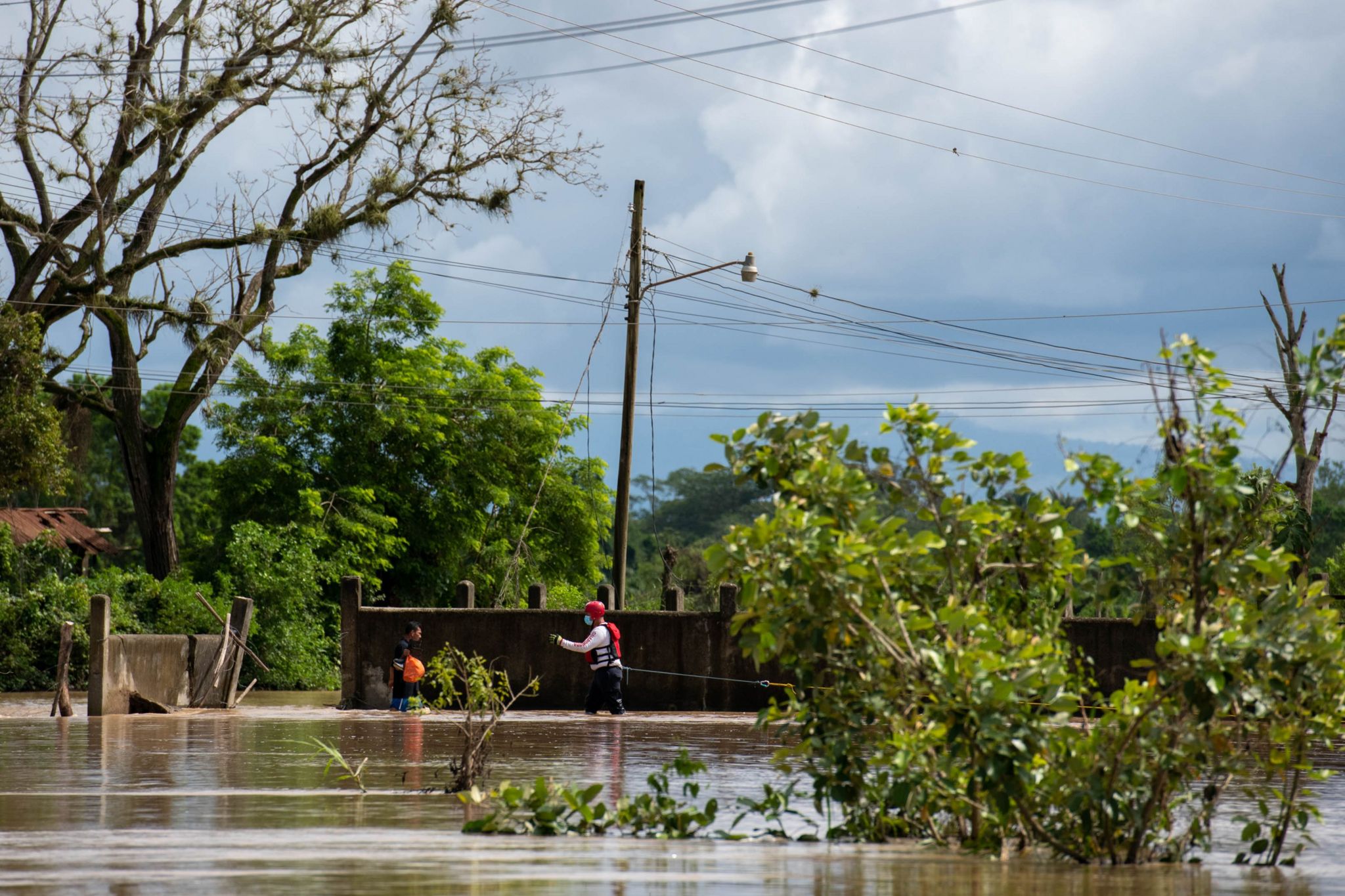
.Juan Argueta stands in flood waters as a rescue worker from the Red Cross approaches himimage copyrightEncarni Pindado
image captionJuan Argueta stayed behind to look after the family’s animals, but the floodwaters forced him to leave eventually

Seventy-year-old Roberto Mallorca and his wife Oneida Pérez, 62, lost everything when Hurricane Iota hit: the sheep and chicken that they keep and all their belongings.

Mr Mallorca had a stroke some months back. His disability meant that he and his family were not able to leave their home for one of the shelters before Iota hit.

When the waters rose, he, his wife, their daughter and two grandchildren scrambled to higher ground where they were trapped for almost 24 hours until locals aided by the Red Cross came to their rescue.
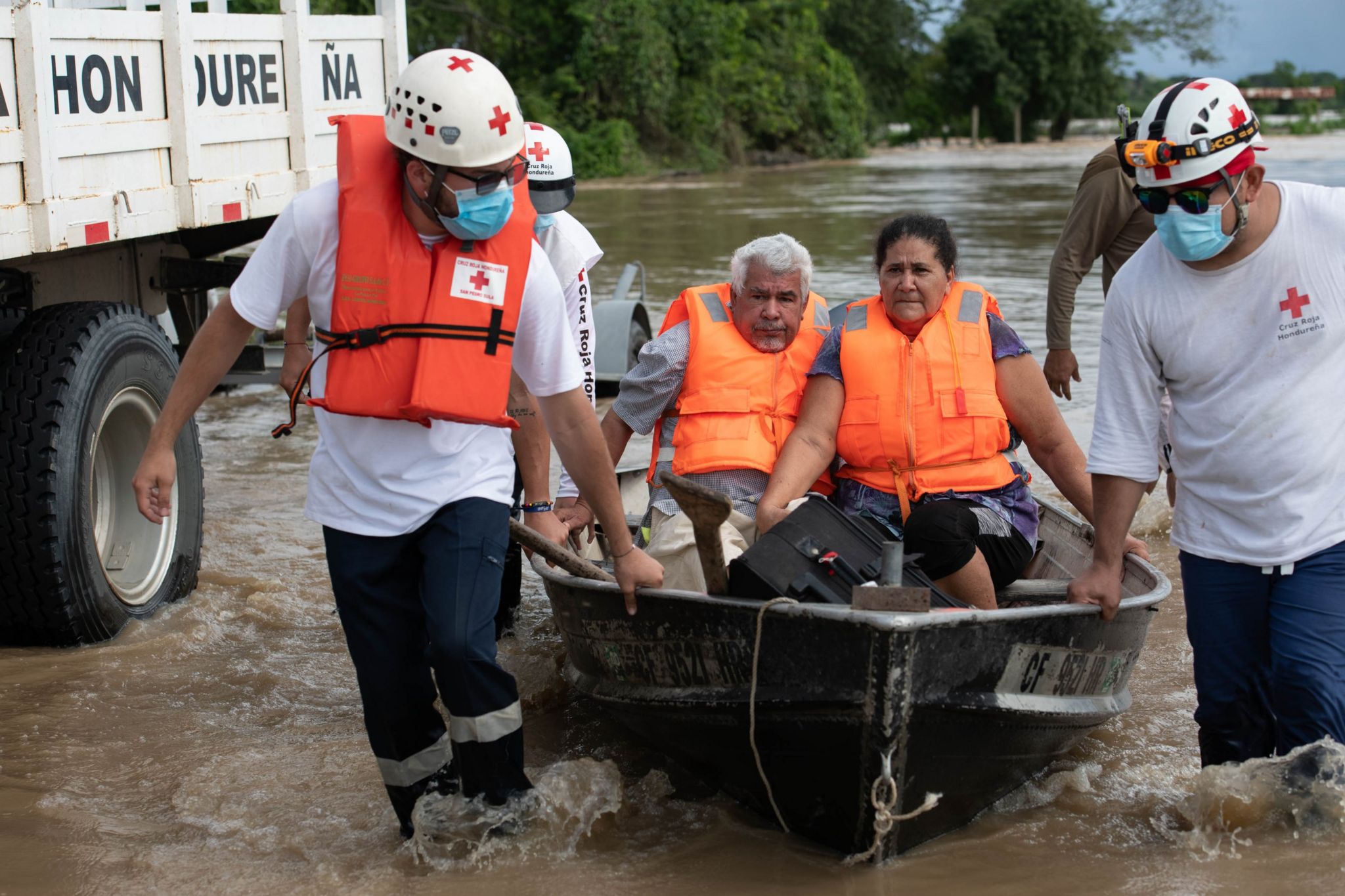
Roberto Mallorca and Oneida Pérez are rescued by the Red Cross and locals in Los Bajos de Cholomaimage copyrightEncarni Pindado
image captionRoberto Mallorca and Oneida Pérez were rescued after almost 24 hours

Before the hurricanes hit, Digno Osorto worked transporting sand to construction sites on his horse-drawn cart. On average he earned $13.35 (£10) a week, which he says was not enough to feed his family. His horse-drawn cart turned out to be a lifesaver when the floodwaters rose.

He packed his entire family on the cart and got them to safety. But all of his belongings were lost in the floods.

For many in Honduras, the impact caused by the storms will push them from poverty into extreme poverty.

Digno Osorto faces extreme povertyimage copyrightEncarni Pindado
image captionDigno Osorto managed to save his family thanks to his horse-drawn cart

Official figures suggest more than 150,000 people have been left homeless due to the damage caused by the two storms. Entire families are camping out wherever they can, even if it means sleeping rough by the side of a motorway.

Many are developing health problems ranging from simple colds to skin rashes and gastrointestinal problems. Mosquito-borne dengue and Covid are also on the rise.

According to the health ministry in Cortés region, some people are refusing to be tested for Covid for fear of being stigmatised if they test positive and being pushed out of the shelters where they have sought refuge.
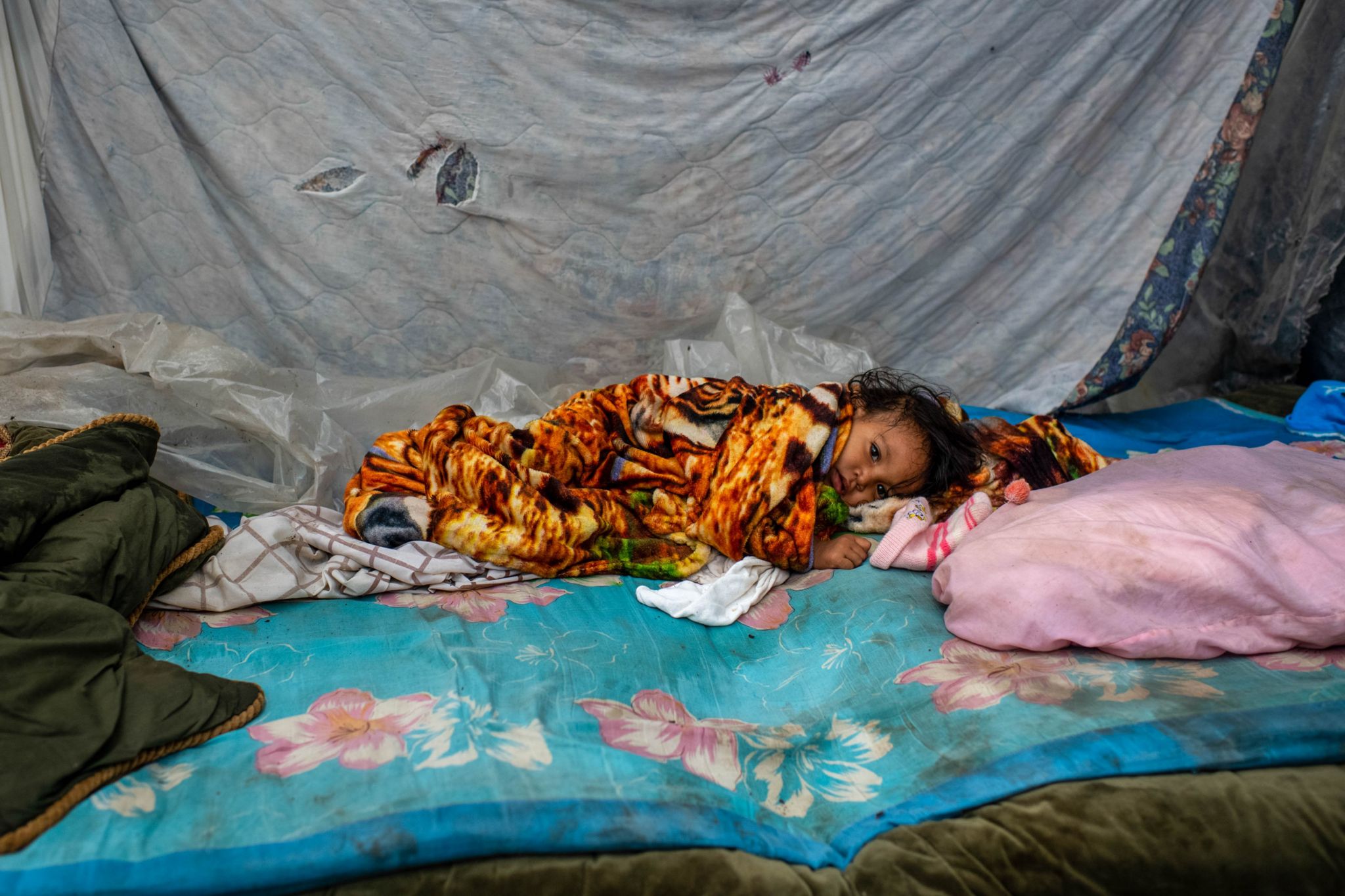
A baby lies in a makeshift shelter by a highway on the outskirts of San Pedro Sulaimage copyrightEncarni Pindado
image captionWhole families have been left homeless

More than 15,000 people sought refuge in shelters in the city of San Pedro Sula alone. This school here (below) houses more than 475 people. It receives donations of food, bedding, clothes and medicines, but with a quarter of the city affected, there is not enough to go around.

The combination of the post-hurricane clean-up, reconstruction and the continuing health emergency due to Covid-19 far exceeds the capacity and the budget of the government.
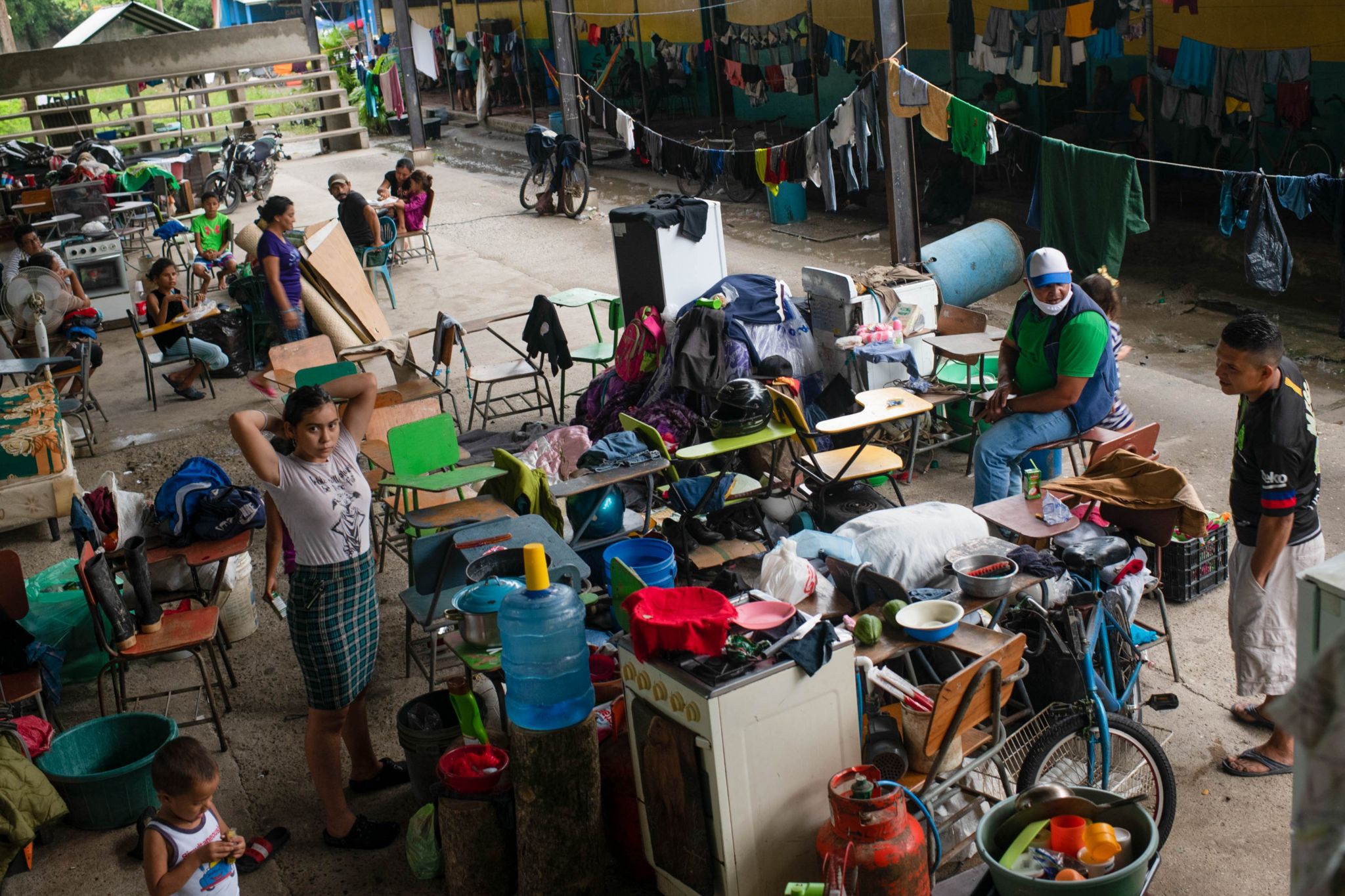
A school in San Pedro Sula has been turned into a shelterimage copyrightEncarni Pindado
image captionMore than 475 people are living in this school-turned-shelter

Porfirio Castellanos, 63, is one of the hundreds of people who sought refuge in the school in the Calpules neighbourhood of San Pedro Sula.

He and his family, like so many others, have lost everything to the floods. He says that he feels people like him were left abandoned. “During Hurricane Mitch (in 1998), the authorities helped people salvage some of their possessions by putting them on to lorries and transporting them to shelters before the city got flooded.” He says that no such help was on hand during Hurricane Eta.
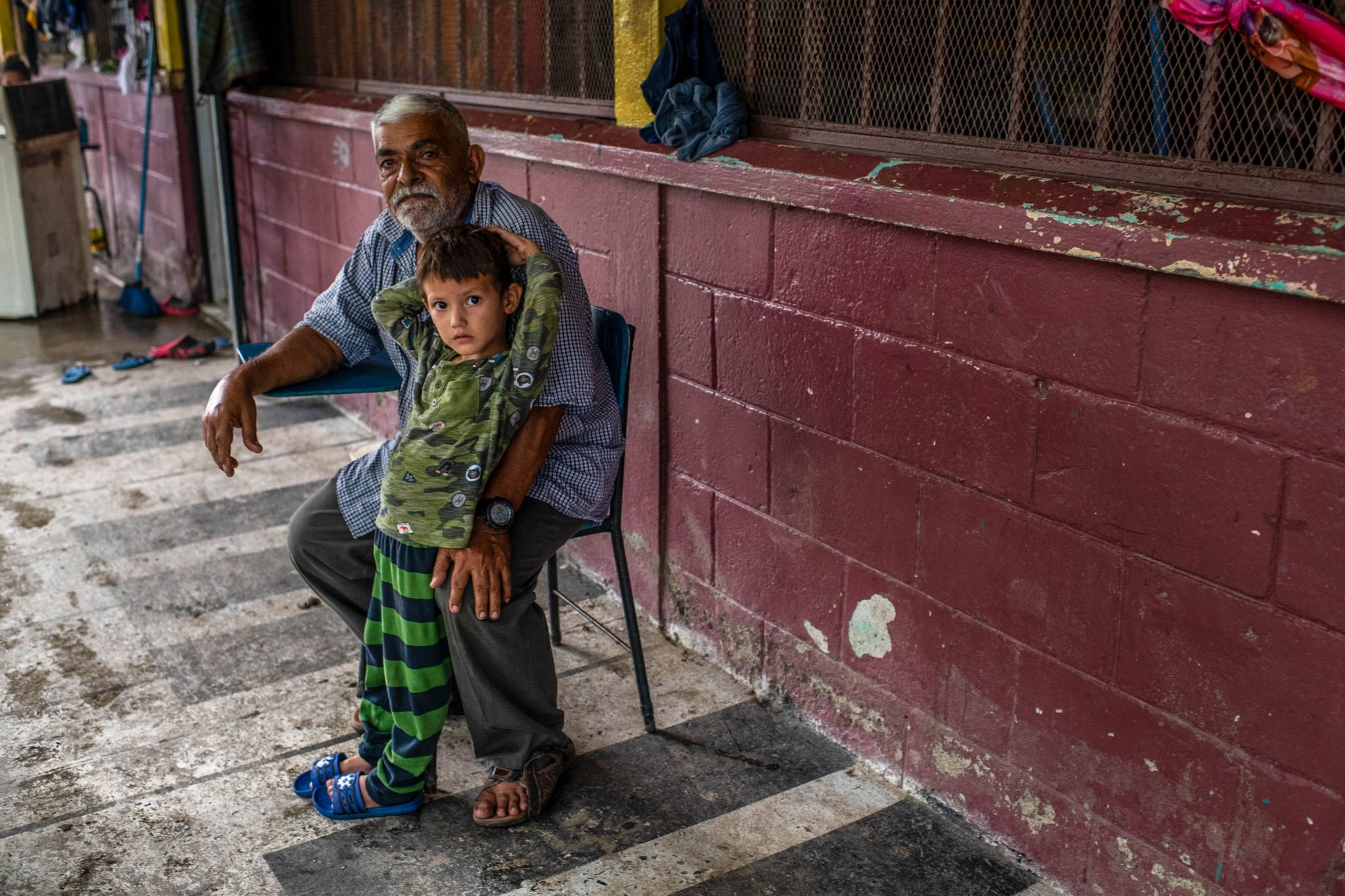
Porfirio Castellanos sheltering at a schoolimage copyrightEncarni Pindado
image captionPorfirio Castellanos remembers when Hurricane Mitch hit in 1998

El Valle de Sula is the economic powerhouse of Honduras but after having been flooded twice in the space of two weeks, the government has yet to tally up the economic loss.

Countrywide, almost 300 roads were damaged, 48 bridges destroyed and 32 others were damaged by the river flood, according to Honduras’ civil protection officials.
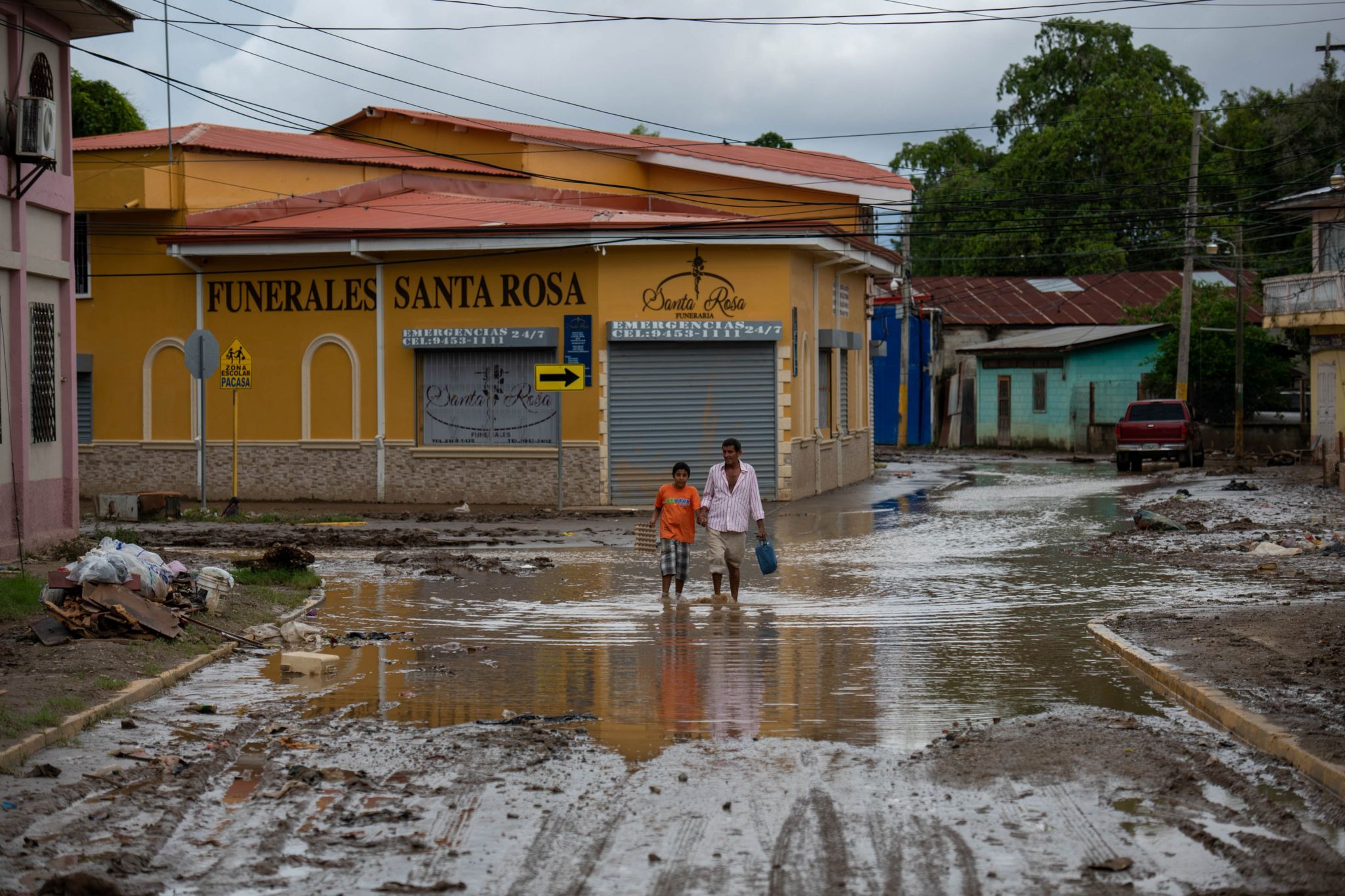
A view of two people walking along a muddy street in Valle de de Sulaimage copyrightEncarni Pindado
image captionValle de Sula was the economic engine of Honduras

Gloria, 70, has been sleeping rough on the central reservation of a highway for more than two weeks after her home flooded.

She is one of hundreds of elderly people who are alone and without any financial means. Many are also suffering from post-traumatic stress after losing everything to the hurricanes.

Thousands of people are wandering the streets, bedding down at night wherever they can.
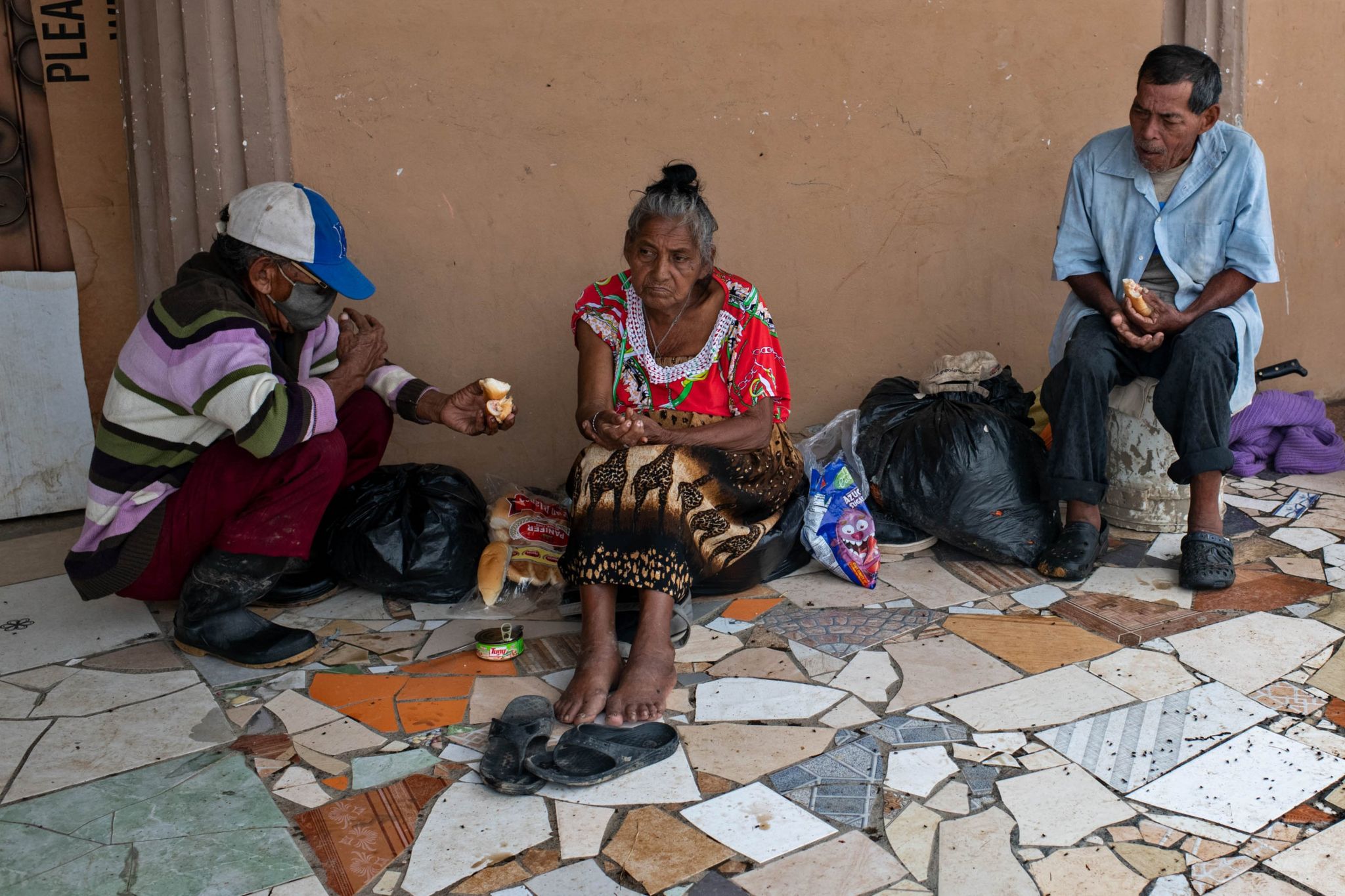
Gloria sits on the floor while a man offers her some fruit to eatimage copyrightEncarni Pindado
image captionGloria is alone and sleeps on the central reservation of a highway

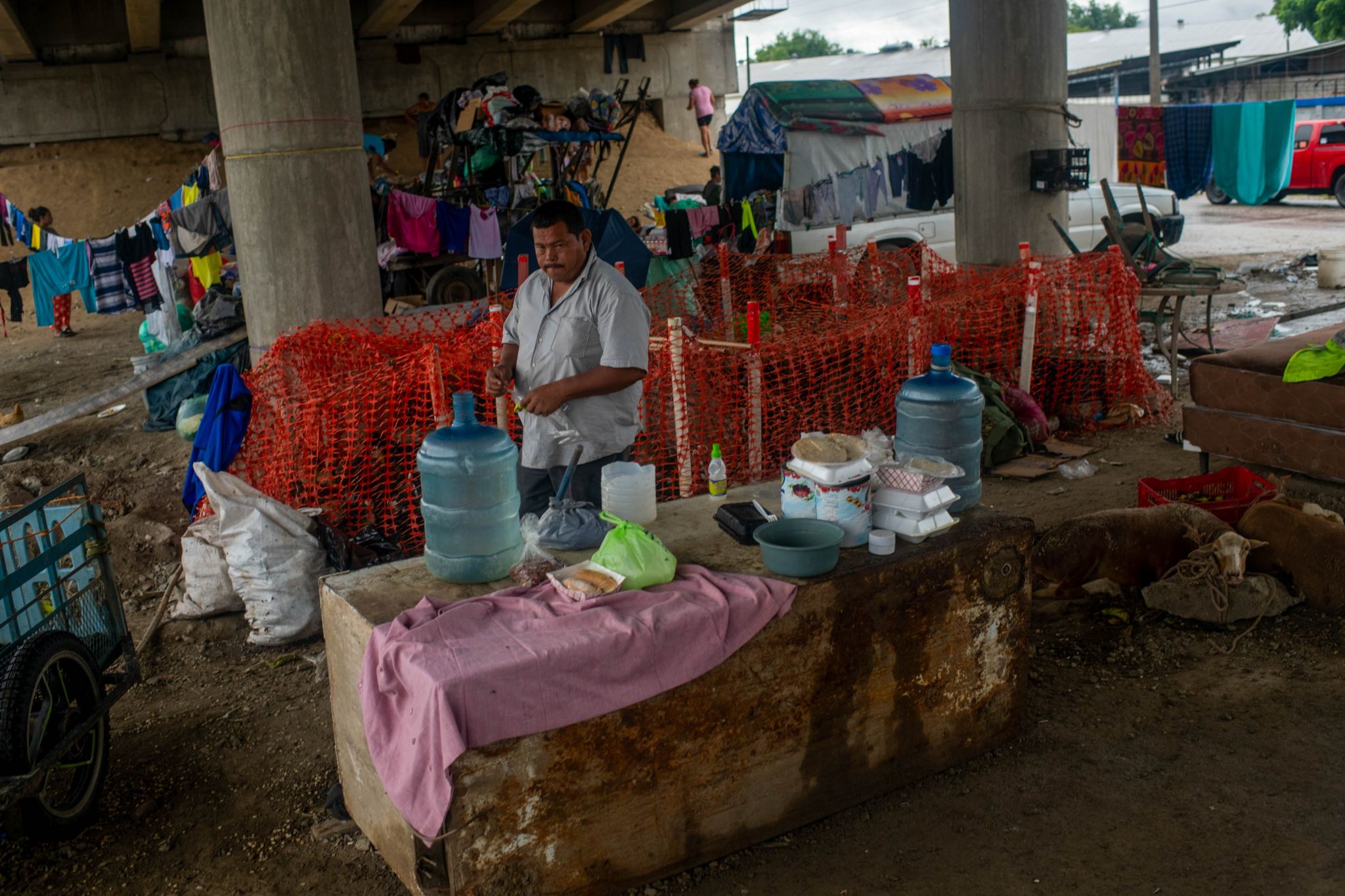
Alberto López Ocampos’ family is living in a shelter, but he refused to go there with them because he would have had to leave his animals behind. After the storms, it took him three days to be able to return to his home to fetch them.

He managed to pack 40 ducks, 25 chicken and 11 geese into a boat and bring them to safety. He is now living with them under a motorway bridge.

He also managed to pull two of his sheep from a roof where they had fled. His other sheep had drowned after they jumped into the water to search for food.
.image copyrightEncarni Pindado
2px presentational grey line

The post 2 Hurricanes in One Month Devastates Honduras appeared first on The St Kitts Nevis Observer.
Dominica Hails India Vaccine Donations

Dominica PM Roosevelt Skerrit

The donation of several batches of the Oxford-AstraZeneca vaccine by the Government of India to Barbados and Dominica has been hailed as the start of the region’s fightback against the dreaded COVID-19 pandemic.

Dominica’s Prime Minister Roosevelt Skerrit emphasized that Tuesday night as he joined his Barbadian counterpart Mia Mottley via Zoom at a press conference that saw them expressing gratitude to the government and people of India for the first-ever donation of the vaccine to the region. Both countries received shipments of the vaccines earlier that day.

Addressing nationals of both countries, Skerrit said: “Guided by the results of the latest studies, this vaccine will reduce the likelihood of transmission to others; this means that Dominica as a country will soon be empowered to achieve a crucial objective, which is to further minimize and eventually stamp out the impact of the various strains of COVID-19. The vaccine will not be mandatory, but I would encourage all citizens to consider the danger of passing up such an opportunity as this to safeguard the health of yourself and your loved ones.

“I am happy that our brothers and sisters in Barbados have also succeeded in their efforts to procure that country’s own batch of the vaccine for the benefit of all Barbadians. Tonight signifies the start of the fightback by the Caribbean islands against the virus that has threatened the livelihood of every CARICOM national. The journey ahead may be a long one. But I am certain that once we stay focused and keep our guards up and protect ourselves with this vaccine, we will rise again in our beautiful Caribbean region,” he added.

Skerrit said that being the leader of a small Caribbean island, with a population of just 72,000, he did not expect such a swift positive response to his request, for the vaccines, from India’s Prime Minister Narendra Modi.

“One would have thought and understood that a global pandemic, such as this, a nation’s size and might would have been the primary considerations. But it is to the credit of Prime Minister Modi, that our request was considered on merit, and the quality of our people was recognized,” he said.

Skerrit also recognized the part played by scientists and those responsible for the “tireless research and trials that went into manufacturing this formula for resistance”.

Also heaping praise on Prime Minister Mottley for ensuring Barbadians receive the vaccines, the Dominica leader noted the batches of the Oxford- AstraZeneca vaccine would be securely stored and, like Barbados, his country would soon be advancing its public awareness campaign and rolling out its vaccination exercise this month.

Stating that this would start on February 22, he outlined the first to receive vaccines would be frontline workers, senior citizens who are at risk and members of Cabinet and Parliament.

CMC

The post Dominica Hails India Vaccine Donations appeared first on The St Kitts Nevis Observer.

Associated Press World View, Feb. 11, 2021

Good morning. In today’s AP Morning Wire:

  • Chilling video footage becomes key exhibit in Trump impeachment trial.

  • ‘Overwhelm the problem’: Inside Biden’s war footing on COVID-19.

  • Countries curb diplomatic ties, weigh sanctions on Myanmar after coup.

  • Yemen War: A difficult road to peace despite Biden’s new push.  


TAMER FAKAHANY
DEPUTY DIRECTOR – GLOBAL NEWS COORDINATION, LONDON

The Rundown

Alternate text

SENATE TELEVSION VIA AP

Chilling video footage becomes key exhibit in Trump impeachment trial; Georgia prosecutor opens criminal investigation after Trump election call


It was raw and visceral. And it un-mistakenly brought home just how much worse last month’s deadly insurrection at the U.S. Capitol could have been.


Chilling video footage presented by the prosecution, including of rioters searching menacingly for House Speaker Nancy Pelosi and Vice President Mike Pence, is a key exhibit in Donald Trump’s impeachment trial, Lisa Mascaro, Eric Tucker, Mary Clare Jalonick and Jill Colvin report.


Lawmakers prosecuting the case in the Senate aim to prove that Trump bears singular responsibility for the siege.


The footage shown at trial, much of it never before seen, has included video of the mob smashing into the building, distraught members of Congress receiving comfort, rioters engaging in hand-to-hand combat with police and audio of Capitol police officers pleading for back-up.


It underscored how dangerously close the rioters came to the nation’s leaders, shifting the focus of the trial from an academic debate about the Constitution to a raw retelling of the Jan. 6 assault.


Today brings the second and final full day of House prosecution arguments, with the Trump legal team taking the lectern Friday and Saturday for up to 16 hours to lay out their defense.


Trial Highlights: Harrowing footage, focus on Trump’s words on Day 2, captured by Jill Colvin.


VIDEO: Trump trial video unveils chilling scope of US Capitol riot. 


The Scene: Senators in both parties were stoic and rapt as they relived the horror, watching almost 90 minutes of terror unfold on large screens near their desks. If any senators had tried not to look at images of the Jan. 6 siege on the Capitol, or to bury their memories after they fled a violent mob of Trump supporters that day, they were not able to do so any longer. Senators braced themselves in their chairs, leaned forward over their desks and stayed absolutely silent — impartial jurors but also witnesses to the violence, Mary Clare Jalonick writes.


VIDEO: Senators stunned by new footage of Capitol siege.


Biden Keeps His Own Counsel: Did someone say impeachment? President Joe Biden has avoided wading into the debate. Biden has said he wouldn’t watch the trial and was leaving it up to the Senate to decide whether to convict Trump. White House press secretary Jen Psaki has dodged question after question about the trial. The message reflects the political and practical realities of the moment. White House aides privately note that the president doesn’t gain much from weighing in. And they say staying above the fray allows him to focus on his national COVID-19 plan, Jonathan Lemire and Alexandra Jaffe report.


Trump’s Lawyers: Trump has employed high-powered litigators for decades, but since losing the election to Biden, he’s been bleeding attorneys. More established firms have backed away from his baseless claims of election fraud, leaving him with legal teams that repeatedly made elementary errors in cases that were quickly rejected. His personal attorney, Rudy Giuliani, was ridiculed for his performance before a federal judge during one election case. By the time Trump’s second impeachment trial rolled around, he was looking far outside the top law firms that typically would represent an ex-president. Alanna Durkin Richer, Nomaan Merchant and Colleen Long report.


Georgia Election Investigation: A Georgia prosecutor’s office has opened a criminal investigation into “attempts to influence” the outcome of last year’s general election. Officials did not mention Donald Trump by name, but a spokesman said that is part of it. Trump has come under intense criticism for a call he made to the state’s top elections official last month. Trump pressed Secretary of State Brad Raffensperger to “find” enough votes to overturn Joe Biden’s victory in the state, Kate Brumback reports.

Alternate text

AP PHOTO/TED S. WARREN

Inside Biden’s war footing on COVID-19; AP-NORC Poll: A third of US adults skeptical of COVID-19 shots; In UK, roving vaccination teams bring virus jab to homeless


President Joe Biden’s team is putting itself on war footing as it fights the pandemic. Top aides say the administration is using every “tool the federal government has to battle on every front.”


To defeat the virus, Biden’s team must oversee a herculean logistical effort to put shots into hundreds of millions of arms. It also must overcome vaccine hesitance, politically charged science skepticism and fatigue across all corners of society, Zeke Miller reports.


His team has been rolling out an almost dizzying array of new efforts and appeals — everything from building a surgical glove factory to asking Americans to wear masks while walking their dogs.


The goal, Biden aides say, is as simple as it is ambitious: After a year of being on defense they want to take the fight to the virus — to “overwhelm the problem,” a kind of mantra for the team.


U.S. Vaccine Poll: About 1 in 3 Americans say they definitely or probably won’t get the coronavirus vaccine. That’s according to a new poll that some experts say is discouraging news if the U.S. hopes to achieve herd immunity and vanquish the outbreak, MIke Stobbe and Hannah Fingerhut report. The poll from The AP-NORC Center for Public Affairs Research found that while 67% of Americans plan to get vaccinated or have already done so, 15% are certain they won’t and 17% say probably not. Many expressed doubts about the vaccine’s safety and effectiveness, even though few serious side effects have turned up more than a month and a half into the U.S. vaccination drive.


Suing U.S. Nursing Homes : As the virus takes a devastating toll on seniors in nursing homes, many attorneys are turning down grieving families seeking to sue long-term care providers for wrongful death. That’s because more than half of U.S. states have granted nursing homes and other health providers protection from lawsuits during the pandemic. The federal government says about 162,000 nursing home residents and workers have died, accounting for roughly 1-in-3 virus deaths in the U.S., Russ Bynum reports.


Vaccinating the U.K. Homeless: In a pandemic, homeless people face being more forgotten than they already are. Because those sleeping outside have no address doctors can contact them at, some local authorities in Britain have begun sending out roving vaccination teams to identify the clinically vulnerable among them. Some doctors are on a mission to bring the vaccine to those hardest to reach and often most at risk of getting sick. One small team of doctors and nurses have been showing up at homeless centers in east London, a COVID-19 hotspot, offering a free jab to dozens who may otherwise get left behind in Britain’s mass vaccination drive, Sylvia Hui reports.


WHO Vaccine: Independent experts advising the World Health Organization have recommended using AstraZeneca’s COVID-19 vaccine even in countries that have turned up worrying coronavirus variants in their populations. The new comes amid growing doubts about that particular vaccine’s effectiveness against a variant that emerged in South Africa. The advice is used by health care officials worldwide but doesn’t amount to a WHO green light for the U.N. and its partners. That approval could come after separate WHO group meets Friday and Monday to assess whether an emergency-use listing for the AstraZeneca vaccine is warranted, Jamey Keaten reports from Geneva.


How are experts tracking variants of the coronavirus? The AP is answering Viral Questions in this series.

Alternate text

AP PHOTO

After the coup in Myanmar, countries curb diplomatic ties, weigh sanctions; Digital siege: Internet cuts become a favored tool of repression


A growing number of governments are curbing diplomatic ties with Myanmar and increasing economic pressure on its military over the coup last week.


President Joe Biden issued an order that will prevent Myanmar’s generals from accessing $1 billion in assets in the U.S. and promises more measures. The U.S. was among many governments that lifted most sanctions in the past decade to encourage democratic transition in Myanmar.


One of the strongest reactions came from New Zealand, which suspended all military and high-level political contact with Myanmar and denied recognition to its military-led government. Malaysia and Indonesia called for the Association of Southeast Asian Nations to convene a special meeting to discuss Myanmar, but it’s unclear if the bloc can come together. Kim Tong-hyung has this story from Seoul.


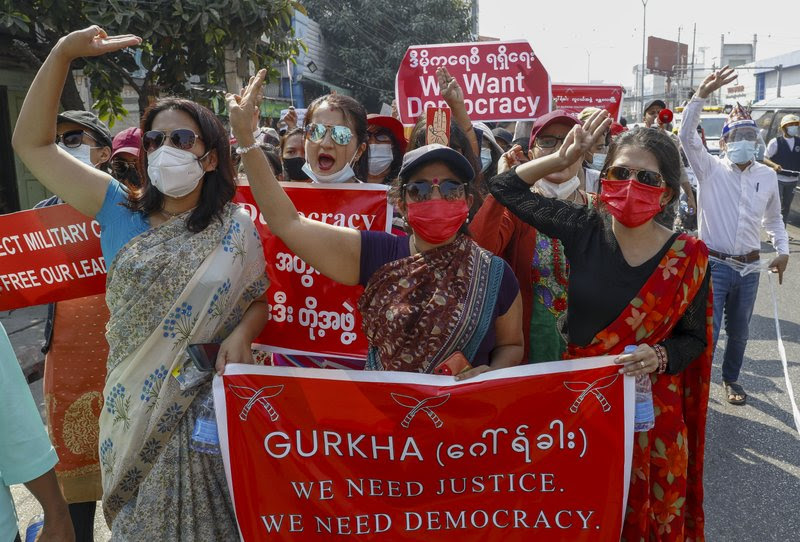
In Myanmar itself, members of the country’s myriad ethnic minorities marching behind their groups’ flags joined the large, enthusiastic protests against the junta after resistance to the coup received a major boost from abroad from Biden.


Tens of thousands of protesters, if not more, have marched daily in Myanmar’s biggest cities. Participants have included civil servants, medical workers and people from all walks of life. Buddhist monks also have been visible, as have LGBTQ contingents behind rainbow flags, underlining the breadth of opposition to the coup.


Internet Shutdowns: When army generals in Myanmar staged a coup, they briefly cut internet access in an apparent attempt to stymie protests. Ugandans couldn’t access social media platforms for weeks after a recent election. Ethiopia’s Tigray region has been cut off from the internet for months. Internet shutdowns are an increasingly popular tool for repressive and authoritarian governments and some illiberal democracies.


Digital rights groups say governments use them to stifle dissent, silence opposition voices or cover up human rights abuses. One report found 93 major internet shutdowns in 21 countries last year. It’s the digital equivalent of the pre-internet seizing of control of local TV and radio stations by despots and their rivals, Kelvin Chan reports.

Alternate text

AP PHOTO/OSAMAH ABDULRHMAN

Yemen’s Ruinous War


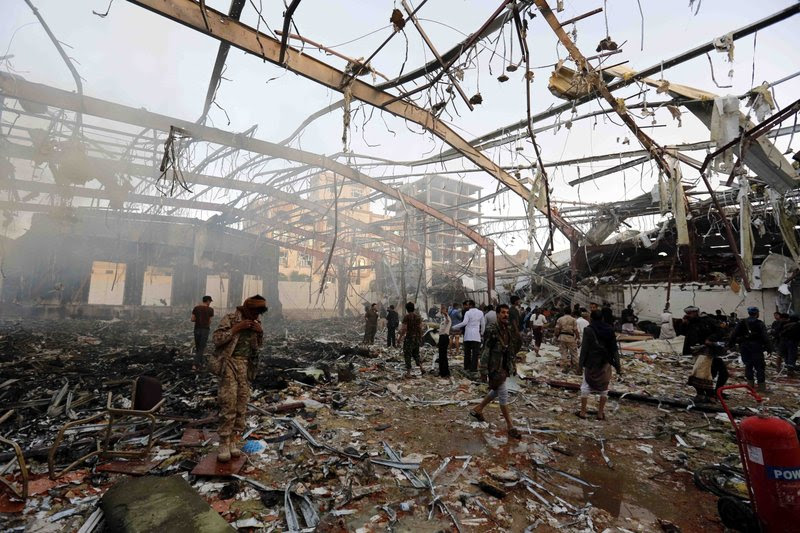
“It’s a wise decision, but it’s too late,” says the uncle of a child traumatized by a Saudi Arabian airstrike that destroyed her home in the Yemeni capital and killed her parents and her five siblings in August 2017.


It’s also far too early, he and many suggest, to say whether President Biden’s move to stop backing the Saudi coalition and push for an end to the war will bring peace to Yemen, Sam Magdy reports.


Yemenis have suffered six years of bloodshed, destruction and humanitarian catastrophe.


There’s no doubt it’s a difficult diplomatic road ahead. The warring sides have not held substantive peace talks since 2019 and are dug in, with Houthi rebels launching a new assault against government forces just days after Biden’s announcement.


Biden’s halt to support for the Saudi-led coalition was a dramatic break with the air campaign against Iranian-backed Houthi rebels, which had brought international condemnation for causing thousands of civilian deaths. But that does not immediately undermine the coalition’s ability to fight the ruinous war.


Yemen today marks 10 years since the fall of longtime autocrat Ali Abdullah Saleh in the wake of an Arab Spring uprising — a moment Yemenis hoped would lead to effective governance and greater freedom.


Instead, a brutal war followed when the Houthis seized the capital Sanaa in late 2014 along with much of the country’s north, ousting the government of Saleh’s successor, President Abed Rabu Mansour Hadi.


TIMELINE: Yemen war began in 2014 when Houthis seized Sanaa. Saudi Arabia, along with the United Arab Emirates and other countries, entered the war alongside Yemen’s internationally recognized government in March 2015. The war has killed some 130,000 people and driven the Arab world’s poorest country to the brink of famine.

Other Top Stories

Joe Biden has held his first call as president with Xi Jinping, pressing the Chinese leader about trade and Beijing’s crackdown on democracy activists in Hong Kong. A White House statement says Biden raised concerns about Beijing’s “coercive and unfair economic practices.” Biden also pressed Xi on China’s actions toward Taiwan and human rights abuses against Uighur and ethnic minorities in the western Xinjiang province. China’s state broadcaster says Xi pushed back against those concerns and warned “the U.S. should respect China’s core interests.” The two leaders spoke just hours after Biden announced plans for a Pentagon task force to review U.S. national security strategy in China.

Rare witness accounts are illuminating the heavy toll of the shadowy conflict in Ethiopia’s Tigray region as fighting enters a fourth month. An American nurse who recently escaped tells the AP that perhaps 1,000 people were killed around her family’s town alone. And an opposition official says his party and others have compiled “thousands of names” of dead civilians. He warns that once the region becomes accessible, “the world will apologize to the people of Tigray, but it will be too late.” Red Cross officials now warn that thousands of people could starve to death in the coming weeks.

Pressure is coming from all sides in Japan for Yoshiro Mori to step down as the president of the Tokyo Olympic organizing committee. This follows his demeaning comments about women more than a week ago and an ensuing public debate in Japan about gender equality. A move could come as soon as Friday, according to some reports, when the organizing committee’s executive board meets. The executive board is overwhelmingly male. The 83-year-old Mori at a meeting of the Japanese Olympic Committee essentially said that women “talk too much” and are driven by a “strong sense of rivalry.” He gave a grudging apology a day after his opinions were reported, but declined to step down.

Larry Flynt, who turned his pornographic Hustler magazine into an empire while fighting numerous First Amendment court battles, has died at 78.  Flynt’s career began with Ohio strip clubs but in 1974 he founded Hustler, an unashamedly crude, hard-core skin magazine that offended conservatives and feminists alike. Flynt fought numerous court battles over obscenity and other charges and depicted himself as a fighter for free speech. He also staged political stunts, such as offering $10 million in 2017 for information to impeach Donald Trump.

The post Associated Press World View, Feb. 11, 2021 appeared first on The St Kitts Nevis Observer.

Haiti: Judge Orders Release of Judge, Reporters Attacked

WASHINGTON/PORT-AU-PRINCE – The head of the Civilian Tribunal of Croix-des-Bouquets has ordered the release of Supreme Court Justice Yvickel Dabresil.

The justice was one of 23 people arrested early Sunday in connection with an alleged coup attempt. A video produced by the Haitian National Intelligence Service and distributed to the press begins with mobile phone footage of Dabresil shortly after his arrest.

According to local media, the judge remains in detention at the Croix-des-Bouquets Government Commissioner’s office, pending the enforcement of the release order.

Seventeen others who were arrested in a sting operation regarding the alleged coup attempt remain in detention.

On Tuesday, Dabresil was transferred out of the National Police Force Investigations Unit facility (DCPJ – Direction Centrale Police Judiciare – Haitian equivalent of the FBI) to a facility in Croix-des-Bouquets, located 13 kilometers northeast of Port-au-Prince. A VOA Creole reporter said the judge was transferred without being arraigned.

Johnny Fils Aime a reporter for Radio Kajou in Port-au-Prince was treated for two broken bones in his leg after an encounter with police while covering an anti-government protest
Johnny Fils Aime a reporter for Radio Kajou in Port-au-Prince was treated for two broken bones in his leg after an encounter with police while covering an anti-government protest in Port-au-Prince, Haiti, Feb. 9, 2021. (VOA/ Matiado Vilme)

According to a human rights activist who visited Dabresil in detention, the justice refused to respond to DCPJ questions. Because Dabresil is an officer of the highest court of law in the nation, his legal authority supercedes that of the lower court judges, according to Haiti’s constitution.

Judge Samuel Madistin questioned the legality of Dabresil’s arrest.

“I think the arrest was completely illegal,” Madistin said in an interview with a Haitian radio station, citing the fact that legal procedures were not followed. According to Madistin, the justice of the peace who is required to be on the premises before an arrest warrant is served was absent.

But in an exclusive interview with VOA Creole on Tuesday, President Jovenel Moise defended the operation that led to the arrests.

VOA Creole reporter Florence Lisene filed a complaint against National Police officers who attacked journalists covering protest
VOA Creole reporter Florence Lisene filed a complaint against National Police officers who attacked journalists covering a peaceful anti-government protest in Port-au-Prince.

“The chief of the tribunal of Port-au-Prince was asked by a journalist who has jurisdiction over crimes against the state. He responded if you pull off a coup d’etat, you are a hero. If you don’t, we will judge you as a criminal in a court of law with a jury,” Moise said.

Pressed on the questionable circumstances of the arrest, Moise pushed back.

“A plot against the state isn’t something that happens in a day, to invade the (national) palace, you would need a thousand people. This coup was planned. A national palace security officer was contacted by the plotters — a foreigner contacted him to plan a coup d’etat and it was so well planned that they even had an arrest warrant with the president’s name on it. We must be able to speak frankly about these things,” Moise said.

The U.S. State Department and United Nations have expressed concern about the recent developments in Haiti.

“We understand the Haitian National Police is investigating 23 individuals who were arrested over the weekend. The situation remains murky, and we await the results of the police investigation,” a State Department spokesperson told VOA.

=====================================================

JOURNALISTS COVERING PROTEST ATTACKED BY POLICE

WASHINGTON/PORT-AU-PRINCE – Journalists covering a peaceful protest against President Jovenel Moise in Port-au-Prince were attacked by members of Haiti’s national police force with tear gas Wednesday.

According to reporters, police first fired tear gas to disperse a large crowd of protesters who were marching through the streets of the capital chanting, “Jovenel’s term is over. Down with dictatorship!”

After breaking up the protest, police turned on reporters, firing tear gas and spraying an unknown substance in their faces. At one point, a police unit fired tear gas into a pickup truck belonging to Radio-TV Pacific transporting at least 10 people, overwhelming it with smoke.

VOA Creole reporter Matiado Vilme said members of the media had their press badges visible to law enforcement. Some wore bulletproof vests with the words “Press” printed on the front and back. When Vilme took cover behind a nearby pole, she said, she was followed by a police officer who fired a tear gas cannister at her feet.

Shaken and furious, the group of journalists with cameras, microphones, mobile phones and various other reporting equipment held high, walked to the Bureau for the Western Department (Bureau Departmental de l’Ouest) to file a complaint against the police.

“We spoke to the DDO (Directeur du Departement de l’Ouest, Paul Menard). We explained the situation and gave him examples of journalists who had been victimized by the police,” said Florence Lisene, a VOA Creole stringer who was one of three journalists who filed the complaint.

“The only guarantee he gave us was that he was going to bring this complaint to the police chief to be examined and investigated. He also said they would investigate the police backup who committed these actions to determine what disciplinary measures are warranted,” Lisene said.

VOA Creole tried to contact Menard for comment but was unsuccessful.

A U.S. State Department spokesperson told VOA: “The United States has seen reports of police injuring journalists as they attempted to disperse recent demonstrations. We call on Haitian authorities to respect the freedoms of expression and association and the right to peaceful assembly, and we call on the Haitian National Police Inspector General to conduct a thorough investigation of these incidents.”

The Haitian Online Media Association (ANMH) issued a statement denouncing the attack.

“ANMH vehemently condemns the barbaric acts committed by the police, of which journalists were victims over the past days,” the organization said.

The Committee for the Protection of Journalists (CPJ) issued a statement Feb. 9 expressing concern about the police shooting Feb. 8 of two journalists as they covered a protest in the Champ de Mars neighborhood, calling for Moise’s resignation.

“Haitian authorities should thoroughly investigate the shootings of journalists Alvarez Destiné and Méus Jeanril, identify those responsible and hold them to account,” CPJ said.

One of the wounded reporters has undergone two operations for the injuries he suffered at the hands of police.

Haiti Secretary of State for Communications Eddy Jackson Alexis commented on Twitter: “I was stunned to learn that journalist @CheryHaiti was injured today during a protest in the capital. I invite @pnh_officiel to be more careful in its interventions and invite journalists to exercise caution while working.”

A United Nations report published in September 2020 said the uptick in violence against journalists covering protests was cause for concern. Among its recommendations for protecting media workers was “strengthening training for police and law enforcement on freedom of expression, and appropriate behavior in dealing with the media.”

Jacquelin Belizaire, Renan Toussaint in Port-au-Prince, Haiti contributed to this report.

The post Haiti: Judge Orders Release of Judge, Reporters Attacked appeared first on The St Kitts Nevis Observer.

Asthma Drug Reduces COVID Hospital Cases Up To 90%

Researchers at the University of Oxford have found that AstraZeneca’s asthma treatment Pulmicort reduces the need for hospitalization in COVID-19 patients, sparking hope the medication could join a short list of drugs used to treat the virus.

Pulmicort is a budesonide administered by inhalation, commonly used in the long-term treatment of asthma. In the study, half of the 146 participants took 800 micrograms of the medication twice a day while the other half continued their usual care over a 28-day study period. The findings showed that for those receiving the Pulmicort treatment, the risk of requiring hospitalization reduced by 90%.

The study also found that inhaled budesonide given within seven days of the onset of symptoms reduced recovery time.

Despite it being a small study, the results provide hope at a time that countries are scrambling amid rises in cases triggered by mutations of the coronavirus. Mona Bafadhel of the university’s Nuffield Department of Medicine said she was, “heartened that a relatively safe, widely available and well studied medicine such as an inhaled steroid could have an impact on the pressures we are experiencing during the pandemic,” according to a statement shared by Bloomberg.

The positive developments are a welcome reprieve for AstraZeneca who last month announced that they would only be able to deliver a quarter of the doses of its COVID-19 vaccine to the European Union, a vaccine that that many countries around the world are questioning the efficacy of, particularly in older people.

The post Asthma Drug Reduces COVID Hospital Cases Up To 90% appeared first on The St Kitts Nevis Observer.

UK PM Warns of the Need for Yearly COVID Vaccinations

LONDON (Reuters) – British people should expect to receive repeated vaccinations against COVID-19 in future to keep pace with mutations of the virus, Prime Minister Boris Johnson said on Wednesday.

As vaccines are being rushed out across the world, researchers are considering tweaks and booster shots to make them more effective against new variants, some of which appear to spread more quickly.

Among those most concerning for scientists and public health experts are the so-called British, South African and Brazilian variants.

“I think we will have to get used to the idea of vaccinating and revaccinating in the autumn as we come to face these new variants,” Johnson told parliament.

Earlier this week Health Secretary Matt Hancock said Britain had agreed to buy 50 million new vaccine doses specifically for new COVID-19 variants.

The head of the Oxford Vaccine Group said on Tuesday it is not yet clear whether the world needs a new set of vaccines to fight different variants of the novel coronavirus but scientists are working on new ones so there is no reason for alarm.

The Oxford vaccine developed with British drugmaker AstraZeneca appears to offer only limited protection against mild disease caused by the South African variant of COVID-19, based on early data from a trial.

However, AstraZeneca said it thought its vaccine could still protect people against severe illness caused by the South African variant.

Britain has already injected over 12.6 million first doses of COVID-19 vaccines and is on track to meet a target to vaccinate everyone in the top most vulnerable groups by mid-February.

The COVID-19 pandemic has killed 2.34 million people worldwide since it emerged in China in late 2019, according to a Reuters tally, with Britain among the very worst-hit.

Reporting by William James and Andy Bruce; editing by Guy Faulconbridge

The post UK PM Warns of the Need for Yearly COVID Vaccinations appeared first on The St Kitts Nevis Observer.

Biden Hits Myanmar with Sanctions Over Military Coup

President Biden announced sanctions targeting Myanmar’s military officials, their families and some businesses following a coup in that country that led to the detainment of democratically elected government officials.

Biden made his announcement at the White House, saying that he signed an executive order allowing for sanctions on military leaders who directed the coup, blacklisting their business interests and imposing restrictions on their family members. He did not name the officials in the announcement.

The president said he consulted closely with Senate Minority Leader Mitch McConnell (R-Ky.) and “allies and partners” around the world, and in particular the Indo-Pacific, in an effort to begin to build a coordinated international response to the coup

“A strong and unified message emerging from the United States has been essential, in our view, to encouraging other countries to join us and pressing for an immediate return to democracy,” the president said.

The move comes following Myanmar’s military instituting a state of emergency on Feb. 1, overthrowing the civilian-led government and arresting prominent politicians including Nobel Laureate Aung San Suu Kyi and President Win Myint.

The Biden administration quickly condemned the takeover and determined it a military coup shortly after, triggering sanctions and a review of U.S. assistance to the country.

The president said Wednesday he is further directing steps be taken to prevent military generals from having access to $1 billion in government funds held in the United States and will impose “strong export controls” and freeze assets to the government in Myanmar, which is also referred to as Burma.

The U.S. will maintain support for Myanmar’s health care system and civil society groups and “other areas that benefit the people of Burma directly,” Biden said. 

“Today, I again call on the Burmese military to immediately release the democratic political leaders and activists that they now detain, including detaining Aung San Suu Kyi and Win Myint, the president,” Biden said.

His announcement Wednesday marks the first time the president has used punitive measures since taking office. 

Biden further spoke out against any violence directed towards protesters in Myanmar demonstrating against the military coup, which have gathered momentum in recent days with thousands taking to the streets. 

The United Nations has warned against police using “disproportionate force” to disperse protesters amid reports of wounded demonstrators from rubber bullets and water cannons.

“Violence against those asserting their democratic rights is unacceptable and we’re going to keep calling it out,” Biden said on Wednesday.

“The people of Burma are making their voices heard and the world is watching. We’ll be ready to impose additional measures, and we’ll continue to work with our international partners to urge other nations to join us in these efforts.”

Biden further said the U.S., in its return this week to the U.N. Human Rights Council as an observer state, would use its position “to strengthen the world’s commitment to human rights in Burma.”

The move by the president signals a return by the U.S. to foreign policy concerned with democracy and human rights, said Chris Ankersen, clinical associate professor at the NYU School of Professional Studies Center for Global Affairs. 

As part of this, the U.S. had earlier joined a statement the Group of Seven denouncing the coup, and the president on Wednesday said the U.S. “helped bring together” the United Nations Security Council when it issued a joint statement last week calling for the democratically-elected government to be reinstated and the release of government officials. 

Yet Ankersen cautioned that the impact of the president’s announced sanctions is likely limited. 

“Senior military officers must have anticipated this,” he wrote in an email to The Hill.  “China will be able to provide some financial relief to at least partially offset this.”

Top military officials in Myanmar, including General Min Aung Hlaing, who assumed leadership of the country with the military coup, were sanctioned by the Trump administration in 2019 for participating in gross human rights abuses against the minority Rohingya population and other ethnic groups. 

Ankersen also expressed skepticism over the follow through of countries allied with the U.S. to join in the sanctions.

“Biden says the US will continue to urge other countries to follow suit. This indicates that the US has not yet been successful in gaining cooperation from others in imposing sanctions,” he said. 

Joshua Kurlantzick, senior fellow for southeast Asia at the Council on Foreign Relations, said that the president has the possibility to impose more broad based penalties on top of the targeted sanctions, but that the likelihood of that is low given the threats to the civilian population. 

“They punish the whole population there, which is really suffering right now, not clear they are effective, [and] other countries would be reluctant to join in,” he wrote in an email to The Hill. “I think this type of targeted sanctions is what will be on the table no

The post Biden Hits Myanmar with Sanctions Over Military Coup appeared first on The St Kitts Nevis Observer.

Trump Trial Sees Mob Hunting Politicians in Capitol

Trump impeachment: new footage shows Mike Pence and Mitt Romney fleeing Capitol attack
in Washington and in New Yo

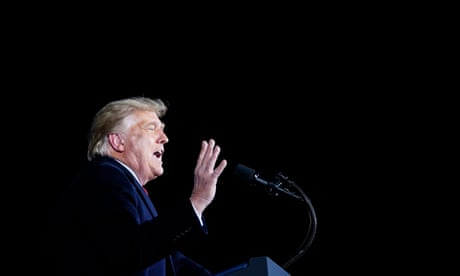
Guardian (UK) Democrats revealed disturbing new recordings of the mob attack on the US Capitol last month as they presented their case on Wednesday in the historic second impeachment trial of Donald Trump.

House impeachment managers constructed a timeline which they said showed that the former president was “singularly responsible” for the deadly assault, which brought a violent mob within footsteps of the nation’s political leaders.

Senators, seated as jurors in the chamber that was the scene of the invasion on 6 January, watched silently as the security videos and police dispatches painted a fuller picture of the afternoon.

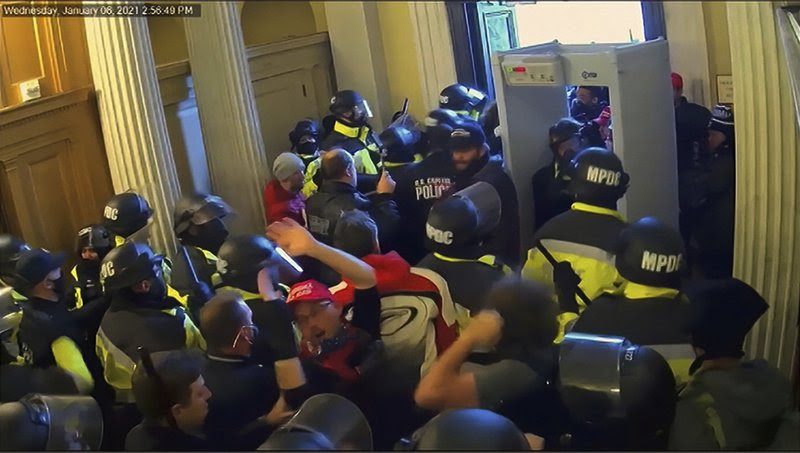
The dramatic scenes showed rioters rampaging through the halls of Congress, searching for the then-vice-president Mike Pence and the House speaker Nancy Pelosi. Members of far-right extremist groups were among the first to enter the Capitol. Some wore tactical gear, others were armed.

In previously unreleased security footage, Pence, who had been presiding over a session to certify Biden’s victory, and his family were seen being evacuated from a room near the Senate chamber, nearly 15 minutes after rioters breached the Capitol. Chants of “hang Mike Pence” reverberated through the marbled building, while outside other constructed a makeshift gallows. At one point, the mob came within 100ft of the room where Pence was sheltering, the managers said.

One graphic video showed police shooting through a broken window, killing Ashli Babbitt, as she attempted to enter the building. A number of senators were visibly upset by a video of police officer Daniel Hodges crushed in a doorway as he tried to prevent the rioters from breaching the Capitol.

The Capitol police officer Eugene Goodman was seen in another extraordinary video leading Senator Mitt Romney away from the rioters, potentially saving his life. In another recording, senators are rushed from the building, narrowly missing the insurrections by just “58 steps”.

Romney, one of Trump’s most frequent Republican critics, told reporters he had no idea he has been so close to danger: “It tears at your heart and brings tears to your eyes. That was overwhelmingly distressing and emotional.”

In another security video, Pelosi’s staffers rushed into her office and barricaded themselves in a room, moments before the rioters arrive. The staffers could hear them calling menacingly for the speaker as they marauded through her office. One of the men who posed for a photo of himself with his boots atop Pelosi’s desk was carrying a stun gun that could have caused serious harm if it had been used, the managers said.

President Trump put a target on their backs,” Stacey Plaskett, an impeachment manager and a delegate of the Virgin Islands, said. “And his mob broke into the Capitol to hunt them down.”

The House Democrats – called impeachment managers during the trial – methodically traced Trump’s months-long campaign to overturn his election defeat to argue that the former president was not an “innocent bystander” swept up in the mayhem of 6 January, but the “inciter in chief”.

The impeachment managers used their first full day of arguments to make the case that the Capitol invasion was not a random act of chaos, but one “assembled, inflamed and incited” by Trump over the course of several months.

In previously unseen security footage, they argued, Trump violated his presidential oath of office by not acting to stop the violence, claiming that he instead watched with “glee” as his supporters stormed the seat of American government. Five people died.

“To us it may have felt like chaos and madness, but there was method to the madness that day,” said congressman Jamie Raskin, the lead impeachment manager.

Eugene Goodman, a Capitol police officer, was seen rushing Senator Mitt Romney to safety in a dramatic video.
Eugene Goodman, a Capitol police officer, was seen rushing Senator Mitt Romney to safety in a dramatic video. Photograph: Jim Lo Scalzo/AFP/Getty Images

Managers weaved their reconstruction of the afternoon with chilling dispatches from the Metropolitan police department. In one unreleased audio recording, an officer frantically calls for assistance after insurrectionists charged past the barricades toward the Capitol.

At 13.49, the responding officer declared the violence to be a riot. Then later, in another exchange, an officer shouts repeatedly: “We lost the line. All MPD pull back.”

The presentation appealed to the senators’ still-raw emotions from the day. During a break, several members said they were shaken and shocked anew by the records. Even so, it remains extremely unlikely that the managers will persuade 17 Republican senators to join all Democrats in finding Trump guilty of high crimes and misdemeanors. If convicted, the Senate could vote to bar Trump from ever again holding elected office.

Trump impeachment: police bodycam footage shows Capitol attack – video

Trump impeachment: police bodycam footage shows Capitol attack – video

Congressman Joe Neguse, another impeachment manager, dissected Trump’s speech during a 6 January rally, making the case that Trump intended to rile up supporters there to attack the Capitol as electoral votes were being counted and for his supporters to prevent Congress from certifying Trump’s loss.

He noted Trump publicly invited supporters to Washington on that specific day and planned the rally at the exact time Congress was meeting to count electoral votes. When Trump spoke, Neguse said, he encouraged them to “fight” – language that unmistakably signaled to them to attack.

“Those words were carefully chosen. They had a specific meaning to that crowd,” Neguse said. “He didn’t just tell them to fight like hell. He told them how, where and when. He made sure they had advance notice.”

Democrats pointed to months of false statements Trump made about the election being stolen leading up to 6 January. Those lies, they said, represented a deliberate effort to sow distrust of the election that exploded in the attack on the Capitol. They played clips of television interviews and speeches in which Trump repeatedly refused to commit to accepting a peaceful transition of power.

“He built this mob over many months with repeated messaging until they believed that they had been robbed of their votesaid congressman Eric Swalwell of California, another impeachment manager. The impeachment managers played video of Trump claiming as early as May that the only way he would lose the 2020 election was if it was stolen.

When it was clear Trump had lost the election, his team turned to the courts. All but one of the 62 legal challenges were defeated or dismissed. Trump then ramped up his pressure on election officials to overturn the election results, publicly berating them when they refused. Senators heard audio of Trump’s conversation with the Georgia secretary of state, during which he implored him to “find” enough votes to reverse Biden’s victory in the state.

“Senators, we must not become numb to this,” said Pennsylvania congresswoman Madeleine Dean, an impeachment manger. “Trump did this in state after state so often, so loudly and so publicly.”

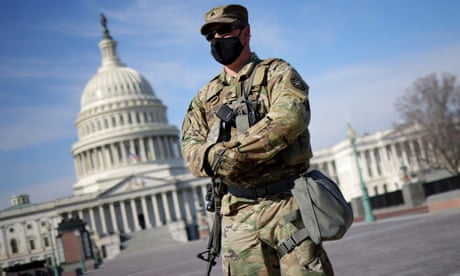
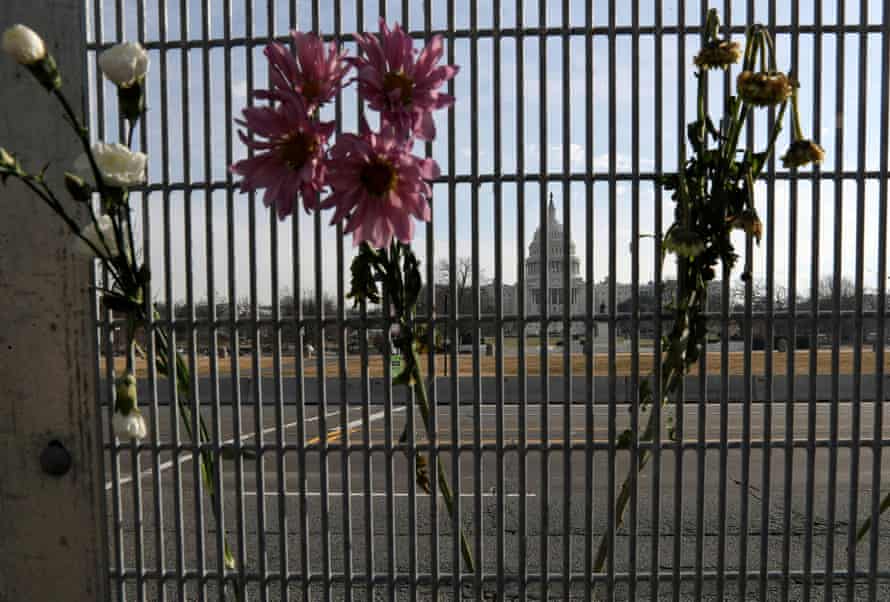
The US Capitol is seen through high levels of security as Donald Trump’s second impeachment trial begins.
The US Capitol is seen through high levels of security as Donald Trump’s second impeachment trial begins. Photograph: Leah Millis/Reuters

Perhaps worst of all, the managers said, was that Trump did nothing to discourage the insurrectionists who were causing violence and destruction in his name. They highlighted pleas from Republicans and former White House officials for Trump to condemn the violence and encourage his supporters to go home.

“The truth is, the facts are, on January 6, Donald Trump did not once condemn this attack,” said the Rhode Island congressman David Cicilline, another manager. “He did not once condemn the attackers.”

Trump was impeached while still in office by the US House of Representatives on one charge of “incitement of insurrection”. His lawyers have argued that his rhetoric constituted political speech, which is protected under the first amendment.

Raskin, a former constitutional law professor, rebutted the defense on Wednesday, arguing that while an ordinary citizen’s anti-government speech is protected by the first amendment, Trump had an obligation to protect the nation as its president.

Over the course of their eight-hour presentation on Wednesday, the managers also spoke personally and poignantly about the attack, reliving their own experiences that day. Visibly shaken, Dean recalled hearing a “terrifying banging on the House chamber doors”, while Swalwell, unsure of whether he would survive the afternoon, texted his wife: “I love you and the babies.”

Neguse, the son of immigrants from Eritrea, told his father that the proudest moment of his two years in Congress was returning to the House floor after the violence to finish the work of certifying the election.

Concluding their arguments for the day, impeachment manager Joaquin Castro, a congressman from Texas, revisited that moment on the evening of 6 January when he and his colleagues, still shaken from the violence, came back to the Capitol to “ensure that the will of the American people finally prevailed”.

“President Trump, too, took an oath as president,” he said. “He swore on a Bible to preserve, protect, and defend. And who among us can honestly say they believe that he upheld that oath? And who among us will let utter dereliction of duty stand?”

The post Trump Trial Sees Mob Hunting Politicians in Capitol appeared first on The St Kitts Nevis Observer.

US Study: Double Better than Single Masking

Wearing a cloth mask over a medical procedure mask can significantly decrease the spread of COVID-19, according to a new study the Centers for Disease Control and Prevention (CDC) released Wednesday.

The agency updated its guidance to note that double masking or wearing a tightly fitted surgical mask are two of the best ways to boost protection against exposure.

CDC researchers experimenting in a lab found that the better the fit of the mask, the better the protection it provides.

ADVERTISEMENT

“The effectiveness of cloth and medical procedure masks can be improved by ensuring that they are well-fitted to the contours of the face to prevent leakage of air around the masks’ edges,” the agency said.

Double masking or knotting the ear loops of a surgical mask and tucking in the sides close to the face can reduce exposure to infectious aerosols by 95 percent, the CDC found.

The agency also said that if a medical procedure mask is worn alone, using a “mask fitter” or wearing a sleeve made of sheer nylon hosiery over either a cloth or medical procedure mask also significantly improved the wearer’s protection.

In general, any modifications to improve fit might result in equivalent improvements, regardless of the masks’ baseline effectiveness, the CDC said.

CDC Director Rochelle Walensky said the new findings do not change the agency’s overall mask guidance.

ADVERTISEMENT

“I want to be clear that these new scientific data released today do not change the specific recommendations about who should wear a mask or when they should wear one, but they do provide new information on why wearing a well-fitting mask is so important to protect you and others,” Walensky said on a call with reporters.

“We continue to recommend that masks should have two or more layers, completely cover your nose and mouth and fit snugly against your nose and the size of your face,” Walensky added.

The agency warned to not use the study to make broad assumptions about the effectiveness of surgical masks or cloth masks.

The experiments were conducted in a lab setting, with just one type of medical procedure mask and one type of cloth mask, and the CDC cautioned they should not be interpreted as being representative of the effectiveness of these masks when worn in real-world settings.

The recommendations come three weeks into President Biden‘s term, and signal a clear effort to move past the mixed messages from the Trump administration, as deaths from COVID-19 approach 500,000.

ADVERTISEMENT

While the CDC previously recommended people wear masks, former President Trump mocked those who did, and helped contribute to the politicization of a significant COVID-19 mitigation measure.

Experts, including the country’s top infectious diseases doctor Anthony Fauci, have been recommending double masking in recent days, especially as a way to guard against more contagious variants of the virus that are rapidly spreading.

Biden has urged all Americans to wear masks and signed executive orders requiring their use on federal property and on planes, trains and buses.

The post US Study: Double Better than Single Masking appeared first on The St Kitts Nevis Observer.

National AIDS Secretariat emphasizes robust HIV/AIDS education programme

BASSETERRE, St. Kitts — A robust HIV/AIDS education programme aimed at enlightening the public is being highlighted by the National AIDS Secretariat to encourage primary and secondary school student’s learners to develop and maintain safer behaviours, and reduce stigma and discrimination towards people affected by and living with the virus.

“We have a school programme during which we visit the primary and secondary schools regularly to speak on sexual health and all of the surrounding issues with HIV/AIDS and the other sexually transmitted infections,” said Lucine Pemberton-Vaughan, Health Educator/Counsellor. “We are in the workplace as well. So certain businesses and organizations call us and if they don’t, we invite ourselves.”

Mrs. Pemberton-Vaughn said the Secretariat also reaches out to faith-based institutions.

“We go to churches, we are on the block, the streets, anywhere people are we are spreading the word,” said Mrs. Pemberton-Vaughn. “Even on Friday afternoons, you can see me walking down Fort Street issuing condoms and lubricants and just meeting people and having that one on one talk.”

“No sector is left untouched, we reach out to private sectors having one on one meetings with the workers to educate them about what HIV,” said Dr. Mathias Ofre, National HIV/AIDS Programme Coordinator. “They learn how they can protect themselves and provide condoms and educate them on how they can be properly used because that is very important.

“If you don’t know how to use it properly you will end up exposing yourselves to the risks of it being destroyed in the process or probably not being used to achieve a living purpose.”

Dr. Ofre and Mrs. Pemberton-Vaughn reiterated the importance of educating the public. They said education plays a crucial role in the fight against HIV/AIDS.

The post National AIDS Secretariat emphasizes robust HIV/AIDS education programme appeared first on The St Kitts Nevis Observer.